
Toward mega-river basin restoration: Mid-term evidence and lessons from China’s Yangtze ten-year fishing ban
-
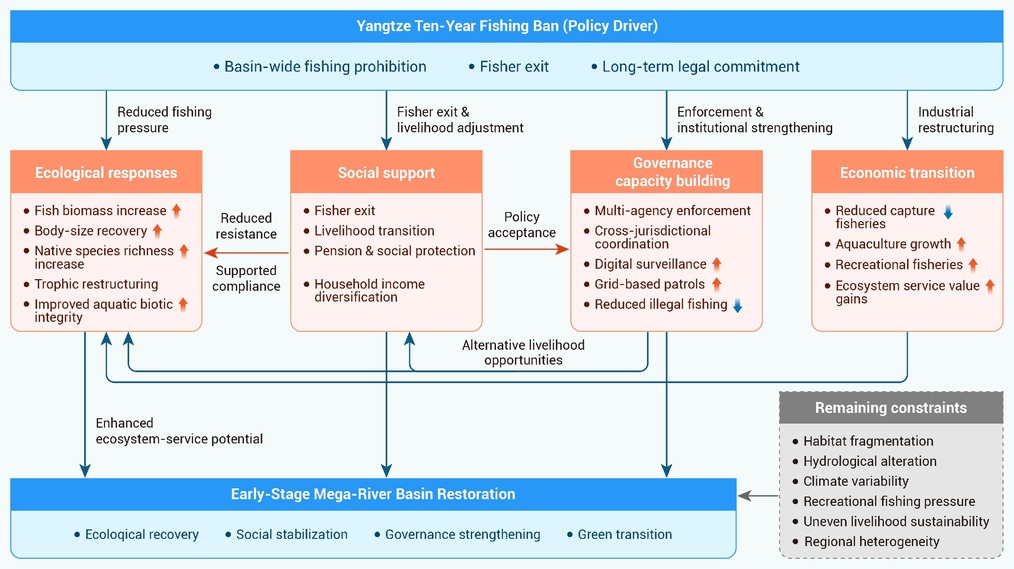
GRAPHICAL ABSTRACT
 DownLoad:
Full size image
-
PUBLIC SUMMARY
-
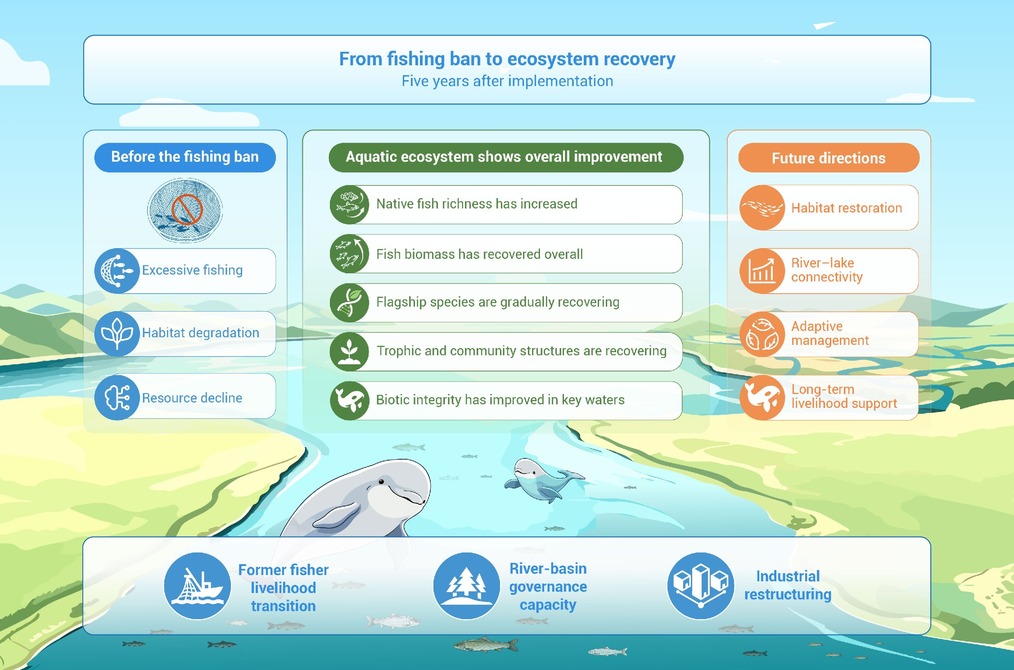
China’s Yangtze ten-year fishing ban is a landmark basin-scale policy.
Five years on, fish biomass, diversity, and biotic integrity indicate ecological recovery.
Flagship and protected species are recovering alongside broader habitat and biodiversity restoration.
Over 230,000 former fishers shifted livelihoods through employment and pension programs.
Cross-regional coordination, digital monitoring, and joint enforcement have strengthened basin governance.
-
-
ABSTRACT
China’s Yangtze ten-year fishing ban (YTFB) is a long-term, basin-scale ecological conservation policy, which provides an important case for understanding the large-scale ecosystem restoration of a mega-river basin. By integrating aquatic biodiversity monitoring, longitudinal surveys of former fishers, industrial statistics, and enforcement records, we developed a comprehensive assessment framework to evaluate the outcomes and underlying mechanisms of YTFB after its mid-term implementation. The results show that ecological recovery signals have emerged across the Yangtze River basin following the ban, as indicated by increases in fish biomass, higher native fish species richness, trophic restructuring, and improvements in the Index of Biotic Integrity. Ecological responses were spatially and temporally heterogeneous, potentially reflecting differences in hydrological regimes, river–lake connectivity, historical resource conditions, habitat status, and regional enforcement intensity. Targeted policies such as large-scale exit of fishers, employment transition, pension insurance and social assistance have mitigated the livelihood impacts of the fishing ban on former fishers. Multi-agency enforcement, digital surveillance, and grid-based patrols strengthened the policy implementation capacity. Additionally, fisheries-related industries have undergone a structural transformation, shifting from natural capture fisheries toward aquaculture, recreational fisheries, and potential aquatic ecological product values realization. The outcomes of the YTFB do not represent a single ecological intervention but rather reflect the combined effects of ecological pressure reduction, governance scale matching, livelihood transition of former fishers, and alternative economic pathways. Yet long-term recovery remains constrained by habitat fragmentation, hydrological alteration, climate variability, enforcement costs, and other persistent pressures. The next five years should prioritize integrated aquatic ecosystem restoration and habitat protection, the ultimate objective of the YTFB, through spatially differentiated adaptive management. This case provides a socio-ecological perspective on how large-scale conservation interventions can be designed and sustained in highly modified mega-river systems. -

-
REFERENCES
[1] Sabo J.L., Ruhi A., Holtgrieve G.W., et al. (2017). Designing river flows to improve food security futures in the Lower Mekong Basin. Science 358:eaao1053. DOI:10.1126/science.aao1053 [2] Tickner D., Opperman J.J., Abell R., et al. (2020). Bending the curve of global freshwater biodiversity loss: An emergency recovery plan. BioScience 70:330−342. DOI:10.1093/biosci/biaa002 [3] Su G.H., Logez M., Xu J., et al. (2021). Human impacts on global freshwater fish biodiversity. Science 371:835−838. DOI:10.1126/science.abd3369 [4] Grill G., Lehner B., Thieme M., et al. (2019). Mapping the world’s free-flowing rivers. Nature 569:215−221. DOI:10.1038/s41586-019-1111-9 [5] Zhang H., Kang M., Shen L., et al. (2020). Rapid change in Yangtze fisheries and its implications for global freshwater ecosystem management. Fish Fish. 21:601−620. DOI:10.1111/faf.12449 [6] Njiru M., Nzungi P., Getabu A., et al. (2007). Are fisheries management measures in Lake Victoria successful. The case of Nile perch and Nile tilapia fishery. Afr. J. Ecol. 45:315−323. DOI:10.1111/j.1365-2028.2006.00712.x [7] Sinopoli M., Pipitone C., Badalamenti F., et al. (2022). Effects of a trawling ban on the growth of young-of-the-year European hake, Merluccius merluccius in a Mediterranean fishing exclusion zone. Reg. Stud. Mar. Sci. 50:102151. DOI:10.1016/j.rsma.2021.102151 [8] Qin B.Q., Zhang Y.L., Gao G., et al. (2014). Key factors affecting lake ecological restoration. Prog. Geogr. 33:918−924. DOI:10.11820/dlkxjz.2014.07.006 [9] Daliri M., Salarpouri A., Behzadi S., et al. (2025). Toward an effective temporary fishing ban law enforcement in the Persian Gulf. Mar. Policy 180:106813. DOI:10.1016/j.marpol.2025.106813 [10] Jiang L. and Ma T. (2025). Adaptive governance and policy evolution of the Yangtze River fishing ban: A quantitative analysis (2002–2024). Water 17:3032. DOI:10.3390/w17213032 [11] Wang H.J., Wang P., Xu C., et al. (2022). Can the “10-year fishing ban” rescue biodiversity of the Yangtze River. The Innovation 3:100235. DOI:10.1016/j.xinn.2022.100235 [12] Radinger J., Matern S., Klefoth T., et al. (2023). Ecosystem-based management outperforms species-focused stocking for enhancing fish populations. Science 379:946−951. DOI:10.1126/science.adf0895 [13] Cooke S.J., Piczak M.L., Nyboer E.A., et al. (2024). Managing exploitation of freshwater species and aggregates to protect and restore freshwater biodiversity. Environ. Rev. 32:414−437. DOI:10.1139/er-2022-0118 [14] Acreman M., Hughes K.A., Arthington A.H., et al. (2020). Protected areas and freshwater biodiversity: A novel systematic review distils eight lessons for effective conservation. Conserv. Lett. 13:e12684. DOI:10.1111/conl.12684 [15] Mei Z.G., Wang K.X., Du H., et al. (2023). Restore the Yangtze River’s floodplains. Science 382:1369−1370. DOI:10.1126/science.adn0769 [16] Wu Z.L., Qu L.M., Zeng T., et al. (2026). Effective maintenance of the ten-year fishing ban in the Yangtze River, China: An analysis based on evolutionary game theory. J. Resour. Ecol. 17:167−185. DOI:10.5814/j.issn.1674-764x.2026.01.013 [17] Xie P. (2020). The past and present of the Yangtze River and its biodiversity. Changjiang Press. https://www.researchgate.net/publication/344388249_zhangjiangjiqishengwuduoyangxingdeqianshijinsheng [18] Yang H.L., Shen L., He Y.F., et al. (2023). Status of aquatic organisms resources and their environments in the Yangtze River system (2017–2021). J. Fish. China 47:029301. DOI:10.11964/jfc.20220913677 [19] Zhang W.D., Bussmann R.W., Li J., et al. (2022). Biodiversity hotspots and conservation efficiency of a large drainage basin: Distribution patterns of species richness and conservation gaps analysis in the Yangtze River Basin, China. Conserv. Sci. Pract. 4:e12653. DOI:10.1111/csp2.12653 [20] Cao W.X. (2019). Water ecological restoration in the cascade development of hydropower in the upper reaches of the Yangtze River. Technol. Econ. Changjiang 2:5−10. DOI:10.19679/j.cnki.cjjsjj.2019.0201 [21] Jin B.S., Winemiller K.O., Cao W.X., et al. (2022). Basin-scale approach needed for Yangtze River fisheries restoration. Fish Fish. 23:1009−1015. DOI:10.1111/faf.12657 [22] Chen T.G., Wang Y., Gardner C., et al. (2020). Threats and protection policies of the aquatic biodiversity in the Yangtze River. J. Nat. Conserv. 58:125931. DOI:10.1016/j.jnc.2020.125931 [23] IUCN. (2022). Psephurus gladius. The IUCN red list of threatened species. DOI:10.2305/IUCN.UK.2022-1.RLTS.T18428A146104283.en [24] IUCN. (2022). Acipenser dabryanus. The IUCN red list of threatened species. DOI:10.2305/IUCN.UK.2022-1.RLTS.T231A61462199.en [25] Han Y., Xu W., Wang K., et al. (2025). Effects of freshwater protected areas on survival of a critically endangered cetacean. Conserv. Lett. 18:e13081. DOI:10.1111/conl.13081 [26] Yin S., Yi Y., Liu Q., et al. (2022). A review on effects of human activities on aquatic organisms in the Yangtze River Basin since the 1950s. River 1:104−119. DOI:10.1002/rvr2.15 [27] Li Q., Ma T. and Yang H.L. (2021). Ten-year fishing ban at the Yangtze River: Systematic protection and governance practice of a large river basin. Kexue 73:8–10. https://fddi.fudan.edu.cn/51/32/c19046a414002/page.htm [28] State Council of the People’s Republic of China. (2021). 10-year fishing ban starts in key waters of Yangtze River. https://english.www.gov.cn/news/topnews/202101/01/content_WS5fef1f0bc6d0f7257694313b.html. Accessed August 15, 2026. [29] State Council of the People’s Republic of China. (2026). SCIO briefing about mid-term assessment of the 10-year fishing ban on the Yangtze River. http://www.scio.gov.cn/live/2026/37984/index.html. Accessed August 15, 2026 [30] Xiong F.Y., Li Z.Y., Brosse S., et al. (2026). Fishing ban halts seven decades of biodiversity decline in the Yangtze River. Science 391:719−723. DOI:10.1126/science.adu5160 [31] Liu F., Wang Z., Xia Z., et al. (2023). Changes in fish resources 5 years after implementation of the 10-year fishing ban in the Chishui River, the first river with a complete fishing ban in the Yangtze River Basin. Ecol. Process. 12:51. DOI:10.1186/s13717-023-00465-6 [32] Feng K., Tao K., Wang Y., et al. (2026). Evaluating restoration success: Ecosystem-level shifts in lake fish biodiversity consistent with China's fishing ban. Biol. Conserv. 315:111733. DOI:10.1016/j.biocon.2026.111733 [33] Xie C., Dai B.G., Wu J.J., et al. (2022). Initial recovery of fish faunas following the implementation of pen-culture and fishing bans in floodplain lakes along the Yangtze River. J. Environ. Manage. 319:115743. DOI:10.1016/j.jenvman.2022.115743 [34] He Y.F., Chen T.G., Liu Z.F., et al. (2023). Impact of fishing ban compensation policy on retired fishing households’ livelihoods in Yangtze River. Resour. Environ. Yangtze Basin 32:311−323. DOI:10.11870/cjlyzyyhj202302007 [35] Sun Y., Sun Z., Zhang Y., et al. (2024). How can governments and fishermen collaborate to participate in a fishing ban for ecological restoration. J. Environ. Manage. 360:120958. DOI:10.1016/j.jenvman.2024.120958 [36] Wang H.J., Chen J., Wang P., et al. (2024). How to manage fish within and after the 10-year fishing ban. The Innovation 5:100694. DOI:10.1016/j.xinn.2024.100694 [37] Dong F., Fang D.D., Zhang H., et al. (2023). Protection and development after the ten-year fishing ban in the Yangtze River. J. Fish. China 47:029318. DOI:10.11964/jfc.20221013724 [38] Ministry of Agriculture and Rural Affairs of the People’s Republic of China. (2026). Annual bulletin on aquatic biological resources and habitat conditions in the Yangtze River basin (2025). China Agriculture Press. https://cjyzbgs.moa.gov.cn/ztzl/202604/t20260401_6482860.htm [39] Wang R., Han Y., Fan F., et al. (2022). Need to shift in river-lake connection scheme under the “ten-year fishing ban” in the Yangtze River, China. Ecol. Indic. 143:109434. DOI:10.1016/j.ecolind.2022.109434 [40] Liu H.Z. (2026). Ten year fishing ban and river ecosystem restoration in the Yangtze River. Chin. Sci. Bull. April 1, 2026. DOI:10.1360/CSB-2026-0021 [41] Wu Z., Tian G., Li Y., et al. (2023). Compensation mechanisms for fishermen quit fishing: A case of Jiangsu province, China. Heliyon 9:e17648. DOI:10.1016/j.heliyon.2023.e17648 [42] Ministry of Agriculture and Rural Affairs. (2025). Yangtze River ten-year fishing ban achieves important phased results. https://www.moa.gov.cn/xw/zwdt/202512/t20251210_6479600.htm. Accessed August 15, 2026 [43] Xinhua News Agency. (2023). Poyang Lake enters dry season at earliest recorded date. https://www.news.cn/local/2023-07/20/c_1129760334.htm. Accessed August 15, 2026 [44] Xinhua News Agency. (2025). Poyang Lake falls below the extremely low-water level, with the river-connected water area reduced by 90%. https://www.news.cn/local/20251214/aeaf6989e1ed48cfa6fb76005a1769fd/c.html. Accessed August 15, 2026 [45] Lester S.E., Halpern B.S., Grorud-Colvert K., et al. (2009). Biological effects within no-take marine reserves: A global synthesis. Mar. Ecol. Prog. Ser. 384:33−46. DOI:10.3354/meps08029 [46] Sala E. and Giakoumi S. (2018). No-take marine reserves are the most effective protected areas in the ocean. ICES J. Mar. Sci. 75:1166−1168. DOI:10.1093/icesjms/fsx059 [47] Höckendorff S., Tonkin J.D., Haase P., et al. (2017). Characterizing fish responses to a river restoration over 21 years based on species’ traits. Conserv. Biol. 31:1098−1108. DOI:10.1111/cobi.12908 [48] Wang Z.T. and Zhuang P. (2026). Prioritizing a vital river's restoration. Science 393:153−154. DOI:10.1126/science.aei3599 [49] Fullerton A.H., Burnett K.M., Steel E.A., et al. (2010). Hydrological connectivity for riverine fish: Measurement challenges and research opportunities. Freshw. Biol. 55:2215−2237. DOI:10.1111/j.1365-2427.2010.02448.x [50] Gui J.F. (2024). Chinese wisdom and modern innovation of aquaculture. Water Biol. Secur. 3:100271. DOI:10.1016/j.watbs.2024.100271 [51] Kong X.Z., Wang Z.Y., Wang H.J., et al. (2025). Harmonizing biodiversity, environment, and economy: A coordinative framework for aquatic conservation. The Innovation 6:101071. DOI:10.1016/j.xinn.2025.101071 [52] Taylor M.D., Chick R.C., Lorenzen K., et al. (2017). Fisheries enhancement and restoration in a changing world. Fish. Res. 186:407−412. DOI:10.1016/j.fishres.2016.10.004 -
ABOUT THIS ARTICLE
Cite this article:
Li Q., Kuang J., Du J., et al. (2026). Toward mega-river basin restoration: Mid-term evidence and lessons from China’s Yangtze ten-year fishing ban. The Innovation Water 1:100013. https://doi.org/10.59717/j.tiw.2026.100013
Welcome!
To request copyright permission to republish or share portions of our works, please visit Copyright Clearance Center's (CCC) Marketplace website at marketplace.copyright.com.
Export File
Citation
Li Q., Kuang J., Du J., et al. (2026). Toward mega-river basin restoration: Mid-term evidence and lessons from China’s Yangtze ten-year fishing ban. The Innovation Water 1:100013. https://doi.org/10.59717/j.tiw.2026.100013

Format
Content
-
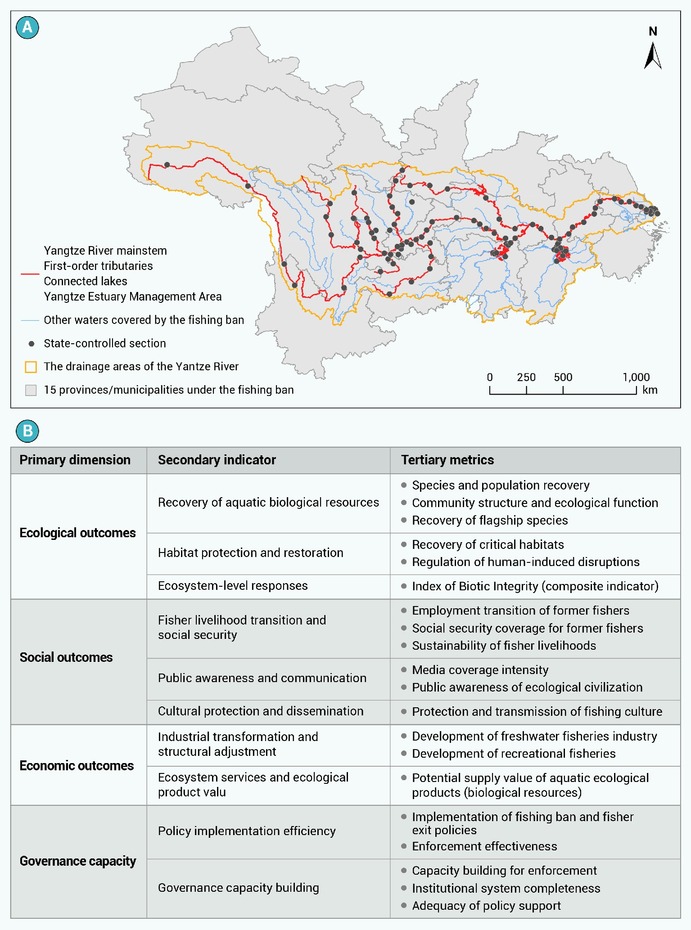
Figure 1.
Study area and policy evaluation framework
-
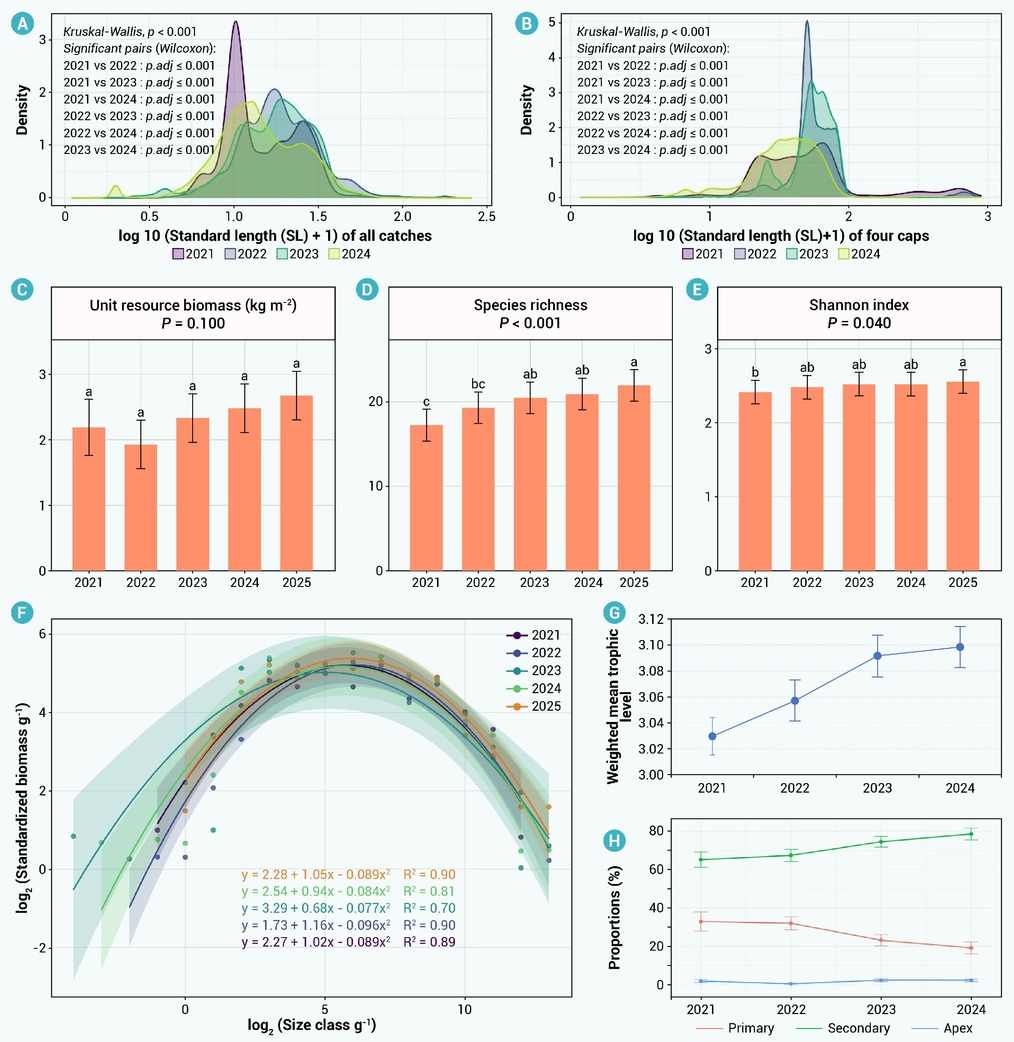
Figure 2.
Ecological recovery signals in fish populations, diversity, and community structure in the Yangtze River basin
-
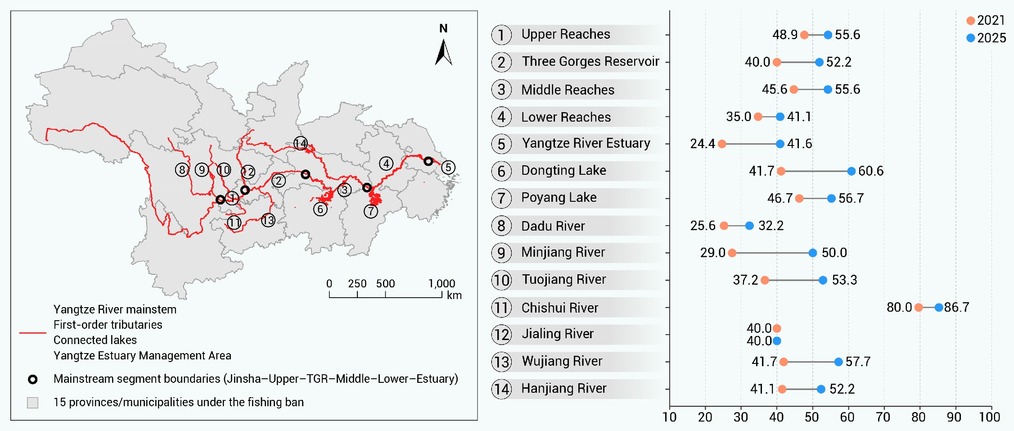
Figure 3.
Regional changes in the Index of Biotic Integrity (IBI) across the Yangtze River Basin between 2021 and 2025
-
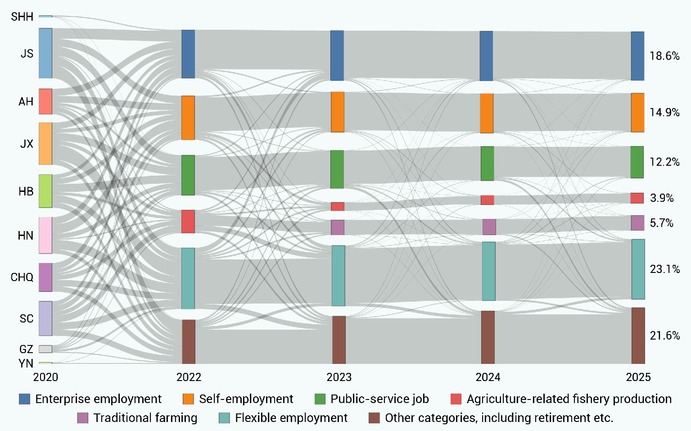
Figure 4.
Employment transitions among former fishers in the Yangtze River basin
-
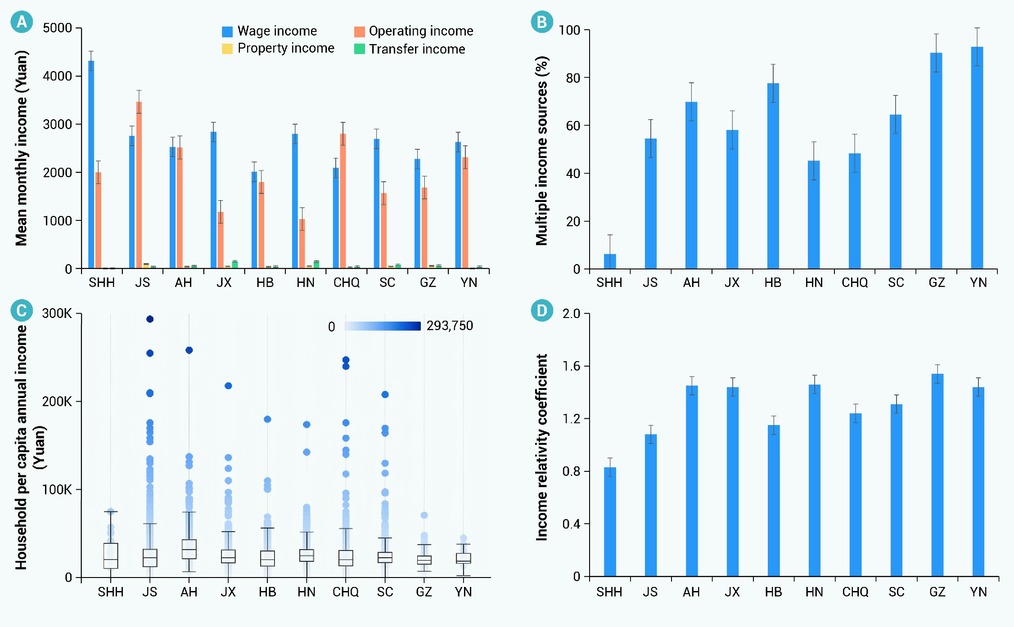
Figure 5.
Income composition, household per capita annual income, and relative income levels of former fishers
-
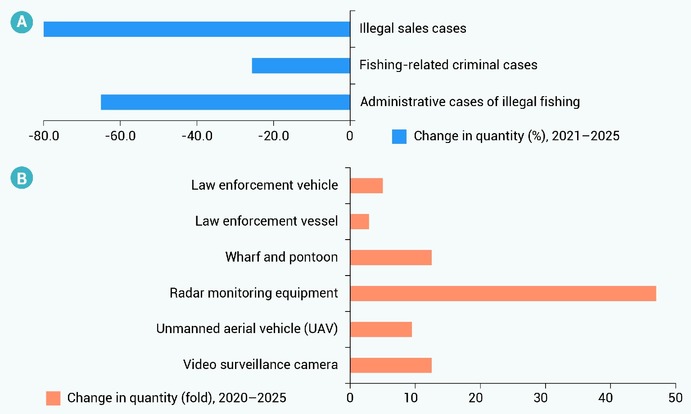
Figure 6.
Changes in governance effectiveness and enforcement capacity building under the YTFB
-
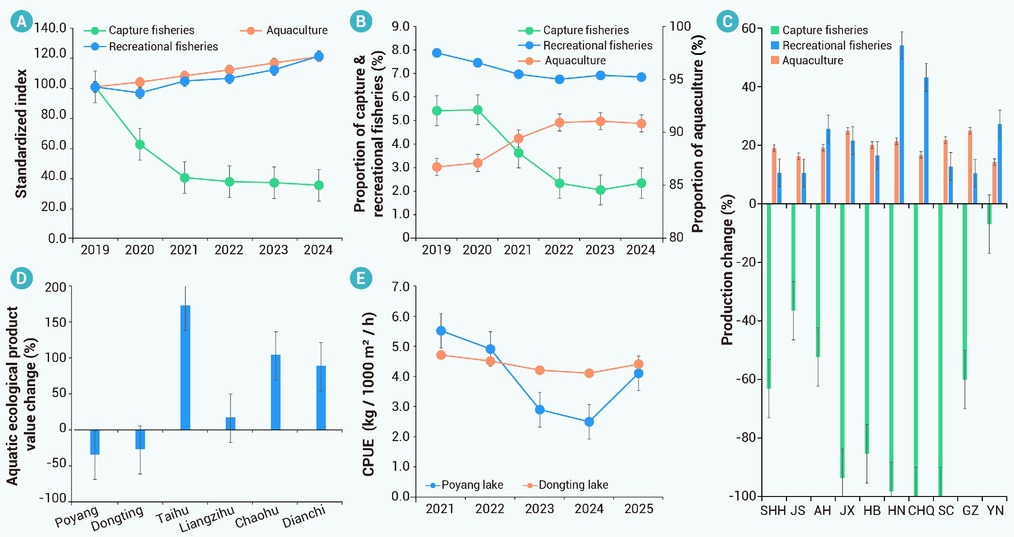
Figure 7.
Changes in fisheries-related industrial structure under the YTFB
-
Figure 8.
A conceptual socio-ecological framework for mega-river restoration under the YTFB
