
Viral spillover among diverse animals in the water environment: Risks, mechanisms, and prevention
-
GRAPHICAL ABSTRACT
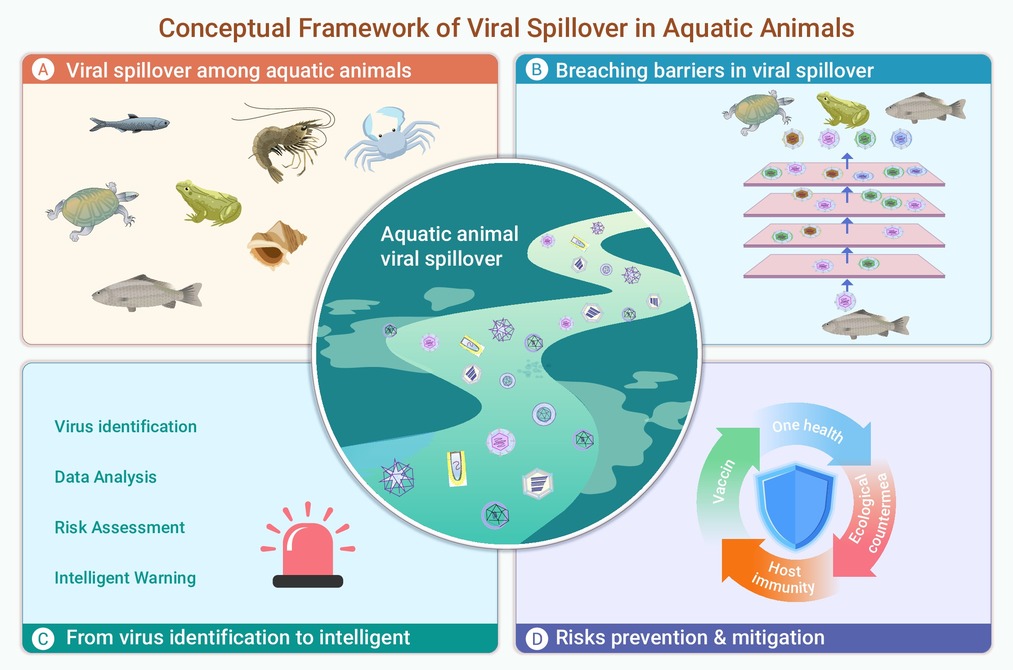
 DownLoad:
Full size image
-
PUBLIC SUMMARY
-
Frequent viral spillover (cross-species transmission) severe harm aquaculture and aquatic ecosystems.
Modelling spillover dynamics builds radial maps illustrating pathogenic aquatic-animal viral spillover.
Systematic mapping of viral spillover barriers and transmission routes can help uncover their underlying drivers.
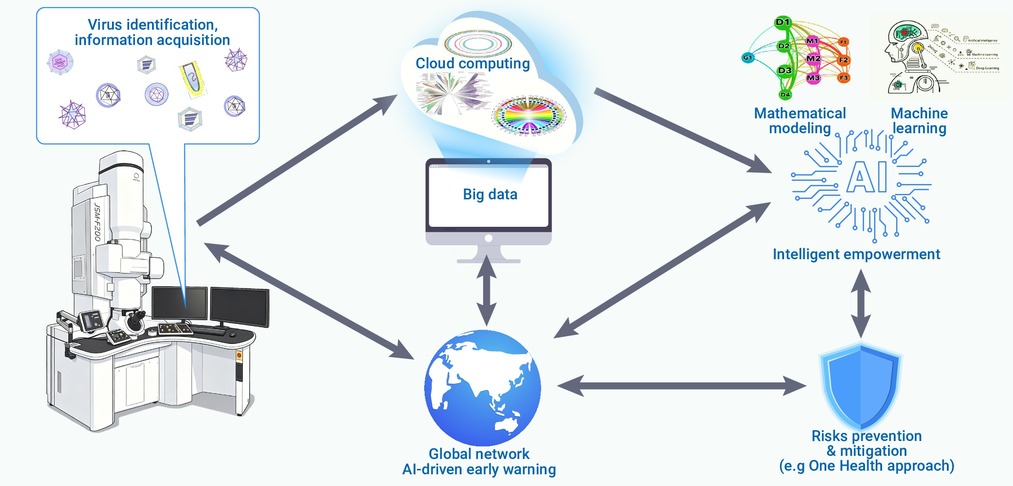
Construct a prevention and control framework integrating multi-source data and multidisciplinary approaches.
-
-
ABSTRACT
Viruses are ubiquitous, immensely diverse and vast biomass, forming a pivotal engine of global biogeochemical cycles. However, the frequent outbreak of viral pathogens in aquatic animals poses a serious threat to aquaculture industry, aquatic ecosystems, and environment. It devastates aquaculture industries, drives water quality deterioration through the perturbation of viral ecological functions, and ultimately endangering security of aquatic ecosystems. “Viral spillover in aquatic animals” denotes the cross-species transmission of viruses that can ignite widespread disease outbreaks and cascading ecological impacts in both farmed and wild aquatic animals. While viral spillover involving humans and land animals has received focus, viral spillover in aquaculture remains noticeably missing from global discourse. Thus, the emergence and spillover of novel viruses in aquatic animal loom as a paramount, decades challenge for the global aquaculture sector. To address this challenge, this review focuses on elucidating the diversity, complexity, and ubiquity of spillover of aquatic animal viruses. By simulating spillover dynamics, it constructs radial maps depicting the diffusion of aquatic animal viruses; analyzes representative cases to decipher relevant determinants; deconstructs the viral spillover process to reveal underlying driving mechanisms; and on risk identification and mechanistic analysis, builds an integrated prevention framework that synthesizes multi-source data and multidisciplinary approaches, thereby supporting precise and forward-looking decision-making for health security of aquatic animals and ecosystems. -

-
REFERENCES
[1] Holmes E. C., Krammer F. and Goodrum F. D. (2024). Virology-The next fifty years. Cell 187:5128−5145. DOI:10.1016/j.cell.2024.07.025 [2] Havens J. L., Kosakovsky Pond S. L., Zehr J. D., et al. (2026). Dynamics of natural selection preceding human viral epidemics and pandemics. Cell 189:2762-2775 e2711. DOI:10.1016/j.cell.2026.02.006 [3] Wei X., Li H., Huang Z. Y. X., et al. (2026). A global-scale assessment of zoonotic virus diversity and spillover potential in urban-adapted mammal species. Nat. Microbiol. 11:1410−1423. DOI:10.1038/s41564-026-02311-9 [4] Zhang Q. Y. (2020). An overview on several large DNA viruses in freshwater ecosystems. Acta Hydrobiologica Sinica 44:961−975. DOI:10.7541/2020.112 [5] Zhang Q. Y. and Gui J. F. (2018). Diversity, evolutionary contribution and ecological roles of aquatic viruses. Sci. China Life Sci. 61:1486−1502. DOI:10.1007/s11427-018-9414-7 [6] Zhang Q.-Y., Ke F., Gui L., et al. (2022). Recent insights into aquatic viruses: Emerging and reemerging pathogens, molecular features, biological effects, and novel investigative approaches. Water Biology and Security 1:100062. DOI:10.1016/j.watbs.2022.100062 [7] Poulton A. J. (2021). Shunt or shuttle. Nat. Geosci. 14:181−183. DOI:10.1038/s41561-021-00718-z [8] Carreira C., Lonborg C., Acharya B., et al. (2024). Integrating viruses into soil food web biogeochemistry. Nat. Microbiol. 9:1918−1928. DOI:10.1038/s41564-024-01767-x [9] Zhang Q. Y. and Ke F. (2025). Cross-domain aquatic viruses. Acta Hydrobiologica Sinica 49:012506. DOI:10.7541/2025.2024.0330 [10] Ke F., Liu A. K. and Zhang Q. Y. (2025). Extra peptidase of a cyanophage confers its stronger lytic effect on bloom-forming Microcystis aeruginosa. Int. J. Biol. Macromol. 304:140979. DOI:10.1016/j.ijbiomac.2025.140979 [11] Zhang X., He T., Zhou J., et al. (2025). Viruses are a key regulator of the microbial carbon cycle in the deep-sea biosphere. Environ. Sci. Ecotechnol. 27:100609. DOI:10.1016/j.ese.2025.100609 [12] Gui J. F. (2024). Chinese wisdom and modern innovation of aquaculture. Water Biology and Security 3:100271. DOI:10.1016/j.watbs.2024.100271 [13] FAO (2018). The State of World Fisheries and Aquaculture 2018 - Meeting the sustainable development goals. https://openknowledge.fao.org/handle/20.500.14283/i9540en [14] Gui J. F., Tang Q. S., Li Z. J., et al. (2018). Aquaculture in China: Success stories and modern trends. Wiley-Blackwell. https://www.wiley.com/en-us/shop/general-aquaculture-fisheries-fish-science/aquaculture-in-china-success-stories-and-modern-trends-p-9781119120766 [15] Naylor R. L., Hardy R. W., Buschmann A. H., et al. (2021). A 20-year retrospective review of global aquaculture. Nature 591:551−563. DOI:10.1038/s41586-021-03308-6 [16] Ren W., Hu L., Guo L., et al. (2018). Preservation of the genetic diversity of a local common carp in the agricultural heritage rice-fish system. Proc. Natl. Acad. Sci. USA 115:E546−E554. DOI:10.1073/pnas.1709582115 [17] Gui J.-F., Zhou L. and Li X.-Y. (2022). Rethinking fish biology and biotechnologies in the challenge era for burgeoning genome resources and strengthening food security. Water Biology and Security 1:100002. DOI:10.1016/j.watbs.2021.11.001 [18] Wang T., Gong G., Li Z., et al. (2024). Genomic anatomy of homozygous XX females and YY males reveals early evolutionary trajectory of sex-determining gene and sex chromosomes in silurus fishes. Mol. Biol. Evol. 41:msae169. DOI:10.1093/molbev/msae169 [19] Lu M., Zhang Q. C., Zhu Z. Y., et al. (2025). Manipulating unisexual-sexual reproduction transition to engineer genome-reconstructed polyploids. Adv. Sci. (Weinh) 12:e06024. DOI:10.1002/advs.202506024 [20] Gan R. H., Li Z., Wang Z. W., et al. (2023). Creation of intermuscular bone-free mutants in amphitriploid gibel carp by editing two duplicatedrunx2b homeologs. Aquaculture 567:7393. DOI:10.1016/j.aquaculture.2023.739300 [21] Nie C. H., Hilsdorf A. W. S., Wan S. M., et al. (2020). Understanding the development of intermuscular bones in teleost: Status and future directions for aquaculture. Rev. Aquacult. 12:759−772. DOI:10.1111/raq.12348 [22] Uma A. (2025). Pathogen and disease transmission in aquatic animals. In management of fish diseases, S.K. Mallik, N. Shahi, and P.K. Pandey (eds). (Springer). DOI: 10.1007/978-981-96-0270-4_2 [23] Elabd H., Othman R. and Mahboub H. (2024). Diseases in aquaculture. In essentials of aquaculture practices, N.M. Faudzi, M.D. Shah, N. Mazlan, et al. (eds). (Springer). DOI: 10.1007/978-981-97-6699-4_6 [24] Hwang Y., Roux S., Coclet C., et al. (2023). Viruses interact with hosts that span distantly related microbial domains in dense hydrothermal mats. Nat. Microbiol. 8:946−957. DOI:10.1038/s41564-023-01347-5 [25] Stentiford G. D., Sritunyalucksana K., Flegel T. W., et al. (2017). New paradigms to help solve the global aquaculture disease crisis. PLoS Pathog 13:e1006160. DOI:10.1371/journal.ppat.1006160 [26] Akazawa N., Alvial A., Baloi A. P., et al. (2014). Reducing disease risk in aquaculture (English). Agriculture and environmental services discussion paper. http://documents.worldbank.org/curated/en/110681468054563438. [27] Israngkura A. and Sae-Hae S. (2002). A review of economic impacts of aquatic animal disease. In primary aquatic animal health care in rural, small-scale aquaculture development, technical proceedings of the Asia regional scoping workshop, J.R. Arthur, M.J. Phillips, R.P. Subasinghe, et al. (eds). (FAO), pp:55-61. https://www.fao.org/4/Y3610E/y3610E25.htm#:~:text=This% 20study%20develops%20three%20approaches%20in%20studying%20the,via%20the%20farmer%27s%20investment%20decision%20in%20disease%20control [28] Pauciullo S., Zulian V., La Frazia S., et al. (2024). Spillover: Mechanisms, genetic barriers, and the role of reservoirs in emerging pathogens. Microorganisms 12:2191. DOI:10.3390/microorganisms12112191 [29] Telengech P., Hyodo K., Ichikawa H., et al. (2024). Replication of single viruses across the kingdoms, Fungi, Plantae, and Animalia. Proc. Natl. Acad. Sci. USA 121:e2318150121. DOI:10.1073/pnas.2318150121 [30] Jancovich J. K., Zhang Q. Y. and Chinchar V. G. (2025). Ranavirus replication: New studies provide answers to old questions. In ranaviruses: Emerging pathogens of ectothermic vertebrates (2nd ed), M.J. Gray, and V.G. Chinchar (eds). (Springer). DOI: 10.1007/978-3-031-64973-8 [31] Costa V. A. and Holmes E. C. (2024). Diversity, evolution, and emergence of fish viruses. J. Virol. 98:e0011824. DOI:10.1128/jvi.00118-24 [32] Ahmadivand S., Savage A. and Palic D. (2025). Biosecurity and vaccines for emerging aquatic animal RNA viruses. Viruses 17:768. DOI:10.3390/v17060768 [33] Ebel G. D. (2017). Promiscuous viruses-how do viruses survive multiple unrelated hosts. Curr. Opin. Virol. 23:125−129. DOI:10.1016/j.coviro.2017.05.002 [34] Stentiford G. D., Bateman I. J., Hinchliffe S. J., et al. (2020). Sustainable aquaculture through the One Health lens. Nat. Food 1:468−474. DOI:10.1038/s43016-020-0127-5 [35] Vora N. M., Hannah L., Lieberman S., et al. (2022). Want to prevent pandemics. Stop spillovers. Nature 605:419−422. DOI:10.1038/d41586-022-01312-y [36] Vora N. M., Hannah L., Walzer C., et al. (2023). Interventions to reduce risk for pathogen spillover and early disease spread to prevent outbreaks, epidemics, and pandemics. Emerg. Infect. Dis. 29:1−9. DOI:10.3201/eid2903.221079 [37] Bell D., von Agris J., Tacheva B., et al. (2025). Natural spillover risk and disease outbreaks: Is over-simplification putting public health at risk. J. Epidemiol. Glob. Health 15:65. DOI:10.1007/s44197-025-00412-y [38] Gavotte L., Gaucherel C. and Frutos R. (2023). Environmental spillover of emerging viruses: Is it true. Environ. Res. 233:116416. DOI:10.1016/j.envres.2023.116416 [39] Zhang Q. Y. and Gui J. F. (2015). Virus genomes and virus-host interactions in aquaculture animals. Sci. China Life Sci. 58:156−169. DOI:10.1007/s11427-015-4802-y [40] Letko M., Seifert S. N., Olival K. J., et al. (2020). Bat-borne virus diversity, spillover and emergence. Nat. Rev. Microbiol. 18:461−471. DOI:10.1038/s41579-020-0394-z [41] Rohde R. E. and McNamara R. P. (2021). Virus spillover and emerging pathogens pick up speed. Contagion live. https://www.contagionlive.com/view/virus-spillover-and-emerging-pathogens-pick-up-speed [42] Grange Z. L., Goldstein T., Johnson C. K., et al. (2021). Ranking the risk of animal-to-human spillover for newly discovered viruses. Proc. Natl. Acad. Sci. USA 118: e2002324118. DOI:10.1073/pnas.2002324118 [43] Zhao J., Wan W., Yu K., et al. (2024). Farmed fur animals harbour viruses with zoonotic spillover potential. Nature 634:228−233. DOI:10.1038/s41586-024-07901-3 [44] Zhou Z., Tran P. Q., Martin C., et al. (2025). Unravelling viral ecology and evolution over 20 years in a freshwater lake. Nat. Microbiol. 10:231−245. DOI:10.1038/s41564-024-01876-7 [45] Brown C. (2013). Spillover: Animal infection and the next human pandemic. Emerg. Infect. Dis. 19:349. DOI:10.3201/eid1902.121694 [46] Emmenegger E. J., Bueren E. K., Conway C. M., et al. (2024). Host jump of an exotic fish rhabdovirus into a new class of animals poses a disease threat to amphibians. Viruses 16:1193. DOI:10.3390/v16081193 [47] Song H. C., Elsheikha H., Yang T., et al. (2025). Global spillover of land-derived microbes to Ocean hosts: Sources, transmission pathways, and one health threats. Environ. Sci. Ecotechnol. 27:100603. DOI:10.1016/j.ese.2025.100603 [48] Zimmer C. (2021). A Planet of Viruses (3rd ed) (University of Chicago Press). https://press.uchicago.edu/ucp/books/book/chicago/P/bo89967708.html [49] Goncalves do Amaral C., Pinto Andre E., Maffud Cilli E., et al. (2024). Viral diseases and the environment relationship. Environ. Pollut. 362:124845. DOI:10.1016/j.envpol.2024.124845 [50] Meadows A. J., Stephenson N., Madhav N. K., et al. (2023). Historical trends demonstrate a pattern of increasingly frequent and severe spillover events of high-consequence zoonotic viruses. BMJ Glob. Health 8:e012026. DOI:10.1136/bmjgh-2023-012026 [51] Hierweger M. M., Koch M. C., Rupp M., et al. (2021). Novel filoviruses, hantavirus, and rhabdovirus in freshwater fish, Switzerland, 2017. Emerg. Infect. Dis. 27:3082−3091. DOI:10.3201/eid2712.210491 [52] Walker P. J., Bigarre L., Kurath G., et al. (2022). Revised taxonomy of rhabdoviruses infecting fish and marine mammals. Animals (Basel) 12:1363. DOI:10.3390/ani12111363 [53] Schonherz A. A., Lorenzen N. and Einer-Jensen K. (2013). Inter-species transmission of viral hemorrhagic septicemia virus (VHSV) from turbot (Scophthalmus maximus) to rainbow trout (Onchorhynchus mykiss). J. Gen. Virol. 94:869−875. DOI:10.1099/vir.0.048223-0 [54] Mohammadisefat P., Zorriehzahra M. J., Adel M., et al. (2023). Viral hemorrhagic septicemia virus (VHSV), past, present and future: A review. International Aquatic Research 15:191−203. DOI:10.22034/IAR.2023.1983457.1424 [55] Escobar L. E., Escobar-Dodero J. and Phelps N. B. D. (2018). Infectious disease in fish: Global risk of viral hemorrhagic septicemia virus. Rev. Fish Biol. Fisheries 28:637−655. DOI:10.1007/s11160-018-9524-3 [56] Ito T., Kurita J., Mori K. I., et al. (2018). Virulence marker candidates in N-protein of viral haemorrhagic septicaemia virus (VHSV): Virulence variability within VHSV Ib clones. Dis. Aquat. Organ. 128:51−62. DOI:10.3354/dao03215 [57] Sandlund N., Gjerset B., Bergh O., et al. (2014). Screening for viral hemorrhagic septicemia virus in marine fish along the Norwegian coastal line. PLoS One 9:e108529. DOI:10.1371/journal.pone.0108529 [58] Breyta R. B., Batts W. N. and Kurath G. (2022). Genetics reveal long-distance virus transmission links in pacific salmon. Animals (Basel) 12:2120. DOI:10.3390/ani12162120 [59] Chinchar V. G., Hick P., Ince I. A., et al. (2017). ICTV virus taxonomy profile: Iridoviridae. J. Gen. Virol. 98:890−891. DOI:10.1099/jgv.0.000818 [60] Chinchar V. G., Waltzek T. B. and Subramaniam K. (2017). Ranaviruses and other members of the family Iridoviridae: Their place in the virosphere. Virology 511:259−271. DOI:10.1016/j.virol.2017.06.007 [61] Luedtke J. A., Chanson J., Neam K., et al. (2023). Ongoing declines for the world's amphibians in the face of emerging threats. Nature 622:308−314. DOI:10.1038/s41586-023-06578-4 [62] Leiva-Rebollo R., Labella A. M., Valverde E. J., et al. (2020). Persistence of lymphocystis disease virus (LCDV) in seawater. Food Environ. Virol. 12:174−179. DOI:10.1007/s12560-020-09420-6 [63] Borrego J. J., Valverde E. J., Labella A. M., et al. (2017). Lymphocystis disease virus: Its importance in aquaculture. Rev. Aquacult. 9:179−193. DOI:10.1111/raq.12131 [64] Chen Z. Y., Gui J. F., Gao X. C., et al. (2013). Genome architecture changes and major gene variations of Andrias davidianus ranavirus (ADRV). Vet. Res. 44:101. DOI:10.1186/1297-9716-44-101 [65] Yu X.-D., Ke F., Zhang Q.-Y., et al. (2023). Genome characteristics of two ranavirus isolates from mandarin fish and largemouth bass. Pathogens 12:730. DOI:10.3390/pathogens12050730 [66] Ke F., Gui J. F., Chen Z. Y., et al. (2018). Divergent transcriptomic responses underlying the ranaviruses-amphibian interaction processes on interspecies infection of Chinese giant salamander. BMC Genomics 19:211. DOI:10.1186/s12864-018-4596-y [67] Jancovich J. K., Bremont M., Touchman J. W., et al. (2010). Evidence for multiple recent host species shifts among the Ranaviruses (family Iridoviridae). J. Virol. 84:2636−2647. DOI:10.1128/JVI.01991-09 [68] Bates K. A., Rosa G. M. and Garner T. W. J. (2025). Ranavirus. Trends Microbiol. 33:701−702. DOI:10.1016/j.tim.2025.02.008 [69] Duffus A. L. J., Waltzek T. B., Stöhr A. C., et al. (2015). Distribution and host range of ranaviruses. In ranaviruses: Lethal pathogens of ectothermic vertebrates, M.J. Gray, and V.G. Chinchar (eds). (Springer), pp:9-57. DOI: 10.1007/978-3-319-13755-1_2 [70] Pan W., Liang M., You Y., et al. (2024). Viral genomic methylation and the interspecies evolutionary relationships of ranavirus. PLoS Pathog 20:e1012736. DOI:10.1371/journal.ppat.1012736 [71] Lesbarreres D., Balseiro A., Brunner J., et al. (2012). Ranavirus: Past, present and future. Biol. Lett. 8:481−483. DOI:10.1098/rsbl.2011.0951 [72] Whitfield S. M., Geerdes E., Chacon I., et al. (2013). Infection and co-infection by the amphibian chytrid fungus and ranavirus in wild Costa Rican frogs. Dis. Aquat. Organ. 104:173−178. DOI:10.3354/dao02598 [73] Price S. J., Ariel E., Maclaine A., et al. (2017). From fish to frogs and beyond: Impact and host range of emergent ranaviruses. Virology 511:272−279. DOI:10.1016/j.virol.2017.08.001 [74] Rosa G. M., Sabino-Pinto J., Laurentino T. G., et al. (2017). Impact of asynchronous emergence of two lethal pathogens on amphibian assemblages. Sci. Rep. 7:43260. DOI:10.1038/srep43260 [75] Lisachova L. S., Lisachov A. P., Ermakov O. A., et al. (2025). Continent-wide distribution of CMTV-like ranavirus, from the Urals to the Atlantic Ocean. EcoHealth 22:173−184. DOI:10.1007/s10393-025-01703-3 [76] Vilaca S. T., Bienentreu J. F., Brunetti C. R., et al. (2019). Frog virus 3 genomes reveal prevalent recombination between ranavirus lineages and their origins in Canada. J. Virol. 93:e00765−00719. DOI:10.1128/jvi.00765-19 [77] Carstairs S. J., Kyle C. J. and Vilaca S. T. (2020). High prevalence of subclinical frog virus 3 infection in freshwater turtles of Ontario, Canada. Virology 543:76−83. DOI:10.1016/j.virol.2020.01.016 [78] Ke F., Yu X.-D., Wang Z.-H., et al. (2022). Replication and transcription machinery for ranaviruses: Components, correlation, and functional architecture. Cell & Bioscience 12:6. DOI:10.1186/s13578-021-00742-x [79] Liu L., Zhang Y., Yuan M. D., et al. (2024). Integrated multi-omics analysis reveals liver metabolic reprogramming by fish iridovirus and antiviral function of alpha-linolenic acid. Zool. Res. 45:520−534. DOI:10.24272/j.issn.2095-8137.2024.028 [80] Earl J. E., Chaney J. C., Sutton W. B., et al. (2016). Ranavirus could facilitate local extinction of rare amphibian species. Oecologia 182:611−623. DOI:10.1007/s00442-016-3682-6 [81] Rosa G. M., Botto G. A., Mitra A. T., et al. (2022). Invasive fish disrupt host-pathogen dynamics leading to amphibian declines. Biol. Conserv. 276:109785. DOI:10.1016/j.biocon.2022.109785 [82] Wirth W., Schwarzkopf L., Skerratt L. F., et al. (2018). Ranaviruses and reptiles. PeerJ 6:e6083. DOI:10.7717/peerj.6083 [83] Herath J., Ellepola G. and Meegaskumbura M. (2021). Patterns of infection, origins, and transmission of ranaviruses among the ectothermic vertebrates of Asia. Ecol. Evol. 11:15498−15519. DOI:10.1002/ece3.8243 [84] Simon Davis D. A. and Parish C. R. (2013). Heparan sulfate: A ubiquitous glycosaminoglycan with multiple roles in immunity. Front Immunol. 4:470. DOI:10.3389/fimmu.2013.00470 [85] Cagno V., Tseligka E. D., Jones S. T., et al. (2019). Heparan sulfate proteoglycans and viral attachment: True receptors or adaptation bias. Viruses 11:596. DOI:10.3390/v11070596 [86] Ke F., Wang Z. H., Ming C. Y., et al. (2019). Ranaviruses bind cells from different species through interaction with heparan sulfate. Viruses 11:593. DOI:10.3390/v11070593 [87] Chinchar V. G. and Waltzek T. B. (2014). Ranaviruses: Not just for frogs. PLoS Path. 10:e1003850. DOI:10.1371/journal.ppat.1003850.g001 [88] Herath J., Sun D., Ellepola G., et al. (2023). Emerging threat of ranavirus: Prevalence, genetic diversity, and climatic drivers of Ranavirus (Iridoviridae) in ectothermic vertebrates of Asia. Front Vet. Sci. 10:1291872. DOI:10.3389/fvets.2023.1291872 [89] Wang X. and Osterrieder N. (2025). A plasmid-based reverse genetics system for tilapia lake virus (TiLV). Aquaculture 595:741575. DOI:10.1016/j.aquaculture.2024.741575 [90] Eyngor M., Zamostiano R., Kembou Tsofack J. E., et al. (2014). Identification of a novel RNA virus lethal to tilapia. J. Clin. Microbiol. 52:4137−4146. DOI:10.1128/JCM.00827-14 [91] Koonin E. V., Krupovic M., Surachetpong W., et al. (2023). ICTV virus taxonomy profile: Amnoonviridae 2023. J. Gen. Virol. 104:001903. DOI:10.1099/jgv.0.001903 [92] Tang K. F. J., Bondad-Reantaso M. G., Surachetpong W., et al. (2021). Tilapia lake virus disease strategy manual. FAO Fisheries and Aquaculture Circular No. 1220. (FAO). DOI:10.4060/cb7293en [93] Surachetpong W., Roy S. R. K. and Nicholson P. (2020). Tilapia lake virus: The story so far. J. Fish Dis. 43:1115−1132. DOI:10.1111/jfd.13237 [94] Fracalossi D. M. and Turchini G. M. (2022). Tilapia. Rev Aquacult. https://onlinelibrary.wiley.com/doi/toc/10.1111/(ISSN)1753-5131.Tilapia [95] Waltzek T., Frasca Jr S., Ferguson H., et al. (2019). Tilapia lake virus (TiLV): A globally emerging threat to tilapia aquaculture. Edis 2019:FA213. DOI:10.32473/edis-fa213-2019 [96] Saranya S. R., Priya V., Manishkumar A. T., et al. (2023). Isolation and identification of pathogens from fish: Tilapia lake virus (TiLV). In aquaculture microbiology. Springer protocols handbooks., J. Thomas, and N. Amaresan(eds). (Springer), pp:49-58. DOI: 10.1007/978-1-0716-3032-7_8 [97] Turner J. K., Sakulpolwat S., Sukdanon S., et al. (2023). Tilapia lake virus (TiLV) causes severe anaemia and systemic disease in tilapia. J. Fish Dis. 46:643−651. DOI:10.1111/jfd.13775 [98] Kembou-Ringert J. E., Hotio F. N., Steinhagen D., et al. (2024). Knowns and unknowns of TiLV-associated neuronal disease. Virulence 15:2329568. DOI:10.1080/21505594.2024.2329568 [99] He T., Zhang Y.-Z., Gao L.-H., et al. (2023). Identification and pathogenetic study of tilapia lake virus (TiLV) isolated from naturally diseased tilapia. Aquaculture 565:739166. DOI:10.1016/j.aquaculture.2022.739166 [100] Dong H. T., Ataguba G. A., Khunrae P., et al. (2017). Evidence of TiLV infection in tilapia hatcheries from 2012 to 2017 reveals probable global spread of the disease. Aquaculture 479:579−583. DOI:10.1016/j.aquaculture.2017.06.035 [101] Aich N., Paul A., Choudhury T. G., et al. (2022). Tilapia Lake Virus (TiLV) disease: Current status of understanding. Aquaculture and Fisheries 7:7−17. DOI:10.1016/j.aaf.2021.04.007 [102] FAO (2017). Outbreaks of Tilapia lake virus (TiLV) threaten the livelihoods and food security of millions of people dependent on tilapia farming. Global information and early warning system on food and agriculture (GIEWS). https://www.fao.org/fileadmin/user_upload/newsroom/docs/GIEWS%20Special%20Alert%20338%20Global%20I7326EN.pdf [103] Kibenge F. S. (2019). Emerging viruses in aquaculture. Curr. Opin. Virol. 34:97−103. DOI:10.1016/j.coviro.2018.12.008 [104] Machimbirike V. I., Jansen M. D., Senapin S., et al. (2019). Viral infections in tilapines: More than just tilapia lake virus. Aquaculture 503:508−518. DOI:10.1016/j.aquaculture.2019.01.036 [105] Jansen M. D., Dong H. T. and Mohan C. V. (2018). Tilapia lake virus: A threat to the global tilapia industry. Rev. Aquacult. 11:725−739. DOI:10.1111/raq.12254 [106] Yamkasem J., Piewbang C., Techangamsuwan S., et al. (2021). Susceptibility of ornamental African cichlids Aulonocara spp. to experimental infection with Tilapia lake virus. Aquaculture 542:736920. DOI:10.1016/j.aquaculture.2021.736920 [107] Abdullah A., Ramly R., Mohammad Ridzwan M. S., et al. (2018). First detection of tilapia lake virus (TiLV) in wild river carp (Barbonymus schwanenfeldii) at Timah Tasoh Lake, Malaysia. J. Fish Dis. 41:1459−1462. DOI:10.1111/jfd.12843 [108] Abdullah A., Pazai A. M. M., Ridzuan M. S. M., et al. (2022). Persistent detection of Tilapia lake virus in wild tilapia and tinfoil barbs. Vet. World 15:1097−1106. DOI:10.14202/vetworld.2022.1097-1106 [109] Yamkasem J., Tattiyapong P., Kamlangdee A., et al. (2019). Evidence of potential vertical transmission of tilapia lake virus. J. Fish Dis. 42:1293−1300. DOI:10.1111/jfd.13050 [110] Xu T., Xia J., Wang C., et al. (2025). Horizontal and vertical transmission of covert mortality nodavirus in the marine fish. Aquaculture 607:742620. DOI:10.1016/j.aquaculture.2025.742620 [111] Jaemwimol P., Rawiwan P., Tattiyapong P., et al. (2018). Susceptibility of important warm water fish species to tilapia lake virus (TiLV) infection. Aquaculture 497:462−468. DOI:10.1016/j.aquaculture.2018.08.028 [112] Li B., Zheng S., Wang Y., et al. (2022). Susceptibilities of ten fish cell lines to infection with Tilapia lake virus. Microb. Pathog. 166:105510. DOI:10.1016/j.micpath.2022.105510 [113] Subramanian S., Busch C. J., Molawi K., et al. (2022). Long-term culture-expanded alveolar macrophages restore their full epigenetic identity after transfer in vivo. Nat. Immunol. 23:458−468. DOI:10.1038/s41590-022-01146-w [114] Petrone M. E., Parry R., Mifsud J. C. O., et al. (2023). Evidence for an ancient aquatic origin of the RNA viral order Articulavirales. Proc. Natl. Acad. Sci. USA 120:e2310529120. DOI:10.1073/pnas.2310529120 [115] Arragain B., Pelosse M., Huard K., et al. (2025). Structure of the tilapia lake virus nucleoprotein bound to RNA. Nucleic. Acids. Res. 53. DOI:10.1093/nar/gkaf112 [116] Yao Q., Mercier A., Nayak A., et al. (2025). Structural and mechanistic insights into herpesvirus helicase-primase and its therapeutic inhibitors. Nat. Microbiol. 10:3191−3201. DOI:10.1038/s41564-025-02168-4 [117] Quijano Carde E. M. and Soto E. (2024). A review of latency in the Alloherpesviridae family. J. Fish Dis. 47:e14016. DOI:10.1111/jfd.14016 [118] Dorfman B., Lamichhane S., Marcos-Hadad E., et al. (2026). Differences in CyHV-3 infection and infectivity among common carp and Asian carp species. Aquaculture 625:744303. DOI:10.1016/j.aquaculture.2026.744303 [119] Jiang Q.-Q., Li Z., Zhang Q.-Y., et al. (2024). A novel cell line established from skin tissue of gibel carp (Carassius gibelio) is susceptible to Carassius auratus herpesvirus infection. Water Biology and Security 3:100253. DOI:10.1016/j.watbs.2024.100253 [120] Bergmann S. M., Wang Y., Li Y., et al. (2024). Occurrence of herpesvirus in fish. J. Vet. Res. 68:73−78. DOI:10.2478/jvetres-2024-0008 [121] Bergmann S. M., Todte M., Jager L., et al. (2025). Molecular detection and characterisation of herpesviruses in asymptomatic Russian sturgeon (Acipenser gueldenstaedtii) from European aquaculture. J. Vet. Res. 69:169−175. DOI:10.2478/jvetres-2025-0028 [122] Hanson L. A., Doszpoly A., van Beurden S., et al. (2024). Chapter 8-Alloherpesviruses of Fish. In aquaculture virology. 2nd ed. F.S.B. Kibenge, and M.G. Godoy (eds). (Academic Press), pp:165–189. DOI:10.1016/B978-0-323-91169-6.00013-3 [123] He B., Sridhar A., Thiry M., et al. (2025). Genomic and phenotypic characterization of a novel virulent strain of Cyvirus cyprinidallo2 originating from an outbreak in the Netherlands. Viruses 17:658. DOI:10.3390/v17050658 [124] Thangaraj R. S., Nithianantham S. R., Dharmaratnam A., et al. (2021). Cyprinid herpesvirus‐2 (CyHV‐2): A comprehensive review. Rev. Aquacult. 13:796−821. DOI:10.1111/raq.12499 [125] Perelberg A., Smirnov M., Hutoran M., et al. (2003). Epidemiological description of a new viral disease afflicting cultured Cyprinus carpio in Israel. Israeli Journal of Aquaculture - Bamidgeh 55:5−12. DOI:10.46989/001c.20337 [126] Aswad A. and Katzourakis A. (2017). A novel viral lineage distantly related to herpesviruses discovered within fish genome sequence data. Virus Evol. 3:vex016. DOI:10.1093/ve/vex016 [127] Ke F. and Zhang Q. Y. (2023). Advances on genomes studies of large DNA viruses in aquaculture: A minireview. Genomics 115:110720. DOI:10.1016/j.ygeno.2023.110720 [128] Zeng X. T., Chen Z. Y., Deng Y. S., et al. (2016). Complete genome sequence and architecture of crucian carp Carassius auratus herpesvirus (CaHV). Arch. Virol. 161:3577−3581. DOI:10.1007/s00705-016-3037-y [129] Yang J., Wen J., Xiao S., et al. (2022). Complete genome and molecular characterization of a new cyprinid herpesvirus 2 (CyHV-2) SH-01 strain isolated from cultured crucian carp. Viruses 14:2068. DOI:10.3390/v14092068 [130] Adler B., Sattler C. and Adler H. (2017). Herpesviruses and their host cells: A successful liaison. Trends Microbiol. 25:229−241. DOI:10.1016/j.tim.2016.11.009 [131] Radosavljevic V., Glisic D., Maksimovic-Zoric J., et al. (2025). Emergence and persistence of Cyvirus cyprinidallo 2 (CyHV-2) in Prussian carp in Serbian lakes. Aquaculture 597:741956. DOI:10.1016/j.aquaculture.2024.741956 [132] Sudomova M. and Hassan S. T. S. (2023). Herpesvirus diseases in humans and animals: Recent developments, challenges, and charting future paths. Pathogens 12:1422. DOI:10.3390/pathogens12121422 [133] Zhao Z., Yu F., Hao K., et al. (2022). A brief review on virology researches of fish herpesviruses. Journal of Fisheries of China 46:322−336. DOI:10.11964/jfc.20210712945 [134] Boutier M., Morvan L., Delrez N., et al. (2021). Fish and amphibian Alloherpesviruses (Herpesviridae). In encyclopedia of virology, pp:306-315. DOI: 10.1016/b978-0-12-809633-8.20931-x [135] van Beurden S. and Engelsma M. (2012). Herpesviruses of fish, amphibians and invertebrates. In herpesviruses, G.D. Magel, and S. Tyring (eds). (InTech), pp:217-242. DOI: 10.5772/29575. [136] Burioli E. A. V., Prearo M. and Houssin M. (2017). Complete genome sequence of Ostreid herpesvirus type 1 microVar isolated during mortality events in the Pacific oyster Crassostrea gigas in France and Ireland. Virology 509:239−251. DOI:10.1016/j.virol.2017.06.027 [137] Delisle L., Petton B., Burguin J. F., et al. (2018). Temperature modulate disease susceptibility of the Pacific oyster Crassostrea gigas and virulence of the Ostreid herpesvirus type 1. Fish Shellfish Immunol. 80:71−79. DOI:10.1016/j.fsi.2018.05.056 [138] Wang Z. H., Ke F., Zhang Q. Y., et al. (2021). Structural and functional diversity among five RING finger proteins from Carassius auratus herpesvirus (CaHV). Viruses 13:254. DOI:10.3390/v13020254 [139] Zhao Y. H., Zeng X. T. and Zhang Q. Y. (2020). Fish herpesvirus protein (CaHV-138L) can target to mitochondrial protein FoF1 ATPase. Virus Res. 275:197754. DOI:10.1016/j.virusres.2019.197754 [140] Shi Y., Li Y., Li H., et al. (2025). Extensive cross-species transmission of pathogens and antibiotic resistance genes in mammals neglected by public health surveillance. Cell 188:6591-6605 e6514. DOI:10.1016/j.cell.2025.08.016 [141] Knipe D. M. and Cliffe A. (2008). Chromatin control of herpes simplex virus lytic and latent infection. Nat. Rev. Microbiol. 6:211−221. DOI:10.1038/nrmicro1794 [142] Dotto-Maurel A., Arzul I., Morga B., et al. (2025). Herpesviruses: Overview of systematics, genomic complexity and life cycle. Virol. J. 22:155. DOI:10.1186/s12985-025-02779-7 [143] Desrina, Prayitno S. B., Verdegem M. C. J., et al. (2022). White spot syndrome virus host range and impact on transmission. Rev. Aquacult. 14:1843−1860. DOI:10.1111/raq.12676 [144] Ke F., Gui L., Li T., et al. (2021). A footprint in the genome of freshwater crayfish whispovirus (WSSV-Cc). Journal of Fisheries of China 45:1491−1499. DOI:10.11964/jfc.20210512878 [145] Iftehimul M., Hasan N. A., Bass D., et al. (2025). Combating white spot syndrome virus (WSSV) in global shrimp farming: Unraveling its biology, pathology, and control strategies. Viruses 17:1463. DOI:10.3390/v17111463 [146] Kim M. J., Kim J. O., Jang G. I., et al. (2023). Evaluation of the horizontal transmission of white spot syndrome virus for whiteleg shrimp (Litopenaeus vannamei) based on the disease severity grade and viral shedding rate. Animals (Basel) 13:1676. DOI:10.3390/ani13101676 [147] Sun M., Liu M., Shan H., et al. (2023). Ring-stacked capsids of white spot syndrome virus and structural transitions with genome ejection. Sci. Adv. 9:eadd2796. DOI:10.1126/sciadv.add2796 [148] Shaw C. L. and Kennedy D. A. (2025). Early epidemiological characteristics explain the chance of population-level virus persistence following spillover events. PLoS Biol. 23:e3003315. DOI:10.1371/journal.pbio.3003315 [149] Sokolow S. H., Nova N., Pepin K. M., et al. (2019). Ecological interventions to prevent and manage zoonotic pathogen spillover. Philos. Trans. R. Soc. Lond. B Biol. Sci. 374:20180342. DOI:10.1098/rstb.2018.0342 [150] Ellwanger J. H. and Chies J. A. B. (2021). Zoonotic spillover: Understanding basic aspects for better prevention. Genet. Mol. Biol. 44:e20200355. DOI:10.1590/1678-4685-GMB-2020-0355 [151] Borremans B., Faust C., Manlove K. R., et al. (2019). Cross-species pathogen spillover across ecosystem boundaries: Mechanisms and theory. Philos. Trans. R. Soc. Lond. B Biol. Sci. 374:20180344. DOI:10.1098/rstb.2018.0344 [152] Chen Q. (2025). Linking habitat loss to pathogen spillover. Nat. Rev. Biodivers. 1:752. DOI:10.1038/s44358-025-00111-3 [153] Wasik B. R., de Wit E., Munster V., et al. (2019). Onward transmission of viruses: How do viruses emerge to cause epidemics after spillover. Philos. Trans. R. Soc. Lond. B Biol. Sci. 374:20190017. DOI:10.1098/rstb.2019.0017 [154] Parrish C. R., Holmes E. C., Morens D. M., et al. (2008). Cross-species virus transmission and the emergence of new epidemic diseases. Microbiol. Mol. Biol. Rev. 72:457−470. DOI:10.1128/MMBR.00004-08 [155] Chen W., Lu S., Xiong H., et al. (2025). Gene flow and its sporadic spillover: H10 and N5 avian influenza viruses from wild birds and the H10N5 human cases in China. Virol. Sin. 40:15−23. DOI:10.1016/j.virs.2024.12.002 [156] Jones J. E., Le Sage V. and Lakdawala S. S. (2021). Viral and host heterogeneity and their effects on the viral life cycle. Nat. Rev. Microbiol. 19:272−282. DOI:10.1038/s41579-020-00449-9 [157] Dufloo J., Andreu-Moreno I., Moreno-Garcia J., et al. (2025). Receptor-binding proteins from animal viruses are broadly compatible with human cell entry factors. Nat. Microbiol. 10:405−419. DOI:10.1038/s41564-024-01879-4 [158] Maginnis M. S. (2018). Virus-receptor interactions: The key to cellular invasion. J. Mol. Biol. 430:2590−2611. DOI:10.1016/j.jmb.2018.06.024 [159] Kuchipudi S. V., Nelli R. K., Gontu A., et al. (2021). Sialic acid receptors: The key to solving the enigma of zoonotic virus spillover. Viruses 13:262. DOI:10.3390/v13020262 [160] Guo X., Liang Y., Gao C., et al. (2026). Diversity and ecological potentials of marine viruses inhabiting continental shelf seas. Adv. Sci. (Weinh) 13:e11707. DOI:10.1002/advs.202511707 [161] Ke F., Gui L., Li T., et al. (2021). The features of an emerging whispovirus isolate from freshwater crayfish. Aquacult. Rep. 20:100728. DOI:10.1016/j.aqrep.2021.100728 [162] Zhang Q. Y. (2020). Genes associated with cyanophage infection: A review. Microbiology China 47:3277−3286. DOI:10.13344/j.microbiol.china.200527 [163] Elena S. F. and García-Arenal F. (2023). Plant virus adaptation to new hosts: A multi-scale approach. In viral fitness and evolution. Current topics in microbiology and immunology, E. Domingo, P. Schuster, S.F. Elena, et al.(eds). (Springer). DOI:10.1007/978-3-031-15640-3_5 [164] Tan C. C. S., van Dorp L. and Balloux F. (2024). The evolutionary drivers and correlates of viral host jumps. Nat. Ecol. Evol. 8:960−971. DOI:10.1038/s41559-024-02353-4 [165] Hoffmann C., Krasemann S., Wurr S., et al. (2024). Lassa virus persistence with high viral titers following experimental infection in its natural reservoir host, Mastomys natalensis. Nat. Commun. 15:9319. DOI:10.1038/s41467-024-53616-4 [166] Rothenburg S. and Brennan G. (2020). Species-specific host-virus interactions: Implications for viral host range and virulence. Trends Microbiol. 28:46−56. DOI:10.1016/j.tim.2019.08.007 [167] da Silva P. G., Mesquita J. R., de Sao Jose Nascimento M., et al. (2021). Viral, host and environmental factors that favor anthropozoonotic spillover of coronaviruses: An opinionated review, focusing on SARS-CoV, MERS-CoV and SARS-CoV-2. Sci. Total Environ. 750:141483. DOI:10.1016/j.scitotenv.2020.141483 [168] Albery G. F., Becker D. J., Brierley L., et al. (2021). The science of the host-virus network. Nat. Microbiol. 6:1483−1492. DOI:10.1038/s41564-021-00999-5 [169] Mehle N., Gutierrez-Aguirre I., Kutnjak D., et al. (2018). Water-mediated transmission of plant, animal, and human Viruses. Adv. Virus Res. 101:85−128. DOI:10.1016/bs.aivir.2018.02.004 [170] Yuan L., Yu P., Huang X., et al. (2024). Seasonal succession, host associations, and biochemical roles of aquatic viruses in a eutrophic lake plagued by cyanobacterial blooms. Environ. Int. 193:109125. DOI:10.1016/j.envint.2024.109125 [171] Viruses switch hosts to evolve. (2017). Nature 543:466. DOI:10.1038/543466b [172] Le Sage V., Lowen A. C. and Lakdawala S. S. (2023). Block the spread: Barriers to transmission of influenza viruses. Annu. Rev. Virol. 10:347−370. DOI:10.1146/annurev-virology-111821-115447 [173] Krupovic M. and Koonin E. V. (2026). Organization and evolution of the virosphere and the replicator space. C. R. Biol. 349:35−75. DOI:10.5802/crbiol.193 [174] Liang M., Pan W., You Y., et al. (2024). Hypermethylated genome of a fish vertebrate iridovirus ISKNV plays important roles in viral infection. Commun. Biol. 7:237. DOI:10.1038/s42003-024-05919-x [175] Thorne L. G. (2025). Linking innate immune evasion to pandemic potential. Nat. Rev. Microbiol. 23:70. DOI:10.1038/s41579-024-01137-8 [176] Wickenhagen A., van Tol S. and Munster V. (2024). Molecular determinants of cross-species transmission in emerging viral infections. Microbiol. Mol. Biol. Rev. 88:e0000123. DOI:10.1128/mmbr.00001-23 [177] Yu X., Zhu Y., Yin G., et al. (2024). Exploiting hosts and vectors: Viral strategies for facilitating transmission. EMBO Rep. 25:3187−3201. DOI:10.1038/s44319-024-00214-6 [178] Wang X. and Zhang W. (2026). Henipaviruses at the threshold: Preparedness in the era of recurrent spillover. Emerg. Microbes. Infect. 15:2667556. DOI:10.1080/22221751.2026.2667556 [179] Kurahashi S., Mukai T., Sekine Y., et al. (2023). A tipping point of spreading viruses: Estimating the risk of household contact transmission of COVID-19. Frontiers in Physics 10:1044049. DOI:10.3389/fphy.2022.1044049 [180] Liu X., Chang X., Leng S., et al. (2019). Detection for disease tipping points by landscape dynamic network biomarkers. Natl. Sci. Rev. 6:775−785. DOI:10.1093/nsr/nwy162 [181] Lyu C., Chen L. and Liu X. (2024). Detecting tipping points of complex diseases by network information entropy. Brief Bioinform. 25:bbae311. DOI:10.1093/bib/bbae311 [182] Schmidt J. P., Park A. W., Kramer A. M., et al. (2017). Spatiotemporal fluctuations and triggers of Ebola virus spillover. Emerg. Infect. Dis. 23:415−422. DOI:10.3201/eid2303.160101 [183] Carlson C. J., Albery G. F., Merow C., et al. (2022). Climate change increases cross-species viral transmission risk. Nature 607:555−562. DOI:10.1038/s41586-022-04788-w [184] Rowley A. F., Baker-Austin C., Boerlage A. S., et al. (2024). Diseases of marine fish and shellfish in an age of rapid climate change. Iscience 27:110838. DOI:10.1016/j.isci.2024.110838 [185] Tian J., Sun J., Li D., et al. (2022). Emerging viruses: Cross-species transmission of coronaviruses, filoviruses, henipaviruses, and rotaviruses from bats. Cell Rep. 39:110969. DOI:10.1016/j.celrep.2022.110969 [186] Nichol S. T., Arikawa J. and Kawaoka Y. (2000). Emerging viral diseases. Proc. Natl. Acad. Sci. USA 97:12411−12412. DOI:10.1073/pnas.210382297 [187] Choi Y. K. (2021). Emerging and re-emerging fatal viral diseases. Exp. Mol. Med. 53:711−712. DOI:10.1038/s12276-021-00608-9 [188] FAO. (2020). The State of World Fisheries and Aquaculture 2020. Sustainability in action. https://doi.org/10.4060/ca9229en [189] Randolph D. G., Refisch J., MacMillan S., et al. (2020). Preventing the next pandemic - Zoonotic diseases and how to break the chain of transmission. The United Nations Environment Programme (UNEP). https://www.unep.org/resources/report/preventing-future-zoonotic-disease-outbreaks-protecting-environment-animals-and [190] Jones K. E., Patel N. G., Levy M. A., et al. (2008). Global trends in emerging infectious diseases. Nature 451:990−993. DOI:10.1038/nature06536 [191] Baker R. E., Mahmud A. S., Miller I. F., et al. (2022). Infectious disease in an era of global change. Nat. Rev. Microbiol. 20:193−205. DOI:10.1038/s41579-021-00639-z [192] Maezono M., Nielsen R., Buchmann K., et al. (2025). The current state of knowledge of the economic impact of diseases in global aquaculture. Rev. Aquacult. 17:e70039. DOI:10.1111/raq.70039 [193] Valero Y. and Cuesta A. (2023). Reassortant viruses threatening fish aquaculture. Rev. Aquacult. 15:1720−1731. DOI:10.1111/raq.12813 [194] Waltzek T. B., Stacy B. A., Ossiboff R. J., et al. (2022). A novel group of negative-sense RNA viruses associated with epizootics in managed and free-ranging freshwater turtles in Florida, USA. PLoS Pathog 18:e1010258. DOI:10.1371/journal.ppat.1010258 [195] Shepherd F. K., Roach S. N., Sanders A. E., et al. (2024). Experimental viral spillover across 25 million year gap in Rodentia reveals limited viral transmission and purifying selection of a picornavirus. mBio 15:e0165024. DOI:10.1128/mbio.01650-24 [196] Yang J. H., Luo C. F., Xiang R., et al. (2025). Host taxonomy and environment shapes insectivore viromes and viral spillover risks in Southwestern China. Microbiome 13:122. DOI:10.1186/s40168-025-02115-9 [197] Grimwood R. M., Fortune-Kelly G., Holmes E. C., et al. (2023). Host specificity shapes fish viromes across lakes on an isolated remote island. Virology 587:109884. DOI:10.1016/j.virol.2023.109884 [198] Sanchez C. A., Li H., Phelps K. L., et al. (2022). A strategy to assess spillover risk of bat SARS-related coronaviruses in Southeast Asia. Nat. Commun. 13:4380. DOI:10.1038/s41467-022-31860-w [199] Farkas K., Mannion F., Hillary L. S., et al. (2020). Emerging technologies for the rapid detection of enteric viruses in the aquatic environment. Current Opinion in Environmental Science & Health 16:1−6. DOI:10.1016/j.coesh.2020.01.007 [200] MacIntyre C. R. (2025). Thinking globally for pandemic early warning systems. Nat. Med. 31:731−732. DOI:10.1038/s41591-024-03460-2 [201] Sripada S. A., Hosseini M., Ramesh S., et al. (2024). Advances and opportunities in process analytical technologies for viral vector manufacturing. Biotechnol. Adv. 74:108391. DOI:10.1016/j.biotechadv.2024.108391 [202] Bohara K., Joshi P., Acharya K. P., et al. (2023). Emerging technologies revolutionising disease diagnosis and monitoring in aquatic animal health. Rev. Aquacult. 16:836−854. DOI:10.1111/raq.12870 [203] Roux S. and Coclet C. (2026). Viromics approaches for the study of viral diversity and ecology in microbiomes. Nat. Rev. Genet. 27:32−46. DOI:10.1038/s41576-025-00871-w [204] Lindsley I. C., Juman M. M., Seifert S. N., et al. (2026). Host-virus association databases as tools for understanding viral spillover at varying scales. PLoS Negl. Trop. Dis. 20:e0013343. DOI:10.1371/journal.pntd.0013343 [205] Zhao Y., Zou X., Wang X., et al. (2025). An open graph dataset organized by scales. Sci. Data 12:898. DOI:10.1038/s41597-025-05077-7 [206] Galeeva J., Kuzmichenko P., Manolov A., et al. (2025). Bioinformatics tools and approaches for virus discovery in genomic data: A systematic review. Viruses 17:1538. DOI:10.3390/v17121538 [207] Zheng K., Sun J., Liang Y., et al. (2025). VITAP: A high precision tool for DNA and RNA viral classification based on meta-omic data. Nat. Commun. 16:2226. DOI:10.1038/s41467-025-57500-7 [208] Sun Y., Chen Q., Fan G., et al. (2026). gcMeta 2025: A global repository of metagenome-assembled genomes enabling cross-ecosystem microbial discovery and function research. Nucleic Acids Res. 54:D724−D733. DOI:10.1093/nar/gkaf1115 [209] Yang C., Chowdhury D., Zhang Z., et al. (2021). A review of computational tools for generating metagenome-assembled genomes from metagenomic sequencing data. Comput. Struct. Biotechnol. J. 19:6301−6314. DOI:10.1016/j.csbj.2021.11.028 [210] Han Y., Liao J., Li C., et al. (2026). Co-occurrence of diverse defense systems shapes complex microbe-virus relationships in deep-sea cold seeps. Nat. Commun. 17:1427. DOI:10.1038/s41467-025-68174-6 [211] Pan Y. F., He Y., Liu Y. Q., et al. (2026). Predicting the evolutionary and functional landscapes of viruses with a unified nucleotide-protein language model: LucaVirus. Natl. Sci. Rev. 13:nwag376. DOI:10.1093/nsr/nwag376 [212] Zielezinski A., Gudys A., Barylski J., et al. (2025). Ultrafast and accurate sequence alignment and clustering of viral genomes. Nat. Methods 22:1191−1194. DOI:10.1038/s41592-025-02701-7 [213] Kieft K., Zhou Z. and Anantharaman K. (2020). VIBRANT: Automated recovery, annotation and curation of microbial viruses, and evaluation of viral community function from genomic sequences. Microbiome 8:90. DOI:10.1186/s40168-020-00867-0 [214] Liu S., Ye Y., Guo B., et al. (2025). ViOTUcluster: A high-speed, All-in-one pipeline for viromic analysis of metagenomic data. IMetaOmics 2:e70023. DOI:10.1002/imo2.70023 [215] Pickett B. E., Sadat E. L., Zhang Y., et al. (2012). ViPR: An open bioinformatics database and analysis resource for virology research. Nucleic Acids Res. 40:D593−598. DOI:10.1093/nar/gkr859 [216] Nishijima S., Fullam A., Schmidt T. S. B., et al. (2026). VIRE: A metagenome-derived, planetary-scale virome resource with environmental context. Nucleic Acids Res. 54:D902−D911. DOI:10.1093/nar/gkaf1225 [217] Wang L., Chen F., Guo X., et al. (2020). VirusDIP: Virus data integration platform. bioRxiv:2020.2006.2008.139451. DOI:10.1101/2020.06.08.139451 [218] Nasri F., Gurev S., Varilly P., et al. (2026). Deterministic access to global viral sequence data enables robust agentic scientific. arXiv:2606.06749v06741 [219] Wang C., Zheng R. and Sun C. (2025). Deep-sea viral diversity and their role in host metabolism of complex organic matter. Nat. Commun. 16:10134. DOI:10.1038/s41467-025-65207-y [220] Nie Z., Liu X., Chen J., et al. (2025). A unified evolution-driven deep learning framework for virus variation driver prediction. Nat. Mach. Intell. 7:131−144. DOI:10.1038/s42256-024-00966-9 [221] Ma K., Liu K., Xin Y., et al. (2026). Multilabel prediction of virus target proteins via multimodal graph representation learning. PLoS Comput. Biol. 22:e1014320. DOI:10.1371/journal.pcbi.1014320 [222] Lukas P., Gibeaud A., Schumer C., et al. (2026). Multimodal data integration to determine viral and innate immune kinetics in human airway epithelium. PLoS Comput Biol 22:e1014248. DOI:10.1371/journal.pcbi.1014248 [223] Li W., Du Z., Xu X., et al. (2024). A review of aquaculture: From single modality analysis to multimodality fusion. Comput. Electron. Agric. 226:109367. DOI:10.1016/j.compag.2024.109367 [224] Impiö M., Rehsen P. M., Laamanen T., et al. (2025). AquaMonitor: A multimodal multi-view image sequence dataset for real-life aquatic invertebrate biodiversity monitoring. arXiv:2505.22065v22061 [225] Schaefer M., Peneder P., Malzl D., et al. (2025). Multimodal learning enables chat-based exploration of single-cell data. Nat. Biotechnol. DOI:10.1038/s41587-025-02857-9 [226] Wang X., Luo J., Cai X., et al. (2025). DeepHVI: A multimodal deep learning framework for predicting human-virus protein-protein interactions using protein language models. Biosaf. Health 7:257−266. DOI:10.1016/j.bsheal.2025.07.005 [227] Wang X., Cui Y., Wang J., et al. (2026). Multimodal learning with next-token prediction for large multimodal models. Nature 650:327−333. DOI:10.1038/s41586-025-10041-x [228] Er A. G., Ding D. Y., Er B., et al. (2024). Multimodal data fusion using sparse canonical correlation analysis and cooperative learning: A COVID-19 cohort study. NPJ Digit. Med. 7:117. DOI:10.1038/s41746-024-01128-2 [229] Ren H., Ling Y., Cao R., et al. (2023). Early warning of emerging infectious diseases based on multimodal data. Biosaf. Health 5:193−203. DOI:10.1016/j.bsheal.2023.05.006 [230] Vora N. M., Hassan L., Plowright R. K., et al. (2024). The Lancet-PPATS commission on prevention of viral spillover: Reducing the risk of pandemics through primary prevention. Lancet 403:597−599. DOI:10.1016/S0140-6736(23)01064-4 [231] Mollentze N., Babayan S. A. and Streicker D. G. (2021). Identifying and prioritizing potential human-infecting viruses from their genome sequences. PLoS Biol. 19:e3001390. DOI:10.1371/journal.pbio.3001390 [232] Son H. S. and Cho M. (2025). Prediction of host tropism and cross-species infection of viruses. In viroinformatics and computational virology in public health (Springer). DOI: 10.1007/978-981-96-5757-5_7 [233] Gui T. and Longini I. (2025). Incorporating genomic sequences into stochastic transmission modeling to improve the analysis of SARS-CoV-2 transmission dynamics. DOI: 10.64898/2025.12.11.25342070 %J medRxiv [234] Qin X., Liang M., Pan W., et al. (2026). STING single amino acid polymorphisms modulate iridovirus immune evasion and pathogenicity spectrum. Proc. Natl. Acad. Sci. USA 123:e2523268123. DOI:10.1073/pnas.2523268123 [235] Peng C., Shang J., Guan J., et al. (2024). ViraLM: Empowering virus discovery through the genome foundation model. Bioinformatics 40:btae704. DOI:10.1093/bioinformatics/btae704 [236] Kawasaki J., Suzuki T. and Hamada M. (2025). Hidden challenges in evaluating spillover risk of zoonotic viruses using machine learning models. Commun. Med. (Lond) 5:187. DOI:10.1038/s43856-025-00903-w [237] Fanelli A., Cescatti A., Ciscar J. C., et al. (2025). Assessing the risk of diseases with epidemic and pandemic potential in a changing world. Sci. Adv. 11:eadw6363. DOI:10.1126/sciadv.adw6363 [238] Golchin M., Di Marco M., Horwood P. F., et al. (2024). Prediction of viral spillover risk based on the mass action principle. One Health 18:100737. DOI:10.1016/j.onehlt.2024.100737 [239] Saldana F., Stollenwerk N., Van Dierdonck J. B., et al. (2024). Modeling spillover dynamics: Understanding emerging pathogens of public health concern. Sci. Rep. 14:9823. DOI:10.1038/s41598-024-60661-y [240] Budeski K. and Lipsitch M. (2025). Focusing a viral risk ranking tool on prediction. Proc Natl Acad Sci USA 122:e2419337122. DOI:10.1073/pnas.2419337122 [241] Surur F. M., Mamo A. A., Gebresilassie B. G., et al. (2025). Unlocking the power of machine learning in big data: A scoping survey. Data Science and Management 8:519−535. DOI:10.1016/j.dsm.2025.02.004 [242] Research Briefing. Machine learning framework reveals a concordant cell-state landscape across single-cell datasets. (2026). Nat. Biotechnol. DOI:10.1038/s41587-025-02978-1 [243] Liu J., Gao W., Guo C., et al. (2026). Artificial intelligence-assisted pathogen detection: Algorithms, biosensing platforms, and applications. Biosensors (Basel) 16:267. DOI:10.3390/bios16050267 [244] Editorial. (2026). Evolving viral threats. Nat. Rev. Microbiol. 24:1-2. DOI:10.1038/s41579-025-01263-x [245] Kang H. Y., Lee Y., Park J., et al. (2025). Environmental RNA‐based surveillance of viral hemorrhagic septicemia virus (VHSV) in olive flounder (Paralichthys olivaceus) aquaculture: Detection dynamics and risk assessment. Environmental DNA 7:e70083. DOI:10.1002/edn3.70083 [246] Mollentze N. and Streicker D. G. (2023). Predicting zoonotic potential of viruses: Where are we. Curr Opin. Virol. 61:101346. DOI:10.1016/j.coviro.2023.101346 [247] Zhang Q. Y. and Gui J. F. (2008). Aquatic Virology (Higher Education Press). https://www.hceis.com/home/book_view.aspx?id=6296 [248] Zhao Y., Xu D., Ke F., et al. (2024). A droplet digital PCR method (ddPCR) for sensitive detection and quantification of Carassius auratus herpesvirus (CaHV). Water Biology and Security 3:100252. DOI:10.1016/j.watbs.2024.100252 [249] Loynd C., Singha Roy S. J., Canarelli S. E., et al. (2026). Cell-selective multiplexed bioorthogonal noncanonical amino acid tagging for nascent proteomics. Nat. Chem. Biol. 22:318−327. DOI:10.1038/s41589-025-02039-3 [250] Wu X., Xu W., Deng L., et al. (2024). Spatial multi-omics at subcellular resolution via high-throughput in situ pairwise sequencing. Nat. Biomed. Eng. 8:872−889. DOI:10.1038/s41551-024-01205-7 [251] Dongare D. B., Nishad S. S., Mastoli S. Y., et al. (2025). High-throughput sequencing: A breakthrough in molecular diagnosis for precision medicine. Funct. Integr. Genomics. 25:22. DOI:10.1007/s10142-025-01529-w [252] Luo Y., Zhao C. and Chen F. (2024). Multiomics research: Principles and challenges in integrated analysis. Biodes. Res. 6:0059. DOI:10.34133/bdr.0059 [253] Editorial. (2026). Microbial ecology and evolution in the genomics era. Nat. Rev. Genet. 27:1−2. DOI:10.1038/s41576-025-00917-z [254] Szabo G., Eloe-Fadrosh E. A., Pett-Ridge J., et al. (2026). A genomic view of Earth's biomes. Nat. Rev. Genet. 27:13−31. DOI:10.1038/s41576-025-00888-1 [255] Torres Montaguth O. E., Buddle S., Morfopoulou S., et al. (2026). Clinical metagenomics for diagnosis and surveillance of viral pathogens. Nat. Rev. Microbiol. 24:61−75. DOI:10.1038/s41579-025-01223-5 [256] Weinheimer A. R., Brown J. M., Thompson B., et al. (2025). Single-particle genomics uncovers abundant non-canonical marine viruses from nanolitre volumes. Nat. Microbiol. 10:3245−3257. DOI:10.1038/s41564-025-02167-5 [257] Luo S., Yin L., Liu X., et al. (2025). Advances in virus biorecognition and detection techniques for the surveillance and prevention of infectious diseases. Biosensors (Basel) 15:198. DOI:10.3390/bios15030198 [258] Gui L., Zhao Y., Xu D., et al. (2022). Quick detection of Carassius auratus herpesvirus (CaHV) by recombinase-aid amplification lateral flow dipstick (RAA-LFD) method. Front. Cell Infect. Microbiol. 12:981911. DOI:10.3389/fcimb.2022.981911 [259] Fromm A., Hevroni G., Vincent F., et al. (2024). Single-cell RNA-seq of the rare virosphere reveals the native hosts of giant viruses in the marine environment. Nat. Microbiol. 9:1619−1629. DOI:10.1038/s41564-024-01669-y [260] Gavina K., Franco L. C., Khan H., et al. (2023). Molecular point-of-care devices for the diagnosis of infectious diseases in resource-limited settings - A review of the current landscape, technical challenges, and clinical impact. J. Clin. Virol. 169:105613. DOI:10.1016/j.jcv.2023.105613 [261] Zhang Q., Zhang X., Yang J., et al. (2026). Point-of-care molecular diagnostics and drug-resistance mechanisms in neglected infectious diseases: Current advances and future therapeutic opportunities. Front. Cell Infect. Microbiol. 16:1769679. DOI:10.3389/fcimb.2026.1769679 [262] Pernet F., Fuhrmann M., Petton B., et al. (2018). Determination of risk factors for herpesvirus outbreak in oysters using a broad-scale spatial epidemiology framework. Sci. rRep. 8:10869. DOI:10.1038/s41598-018-29238-4 [263] Lloyd-Smith J. O. (2017). Predictions of virus spillover across species. Nature 546:603−604. DOI:10.1038/nature23088 [264] Li Z., Meng F., Wu B., et al. (2024). Reviewing the progress of infectious disease early warning systems and planning for the future. BMC Public Health 24:3080. DOI:10.1186/s12889-024-20537-2 [265] Whitlock A. O. B., Bird B. H., Ghersi B., et al. (2023). Identifying the genetic basis of viral spillover using Lassa virus as a test case. R. Soc. Open Sci. 10:221503. DOI:10.1098/rsos.221503 [266] Hill V., Githinji G., Vogels C. B. F., et al. (2023). Toward a global virus genomic surveillance network. Cell Host Microbe 31:861−873. DOI:10.1016/j.chom.2023.03.003 [267] Olival K. J., Hosseini P. R., Zambrana-Torrelio C., et al. (2017). Host and viral traits predict zoonotic spillover from mammals. Nature 546:646−650. DOI:10.1038/nature22975 [268] Yang Z., Shan Y., Liu X., et al. (2024). VirID: Beyond virus discovery-an integrated platform for comprehensive RNA virus characterization. Mol. Biol. Evol. 41:msae202. DOI:10.1093/molbev/msae202 [269] Wang H., Zhang J., Brookes J. D., et al. (2026). The Innovation Water: An international journal of water-associated science and technology. Innov. Water 1:100001. DOI:10.59717/j.tiw.2026.100001 [270] Holmes E. C. (2022). The ecology of viral emergence. Annu. Rev. Virol. 9:173−192. DOI:10.1146/annurev-virology-100120-015057 [271] Betancourt J. L., Rodriguez-Ramos T. and Dixon B. (2024). Pattern recognition receptors in Crustacea: Immunological roles under environmental stress. Front. Immunol. 15:1474512. DOI:10.3389/fimmu.2024.1474512 [272] Editorial (2025). Rethinking approaches to overcome infectious disease. Nat. Microbiol. 10:1791-1792. DOI:10.1038/s41564-025-02093-6 [273] Nakamura T., Isoda N., Sakoda Y., et al. (2022). Strategies for fighting pandemic virus infections: Integration of virology and drug delivery. J Control. Release 343:361−378. DOI:10.1016/j.jconrel.2022.01.046 [274] Ukoaka B. M., Okesanya O. J., Daniel F. M., et al. (2024). Updated WHO list of emerging pathogens for a potential future pandemic: Implications for public health and global preparedness. Infez Med 32:463−477. DOI:10.53854/liim-3204-5 [275] Wang S., Li W., Wang Z., et al. (2024). Emerging and reemerging infectious diseases: Global trends and new strategies for their prevention and control. Signal. Transduct. Target Ther. 9:223. DOI:10.1038/s41392-024-01917-x [276] Tammas I., Bitchava K. and Gelasakis A. I. (2024). Transforming aquaculture through vaccination: A review on recent developments and milestones. Vaccines (Basel) 12:732. DOI:10.3390/vaccines12070732 [277] Behera J. K., Behera B. and Bhattacharya M. (2026). The present landscape of both traditional and innovative biotechnology driven vaccines for fish diseases in global aquaculture. Aquaculture and Fisheries 11:423−443. DOI:10.1016/j.aaf.2025.10.001 [278] Gupta A., Rudra A., Reed K., et al. (2024). Advanced technologies for the development of infectious disease vaccines. Nat. Rev. Drug Discov. 23:914−938. DOI:10.1038/s41573-024-01041-z [279] Cao M., Li Y., Song X., et al. (2025). Broad-spectrum vaccines against various and evolving viruses: From antigen design to nanoparticle delivery. J. Virol. 99:e00997−00925. DOI:10.1128/jvi.00997-25 [280] Wang Q., Liu Y., Han C., et al. (2021). Efficient RNA virus targeting via CRISPR/CasRx in fish. J. Virol. 95:10.1128/jvi.00461-00421. DOI:10.1128/jvi.00461-21 [281] Yu X.-D., Zhang Q.-Y. and Ke F. (2025). CRISPR/Cas13d mediated inhibition of Siniperca chuatsi rhabdovirus infection in fish cells. Aquaculture 602:742355. DOI:10.1016/j.aquaculture.2025.742355 [282] Tayyab M., Zhao Y. and Zhang Y. (2025). Microbiome engineering to enhance disease resistance in aquaculture: current strategies and future directions. Front. Microbiol. 16:1625265. DOI:10.3389/fmicb.2025.1625265 [283] El-Son M. A. M., Elbahnaswy S., Khormi M. A., et al. (2025). Harnessing the fish gut microbiome and immune system to enhance disease resistance in aquaculture. Fish Shellfish Immunol. 163:110394. DOI:10.1016/j.fsi.2025.110394 [284] Chen N., Jin J., Zhang B., et al. (2024). Viral strategies to antagonize the host antiviral innate immunity: An indispensable research direction for emerging virus-host interactions. Emerg. Microbes. Infect. 13:2341144. DOI:10.1080/22221751.2024.2341144 [285] Awad E. (2025). The role of natural products on the immune status of freshwater fish. Aquacult. Int. 33:396. DOI:10.1007/s10499-025-02035-3 [286] Mohamad A., Yasin I. S. M., Azzam-Sayuti M., et al. (2025). Prevention and control of aquatic animal diseases. In management of fish diseases, S.K. Mallik, N. Shahi, and P.K. Pandey (eds). (Springer). DOI: 10.1007/978-981-96-0270-4_18 [287] Polinski M. P. (2026). Aquatic animal viruses and antiviral immunity: A closing editorial. Viruses 18:127. DOI:10.3390/v18010127 [288] Ecke F., Semenza J. C., Buzan E., et al. (2025). Adaptive ecosystem restoration to mitigate zoonotic risks. Nat. Ecol. Evol. 9:1979−1988. DOI:10.1038/s41559-025-02869-3 [289] Plowright R. K., Ahmed A. N., Coulson T., et al. (2024). Ecological countermeasures to prevent pathogen spillover and subsequent pandemics. Nat. Commun. 15:2577. DOI:10.1038/s41467-024-46151-9 [290] Di Marco M., Marcolin L., Tonelli A., et al. (2026). Macroecological approaches for the prediction of zoonotic disease risk. Nat. Sustain. 9:35−45. DOI:10.1038/s41893-025-01749-9 [291] Lee K. and Brumme Z. L. (2013). Operationalizing the One Health approach: The global governance challenges. Health Policy Plan 28:778−785. DOI:10.1093/heapol/czs127 [292] One Health High-Level Expert P., Adisasmito W. B., Almuhairi S., et al. (2022). One Health: A new definition for a sustainable and healthy future. PLoS Pathog. 18:e1010537. DOI:10.1371/journal.ppat.1010537 [293] Wang C.-X., Xiu L.-S., Hu Q.-Q., et al. (2023). Advancing early warning and surveillance for zoonotic diseases under climate change: Interdisciplinary systematic perspectives. Adv. Clim. Change Res. 14:814−826. DOI:10.1016/j.accre.2023.11.014 [294] Scarfe A. D. and Palić D. (2020). 3-Aquaculture biosecurity: Practical approach to prevent, control, and eradicate diseases. In aquaculture health management, F.S.B. Kibenge, and M.D. Powell (eds). (Academic Press), pp: 75-116. DOI: 10.1016/B978-0-12-813359-0.00003-8 [295] Sikkema R. S. and Koopmans M. (2026). Viral emergence and pandemic preparedness in a One Health framework. Nat. Rev. Microbiol. 24:29−44. DOI:10.1038/s41579-025-01243-1 [296] Gippet J. M. W., Carlson C. J., Klaftenberger T., et al. (2026). Wildlife trade drives animal-to-human pathogen transmission over 40 years. Science 392:178−182. DOI:10.1126/science.adw5518 [297] Chen J., Pei S., Huang J., et al. (2026). Fishery trade and the spread of pathogens carried by aquatic life. Water Biology and Security 5:100499. DOI:10.1016/j.watbs.2025.10049 [298] Li T., Zhou X. N. and Tanner M. (2025). One Health: Enabler of effective prevention, control and elimination of emerging and re-emerging infectious diseases. Infect. Dis. Poverty. 14:77. DOI:10.1186/s40249-025-01337-1 [299] Othman R., Elabd H., Pratiwy F. M., et al. (2024). Biosecurity in Aquaculture: Nurturing health and ensuring sustainability. In essentials of aquaculture practices, N.M. Faudzi, M.D. Shah, N. Mazlan, et al. (eds). (Springer Nature Singapore), pp:139-182. DOI: 10.1007/978-981-97-6699-4_8 [300] Vora N. M., Sizer N. and Bernstein A. (2021). Preventing spillover as a key strategy against pandemics. Nature 597:332. DOI:10.1038/d41586-021-02427-4 [301] Dobson A. P., Pimm S. L., Hannah L., et al. (2020). Ecology and economics for pandemic prevention. Science 369:379−381. DOI:10.1126/science.abc3189 [302] Gurley E. S. and Plowright R. K. (2025). A roadmap of primary pandemic prevention through Spillover investigation. Emerg. Infect. Dis. 31:1501−1506. DOI:10.3201/eid3108.250442 [303] Gunthard H. F., Kusejko K. and Kouyos R. D. (2026). Phylogenetics and molecular evolution to understand and curb the HIV pandemic. Nat. Rev. Microbiol. 24:76−92. DOI:10.1038/s41579-025-01202-w [304] Khurana M. P., Tsui J. L., Gutierrez B., et al. (2026). Global approaches to infectious disease surveillance and modeling. Nat. Med. 32:1646−1660. DOI:10.1038/s41591-026-04351-4 [305] Öz M., Üstüner E., Çifci S., et al. (2025). Artificial intelligence for fish disease diagnosis and management: Innovations, challenges, and One Health implications. Aquacult. Int. 33:652. DOI:10.1007/s10499-025-02352-7 [306] Qian J., Xia J., Chiang S., et al. (2025). Rapid and comprehensive detection of viral antibodies and nucleic acids via an acoustofluidic integrated molecular diagnostics chip: AIMDx. Sci. Adv. 11:eadt5464. DOI:10.1126/sciadv.adt5464 [307] Hou X., He Y., Fang P., et al. (2024). Using artificial intelligence to document the hidden RNA virosphere. Cell 187:6929-6942 e6916. DOI:10.1016/j.cell.2024.09.027 [308] Wang Y. H., Chen J. J., Ma J., et al. (2025). Early-warning signals and the role of H9N2 in the spillover of avian influenza viruses. Med 6:100639. DOI:10.1016/j.medj.2025.100639 [309] Lau C. Y., Martinez-Orengo N., Lyndaker A., et al. (2023). Advances and challenges in molecular imaging of viral infections. J. Infect. Dis. 228:S270−S280. DOI:10.1093/infdis/jiad247 -
ABOUT THIS ARTICLE
Cite this article:
Zhang Q.-Y., Ke F. and Gui J.-F. (2026). Viral spillover among diverse animals in the water environment: Risks, mechanisms, and prevention. The Innovation Water 1:100014. https://doi.org/10.59717/j.tiw.2026.100014
Welcome!
To request copyright permission to republish or share portions of our works, please visit Copyright Clearance Center's (CCC) Marketplace website at marketplace.copyright.com.
Export File
Citation
Zhang Q.-Y., Ke F. and Gui J.-F. (2026). Viral spillover among diverse animals in the water environment: Risks, mechanisms, and prevention. The Innovation Water 1:100014. https://doi.org/10.59717/j.tiw.2026.100014

Format
Content
-
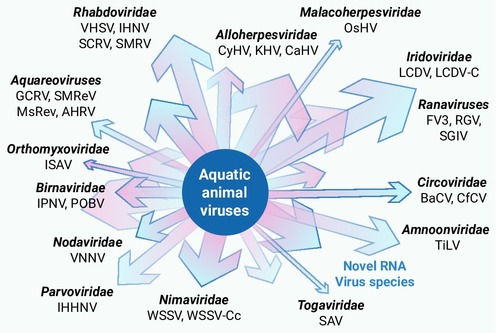
Figure 1.
Radial schematic of aquatic animal virus spillover
-
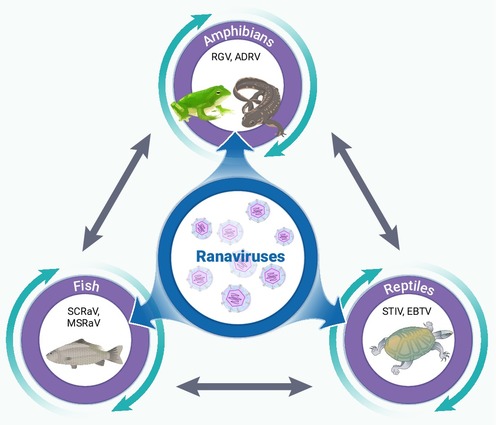
Figure 2.
Schematic of ranavirus spillover from different aquatic animals
-
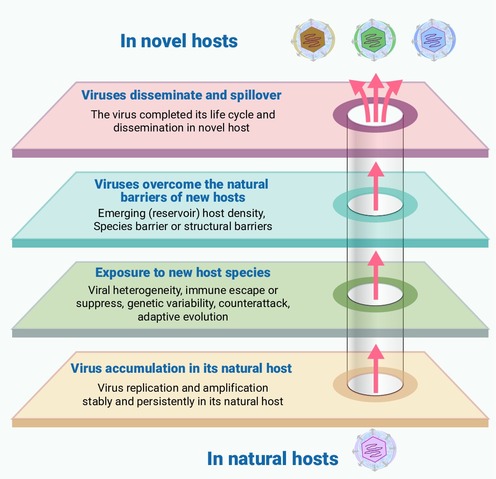
Figure 3.
Schematic diagram of viral spillover process
-
Figure 4.
A framework for virus spillover warning, monitoring and preparedness
