
A cross-system mechanistic framework for phytoplankton bloom life cycles across aquatic environments
-
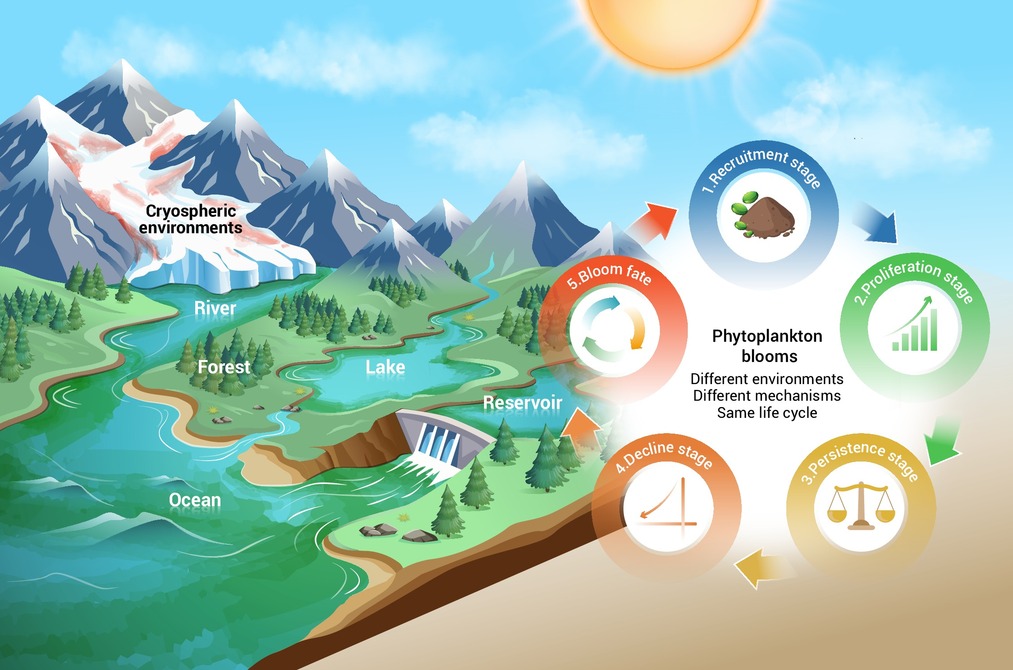
GRAPHICAL ABSTRACT
 DownLoad:
Full size image
-
PUBLIC SUMMARY
-
A unified life-cycle framework for phytoplankton blooms was developed.
Five key stages were identified: recruitment, proliferation, persistence, decline, and fate.
Shared and system-specific bloom mechanisms were compared across aquatic environments.
The cryosphere was examined as a distinct case study of bloom dynamics under extreme conditions.
The framework provides a basis for cross-system bloom prediction under environmental change.
-
-
ABSTRACT
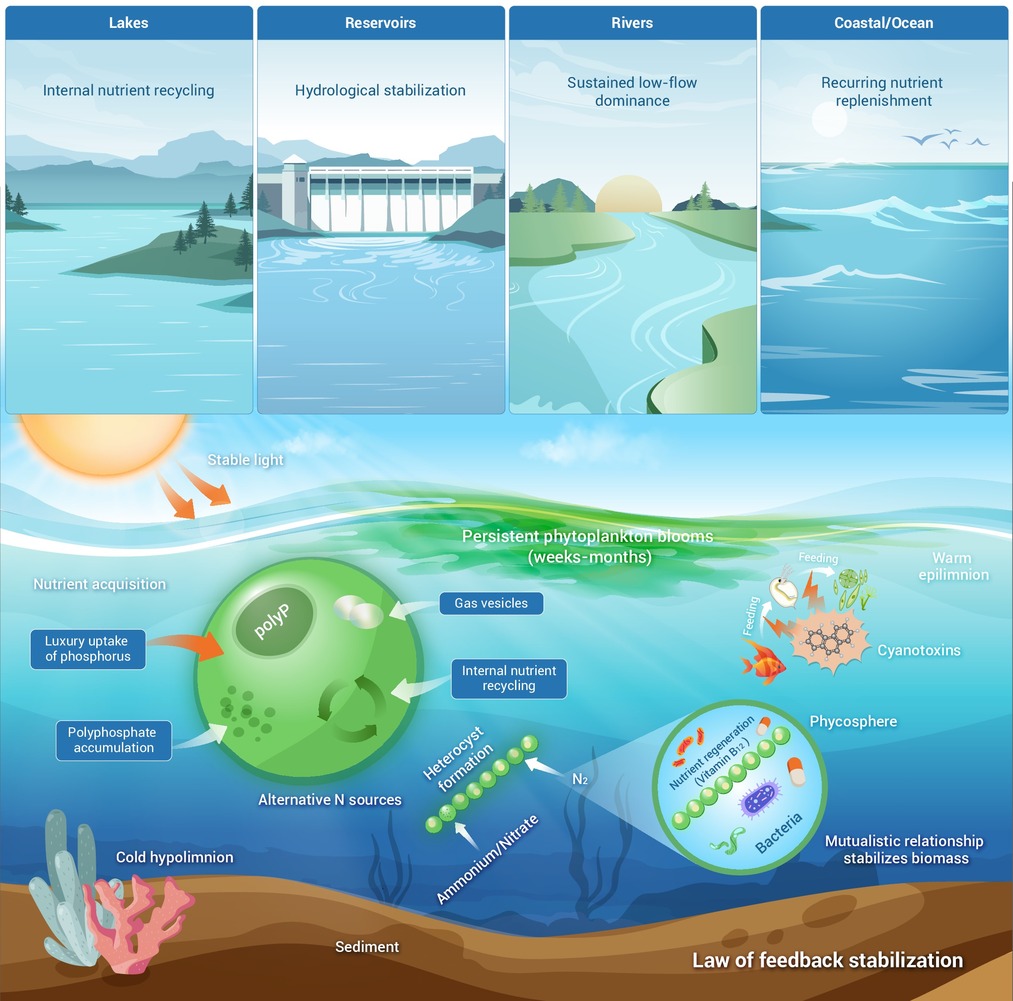
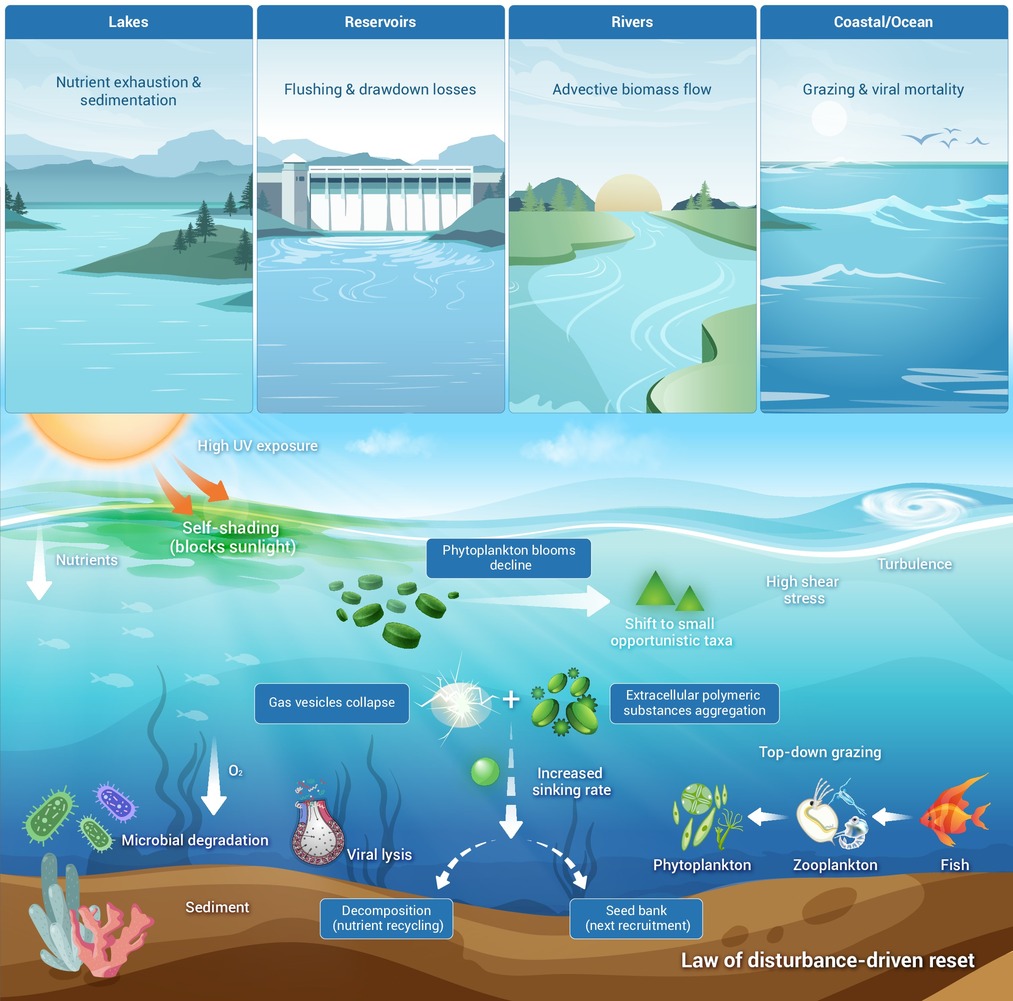
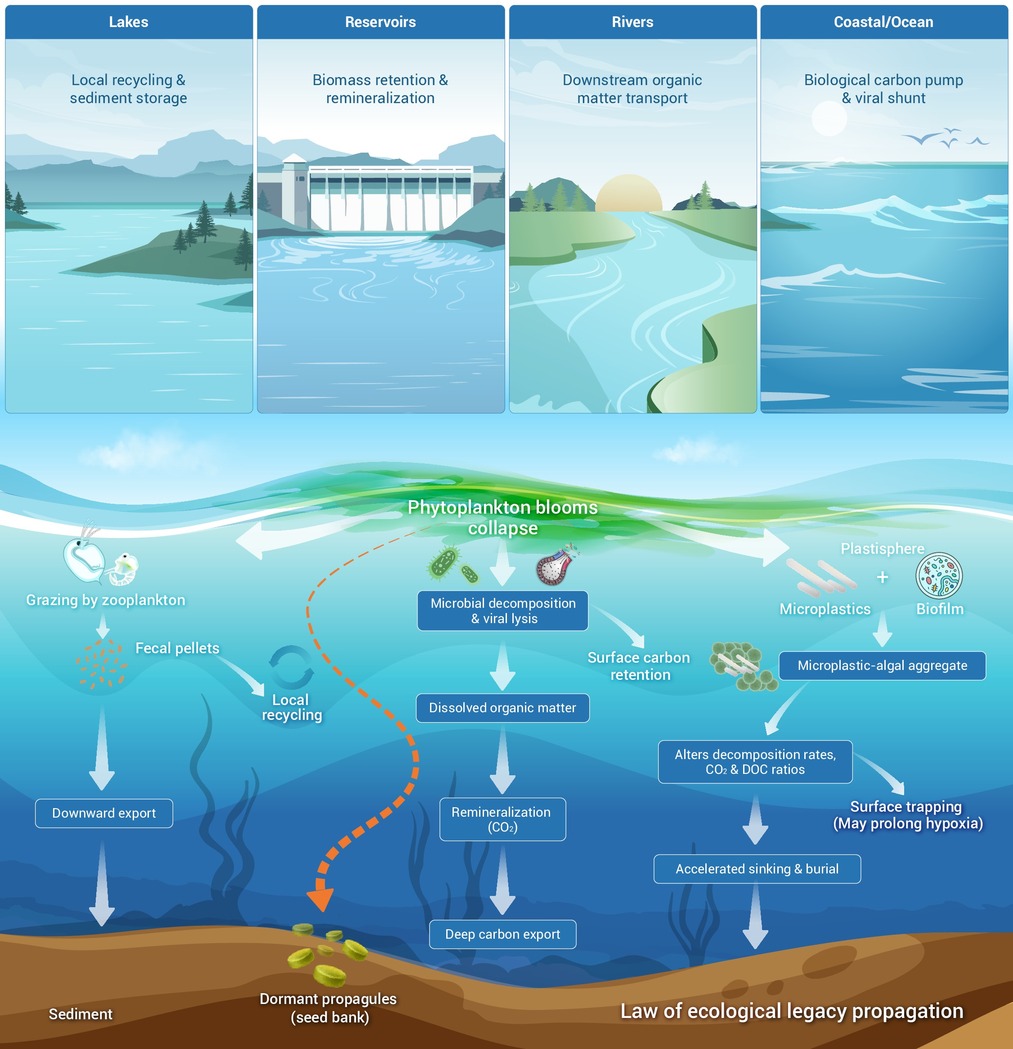
Phytoplankton blooms recur across lakes, reservoirs, rivers, coastal oceans, and cryospheric systems, with life cycles shaped by system-specific environmental drivers. This review synthesizes how five universal stages—recruitment, proliferation, persistence, decline, and fate—are expressed across systems, highlighting overlooked contrasts. Recruitment is temperature-driven in stratified lakes but governed by hydrodynamic relaxation in rivers and reservoirs. Proliferation is phosphorus-driven in freshwaters and iron-limited in offshore marine systems, where it can also trigger cysteine synthase-mediated neurotoxin production in diatoms. Persistence reflects more than physiological tolerance: bloom-associated microbiomes buffer nutrient supply and may harbor antibiotic resistance genes under warming. Decline is shaped by residence time: slow-retention systems favor viral lysis and internal recycling, whereas fast-flowing systems favor physical export. Bloom fate is reshaped by plastisphere-associated microbial interactions altering organic matter remineralization and carbon export efficiency. In cryospheric environments, blooms are governed by ice physics rather than liquid-water dynamics: recruitment follows ice-melt release, proliferation depends on light duration under meltwater stratification, decline is triggered by refreezing, and fate is amplified through ice-albedo feedbacks. Despite system-specific controls, bloom progression follows five generalized ecological laws: threshold activation, resource-retention optimization, feedback stabilization, disturbance-driven reset, and ecological legacy propagation. Critical gaps remain—quantitative stage-transition thresholds are poorly constrained, phytoplankton physiological plasticity is rarely incorporated into models, and no framework resolves all five stages across the land-sea continuum. Addressing these gaps require trait-based parameterization, high-frequency observational networks, and coupled lake-river-estuary-coastal forecasting models. This framework provides a mechanistic foundation for transferable bloom prediction under climate change and hydrological regulation. -

-
REFERENCES
[1] Huppert A., Blasius B., and Stone L. (2002). A model of phytoplankton blooms. Am Nat. 159:156−71. DOI:10.1086/324789 [2] Dai Y., Yang S., Zhao D., et al. (2023). Coastal phytoplankton blooms expand and intensify in the 21st century. Nature 615:280−284. DOI:10.1038/s41586-023-05760-y [3] Wang Y., Zhao D., Woolway lestyn R., et al. (2025). Global elevation of algal bloom frequency in large lakes over the past two decades. Natl. Sci. Rev. 12:3. DOI:10.1093/nsr/nwaf011 [4] Zheng X., Wu S., Qiu J., et al. (2025). Induction of a neurotoxin in diatoms by iron limitation via cysteine synthase. Proc. Natl. Acad. Sci. USA 122:e2424843122. DOI:10.1073/pnas.2424843122 [5] Ardyna M., Mundy C.J., Mayot N., et al. (2020). Under-ice phytoplankton blooms: Shedding light on the “invisible” part of arctic primary production. Front. Mar. Sci.7:608032 DOI:10.3389/fmars.2020.608032 [6] Zhao H., Manizza M., Lozier M.S., et al. (2025). Greener green and bluer blue: Ocean poleward greening over the past two decades. Science 388:1337−1340. DOI:10.1126/science.adr9715 [7] Manna B., Jay E., Zhang W., et al. (2024). Short-term warming induces cyanobacterial blooms and antibiotic resistance in freshwater lake, as revealed by metagenomics analysis. Water 16:2655. DOI:10.3390/w16182655 [8] Amaral-Zettler L.A., Zettler E.R. and Mincer T.J. (2020). Ecology of the plastisphere. Nat. Rev. Microbiol. 18:139−151. DOI:10.1038/s41579-019-0308-0 [9] Bolius S., Schmidt A., Kaiser J., et al. (2025). Resurrection of a diatom after 7000 years from anoxic Baltic Sea sediment. ISME J. 19:wrae252. DOI:10.1093/ismejo/wrae252 [10] Borges H., Wood S.A., Puddick J., et al. (2016). Intracellular, environmental and biotic interactions influence recruitment of benthic Microcystis (Cyanophyceae) in a shallow eutrophic lake. J. Plankton Res. 38:1289−301. DOI:10.1093/plankt/fbw046 [11] Paerl H.W. and Huisman J. (2008). Climate. Blooms like it hot. Science 320:57−8. DOI:10.1126/science.1155398 [12] Masuda Y., Yamanaka Y., Smith S. L., et al. (2021). Photoacclimation by phytoplankton determines the distribution of global subsurface chlorophyll maxima in the ocean. Commun. Earth Environ. 2:128. DOI:10.1038/s43247-021-00201-y [13] Moreno H.D., Rokitta S., Tremblay N., et al. (2024). Higher temperature, increased CO2, and changing nutrient ratios alter the carbon metabolism and induce oxidative stress in a cosmopolitan diatom. Limnol. Oceanogr. 69:121−139. DOI:10.1002/lno.12463 [14] de la Rosa F., Hernando M., Cervino C., et al. (2022). Response of antioxidant defences of Microcystis aeruginosa (Cyanobacteria) to increased temperature. Phycologia. 61:321−331. DOI:10.1080/00318884.2022.2046410 [15] Škaloud P., Tučková K., Čablová R., et al. (2025). High-frequency sampling unveils biotic and abiotic drivers of rapid phytoplankton morphological changes. New Phytol. 248:2528-2541. DOI:10.1111/nph.70534 [16] Vincent F., Gralka M., Schleyer G., et al. (2023). Viral infection switches the balance between bacterial and eukaryotic recyclers of organic matter during coccolithophore blooms. Nat. Commun. 14:510. DOI:10.1038/s41467-023-36049-3 [17] Yuan L., Fang L., Cao G., et al. (2024). Reservoir regulation-induced variations in water level impacts cyanobacterial bloom by the changing physiochemical conditions, Water Res. 259:121836. DOI:10.1016/j.watres.2024.121836 [18] Ma J., Qin B-Q., Wu P., et al. (2015). Controlling cyanobacterial blooms by managing nutrient ratio and limitation in a large hyper-eutrophic lake: Lake Taihu, China. J. Environ. Sci. (China) 27:80−86. DOI:10.1016/j.jes.2014.05.042 [19] Paerl H.W., Otten T. G. and Kudela R. (2018). Mitigating the expansion of harmful algal blooms across the freshwater-to-marine continuum. Environ. Sci. Technol. 52:5519−5529. DOI:10.1021/acs.est.7b05950 [20] Kwon D., Kim K., Jo H., et al. (2023). Environmental factors affecting akinete germination and resting cell awakening of two cyanobacteria. Appl. Microsc. 53:1−13. DOI:10.1186/s42649-023-00085-6 [21] Layden T.J., Kremer C.T., Brubaker D.L. et al. (2022). Thermal acclimation influences the growth and toxin production of freshwater cyanobacteria. Limnol. Oceanogr. 7:34−42. DOI:10.1002/lol2.10197 [22] Kupriyanova E.V., Pronina N.A. and Los D.A. (2023). Adapting from low to high: An update to CO2-concentrating mechanisms of Cyanobacteria and Microalgae. Plants 12:1569. DOI:10.3390/plants12071569 [23] Nunes G.S., Ferreira A. and Brito A.C. (2025). Long-term satellite data reveals complex phytoplankton dynamics in the Ross Sea, Antarctica. Commun. Earth. Environ. 6:864. DOI:10.1038/s43247-025-02590-w [24] Watson S.B., Whitton B.A., Higgins S.N., et al. (2015). Harmful algal blooms. In freshwater algae of North America: Ecology and classification. J Wehr, R Sheath, J Kociolek (eds), pp:873–920. San Diego: Academic. Freshwater Algae of North America. DOI:10.1016/B978-0-12-385876-4.00020-7 [25] Huisman J., Codd A.G., Paerl H.W., et al. (2018). Cyanobacterial blooms. Nat. Rev. Microbiol. 16:471−483. DOI:10.1038/s41579-018-0040-1 [26] Yang X., Gao R., Huff A., et al. (2024). Polyphosphate phosphorus in the Great Lakes. Limnol. Oceanogr. Lett. 9:602−611. DOI:10.1002/lol2.10394 [27] Lewitus A.J., Horner R.A., Caron A-D., et al. (2012). Harmful algal blooms along the North American west coast region: History, trends, causes, and impacts. Harmful Algae 19:133−159. DOI:10.1016/j.hal.2012.06.009 [28] Huff D.R. (1986). Phytoplankton communities in navigation pool no. 7 of the Upper Mississippi River. Hydrobiologia 136:47–56. DOI:10.1007/BF00051503 [29] Twiss M.R., McKay R.M.L., Bourbonniere R.A., et al. (2012). Diatoms abound in ice-covered lake Erie: An investigation of offshore winter limnology in Lake Erie over the period 2007 to 2010. J. Great Lakes Res. 38:18−30. DOI:10.1016/j.jglr.2011.12.008 [30] Yang Q., Xie P., Shen H., et al. (2012). A novel flushing strategy for diatom bloom prevention in the lower-middle Hanjiang River. Water Res. 46:2525−34. DOI:10.1016/j.watres.2012.01.051 [31] Lashaway A.R. and Carrick H.J. (2010). Effects of light, temperature and habitat quality on meroplanktonic diatom rejuvenation in lake Erie: Implications for seasonal hypoxia, J. Plankton Res. 32:479−490. DOI:10.1093/plankt/fbp147 [32] Kemp H.R., Zieritz A., Dugdale S.J., et al. (2025). Light and temperature as triggers for surface filamentous green algal blooms in shallow freshwater systems. Limnol. Oceanogr. 70:S155−S169. DOI:10.1002/lno.70169 [33] Moestrup O. (1994). Economic aspects: Blooms, nuisance species, and toxins. In: Green, J.C., Leadbeater, B.S.C. (eds). The haptophyte algae. In: systematics association special. Clarendon Press, Oxford, pp:265–285. DOI:10.1093/oso/9780198577720.003.0014 [34] Anderson D.M., Fensin E., Gobler C.J., et al. (2021). Marine harmful algal blooms (HABs) in the United States: History, current status and future trends. Harmful Algae. 102:101975. DOI:10.1016/j.hal.2021.101975 [35] Garner R.E., Kraemer S.A., Onana V.E., et al. (2022). Protist diversity and metabolic strategy in freshwater lakes are shaped by trophic state and watershed land use on a continental scale. MSystems. 7:e00316−22. DOI:10.1128/msystems.00316-22 [36] Zimba P. V., Rowan M. and Triemer R. (2004). Identification of euglenoid algae that produce ichthyotoxin(s). J Fish Dis. 27:115−7. DOI:10.1046/j.1365-2761.2003.00512.x [37] Karin R., Gesa A.W. and Ina B. (2012). Temperature as a driver for the expansion of the microalga Gonyostomum semen in Swedish lakes. Harmful Algae. 18:65−73. DOI:10.1016/j.hal.2012.04.005 [38] Emily J. S. and Jodi L. R. (2023). A critical review of operational strategies for the management of harmful algal blooms (HABs) in inland reservoirs. J. Environ. Manage. 330:117141. DOI:10.1016/j.jenvman.2022.117141 [39] Chen Y., Li M., Glibert P.M., et al. (2023). MurKy waters: Modeling the succession from r to K strategists (diatoms to dinoflagellates) following a nutrient release from a mining facility in Florida. Limnol. Oceanogr. 68:2288−2304. DOI:10.1002/lno.12420 [40] Kwon EY., Sreeush MG., Timmermann A., et al. (2022). Nutrient uptake plasticity in phytoplankton sustains future ocean net primary production. Sci. Adv. 8:eadd2475. DOI:10.1126/sciadv.add2475 [41] Ahonen S.A., Jones R.I., Seppälä J., et al. (2025). Phytoplankton absorb mainly red light in lakes with high chromophoric dissolved organic matter. Limnol. Oceanogr. 70:1359−1374. DOI:10.1002/lno.70034 [42] Penta W.B., Fox J. and Halsey K.H. (2021). Rapid photoacclimation during episodic deep mixing augments the biological carbon pump. Limnol. Oceanogr. 5:1850−1866. DOI:10.1002/lno.11728 [43] Bowes M.J., Hutchins M.G., Nicholls D-J.E., et al. (2024). Predicting River phytoplankton blooms and community succession using ecological niche modeling. Limnol. Oceanogr. 69:1404−1417. DOI:10.1002/lno.12582 [44] Karin G., Bengt K., Michael L. B., et al. (2026). High throughput in situ imaging reveals widely occurring diel vertical migration among phytoplankton, ISME Commun. 6:ycag049. DOI:10.1093/ismeco/ycag049 [45] Kleinteich J., Frassl M.A., Schulz M., et al. (2024). Climate change triggered planktonic cyanobacterial blooms in a regulated temperate river. Sci. Rep. 14:16298. DOI:10.1038/s41598-024-66586-w [46] Anderson S.I., Barton A.D., Clayton S., et al. (2021). Marine phytoplankton functional types exhibit diverse responses to thermal change. Nat. Commun. 12:6413. DOI:10.1038/s41467-021-26651-8 [47] Wu T., Dai R., Chu Z., et al. (2023). Rapid recovery of buoyancy in eutrophic environments indicates that cyanobacterial blooms cannot be effectively controlled by simply collapsing gas vesicles alone. Water 15:1898. DOI:10.3390/w15101898 [48] Lewis A.S.L., Breef-Pilz A., Howard D.W., et al. (2024). Reservoir drawdown highlights the emergent effects of water level change on reservoir physics, chemistry, and biology. J. Geophys. Res. Biogeosci. 129:e2023JG007780. DOI:10.1029/2023JG007780 [49] Gao W., Xiong F., Lu Y., et al. (2024). Water quality and habitat drive phytoplankton taxonomic and functional group patterns in the Yangtze River. Ecol. Process. 13:11. DOI:10.1186/s13717-024-00489-6 [50] Ho H.-I., Park H-C., Yoo K-E., et al. (2024). Survival and development strategies of Cyanobacteria through akinete formation and germination in the life cycle. Water 16:770. DOI:10.3390/w16050770 [51] Reignier O., Briand E., Hervé F., et al. (2024). Effects of salinity and nutrient stress on a toxic freshwater cyanobacterial community and its associated microbiome: An experimental study. Environ. Microbiol. Rep. 16:e70029. DOI:10.1111/1758-2229.70029 [52] Ligorini V., Garrido M. Malet N., et al. (2023). Response of phytoplankton communities to variation in salinity in a small mediterranean coastal lagoon: Future management and foreseen climate change consequences. Water 15:3214. DOI:10.3390/w15183214 [53] Sun X., Zhang H., Wang Z., et al. (2023). Phytoplankton community response to environmental factors along a salinity gradient in a seagoing river, Tianjin, China. Microorganisms 11:75. DOI:10.3390/microorganisms11010075 [54] Freyria N.J., Kuo A., Chovatia M., et al. (2022). Salinity tolerance mechanisms of an Arctic Pelagophyte using comparative transcriptomic and gene expression analysis. Commun. Biol. 5:500. DOI:10.1038/s42003-022-03461-2 [55] Sheward R.M., Gebühr C., Bollmann J., et al. (2024). Short-term response of Emiliania huxleyi growth and morphology to abrupt salinity stress. Biogeosciences 21:3121–3141. DOI:10.5194/bg-21-3121-2024 [56] McCain J.S.P. and Bertrand E.M. (2022). Phytoplankton antioxidant systems and their contributions to cellular elemental stoichiometry. Limnol. Oceanogr. Lett. 7:96−111. DOI:10.1002/lol2.10233 [57] Diaz B.P., Zelzion E., Halsey K., et al. (2023). Marine phytoplankton downregulate core photosynthesis and carbon storage genes upon rapid mixed layer shallowing. ISME. J. 17:1074−1088. DOI:10.1038/s41396-023-01416-x [58] Lirong S., Jia Y., Qin B-Q., et al. (2023). Harmful cyanobacterial blooms: Biological traits, mechanisms, risks, and control strategies. Annu. Rev. Environ. Resour. 48:123−47. DOI:10.1146/annurev-environ-112320-081653 [59] Jiang J., Zeng J., Wang J., et al. (2024). Changes in CO2 concentration drive a succession of toxic and non-toxic strains of Microcystis blooms. Water Res. 250:121056. DOI:10.1016/j.watres.2023.121056 [60] Keys M., Hopkinson B., Highfield A., et al. (2024). The requirement for external carbonic anhydrase in diatoms is influenced by the supply and demand for dissolved inorganic carbon. J. Phycol. 60:29−45. DOI:10.1111/jpy.13416 [61] Brandenburg K.M., Rost B., Van de Waal., et al. (2022). Physiological control on carbon isotope fractionation in marine phytoplankton. Biogeosciences 19:3305–3315. DOI:10.5194/bg-19-3305-2022 [62] Shingai Q.K. and Wilkinson G.M. (2023). Microcystin as a biogeochemical cycle: Pools, fluxes, and fates of the cyanotoxin in inland waters. Limnol. Oceanogr. Lett. 8:406−418. DOI:10.1002/lol2.10300 [63] Zhao W., Liu Y., Li H., et al. (2024). Seasonal rise in the contents of microcystin-LR and odorous substances due to cyanobacterial blooms in a drinking water reservoir supplying Xinyang City, China. Toxins 16:448. DOI:10.3390/toxins16100448 [64] Genzoli L., Jr Hall O.R., Otten G.T., et al. (2024). Benthic cyanobacterial proliferations drive anatoxin production throughout the Klamath River watershed, California, USA. Freshw. Sci. 43:307−324. DOI:10.1086/731975 [65] Brunson K.J., Thukral M., Ryan P.J., et al. (2024). Molecular forecasting of domoic acid during a pervasive toxic diatom bloom, Proc. Natl. Acad. Sci. USA 121:e2319177121. DOI:10.1073/pnas.2319177121 [66] Li Z., Wang J., Yue H., et al. (2023). Marine toxin domoic acid alters nitrogen cycling in sediments. Nat. Commun. 14:7873. DOI:10.1038/s41467-023-43265-4 [67] Woolway R.I. (2023). The pace of shifting seasons in lakes. Nat. Commun. 14:2101. DOI:10.1038/s41467-023-37810-4 [68] Marzolf N.S., Vlah M.J., Lowman H.E., et al. (2024). Phenology of gross primary productivity in rivers displays high variability within years but stability across years. Limnol. Oceanogr. Lett. 9:524−531. DOI:10.1002/lol2.10407 [69] Kléparski L., Beaugrand G., Edwards M., et al. (2023). Phytoplankton life strategies, phenological shifts and climate change in the North Atlantic Ocean from 1850 to 2100. Glob. Change Biol. 29:3833−3849. DOI:10.1111/gcb.16709 [70] Lowman H.E., Shriver R.K., Hall RO Jr., et al. (2024). Macroscale controls determine the recovery of river ecosystem productivity following flood disturbances, Proc. Natl. Acad. Sci. USA 121:e2307065121. DOI:10.1073/pnas.2307065121 [71] Tao P., Huang T., Sun T., et al. (2022). Recycling of internal phosphorus during cyanobacterial growth and decline in a eutrophic lake in China indicated by phosphate oxygen isotopes, Appl. Geochem. 141:105320. DOI:10.1016/j.apgeochem.2022.105320 [72] Piccini C., Martínez de la Escalera G., Segura A.M., et al. (2024). The Microcystis-microbiome interactions: Origins of the colonial lifestyle. FEMS Microbiol Ecol. 100:fiae035. DOI:10.1093/femsec/fiae035 [73] Biggs T.E.G., Huisman J. and Brussaard C.P.D. (2021). Viral lysis modifies seasonal phytoplankton dynamics and carbon flow in the Southern Ocean. ISME J. 15:3615−3622. DOI:10.1038/s41396-021-01033-6 [74] Bandara T., Brugel S., Lau D.C.P., et al. (2025). Blooms of filamentous cyanobacteria reduce zooplankton quality and pelagic food web efficiency. Limnol Oceanogr. 70:S69−S83. DOI:10.1002/lno.70122 [75] Freilich M.A., Poirier C., Dever M., et al. (2024). 3D intrusions transport active surface microbial assemblages to the dark ocean, Proc. Natl. Acad. Sci. USA 121:e2319937121. DOI:10.1073/pnas.2319937121 [76] Deutschmann I.M., Delage E., Giner C.R., et al. (2024). Disentangling microbial networks across pelagic zones in the tropical and subtropical global ocean. Nat. Commun. 15:126. DOI:10.1038/s41467-023-44550-y [77] Kyeongwon P., Yeongji O. and Yoonja K. (2023). The spatial distribution of phytoplankton in gamak bay in Fall, 2021. Aquatic Nat. 3:1−14. DOI:10.23135/an.2023.3.1.1 [78] Tang X., Zhang C., Xu S., et al. (2025). Spatial and temporal dynamics of the complexity, stability and community assembly of phytoplankton community in a deep channel-type reservoir, J. Environ. Sci. 165:107−118. DOI:10.1016/j.jes.2025.07.063 [79] Browning T.J. and Moore C.M. (2023). Global analysis of ocean phytoplankton nutrient limitation reveals high prevalence of co-limitation. Nat. Commun. 14:5014. DOI:10.1038/s41467-023-40774-0 [80] Huang Z., Zhou L. and Chi Y. (2023). Spring phenology rather than climate dominates the trends in peak of growing season in the Northern Hemisphere. Glob. Change Biol. 29:4543−4555. DOI:10.1111/gcb.16758 [81] Li Y., Wang Y., Hu X., et al. (2025). Reservoir water-level operations to manage biogeochemical turnover. Water Res. 286:124225. DOI:10.1016/j.watres.2025.124225 [82] Schulz H., Teitelbaum Y., Singer G.A., et al. (2024). Respiration and CO2 evasion dynamics in moving streambeds as a response to flow regimes. J. Hydrol. 640:131559. DOI:10.1016/j.jhydrol.2024.131559 [83] Nowicki M., DeVries T. and Siegel D.A. (2022). Quantifying the carbon export and sequestration pathways of the ocean's biological carbon pump. Glob. Biogeochem. Cycles 36:e2021GB007083. DOI:10.1029/2021GB007083 [84] Petiteau L., Boyd P.W., Le Moigne F.A.C., et al. (2025). Microbial remineralization is a depth-varying contributor to particle flux attenuation in the Southern Ocean. Glob. Biogeochem. Cycles 39:e2025GB008498. DOI:10.1029/2025GB008498 [85] Yang Z., Zhang M., Yu Y., et al. (2020). Temperature triggers the annual cycle of Microcystis, comparable results from the laboratory and a large shallow lake. Chemosphere 260:127543. DOI:10.1016/j.chemosphere.2020.127543 [86] Tian H., Jin J., Chen B., et al. (2021). Depth-dependent spatiotemporal dynamics of overwintering pelagic Microcystis in a temperate water body. Microorganisms 9:1718. DOI:10.3390/microorganisms9081718 [87] Robert J. Diaz. and Rutger R. (2008). Spreading dead zones and consequences for marine ecosystems. Science 321:926−929. DOI:10.1126/science.1156401 [88] Bressac M., Laurenceau-Cornec E.C., Kennedy F., et al. (2024). Decoding drivers of carbon flux attenuation in the oceanic biological pump. Nature 633:587−593. DOI:10.1038/s41586-024-07850-x [89] Preston T., Stewart W. and Reynolds C. (1980). Bloom-forming cyanobacterium Microcystis aeruginosa overwinters on sediment surface. Nature 288:365−367. DOI:10.1038/288365a0 [90] Voyles M. and Knoll B.L. (2025). Multiple environmental stressors mediate cyanobacteria recruitment in microcosms simulating spring conditions from two Midwest US hypereutrophic reservoirs, J. Plankton Res. 47:5. DOI:10.1093/plankt/fbaf045 [91] Zou W., Wang Z., Song Q., et al. (2018). Recruitment-promoting of dormant Microcystis aeruginosa by three benthic bacterial species. Harmful Algae. 77:18−28. DOI:10.1016/j.hal.2018.05.008 [92] Ma J., Qin B.Q., P H-W., et al. (2016). The persistence of cyanobacterial (Microcystis spp. ) blooms throughout winter in Lake Taihu, China. Limnol. Oceanogr. 61:711−722. DOI:10.1002/lno.10246 [93] Su Y., You X., Lin H., et al. (2016). Recruitment of cyanobacteria from the sediments in the eutrophic Shanzi Reservoir. Environ Technol. 37:641−51. DOI:10.1080/09593330.2015.1076056 [94] Chen C., Kang Y., Chen H., et al. (2023). Effects of overwintering cyanobacteria on phosphorus and iron regeneration across the sediment-water interface: A pilot simulation experiment. Sci. Total Environ. 868:161518. DOI:10.1016/j.scitotenv.2023.161518 [95] Preece E.P., Otten T.G., Cooke J., et al. (2025). Role of benthic overwintering cyanobacteria seed stock on estuarine bloom dynamics. Harmful Algae. 143:102807. DOI:10.1016/j.hal.2025.102807 [96] Monika W., Per H., Markus O., et al. (2024). Data from: Plankton recruitment from coastal sediments under different temperature and light treatments. Dryad. DOI:10.5061/dryad.8cz8w9gwj [97] Iatskiu P., Zanon F.M., Silveira M.J., et al. (2026). Dormant phytoplankton in shallow lake sediments: Cyanobacteria, green algae, diatoms and phytoflagellates are recruited. Hydrobiologia. DOI:10.1007/s10750-026-06159-2 [98] Paerl H.W. and Paul V.J. (2012). Climate change: Links to global expansion of harmful cyanobacteria. Water Res. 46:1349−63. DOI:10.1016/j.watres.2011.08.002 [99] Fernández-González C., Tarran G.A., Schuback N., et al. (2022). Phytoplankton responses to changing temperature and nutrient availability are consistent across the tropical and subtropical Atlantic. Commun Biol. 5:1035. DOI:10.1038/s42003-022-03971-z [100] Feng B., Wang C., Wu X., et al. (2019). Involvement of microcystins, colony size and photosynthetic activity in the benthic recruitment of Microcystis. J. Appl. Phycol. 31:223−33. DOI:10.1007/s10811-018-1508-0 [101] Kaplan-Levy R.N., Hadas O., Summers L-M., et al. (2010). Akinetes: Dormant cells of Cyanobacteria. In Dormancy and Resistance in Harsh Environments, ed. E Lubzens, J Cerda, M Clark, pp:5–27. Berlin, Heidelberg: Springer-Verlag. DOI:10.1007/978-3-642-12422-8_2 [102] Paerl H.W. and Otten T.G. (2013). Harmful cyanobacterial blooms: Causes, consequences, and controls. Microb.Ecol. 65:995−1010. DOI:10.1007/s00248-012-0159-y [103] Song T., Zhang H., Xu Y., et al. (2024). Cyanobacterial blooms in Lake Taihu: Temporal trends and potential drivers. Sci. Total Environ. 942:173684. DOI:10.1016/j.scitotenv.2024.173684 [104] Li R., Xiao K., Zhao G., et al. (2024). Comprehensive assessment of eutrophication and the mechanisms diving phytoplankton blooms in multifunctional reservoirs. Water 16:1752. DOI:10.3390/w16121752 [105] Yuan Y., Zhou B., Jiang L., et al. (2024). Influencing factors of phytoplankton communities in different water bodies of the Yangtze River Basin under sustained extreme high temperature. Ecol. Front. 45:117−126,(2025). DOI:10.1016/j.ecofro.2024.09.009 [106] Lee D.-G., Oh J.-H., Kam J., et al. (2025). Phytoplankton blooming mechanisms over the East China Sea during post-El Niño summers. Biogeosciences 22:3165−3180. DOI:10.5194/bg-22-3165-2025 [107] Wang G., He Y., Chen Z., et al. (2024). A lag bloom pattern of phytoplankton after freshwater input events revealed by daily samples during summer in Qinhuangdao coastal water, China. Front Microbiol. 15:1454948. DOI:10.3389/fmicb.2024.1454948 [108] Mantas M.J.Q., Nunn P.B., Codd G.A., et al. (2022). Genomic insights into the biosynthesis and physiology of the cyanobacterial neurotoxin 3-N-methyl-2,3-diaminopropanoic acid (BMAA). Phytochemistry 200:113198. DOI:10.1016/j.phytochem.2022.113198 [109] Koksharova O.A., Butenko I.O., Pobeguts, O.V., et al. (2020). Proteomic insights into starvation of nitrogen-replete cells of nostoc sp. PCC 7120 under β-N-Methylamino-L-Alanine (BMAA) treatment. Toxins. 12:372. DOI:10.3390/toxins12060372 [110] Nowicka-Krawczyk P., Żelazna-Wieczorek J., Skrobek I., et al. (2022). Persistent cyanobacteria blooms in artificial water bodies—An effect of environmental conditions or the result of anthropogenic change. Int. J. Environ. Res. Public Health 19:6990. DOI:10.3390/ijerph19126990 [111] Lerminiaux J., Bogard M.J., Leavitt P.R., et al. (2026). Multiscale regulation of microcystin production, persistence and degradation in inland waters. Nat. Water 4:431−443. DOI:10.1038/s44221-026-00614-z [112] Munkes B., Löptien U. and Dietze H. (2021). Cyanobacteria blooms in the Baltic Sea: A review of models and facts. Biogeosciences 18:2347–2378. DOI:10.5194/bg-18-2347-2021 [113] Wang C., Wang M., Xie M., et al. (2026). Climate extremes intensify global lake eutrophication by increasing the stress resistance of harmful bloom-forming algae. Nat. Commun. 17:2859. DOI:10.1038/s41467-026-69529-3 [114] Li Z., Sun A., Liu X., et al. (2022). Climate warming increases the proportions of specific antibiotic resistance genes in natural soil ecosystems. J. Hazard Mater. 430:128442. DOI:10.1016/j.jhazmat.2022.128442 [115] John Moses B., Sabina P., Marco Antonio Lopez M., et al. (2025). Fate of antibiotic resistance genes and resistant bacteria under various operating temperatures of sludge anaerobic digestion. Water Sci. Technol. 92:53−65. DOI:10.2166/wst.2025.093 [116] Zhang Q., Zhang Z., Lu T., et al. (2020). Cyanobacterial blooms contribute to the diversity of antibiotic-resistance genes in aquatic ecosystems. Commun. Biol. 3:737. DOI:10.1038/s42003-020-01468-1 [117] Venables H. and Moore C. M. (2010). Phytoplankton and light limitation in the Southern Ocean: Learning from high-nutrient, high-chlorophyll areas. J. Geophys. Res. 115:C02015. DOI:10.1029/2009JC005361 [118] Anderson S.I., Fronda C., Barton A.D., et al. (2024). Phytoplankton thermal trait parameterization alters community structure and biogeochemical processes in a modeled ocean. Glob. Change Biol. 30:e17093. DOI:10.1111/gcb.17093 [119] Zhu Y., Wang X., Tong Y., et al. (2026). Iron-catalyzed active lipid peroxides drive ultrafast collective cell death in blooming algae. Science 392:6805. DOI:10.1126/science.aed3823 [120] Anderson D.M., Wells M.L., Trainer V.L., et al. (2025). Controlling harmful algal blooms (HABs) in marine waters: Review of current status and future prospects. Harmful Algae. 150:102989. DOI:10.1016/j.hal.2025.102989 [121] Moreau S., Boyd P.W. and Strutton P.G. (2020). Remote assessment of the fate of phytoplankton in the Southern Ocean sea-ice zone. Nat. Commun. 11:3108. DOI:10.1038/s41467-020-16931-0 [122] Lavanya M., Jithu G.V. and Divyashree S. (2025). Plastisphere - A new habitat of microbial community: Composition, structure and ecological consequences. Sustain. Environ. 11:2516898. DOI:10.1080/27658511.2025.2516898 [123] Peng Y., Zhou M., Peng Y., et al. (2025). Enhancement of lake carbon emission by cyanobacteria-derived organic carbon input: Stimulatory effect of co-metabolism on sediment. Water Res. 291:125277. DOI:10.1016/j.watres.2025.125277 [124] Liu Q., Tian Y., Liu Y., et al. (2020). Relationship between dissolved organic matter and phytoplankton community dynamics in a human-impacted subtropical river. J. Clean. Prod. 289:125144. DOI:10.1016/j.jclepro.2020.125144 [125] Boyd P., Law C.S., Wong C.S., et al. (2004). The decline and fate of an iron-induced subarctic phytoplankton bloom. Nature 428:549–553. DOI:10.1038/nature02437 [126] Kandylas A. and Visser A. W. (2026). Seasonal cycles of the carbon export flux in the ocean: Insights from the SISSOMA mechanistic model. Geosci. Model Dev. 19:93−113. DOI:10.5194/gmd-19-93-2026 [127] Lu Z., Qin G., Zheng L., et al. (2025). The role of phytoplankton in structuring global oceanic dissolved organic carbon pools. Nat. Commun. 16:7742. DOI:10.1038/s41467-025-63105-x [128] Wang J., Tanentzap A.J., Sun Y., et al. (2025). Microplastic-derived dissolved organic matter regulates soil carbon respiration via microbial ecophysiological controls. Environ. Sci. Technol. 59:17334−17348. DOI:10.1021/acs.est.5c07544 [129] Chang S., Zhou A., Hua Z., et al. (2024). Microplastics alter soil carbon cycling: Effects on carbon storage, CO2 and CH4 emission and microbial community. Cambridge Prisms: Plast. 2:e5. DOI:10.1017/plc.2024.5 [130] Su P., Bu N., Liu X., et al. (2024). Stimulated soil CO2 and CH4 emissions by microplastics: A hierarchical perspective. Soil Biol. Biochem. 194:109425. DOI:10.1016/j.soilbio.2024.109425 [131] Fadeev E., Rogge A., Ramondenc S., et al. (2021). Sea ice presence is linked to higher carbon export and vertical microbial connectivity in the Eurasian Arctic Ocean. Commun Biol. 4:1255. DOI:10.1038/s42003-021-02776-w [132] Olsen L.M., Laney S.M., Duarte P., et al. (2017). The seeding of ice algal blooms in Arctic pack ice: The multiyear ice seed repository hypothesis. J. Geophys. Res. Biogeosci. 122:1529−1548. DOI:10.1002/2016JG003668 [133] Chen P., Zhang Z., Jamet C., et al. (2026). Arctic phytoplankton bloom timing and intensity linked to sea ice and winter persistence. Commun. Earth Environ. 7:576. DOI:10.1038/s43247-026-03574-0 [134] Luostarinen T., Weckström K., Ehn J., et al. (2023). Seasonal and habitat-based variations in vertical export of biogenic sea-ice proxies in Hudson Bay. Commun. Earth Environ. 4:78. DOI:10.1038/s43247-023-00719-3 [135] Courtney M., Payne G. L., van D., et al. (2024). Pan-Arctic analysis of the frequency of under-ice and marginal ice zone phytoplankton blooms. Elem. Sci. Anth. 12:00076. DOI:10.1525/elementa.2023.00076 [136] Halbach L., Kitzinger K., Hansen M., et al. (2025). Single-cell imaging reveals efficient nutrient uptake and growth of microalgae darkening the Greenland Ice Sheet. Nat. Commun. 16:1521. DOI:10.1038/s41467-025-56664-6 [137] Huserbråten M. and Vikebø F.B. (2026). Spring phenology of the Arctic Ocean shelf production system. Commun. Earth Environ. 7:170. DOI:10.1038/s43247-026-03192-w [138] Hayward A., Wright S.W., Carroll D., et al. (2025). Antarctic phytoplankton communities restructure under shifting sea-ice regimes. Nat. Clim. Change. 15:889−896. DOI:10.1038/s41558-025-02379-x [139] Boisvert L., Parker C., Valkonen E., et al. (2026). A recent stabilization in the lengthening of the Arctic sea ice melt season into a highly variable regime. Commun. Earth Environ. 7:552. DOI:10.1038/s43247-026-03534-8 [140] Lutz S., Anesio A., Raiswell R., et al. (2016). The biogeography of red snow microbiomes and their role in melting arctic glaciers. Nat. Commun. 7:11968. DOI:10.1038/ncomms11968 [141] Jan K.M.G., Serandour B., Walve J., et al. (2024). Plankton blooms over the annual cycle shape trophic interactions under climate change. Limnol. Oceanogr. Lett. 9:209−218. DOI:10.1002/lol2.10385 [142] Jansen J., Simpson G.L., Weyhenmeyer G.A., et al. (2024). Climate-driven deoxygenation of northern lakes. Nat. Clim. Chang. 14:832−838. DOI:10.1038/s41558-024-02058-3 [143] Larsson M.E., Bramucci A.R., Collins S., et al. (2022). Mucospheres produced by a mixotrophic protist impact ocean carbon cycling. Nat. Commun. 13:1301. DOI:10.1038/s41467-022-28867-8 [144] Zheng B., Lucas A.J., Franks P.J.S., et al. (2023). Dinoflagellate vertical migration fuels an intense red tide. Proc. Natl. Acad. Sci. USA 120:e2304590120. DOI:10.1073/pnas.2304590120 -
ABOUT THIS ARTICLE
Cite this article:
Tassadaq W., Ma J., Jeppesen E., et al. (2026). A cross-system mechanistic framework for phytoplankton bloom life cycles across aquatic environments. The Innovation Water 1:100029. https://doi.org/10.59717/j.tiw.2026.100029
Welcome!
To request copyright permission to republish or share portions of our works, please visit Copyright Clearance Center's (CCC) Marketplace website at marketplace.copyright.com.
Export File
Citation
Tassadaq W., Ma J., Jeppesen E., et al. (2026). A cross-system mechanistic framework for phytoplankton bloom life cycles across aquatic environments. The Innovation Water 1:100029. https://doi.org/10.59717/j.tiw.2026.100029

Format
Content
-
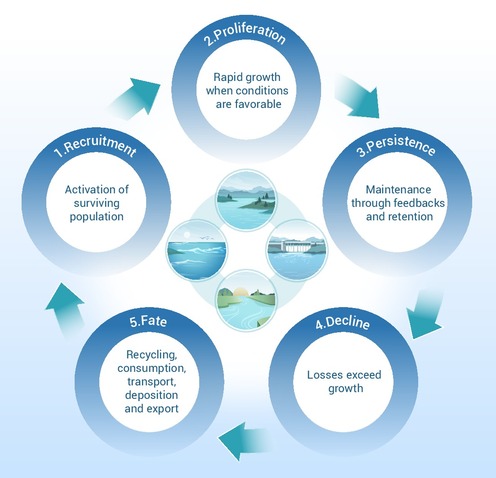
Figure 1.
Unified five-stage life cycle of phytoplankton blooms across aquatic systems.
-
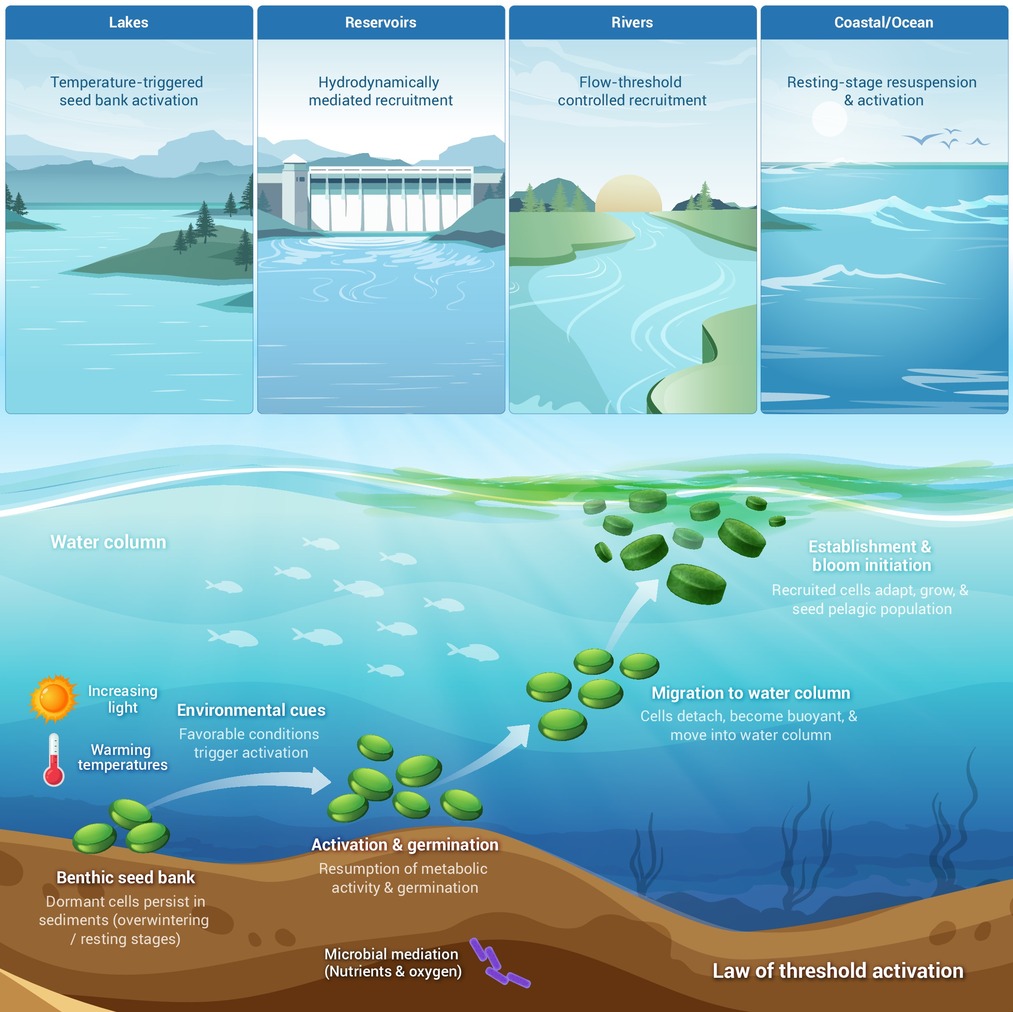
Figure 2.
Recruitment stage across aquatic systems
-
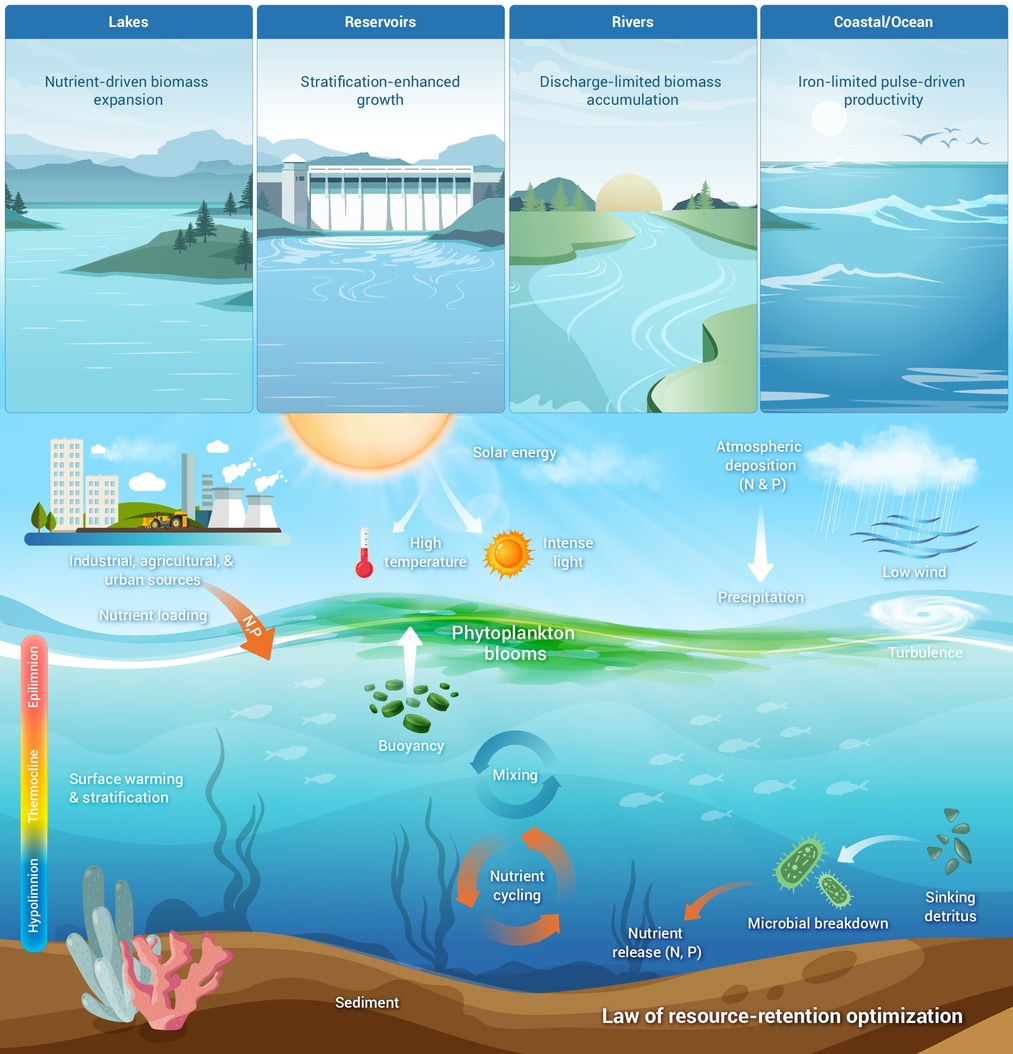
Figure 3.
Proliferation stage across aquatic systems
-
Figure 4.
Persistence stage across aquatic systems
-
Figure 5.
Decline stage across aquatic systems
-
Figure 6.
Fate stage across aquatic systems
