
Pricing-Driven Cooperative Mechanisms for Bidirectional Vehicle-to-Building Charging: An Evolutionary Game Approach
-
GRAPHICAL ABSTRACT
 DownLoad:
Full size image
DownLoad:
Full size image
-
PUBLIC SUMMARY
-
V2B can boost urban energy system flexibility, but prior research ignores strategic decisions of EV users and building managers under price-based coordination.
This study integrates evolutionary game theory and system dynamics to explore pricing-driven V2B interactions and cooperative strategy evolution.
Price incentives and discharging profits drive cooperation; larger discharge volume and lower non-cooperation losses speed up stable equilibrium.
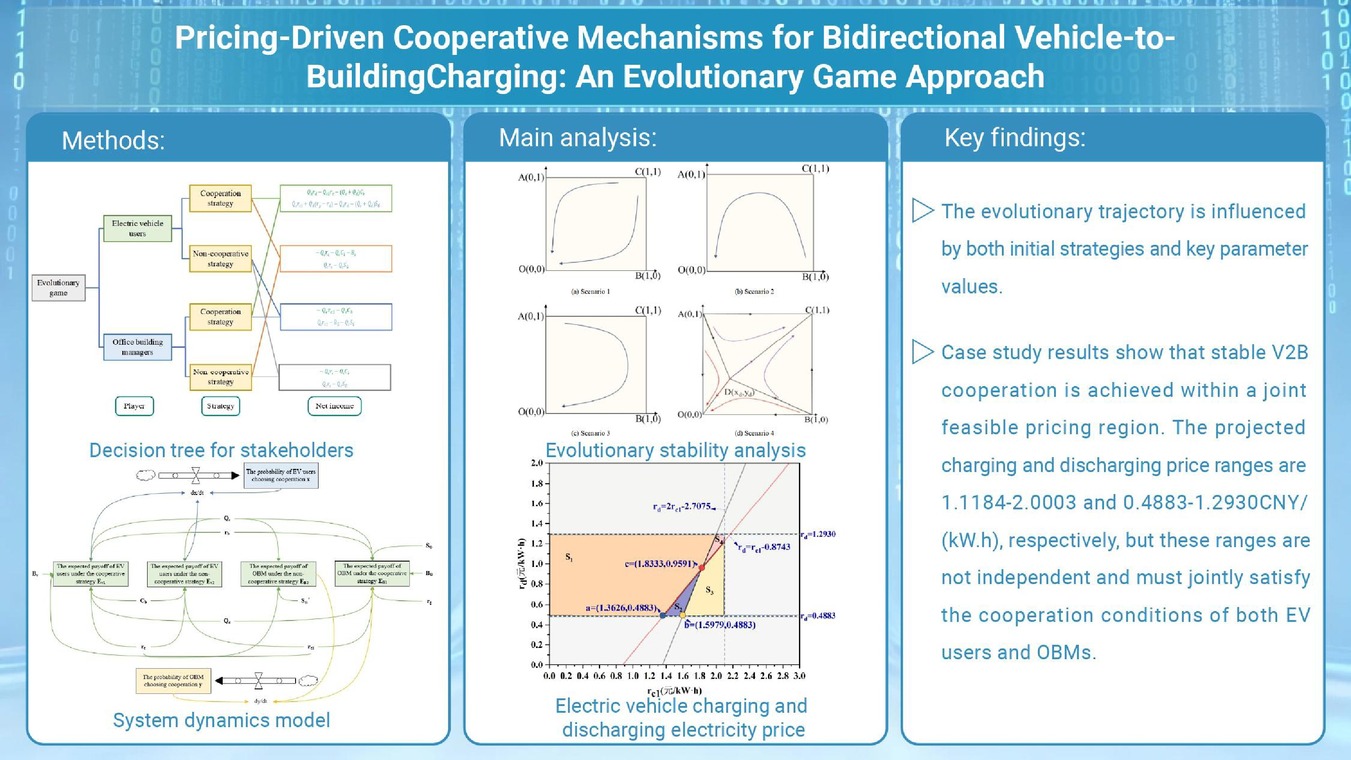
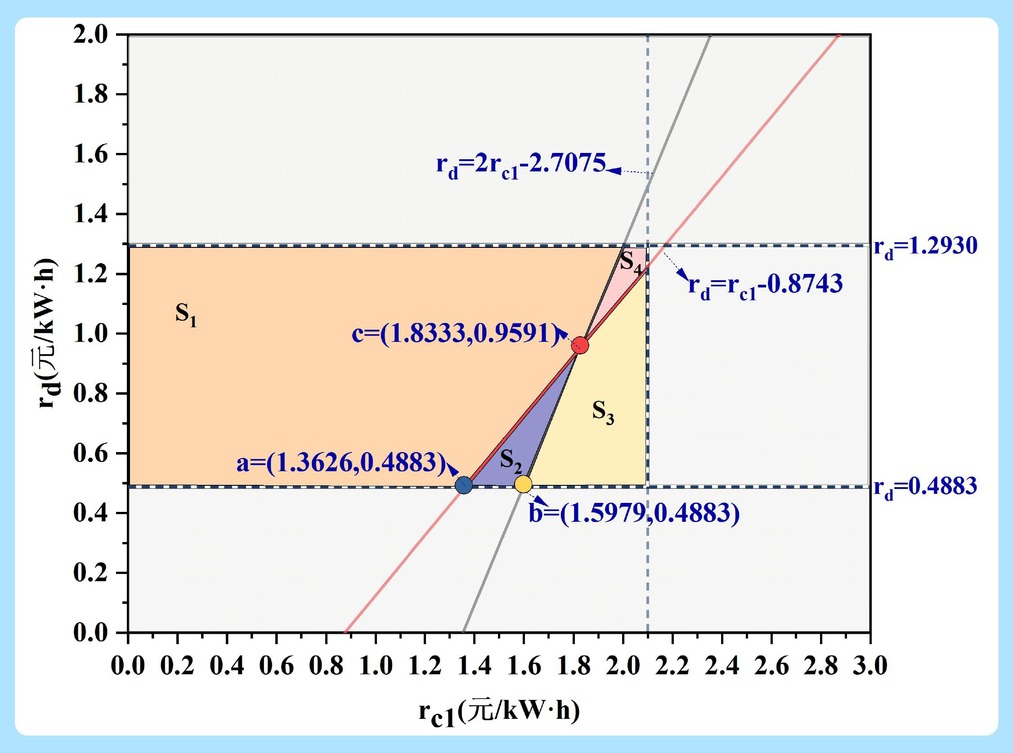
The case gives valid charging (1.3626–1.8333) and discharging (0.483–0.9591) price ranges (CNY/(kW∙h)) for stable V2B operation.
The results support V2B mechanism design and urban low-carbon energy management.
-
-
ABSTRACT
With rapid growth of electric vehicles (EVs), vehicle-to-building (V2B) interactions have emerged as a promising approach to enhance flexibility and sustainability in urban energy systems. However, existing studies often overlook the strategic decision-making processes of EV users and office building managers under pricing-based coordination schemes, which may limit the stability and effectiveness of cooperative V2B operation. To address this gap, this study develops an integrated framework combining evolutionary game theory and system dynamics to investigate pricing-driven interactions between EV users and office building managers within urban energy systems. A cost-benefit model is formulated for both parties to analyse the evolution of cooperative strategies, and a case study is conducted to identify EV charging and discharging price ranges conducive to stable cooperation. The results indicate that electricity price incentives and EV discharging profitability significantly promote cooperative behaviour, while higher EV discharging volumes and lower unilateral non-cooperation losses accelerate convergence to a stable cooperative equilibrium. A case study demonstrates that stable cooperation can be achieved when EV charging and discharging prices range from1.3626 -1.8333 and 0.483-0.9591 CNY/(kW∙h), respectively, in office building scenarios. These findings provide a theoretical basis for facilitating effective interactions between EVs and buildings in urban energy systems and offer practical insights for designing pricing mechanisms that support sustainable urban energy management and low-carbon transitions. -

-
REFERENCES
[1] Bai Y., Zhang W. and Hu, X. (2024). A collaborative matching method for multi-energy supply systems in office buildings considering the random characteristics of electric vehicles. Energy Build. 303:113809. DOI:10.1016/j.enbuild.2023.113809 [2] Ghafoori M., Abdallah M. and Kim S. (2023). Electricity peak shaving for commercial buildings using machine learning and vehicle to building (V2B) system. Appl. Energy 340:121052. DOI:10.1016/j.apenergy.2023.121052 [3] Liu X., Fu Z., Qiu S., et al., (2023). Building-centric investigation into electric vehicle behavior: A survey-based simulation method for charging system design. Energy 271:127010. DOI:10.1016/j.energy.2023.127010. [4] Rehman M.A., Numan M., Tahir H., et al., (2023). A comprehensive overview of vehicle to everything (V2X) technology for sustainable EV adoption. J. Energy Storage 74:109304. DOI:10.1016/j.est.2023.109304. [5] Zhang H., Zhu K., Hang Z., et al., (2022). Waste battery-to-reutilization decisions under government subsidies: An evolutionary game approach. Energy 259:124835. DOI:10.1016/j.energy.2022.124835. [6] Zhang M., Zhang Q., Zhou D., et al. (2021). Punishment or reward. Strategies of stakeholders in the quality of photovoltaic plants based on evolutionary game analysis in China. Energy 220:119754. DOI:10.1016/j.energy.2021.119754 [7] You M., Li S., Li D., et al., (2020). Evolutionary game analysis of coal-mine enterprise internal safety inspection system in China based on system dynamics. Resour. Policy 67:101673. DOI:10.1016/j.resourpol.2020.101673. [8] Kong D., Zhang Y., Fan Z., et al., (2024). The analysis of evolutionary strategies to facilitate the transformation of traditional buildings into prefabricated buildings. Comput. Ind. Eng. 198:110650. DOI:10.1016/j.cie.2024.110650. [9] Zhang M., Yang M. and Gao Y. (2024). Tripartite evolutionary game and simulation analysis of electric bus charging facility sharing under the governmental reward and punishment mechanism. Energy 307:132783. DOI:10.1016/j.energy.2024.132783 [10] Alabi T.M., Agbajor F.D., Yang Z., et al., (2023). Strategic potential of multi-energy system towards carbon neutrality: A forward-looking overview. Energy Built Environ. 4:689–708. DOI:10.1016/j.enbenv.2022.06.007. [11] Lo K.Y., Yeoh J.H. and Hsieh I.Y.L. (2023). Towards nearly zero-energy buildings: Smart energy management of vehicle-to-building (V2B) strategy and renewable energy sources. Sustain. Cities Soc. 99:104941. DOI:10.1016/j.scs.2023.104941 [12] Chen J., Zhang Y., Li X., et al., (2020). Strategic integration of vehicle-to-home system with home distributed photovoltaic power generation in Shanghai. Appl. Energy 263:114603. DOI:10.1016/j.apenergy.2020.114603. [13] Afzalan M. and Jazizadeh F. (2019). Residential loads flexibility potential for demand response using energy consumption patterns and user segments. Appl. Energy 254:113693. DOI:10.1016/j.apenergy.2019.113693 [14] Massat S., Franke G. and Rinderknecht S. (2023). Exploring the potential of a cross-sector integration of electric vehicles in residential buildings as a possible energy supply source. J. Build. Eng. 77:107486. DOI:10.1016/j.jobe.2023.107486 [15] Ding Y., Zhu Y., Wang Q., et al., (2023). A comprehensive scheduling model for electric vehicles in office buildings considering the uncertainty of charging load. Int. J. Electr. Power Energy Syst. 151:109154. DOI:10.1016/j.ijepes.2023.109154. [16] Liu J., Wu H., Huang H., et al. (2023). Renewable energy design and optimization for a net-zero energy building integrating electric vehicles and battery storage considering grid flexibility. Energy Convers. Manag. 298:117768. DOI:10.1016/j.enconman.2023.117768 [17] Amin Mirjalili S.M., Aslani A. and Zahedi R. (2023). Towards sustainable commercial-office buildings: Harnessing the power of solar panels, electric vehicles, and smart charging. Case Stud. Therm. Eng. 52:103696. DOI:10.1016/j.csite.2023.103696 [18] Ahsan S.M., Khan H.A. and Naveed-ul-Hassan A. (2022). Optimized power dispatch for smart building(s) and electric vehicles with V2X operation. Energy Rep. 8:10849−10867. DOI:10.1016/j.egyr.2022.08.221 [19] Liu C., Song Y., Wang W., et al. (2023). The governance of manufacturers’ greenwashing behaviors: A tripartite evolutionary game analysis of electric vehicles. Appl. Energy 333:120498. DOI:10.1016/j.apenergy.2022.120498 [20] Wang G., Chao Y., Cao Y., et al., (2022). A comprehensive review of research works based on evolutionary game theory for sustainable energy development. Energy Rep. 8:114–136. DOI:10.1016/j.egyr.2021.11.231. [21] Smith J.M. (1973). The logic of animal conflict. Nature 246:15−18. DOI:10.1038/246015a0 [22] Gao B., Che C., Qin Y., et al., (2021). Evolutionary game-theoretic analysis for residential users considering integrated demand response. J. Mod. Power Syst. Clean Energy 9:1500–1509. DOI:10.35833/MPCE.2019.000030. [23] Wang X., Zou S. and Ma Z. (2021). Decentralized integrated energy management for residential users based on evolutionary game. Proc. 40th Chinese Control Conf.:6856–6861. DOI:10.23919/CCC52363.2021.9550635. [24] Ding Y., Chen W., Pan X., et al., (2025). An evolutionary game model considering response priority for flexible resource scheduling in buildings. J. Build. Eng. 105:112154. DOI:10.1016/j.jobe.2025.112154. [25] Li J., Jiao J. and Tang Y. (2019). An evolutionary analysis on the effect of government policies on electric vehicle diffusion in complex network. Energy Policy 129:1−12. DOI:10.1016/j.enpol.2019.01.070 [26] Zhou X., Zhao R., Cheng L., et al. (2019). Impact of policy incentives on electric vehicles development: a system dynamics-based evolutionary game theoretical analysis. Clean Technol. Environ. Policy 21:1039−1053. DOI:10.1007/s10098-019-01691-3 [27] Hu Y., Wang Z. and Li X. (2020). Impact of policies on electric vehicle diffusion: An evolutionary game of small world network analysis. J. Clean. Prod. 265:121703. DOI:10.1016/j.jclepro.2020.121703 [28] Huang X., Lin Y., Lim M.K., et al., (2022). Electric vehicle charging station diffusion: An agent-based evolutionary game model in complex networks. Energy 257:124700. DOI:10.1016/j.energy.2022.124700. [29] Cao S., Pan L. and Mao X. (2022). Research on the pricing strategies of electric vehicle charging operators based on an evolutionary game model. Energy Sustain. Dev. 71:378−388. DOI:10.1016/j.esd.2022.10.015 [30] Zhang Z.X., Chen W.N., Shi W., et al., (2024). An individual evolutionary game model guided by global evolutionary optimization for vehicle energy station distribution. IEEE Trans. Comput. Soc. Syst. 11:1289–1301. DOI:10.1109/TCSS.2023.3237085. [31] Cheng L., Peng P., Huang P., et al., (2025). Leveraging evolutionary game theory for cleaner production: Strategic insights for sustainable energy markets, electric vehicles, and carbon trading. J. Clean. Prod. 512:145682. DOI:10.1016/j.jclepro.2025.145682. [32] Xu X., Mi Z., Zhan Z., et al. (2023). Response capability evaluation model of electric vehicle aggregator based on evolutionary game and response anticipation. Front. Energy Res. 11:1225327. DOI:10.3389/fenrg.2023.1225327 [33] Chen R., Song D., Liao L., et al., (2025). Feedback correction scheduling strategy for electric vehicles based on multi-regional agent master-slave and evolutionary hybrid game. Energy 319:134984. DOI:10.1016/j.energy.2025.134984. [34] Gao J., Mao M., Yang C., et al., (2023). V2G dynamic tariff strategy based on multiple games. Proc. 6th IEEE Int. Electr. Energy Conf.:4024–4029. DOI:10.1109/CIEEC58067.2023.10166526. [35] Malthus T. (2025). An Essay on the Principle of Population. Routledge (ed). Charity and Philanthropy in Nineteenth-Century Britain (Routledge): 5–7. DOI:10.4324/9781003056508-2. [36] Zhu G., Pan G. and Zhang W. (2018). Evolutionary game theoretic analysis of low carbon investment in supply chains under governmental subsidies. Int. J. Environ. Res. Public Health 15:2465. DOI:10.3390/ijerph15112465 [37] Friedman D. (1998). On economic applications of evolutionary game theory. J. Evol. Econ. 8:15−43. DOI:10.1007/s001910050054 -
ABOUT THIS ARTICLE
Cite this article:
Gao S., Bai Y., Zhang W., et al. (2026). Pricing-Driven Cooperative Mechanisms for Bidirectional Vehicle-to-Building Charging: An Evolutionary Game Approach. Energy Use 2:100050. https://doi.org/10.59717/ipj.energy-use.2026.100050
Welcome!
To request copyright permission to republish or share portions of our works, please visit Copyright Clearance Center's (CCC) Marketplace website at marketplace.copyright.com.
Export File
Citation
Gao S., Bai Y., Zhang W., et al. (2026). Pricing-Driven Cooperative Mechanisms for Bidirectional Vehicle-to-Building Charging: An Evolutionary Game Approach. Energy Use 2:100050. https://doi.org/10.59717/ipj.energy-use.2026.100050

Format
Content
-
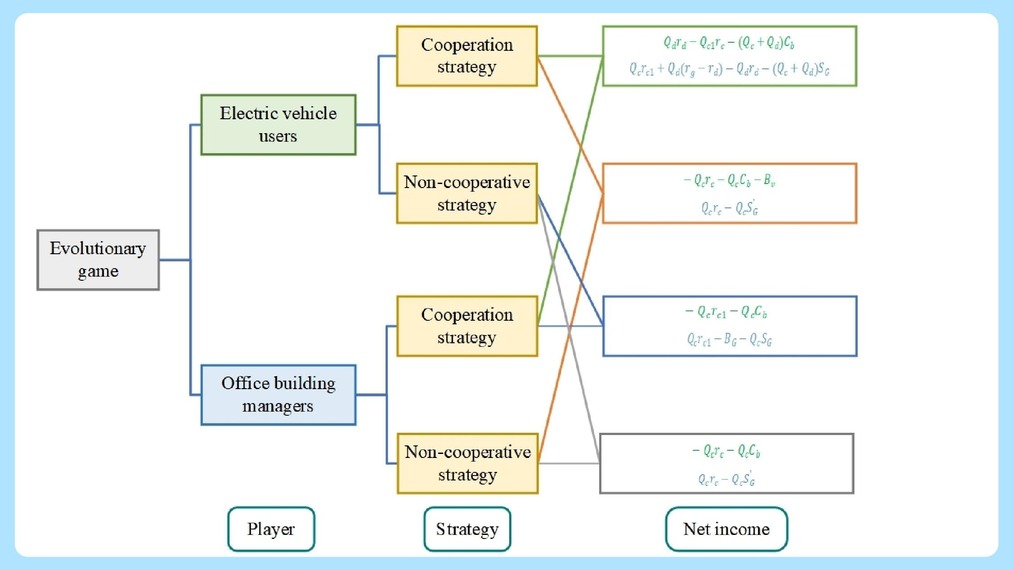
Figure 1.
Decision tree for stakeholders
-
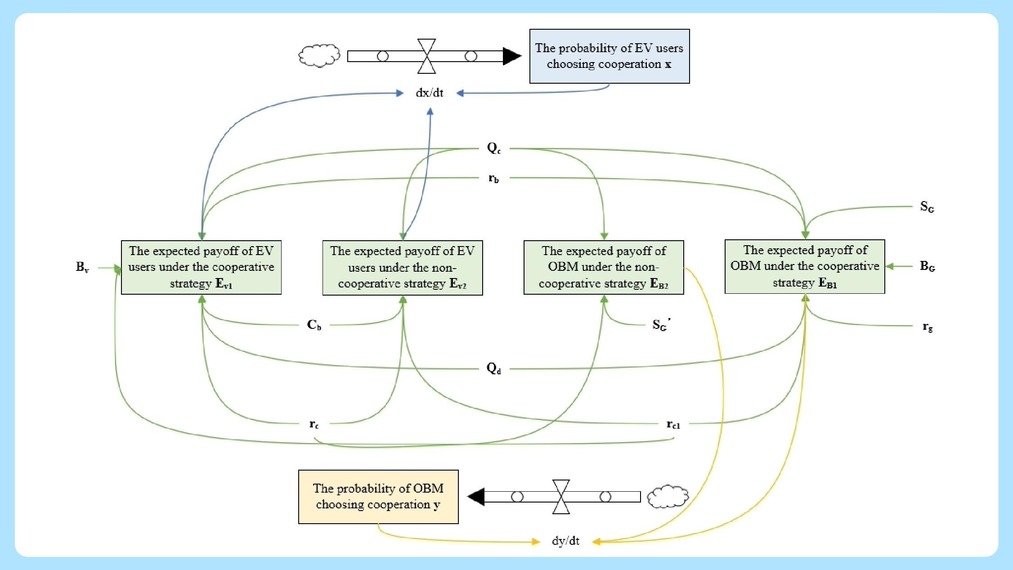
Figure 2.
System dynamics model of the evolutionary game between EV users and the OBMs
-
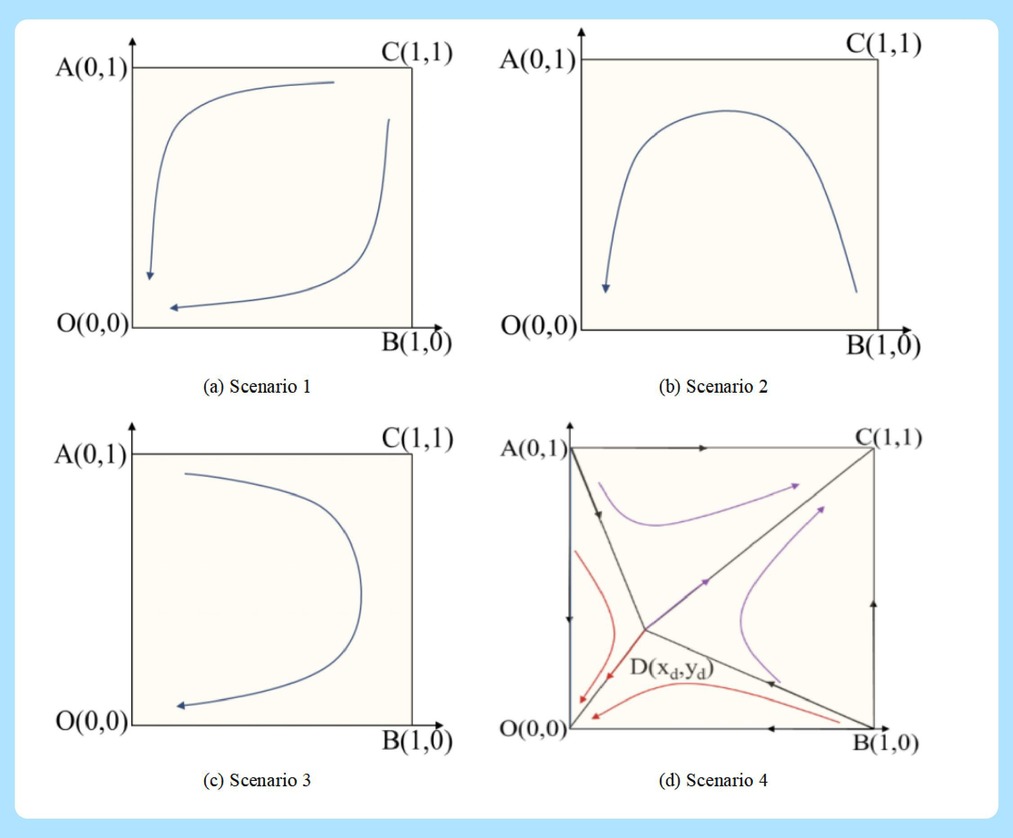
Figure 3.
Schematic diagram of the synergistic evolution phase of the interactive system composed of electric vehicles and office buildings in four scenarios
-
Figure 4.
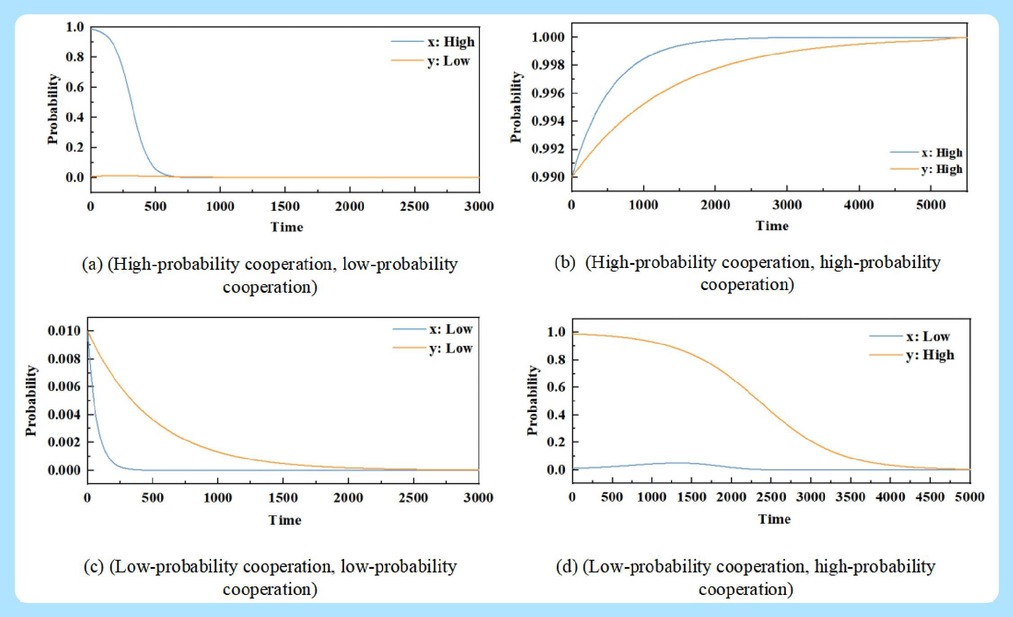
Simulation results of EV users and OBMs in Scenario 4 under different combinations of cooperation probabilities
-
Figure 5.
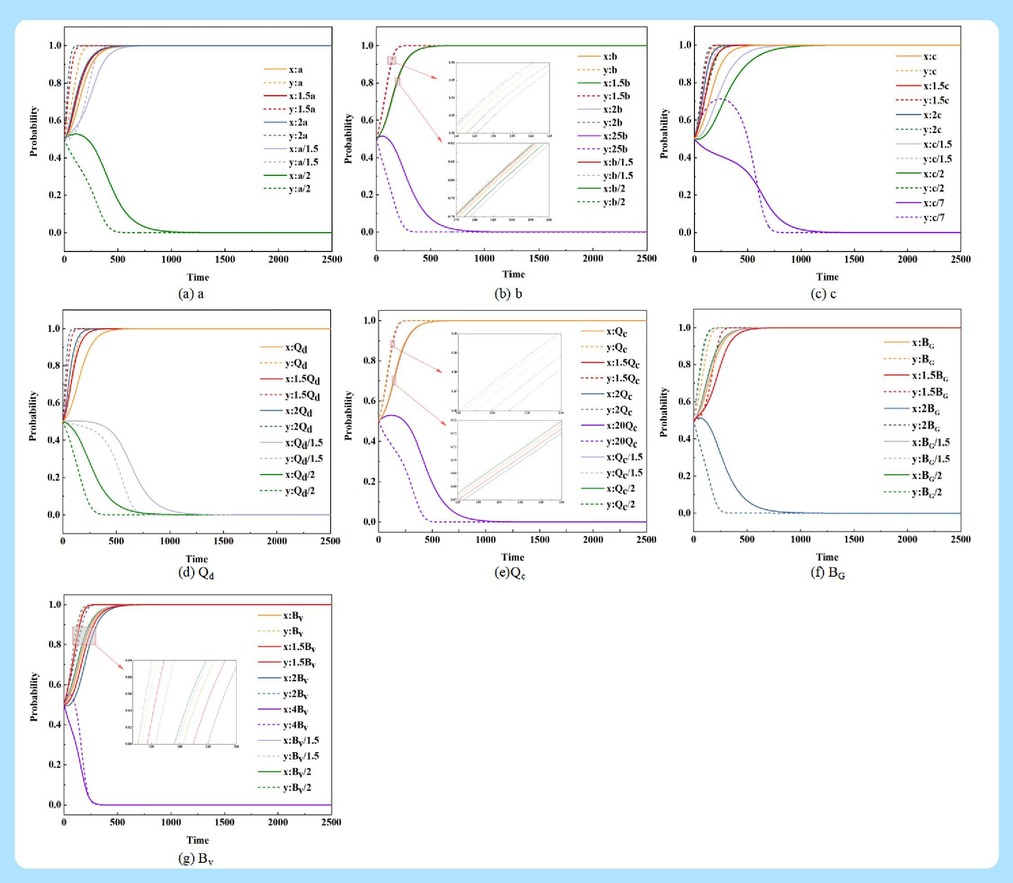
Impact of key parameters on cooperation probability between EV users and OBMs
-
Figure 6.
The relationship between EV discharging electricity price and charging electricity price in the interaction between EV users and OBMs