
Decision-Aware Pre-Feasibility Screening for Branch-Level Battery Storage Investment Under Spatiotemporal Grid Stress: Evidence from the Tokyo Transmission Network
-
GRAPHICAL ABSTRACT
 DownLoad:
Full size image
-
PUBLIC SUMMARY
-
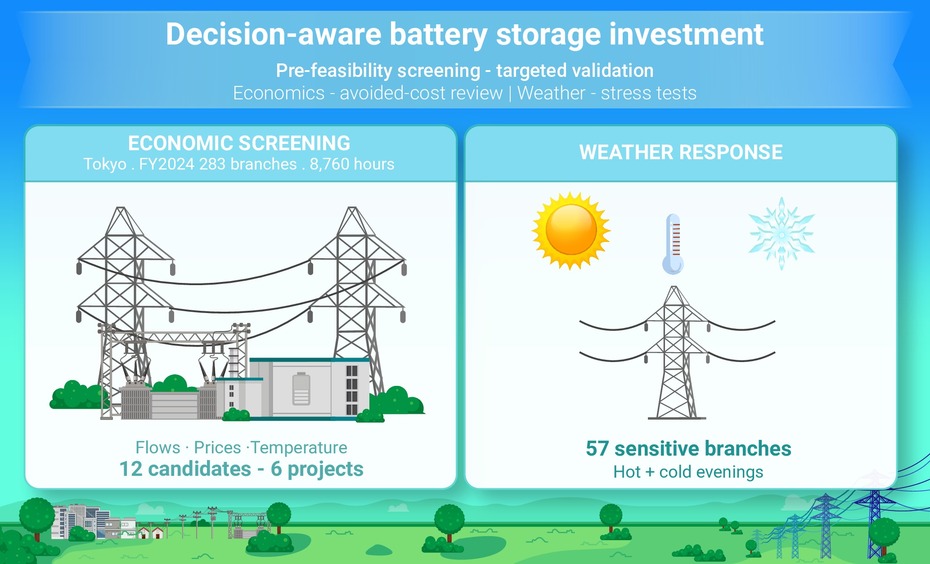
Public grid, electricity-price and temperature records support early screening of battery storage investments in Tokyo.
Across 283 transmission branches, the model selects six two-hour battery projects totalling 1.33 GW within a JPY 200 billion budget.
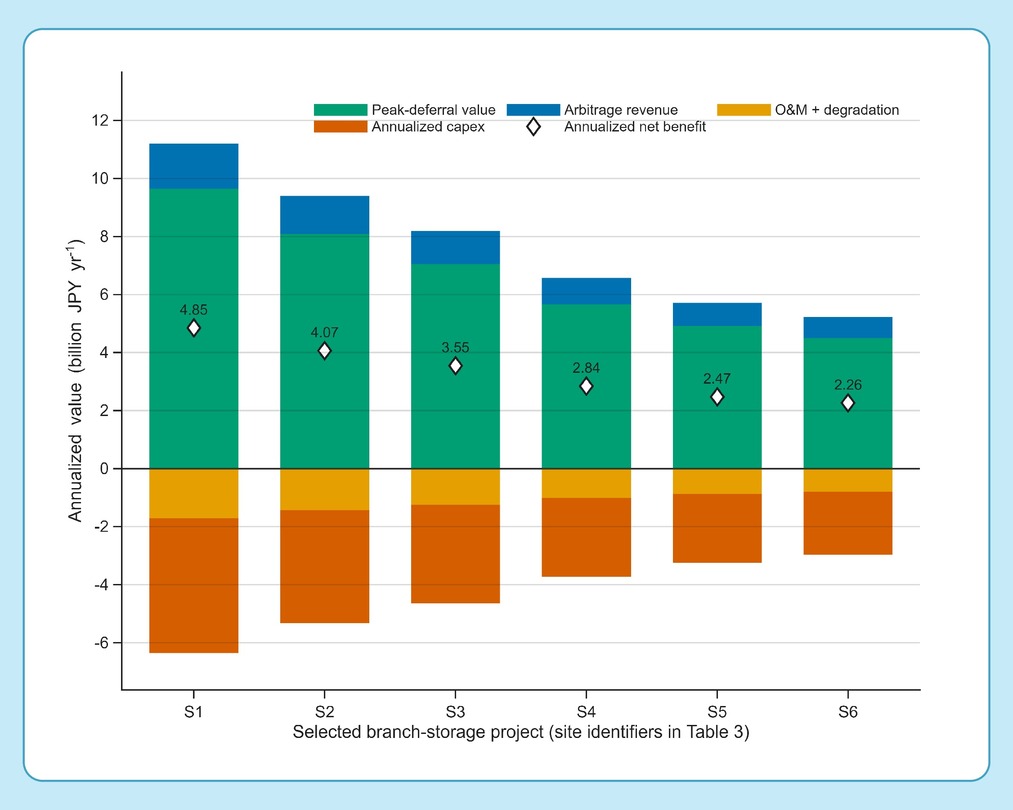
Assumed savings from postponing grid upgrades account for 86% of modelled annual value before costs and determine project profitability.
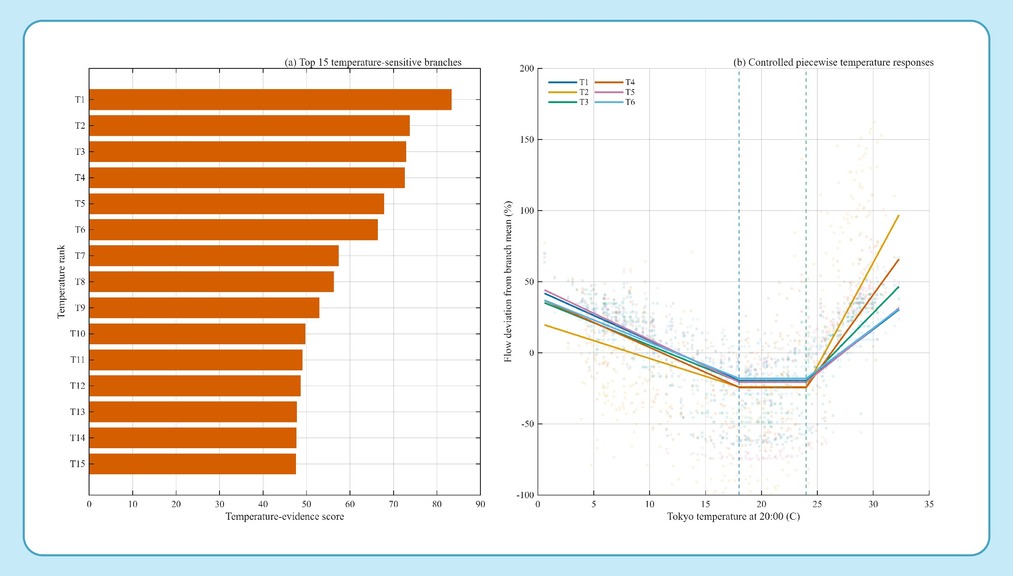
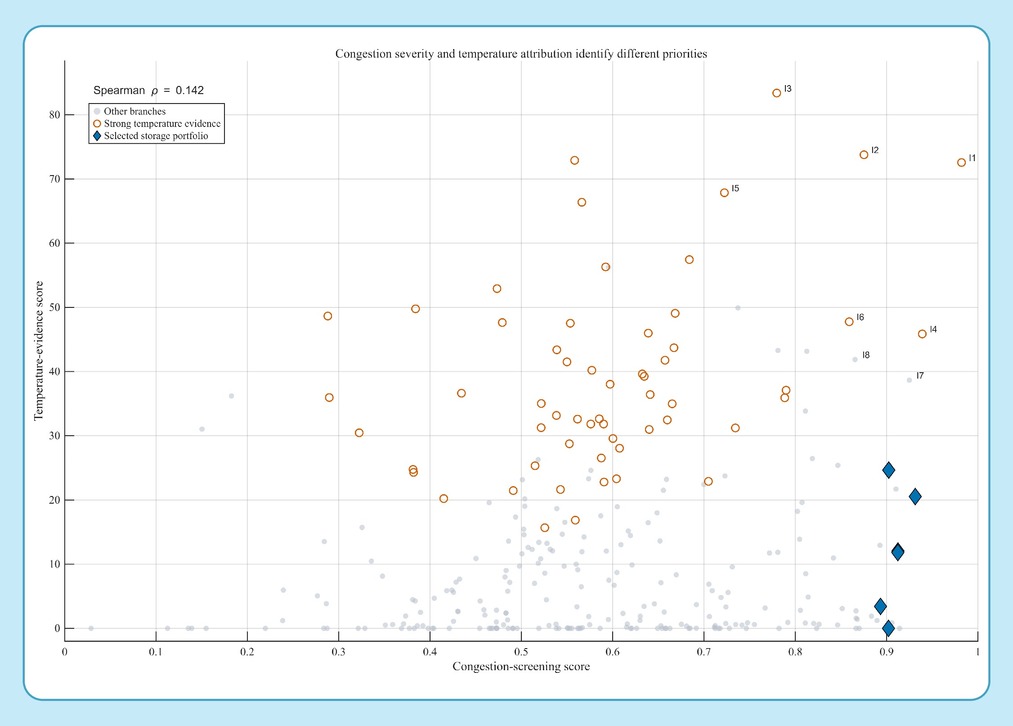
Fifty-seven branches show strong flow responses to hot and cold evenings; none coincides with the six selected battery locations.
Economic and weather assessments identify distinct planning priorities, guiding targeted engineering studies and verification of potential savings.
-
-
ABSTRACT
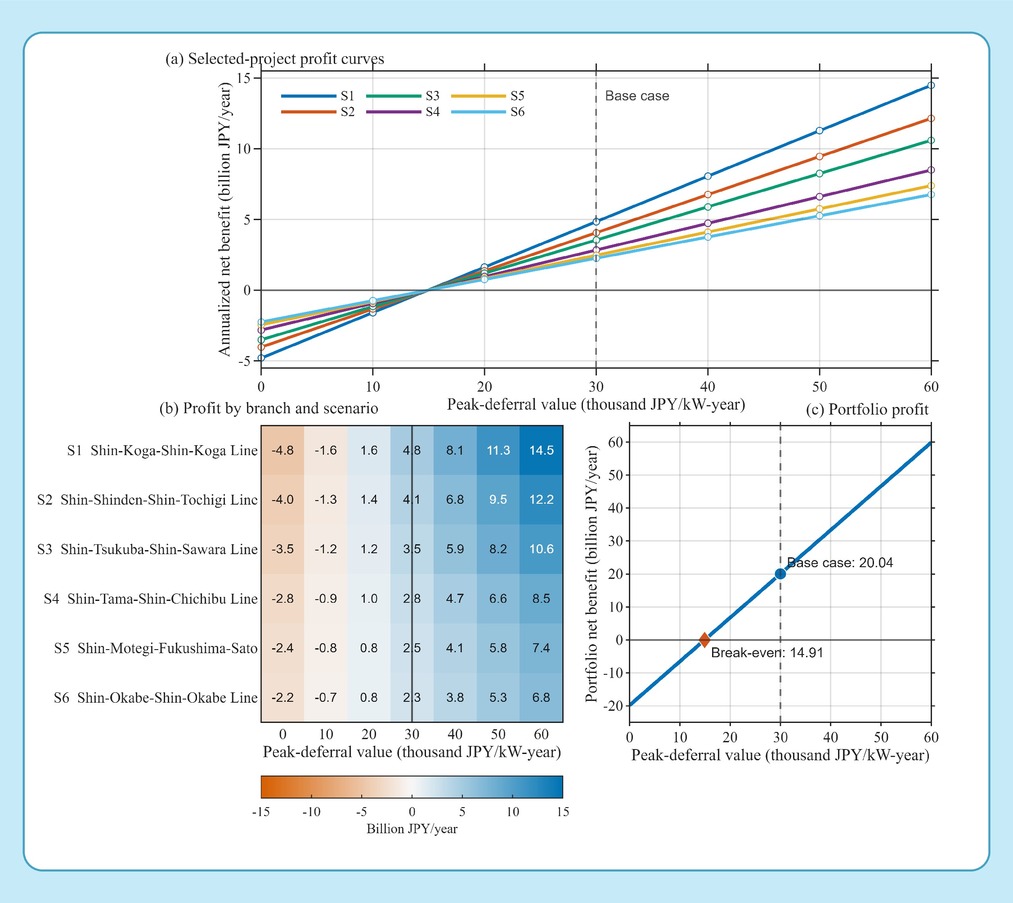
Public transmission-flow records reveal recurring operational stress, but their value for storage investment depends on a transparent link between observed flows, economic decisions, and subsequent engineering validation. This study develops a decision-aware spatiotemporal framework for branch-level battery energy storage system (BESS) pre-feasibility screening in the Tokyo transmission network. Fiscal-year 2024 TEPCO branch flows are aligned with Tokyo-area day-ahead prices and temperature observations across 283 unique branches and 8,760 hours. A composite stress screen identifies 12 candidates; branch-level linear programs co-optimize BESS power, energy, dispatch, and empirical peak reduction; and a binary portfolio model selects projects under a JPY 200 billion budget. A separate 20:00 weather model estimates branch-specific heating and cooling responses. The selected portfolio contains six two-hour projects totalling 1,328.5 MW/2,657 MWh and JPY 199.3 billion of capital, with a conditional 15-year net present value of JPY 208.0 billion. Valuation depends chiefly on the peak-deferral credit, which supplies 86.1% of gross annual operating value, and the fixed-design break-even value is JPY 14,913/kW-year. Without the credit, annualised net benefit falls to −JPY 19.8 billion/year; at the base value of JPY 30,000/kW-year it reaches JPY 20.0 billion/year. Fifty-seven of 283 branches exhibit robust two-sided temperature responses, the all-branch pressure–temperature rank correlation is weak, and none of the selected projects passes the weather screen. The framework separates economic peak-shaving candidates from weather-responsive corridors and routes each toward an appropriate validation pathway. -

-
REFERENCES
[1] Hesse H., Schimpe M., Kucevic D., et al. (2017). Lithium-Ion Battery Storage for the Grid-A Review of Stationary Battery Storage System Design Tailored for Applications in Modern Power Grids. Energies 10. 2107,DOI:10.3390/en10122107 [2] Liu Z., Su T., Quan Z., et al. (2023). Review on the Optimal Configuration of Distributed Energy Storage. Energies 16:5426. DOI:10.3390/en16145426 [3] Levin T., Bistline J., Sioshansi R., et al. (2023). Energy storage solutions to decarbonize electricity through enhanced capacity expansion modelling. Nat. Energy 8:1199−1208. DOI:10.1038/s41560-023-01340-6 [4] Mallapragada D., Sepulveda N. and Jenkins J. (2020). Long-run system value of battery energy storage in future grids with increasing wind and solar generation. Appl. Energy 275:115390. DOI:10.1016/j.apenergy.2020.115390 [5] Sepulveda N., Jenkins J., Edington A., et al. (2021). The design space for long-duration energy storage in decarbonized power systems. Nat. Energy :506-516. DOI:10.1038/s41560-021-00796-8 [6] Ziegler M., Mueller J., Pereira G., et al. (2019). Storage Requirements and Costs of Shaping Renewable Energy Toward Grid Decarbonization. Joule 3:2134−2153. DOI:10.1016/j.joule.2019.06.012 [7] Antweiler W. (2021). Microeconomic models of electricity storage: Price Forecasting, arbitrage limits, curtailment insurance, and transmission line utilization. Energy Eco. 101:105390. DOI:10.1016/j.eneco.2021.105390 [8] Schill W. and Zerrahn A. (2018). Long-run power storage requirements for high shares of renewables: Results and sensitivities. Renew. Sustain. Energy Rev. 83:156−171. DOI:10.1016/j.rser.2017.05.205 [9] Massucco S., Pongiglione P., Silvestro F., et al. (2021). Siting and Sizing of Energy Storage Systems: Towards a Unified Approach for Transmission and Distribution System Operators for Reserve Provision and Grid Support. Elect. Power Sys. Res. 190:106660. DOI:10.1016/j.epsr.2020.106660 [10] Khajeh H., Parthasarathy C., Doroudchi E., et al. (2023). Optimized siting and sizing of distribution-network-connected battery energy storage system providing flexibility services for system operators. Energy 285:129490. DOI:10.1016/j.energy.2023.129490 [11] Zhao Y., Zhang Y., Li Y., et al. (2024). Optimal configuration of energy storage for alleviating transmission congestion in renewable energy enrichment region. J. Energy Stor. 82:110398. DOI:10.1016/j.est.2023.110398 [12] Inaolaji A., Wu X., Roychowdhury R., et al. (2024). Optimal allocation of battery energy storage systems for peak shaving and reliability enhancement in distribution systems. J Energy Stor. 95:112305. DOI:10.1016/j.est.2024.112305 [13] Lamp S. and Samano M. (2022). Large-scale battery storage, short-term market outcomes, and arbitrage. Energy Eco. 107:105786. DOI:10.1016/j.eneco.2021.105786 [14] Hjalmarsson J., Thomas K. and Boström C. (2023). Service stacking using energy storage systems for grid applications – A review. J. Energy Stor. 60:106639. DOI:10.1016/j.est.2023.106639 [15] Marnell K., Obi M. and Bass R. (2019). Transmission-Scale Battery Energy Storage Systems: A Systematic Literature Review. Energies 12:4603. DOI:10.3390/en12234603 [16] Ma M., Huang H., Song X., et al. (2022). Optimal sizing and operations of shared energy storage systems in distribution networks: A bi-level programming approach. Appl. Energy 307:118170. DOI:10.1016/j.apenergy.2021.118170 [17] Chung A., Abdulai J., Bayoh P., et al. (2026). Improving access to essential medicines via decision-aware machine learning. Nature :1178-1183. DOI:10.1038/s41586-026-10433-7 [18] Zheng Y., Lin Y., Zhao L., et al. (2023). Spatial planning of urban communities via deep reinforcement learning. Nat. Comput. Sci. :748-762. DOI:10.1038/s43588-023-00503-5. [19] Wessel J., Chowdhury A., Wild T., et al. (2025). Regional coordination can alleviate the cost burden of a low-carbon electricity system. Nat. Commun. 16:9033. DOI:10.1038/s41467-025-64093-8 [20] Donti P. L., Amos B. and Kolter J. Z. (2017). Task-based End-to-end Model Learning in Stochastic Optimization. Adv. Neural Inform. Proces. Sys. 30:5484−5494. DOI:10.48550/arXiv.1703.04529 [21] Wilder B., Dilkina B. and Tambe M. (2019). Melding the Data-Decisions Pipeline: Decision-Focused Learning for Combinatorial Optimization. Proceed. AAAI Conf. A.I. 33:1658−1665. DOI:10.1609/aaai.v33i01.33011658 [22] Elmachtoub A. and Grigas P. (2022). Smart "Predict, then Optimize". Manag. Sci. 68:9−26. DOI:10.1287/mnsc.2020.3922 [23] Mandi J., Kotary J., Berden S., et al. (2024). Decision-Focused Learning: Foundations, State of the Art,Benchmark and Future Opportunities. J. A.I. Res. 81:1623−1701. DOI:10.1613/jair.1.15320 [24] Kotary J., Fioretto F., Van Hentenryck P., et al. (2021). End-to-End Constrained Optimization Learning: A Survey. Proceed. 13 Int. Joint Conf. A.I. :4475–4482. DOI: 10.24963/ijcai.2021/610 [25] Hiruta Y., Gao L. and Ashina S. (2022). A novel method for acquiring rigorous temperature response functions for electricity demand at a regional scale. Sci. Total Environ. 819:152893. DOI:10.1016/j.scitotenv.2021.152893 [26] Takane Y., Nakajima K., Yamaguchi K., et al. (2023). Decarbonisation technologies can halve the nonlinear increase in electricity demand in densely populated areas due to climate change. Sustain. Cit. Soc. 99:104966. DOI:10.1016/j.scs.2023.104966 [27] Ludwig N., Arora S. and Taylor J. W. (2023). Probabilistic load forecasting using post-processed weather ensemble predictions. J. Operat. Res. Soc. 74:1008−1020. DOI:10.1080/01605682.2022.2115411 [28] Miller J. I. and Nam K. (2022). Modeling peak electricity demand: A semiparametric approach using weather-driven cross-temperature response functions. Energy Econ. 114:106291. DOI:10.1016/j.eneco.2022.106291 [29] Hou H., Liu C., Wang Q., et al. (2022). Review of load forecasting based on artificial intelligence methodologies, models, and challenges. Elec. Power Sys. Res. 210:108067. DOI:10.1016/j.epsr.2022.108067 [30] Brown T., Hörsch J. and Schlachtberger D. (2018). PyPSA: Python for Power System Analysis. J. Open Res. Soft. 6:4. DOI:10.5334/jors.188 [31] Hörsch J., Hofmann F., Schlachtberger D., et al. (2018). PyPSA-Eur: An open optimisation model of the European transmission system. Energy Strat. Rev. 22:207−215. DOI:10.1016/j.esr.2018.08.012 [32] Birchfield A., Xu T., Gegner K., et al. (2017). Grid Structural Characteristics as Validation Criteria for Synthetic Networks. IEEE TPS 32:3258−3265. DOI:10.1109/tpwrs.2016.2616385 [33] Grochowicz A., Bloomfield H. and Victoria M. (2026). Resilience metrics to guide back-up investments in the power system during extreme weather. Nat. Sustain. DOI:10.1038/s41893-026-01897-6 [34] Qiu L., Khorramfar R., Wang S., et al. (2026). Climate change reshapes resource adequacy risks and optimal renewable energy siting in wind and solar energy systems. Nat. Energy. DOI:10.1038/s41560-026-02109-3 -
ABOUT THIS ARTICLE
Cite this article:
Li Y., Huang T. and Gao W. (2026). Decision-Aware Pre-Feasibility Screening for Branch-Level Battery Storage Investment Under Spatiotemporal Grid Stress: Evidence from the Tokyo Transmission Network. Energy Use 2:100062. https://doi.org/10.59717/ipj.energy-use.2026.100062
Welcome!
To request copyright permission to republish or share portions of our works, please visit Copyright Clearance Center's (CCC) Marketplace website at marketplace.copyright.com.
Export File
Citation
Li Y., Huang T. and Gao W. (2026). Decision-Aware Pre-Feasibility Screening for Branch-Level Battery Storage Investment Under Spatiotemporal Grid Stress: Evidence from the Tokyo Transmission Network. Energy Use 2:100062. https://doi.org/10.59717/ipj.energy-use.2026.100062

Format
Content
-
Figure 1.
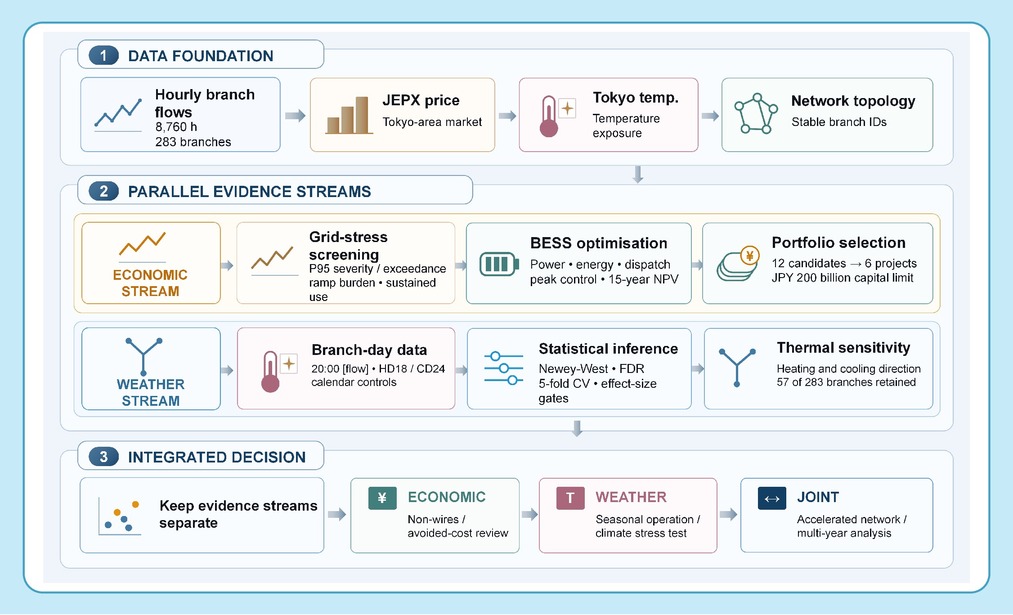
Research workflow.
-
Figure 2.
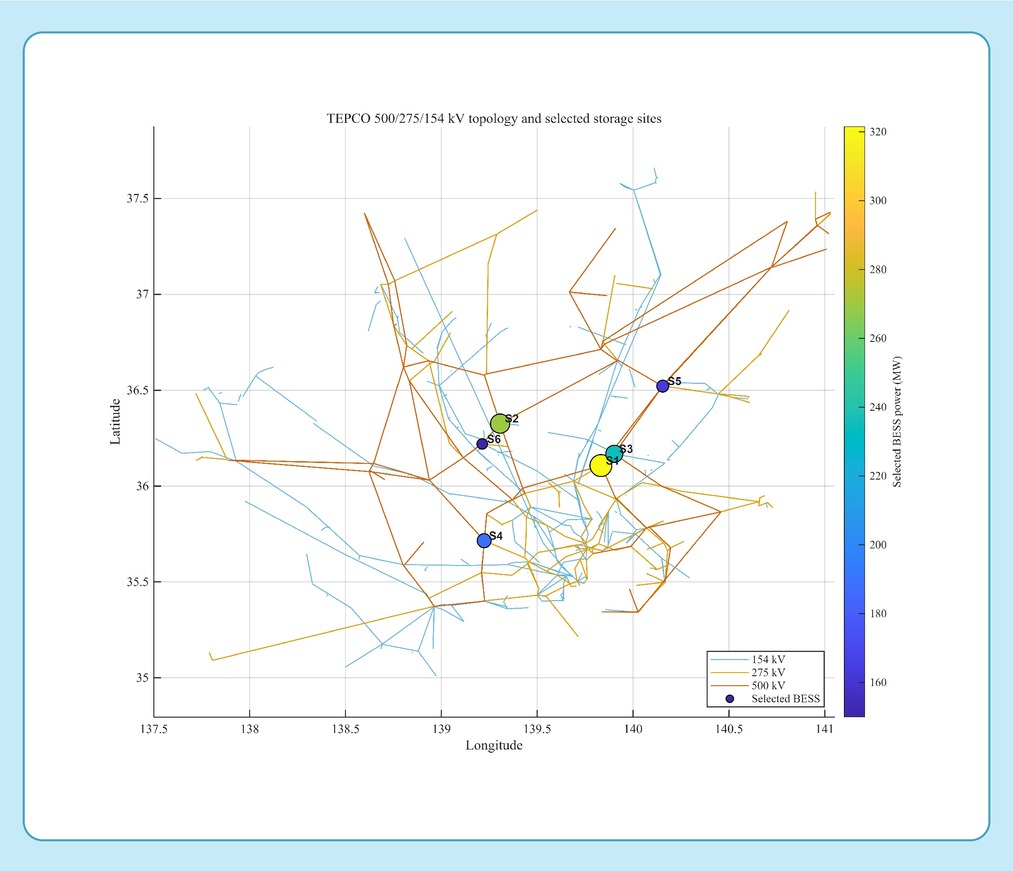
TEPCO 500/275/154 kV research topology and selected storage sites
-
Figure 3.
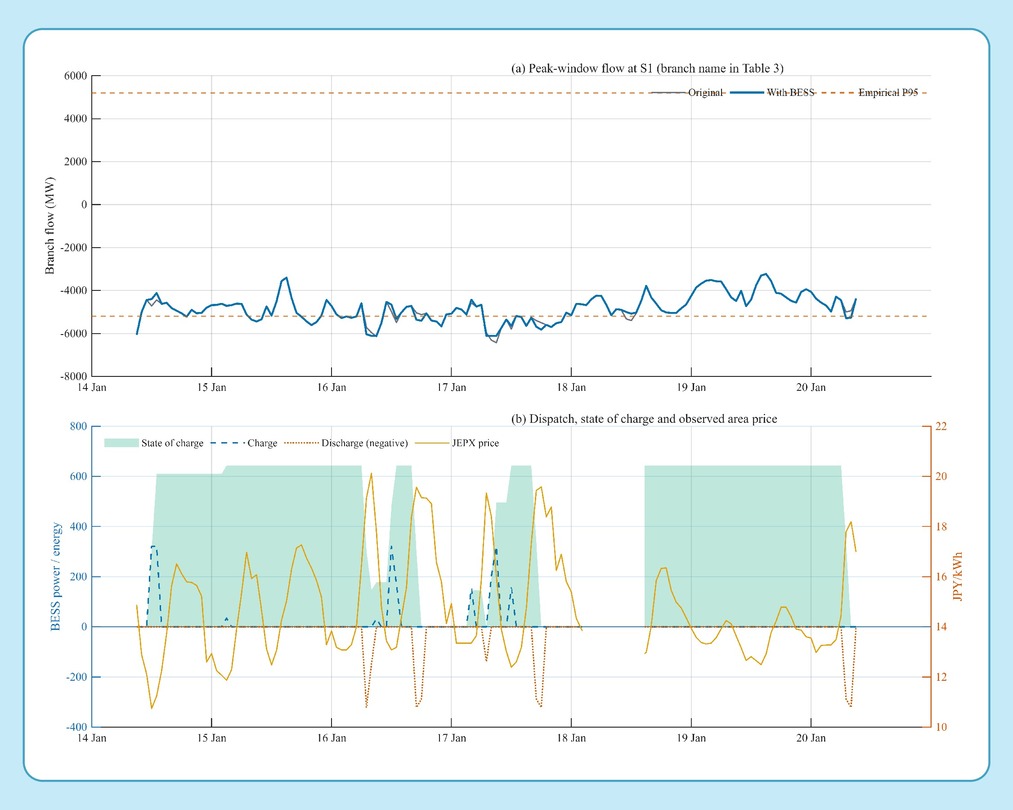
Peak-window dispatch for the first selected project
-
Figure 4.
Annualized economics of the six selected branch-storage projects
-
Figure 5.
Fixed-design annualized-profit sensitivity to the assumed peak-deferral value
-
Figure 6.
Temperature-sensitive branches
-
Figure 7.
Integrated branch priorities. Pressure (congestion-screening) and temperature-evidence scores are weakly rank-correlated
-
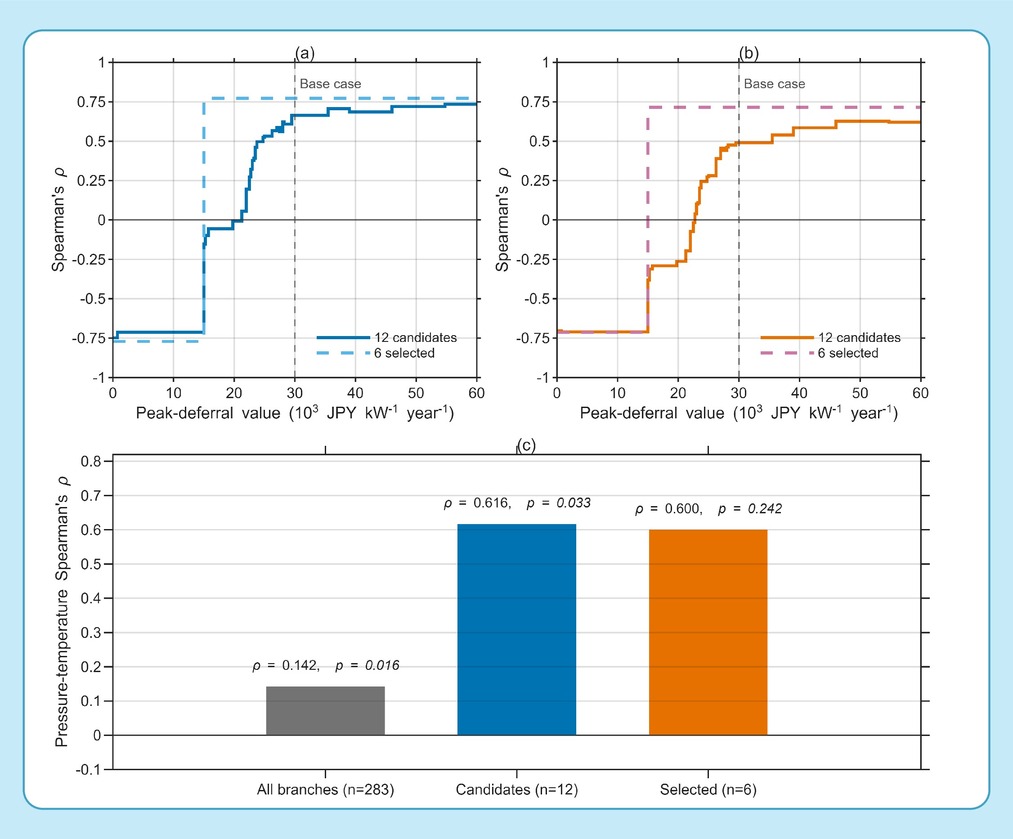
Figure 8.
Correlation of fixed-design annualized profit with branch pressure and temperature evidence under alternative peak-deferral values