
Advances in Efficient and Low-Carbon Ventilation and Dust Removal in Tunnel Construction
-
GRAPHICAL ABSTRACT
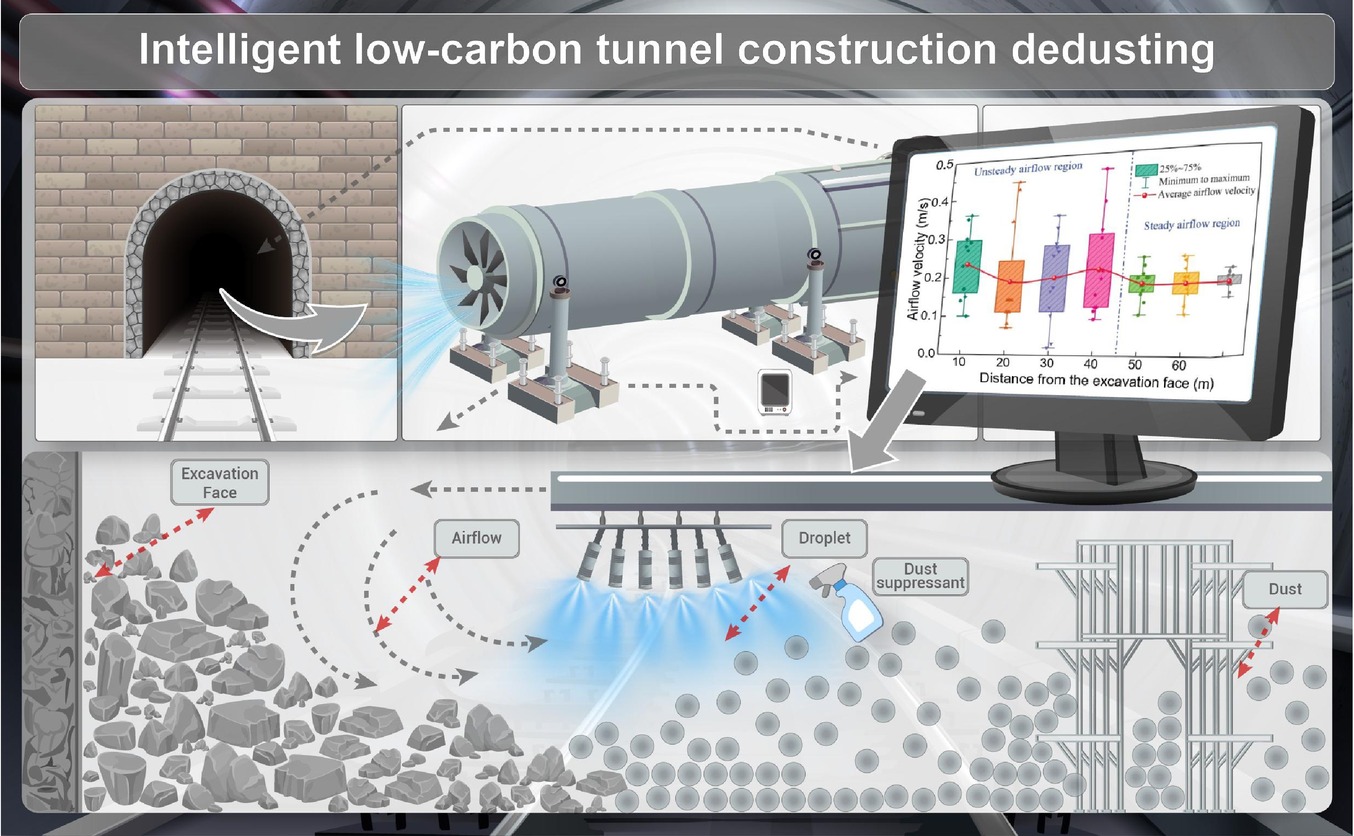
 DownLoad:
Full size image
-
PUBLIC SUMMARY
-
High-altitude, ultra-long and complex tunnels bring tough challenges for respirable dust control, with fine particles less than 10 μm easy to suspend and form local dust accumulation zones.
This review compares tunnel dust removal methods: water spraying (~85%) and chemical dust suppressants (~94%); demand-controlled air supply cuts ventilation energy use by up to 64.6%.
Research priorities include dust dispersion under coupled conditions, synergistic ventilation-dust control optimisation, and digital-twin intelligent air supply for low-carbon tunnel construction.
-
-
ABSTRACT
The increasing construction of high-altitude, ultra-long, and geometrically complex tunnels poses major challenges for controlling respirable dust while maintaining occupational safety, ventilation efficiency, and low energy consumption. Here, we systematically review recent advances in ventilation and high-efficiency dust-removal technologies for tunnel construction from three interconnected perspectives: ventilation and dust-removal performance, efficient dust-removal technologies, and intelligent low-carbon air-supply technologies. We identify key geometric and environmental constraints, including large-curvature spiral sections and V-shaped inclines, that alter airflow organisation and can create localised dust-accumulation zones. Fine particles (<10 μm) are particularly difficult to remove because they can remain suspended and be transported over long distances. Effective dust control generally requires the press-in ventilation duct outlet and exhaust inlet to be positioned within 10 to 70 m and approximately 5 m of the excavation face, respectively. Conventional dust-removal approaches, such as water spraying and wet grids, show reported removal efficiencies of approximately 85%, whereas chemical dust suppressants can achieve higher removal efficiencies, with median performance approaching 94% under the reviewed conditions. In addition, energy-efficient technologies, including air-cabin systems and demand-controlled air-supply strategies, can reduce ventilation energy consumption by approximately 20.7% and up to 64.6%, respectively. Finally, we identify key research priorities, including elucidating dust dispersion under coupled and complex operating conditions, optimising the synergistic performance of high-efficiency dust-control technologies and ventilation systems, and developing intelligent air-supply systems based on digital twins. These advances are expected to support safer, more energy-efficient, and low-carbon tunnel construction. -

-
REFERENCES
[1] Zhang G., Jiang Z., Li X., et al. (2024). Impact of high-altitude environments on the motion and settling characteristics of wet-mix shotcrete dust in tunnels. Tunnelling and Underground Space Technology 149:105807. DOI:10.1016/j.tust.2024.105807 [2] Yin Y., Bao W., Lu H., et al. (2026). Mechanistic impacts of extra-long tunnel construction on eco-environmentally vulnerable zones: Coupled system dynamics and LSTM-Transformer modelling. Tunnelling and Underground Space Technology 167:107084. DOI:10.1016/j.tust.2025.107084 [3] Fan L., Ma W., Tao L., et al. (2025). Ambient temperature field and energy consumption analysis of air channel construction ventilation in high-geotemperature tunnels. Applied Thermal Engineering 274:126844. DOI:10.1016/j.applthermaleng.2025.126844 [4] Zhang J., Dong Y., Chen Y., et al. (2021). Numerical simulation of gas ventilation mode in highway gas tunnel. Geofluids 2021:5549168. DOI:10.1155/2021/5549168 [5] Lin M., Liu J., Jueraiti M., et al. (2026). Comparative study on the generation and migration characteristics of blasting dust and toxic gases in high-altitude tunnel: based on field measurements and CFD. Tunnelling and Underground Space Technology 170:107318. DOI:10.1016/j.tust.2025.107318 [6] Xie Z., Li D., Xiao Y., et al. (2025). Theoretical model and numerical investigation of ventilation efficiency and pollution characteristics of multi gaseous pollutants in construction tunnel. Journal of Wind Engineering and Industrial Aerodynamics 263:106115. DOI:10.1016/j.jweia.2025.106115 [7] Ren T., Qiao M., Roberts J., et al. (2024). Development and evaluation of an immersive VR-CFD-Based tool for dust exposure mitigation in underground tunnelling operations. Tunnelling and Underground Space Technology 143:105496. DOI:10.1016/j.tust.2023.105496 [8] Zhang H., Zhao Y., Zhang G., et al. (2024). The dust pollution characteristic after tunnel blasting and related influence parameters by using experimental method. Tunnelling and Underground Space Technology 148:105752. DOI:10.1016/j.tust.2024.105752 [9] Li C., Jiang Z., Zhang G., et al. (2023). Dust pollution during shotcrete process in high-altitude tunnel based on numerical simulation. Particuology 75:82−95. DOI:10.1016/j.partic.2022.05.012 [10] Wang P., Yu H., Qin N., et al. (2024). Research on prepositioned air distribution and dust control devices for continuous mining faces. Advanced Powder Technology 35:104558. DOI:10.1016/j.apt.2024.104558 [11] Feng X., Jiang Z., Zhang G., et al. (2022). Study on CO diffusion law and concentration distribution function under ventilation after blasting in high-altitude tunnel. Journal of Wind Engineering and Industrial Aerodynamics 220:104871. DOI:10.1016/j.jweia.2021.104871 [12] Zhao Y., Wang J., Li J., et al. (2026). Study on rapid identification of key-pollutant diffusion model in high-pollution area of construction tunnel. Building and Environment 297:114551. DOI:10.1016/j.buildenv.2026.114551 [13] Huang J., Zhang J., Wu Y., et al. (2026). Engineering mitigation of submicron dust in high-altitude tunnels: investigation of the mechanism and development of an intelligent "Plateau Lung" suppression system. Tunnelling and Underground Space Technology 170:107400. DOI:10.1016/j.tust.2025.107400 [14] Liu Y., Wei M., Zhang H., et al. (2026). Study on CO concentration distribution and ventilation scheme optimization in ultra-long drift-type high-altitude tunnel construction. Case Studies in Thermal Engineering 79:107784. DOI:10.1016/j.csite.2026.107784 [15] Hua Y., Nie W., Cai P., et al. (2018). Pattern characterization concerning spatial and temporal evolution of dust pollution associated with two typical ventilation methods at fully mechanized excavation faces in rock tunnels. Powder Technology 334:117−131. DOI:10.1016/j.powtec.2018.04.059 [16] Cheng C., Liu Q., Hua Y., et al. (2024). Analysis of a double-pressure double-extraction (DPDE) control dust removal system and optimal installation position of an air curtain generator. Energy 313:134022. DOI:10.1016/j.energy.2024.134022 [17] Nie W., Cai Y., Wang L., et al. (2025). Study on gas-dust coupling hazard mechanism and environmental protection scheme in energy extraction process of low gas tunnel. Powder Technology 465:121341. DOI:10.1016/j.powtec.2025.121341 [18] Jiang Z., Wang Y. and Men L. (2021). Ventilation control of tunnel drilling dust based on numerical simulation. Journal of Central South University 28:1342−1356. DOI:10.1007/s11771-021-4704-z [19] Wang H., Cheng W., Sun B., et al. (2017). Effects of radial air flow quantity and location of an air curtain generator on dust pollution control at fully mechanized working face. Advanced Powder Technology 28:1780−1791. DOI:10.1016/j.apt.2017.04.019 [20] Chen Z., Zhao S., Wang S., et al. (2025). Forced-exhaust-air curtain dust removal measures of tunnel blasting dust based on CFD and orthogonal experiments. Tunnelling and Underground Space Technology 155:106223. DOI:10.1016/j.tust.2024.106223 [21] Li X., Li L., Jin K., et al. (2024). Design and optimization of injector-type air-curtain equipment for tunnels during construction. Tunnelling and Underground Space Technology 150:105872. DOI:10.1016/j.tust.2024.105872 [22] Wang H., Jiang Z., Zhang G., et al. (2022). Parameter analysis of jet tunnel ventilation for long distance construction tunnels at high altitude. Journal of Wind Engineering and Industrial Aerodynamics 228:105128. DOI:10.1016/j.jweia.2022.105128 [23] Wu H., Long B., Xie Z., et al. (2025). Multifaceted analysis of air age-pollutant-thermal comfort in urban tunnels under forced ventilation. Case Studies in Thermal Engineering 76:107414. DOI:10.1016/j.csite.2025.107414 [24] Liu C., Bao Q. and Nie W. (2022). The influence of ventilation parameters on dust pollution in a tunnel‘s environment using the CFD method. Journal of Wind Engineering and Industrial Aerodynamics 230:105173. DOI:10.1016/j.jweia.2022.105173 [25] Wang H., Jiang Z., Wang H., et al. (2023). Experimental and simulation study of air curtain uniformity and analysis of air curtain's dust barrier effect. Journal of Wind Engineering and Industrial Aerodynamics 233:105322. DOI:10.1016/j.jweia.2023.105322 [26] Wang M., Chen X., Lin M., et al. (2025). Simulation study on asphalt fume diffusion during pavement laying in long tunnels. Measurement 249:117031. DOI:10.1016/j.measurement.2025.117031 [27] Zhao S., Wen S., Guo Z., et al. (2026). Validating the effectiveness of the forced-extraction circulatory oxygen supply method in high-altitude tunnels via numerical simulation and field measurements. Tunnelling and Underground Space Technology 170:107413. DOI:10.1016/j.tust.2025.107413 [28] Zhao S., Wen S., Guo Y., et al. (2025). A novel forced-extraction circulatory oxygen supply method for high-altitude tunnel construction. Tunnelling and Underground Space Technology 166:106990. DOI:10.1016/j.tust.2025.106990 [29] Xie Z., Xiao Y., Jiang C., et al. (2021). Numerical study on fine dust pollution characteristics under various ventilation time in metro tunnel after blasting. Building and Environment 204:108111. DOI:10.1016/j.buildenv.2021.108111 [30] Menendez J., Sanabria M., Fernandez-Oro J. M., et al. (2024). Energy consumption and dilution of toxic gases in underground infrastructures: A case study in a railway tunnel under forced ventilation. Energy 307:132810. DOI:10.1016/j.energy.2024.132810 [31] Menéndez J., Fernández-Oro J. M., Galdo M., et al. (2025). Oval ducts in mining ventilation systems: Optimization of the operation costs and increase of clearance in mine roadways. Mining, Metallurgy & Exploration 42:557−570. DOI:10.1007/s42461-025-01206-3 [32] Long B., Gu J. and Xie Z. (2026). Harmful gas monitoring and safe re-entry time assessment in T-shaped blasting tunnel. Air Quality, Atmosphere & Health 19:112. DOI:10.1007/s11869-026-01998-3 [33] Liu J., Xu L., Yu W., et al. (2025). Theoretical prediction on supply air performance and CO dilution effect of the pressed-in ventilation system during the construction period. Tunnelling and Underground Space Technology 157:106304. DOI:10.1016/j.tust.2024.106304 [34] Menéndez J., Fernández-Oro J. M., Merlé N., et al. (2023). Auxiliary ventilation systems in mining and tunnelling: Air leakage prediction and system design to optimize the energy efficiency and operation costs. Tunnelling and Underground Space Technology 140. DOI:10.1016/j.tust.2023.105298. [35] Zhang Z., Tan Y., Zhang H., et al. (2022). Experimental and numerical study on the influence of wall roughness on the ventilation resistance coefficient in a tunnel under construction. Tunnelling and Underground Space Technology 119:104198. DOI:10.1016/j.tust.2021.104198 [36] Leskovec M., Zade S., Niazi M., et al. (2024). Turbulent pipe flow with spherical particles: Drag as a function of particle size and volume fraction. International Journal of Multiphase Flow 179:104931. DOI:10.1016/j.ijmultiphaseflow.2024.104931 [37] Zhang X., He H., Chen X., et al. (2025). Flow loss characteristics in parallel confluence sections of tunnels. Journal of Zhejiang University-SCIENCE A 26:666−678. DOI:10.1631/jzus.A2400405 [38] Guo C., Li Z., Zhu H., et al. (2021). Single-channel blowing-in longitudinal ventilation method and its application in the road tunnel. Tunnelling and Underground Space Technology 108:103692. DOI:10.1016/j.tust.2020.103692 [39] Chang X., Qiao J., Yang R., et al. (2025). Numerical simulation on the influence of obstruction characteristics on ventilation during tunnel construction. Journal of Wind Engineering and Industrial Aerodynamics 265:106178. DOI:10.1016/j.jweia.2025.106178 [40] Xie Z., Ruan C., Zhao Z., et al. (2023). Effect of ventilation parameters on dust pollution characteristic of drilling operation in a metro tunnel. Tunnelling and Underground Space Technology 132:104867. DOI:10.1016/j.tust.2022.104867 [41] Guo J., Li A., Gao R., et al. (2023). Analysis and comparison of airflow-respirable dust control and innovative ventilation environment in drilling construction tunnels. Atmospheric Pollution Research 14:101908. DOI:10.1016/j.apr.2023.101908 [42] Zhang Z., Zhao Y., Zhang H., et al. (2024). Experimental and numerical study on airflow-dust migration behavior in an underground cavern group construction for cleaner production. Tunnelling and Underground Space Technology 144:105558. DOI:10.1016/j.tust.2023.105558 [43] Chen Z., Zhao S., Dong C., et al. (2024). Three-stage numerical simulation of tunnel blasting dust diffusion based on field monitoring and CFD. Tunnelling and Underground Space Technology 150:105830. DOI:10.1016/j.tust.2024.105830 [44] Xie Z., Li D., Xiao Y., et al. (2025). Dust prevention characteristics of a new arc-shaped device used for forced ventilation in metro tunnels. Building and Environment 274:112744. DOI:10.1016/j.buildenv.2025.112744 [45] Xie Z., Li D., Long B., et al. (2025). Dust control performance of innovative arc device for metro system construction based on orthogonal experiment. Building Simulation 18:1743−1760. DOI:10.1007/s12273-025-1285-z [46] Wu H., Wang J., Wan C., et al. (2026). Dust dispersion mechanisms and rail-mounted local purification in drill-and-blast tunnel construction. Applied Sciences 16:519. DOI:10.3390/app16010519 [47] Xie Z., Zhao Z., Li D., et al. (2023). Field measurements on the attenuation characteristics of PM2.5 and toxic gases in a blasting metro tunnel and evaluation of the re-entry time. Tunnelling and Underground Space Technology 138:105170. DOI:10.1016/j.tust.2023.105170. [48] Yang W., Wang J., Deng E., et al. (2024). A hybrid ventilation scheme applied to bi-directional excavation tunnel construction with a long inclined shaft. Journal of Central South University 31:3187−3205. DOI:10.1007/s11771-024-5732-2 [49] Chen T., Zhou D., Lu Z., et al. (2021). Study of the applicability and optimal arrangement of alternative jet fans in curved road tunnel complexes. Tunnelling and Underground Space Technology 108:103721. DOI:10.1016/j.tust.2020.103721 [50] Liu R., Jiang D., Chen J., et al. (2023). Blasting dust diffuse characteristics of spiral tunnel and dust distribution model: similar experiment and numerical modeling. Environmental Science and Pollution Research 30:52340−52357. DOI:10.1007/s11356-023-25422-w [51] Sun X., An F. and Yang D. (2025). Experimental study on hazardous gases and dust removal under forced ventilation in inclined construction tunnels after blasting. Journal of Wind Engineering and Industrial Aerodynamics 266:106217. DOI:10.1016/j.jweia.2025.106217 [52] Yi L., Wang X. and Shen Y. (2024). Experimental study on the forced ventilation safety during the construction of a large-slope V-shaped tunnel. Applied Sciences 14:2924. DOI:10.3390/app14072924 [53] Zhou Y., Yang Y., Bu R., et al. (2020). Effect of press-in ventilation technology on pollutant transport in a railway tunnel under construction. Journal of Cleaner Production 243. DOI:10.1016/j.jclepro.2019.118590 [54] Chang X., Chai J., Chen X., et al. (2024). Numerical simulation of flow field characteristics and pollutant transport under different ventilation modes. Environmental Fluid Mechanics 24:1369−1386. DOI:10.1007/s10652-024-10000-6 [55] Ruan F., Li S., Chen P., et al. (2025). Comparison method for two different ventilation schemes in shield tunnel by simulation analysis. International Communications in Heat and Mass Transfer 162:108586. DOI:10.1016/j.icheatmasstransfer.2025.108586 [56] Zhou W., Nie W., Liu X., et al. (2020). Optimization of dust removal performance of ventilation system in tunnel constructed using shield tunneling machine. Building and Environment 173:106745. DOI:10.1016/j.buildenv.2020.106745 [57] Nie W., Sun N., Liu Q., et al. (2022). Comparative study of dust pollution and air quality of tunnelling anchor integrated machine working face with different ventilation. Tunnelling and Underground Space Technology 122:104377. DOI:10.1016/j.tust.2022.104377 [58] Ren J., Zhang R., Ma F., et al. (2025). Study on the dust migration rule and optimal ventilation parameters in tunnel drilling and blasting under forced ventilation. Chemical Engineering Research and Design 219:120−133. DOI:10.1016/j.cherd.2025.06.001 [59] Xu Y., Wang S., Wei Y., et al. (2025). Explore the key factors of fine dust particle migration during tunnel construction. Powder Tech. 452:120551. DOI:10.1016/j.powtec.2024.120551 [60] Liu J., Hao C., Wang W., et al. (2026). Analysis of dust pollution effect after blasting and dust removal parameters under hybrid ventilation in digging face. Front. Earth Sci. 13:1639226. DOI:10.3389/feart.2025.1639226 [61] Hua Y., Nie W., Liu Q., et al. (2020). Effect of wind curtain on dust extraction in rock tunnel working face: CFD and field measurement analysis. Energy 197:117214. DOI:10.1016/j.energy.2020.117214 [62] Wang H., Xin C., Lu S., et al. (2025). Analysis on the dust prevention mechanism of air curtain in fully mechanized excavation tunnel. Int. J. Coal Sci. Tech. 12. 6,DOI:10.1007/s40789-025-00752-x. [63] Liu J., Chen Y., Wang W., et al. (2024). Impact analysis of dust evolution pattern and determination of key ventilation parameters in highland highway construction tunnels. Heliyon 10:e33758. DOI:10.1016/j.heliyon.2024.e33758 [64] Guo J., Li A., Wang T., et al. (2023). Parametric modeling study for blown-dust secondary pollution and optimal ventilation velocity during tunnel construction. Environ. Pollut. 335:122239. DOI:10.1016/j.envpol.2023.122239 [65] Cheng J., Chen S., Song T., et al. (2025). Geometric optimization and jet-assisted efficiency enhancement of the dust collection inlet for tunnel construction-phase wet string grid dust removal vehicle. Process Safety Environ. Protect. 199:107256. DOI:10.1016/j.psep.2025.107256 [66] Zhou G., Zhang X., Li S., et al. (2023). New type of sawdust-based dust suppressant during tunnelling and underground space: Preparation, characterization and engineering application. Const. Build. Mater. 365:130085. DOI:10.1016/j.conbuildmat.2022.130085 [67] Yang S., Ren J., Wan G., et al. (2025). Experimental study on wind-fog coupling dust suppression technology in tunnel drilling and blasting operations based on CFD numerical simulation. Chem. Eng. Res. Design 216:347−366. DOI:10.1016/j.cherd.2025.03.001 [68] Liu N., Chen K., Deng E., et al. (2023). Study on dust suppression performance of a new spray device during drilling and blasting construction in the metro tunnel. Tunnel. Underground Space Tech. 133:104975. DOI:10.1016/j.tust.2022.104975 [69] Liu N., Wu X., Deng E., et al. (2023). A U-shaped spray device on a front boom-type roadheader for dust suppression in a metro tunnel. Sustain. Cities Soc. 89:104369. DOI:10.1016/j.scs.2022.104369 [70] Peng H., Peng Y., Nie W., et al. (2026). RSM-based optimization of air-atomizing nozzle structure for respirable dust control. Build. Environ. 287:113857. DOI:10.1016/j.buildenv.2025.113857 [71] Tian Z., Xinsheng M., Shaocheng G., et al. (2024). Supersonic coaxial aerodynamic atomization dust removal technology. Powder Tech. 444:120076. DOI:10.1016/j.powtec.2024.120076 [72] Xie Z., Zhao Z., Li D., et al. (2023). Experimental study on the atomization characteristics and dust removal efficiency of a fan-shaped nozzle for purifying working environment. Sci. Total Environ. 894:164994. DOI:10.1016/j.scitotenv.2023.164994 [73] Deng H., Chen S., Huang J., et al. (2024). Research of wet string grid dust removal vehicle and creation of dust control area on tunnel working face. Sci. Rep. 14:8292. DOI:10.1038/s41598-024-57748-x [74] Zhang G., Zhou G., Zhang L., et al. (2020). Numerical simulation and engineering application of multistage atomization dustfall at a fully mechanized excavation face. Tunnel. Underground Space Tech. 104:103540. DOI:10.1016/j.tust.2020.103540 [75] Zhang S., Nie W., Guo C., et al. (2021). Optimization of spray dust suppression device in return air tunnel of a coal mine based on CFD technology. Build. Environ. 203:108059. DOI:10.1016/j.buildenv.2021.108059 [76] Nie W., Li J., Peng H., et al. (2024). Study of spray atomization law and dust suppression effect of a wet dust catcher on a hydraulic support. Energy 305:132296. DOI:10.1016/j.energy.2024.132296 [77] Xiao M., Du C., Wang Y., et al. (2025). Development and mechanism of composite dust and toxic gas suppressant for tunnel blasting construction. Powder Tech. 454:120730. DOI:10.1016/j.powtec.2025.120730 [78] Dong H., Yu H., Xu R., et al. (2023). Application and characterization of new polymer dust suppression foam in coal mine and tunnel construction space. Const. Build. Mater. 397:132378. DOI:10.1016/j.conbuildmat.2023.132378 [79] Wei Y., Wen Y., Liu K., et al. (2026). Research and application of discrete foam-air curtain synergic system for dust suppression in tunnel construction. Powder Tech. 469:121762. DOI:10.1016/j.powtec.2025.121762 [80] Tian X., Huang Y., Zhang Q., et al. (2025). Development and characterization of a γ-PGA/PVA/SDBS cross-linked network foam for dust suppression in tunneling construction. J. Environ. Chem. Eng. 13:115085. DOI:10.1016/j.jece.2024.115085 [81] Yu H., Qi H., Cheng W., et al. (2025). Synergistic oxidative modification and covalent cross-linking for the construction of sesbania gum-based high efficiency dust suppression foam sols. Int. J. Biolog. Macromole. 295:139414. DOI:10.1016/j.ijbiomac.2024.139414 [82] Li X., Yu H., Qiao X., et al. (2025). Enhanced atomization for dust suppression in underground spaces: a variable design based on annular microchannel disturbance. Tunnel. Underground Space Tech. 165:106900. DOI:10.1016/j.tust.2025.106900 [83] Sun H., Liu Y., Jiang T., et al. (2023). Application of dust control method based on water medium humidification in tunnel drilling and blasting construction environment. Build. Environ. 234:110111. DOI:10.1016/j.buildenv.2023.110111 [84] Li S., Jin H., Hu S., et al. (2021). Experimental investigation and field application of pulse-jet cartridge filter in TBM tunneling construction of Qingdao Metro Line 8 subsea tunnel. Tunnel. Underground Space Tech. 108:103690. DOI:10.1016/j.tust.2020.103690 [85] Wu Z., Wang H., Guo H., et al. (2021). Experimental investigation and application of mine airflow purification and reuse technology. Environ. Tech. Innov. 24:102035. DOI:10.1016/j.eti.2021.102035 [86] Tian E., Chen Q., Gao Y., et al. (2026). Advancing indoor air purification by mass transfer enhancement: Bridging the gap between high-performance materials and technologies. Engineering 60:246−259. DOI:10.1016/j.eng.2025.07.003 [87] Yang X., Jiang Z., Chen J., et al. (2024). Optimization of ventilation and dust removal parameters in plateau extra-long tunnel inclined shaft based on orthogonal numerical simulation test method. Constr. Build. Mater. 455:139131. DOI:10.1016/j.conbuildmat.2024.139131 [88] Zhang G., Jiang Z., Chen J., et al. (2024). Evolutionary mechanism and particle characterization analysis of dust produced by wet-mix shotcrete in tunnels. Constr. Build. Mater. 411:134375. DOI:10.1016/j.conbuildmat.2023.134375 [89] Du C., Huang H., Yi F., et al. (2024). Inhibitory effect of calcium carbonate precipitation induced by Triton X-100 and microorganisms on coal dust. Constr. Build. Mater. 444:137887. DOI:10.1016/j.conbuildmat.2024.137887 [90] Lv Y., Liu Y., Feng H., et al. (2025). Synthesis and characterization of cationic modified starch grafted acrylic acid-based absorbent resin dust suppressant. Environ. Res. 275:121147. DOI:10.1016/j.envres.2025.121147 [91] Xia T., Xi Z., Suo L., et al. (2024). Synergistic dopa-reinforced fluid hydrosol as highly efficient coal dust suppressant. Chem. Eng. J. 479:147641. DOI:10.1016/j.cej.2023.147641 [92] Zhang H., Zhao Y. Q., Zhang G., et al. (2025). Relay ventilation system with long air-cabin for extra-long railway tunnel: A case study on pollutant transport characteristics after blasting. Tunnel. Underground Space Tech. 157:106281. DOI:10.1016/j.tust.2024.106281 [93] Yang S., Ren R. and Wang Y. (2022). Study on air cabin ventilation system by local structural optimization during tunnel construction. Buildings 12:2235. DOI:10.3390/buildings12122235 [94] Shen Y., Wang X., Tong J., et al. (2025). A new air cabin ventilation relay system and its optimization design for extra-long tunnel construction, with multiple working faces. Energy Sour. A Rec. Utiliz. Environ. Effects 47:5059−5078. DOI:10.1080/15567036.2025.2464954 [95] Tao Y., Hu H., Zhang H., et al. (2022). A new ventilation system for extra-long railway tunnel construction by using the air cabin relay: A case study on optimization of air cabin parameters length. J. Build. Eng. 45:103480. DOI:10.1016/j.jobe.2021.103480 [96] Shi Z., Wang Q., Zhou S., et al. (2026). Comparative study of ventilation effects between arch-divider plate and full cross-section wind chambers in Plateau tunnels. Int. J. Ventil. 25:145−167. DOI:10.1080/14733315.2025.2545704 [97] Suo L., Li S., Wu F., et al. (2024). The effect of distance between jet fans on gas transport, energy conservation, and emission reduction in long highway tunnels. Sustainability 16:6990. DOI:10.3390/su16166990 [98] Wang X., Zhao Y., Yang G., et al. (2025). Research on the ventilation and control method of double-hole complementary construction of long tunnel. Sci. Rep. 15:5589. DOI:10.1038/s41598-025-89400-7 [99] Li X., Gao Y., Zhou X., et al. (2026). IoT-enabled optimal incentive strategy for flexible loads in intelligent demand response frameworks. Energy Use 2:100048. DOI:10.59717/ipj.energy-use.2026.100048 [100] Fan C., Lei Y., Piscitelli M. S., et al. (2025). Generalizable data-driven building operation control methods for scalable cross-building applications. Energy Use 1:100008. DOI:10.59717/ipj.energy-use.2025.100008 [101] An F., Yang D., Sun X., et al. (2025). A machine learning model integrating spatiotemporal attention and residual learning for predicting periodic air pollutant concentrations. Environ. Model. Software 188. DOI:10.1016/j.envsoft.2025.106438. [102] Xu Y., Wang S., Chen J., et al. (2025). Rapid dust concentration prediction using sparse sensors during tunnel construction. Build. Simul. 18:1543−1559. DOI:10.1007/s12273-025-1284-0 [103] An L., Kong S. and Li K. (2025). Research on intelligent early warning and emergency response mechanism for tunneling face gas concentration based on an improved KAN-iTransformer. Processes 13:3748. DOI:10.3390/pr13113748 [104] An F., Yang D., Sun X., et al. (2026). Pollutant concentration prediction and demand-controlled ventilation driven by the STA-CNN-ResBiLSTM model in tunnel construction. Build. Environ. 287:113936. DOI:10.1016/j.buildenv.2025.113936 [105] Sun Q., Yang X., Wu J., et al. (2025). A new proportional-integral-derivative automatic control method complemented by computational fluid dynamics for gas concentration in the tunneling face. Arab. J. Sci. Eng. DOI:10.1007/s13369-025-10194-x. [106] Muratbakeev E., Kozhubaev Y., Cheng H., et al. (2026). Intelligent mine ventilation systems. Sym. Basel 18:311. DOI:10.3390/sym18020311 [107] An F., Yang D. and Wei H. (2024). Air pollutant removal performance using a BiLSTM-based demand-controlled ventilation method after tunnel blasting. J. Wind Eng. Ind. Aerodynam. 253:105869. DOI:10.1016/j.jweia.2024.105869 [108] Liu R., He Y., Zhao Y., et al. (2020). Tunnel construction ventilation frequency-control based on radial basis function neural network. Auto. Constr. 118. DOI:10.1016/j.autcon.2020.103293 -
ABOUT THIS ARTICLE
Cite this article:
Xie Z., Chen X., Xiao Y., et al. (2026). Advances in Efficient and Low-Carbon Ventilation and Dust Removal in Tunnel Construction. Energy Use 2:100070. https://doi.org/10.59717/ipj.energy-use.2026.100070
Welcome!
To request copyright permission to republish or share portions of our works, please visit Copyright Clearance Center's (CCC) Marketplace website at marketplace.copyright.com.
Export File
Citation
Xie Z., Chen X., Xiao Y., et al. (2026). Advances in Efficient and Low-Carbon Ventilation and Dust Removal in Tunnel Construction. Energy Use 2:100070. https://doi.org/10.59717/ipj.energy-use.2026.100070

Format
Content
-
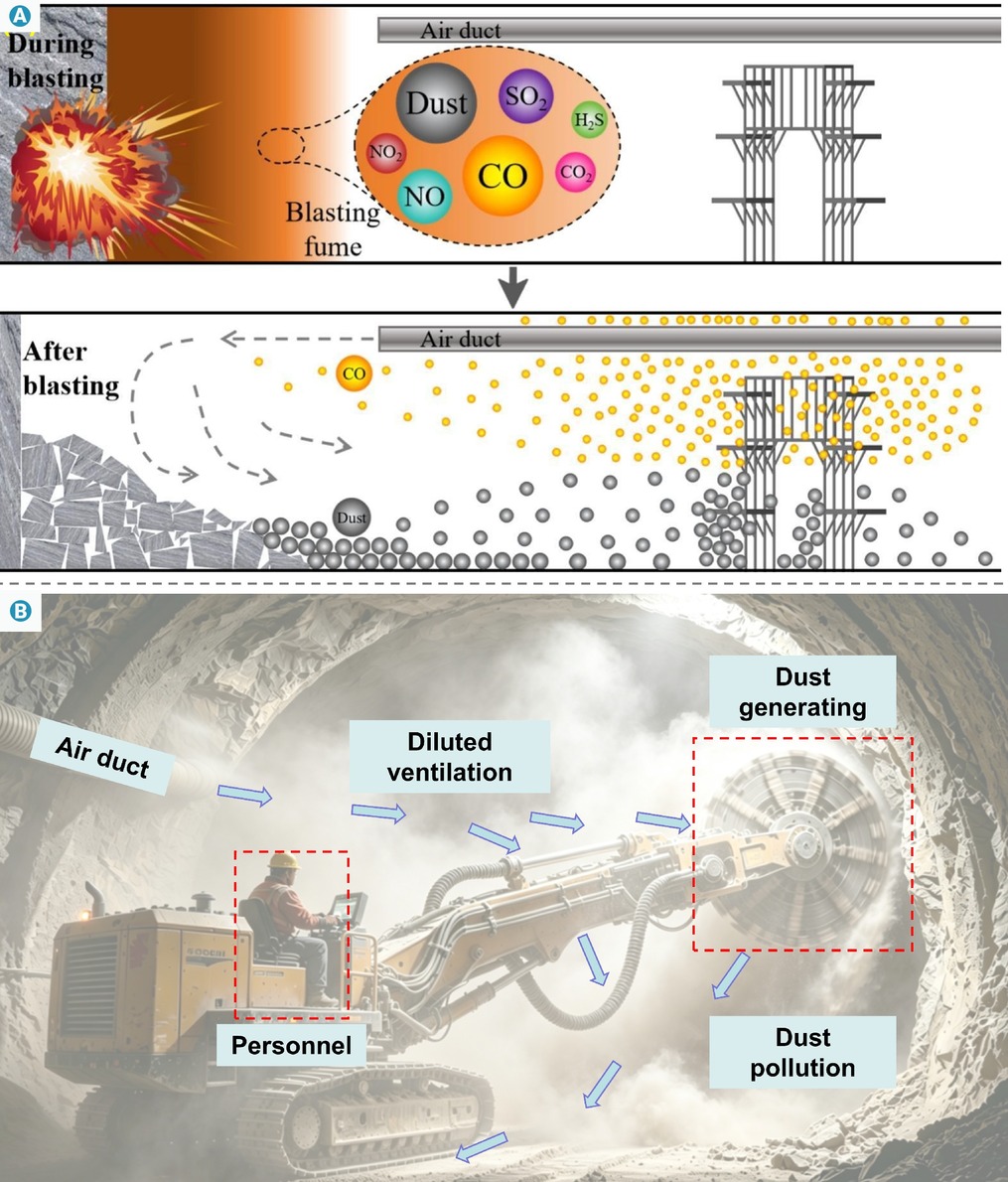
Figure 1.
Schematic of ventilation and dust removal under different tunnel construction scenarios
-
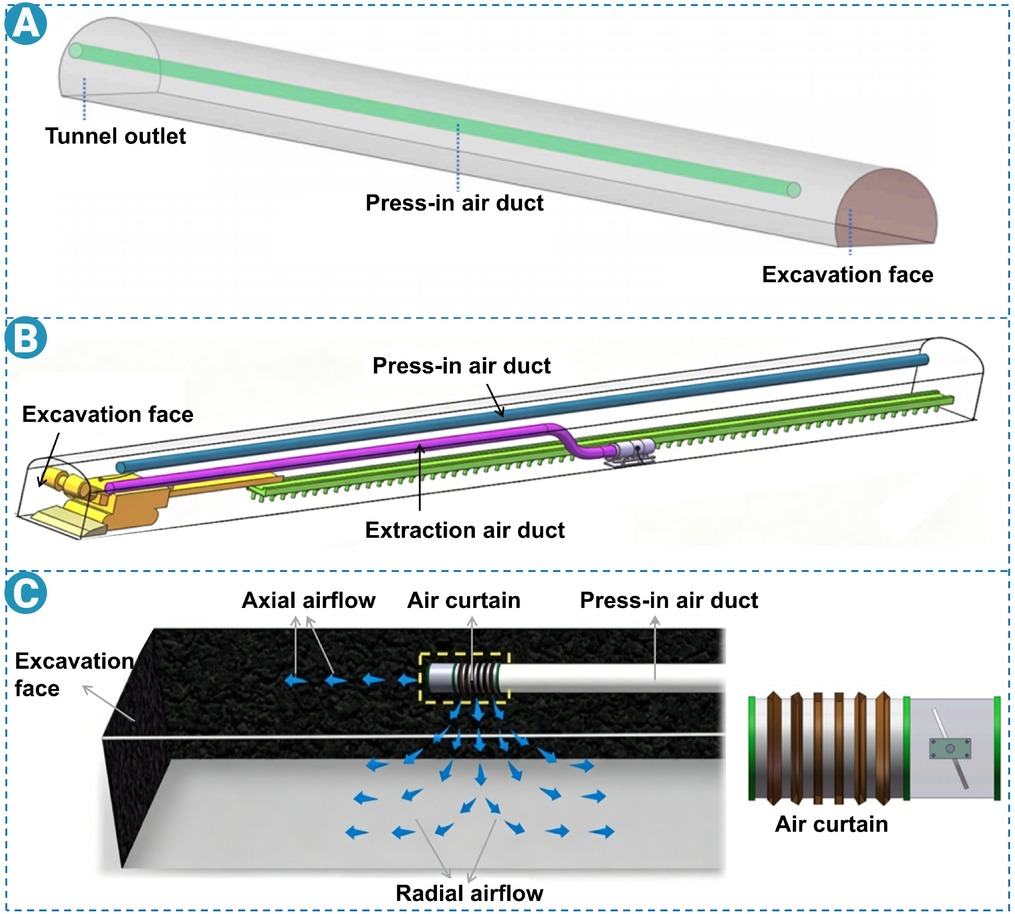
Figure 2.
Schematic of different ventilation method for tunnel construction
-
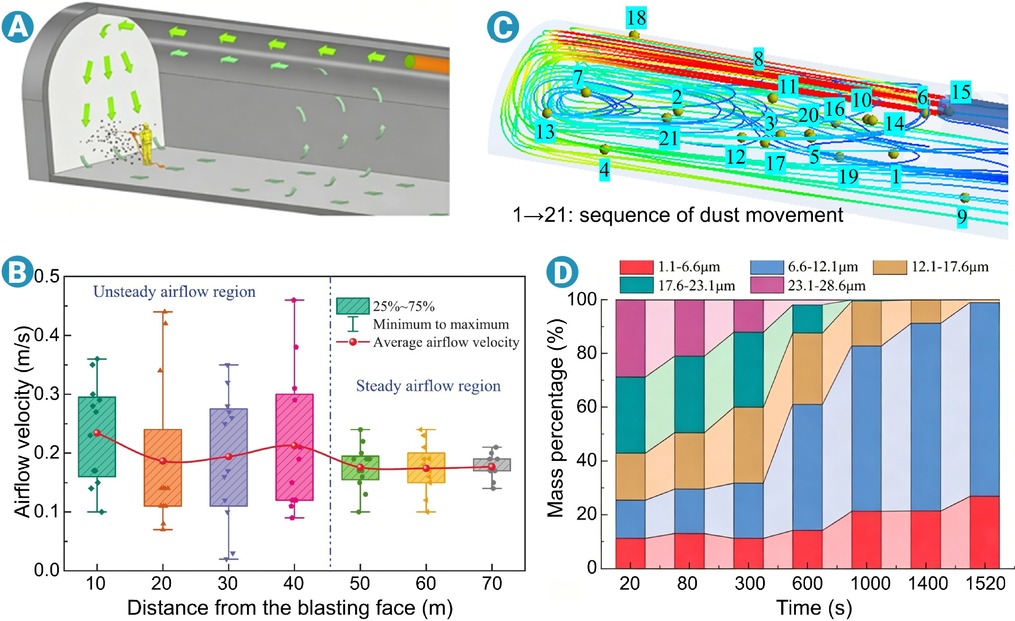
Figure 3.
Schematic of airflow distribution and dust dispersion characteristics during tunnel construction
-
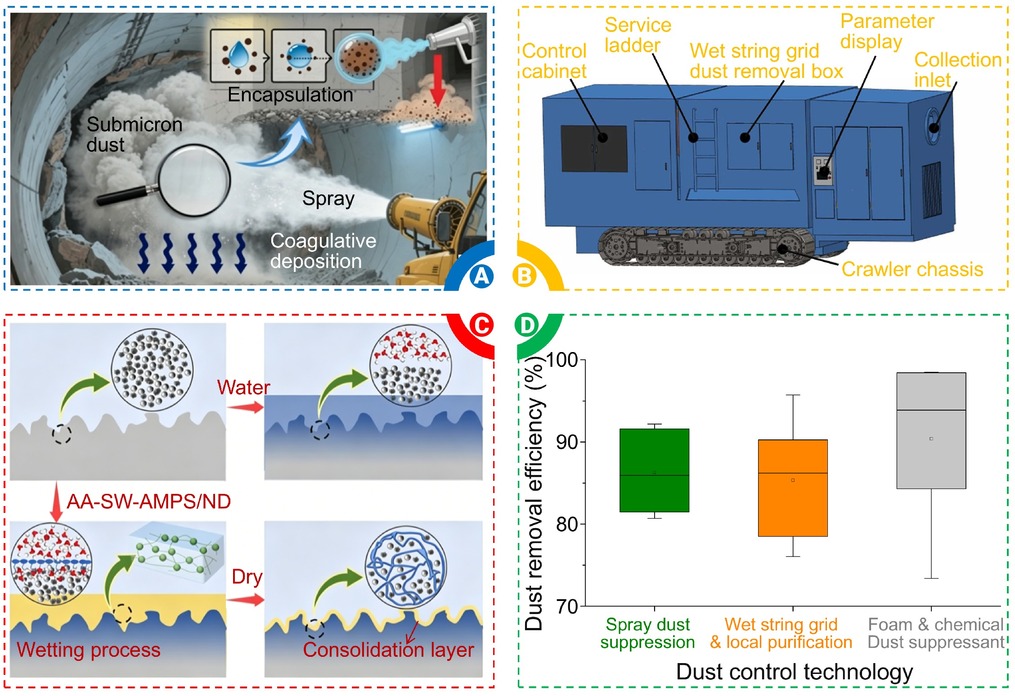
Figure 4.
Schematic of efficient dust-removal technology
-
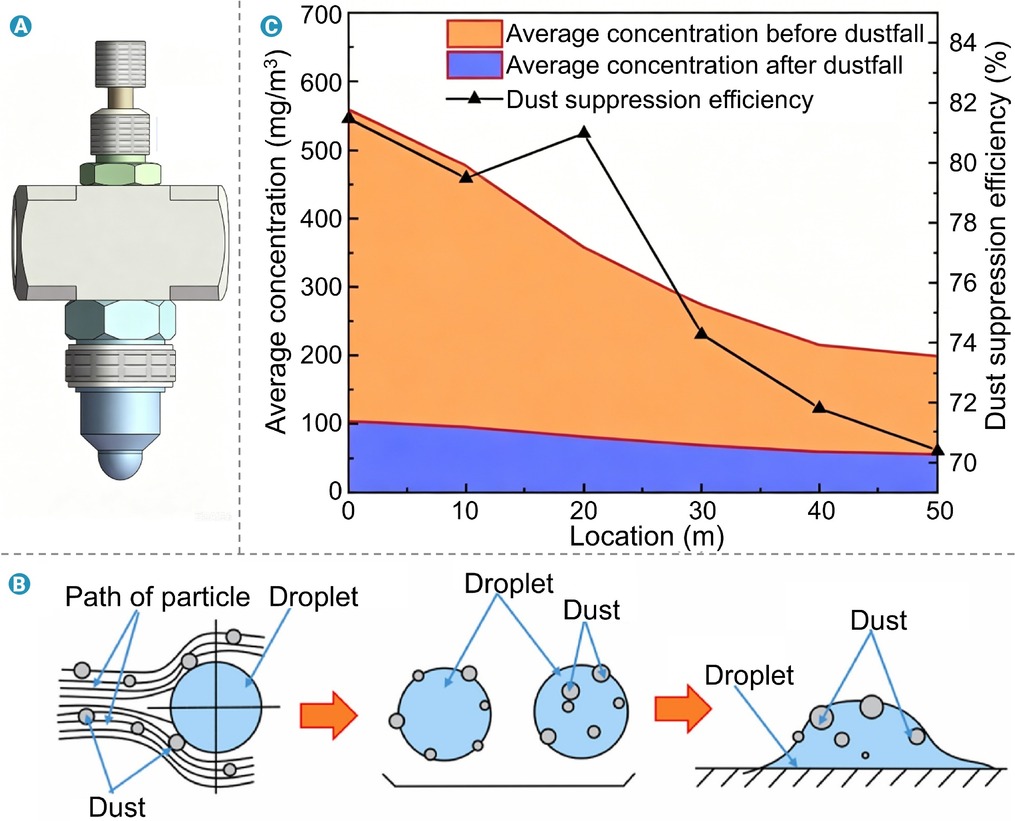
Figure 5.
Spray dust suppression
-
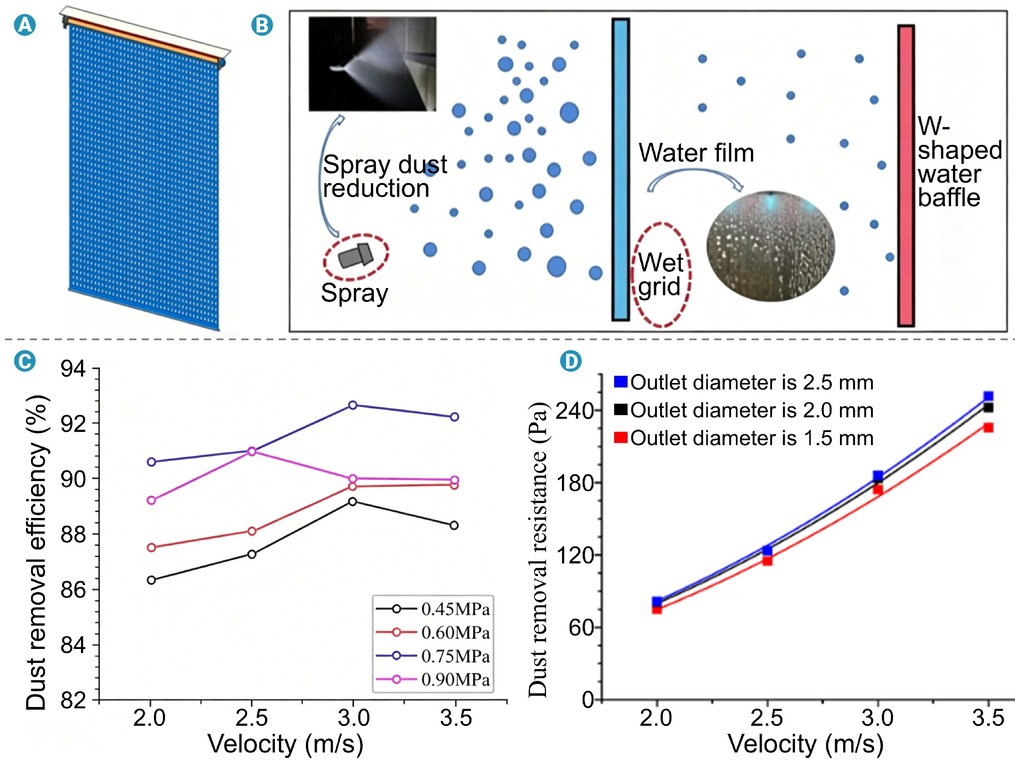
Figure 6.
Wet grid technology
-
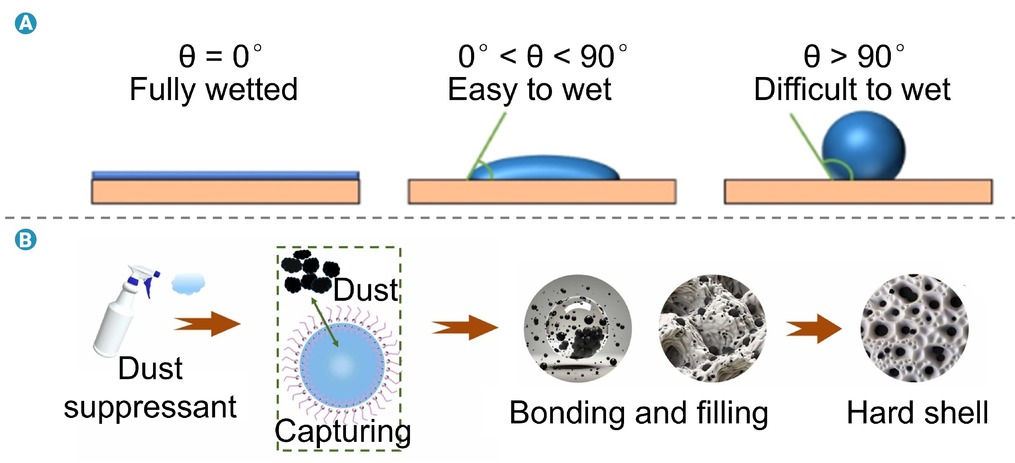
Figure 7.
Dust suppressant technology