
Ordered construction of multiscale functional biochar: Mechanistic insights into high-capacity CO2 adsorption at ambient pressure
-
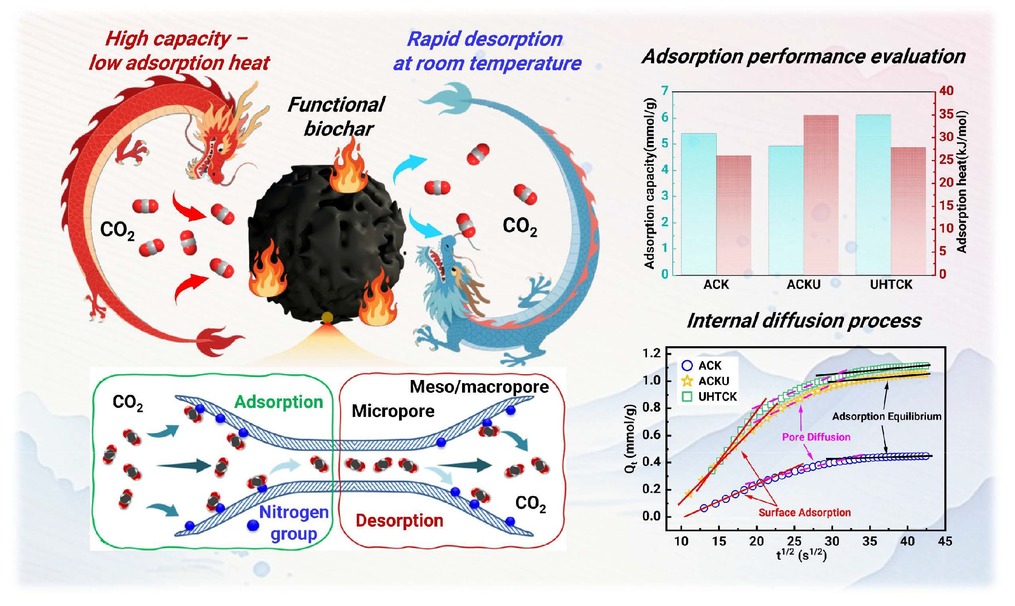
GRAPHICAL ABSTRACT
 DownLoad:
Full size image
DownLoad:
Full size image
-
PUBLIC SUMMARY
-
The orderly construction of nanopores is crucial for the performance of the adsorption-compressed CO2 energy storage system.
Hierarchical pore functionalization enables high-capacity carbon storage at ambient pressure and flexible adsorption-desorption.
A framework targeting efficient thermal and mass storage/exchange in adsorbent materials is established for energy storage systems.
-
-
ABSTRACT
The development of functional biochar with high-capacity and rapid CO2 adsorption/desorption capabilities is pivotal for compressed CO2 energy storage systems, effectively mitigating renewable energy intermittency and advancing carbon-neutral power grid infrastructure. A porous biochar with hierarchically structured pores and deliberately incorporated nitrogen functional groups is fabricated through hydrothermal treatment followed by chemical activation in this study. A multimodal approach combining experimental adsorption analyses with molecular dynamics and density functional theory simulations systematically elucidates the structure-activity relationships governing CO2 adsorption-desorption equilibrium. The UHTCK biochar demonstrates narrowly distributed micropores (centered at 0.7 nm) within an ideal hierarchical architecture, achieving a CO2 adsorption capacity of 6.01 mmol/g at 0 °C with 92.05% regeneration efficiency after 20 cycles. Edge functionalization enhances surface polarity, facilitating electrostatic-driven weak interactions (e.g., hydrogen bonding) that promote monolayer CO2 confinement in micropores. Mesopores exhibit wall-proximal CO2 accumulation, while nitrogen-doped mesopores optimize diffusion kinetics. Mechanistic analysis reveals that high microporosity enables substantial CO2 storage, while nitrogen-functionalized surfaces and mesopores thermodynamically balance the adsorption and heat to meet the requirements of adsorption-compression CO2 energy storage systems. Strategic pore-functionality engineering enables ambient-condition rapid CO2 cycling through regulated gas-solid-thermal interactions. This work provides theoretical insights and design principles for developing atmospheric-pressure CO2 capture materials, offering transformative potential for next-generation energy storage systems.-
Keywords:
- Biochar /
- CO2 adsorption /
- Hierarchical pore /
- Functionalization /
- Adsorption heat
-

-
REFERENCES
[1] Zhang S., Liu Z., Zhang X., et al. (2024). Sustainable thermal energy harvest for generating electricity. Innovation 5:100591. DOI:10.1016/j.xinn.2024.100591 [2] Shang Q., Feng D. D., Zhang X. W., et al. (2025). Synergistic effects of biomass/plastics and multi-step regulation of H2O in the co-production of H2-CNTs by gasification of biomass and plastic wastes. Appl. Cata. B Environ. Energy 379:125695. DOI:10.1016/j.apcatb.2025.125695 [3] Smith O., Cattell O., Farcot E., et al. (2022). The effect of renewable energy incorporation on power grid stability and resilience. Sci. Adv. 8:eabj6734. DOI:10.1126/sciadv.abj6734 [4] Navia Simon D. and Diaz Anadon L. (2025). Power price stability and the insurance value of renewable technologies. Nat. Energy 10:329−341. DOI:10.1038/s41560-025-01704-0 [5] Mouli-Castillo J., Wilkinson M., Mignard D., et al. (2019). Inter-seasonal compressed-air energy storage using saline aquifers. Nat. Energy 4:131−139. DOI:10.1038/s41560-018-0311-0 [6] Alshareef R. S. and Maghrabie H. M. (2025). Building-integrated photovoltaics with energy storage systems - A comprehensive review. J. Energy Storage 116:115916. 115916,DOI:10.1016/j.est.2025.115916. [7] Budt M., Wolf D., Span R., et al. (2016). A review on compressed air energy storage: Basic principles, past milestones and recent developments. Appl. Energy 170:250−268. DOI:10.1016/j.apenergy.2016.02.108 [8] Peng Y., Gao J., Zhang Y., et al. (2023). Experimental study of adsorption CO2 storage device for compressed CO2 energy storage system. J. Energy Storage 58:106286. DOI:10.1016/j.est.2022.106286 [9] Li H., Ding R., Su W., et al. (2024). A comprehensive performance comparison between compressed air energy storage and compressed carbon dioxide energy storage. Energy Conver. Manag. 319:118972. DOI:10.1016/j.enconman.2024.118972 [10] Zhang T., Gao J., Zhang Y., et al. (2022). Thermodynamic analysis of a novel adsorption-type trans-critical compressed carbon dioxide energy storage system. Energy Conver. Manag. 270:116268. DOI:10.1016/j.enconman.2022.116268 [11] Dissanayake P. D., You S., Igalavithana A. D., et al. (2020). Biochar-based adsorbents for carbon dioxide capture: A critical review. Renew. Sustain. Energy Rev. 119:109582. DOI:10.1016/j.rser.2019.109582 [12] Leng L., Xiong Q., Yang L., et al. (2021). An overview on engineering the surface area and porosity of biochar. Sci. Total Environ. 763:144204. DOI:10.1016/j.scitotenv.2020.144204 [13] Yang X., Wan Y., Zheng Y., et al. (2019). Surface functional groups of carbon-based adsorbents and their roles in the removal of heavy metals from aqueous solutions: A critical review. Chem. Eng. J. 366:608−621. DOI:10.1016/j.cej.2019.02.119 [14] Feng D., Guo D., Zhang Y., et al. (2021). Adsorption-enrichment characterization of CO2 and dynamic retention of free NH3 in functionalized biochar with H2O/NH3•H2O activation for promotion of new ammonia-based carbon capture. Chem. Eng. J. 409:128193. DOI:10.1016/j.cej.2020.128193 [15] Presser V., McDonough J., Yeon S.-H., et al. (2011). Effect of pore size on carbon dioxide sorption by carbide derived carbon. Energy Environ. Sci. 4:3059−3066. DOI:10.1039/c1ee01176f [16] Zhang Z., Schott J. A., Liu M., et al. (2019). Prediction of Carbon Dioxide Adsorption via Deep Learning. Angew. Chem. Int. Ed. 58:259−263. DOI:10.1002/anie.201812363 [17] He S., Chen G., Xiao H., et al. (2021). Facile preparation of N-doped activated carbon produced from rice husk for CO2 capture. J. Colloid Inter. Sci. 582:90−101. DOI:10.1016/j.jcis.2020.08.021 [18] Leng L., Xu S., Liu R., et al. (2020). Nitrogen containing functional groups of biochar: An overview. Biores. Techn. 298:122286. DOI:10.1016/j.biortech.2019.122286 [19] Zhang X., Wu J., Yang H., et al. (2016). Preparation of nitrogen-doped microporous modified biochar by high temperature CO2-NH3 treatment for CO2 adsorption: effects of temperature. Rsc. Adv. 6:98157−98166. DOI:10.1039/c6ra23748g [20] Zhang X., Zhang S., Yang H., et al. (2014). Nitrogen enriched biochar modified by high temperature CO2-ammonia treatment: Characterization and adsorption of CO2. Chem. Eng. J. 257:20−27. DOI:10.1016/j.cej.2014.07.024 [21] Querejeta N., Victoria Gil M., Pevida C., et al. (2018). Standing out the key role of ultramicroporosity to tailor biomass-derived carbons for CO2 capture. J. CO2 Utiliz. 26:1-7. DOI:10.1016/j.jcou.2018.04.016. [22] Monazam E. R., Shadle L. J., Miller D. C., et al. (2013). Equilibrium and Kinetics Analysis of Carbon Dioxide Capture using Immobilized Amine on a Mesoporous Silica. Aiche J. 59:923−935. DOI:10.1002/aic.13870 [23] Han G., Rodriguez K. M., Qian Q., et al. (2020). Acid-Modulated Synthesis of High Surface Area Amine-Functionalized MIL-101(Cr) Nanoparticles for CO2 Separations. Ind. Eng. Chem. Res. 59:18139−18150. DOI:10.1021/acs.iecr.0c03456 [24] Chen S. P., Sun X., Luo X., et al. (2019). CO2 Adsorption on Premodified Li/AI Hydrotalcite Impregnated with Polyethylenimine. Ind. Eng. Chem. Res. 58:1177−1189. DOI:10.1021/acs.iecr.8b04775 [25] Wang S. Z., Dong L. H., Feng D. D., et al. (2022). Self-template mechanism of "selective silicon dissolution" for the construction of functional rice husk biochar. Fuel Process. Techn. 238:107511. DOI:10.1016/j.fuproc.2022.107511 [26] Jiang J. H., Pan Z. Y., Huang X. L., et al. (2025). DFT study on adsorption of Pb(II) by biochar: focusing on molecular structure and alkali and alkaline earth metals. Separat. Purific. Techn. 377:134474. DOI:10.1016/j.seppur.2025.134474 [27] Feng D., Guo D., Zhang Y., et al. (2021). Functionalized construction of biochar with hierarchical pore structures and surface O-/N-containing groups for phenol adsorption. Chem. Eng. J. 410:127707. DOI:10.1016/j.cej.2020.127707 [28] Lu T. and Chen Q. (2021). Shermo: A general code for calculating molecular thermochemistry properties. Comput. Theor. Chem. 1200:113249. DOI:10.1016/j.comptc.2021.113249 [29] Raissouni J., Draoui K., Aghzzaf A. A., et al. (2025). Sulfadiazine removal with low-cost structured nano and micro-composite hydrogel beads on moroccan clays with alginate-CMC-biochar. J. Environ. Manag. 374:123952. DOI:10.1016/j.jenvman.2024.123952 [30] Merrick J. P., Moran D. and Radom L. (2007). An evaluation of harmonic vibrational frequency scale factors. J. Phy. Chem. A 111:11683−11700. DOI:10.1021/jp073974n [31] Lu T. and Chen F. (2012). Multiwfn: A multifunctional wavefunction analyzer. J. Comput. Chem. 33:580−592. DOI:10.1002/jcc.22885 [32] Humphrey W., Dalke A. and Schulten K. (1996). VMD: Visual molecular dynamics. J. Mole. Graph. Model. 14:33−38. DOI:10.1016/0263-7855(96)00018-5 [33] Metropolis N R. A. W., Rosenbluth M N, et al. (1953). Equation of state calculations by fast computing machines. J. Chem. Phys. 21:1087−1092. [34] Gao D., Hong L., Wang J., et al. (2020). Molecular simulation of gas adsorption characteristics and diffusion in micropores of lignite. Fuel 269:117443. DOI:10.1016/j.fuel.2020.117443 [35] Leng L. J., Xu S. Y., Liu R. F., et al. (2020). Nitrogen containing functional groups of biochar: An overview. Biores. Tech. 298:122286. DOI:10.1016/j.biortech.2019.122286 [36] Zhang X., Wu J., Yang H. P., et al. (2016). Preparation of nitrogen-doped microporous modified biochar by high temperature CO2-NH3 treatment for CO2 adsorption: effects of temperature. Rsc. Adv. 6:98157−98166. DOI:10.1039/c6ra23748g [37] ShenavaeiZare T., Khoshsima A. and ZareNezhad B. (2021). Development of surfactant-free microemulsion hybrid biofuels employing halophytic salicornia oil/ethanol and oxygenated additives. Fuel 292:120249. DOI:10.1016/j.fuel.2021.120249 [38] Zhdanov V. P. (1993). Application of percolation theory to describing kinetic processes in porous solids. In Advances in catalysis, Vol 39, D.D. Eley, H. Pines, and P.B. Weisz, eds. pp. 1-50. DOI:10.1016/S0360-0564(08)60576-3. [39] Zheng L., Wang H., Wang X., et al. (2023). Synthesis of mesopore-dominated porous carbon with ultra-high surface area via urea-assisted KOH activation. J. Wood Chem. Tech. 43:78−91. DOI:10.1080/02773813.2023.2187062 [40] Fu Y., Shen Y., Zhang Z., et al. (2019). Activated bio-chars derived from rice husk via one- and two-step KOH-catalyzed pyrolysis for phenol adsorption. Sci. Total Environ. 646:1567−1577. DOI:10.1016/j.scitotenv.2018.07.423 [41] Zhang L. H. and Calo J. M. (2001). Thermal desorption methods for porosity characterization of carbons and chars. Colloids Surf. A Physicochem. Eng. Aspects 187:207−218. DOI:10.1016/S0927-7757(01)00633-1 [42] Li H., Pan C., Peng X., et al. (2025). In-situ adsorption-coupled-oxidation enabled mercury vapor capture over sp-hybridized graphdiyne. Nat. Commun. 16:2439. DOI:10.1038/s41467-025-57197-8 [43] Liu X., Tian J., Li Y., et al. (2019). Enhanced dyes adsorption from wastewater via Fe3O4 nanoparticles functionalized activated carbon. J. Hazard. Mater. 373:397−407. DOI:10.1016/j.jhazmat.2019.03.103 [44] Zhan Y. B., Zhou H. M., Guo F. Q., et al. (2021). Preparation of highly porous activated carbons from peanut shells as low-cost electrode materials for supercapacitors. J. Energy Storage 34:102180. DOI:10.1016/j.est.2020.102180 [45] Tang Z., Gao J., Zhang Y., et al. (2023). Ultra-microporous biochar-based carbon adsorbents by a facile chemical activation strategy for high-performance CO2 adsorption. Fuel Process. Tech. 241:107613. DOI:10.1016/j.fuproc.2022.107613 [46] Sevilla M. and Fuertes A. B. (2011). Sustainable porous carbons with a superior performance for CO2 capture. Energy Environ. Sci. 4:1765−1771. DOI:10.1039/c0ee00784f [47] Rehman A. and Park S.-J. (2020). From chitosan to urea-modified carbons: Tailoring the ultra-microporosity for enhanced CO2 adsorption. Carbon 159:625−637. DOI:10.1016/j.carbon.2019.12.068 [48] Wang S., Lee Y.-R., Won Y., et al. (2022). Development of high-performance adsorbent using KOH-impregnated rice husk-based activated carbon for indoor CO2 adsorption. Chem. Eng. J. 437:135378. DOI:10.1016/j.cej.2022.135378 [49] Li H., Tang M., Huang X., et al. (2023). An efficient biochar adsorbent for CO2 capture: Combined experimental and theoretical study on the promotion mechanism of N-doping. Chem. Eng. J. 466:143095. DOI:10.1016/j.cej.2023.143095 [50] Serafin J., Ouzzine M., Cruz Junior O. F., et al. (2021). Preparation of low-cost activated carbons from amazonian nutshells for CO2 storage. Biomass Bioenergy 144:105925. DOI:10.1016/j.biombioe.2020.105925 [51] Parshetti G. K., Chowdhury S. and Balasubramanian R. (2015). Biomass derived low-cost microporous adsorbents for efficient CO2 capture. Fuel 148:246−254. DOI:10.1016/j.fuel.2015.01.032 [52] Guo Y., Tan C., Sun J., et al. (2020). Porous activated carbons derived from waste sugarcane bagasse for CO2 adsorption. Chem. Eng. J. 381:122736. DOI:10.1016/j.cej.2019.122736 [53] Rao L., Liu S., Wang L., et al. (2019). N-doped porous carbons from low-temperature and single-step sodium amide activation of carbonized water chestnut shell with excellent CO2 capture performance. Chem. Eng. J. 359:428−435. DOI:10.1016/j.cej.2018.11.065 [54] Sun Y. X., Jia J. X., Liu Z. D., et al. (2023). Heteroatom-doped biochar devised from cellulose for CO2 adsorption: a new vision on competitive behavior and interactions of N and S. Biochar 5:76. 76,DOI:10.1007/s42773-023-00275-1. [55] Zhang J. J., Huang D. R., Shao J. A., et al. (2022). Activation-free synthesis of nitrogen-doped biochar for enhanced adsorption of CO2. J. Clean. Product. 355:131642. 131642,DOI:10.1016/j.jclepro.2022.131642. [56] Li H. X., Tang M. H., Huang X. L., et al. (2023). An efficient biochar adsorbent for CO2 capture: Combined experimental and theoretical study on the promotion mechanism of N-doping. Chem. Eng. J. 466:143095. DOI:10.1016/j.cej.2023.143095 [57] Wang T. W., Quan X. L., Sun Z. Q., et al. (2025). Sustainable biochar synthesis via synergistic H2O2-KOH modification for enhanced CO2 physisorption. Carbon Capture Sci. Tech. 15:100438. DOI:10.1016/j.ccst.2025.100438 [58] Li D. W., Ma T. F., Zhang R. L., et al. (2015). Preparation of porous carbons with high low-pressure CO2 uptake by KOH activation of rice husk char. Fuel 139:68−70. DOI:10.1016/j.fuel.2014.08.027 [59] Ding S. and Liu Y. (2020). Adsorption of CO2 from flue gas by novel seaweed-based KOH-activated porous biochars. Fuel 260:116382. 116382,DOI:10.1016/j.fuel.2019.116382. [60] Martinez L., Andrade R., Birgin E. G., et al. (2009). PACKMOL: A Package for Building Initial Configurations for Molecular Dynamics Simulations. J. Comput. Chem. 30:2157−2164. DOI:10.1002/jcc.21224 -
ABOUT THIS ARTICLE
Cite this article:
Guo D., Feng D., Zhang Y., et al. (2026). Ordered construction of multiscale functional biochar: Mechanistic insights into high-capacity CO2 adsorption at ambient pressure. The Innovation Energy 3:100131. https://doi.org/10.59717/j.xinn-energy.2026.100131
Welcome!
To request copyright permission to republish or share portions of our works, please visit Copyright Clearance Center's (CCC) Marketplace website at marketplace.copyright.com.
Article Metrics
Relative Articles
Cited by
Export File
Citation
Guo D., Feng D., Zhang Y., et al. (2026). Ordered construction of multiscale functional biochar: Mechanistic insights into high-capacity CO2 adsorption at ambient pressure. The Innovation Energy 3:100131. https://doi.org/10.59717/j.xinn-energy.2026.100131

Format
Content

-
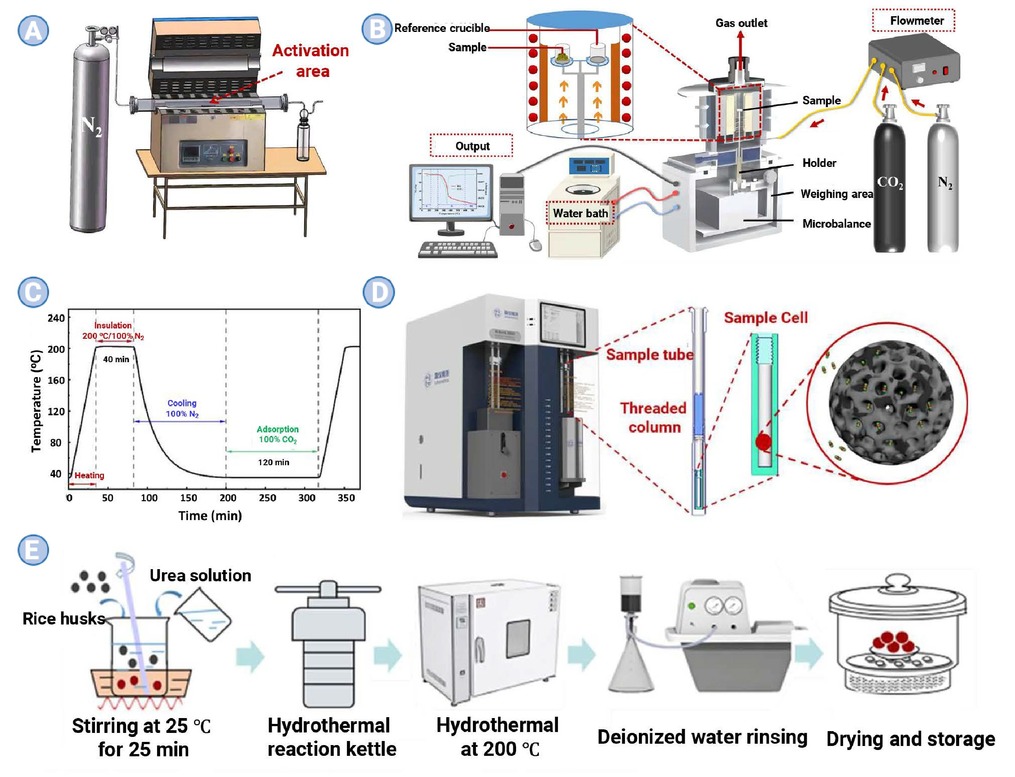
Figure 1.
The system and part of the process used for the preparation of functional biochar and adsorption experiments
-
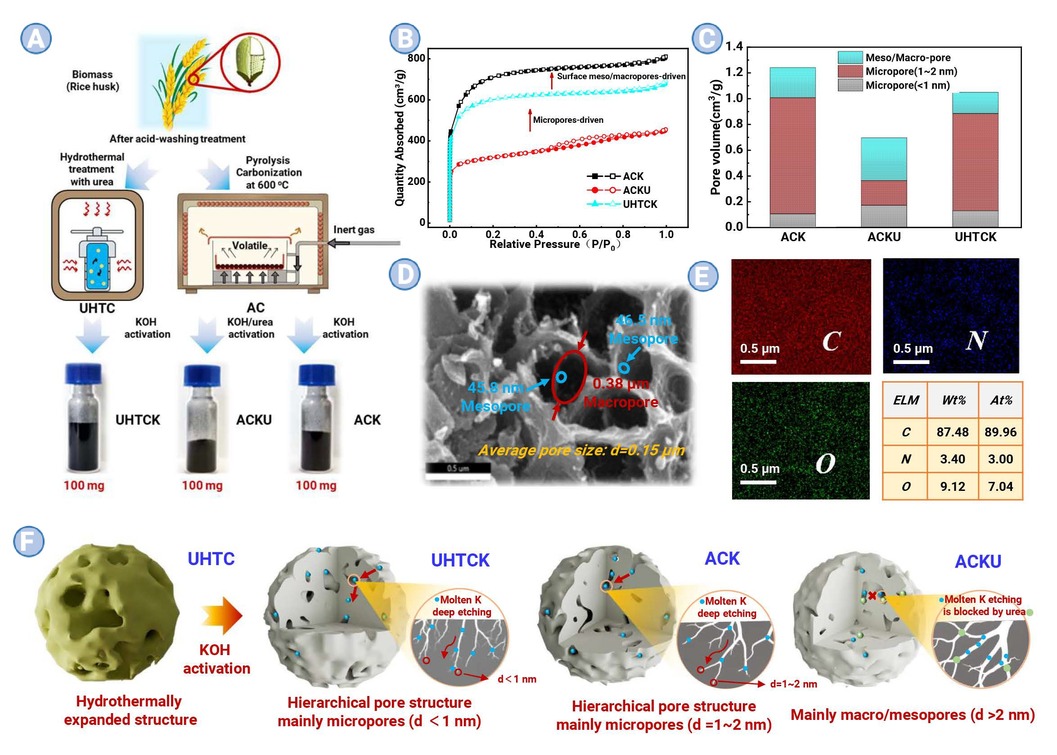
Figure 2.
Preparation of functional biochar and characterization of pore structure
-
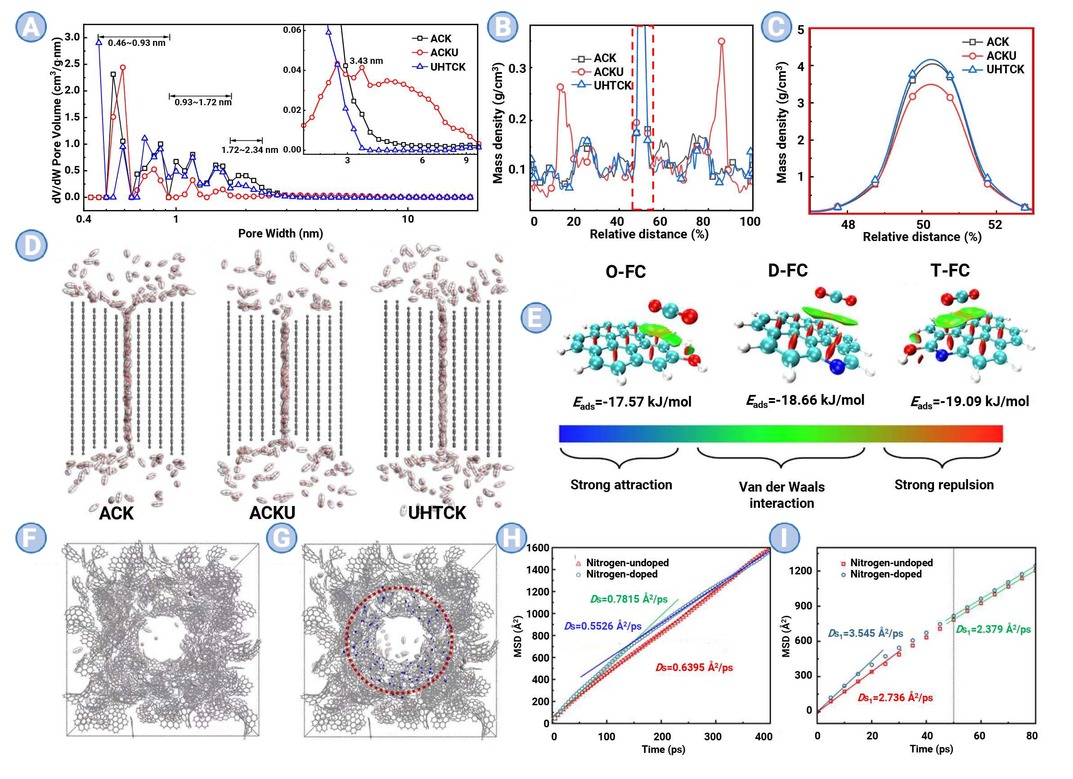
Figure 5.
Effects of pore hierarchy and surface functionalization on CO2 adsorption and desorption
-
Figure 6.
Functional biochar basic units and hierarchical pore-surface functionalization models
-
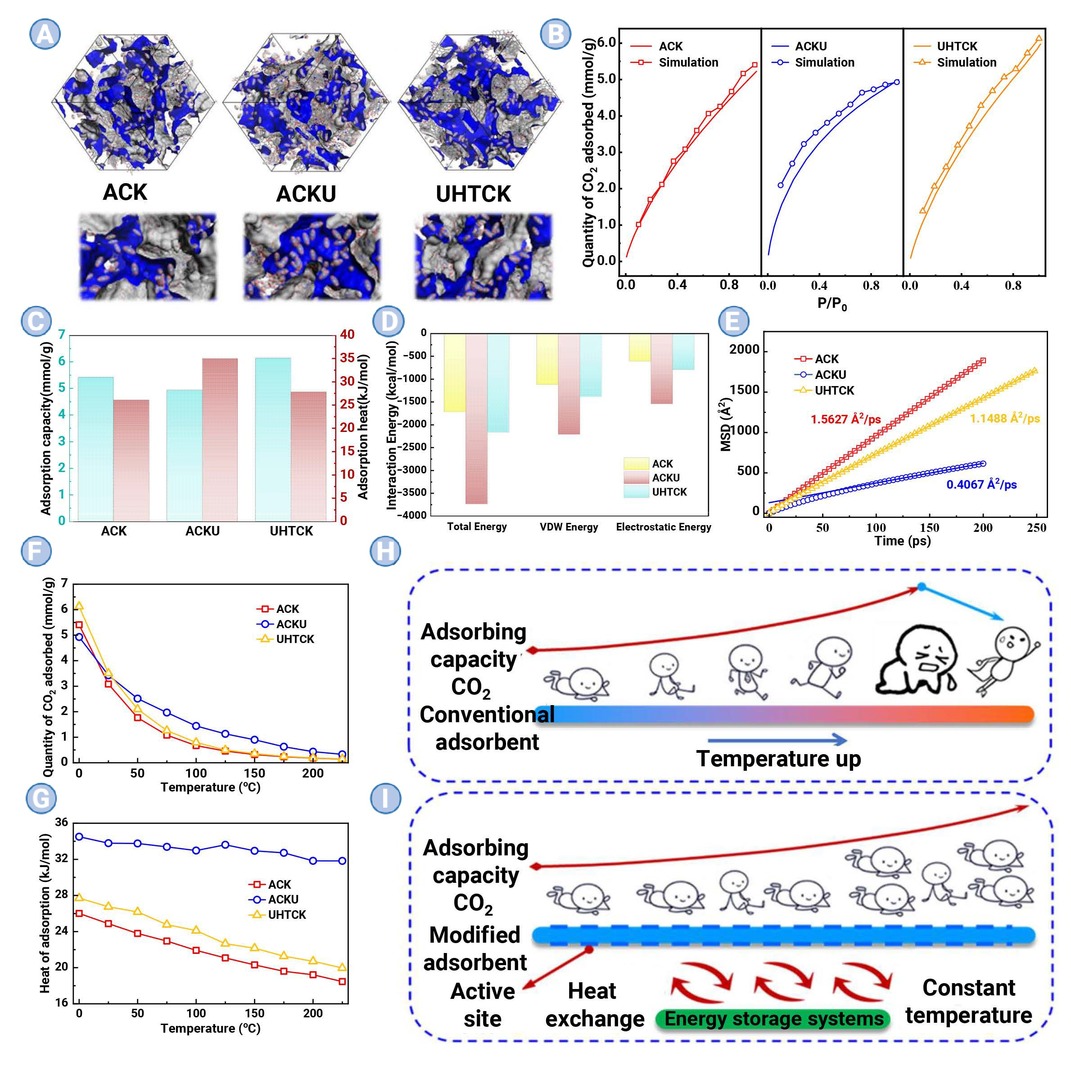
Figure 7.
Thermal capacity and CO2 storage and release characteristics of functional biochar
-
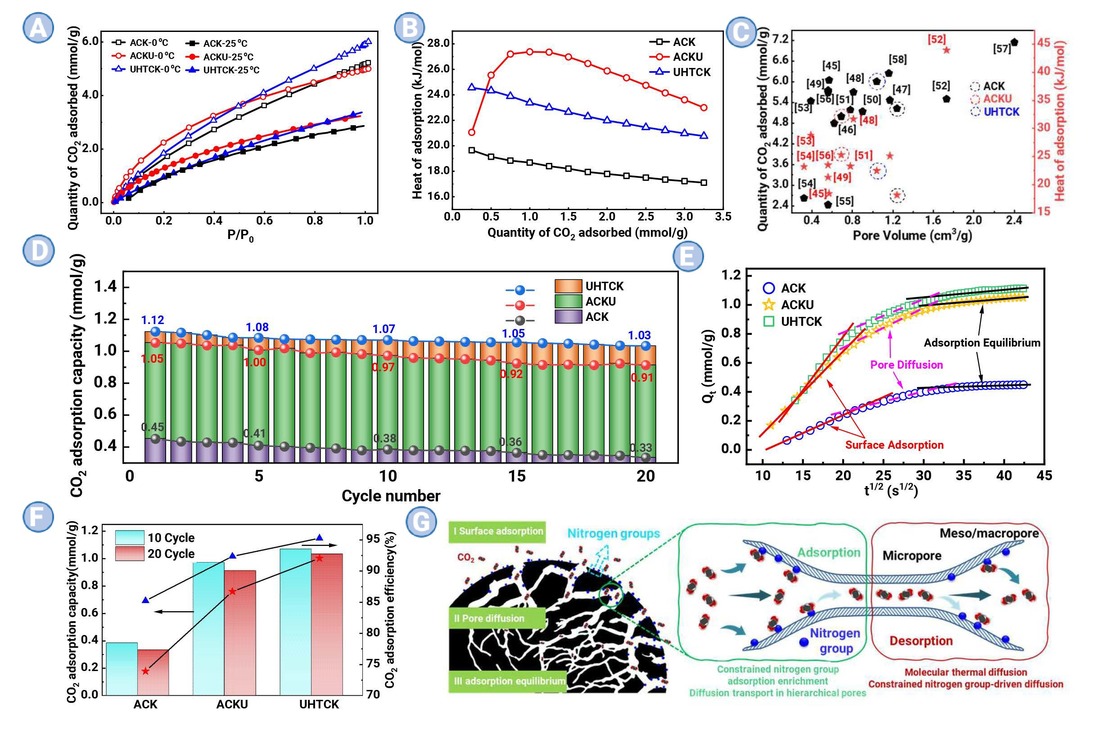
Figure 4.
Evaluation of CO2 adsorption and desorption performance of functional biochar
-
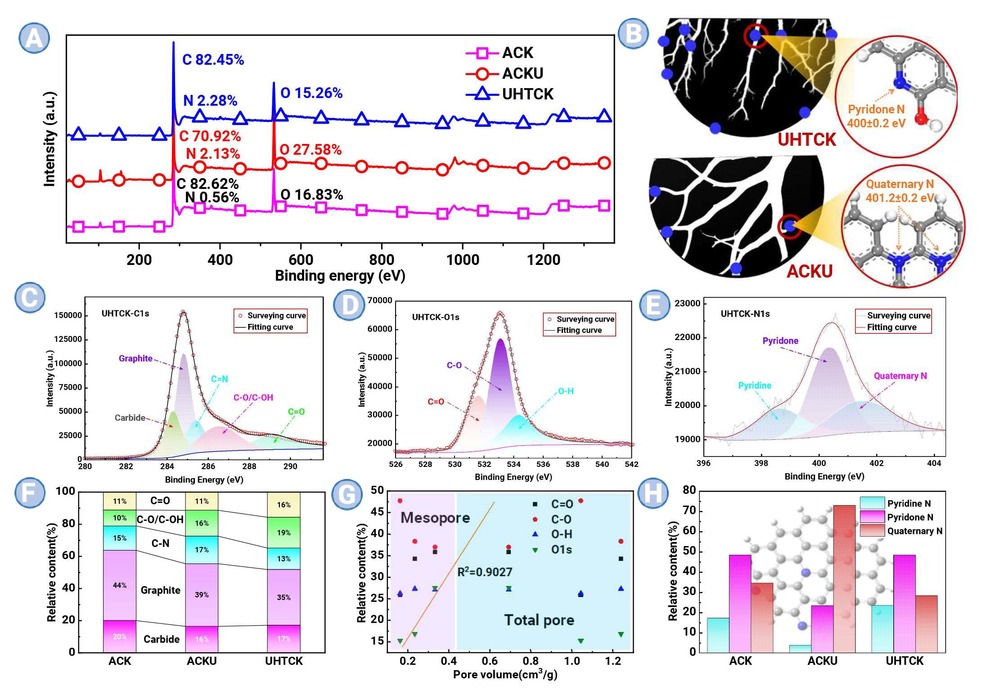
Figure 3.
Construction of functional groups in functional biochar and mechanisms
