
Green methanol production from biomass supporting China's carbon neutrality goals: Economic viability and regional deployment analysis
-
GRAPHICAL ABSTRACT
 DownLoad:
Full size image
DownLoad:
Full size image
-
PUBLIC SUMMARY
-
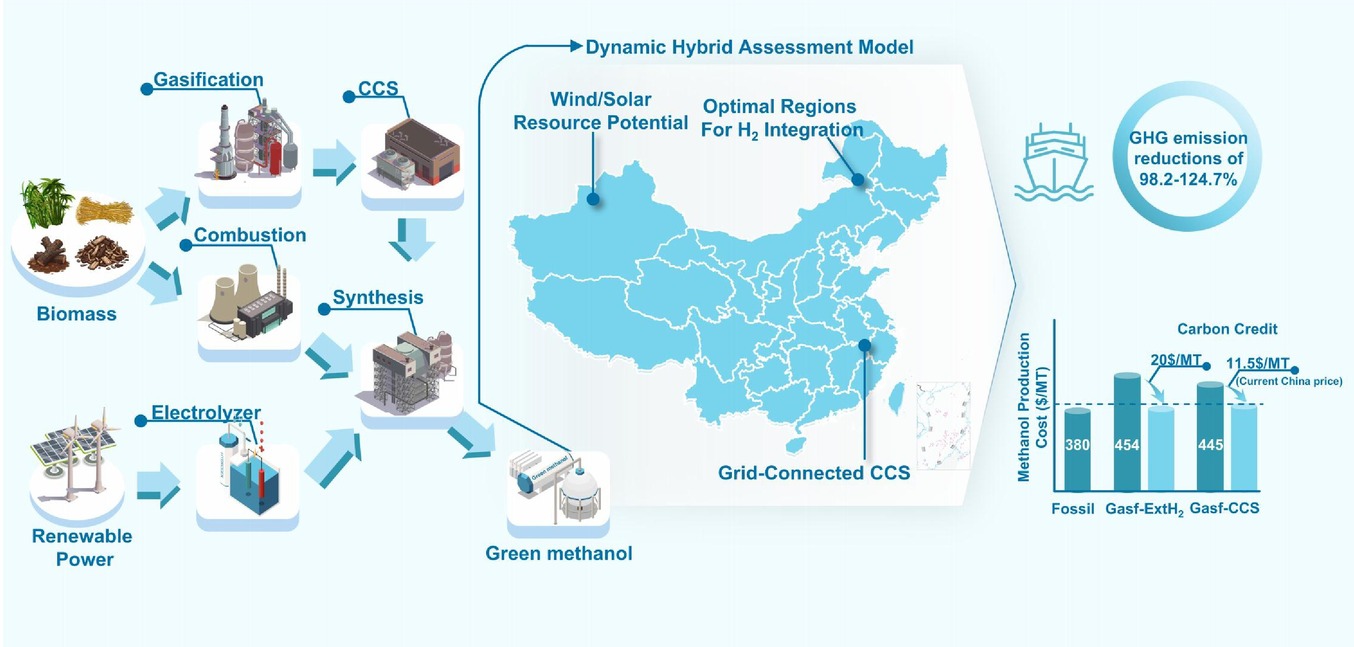
Green methanol serves as a key decarbonization route for China to balance energy security and 2060 carbon neutrality targets.
Renewable hydrogen-gasification methanol costs 454–510 $/MT; gasification-CCS systems with grid power reach a lower 445–450 $/MT.
Biomass methanol cuts GHG emissions by 98.2–124.7%, and carbon credits are vital to compete with fossil methanol economically.
Strict decarbonization policies may slash production costs by 51–94% by 2060, and rational biomass supply can cover marine fuel needs with massive annual carbon mitigation.
-
-
ABSTRACT
To confront the dual challenges of energy security and ambitious carbon neutrality goals by2060 , green methanol projects are being prioritized as critical solutions for decarbonization in China. In this study, renewable hydrogen-integrated gasification systems were shown to achieve production costs in the range 454 – 510 ${\$}$/MT in the best-performing provinces in the northeastern regions. However, gasification-only systems coupled with carbon capture and storage under a grid power regime achieve even lower costs, 445-450 $ {\$}$/MT. Compared to fossil methanol, biomass-based methanol systems can achieve GHG emission reductions of 98.2-124.7%, avoiding 335-522 ktCO2-eq/yr. Carbon credit incentives will be critical in achieving cost parity with conventional methanol, as lower carbon prices currently favor hydrogen-integrated systems using variable renewable energy. Under aggressive decarbonization policies, cost reductions of 51-94% by2060 can be achieved. Strategic biomass allocation could satisfy China's marine fuel demand while preventing 37-44 million tons CO2 emissions annually.-
Keywords:
- Green methanol /
- Biomass gasification /
- Biofuel /
- Negative emissions /
- Techno-economic analysis.
-

-
REFERENCES
[1] Tabibian S.S. and Sharifzadeh M. (2023). Statistical and analytical investigation of methanol applications, production technologies, value-chain and economy with a special focus on renewable methanol. Renew. Sustain. Energy Rev. 179:113281. DOI:10.1016/j.rser.2023.113281 [2] Li C., Jia T., Wang H., et al. (2023). Assessing the prospect of deploying green methanol vehicles in China from energy, environmental and economic perspectives. Energy 263:125967. DOI:10.1016/j.energy.2022.125967 [3] Jiang M., Cao Y., Liu C., et al. (2024). Tracing fossil-based plastics, chemicals and fertilizers production in China. Nat. Commun. 15:3854. DOI:10.1038/s41467-024-47930-0 [4] IRENA. (2021). Innovation outlook: Renewable methanol. [5] Maimaiti S., Gu Y., Chen Q. and Tang Z. (2023). Prospective life cycle environmental impact assessment of renewable energy-based methanol production system: A case study in China. J. Clean. Prod. 425:139002. DOI:10.1016/j.jclepro.2023.139002 [6] Mukherjee A., Bruijnincx P. and Junginger M. (2020). A perspective on biofuels use and CCS for GHG mitigation in the marine sector. iScience 23:101758. DOI:10.1016/j.isci.2020.101758 [7] International Maritime Organization. (2023). 2023 IMO Strategy on Reduction of GHG Emissions from Ships. https://www.imo.org/en/OurWork/Environment/Pages/2023-IMO-Strategy-on-Reduction-of-GHG-Emissions-from-Ships.aspx [8] World Economic Forum. (2023). Is green methanol the clean fuel the world is forgetting?. [9] International Council on Clean Transportation. (2021). A step forward for “green” methanol and its potential to deliver deep GHG reductions in maritime shipping. https://theicct.org/a-step-forward-for-green-methanol-and-its-potential-to-deliver-deep-ghg-reductions-in-maritime-shipping%E2%80%AF/ [10] Mordor Intelligence. (2025). Methanol Market Size & Share Analysis – Growth Trends & Forecasts (2025–2030). https://www.mordorintelligence.com/industry-reports/methanol-market. [11] Li J. and Chen G. (2024). Update on the Gasification Activities in China. [12] Harris K., Grim R.G., Huang Z. and Tao L. (2021). A comparative techno-economic analysis of renewable methanol synthesis from biomass and CO2: Opportunities and barriers to commercialization. Appl. Energy 303:117637. DOI:10.1016/j.apenergy.2021.117637 [13] Wang D., Wen Y., Zhang J., et al. (2025). Potential solution to wheat straw-to-methanol for marine fuel under carbon emission restrictions: A comparative energy, exergy, economic, and environmental analysis. Appl. Energy 397:126338. DOI:10.1016/j.apenergy.2025.126338 [14] Li Y., Lan S., Ryberg M., et al. (2021). A quantitative roadmap for China towards carbon neutrality in 2060 using methanol and ammonia as energy carriers. iScience 24:102513. DOI:10.1016/j.isci.2021.102513 [15] Gu Y., Wang D., Chen Q. and Tang Z. (2022). Techno-economic analysis of green methanol plant with optimal design of renewable hydrogen production: A case study in China. Int. J. Hydrogen Energy 47:5085−5100. DOI:10.1016/j.ijhydene.2021.11.148 [16] Tullo A.H. (2025). Can methanol decarbonize fuels?. [17] Wang D., Wen Y., Zhang J., et al. (2025). Potential solution to wheat straw-to-methanol for marine fuel under carbon emission restrictions: A comparative energy, exergy, economic, and environmental analysis. Appl. Energy 397:126338. DOI:10.1016/j.apenergy.2025.126338 [18] Li J. and Chen G. (2024). Update on the Gasification Activities in China. [19] He G., Lin J., Sifuentes F., et al. (2020). Rapid cost decrease of renewables and storage accelerates the decarbonization of China’s power system. Nat. Commun. 11:2486. DOI:10.1038/s41467-020-16184-x [20] BloombergNEF. (2025). Global Cost of Renewables to Continue Falling in 2025 as China Extends Manufacturing Lead. https://about.bnef.com/blog/global-cost-of-renewables-to-continue-falling-in-2025-as-china-extends-manufacturing-lead-bloombergnef/ [21] Li J., Zhu X., Djilali N., et al. (2022). Comparative well-to-pump assessment of fueling pathways for zero-carbon transportation in China: Hydrogen economy or methanol economy. Renew. Sustain. Energy Rev. 169:112935. DOI:10.1016/j.rser.2022.112935 [22] Voss R., Lee R.P., Keller F., et al. (2024). Decarbonization potential and economic viability of chemical recycling for China’s transformation towards carbon neutrality: Case analysis of global warming potential and costs of municipal solid waste gasification for methanol production. Resour. Conserv. Recycl. 206:107613. DOI:10.1016/j.resconrec.2024.107613 [23] Bazaluk O., Havrysh V., Nitsenko V., et al. (2020). Assessment of green methanol production potential and related economic and environmental benefits: The case of China. Energies 13:3113. DOI:10.3390/en13123113 [24] Zhang J. (2024). High-efficiency carbon dioxide hydrogenation to methanol. [25] Li M., Virguez E., Shan R., et al. (2022). High-resolution data shows China’s wind and solar energy resources are enough to support a 2050 decarbonized electricity system. Appl. Energy 306:117996. DOI:10.1016/j.apenergy.2021.117996 [26] Jenkins J.D., Luke M. and Thernstrom S. (2018). Getting to zero carbon emissions in the electric power sector. Joule 2:2498−2510. DOI:10.1016/j.joule.2018.11.013 [27] Lazard. (2024). Lazard's Levelized Cost of Storage Analysis—Version 9.0. [28] Cole W., Frazier A.W. and Augustine C. (2021). Cost Projections for Utility-Scale Battery Storage: 2021 Update. [29] State Grid Corporation of China. (2024). Electricity sales prices of power grids in various provinces. http://www.sgcc.com.cn/html/sgcc_main/gb/index.shtml. [30] Zhuo Z., Du E., Zhang N., et al. (2022). Cost increase in the electricity supply to achieve carbon neutrality in China. Nat. Commun. 13:3172. DOI:10.1038/s41467-022-30747-0 [31] Tan E.C.D., Talmadge M., Dutta A., et al. (2015). Process Design and Economics for the Conversion of Lignocellulosic Biomass to Hydrocarbons via Indirect Liquefaction: Thermochemical Research Pathway to High-Octane Gasoline Blendstock Through Methanol/Dimethyl Ether Intermediates. OSTI. DOI:10.2172/1215006. [32] Chemical Engineering Magazine. (2023). The Chemical Engineering Plant Cost Index. https://www.chemengonline.com/pci-home. [33] Humbird D., Davis R., Tao L., et al. (2002). Process Design and Economics for Biochemical Conversion of Lignocellulosic Biomass to Ethanol: Dilute-Acid Pretreatment and Enzymatic Hydrolysis of Corn Stover. [34] National Bureau of Statistics of China. (2014). China Agricultural Yearbook 2014. http://www.stats.gov.cn/sj/ndsj/2014/indexeh.htm. [35] National Bureau of Statistics of China. (2022). China Statistical Yearbook 2022. http://www.stats.gov.cn/sj/ndsj/2022/indexeh.htm. [36] Xia L., Chen W., Lu B., et al. (2023). Climate mitigation potential of sustainable biochar production in China. Renew. Sustain. Energy Rev. 175:113145. DOI:10.1016/j.rser.2023.113145 [37] National Forestry and Grassland Data Center. (2020). The 9th National Forest Resources Inventory. [38] National Forestry and Grassland Data Center. (2019). China Forestry and Grassland Yearbook 2018. [39] State Forestry Administration. (2006). China Forestry Statistics Yearbook (2005–2007). [40] Duan X. (2016). Study on the Development of Circular Economy in China's Forestry Industry. [41] Wang H., Zuo X., Wang D., et al. (2017). The estimation of forest residue resources in China. J. Cent. South Univ. For. Technol. 37:29−38. [42] Fu T., Ke J.H., Zhou S. and Xie G.H. (2020). Estimation of the quantity and availability of forestry residue for bioenergy production in China. Resour. Conserv. Recycl. 162:104993. DOI:10.1016/j.resconrec.2020.104993 [43] Fu T., Wang H. and Xie G. (2018). Definition and assessment of coefficients for the calculation of forestry residues. Chin. J. Biotechnol. 34:1693−1705. DOI:10.13345/j.cjb.170510 [44] Zhang B., Hastings A., Clifton-Brown J.C., et al. (2020). Modeled spatial assessment of biomass productivity and technical potential of Miscanthus × giganteus, Panicum virgatum L. , and Jatropha on marginal land in China. GCB Bioenergy 12:328−345. DOI:10.1111/gcbb.12673 [45] Xue S., Lewandowski I., Wang X. and Yi Z. (2016). Assessment of the production potentials of Miscanthus on marginal land in China. Renew. Sustain. Energy Rev. 54:932−943. DOI:10.1016/j.rser.2015.10.040 [46] Wang M. (2024). Life Cycle Analysis of Biofuels with the R&D GREET Model. [47] Yang S., Li B., Zheng J. and Kankala R.K. (2018). Biomass-to-methanol by dual-stage entrained flow gasification: Design and techno-economic analysis based on system modeling. J. Clean. Prod. 205:364−374. DOI:10.1016/j.jclepro.2018.09.043 [48] Liu Z., Peng W., Motahari-Nezhad M., et al. (2016). Circulating fluidized bed gasification of biomass for flexible end-use of syngas: A micro and nano scale study for production of bio-methanol. J. Clean. Prod. 129:249−255. DOI:10.1016/j.jclepro.2016.04.076 [49] Xiao J., Shen L., Zhang Y. and Gu J. (2009). Integrated analysis of energy, economic, and environmental performance of biomethanol from rice straw in China. Ind. Eng. Chem. Res. 48:9999−10007. DOI:10.1021/ie900680d [50] Arteaga-Pérez L.E., Gómez-Cápiro O., Karelovic A. and Jiménez R. (2016). A modelling approach to the techno-economics of biomass-to-SNG/methanol systems: Standalone vs integrated topologies. Chem. Eng. J. 286:663−678. DOI:10.1016/j.cej.2015.11.005 [51] Agyekum E.B., Okonkwo P.C. and Rashid F.L. (2025). Research on biomass energy and CO2 conversion to methanol: A combination of conventional and bibliometric review analysis. Carbon Res. 4:4. DOI:10.1007/s44246-024-00179-0 [52] Ostadi M., Bromberg L., Cohn D.R., et al. (2023). Flexible methanol production process using biomass/municipal solid waste and hydrogen produced by electrolysis and natural gas pyrolysis. Fuel 334:126697. DOI:10.1016/j.fuel.2022.126697 [53] Poluzzi A., Guandalini G., Guffanti S., et al. (2022). Flexible power and biomass-to-methanol plants with different gasification technologies. Front. Energy Res. 9:795673. DOI:10.3389/fenrg.2021.795673 [54] Zhang L., Gao R., Tang Z., et al. (2024). Boosting carbon utilization efficiency for sustainable methanol production from biomass: Techno-economic and environmental analysis. Energy Convers. Manag. 311:118504. DOI:10.1016/j.enconman.2024.118504 [55] Urošević D., Gvozdenac D. and Grković V. (2013). Calculation of the power loss coefficient of steam turbine as a part of the cogeneration plant. Energy 59:642−651. DOI:10.1016/j.energy.2013.07.010 [56] Fasihi M. and Breyer C. (2024). Global production potential of green methanol based on variable renewable electricity. Energy Environ. Sci. 17:3503−3522. DOI:10.1039/D3EE02951D [57] SunSirs China Commodity Data Group. (2024). China Methanol Spot Price. https://www.sunsirs.com/uk/prodetail-429.html. [58] Butera G., Jensen S.H., Ahrenfeldt J. and Clausen L.R. (2021). Techno-economic analysis of methanol production units coupling solid oxide cells and thermochemical biomass conversion via the TwoStage gasifier. Fuel Process. Technol. 215:106718. DOI:10.1016/j.fuproc.2020.106718 [59] Sollai S., Porcu A., Tola V., et al. (2023). Renewable methanol production from green hydrogen and captured CO2: A techno-economic assessment. J. CO2 Util. 68:102345. DOI:10.1016/j.jcou.2022.102345. [60] Xiao T. and Zhou Q. (2024). China's Industrial Power Rates 2024: A Guide for Investors. https://www.china-briefing.com/news/chinas-industrial-power-rates-category-electricity-usage-region-classification/. [61] Zun M.T. and McLellan B.C. (2023). Cost projection of global green hydrogen production scenarios. Hydrogen 4:932−960. DOI:10.3390/hydrogen4040055 [62] Methanol Institute. (2022). Carbon Footprint of Methanol. [63] Parajuli R., Sperling K. and Dalgaard T. (2015). Environmental performance of Miscanthus as a fuel alternative for district heat production. Biomass Bioenergy 72:104−116. DOI:10.1016/j.biombioe.2014.11.011 [64] Zhang Q., Qiao K., Hu C., et al. (2024). Study on life-cycle carbon emission factors of electricity in China. Int. J. Low-Carbon Technol. 19:2287−2298. DOI:10.1093/ijlct/ctae181 [65] Hu M. and Dong Y. (2024). China's shipping emissions governance: Status and prospects under the dual carbon goal. Front. Mar. Sci. 11. DOI:10.3389/fmars.2024.1405312. [66] World Energy. (2025). Tibet's Largest Solar-Storage Project Powers up at 4,500 m. https://www.world-energy.org/article/50625.html. [67] Meng Y., Gao B., Duan Y., et al. (2024). Analysis and recommendations on the current state of renewable energy development in Tibet. Sustainability 16:10974. DOI:10.3390/su162410974 [68] Li R., Hu Y., Wang X., et al. (2024). Estimating the impacts of a new power system on electricity prices under dual carbon targets. J. Clean. Prod. 438:140583. DOI:10.1016/j.jclepro.2024.140583 [69] Shu Y., Zhang L., Zhang Y., et al. (2021). Carbon peak and carbon neutrality path for China's power industry. Chin. J. Eng. Sci. 23:1. DOI:10.15302/J-SSCAE-2021.06.001 [70] Zhao G. (2018). Assessment of potential biomass energy production in China towards 2030 and 2050. Int. J. Sustain. Energy 37:47−66. DOI:10.1080/14786451.2016.1231677 [71] Shapiro-Bengtsen S., Hamelin L., Bregnbæk L., et al. (2022). Should residual biomass be used for fuels, power and heat, or materials? Assessing costs and environmental impacts for China in 2035. Energy Environ. Sci. DOI:10.1039/D1EE03816H [72] Yang T., Liu W. and Kramer G.J. (2023). Integrated assessment on the implementation of sustainable heat technologies in the built environment in Harbin, China. Energy Convers. Manag. 279:116764. DOI:10.1016/j.enconman.2023.116764 [73] Qi S., Cheng S., Tan X., et al. (2022). Predicting China's carbon price based on a multi-scale integrated model. Appl. Energy 324:119784. DOI:10.1016/j.apenergy.2022.119784 [74] Breunig H., Rosner F., Saqline S., et al. (2024). Achieving gigawatt-scale green hydrogen production and seasonal storage at industrial locations across the U. S. Nat. Commun. 15:9049. DOI:10.1038/s41467-024-53189-2 [75] Chen C., Yang A. and Bañares-Alcántara R. (2021). Renewable methanol production: Understanding the interplay between storage sizing, renewable mix and dispatchable energy price. Adv. Appl. Energy 2:100021. DOI:10.1016/j.adapen.2021.100021 [76] Dierickx J. Economic Value of Methanol for Shipping under FuelEU Maritime and EU ETS. [77] SunSirs. (2025). Analysis of China Fuel Oil Market in 2024 and Forecast for 2025. https://www.sunsirs.com/commodity-news/petail-22637.html -
ABOUT THIS ARTICLE
Cite this article:
Mate M., Sun B., Li B., et al. (2026). Green methanol production from biomass supporting China's carbon neutrality goals: Economic viability and regional deployment analysis. The Innovation Energy 3:100171. https://doi.org/10.59717/j.xinn-energy.2026.100171
Welcome!
To request copyright permission to republish or share portions of our works, please visit Copyright Clearance Center's (CCC) Marketplace website at marketplace.copyright.com.
Export File
Citation
Mate M., Sun B., Li B., et al. (2026). Green methanol production from biomass supporting China's carbon neutrality goals: Economic viability and regional deployment analysis. The Innovation Energy 3:100171. https://doi.org/10.59717/j.xinn-energy.2026.100171

Format
Content
-
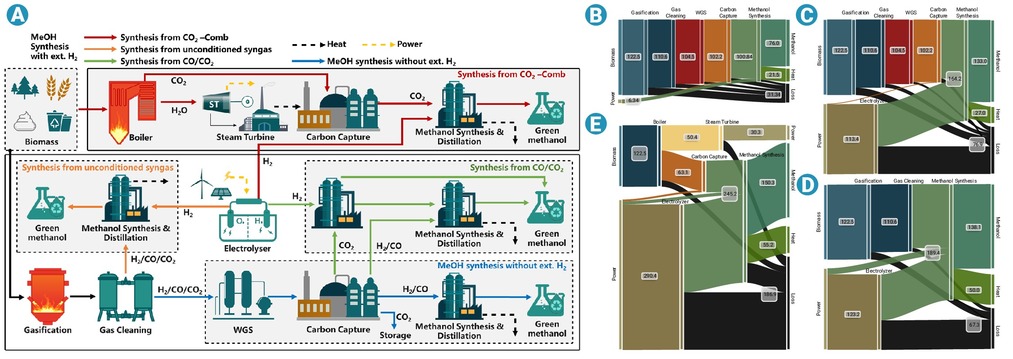
Figure 1.
Process flow diagrams and energy balances for the biomass-to-methanol production pathways
-
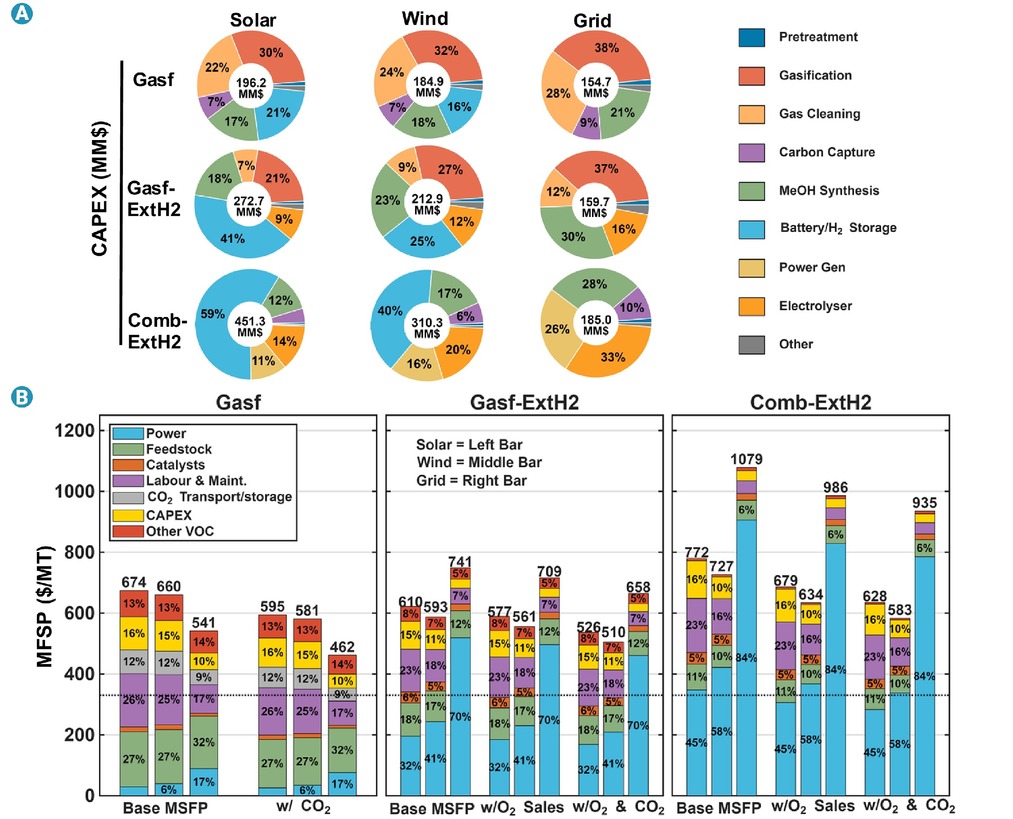
Figure 2.
Techno-economic analysis of renewable energy pathways for green methanol production
-
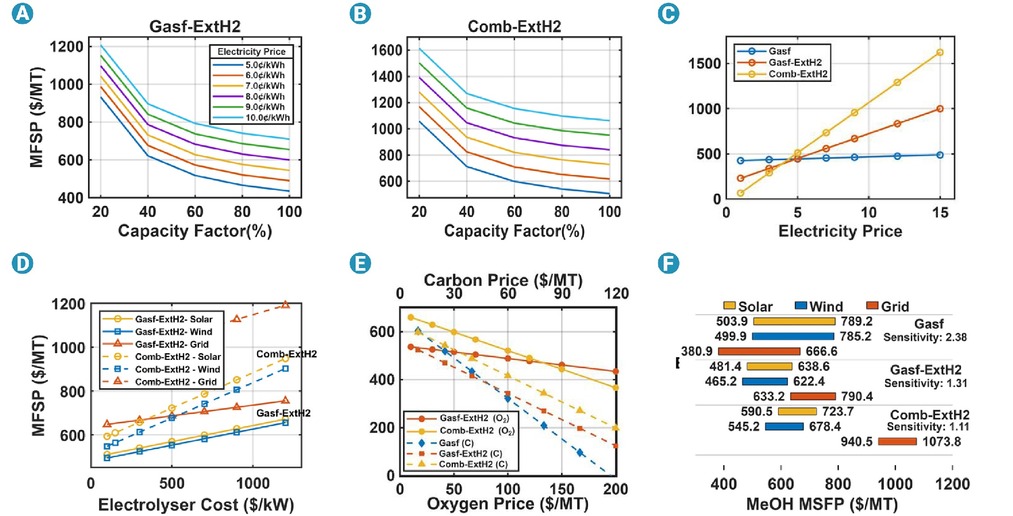
Figure 3.
(A&B) Sensitivity analysis showing MFSP variation with capacity factor for Gasf-ExtH2 and Comb-ExtH2 pathways at different electricity prices (D) Comparative MFSP trends across electricity prices for the three main pathway configurations. (D) Impact of electrolyzer capital costs on MFSP (E) Effect of oxygen and carbon price on the pathway economics. (F) Biomass price sensitivity analysis.
-
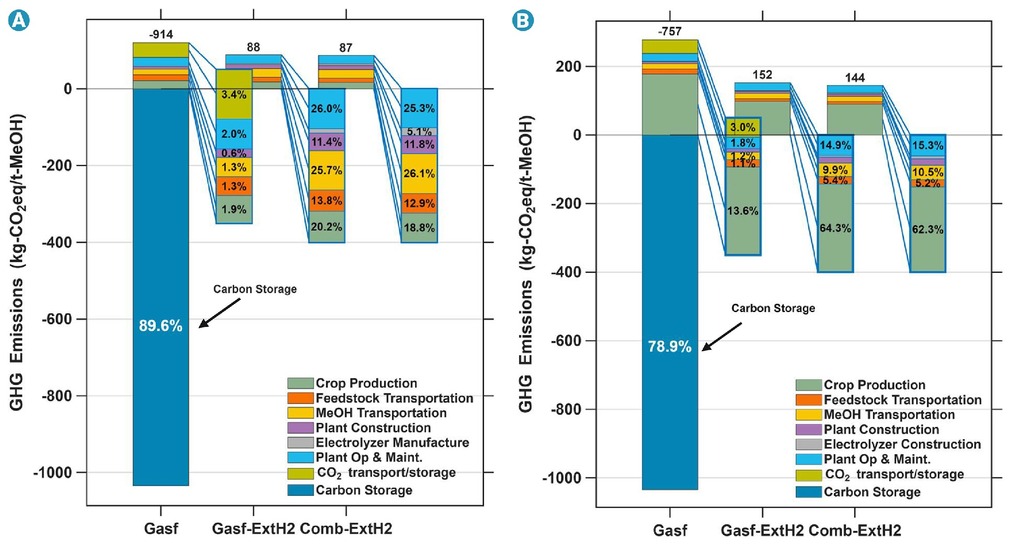
Figure 4.
Lifecycle greenhouse gas emissions analysis and fossil fuel displacement potential. Cradle-to-gate GHG emissions breakdown for production pathways (Gasf, Gasf-ExtH2, Comb-ExtH2) using (A) crop residues and (B) dedicated energy crops.
-
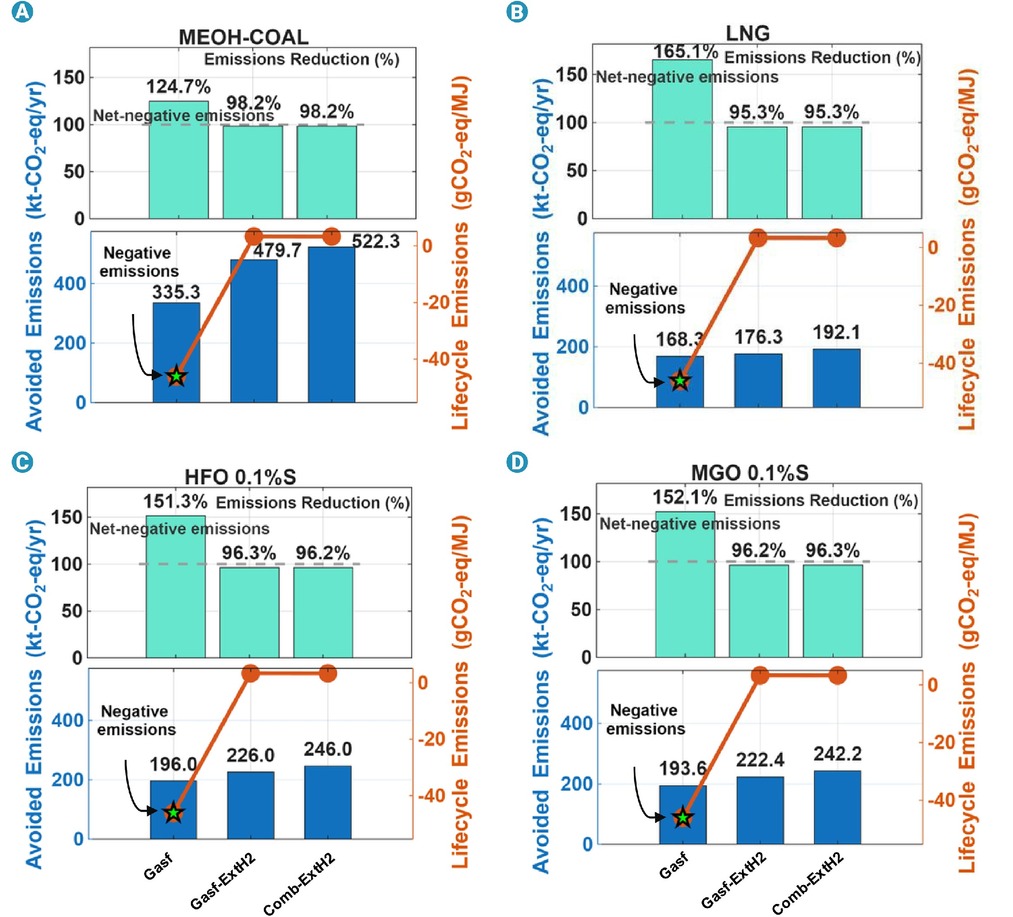
Figure 5.
Fossil fuel displacement potential
-
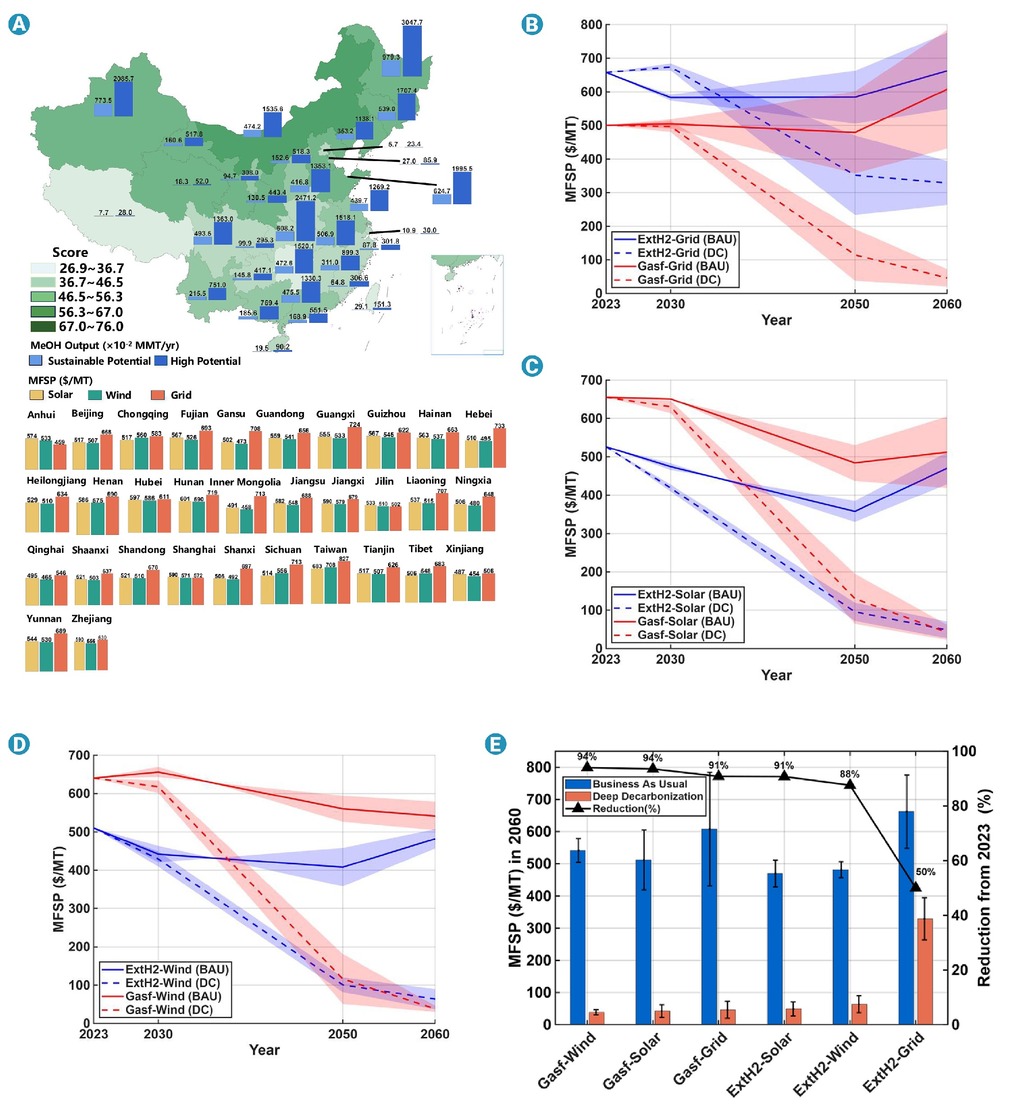
Figure 6.
Geospatial analysis of methanol production potential and MFSP across China using the Gasf-ExtH2 system and temporal projections of methanol production costs and decarbonization potential (2023-
2060 )
