
Quantifying helium substitution for hydrogen leakage in fuel cell vehicle low-pressure systems: A visual experimental study
-
GRAPHICAL ABSTRACT
 DownLoad:
Full size image
DownLoad:
Full size image
-
PUBLIC SUMMARY
-
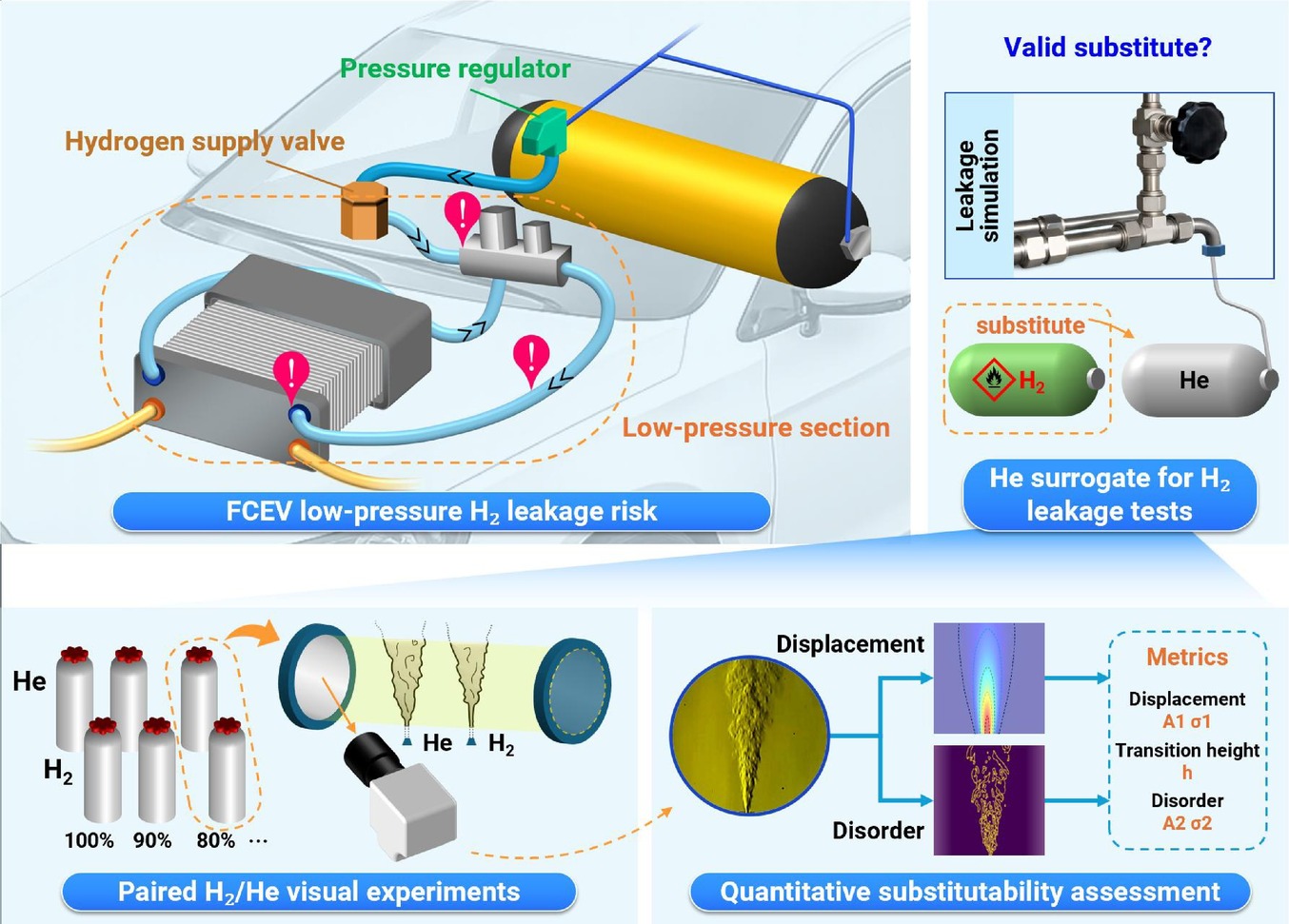
Fuel cell vehicle (FCEV) low-pressure hydrogen leaks pose severe safety hazards; helium is widely adopted as surrogate, yet its substitution validity lacks quantitative verification.
Schlieren tests on vertical hydrogen jets (2–10 SLM, 20–100% concentration) and matching helium cases are carried out to compare leakage diffusion characteristics.
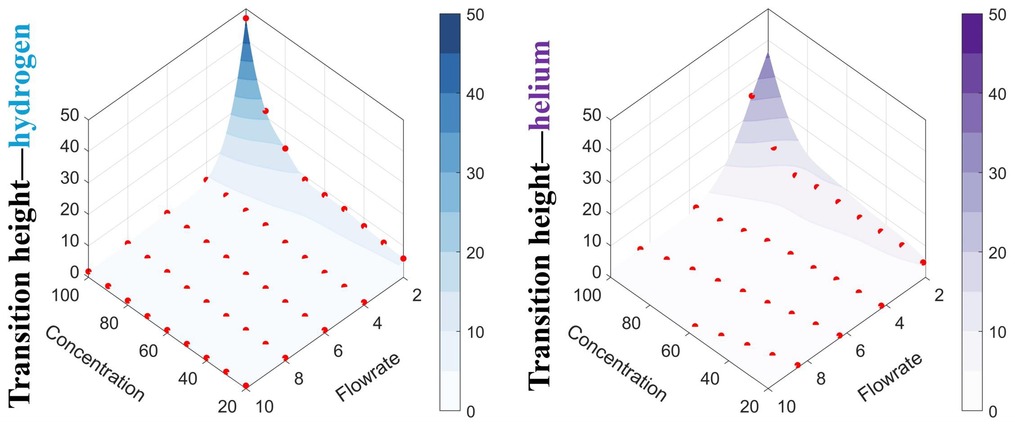
A displacement-field evaluation method based on schlieren imagery is proposed, and jet transition height follows scaling law linked to Richardson number.
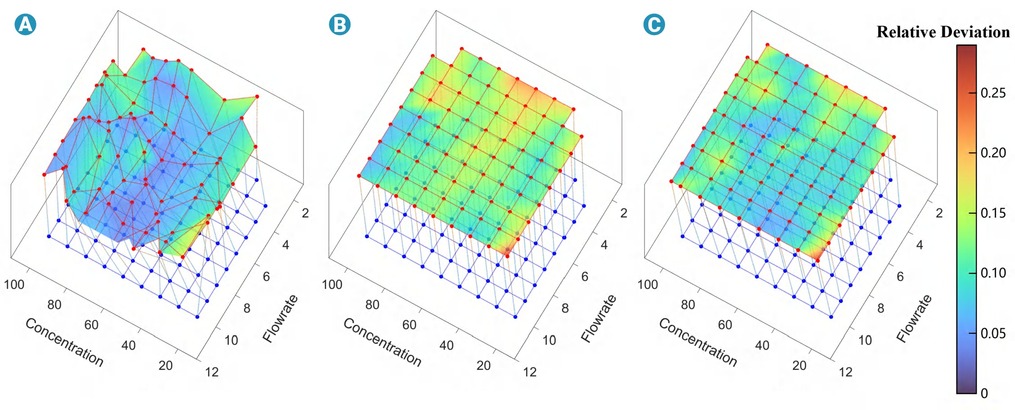
Equal-buoyancy substitution performs best among three equivalence strategies; a concentration-flowrate formula cuts average relative deviation by 2–3 percentage points.
-
-
ABSTRACT
Fuel cell vehicle (FCEV) onboard hydrogen system low-pressure leaks are among the main safety risks in real-world operation. Due to hydrogen’s flammable and explosive properties, helium is often used as a safe surrogate gas in leakage simulation studies; however, its validity for FCEV-related low-pressure, low-flow leaks has not been quantitatively established. Using a representative vertical free-jet configuration, this study experimentally investigates low-pressure, small-orifice releases relevant to FCEV systems. Schlieren visualization was performed with hydrogen across flowrates of 2–10 standard liters per minute (SLM) and concentrations of 20–100%, and corresponding helium cases were used for substitution analysis. A displacement-field analysis method is proposed to evaluate the substitutability of helium for hydrogen based on the optical information in the schlieren images. The study reveals that the laminar-turbulent transition height of the jet varies with the leakage conditions and is closely correlated with a Richardson-number-based scaling. Three commonly used equivalence strategies are assessed, and the results show that, within the tested conditions, an equal-buoyancy substitution method provides satisfactory accuracy. Furthermore, an empirical substitution formula based on concentration and flowrate is proposed, further reducing the average relative deviation by 2–3 percentage points. This work provides a quantitative framework for the design of helium-based surrogate leakage experiments in hydrogen systems.-
Keywords:
- Hydrogen energy /
- Fuel cell vehicle /
- Hydrogen safety /
- Schlieren technique /
- Similarity theory
-

-
REFERENCES
[1] Zhou B. (2024). Liquid hydrogen carriers: Linking renewable energies for a carbon-neutral future. Innov. Energy 1:100020. DOI:10.59717/j.xinn-energy.2024.100020 [2] Lyu S., Huang X., Peng S., et al. (2024). A novel method for analyzing the leakage and diffusion of hydrogen: first arrival time distribution. Renew. Sustain. Energy Rev. 198:114451. DOI:10.1016/j.rser.2024.114451 [3] Ocko I.B. and Hamburg S.P. (2022). Climate consequences of hydrogen emissions. Atmos. Chem. Phys. 22:9349−9368. DOI:10.5194/acp-22-9349-2022 [4] IRENA. (2022). Hydrogen 2022. Available from: https://www.irena.org/Energy-Transition/Technology/Hydrogen [5] Zhang L., Jia C., Bai F., et al. (2024). A comprehensive review of the promising clean energy carrier: hydrogen production, transportation, storage, and utilization (HPTSU) technologies. Fuel 355:129455. DOI:10.1016/j.fuel.2023.129455 [6] Yao N., Ma T., Lin W., et al. (2025). In-situ estimation of nitrogen concentration in fuel cell systems via anode pressure drop modeling. eTransportation 25:100444. DOI:10.1016/j.etran.2025.100444 [7] Wallington T.J., Woody M., Lewis G.M., et al. (2024). Green hydrogen pathways, energy efficiencies, and intensities for ground, air, and marine transportation. Joule 8:2190−2207. DOI:10.1016/j.joule.2024.07.012 [8] IEA. (2023). Net zero roadmap: a global pathway to keep the 1.5 °C goal in reach – analysis. Available from: https://www.iea.org/reports/net-zero-roadmap-a-global-pathway-to-keep-the-15-c-goal-in-reach [9] Li J., Liu J., Dai H., et al. (2024). Rapid development of hydrogen in the energy sector raises safety regulatory concerns. Innov. Energy 1:100037. DOI:10.59717/j.xinn-energy.2024.100037 [10] Greene D.L., Ogden J.M. and Lin Z. (2020). Challenges in the designing, planning and deployment of hydrogen refueling infrastructure for fuel cell electric vehicles. eTransportation 6:100086. DOI:10.1016/j.etran.2020.100086 [11] Yang L., Li J., Liang H., et al. (2026). Risk quantification assessment for fuel cell buses based on component leakage space risk analysis. Renew. Energy 256:124046. DOI:10.1016/j.renene.2025.124046 [12] Wang T., Yang F., Hu Q., et al. (2022). Experimental and simulation research on hydrogen leakage of double ferrule joints. Process Saf. Environ. Prot. 160:839−846. DOI:10.1016/j.psep.2022.02.056 [13] Gitushi K.M., Blaylock M.L. and Klebanoff L.E. (2022). Hydrogen gas dispersion studies for hydrogen fuel cell vessels II: fuel cell room releases and the influence of ventilation. Int. J. Hydrogen Energy 47:21492−21505. DOI:10.1016/j.ijhydene.2022.04.263 [14] Li Y., Wang Z., Shi X., et al. (2023). Safety analysis of hydrogen leakage accident with a mobile hydrogen refueling station. Process Saf. Environ. Prot. 171:619−629. DOI:10.1016/j.psep.2023.01.051 [15] Liu S. and He R. (2024). Decision-level fusion detection method of hydrogen leakage in hydrogen supply system of fuel cell truck. Fuel 367:131455. DOI:10.1016/j.fuel.2024.131455 [16] Groethe M., Merilo E., Colton J., et al. (2007). Large-scale hydrogen deflagrations and detonations. Int. J. Hydrogen Energy 32:2125−2133. DOI:10.1016/j.ijhydene.2007.04.016 [17] Daubech J., Hebrard J., Jallais S., et al. (2015). Un-ignited and ignited high pressure hydrogen releases: concentration – turbulence mapping and overpressure effects. J. Loss Prev. Process Ind. 36:439−446. DOI:10.1016/j.jlp.2015.05.013 [18] Liu H., Salehi F. and Abbassi R. (2023). Experimental and numerical analysis of low-density gas dispersion characteristics in semi-confined environments. J. Loss Prev. Process Ind. 86:105184. DOI:10.1016/j.jlp.2023.105184 [19] Xin J., Duan Q., Jin K., et al. (2023). A reduced-scale experimental study of dispersion characteristics of hydrogen leakage in an underground parking garage. Int. J. Hydrogen Energy 48:16936−16948. DOI:10.1016/j.ijhydene.2023.01.170 [20] Kim B. and Hwang K.-I. (2024). Influence of air changes per hour on hydrogen leaks in mechanically ventilated enclosures. J. Build. Eng. 88:109071. DOI:10.1016/j.jobe.2024.109071 [21] Oamjee A. and Sadanandan R. (2022). Suitability of helium gas as surrogate fuel for hydrogen in H2-air non-reactive supersonic mixing studies. Int. J. Hydrogen Energy 47:9408−9421. DOI:10.1016/j.ijhydene.2022.01.022 [22] Kokgil E. (2015). Using helium as hydrogen surrogate for safety analysis related to hydrogen leaks from residential fuel cell [Master thesis]. Concordia University. [23] He J., Kokgil E., Wang L. (Leon), et al. (2016). Assessment of similarity relations using helium for prediction of hydrogen dispersion and safety in an enclosure. Int. J. Hydrogen Energy 41:15388−15398. DOI:10.1016/j.ijhydene.2016.07.033 [24] Patel P., Garaniya V., Baalisampang T., et al. (2024). A computational analysis of similarity relations using helium as a surrogate of hydrogen in semi-confined facilities. Int. J. Hydrogen Energy 91:1113−1126. DOI:10.1016/j.ijhydene.2024.10.071 [25] Lacome J.M., Jamois D., Perrette L., et al. (2011). Large-scale hydrogen release in an isothermal confined area. Int. J. Hydrogen Energy 36:2302−2312. DOI:10.1016/j.ijhydene.2010.10.080 [26] Chen L., Hong Y., Qi W., et al. (2024). The method to improve the accuracy of experiment using helium instead of hydrogen. Int. J. Hydrogen Energy 78:244−255. DOI:10.1016/j.ijhydene.2024.06.223 [27] Chu W.-L., Zhou J.-M. and Jian B.-L. (2025). Leveraging dynamic color schlieren imaging for enhanced airflow velocity prediction. IEEE Sensors J. 25:2341−2351. DOI:10.1109/JSEN.2024.3504564 [28] Li J., Tian Z., Yang Q., et al. (2023). A new visual approach with the concentration calibration method for the hydrogen leakage and distribution research. Fuel 346:128132. DOI:10.1016/j.fuel.2023.128132 [29] Ghazwani H. (2016). Preliminary Study of Optical-Flow Based Background-Oriented Schlieren Measurements [Master thesis]. Western Michigan University. [30] Lim H.D. and Vanderwel C. (2025). Application of turbulent diffusivity models to point-source dispersion in outdoor and indoor flows. Int. J. Heat Fluid Flow 115:109833. DOI:10.1016/j.ijheatfluidflow.2025.109833 [31] Veser A., Kuznetsov M., Fast G., et al. (2011). The structure and flame propagation regimes in turbulent hydrogen jets. Int. J. Hydrogen Energy 36:2351−2359. DOI:10.1016/j.ijhydene.2010.03.123 [32] Schmidt B.E., Bathel B.F., Grauer S.J., et al. (2025). Twenty-five years of background-oriented schlieren: advances and novel applications. AIAA SCITECH. DOI:10.2514/6.2025-1627 [33] Grauer S.J., Unterberger A., Rittler A., et al. (2018). Instantaneous 3D flame imaging by background-oriented schlieren tomography. Combust. Flame 196:284−299. DOI:10.1016/j.combustflame.2018.06.022 [34] Yang F., Wang T., Deng X., et al. (2021). Review on hydrogen safety issues: Incident statistics, hydrogen diffusion, and detonation process. Int. J. Hydrogen Energy 46:31467−31488. DOI:10.1016/j.ijhydene.2021.07.005 [35] Houf W. and Schefer R. (2008). Analytical and experimental investigation of small-scale unintended releases of hydrogen. Int. J. Hydrogen Energy 33:1435−1444. DOI:10.1016/j.ijhydene.2007.11.031 [36] He S., Xu Z. and Jackson J.D. (2002). An experimental investigation of buoyancy-opposed wall jet flow. Int. J. Heat Fluid Flow 23:487−496. DOI:10.1016/S0142-727X(01)00152-7 [37] Hou X., Lan H., Zhao Z., et al. (2023). Effect of obstacle location on hydrogen dispersion in a hydrogen fuel cell bus with natural and mechanical ventilation. Process Saf. Environ. Prot. 171:995−1008. DOI:10.1016/j.psep.2022.12.094 [38] Li Y., Hou X., Wang C., et al. (2022). Modeling and analysis of hydrogen diffusion in an enclosed fuel cell vehicle with obstacles. Int. J. Hydrogen Energy 47:5745−5756. DOI:10.1016/j.ijhydene.2021.11.205 [39] Soleimani nia M., Maxwell B., Oshkai P., et al. (2018). Experimental and numerical investigation of turbulent jets issuing through a realistic pipeline geometry: Asymmetry effects for air, helium, and hydrogen. Int. J. Hydrogen Energy 43:9379−9398. DOI:10.1016/j.ijhydene.2018.03.197 -
ABOUT THIS ARTICLE
Cite this article:
Tian Z., Yang Q., Li J., et al. (2026). Quantifying helium substitution for hydrogen leakage in fuel cell vehicle low-pressure systems: A visual experimental study. The Innovation Energy 3:100180. https://doi.org/10.59717/j.xinn-energy.2026.100180
Welcome!
To request copyright permission to republish or share portions of our works, please visit Copyright Clearance Center's (CCC) Marketplace website at marketplace.copyright.com.
Export File
Citation
Tian Z., Yang Q., Li J., et al. (2026). Quantifying helium substitution for hydrogen leakage in fuel cell vehicle low-pressure systems: A visual experimental study. The Innovation Energy 3:100180. https://doi.org/10.59717/j.xinn-energy.2026.100180

Format
Content
-
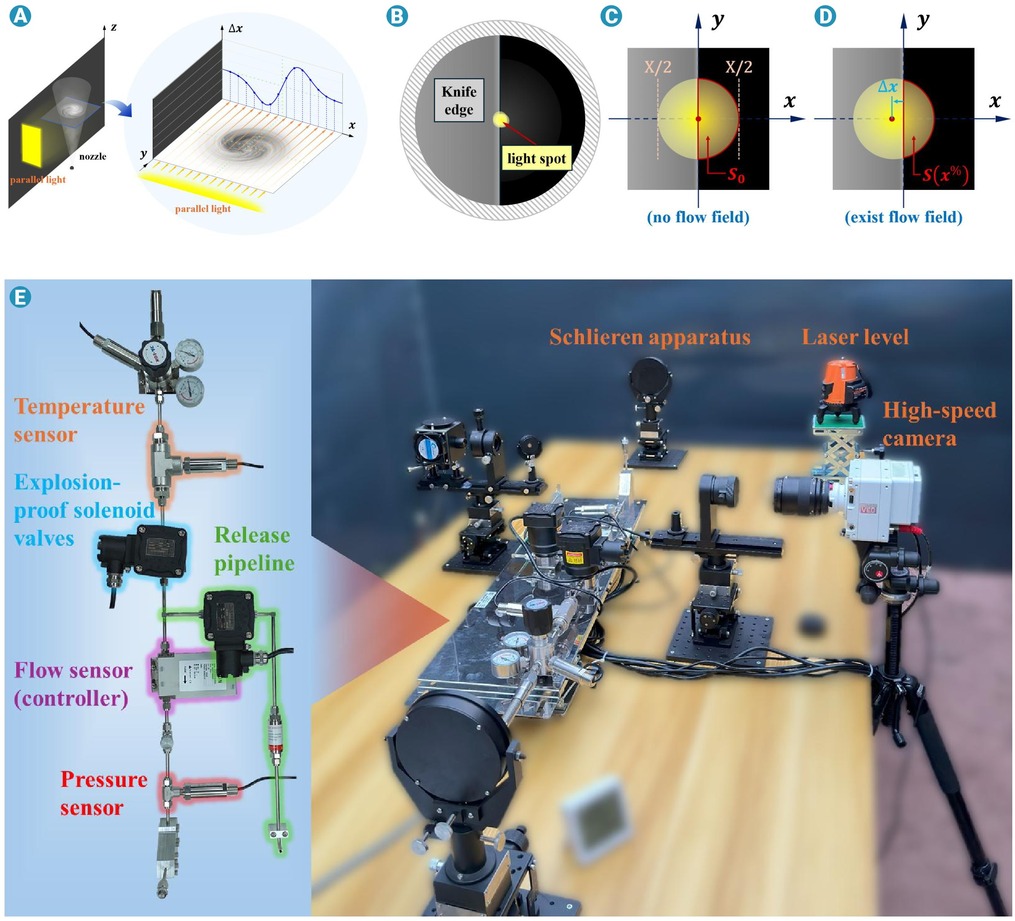
Figure 1.
(A) Schematic of schlieren ray deflection induced by refractive index gradients in a light-gas jet. (B-D) Mechanism of brightness formation of schlieren image brightness under ray displacement. (E) Overall experimental setup and gas pipeline configuration.
-
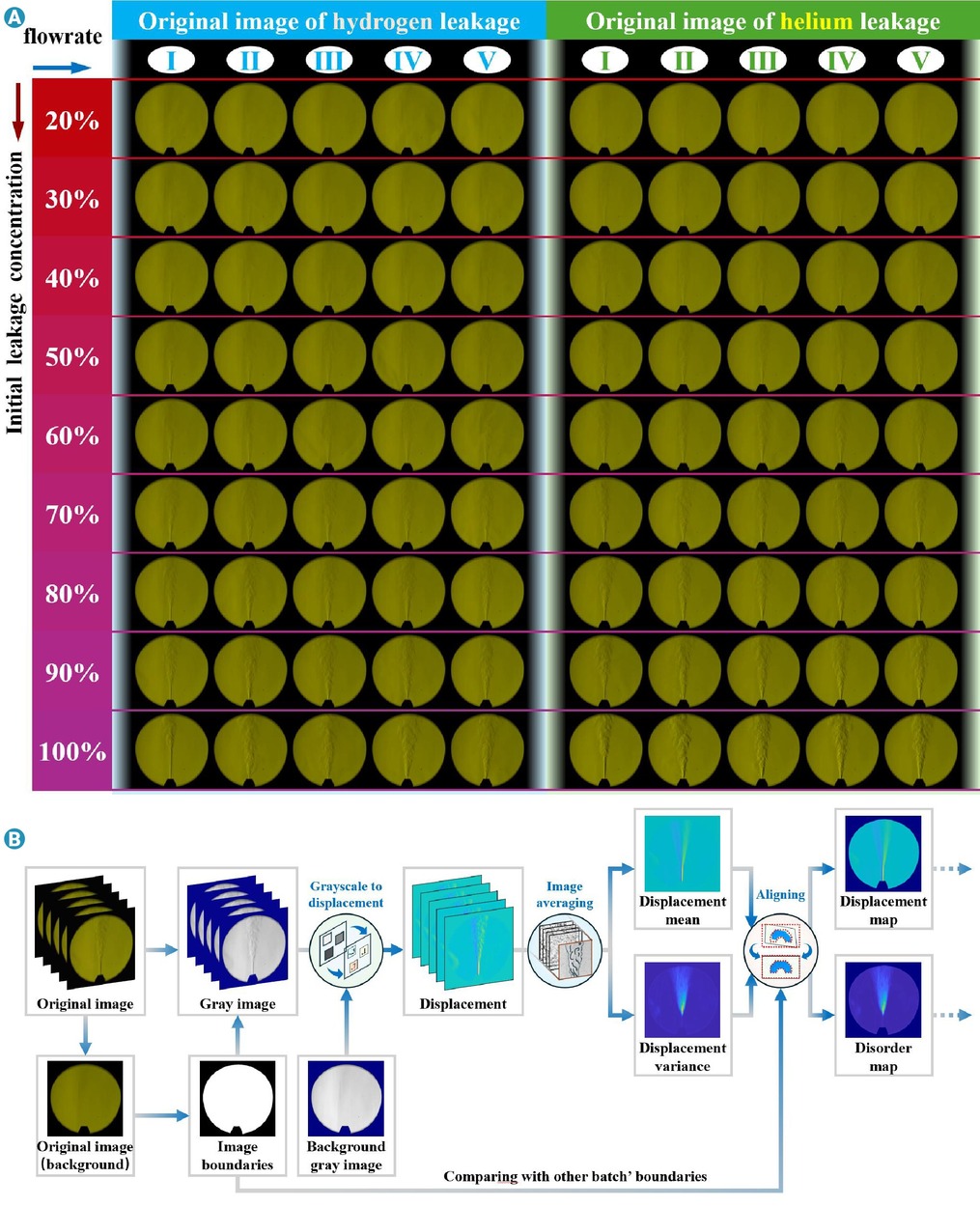
Figure 2.
(A) Original schlieren images of hydrogen and helium leaks across varying concentrations (rows) and flowrates (columns). (B) Image processing workflow for extracting displacement and disorder fields from schlieren videos.
-
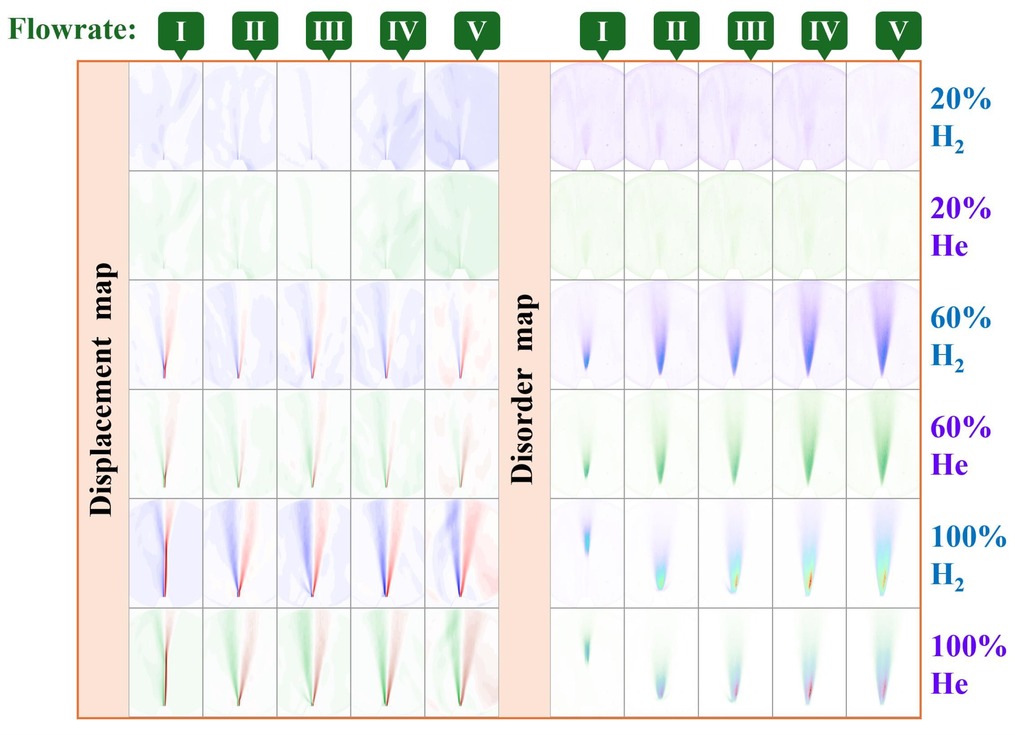
Figure 3.
Representative displacement and disorder fields of hydrogen and helium jets.
-
Figure 4.
Transition-height surfaces of hydrogen and helium jets under different concentrations and flowrates.
-
Figure 5.
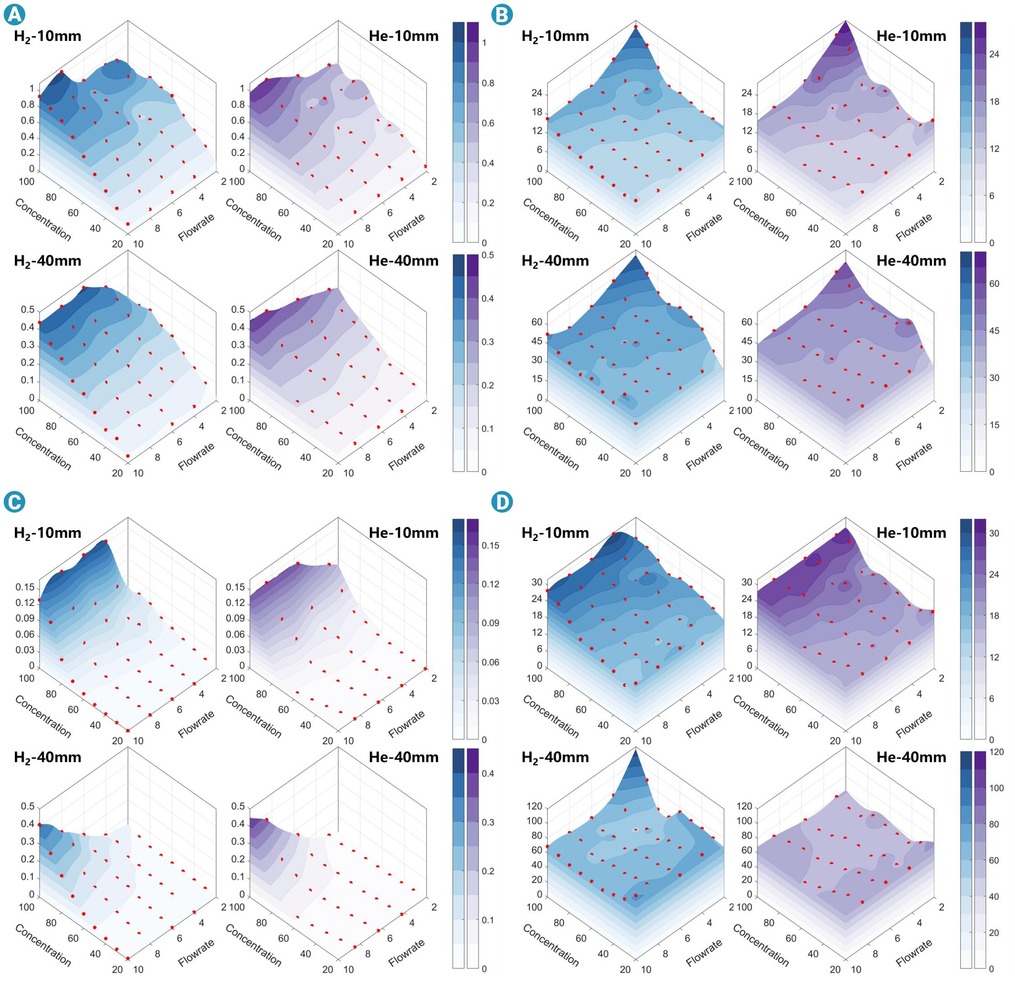
(A) Concentration peak values
$ A_{1}^{'} $ $ {\sigma }_{1} $ $ A_{2}^{'} $ $ {\sigma }_{2} $ -
Figure 6.
Relative deviation results of hydrogen-helium substitution under different methods.
