
-
GRAPHICAL ABSTRACT
 DownLoad:
Full size image
DownLoad:
Full size image
-
PUBLIC SUMMARY
-
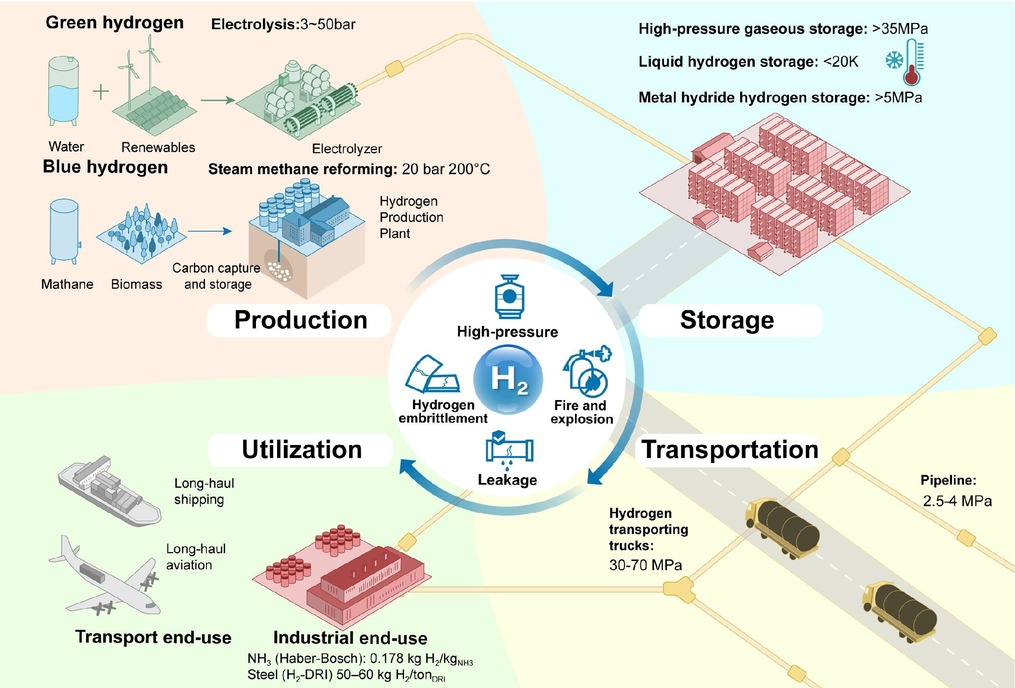
Hydrogen is widely promoted for energy transition, yet its reputation as ultimate clean energy requires systematic re-evaluation via interdisciplinary systems analysis.
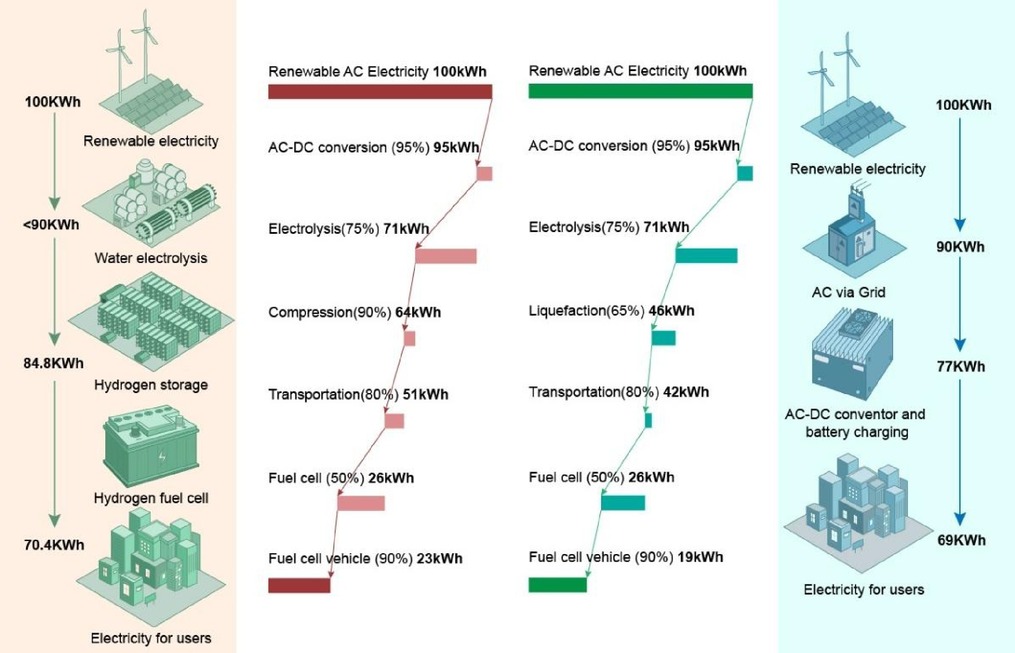
Power-to-hydrogen conversion suffers inherent thermodynamic defects with inevitable exergy loss, while liquefaction and compression induce severe energy penalties.
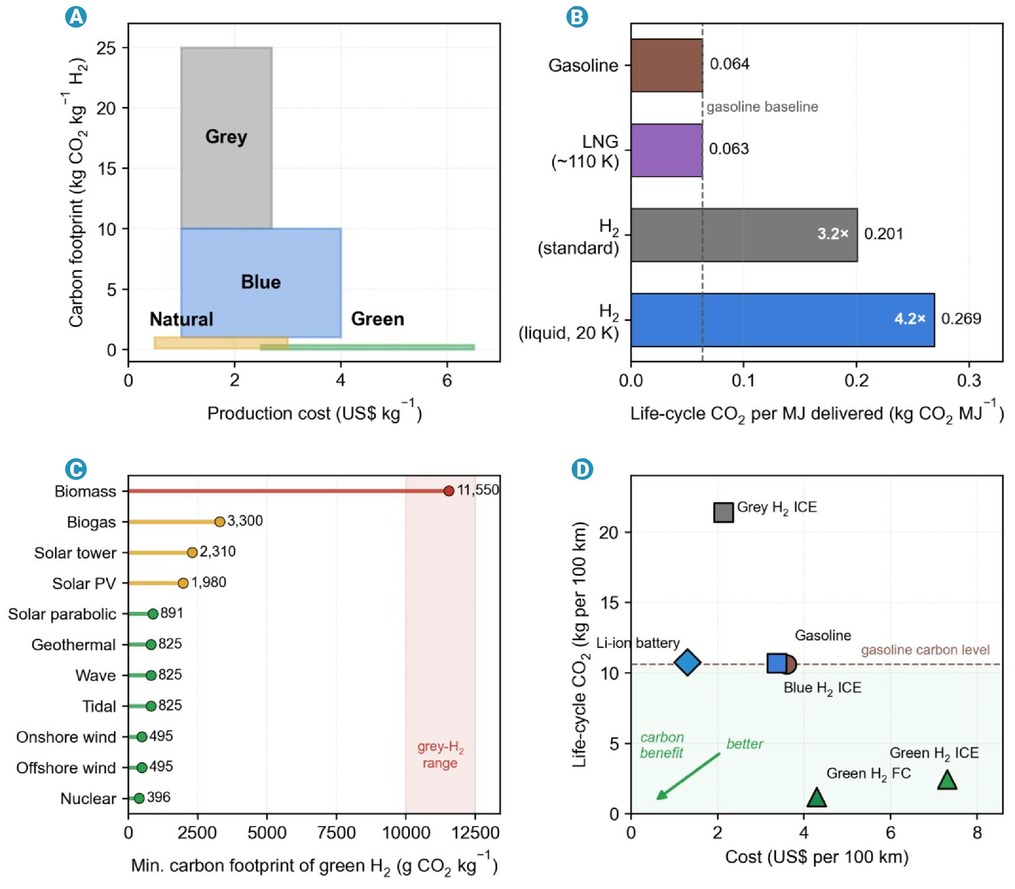
Renewable-based green hydrogen still produces measurable carbon footprints, and hydrogen leakage may indirectly exacerbate atmospheric greenhouse effects.
Hydrogen is irreplaceable for hard-to-abate industries and long-duration energy storage; targeted deployment instead of universal application is rational.
-
-
ABSTRACT
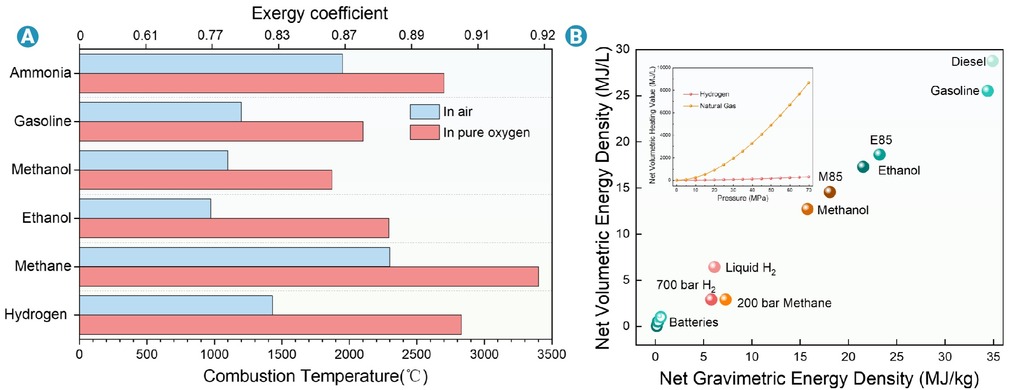
Hydrogen has attracted substantial attention and investment as a pathway for climate mitigation and energy transition. However, beneath the grand narrative of the hydrogen economy, its designation as the “ultimate clean energy” requires critical re-examination. Through an interdisciplinary systems analysis framework, this perspective critically evaluates the hydrogen value chain across multiple dimensions. Thermodynamic analysis reveals that power-to-hydrogen conversion inevitably degrades energy quality. Even under ideal oxy-combustion conditions, hydrogen exhibits an exergy coefficient of merely 0.9. This irreversible exergy loss exposes inherent thermodynamic deficiencies in power-to-hydrogen as an energy storage pathway, fundamentally limiting high-quality energy utilization. The energy penalties make electricity-to-hydrogen conversion inherently inefficient. Liquefaction demands a theoretical minimum of 43.2% of hydrogen's energy content, and compression to 70 MPa requires 5.74%. Life-cycle carbon footprint analysis challenges the prevailing “green hydrogen” narrative. Even when produced via renewable electricity, solar photovoltaic pathways yield carbon intensities of 1.98 kgCO2/kgH2, while wind power pathways generate 0.495 kgCO2/kgH2. Furthermore, hydrogen's high permeability presents non-negligible leakage risks. Atmospheric hydrogen accumulation indirectly amplifies greenhouse effects through hydroxyl radical interactions. Despite these constraints, hydrogen retains irreplaceable value in hard-to-abate industrial processes, weight-constrained transport, and long-duration energy storage where direct electrification is infeasible. Rational hydrogen deployment requires matching the carrier to its comparative advantages rather than pursuing a universal hydrogen economy.-
Keywords:
- Hydrogen /
- Hydrogen storage /
- Thermodynamics /
- Carbon footprint /
- Energy transition
-

-
REFERENCES
[1] Ballentine C.J., Karolytė R., Cheng A., et al. (2025). Natural hydrogen resource accumulation in the continental crust. Nat. Rev. Earth Environ. 6:342−356. DOI:10.1038/s43017-025-00670-1 [2] Fan G., Zhang H., Sun B., et al. (2025). Economic and environmental competitiveness of multiple hydrogen production pathways in China. Nat. Commun. 16:4284. DOI:10.1038/s41467-025-59412-y [3] Liu Q., Wei Y., Li P., et al. (2025). Natural hydrogen in the volcanic-bearing sedimentary basin: Origin, conversion, and production rates. Sci. Adv. 11:eadr6771. DOI:10.1126/sciadv.adr6771 [4] Hydrogen Council (2021). Hydrogen for Net-Zero. https://hydrogencouncil.com/wp-content/uploads/2021/11/Hydrogen-for-Net-Zero. [5] Hydrogen Council, McKinsey & Company (2024). Hydrogen Insights September 2024. [6] International Energy Agency (2025). Global Hydrogen Review 2025. [7] Clarivate (n.d.). Web of Science database. https://webofscience.clarivate.cn/wos/alldb/smart-search. [8] Kovač, A., Paranos, M. and Marciuš, D. (2021). Hydrogen in energy transition: A review. Int. J. Hydrog. Energy 46:10016−10035. DOI:10.1016/j.ijhydene.2020.11.256 [9] Haynes, W.M. (2016). CRC Handbook of Chemistry and Physics (97th ed.). CRC Press. [10] Zhou Z., Shan S., Chen L., et al. (2017). Exergy of Blackbody Radiation and Monochromatic Photon. Int. J. Thermophys. 38:57. DOI:10.1007/s10765-017-2196-8 [11] Gupta P., Toksh B. and Rahaman M. (2024). A Critical Review on Hydrogen Based Fuel Cell Technology and Applications. Chem. Rec. 24:e202300295. DOI:10.1002/tcr.202300295 [12] Zhang T., Uratani J., Huang Y., et al. (2023). Hydrogen liquefaction and storage: Recent progress and perspectives. Renew. Sustain. Energy Rev. 176:113204. DOI:10.1016/j.rser.2023.113204 [13] Chen Q.F., Cai L.C., Gu Y.J., et al. (2010). Compressibility and isotope effect of fluid hydrogen. Phys. Lett. A 374:3875−3880. DOI:10.1016/j.physleta.2010.07.041 [14] Harvey J.-P., Courchesne W., Vo M. D., et al. (2022). Greener reactants, renewable energies and environmental impact mitigation strategies in pyrometallurgical processes. MRS Energy Sustain. 9:212−247. DOI:10.1557/s43581-022-00042-y [15] Wang X., Cheng T., Hong H., et al. (2025). Challenges and opportunities in hydrogen storage and transportation: A comprehensive review. Renew. Sustain. Energy Rev. 219:115881. DOI:10.1016/j.rser.2025.115881 [16] Hua Z., Gao W., Chi S., et al. (2025). Development status and challenges of high-pressure gaseous hydrogen storage vessels and cylinders in China. Renew. Sustain. Energy Rev. 214:115567. DOI:10.1016/j.rser.2025.115567 [17] Cheng Q., Zhang R., Shi Z. et al. (2024). Review of common hydrogen storage tanks and current manufacturing methods for aluminium alloy tank liners. Int. J. Lightweight Mater. Manuf. 7:269−284. DOI:10.1016/j.ijlmm.2023.08.002 [18] Aziz M. (2021). Liquid Hydrogen: A Review on Liquefaction, Storage, Transportation, and Safety. Energies 14. DOI:10.3390/en14215988. [19] Bardhan R., Ruminski A.M., Brand A. et al. (2011). Magnesium nanocrystal-polymer composites: A new platform for designer hydrogen storage materials. Energy Environ. Sci. 4:4882−4895. DOI:10.1039/C1EE02258J [20] Sadhasivam T., Kim H.T., Jung S., et al. (2017). Dimensional effects of nanostructured Mg/MgH2 for hydrogen storage applications: A review. Renew. Sustain. Energy Rev. 72:523−534. DOI:10.1016/j.rser.2017.01.107 [21] Tashie-Lewis, B.C. and Nnabuife, S.G. (2021). Hydrogen Production, Distribution, Storage and Power Conversion in a Hydrogen Economy - A Technology Review. Chem. Eng. Adv. 8:100172. DOI:10.1016/j.ceja.2021.100172 [22] Cirrone, D., Makarov, D., Proust, C., et al. (2023). Minimum ignition energy of hydrogen-air mixtures at ambient and cryogenic temperatures. Int. J. Hydrog. Energy 48:16530−16544. DOI:10.1016/j.ijhydene.2023.01.115 [23] Hu S., Zhang L., Hu Q., et al. (2025). Analysis of hydrogen leakage characteristics and hazard assessment of hydrogen production container. Int. J. Hydrog. Energy 139:835−845. DOI:10.1016/j.ijhydene.2023.10.052 [24] Duportal M., Oudriss A., Feaugas X. et al. (2020). On the estimation of the diffusion coefficient and distribution of hydrogen in stainless steel. Scr. Mater. 186:282−286. DOI:10.1016/j.scriptamat.2020.05.040 [25] Maggio G., Nicita A. and Squadrito G. (2019). How the hydrogen production from RES could change energy and fuel markets: A review of recent literature. Int. J. Hydrog. Energy 44:11371−11384. DOI:10.1016/j.ijhydene.2019.03.121 [26] Jiang Q., Wang Q., Xie P., et al. (2019). Development status and analysis of long-distance hydrogen pipeline at home and abroad. Oil-Gas Field Surf. Eng. 38:6−8. [27] Oei D.-G. (1996). Direct Hydrogen-Fueled Proton-Exchange-Membrane (PEM) Fuel Cell for Transportation. SAE Trans. 105:1750−1755. [28] Liu F., Akram M.Z. and Wu H. (2020). Hydrogen effect on lean flammability limits and burning characteristics of an isooctane–air mixture. Fuel 266:117144. DOI:10.1016/j.fuel.2020.117144 [29] Fan Z., Bhardwaj A., Corbeau A.-S., et al. (2022). Hydrogen leakage: a potential risk for the hydrogen economy. Center on Global Energy Policy, Columbia University. [30] Lakshmanan S. and Bhati M. (2024). Unravelling the atmospheric and climate implications of hydrogen leakage. Int. J. Hydrog. Energy 53:807−815. DOI:10.1016/j.ijhydene.2023.12.010 [31] Kobayashi H., Naruo Y., Maru Y., et al. (2018). Experiment of cryo-compressed (90-MPa) hydrogen leakage diffusion. Int. J. Hydrog. Energy 43:17928−17937. DOI:10.1016/j.ijhydene.2018.07.145 [32] Yang N., Deng J., Wang C., et al. (2024). High pressure hydrogen leakage diffusion: Research progress. Int. J. Hydrog. Energy 50:1029−1046. DOI:10.1016/j.ijhydene.2023.08.221 [33] Molkov V., D.M. and Bragin M. (2009). Physics and modelling of underexpanded jets and hydrogen dispersion in atmosphere. Russian Academy of Sciences. [34] Sun B., et al. (2024). Current challenges in the utilization of hydrogen energy-a focused review on the issue of hydrogen-induced damage and embrittlement. Adv. Appl. Energy 14:100168. DOI:10.1016/j.adapen.2024.100168 [35] Roueff E., Abgrall H., Czachorowski P., et al. (2019). The full infrared spectrum of molecular hydrogen. A & A. 630:A58. DOI:10.1051/0004-6361/201936249 [36] Laadel N.-E., El Mansori M., Kang N., et al. (2022). Permeation barriers for hydrogen embrittlement prevention in metals – A review on mechanisms, materials suitability and efficiency. Int. J. Hydrog. Energy 47:32707−32731. DOI:10.1016/j.ijhydene.2022.07.164 [37] Field R.A. and Derwent R.G. (2021). Global warming consequences of replacing natural gas with hydrogen in the domestic energy sectors of future low-carbon economies in the United Kingdom and the United States of America. Int. J. Hydrog. Energy 46:30190−30203. DOI:10.1016/j.ijhydene.2021.06.120 [38] Ocko I.B. and Hamburg S.P. (2022). Climate consequences of hydrogen emissions. Atmos. Chem. Phys. 22:9349−9368. DOI:10.5194/acp-22-9349-2022 [39] Bryant H. N., Stevenson D. S., Heal M. R., et al. (2024). Impacts of hydrogen on tropospheric ozone and methane and their modulation by atmospheric NOx. Front. Energy Res. 12:1415593. DOI:10.3389/fenrg.2024.1415593 [40] Paulot F., Pétron G., Crotwell A.M., et al. (2024). Reanalysis of NOAA H2 observations: implications for the H2 budget. Atmos. Chem. Phys. 24:4217−4229. DOI:10.5194/acp-24-4217-2024 [41] Sand M., Skeie R.B., Sandstad M., et al. (2023). A multi-model assessment of the Global Warming Potential of hydrogen. Commun. Earth Environ. 4:203. DOI:10.1038/s43247-023-00857-8 [42] Crutzen P.J. (1974). Photochemical reactions initiated by and influencing ozone in unpolluted tropospheric air. Tellus B 26:47−57. DOI:10.3402/tellusa.v26i1-2.9736 [43] Ballentine C.J., et al. (2025). Natural hydrogen resource accumulation in the continental crust. Nat. Rev. Earth Environ. 6:342−356. DOI:10.1038/s43017-025-00670-1 [44] Chen C., Solomon S. and Stone, K. (2024). On the chemistry of the global warming potential of hydrogen. Front. Energy Res. 12. DOI:10.3389/fenrg.2024.1463450 [45] El-Shafie M. (2023). Hydrogen production by water electrolysis technologies: A review. Results Eng. 20:101426. DOI:10.1016/j.rineng.2023.101426 [46] International Energy Agency (2024). CO2 emissions from electricity generation in China, 2014-2026. https://www.iea.org/data-and-statistics/charts/co2-emissions-from-electricity-generation-in-china-2014-2026. [47] Liu Z., Sun T., Yu Y., et al. (2022). Near-real-time carbon emission accounting technology toward carbon neutrality. Engineering 14:44−51. DOI:10.1016/j.eng.2022.04.006 [48] Tama A. and V. D. (2023). Carbon and Water Footprint Evaluation of 120Wp Rural Household Photovoltaic System. Smart Grid Renew. Energy 14. DOI:10.4236/sgre.2023.143003. [49] Nassar Y.F., El- Khozondar H. J., El-Osta. W., et al. (2024). Carbon footprint and energy life cycle assessment of wind energy industry in Libya. Energy Convers. Manag. 300:117846. DOI:10.1016/j.enconman.2023.117846 [50] Burkhardt J.J., Heath G.A. and Turchi C.S. (2011). Life Cycle Assessment of a Parabolic Trough Concentrating Solar Power Plant and the Impacts of Key Design Alternatives. Environ. Sci. Technol. 45:2457−2464. DOI:10.1021/es1033266 [51] Rödl A. (2025). Powerfuels: Status and Prospects. In N. Bullerdiek, U. Neuling and M. Kaltschmitt (eds). Powerfuels (pp:155–177). Springer Nature Switzerland. [52] Gunawardena M.A., Lokupitiya E. and Gunawardena P. (2024). Land degradation neutrality and carbon neutrality. Front. For. Glob. Change 7:1398864. DOI:10.3389/ffgc.2024.1398864 [53] Li, Y., Zhang Q., Li Y., et al. (2025). Improving the efficiency of seawater desalination and hydrogen production: Challenges, strategies, and the future of seawater electrolysis. Desalination 609:118882. DOI:10.1016/j.desal.2025.118882 [54] Zhu C., Guan B., Zhang Z., et al. (2025). Research status and advances of ammonia and hydrogen in the field of energy: Combined utilization. Energy Convers. Manag. 327:119610. DOI:10.1016/j.enconman.2025.119610 [55] You Y., Kim S. and Lee J.C. (2023). Comparative study on ammonia and liquid hydrogen transportation costs in comparison to LNG. Int. J. Naval Arch. Ocean Eng. 15:100523. DOI:10.1016/j.ijnaoe.2023.100523 [56] Ishaq T., Yousaf M., Ahmad Bhatti I. A., et al. (2021). A perspective on possible amendments in semiconductors for enhanced photocatalytic water splitting hydrogen generation. Int. J. Hydrog. Energy 46:39036−39057. DOI:10.1016/j.ijhydene.2021.09.165 [57] Zhang, X., Zhao Y., Xu L., et al. (2022). Polarization Decomposing of Proton Exchange Membrane Fuel Cell Considering Liquid Water Accumulation. J. Electrochem. Soc. 169:124517. DOI:10.1149/1945-7111/aca6a8 [58] Azizi M.A. and Brouwer J. (2018). Progress in solid oxide fuel cell-gas turbine hybrid power systems: System design and analysis, transient operation, controls and optimization. Appl. Energy 215:237−289. DOI:10.1016/j.apenergy.2018.01.098 [59] Lin Z., L D. and Zou Y. (2023). Energy efficiency of lithium-ion batteries: Influential factors and long-term degradation. J. Energy Storage 74:109386. DOI:10.1016/j.est.2023.109386 [60] Arsalis A., Papanastasiou P. and Georghiou G.E. (2022). A comparative review of lithium-ion battery and regenerative hydrogen fuel cell technologies for integration with photovoltaic applications. Renew. Energy 191:943−960. DOI:10.1016/j.renene.2022.04.075 [61] Meng J., Zhao W., Li J., et al. (2025). Technologies and gaps in deep decarbonization of hard-to-abate industrial sectors. Nat. Rev. Clean Technol. 1:578−595. DOI:10.1038/s44359-025-00047-1 [62] Wang Y., Chen C., Tao Y., et al. (2025). Uneven renewable energy supply constrains the decarbonization effects of excessively deployed hydrogen-based DRI technology. Nat. Commun. 16:4916. DOI:10.1038/s41467-025-50871-6 [63] Lin S., Stephan A., Speth D., et al. (2024). Rapidly declining costs of truck batteries and fuel cells enable large-scale road freight electrification. Nat. Energy 9:1032−1039. DOI:10.1038/s41560-024-01220-9 [64] Hyundai Motor Group (2026). XCIENT fuel truck surpasses 20 million km cumulative driving in Europe. shturl.cc/5zM6lEtimdAmz48JY2XWdjx6TJOiqFgqhRPI9RfQ8DMXJDbjhRgM. [65] Lokar, N., Ortiz M. M., Rachah A., et al. (2026). The role of hydrogen in mining decarbonisation. Renew. Sustain. Energy Rev. 226:116447. DOI:10.1016/j.rser.2026.116447 [66] Tiwari S., Pekris M.J. and Doherty J.J. (2024). A review of liquid hydrogen aircraft and propulsion technologies. Int. J. Hydrog. Energy 57:1174−1196. DOI:10.1016/j.ijhydene.2024.1196 [67] Yu Y., Zheng W., Li B., et al. (2025). A comprehensive review of cold start in proton-exchange membrane fuel cells: Challenges, strategies, and prospects. Appl. Energy 390:125846. DOI:10.1016/j.apenergy.2025.125846 [68] Talukdar M., Blum P., Heinemann N. et al. (2024). Techno-economic analysis of underground hydrogen storage in Europe. iScience 27. DOI:10.1016/j.isci.2024.109447. [69] Mongird K., Viswanathan V., Alam J., et al. (2020). 2020 grid energy storage technology cost and performance assessment. Energy 2020:6−15. DOI:10.1016/j.energy.2020.117432 [70] Dowling J.A., Rinaldiet K. Z., Ruggles T. H., et al. (2020). Role of long-duration energy storage in variable renewable electricity systems. Joule 4:1907−1928. DOI:10.1016/j.joule.2020.06.013 [71] Wen Z., Huang B., Wang Y., et al. (2025). Ammonia as a renewable energy carrier from synthesis to utilization. Nat. Rev. Clean Technol. 1:755−770. DOI:10.1038/s44359-025-00050-4 [72] Xu C., Steubing B., Hu M., et al. (2022). Future greenhouse gas emissions of automotive lithium-ion battery cell production. Resour. Conserv. Recycl. 187:106606. DOI:10.1016/j.resconrec.2022.106606 [73] Johnson N., Liebreich M., Kammen D. M., et al. (2025). Realistic roles for hydrogen in the future energy transition. Nat. Rev. Clean Technol. 1:351−371. DOI:10.1038/s44359-025-00050-4 [74] Télessy K., Barner L. and Holz F. (2024). Repurposing natural gas pipelines for hydrogen: Limits and options from a case study in Germany. Int. J. Hydrog. Energy 80:821−831. DOI:10.1016/j.ijhydene.2024.07.110 [75] Brandt J., Iversen T., Eckert C., et al. (2024). Cost and competitiveness of green hydrogen and the effects of the European Union regulatory framework. Nat. Energy 9:703−713. DOI:10.1038/s41560-024-01511-z [76] Ueckerdt, F., Verpoort P. C., Anantharaman R., et al. (2024). On the cost competitiveness of blue and green hydrogen. Joule 8:104−128. DOI:10.1016/j.joule.2023.12.004 [77] Raviprabhakaran V. and Pabbu P. (2026). Machine learning optimized green hydrogen fuel cell system for sustainable and efficient electric vehicle charging. Proc. Inst. Mech. Eng. Part A J. Power Energy 240:468−484. DOI:10.1177/0957650925139663 -
ABOUT THIS ARTICLE
Cite this article:
Zheng Y., Zhu Z., Ouyang Z., et al. (2026). Missing pieces in the hydrogen puzzle. The Innovation Energy 3:100173. https://doi.org/10.59717/j.xinn-energy.2026.100173
Welcome!
To request copyright permission to republish or share portions of our works, please visit Copyright Clearance Center's (CCC) Marketplace website at marketplace.copyright.com.
Export File
Citation
Zheng Y., Zhu Z., Ouyang Z., et al. (2026). Missing pieces in the hydrogen puzzle. The Innovation Energy 3:100173. https://doi.org/10.59717/j.xinn-energy.2026.100173

Format
Content
-
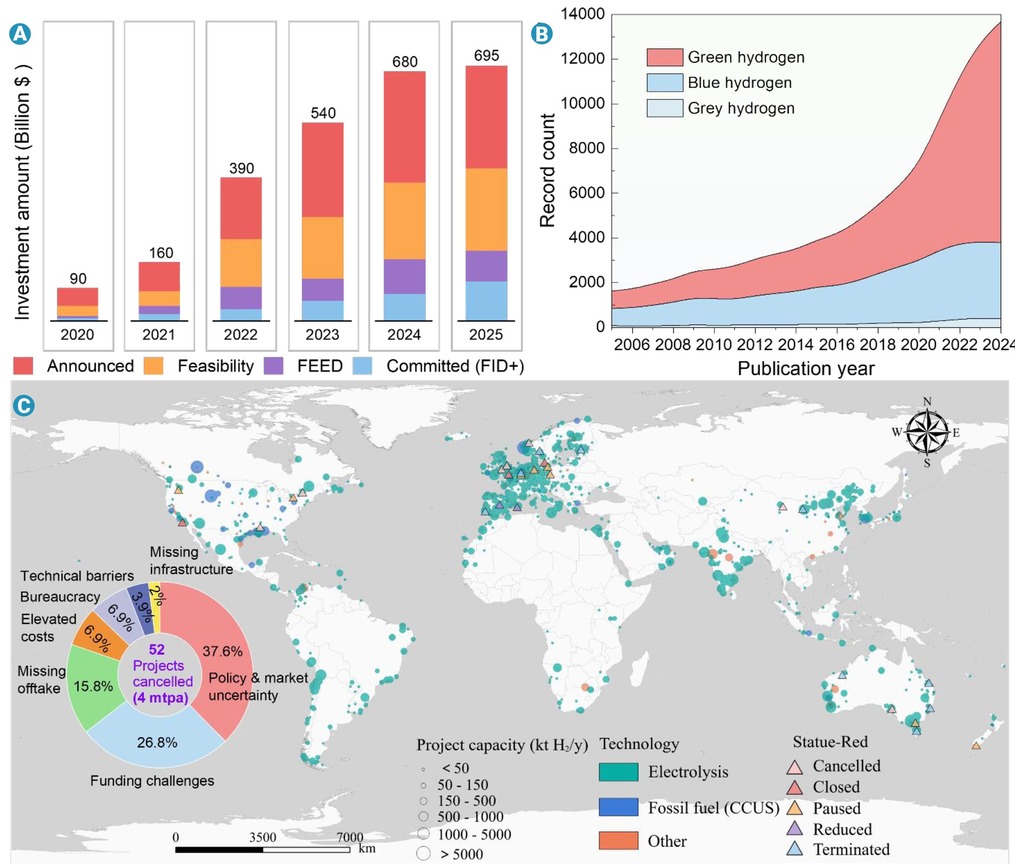
Figure 1.
The utilization of hydrogen energy and scientific attention to the development trend
-
Figure 2.
Comparison of combustion temperatures, exergy coefficients and net energy density of several typical fuels (T0 = 300 K)
-
Figure 3.
Carbon and cost of hydrogen across production, energy basis, electricity source, and end use
-
Figure 4.
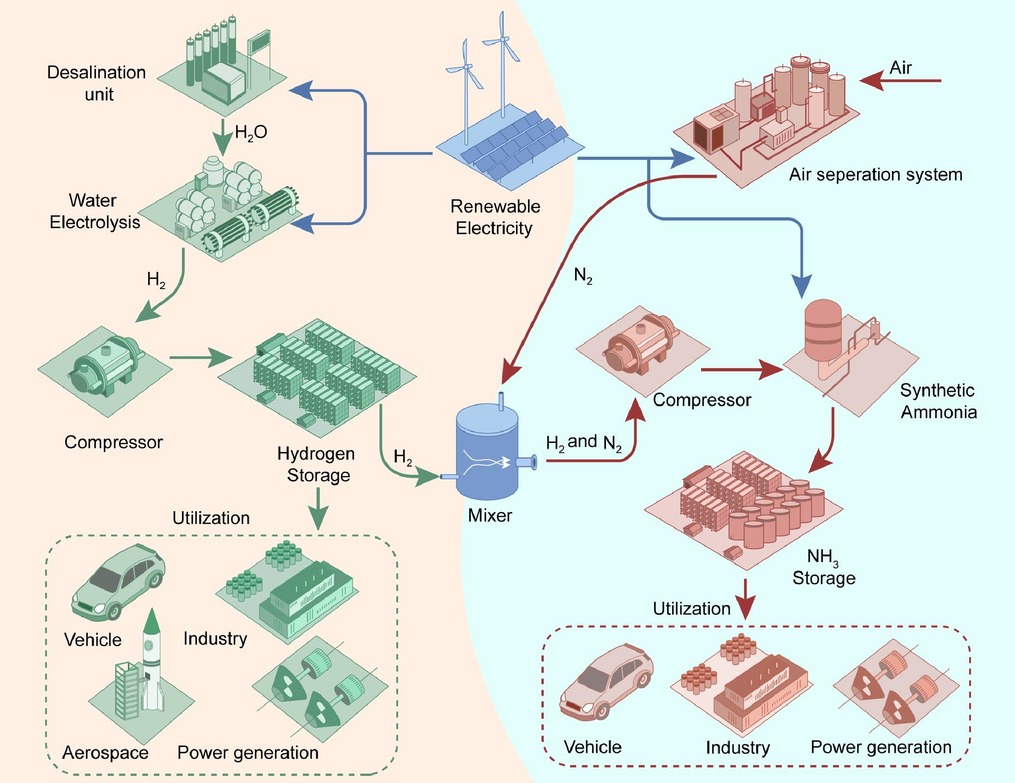
Vision pathway from renewable electricity generation by ammonia storage to utilization
-
Figure 5.
Energy flow and conversion efficiencies across the hydrogen energy storage pathway.
