
Integrated cooling and power generation system addressing thermal protection and long-term power supply demands for scramjets: A novel design approach
-
GRAPHICAL ABSTRACT
 DownLoad:
Full size image
DownLoad:
Full size image
-
PUBLIC SUMMARY
-
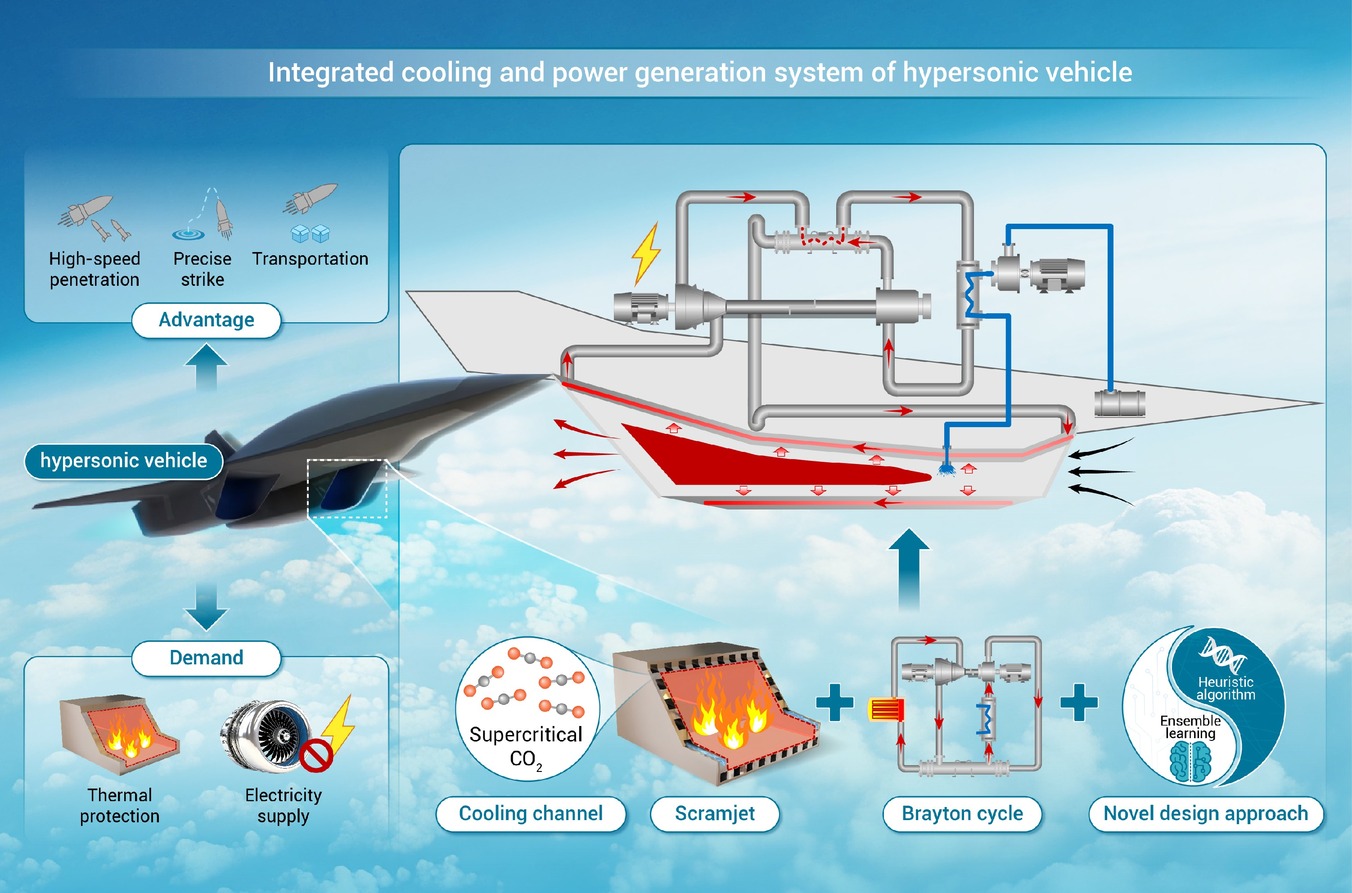
An integrated cooling and power generation system is designed for the scramjet.
A novel design approach is proposed to achieve the optimal all-condition performance.
A new rapid design method is developed based on Bayesian-optimized XGBoost model.
Novel design approach enhances the average power generation efficiency by 21.59%.
New rapid design method reduces the time use by 96.88% with an acceptable accuracy.
-
-
ABSTRACT
Hypersonic vehicles represent a new strategic frontier in aerospace technology, with the scramjet as their mainstream propulsion system. However, the scramjet presents significant challenges in thermal protection and electricity supply due to the long-term high-Mach-number operation and the lack of power drive shaft. Designing integrated cooling and power generation systems (ICPGSs) based on the supercritical CO2 Brayton cycle can effectively solve these problems, with the advantages of high efficiency, compactness and non-coking. Nonetheless, its long-term operation under off-design conditions deviates from the rated-design condition. A novel integrated design approach is proposed by combining ensemble learning with heuristic algorithms to ensure a truly optimal all-condition performance. Different from existing studies that treat off-design analysis as a post-hoc validation, this design approach embeds a feedback mechanism into the rated-design optimization through ensemble-learning-based surrogate models and a synchronous iterative optimization of design and operation through heuristic algorithms, resulting in an improvement of up to 21.59%, which yields both a lower heat dissipation load and a larger electricity supply capacity. To reduce the unacceptable time consumption of numerical solutions in the optimization process, six surrogate models are considered and compared. A rapid design method based on a Bayesian-optimized XGBoost model is proposed, which enables a rapid and accurate prediction of system performance under diverse conditions, with the reduction in time consumption reaching up to 96.88%, and the mean absolute percentage error being only 1.59%. The findings provide theoretical support for the optimal design of ICPGSs and the performance enhancement of scramjets. -

-
REFERENCES
[1] Hu F., Wang J., Sui Z., et al. (2025). A review on research progress of large area thermal protection structures for hypersonic vehicles. Acta Astronaut. 232:541−556. DOI:10.1016/j.actaastro.2025.04.006 [2] Sheng Z., He Y., Wang S., et al. (2025). Dynamics, chemistry, and modeling studies in the aviation and aerospace transition zone. Innovation 6:101012. DOI:10.1016/j.xinn.2025.101012 [3] Shao C., Zhao H., Zhuang N., et al. (2025). Design and mechanical performance analysis of a flexible thermal protection structure for morphing hypersonic vehicles. Aerosp. Sci. Technol. 168:110822. DOI:10.1016/j.ast.2025.110822 [4] Xue Z., Wang C., Wang R., et al., (2025). Research on the performance of an integrated active cooling and propulsion system for hypersonic glide vehicles. Energy 337:138363. DOI:10.1016/j.energy.2025.138363 [5] Jin F., Wang Y., Pang D., et al. (2026). Numerical investigations on aerodynamic characteristics in a longitudinal V-shaped hypersonic vehicle formation. Aerosp. Sci. Technol. 168:111249. DOI:10.1016/j.ast.2025.111249 [6] Yu B., Zhou W., Qin J., et al. (2017). Dynamic characteristics of hydrocarbon fuel within the channel at supercritical and pyrolysis condition. J. Therm. Sci. 26:560−569. DOI:10.1007/s11630-017-0974-z [7] Zhao Z., Chen X., Huang Y., et al. (2026). Coupling of isolator flow with heat release rate and equivalence ratio oscillations in the dual-mode scramjet. Combust. Flame 283:114588. DOI:10.1016/j.combustflame.2025.114588 [8] Sprunger J., La Sorsa A.J., Hytovick R., et al. (2025). Turbulent flame compressibility criterion for scramjet unstart and transition. Combust. Flame 274:114044. DOI:10.1016/j.combustflame.2025.114044 [9] Nakaya S.J., Tsue M.H., Kono M., et al. (2015). Effects of thermally cracked component of n-dodecane on supersonic combustion behaviors in a scramjet model combustor. Combust. Flame 162:3847−3853. DOI:10.1016/j.combustflame.2015.07.021 [10] Wang J., Zhong M., Li J., et al. (2025). Mitigating hypersonic heat barrier via direct cooling enhanced by leidenfrost inhibition. Nat. Commun. 16:6931. DOI:10.1038/s41467-025-62120-2 [11] Oliveira Júnior P.C., Arrais Bezerra S.I., Souza S.I.S., et al. (2025). Impact of wall cooling on the stability and aerothermodynamic performance of a scramjet inlet. Appl. Therm. Eng. 279:128040. DOI:10.1016/j.applthermaleng.2025.128040 [12] Zhou X., Zhang S., Zuo J., et al. (2025). Comparison of conjugate heat transfer characteristics between regenerative cooling and recooling system for a methane-fueled scramjet. Energy 336:138569. DOI:10.1016/j.energy.2025.138569 [13] Jiang T., Zhan T., Li Y., et al. (2025). Heat transfer characteristics and flow distribution behavior of pyrolytic ammonia in scramjet regenerative cooling channels. Energy 335:138187. DOI:10.1016/j.energy.2025.138187 [14] Zhang C., Qin J., Yang Q., et al. (2015). Design and heat transfer characteristics analysis of combined active and passive thermal protection system for hydrogen fueled scramjet. Int. J. Hydrogen Energy 40:675−682. DOI:10.1016/j.ijhydene.2014.11.036 [15] Gopinath N., Dan A., Aruna S.T., et al. (2024). High emittance plasma sprayed ZrO2-Y2O3/La2Zr2O7 thermal barrier coatings for potential application in scramjets. Appl. Surf. Sci. 652:159324. DOI:10.1016/j.apsusc.2024.159324 [16] Ma X., Jiang P. and Zhu Y. (2022). Performance analysis and dynamic optimization of integrated cooling and power generation system based on supercritical CO2 cycle for turbine-based combined cycle engine. Appl. Therm. Eng. 215:118867. DOI:10.1016/j.applthermaleng.2022.118867 [17] Luo S., Xu D., Song J., et al. (2021). A review of regenerative cooling technologies for scramjets. Appl. Therm. Eng. 190:116754. DOI:10.1016/j.applthermaleng.2021.116754 [18] Zhou Q., Li Y., Xia J., et al. (2025). Effects of n-decane pyrolysis on supercritical jet impingement heat transfer employed in thermal management of scramjet engines. Int. J. Heat Fluid Flow 116:109902. DOI:10.1016/j.ijheatfluidflow.2025.109902 [19] Dang C., Cheng K., Xu J., et al. (2023). Performance analysis of a thermal management system based on hydrocarbon-fuel regenerative cooling technology for scramjets. Energy 285:128720. DOI:10.1016/j.energy.2023.128720 [20] Luo Q., Luo L., Xing H., et al. (2025). Performance evaluation of regenerative cooling and closed Brayton cycle for hypersonic vehicles. Energy 333:137356. DOI:10.1016/j.energy.2025.137356 [21] Dang C., Tan X., Xu J., et al. (2026). Off-design performance evaluation of a novel power and thermal management system for hypersonic vehicles: thermodynamic analysis, operating boundary optimization. Appl. Therm. Eng. 287:129423. DOI:10.1016/j.applthermaleng.2025.129423 [22] Ma X., Jiang P. and Zhu Y. (2024). Dynamic simulation and analysis of transient characteristics of a thermal-to-electrical conversion system based on supercritical CO2 Brayton cycle in hypersonic vehicles. Appl. Energy 359:122686. DOI:10.1016/j.apenergy.2024.122686 [23] Miao H., Wang Z. and Niu Y. (2020). Performance analysis of cooling system based on improved supercritical CO2 Brayton cycle for scramjet. Appl. Therm. Eng. 167:114774. DOI:10.1016/j.applthermaleng.2019.114774 [24] Wu W., Shen J., Kong H., et al. (2024). Energy system and resource utilization in space: A state-of-the-art review. Innov. Energy 1:100029. DOI:10.59717/j.xinn-energy.2024.100029 [25] Guo L., Pang L., Yang X., et al. (2023). A power and thermal management system for long endurance hypersonic vehicle. Chin. J. Aeronaut. 36:29−40. DOI:10.1016/j.cja.2022.07.012 [26] Cheng K. Wang Y., Xu J., et al. (2022). A novel liquid metal MHD enhanced Closed-Brayton-Cycle power generation system for hypersonic vehicles: Thermodynamic analysis and performance evaluation with finite cold source. Energ. Convers. Manage. 268:116068. DOI:10.1016/j.enconman.2022.116068 [27] Lang L., Fu Y., Jiang F., et al. (2025). Investigation the thermodynamic performance of closed Brayton cycle with CO2-based binary mixtures for hypersonic vehicle power generation systems under finite cold source. Them. Sci. Eng. Prog. 63:103714. DOI:10.1016/j.tsep.2025.103714 [28] Wang L., Liu Y., Tang C., et al. (2025). Thermodynamic analysis of helium-xenon closed Brayton cycle combined with Rankine cycle power generation system for hypersonic vehicle. Them. Sci. Eng. Prog. 62:103659. DOI:10.1016/j.tsep.2025.103659 [29] Balland S., Fernandez V.V. and Steelant J. (2015). Thermal and energy management for hypersonic cruise vehicles - cycle analysis. AIAA Int. Space Planes Hypers. Sys. Tech. Conf. 3557. DOI:10.2514/6.2015-3557 [30] Zhang D., Yu F., Zhang S., et al. (2016). Quasi-one-dimensional model of scramjet combustor coupled with regenerative cooling. J. Propul. Power 32:687−697. DOI:10.2514/1.B35887 [31] Trelewicz J.R., Longtin J.P., Gouldstone C., et al. (2015). Heat flux measurements in a scramjet combustor using embedded direct-write sensors. J. Propul. Power 31:1003−1013. DOI:10.2514/1.B35585 [32] Yang J., Yang Z. and Duan Y. (2020). Off-design performance of a supercritical CO2 Brayton cycle integrated with a solar power tower. Energy 201:117676. DOI:10.1016/j.energy.2020.117676 [33] Ma X., Shu Y., Zhao S., et al. (2025). Off-design performance analysis of a supercritical carbon dioxide Brayton cycle coupled with a scramjet based on deep learning method. Energy 341:139462. DOI:10.1016/j.energy.2025.139462 [34] Hu S., Li J., Yang F., et al. (2020). How to design organic Rankine cycle system under fluctuating ambient temperature: A multi-objective approach. Energ. Convers. Manage. 224:113331. DOI:10.1016/j.enconman.2020.113331 [35] Miao H., Che X., Geng T., et al. (2025). Coupled modeling and performance analysis of a supercritical CO2 cycle cooling system integrated with the actively cooled combustor for scramjets. Appl. Therm. Eng. 280:128492. DOI:10.1016/j.applthermaleng.2025.128492 [36] Miao H., Wang Z. and Niu Y. (2020). Key issues and cooling performance comparison of different closed Brayton cycle based cooling systems for scramjet. Appl. Therm. Eng. 179:115751. DOI:10.1016/j.applthermaleng.2020.115751 [37] Yang J., Yang Z. and Duan Y. (2022). A review on integrated design and off-design operation of solar power tower system with S-CO2 Brayton cycle. Energy 246:123348. DOI:10.1016/j.energy.2022.123348 [38] Yu Y. and Li X. (2023). Selecting dry cooling system for supercritical carbon dioxide Brayton cycle: Thermoeconomic analysis. Appl. Therm. Eng. 220:119759. DOI:10.1016/j.applthermaleng.2022.119759 [39] Dyreby J.J. (2014). Modeling the Supercritical Carbon Dioxide Brayton Cycle with Recompression. PhD thesis (University of Wisconsin-Madison). [40] Yang J., Yang Z. and Duan Y. (2020). Part-load performance analysis and comparison of supercritical CO2 Brayton cycles. Energ. Convers. Manage. 214:112832. DOI:10.1016/j.enconman.2020.112832 [41] Ma X., Guo H., Jiang P., et al. (2025). Performance analysis and design optimization of a supercritical CO2 Brayton cycle cooling and power generation system coupled with a scramjet. Appl. Energy 383:125362. DOI:10.1016/j.apenergy.2025.125362 [42] Miao H. (2021). Investigation on supercritical carbon dioxide cycle based thermoelectric conversion system for scramjet. PhD thesis (National University of Defense Technology). [43] Zhang Y., Li J., Yu M., et al. (2025). Dominant factor identification and fast optimization of carnot battery by integrating SHAP and physics-guided neural network. Appl. Energy 401:126641. DOI:10.1016/j.apenergy.2025.126641 [44] Wang N., Chen Y. and Zhang D. (2025). A comprehensive review of physics-informed deep learning and its applications in geoenergy development. Innov. Energy 2:100087. DOI:10.59717/j.xinn-energy.2025.100087 [45] Alruqi M., Sharma P. and Agbulut U. (2023). Investigations on biomass gasification derived producer gas and algal biodiesel to power a dual-fuel engines: Application of neural networks optimized with Bayesian approach and K-cross fold. Energy 282:128336. DOI:10.1016/j.energy.2023.128336 [46] Xie B., Shi S., Liu W., et al. (2025). Integrated forecasting of marine renewable power: An adaptively Bayesian-optimized MVMD-LSTM framework for wind-solar-wave energy. Sustain. Energy Technol. Assess. 84:104753. DOI:10.1016/j.seta.2025.104753 [47] Tian Z., Gan W., Zou X., et al. (2022). Performance prediction of a cryogenic organic Rankine cycle based on back propagation neural network optimized by genetic algorithm. Energy 254:124027. DOI:10.1016/j.energy.2022.124027 [48] Hajialigol N., Fattahi A., Karimi N., et al. (2024). Hybridized power-hydrogen generation using various configurations of Brayton-organic flash Rankine cycles fed by a sustainable fuel: Exergy and exergoeconomic analyses with ANN prediction. Energy 290:130166. DOI:10.1016/j.energy.2023.130166 [49] Yu M., Yang F., Zhang H., et al. (2024). Thermoeconomic performance of supercritical carbon dioxide Brayton cycle systems for CNG engine waste heat recovery. Energy 289:129972. DOI:10.1016/j.energy.2023.129972 -
ABOUT THIS ARTICLE
Cite this article:
Yu M., Li J., Zhang Y., et al. (2026). Integrated cooling and power generation system addressing thermal protection and long-term power supply demands for scramjets: A novel design approach. The Innovation Energy 3:100172. https://doi.org/10.59717/j.xinn-energy.2026.100172
Welcome!
To request copyright permission to republish or share portions of our works, please visit Copyright Clearance Center's (CCC) Marketplace website at marketplace.copyright.com.
Export File
Citation
Yu M., Li J., Zhang Y., et al. (2026). Integrated cooling and power generation system addressing thermal protection and long-term power supply demands for scramjets: A novel design approach. The Innovation Energy 3:100172. https://doi.org/10.59717/j.xinn-energy.2026.100172

Format
Content
-
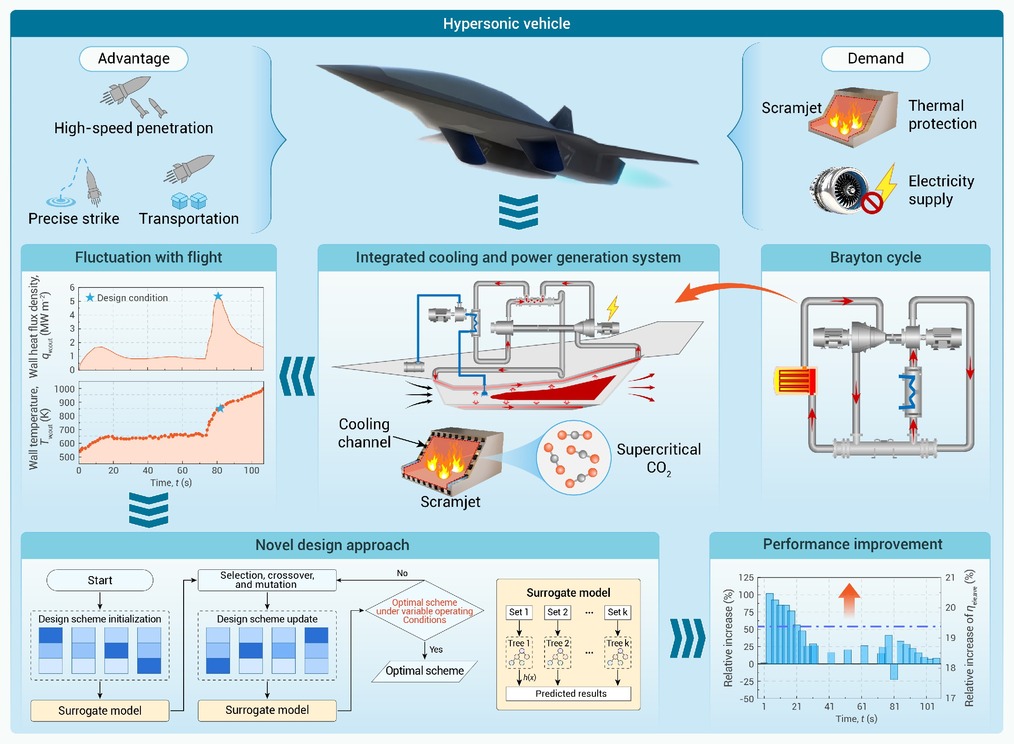
Figure 1.
Flowchart of the main research content in this study.
-
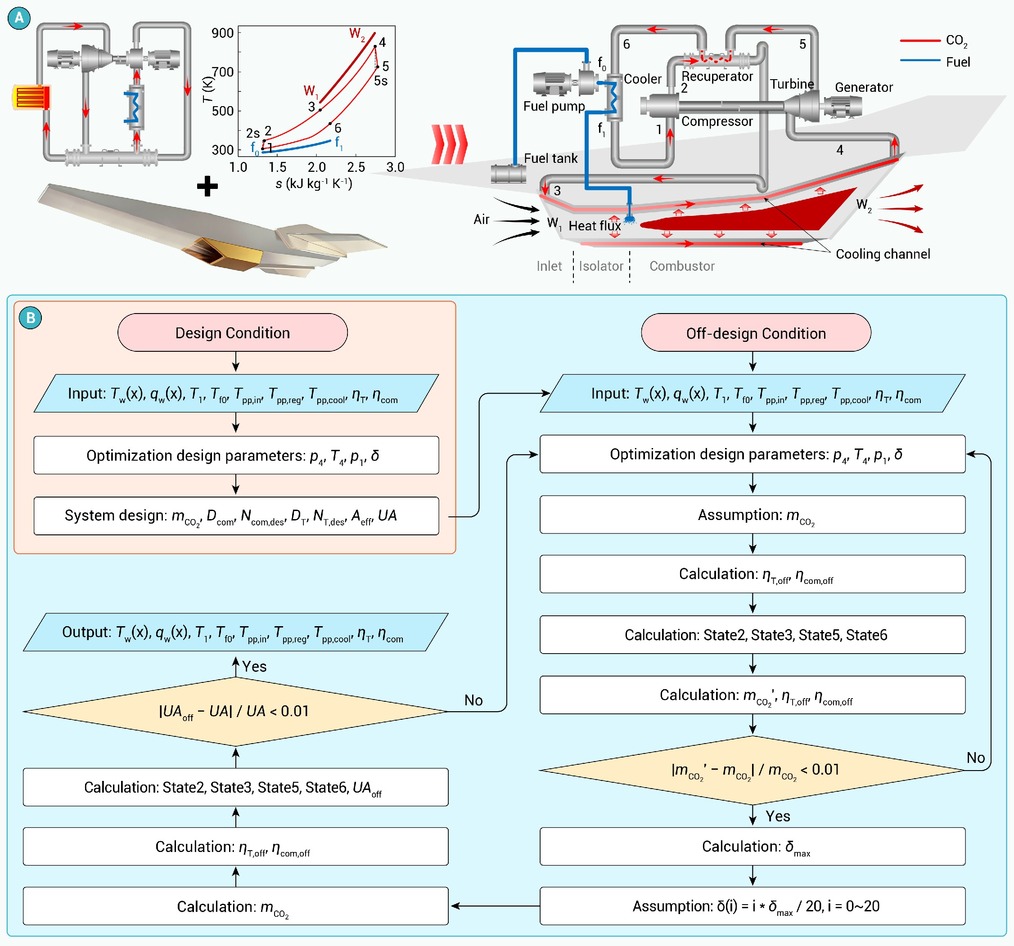
Figure 2.
(A) An integrated cooling and power generation system based on supercritical CO2 Brayton cycle. (B) Calculation flowchart of off-design performance.
-
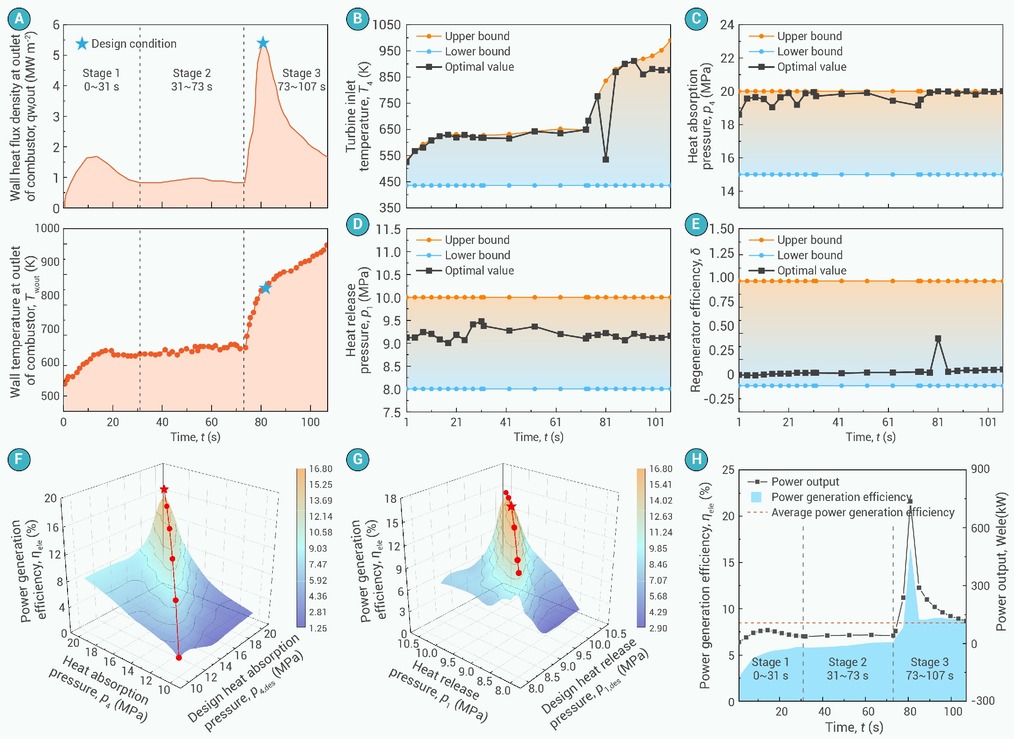
Figure 3.
(A) Variations of wall temperature and heat flux density at the outlet of the combustor with time. (B-E) All-condition operating parameters of the integrated cooling and power generation system. Off-design performance of integrated cooling and power generation system of (F) Heat absorption pressure and (G) Heat release pressure. (H) All-condition performance of the integrated cooling and power generation system.
-
Figure 4.
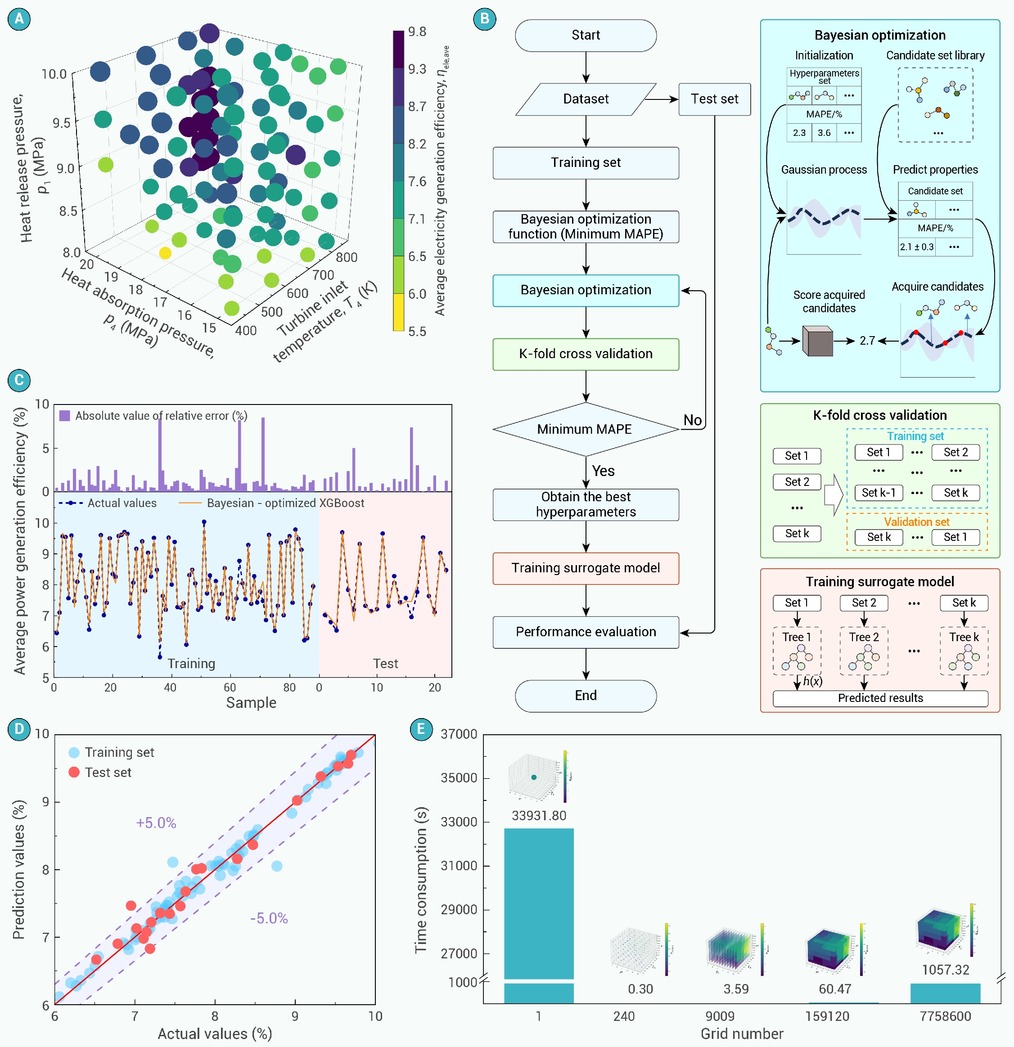
(A) Dataset used for the surrogate model. (B) Process of obtaining the surrogate model. (C & D) Mapping performance of average power generation efficiency based on Bayesian-optimized XGBoost model. (E) Time consumption for prediction of average power generation efficiency based on the Bayesian-optimized XGBoost model.
-
Figure 5.
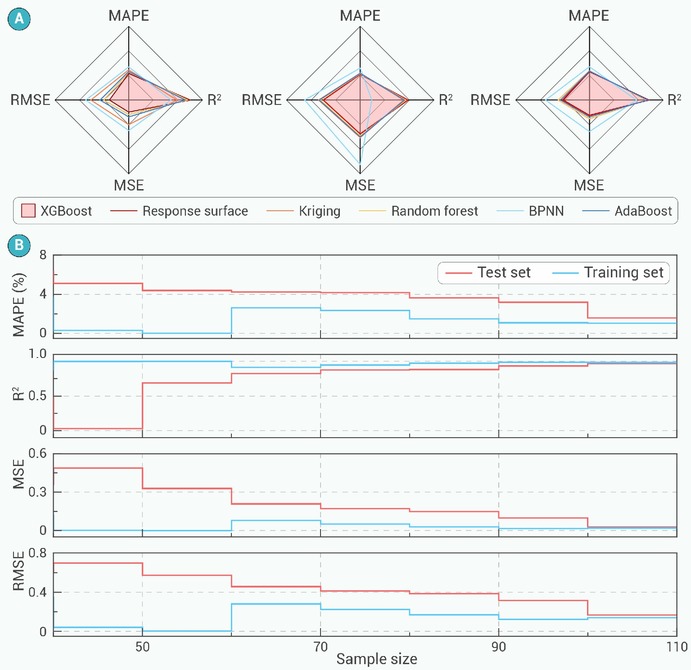
(A) Radar charts of surrogate models’ performance comparison. (B) Learning curve of the surrogate model as the sample size changes.
-
Figure 6.
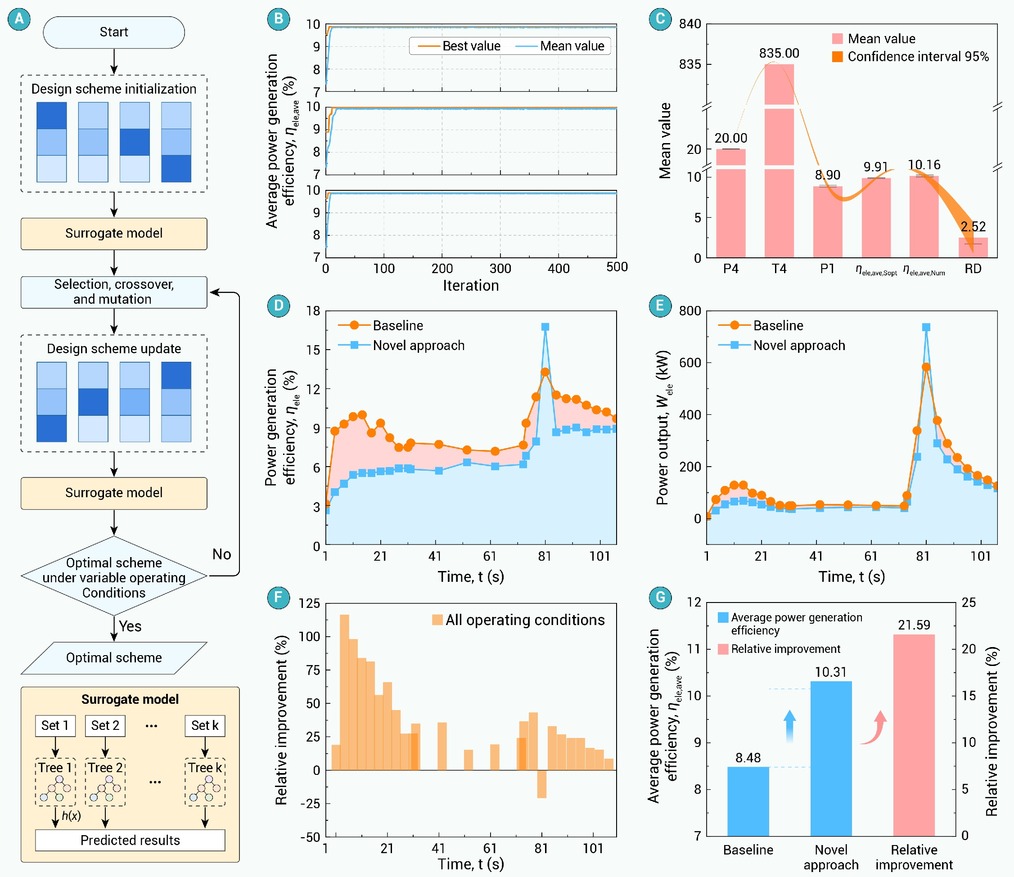
(A) Flowchart of the novel integrated design approach. Surrogate-assisted optimization process and robust analysis to different data splits of (B) Optimization process and (C) Robust analysis. Comparison of (D) power generation efficiency under all operating conditions and corresponding (E) power output of the novel integrated design approach and the baseline. Relative improvement in power generation efficiency of the novel integrated design approach compared to the baseline. (D) Relative improvement under all operating conditions. (E) Relative improvement in average power generation efficiency.
