
Cascade catalysts from heavy bio-oil for plasma-catalytic NH3 synthesis
-
GRAPHICAL ABSTRACT
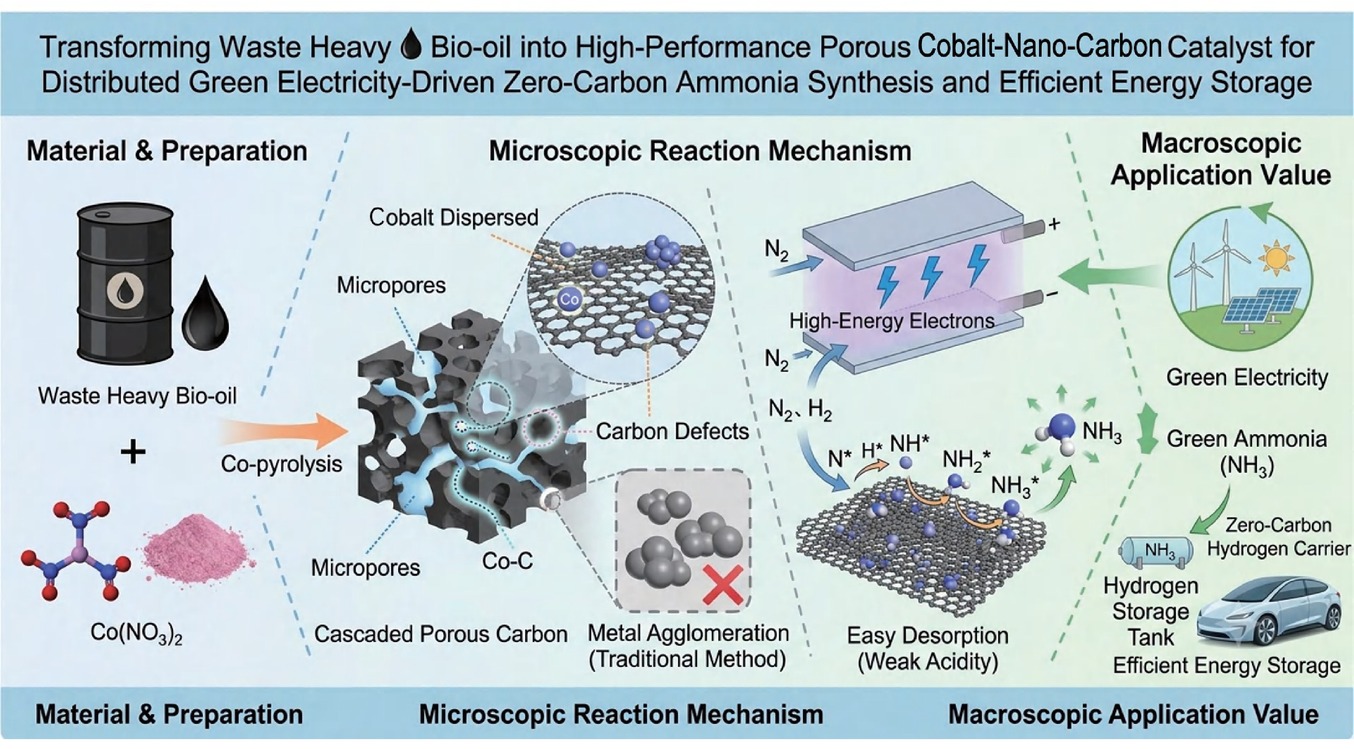
 DownLoad:
Full size image
DownLoad:
Full size image
-
PUBLIC SUMMARY
-
Plasma-assisted ammonia synthesis (PAAS) operates under ambient conditions and supports distributed renewable energy storage, yet traditional PAAS catalysts suffer low efficiency and high costs.
Novel cascade porous Co-doped biochar catalysts (Co-PB) are fabricated from waste heavy bio-oil with uniform cobalt dispersion and abundant carbon-cobalt bonding.
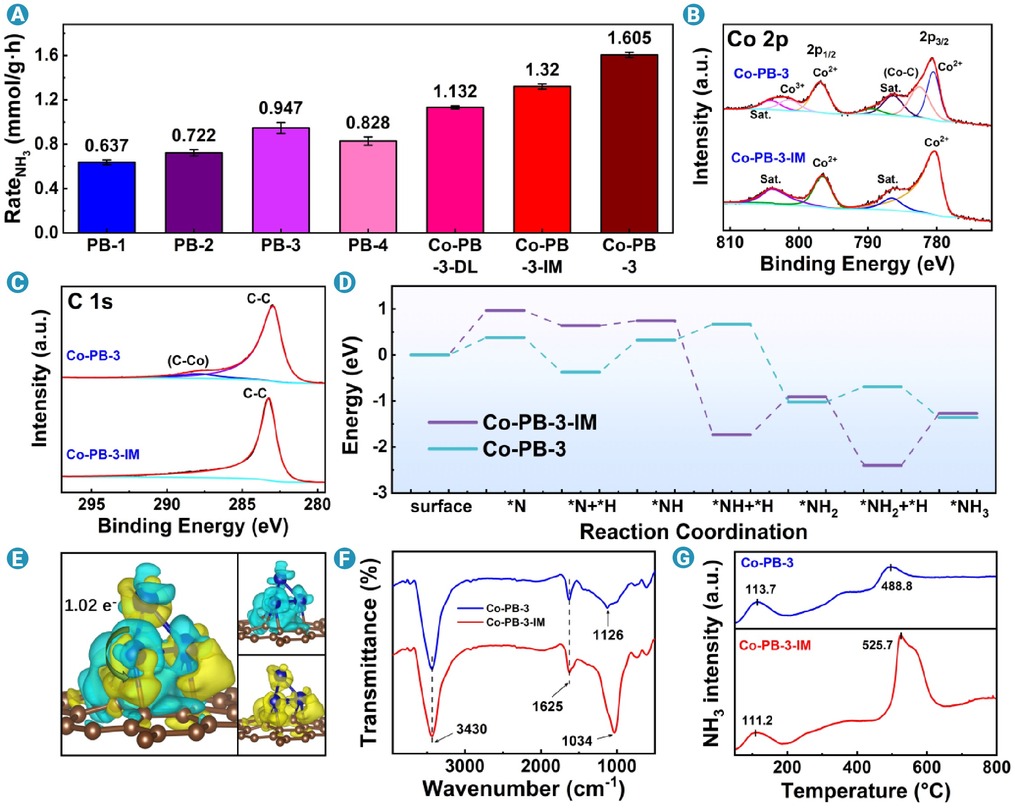
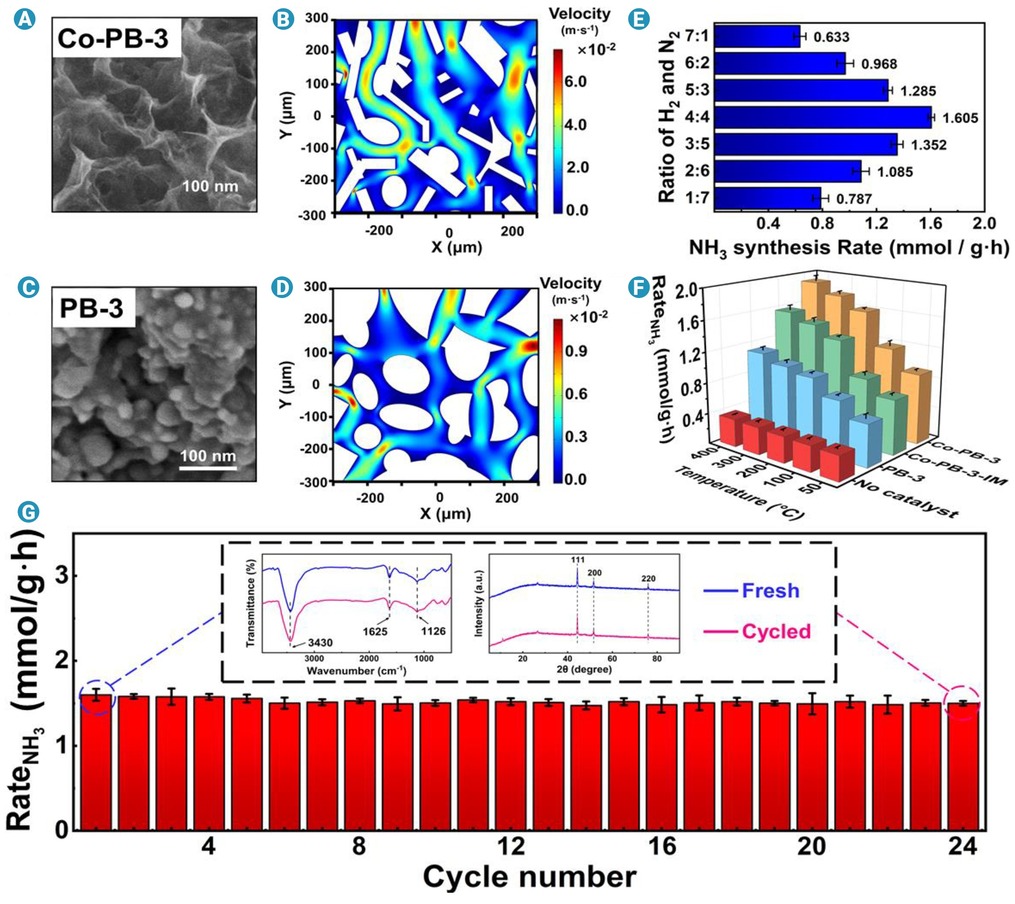
Co-PB accelerates interfacial electron and radical transfer, reaching an ammonia synthesis rate of 1.605 mmol/g·h with outstanding cycling stability.
Economic and environmental evaluations verify the great application prospect of this waste-derived catalyst for sustainable green energy storage.
-
-
ABSTRACT
Plasma-assisted ammonia synthesis (PAAS) enables the production of ammonia at ambient temperature and pressure by utilizing high-energy free electrons to break N≡N and H-H bonds. This process leverages green electricity and hydrogen, offering an efficient and distributed alternative for renewable energy storage. However, conventional catalysts used in PAAS (Al2O3, metal-organic frameworks, molecular sieves, etc.) suffer from low efficiency, poor cycling performance, and high cost. Herein, we design and develop novel cascade porous biochar-based catalysts (Co-PB) derived from waste heavy bio-oil through catalytic pyrolysis by using cobalt nitrate as a pyrolysis catalyst, giving rise to a highly porous structure with uniformly distributed Co in Co-PB. The good mobility of heavy bio-oil ensures homogeneous C-Co bonds, which further enhances the transfer kinetics of the interfacial electron and the radical. As a result, Co-PB achieves a high PAAS rate of 1.605 mmol/g·h and exhibits excellent stability and cyclability under harsh electric fields. Economic and environmental assessments highlight the significant potential of PAAS for sustainable hydrogen and electricity storage. -

-
REFERENCES
[1] Chai W. S., Bao Y., Jin P., et al. (2021). A review on ammonia, ammonia-hydrogen and ammonia-methane fuels. Renew. Sustain. Energy Rev. 147:111254. DOI:10.1016/j.rser.2021.111254 [2] MacFarlane D. R., Cherepanov P. V., Choi J., et al. (2020). A Roadmap to the Ammonia Economy. Joule 4:1186−1205. DOI:10.1016/j.joule.2020.04.004 [3] Aziz M., Wijayanta A. T. and Nandiyanto A. B. D. (2020). Ammonia as Effective Hydrogen Storage: A Review on Production, Storage and Utilization. Energies 13:3062. DOI:10.3390/en13123062 [4] Lamb K. E., Dolan M. D. and Kennedy D. F. (2019). Ammonia for hydrogen storage; A review of catalytic ammonia decomposition and hydrogen separation and purification. Int. J. Hydr. Energy 44:3580−3593. DOI:10.1016/j.ijhydene.2018.12.024 [5] Lan R., Irvine J. T. S. and Tao S. (2012). Ammonia and related chemicals as potential indirect hydrogen storage materials. Int. J. Hydro. Energy 37:1482−1494. DOI:10.1016/j.ijhydene.2011.10.004 [6] Kandemir T., Schuster M. E., Senyshyn A., et al. (2013). The Haber-Bosch process revisited: on the real structure and stability of "ammonia iron" under working conditions. Angew. Chem. Int. Ed. Engl. 52:12723−12726. DOI:10.1002/anie.201305812 [7] Lan R., Irvine J. T. and Tao S. (2013). Synthesis of ammonia directly from air and water at ambient temperature and pressure. Sci. Rep. 3:1145. DOI:10.1038/srep01145 [8] Rohr B. A., Singh A. R. and Nørskov J. K. (2019). A theoretical explanation of the effect of oxygen poisoning on industrial Haber-Bosch catalysts. J. Catal. 372:33−38. DOI:10.1016/j.jcat.2019.01.042 [9] Vojvodic A., Medford A. J., Studt F., et al. (2014). Exploring the limits: A low-pressure, low-temperature Haber–Bosch process. Chem. Phys. Lett. 598:108−112. DOI:10.1016/j.cplett.2014.03.003 [10] Lee K., Liu X., Vyawahare P., et al. (2022). Techno-economic performances and life cycle greenhouse gas emissions of various ammonia production pathways including conventional, carbon-capturing, nuclear-powered, and renewable production. Green Chem. 24:4830−4844. DOI:10.1039/d2gc00843b [11] Zhou Q., Gong F., Xie Y., et al. (2022). 1+1>2: Learning from the interfacial modulation on single-atom electrocatalysts to design dual-atom electrocatalysts for dinitrogen reduction. Green Energy Environ. DOI: 10.1016/j.gee.2022.1006.1005. DOI:10.1016/j.gee.2022.06.005 [12] Bo Y., Wang H., Lin Y., et al. (2021). Altering Hydrogenation Pathways in Photocatalytic Nitrogen Fixation by Tuning Local Electronic Structure of Oxygen Vacancy with Dopant. Angew. Chem. Int. Ed. Engl. 60:16085−16092. DOI:10.1002/anie.202104001 [13] Dong G., Ho W. and Wang C. (2015). Selective photocatalytic N2 fixation dependent on g-C3N4 induced by nitrogen vacancies. J. Mater. Chem. A 3:23435−23441. DOI:10.1039/c5ta06540b [14] Li P., Zhou Z., Wang Q., et al. (2020). Visible-Light-Driven Nitrogen Fixation Catalyzed by Bi(5)O(7)Br Nanostructures: Enhanced Performance by Oxygen Vacancies. J. Am. Chem. Soc. 142:12430−12439. DOI:10.1021/jacs.0c05097 [15] Giddey S., Badwal S. P. S. and Kulkarni A. (2013). Review of electrochemical ammonia production technologies and materials. Int. J. Hydro. Energy 38:14576−14594. DOI:10.1016/j.ijhydene.2013.09.054 [16] Yang B., Ding W., Zhang H., et al. (2021). Recent progress in electrochemical synthesis of ammonia from nitrogen: strategies to improve the catalytic activity and selectivity. Energy Environ. Sci. 14:672−687. DOI:10.1039/d0ee02263b [17] Liu X., Liu C., He X., et al. (2024). Fe-doped Co3O4 nanowire strutted 3D pinewood-derived carbon: A highly selective electrocatalyst for ammonia production via nitrate reduction. Nano Res. 17:2276−2282. DOI:10.1007/s12274-023-6204-y [18] Wang S., Gong F., Zhou Q., et al. (2023). Transition metal enhanced chromium nitride as composite nitrogen carrier for sustainable chemical looping ammonia synthesis. Appl. Cata. B Environ. 339. DOI:10.1016/j.apcatb.2023.123134 [19] Fu E., Gong F., Wang S., et al. (2023). Ni-Mn-N derived composite nitrogen carriers for enhanced chemical looping ammonia production. Fuel Process. Tech. 252. DOI:10.1016/j.fuproc.2023.107971 [20] Gao W., Guo J., Wang P., et al. (2018). Production of ammonia via a chemical looping process based on metal imides as nitrogen carriers. Nat. Energy 3:1067−1075. DOI:10.1038/s41560-018-0268-z [21] Feng J., Gong F., Liu C., et al. (2024). Self-assembled chromium-based nitrogen carrier for chemical looping ammonia synthesis. Int. J. Hydrogen Energy 83:491-498. DOI:https://doi.org/10.1016/j.ijhydene.2024.08.127 [22] Mahmud K., Makaju S., Ibrahim R., et al. (2020). Current Progress in Nitrogen Fixing Plants and Microbiome Research. Plants (Basel) 9:97. DOI:10.3390/plants9010097 [23] Mus F., Crook M. B., Garcia K., et al. (2016). Symbiotic Nitrogen Fixation and the Challenges to Its Extension to Nonlegumes. Appl. Environ. Microbiol. 82:3698−3710. DOI:10.1128/AEM.01055-16 [24] Wang W. L., Moore J. K., Martiny A. C., et al. (2019). Convergent estimates of marine nitrogen fixation. Nature 566:205−211. DOI:10.1038/s41586-019-0911-2 [25] Ganji P., Zaplotnik R., Primc G., et al. (2025). Roles of Catalysts in Plasma Conversion of N2 and H2 to NH3: Advances, Challenges, and Future Directions. Energy Fuels 39:14413−14436. DOI:10.1021/acs.energyfuels.5c01891 [26] Gao B., Cao G., Hu D., et al. (2025). Insight into the effect of support properties on DBD plasma-catalytic NH3 synthesis over Ru-Co bimetallic catalysts. Fuel 382:133802. DOI:10.1016/j.fuel.2024.133802 [27] Lu B., Sun S. and Qiu H. (2025). Exploring the Origin of Synergistic Effect in Plasma-Assisted Ammonia Synthesis over a Ni Catalyst. Langmuir 41:13119−13125. DOI:10.1021/acs.langmuir.5c00745 [28] Wang Z., Gong F., Zhang L., et al. (2019). Electrocatalytic Hydrogenation of N2 to NH3 by MnO: Experimental and Theoretical Investigations. Adv. Sci. 6:1801182. DOI. DOI:10.1002/advs.201801182 [29] Yang P., Gong F., Liu C., et al. (2024). Mechanistic insights into the stepwise lithium-mediated electrochemical nitrogen reduction for enhanced ammonia synthesis. Chem. Eng. J. 488:151098. DOI:https://doi.org/10.1016/j.cej.2024.151098. [30] Mehta P., Barboun P., Herrera F. A., et al. (2018). Overcoming ammonia synthesis scaling relations with plasma-enabled catalysis. Nat. Catal. 1:269−275. DOI:10.1038/s41929-018-0045-1 [31] Wang Y., Craven M., Yu X., et al. (2019). Plasma-Enhanced Catalytic Synthesis of Ammonia over a Ni/Al(2)O(3) Catalyst at Near-Room Temperature: Insights into the Importance of the Catalyst Surface on the Reaction Mechanism. ACS Cata. 9:10780−10793. DOI:10.1021/acscatal.9b02538 [32] Zhao H., Song G., Chen Z., et al. (2021). In Situ Identification of NNH and N2H2 by Using Molecular-Beam Mass Spectrometry in Plasma-Assisted Catalysis for NH3 Synthesis. ACS Energy Lett. 7:53−58. DOI:10.1021/acsenergylett.1c02207 [33] Rouwenhorst K. H. R., Kim H.-H. and Lefferts L. (2019). Vibrationally Excited Activation of N2 in Plasma-Enhanced Catalytic Ammonia Synthesis: A Kinetic Analysis. ACS Sustain. Chem. Eng. 7:17515−17522. DOI:10.1021/acssuschemeng.9b04997 [34] Barboun P., Mehta P., Herrera F. A., et al. (2019). Distinguishing Plasma Contributions to Catalyst Performance in Plasma-Assisted Ammonia Synthesis. ACS Sustain. Chem. Eng. 7:8621−8630. DOI:10.1021/acssuschemeng.9b00406 [35] Bogaerts A. and Neyts E. C. (2018). Plasma Technology: An Emerging Technology for Energy Storage. ACS Energy Lett. 3:1013−1027. DOI:10.1021/acsenergylett.8b00184 [36] Winter L. R., Ashford B., Hong J., et al. (2020). Identifying Surface Reaction Intermediates in Plasma Catalytic Ammonia Synthesis. ACS Cata. 10:14763−14774. DOI:10.1021/acscatal.0c03166 [37] Liu T.-W., Gorky F., Carreon M. L., et al. (2022). Energetics of Reaction Pathways Enabled by N and H Radicals during Catalytic, Plasma-Assisted NH3 Synthesis. ACS Sustain. Chem. Eng. 10:2034−2051. DOI:10.1021/acssuschemeng.1c05660 [38] Chen Z., Koel B. E. and Sundaresan S. (2021). Plasma-assisted catalysis for ammonia synthesis in a dielectric barrier discharge reactor: key surface reaction steps and potential causes of low energy yield. J. Phys. D Appl. Phys. 55:055202. DOI:10.1088/1361-6463/ac2f12 [39] Liu J., Zhu X., Hu X., et al. (2022). Plasma-assisted ammonia synthesis in a packed-bed dielectric barrier discharge reactor: roles of dielectric constant and thermal conductivity of packing materials. Plasma Sci. Tech. 24. DOI:10.1088/2058-6272/ac39fb [40] Gorky F., Guthrie S. R., Smoljan C. S., et al. (2021). Plasma ammonia synthesis over mesoporous silica SBA-15. J. Phys. D Appl. Phys. 54. DOI:10.1088/1361-6463/abefbc [41] Gorky F., Lucero J. M., Crawford J. M., et al. (2021). Plasma-Induced Catalytic Conversion of Nitrogen and Hydrogen to Ammonia over Zeolitic Imidazolate Frameworks ZIF-8 and ZIF-67. ACS Appl. Mater. Interfaces 13:21338−21348. DOI:10.1021/acsami.1c03115 [42] Jing Y., Gong F., Wang S., et al. (2024). Activating the synergistic effect in Ni-Co bimetallic MOF for enhanced plasma-assisted ammonia synthesis. Fuel 368:131686. DOI:10.1016/j.fuel.2024.131686 [43] Shah J., Wu T., Lucero J., et al. (2018). Nonthermal Plasma Synthesis of Ammonia over Ni-MOF-74. ACS Sustain. Chem. Eng. 7:377−383. DOI:10.1021/acssuschemeng.8b03705 [44] Zhang Z., Wang Y., Guo T., et al. (2025). The Influence of Defect Engineering on the Electronic Structure of Active Centers on the Catalyst Surface. Catalysts. DOI:10.3390/catal15070651 [45] Clarke R. J., Nice I. J. and Hicks J. C. (2025). Plasma-Catalyst Dynamics: Nonthermal Activation of Strong Metal–Support Interactions. J. Ame. Chem. Soc. 147:585−593. DOI:10.1021/jacs.4c12388 [46] Bajpai A. and Kumar S. (2024). Tailoring the surface acidity of catalyst to enhance nonthermal plasma-assisted ammonia synthesis rates. Mole. Cata. 557:113961. DOI:10.1016/j.mcat.2024.113961 [47] Hu X., Zhu X., Wu X., et al. (2020). Plasma-enhanced NH3 synthesis over activated carbon-based catalysts: Effect of active metal phase. Plasma Proces. Poly. 17:2000072. DOI:10.1002/ppap.202000072 [48] Zhu Y., Li Z., Tao Y., et al. (2022). Hierarchical porous carbon materials produced from heavy bio-oil for high-performance supercapacitor electrodes. J. Energy Storage 47. DOI:10.1016/j.est.2021.103624 [49] Xu J., Xue B., Liu C., et al. (2021). Efficient utilization of crude bio-oil: the synthesis of nitrogen-doped hierarchically porous carbon as electrocatalysts for the oxygen reduction reaction. Sustain. Energy Fuels 5:3884−3894. DOI:10.1039/d1se00652e [50] Wu C., Xu J., Ding J., et al. (2016). High-Performance Supercapacitor Based on the NaOH Activated D-Glucose Derived Carbon. Nano 11. DOI:10.1142/s1793292016500752 [51] Navascués P., Obrero-Pérez J. M., Cotrino J., et al. (2020). Unraveling Discharge and Surface Mechanisms in Plasma-Assisted Ammonia Reactions. ACS Sustain. Chem. Eng. 8:14855−14866. DOI:10.1021/acssuschemeng.0c04461 [52] Neyts E. C., Ostrikov K. K., Sunkara M. K., et al. (2015). Plasma Catalysis: Synergistic Effects at the Nanoscale. Chem. Rev. 115:13408−13446. DOI:10.1021/acs.chemrev.5b00362 [53] Debalina B., Reddy R. B. and Vinu R. (2017). Production of carbon nanostructures in biochar, bio-oil and gases from bagasse via microwave assisted pyrolysis using Fe and Co as susceptors. J. Anal. Appl. Pyro. 124:310−318. DOI:10.1016/j.jaap.2017.01.018 [54] Qiu W., Liu Y., Tian L., et al. (2023). Cobalt-supported activated biochar in the co-pyrolysis of cattle manure and rice husk. Proceed. Ins. Civil Eng. Energy:1-10. DOI:10.1680/jener.23.00014 [55] Zhu X., Hu X., Wu X., et al. (2020). Ammonia synthesis over γ-Al2O3 pellets in a packed-bed dielectric barrier discharge reactor. J. Phy. D Appl. Phys. 53. DOI:10.1088/1361-6463/ab6cd1 [56] Rouwenhorst K. H. R., Mani S. and Lefferts L. (2022). Improving the Energy Yield of Plasma-Based Ammonia Synthesis with In Situ Adsorption. ACS Sustain. Chem. Eng. 10:1994−2000. DOI:10.1021/acssuschemeng.1c08467 [57] Hosseini H. (2023). Dielectric barrier discharge plasma catalysis as an alternative approach for the synthesis of ammonia: a review. RSC Adv. 13:28211−28223. DOI:10.1039/D3RA05580A [58] Feng Y., Gao B., Cao G., et al. (2025). Co-doping facilitated plasma-catalytic ammonia synthesis over Mo2N-Co catalysts. Front. Chem. Sci. Eng. 19:83. DOI:10.1007/s11705-025-2595-5 [59] Wang Y., Yang W., Xu S., et al. (2022). Shielding Protection by Mesoporous Catalysts for Improving Plasma-Catalytic Ambient Ammonia Synthesis. J. Ame. Chem. Soc. 144:12020−12031. DOI:10.1021/jacs.2c01950 [60] Liu Y., Wang C. W., Xu X. F., et al. (2022). Synergistic Effect of Co–Ni Bimetal on Plasma Catalytic Ammonia Synthesis. Plasma Chemistry and Plasma Processing 42:267−282. DOI:10.1007/s11090-021-10223-1 [61] Zhou G., Zhao H., Wang X., et al. (2024). Plasma-catalytic ammonia synthesis on Ni catalysts supported on Al2O3, Si-MCM-41 and SiO2. Int. J. Hydro. Energy 60:802−813. DOI:10.1016/j.ijhydene.2024.02.200 [62] Winter L. R. and Chen J. G. (2021). N2 Fixation by Plasma-Activated Processes. Joule 5:300−315. DOI:10.1016/j.joule.2020.11.009 [63] IEA(2019) (2019). CO2 Emissions from Fuel Combustion (OECD Publishing). -
ABOUT THIS ARTICLE
Cite this article:
Gong F., Bao J., Jing Y., et al. (2026). Cascade catalysts from heavy bio-oil for plasma-catalytic NH3 synthesis. The Innovation Energy 3:100178. https://doi.org/10.59717/j.xinn-energy.2026.100178
Welcome!
To request copyright permission to republish or share portions of our works, please visit Copyright Clearance Center's (CCC) Marketplace website at marketplace.copyright.com.
Export File
Citation
Gong F., Bao J., Jing Y., et al. (2026). Cascade catalysts from heavy bio-oil for plasma-catalytic NH3 synthesis. The Innovation Energy 3:100178. https://doi.org/10.59717/j.xinn-energy.2026.100178

Format
Content
-
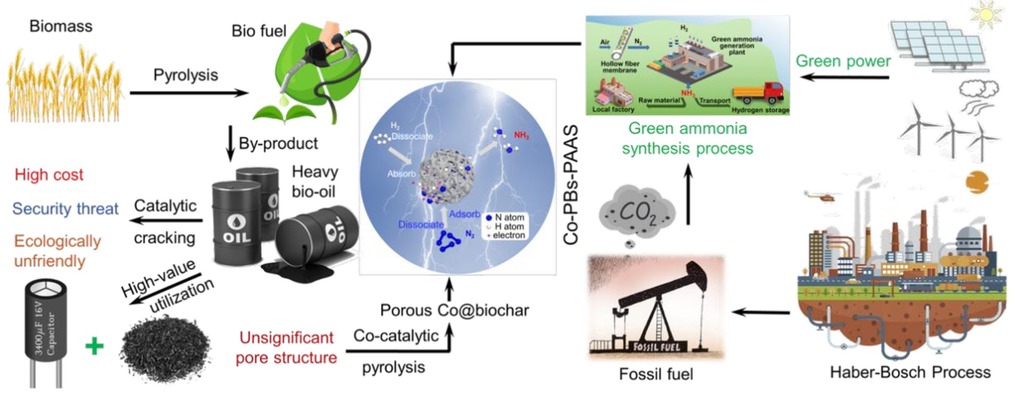
Figure 1.
Schematic diagram of the green ammonia industry using the distributed renewable electricity (wind, solar, etc.): valorizing heavy bio-oil, an industrial by-product, for green ammonia synthesis, aiming to break the limits of the centralized Haber-Bosch process.
-
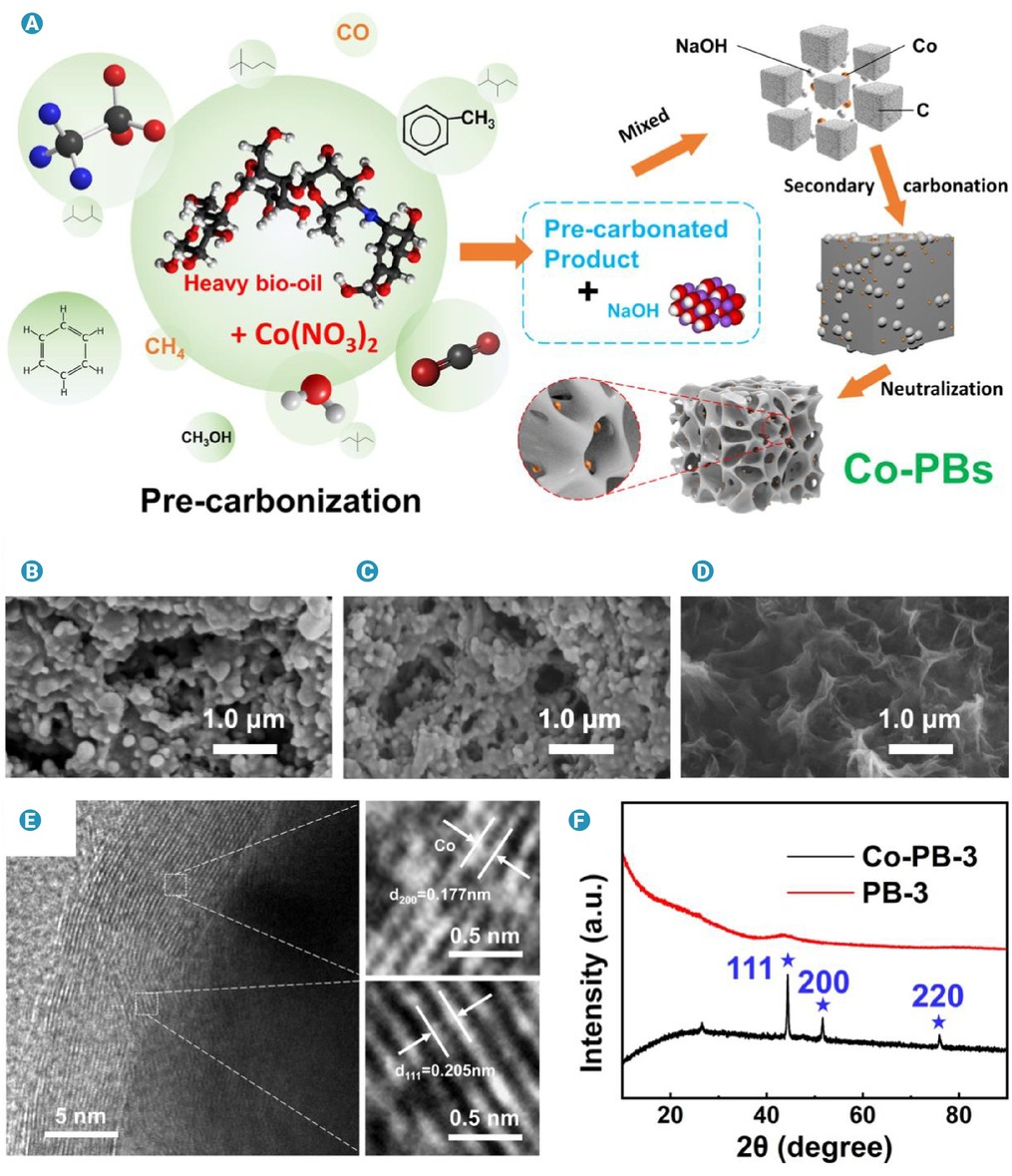
Figure 2.
(A) Schematic plot of the route to fabricate Co-PB-x: Co-PB is the biochar obtained using co-catalytic pyrolysis with the addition of cobalt nitrate as catalyst. SEM images of the catalysts prepared from the different methods: (B) PB-3, (C) Co-PB-3-IM, (D) Co-PB-3; (E) TEM images of Co-PB-3; (F) XRD patterns of Co-PB-3 and PB-3.
-
Figure 3.
The PAAS performance of the different catalysts
-
Figure 4.
SEM images and gas radical transport performance of
-
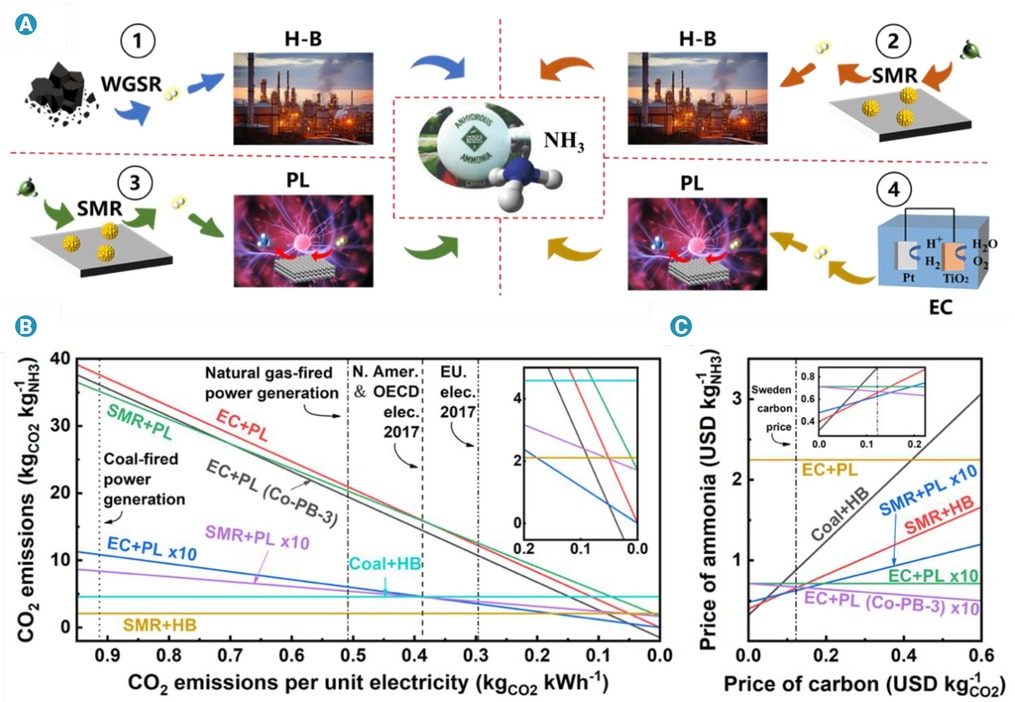
Figure 5.
Environmental and economic competitiveness analysis of PAAS
