
A tailored three-phase ceramic membrane with synergistic H+/O2-/e- conductivity for high-rate and stable high-purity hydrogen production
-
GRAPHICAL ABSTRACT
 DownLoad:
Full size image
-
PUBLIC SUMMARY
-
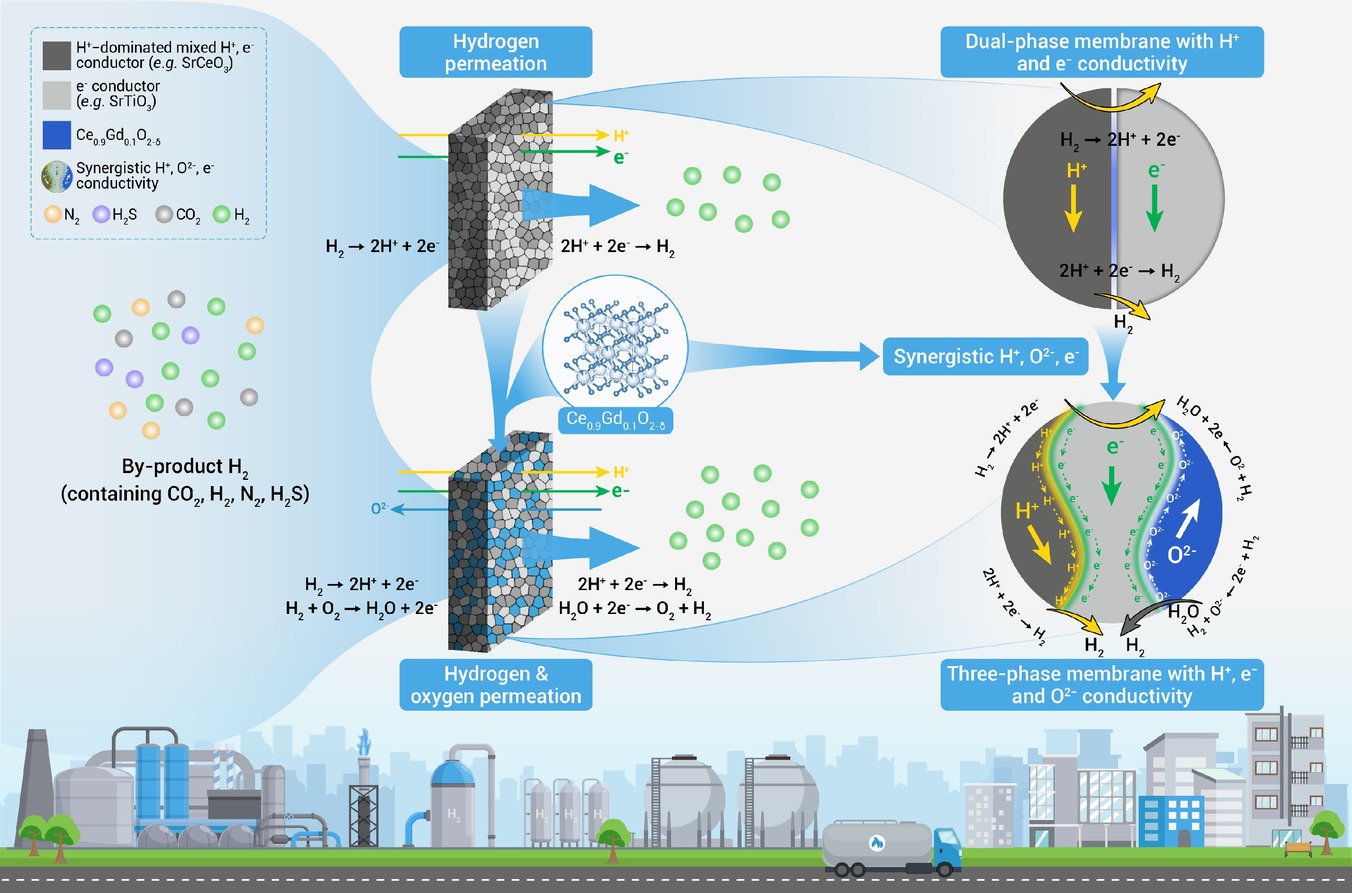
A triple conducting membrane was derived from automatic phase-separation of a single precursor.
Protonic and electronic permeation can be efficiently cooperated with the counter-permeation of oxygen ions.
The moderate reduction of Ce and Ti ions endows the membrane with robust stability under reducing atmospheres.
This membrane delivers exceptional performance in both of hydrogen permeation flux and chemical stability.
-
-
ABSTRACT
Hydrogen-permeable ceramic membranes with low cost and infinite hydrogen selectivity are promising for hydrogen purificiation. A major challenge in this field is the scarcity of membrane materials with both high hydrogen permeability and excellent chemical stability under practical conditions. Here, we report a tailored triple-conducting (H+/O2-/e-) membrane consisting of a mixed oxygen-ionic and electronic conducting phase Ce0.9Gd0.1O2-δ (CGO), a primarily proton-conducting phase GdxSr1-xTiyCe1-yO3-δ (GSTCe) and a primarily electron-conducting phase GdmSr1-mCenTi1-nO3-δ (GSCTi), The three-phase membrane is derived from the automatic phase-separation of a single precursor with a nominal compositon of Ce0.9Gd0.1O2-δ-Gd0.1Sr0.9Ce0.5Ti0.5O3-δ. Benefiting from the homogeneous distribution of three phases and the moderate reduction of Ce and Ti ions under reducing atmospheres, proton and electron transport in the CGO-GSTCe-GSCTi membrane efficiently cooperates with the counter-transport of oxygen ions originating from water splitting, thus achieving an exceptional hydrogen permeation flux of 5.62 cm3 min-1 cm-2 and maintaining excellent stability of ≥ 300 h under harsh conditions containing H2O, H2, CO2 and H2S. This work paves a new way for designing advanced ceramic membranes for high-purity hydrogen production.-
Keywords:
- Ceramic membrane /
- Triple phase /
- Synergistic conductivity /
- Stability /
- Hydrogen production
-

-
REFERENCES
[1] Zhang Y., Chen B., Guan D., et al. (2021). Thermal-expansion offset for high-performance fuel cell cathodes. Nature 591:246. DOI:10.1038/s41586-021-03264-1 [2] Hattori M., Iijima S., Nakao T., et al. (2020). Solid solution for catalytic ammonia synthesis from nitrogen and hydrogen gases at 50 °C. Nat. Commun. 11:2001. DOI:10.1038/s41467-020-15868-8 [3] Rogelj J., Geden O., Cowie A., et al. (2021). Net-zero emissions targets are vague: three ways to fix. Nature 591:365−368. DOI:10.1038/d41586-021-00662-3 [4] Zhang Y., Yang Y., Ye D., et al. (2025). Hydrogen crossover raises serious concerns on proton exchange membrane water electrolyzer. The Innovation 7:101089. DOI:10.1016/j.xinn.2025.101089 [5] Zhang Y., Wang X., Song X., et al. (2024). Collaborative effect between single-atom Re and S vacancy on modulating localized electronic structure of MoS2 catalysts for alkaline hydrogen evolution. Nano Res. 17:9507−9517. DOI:10.1007/s12274-024-6909-x [6] Lu Z., Jiang B., Chen Z., et al. (2024). Advancements in thermocatalytic ammonia decomposition for hydrogen production. Innov. Energy 1:100056. DOI:10.59717/j.xinn-energy.2024.100056 [7] Clark D., Malerød-Fjeld H., Budd M., et al. (2022). Single-step hydrogen production from NH3, CH4, and biogas in stacked proton ceramic reactors. Science 376:390−393. DOI:10.1126/science.abj3951 [8] Wu H., Sun M. and Craig M.T. (2026). Updating global green-hydrogen production costs and configurations under future climates. The Innovation 7:101303. DOI:10.1016/j.xinn.2026.101303 [9] Ding L., Wei Y., Li L., et al. (2018). MXene molecular sieving membranes for highly efficient gas separation. Nat. Commun. 9:155. DOI:10.1038/s41467-017-02529-6 [10] Chen G., Feldhoff A., Weidenkaff A., et al. (2022). Roadmap for sustainable mixed ionic-electronic conducting membranes. Adv. Funct. Mater. 32:2105702. DOI:10.1002/adfm.202105702 [11] Malerød-Fjeld H., Clark D., Yuste-Tirados I., et al. (2017). Thermo-electrochemical production of compressed hydrogen from methane with near-zero energy loss. Nat. Energy 2:923−931. DOI:10.1038/s41560-017-0029-4 [12] Zhang Y., Liu M. and Jiang H. (2024). Catalyst-membrane system overcomes limitations in propane dehydrogenation. Green Carbon 2:401−402. DOI:10.1016/j.greenca.2024.07.002 [13] Yang M., He F., Zhou C., et al. (2021). New perovskite membrane with improved sintering and self-reconstructed surface for efficient hydrogen permeation. J. Membr. Sci. 620:118980. DOI:10.1016/j.memsci.2020.118980 [14] Weng G., Ouyang K., Lin X., et al. (2021). Proton conducting membranes for hydrogen and ammonia production. React. Chem. Eng. 6:1739. DOI:10.1039/D1RE00207D [15] Zohourian R., Merkle R., Raimondi G., et al. (2018). Mixed-conducting perovskites as cathode materials for protonic ceramic fuel cells: understanding the trends in proton uptake. Adv. Funct. Mater. 28:1801241. DOI:10.1002/adfm.201801241 [16] Gore C., White J., Wachsman E., et al. (2014). Effect of composition and microstructure on electrical properties and CO2 stability of donor-doped, proton conducting BaCe1−(x+y)ZrₓNbᵧO3. J. Mater. Chem. A 2:2363−2373. DOI:10.1039/C3TA12668D [17] Meng X., Song J., Yang N., et al. (2012). Ni-BaCe0.95Tb0.05O3-δ cermet membranes for hydrogen permeation. J. Membr. Sci. 401:300–305. DOI:10.1016/j.memsci.2012.02.017 [18] Song J., Wang Z., Tan X., et al. (2021). Simultaneous hydrogen and oxygen permeation through BaCe0.70Fe0.10Sc0.20O3-δ perovskite hollow fiber membranes. J. Membr. Sci. 635:119513. DOI:10.1016/j.memsci.2021.119513 [19] Kim H., Kim B., Lee J., et al. (2014). Microstructural adjustment of Ni-BaCe0.9Y0.1O3-δ cermet membrane for improved hydrogen permeation. Ceram. Int. 40:4117–4126. DOI:10.1016/j.ceramint.2013.08.066 [20] Jeon S.Y., Lim D.K., Choi M.B., et al. (2011). Hydrogen separation by Pd-CaZr0.9Y0.1O3-δ cermet composite membranes. Sep. Purif. Technol. 79:337–341. DOI:10.1016/j.seppur.2011.03.018 [21] Wang J., Yuan C., Li C., et al. (2024). Nickel-based metallic membranes for hydrogen production in membrane reactor: A brief overview. Sep. Purif. Technol. 358:130435. DOI:10.1016/j.seppur.2024.130435 [22] Rosensteel W.A. and Sullivan N.P. (2017). Fabrication and hydrogen permeation through novel BaZr0.9Y0.1O3-δ-Cu composite ceramic-metallic membranes. Int. J. Hydrogen Energy 42:4216–4223. DOI:10.1016/j.ijhydene.2016.10.048 [23] Tsai Y.C., Lin C.C., Lin W.L., et al. (2015). Palladium based cermet composite for hydrogen separation at elevated temperature. J. Power Sources 274:965−970. DOI:10.1016/j.jpowsour.2014.10.085 [24] Rebollo E., Mortalò C., Escolástico S., et al. (2015). Exceptional hydrogen permeation of all-ceramic composite robust membranes based on BaCe0.65Zr0.20Y0.15O3-δ and Y- or Gd-doped ceria. Energy Environ. Sci. 8:3675–3686. DOI:10.1039/C5EE01793A [25] Rosensteel W.A., Ricote S. and Sullivan N.P. (2016). Hydrogen permeation through dense BaCe0.8Y0.2O3-δ-Ce0.8Y0.2O2-δ composite-ceramic hydrogen separation membranes. Int. J. Hydrogen Energy 41:2598–2606. DOI:10.1016/j.ijhydene.2015.11.053 [26] Fish J.S., Ricote S., Lenrick F., et al. (2013). Synthesis by spark plasma sintering of a novel protonic/electronic conductor composite: BaCe0.2Zr0.7Y0.1O3-δ/Sr0.95Ti0.9Nb0.1O3-δ (BCZY27/STN95). J. Mater. Sci. 48:6177–6185. DOI:10.1007/s10853-013-7414-6 [27] Cheng S., Wang Y., Zhuang L., et al. (2016). A dual phase ceramic membrane with extremely high hydrogen permeation flux prepared by autoseparation of a ceramic precursor. Angew. Chem. Int. Ed. 55:10895−10898. DOI:10.1002/anie.201604035 [28] Jia L., Ashtiani S., Liang F., et al. (2020). Hydrogen permeation through dual-phase ceramic membrane derived from automatic phase-separation of SrCe0.50Fe0.50O3-δ precursor. Int. J. Hydrogen Energy 45:4625–4634. DOI:10.1016/j.ijhydene.2019.11.241 [29] Jia L., Liu M., Xu X., et al. (2021). Gd-doped ceria enhanced triple-conducting membrane for efficient hydrogen separation. Sep. Purif. Technol. 256:117798. DOI:10.1016/j.seppur.2020.117798 [30] Escolástico S., Solis C., Kjolseth C., et al. (2014). Outstanding hydrogen permeation through CO2-stable dual-phase ceramic membranes. Energy Environ. Sci. 7:3736−3746. DOI:10.1039/C4EE02066A [31] Ivanova M.E., Escolástico S., Balaguer M., et al. (2016). Hydrogen separation through tailored dual phase membranes with nominal composition BaCe0.8Eu0.2O3-δ: Ce0.8Y0.2O2-δ at intermediate temperatures. Sci. Rep. 6:34773. DOI:10.1038/srep34773 [32] Montaleone D., Mercadelli E., Escolástico S., et al. (2018). All-ceramic asymmetric membranes with superior hydrogen permeation. J. Mater. Chem. A 6:15718−15727. DOI:10.1039/C8TA04764B [33] Jia L., He G., Zhang Y., et al. (2021). Hydrogen purification through a highly stable dual-phase oxygen permeable membrane. Angew. Chem. Int. Ed. 60:5204−5208. DOI:10.1002/anie.202010184 [34] He G., Lan Q., Liu M., et al. (2023). Multilayered ceramic membrane with ion conducting thin layer induced by interface reaction for stable hydrogen production. Angew. Chem. Int. Ed. 62:e202210485. DOI:10.1002/anie.202210485 [35] Ding D., Li X., Lai S.Y., et al. (2014). Enhancing SOFC cathode performance by surface modification through infiltration. Energy Environ. Sci. 7:552−575. DOI:10.1039/C3EE42926A [36] Zhang Y., Zhao S., Feng J., et al. (2021). Unraveling the physical chemistry and materials science of CeO2-based nanostructures. Chem 7:2022−2059. DOI:10.1016/j.chempr.2021.02.015 [37] Zhu X. and Yang W. (2019). Microstructural and interfacial designs of oxygen permeable membranes for oxygen separation and reaction-separation coupling. Adv. Mater. 31:1902547. DOI:10.1002/adma.201902547 [38] Li M., Pietrowski M.J., Souza R.A.D., et al. (2014). A family of oxide ion conductors based on the ferroelectric perovskite Na0.5Bi0.5TiO3. Nat. Mater. 13:31–35. DOI:10.1038/nmat3782 [39] Yuan W., Xiao C., Li L. (2014). Hydrogen permeation and chemical stability of In-doped SrCe0.95Tm0.05O3-δ membranes. J. Alloy. Compd. 616:142–147. DOI:10.1016/j.jallcom.2014.07.050 [40] Cowin P.I., Petit C.T.G., Lan R., et al. (2011). Recent progress in the development of anode materials for solid oxide fuel cells. Adv. Energy Mater. 1:314−332. DOI:10.1002/aenm.201100108 [41] Zhou X., Yan N., Chuang K.T., et al. (2013). Progress in La-doped SrTiO3 (LST)-based anode materials for solid oxide fuel cells. RSC Adv. 4:118−131. DOI:10.1039/C3RA42666A [42] He G., Ling Y., Jiang H., et al. (2021). Barium titanate as a highly stable oxygen permeable membrane reactor for hydrogen production from thermal water splitting. ACS Sustain. Chem. Eng. 9:11147−11154. DOI:10.1021/acssuschemeng.1c03118 [43] He G., Liang W., Tsai C.L., et al. (2019). Chemical environment-induced mixed conductivity of titanate as a highly stable oxygen transport membrane. iScience 19:955−964. DOI:10.1016/j.isci.2019.08.032 [44] Paun C., Safonova O.V., Szlachetko J., et al. (2012). Polyhedral CeO2 nanoparticles: size-dependent geometrical and electronic structure. J. Phys. Chem. C 116:7312−7317. DOI:10.1021/jp300342b [45] Li G., Li J., Li G., et al. (2015). N and Ti3+ co-doped 3D anatase TiO2 superstructures composed of ultrathin nanosheets with enhanced visible light photocatalytic activity. J. Mater. Chem. A 3:22073−22080. DOI:10.1039/C5TA05654C [46] Chen G., Zhao Z., Widenmeyer M., et al. (2021). A comprehensive comparative study of CO2-resistance and oxygen permeability of 60 wt % Ce0.8M0.2O2-δ (M = La, Pr, Nd, Sm, Gd) - 40 wt % La0.5Sr0.5Fe0.8Cu0.2O3-δ dual-phase membranes. J. Membr. Sci. 639:119783. DOI:10.1016/j.memsci.2021.119783 [47] Zhou X., Xu J., Liang W., et al. (2025). A ceria-protected three-layered oxygen transport membrane for stable and efficient membrane reactors. Chem. Eng. J. 515:163358. DOI:10.1016/j.cej.2025.163358 [48] Zhang Y. and Jiang H. (2018). A novel route to improve methane aromatization by using a simple composite catalyst. Chem. Commun. 54:10343−10346. DOI:10.1039/C8CC05059G [49] Zhan S., Zhu X., Ji B., et al. (2009). Preparation and hydrogen permeation of SrCe0.95Y0.05O3-δ asymmetrical membranes. J. Membr. Sci. 340:241–248. DOI:10.1016/j.memsci.2009.05.037 [50] Cheng S., Gupta V.K. and Lin J.Y.S. (2005). Synthesis and hydrogen permeation properties of asymmetric proton-conducting ceramic membranes. Solid State Ionics 176:2653−2662. DOI:10.1016/j.ssi.2005.07.005 [51] Li J., Yoon H., Wachsman E.D. (2011). Hydrogen permeation through thin supported SrCe0.7Zr0.2Eu0.1O3-δ membranes; dependence of flux on defect equilibria and operating conditions. J. Membr. Sci. 381:126–131. DOI:10.1016/j.memsci.2011.07.032 [52] Gil V., Gurauskis J. and Einarsrud M.A. (2014). Asymmetric supported dense lanthanum tungstate membranes. J. Eur. Ceram. Soc. 34:3783−3790. DOI:10.1016/j.jeurceramsoc.2014.06.019 [53] Weng G., Ouyang K., Lin X., et al. (2022). Enhanced hydrogen permeability of mixed protonic-electronic conducting membranes through an in-situ exsolution strategy. Adv. Funct. Mater. 2205255. DOI:10.1002/adfm.202205255 [54] Chen Y., Liao Q., Li Z., et al. (2015). A CO2-stable hollow-fiber membrane with high hydrogen permeation flux. AIChE J. 61:1997−2007. DOI:10.1002/aic.14772 [55] Escolástico S., Solís C., Scherb T., et al. (2013). Hydrogen separation in La5.5WO11.25-δ membranes. J. Membr. Sci. 444:276–284. DOI:10.1016/j.memsci.2013.05.005 [56] Zhu Z., Sun W., Yan L., et al. (2011). Synthesis and hydrogen permeation of Ni-Ba(Zr0.1Ce0.7Y0.2)O3-δ metal-ceramic asymmetric membranes. Int. J. Hydrogen Energy 36:6337–6342. DOI:10.1016/j.ijhydene.2011.029 [57] Liu M., Sun W., Li X. et al. (2013). High-performance Ni-BaZr0.1Ce0.7Y0.1Yb0.1O3-δ (BZCYYb) membranes for hydrogen separation. Int. J. Hydrogen Energy 38:14743-14749. DOI:10.1016/j.ijhydene.2013.09.057 [58] Wei Y., Xue J., Fang W., et al. (2015). Enhanced stability of Zr-doped Ba(CeTb)O3-δ-Ni cermet membrane for hydrogen separation. Chem. Commun. 51. DOI:11619-11621, 10.1039/C5CC03391H [59] Elangovan S., Nair B.G., Small T.A., (2007). Ceramic mixed protonic/electronic conducting membranes for hydrogen separation. US Patent 7, 258, 820. [60] Wang T., Wang H., Meng X., et al. (2017). Enhanced hydrogen permeability and reverse water-gas shift reaction activity via magneli Ti4O7 doping into SrCe0.9Y0.1O3-δ hollow fiber membrane. Int. J. Hydrogen Energy 42:12301-12309. DOI:10.1016/j.ijhydene.2017.03.138 -
ABOUT THIS ARTICLE
Cite this article:
Jia L., He G., Wang H., et al. (2026). A tailored three-phase ceramic membrane with synergistic H+/O2-/e- conductivity for high-rate and stable high-purity hydrogen production. The Innovation Energy 3:100195. https://doi.org/10.59717/j.xinn-energy.2026.100195
Welcome!
To request copyright permission to republish or share portions of our works, please visit Copyright Clearance Center's (CCC) Marketplace website at marketplace.copyright.com.
Export File
Citation
Jia L., He G., Wang H., et al. (2026). A tailored three-phase ceramic membrane with synergistic H+/O2-/e- conductivity for high-rate and stable high-purity hydrogen production. The Innovation Energy 3:100195. https://doi.org/10.59717/j.xinn-energy.2026.100195

Format
Content
-
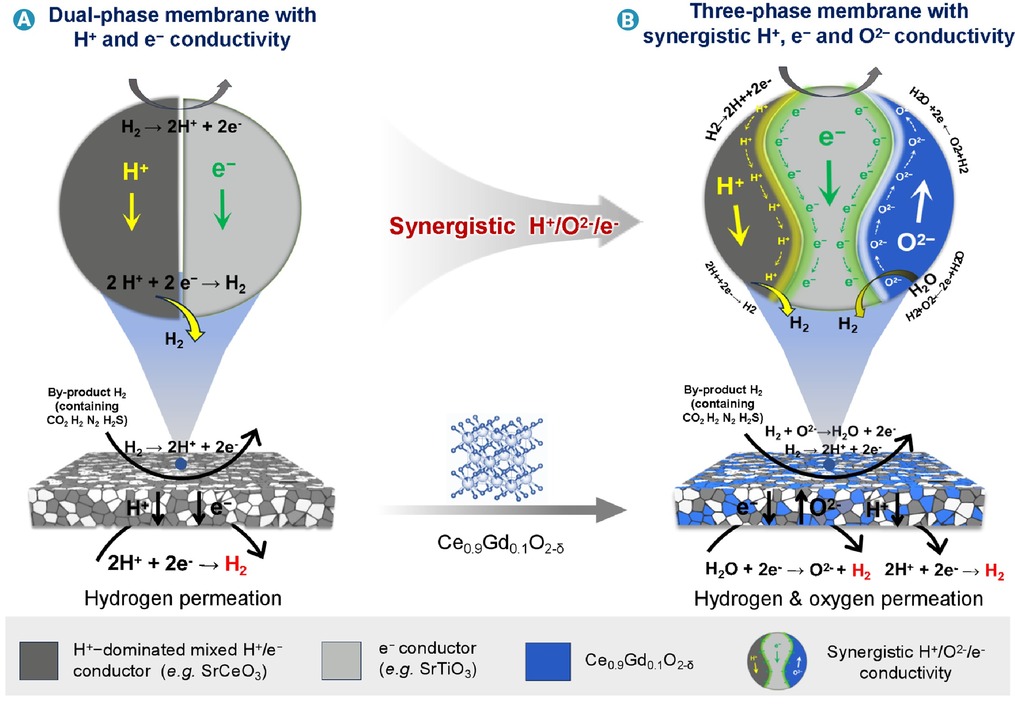
Figure 1.
Design of the three-phase composite membrane with H+/ O2−/ e− conductivity
-
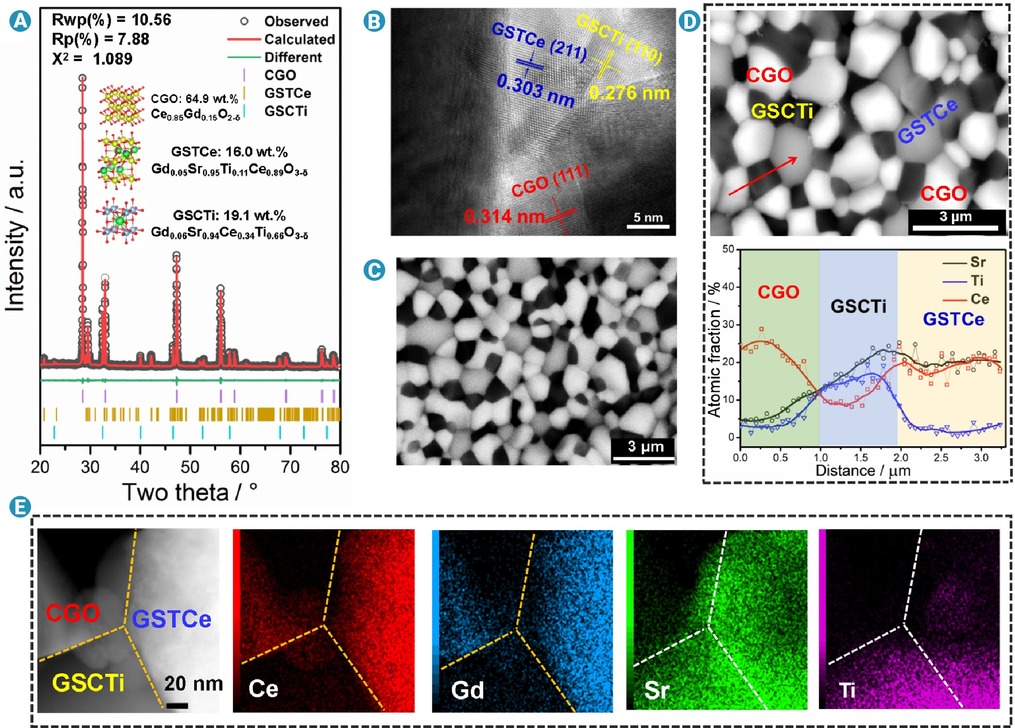
Figure 2.
Phase composition and micromorphology of the CGO-GSTCe-GSCTi composite membrane
-
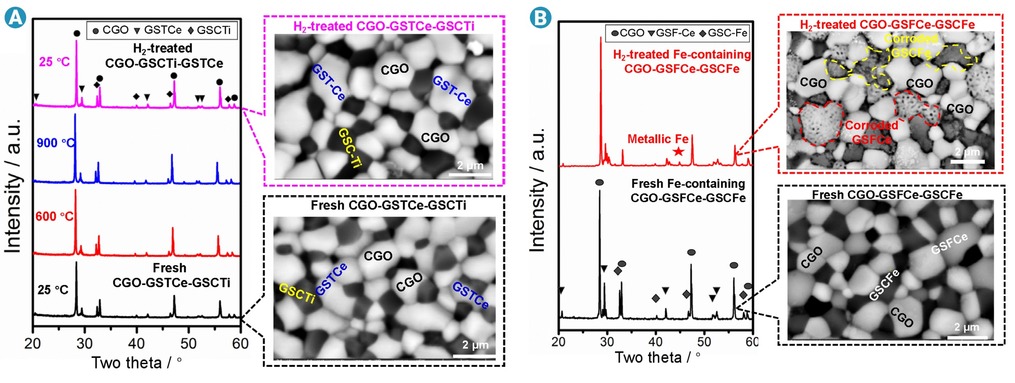
Figure 3.
Chemical stability of the CGO-GSTCe-GSCTi composite membrane under a H2 atmosphere
-
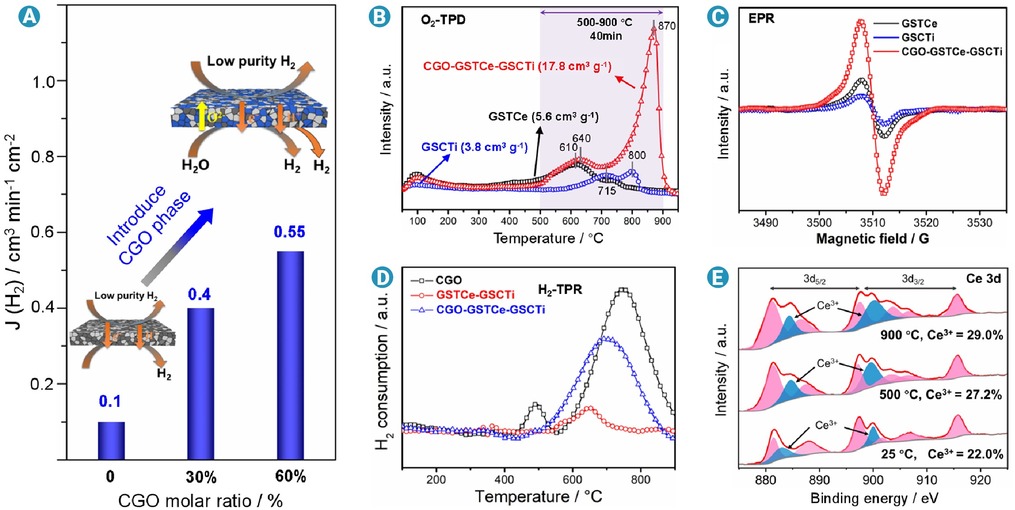
Figure 4.
CGO-GSTCe-GSCTi composite membrane with synergistic triple (H+/O2-/e-) conductivity
-
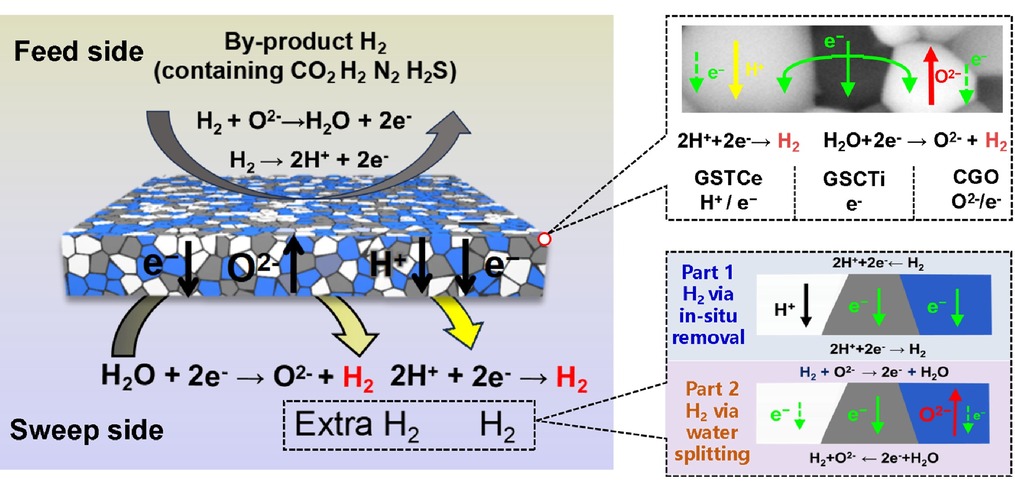
Figure 5.
Schematic illustration of triple (H+/O2−/e−) conducting CGO-GSTCe-GSCTi membrane for highly efficient hydrogen permeation performance.
-
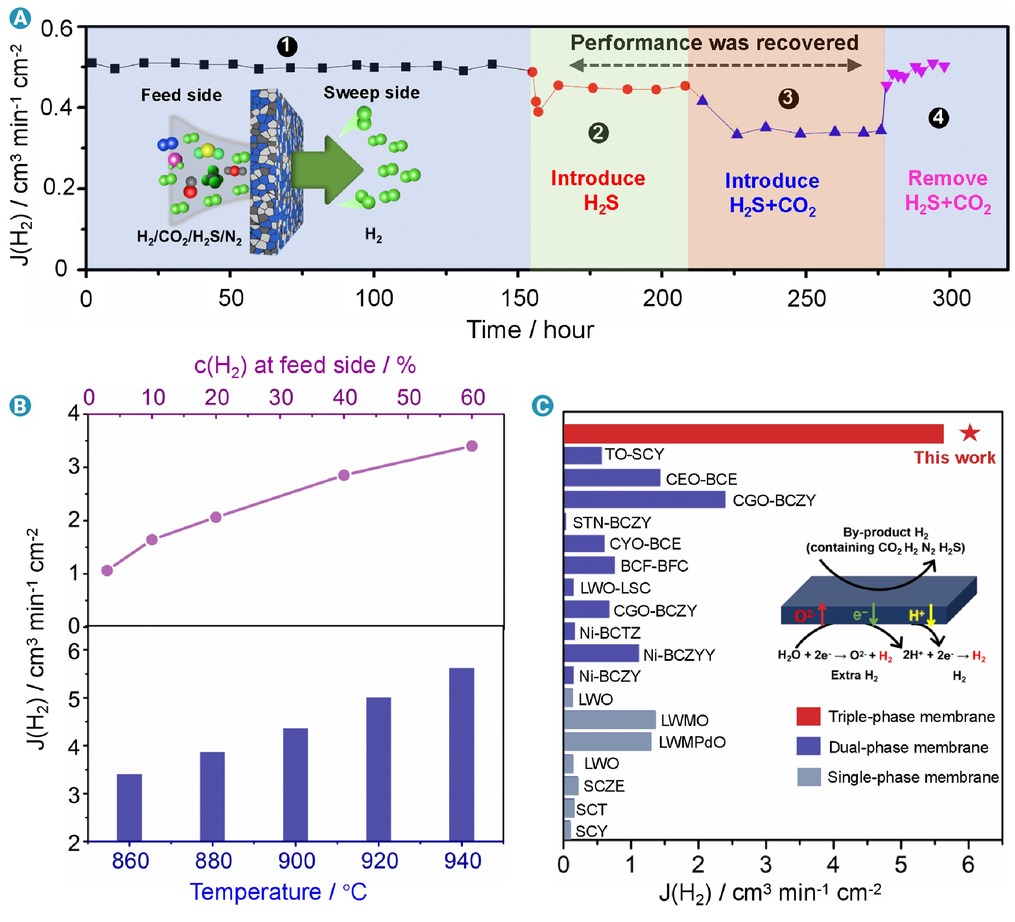
Figure 6.
Hydrogen permeation performances
