
Construction and performance analysis of a hydrogen liquefaction precooling process integrating an active magnetic regenerator
-
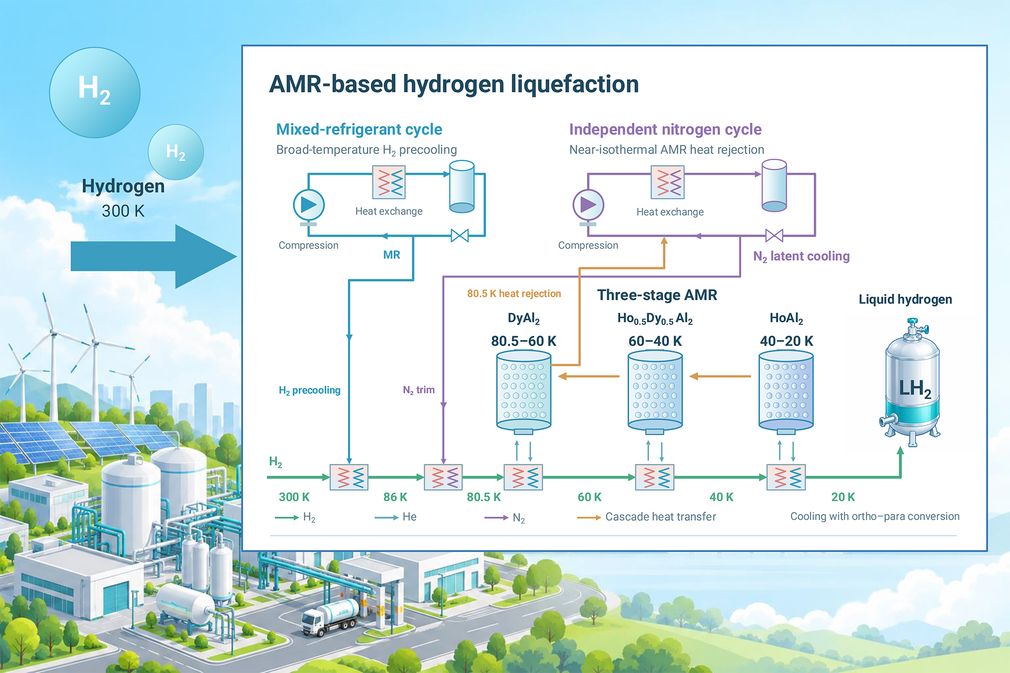
GRAPHICAL ABSTRACT
 DownLoad:
Full size image
-
PUBLIC SUMMARY
-
Conventional liquid-hydrogen transportation is hindered by low-efficiency, high-cost hydrogen liquefaction, and compressor-driven refrigeration faces stricter environmental-friendly requirements.
This work proposes a hydrogen liquefaction scheme integrated with active magnetic regenerator (AMR), aiming for compact and high-efficiency small-scale liquefaction systems.
Three precooling and hot-end heat-rejection layouts are built for a three-stage cascaded AMR system under identical hydrogen-supply and operating boundary conditions.
Case Ⅲ delivers optimal overall performance with SEC of 62 kJ/g and COP of 0.072, benefiting from separating wide-range hydrogen precooling and AMR hot-end heat-rejection loads.
The mixed-refrigerant cycle supplies wide-range sensible cooling for hydrogen, while an independent nitrogen circuit dissipates AMR hot-end heat, offering design guidance for AMR-based hydrogen liquefaction.
-
-
ABSTRACT
The transportation of liquid hydrogen faces significant challenges, primarily due to the low efficiency and high cost of conventional hydrogen liquefaction (HL) processes. Meanwhile, increasingly stringent environmental regulations impose higher demands on the energy efficiency and eco-friendliness of traditional compressor-based refrigeration technologies. In this context, magnetic refrigeration technology based on the active magnetic regenerator (AMR) has emerged as a promising alternative. Targeting the development of compact and high-efficiency HL systems, this paper proposes a HL process integrated with an AMR. The study focuses on the integration method of the AMR and the design and analysis of different cooling schemes. To evaluate the applicability of an AMR in small-scale HL, three precooling and hot-end heat-rejection configurations are constructed for the same three-stage cascaded AMR system. The three configurations share identical hydrogen feed conditions, liquefaction capacity, and AMR operating parameters, while differing only in the method used to precool hydrogen and reject heat from the high-temperature AMR hot end. The results show that Case III exhibits the best overall performance, achieving the lowest SEC (62 kJ/g) and the highest COP (0.072). The improved performance of Case III results from the functional separation of the broad-temperature hydrogen precooling load and the quasi-isothermal heat-rejection load of the high-temperature AMR. The MR cycle mainly provides sensible cooling for hydrogen over a wide temperature range, whereas the independent nitrogen cycle removes the AMR hot-end heat load near 80.5 K. These results provide guidance for the thermal integration and precooling design of small-scale AMR-based HL systems. -

-
REFERENCES
[1] Pells R. (2025). How a hydrogen lab is helping to power Spain’s green-energy shift. Nature. DOI:10.1038/d41586-025-01025-y [2] Zhang T., Uratani J., Huang Y., et al. (2023). Hydrogen liquefaction and storage: Recent progress and perspectives. Renew. Sustain. Energy Rev. 176:113204. DOI:10.1016/j.rser.2023.113204 [3] Li J., Liu J., Dai H., et al. (2024). Rapid development of hydrogen in the energy sector raises safety regulatory concerns. Innov. Energy 1:100037. DOI:10.59717/j.xinn-energy.2024.100037 [4] International Energy Agency. (2021). Net Zero by 2050. IEA. [5] Petitpas G. (2018). Simulation of boil-off losses during transfer at a LH2 based hydrogen refueling station. Int. J. Hydrog. Energy 43:21451−21463. DOI:10.1016/j.ijhydene.2018.09.132 [6] Fang L., Dong X., Wang H., et al. (2025). Economic analysis of compressed gaseous hydrogen, liquid hydrogen, and cryo-compressed hydrogen storage methods for large-scale storage and transportation. Int. J. Hydrog. Energy 162:150725. DOI:10.1016/j.ijhydene.2025.150725 [7] Zhou B. (2024). Liquid hydrogen carriers: Linking renewable energies for a carbon-neutral future. Innov. Energy 1:100020. DOI:10.59717/j.xinn-energy.2024.100020 [8] Ahmad A., Nnabuife S.G., Oko E., et al. (2025). Comprehensive review of advances and challenges in hydrogen liquefaction. Sustain. 6:100192. DOI:10.1016/j.nxsust.2025.100192 [9] Ansarinasab H., Fatimah M. and Khojasteh-Salkuyeh Y. (2023). Conceptual design of two novel hydrogen liquefaction processes using a multistage active magnetic refrigeration system. Appl. Therm. Eng. 230:120771. DOI:10.1016/j.applthermaleng.2023.120771 [10] Aasadnia M. and Mehrpooya M. (2018). Large-scale liquid hydrogen production methods and approaches: A review. Appl. Energy 212:57−83. DOI:10.1016/j.apenergy.2017.12.033 [11] Taghavi M., Colpan C.O. and Dincer I. (2026). Development of an integrated production and liquefaction system of hydrogen and green natural gas: energy, exergy, economic and sensitivity assessments. Energy 360:141476. DOI:10.1016/j.energy.2026.141476 [12] Taghavi M. and Lee C.-J. (2025). Development of a novel hydrogen liquefaction structure based on liquefied natural gas regasification operations and solid oxide fuel cell: Exergy and economic analyses. Fuel 384:133826. DOI:10.1016/j.fuel.2024.133826 [13] Zhang R., Cao X., Ai D., et al. (2025). Analysis of a novel hydrogen liquefaction process based on a mixed refrigerant Brayton cryogenic cycle utilizing LNG cooling: energy, exergy, economy and environment. Energy 336:138424. DOI:10.1016/j.energy.2025.138424 [14] International Energy Agency. (2023). Global Hydrogen Review 2023. IEA. [15] Eom S., Kim S., Han G., et al. (2026). Low-cost green hydrogen from renewable energy curtailment: A techno-economic analysis with a real-time AI-driven approach. Energy 349:140569. DOI:10.1016/j.energy.2026.140569 [16] International Renewable Energy Agency. (2022). Innovation outlook: Renewable ammonia. IRENA. [17] Park J., Ryu K.H., Kim C.-H., et al. (2023). Green hydrogen to tackle the power curtailment: Meteorological data-based capacity factor and techno-economic analysis. Appl. Energy 340:121016. DOI:10.1016/j.apenergy.2023.121016 [18] Handayani W., Zhu X. and Cooke F.L. (2025). Mapping hydrogen demand for heavy-duty vehicles: a spatial disaggregation approach. Energy Inform. 8:91. DOI:10.1186/s42162-025-00550-4 [19] Semchukova V., Topolski K. and Abdin Z. (2025). Hydrogen technology for maritime applications: A review of challenges, opportunities, and lessons from the port authority of New York and New Jersey. Renew. Sustain. Energy Rev. 216:115641. DOI:10.1016/j.rser.2025.115641 [20] Liu Y., Su X., Fang L., et al. (2025). Large cryogenic magnetocaloric effect of the Laves-phase Ho(1-x)Dy(x)Al(2) compounds within liquid hydrogen temperature range. J. Alloys Compd. 1010:178324. DOI:10.1016/j.jallcom.2024.178324 [21] Yu B.F., Gao Q., Zhang B., et al. (2003). Review on research of room temperature magnetic refrigeration. Int. J. Refrig. 26:622−636. DOI:10.1016/S0140-7007(03)00048-3 [22] Kamiya K., Natsume K., Uchida A., et al. (2025). Hydrogen liquefaction by active magnetic regenerative refrigeration. Cryogenics 152:104205. DOI:10.1016/j.cryogenics.2025.104205 [23] Belkadi M. and Smaili A. (2021). Comparative Study between precooled Claude Liquefaction Cycle and an Active Magnetic Regeneration Cycle applied to Hydrogen Liquefaction. ENP Eng. Sci. J. 1:9−16. DOI:10.53907/enpesj.v1i2.12 [24] Esmaeilzadeh A., Javaherdeh K., Naghashzadegan M., et al. (2026). Conceptual design and analysis of a boil-off gas re-liquefaction process driven by a multi-stage active magnetic regenerative cryocooler. Appl. Therm. Eng. 289:129987. DOI:10.1016/j.applthermaleng.2026.129987 [25] Ansarinasab H., Fatimah M. and Khojasteh-Salkuyeh Y. (2023). Performance improvement of air liquefaction processes for liquid air energy storage (LAES) using magnetic refrigeration system. J. Energy Storage 65:107304. DOI:10.1016/j.est.2023.107304 [26] Liponi A., Tenda M., Bjørk R., et al. (2025). Analysis of configurations for coupling an active magnetic regenerator with heat exchangers for hydrogen liquefaction. Fuel Process. Technol. 278:108337. DOI:10.1016/j.fuproc.2025.108337 [27] Zheng W., Shen J., Li Z., et al. (2024). Numerical simulation of a multistage magnetic refrigeration system in the temperature range of liquid hydrogen. Int. J. Hydrog. Energy 51:523−535. DOI:10.1016/j.ijhydene.2023.07.192 [28] Kamiya K., Matsumoto K., Numazawa T., et al. (2022). Active magnetic regenerative refrigeration using superconducting solenoid for hydrogen liquefaction. Appl. Phys. Express 15:053001. DOI:10.35848/1882-0786/ac5723 [29] Sun S., Jiang W., Yang F., et al. (2026). Optimization and analysis of a new liquefied natural gas and nitrogen cascade pre-cooling hydrogen liquefaction process. Cryogenics 153:104253. DOI:10.1016/j.cryogenics.2025.104253 [30] Ribeiro P.O., Alho B.P., Oliveira R.S.D., et al. (2022). Magnetothermal properties of Ho(1-x)Dy(x)Al(2) (x = 0, 0.05, 0.10, 0.15, 0.25 and 0.50) compounds. J. Magn. Magn. Mater. 544:168705. DOI:10.1016/j.jmmm.2021.168705 [31] Bykov E., Liu W., Skokov K., et al. (2021). Magnetocaloric effect in the Laves-phase Ho(1-x)Dy(x)Al(2) family in high magnetic fields. Phys. Rev. Mater. 5:095405. DOI:10.1103/PhysRevMaterials.5.095405 [32] Nielsen K.K., Bahl C.R.H., Smith A., et al. (2010). A comprehensive parameter study of an active magnetic regenerator using a 2D numerical model. Int. J. Refrig. 33:753−764. DOI:10.1016/j.ijrefrig.2009.12.024 [33] Xu Y., Bi Y. and Ju Y. (2024). The thermodynamic analysis on the catalytical ortho-para hydrogen conversion during the hydrogen liquefaction process. Int. J. Hydrog. Energy 54:1329−1342. DOI:10.1016/j.ijhydene.2023.11.259 [34] Aghabalazadeh M., Garousi Farshi L. and Mosaffa A.H. (2026). Design and performance analysis of an improved Claude-cycle-based hydrogen liquefaction system. Energy Convers. Manag. 352:121060. DOI:10.1016/j.enconman.2026.121060 [35] Wang H.C., Guo H., Chen G.F., et al. (2018). Thermodynamic design and analysis of movable small scale mixed-refrigerant liquid nitrogen generators. Int. J. Refrig. 90:202−215. DOI:10.1016/j.ijrefrig.2018.04.010 [36] Sleiti A.K., Al-Ammari W.A. and Ghani S. (2023). Novel dual-mixed refrigerant precooling process for high capacity hydrogen liquefaction plants with superior performance. J. Energy Storage 66:107471. DOI:10.1016/j.est.2023.107471 [37] Petri G., Andreini N., Milazzo A., et al. (2026). Thermodynamic analysis of a dual mixed-refrigerant hydrogen liquefaction process with continuous ortho–para conversion method. Int. J. Hydrog. Energy 205:153386. DOI:10.1016/j.ijhydene.2026.153386 [38] Liu C. and Zhang J. (2025). Introducing and energy analysis of a new hydrogen liquefaction process using different percentage of LNG as a cold source supplement. Int. J. Hydrog. Energy 167:150975. DOI:10.1016/j.ijhydene.2025.150975 -
ABOUT THIS ARTICLE
Cite this article:
Hu Z., Li Z., Liu Y., et al. (2026). Construction and performance analysis of a hydrogen liquefaction precooling process integrating an active magnetic regenerator. The Innovation Energy 3:100187. https://doi.org/10.59717/j.xinn-energy.2026.100187
Welcome!
To request copyright permission to republish or share portions of our works, please visit Copyright Clearance Center's (CCC) Marketplace website at marketplace.copyright.com.
Export File
Citation
Hu Z., Li Z., Liu Y., et al. (2026). Construction and performance analysis of a hydrogen liquefaction precooling process integrating an active magnetic regenerator. The Innovation Energy 3:100187. https://doi.org/10.59717/j.xinn-energy.2026.100187

Format
Content
-
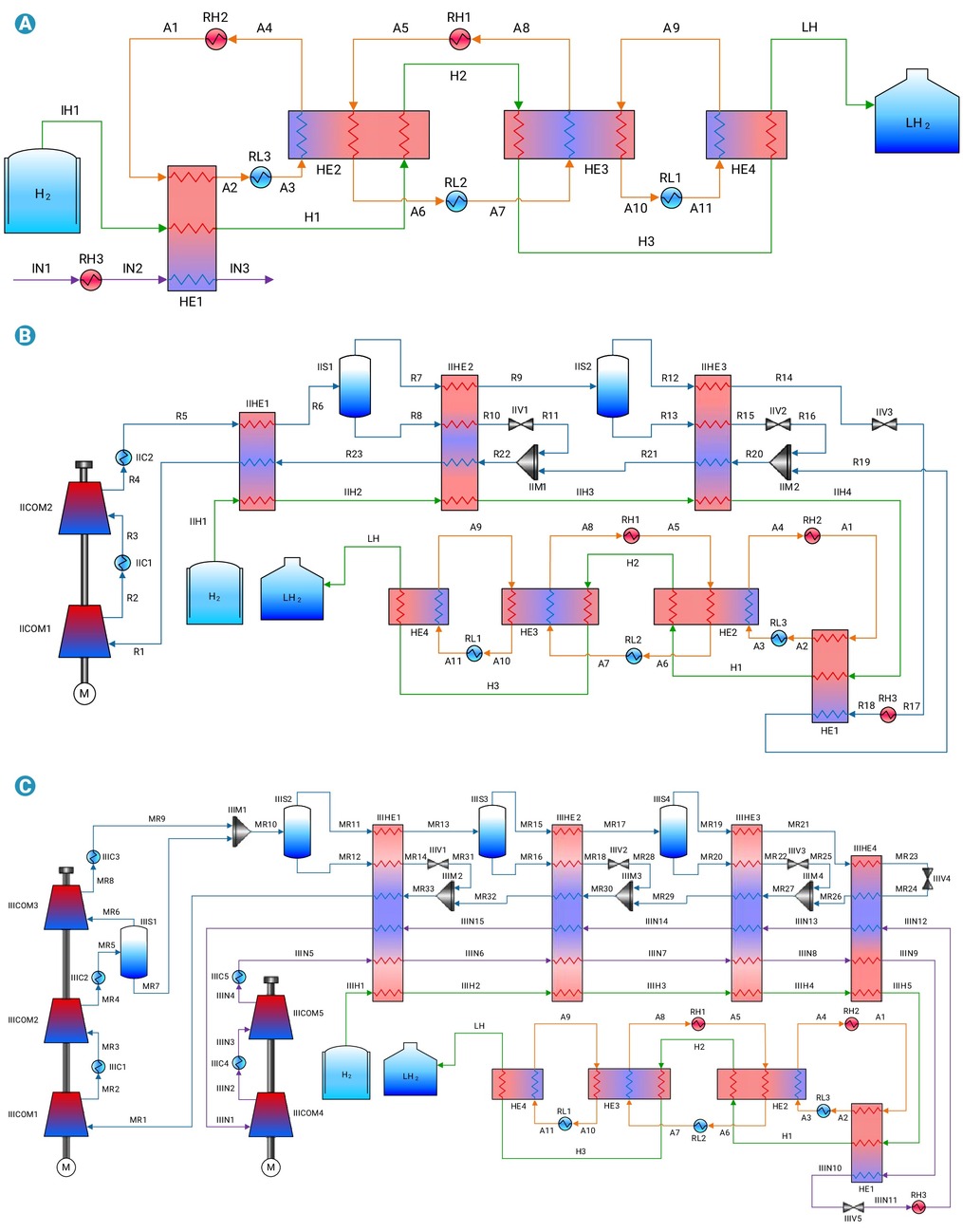
Figure 1.
(A)Equivalent model of the AMR low-temperature cooling process. (B) Equivalent model of the MR precooling process. (C) Equivalent model of the MR-nitrogen dual-cycle cooperative precooling process.
-
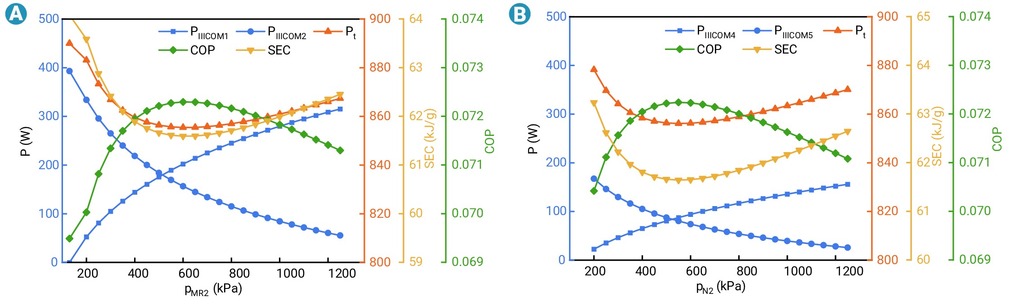
Figure 2.
Variation of system performance with process parameters in Case III HL process.
-
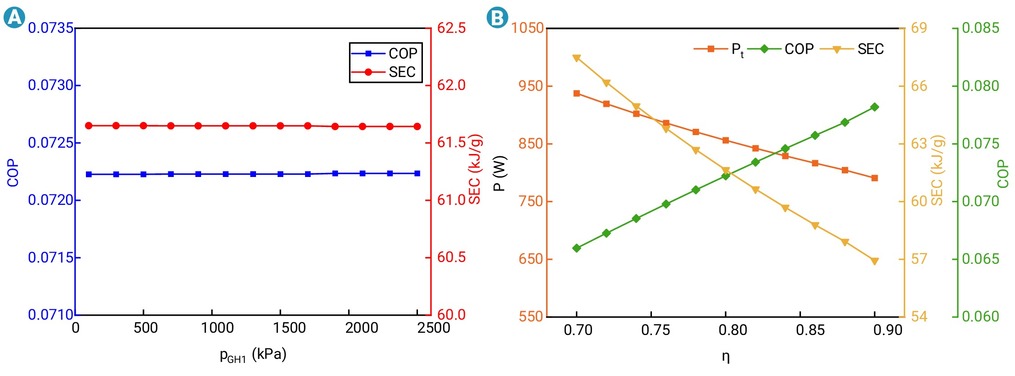
Figure 3.
System performance variation with feed hydrogen pressure and compressor adiabatic efficiency.
-
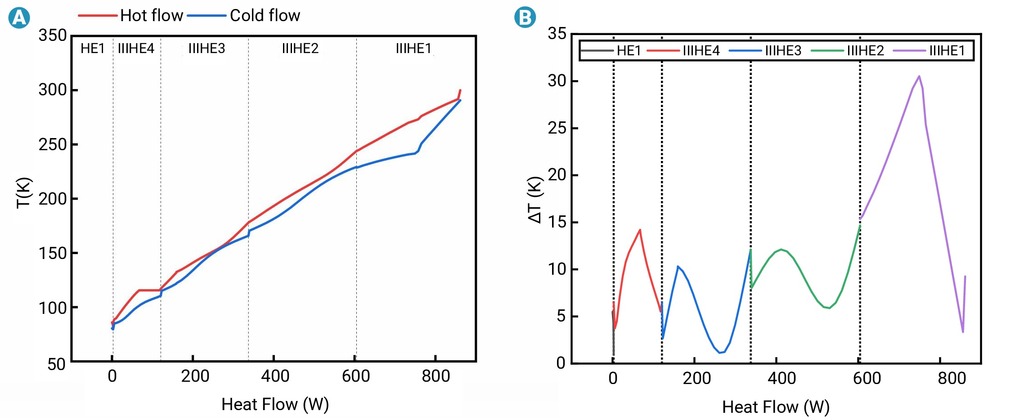
Figure 4.
Temperature difference variation curves of heat exchangers.
-
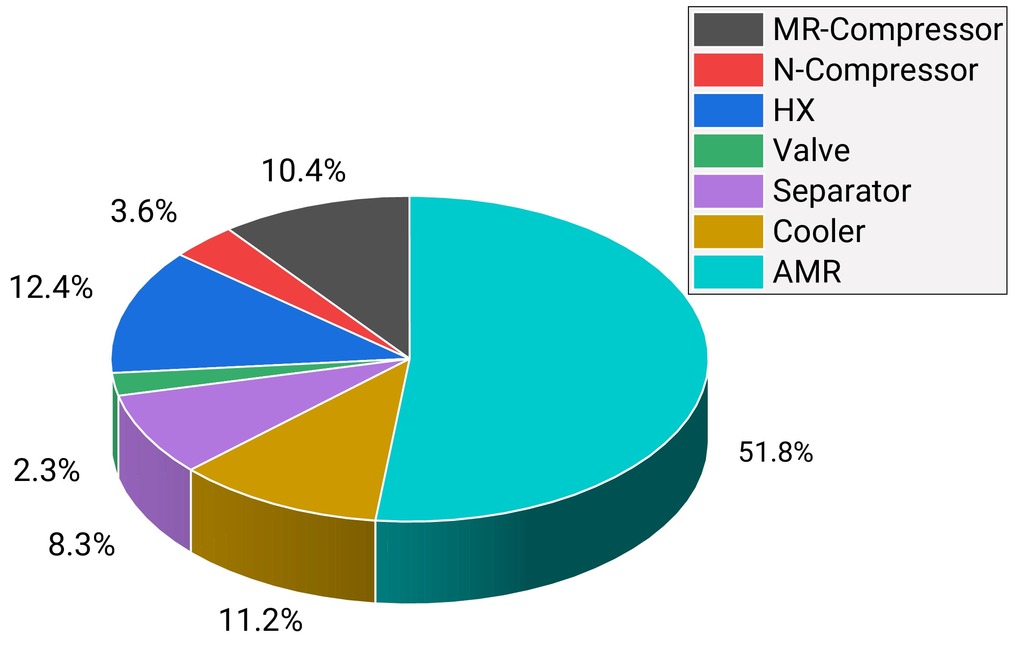
Figure 5.
Exergy destruction of major equipment in the AMR-based HL process.
