
Localized LLM selection for agentic building energy modeling worker routing
-
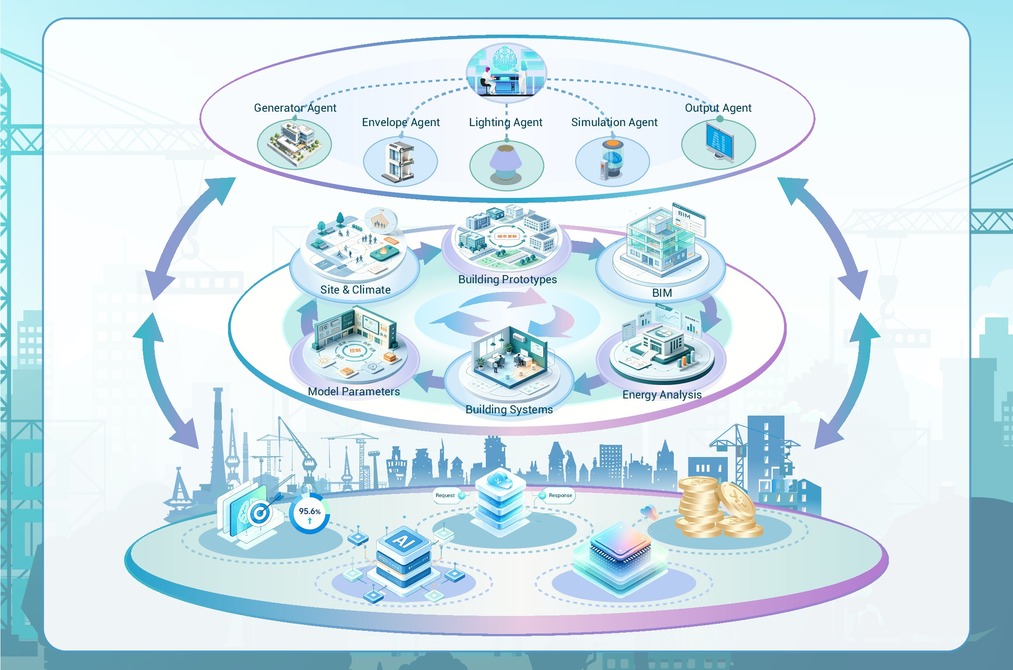
GRAPHICAL ABSTRACT
 DownLoad:
Full size image
-
PUBLIC SUMMARY
-
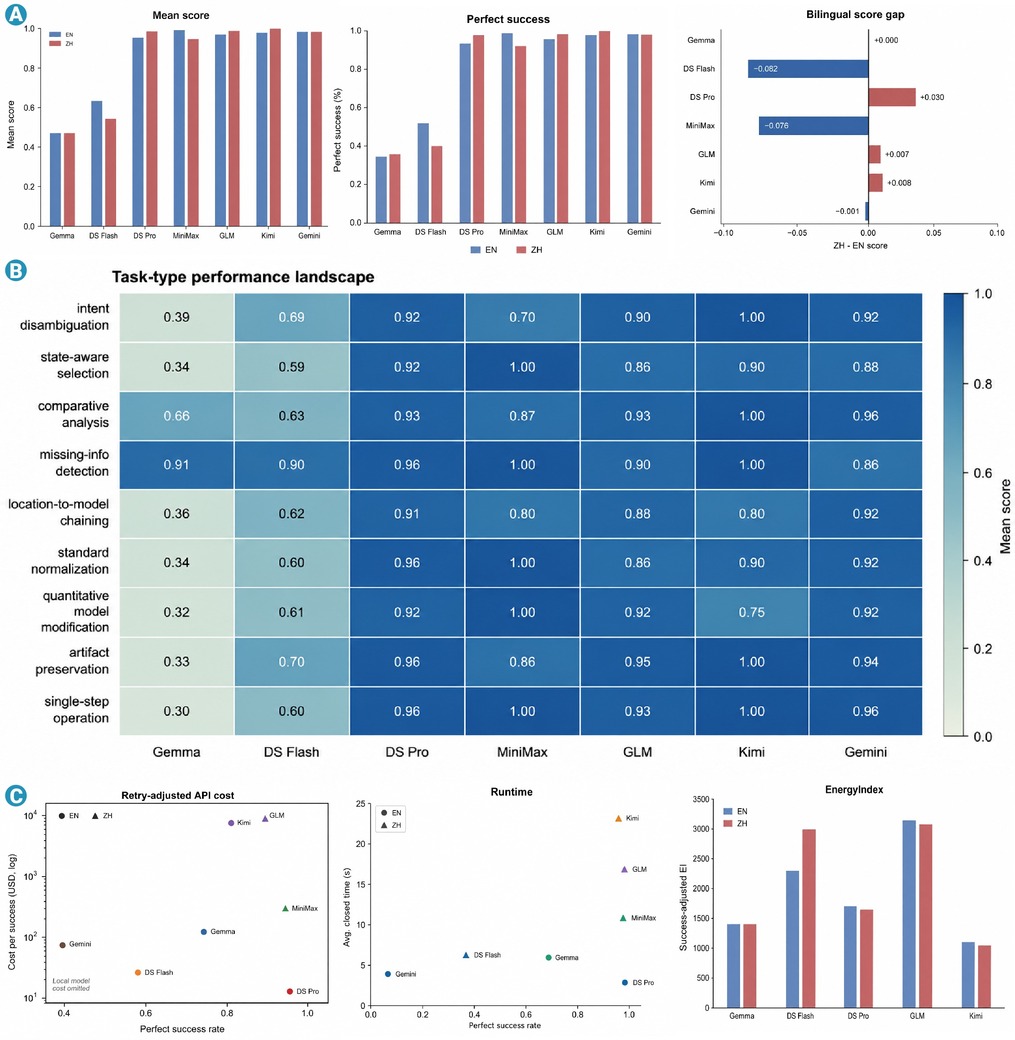
7 LLM backends benchmarked on bilingual agentic BEM; top regional models reach 98–99% Chinese success, near the 97% baseline.
Accuracy alone is insufficient—cost, latency, and success-adjusted cost drive deployment selection.
DeepSeek-V4-Pro offers the best cost–accuracy balance (~$119/M Chinese routing tasks).
Success-adjusted cost spans 3.6×–21.2×; low per-call burden misleads when success is low.
Low per-call inference burden can mislead when success rates are low; end-to-end validation needed.
-
-
ABSTRACT
Building Energy Modeling (BEM) is moving from expert-operated software toward Large Language Model (LLM)-based agentic systems that decompose user requests into specialized agents and executable tool calls. The LLM backend becomes part of the energy-modeling infrastructure, shaping routing reliability, latency, provider cost, and the inference burden incurred before a simulation even runs. Yet model choice is rarely quantified for localized agentic BEM, particularly when different language instructions must preserve canonical tool names, blackboard state, file paths, and engineering parameters. This study evaluates seven LLM backends, including a small local model and several regional models, using a bilingual worker-routing benchmark of 100 manually checked tasks per language covering prototype generation, quantitative modification, object insertion, simulation, output retrieval, comparative analysis, state-aware model selection, and missing-information detection. The strongest regional models achieved Chinese perfect-success rates of 98-99%, comparable to 97% for the baseline. Cost and latency analysis show that accuracy alone is insufficient for deployment selection. DeepSeek-V4-Pro provided the strongest cost–accuracy trade-off in this benchmark, requiring about US $119 per million Chinese worker-routing tasks and US $122 per million successful tasks. The corresponding success-adjusted cost was about 3.6× higher for the overseas baseline, 4.6× higher for MiniMax, 17.5× higher for Kimi, and 21.2× higher for GLM. A relative EnergyIndex further shows that low single-call inference burden can mislead when success rates are low. These results demonstrate that localized LLM selection is an operational design variable for reliable, cost-effective agentic BEM, and motivate end-to-end validation on full OpenStudio/EnergyPlus workflows.-
Keywords:
- Agentic BEM /
- localized LLMs /
- worker routing /
- regional deployment /
- harness /
- energy index
-

-
REFERENCES
[1] González-Torres M., Pérez-Lombard L., Coronel JF., et al. (2022). A review on buildings energy information: Trends, end-uses, fuels and drivers. Energy Rep. 8:626−637. DOI:10.1016/j.egyr.2021.11.280 [2] Wan H. and Meyer R. (2025). A machine learning method of modern urban building energy modeling: a case study of Chicago. Sustain. Cities Soc. 134:106886. DOI:10.1016/j.scs.2025.106886 [3] Li X. and Wen J. (2014). Review of building energy modeling for control and operation. Renew. Sustain. Energy Rev. 37:517−537. DOI:10.1016/j.rser.2014.05.056 [4] Reinhart C.F. and Davila C.C. (2016). Urban building energy modeling: A review of a nascent field. Build. Environ. 97:196−202. DOI:10.1016/j.buildenv.2015.12.001 [5] Brackney L., Parker A., Macumber D., et al. (2018). Building energy modeling with OpenStudio: A practical guide for students and professionals. Cham Springer. DOI:10.1007/978-3-319-77809-9. [6] Ang Y.Q., Berzolla Z.M. and Reinhart C.F. (2020). From concept to application: A review of use cases in urban building energy modeling. Appl. Energy 279:115738. DOI:10.1016/j.apenergy.2020.115738 [7] Wan H., Zhang J., Chen Y., et al. (2025). Exploring Gen-AI applications in building research and industry: A review. Build. Simul. 18:1251−1273. DOI:10.1007/s12273-025-1279-x [8] Jiang G., Ma Z., Zhang L., et al. (2024). EPlus-LLM: A large language model-based computing platform for automated building energy modeling. Appl. Energy 367:123431. DOI:10.1016/j.apenergy.2024.123431 [9] Lu J., Tian X., Zhang C., et al. Evaluation of large language models (LLMs) on the mastery of knowledge and skills in the heating, ventilation and air conditioning (HVAC) industry. Energy Built Environ. 6:875–892. DOI:10.1016/j.enbenv.2024.03.010. [10] Xu W., Wan H., Goel S., et al. (2025). Development of a dynamic multi-agent network for building energy modeling: A case study towards scalable and autonomous energy modeling. Energy Build. 372:116712. DOI:10.1016/j.enbuild.2025.116712 [11] Lyu J., Lai D., Zhang H., et al. (2026). LLM-powered agent for occupant-centric indoor environment control: Design, implementation, and evaluation. Energy Built Environ. DOI:10.1016/j.enbenv.2026.04.001. [12] Yao S., Zhao J., Yu D., et al. (2023). ReAct: Synergizing reasoning and acting in language models. Int. Conf. Learn. Rep. DOI:10.48550/arXiv.2210.03629. [13] Schick T., Dwivedi-Yu J., Dessì R., et al. (2023). Toolformer: Language models can teach themselves to use tools. Adv. Neural Inf. Proces. Syst. 37:68539−68551. DOI:10.5555/3666122.3669119 [14] Patil S.G., Zhang T., Wang X., et al. (2024). Gorilla: Large language model connected with massive APIs. Adv. Neural Inf. Proces. Syst 37:126544−12656. DOI:10.52202/079017-4020 [15] Qin Y., Liang S., Ye Y., et al. (2023). ToolLLM: Facilitating large language models to master 16000+ real-world APIs. arXiv preprint. DOI:10.48550/arXiv.2307.16789. [16] Li D., Liu M., Li J., et al. (2026). Exploring the applications of large language models in carbon management and assessment. Innov. Energy 3:100135. DOI:10.59717/j.xinn-energy.2026.100135 [17] Kulkarni M., Mazzia V., Gaspers J., et al. (2025). MASSIVE-Agents: A benchmark for multilingual function-calling in 52 languages. EMNLP 2025:20193−20215. DOI:10.18653/v1/2025.findings-emnlp.1099 [18] Luo Z., Kutralingam T.P., Okoani O.N., et al. (2026). Lost in Execution: On the multilingual robustness of tool calling in large language models. arXiv preprint. DOI:10.48550/arXiv.2601.05366. [19] Tang X., Peng H., Chen G., et al. (2026). Agent Systems with Harness Engineering. https://openreview.net/pdf?id=nM5tDHrQsx. [20] Niu C., Zhang W., Li J., et al. (2026). TokenPowerBench: Benchmarking the power consumption of LLM inference. AAAI 40:32582−32590. DOI:10.48550/arXiv.2512.03024 [21] Luccioni A.S., Jernite Y. and Strubell E. (2024). Power hungry processing: Watts driving the cost of AI deployment? ACM Fairn. Account. Trans. DOI:10.1145/3630106.3658542. [22] Patterson D., Gonzalez J., Le Q., et al. (2021). Carbon emissions and large neural network training. arXiv preprint. DOI:10.48550/arXiv.2104.10350. [23] Xia S., Yang Y. and Poon J.P.H. (2025). Ensuring a carbon-neutral future for artificial intelligence. Innov. Energy 2:100071. DOI:10.59717/j.xinn-energy.2024.100071 -
ABOUT THIS ARTICLE
Cite this article:
Wan H. and Yuan Y. (2026). Localized LLM selection for agentic building energy modeling worker routing. The Innovation Energy 3:100194. https://doi.org/10.59717/j.xinn-energy.2026.100194
Welcome!
To request copyright permission to republish or share portions of our works, please visit Copyright Clearance Center's (CCC) Marketplace website at marketplace.copyright.com.
Export File
Citation
Wan H. and Yuan Y. (2026). Localized LLM selection for agentic building energy modeling worker routing. The Innovation Energy 3:100194. https://doi.org/10.59717/j.xinn-energy.2026.100194

Format
Content
-
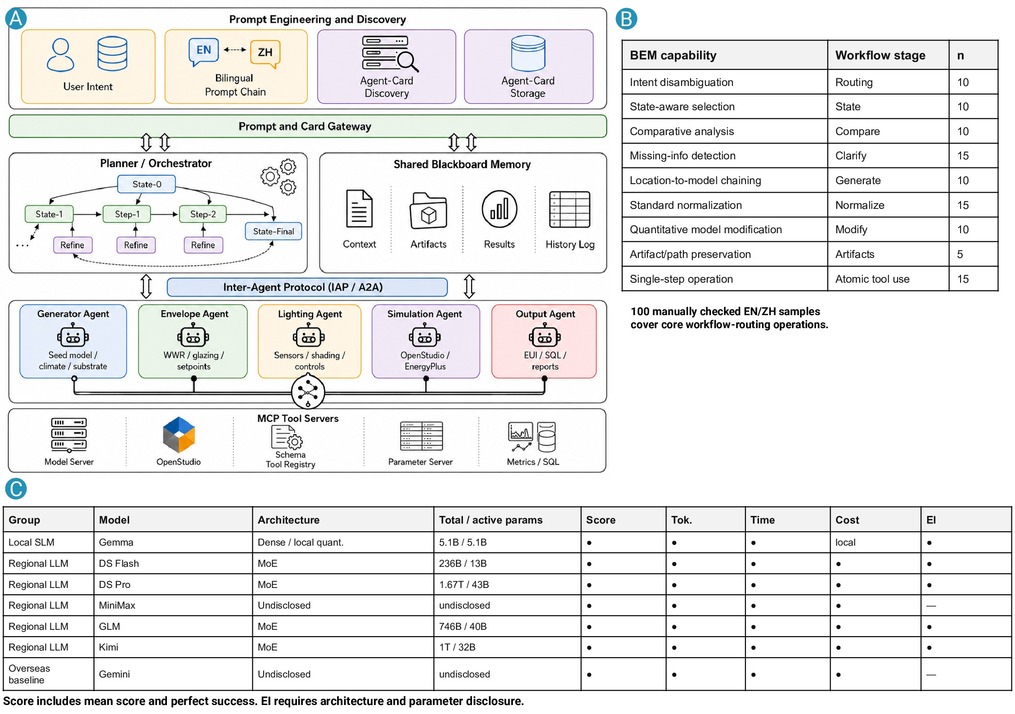
Figure 1.
Overview of the agentic BEM evaluation framework
-
Figure 2.
Main worker-routing results across the evaluated models
-
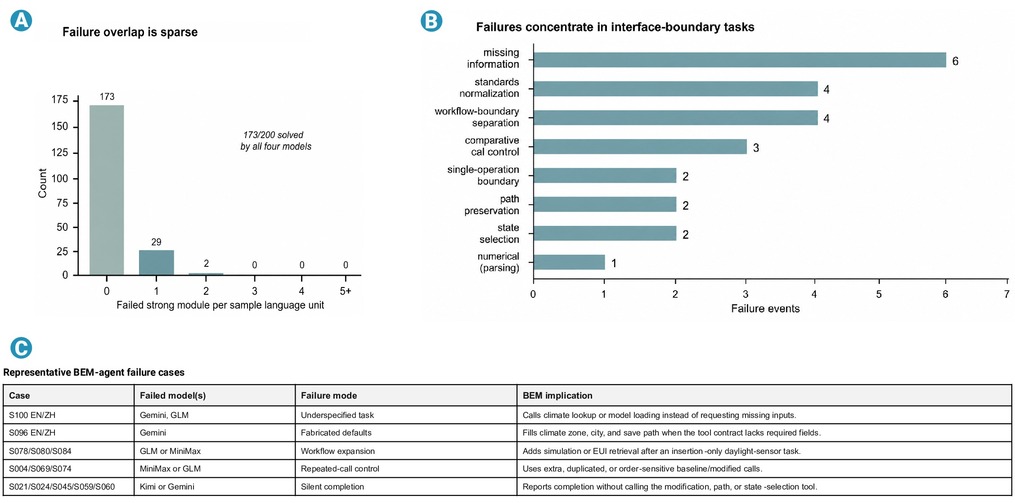
Figure 3.
Failure analysis of the high-performing models
