
-
GRAPHICAL ABSTRACT
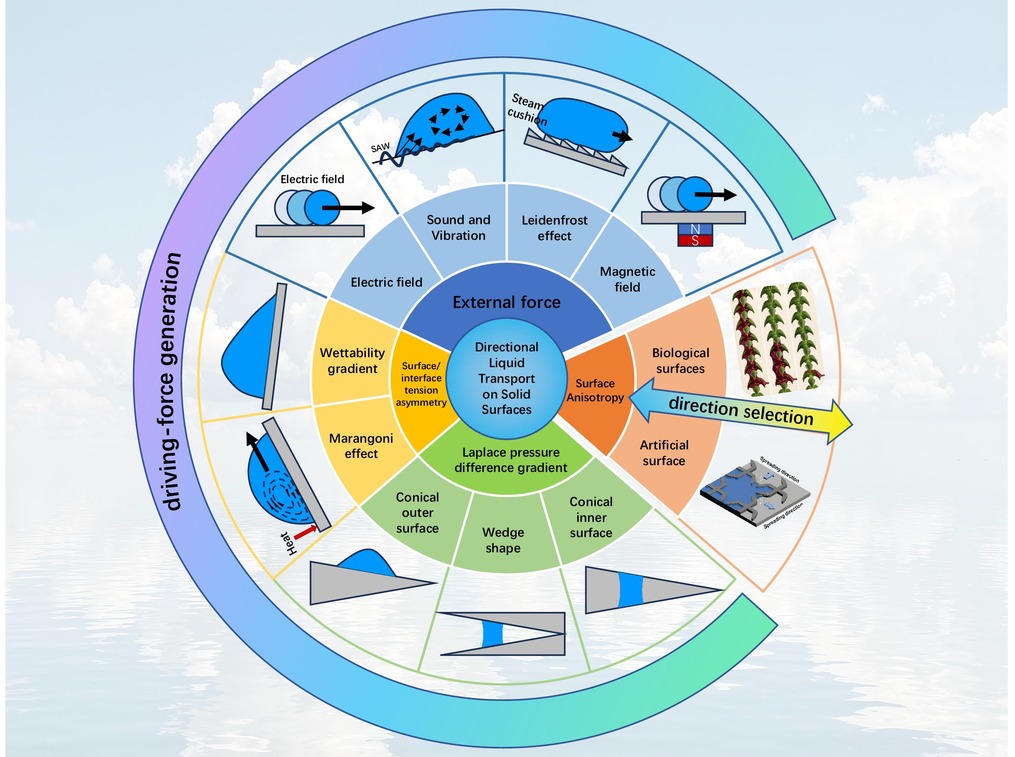
 DownLoad:
Full size image
-
PUBLIC SUMMARY
-
Directional liquid transport enables microfluidics, phase-change heat transfer, harvesting, and biosensing.
This review links driving-force origin, force-transmission pathway, and directional-selection mechanism.
Three driving pathways generate motion; anisotropic boundaries select its direction.
Force direction, magnitude, and timescale govern reinforcement or opposition among mechanisms.
Velocity-path maps guide task-oriented design through energy supply, resistance reduction, and rectification.
-
-
ABSTRACT
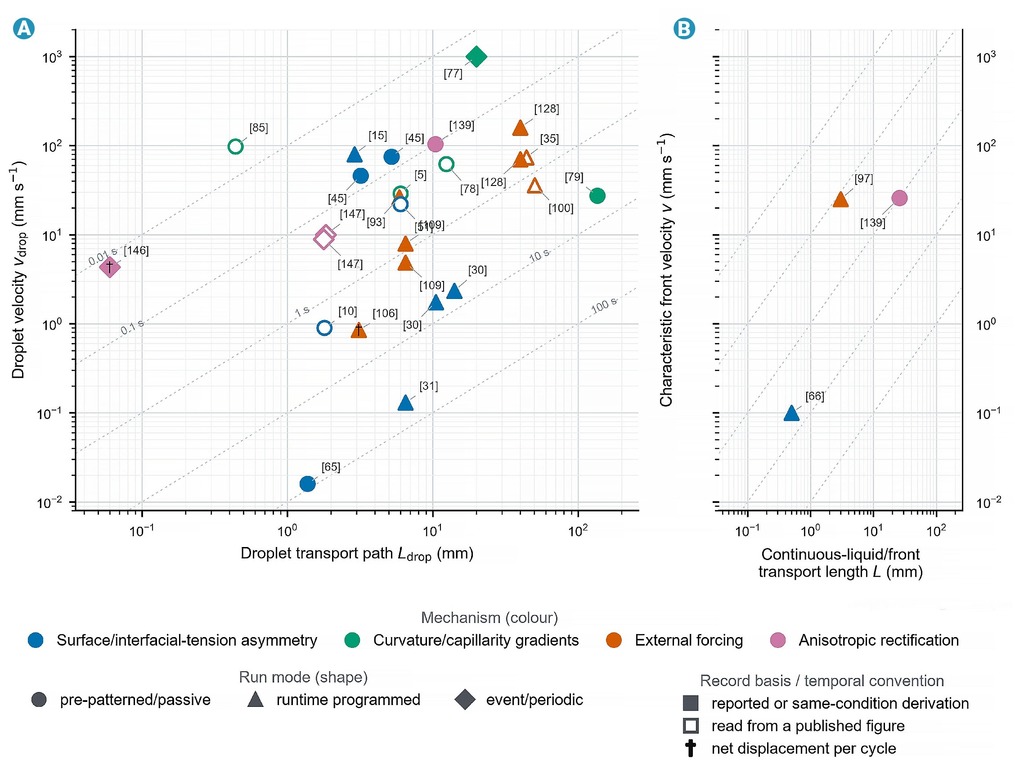
Directional liquid transport on solid surfaces underpins microfluidics, phase-change heat transfer, fog harvesting, and biomedical detection. Spatial asymmetry in interfacial properties, geometry, or external energy input generates a directional force. Contact-line pinning and opposing gravity set the onset condition, whereas viscous dissipation governs the transport rate. The conventional active–passive dichotomy distinguishes external power requirements but does not resolve the force-transmission pathway or the rectifying role of surface structure, particularly when several mechanisms coexist. This review therefore organizes directional transport at two complementary levels. The first distinguishes three pathways of driving-force generation: surface/interfacial-tension asymmetry, curvature-induced Laplace pressure gradients, and external-force actuation. The second addresses anisotropic rectification by solid surfaces, which sets direction-dependent boundary conditions and can operate with any of these driving pathways. Surface/interfacial-tension asymmetry comprises both wettability-induced contact-line force imbalance and Marangoni stress along liquid–gas or liquid–liquid interfaces. Chemical composition, roughness, and thermal, optical, electrical, and magnetic regulation are assessed, with particular attention to competition and cooperation between thermowetting and Marangoni stresses. Curvature-driven transport is traced from geometric confinement in wedges and cones to Laplace pressure gradients, biological prototypes, and optically or magnetically reconfigurable structures. Electric, magnetic, acoustic, vibrational, and Leidenfrost actuation are compared by energy input, force pathway, operating conditions, and limitations. Biological and engineered anisotropic surfaces are further interpreted as rectifiers that convert wetting, coalescence, or external excitation into direction-selective motion through asymmetric capillary advance and contact-line pinning. Cross-mechanism velocity–path comparisons identify operating windows and support task-oriented design through coordinated energy supply, resistance reduction, and rectification. -

-
REFERENCES
[1] Buchberger G., Hischen F., Comanns P., et al. (2015). Bio-inspired microfluidic devices for passive, directional liquid transport: Model-based adaption for different materials. Procedia Eng. 120:106−111. DOI:10.1016/j.proeng.2015.08.576 [2] Feng J. and Rothstein J.P. (2013). One-way wicking in open micro-channels controlled by channel topography. J. Colloid Interface Sci. 404:169−178. DOI:10.1016/j.jcis.2013.02.052 [3] Dung Luong T. and Trung Nguyen N. (2010). Surface acoustic wave driven microfluidics – A review. MNS 2:217−225. DOI:10.2174/1876402911002030217 [4] Yu Z., Yun F.F., Wang Y., et al. (2017). Desert beetle-inspired superwettable patterned surfaces for water harvesting. Small 13:1701403. DOI:10.1002/smll.201701403 [5] Tang X., Huang J., Guo Z., et al. (2021). A combined structural and wettability gradient surface for directional droplet transport and efficient fog collection. J. Colloid Interface Sci. 604:526−536. DOI:10.1016/j.jcis.2021.07.033 [6] Liu L., Xie Z., Wen L., et al. (2024). Efficient collection and directional transport of condensate on superhydrophilic-hydrophobic surfaces with bioinspired hierarchical wedge-shaped channels. Surf. Interfaces 55:105473. DOI:10.1016/j.surfin.2024.105473 [7] Wu S., Gao S., Wang H., et al. (2023). Dropwise condensation heat transfer on vertical superhydrophobic surfaces with gradient microgrooves in humid air. Int. J. Heat Mass Transf. 201:123583. DOI:10.1016/j.ijheatmasstransfer.2022.123583 [8] Chen Y., Li K., Zhang S., et al. (2020). Bioinspired superwettable microspine chips with directional droplet transportation for biosensing. ACS Nano 14:4654−4661. DOI:10.1021/acsnano.0c00324 [9] Xie M., Qian Z., Wang X., et al. (2026). Bionic structured milli-fluidics: A review. Chem. Rev. 126:1347−1407. DOI:10.1021/acs.chemrev.5c00662 [10] Chaudhury M.K. and Whitesides G.M. (1992). How to make water run uphill. Science 256:1539−1541. DOI:10.1126/science.256.5063.1539 [11] Meng M., Chai B., Yang K., et al. (2025). Ultrafast self-transportation of multimedia droplets with a bioinspired microspine array. Nano Lett. 25:3011−3019. DOI:10.1021/acs.nanolett.5c00139 [12] Li J., Zhou X., Li J., et al. (2017). Topological liquid diode. Sci. Adv. 3:eaao3530. DOI:10.1126/sciadv.aao3530 [13] Hernández S.C., Bennett C.J.C., Junkermeier C.E., et al. (2013). Chemical gradients on graphene to drive droplet motion. ACS Nano 7:4746−4755. DOI:10.1021/nn304267b [14] Zhang F., Wang Z., Liu Z., et al. (2023). Cross-hatch textured cone enables dual-mode water transport and collection. Chem. Eng. J. 478:147336. DOI:10.1016/j.cej.2023.147336 [15] Banuprasad T.N., Vinay T.V., Subash C.K., et al. (2017). Fast transport of water droplets over a thermo-switchable surface using rewritable wettability gradient. ACS Appl. Mater. Interfaces 9:28046−28054. DOI:10.1021/acsami.7b07451 [16] Lv J., Liu Y., Wei J., et al. (2016). Photocontrol of fluid slugs in liquid crystal polymer microactuators. Nature 537:179−184. DOI:10.1038/nature19344 [17] Cho S.K., Moon H. and Kim C.-J. (2003). Creating, transporting, cutting, and merging liquid droplets by electrowetting-based actuation for digital microfluidic circuits. J. Microelectromech. Syst. 12:70−80. DOI:10.1109/JMEMS.2002.807467 [18] Zhang Y., Jiang S., Hu Y., et al. (2022). Reconfigurable magnetic liquid metal robot for high-performance droplet manipulation. Nano Lett. 22:2923−2933. DOI:10.1021/acs.nanolett.2c00100 [19] Huan Z., Zhou J., Xie Y., et al. (2024). Automated droplet manipulation enabled by a machine-vision-assisted acoustic tweezer. Sens. Actuators B Chem. 418:136352. DOI:10.1016/j.snb.2024.136352 [20] Noblin X., Kofman R. and Celestini F. (2009). Ratchetlike motion of a shaken drop. Phys. Rev. Lett. 102:194504. DOI:10.1103/PhysRevLett.102.194504 [21] Liu C., Sun Y., Huanng J., et al. (2021). External-field-induced directional droplet transport: A review. Adv. Colloid Interface Sci. 295:102502. DOI:10.1016/j.cis.2021.102502 [22] Hou L., Liu X., Ge X., et al. (2023). Designing of anisotropic gradient surfaces for directional liquid transport: Fundamentals, construction, and applications. The Innovation 4:100508. DOI:10.1016/j.xinn.2023.100508 [23] Li C., Kim B., Yoon J., et al. (2024). Advances in directional wetting surfaces for enhanced fluid control: A comprehensive review. Adv. Funct. Mater. 34:2308265. DOI:10.1002/adfm.202308265 [24] Bai H., Zhao T. and Cao M. (2025). Interfacial fluid manipulation with bioinspired strategies: Special wettability and asymmetric structures. Chem. Soc. Rev. 54:1733−1784. DOI:10.1039/D4CS01073F [25] Miao J., Zhang Y., Wang L., et al. (2026). Bioinspired adaptive surfaces for intelligent liquid manipulation: Progressing from passive and active to hybrid strategies. Adv. Mater. e74360. DOI:10.1002/adma.74360. [26] Sun S., Wang L. and Zhang Y. (2026). Structure-enabled liquid manipulation: Bioinspired control across all dimensions. Lab Chip 26:1547−1565. DOI:10.1039/D5LC00828J [27] Duncombe T.A., Erdem E.Y., Shastry A., et al. (2012). Controlling liquid drops with texture ratchets. Adv. Mater. 24:1545−1550. DOI:10.1002/adma.201104446 [28] Zhang C., Zhang H., Wang C., et al. (2025). Controllable lubricant-infused wrinkled surface for light-manipulated droplet climbing/pinning on inclined surfaces. J. Colloid Interface Sci. 690:137367. DOI:10.1016/j.jcis.2025.137367 [29] Ichimura K., Oh S.-K. and Nakagawa M. (2000). Light-driven motion of liquids on a photoresponsive surface. Science 288:1624−1626. DOI:10.1126/science.288.5471.1624 [30] Gao C., Wang L., Lin Y., et al. (2018). Droplets manipulated on photothermal organogel surfaces. Adv. Funct. Mater. 28:1803072. DOI:10.1002/adfm.201803072 [31] Ye W.-Q., Wei Y.-Y., Wang D.-N., et al. (2021). A digital microfluidic platform based on a near-infrared light-responsive shape-memory micropillar array. Lab Chip 21:1131−1138. DOI:10.1039/D0LC01324B [32] Nasirimarekani V., Benito-Lopez F. and Basabe-Desmonts L. (2021). Tunable superparamagnetic ring (tSPRing) for droplet manipulation. Adv. Funct. Mater. 31:2100178. DOI:10.1002/adfm.202100178 [33] Shao K., Jiang S., Hu Y., et al. (2022). Bioinspired lubricated slippery magnetic responsive microplate array for high performance multi-substance transport. Adv. Funct. Mater. 32:2205831. DOI:10.1002/adfm.202205831 [34] Ben S., Zhou T., Ma H., et al. (2019). Multifunctional magnetocontrollable superwettable-microcilia surface for directional droplet manipulation. Adv. Sci. 6:1900834. DOI:10.1002/advs.201900834 [35] Seo K.S., Wi R., Im S.G., et al. (2013). A superhydrophobic magnetic elastomer actuator for droplet motion control. Polym. Adv. Technol. 24:1075−1080. DOI:10.1002/pat.3190 [36] Yang L., Li W., Lian J., et al. (2024). Selective directional liquid transport on shoot surfaces of Crassula muscosa. Science 384:1344−1349. DOI:10.1126/science.adk4180 [37] Dai S., Zhang H., Liu Y., et al. (2026). Bulk-cusp microstructure for controllable multi-directional liquid spreading. Nat. Commun. 17:1519. DOI:10.1038/s41467-025-68237-8 [38] Young T. (1805). An essay on the cohesion of fluids. Philos. Trans. R. Soc. Lond. 95:65−87. [39] Gao S. and Liu H. (2010). Capillary mechanics (Science Press). (in Chinese). [40] Marangoni C. (1871). Ueber die Ausbreitung der Tropfen einer Flüssigkeit auf der Oberfläche einer anderen. Ann. Phys. 219:337−354. DOI:10.1002/andp.18712190702 [41] Li D. (2008). Encyclopedia of microfluidics and nanofluidics (Springer). [42] Brochard F. (1989). Motions of droplets on solid surfaces induced by chemical or thermal gradients. Langmuir 5:432−438. DOI:10.1021/la00086a025 [43] Furmidge C.G.L. (1962). Studies at phase interfaces. I. The sliding of liquid drops on solid surfaces and a theory for spray retention. J. Colloid Sci. 17:309−324. DOI:10.1016/0095-8522(62)90011-9 [44] Xin B. and Hao J. (2010). Reversibly switchable wettability. Chem. Soc. Rev. 39:769−782. DOI:10.1039/B913622C [45] Liu C., Sun J., Li J., et al. (2017). Long-range spontaneous droplet self-propulsion on wettability gradient surfaces. Sci. Rep. 7:7552. DOI:10.1038/s41598-017-07867-5 [46] Lee J., Moon H., Fowler J., et al. (2002). Electrowetting and electrowetting-on-dielectric for microscale liquid handling. Sens. Actuators A Phys. 95:259−268. DOI:10.1016/S0924-4247(01)00734-8 [47] Tian D., Zhang N., Zheng X., et al. (2016). Fast responsive and controllable liquid transport on a magnetic fluid/nanoarray composite interface. ACS Nano 10:6220−6226. DOI:10.1021/acsnano.6b02318 [48] Fox H.W. and Zisman W.A. (1952). The spreading of liquids on low-energy surfaces. II. Modified tetrafluoroethylene polymers. J. Colloid Sci. 7:109−121. DOI:10.1016/0095-8522(52)90054-8 [49] Shafrin E.G. and Zisman W.A. (1960). Constitutive relations in the wetting of low energy surfaces and the theory of the retraction method of preparing monolayers. J. Phys. Chem. 64:519−524. [50] Bain C.D., Burnett-Hall G.D. and Montgomerie R.R. (1994). Rapid motion of liquid drops. Nature 372:414−415. DOI:10.1038/372414a0 [51] Zamuruyev K.O., Bardaweel H.K., Carron C.J., et al. (2014). Continuous droplet removal upon dropwise condensation of humid air on a hydrophobic micropatterned surface. Langmuir 30:10133−10142. DOI:10.1021/la5004462 [52] Cassie A.B.D. and Baxter S. (1944). Wettability of porous surfaces. Trans. Faraday Soc. 40:546. DOI:10.1039/tf9444000546 [53] Quéré D. (2008). Wetting and roughness. Annu. Rev. Mater. Res. 38:71−99. DOI:10.1146/annurev.matsci.38.060407.132434 [54] Wenzel R.N. (1936). Resistance of solid surfaces to wetting by water. Ind. Eng. Chem. 28:988−994. DOI:10.1021/ie50320a024 [55] Diaz M.E., Savage M.D. and Cerro R.L. (2017). The effect of temperature on contact angles and wetting transitions for n-alkanes on PTFE. J. Colloid Interface Sci. 503:159−167. DOI:10.1016/j.jcis.2017.05.003 [56] Song J.-W. and Fan L.-W. (2022). Unraveling the synergistic effects of solid surface material and temperature on the contact angle of water under an elevated pressure: An experimental study. J. Colloid Interface Sci. 605:163−172. DOI:10.1016/j.jcis.2021.07.042 [57] Zhu L., Zhang Z., Li M., et al. (2010). Contact angle and action of adhesion between epoxy resin and fibers at processing temperatures. Acta Mater. Compos. Sin. 27:41–46. (in Chinese). [58] Sun J., Yang H., Wang M., et al. (2011). Influence analysis of contact angle between polyester resin and fibers under different temperature. J. Chongqing Univ. Technol. (Nat. Sci.) 25:61−64,85. DOI:10.3969/j.issn.1674-8425-B.2011.04.012 [59] Song J.-W. and Fan L.-W. (2021). Temperature dependence of the contact angle of water: A review of research progress, theoretical understanding, and implications for boiling heat transfer. Adv. Colloid Interface Sci. 288:102339. DOI:10.1016/j.cis.2020.102339 [60] Wang J., Gao W., Zhang H., et al. (2018). Programmable wettability on photocontrolled graphene film. Sci. Adv. 4:eaat7392. DOI:10.1126/sciadv.aat7392 [61] Brzoska J.B., Brochard-Wyart F. and Rondelez F. (1993). Motions of droplets on hydrophobic model surfaces induced by thermal gradients. Langmuir 9:2220−2224. DOI:10.1021/la00032a052 [62] Jochum F.D. and Theato P. (2013). Temperature- and light-responsive smart polymer materials. Chem. Soc. Rev. 42:7468−7483. DOI:10.1039/C2CS35191A [63] Wang R., Hashimoto K., Fujishima A., et al. (1997). Light-induced amphiphilic surfaces. Nature 388:431−432. DOI:10.1038/41233 [64] Wang S., Song Y. and Jiang L. (2007). Photoresponsive surfaces with controllable wettability. J. Photochem. Photobiol. C Photochem. Rev. 8:18−29. DOI:10.1016/j.jphotochemrev.2007.03.001 [65] Berná J., Leigh D.A., Lubomska M., et al. (2005). Macroscopic transport by synthetic molecular machines. Nat. Mater. 4:704−710. DOI:10.1038/nmat1455 [66] Beni G. and Hackwood S. (1981). Electro-wetting displays. Appl. Phys. Lett. 38:207−209. DOI:10.1063/1.92322 [67] Vallet M., Berge B. and Vovelle L. (1996). Electrowetting of water and aqueous solutions on poly(ethylene terephthalate) insulating films. Polymer 37:2465−2470. DOI:10.1016/0032-3861(96)85360-2 [68] Orejon D., Sefiane K. and Shanahan M.E.R. (2013). Young-Lippmann equation revisited for nano-suspensions. Appl. Phys. Lett. 102:201601. DOI:10.1063/1.4807120 [69] Cooney C.G., Chen C.-Y., Emerling M.R., et al. (2006). Electrowetting droplet microfluidics on a single planar surface. Microfluid. Nanofluid. 2:435−446. DOI:10.1007/s10404-006-0085-8 [70] Chiou P.-Y., Chang Z. and Wu M.C. (2008). Droplet manipulation with light on optoelectrowetting device. J. Microelectromech. Syst. 17:133−138. DOI:10.1109/JMEMS.2007.904336 [71] Liu M., Chen R., Yuan J., et al. (2025). Multimodal splitting and reciprocating transport of droplets on a reprogrammable functional surface. Langmuir 41:4176−4184. DOI:10.1021/acs.langmuir.4c04726 [72] Gallardo B.S., Gupta V.K., Eagerton F.D., et al. (1999). Electrochemical principles for active control of liquids on submillimeter scales. Science 283:57−60. DOI:10.1126/science.283.5398.57 [73] Wang W. (2021). Research on the fabrication of Marangoni actuators and their multi-field coupled manipulation. Doctoral dissertation. (in Chinese). [74] Weislogel M.M. (1997). Steady spontaneous capillary flow in partially coated tubes. AIChE J. 43:645−654. DOI:10.1002/aic.690430310 [75] Hauksbee F. (1711). III. An account of an experiment touching the direction of a drop of oil of oranges, between two glass planes, towards any side of them that is nearest press'd together. Philos. Trans. R. Soc. Lond. 27:395−396. DOI:10.1098/rstl.1710.0036 [76] Lorenceau É. and Quéré D. (2004). Drops on a conical wire. J. Fluid Mech. 510:29−45. DOI:10.1017/S0022112004009152 [77] Prakash M., Quéré D. and Bush J.W.M. (2008). Surface tension transport of prey by feeding shorebirds: The capillary ratchet. Science 320:931−934. DOI:10.1126/science.1156023 [78] Ma X., Cao M., Teng C., et al. (2015). Bio-inspired humidity responsive switch for directional water droplet delivery. J. Mater. Chem. A 3:15540−15545. DOI:10.1039/C5TA03309H [79] Li M., Lu Y., Wang Y., et al. (2024). Synergistically biomimetic platform that enables droplets to be self-propelled. Int. J. Extrem. Manuf. 6:055503. DOI:10.1088/2631-7990/ad5bc4 [80] Luo C. (2015). Theoretical exploration of barrel-shaped drops on cactus spines. Langmuir 31:11809−11813. DOI:10.1021/acs.langmuir.5b03600 [81] Zheng Y., Bai H., Huang Z., et al. (2010). Directional water collection on wetted spider silk. Nature 463:640−643. DOI:10.1038/nature08729 [82] Ju J., Bai H., Zheng Y., et al. (2012). A multi-structural and multi-functional integrated fog collection system in cactus. Nat. Commun. 3:1247. DOI:10.1038/ncomms2253 [83] Chen H., Ran T., Gan Y., et al. (2018). Ultrafast water harvesting and transport in hierarchical microchannels. Nat. Mater. 17:935−942. DOI:10.1038/s41563-018-0171-9 [84] Pan Z., Pitt W.G., Zhang Y., et al. (2016). The upside-down water collection system of Syntrichia caninervis. Nat. Plants 2:16076. DOI:10.1038/nplants.2016.76 [85] Chen D., Niu S., Zhang J., et al. (2018). Superfast liquid transfer strategy through sliding on a liquid membrane inspired from scorpion setae. Adv. Mater. Interfaces 5:1800802. DOI:10.1002/admi.201800802 [86] Ju J., Xiao K., Yao X., et al. (2013). Bioinspired conical copper wire with gradient wettability for continuous and efficient fog collection. Adv. Mater. 25:5937−5942. DOI:10.1002/adma.201301876 [87] Lei W., Hou G., Liu M., et al. (2018). High-speed transport of liquid droplets in magnetic tubular microactuators. Sci. Adv. 4:eaau8767. DOI:10.1126/sciadv.aau8767 [88] Renvoisé P., Bush J.W.M., Prakash M., et al. (2009). Drop propulsion in tapered tubes. EPL 86:64003. DOI:10.1209/0295-5075/86/64003 [89] Liu J.L., Xia R., Li B.W., et al. (2007). Directional motion of droplets in a conical tube or on a conical fibre. Chin. Phys. Lett. 24:3210−3213. DOI:10.1088/0256-307X/24/11/052 [90] Dudukovic N.A., Fong E.J., Gemeda H.B., et al. (2021). Cellular fluidics. Nature 595:58−65. DOI:10.1038/s41586-021-03603-2 [91] Guo H.A., Maheshwari S., Patel M.S., et al. (2019). Droplet actuation on superhydrophobic substrates via electric field gradients. Appl. Phys. Lett. 114:113702. DOI:10.1063/1.5080241 [92] Wang Y., Gong J., Li X., et al. (2025). Study on directionally propelled droplet based on the piezoelectric-acoustic streaming effect. CIESC J. 76:181. DOI:10.11949/0438-1157.20241382 [93] Wu X., Gong J., Gao T., et al. (2024). Experimental study on dynamic wetting behavior of liquid droplets on the aluminum surfaces excited by ultrasonic waves. Appl. Therm. Eng. 248:123209. DOI:10.1016/j.applthermaleng.2024.123209 [94] Nijith R., Arjunan P., Thampi B.S.G., et al. (2026). Experimental investigation on transport of self-propelled Leidenfrost droplet on herringbone and helical ratchet surfaces. In Shine S.R. and Sunil Kumar S. (eds). Advances in aerospace and energy, Volume II (Springer Nature Singapore), pp:153–162. [95] Jones T.B. (2005). Electromechanics of particles (Cambridge University Press). [96] Ahmed R., Hsu D., Bailey C., et al. (2004). Dispensing picoliter droplets using dielectrophoretic (DEP) microactuation. Microscale Thermophys. Eng. 8:271−283. DOI:10.1080/10893950490477572 [97] Ahmed R. and Jones T.B. (2006). Dispensing picoliter droplets on substrates using dielectrophoresis. J. Electrostat. 64:543−549. DOI:10.1016/j.elstat.2005.10.008 [98] Mertaniemi H., Jokinen V., Sainiemi L., et al. (2011). Superhydrophobic tracks for low-friction, guided transport of water droplets. Adv. Mater. 23:2911−2914. DOI:10.1002/adma.201100461 [99] Sun Q., Wang D., Li Y., et al. (2019). Surface charge printing for programmed droplet transport. Nat. Mater. 18:936−941. DOI:10.1038/s41563-019-0440-2 [100] Wang F., Liu M., Liu C., et al. (2023). Light control of droplets on photo-induced charged surfaces. Natl. Sci. Rev. 10:nwac164. DOI:10.1093/nsr/nwac164 [101] Fan X., Dong X., Karacakol A.C., et al. (2020). Reconfigurable multifunctional ferrofluid droplet robots. Proc. Natl. Acad. Sci. U.S.A. 117:27916−27926. DOI:10.1073/pnas.2016388117 [102] Khalil K.S., Mahmoudi S.R., Abu-dheir N., et al. (2014). Active surfaces: Ferrofluid-impregnated surfaces for active manipulation of droplets. Appl. Phys. Lett. 105:041604. DOI:10.1063/1.4891439 [103] Li X., Li S., Lu Y., et al. (2020). Programmable digital liquid metal droplets in reconfigurable magnetic fields. ACS Appl. Mater. Interfaces 12:37670−37679. DOI:10.1021/acsami.0c08179 [104] He X., Ni M., Wu J., et al. (2021). Hard-magnetic liquid metal droplets with excellent magnetic field dependent mobility and elasticity. J. Mater. Sci. Technol. 92:60−68. DOI:10.1016/j.jmst.2021.04.004 [105] Li A., Li H., Li Z., et al. (2020). Programmable droplet manipulation by a magnetic-actuated robot. Sci. Adv. 6:eaay5808. DOI:10.1126/sciadv.aay5808 [106] Wang J., Zhu Z., Liu P., et al. (2021). Magneto-responsive shutter for on-demand droplet manipulation. Adv. Sci. 8:2103182. DOI:10.1002/advs.202103182 [107] Das P.Kr., Snider A.D. and Bhethanabotla V.R. (2019). Acoustothermal heating in surface acoustic wave driven microchannel flow. Phys. Fluids 31:106106. DOI:10.1063/1.5121307 [108] Fasano M., Li Y., Diez J.A., et al. (2025). Modelling the dynamics of an oil drop driven by a surface acoustic wave in the underlying substrate. J. Fluid Mech. 1022:A49. DOI:10.1017/jfm.2025.10802 [109] Zhang S.P., Lata J., Chen C., et al. (2018). Digital acoustofluidics enables contactless and programmable liquid handling. Nat. Commun. 9:2928. DOI:10.1038/s41467-018-05297-z [110] Barmatz M. and Collas P. (1985). Acoustic radiation potential on a sphere in plane, cylindrical, and spherical standing wave fields. J. Acoust. Soc. Am. 77:928−945. DOI:10.1121/1.392061 [111] Hasegawa K. (2023). Contactless manipulation of levitated droplets driven by acoustic fields. Jpn. J. Multiph. Flow 37:29−36. DOI:10.3811/jjmf.2023.T004 [112] Zang D., Yu Y., Chen Z., et al. (2017). Acoustic levitation of liquid drops: Dynamics, manipulation and phase transitions. Adv. Colloid Interface Sci. 243:77−85. DOI:10.1016/j.cis.2017.03.003 [113] Linke H., Alemán B.J., Melling L.D., et al. (2006). Self-propelled Leidenfrost droplets. Phys. Rev. Lett. 96:154502. DOI:10.1103/PhysRevLett.96.154502 [114] Mrinal M., Wang X. and Luo C. (2017). Self-rotation-induced propulsion of a Leidenfrost drop on a ratchet. Langmuir 33:6307−6313. DOI:10.1021/acs.langmuir.7b01420 [115] Li B., Jiang L., Li X., et al. (2024). Self-propelled Leidenfrost droplets on femtosecond-laser-induced surface with periodic hydrophobicity gradient. Int. J. Extrem. Manuf. 6:025502. DOI:10.1088/2631-7990/ad18fb [116] Scortesse J., Manceau J.F. and Bastien F. (2002). Interaction between a liquid layer and vibrating plates: Application to the displacement of liquid droplets. J. Sound Vib. 254:927−938. DOI:10.1006/jsvi.2001.4137 [117] Alzuaga S., Manceau J.-F. and Bastien F. (2005). Motion of droplets on solid surface using acoustic radiation pressure. J. Sound Vib. 282:151−162. DOI:10.1016/j.jsv.2004.02.020 [118] Chen X. and Lal A. (2005). Surface liquid droplet motion on silicon ultrasonic horn actuators. In Proceedings of the IEEE Ultrasonics Symposium (IEEE), pp:1032–1035. [119] Daniel S., Chaudhury M.K. and De Gennes P.-G. (2005). Vibration-actuated drop motion on surfaces for batch microfluidic processes. Langmuir 21:4240−4248. DOI:10.1021/la046886s [120] Brunet P., Eggers J. and Deegan R.D. (2009). Motion of a drop driven by substrate vibrations. Eur. Phys. J. Spec. Top. 166:11−14. DOI:10.1140/epjst/e2009-00870-6 [121] Sartori P., Quagliati D., Varagnolo S., et al. (2015). Drop motion induced by vertical vibrations. New J. Phys. 17:113017. DOI:10.1088/1367-2630/17/11/113017 [122] Leidenfrost J.G. (1756). A tract about some qualities of common water (Herman Overnius). [123] Shine S.R. and Sunil Kumar S. (eds) (2026). Advances in aerospace and energy, Volume II: Proceedings of International Conference on Advances in Aerospace and Energy (IAES 2024) (Springer Nature Singapore). [124] Gavrilyuk S. and Gouin H. (2022). Theoretical model of the Leidenfrost temperature. Phys. Rev. E 106:055102. DOI:10.1103/PhysRevE.106.055102 [125] Dupeux G., Le Merrer M., Lagubeau G., et al. (2011). Viscous mechanism for Leidenfrost propulsion on a ratchet. EPL 96:58001. DOI:10.1209/0295-5075/96/58001 [126] Würger A. (2011). Leidenfrost gas ratchets driven by thermal creep. Phys. Rev. Lett. 107:164502. DOI:10.1103/PhysRevLett.107.164502 [127] Lagubeau G., Le Merrer M., Clanet C., et al. (2011). Leidenfrost on a ratchet. Nat. Phys. 7:395−398. DOI:10.1038/nphys1925 [128] Jo D. (2023). Motion of Leidenfrost self-propelled droplets on ratchet in low- and high-temperature regimes. J. Mech. Sci. Technol. 37:5425−5430. DOI:10.1007/s12206-023-0941-4 [129] Jia Z., Chen M. and Zhu H. (2017). Reversible self-propelled Leidenfrost droplets on ratchet surfaces. Appl. Phys. Lett. 110:091603. DOI:10.1063/1.4976748 [130] Cao G., Huang S., Li M., et al. (2021). Advances in research on directional movement of droplets on wetted anisotropic surfaces. J. Exp. Fluid Mech. 35:67–85. (in Chinese). [131] Wu D., Wang J., Wu S., et al. (2011). Three-level biomimetic rice-leaf surfaces with controllable anisotropic sliding. Adv. Funct. Mater. 21:2927−2932. DOI:10.1002/adfm.201002733 [132] Chen H., Zhang P., Zhang L., et al. (2016). Continuous directional water transport on the peristome surface of Nepenthes alata. Nature 532:85−89. DOI:10.1038/nature17189 [133] Concus P. and Finn R. (1969). On the behavior of a capillary surface in a wedge. Proc. Natl. Acad. Sci. U.S.A. 63:292−299. DOI:10.1073/pnas.63.2.292 [134] Oliver J.F., Huh C. and Mason S.G. (1977). Resistance to spreading of liquids by sharp edges. J. Colloid Interface Sci. 59:568−581. DOI:10.1016/0021-9797(77)90052-2 [135] Feng S., Zhu P., Zheng H., et al. (2021). Three-dimensional capillary ratchet-induced liquid directional steering. Science 373:1344−1348. DOI:10.1126/science.abg7552 [136] Feng S., Delannoy J., Malod A., et al. (2020). Tip-induced flipping of droplets on Janus pillars: From local reconfiguration to global transport. Sci. Adv. 6:eabb4540. DOI:10.1126/sciadv.abb4540 [137] Comanns P., Effertz C., Hischen F., et al. (2011). Moisture harvesting and water transport through specialized micro-structures on the integument of lizards. Beilstein J. Nanotechnol. 2:204−214. DOI:10.3762/bjnano.2.24 [138] Liu C., Ju J., Zheng Y., et al. (2014). Asymmetric ratchet effect for directional transport of fog drops on static and dynamic butterfly wings. ACS Nano 8:1321−1329. DOI:10.1021/nn404761q [139] Li C., Dai H., Gao C., et al. (2019). Bioinspired inner microstructured tube controlled capillary rise. Proc. Natl. Acad. Sci. U.S.A. 116:12704−12709. DOI:10.1073/pnas.1821493116 [140] Li J., Zhou X., Tao R., et al. (2021). Directional liquid transport from the cold region to the hot region on a topological surface. Langmuir 37:5059−5065. DOI:10.1021/acs.langmuir.1c00627 [141] Sun J., Qin X., Song Y., et al. (2023). Selective liquid directional steering enabled by dual-scale reentrant ratchets. Int. J. Extrem. Manuf. 5:025504. DOI:10.1088/2631-7990/acccbc [142] Miao J. and Tsang A.C.H. (2025). Smart directional liquid manipulation on curvature-ratchet surfaces. ACS Nano 19:5829−5838. DOI:10.1021/acsnano.4c18229 [143] Sun S., Zhang Y., Wu S., et al. (2024). In situ multi-directional liquid manipulation enabled by 3D asymmetric Fang-structured surface. Adv. Mater. 36:2407034. DOI:10.1002/adma.202407034 [144] Wu S., Sun S., Ye J., et al. (2025). Capillary-driven 3D open fluidic networks for versatile continuous flow manipulation. Adv. Mater. 37:2503840. DOI:10.1002/adma.202503840 [145] Malvadkar N.A., Hancock M.J., Sekeroglu K., et al. (2010). An engineered anisotropic nanofilm with unidirectional wetting properties. Nat. Mater. 9:1023−1028. DOI:10.1038/nmat2864 [146] Duncombe T.A., Parsons J.F. and Böhringer K.F. (2012). Directed drop transport rectified from orthogonal vibrations via a flat wetting barrier ratchet. Langmuir 28:13765−13770. DOI:10.1021/la3024309 [147] Son C., Yang Z., Kim S., et al. (2023). Bidirectional droplet manipulation on magnetically actuated superhydrophobic ratchet surfaces. ACS Nano 17:23702−23713. DOI:10.1021/acsnano.3c07360 [148] Chu K.-H., Xiao R. and Wang E.N. (2010). Uni-directional liquid spreading on asymmetric nanostructured surfaces. Nat. Mater. 9:413−417. DOI:10.1038/nmat2726 [149] Miao J. and Tsang A.C.H. (2024). Reconfigurability-encoded hierarchical rectifiers for versatile 3D liquid manipulation. Adv. Sci. 11:2405641. DOI:10.1002/advs.202405641 [150] Miao J., Li J. and Tsang A.C.H. (2025). Competition and synergy in programmable open microfluidics: Thermal fields vs structural heterogeneities. Nano Lett. 25:12495−12502. DOI:10.1021/acs.nanolett.5c02353 -
ABOUT THIS ARTICLE
Cite this article:
Tian Y., Song X., Xu Q., et al. (2026). Advances in directional liquid transport on solid surfaces. The Innovation Energy 3:100200. https://doi.org/10.59717/j.xinn-energy.2026.100200
Welcome!
To request copyright permission to republish or share portions of our works, please visit Copyright Clearance Center's (CCC) Marketplace website at marketplace.copyright.com.
Export File
Citation
Tian Y., Song X., Xu Q., et al. (2026). Advances in directional liquid transport on solid surfaces. The Innovation Energy 3:100200. https://doi.org/10.59717/j.xinn-energy.2026.100200

Format
Content
-
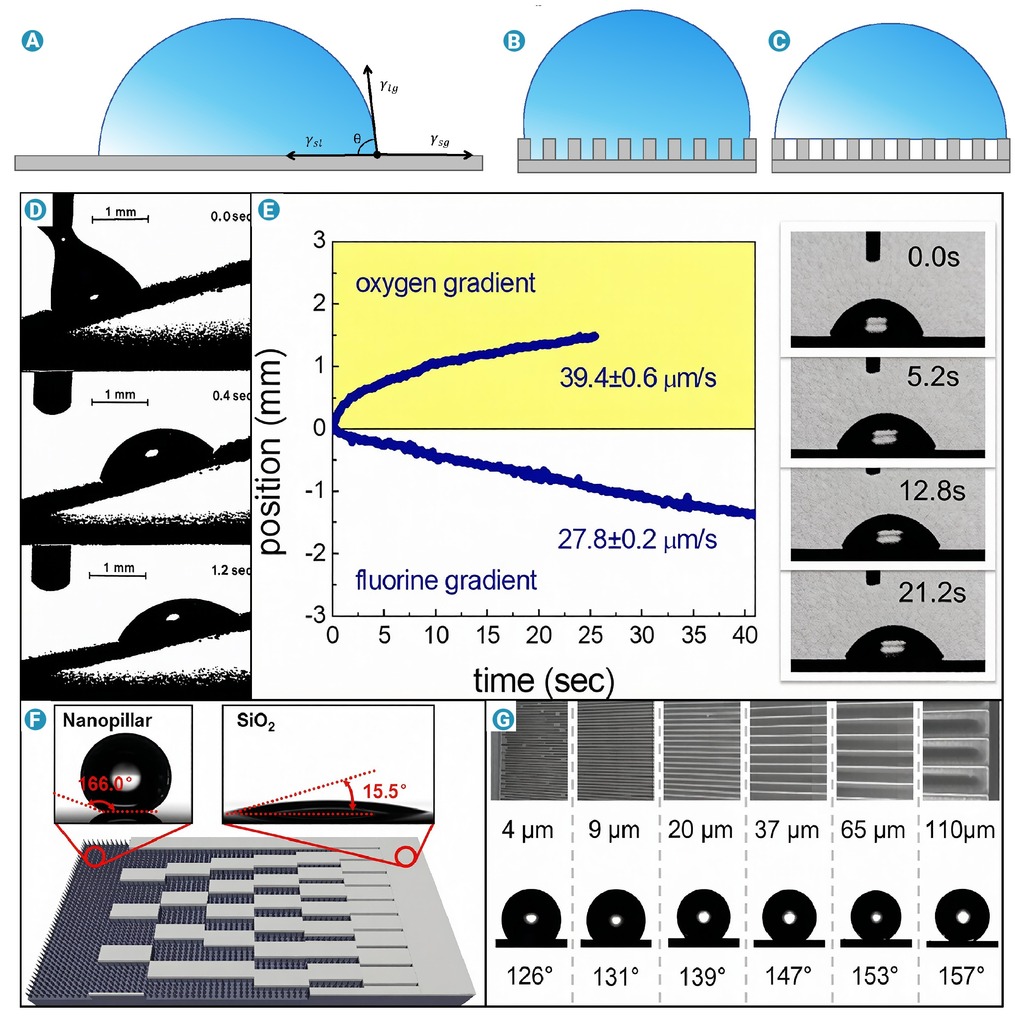
Figure 1.
Young’s equation and wetting configurations on rough surfaces and chemical gradients and roughness gradients that generate wettability gradients
-
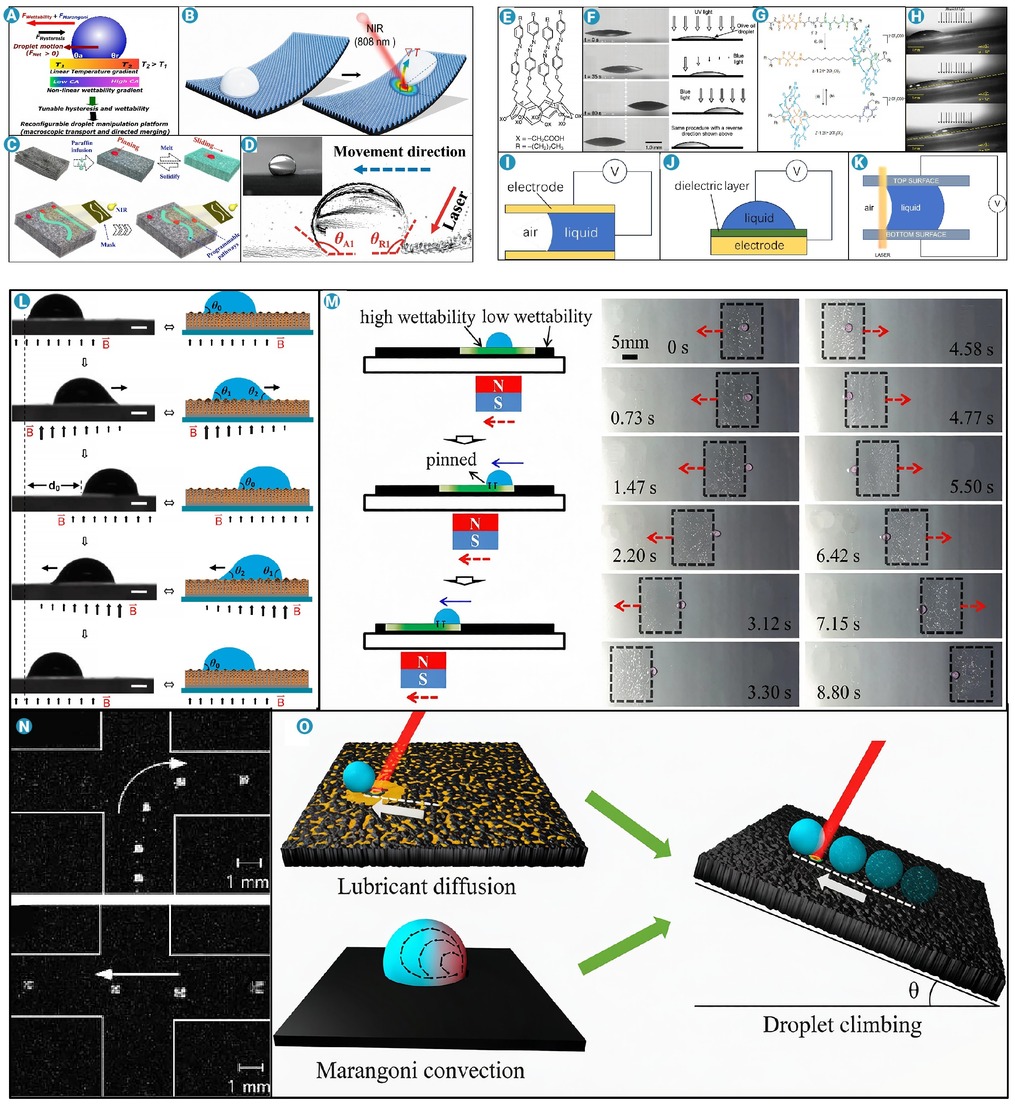
Figure 2.
Directional liquid transport produced by thermally induced wettability gradients, photoinduced wettability gradients, electrically induced wettability gradients, magnetically induced wettability gradients, and Marangoni-driven droplet motion
-
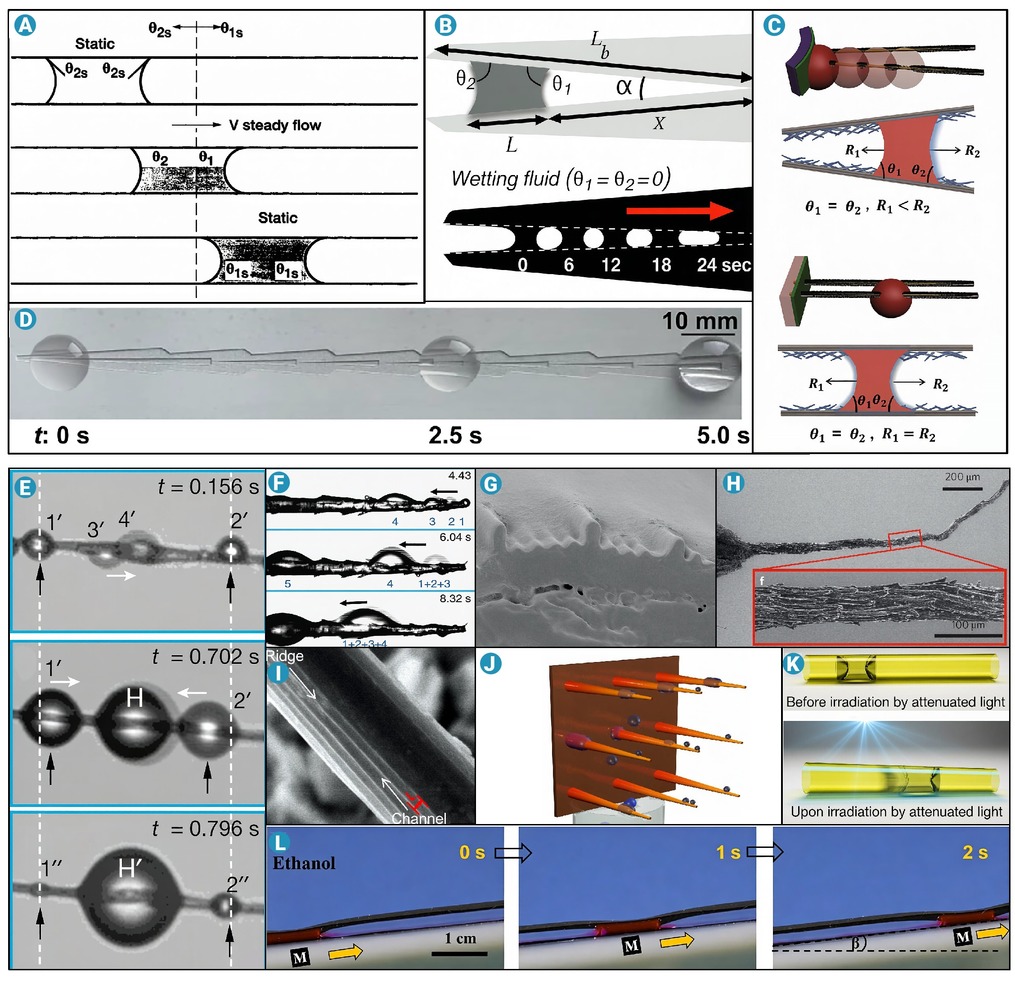
Figure 3.
Laplace pressure gradients generated by wettability and wedge geometry, and curvature-induced capillary transport in conical geometries
-
Figure 4.
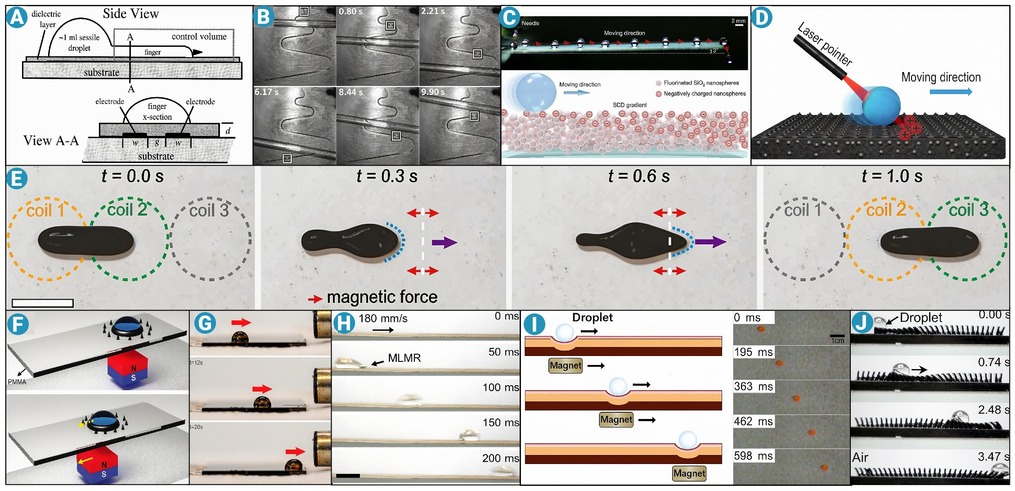
Directional liquid and droplet actuation by electric-field and magnetic-field forces
-
Figure 5.
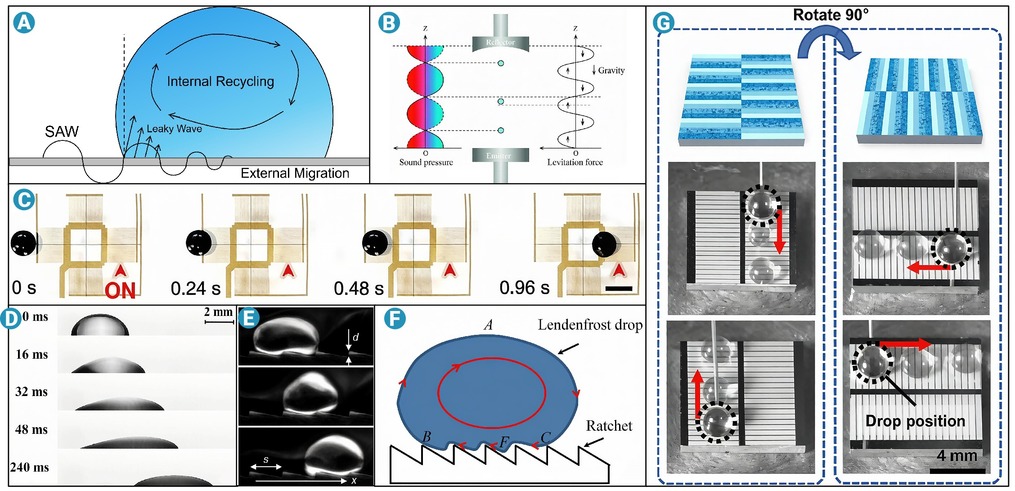
Droplet motion driven by sound and vibration, and by the Leidenfrost effect
-
Figure 6.
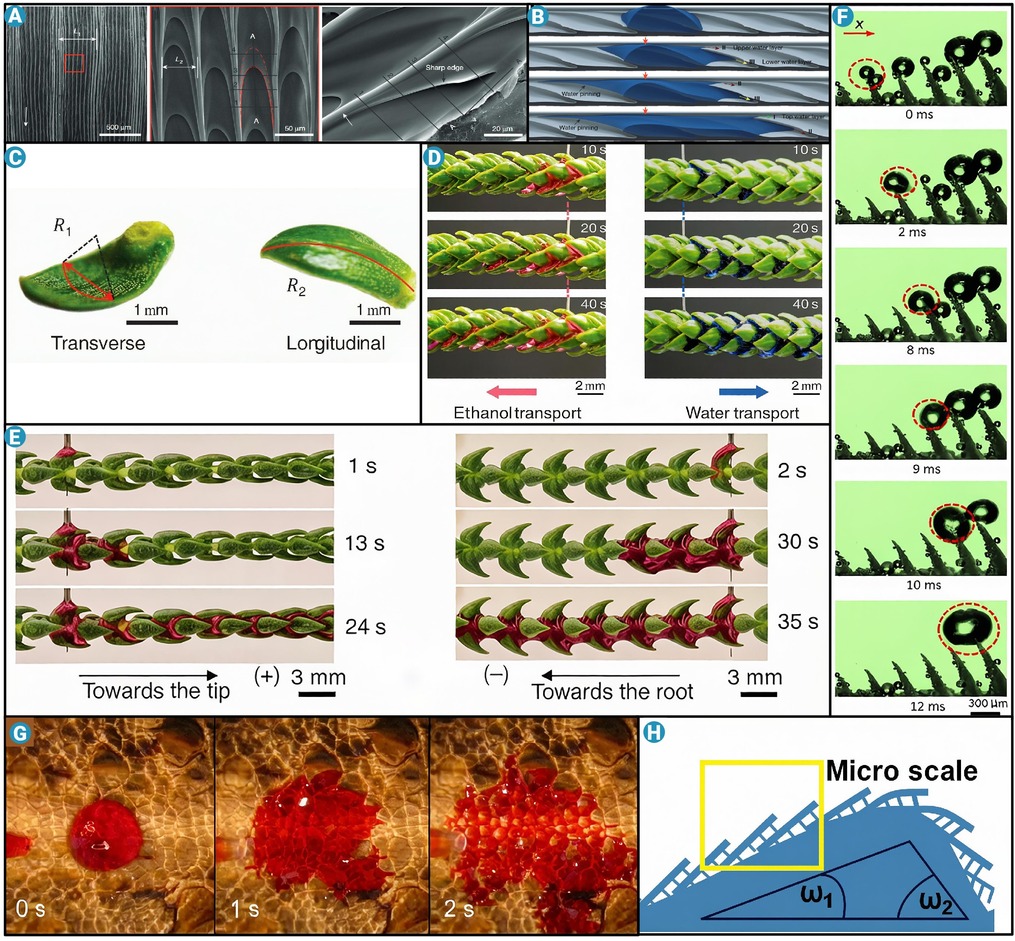
Biological anisotropic structures
-
Figure 7.
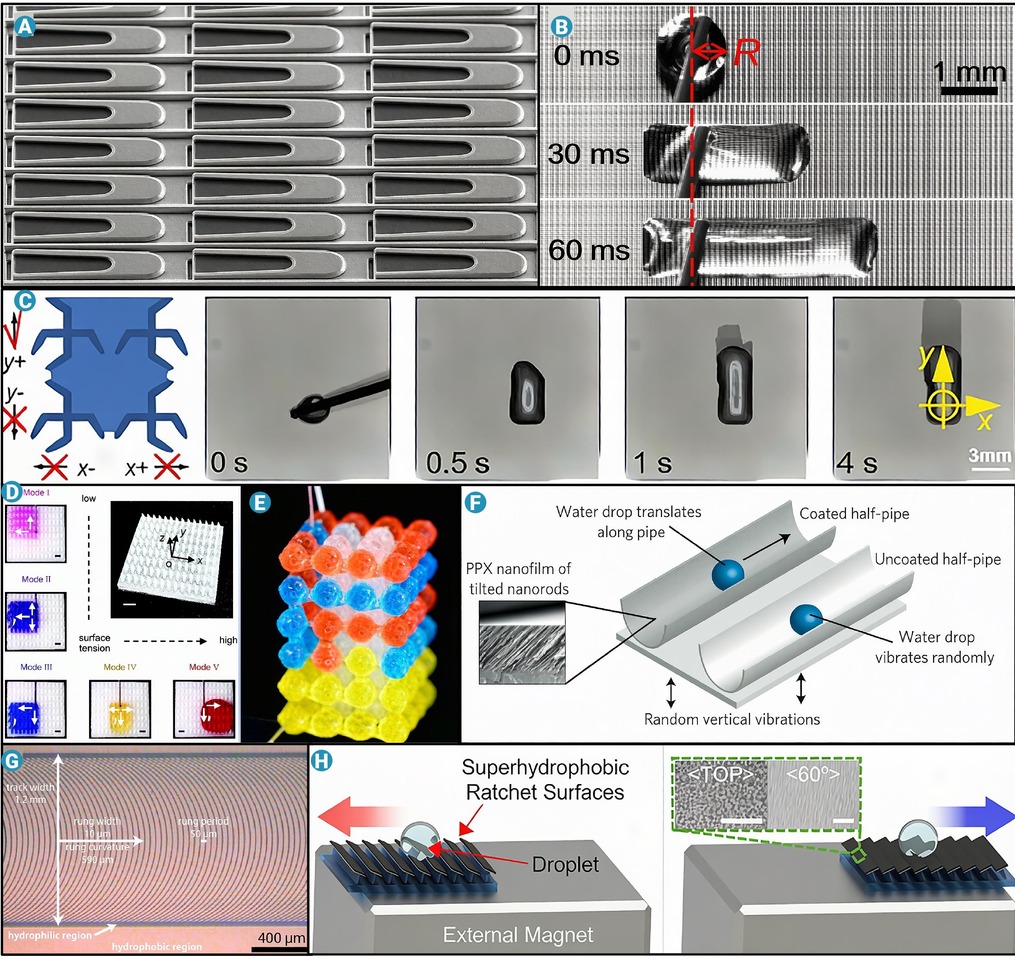
Artificial anisotropic structures
-
Figure 8.
Velocity–distance operating windows for directional liquid transport on solid surfaces: discrete droplets and continuous liquids/fronts
