
Soil moisture deficits amplify and prolong vegetation productivity losses under compound dry-hot extremes
-
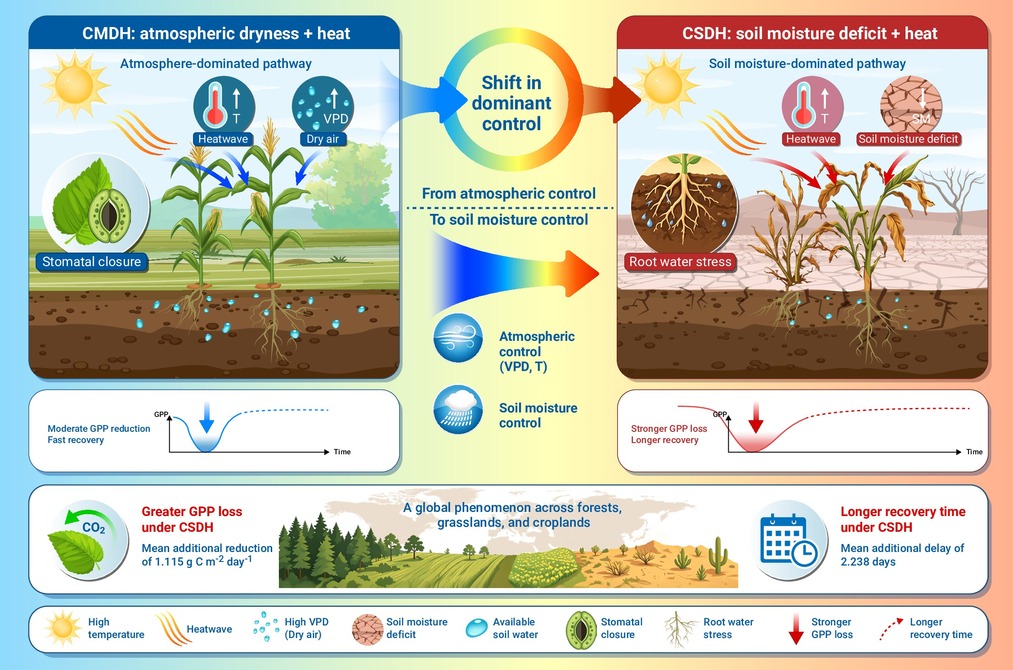
GRAPHICAL ABSTRACT
 DownLoad:
Full size image
DownLoad:
Full size image
-
PUBLIC SUMMARY
-
Soil-driven dry-hot events cause deeper GPP loss (−1.115 g·C·m−2·day−1) and slower recovery (+2.238 days).
Impacts of soil moisture deficits intensify over time, widening divergence from atmospheric-driven events.
Soil moisture control strengthens with event severity, aridity, and future warming scenarios.
-
-
ABSTRACT
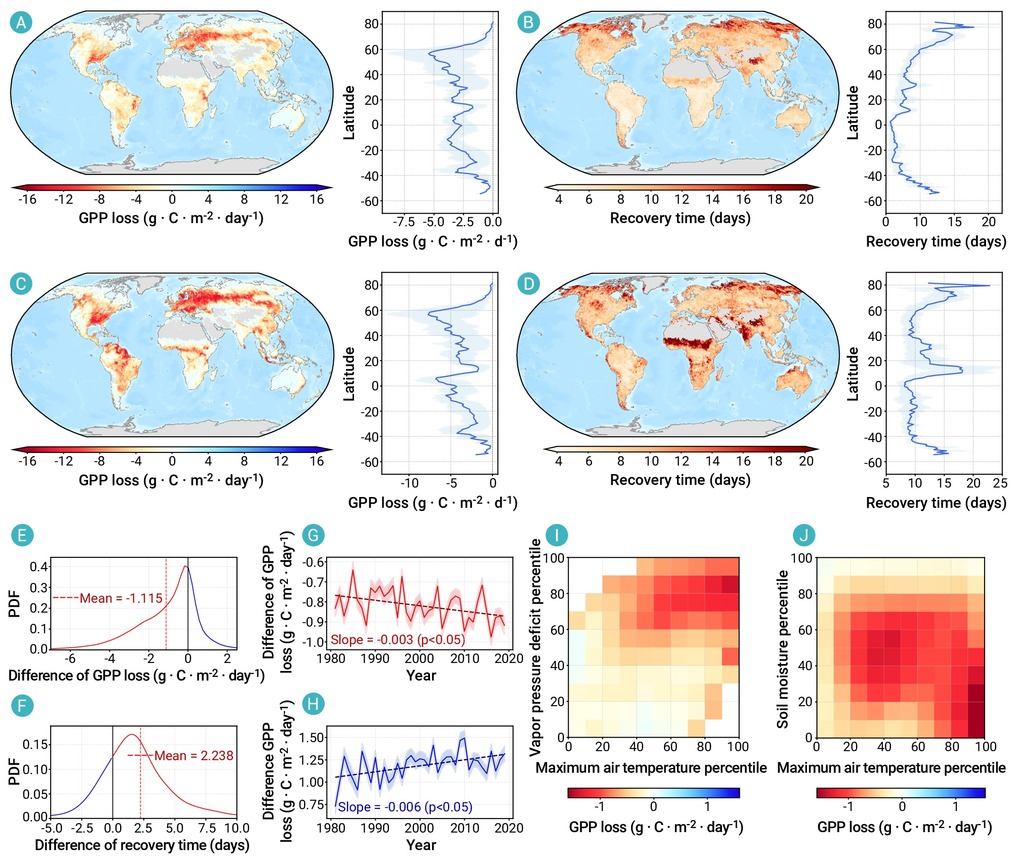
Compound dry-hot extremes have emerged as a major threat to terrestrial ecosystem productivity under climate change, yet their impacts are commonly interpreted through atmospheric conditions alone. Here we distinguish between compound meteorological dry-hot (CMDH) events, driven by atmospheric dryness and heat, and compound soil dry-hot (CSDH) events, in which soil moisture deficits coincide with heat, and assess their differential effects on global vegetation productivity. Integrating multiple gross primary productivity (GPP) datasets with climate variables, we quantify GPP loss and recovery time following CMDH and CSDH events. Globally, CSDH causes deeper productivity losses than CMDH, with a mean additional reduction of 1.115 g·C·m-2·day-1, and prolongs recovery by 2.238 days on average. These differences have intensified over recent decades, with CSDH-related GPP losses and recovery times diverging increasingly from CMDH. The dominance of soil-driven impacts is also shown to strengthen with event severity, climate aridity, and under future warming scenarios. Structural equation modeling and explainable machine learning further reveal a shift in controlling mechanisms from atmospheric demand under CMDH to soil moisture limitation under CSDH, explaining both deeper carbon losses and longer ecosystem memory. Our results demonstrate that soil-coupled compound dry-hot extremes exert a more persistent constraint on terrestrial productivity than atmospheric counterparts, highlighting soil moisture as a critical regulator of ecosystem resilience in a warming world. -

-
REFERENCES
[1] Gui Y., Wang K., Huntingford C., et al. (2025). Vegetation greenness in 2024. Nat. Rev. Earth Environ. 6:255−257. DOI:10.1038/s43017-025-00656-z [2] Anav A., Friedlingstein P., Beer C., et al. (2015). Spatiotemporal patterns of terrestrial gross primary production: A review. Rev. Geophys. 53:785−818. DOI:10.1002/2015rg000483 [3] Smith T., Traxl D. and Boers N. (2022). Empirical evidence for recent global shifts in vegetation resilience. Nat. Clim. Change 12:477−484. DOI:10.1038/s41558-022-01352-2 [4] Beer C., Reichstein M., Tomelleri E., et al. (2010). Terrestrial gross carbon dioxide uptake: Global distribution and covariation with climate. Science 329:834−838. DOI:10.1126/science.1184984 [5] Reichstein M., Bahn M., Ciais P., et al. (2013). Climate extremes and the carbon cycle. Nature 500:287−295. DOI:10.1038/nature12350 [6] Huang S., Wang S., Wang C., et al. (2025). Differential sensitivities of three types of compound drought and heatwave events to human-induced climate change across the globe. Weather Clim. Extremes 50. DOI:10.1016/j.wace.2025.100836 [7] AghaKouchak A., Chiang F., Huning L. S., et al. (2020). Climate extremes and compound hazards in a warming world. Annu. Rev. Earth Planet. Sci. 48:519−548. DOI:10.1146/annurev-earth-071719-055228 [8] Bastos A., Ciais P., Friedlingstein P., et al. Direct and seasonal legacy effects of the 2018 heat wave and drought on European ecosystem productivity. Sci. Adv. 6:eaba2724. DOI:10.1126/sciadv.aba2724 [9] Yao Y., Fu B., Liu Y., et al. (2024). Compound hot–dry events greatly prolong the recovery time of dryland ecosystems. Natl. Sci. Rev. 11:nwae274. DOI:10.1093/nsr/nwae274 [10] Yan W., Zhou J., Wang X., et al. (2025). Vegetation resistance to compound drought and heatwave events buffers the spatial shift velocities of vegetation vulnerability. Commun. Earth Environ. 6:320. DOI:10.1038/s43247-025-02298-x [11] Lin S., Chen X., Xia J., et al. (2025). Global vegetation production may decrease in this century due to rising atmospheric dryness. Nat. Ecol. Evol. 9:2279−2289. DOI:10.1038/s41559-025-02885-3 [12] Tripathy K. P., Mukherjee S., Mishra A. K., et al. (2023). Climate change will accelerate the high-end risk of compound drought and heatwave events. Proc. Natl. Acad. Sci. USA 120:e2219825120. DOI:10.1073/pnas.2219825120 [13] Zscheischler J., Westra S., van den Hurk B. J. J. M., et al. (2018). Future climate risk from compound events. Nat. Clim. Change 8:469−477. DOI:10.1038/s41558-018-0156-3 [14] Zscheischler J., Reichstein M., von Buttlar J., et al. (2014). Carbon cycle extremes during the 21st century in CMIP5 models: Future evolution and attribution to climatic drivers. Geophys. Res. Lett. 41:8853−8861. DOI:10.1002/2014gl062409 [15] Zhou S., Williams A. P., Berg A. M., et al. (2019). Land–atmosphere feedbacks exacerbate concurrent soil drought and atmospheric aridity. Proc. Natl. Acad. Sci. USA 116:18848−18853. DOI:10.1073/pnas.1904955116 [16] Zhang G., Zhang S., Wang H., et al. (2024). Biodiversity and wetting of climate alleviate vegetation vulnerability under compound drought‐hot extremes. Geophys. Res. Lett. 51:e2024GL108396. DOI:10.1029/2024gl108396 [17] Li J., Zhang Y., Bevacqua E., et al. (2024). Future increase in compound soil drought-heat extremes exacerbated by vegetation greening. Nat. Commun. 15:10875. DOI:10.1038/s41467-024-55175-0 [18] Piao S., Wang X., Park T., et al. (2019). Characteristics, drivers and feedbacks of global greening. Nat. Rev. Earth Environ. 1:14−27. DOI:10.1038/s43017-019-0001-x [19] Seneviratne S., Nicholls N., Easterling D., et al. (2012). Changes in climate extremes and their impacts on the natural physical environment. Field C.B., Barros V., Stocker T.F., Qin D. (eds). Managing the risks of extreme events and disasters to advance climate change adaptation: Special report of the intergovernmental panel on climate change. (Cambridge University Press), pp:109-230. DOI:10.1017/CBO9781139177245.006 [20] Seneviratne S. I., Corti T., Davin E. L., et al. (2010). Investigating soil moisture–climate interactions in a changing climate: A review. Earth-Sci. Rev. 99:125−161. DOI:10.1016/j.earscirev.2010.02.004 [21] Yuan W., Zheng Y., Piao S., et al. (2019). Increased atmospheric vapor pressure deficit reduces global vegetation growth. Sci. Adv. 5:eaax1396. DOI:10.1126/sciadv.aax1396 [22] Lian X., Li Y., Liu J., et al. (2025). Northern ecosystem productivity reduced by Rossby-wave-driven hot–dry conditions. Nat. Geosci. 18:615−623. DOI:10.1038/s41561-025-01722-3 [23] Huang M. and Zhai P. (2025). Protracted vegetation recovery after compound drought and hot extreme compared to general drought. Environ. Res. Lett. 20:024001. DOI:10.1088/1748-9326/ada4c3 [24] Liu Z., Jiao L. and Lian X. (2025). Changes in compound extreme events and their impacts on cropland productivity in China, 1985–2019. Earths Future 13:e2024EF005038. DOI:10.1029/2024ef005038 [25] Wu R., Wang Z., Meng F., et al. (2025). Strengthening coupling between vegetation and soil‐atmosphere compound drought over the past two decades. Earths Future 13:e2025EF006311. DOI:10.1029/2025ef006311 [26] Hughes T. P., Kerry J. T., Connolly S. R., et al. (2018). Ecological memory modifies the cumulative impact of recurrent climate extremes. Nat. Clim. Change 9:40−43. DOI:10.1038/s41558-018-0351-2 [27] Wang T., Zhang J., Li Z., et al. (2025). Roles of soil and atmospheric dryness on terrestrial vegetation productivity in China-which dominates at what thresholds. Earths Future 13:e2024EF005469. DOI:10.1029/2024ef005469 [28] Zhao D., Zhang Z. and Zhang Y. (2023). Soil moisture dominates the forest productivity decline during the 2022 China compound drought‐heatwave event. Geophys. Res. Lett. 50:e2023GL104539. DOI:10.1029/2023gl104539 [29] Zscheischler J., Martius O., Westra S., et al. (2020). A typology of compound weather and climate events. Nat. Rev. Earth Environ. 1:333−347. DOI:10.1038/s43017-020-0060-z [30] Zhou S., Zhang Y., Park Williams A., et al. (2019). Projected increases in intensity, frequency, and terrestrial carbon costs of compound drought and aridity events. Sci. Adv. 5:eaau5740. DOI:10.1126/sciadv.aau5740 [31] Byrne M. P. and O’Gorman P. A. (2018). Trends in continental temperature and humidity directly linked to ocean warming. Proc. Natl. Acad. Sci. USA 115:4863−4868. DOI:10.1073/pnas.1722312115 [32] Zhou S., Williams A. P., Lintner B. R., et al. (2021). Soil moisture–atmosphere feedbacks mitigate declining water availability in drylands. Nat. Clim. Change 11:38−44. DOI:10.1038/s41558-020-00945-z [33] He Q., Ju W., Dai S., et al. (2021). Drought risk of global terrestrial gross primary productivity over the last 40 years detected by a remote sensing‐driven process model. J. Geophys. Res. Biogeosci. 126:e2020JG005944. DOI:10.1029/2020jg005944 [34] Joiner, J., and Y. Yoshida. (2021). Global MODIS and FLUXNET-derived daily gross primary production, V2. ORNL DAAC, Oak Ridge, Tennessee, USA. DOI:10.3334/ORNLDAAC/1835. [35] Li X. and Xiao J. (2019). Mapping photosynthesis solely from solar-induced chlorophyll fluorescence: A global, fine-resolution dataset of gross primary production derived from OCO-2. Remote Sens. 11:2563. DOI:10.3390/rs11212563 [36] Wild B., Teubner I., Moesinger L., et al. (2022). VODCA2GPP – a new, global, long-term (1988–2020) gross primary production dataset from microwave remote sensing. Earth Syst. Sci. Data 14:1063−1085. DOI:10.5194/essd-14-1063-2022 [37] Wang S., Zhang Y., Ju W., et al. (2021). Tracking the seasonal and inter-annual variations of global gross primary production during last four decades using satellite near-infrared reflectance data. Sci. Total Environ. 755:142569. DOI:10.1016/j.scitotenv.2020.142569 [38] Muñoz-Sabater J., Dutra E., Agustí-Panareda A., et al. (2021). ERA5-Land: A state-of-the-art global reanalysis dataset for land applications. Earth Syst. Sci. Data 13:4349−4383. DOI:10.5194/essd-13-4349-2021 [39] Beck H. E., Zimmermann N. E., McVicar T. R., et al. (2018). Present and future Köppen-Geiger climate classification maps at 1-km resolution. Sci. Data 5:180214. DOI:10.1038/sdata.2018.214 [40] Yin J., Gentine P., Slater L., et al. (2023). Future socio-ecosystem productivity threatened by compound drought–heatwave events. Nat. Sustain. 6:259−272. DOI:10.1038/s41893-022-01024-1 [41] Zhang X., Hegerl G., Zwiers F. W., et al. (2005). Avoiding inhomogeneity in percentile-based indices of temperature extremes. J. Clim. 18:1641−1651. DOI:10.1175/JCLI3366.1 [42] Liu L., Gudmundsson L., Hauser M., et al. (2019). Revisiting assessments of ecosystem drought recovery. Environ. Res. Lett. 14:114028. DOI:10.1088/1748-9326/ab4c61 [43] Ben Alaya M. A., Chebana F. and Ouarda T. B. M. J. (2014). Probabilistic gaussian copula regression model for multisite and multivariable downscaling. J. Clim. 27:3331−3347. DOI:10.1175/JCLI-D-13-00333.1 [44] Suo N., Xu C., Cao L., et al. (2024). A copula-based parametric composite drought index for drought monitoring and applicability in arid Central Asia. Catena 235:107624. DOI:10.1016/j.catena.2023.107624 [45] Zhang G., Zhang S., Wang H., et al. (2024). Evaluating vegetation vulnerability under compound dry and hot conditions using vine copula across global lands. J. Hydrol. 631:130775. DOI:10.1016/j.jhydrol.2024.130775 [46] Yao Y., Liu Y., Zhou S., et al. (2023). Soil moisture determines the recovery time of ecosystems from drought. Global Change Biol. 29:3562−3574. DOI:10.1111/gcb.16620 [47] Novick K. A., Ficklin D. L., Stoy P. C., et al. (2016). The increasing importance of atmospheric demand for ecosystem water and carbon fluxes. Nat. Clim. Change 6:1023−1027. DOI:10.1038/nclimate3114 [48] Kannenberg S. A., Novick K. A., Alexander M. R., et al. (2019). Linking drought legacy effects across scales: From leaves to tree rings to ecosystems. Global Change Biol. 25:2978−2992. DOI:10.1111/gcb.14710 [49] Stocker B. D., Tumber-Dávila S. J., Konings A. G., et al. (2023). Global patterns of water storage in the rooting zones of vegetation. Nat. Geosci. 16:250−256. DOI:10.1038/s41561-023-01125-2 [50] Stocker B. D., Zscheischler J., Keenan T. F., et al. (2018). Quantifying soil moisture impacts on light use efficiency across biomes. New Phytol. 218:1430−1449. DOI:10.1111/nph.15123 [51] Humphrey V., Berg A., Ciais P., et al. (2021). Soil moisture–atmosphere feedback dominates land carbon uptake variability. Nature 592:65−69. DOI:10.1038/s41586-021-03325-5 [52] Green J. K., Seneviratne S. I., Berg A. M., et al. (2019). Large influence of soil moisture on long-term terrestrial carbon uptake. Nature 565:476−479. DOI:10.1038/s41586-018-0848-x [53] Massmann A., Gentine P. and Lin C. (2019). When does vapor pressure deficit drive or reduce evapotranspiration. J. Adv. Model. Earth Syst. 11:3305−3320. DOI:10.1029/2019ms001790 [54] Collins D. B. G. and Bras R. L. (2007). Plant rooting strategies in water‐limited ecosystems. Water Resour. Res. 43:W06407. DOI:10.1029/2006wr005541 [55] Fan Y., Miguez-Macho G., Jobbágy E. G., et al. (2017). Hydrologic regulation of plant rooting depth. Proc. Natl. Acad. Sci. USA 114:10572−10577. DOI:10.1073/pnas.1712381114 [56] Berner L. T., Beck P. S. A., Bunn A. G., et al. (2013). Plant response to climate change along the forest‐tundra ecotone in northeastern Siberia. Global Change Biol. 19:3449−3462. DOI:10.1111/gcb.12304 [57] Xu L., Myneni R. B., Chapin Iii F. S., et al. (2013). Temperature and vegetation seasonality diminishment over northern lands. Nat. Clim. Change 3:581−586. DOI:10.1038/nclimate1836 [58] Richardson A. D., Keenan T. F., Migliavacca M., et al. (2013). Climate change, phenology, and phenological control of vegetation feedbacks to the climate system. Agric. For. Meteorol. 169:156−173. DOI:10.1016/j.agrformet.2012.09.012 [59] Maxwell R. M. and Condon L. E. (2016). Connections between groundwater flow and transpiration partitioning. Science 353:377−380. DOI:10.1126/science.aaf7891 [60] Orth R. and Seneviratne S. I. (2012). Analysis of soil moisture memory from observations in Europe. J. Geophys. Res. Atmos. 117:D15115. DOI:10.1029/2011jd017366 [61] Han Y., Qu Y., Jiang T., et al. (2025). Ecosystems resilience assessment of forest and grassland subjected to ecological drought. Ecol. Indic. 173:113437. DOI:10.1016/j.ecolind.2025.113437 [62] Wilcox K. R., Shi Z., Gherardi L. A., et al. (2017). Asymmetric responses of primary productivity to precipitation extremes: A synthesis of grassland precipitation manipulation experiments. Global Change Biol. 23:4376−4385. DOI:10.1111/gcb.13706 [63] Grossiord C., Buckley T. N., Cernusak L. A., et al. (2020). Plant responses to rising vapor pressure deficit. New Phytol. 226:1550−1566. DOI:10.1111/nph.16485 [64] McDowell N., Pockman W. T., Allen C. D., et al. (2008). Mechanisms of plant survival and mortality during drought: Why do some plants survive while others succumb to drought. New Phytol. 178:719−739. DOI:10.1111/j.1469-8137.2008.02436.x [65] Anderegg W. R. L., Kane J. M. and Anderegg L. D. L. (2012). Consequences of widespread tree mortality triggered by drought and temperature stress. Nat. Clim. Change 3:30−36. DOI:10.1038/nclimate1635 [66] Anderegg W. R. L., Schwalm C., Biondi F., et al. (2015). Pervasive drought legacies in forest ecosystems and their implications for carbon cycle models. Science 349:528−532. DOI:10.1126/science.aab1833 [67] Peltier D. M. P. and Ogle K. (2019). Legacies of more frequent drought in ponderosa pine across the western United States. Global Change Biol. 25:3803−3816. DOI:10.1111/gcb.14720 [68] Chen Z., Qian Z., Huang B., et al. (2025). Increased drought impacts on vegetation productivity in drylands under climate change. Geophys. Res. Lett. 52:e2025GL115616. DOI:10.1029/2025gl115616 [69] Bai Y. H., Chen J., Zhang Y. W., et al. (2025). Response modes of global vegetation to extreme drought. Global Change Biol. 31:e70488. DOI:10.1111/gcb.70488 [70] Urban J., Ingwers M., McGuire M. A., et al. (2017). Stomatal conductance increases with rising temperature. Plant Signaling Behav. 12:e1356534. DOI:10.1080/15592324.2017.1356534 [71] Keenan T. F., Gray J., Friedl M. A., et al. (2014). Net carbon uptake has increased through warming-induced changes in temperate forest phenology. Nat. Clim. Change 4:598−604. DOI:10.1038/nclimate2253 [72] Jeong S.-J., Ho C.-H., Gim H.-J., et al. (2011). Phenology shifts at start vs. end of growing season in temperate vegetation over the Northern Hemisphere for the period 1982-2008. Global Change Biol. 17:2385-2399. DOI:10.1111/j.1365-2486.2011.02397.x [73] Barnett T. P., Adam J. C. and Lettenmaier D. P. (2005). Potential impacts of a warming climate on water availability in snow-dominated regions. Nature 438:303−309. DOI:10.1038/nature04141 [74] Shi W., Zhang K., Huang S., et al. (2025). Widespread declining sensitivity of terrestrial gross primary productivity to compound dry-hot extremes in China. J. Hydrol. 660:133387. DOI:10.1016/j.jhydrol.2025.133387 [75] Liu Z., Jiao L. and Lian X. (2025). Impacts of increasing compound hot-dry events on vegetation under the warming-wetting trend in Northwest China. Geogr. Sustain. 6:100222. DOI:10.1016/j.geosus.2024.08.003 [76] Jiao T., Williams C. A., De Kauwe M. G., et al. (2021). Patterns of post-drought recovery are strongly influenced by drought duration, frequency, post-drought wetness, and bioclimatic setting. Global Change Biol. 27:4630−4643. DOI:10.1111/gcb.15788 [77] Liang Y., Wang J., Hao Z., et al. (2026). Anthropogenically-driven escalating impact of soil-based compound dry-hot extremes on vegetation productivity. Nat. Commun. 17:2303. DOI:10.1038/s41467-026-68878-3 [78] Guan Y., Gu X., Dai A., et al. (2025). Anthropogenic enhancement of subsurface soil moisture droughts. Nat. Clim. Change 15:1355−1362. DOI:10.1038/s41558-025-02458-z [79] Allen C. D., Macalady A. K., Chenchouni H., et al. (2010). A global overview of drought and heat-induced tree mortality reveals emerging climate change risks for forests. For. Ecol. Manage. 259:660−684. DOI:10.1016/j.foreco.2009.09.001 -
ABOUT THIS ARTICLE
Cite this article:
Huang S., Wang S., Wang C., et al. (2026). Soil moisture deficits amplify and prolong vegetation productivity losses under compound dry-hot extremes. The Innovation Geoscience 4:100235. https://doi.org/10.59717/j.xinn-geo.2026.100235
Welcome!
To request copyright permission to republish or share portions of our works, please visit Copyright Clearance Center's (CCC) Marketplace website at marketplace.copyright.com.
Export File
Citation
Huang S., Wang S., Wang C., et al. (2026). Soil moisture deficits amplify and prolong vegetation productivity losses under compound dry-hot extremes. The Innovation Geoscience 4:100235. https://doi.org/10.59717/j.xinn-geo.2026.100235

Format
Content
-
Figure 1.
Distributions and differences of GPP loss and recovery time under CMDH and CSDH
-
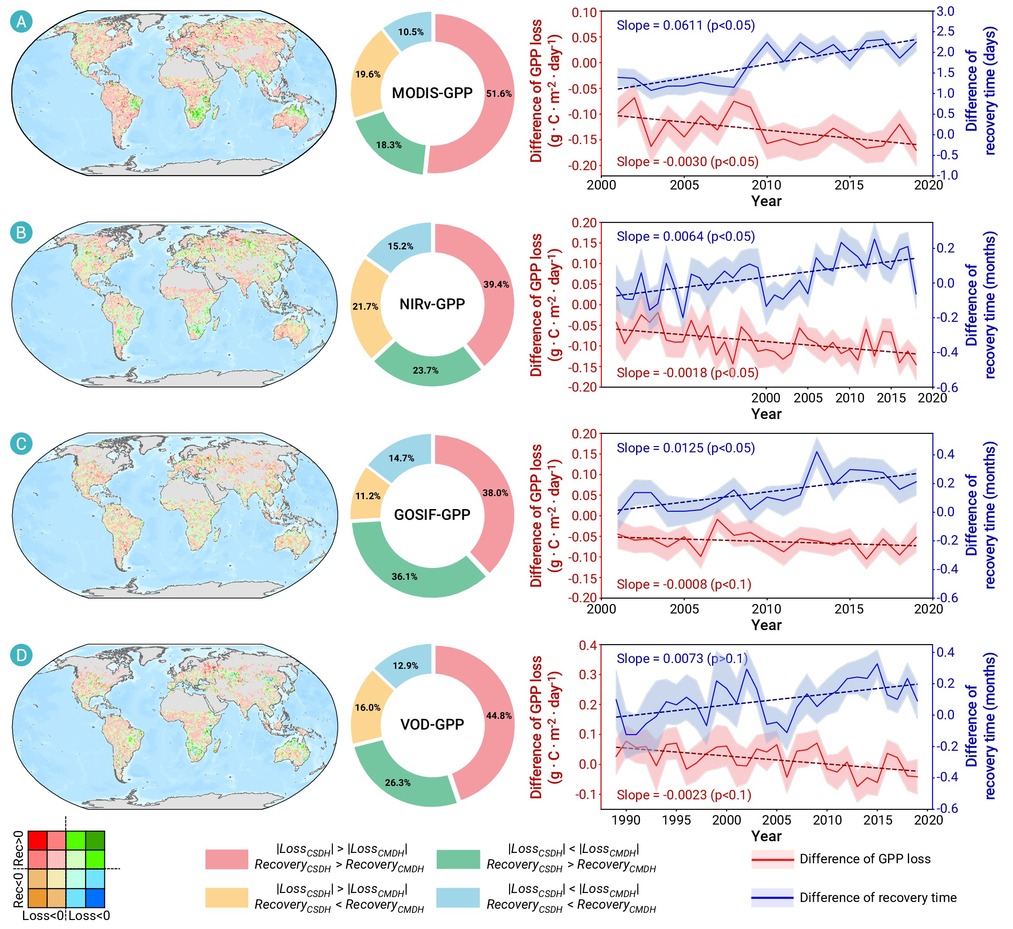
Figure 2.
Spatio-temporal heterogeneity in GPP responses to CMDH and CSDH across multiple GPP products
-
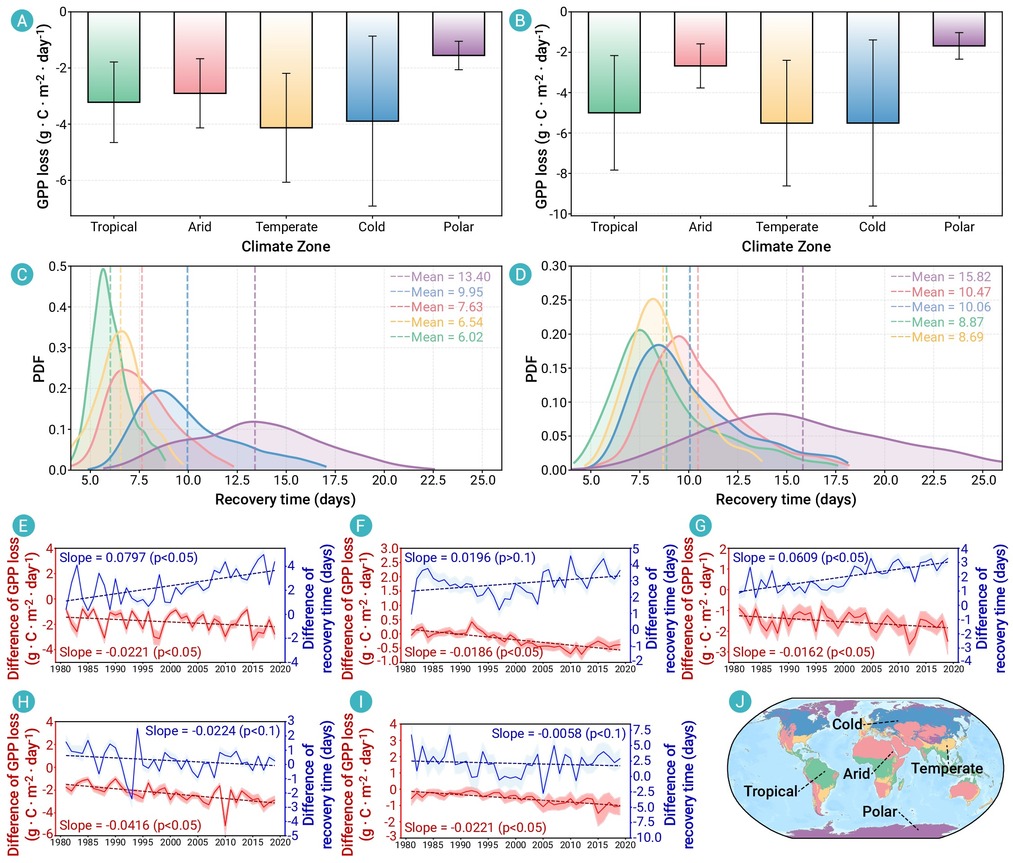
Figure 3.
Distributions and long-term trends of CMDH- and CSDH-induced GPP loss and recovery time across five Köppen-Geiger climate zones
-
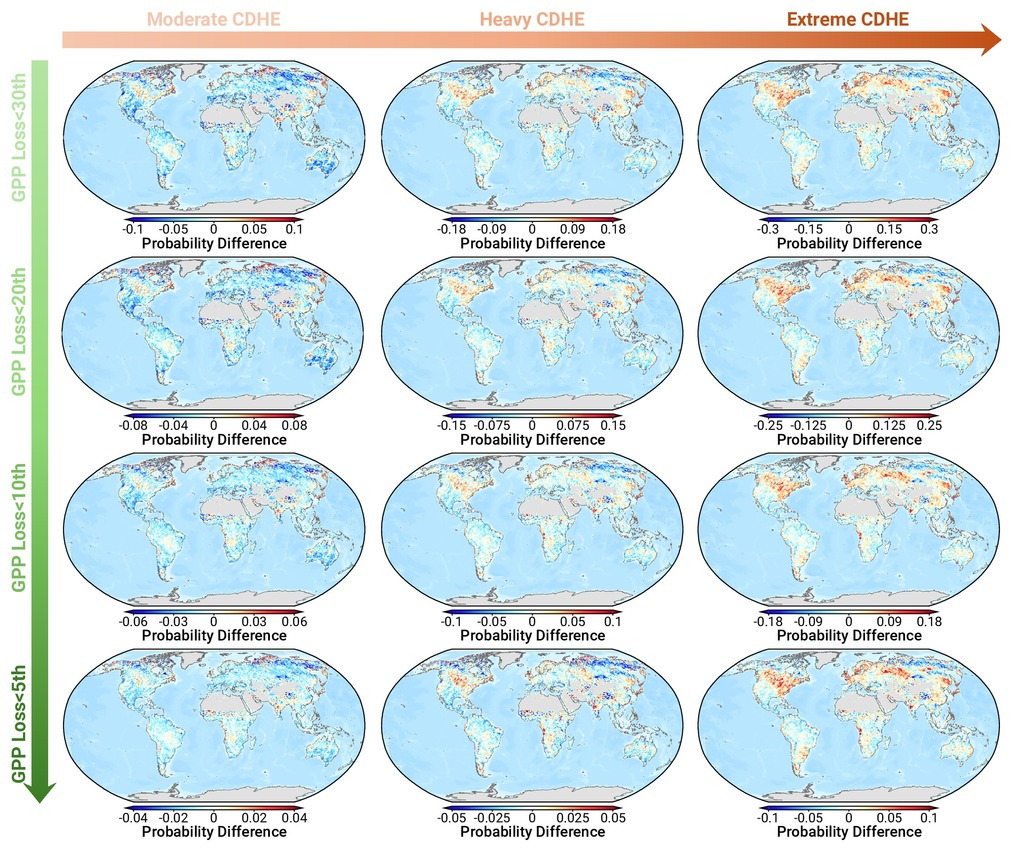
Figure 4.
Spatial patterns of probability differences in GPP loss between CSDH and CMDH across increasing compound dry-hot event severity
-
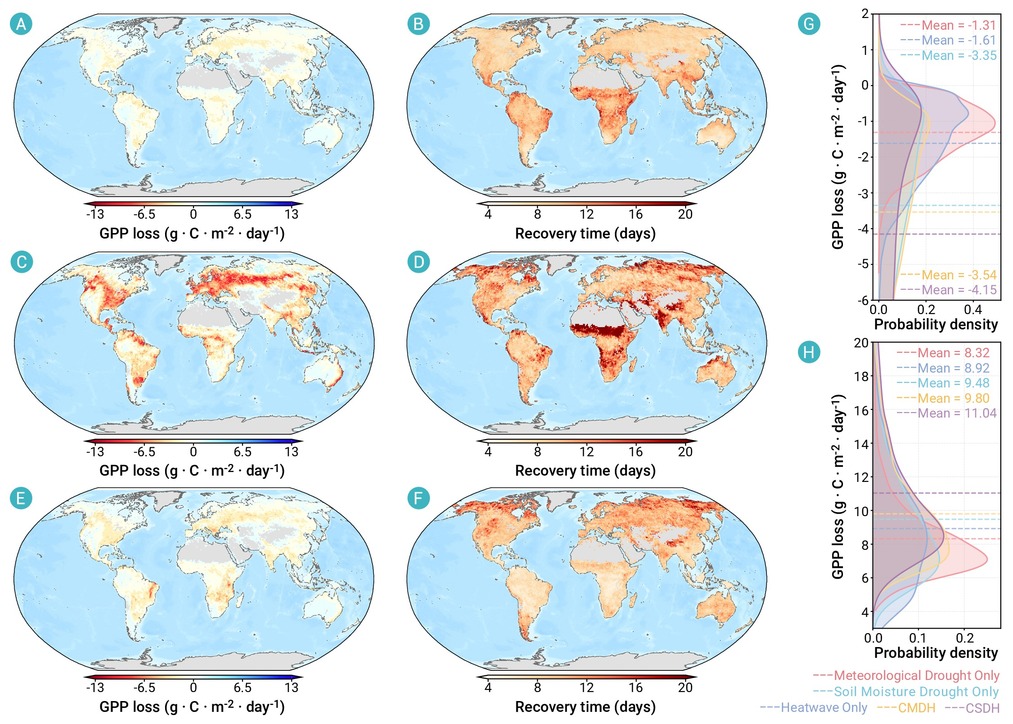
Figure 5.
Comparison between compound and individual extremes
-
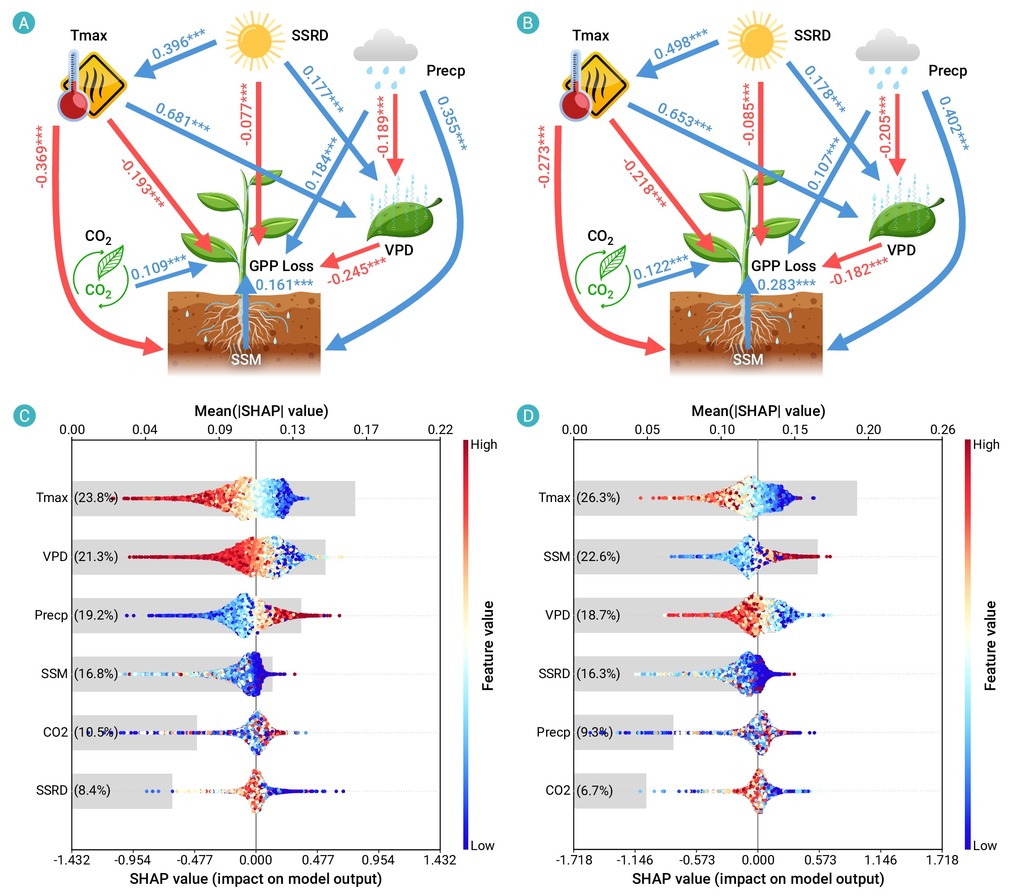
Figure 6.
Attribution of CMDH- and CSDH-induced GPP loss based on SEM and SHAP analyses
-
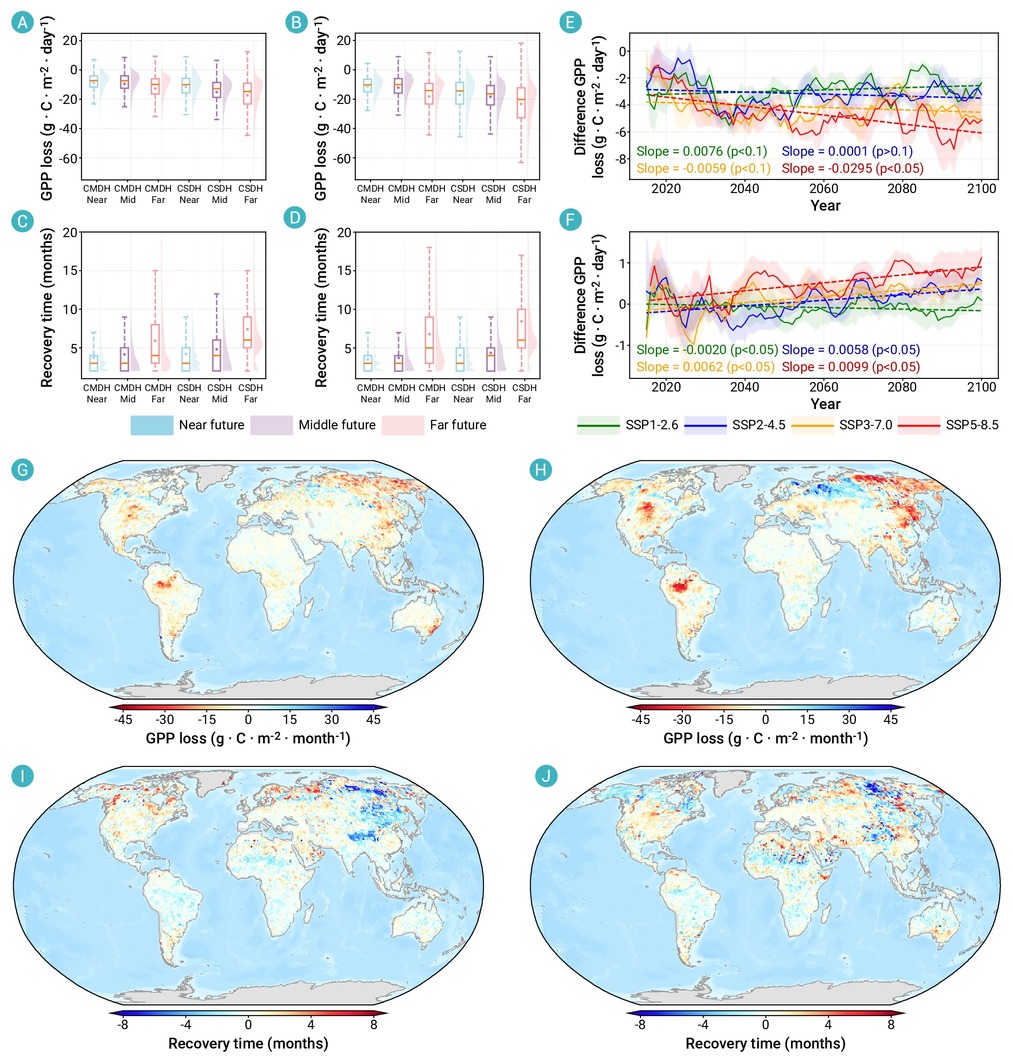
Figure 7.
Projected changes in GPP loss and recovery under CMDH and CSDH across future climate scenarios
