
A fully autonomous UAV system for process-aware construction monitoring via few-shot learning
-
GRAPHICAL ABSTRACT

 DownLoad:
Full size image
-
PUBLIC SUMMARY
-
A new paradigm for construction progress sensing driven by few-shot learning.
Construction progress monitoring still relies heavily on manual inspection and site observations.
We develop a fully autonomous UAV system for process-aware monitoring using few-shot learning.
The ViT-based framework integrates viewpoint classification, ROI detection, and process recognition.
Real-world deployment achieves accurate monitoring and enables data-driven construction progress management.
-
-
ABSTRACT
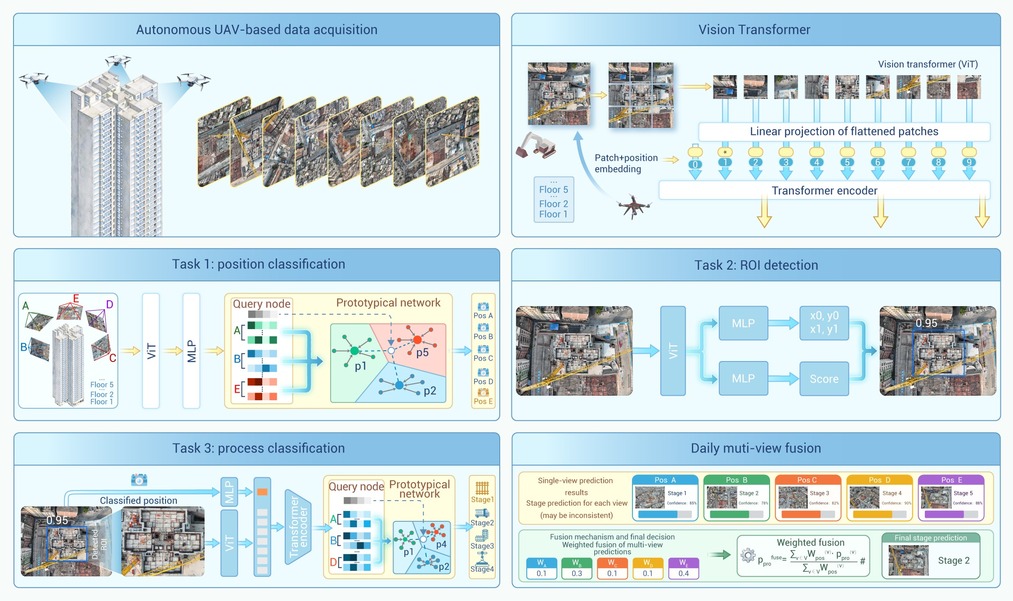
Construction progress monitoring is critical for schedule control and project management, yet reliable site perception remains challenging due to dynamic environments, limited annotated data, and the high cost of manual inspection. Conventional rule-based or geometry-driven methods often lack robustness under complex site conditions, while fully supervised deep learning approaches require large labeled datasets that are rarely available in practice. To address this challenge, we develop a fully autonomous UAV system for process-aware construction monitoring via few-shot learning. The system integrates a dock-enabled UAV platform that autonomously performs takeoff, landing, charging, and data transmission, enabling persistent and repeatable aerial observation without on-site human intervention. UAV imagery is analyzed through a multi-stage recognition framework that combines camera viewpoint classification, region-of-interest detection, and process recognition within a Vision Transformer–Prototypical Network architecture. A daily multi-view fusion strategy further aggregates complementary observations from multiple viewpoints to produce stable progress estimates. The system is deployed on a 32-story residential project and evaluated using a five-month multi-view UAV dataset. With only limited annotations from early construction stages, the few-shot framework generalizes effectively to unseen floors, achieving 95.62% daily-level accuracy and a 93.83% F1-score after multi-view fusion across four representative workflows. During deployment, comparison of actual progress with the baseline schedule indicated a reduction of 21 working days in schedule delay, equivalent to approximately 14% of the planned project duration. -

-
REFERENCES
[1] Xu S., Wang J., Shou W., et al. (2021). Computer vision techniques in construction: A critical review. Arch. Comput. Methods Eng. 28:3383−3397. DOI:10.1007/s11831-020-09504-3 [2] Nakanishi Y., Kaneta T. and Nishino S. (2022). A review of monitoring construction equipment in support of construction project management. Front. Built Environ. 7:632593. DOI:10.3389/fbuil.2021.632593 [3] Kim P., Price L.C., Park J., et al. (2019). UAV-UGV cooperative 3D environmental mapping. In Computing in Civil Engineering 2019 (American Society of Civil Engineers), pp:384–392. DOI:10.1061/9780784482438.049 [4] Rao A.S., Radanovic M., Liu Y., et al. (2022). Real-time monitoring of construction sites: Sensors, methods, and applications. Autom. Constr. 136:104099. DOI:10.1016/j.autcon.2021.104099 [5] Zhang Z. and Zhu L. (2023). A review on unmanned aerial vehicle remote sensing: Platforms, sensors, data processing methods, and applications. Drones 7:398. DOI:10.3390/drones7060398 [6] Xiong B., Han S., Messerschmidt T.C., et al. (2024). Early detection of invasive Phragmites australis at the tidal marsh-forest ecotone with airborne LiDAR. Ecol. Indic. 167:112651. DOI:10.1016/j.ecolind.2024.112651 [7] Zhang J. and Jiang S. (2026). Review of artificial intelligence applications in construction management over the last five years. Eng. Constr. Archit. Manag. 33:361−379. DOI:10.1108/ECAM-03-2024-0313 [8] Kim J. and Chi S. (2020). Multi-camera vision-based productivity monitoring of earthmoving operations. Autom. Constr. 112:103121. DOI:10.1016/j.autcon.2020.103121 [9] Luo H., Xiong C., Fang W., et al. (2018). Convolutional neural networks: Computer vision-based workforce activity assessment in construction. Autom. Constr. 94:282−289. DOI:10.1016/j.autcon.2018.06.007 [10] Xiong B., Jin Y., Li F., et al. (2023). Knowledge-driven inference for automatic reconstruction of indoor detailed as-built BIMs from laser scanning data. Autom. Constr. 156:105097. DOI:10.1016/j.autcon.2023.105097 [11] Wei W., Lu Y., Zhang X., et al. (2024). Fine-grained progress tracking of prefabricated construction based on component segmentation. Autom. Constr. 160:105329. DOI:10.1016/j.autcon.2024.105329 [12] Rezazadeh Azar E. (2017). Semantic annotation of videos from equipment-intensive construction operations by shot recognition and probabilistic reasoning. J. Comput. Civ. Eng. 31:04017042. DOI:10.1061/(ASCE)CP.1943-5487.0000693 [13] Han K.K. and Golparvar-Fard M. (2017). Potential of big visual data and building information modeling for construction performance analytics: An exploratory study. Autom. Constr. 73:184−198. DOI:10.1016/j.autcon.2016.11.004 [14] Han J.-Y., Hsu C.-R. and Huang C.-J. (2024). Automated progress monitoring of land development projects using unmanned aerial vehicles and machine learning. Autom. Constr. 168:105827. DOI:10.1016/j.autcon.2024.105827 [15] Han M., Zhang J., Huang Y., et al. (2025). Enhancing worker monitoring and management on large-scale construction sites with UAVs and digital twin modeling. Autom. Constr. 174:106108. DOI:10.1016/j.autcon.2025.106108 [16] Paneru S. and Jeelani I. (2021). Computer vision applications in construction: Current state, opportunities & challenges. Autom. Constr. 132:103940. DOI:10.1016/j.autcon.2021.103940 [17] Arashpour M., Ngo T. and Li H. (2021). Scene understanding in construction and buildings using image processing methods: A comprehensive review and a case study. J. Build. Eng. 33:101672. DOI:10.1016/j.jobe.2020.101672 [18] Braun A. and Borrmann A. (2019). Combining inverse photogrammetry and BIM for automated labeling of construction site images for machine learning. Autom. Constr. 106:102879. DOI:10.1016/j.autcon.2019.102879 [19] Asadi K., Suresh A.K., Ender A., et al. (2020). An integrated UGV-UAV system for construction site data collection. Autom. Constr. 112:103068. DOI:10.1016/j.autcon.2019.103068 [20] Ersoz A.B. and Pekcan O. (2025). UAV-based automated earthwork progress monitoring using deep learning with image inpainting. Autom. Constr. 175:106211. DOI:10.1016/j.autcon.2025.106211 [21] Yang J., Park M.-W., Vela P.A., et al. (2015). Construction performance monitoring via still images, time-lapse photos, and video streams: Now, tomorrow, and the future. Adv. Eng. Inform. 29:211−224. DOI:10.1016/j.aei.2015.01.011 [22] Reja V.K., Varghese K. and Ha Q.P. (2022). Computer vision-based construction progress monitoring. Autom. Constr. 138:104245. DOI:10.1016/j.autcon.2022.104245 [23] Lyu C., Lin S., Lynch A., et al. (2025). UAV-based deep learning applications for automated inspection of civil infrastructure. Autom. Constr. 177:106285. DOI:10.1016/j.autcon.2025.106285 [24] Wang Y., Yao Q., Kwok J.T., et al. (2020). Generalizing from a few examples: A survey on few-shot learning. ACM Comput. Surv. 53:63:1-63:34. DOI:10.1145/3386252 [25] Song Y., Wang T., Cai P., et al. (2023). A comprehensive survey of few-shot learning: Evolution, applications, challenges, and opportunities. ACM Comput. Surv. 55:1−40. DOI:10.1145/3582688 [26] Antonelli S., Avola D., Cinque L., et al. (2022). Few-shot object detection: A survey. ACM Comput. Surv. 54:1−37. DOI:10.1145/3519022 [27] Snell J., Swersky K. and Zemel R. (2017). Prototypical networks for few-shot learning. In Advances in Neural Information Processing Systems, Guyon I., Von Luxburg U., Bengio S., et al. (eds).(Curran Associates, Inc.), pp:4077–4087. https://proceedings.neurips.cc/paper/2017/hash/cb8da6767461f2812ae4290eac7cbc42-Abstract.html [28] Xiong B., Zhang X. and Jiang W. (2010). Semi-supervised classification based on gaussian mixture model for remote imagery. Sci. China Technol. Sci. 53:85−90. DOI:10.1007/s11431-010-3211-5 [29] Xiong B., Jiang W. and Li L. (2011). Gauss mixture model based semi-supervised classification for remote sensing image. Geomat. Inf. Sci. Wuhan Univ. 36:108–112. https://ch.whu.edu.cn/cn/article/pdf/preview/431.pdf [30] Pal D., Bundele V., Banerjee B., et al. (2022). SPN: Stable prototypical network for few-shot learning-based hyperspectral image classification. IEEE Geosci. Remote Sens. Lett. 19:1−5. DOI:10.1109/LGRS.2021.3085522 [31] Kim J. and Chi S. (2021). A few-shot learning approach for database-free vision-based monitoring on construction sites. Autom. Constr. 124:103566. DOI:10.1016/j.autcon.2021.103566 [32] Seo M. and Kim H. (2025). Irregular openings identification at construction sites based on few-shot learning. Buildings. 15:1834. DOI:10.3390/buildings15111834 [33] Wang X. and El-Gohary N. (2024). Few-shot object detection and attribute recognition from construction site images for improved field compliance. Autom. Constr. 167:105539. DOI:10.1016/j.autcon.2024.105539 [34] Jeoung J., Jung S. and Hong T. (2025). Zero-shot framework for construction equipment task monitoring. Comput.-Aided Civ. Infrastruct. Eng. 40:3218−3238. DOI:10.1111/mice.13506 [35] Tais de Gouveia L., Costa L. da F., Senger L.J., et al. (2011). Entropy-based approach to analyze and classify mineral aggregates. J. Comput. Civ. Eng. 25:75−84. DOI:10.1061/(ASCE)CP.1943-5487.0000071 [36] Yang J., Shi Z. and Wu Z. (2016). Vision-based action recognition of construction workers using dense trajectories. Adv. Eng. Inform. 30:327−336. DOI:10.1016/j.aei.2016.04.009 [37] Ding L., Fang W., Luo H., et al. (2018). A deep hybrid learning model to detect unsafe behavior: Integrating convolution neural networks and long short-term memory. Autom. Constr. 86:118−124. DOI:10.1016/j.autcon.2017.11.002 [38] Bang S., Kim H. and Kim H. (2017). UAV-based automatic generation of high-resolution panorama at a construction site with a focus on preprocessing for image stitching. Autom. Constr. 84:70−80. DOI:10.1016/j.autcon.2017.08.031 [39] Ren H., Fan A., Zhao J., et al. (2024). Lightweight safety helmet detection algorithm using improved YOLOv5. J. Real-Time Image Process. 21:125. DOI:10.1007/s11554-024-01499-5 [40] Zhang M., Liu X. and Li Y. (2025). Identity-based proactive human intrusion management in hazardous areas at construction sites: A deep learning–based method. J. Constr. Eng. Manag. 151:04025045. DOI:10.1061/JCEMD4.COENG-15515 [41] Zhang J., Wang D., An X., et al. (2025). A Voxel-Based 3D reconstruction and action recognition method for construction workers. Adv. Eng. Inform. 65:103203. DOI:10.1016/j.aei.2025.103203 [42] Zhang G., Wang J., Zhang J., et al. (2025). Construction resource identification under complex conditions of navigation–power junction project based on improved yolov8 and monocular vision. J. Comput. Civ. Eng. 39:04025018. DOI:10.1061/JCCEE5.CPENG-5990 [43] Fang Y., Cho Y.K. and Chen J. (2016). A framework for real-time pro-active safety assistance for mobile crane lifting operations. Autom. Constr. 72:367−379. DOI:10.1016/j.autcon.2016.08.025 [44] Li C.Z., Xue F., Li X., et al. (2018). An Internet of Things-enabled BIM platform for on-site assembly services in prefabricated construction. Autom. Constr. 89:146−161. DOI:10.1016/j.autcon.2018.01.001 [45] Puri N. and Turkan Y. (2020). Bridge construction progress monitoring using lidar and 4D design models. Autom. Constr. 109:102961. DOI:10.1016/j.autcon.2019.102961 [46] Fei-Fei L., Fergus R. and Perona P. (2006). One-shot learning of object categories. IEEE Trans. Pattern Anal. Mach. Intell. 28:594−611. DOI:10.1109/TPAMI.2006.79 [47] Sung F., Yang Y., Zhang L., et al. (2018). Learning to compare: Relation network for few-shot learning. In 2018 IEEE/CVF Conference on Computer Vision and Pattern Recognition (IEEE), pp:1199–1208. DOI:10.1109/CVPR.2018.00131 [48] Vinyals O., Blundell C., Lillicrap T., et al. (2016). Matching networks for one shot learning. In Advances in Neural Information Processing Systems, Lee D., Sugiyama M., Luxburg U., et al. (eds)., pp:3630–3638. https://proceedings.neurips.cc/paper/2016/hash/90e1357833654983612fb05e3ec9148c-Abstract.html [49] Martinez-Lopez F., Santana L. and Rahouti M. (2024). Learning in multiple spaces: Few-shot network attack detection with metric-fused prototypical networks. DOI:10.48550/arXiv.2501.00050 [50] Guo Z., Ao S. and Ao B. (2024). Few-shot learning based oral cancer diagnosis using a dual feature extractor prototypical network. J. Biomed. Inform. 150:104584. DOI:10.1016/j.jbi.2024.104584 [51] Zeng J., Xue Z., Zhang L., et al. (2023). Multistage relation network with dual-metric for few-shot hyperspectral image classification. IEEE Trans. Geosci. Remote Sens. 61:1−17. DOI:10.1109/TGRS.2023.3271424 [52] Liu C., Yang L., Li Z., et al. (2024). Multi-level relation learning for cross-domain few-shot hyperspectral image classification. Appl. Intell. 54:4392−4410. DOI:10.1007/s10489-024-05384-3 [53] Tian F., Lei S., Zhou Y., et al. (2024). HiReNet: Hierarchical-relation network for few-shot remote sensing image scene classification. IEEE Trans. Geosci. Remote Sens. 62:1−10. DOI:10.1109/TGRS.2023.3348464 [54] Matindife L., Sun Y. and Wang Z. (2022). Few-shot learning for image-based nonintrusive appliance signal recognition. Comput. Intell. Neurosci. 2022:2142935. DOI:10.1155/2022/2142935 [55] Zhou Z., Cui Z., Tian Y., et al. (2025). Dynamic semantics-guided meta-transfer learning for few-shot SAR target detection. IEEE Trans. Geosci. Remote Sens. 63:1−17. DOI:10.1109/TGRS.2025.3561682 [56] Xu Y., Bi H., Yu H., et al. (2024). Attention-based contrastive learning for few-shot remote sensing image classification. IEEE Trans. Geosci. Remote Sens. 62:1−17. DOI:10.1109/TGRS.2024.3385655 [57] Zhou Y., Yan H., Ding K., et al. (2024). Few-shot image classification of crop diseases based on vision–language models. Sensors 24:6109. DOI:10.3390/s24186109 [58] Zeng S., Xia Y., Gu S., et al. (2025). Few-shot classification for soil images: Prototype correction and feature distance enhancement. Comput. Electron. Agric. 233:110162. DOI:10.1016/j.compag.2025.110162 [59] Shen Y., Fan W., Wang C., et al. (2024). Dual-guided prototype alignment network for few-shot medical image segmentation. IEEE Trans. Instrum. Meas. 73:1−13. DOI:10.1109/TIM.2024.3411136 [60] Madan S., Chaudhury S. and Gandhi T.K. (2023). Explainable few-shot learning with visual explanations on a low resource pneumonia dataset. Pattern Recognit. Lett. 176:109−116. DOI:10.1016/j.patrec.2023.10.013 [61] Zhao Z., Jiao Y., Xu Y., et al. (2025). A fault diagnosis framework using unlabeled data based on automatic clustering with meta-learning. Eng. Appl. Artif. Intell. 139:109584. DOI:10.1016/j.engappai.2024.109584 [62] Xu J. and Pan W. (2024). Deep learning-based object detection for dynamic construction site management. Autom. Constr. 165:105494. DOI:10.1016/j.autcon.2024.105494 [63] Shamsollahi D., Moselhi O. and Khorasani K. (2024). Automated detection and segmentation of mechanical, electrical, and plumbing components in indoor environments by using the YOLACT++ architecture. J. Constr. Eng. Manag. 150:04024100. DOI:10.1061/JCEMD4.COENG-15115 [64] Zhan Q., Wang B., Jiang A., et al. (2024). A two-stage spiking meta-learning method for few-shot classification. Knowl.-Based Syst. 284:111220. DOI:10.1016/j.knosys.2023.111220 [65] Oh J., Hong S., Choi B., et al. (2025). Integrating text parsing and object detection for automated monitoring of finishing works in construction projects. Autom. Constr. 174:106139. DOI:10.1016/j.autcon.2025.106139 [66] Pal A., Lin J.J., Hsieh S.-H., et al. (2023). Automated vision-based construction progress monitoring in built environment through digital twin. Dev. Built Environ. 16:100247. DOI:10.1016/j.dibe.2023.100247 [67] Wang Z., Zhang Q., Yang B., et al. (2021). Vision-based framework for automatic progress monitoring of precast walls by using surveillance videos during the construction phase. J. Comput. Civ. Eng. 35:04020056. DOI:10.1061/(ASCE)CP.1943-5487.0000933 [68] Wei W., Lu Y., Lin Y., et al. (2023). Augmenting progress monitoring in soil-foundation construction utilizing SOLOv2-based instance segmentation and visual BIM representation. Autom. Constr. 155:105048. DOI:10.1016/j.autcon.2023.105048 [69] Reja V.K., Goyal S., Varghese K., et al. (2024). Hybrid self-supervised learning-based architecture for construction progress monitoring. Autom. Constr. 158:105225. DOI:10.1016/j.autcon.2023.105225 [70] Yan X., Zhang H. and Zhang W. (2023). Intelligent monitoring and evaluation for the prefabricated construction schedule. Comput.-Aided Civ. Infrastruct. Eng. 38:391−407. DOI:10.1111/mice.12838 [71] Dosovitskiy A., Beyer L., Kolesnikov A., et al. (2021). An image is worth 16x16 words: Transformers for image recognition at scale. arXiv preprint. DOI:10.48550/arXiv.2010.11929 [72] DJI. (2025). DJI dock 2. https://enterprise.dji.com/cn/dock-2 [73] Van der Maaten L. and Hinton G. (2008). Visualizing data using t-SNE. J. Mach. Learn. Res. 9:2579–2605. https://jmlr.org/papers/v9/vandermaaten08a.html -
ABOUT THIS ARTICLE
Cite this article:
Zou Y., Liang T., Xu Z., et al. (2026). A fully autonomous UAV system for process-aware construction monitoring via few-shot learning. The Innovation Informatics 2:100073. https://doi.org/10.59717/j.xinn-inform.2026.100073
Welcome!
To request copyright permission to republish or share portions of our works, please visit Copyright Clearance Center's (CCC) Marketplace website at marketplace.copyright.com.
Export File
Citation
Zou Y., Liang T., Xu Z., et al. (2026). A fully autonomous UAV system for process-aware construction monitoring via few-shot learning. The Innovation Informatics 2:100073. https://doi.org/10.59717/j.xinn-inform.2026.100073

Format
Content
-
Figure 1.
Overall framework for construction process recognition using FSL
-
Figure 2.
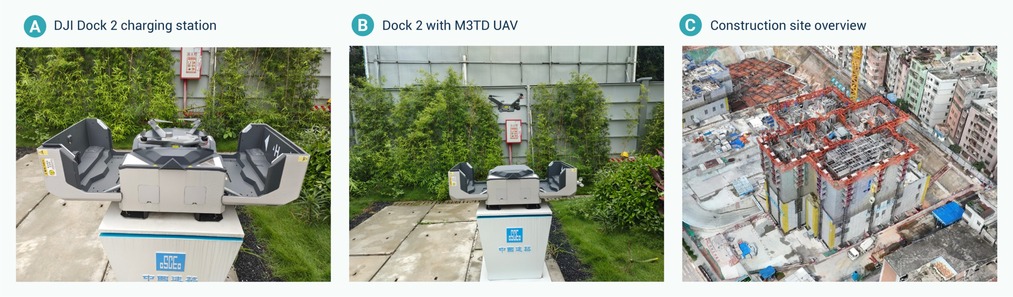
System context
-
Figure 3.
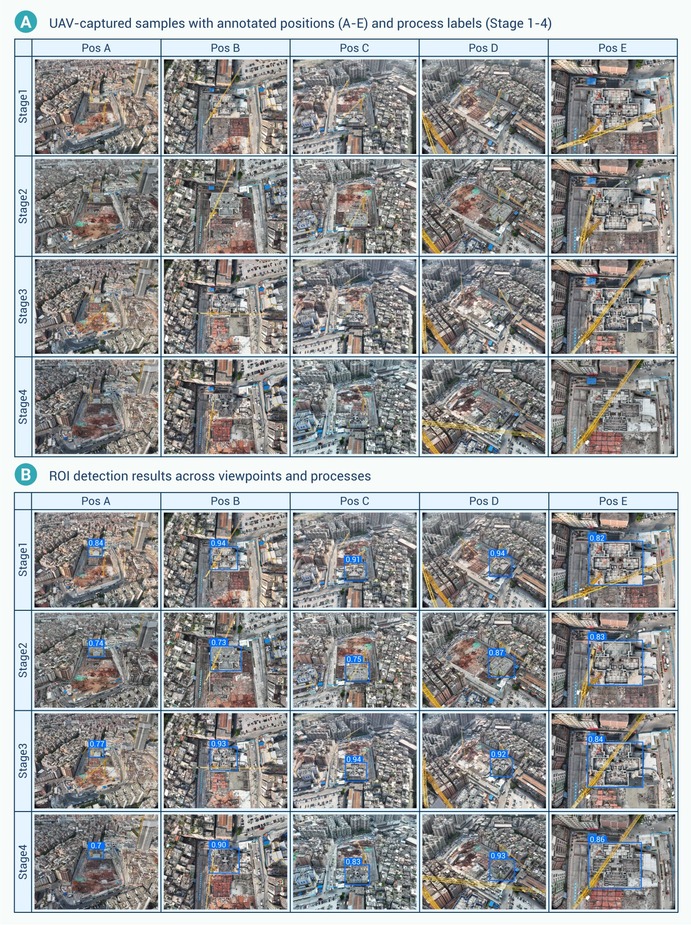
Data overview.
-
Figure 4.
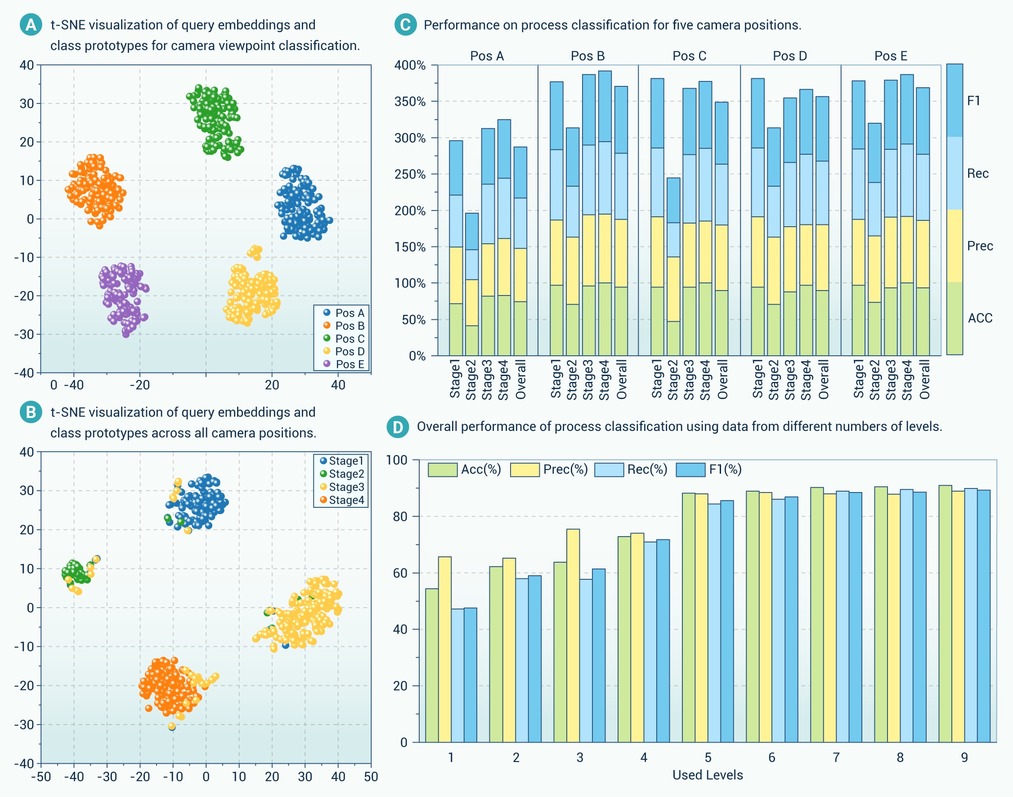
Embedding visualizations and recognition performance
-
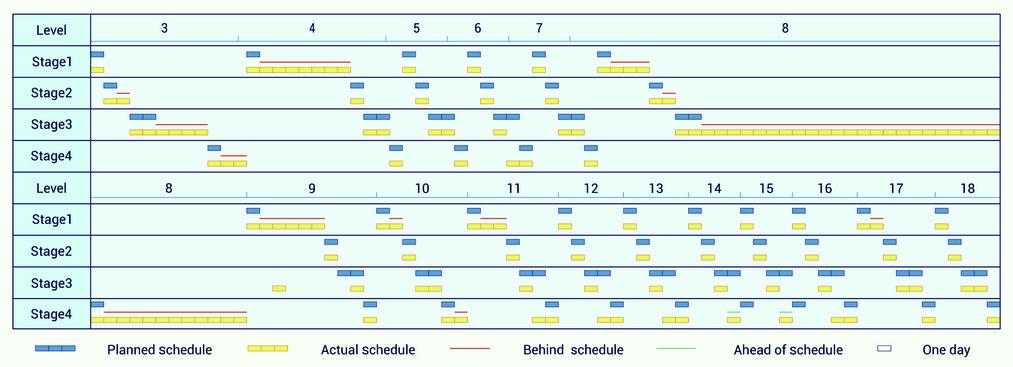
Figure 5.
Comparison of planned and detected construction schedules across multiple levels and processes
-
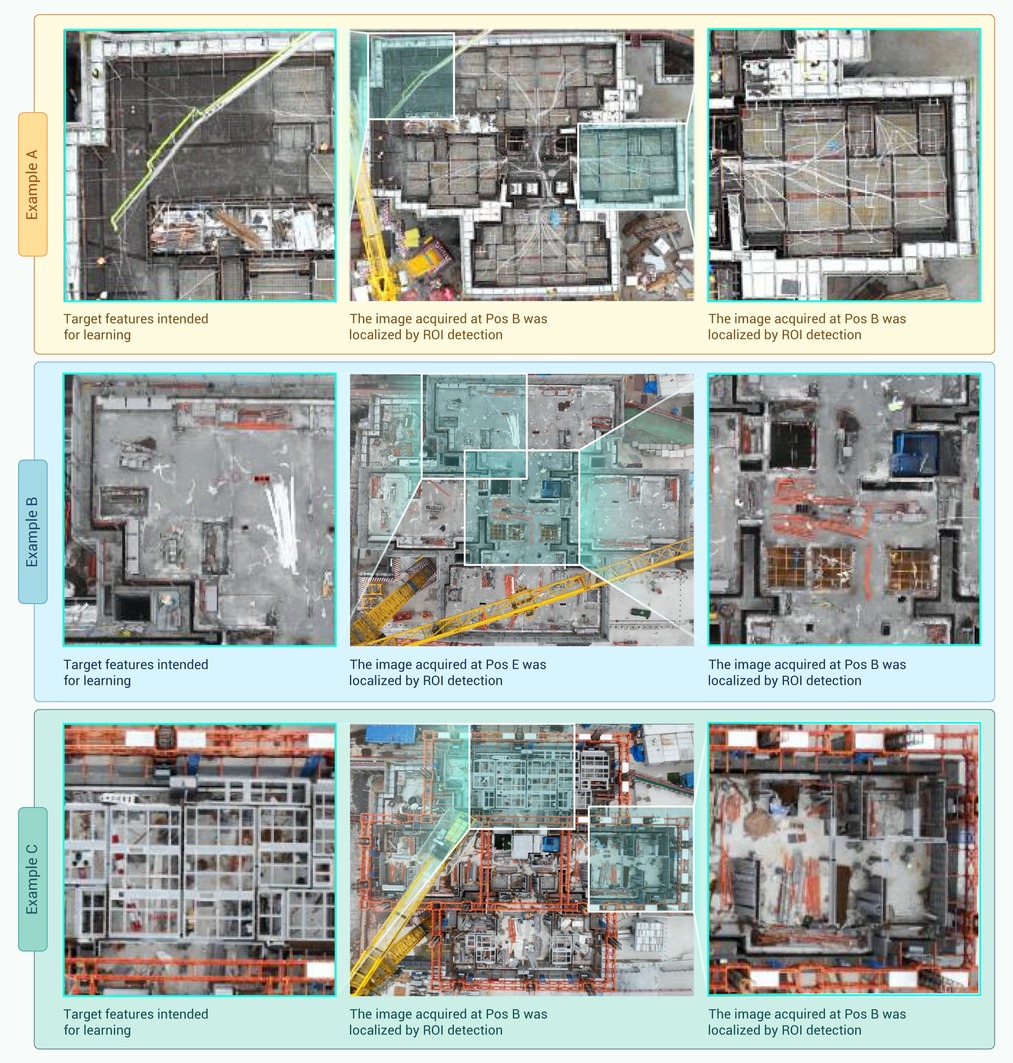
Figure 6.
Examples of misclassification in process recognition
