
Hyocholic acid: A novel therapeutic strategy for metabolic syndrome
-
GRAPHICAL ABSTRACT

 DownLoad:
Full size image
DownLoad:
Full size image
-
PUBLIC SUMMARY
-
Hyocholic acid is critical for the anti-energy dysmetabolism capacity in domestic pigs.
Hyocholic acid is a strong predictor and potential therapy for clinical glucolipid dysmetabolism.
Bacteriogenic biotransformation affirms the polyphyly of hyocholic acid in mammals.
Non-hepatic tissues are new research targets for the pharmaceutical development of hyocholic acid.
-
-
ABSTRACT
The outdated definition of bile acids (BAs) as a sort of metabolic adjuvant for lipid and lipidic solubility should be expired. Mammalian BAs are widespread, tautomeric, polyphyletic, and biosynthetic metabolites that extensively serve as bio-messengers and can be used to characterize various physiological states. Among these, hyocholic acid species (HCAs) have received considerable interest due to their strong potential to alleviate energy dysmetabolism, especially glucolipid metabolic disorder. Effective integration of gut microbiomics, glycolipidomics, and other omics contributes to establishing the regulation process of BA signaling on glucolipid metabolism. In a three-dimensional system, HCAs (1) remodel the structure of the gut microbiome, the pattern of reabsorbed secondary BAs, and intestinal lipid uptake efficiency by increasing the hydrophilicity of the total BA pool and reducing cytotoxicity; (2) dynamically shape the profile of hepatic lipometabolism and primary BA biosynthesis via enterohepatic circulation and feedback regulation-based network between gut microbiota and host, and (3) serve as a serious of output signals which are responsible for tuning energy physiology of peripheral tissue. These multidimensional influences allow HCAs to improve the gut microbiome, inhibit excessive lipid uptake, and remodel glucolipid metabolic flux distribution that enhances resistance to metabolic syndrome. Increasing attention to HCAs in clinical and animal studies emphasizes the vital potential of BAs in tracing the role of environmental factors in the evolutionary process of associated species and opens a novel perspective to develop BAs into clinically therapeutic strategies and variety breeding. -

-
REFERENCES
[1] Fleishman, J.S. and Kumar, S. (2024). Bile acid metabolism and signaling in health and disease: Molecular mechanisms and therapeutic targets. Signal Transduct. Target Ther. 9: 97. DOI: 10.1038/s41392-024-01811-6. [2] Zheng, X., Chen, T., Jiang, R., et al. (2021). Hyocholic acid species improve glucose homeostasis through a distinct TGR5 and FXR signaling mechanism. Cell Metab. 33 : 791−803. DOI: 10.1016/j.cmet.2020.11.017.Epub2020Dec17. [3] Zheng, X., Chen, T., Zhao, A., et al. (2021). Hyocholic acid species as novel biomarkers for metabolic disorders. Nat. Commun. 12: 1487. DOI: 10.1038/s41467-021-21744-w. [4] Xu, J., Zhang, K., Qiu, B., et al. (2022). Decreased hyocholic acid and lysophosphatidylcholine induce elevated blood glucose in a transgenic porcine model of metabolic disease. Metabolites 12: 1164. DOI: 10.3390/metabo12121164. [5] Eyssen, H.J., De Pauw, G., and Van Eldere, J. (1999). Formation of hyodeoxycholic acid from muricholic acid and hyocholic acid by an unidentified gram-positive rod termed HDCA-1 isolated from rat intestinal microflora. Appl. Environ. Microbiol. 65: 3158−3163. DOI: 10.1128/AEM.65.7.3158-3163.1999. [6] Wei, M., Huang, F., Zhao, L., et al. (2020). A dysregulated bile acid-gut microbiota axis contributes to obesity susceptibility. EBioMedicine 55 : 102766 DOI: 10.1016/j.ebiom.2020.102766. [7] Lundell, K. and Wikvall, K. (2008). Species-specific and age-dependent bile acid composition: aspects on CYP8B and CYP4A subfamilies in bile acid biosynthesis. Curr. Drug Metab. 9: 323−331. DOI: 10.2174/138920008784220574. [8] Pushpass, R.G., Alzoufairi, S., Jackson, K.G., et al. (2022). Circulating bile acids as a link between the gut microbiota and cardiovascular health: Impact of prebiotics, probiotics and polyphenol-rich foods. Nutr. Res. Rev. 35: 161−180. DOI: 10.1017/S0954422421000081. [9] Russell, D.W. (2003). The enzymes, regulation, and genetics of bile acid synthesis. Annu. Rev. Biochem. 72 : 137−174. DOI: 10.1146/annurev.biochem.72.121801.161712. [10] Xiang, J., Zhang, Z., Xie, H., et al. (2021). Effect of different bile acids on the intestine through enterohepatic circulation based on FXR. Gut Microbes 13: 1949095. DOI: 10.1080/19490976.2021.1949095. [11] Mattox, V.R., Turner, R.B., Engel, L.L., et al. (1964). Steroids derived from bile acids; 3,9-epoxy-delta 11-cholenic acid and closely related compounds. J. Biol. Chem. 164: 569−596. [12] Kendall, E.C. (1947). Steroids derived from the bile acids; 3,9-epoxy-Delta 11-cholenic acid, an intermediate in the partial synthesis of dehydrocorticosterone. Recent Prog. Horm. Res. 1: 65−81. DOI: 10.1016/b978-1-4831-9840-8.50006-5. [13] Haslewood, G.A. (1967). Bile salt evolution. J. Lipid Res. 8: 535−50. DOI: 10.1016/S0022-2275(20)38873-8. [14] Lundell, K. and Wikvall, K. (2003). Gene structure of pig sterol 12alpha-hydroxylase (CYP8B1) and expression in fetal liver: Comparison with expression of taurochenodeoxycholic acid 6alpha-hydroxylase (CYP4A21). Biochim. Biophys. Acta. 1634: 86−96. DOI: 10.1016/j.bbalip.2003.09.002. [15] Haslewood, G.A. (1954). "Hyocholic acid", a trihydroxy bile acid from pig bile. Biochem J. 56 : xxxviii. [16] Summerfield, J.A., Billing, B.H., and Shackleton, C.H. (1976). Identification of bile acids in the serum and urine in cholestasis. Evidence for 6alpha-hydroxylation of bile acids in man. Biochem. J. 154 : 507-516. DOI: 10.1042/bj1540507. [17] Amuro, Y., Hayashi, E., Endo, T., et al. (1983). Unusual trihydroxylated bile acids in urine of patients with liver cirrhosis. Clin. Chim. Acta. 127: 61−67. DOI: 10.1016/0009-8981(83)90075-x. [18] Bremmelgaard, A. and Sjövall, J. (1979). Bile acid profiles in urine of patients with liver diseases. Eur J Clin Invest. 9: 341−8. DOI: 10.1111/j.1365-2362.1979.tb00894.x. [19] Nakashima, T., Sano, A., Seto, Y., et al. (1986). Unusual trihydroxy bile acids in the urine of healthy humans. Clin Chim Acta. 160: 47−53. DOI: 10.1016/0009-8981(86)90334-7. [20] Stiehl, A., Becker, M., Czygan, P., et al. (1980). Bile acids and their sulphated and glucuronidated derivatives in bile, plasma, and urine of children with intrahepatic cholestasis: effects of phenobarbital treatment. Eur. J. Clin. Invest. 10: 307−316. DOI: 10.1111/j.1365-2362.1980.tb00038.x. [21] Bremmelgaard, A. and Sjövall, J. (1980). Hydroxylation of cholic, chenodeoxycholic, and deoxycholic acids in patients with intrahepatic cholestasis. J. Lipid Res. 21: 1072−81. DOI: 10.1016/S0022-2275(20)34768-4. [22] van Berge Henegouwen, G.P., Brandt, K.H., Eyssen, H., et al. (1976). Sulphated and unsulphated bile acids in serum, bile, and urine of patients with cholestasis. Gut. 17: 861−9. DOI: 10.1136/gut.17.11.861. [23] Dusserre, J.P., Montet, A.M., and Montet, J.C. (1988). Effect of hyocholic acid on the prevention and dissolution of biliary cholesterol crystals in mice. Can. J. Physiol. Pharmacol. 66: 1028−1034. DOI: 10.1139/y88-168. [24] Singhal, A.K., Cohen, B.I., Finver-Sadowsky, J., et al. (1984). Role of hydrophilic bile acids and of sterols on cholelithiasis in the hamster. J. Lipid Res. 25: 564−570. DOI: 10.1016/S0022-2275(20)37769-5. [25] Singhal, A.K., Cohen, B.I., Mosbach, E.H., et al. (1984). Prevention of cholesterol-induced gallstones by hyodeoxycholic acid in the prairie dog. J. Lipid Res. 25: 539−549. DOI: 10.1016/S0022-2275(20)37766-X. [26] Kano, M., Matsumoto, M., Kamano, T., et al. (1999). ELISA determination of serum hyocholic acid concentrations in humans and their possible clinical significance. Hepatogastroenterology 46: 983−984. [27] Nakashima, T., Sakamoto, Y., Inaba, K., et al. (1999). A paucity of unusual trihydroxy bile acids in the urine of patients with severe liver diseases. Hepatology. 29: 1518−22. DOI: 10.1002/hep.510290502. [28] Shih, D.M., Shaposhnik, Z., Meng, Y., et al. (2013). Hyodeoxycholic acid improves HDL function and inhibits atherosclerotic lesion formation in LDLR-knockout mice. FASEB J. 27 : 3805−3817. DOI: 10.1096/fj.12-223008. [29] Setchell, K.D., Dumaswala, R., Colombo, C., et al. (1988). Hepatic bile acid metabolism during early development revealed from the analysis of human fetal gallbladder bile. J. Biol. Chem. 263: 16637−16644. DOI: 10.1016/S0021-9258(18)37438-6. [30] Kimura, A., Yamakawa, R., Ushijima, K., et al. (1994). Fetal bile acid metabolism during infancy: Analysis of 1 beta-hydroxylated bile acids in urine, meconium and feces. Hepatology 20: 819−824. DOI: 10.1002/hep.1840200408. [31] Kumagai, M., Kimura, A., Takei, H., et al. (2007). Perinatal bile acid metabolism: Bile acid analysis of meconium of preterm and full-term infants. J. Gastroenterol. 42 : 904−910. DOI: 10.1007/s00535-007-2108-y. [32] Strandvik, B., Wahlén, E., and Wikström, S.A. (1994). The urinary bile acid excretion in healthy premature and full-term infants during the neonatal period. Scand. J. Clin. Lab. Invest. 54: 1−10. DOI: 10.3109/00365519409086503. [33] Pillot, T., Ouzzine, M., Fournel-Gigleux, S., et al. (1993). Glucuronidation of hyodeoxycholic acid in human liver. Evidence for a selective role of UDP-glucuronosyltransferase 2B4. J. Biol. Chem. 268 : 25636-25642. [34] Radomińska-Pyrek, A., Zimniak, P., Irshaid, Y.M., et al. (1987). Glucuronidation of 6 alpha-hydroxy bile acids by human liver microsomes. J. Clin. Invest. 80: 234−241. DOI: 10.1172/JCI113053. [35] Dilger, K., Hohenester, S., Winkler-Budenhofer, U., et al. (2012). Effect of ursodeoxycholic acid on bile acid profiles and intestinal detoxification machinery in primary biliary cirrhosis and health. J. Hepatol. 57: 133−140. DOI: 10.1016/j.jhep.2012.02.014. [36] George, J., Byth, K., and Farrell, G.C. (1995). Age but not gender selectively affects expression of individual cytochrome P450 proteins in human liver. Biochem. Pharmacol. 50: 727−730. DOI: 10.1016/0006-2952(95)00192-3. [37] Zollner, G., Wagner, M., Fickert, P., et al. (2007). Expression of bile acid synthesis and detoxification enzymes and the alternative bile acid efflux pump MRP4 in patients with primary biliary cirrhosis. Liver. Int. 27: 920−929. DOI: 10.1111/j.1478-3231.2007.01506.x. [38] Hempfling, W., Dilger, K., and Beuers, U. (2003). Systematic review: Ursodeoxycholic acid--adverse effects and drug interactions. Aliment. Pharmacol. Ther. 18 : 963-972. DOI: 10.1046/j.1365-2036.2003.01792.x. [39] Li, J. and Dawson, P.A. (2019). Animal models to study bile acid metabolism. Biochim. Biophys. Acta. Mol. Basis Dis. 1865: 895−911. DOI: 10.1016/j.bbadis.2018.05.011. [40] Collins, S.L., Stine, J.G., Bisanz, J.E., et al. (2023). Bile acids and the gut microbiota: metabolic interactions and impacts on disease. Nat. Rev. Microbiol. 21: 236−247. DOI: 10.1038/s41579-022-00805-x. [41] Beher, W.T., Baker, G.D., Anthony, W.L., et al. (1964). Effect of hyocholic acid on cholesterol and bile acid metabolism in the mice. Proc. Soc. Exp. Biol. Med. 116: 442−445. DOI: 10.3181/00379727-116-29273. [42] Wang, Q., Lin, H., Shen, C., et al. (2023). Gut microbiota regulates postprandial GLP-1 response via ileal bile acid-TGR5 signaling. Gut Microbes. 15 : 2274124. DOI: 10.1080/19490976.2023.2274124.Epub2023Nov9. [43] Wang, Z., Wang, Q., Tang, C., et al. (2023). Medium chain fatty acid supplementation improves animal metabolic and immune status during the transition period: A study on dairy cattle. Front. Immunol. 14: 1018867. DOI: 10.3389/fimmu.2023.1018867. [44] Zhang, B., Sun, Z., Yu, Z., et al. (2022). Transcriptome and targeted metabolome analysis provide insights into bile acids' new roles and mechanisms on fat deposition and meat quality in lamb. Food Res. Int. 162: 111941. DOI: 10.1016/j.foodres.2022.111941. [45] Chiang, J.Y. (2013). Bile acid metabolism and signaling. Compr. Physiol. 3: 1191−1212. DOI: 10.1002/cphy.c120023. [46] Nie, Q., Luo, X., Wang, K., et al. (2024). Gut symbionts alleviate MASH through a secondary bile acid biosynthetic pathway. Cell 187 : 2717−2734.e33. DOI: 10.1016/j.cell.2024.03.034. [47] Mohanty, I., Mannochio-Russo, H., Schweer, J.V., et al. (2024). The underappreciated diversity of bile acid modifications. Cell 187 : 1801−1818.e20 DOI: 10.1016/j.cell.2024.02.019. [48] Hay, D.W. and Carey, M.C. (1990). Chemical species of lipids in bile. Hepatology 12 : 6S-14S; discussion 14S-16S. [49] Gu, J.J., Hofmann, A.F., Ton-Nu, H.T., et al. (1992). Solubility of calcium salts of unconjugated and conjugated natural bile acids. J. Lipid Res. 33: 635−646. DOI: 10.1016/S0022-2275(20)41428-2. [50] Armstrong, M.J. and Carey, M.C. (1982). The hydrophobic-hydrophilic balance of bile salts. Inverse correlation between reverse-phase high performance liquid chromatographic mobilities and micellar cholesterol-solubilizing capacities. J. Lipid Res. 23: 70−80. [51] Heuman, D.M., Hylemon, P.B., and Vlahcevic, Z.R. (1989). Regulation of bile acid synthesis. III. Correlation between biliary bile salt hydrophobicity index and the activities of enzymes regulating cholesterol and bile acid synthesis in the rat. J. Lipid Res. 30: 1161−1171. [52] Hofmann, A.F. and Roda, A. (1984). Physicochemical properties of bile acids and their relationship to biological properties: An overview of the problem. J. Lipid Res. 25: 1477−1489. DOI: 10.1016/S0022-2275(20)34421-7. [53] Boström, H. (1986). Characterization of 6 alpha-hydroxylation of taurochenodeoxycholic acid in pig liver. J. Lipid Res. 27: 807−812. [54] Yamada, S., Kawaguchi, H., Yamada, T., et al. (2017). Cholic acid enhances visceral adiposity, atherosclerosis and nonalcoholic fatty liver disease in microminipigs. J. Atheroscler. Thromb. 24: 1150−1166. DOI: 10.5551/jat.39909. [55] Song, C., Hiipakka, R.A., and Liao, S. (2000). Selective activation of liver X receptor alpha by 6alpha-hydroxy bile acids and analogs. Steroids. 65: 423−7. DOI: 10.1016/s0039-128x(00)00127-6. [56] Chen, G., Liang, G., Ou, J., et al. (2004). Central role for liver X receptor in insulin-mediated activation of Srebp-1c transcription and stimulation of fatty acid synthesis in liver. Proc. Natl. Acad. Sci. USA 101: 11245−11250. DOI: 10.1073/pnas.0404297101. [57] DeBose-Boyd, R.A., Ou, J., Goldstein, J.L., et al. (2001). Expression of sterol regulatory element-binding protein 1c (SREBP-1c) mRNA in rat hepatoma cells requires endogenous LXR ligands. Proc. Natl. Acad. Sci. USA 98: 1477−1482. DOI: 10.1073/pnas.98.4.1477. [58] Fiorucci, S. and Distrutti, E. (2015). Bile acid-activated receptors, intestinal microbiota, and the treatment of metabolic disorders. Trends Mol. Med. 21: 702−714. DOI: 10.1016/j.molmed.2015.09.001. [59] Foretz, M., Pacot, C., Dugail, I., et al. (1999). ADD1/SREBP-1c is required in the activation of hepatic lipogenic gene expression by glucose. Mol Cell Biol. 19: 3760−3768. DOI: 10.1128/MCB.19.5.3760. [60] Qi, Y., Jiang, C., Cheng, J., et al. (2015). Bile acid signaling in lipid metabolism: metabolomic and lipidomic analysis of lipid and bile acid markers linked to anti-obesity and anti-diabetes in mice. Biochim. Biophys. Acta. 1851 : 19−29. DOI: 10.1016/j.bbalip.2014.04.008. [61] Shimomura, I., Bashmakov, Y., and Horton, J.D. (1999). Increased levels of nuclear SREBP-1c associated with fatty livers in two mouse models of diabetes mellitus. J. Biol. Chem. 274: 30028−30032. DOI: 10.1074/jbc.274.42.30028. [62] Shimomura, I., Bashmakov, Y., Ikemoto, S., et al. (1999). Insulin selectively increases SREBP-1c mRNA in the livers of rats with streptozotocin-induced diabetes. Proc. Natl. Acad. Sci. USA 96: 13656−13661. DOI: 10.1073/pnas.96.24.13656. [63] Jiao, N., Baker, S.S., Chapa-Rodriguez, A., et al. (2018). Suppressed hepatic bile acid signalling despite elevated production of primary and secondary bile acids in NAFLD. Gut 67 : 1881−1891. DOI: 10.1136/gutjnl-2017-314307. [64] Bohan, R., Tianyu, X., Tiantian, Z., et al. (2019). Gut microbiota: A potential manipulator for host adipose tissue and energy metabolism. J. Nutr. Biochem. 64: 206−217. DOI: 10.1016/j.jnutbio.2018.10.020. [65] Krautkramer, K.A., Kreznar, J.H., Romano, K.A., et al. (2016). Diet-microbiota interactions mediate global epigenetic programming in multiple host tissues. Mol. Cell. 64 : 982−92. DOI: 10.1016/j.molcel.2016.10.025. [66] Lukovac, S., Belzer, C., Pellis, L., et al. (2014). Differential modulation by Akkermansia muciniphila and Faecalibacterium prausnitzii of host peripheral lipid metabolism and histone acetylation in mouse gut organoids. mBio 5: e01438−14. DOI: 10.1128/mBio.01438-14. [67] Wesolowski, S.R., Kasmi, K.C., Jonscher, K.R., et al. (2017). Developmental origins of NAFLD: A womb with a clue. Nat. Rev. Gastroenterol Hepatol. 14: 81−96. DOI: 10.1038/nrgastro.2016.160. [68] Woo, V. and Alenghat, T. (2022). Epigenetic regulation by gut microbiota. Gut Microbes 14: 2022407. DOI: 10.1080/19490976.2021.2022407. [69] Park, M.Y., Kim, S.J., Ko, E.K., et al. (2016). Gut microbiota-associated bile acid deconjugation accelerates hepatic steatosis in ob/ob mice. J. Appl. Microbiol. 121 : 800−810. DOI: 10.1111/jam.13158. [70] Wan, Y., Yuan, J., Li, J., et al. (2020). Unconjugated and secondary bile acid profiles in response to higher-fat, lower-carbohydrate diet and associated with related gut microbiota: A 6-month randomized controlled-feeding trial. Clin. Nutr. 39 : 395−404. DOI: 10.1016/j.clnu.2019.02.037. [71] Worthmann, A., John, C., Rühlemann, M.C., et al. (2017). Cold-induced conversion of cholesterol to bile acids in mice shapes the gut microbiome and promotes adaptive thermogenesis. Nat. Med. 23 : 839−849. DOI: 10.1038/nm.4357. [72] Marion, S., Desharnais, L., Studer, N., et al. (2020). Biogeography of microbial bile acid transformations along the murine gut. J. Lipid Res. 61 : 1450−1463. DOI: 10.1194/jlr.RA120001021. [73] Henkel, A.S., Kavesh, M.H., Kriss, M.S., et al. (2011). Hepatic overexpression of abcb11 promotes hypercholesterolemia and obesity in mice. Gastroenterology 141 : 1404-11, 1411.e1-2. DOI: 10.1053/j.gastro.2011.06.062. [74] Roy, S., Hyogo, H., Yadav, S.K., et al. (2005). A biphasic response of hepatobiliary cholesterol metabolism to dietary fat at the onset of obesity in the mouse. Hepatology 41: 887−895. DOI: 10.1002/hep.20643. [75] Schwarz, M., Russell, D.W., Dietschy, J.M., et al. (1998). Marked reduction in bile acid synthesis in cholesterol 7alpha-hydroxylase-deficient mice does not lead to diminished tissue cholesterol turnover or to hypercholesterolemia. J. Lipid Res. 39: 1833−1843. DOI: 10.1016/S0022-2275(20)32171-4. [76] Thomas, C., Pellicciari, R., Pruzanski, M., et al. (2008). Targeting bile-acid signalling for metabolic diseases. Nat. Rev. Drug Discov. 7: 678−693. DOI: 10.1038/nrd2619. [77] Sayin, S.I., Wahlström, A., Felin, J., et al. (2013). Gut microbiota regulates bile acid metabolism by reducing the levels of tauro-beta-muricholic acid, a naturally occurring FXR antagonist. Cell Metab. 17: 225−235. DOI: 10.1016/j.cmet.2013.01.003. [78] Hsieh, J., Koseki, M., Molusky, M.M., et al. (2016). TTC39B deficiency stabilizes LXR reducing both atherosclerosis and steatohepatitis. Nature 535 : 303−307. DOI: 10.1038/nature18628. [79] Watanabe, M., Houten, S.M., Mataki, C., et al. (2006). Bile acids induce energy expenditure by promoting intracellular thyroid hormone activation. Nature 439 : 484−489. DOI: 10.1038/nature04330. [80] Bideyan, L., Fan, W., Kaczor-Urbanowicz, K.E., et al. (2022). Integrative analysis reveals multiple modes of LXR transcriptional regulation in liver. Proc. Natl. Acad. Sci. USA 119: e2122683119. DOI: 10.1073/pnas.2122683119. [81] Korach-André, M., Archer, A., Barros, R.P., et al. (2011). Both liver-X receptor (LXR) isoforms control energy expenditure by regulating brown adipose tissue activity. Proc. Natl. Acad. Sci. USA 108: 403−408. DOI: 10.1073/pnas.1017884108. [82] Madsen, L., Petersen, R.K., Steffensen, K.R., et al. (2008). Activation of liver X receptors prevents statin-induced death of 3T3-L1 preadipocytes. J. Biol. Chem. 283 : 22723−22736. DOI: 10.1074/jbc.M800720200. [83] Watanabe, M., Houten, S.M., Wang, L., et al. (2004). Bile acids lower triglyceride levels via a pathway involving FXR, SHP, and SREBP-1c. J. Clin. Invest. 113: 1408−1418. DOI: 10.1172/JCI21025. [84] Zhang, Y., Breevoort, S.R., Angdisen, J., et al. (2012). Liver LXRα expression is crucial for whole body cholesterol homeostasis and reverse cholesterol transport in mice. J Clin Invest. 122: 1688−99. DOI: 10.1172/JCI59817. [85] Wang, B. and Tontonoz, P. (2018). Liver X receptors in lipid signalling and membrane homeostasis. Nat. Rev. Endocrinol. 14: 452−463. DOI: 10.1038/s41574-018-0037-x. [86] Xu, Y., Li, Y., Jadhav, K., et al. (2021). Hepatocyte ATF3 protects against atherosclerosis by regulating HDL and bile acid metabolism. Nat Metab. 3 : 59−74. DOI: 10.1038/s42255-020-00331-1. [87] Shen, S., Shen, M., Kuang, L., et al. (2024). SIRT1/SREBPs-mediated regulation of lipid metabolism. Pharmacol. Res. 199: 107037. DOI: 10.1016/j.phrs.2023.107037. [88] Peet, D.J., Turley, S.D., Ma, W., et al. (1998). Cholesterol and bile acid metabolism are impaired in mice lacking the nuclear oxysterol receptor LXR alpha. Cell 93: 693−704. DOI: 10.1016/s0092-8674(00)81432-4. [89] Qayyum, F., Lauridsen, B.K., Frikke-Schmidt, R., et al. (2018). Genetic variants in CYP7A1 and risk of myocardial infarction and symptomatic gallstone disease. Eur. Heart J. 39: 2106−2116. DOI: 10.1093/eurheartj/ehy068. [90] Brandl, K., Hartmann, P., Jih, L.J., et al. (2018). Dysregulation of serum bile acids and FGF19 in alcoholic hepatitis. J Hepatol. 69 : 396−405. DOI: 10.1016/j.jhep.2018.03.031. [91] Agellon, L.B. and Cheema, S.K. (1997). The 3'-untranslated region of the mouse cholesterol 7alpha-hydroxylase mRNA contains elements responsive to post-transcriptional regulation by bile acids. Biochem. J. 328: 393−399. DOI: 10.1042/bj3280393. [92] Baker, D.M., Wang, S.L., Bell, D.J., et al. (2000). One or more labile proteins regulate the stability of chimeric mRNAs containing the 3′-untranslated region of cholesterol-7alpha - hydroxylase mRNA. J. Biol. Chem. 275: 19985−19991. DOI: 10.1074/jbc.M002351200. [93] Arab, J.P., Karpen, S.J., Dawson, P.A., et al. (2017). Bile acids and nonalcoholic fatty liver disease: Molecular insights and therapeutic perspectives. Hepatology 65 : 350−362. DOI: 10.1002/hep.28709. [94] Kim, Y.C., Seok, S., Zhang, Y., et al. (2020). Intestinal FGF15/19 physiologically repress hepatic lipogenesis in the late fed-state by activating SHP and DNMT3A. Nat. Commun. 11: 5969. DOI: 10.1038/s41467-020-19803-9. [95] Broeders, E.P., Nascimento, E.B., Havekes, B., et al. (2015). The bile acid chenodeoxycholic acid increases human brown adipose tissue activity. Cell Metab. 22 : 418−426. DOI: 10.1016/j.cmet.2015.07.002. [96] Chiang, J.Y. Negative feedback regulation of bile acid metabolism: impact on liver metabolism and diseases. Hepatology 62 : 1315−1317. DOI: 10.1002/hep.27964. [97] Talukdar, S., Bhatnagar, S., Dridi, S., et al. (2007). Chenodeoxycholic acid suppresses the activation of acetyl-coenzyme A carboxylase-alpha gene transcription by the liver X receptor agonist T0-901317. J. Lipid Res. 48 : 2647−63. DOI: 10.1194/jlr.M700189-JLR200. [98] Kim, Y.C., Jung, H., Seok, S., et al. (2020). MicroRNA-210 Promotes bile acid-induced cholestatic liver injury by targeting mixed-lineage leukemia-4 methyltransferase in mice. Hepatology 71 : 2118−2134. DOI: 10.1002/hep.30966. [99] Watanabe, M., Fukiya, S., and Yokota, A. (2017). Comprehensive evaluation of the bactericidal activities of free bile acids in the large intestine of humans and rodents. J. Lipid Res. 58 : 1143−1152. DOI: 10.1194/jlr.M075143. [100] Wu, T., Yang, M., Xu, H., et al. (2021). Serum bile acid profiles improve clinical prediction of nonalcoholic fatty liver in T2DM patients. J. Proteome Res. 20 : 3814−3825. DOI: 10.1021/acs.jproteome.1c00104. [101] Chiang, J.Y.L. and Ferrell, J.M. (2019). Bile acids as metabolic regulators and nutrient sensors. Annu. Rev. Nutr. 39 : 175−200. DOI: 10.1146/annurev-nutr-082018-124344. [102] Araya, Z. and Wikvall, K. (1999). 6alpha-hydroxylation of taurochenodeoxycholic acid and lithocholic acid by CYP3A4 in human liver microsomes. Biochim. Biophys. Acta. 1438: 47−54. DOI: 10.1016/s1388-1981(99)00031-1. [103] Deo, A.K. and Bandiera, S.M. (2008). Identification of human hepatic cytochrome p450 enzymes involved in the biotransformation of cholic and chenodeoxycholic acid. Drug Metab. Dispos. 36 : 1983−1991. DOI: 10.1124/dmd.108.022194. [104] Lundell, K., Hansson, R., and Wikvall, K. (2001). Cloning and expression of a pig liver taurochenodeoxycholic acid 6alpha-hydroxylase (CYP4A21): A novel member of the CYP4A subfamily. J. Biol. Chem. 276 : 9606−9612. DOI: 10.1074/jbc.M006584200. [105] Honda, A., Miyazaki, T., Iwamoto, J., et al. (2020). Regulation of bile acid metabolism in mouse models with hydrophobic bile acid composition. J. Lipid Res. 61 : 54−69. DOI: 10.1194/jlr.RA119000395. [106] Li, Y., Wang, Q., Jin, J., et al. (2023). 15,16-dihydrotanshinone I in Danshen ethanol extract aggravated cholestasis by inhibiting Cyp3a11 mediated bile acids hydroxylation. Toxicol Lett. 377 : 62−70. DOI: 10.1016/j.toxlet.2023.02.005. [107] Molinaro, A., Wahlström, A., and Marschall, H.U. (2018). Role of bile acids in metabolic control. Trends Endocrinol. Metab. 29: 31−41. DOI: 10.1016/j.tem.2017.11.002. [108] Takahashi, S., Fukami, T., Masuo, Y., et al. (2016). Cyp2c70 is responsible for the species difference in bile acid metabolism between mice and humans. J. Lipid Res. 57 : 2130−2137. DOI: 10.1194/jlr.M071183. [109] Wang, M.X., Han, J., Liu, T., et al. (2023). Poly-hydroxylated bile acids and their prognostic roles in Alagille syndrome. World J. Pediatr. 19 : 652−662. DOI: 10.1007/s12519-022-00676-5. [110] Heinken, A., Ravcheev, D.A., Baldini, F., et al. (2019). Systematic assessment of secondary bile acid metabolism in gut microbes reveals distinct metabolic capabilities in inflammatory bowel disease. Microbiome 7: 75. DOI: 10.1186/s40168-019-0689-3. [111] Sun, L., Xie, C., Wang, G., et al. (2018). Gut microbiota and intestinal FXR mediate the clinical benefits of metformin. Nat. Med. 24 : 1919−1929. DOI: 10.1038/s41591-018-0222-4. [112] Ridaura, V.K., Faith, J.J., Rey, F.E., et al. (2013). Gut microbiota from twins discordant for obesity modulate metabolism in mice. Science 341: 1241214. DOI: 10.1126/science.1241214. [113] Streidl, T., Karkossa, I., Segura Muñoz, R.R., et al. (2021). The gut bacterium Extibacter muris produces secondary bile acids and influences liver physiology in gnotobiotic mice. Gut Microbes 13: 1−21. DOI: 10.1080/19490976.2020.1854008. [114] Arifuzzaman, M., Won, T.H., Li, T.T., et al. (2022). Inulin fibre promotes microbiota-derived bile acids and type 2 inflammation. Nature 611 : 578−584. DOI: 10.1038/s41586-022-05380-y. [115] Yin, J., Li, Y., Tian, Y., et al. (2023). Obese Ningxiang pig-derived microbiota rewires carnitine metabolism to promote muscle fatty acid deposition in lean DLY pigs. The Innovation 4 : 100486. DOI: 10.1016/j.xinn.2023.100486. [116] Hartmann, P., Hochrath, K., Horvath, A., et al. (2018). Modulation of the intestinal bile acid/farnesoid X receptor/fibroblast growth factor 15 axis improves alcoholic liver disease in mice. Hepatology 67 : 2150−2166. DOI: 10.1002/hep.29676. [117] Johnson, S., Samore, M.H., Farrow, K.A., et al. (1999). Epidemics of diarrhea caused by a clindamycin-resistant strain of Clostridium difficile in four hospitals. N. Engl. J. Med. 341: 1645−1651. DOI: 10.1056/NEJM199911253412203. [118] Theriot, C.M., Bowman, A.A., and Young, V.B. (2016). Antibiotic-induced alterations of the gut microbiota alter secondary bile acid production and allow for clostridium difficile spore germination and outgrowth in the large intestine. mSphere 1 : e00045−15. DOI: 10.1128/mSphere.00045-15. [119] Ridlon, J.M. and Gaskins, H.R. (2024). Another renaissance for bile acid gastrointestinal microbiology. Nat. Rev. Gastroenterol. Hepatol. 21 : 348−364. DOI: 10.1038/s41575-024-00896-2. [120] Jiang, C., Xie, C., Li, F., et al. (2015). Intestinal farnesoid X receptor signaling promotes nonalcoholic fatty liver disease. J. Clin. Invest. 125 : 386−402. DOI: 10.1172/JCI76738. [121] Zeng, H., Larson, K.J., Cheng, W.H., et al. (2020). Advanced liver steatosis accompanies an increase in hepatic inflammation, colonic, secondary bile acids and Lactobacillaceae/Lachnospiraceae bacteria in C57BL/6 mice fed a high-fat diet. J. Nutr. Biochem. 78 : 108336. DOI: 10.1016/j.jnutbio.2019.108336. [122] Sun, L., Pang, Y., Wang, X., et al. (2019). Ablation of gut microbiota alleviates obesity-induced hepatic steatosis and glucose intolerance by modulating bile acid metabolism in hamsters. Acta. Pharm. Sin. B 9 : 702−710. DOI: 10.1016/j.apsb.2019.02.004. [123] Xie, Y., Matsumoto, H., Kennedy, S., et al. (2019). Impaired chylomicron assembly modifies hepatic metabolism through bile acid-dependent and transmissible microbial adaptations. Hepatology 70 : 1168−1184. DOI: 10.1002/hep.30669. [124] Calderon, G., McRae, A., Rievaj, J., et al. (2020). Ileo-colonic delivery of conjugated bile acids improves glucose homeostasis via colonic GLP-1-producing enteroendocrine cells in human obesity and diabetes. EBioMedicine 55 : 102759. DOI: 10.1016/j.ebiom.2020.102759. [125] Takahashi, S., Luo, Y., Ranjit, S., et al. (2020). Bile acid sequestration reverses liver injury and prevents progression of nonalcoholic steatohepatitis in Western diet-fed mice. J. Biol. Chem. 295 : 4733−4747. DOI: 10.1074/jbc.RA119.011913. [126] David, L.A., Maurice, C.F., Carmody, R.N., et al. (2014). Diet rapidly and reproducibly alters the human gut microbiome. Nature 505 : 559−63. DOI: 10.1038/nature12820. [127] Devkota, S., Wang, Y., Musch, M.W., et al. (2012). Dietary-fat-induced taurocholic acid promotes pathobiont expansion and colitis in Il10−/− mice. Nature 487: 104−108. DOI: 10.1038/nature11225. [128] Kuhre, R.E., Wewer Albrechtsen, N.J., Larsen, O., et al. (2018). Bile acids are important direct and indirect regulators of the secretion of appetite- and metabolism-regulating hormones from the gut and pancreas. Mol. Metab. 11 : 84−95. DOI: 10.1016/j.molmet.2018.03.007. [129] Somm, E., Henry, H., Bruce, S.J., et al. (2017). β-Klotho deficiency protects against obesity through a crosstalk between liver, microbiota, and brown adipose tissue. JCI Insight 2: e91809. DOI: 10.1172/jci.insight.91809. [130] Makishima, M., Okamoto, A.Y., Repa, J.J., et al. (1999). Identification of a nuclear receptor for bile acids. Science 284: 1362−1365. DOI: 10.1126/science.284.5418.1362. [131] Parks, D.J., Blanchard, S.G., Bledsoe, R.K., et al. (1999). Bile acids: Natural ligands for an orphan nuclear receptor. Science 284: 1365−1368. DOI: 10.1126/science.284.5418.1365. [132] Shen, A. (2015). A gut odyssey: The impact of the microbiota on clostridium difficile spore formation and germination. PLoS Pathog. 11: e1005157. DOI: 10.1371/journal.ppat.1005157. [133] He, X., Gao, X., Hong, Y., et al. (2024). High fat diet and high sucrose intake divergently induce dysregulation of glucose homeostasis through distinct gut microbiota-derived bile acid metabolism in mice. J. Agric. Food Chem. 72 : 230−244. DOI: 10.1021/acs.jafc.3c02909. [134] Li, D., Cui, Y., Wang, X., et al. (2021). Apple polyphenol extract improves high-fat diet-induced hepatic steatosis by regulating bile acid synthesis and gut microbiota in C57BL/6 male mice. J. Agric. Food Chem. 69 : 6829−6841. DOI: 10.1021/acs.jafc.1c02532. [135] Chen, C., Zhou, Y., Fu, H., et al. (2021). Expanded catalog of microbial genes and metagenome-assembled genomes from the pig gut microbiome. Nat. Commun. 12: 1106. DOI: 10.1038/s41467-021-21295-0. [136] Guzmán-Castañeda, S.J., Ortega-Vega, E.L., de la Cuesta-Zuluaga, J., et al. (2020). Gut microbiota composition explains more variance in the host cardiometabolic risk than genetic ancestry. Gut Microbes 11 : 191−204. DOI: 10.1080/19490976.2019.1634416. [137] Zhernakova, D.V., Wang, D., Liu, L., et al. (2024). Host genetic regulation of human gut microbial structural variation. Nature 625 : 813−821. DOI: 10.1038/s41586-023-06893-w. [138] Jia, W., Wei, M., Rajani, C., et al. (2021). Targeting the alternative bile acid synthetic pathway for metabolic diseases. Protein Cell. 12 : 411−425. DOI: 10.1007/s13238-020-00804-9. [139] Xie, W., Radominska-Pandya, A., Shi, Y., et al. (2001). An essential role for nuclear receptors SXR/PXR in detoxification of cholestatic bile acids. Proc. Natl. Acad. Sci. USA 98: 3375−3380. DOI: 10.1073/pnas.051014398. [140] Eggertsen, G., Olin, M., Andersson, U., et al. (1996). Molecular cloning and expression of rabbit sterol 12alpha-hydroxylase. J. Biol. Chem. 271: 32269−32275. DOI: 10.1074/jbc.271.50.32269. [141] Einarsson, K. (1968). On the properties of the 12 alpha-hydroxylase in cholic acid biosynthesis. Bile acids and steroids. 198. Eur. J. Biochem. 5 : 101-108. DOI: 10.1111/j.1432-1033.1968.tb00342.x. [142] Gåfvels, M., Olin, M., Chowdhary, B.P., et al. (1999). Structure and chromosomal assignment of the sterol 12alpha-hydroxylase gene (CYP8B1) in human and mouse: eukaryotic cytochrome P-450 gene devoid of introns. Genomics 56 : 184−196. DOI: 10.1006/geno.1998.5606. [143] Donepudi, A.C., Boehme, S., Li, F., et al. (2017). G-protein-coupled bile acid receptor plays a key role in bile acid metabolism and fasting-induced hepatic steatosis in mice. Hepatology 65 : 813−827. DOI: 10.1002/hep.28707. [144] Li, T., Francl, J.M., Boehme, S., et al. (2012). Glucose and insulin induction of bile acid synthesis: mechanisms and implication in diabetes and obesity. J. Biol. Chem. 287 : 1861−1873. DOI: 10.1074/jbc.M111.305789. [145] Pathak, P., Li, T., and Chiang, J.Y. (2013). Retinoic acid-related orphan receptor alpha regulates diurnal rhythm and fasting induction of sterol 12alpha-Hydroxylase in bile acid synthesis. J. Biol. Chem. 288 : 37154−37165. DOI: 10.1074/jbc.M113.485987. [146] Kaur, A., Patankar, J.V., de Haan, W., et al. (2015). Loss of Cyp8b1 improves glucose homeostasis by increasing GLP-1. Diabetes 64 : 1168−1179. DOI: 10.2337/db14-0716. [147] Li-Hawkins, J., Gåfvels, M., Olin, M., et al. (2002). Cholic acid mediates negative feedback regulation of bile acid synthesis in mice. J. Clin. Invest. 110: 1191−1200. DOI: 10.1172/JCI16309. [148] Li, T., Matozel, M., Boehme, S., et al. (2011). Overexpression of cholesterol 7α-hydroxylase promotes hepatic bile acid synthesis and secretion and maintains cholesterol homeostasis. Hepatology 53 : 996−1006. DOI: 10.1002/hep.24107. [149] Haeusler, R.A., Astiarraga, B., Camastra, S., et al. (2013). Human insulin resistance is associated with increased plasma levels of 12alpha-hydroxylated bile acids. Diabetes 62 : 4184−4191. DOI: 10.2337/db13-0639. [150] Higuchi, S., Ahmad, T.R., Argueta, D.A., et al. (2020). Bile acid composition regulates GPR119-dependent intestinal lipid sensing and food intake regulation in mice. Gut 69 : 1620−1628. DOI: 10.1136/gutjnl-2019-319693. [151] Li, M., Wang, S., Li, Y., et al. (2022). Gut microbiota-bile acid crosstalk contributes to the rebound weight gain after calorie restriction in mice. Nat. Commun. 13: 2060. DOI: 10.1038/s41467-022-29589-7. [152] Xie, G., Jiang, R., Wang, X., et al. (2021). Conjugated secondary 12α-hydroxylated bile acids promote liver fibrogenesis. EBioMedicine. 66 : 103290. DOI: 10.1016/j.ebiom.2021.103290. [153] Biddinger, S.B., Haas, J.T., Yu, B.B., et al. (2008). Hepatic insulin resistance directly promotes formation of cholesterol gallstones. Nat. Med. 14 : 778−782. DOI: 10.1038/nm1785. [154] Bertaggia, E., Jensen, K.K., Castro-Perez, J., et al. (2017). Cyp8b1 ablation prevents Western diet-induced weight gain and hepatic steatosis because of impaired fat absorption. Am. J. Physiol. Endocrinol. Metab. 313 : E121−E133. DOI: 10.1152/ajpendo.00409.2016. [155] Chiang, J.Y. (2004). Regulation of bile acid synthesis: Pathways, nuclear receptors, and mechanisms. J. Hepatol. 40: 539−551. DOI: 10.1016/j.jhep.2003.11.006. [156] Boulias, K., Katrakili, N., Bamberg, K., et al. (2005). Regulation of hepatic metabolic pathways by the orphan nuclear receptor SHP. EMBO J. 24 : 2624−2633. DOI: 10.1038/sj.emboj.7600728. [157] Lin, B.C., Wang, M., Blackmore, C., et al. (2007). Liver specific activities of FGF19 require KLOTHO beta. J. Biol. Chem. 282 : 27277−27284. DOI: 10.1074/jbc.M704244200. [158] Lu, J., Wang, S., Li, M., et al. (2021). Association of serum bile acids profile and pathway dysregulation with the risk of developing diabetes among normoglycemic Chinese adults: Findings from the 4C study. Diabetes Care 44 : 499−510. DOI: 10.2337/dc20-0884. [159] Cuesta de Juan, S., Monte, M.J., Macias, R.I., et al. (2007). Ontogenic development-associated changes in the expression of genes involved in rat bile acid homeostasis. J. Lipid Res. 48: 1362−1370. DOI: 10.1194/jlr.M700034-JLR200. [160] Maruyama, T., Miyamoto, Y., Nakamura, T., et al. (2002). Identification of membrane-type receptor for bile acids (M-BAR). Biochem. Biophys. Res. Commun. 298: 714−719. DOI: 10.1016/s0006-291x(02)02550-0. [161] Perino, A., Demagny, H., Velazquez-Villegas, L., et al. (2021). Molecular physiology of bile acid signaling in health, disease, and aging. Physiol. Rev. 101 : 683−731. DOI: 10.1152/physrev.00049.2019. [162] Masyuk, A.I., Huang, B.Q., Radtke, B.N., et al. (2013). Ciliary subcellular localization of TGR5 determines the cholangiocyte functional response to bile acid signaling. Am. J. Physiol. Gastrointest. Liver Physiol. 304 : G1013−1024. DOI: 10.1152/ajpgi.00383.2012. [163] Perino, A., Pols, T.W., Nomura, M., et al. (2014). TGR5 reduces macrophage migration through mTOR-induced C/EBPbeta differential translation. J. Clin. Invest. 124 : 5424−5436. DOI: 10.1172/JCI76289. [164] Sasaki, T., Kuboyama, A., Mita, M., et al. (2018). The exercise-inducible bile acid receptor Tgr5 improves skeletal muscle function in mice. J. Biol. Chem. 293 : 10322−10332. DOI: 10.1074/jbc.RA118.002733. [165] Sasaki, T., Watanabe, Y., Kuboyama, A., et al. (2021). Muscle-specific TGR5 overexpression improves glucose clearance in glucose-intolerant mice. J. Biol. Chem. 296 : 100131. DOI: 10.1074/jbc.RA120.016203. [166] Lou, G., Ma, X., Fu, X., et al. (2014). GPBAR1/TGR5 mediates bile acid-induced cytokine expression in murine Kupffer cells. PLoS One 9 : e93567. DOI: 10.1371/journal.pone.0093567. [167] Keitel, V., Stindt, J., and Häussinger, D. (2019). Bile acid-activated receptors: GPBAR1 (TGR5) and other G protein-coupled receptors. Handb. Exp. Pharmacol. 256: 19−49. DOI: 10.1007/164_2019_230. [168] Perino, A. and Schoonjans, K. (2015). TGR5 and immunometabolism: Insights from physiology and pharmacology. Trends Pharmacol. Sci. 36: 847−857. DOI: 10.1016/j.tips.2015.08.002. [169] Guo, C., Xie, S., Chi, Z., et al. (2016). Bile acids control inflammation and metabolic disorder through inhibition of NLRP3 inflammasome. Immunity 45 : 802−816. DOI: 10.1016/j.immuni.2016.09.008. [170] Högenauer, K., Arista, L., Schmiedeberg, N., et al. (2014). G-protein-coupled bile acid receptor 1 (GPBAR1, TGR5) agonists reduce the production of proinflammatory cytokines and stabilize the alternative macrophage phenotype. J. Med. Chem. 57 : 10343−10354. DOI: 10.1021/jm501052c. [171] Keitel, V., Donner, M., Winandy, S., et al. (2008). Expression and function of the bile acid receptor TGR5 in Kupffer cells. Biochem. Bio.phys. Res. Commun. 372 : 78−84. DOI: 10.1016/j.bbrc.2008.04.171. [172] Miyake, J.H., Wang, S.L., and Davis, R.A. (2000). Bile acid induction of cytokine expression by macrophages correlates with repression of hepatic cholesterol 7alpha-hydroxylase. J. Biol. Chem. 275: 21805−21808. DOI: 10.1074/jbc.C000275200. [173] Eggink, H.M., van Nierop, F.S., Schooneman, M.G., et al. (2018). Transhepatic bile acid kinetics in pigs and humans. Clin. Nutr. 37 : 1406−1414. DOI: 10.1016/j.clnu.2017.06.015. [174] Duane, W.C. and Javitt, N.B. (1999). 27-hydroxycholesterol: Production rates in normal human subjects. J. Lipid Res. 40: 1194−1199. DOI: 10.1016/S0022-2275(20)33481-7. [175] Norlin, M. (2002). Expression of key enzymes in bile acid biosynthesis during development: CYP7B1-mediated activities show tissue-specific differences. J. Lipid Res. 43: 721−731. DOI: 10.1016/S0022-2275(20)30114-0. [176] Vlahcevic, Z.R., Stravitz, R.T., Heuman, D.M., et al. (1997). Quantitative estimations of the contribution of different bile acid pathways to total bile acid synthesis in the rat. Gastroenterology 113: 1949−1957. DOI: 10.1016/s0016-5085(97)70015-5. [177] Li-Hawkins, J., Lund, E.G., Turley, S.D., et al. (2000). Disruption of the oxysterol 7alpha-hydroxylase gene in mice. J. Biol. Chem. 275: 16536−16542. DOI: 10.1074/jbc.M001811200. [178] Kim, Y.C., Fang, S., Byun, S., et al. (2015). Farnesoid X receptor-induced lysine-specific histone demethylase reduces hepatic bile acid levels and protects the liver against bile acid toxicity. Hepatology 62 : 220−231. DOI: 10.1002/hep.27677. [179] Seok, S., Kanamaluru, D., Xiao, Z., et al. (2013). Bile acid signal-induced phosphorylation of small heterodimer partner by protein kinase Cζ is critical for epigenomic regulation of liver metabolic genes. J. Biol. Chem. 288 : 23252−23263. DOI: 10.1074/jbc.M113.452037. [180] Schubert, K., Olde Damink, S.W.M., von Bergen, M., et al. (2017). Interactions between bile salts, gut microbiota, and hepatic innate immunity. Immunol. Rev. 279: 23−35. DOI: 10.1111/imr.12579. [181] Kunst, R.F., Verkade, H.J., Oude Elferink, R.P.J., et al. (2021). Targeting the four pillars of enterohepatic bile salt cycling; lessons from genetics and pharmacology. Hepatology 73 : 2577−2585. DOI: 10.1002/hep.31651. [182] Vítek, L. and Haluzík, M. (2016). The role of bile acids in metabolic regulation. J. Endocrinol. 228 : R85−96. DOI: 10.1530/JOE-15-0469. [183] Appelman, M.D., Wettengel, J.M., Protzer, U., et al. (2021). Molecular regulation of the hepatic bile acid uptake transporter and HBV entry receptor NTCP. Biochim. Biophys. Acta. Mol. Cell Biol. Lipids. 1866 : 158960. DOI: 10.1016/j.bbalip.2021.158960. [184] McGarr, S.E., Ridlon, J.M., and Hylemon, P.B. (2005). Diet, anaerobic bacterial metabolism, and colon cancer: A review of the literature. J. Clin. Gastroenterol. 39: 98−109. [185] Lei, Y., Tang, L., Chen, Q., et al. (2022). Disulfiram ameliorates nonalcoholic steatohepatitis by modulating the gut microbiota and bile acid metabolism. Nat. Commun. 13: 6862. DOI: 10.1038/s41467-022-34671-1. [186] Sun, J., Fan, J., Li, T., et al. (2022). Nuciferine protects against high-fat diet-induced hepatic steatosis via modulation of gut microbiota and bile acid metabolism in rats. J. Agric. Food Chem. 70 : 12014−12028. DOI: 10.1021/acs.jafc.2c04817. [187] Shaham, O., Wei, R., Wang, T.J., et al. (2008). Metabolic profiling of the human response to a glucose challenge reveals distinct axes of insulin sensitivity. Mol. Syst. Biol. 4 : 214. DOI: 10.1038/msb.2008.50. [188] Puri, P., Daita, K., Joyce, A., et al. (2018). The presence and severity of nonalcoholic steatohepatitis is associated with specific changes in circulating bile acids. Hepatology 67 : 534−548. DOI: 10.1002/hep.29359. [189] Spinelli, V., Lalloyer, F., Baud, G., et al. (2016). Influence of Roux-en-Y gastric bypass on plasma bile acid profiles: a comparative study between rats, pigs and humans. Int. J. Obes. (Lond). 40: 1260−1267. DOI: 10.1038/ijo.2016.46. [190] Tang, S., Zhong, R., Yin, C., et al. (2021). Exposure to high aerial ammonia causes hindgut dysbiotic microbiota and alterations of microbiota-derived metabolites in growing pigs. Front. Nutr. 8 : 689818. DOI: 10.3389/fnut.2021.689818. [191] Rossocha, M., Schultz-Heienbrok, R., von Moeller, H., et al. (2005). Conjugated bile acid hydrolase is a tetrameric N-terminal thiol hydrolase with specific recognition of its cholyl but not of its tauryl product. Biochemistry 44: 5739−5748. DOI: 10.1021/bi0473206. [192] Wang, Z., Zeng, X., Mo, Y., et al. (2012). Identification and characterization of a bile salt hydrolase from Lactobacillus salivarius for development of novel alternatives to antibiotic growth promoters. Appl. Environ. Microbiol. 78 : 8795−8802. DOI: 10.1128/AEM.02519-12. [193] Repa, J.J., Liang, G., Ou, J., et al. (2000). Regulation of mouse sterol regulatory element-binding protein-1c gene (SREBP-1c) by oxysterol receptors, LXRalpha and LXRbeta. Genes. Dev. 14: 2819−2830. DOI: 10.1101/gad.844900. [194] Schultz, J.R., Tu, H., Luk, A., et al. (2000). Role of LXRs in control of lipogenesis. Genes Dev. 14: 2831−2838. DOI: 10.1101/gad.850400. [195] Neuschwander-Tetri, B.A., Loomba, R., Sanyal, A.J., et al. (2015). Farnesoid X nuclear receptor ligand obeticholic acid for non-cirrhotic, non-alcoholic steatohepatitis (FLINT): A multicentre, randomised, placebo-controlled trial. The Lancet. 385 : 956−965. DOI: 10.1016/S0140-6736(14)61933-4. [196] Nevens, F., Andreone, P., Mazzella, G., et al. (2016). A placebo-controlled trial of obeticholic acid in primary biliary cholangitis. N. Engl. J. Med. 375: 631−643. DOI: 10.1056/NEJMoa1509840. [197] Beuers, U., Wolters, F., and Oude Elferink, R.P.J. (2023). Mechanisms of pruritus in cholestasis: Understanding and treating the itch. Nat. Rev. Gastroenterol. Hepatol. 20 : 26−36. DOI: 10.1038/s41575-022-00687-7. [198] Fiorucci, S., Distrutti, E., Ricci, P., et al. (2014). Targeting FXR in cholestasis: hype or hope. Expert. Opin. Ther. Targets 18 : 1449−59. DOI: 10.1517/14728222.2014.956087. [199] Erken, R., Andre, P., Roy, E., et al. (2021). Farnesoid X receptor agonist for the treatment of chronic hepatitis B: A safety study. J. Viral Hepat. 28: 1690−1698. DOI: 10.1111/jvh.13608. [200] Trauner, M., Gulamhusein, A., Hameed, B., et al. (2019). The nonsteroidal farnesoid X receptor agonist cilofexor (GS-9674) improves markers of cholestasis and liver injury in patients with primary sclerosing cholangitis. Hepatology 70 : 788−801. DOI: 10.1002/hep.30509. [201] Yu, H., Zhao, T., Liu, S., et al. (2019). MRGPRX4 is a bile acid receptor for human cholestatic itch. eLife 8: e48431. DOI: 10.7554/eLife.48431. [202] Hirschfield, G.M., Mason, A., Luketic, V., et al. (2015). Efficacy of obeticholic acid in patients with primary biliary cirrhosis and inadequate response to ursodeoxycholic acid. Gastroenterology 148 : 751−761.e8. DOI: 10.1053/j.gastro.2014.12.005.Epub2014Dec11. [203] Wahlström, A., Al-Dury, S., Ståhlman, M., et al. (2017). Cyp3a11 is not essential for the formation of murine bile acids. Biochem. Biophys. Rep. 10 : 70−75. DOI: 10.1016/j.bbrep.2017.02.011. [204] Wahlström, A., Kovatcheva-Datchary, P., Ståhlman, M., et al. (2017). Induction of farnesoid X receptor signaling in germ-free mice colonized with a human microbiota. J. Lipid Res. 58 : 412−419. DOI: 10.1194/jlr.M072819. -
ABOUT THIS ARTICLE
Cite this article:
Rong B., Zhang Q., Zhang X., et al., (2024). Hyocholic acid: A novel therapeutic strategy for metabolic syndrome. The Innovation Life 2(4): 100093. https://doi.org/10.59717/j.xinn-life.2024.100093
Welcome!
To request copyright permission to republish or share portions of our works, please visit Copyright Clearance Center's (CCC) Marketplace website at marketplace.copyright.com.
Export File
Citation
Rong B., Zhang Q., Zhang X., et al., (2024). Hyocholic acid: A novel therapeutic strategy for metabolic syndrome. The Innovation Life 2(4): 100093. https://doi.org/10.59717/j.xinn-life.2024.100093

Format
Content
-
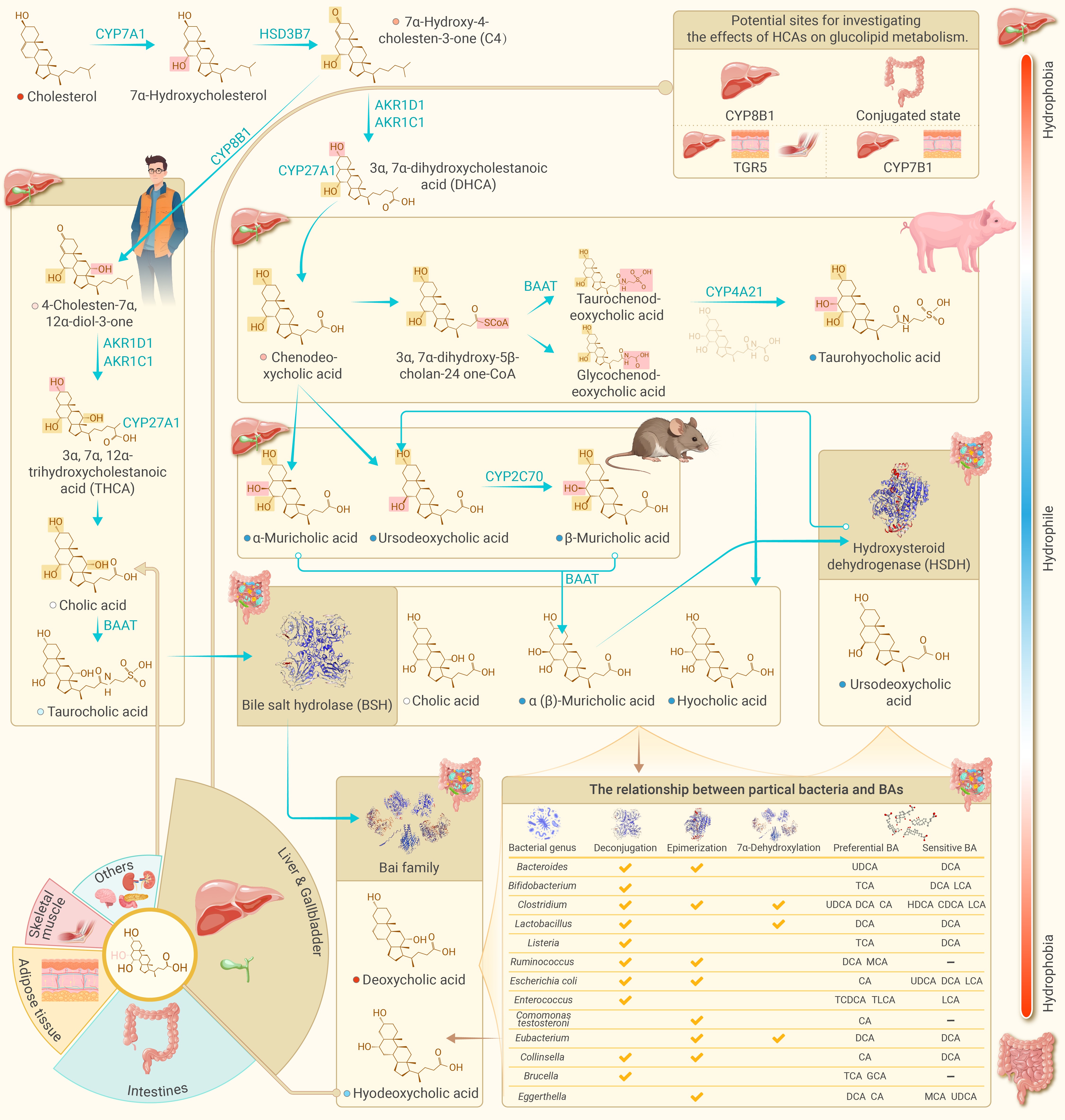
Figure 1.
The metabolic cycle of three typical trihydroxy BAs in humans, mice, and domestic pigs
-
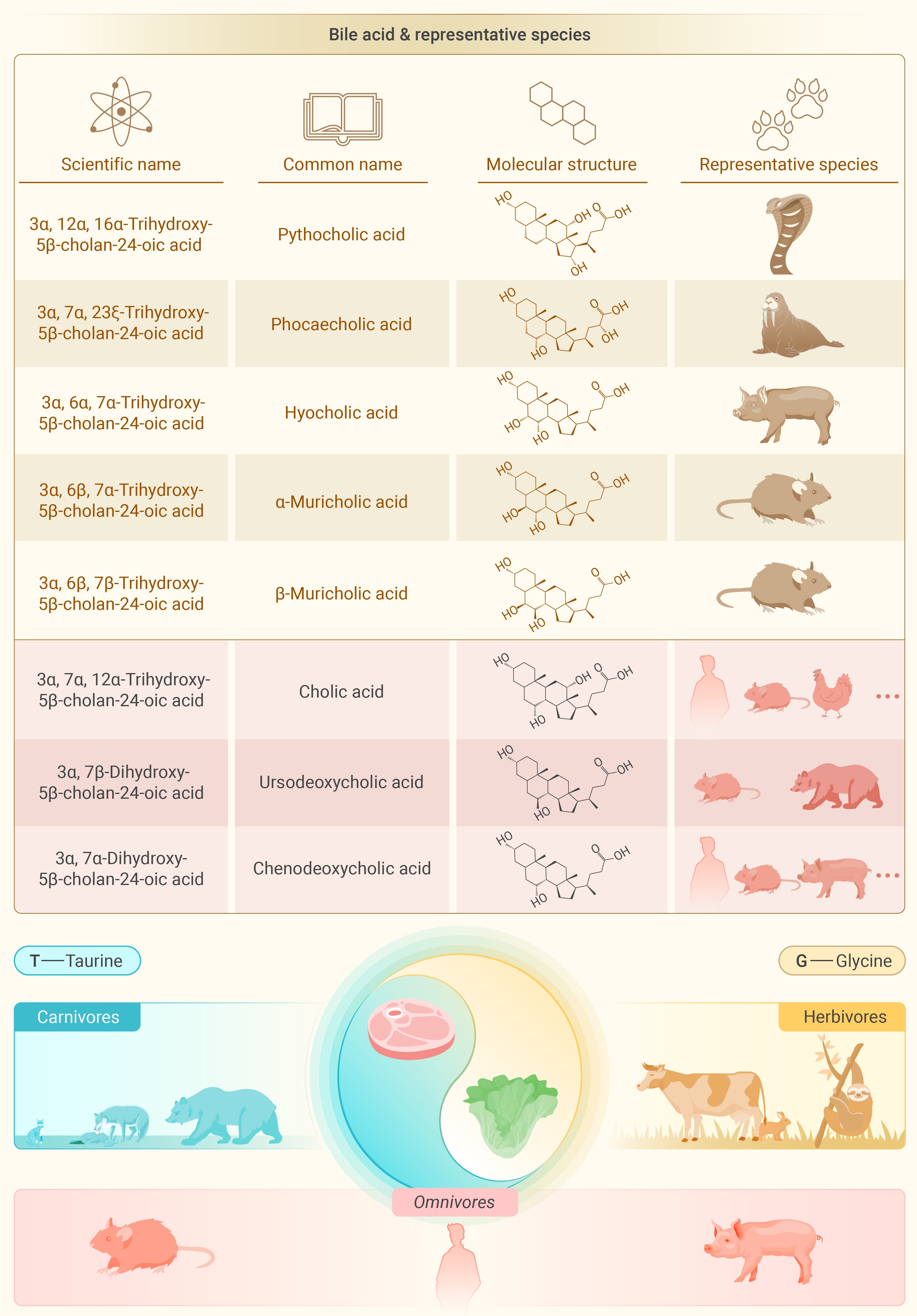
Figure 2.
Bile acid and representative species
-
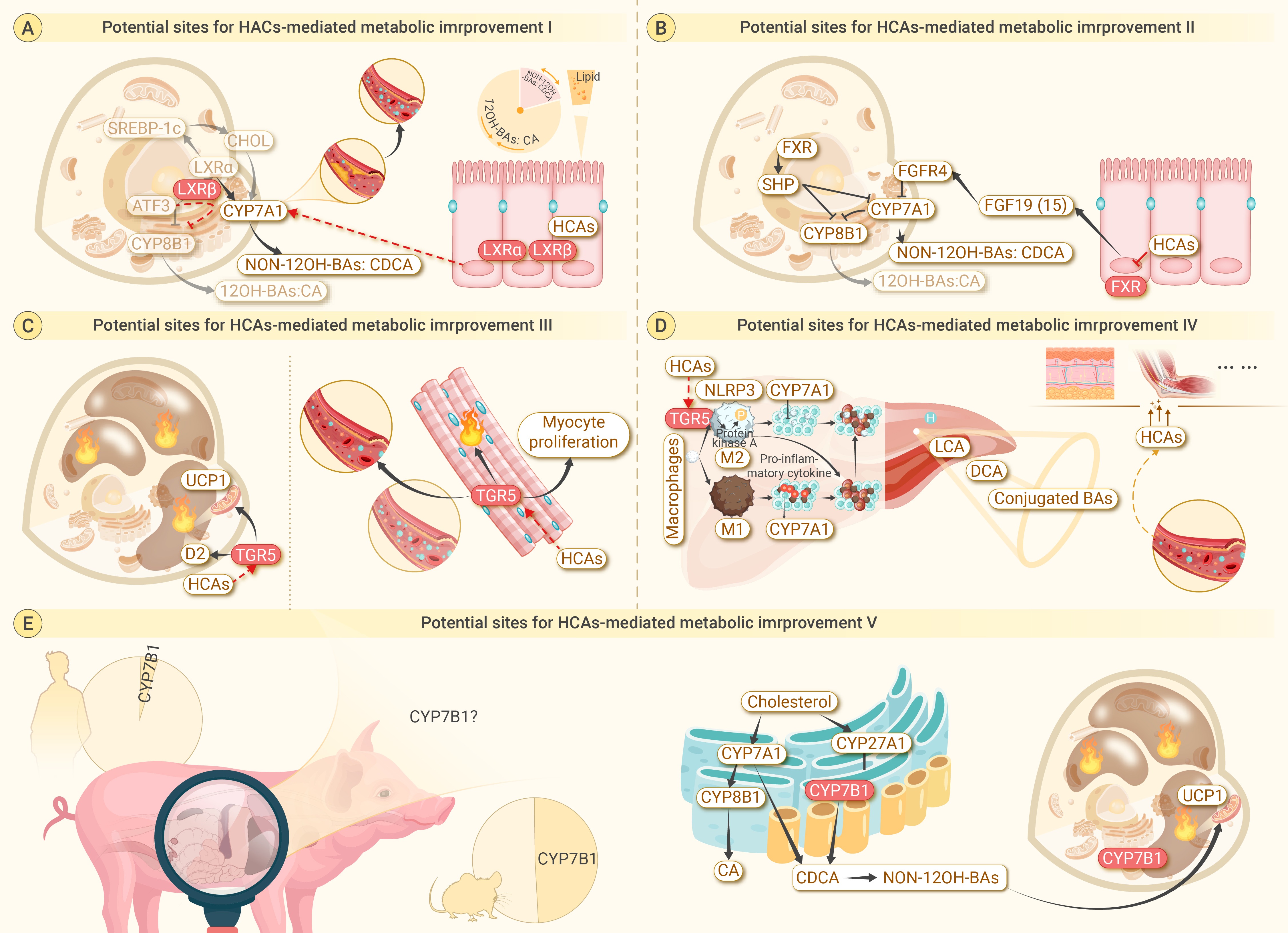
Figure 3.
Potential sites for investigating the effects of HCAs on glucolipid metabolism
