
-
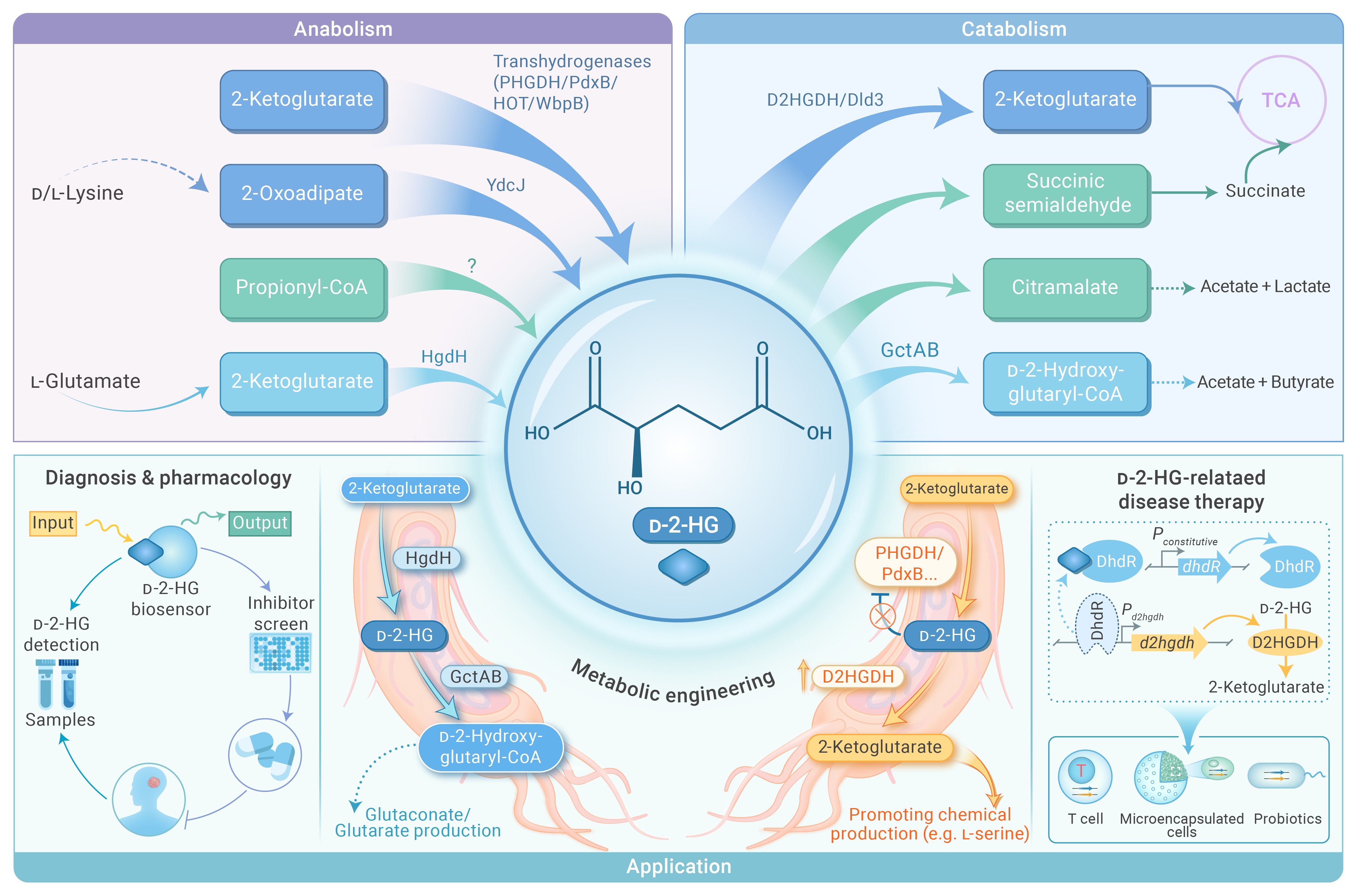
GRAPHICAL ABSTRACT
 DownLoad:
Full size image
DownLoad:
Full size image
-
PUBLIC SUMMARY
-
D-2-Hydroxyglutarate (D-2-HG) is known as an oncometabolite that promotes the genesis of various tumors.
D-2-HG is also a functional endogenous metabolite involved in many core metabolic processes.
D-2-HG production by transhydrogenases facilitates thermodynamically unfavorable but necessary reactions.
D-2-HG is an intermediate metabolite of D/L-lysine, propionyl-CoA, and L-glutamate catabolism.
D-2-HG metabolism-related proteins have potential applications in synthetic biology and medicine.
-
-
ABSTRACT
Isocitrate dehydrogenase mutation-induced D-2-hydroxyglutarate (D-2-HG) accumulation may promote the tumorigenesis of numerous cancers. D-2-HG produced by several promiscuous enzymatic reactions under normal conditions is also toxic to organisms. D-2-HG was thus previously viewed as an abnormal metabolite with no physiological function and D-2-HG conversion to 2-ketoglutarate by D-2-HG dehydrogenase seems to be a process of metabolite repair. However, several recent studies have revealed that D-2-HG production is not a meaningless process without a physiological purpose. D-2-HG production actually participates in many core metabolic processes, and disorders of these processes may be the reason for the D-2-HG accumulation in some tumors lacking the isocitrate dehydrogenase mutation. This review summarizes the diverse and widely distributed metabolic processes involving D-2-HG, highlights the physiological functions of D-2-HG generation from various precursors, and discusses the possible applications of enzymes related to D-2-HG metabolism in synthetic biology, diagnosis, and treatment of D-2-HG accumulation-induced diseases. -

-
REFERENCES
[1] Dang, L., White, D.W., Gross, S., et al. (2009). Cancer-associated IDH1 mutations produce 2-hydroxyglutarate. Nature 462: 739−744. DOI: 10.1038/nature08617. [2] Ward, P.S., Patel, J., Wise, D.R., et al. (2010). The common feature of leukemia-associated IDH1 and IDH2 mutations is a neomorphic enzyme activity converting α-ketoglutarate to 2-hydroxyglutarate. Cancer Cell 17: 225−234. DOI: 10.1016/j.ccr.2010.01.020. [3] Lemonnier, F., Cairns, R.A., Inoue, S., et al. (2016). The IDH2 R172K mutation associated with angioimmunoblastic T-cell lymphoma produces 2HG in T cells and impacts lymphoid development. Proc. Natl. Acad. Sci. USA 113: 15084−15089. DOI: 10.1073/pnas.1617929114. [4] Saha, S.K., Parachoniak, C.A., Ghanta, K.S., et al. (2014). Mutant IDH inhibits HNF-4α to block hepatocyte differentiation and promote biliary cancer. Nature 513: 110−114. DOI: 10.1038/nature13441. [5] Dang, L. and Su, S.M. (2017). Isocitrate dehydrogenase mutation and (R)-2-hydroxyglutarate: From basic discovery to therapeutics development. Annu. Rev. Biochem. 86: 305−331. DOI: 10.1146/annurev-biochem-061516-044732. [6] Ye, D., Guan, K.L., and Xiong, Y. (2018). Metabolism, activity, and targeting of D- and L-2-hydroxyglutarates. Trends Cancer 4: 151−165. DOI: 10.1016/j.trecan.2017.12.005. [7] Mcbrayer, S.K., Mayers, J.R., Dinatale, G.J., et al. (2018). Transaminase inhibition by 2-hydroxyglutarate impairs glutamate biosynthesis and redox homeostasis in glioma. Cell 175: 101−116. DOI: 10.1016/j.cell.2018.08.038. [8] Xu, W., Yang, H., Liu, Y., et al. (2011). Oncometabolite 2-hydroxyglutarate is a competitive inhibitor of α-ketoglutarate-dependent dioxygenases. Cancer Cell 19: 17−30. DOI: 10.1016/j.ccr.2010.12.014. [9] Koivunen, P., Lee, S., Duncan, C.G., et al. (2012). Transformation by the (R)-enantiomer of 2-hydroxyglutarate linked to EGLN activation. Nature 483: 484−488. DOI: 10.1038/nature10898. [10] Sasaki, M., Knobbe, C.B., Itsumi, M., et al. (2012). D-2-Hydroxyglutarate produced by mutant IDH1 perturbs collagen maturation and basement membrane function. Genes. Dev. 26: 2038−2049. DOI: 10.1101/gad.198200.112. [11] Wang, P., Wu, J., Ma, S., et al. (2015). Oncometabolite D-2-Hydroxyglutarate inhibits ALKBH DNA repair enzymes and sensitizes IDH mutant cells to alkylating agents. Cell Rep. 13: 2353−2361. DOI: 10.1016/j.celrep.2015.11.029. [12] Bunse, L., Pusch, S., Bunse, T., et al. (2018). Suppression of antitumor T cell immunity by the oncometabolite (R)-2-hydroxyglutarate. Nat. Med. 24: 1192−1203. DOI: 10.1038/s41591-018-0095-6. [13] Notarangelo, G., Spinelli, J.B., Perez, E.M., et al. (2022). Oncometabolite D-2HG alters T cell metabolism to impair CD8+ T cell function. Science 377: 1519−1529. DOI: 10.1126/science.abj5104. [14] Rudà, R., Horbinski, C., van den Bent, M., et al. (2024). IDH inhibition in gliomas: from preclinical models to clinical trials. Nat. Rev. Neurol. 20: 395−407. DOI: 10.1038/s41582-024-00967-7. [15] Yen, K., Travins, J., Wang, F., et al. (2017). AG-221, a first-in-class therapy targeting acute myeloid leukemia harboring oncogenic IDH2 mutations. Cancer Discov. 7: 478−493. DOI: 10.1158/2159-8290.CD-16-1034. [16] Intlekofer, A.M., Dematteo, R.G., Venneti, S., et al. (2015). Hypoxia induces production of L-2-hydroxyglutarate. Cell Metab. 22: 304−311. DOI: 10.1016/j.cmet.2015.06.023. [17] Oldham, W.M., Clish, C.B., Yang, Y., et al. (2015). Hypoxia-mediated increases in L-2-hydroxyglutarate coordinate the metabolic response to reductive stress. Cell Metab. 22: 291−303. DOI: 10.1016/j.cmet.2015.06.021. [18] Linster, C.L., Van Schaftingen, E., and Hanson, A.D. (2013). Metabolite damage and its repair or pre-emption. Nat. Chem. Biol. 9: 72−80. DOI: 10.1038/nchembio.1141. [19] Tyrakis, P.A., Palazon, A., Macias, D., et al. (2016). S-2-hydroxyglutarate regulates CD8+ T-lymphocyte fate. Nature 540: 236−241. DOI: 10.1038/nature20165. [20] Li, H., Chawla, G., Hurlburt, A.J., et al. (2017). Drosophila larvae synthesize the putative oncometabolite L-2-hydroxyglutarate during normal developmental growth. Proc. Natl. Acad. Sci. USA 114: 1353−1358. DOI: 10.1073/pnas.1614102114. [21] Knorr, S., Sinn, M., Galetskiy, D., et al. (2018). Widespread bacterial lysine degradation proceeding via glutarate and L-2-hydroxyglutarate. Nat. Commun. 9: 5071. DOI: 10.1038/s41467-018-07563-6. [22] Zhang, M., Gao, C., Guo, X., et al. (2018). Increased glutarate production by blocking the glutaryl-CoA dehydrogenation pathway and a catabolic pathway involving L-2-hydroxyglutarate. Nat. Commun. 9: 2114. DOI: 10.1038/s41467-018-04513-0. [23] Zhang, W., Zhang, M., Gao, C., et al. (2017). Coupling between D-3-phosphoglycerate dehydrogenase and D-2-Hydroxyglutarate dehydrogenase drives bacterial L-serine synthesis. Proc. Natl. Acad. Sci. USA 114: E7574−E7582. DOI: 10.1073/pnas.1619034114. [24] Rudolph, J., Kim, J., and Copley, S.D. (2010). Multiple turnovers of the nicotino-enzyme PdxB require α-keto acids as cosubstrates. Biochemistry 49: 9249−9255. DOI: 10.1021/bi101291d. [25] Thompson, M.G., Blake-Hedges, J.M., Cruz-Morales, P., et al. (2019). Massively parallel fitness profiling reveals multiple novel enzymes in Pseudomonas putida lysine metabolism. mBio 10: e02577−18. DOI: 10.1128/mBio.02577-18. [26] Zhang, X., Xu, G., Shi, J., et al. (2018). Microbial production of L-serine from renewable feedstocks. Trends Biotechnol. 36: 700−712. DOI: 10.1016/j.tibtech.2018.02.001. [27] Snell, K., and Weber, G. (1986). Enzymic imbalance in serine metabolism in rat hepatomas. Biochem. J. 233: 617−620. DOI: 10.1042/bj2330617. [28] Merrill, D.K., Mcalexander, J.C., and Guynn, R.W. (1981). Equilibrium constants under physiological conditions for the reactions of D-3-phosphoglycerate dehydrogenase and L-phosphoserine aminotransferase. Arch. Biochem. Biophys. 212: 717−729. DOI: 10.1016/0003-9861(81)90416-1. [29] Grant, G.A. (2018). Elucidation of a self-sustaining cycle in Escherichia coli L-serine biosynthesis that results in the conservation of the coenzyme, NAD+. Biochemistry 57: 1798−1806. DOI: 10.1021/acs.biochem.8b00074. [30] Paczia, N., Becker-Kettern, J., Conrotte, J.F., et al. (2019). 3-Phosphoglycerate transhydrogenation instead of dehydrogenation alleviates the redox state dependency of yeast de novo L-serine synthesis. Biochemistry 58: 259−275. DOI: 10.1021/acs.biochem.8b00990. [31] Fan, J., Teng, X., Liu, L., et al. (2015). Human phosphoglycerate dehydrogenase produces the oncometabolite D-2-Hydroxyglutarate. ACS Chem. Biol. 10: 510−516. DOI: 10.1021/cb500683c. [32] Rosenberg, J., Ischebeck, T., and Commichau, F.M. (2017). Vitamin B6 metabolism in microbes and approaches for fermentative production. Biotechnol. Adv. 35: 31−40. DOI: 10.1016/j.biotechadv.2016.11.004. [33] Mukherjee, T., Hanes, J., Tews, I., et al. (2011). Pyridoxal phosphate: Biosynthesis and catabolism. Biochim. Biophys. Acta. 1814: 1585−1596. DOI: 10.1016/j.bbapap.2011.06.018. [34] Kim, J., Kershner, J.P., Novikov, Y., et al. (2010). Three serendipitous pathways in E. coli can bypass a block in pyridoxal-5’-phosphate synthesis. Mol. Syst. Biol. 6 : 436. DOI: 10.1038/msb.2010.88. [35] Kim, J., Flood, J.J., Kristofich, M.R., et al. (2019). Hidden resources in the Escherichia coli genome restore PLP synthesis and robust growth after deletion of the essential gene pdxB. Proc. Natl. Acad. Sci. USA 116: 24164−24173. DOI: 10.1073/pnas.1915569116. [36] Trombley, T.A., Capstick, R.A., and Lindsley, C.W. (2019). Dark classics in chemical neuroscience: Gamma-hydroxybutyrate (GHB). ACS Chem. Neurosci. 11: 3850−3859. DOI: 10.1021/acschemneuro.9b00336. [37] Snead, O.C.R. and Gibson, K.M. (2005). Gamma-hydroxybutyric acid. N. Engl. J. Med. 352: 2721−2732. DOI: 10.1056/NEJMra044047. [38] Salminen, A., Jouhten, P., Sarajarvi, T., et al. (2016). Hypoxia and GABA shunt activation in the pathogenesis of Alzheimer's disease. Neurochem. Int. 92: 13−24. DOI: 10.1016/j.neuint.2015.11.005. [39] Schröck, A., Hari, Y., König, S., et al. (2014). Pharmacokinetics of GHB and detection window in serum and urine after single uptake of a low dose of GBL–an experiment with two volunteers. Drug Test. Anal. 6: 363−366. DOI: 10.1002/dta.1498. [40] Struys, E.A., Verhoeven, N.M., Ten Brink, H.J., et al. (2005). Kinetic characterization of human hydroxyacid-oxoacid transhydrogenase: Relevance to D-2-hydroxyglutaric and gamma-hydroxybutyric acidurias. J. Inherit. Metab. Dis. 28: 921−930. DOI: 10.1007/s10545-005-0114-x. [41] Alzeer, S. and Ellis, E.M. (2014). Metabolism of gamma hydroxybutyrate in human hepatoma HepG2 cells by the aldo-keto reductase AKR1A1. Biochem. Pharmacol. 92: 499−505. DOI: 10.1016/j.bcp.2014.09.004. [42] Gaona-López, C., Julián-Sánchez, A., and Riveros-Rosas, H. (2016). Diversity and evolutionary analysis of iron-containing (type-III) alcohol dehydrogenases in eukaryotes. PLoS One 11: e166851. DOI: 10.1371/journal.pone.0166851. [43] Kaufman, E.E., Nelson, T., Fales, H.M., et al. (1988). Isolation and characterization of a hydroxyacid-oxoacid transhydrogenase from rat kidney mitochondria. J. Biol. Chem. 263: 16872−16879. DOI: 10.1016/S0021-9258(18)37472-6. [44] Knerr, I., Pearl, P.L., Bottiglieri, T., et al. (2007). Therapeutic concepts in succinate semialdehyde dehydrogenase (SSADH; ALDH5a1) deficiency (γ-hydroxybutyric aciduria). Hypotheses evolved from 25 years of patient evaluation, studies in Aldh5a1-/- mice and characterization of γ-hydroxybutyric acid pharmacology. J. Inherit. Metab. Dis. 30 : 279–294. DOI: 10.1007/s10545-007-0574-2. [45] Struys, E.A., Verhoeven, N.M., Salomons, G.S., et al. (2006). D-2-Hydroxyglutaric aciduria in three patients with proven SSADH deficiency: Genetic coincidence or a related biochemical epiphenomenon. Mol. Genet. Metab. 88: 53−57. DOI: 10.1016/j.ymgme.2005.12.002. [46] King, J.D., Kocíncová, D., Westman, E.L., et al. (2009). Review: Lipopolysaccharide biosynthesis in Pseudomonas aeruginosa. Innate. Immun. 15: 261−312. DOI: 10.1177/1753425909106436. [47] Larkin, A. and Imperiali, B. (2009). Biosynthesis of UDP-GlcNAc(3NAc)A by WbpB, WbpE, and WbpD: Enzymes in the Wbp pathway responsible for O-antigen assembly in Pseudomonas aeruginosa PAO1. Biochemistry. 48: 5446−5455. DOI: 10.1021/bi900186u. [48] Xiao, D., Zhang, W., Guo, X., et al. (2021). A D-2-Hydroxyglutarate biosensor based on specific transcriptional regulator DhdR. Nat. Commun. 12: 7108. DOI: 10.1038/s41467-021-27357-7. [49] Jankowski, M.D., Henry, C.S., Broadbelt, L.J., et al. (2008). Group contribution method for thermodynamic analysis of complex metabolic networks. Biophys. J. 95: 1487−1499. DOI: 10.1529/biophysj.107.124784. [50] Ravasz, D., Kacso, G., Fodor, V., et al. (2017). Catabolism of GABA, succinic semialdehyde or gamma-hydroxybutyrate through the GABA shunt impair mitochondrial substrate-level phosphorylation. Neurochem. Int. 109: 41−53. DOI: 10.1016/j.neuint.2017.03.008. [51] Zhang, Y., Pham, T.M., Kayrouz, C., et al. (2022). Biosynthesis of argolaphos illuminates the unusual biochemical origins of aminomethylphosphonate and N ε-hydroxyarginine containing natural products. J. Am. Chem. Soc. 144: 9634−9644. DOI: 10.1021/jacs.2c00627. [52] Herold, R.A., Reinbold, R., Schofield, C.J., et al. (2023). NADP(H)-dependent biocatalysis without adding NADP(H). Proc. Natl. Acad. Sci. USA 120: e2214123120. DOI: 10.1073/pnas.2214123120. [53] Rendina, A.R., Pietrak, B., Smallwood, A., et al. (2013). Mutant IDH1 enhances the production of 2-hydroxyglutarate due to its kinetic mechanism. Biochemistry 52: 4563−4577. DOI: 10.1021/bi400514k. [54] Buckel, W. (2001). Unusual enzymes involved in five pathways of glutamate fermentation. Appl. Microbiol. Biotechnol. 57: 263−273. DOI: 10.1007/s002530100773. [55] Kim, J., Hetzel, M., Boiangiu, C.D., et al. (2004). Dehydration of (R)-2-hydroxyacyl-CoA to enoyl-CoA in the fermentation of alpha-amino acids by anaerobic bacteria. FEMS Microbiol. Rev. 28: 455−468. DOI: 10.1016/j.femsre.2004.03.001. [56] Buckel, W. and Miller, S.L. (1987). Equilibrium constants of several reactions involved in the fermentation of glutamate. Eur. J. Biochem. 164: 565−569. DOI: 10.1111/j.1432-1033.1987.tb11164.x. [57] Balss, J., Pusch, S., Beck, A.C., et al. (2012). Enzymatic assay for quantitative analysis of (D)-2-hydroxyglutarate. Acta Neuropathol. 124: 883−891. DOI: 10.1007/s00401-012-1060-y. [58] Voelxen, N.F., Walenta, S., Proescholdt, M., et al. (2016). Quantitative imaging of D-2-hydroxyglutarate in selected histological tissue areas by a novel bioluminescence technique. Front. Oncol. 6: 46. DOI: 10.3389/fonc.2016.00046. [59] Reimer, L.C., Will, S.E., and Schomburg, D. (2017). The fate of lysine: Non-targeted stable isotope analysis reveals parallel ways for lysine catabolization in Phaeobacter inhibens. PLoS One 12: e186395. DOI: 10.1371/journal.pone.0186395. [60] Hartmann, M. and Zeier, J. (2018). L-Lysine metabolism to N-hydroxypipecolic acid: An integral immune-activating pathway in plants. Plant J. 96: 5−21. DOI: 10.1111/tpj.14037. [61] Sauer, S.W., Opp, S., Hoffmann, G.F., et al. (2011). Therapeutic modulation of cerebral L-lysine metabolism in a mouse model for glutaric aciduria type I. Brain 134: 157−170. DOI: 10.1093/brain/awq269. [62] Hildebrandt, T.M., Nunes Nesi, A., Araújo, W. L., et al. (2015). Amino acid catabolism in plants. Mol. Plant 8: 1563−1579. DOI: 10.1016/j.molp.2015.09.005. [63] Thompson, M.G., Blake-Hedges, J.M., Pereira, et al. (2020). An iron (II) dependent oxygenase performs the last missing step of plant lysine catabolism. Nat. Commun. 11: 2931. DOI: 10.1101/2020.01.30.927905. [64] Bouchereau, J., and Schiff, M. (2020). Inherited disorders of lysine metabolism: a review. J. Nutr. 150: 2556S−2560S. DOI: 10.1093/jn/nxaa112. [65] Zhang, M., Kang, Z., Guo, X., et al. (2019). Regulation of glutarate catabolism by GntR family regulator CsiR and LysR family regulator GcdR in Pseudomonas putida KT2440. mBio 10: e01570−19. DOI: 10.1128/mBio.01570-19. [66] Yamauchi, M. and Sricholpech, M. (2012). Lysine post-translational modifications of collagen. Essays Biochem. 52: 113−133. DOI: 10.1042/bse0520113. [67] Friede, J.D. and Henderson, L.M. (1976). Metabolism of 5-hydroxylysine in Pseudomonas fluorescens. J. Bacteriol. 127: 1239−1247. DOI: 10.1128/jb.127.3.1239-1247.1976. [68] Lindahl, G., Lindstedt, G., and Lindstedt, S. (1967). Metabolism of 2-amino-5-hydroxyadipic acid in the rat. Arch. Biochem. Biophys. 119: 347−352. DOI: 10.1016/0003-9861(67)90463-8. [69] Otzen, C., Bardl, B., Jacobsen, I.D., et al. (2014). Candida albicans utilizes a modified β-oxidation pathway for the degradation of toxic propionyl-CoA. J. Biol. Chem. 289: 8151−8169. DOI: 10.1074/jbc.M113.517672. [70] Textor, S., Wendisch, V.F., De Graaf, A.A., et al. (1997). Propionate oxidation in Escherichia coli: evidence for operation of a methylcitrate cycle in bacteria. Arch. Microbiol. 168: 428−436. DOI: 10.1007/s002030050518. [71] Reeves, H.C. and Ajl, S.J. (1962). Alpha-hydroxyglutaric acid synthetase. J. Bacteriol. 84: 186−187. DOI: 10.1128/jb.84.1.186-187.1962. [72] Rabin, R., Reeves, H.C., Wegener, W.S., et al. (1965). Glyoxylate in fatty-acid metabolism. Science 150: 1548−1558. DOI: 10.1126/science.150.3703.1548. [73] Bleiweis, A.S., Reeves, H.C., and Ajl, S.J. (1967). Formation of α-hydroxyglutaric acid by Aspergillus glaucus. J. Bacteriol. 94: 1560−1564. DOI: 10.1128/jb.94.5.1560-1564.1967. [74] Linka, N. and Theodoulou, F.L. (2013). Metabolite transporters of the plant peroxisomal membrane: Known and unknown. Subcell. Biochem. 69: 169−194. DOI: 10.1007/978-94-007-6889-5_10. [75] Engqvist, M.K., Kuhn, A., Wienstroer, J., et al. (2011). Plant D-2-Hydroxyglutarate dehydrogenase participates in the catabolism of lysine especially during senescence. J. Biol. Chem. 286: 11382−11390. DOI: 10.1074/jbc.M110.194175. [76] Yang, J., Zhu, H., Zhang, T., et al. (2021). Structure, substrate specificity, and catalytic mechanism of human D-2-HGDH and insights into pathogenicity of disease-associated mutations. Cell Discov. 7: 3. DOI: 10.1038/s41421-020-00227-0. [77] Quaye, J.A. and Gadda, G. (2023). Uncovering Zn2+ as a cofactor of FAD-dependent Pseudomonas aeruginosa PAO1 D-2-hydroxyglutarate dehydrogenase. J. Biol. Chem. 299: 103007. DOI: 10.1016/j.jbc.2023.103007. [78] Samsonov, V.V., Kuznetsova, A.A., Rostova, J.G., et al. (2022). Revealing a new family of D-2-Hydroxyglutarate dehydrogenases in Escherichia coli and Pantoea ananatis encoded by ydiJ. Microorganisms 10: 1766. DOI: 10.3390/microorganisms10091766. [79] Guo, X., Zhang, M., Cao, M., et al. (2018). D-2-Hydroxyglutarate dehydrogenase plays a dual role in L-serine biosynthesis and D-malate utilization in the bacterium Pseudomonas stutzeri. J. Biol. Chem. 293: 15513−15523. DOI: 10.1074/jbc.RA118.003897. [80] Araújo, W.L., Ishizaki, K., Nunes-Nesi, A., et al. (2010). Identification of the 2-hydroxyglutarate and isovaleryl-CoA dehydrogenases as alternative electron donors linking lysine catabolism to the electron transport chain of Arabidopsis mitochondria. Plant Cell 22: 1549−1563. DOI: 10.1105/tpc.110.075630. [81] Toplak, M., Brunner, J., Tabib, C.R., et al. (2019). Closing the gap: Yeast electron-transferring flavoprotein links the oxidation of D-lactate and D-α-hydroxyglutarate to energy production via the respiratory chain. FEBS J. 286: 3611−3628. DOI: 10.1111/febs.14924. [82] Watanabe, H., Yamaguchi, S., Saiki, K., et al. (1995). Identification of the D-enantiomer of 2-hydroxyglutaric acid in glutaric aciduria type II. Clin. Chim. Acta 238: 115−124. DOI: 10.1016/0009-8981(95)06074-n. [83] Kranendijk, M., Struys, E.A., Salomons, G.S., et al. (2012). Progress in understanding 2-hydroxyglutaric acidurias. J. Inherit. Metab. Dis. 35: 571−587. DOI: 10.1007/s10545-012-9462-5. [84] Becker-Kettern, J., Paczia, N., Conrotte, J.F., et al. (2016). Saccharomyces cerevisiae forms D-2-hydroxyglutarate and couples its degradation to D-lactate formation via a cytosolic transhydrogenase. J. Biol. Chem. 291: 6036−6058. DOI: 10.1074/jbc.M115.704494. [85] Wegener, W.S., Reeves, H.C., Rabin, R., et al. (1968). Alternate pathways of metabolism of short-chain fatty acids. Bacteriol. Rev. 32: 1−26. DOI: 10.1128/mmbr.32.1.1-26.1968. [86] Chelstowska, A., Liu, Z., Jia, Y., et al. (1999). Signalling between mitochondria and the nucleus regulates the expression of a new D-lactate dehydrogenase activity in yeast. Yeast 15: 1377−1391. DOI: 3.0.CO;2-0">10.1002/(SICI)1097-0061(19990930)15:13<1377::AID-YEA473>3.0.CO;2-0. [87] Qiu, Z., Lin, A.P., Jiang, S., et al. (2020). MYC regulation of D2HGDH and L2HGDH influences the epigenome and epitranscriptome. Cell Chem. Biol. 27: 538−550.e7. DOI: 10.1016/j.chembiol.2020.02.002. [88] Lin, A.P., Abbas, S., Kim, S.W., et al. (2015). D2HGDH regulates α-ketoglutarate levels and dioxygenase function by modulating IDH2. Nat. Commun. 6: 7768. DOI: 10.1038/ncomms8768. [89] Quaye, J.A. and Gadda, G. (2020). Kinetic and bioinformatic characterization of D-2-hydroxyglutarate dehydrogenase from Pseudomonas aeruginosa PAO1. Biochemistry 59: 4833−4844. DOI: 10.1021/acs.biochem.0c00832. [90] Shapiro, J.A., Kaplan, A.R., and Wuest, W.M. (2019). From general to specific: can Pseudomonas primary metabolism be exploited for narrow-spectrum antibiotics. Chembiochem. 20: 34−39. DOI: 10.1002/cbic.201800383. [91] Yang, X., Wang, J., Feng, Z., et al. (2019). Relation of the pdxB-usg-truA-dedA operon and the truA gene to the intracellular survival of Salmonella enterica serovar Typhimurium. Int. J. Mol. Sci. 20: 380. DOI: 10.3390/ijms20020380. [92] Sato, K., Yoshiga, T., and Hasegawa, K. (2016). Involvement of vitamin B6 biosynthesis pathways in the insecticidal activity of Photorhabdus luminescens. Appl. Environ. Microbiol. 82: 3546−3553. DOI: 10.1128/AEM.00522-16. [93] Merkx-Jacques, A., Obhi, R.K., Bethune, G., et al. (2004). The Helicobacter pylori flaA1 and wbpB genes control lipopolysaccharide and flagellum synthesis and function. J. Bacteriol. 186: 2253−2265. DOI: 10.1128/jb.186.8.2253-2265.2004. [94] Zhao, J., Feng, K., Wang, F., et al. (2021). A retrospective overview of PHGDH and its inhibitors for regulating cancer metabolism. Eur. J. Med. Chem. 217: 113379. DOI: 10.1016/j.ejmech.2021.113379. [95] Lee, C. M., Hwang, Y., Kim, M., et al. (2024). PHGDH: a novel therapeutic target in cancer. Exp. Mol. Med. 56: 1513−1522. DOI: 10.1038/s12276-024-01268-1. [96] Mishra, P., Tang, W., Putluri, V., et al. (2018). ADHFE1 is a breast cancer oncogene and induces metabolic reprogramming. J. Clin. Invest. 128: 323−340. DOI: 10.1172/JCI93815. [97] Terunuma, A., Putluri, N., Mishra, P., et al. (2014). MYC-driven accumulation of 2-hydroxyglutarate is associated with breast cancer prognosis. J. Clin. Invest. 124: 398−412. DOI: 10.1172/JCI71180. [98] Choi, C., Ganji, S.K., Deberardinis, R.J., et al. (2012). 2-Hydroxyglutarate detection by magnetic resonance spectroscopy in IDH-mutated patients with gliomas. Nat. Med. 18: 624−629. DOI: 10.1038/nm.2682. [99] Atalay, E.B. and Kayali, H.A. (2022). The elevated D-2-Hydroxyglutarate level found as a characteristic metabolic change of colon cancer in both in vitro and in vivo models. Biochem. Biophys. Res. Commun. 627: 191−199. DOI: 10.1016/j.bbrc.2022.08.019. [100] Sim, H.W., Nejad, R., Zhang, W., et al. (2019). Tissue 2-hydroxyglutarate as a biomarker for isocitrate dehydrogenase mutations in gliomas. Clin. Cancer Res. 25: 3366−3373. DOI: 10.1158/1078-0432.CCR-18-3205. [101] Fernández-Galán, E., Massana, N., Parra-Robert, M., et al. (2018). Validation of a routine gas chromatography mass spectrometry method for 2-hydroxyglutarate quantification in human serum as a screening tool for detection of idh mutations. J. Chromatogr. B. Analyt. Technol. Biomed. Life Sci. 1083: 28−34. DOI: 10.1016/j.jchromb.2018.02.038. [102] Struys, E.A., Jansen, E.E., Verhoeven, N.M., et al. (2004). Measurement of urinary D- and L-2-hydroxyglutarate enantiomers by stable-isotope-dilution liquid chromatography-tandem mass spectrometry after derivatization with diacetyl-L-tartaric anhydride. Clin. Chem. 50: 1391−1395. DOI: 10.1373/clinchem.2004.033399. [103] Jin, X., Liu, C., Xu, T., et al. (2020). Artificial intelligence biosensors: Challenges and prospects. Biosens. Bioelectron. 165: 112412. DOI: 10.1016/j.bios.2020.112412. [104] Jayanthi, V.S.P.K.S.A., Das, A.B., and Saxena, U. (2017). Recent advances in biosensor development for the detection of cancer biomarkers. Biosens. Bioelectron. 91: 15−23. DOI: 10.1016/j.bios.2016.12.014. [105] Velusamy K., Periyasamy S., Kumar P.S., et al. (2022). Biosensor for heavy metals detection in wastewater: A review. Food. Chem. Toxicol. 168: 113307. DOI: 10.1016/j.fct.2022.113307. [106] Gao, Y.Z., Wang, Y., Ji, M., et al. (2023). A whole-cell hydrogen peroxide biosensor and its application in visual food analysis. The Innovation Life 1: 100011. DOI: 10.59717/j.xinn-life.2023.100011. [107] Teng, Y., Zhang, J., Jiang, T., et al. (2022). Biosensor-enabled pathway optimization in metabolic engineering. Curr. Opin. Biotechnol. 75: 102696. DOI: 10.1016/j.copbio.2022.102696. [108] Kang, Z., Zhang, M., Gao, K., et al. (2021). An L-2-hydroxyglutarate biosensor based on specific transcriptional regulator LhgR. Nat. Commun. 12: 3619. DOI: 10.1038/s41467-021-23723-7. [109] Elhammali, A., Ippolito, J.E., Collins, L., et al. (2014). A high-throughput fluorimetric assay for 2-hydroxyglutarate identifies Zaprinast as a glutaminase inhibitor. Cancer Discov. 4: 828−839. DOI: 10.1158/2159-8290.CD-13-0572. [110] Zhang, W., Yang, M., Wang, G., et al. (2024). A biosensor for D-2-Hydroxyglutarate in frozen sections and intraoperative assessment of IDH mutation status. Biosens. Bioelectron. 247: 115921. DOI: 10.1016/j.bios.2023.115921. [111] Wu, B., Li, Z., Kang, Z., et al. (2022). An enzymatic biosensor for the detection of D-2-hydroxyglutaric acid in serum and urine. Biosensors 12: 66. DOI: 10.3390/bios12020066. [112] Xiao, D., Xu, X., Gao, K., et al. (2023). A förster resonance energy transfer-based D-2-hydroxyglutarate biosensor. Sensors Actuat. B-Chem. 385: 133681. DOI: 10.1016/j.snb.2023.133681. [113] Zhang, Z., Cheng, X., Zhao, Y., et al. (2020). Lighting up live-cell and in vivo central carbon metabolism with genetically encoded fluorescent sensors. Annu. Rev. Anal. Chem. 13: 293−314. DOI: 10.1146/annurev-anchem-091619-091306. [114] Yu, J., Xia, X., Zhong, J., et al. (2017). A novel synthetic pathway for glutarate production in recombinant Escherichia coli. Process Biochem. 59: 167−171. DOI: 10.1016/j.procbio.2017.06.026. [115] Joo, J.C., Khusnutdinova, A.N., Flick, R., et al. (2017). Alkene hydrogenation activity of enoate reductases for an environmentally benign biosynthesis of adipic acid. Chem. Sci. 8: 1406−1413. DOI: 10.1039/c6sc02842j. [116] Djurdjevic, I., Zelder, O., and Buckel, W. (2011). Production of glutaconic acid in a recombinant Escherichia coli strain. Appl. Environ. Microbiol. 77: 320−322. DOI: 10.1128/AEM.02049-10. [117] Li, W., Ma, L., Shen, X., et al . (2019). Targeting metabolic driving and intermediate influx in lysine catabolism for high-level glutarate production. Nat. Commun. 10: 3337. DOI: 10.1038/s41467-019-11289-4. [118] Kiss, R.D. and Stephanopoulos, G. (1992). Metabolic characterization of a L-lysine-producing strain by continuous culture. Biotechnol. Bioeng. 39: 565−574. DOI: 10.1002/bit.260390512. [119] Saez-Jimenez, V., Scrima, S., Lambrughi, M., et al. (2022). Directed evolution of (R)-2-hydroxyglutarate dehydrogenase improves 2-oxoadipate reduction by 2 orders of magnitude. ACS Synth. Biol. 11: 2779−2790. DOI: 10.1021/acssynbio.2c00162. [120] Parthasarathy, A., Pierik, A.J., Kahnt, J., et al. (2011). Substrate specificity of 2-hydroxyglutaryl-CoA dehydratase from Clostridium symbiosum: Toward a bio-based production of adipic acid. Biochemistry 50: 3540−3550. DOI: 10.1021/bi1020056. [121] Reitman, Z.J., Choi, B.D., Spasojevic, I., et al. (2012). Enzyme redesign guided by cancer-derived IDH1 mutations. Nat. Chem. Biol. 8: 887−889. DOI: 10.1038/nchembio.1065. [122] Li, Z., Yan, J., Sun, J., et al. (2018). Production of value-added chemicals from glycerol using in vitro enzymatic cascades. Commun. Chem. 1: 71. DOI: 10.1038/s42004-018-0070-7. [123] Li, W.J., Narancic, T., Kenny, S.T., et al. (2020). Unraveling 1,4-butanediol metabolism in Pseudomonas putida KT2440. Front. Microbiol. 11: 382. DOI: 10.3389/fmicb.2020.00382. [124] Tolle, F., Stücheli, P., and Fussenegger, M. (2019). Genetic circuitry for personalized human cell therapy. Curr. Opin. Biotechnol. 59: 31−38. DOI: 10.1016/j.copbio.2019.02.003. [125] Brophy, J.A.N. and Voigt, C.A. (2014). Principles of genetic circuit design. Nat. Methods 11: 508−520. DOI: 10.1038/nmeth.2926. [126] Li, H., Israni, D.V., Gagnon, K.A., et al. (2022). Multidimensional control of therapeutic human cell function with synthetic gene circuits. Science 378: 1227−1234. DOI: 10.1126/science.ade0156. [127] Ausländer, S. and Fussenegger, M. (2016). Engineering gene circuits for mammalian cell-based applications. Cold Spring Harb. Perspect. Biol. 8: a023895. DOI: 10.1101/cshperspect.a023895. [128] Montesinos, P., Recher, C., Vives, S., et al. (2022). Ivosidenib and azacitidine in IDH1-mutated acute myeloid leukemia. N. Engl. J. Med. 386: 1519−1531. DOI: 10.1056/NEJMoa2117344. [129] Wang, Y., Wild, A.T., Turcan, S., et al. (2020). Targeting therapeutic vulnerabilities with PARP inhibition and radiation in IDH-mutant gliomas and cholangiocarcinomas. Sci. Adv. 6: eaaz3221. DOI: 10.1126/sciadv.aaz3221. [130] Cho, J., Kim, S.H., Yang, B., et al. (2020). Albumin affibody-outfitted injectable gel enabling extended release of urate oxidase-albumin conjugates for hyperuricemia treatment. J. Control Release 324: 532−544. DOI: 10.1016/j.jconrel.2020.05.037. [131] Li, L., Yue, T., Feng, J., et al. (2024). Recent progress in lactate oxidase-based drug delivery systems for enhanced cancer therapy. Nanoscale 16: 8739−8758. DOI: 10.1039/d3nr05952a. [132] Dulchavsky, M., Mitra, R., Wu, K., et al. (2023). Directed evolution unlocks oxygen reactivity for a nicotine-degrading flavoenzyme. Nat. Chem. Biol. 19: 1406−1414. DOI: 10.1038/s41589-023-01426-y. [133] Cubillos-Ruiz, A., Guo, T., Sokolovska, A., et al. (2021). Engineering living therapeutics with synthetic biology. Nat. Rev. Drug. Discov. 20: 941−960. DOI: 10.1038/s41573-021-00285-3. [134] Kemmer, C., Gitzinger, M., Daoud-El Baba, M., et al. (2010). Self-sufficient control of urate homeostasis in mice by a synthetic circuit. Nat. Biotechnol. 28: 355−360. DOI: 10.1038/nbt.1617. [135] Huang, X. and Cao, X. (2023). Innovative drugs bring continuous benefits to cancer patients. The Innovation Life 1: 100043. DOI: 10.59717/j.xinn-life.2023.100043. [136] Lim, W. A. and June, C. H. (2017). The principles of engineering immune cells to treat cancer. Cell 168: 724−740. DOI: 10.1016/j.cell.2017.01.016. [137] Jenkins, M. R. and Drummond, K. J. (2024). CAR T-cell therapy for glioblastoma. N. Engl. J. Med. 390: 1329−1332. DOI: 10.1056/NEJMe2401307. [138] Yang, Q., Hao, J., Chi, M., et al. (2022). D2HGDH-mediated D2HG catabolism enhances the anti-tumor activities of CAR-T cells in an immunosuppressive microenvironment. Mol. Ther. 30: 1188−1200. DOI: 10.1016/j.ymthe.2022.01.007. [139] Lei, J., Zhang, H., Tian, G., et al. (2023). Tumor microenvironment interplay amid microbial community, host gene expression and pathological features elucidates cancer heterogeneity and prognosis risk. The Innovation Life 1: 100028. DOI: 10.59717/j.xinn-life.2023.100028. [140] Li, L., Chandra, V., and McAllister, F. (2024). Tumor-resident microbes: the new kids on the microenvironment block. Trends Cancer 10: 347−355. DOI: 10.1016/j.trecan.2023.12.002. [141] Wang, J., Ghosh, D., and Maniruzzaman, M. (2023). Using bugs as drugs: Administration of bacteria-related microbes to fight cancer. Adv. Drug Deliv. Rev. 197: 114825. DOI: 10.1016/j.addr.2023.114825. [142] Du, Y., Liu, L., Ma, W., et al. (2023). The role of extratumoral and intratumoral microorganisms in cancer immunotherapy. The Innovation Life 1: 100016. DOI: 10.59717/j.xinn-life.2023.100016. [143] Gurbatri, C.R., Arpaia, N., and Danino, T. (2022). Engineering bacteria as interactive cancer therapies. Science 378: 858−864. DOI: 10.1126/science.add9667. [144] Zhang, Y., Xi, K., Fu, Z., et al. (2024). Stimulation of tumoricidal immunity via bacteriotherapy inhibits glioblastoma relapse. Nat. Commun. 15: 4241. DOI: 10.1038/s41467-024-48606-5. [145] Reardon, D.A., and Cahill, D.P. (2023). A new era for glioma therapy - targeting mutant IDH. Nat. Rev. Clin. Oncol. 20: 737−738. DOI: 10.1038/s41571-023-00804-8. -
ABOUT THIS ARTICLE
Cite this article:
Liu Y., Kang Z., Zhang W., et al., (2024). Metabolic functions of misunderstood D-2-hydroxyglutarate. The Innovation Life 2(4): 100101. https://doi.org/10.59717/j.xinn-life.2024.100101
Welcome!
To request copyright permission to republish or share portions of our works, please visit Copyright Clearance Center's (CCC) Marketplace website at marketplace.copyright.com.
Export File
Citation
Liu Y., Kang Z., Zhang W., et al., (2024). Metabolic functions of misunderstood D-2-hydroxyglutarate. The Innovation Life 2(4): 100101. https://doi.org/10.59717/j.xinn-life.2024.100101

Format
Content


-
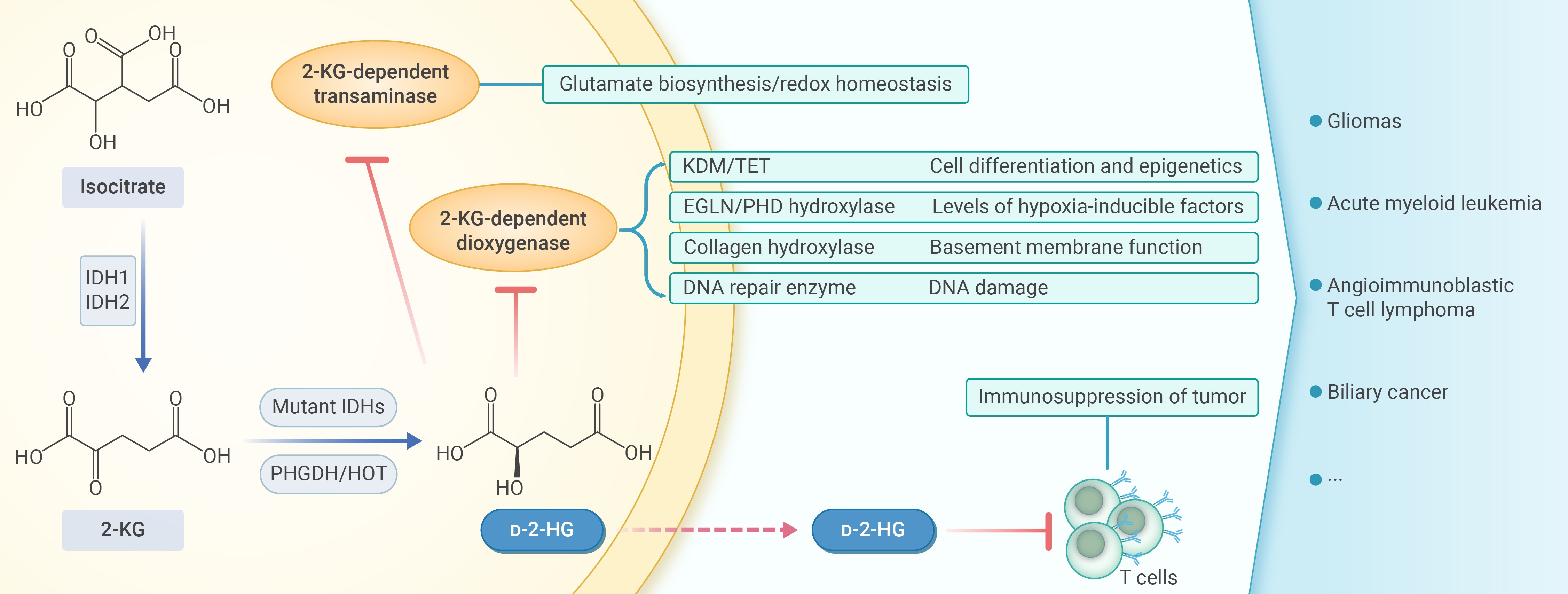
Figure 1.
Carcinogenic mechanisms of D-2-HG
-
Figure 2.
D-2-HG generation from 2-ketoglutarate by various transhydrogenases
-
Figure 3.
D-2-HG generation from glutamate, lysine, and propionyl-CoA catabolism
-
Figure 4.
Mechanism of D-2-HG catabolism
-
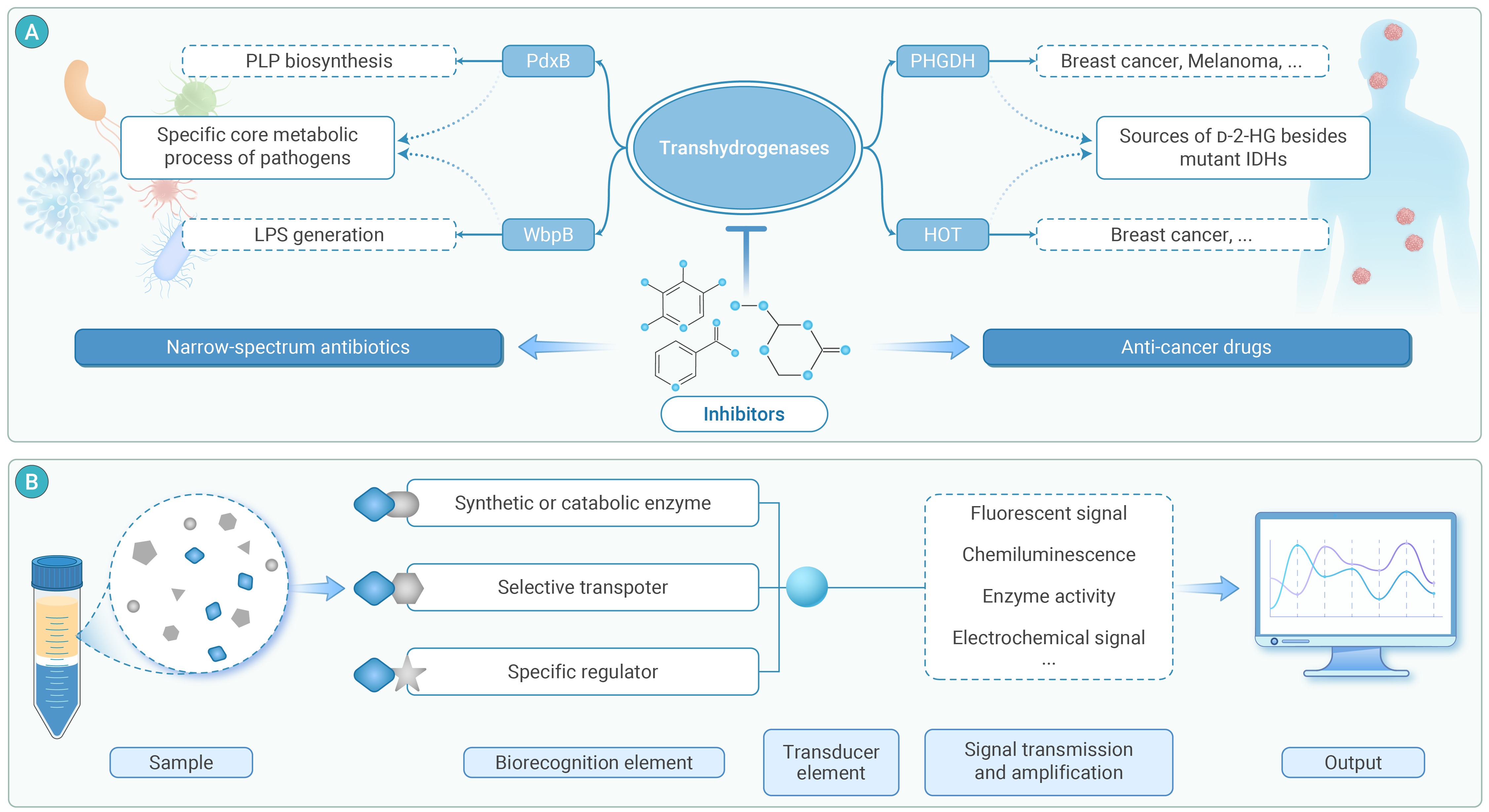
Figure 5.
Application of D-2-HG metabolism-related enzymes in pharmacology and diagnosis
-
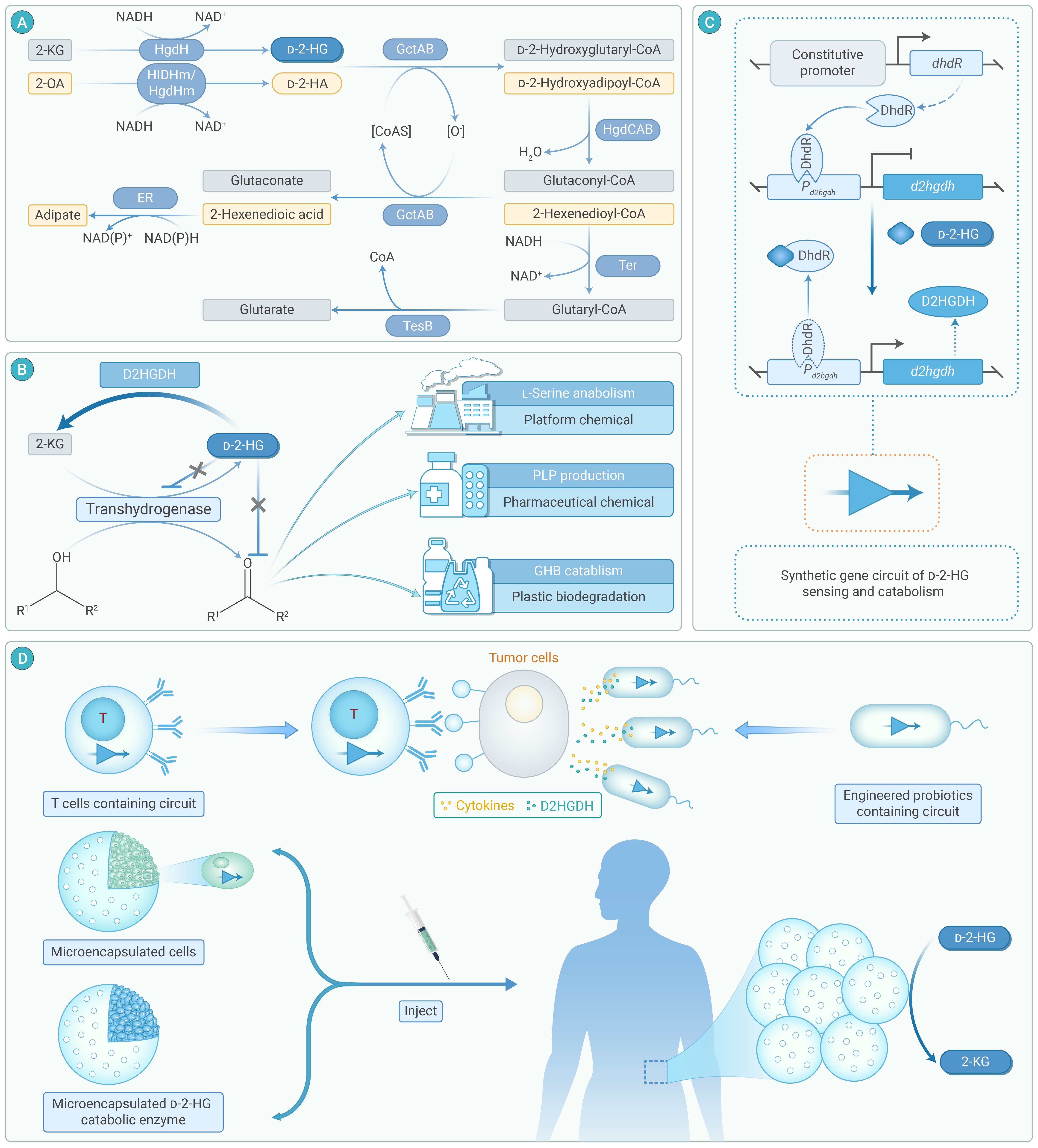
Figure 6.
Application of D-2-HG metabolism-related enzymes in synthetic biology
