
Artificial intelligence for life sciences: A comprehensive guide and future trends
-
GRAPHICAL ABSTRACT

 DownLoad:
Full size image
DownLoad:
Full size image
-
PUBLIC SUMMARY
-
Artificial intelligence (AI) has had a profound impact on all branches of life sciences.
Interdisciplinary cooperation is essential for the future development of AI in life sciences.
The integration of BT and IT will transform the research into AI for Science and Science for AI paradigm.
-
-
ABSTRACT
Artificial intelligence has had a profound impact on life sciences. This review discusses the application, challenges, and future development directions of artificial intelligence in various branches of life sciences, including zoology, plant science, microbiology, biochemistry, molecular biology, cell biology, developmental biology, genetics, neuroscience, psychology, pharmacology, clinical medicine, biomaterials, ecology, and environmental science. It elaborates on the important roles of artificial intelligence in aspects such as behavior monitoring, population dynamic prediction, microorganism identification, and disease detection. At the same time, it points out the challenges faced by artificial intelligence in the application of life sciences, such as data quality, black-box problems, and ethical concerns. The future directions are prospected from technological innovation and interdisciplinary cooperation. The integration of Bio-Technologies (BT) and Information-Technologies (IT) will transform the biomedical research into AI for Science and Science for AI paradigm. -

-
REFERENCES
[1] Xu, Y., Liu, X., Cao, X., et al. (2021). Artificial intelligence: A powerful paradigm for scientific research. The Innovation 2 : 100179. DOI: 10.1016/j.xinn.2021.100179. [2] Sun, D.L., Gao, Y.Z., Ge, X.Y., et al. (2020). Special features of bat microbiota differ from those of terrestrial mammals. Front. Microbiol. 11: 1040. DOI: 10.3389/fmicb.2020.01040. [3] Xu, C., Kadosh, D., Sun, D., et al. (2023). Editorial: Omics-originated exploration of pathogenic patterns and molecular mechanisms in human and animal fungal pathogens. Front. Microbiol. 14: 1243709. DOI: 10.3389/fmicb.2023.1243709. [4] Jin, W.-Y., Peng, J., Dai, J., et al. (2024). Bacterial load in meconium. iMeta 3: e173. DOI: 10.1002/imt2.173. [5] Jin, W.-Y., Guo, J.-X., Zhang, M., et al. (2023). Absolute quantification of the microbiota spatial distribution in the murine large intestine. The Innovation Life 1: 100030. DOI: 10.59717/j.xinn-life.2023.100030. [6] Huang, J.-W., Zhong, X.-F., and Gao, Y.-Z. (2024). New antibiotic against multi-drug resistant bacteria. The Innovation Life 2 : 100057. DOI: 10.59717/j.xinn-life.2024.100057. [7] Huang, T., Xu, H., Wang, H., et al. (2023). Artificial intelligence for medicine: Progress, challenges, and perspectives. The Innovation Medicine 1: 100030. DOI: 10.59717/j.xinn-med.2023.100030. [8] Cheng, J., Novati, G., Pan, J., et al. (2023). Accurate proteome-wide missense variant effect prediction with AlphaMissense. Science 381: eadg7492. DOI: 10.1126/science.adg7492. [9] Zhou, G., Rusnac, D.V., Park, H., et al. (2024). An artificial intelligence accelerated virtual screening platform for drug discovery. Nat. Commun. 15: 7761. DOI: 10.1038/s41467-024-52061-7. [10] Toubiana, D., Fernie, A.R., Nikoloski, Z., et al. (2013). Network analysis: Tackling complex data to study plant metabolism. Trends Biotechnol. 31: 29−36. DOI: 10.1016/j.tibtech.2012.10.011. [11] Keyl, P., Bischoff, P., Dernbach, G., et al. (2023). Single-cell gene regulatory network prediction by explainable AI. Nucleic Acids Res. 51: e20. DOI: 10.1093/nar/gkac1212. [12] Gouda, H.F., Hassan, F.A.M., El-Araby, E.E., et al. (2022). Comparison of machine learning models for bluetongue risk prediction: A seroprevalence study on small ruminants. BMC Vet. Res. 18: 394. DOI: 10.1186/s12917-022-03486-z. [13] Romero-Ferrero, F., Bergomi, M.G., Hinz, R.C., et al. (2019). idtracker. ai: Tracking all individuals in small or large collectives of unmarked animals. Nat. Methods 16: 179−182. DOI: 10.1038/s41592-018-0295-5. [14] Zhang, Y.-J., Luo, Z., Sun, Y., et al. (2023). From beasts to bytes: Revolutionizing zoological research with artificial intelligence. Zool. Res. 44: 1115−1131. DOI: 10.24272/j.issn.2095-8137.2023.263. [15] Oskyrko, O., Mi, C., Meiri, S., et al. (2024). ReptTraits: A comprehensive dataset of ecological traits in reptiles. Scientific Data 11(1):243. DOI: 10.1038/s41597-024-03079-5. [16] Mi, C., Song, K., Ma, L., et al. (2023). Optimizing protected areas to boost the conservation of key protected wildlife in China. The Innovation 4: 100424. DOI: 10.1016/j.xinn.2023.100424. [17] Meiri, S. (2024). SquamBase—A database of squamate (Reptilia: Squamata) traits. Global Ecology and Biogeography 33: e13812. DOI: 10.1111/geb.13812. [18] Murali, G., Iwamura, T., Meiri, S., et al. (2023). Future temperature extremes threaten land vertebrates. Nature 615: 461−467. DOI: 10.1038/s41586-022-05606-z. [19] Cox, N., Young, B.E., Bowles, P., et al. (2022). A global reptile assessment highlights shared conservation needs of tetrapods. Nature 605: 285−290. DOI: 10.1038/s41586-022-04664-7. [20] Truong, M.A. and Van der Wal, R. (2024). Exploring the landscape of automated species identification apps: Development, promise, and user appraisal. Bioscience 74: 601−613. DOI: 10.1093/biosci/biae077. [21] Miao, Z., Gaynor, K.M., Wang, J., et al. (2019). Insights and approaches using deep learning to classify wildlife. Sci. Rep. 9: 8137. DOI: 10.1038/s41598-019-44565-w. [22] Oliver, R.Y., Ellis, D.P.W., Chmura, H.E., et al. (2018). Eavesdropping on the Arctic: Automated bioacoustics reveal dynamics in songbird breeding phenology. Sci. Adv. 4: eaaq1084. DOI: 10.1126/sciadv.aaq1084. [23] Faiss, M. and Stowell, D. (2023). Adaptive representations of sound for automatic insect recognition. PLoS Comput. Biol. 19: e1011541. DOI: 10.1371/journal.pcbi.1011541. [24] Bogucki, R., Cygan, M., Khan, C.B., et al. (2019). Applying deep learning to right whale photo identification. Conserv. Biol. 33: 676−684. DOI: 10.1111/cobi.13226. [25] Norouzzadeh, M.S., Nguyen, A., Kosmala, M., et al. (2018). Automatically identifying, counting, and describing wild animals in camera-trap images with deep learning. Proc. Natl. Acad. Sci. USA 115: E5716−5725. DOI: 10.1073/pnas.1719367115. [26] Thalor, M.A., Nagabhyrava, R., Rajkumar, K., et al. (2023). Deep learning insights and methods for classifying wildlife. 2023 3rd International Conference on Advance Computing and Innovative Technologies in Engineering (ICACITE). [27] Arac, A., Zhao, P., Dobkin, B.H., et al. (2019). DeepBehavior: A Deep learning toolbox for automated analysis of animal and human behavior imaging data. Front. Syst. Neurosci. 13: 20. DOI: 10.3389/fnsys.2019.00020. [28] Zhang, Y. (2008). I-TASSER server for protein 3D structure prediction. BMC Bioinformatics 9: 40. DOI: 10.1186/1471-2105-9-40. [29] Kroll, A., Engqvist, M.K.M., Heckmann, D., et al. (2021). Deep learning allows genome-scale prediction of Michaelis constants from structural features. PLoS Biol. 19: e3001402. DOI: 10.1371/journal.pbio.3001402. [30] Sun, B.-J., Li, W.-M., Lv, P., et al. (2024). Genetically encoded lizard color divergence for camouflage and thermoregulation. Mol. Biol. Evol. 41: msae009. DOI: 10.1093/molbev/msae009. [31] Zhang, Y.-J., Zhu, C., Ding, Y., et al. (2018). Subcellular stoichiogenomics reveal cell evolution and electrostatic interaction mechanisms in cytoskeleton. BMC Genomics 19: 469. DOI: 10.1186/s12864-018-4845-0. [32] Jiang, S., Ma, Y., and Dai, J. (2024). Synthetic yeast genome project and beyond. The Innovation Life 2: 100059. DOI: 10.59717/j.xinn-life.2024.100059. [33] Chen, S., Xu, J., Cao, J., et al. (2024). Depth-related microbial communities and functional genes in alpine permafrost. The Innovation Life 2: 100081. DOI: 10.59717/j.xinn-life.2024.100081. [34] Yun, T., Li, H., Chang, P.-C., et al. (2021). Accurate, scalable cohort variant calls using DeepVariant and GLnexus. Bioinformatics 36: 5582−5589. DOI: 10.1093/bioinformatics/btaa1081. [35] Kaplow, I.M., Lawler, A.J., Schäffer, D.E., et al. Relating enhancer genetic variation across mammals to complex phenotypes using machine learning. Science 380 : eabm7993. DOI: 10.1126/science.abm7993. [36] Kamaru, D.N., Palmer, T.M., Riginos, C., et al. (2024). Disruption of an ant-plant mutualism shapes interactions between lions and their primary prey. Science 383: 433−438. DOI: 10.1126/science.adg1464. [37] Saupe, E.E., Myers, C.E., Townsend Peterson, A., et al. (2019). Spatio-temporal climate change contributes to latitudinal diversity gradients. Nat. Ecol. Evol. 3: 1419−1429. DOI: 10.1038/s41559-019-0962-7. [38] Sun, B.-j., Ma, L., Wang, Y., et al. (2021). Latitudinal embryonic thermal tolerance and plasticity shape the vulnerability of oviparous species to climate change. Ecol. Monogr. 91: e01468. DOI: 10.1002/ecm.1468. [39] Ma, L., Conradie, S.R., Crawford, C.L., et al. (2023). Global patterns of climate change impacts on desert bird communities. Nat. Commun. 14: 211. DOI: 10.1038/s41467-023-35814-8. [40] Samiappan, S., Krishnan, B.S., Dehart, D., et al. (2024). Aerial Wildlife Image Repository for animal monitoring with drones in the age of artificial intelligence. Database (Oxford) 2024 . DOI: 10.1093/database/baae070. [41] Chia, S.Y., Fang, Y.-T., Su, Y.-T., et al. (2023). A global database of bird nest traits. Scientific Data 10(1):923. DOI: 10.1038/s41597-023-02837-1. [42] Ding, C., Liang, D., Xin W, et al. (2022). A dataset on the morphological, life-history and ecological traits of the mammals in China. Biodivers. Sci. 30: 21520. DOI: 10.17520/biods.2021520. [43] Holt, W.V. and Comizzoli, P. (2021). Genome resource banking for wildlife conservation: Promises and caveats. Cryo. Letters 42: 309−320. [44] Zhu, S.E. (2012). Principles and applications of cryopreservation of animal gametes and embryos (Science Press). [45] Wen, L., Li, G., Huang, T., et al. (2022). Single-cell technologies: From research to application. The Innovation 3: 100342. DOI: 10.1016/j.xinn.2022.100342. [46] Wu, T., Hu, E., Xu, S., et al. (2021). clusterProfiler 4.0: A universal enrichment tool for interpreting omics data. The Innovation 2 : 100141. DOI: 10.1016/j.xinn.2021.100141. [47] Tan, C., Bian, C., Yang, D., et al. (2017). Application of genomic selection in farm animal breeding. Yi Chuan 39: 1033−1045. DOI: 10.16288/j.yczz.17-286. [48] Hasan, N., Choudhary, S., Naaz, N., et al. (2021). Recent advancements in molecular marker-assisted selection and applications in plant breeding programmes. J. Genet. Eng. Biotechnol. 19: 128. DOI: 10.1186/s43141-021-00231-1. [49] Milocco, L. and Salazar-Ciudad, I. (2022). A method to predict the response to directional selection using a Kalman filter. Proc. Natl. Acad. Sci. USA 119: e2117916119. DOI: 10.1073/pnas.2117916119. [50] Rashamol, V.P., Sejian, V., Pragna, P., et al. (2019). Prediction models, assessment methodologies and biotechnological tools to quantify heat stress response in ruminant livestock. Int. J. Biometeorol. 63: 1265−1281. DOI: 10.1007/s00484-019-01735-9. [51] Gonzalez-Garcia, E., Alhamada, M., Nascimento, H., et al. (2021). Measuring liveweight changes in lactating dairy ewes with an automated walk-over-weighing system. J. Dairy Sci. 104: 5675−5688. DOI: 10.3168/jds.2020-19075. [52] Kim, M., Choi, Y., Lee, J.N., et al. (2021). A deep learning-based approach for feeding behavior recognition of weanling pigs. J. Anim. Sci. Technol. 63: 1453−1463. DOI: 10.5187/jast.2021.e127. [53] Spoliansky, R., Edan, Y., Parmet, Y., et al. (2016). Development of automatic body condition scoring using a low-cost 3-dimensional Kinect camera. J. Dairy Sci. 99: 7714−7725. DOI: 10.3168/jds.2015-10607. [54] Sutkeviciene, N., Andersson, M.A., Zilinskas, H., et al. (2005). Assessment of boar semen quality in relation to fertility with special reference to methanol stress. Theriogenology 63: 739−747. DOI: 10.1016/j.theriogenology.2004.04.006. [55] Colazo, M.G., Whittaker, P., Macmillan, K., et al. (2018). Evaluation of a modified GnRH-based timed-AI protocol associated with estrus detection in beef heifers inseminated with sex-selected or conventional semen. Theriogenology 118: 90−95. DOI: 10.1016/j.theriogenology.2018.05.037. [56] Chebel, R.C., and Cunha, T. (2020). Optimization of timing of insemination of dairy heifers inseminated with sex-sorted semen. J. Dairy Sci. 103: 5591−5603. DOI: 10.3168/jds.2019-17870. [57] Lagua, E.B., Mun, H.S., Ampode, K.M.B., et al. (2023). Artificial intelligence for automatic monitoring of respiratory health conditions in smart swine farming. Animals (Basel) 13: 1860. DOI: 10.3390/ani13111860. [58] Zhang, K., Li, D., Huang, J., et al (2020). Automated video behavior recognition of pigs using two-stream convolutional networks. Sensors (Basel) 20 : 1085. DOI: 10.3390/s20041085. [59] Sadeghi, M., Banakar, A., Minaei, S., et al. (2023). Early detection of avian diseases based on thermography and artificial intelligence. Animals (Basel) 13: 2348. DOI: 10.3390/ani13142348. [60] Swarbreck, D., Wilks, C., Lamesch, P., et al. (2008). The Arabidopsis Information Resource (TAIR): Gene structure and function annotation. Nucleic Acids Res. 36: D1009−1014. DOI: 10.1093/nar/gkm965. [61] Reiser, L., Bakker, E., Subramaniam, S., et al. (2024). The arabidopsis information resource in 2024. Genetics 227: iyae027. DOI: 10.1093/genetics/iyae027. [62] Xie, G., Xuan, J., Liu, B., et al. (2024). FlowerMate 2.0: Identifying plants in China with artificial intelligence. The Innovation 5 : 100636. DOI: 10.1016/j.xinn.2024.100636. [63] Swetnam, T.L., Antin, P.B., Bartelme, R., et al. (2024). CyVerse: Cyberinfrastructure for open science. PLoS computational biology 20: e1011270. DOI: 10.1371/journal.pcbi.1011270. [64] Gehan, M.A., Fahlgren, N., Abbasi, A., et al. (2017). PlantCV v2: Image analysis software for high-throughput plant phenotyping. PeerJ 5: e4088. DOI: 10.7717/peerj.4088. [65] Zhu, W., Han, R., Shang, X., et al. (2024). The CropGPT project: Call for a global, coordinated effort in precision design breeding driven by AI using biological big data. Mol. Plant 17: 215−218. DOI: 10.1016/j.molp.2023.12.015. [66] Chen, F., Dong, W., Zhang, J., et al. (2018). The sequenced angiosperm genomes and genome databases. Front. Plant Sci. 9: 418. DOI: 10.3389/fpls.2018.00418. [67] Chen, F., Song, Y., Li, X., et al. (2019). Genome sequences of horticultural plants: Past, present, and future. Hortic. Res. 6: 112. DOI: 10.1038/s41438-019-0195-6. [68] Choudhury, B.J. (2001). Estimating gross photosynthesis using satellite and ancillary data: Approach and preliminary results. Remote Sens. Environ. 75: 1−21. DOI: 10.1016/S0034-4257(00)00151-6. [69] Wang, H., Cimen, E., Singh, N., et al. (2020). Deep learning for plant genomics and crop improvement. Curr. Opin. Plant Biol. 54: 34−41. DOI: 10.1016/j.pbi.2019.12.010. [70] Huang, S., He, C., Li, J., et al. (2023). Emerging paradigms in exploring the interactions among diet, probiotics, and cancer immunotherapeutic response. The Innovation 4: 100456. DOI: 10.1016/j.xinn.2023.100456. [71] Tang, R., Sansonetti, P.J., and Gao, Y.-Z. (2023). Stem cell retrograde: A new reason why colorectal cancer is more common than small intestinal cancer. The Innovation 4: 100387. DOI: 10.1016/j.xinn.2023.100387. [72] Deng, S.-K., Zhang, W.-M., Wang, J.-P., et al. (2019). Single point mutation in the transcriptional regulator PnpR renders Pseudomonas sp. strain WBC-3 capable of utilizing 2-chloro-4-nitrophenol. Int. Biodeterior. Biodegrad. 143 : 104732. DOI: 10.1016/j.ibiod.2019.104732. [73] Jiao, J.Y., Liu, L., Hua, Z.S., et al. (2021). Microbial dark matter coming to light: challenges and opportunities. Natl Sci Rev 8(3):nwaa280. DOI: 10.1093/nsr/nwaa280. [74] Zhou, L.-W. (2023). Microbial taxonomy with DNA sequence data as nomenclatural type: How far should we go. The Innovation Life 1(2):100017. DOI: 10.59717/j.xinn-life.2023.100017. [75] Hedlund, B.P., Chuvochina, M., Hugenholtz, P., et al. (2022). SeqCode: A nomenclatural code for prokaryotes described from sequence data. Nat. Microbiol. 7: 1702−1708. DOI: 10.1038/s41564-022-01214-9. [76] Jiménez, D.J. and Rosado, A.S. (2024). SeqCode in the golden age of prokaryotic systematics. ISME J. 18: wrae109. DOI: 10.1093/ismejo/wrae109. [77] Karbstein, K., Kösters, L., Hodač, L., et al. (2024). Species delimitation 4.0: Integrative taxonomy meets artificial intelligence. Trends Ecol. Evol. 39 : 771-784. DOI: 10.1016/j.tree.2023.11.002. [78] Bai, M., Zhou, L., Tong, Y., et al. (2023). Risk assessment and warning system for strategic biological resources in China. The Innovation Life 1: 100004. DOI: 10.59717/j.xinn-life.2023.100004. [79] Yu, D., Andersson-Li, M., Maes, S., et al. (2024). Development of a logic regression-based approach for the discovery of host- and niche-informative biomarkers in Escherichia coli and their application for microbial source tracking. Appl. Environ. Microbiol. 90: e0022724. DOI: 10.1128/aem.00227-24. [80] Vogl, T., Klompus, S., Leviatan, S., et al. (2021). Population-wide diversity and stability of serum antibody epitope repertoires against human microbiota. Nat. Med. 27: 1442−1450. DOI: 10.1038/s41591-021-01409-3. [81] Du, Y., Liu, L., Ma, W., et al. (2023). The role of extratumoral and intratumoral microorganisms in cancer immunotherapy. The Innovation Life 2: 100016. DOI: 10.59717/j.xinn-life.2023.100016. [82] Zhu, J., Yin, J., Chen, J., et al. (2024). Integrative analysis with microbial modelling and machine learning uncovers potential alleviators for ulcerative colitis. Gut Microbes 16: 2336877. DOI: 10.1080/19490976.2024.2336877. [83] Zhang, G., Wang, H., Zhang, Z., et al. (2024). Highly accurate classification and discovery of microbial protein-coding gene functions using FunGeneTyper: An extensible deep learning framework. Brief Bioinform. 25: bbae319. DOI: 10.1093/bib/bbae319. [84] Ju, F., Zhai, Q., Luo, G., et al. (2024). Microbiome research for advancing engineering in life science. Eng Life Sci. 24: 2400028. DOI: 10.1002/elsc.202400028. [85] Gao, Y.Z., Liu, H., Chao, H.J., et al. (2016). Constitutive expression of a nag-like dioxygenase gene through an internal promoter in the 2-chloronitrobenzene catabolism gene cluster of Pseudomonas stutzeri ZWLR2-1. Appl. Environ. Microbiol. 82: 3461−3470. DOI: 10.1128/aem.00197-16. [86] Gao, Y.-Z., Liu, X.-Y., Liu, H., et al. (2020). A bph-Like nitroarene dioxygenase catalyzes the conversion of 3-nitrotoluene to 3-methylcatechol by Rhodococcus sp. strain ZWL3NT. Appl. Environ. Microbiol. 86 : e02517-02519. DOI: 10.1128/aem.02517-19. [87] Mo, Y., Bier, R., Li, X., et al. (2024). Agricultural practices influence soil microbiome assembly and interactions at different depths identified by machine learning. Commun. Biol. 7: 1349. DOI: 10.1038/s42003-024-07059-8. [88] Babaei, A., Jafari, H., Banihashemi, S., et al. (2021). Mathematical analysis of a stochastic model for spread of Coronavirus. Chaos Solitons Fractals. 145: 110788. DOI: 10.1016/j.chaos.2021.110788. [89] Yu, C.S., Chang, S.S., Chang, T.H., et al. (2021). Correction: A COVID-19 pandemic artificial intelligence-based system with deep learning forecasting and automatic statistical data acquisition: Development and implementation study. J. Med. Internet Res. 23: e31085. DOI: 10.2196/31085. [90] Ayoobi, N., Sharifrazi, D., Alizadehsani, R., et al. (2021). Time series forecasting of new cases and new deaths rate for COVID-19 using deep learning methods. Results Phys. 27: 104495. DOI: 10.1016/j.rinp.2021.104495. [91] Zeroual, A., Harrou, F., Dairi, A., et al. (2020). Deep learning methods for forecasting COVID-19 time-Series data: A comparative study. Chaos Solitons Fractals. 140: 110121. DOI: 10.1016/j.chaos.2020.110121. [92] Wang, H., Ceylan Koydemir, H., Qiu, Y., et al. (2020). Early detection and classification of live bacteria using time-lapse coherent imaging and deep learning. Light Sci. Appl. 9: 118. DOI: 10.1038/s41377-020-00358-9. [93] Gao, Y.-Z., Wang, Y., Ji, M., et al. (2023). A whole-cell hydrogen peroxide biosensor and its application in visual food analysis. The Innovation Life 1: 100011. DOI: 10.59717/j.xinn-life.2023.100011. [94] Soni, A., Al-Sarayreh, M., Reis, M.M., et al. (2021). Hyperspectral imaging and deep learning for quantification of Clostridium sporogenes spores in food products using 1D- convolutional neural networks and random forest model. Food Res. Int. 147: 110577. DOI: 10.1016/j.foodres.2021.110577. [95] Ho, C.-S., Jean, N., Hogan, C.A., et al. (2019). Rapid identification of pathogenic bacteria using Raman spectroscopy and deep learning. Nat. Commun. 10: 4927. DOI: 10.1038/s41467-019-12898-9. [96] Bhattacharyya, R.P., Bandyopadhyay, N., Ma, P., et al. (2019). Simultaneous detection of genotype and phenotype enables rapid and accurate antibiotic susceptibility determination. Nat. Med. 25: 1858−1864. DOI: 10.1038/s41591-019-0650-9. [97] Petkidis, A., Andriasyan, V., Murer, L., et al. (2024). A versatile automated pipeline for quantifying virus infectivity by label-free light microscopy and artificial intelligence. Nat. Commun. 15: 5112. DOI: 10.1038/s41467-024-49444-1. [98] Metsky, H.C., Welch, N.L., Pillai, P.P., et al. (2022). Designing sensitive viral diagnostics with machine learning. Nat. Biotechnol. 40: 1123−1131. DOI: 10.1038/s41587-022-01213-5. [99] Hie, B., Zhong, E.D., Berger, B., et al. (2021). Learning the language of viral evolution and escape. Science 371: 284−288. DOI: 10.1126/science.abd7331. [100] Ong, E., Wang, H., Wong, M.U., et al. (2020). Vaxign-ML: Supervised machine learning reverse vaccinology model for improved prediction of bacterial protective antigens. Bioinformatics 36: 3185−3191. DOI: 10.1093/bioinformatics/btaa119. [101] Fu, C., Zhang, X., Veri, A.O., et al. (2021). Leveraging machine learning essentiality predictions and chemogenomic interactions to identify antifungal targets. Nat. Commun. 12: 6497. DOI: 10.1038/s41467-021-26850-3. [102] Santos-Júnior, C.D., Torres, M.D.T., Duan, Y., et al. (2024). Discovery of antimicrobial peptides in the global microbiome with machine learning. Cell 187: 3761−3778.e3716. DOI: 10.1016/j.cell.2024.05.013. [103] Luo, M., Zhang, D., Tian, C., et al. (2023). The Innovation Life: An international journal of life sciences. The Innovation Life 1: 100001. DOI: 10.59717/j.xinn-life.2023.100001. [104] Stewart, C.J., Ajami, N.J., O'Brien, J.L., et al. (2018). Temporal development of the gut microbiome in early childhood from the TEDDY study. Nature 562: 583−588. DOI: 10.1038/s41586-018-0617-x. [105] Huang, S., Haiminen, N., Carrieri, A.P., et al. (2020). Human skin, oral, and gut microbiomes predict chronological age. mSystems 5: . DOI: 10.1128/mSystems.00630-19. [106] Caussy, C., Tripathi, A., Humphrey, G., et al. (2019). A gut microbiome signature for cirrhosis due to nonalcoholic fatty liver disease. Nat. Commun. 10: 1406. DOI: 10.1038/s41467-019-09455-9. [107] Ruuskanen, M.O., Åberg, F., Männistö, V., et al. (2021). Links between gut microbiome composition and fatty liver disease in a large population sample. Gut Microbes 13: 1−22. DOI: 10.1080/19490976.2021.1888673. [108] Wu, H., Tremaroli, V., Schmidt, C., et al. (2020). The gut microbiota in prediabetes and diabetes: A population-based cross-sectional study. Cell Metab. 32: 379−390.e373. DOI: 10.1016/j.cmet.2020.06.011. [109] Liu, Y., Wang, Y., Ni, Y., et al. (2020). Gut microbiome fermentation determines the efficacy of exercise for diabetes prevention. Cell Metab. 31: 77−91.e75. DOI: 10.1016/j.cmet.2019.11.001. [110] Yuan, X., Wang, R., Han, B., et al. (2022). Functional and metabolic alterations of gut microbiota in children with new-onset type 1 diabetes. Nat. Commun. 13: 6356. DOI: 10.1038/s41467-022-33656-4. [111] Kuhlman, B. and Bradley, P. (2019). Advances in protein structure prediction and design. Nat. Rev. Mol. Cell Biol. 20: 681−697. DOI: 10.1038/s41580-019-0163-x. [112] Jang, Y.J., Qin, Q.-Q., Huang, S.-Y., et al. (2024). Accurate prediction of protein function using statistics-informed graph networks. Nat. Commun. 15: 6601. DOI: 10.1038/s41467-024-50955-0. [113] Jumper, J., Evans, R., Pritzel, A., et al. (2021). Highly accurate protein structure prediction with AlphaFold. Nature 596: 583−589. DOI: 10.1038/s41586-021-03819-2. [114] Abramson, J., Adler, J., Dunger, J., et al. (2024). Accurate structure prediction of biomolecular interactions with AlphaFold 3. Nature 630: 493−500. DOI: 10.1038/s41586-024-07487-w. [115] Watson, J.L., Juergens, D., Bennett, N.R., et al. (2023). De novo design of protein structure and function with RFdiffusion. Nature 620: 1089−1100. DOI: 10.1038/s41586-023-06415-8. [116] Krishna, R., Wang, J., Ahern, W., et al. (2024). Generalized biomolecular modeling and design with RoseTTAFold All-Atom. Science 384: eadl2528. DOI: 10.1126/science.adl2528. [117] Marquet, C., Heinzinger, M., Olenyi, T., et al. (2022). Embeddings from protein language models predict conservation and variant effects. Hum. Genet. 141: 1629−1647. DOI: 10.1007/s00439-021-02411-y. [118] Villegas-Morcillo, A., Gomez, A.M., and Sanchez, V. (2022). An analysis of protein language model embeddings for fold prediction. Brief Bioinform. 23: bbac142. DOI: 10.1093/bib/bbac142. [119] Kulmanov, M., Khan, M.A., Hoehndorf, R., et al. (2018). DeepGO: Predicting protein functions from sequence and interactions using a deep ontology-aware classifier. Bioinformatics 34: 660−668. DOI: 10.1093/bioinformatics/btx624. [120] Gligorijević, V., Renfrew, P.D., Kosciolek, T., et al. (2021). Structure-based protein function prediction using graph convolutional networks. Nat. Commun. 12: 3168. DOI: 10.1038/s41467-021-23303-9. [121] Saha, S., Zack, J., Singh, B., and et al (2006). VGIchan: Prediction and classification of voltage-gated ion channels. Genomics Proteomics Bioinformatics. 4 : 253-258. DOI: 10.1016/S1672-0229(07)60006-0. [122] Gao, J., Wei, H., Cano, A., et al. (2020). PSIONplusm server for accurate multi-label prediction of ion channels and their types. Biomolecules 10: 876. DOI: 10.3390/biom10060876. [123] Taju, S.W. and Ou, Y.Y. (2019). DeepIon: Deep learning approach for classifying ion transporters and ion channels from membrane proteins. Journal of computational chemistry 40: 1521−1529. DOI: 10.1002/jcc.25805. [124] Ren, F., Aliper, A., Chen, J., et al. (2024). A small-molecule TNIK inhibitor targets fibrosis in preclinical and clinical models. Nat Biotechnol. DOI: 10.1038/s41587-024-02143-0. [125] Wei, X., Yang, Q., Yang, Z., et al. (2023). Discovery of novel TRPV1 modulators through machine learning-based molecular docking and molecular similarity searching. Chem. Biol. Drug Des. 102: 409−423. DOI: 10.1111/cbdd.14270. [126] Kong, W., Tu, X., Huang, W., et al. (2020). Prediction and optimization of Na(V)1.7 sodium channel inhibitors based on machine learning and simulated annealing. J. Chem. Inf. Model. 60 : 2739-2753. DOI: 10.1021/acs.jcim.9b01180. [127] Xiao, F., Ding, X., Shi, Y., et al. (2024). Application of ensemble learning for predicting GABA(A) receptor agonists. Comput. Biol. Med. 169: 107958. DOI: 10.1016/j.compbiomed.2024.107958. [128] Cai, C., Guo, P., Zhou, Y., et al. (2019). Deep learning-based prediction of drug-induced cardiotoxicity. J. Chem. Inf. Model. 59: 1073−1084. DOI: 10.1021/acs.jcim.8b00769. [129] Kim, H. and Nam, H. (2020). hERG-Att: Self-attention-based deep neural network for predicting hERG blockers. Comput. Biol. Chem. 87: 107286. DOI: 10.1016/j.compbiolchem.2020.107286. [130] Ryu, J.Y., Lee, M.Y., Lee, J.H., et al. (2020). DeepHIT: A deep learning framework for prediction of hERG-induced cardiotoxicity. Bioinformatics 36: 3049−3055. DOI: 10.1093/bioinformatics/btaa075. [131] Wang, Y., Huang, L., Jiang, S., et al. (2019). Capsule networks showed excellent performance in the classification of hERG blockers/nonblockers. Front. Pharmacol. 10: 1631. DOI: 10.3389/fphar.2019.01631. [132] Arab, I., Laukens, K., and Bittremieux, W. (2024). Semisupervised learning to boost hERG, Nav1.5, and Cav1.2 cardiac ion channel toxicity prediction by mining a large unlabeled small molecule data set. J. Chem. Inf. Model. 64 : 6410-6420. DOI: 10.1021/acs.jcim.4c01102. [133] Wang, T., Du, Z., Zhuo, L., et al. (2024). MultiCBlo: Enhancing predictions of compound-induced inhibition of cardiac ion channels with advanced multimodal learning. International journal of biological macromolecules 276: 133825. DOI: 10.1016/j.ijbiomac.2024.133825. [134] Celik, N., O'Brien, F., Brennan, S., et al. (2020). Deep-Channel uses deep neural networks to detect single-molecule events from patch-clamp data. Commun. Biol. 3: 3. DOI: 10.1038/s42003-019-0729-3. [135] Ball, S.T.M., Celik, N., Sayari, E., et al. (2022). DeepGANnel: Synthesis of fully annotated single molecule patch-clamp data using generative adversarial networks. PloS One 17: e0267452. DOI: 10.1371/journal.pone.0267452. [136] Feltes, B.C., Grisci, B.I., Poloni, J.F., et al. (2018). Perspectives and applications of machine learning for evolutionary developmental biology. Mol. Omics. 14: 289−306. DOI: 10.1039/c8mo00111a. [137] Čapek, D., Safroshkin, M., Morales-Navarrete, H., et al. (2023). EmbryoNet: Using deep learning to link embryonic phenotypes to signaling pathways. Nat. Methods 20: 815−823. DOI: 10.1038/s41592-023-01873-4. [138] Ameen, M., Sundaram, L., Shen, M., et al. (2022). Integrative single-cell analysis of cardiogenesis identifies developmental trajectories and non-coding mutations in congenital heart disease. Cell 185: 4937−4953.e4923. DOI: 10.1016/j.cell.2022.11.028. [139] Stillman, N.R. and Mayor, R. (2023). Generative models of morphogenesis in developmental biology. Semin. Cell Dev. Biol. 147: 83−90. DOI: 10.1016/j.semcdb.2023.02.001. [140] Liberali, P., and Schier, A.F. (2024). The evolution of developmental biology through conceptual and technological revolutions. Cell 187: 3461−3495. DOI: 10.1016/j.cell.2024.05.053. [141] Turley, J., Chenchiah, I.V., Martin, P., et al. (2024). Deep learning for rapid analysis of cell divisions in vivo during epithelial morphogenesis and repair. eLife 12: RP87949. DOI: 10.7554/eLife.87949. [142] VerMilyea, M., Hall, J.M.M., Diakiw, S.M., et al. (2020). Development of an artificial intelligence-based assessment model for prediction of embryo viability using static images captured by optical light microscopy during IVF. Hum. Reprod. 35(4):770−784. DOI: 10.1093/humrep/deaa013. [143] Song, Q., and Su, J. (2021). DSTG: deconvoluting spatial transcriptomics data through graph-based artificial intelligence. Brief Bioinform. 22: bbaa414. DOI: 10.1093/bib/bbaa414. [144] Villoutreix, P. (2021). What machine learning can do for developmental biology. Development 148: dev188474. DOI: 10.1242/dev.188474. [145] Matula, J., Polakova, V., Salplachta, J., et al. (2022). Resolving complex cartilage structures in developmental biology via deep learning-based automatic segmentation of X-ray computed microtomography images. Sci. Rep. 12: 8728. DOI: 10.1038/s41598-022-12329-8. [146] Chai, B., Efstathiou, C., Yue, H., et al. (2024). Opportunities and challenges for deep learning in cell dynamics research. Trends Cell Biol. 34: 955−967. DOI: 10.1016/j.tcb.2023.10.010. [147] Aggarwal, S., Gupta, S., Gupta, D., et al. (2023). An artificial intelligence-based stacked ensemble approach for prediction of protein subcellular localization in confocal microscopy images. 15 : 1695. DOI: 10.3390/su15021695. [148] Lawrimore, J., Doshi, A., Walker, B., et al. (2019). AI-assisted forward modeling of biological structures. Front Cell Dev Biol. 7: 279. DOI: 10.3389/fcell.2019.00279. [149] Hallou, A., Yevick, H.G., Dumitrascu, B., et al. (2021). Deep learning for bioimage analysis in developmental biology. Development 148: dev199616. DOI: 10.1242/dev.199616. [150] Harfouche, A.L., Jacobson, D.A., Kainer, D., et al. (2019). Accelerating climate resilient plant breeding by applying next-generation artificial intelligence. Trends Biotechnol. 37: 1217−1235. DOI: 10.1016/j.tibtech.2019.05.007. [151] Fuentes-Peñailillo, F., Gutter, K., Vega, R., et al. (2024). Transformative technologies in digital agriculture: Leveraging internet of things, remote sensing, and artificial intelligence for smart crop management. 13 : 39. DOI:10.3390/jsan13040039. [152] Farooq, M.A., Gao, S., Hassan, M.A., et al. (2024). Artificial intelligence in plant breeding. Trends Genet. 40: 891−908. DOI: 10.1016/j.tig.2024.07.001. [153] Park, J., Bai, B., Ryu, D., et al. (2023). Artificial intelligence-enabled quantitative phase imaging methods for life sciences. Nat. Methods 20: 1645−1660. DOI: 10.1038/s41592-023-02041-4. [154] Licaj, I., Felice, D., Germinario, C., et al. (2023). An artificial intelligence-integrated analysis of the effect of drought stress on root traits of "modern" and "ancient" wheat varieties. Front. Plant Sci. 14: 1241281. DOI: 10.3389/fpls.2023.1241281. [155] Holzinger, A., Keiblinger, K., Holub, P., et al. (2023). AI for life: Trends in artificial intelligence for biotechnology. N Biotechnol. 74: 16−24. DOI: 10.1016/j.nbt.2023.02.001. [156] Cembrowska-Lech, D., Krzemińska, A., Miller, T., et al. (2023). An Integrated multi-omics and artificial intelligence framework for advance plant phenotyping in horticulture. Biology 12: 1298. DOI: 10.3390/biology12101298. [157] Hati, A.J. and Singh, R.R. (2023). AI-driven pheno-parenting: A deep learning based plant phenotyping trait analysis model on a novel soilless farming dataset. IEEE Access 11: 35298−35314. DOI: 10.1109/ACCESS.2023.3265195. [158] Lee, U., Chang, S., Putra, G.A., et al. (2018). An automated, high-throughput plant phenotyping system using machine learning-based plant segmentation and image analysis. PloS One 13: e0196615. DOI: 10.1371/journal.pone.0196615. [159] Martin-Arevalillo, R. and Vernoux, T. (2023). Decoding the auxin matrix: Auxin biology through the eye of the computer. Annu. Rev. Plant Biol. 74: 387−413. DOI: 10.1146/annurev-arplant-102720-033523. [160] Aasim, M., Ali, S.A., Altaf, M.T., et al. (2023). Artificial neural network and decision tree facilitated prediction and validation of cytokinin-auxin induced in vitro organogenesis of sorghum (Sorghum bicolor L. ). Plant Cell Tiss. Organ Cult. 153: 611−624. DOI: 10.1007/s11240-023-02498-3. [161] Saito, T., Wang, S., Ohkawa, K., et al. (2024). Deep learning with a small dataset predicts chromatin remodelling contribution to winter dormancy of apple axillary buds. Tree Physiol. 44 : 10.1093/treephys/tpae072. DOI: 10.1093/treephys/tpae072. [162] Correia, D.L.P., Bouachir, W., Gervais, D., et al. (2020). Leveraging artificial intelligence for large-scale plant phenology studies from noisy time-lapse images. IEEE Access 8: 13151−13160. DOI: 10.1109/ACCESS.2020.2965462. [163] Cieslak, M., Owens, A., and Prusinkiewicz, P. (2022). Computational models of auxin-driven patterning in shoots. Cold Spring Harbor perspectives in biology 14: a040097. DOI: 10.1101/cshperspect.a040097. [164] Hesami, M. and Jones, A.M.P. (2020). Application of artificial intelligence models and optimization algorithms in plant cell and tissue culture. Appl. Microbiol. Biotechnol. 104: 9449−9485. DOI: 10.1007/s00253-020-10888-2. [165] Mann, M., Kumar, C., Zeng, W.F., et al. (2021). Artificial intelligence for proteomics and biomarker discovery. Cell Syst. 12: 759−770. DOI: 10.1016/j.cels.2021.06.006. [166] Wang, H., Fu, T., Du, Y., et al. (2023). Scientific discovery in the age of artificial intelligence. Nature 620: 47−60. DOI: 10.1038/s41586-023-06221-2. [167] Sheikh, M., Iqra, F., Ambreen, H., et al. (2024). Integrating artificial intelligence and high-throughput phenotyping for crop improvement. J. Integr. Agric. 23: 1787−1802. DOI: 10.1016/j.jia.2023.10.019. [168] Yang, K.K., Wu, Z., and Arnold, F.H. (2019). Machine-learning-guided directed evolution for protein engineering. Nat. Methods 16: 687−694. DOI: 10.1038/s41592-019-0496-6. [169] Burley, S.K., Bhikadiya, C., Bi, C., et al. (2023). RCSB Protein Data Bank (RCSB. org): delivery of experimentally-determined PDB structures alongside one million computed structure models of proteins from artificial intelligence/machine learning. Nucleic acids Res. 51: D488−d508. DOI: 10.1093/nar/gkac1077. [170] Qiu, Y. and Wei, G.W. (2023). Artificial intelligence-aided protein engineering: from topological data analysis to deep protein language models. Brief. Bioinform. 24: bbad289. DOI: 10.1093/bib/bbad289. [171] Yu, J. and Hu, S. (2021). On the ultimate finishing line of the Human Genome Project. The Innovation 2: 100133. DOI: 10.1016/j.xinn.2021.100133. [172] Wall, B.P.G., Nguyen, M., Harrell, J.C., et al. (2025). Machine and deep learning methods for predicting 3D genome organization. Methods Mol. Biol. 2856: 357−400. DOI: 10.1007/978-1-0716-4136-1_22. [173] Lee, Y., Park, S.H., and Lee, H. (2024). Prediction of the 3D cancer genome from whole-genome sequencing using InfoHiC. Mol. Syst. Biol. DOI: 10.1038/s44320-024-00065-2. [174] GTEx Consortium (2015). The Genotype-Tissue Expression (GTEx) pilot analysis: Multitissue gene regulation in humans. Science 348 : 648-660. DOI: 10.1126/science.1262110. [175] Ramprasad, P., Ren, J., and Pan, W. (2024). Enhancing gene expression predictions using deep learning and functional annotations. Genet. Epidemiol. DOI: 10.1002/gepi.22595. [176] Senior, A.W., Evans, R., Jumper, J., et al. (2020). Improved protein structure prediction using potentials from deep learning. Nature 577: 706−710. DOI: 10.1038/s41586-019-1923-7. [177] Wang, Y., Lian, B., Zhang, H., et al. (2023). A multi-view latent variable model reveals cellular heterogeneity in complex tissues for paired multimodal single-cell data. Bioinformatics 39: btad005. DOI: 10.1093/bioinformatics/btad005. [178] Hu, J., Chen, M., and Zhou, X. (2022). Effective and scalable single-cell data alignment with non-linear canonical correlation analysis. Nucleic Acids Res. 50: e21. DOI: 10.1093/nar/gkab1147. [179] Wang, X., Duan, M., Li, J., et al. (2024). MarsGT: Multi-omics analysis for rare population inference using single-cell graph transformer. Nature Commun. 15: 338. DOI: 10.1038/s41467-023-44570-8. [180] Zhang, J., Larschan, E., Bigness, J., et al. (2024). scNODE : Generative model for temporal single cell transcriptomic data prediction. Bioinformatics 40: ii146−ii154. DOI: 10.1093/bioinformatics/btae393. [181] Yoon, C., Park, E., Misra, S., et al. (2024). Deep learning-based virtual staining, segmentation, and classification in label-free photoacoustic histology of human specimens. Light Sci. Appl. 13: 226. DOI: 10.1038/s41377-024-01554-7. [182] Alheejawi, S., Berendt, R., Jha, N., et al. (2021). An efficient CNN based algorithm for detecting melanoma cancer regions in H&E-stained images. Annual International Conference of the IEEE Engineering in Medicine and Biology Society. IEEE Engineering in Medicine and Biology Society. Annual International Conference 2021: 3982−3985. DOI: 10.1109/embc46164.2021.9630443. [183] Tsai, S.-T., Liu, C.-H., Chan, C.-C., et al. (2022). H&E-like staining of OCT images of human skin via generative adversarial network. Appl. Phys. Lett. 121: 134102. DOI: 10.1063/5.0122965. [184] Chen, G.B., Liu, S., Zhang, L., et al. (2024). Building and sharing medical cohorts for research. The Innovation 5: 100623. DOI: 10.1016/j.xinn.2024.100623. [185] Lee, T., Sung, M.K., Lee, S., et al. (2019). Convolutional neural network model to predict causal risk factors that share complex regulatory features. Nucleic Acids Res. 47: e146. DOI: 10.1093/nar/gkz868. [186] Hong, M.M., Froelicher, D., Magner, R., et al. (2024). Secure discovery of genetic relatives across large-scale and distributed genomic datasets. Res. Comput. Mol. Biol. 14758: 308−313. DOI: 10.1007/978-1-0716-3989-4_19. [187] Gettings, K.B., Tillmar, A., Sturk-Andreaggi, K., et al. (2024). Review of SNP assays for disaster victim identification: Cost, time, and performance information for decision-makers. J. Forensic Sci. 69: 1546−1557. DOI: 10.1111/1556-4029.15585. [188] K, S.S. and Nair, M.S. (2024). GenCoder: A novel convolutional neural network based autoencoder for genomic sequence data compression. IEEE/ACM Trans. Comput. Biol. Bioinform. 21: 405−415. DOI: 10.1109/tcbb.2024.3366240. [189] Yu, P., Guo, S., Xu, R., et al. (2021). Cohort studies of long-term exposure to outdoor particulate matter and risks of cancer: A systematic review and meta-analysis. The Innovation 2: 100143. DOI: 10.1016/j.xinn.2021.100143. [190] Wu, S., Xu, Y., Zhang, Q., et al. (2023). Gene-environment interaction analysis via deep learning. Genet Epidemiol. 47: 261−286. DOI: 10.1002/gepi.22518. [191] Li, T., Huang, T., Xiao, N., et al. (2024). Innovative medicine and health management: A special session of The Innovation Conference 2024. The Innovation Medicine 2: 100088. DOI: 10.59717/j.xinn-med.2024.100088. [192] Zhong, J., Shi, J., and Amundadottir, L.T. (2023). Artificial intelligence and improved early detection for pancreatic cancer. The Innovation 4: 100457. DOI: 10.1016/j.xinn.2023.100457. [193] Xiao, N., Ding, Y., Cui, B., et al. (2024). Navigating obesity: A comprehensive review of epidemiology, pathophysiology, complications and management strategies. The Innovation Medicine 2: 100090. DOI: 10.59717/j.xinn-med.2024.100090. [194] Wei, K., Qian, F., Li, Y., et al. (2024). Integrating multi-omics data of childhood asthma using a deep association model. Fundam. Res. 4: 738−751. DOI: 10.1016/j.fmre.2024.03.022. [195] Wang, L., Zhang, C., Fan, S., et al. (2023). Treatment options for adult intermediate-risk AML patients in CR1: Allo-HSCT or chemotherapy. The Innovation 4: 100461. DOI: 10.1016/j.xinn.2023.100461. [196] Huang, T., Tu, K., Shyr, Y., et al. (2008). The prediction of interferon treatment effects based on time series microarray gene expression profiles. J. Transl. Med. 6: 44. DOI: 10.1186/1479-5876-6-44. [197] Zhang, X., Chen, C., Wu, M., et al. (2012). Plasma microRNA profile as a predictor of early virological response to interferon treatment in chronic hepatitis B patients. Antivir. Ther. 17: 1243−1253. DOI: 10.3851/imp2401. [198] Chen, L., Pan, X., Hu, X., et al. (2018). Gene expression differences among different MSI statuses in colorectal cancer. Int. J. Cancer 143: 1731−1740. DOI: 10.1002/ijc.31554. [199] Han, X., Cai, C., Deng, W., et al. (2024). Landscape of human organoids: Ideal model in clinics and research. The Innovation 5: 100620. DOI: 10.1016/j.xinn.2024.100620. [200] Yongcong, F. and Zhuo, X. (2024). Towards personalized medicine: Unlocking on-demand organ manufacturing through 3D bioprinting. The Innovation Life 2: 100096. DOI: 10.59717/j.xinn-life.2024.100096. [201] Achler, T. (2023). What AI, neuroscience, and cognitive science can learn from each other: An embedded perspective. Cogn. Comput. 16: 2428−2436. DOI: 10.1007/s12559-023-10194-9. [202] Badrulhisham, F., Pogatzki-Zahn, E., Segelcke, D., et al. (2024). Machine learning and artificial intelligence in neuroscience: A primer for researchers. Brain Behav. Immun. 115: 470−479. DOI: 10.1016/j.bbi.2023.11.005. [203] Richards, B.A., Lillicrap, T.P., Beaudoin, P., et al. (2019). A deep learning framework for neuroscience. Nat. Neurosci. 22: 1761−1770. DOI: 10.1038/s41593-019-0520-2. [204] Surianarayanan, C., Lawrence, J.J., Chelliah, P.R., et al. (2023). Convergence of artificial intelligence and neuroscience towards the diagnosis of neurological disorders-a scoping review. Sensors (Basel) 23: 3062. DOI: 10.3390/s23063062. [205] Gao, Y., Zhang, Y., Cao, Z., et al. (2020). Decoding brain states from fMRI signals by using unsupervised domain adaptation. IEEE J. Biomed. Health Inform. 24: 1677−1685. DOI: 10.1109/JBHI.2019.2940695. [206] Haight, T.J. and Eshaghi, A. (2023). Deep learning algorithms for brain imaging. 100 : 549-550. DOI. doi:10.1212/WNL.0000000000206808. [207] Reader, A.J., Corda, G., Mehranian, A., et al. (2021). Deep learning for PET image reconstruction. IEEE Transactions on Radiation and Plasma Medical Sciences 5(1):1−25. DOI: 10.1109/trpms.2020.3014786. [208] Zaharchuk, G. and Davidzon, G. (2021). Artificial intelligence for optimization and interpretation of PET/CT and PET/MR images. Semin. Nucl. Med. 5: 134−142. DOI: 10.1053/j.semnuclmed.2020.10.001. [209] Pachitariu, M., Sridhar, S., Pennington, J., et al. (2024). Spike sorting with Kilosort4. Nat. Methods 21: 914−921. DOI: 10.1038/s41592-024-02232-7. [210] Barnova, K., Mikolasova, M., Kahankova, R.V., et al. (2023). Implementation of artificial intelligence and machine learning-based methods in brain-computer interaction. Comput. Biol. Med. 163: 107135. DOI: 10.1016/j.compbiomed.2023.107135. [211] Dou, Y., Xia, J., Fu, M., et al. (2023). Identification of epileptic networks with graph convolutional network incorporating oscillatory activities and evoked synaptic responses. NeuroImage 284: 120439. DOI: 10.1016/j.neuroimage.2023.120439. [212] Li, S., Tang, Z., Yang, L., et al. (2023). Application of deep reinforcement learning for spike sorting under multi-class imbalance. Comput. Biol. Med. 164: 107253. DOI: 10.1016/j.compbiomed.2023.107253. [213] Zhang, Z. and Dai, J. (2024). Fully implantable wireless brain-computer interface for humans: Advancing toward the future. The Innovation 5: 100595. DOI: 10.1016/j.xinn.2024.100595. [214] Deng, C., Li, X., and Dai, J. (2023). Challenges for translating implantable brain-computer interface to medical device. The Innovation Medicine 1: 100040. DOI: 10.59717/j.xinn-med.2023.100040. [215] Aldarondo, D., Merel, J., Marshall, J.D., et al. (2024). A virtual rodent predicts the structure of neural activity across behaviours. Nature 632: 594−602. DOI: 10.1038/s41586-024-07633-4. [216] Cowley, B.R., Calhoun, A.J., Rangarajan, N., et al. (2024). Mapping model units to visual neurons reveals population code for social behaviour. Nature 629: 1100−1108. DOI: 10.1038/s41586-024-07451-8. [217] Margalit, E., Lee, H., Finzi, D., et al. (2024). A unifying framework for functional organization in early and higher ventral visual cortex. Neuron 112: 2435−2451.e2437. DOI: 10.1016/j.neuron.2024.04.018. [218] Michaels, J.A., Schaffelhofer, S., Agudelo-Toro, A., et al. (2020). A goal-driven modular neural network predicts parietofrontal neural dynamics during grasping. Proc. Natl. Acad. Sci. USA 117: 32124−32135. DOI: 10.1073/pnas.2005087117. [219] Zhou, B., Li, Z., Kim, S., et al. (2022). Shallow neural networks trained to detect collisions recover features of visual loom-selective neurons. eLife 11: e72067. DOI: 10.7554/eLife.72067. [220] Kabra, M., Robie, A.A., Rivera-Alba, M., et al. (2013). JAABA: Interactive machine learning for automatic annotation of animal behavior. Nat. Methods 10: 64−67. DOI: 10.1038/nmeth.2281. [221] Pereira, T.D., Aldarondo, D.E., Willmore, L., et al. (2019). Fast animal pose estimation using deep neural networks. Nat. Methods 16: 117−125. DOI: 10.1038/s41592-018-0234-5. [222] Han, Y., Chen, K., Wang, Y., et al. (2024). Multi-animal 3D social pose estimation, identification and behaviour embedding with a few-shot learning framework. Nat. Mach. Intell. 6: 48−61. DOI: 10.1038/s42256-023-00776-5. [223] Marks, M., Jin, Q., Sturman, O., et al. (2022). Deep-learning-based identification, tracking, pose estimation and behaviour classification of interacting primates and mice in complex environments. Nat. Mach. Intell. 4: 331−340. DOI: 10.1038/s42256-022-00477-5. [224] Mathis, A., Mamidanna, P., Cury, K.M., et al. (2018). DeepLabCut: Markerless pose estimation of user-defined body parts with deep learning. Nat. Neurosci. 21: 1281−1289. DOI: 10.1038/s41593-018-0209-y. [225] Tseng, Y.T., Zhao, B., Ding, H., et al. (2023). Systematic evaluation of a predator stress model of depression in mice using a hierarchical 3D-motion learning framework. Transl. Psychiatry. 13: 178. DOI: 10.1038/s41398-023-02481-8. [226] Anagnostopoulou, P., Alexandropoulou, V., Lorentzou, G., et al. (2020). Artificial Intelligence in Autism Assessment. Int. J. Emerg. Technol. Learn. 15: 95−107. DOI: 10.3991/ijet.v15i06.11231. [227] Helmy, E.M., Elnakib, A., Elnakieb, Y.A., et al. (2023). Role of artificial intelligence for autism diagnosis using DTI and fMRI: A survey. Biomedicines 11: 1858. DOI. DOI: 10.3390/biomedicines11071858. [228] Marciano, F., Venutolo, G., Ingenito, C.M., et al. (2021). Artificial intelligence: The "Trait D'Union" in different analysis approaches of autism spectrum disorder studies. Curr Med Chem. 28: 6591−6618. DOI: 10.2174/0929867328666210203205221. [229] Moridian, P., Ghassemi, N., Jafari, M., et al. (2022). Automatic autism spectrum disorder detection using artificial intelligence methods with MRI neuroimaging: A review. Front. Mol. Neurosci. 15: 999605. DOI: 10.3389/fnmol.2022.999605. [230] Sarisik, E., Popovic, D., Keeser, D., et al. (2024). EEG-based signatures of schizophrenia, depression, and aberrant aging: A supervised machine learning investigation. Schizophr. Bull. sbae150. DOI: 10.1093/schbul/sbae150. [231] Shahamiri, S.R. and Thabtah, F.A.J.C.C. (2020). Autism AI: A new autism screening system based on artificial intelligence. Cogn. Comput. 12: 766−777. DOI: 10.1007/s12559-020-09743-3. [232] Tekkeşin, A. (2019). Artificial intelligence in healthcare: Past, present and future. Anatol. J. Cardiol. 22: 8−9. DOI: 10.14744/AnatolJCardiol.2019.28661. [233] Arnold, C. (2023). Inside the nascent industry of AI-designed drugs. Nat. Med. 29: 1292−1295. DOI: 10.1038/s41591-023-02361-0. [234] Zhang, C., Xie, L., Lu, X., et al. (2024). Developing an improved cycle architecture for AI-based generation of new structures aimed at drug discovery. Molecules 29: 1499. DOI: 10.3390/molecules29071499. [235] Kp Jayatunga, M., Ayers, M., Bruens, L., et al. (2024). How successful are AI-discovered drugs in clinical trials. A first analysis and emerging lessons. Drug Discov. Today 29: 104009. DOI: 10.1016/j.drudis.2024.104009. [236] Adjei, A.A., LoRusso, P., Ribas, A., et al. (2017). A phase I dose-escalation study of TAK-733, an investigational oral MEK inhibitor, in patients with advanced solid tumors. Invest. New Drugs 35: 47−58. DOI: 10.1007/s10637-016-0391-2. [237] Callaway, E. (2024). 'A landmark moment': Scientists use AI to design antibodies from scratch. Nature. DOI: 10.1038/d41586-024-00846-7. [238] Hutson, M. (2024). How AI is being used to accelerate clinical trials. Nature 627: S2−S5. DOI: 10.1038/d41586-024-00753-x. [239] Lee, K., Paek, H., Huang, L.C., et al. (2024). SEETrials: Leveraging large language models for safety and efficacy extraction in oncology clinical trials. medRxiv. DOI: 10.1101/2024.01.18.24301502. [240] Liu, R., Rizzo, S., Whipple, S., et al. (2021). Evaluating eligibility criteria of oncology trials using real-world data and AI. Nature 592: 629−633. DOI: 10.1038/s41586-021-03430-5. [241] Yuan, C., Ryan, P.B., Ta, C., et al. (2019). Criteria2Query: A natural language interface to clinical databases for cohort definition. J. Am. Med. Inform. Assoc. 26: 294−305. DOI: 10.1093/jamia/ocy178. [242] Parvathaneni, V., Kulkarni, N.S., Muth, A., et al. (2019). Drug repurposing: A promising tool to accelerate the drug discovery process. Drug Discov. Today 24: 2076−2085. DOI: 10.1016/j.drudis.2019.06.014. [243] Pushpakom, S., Iorio, F., Eyers, P.A., et al. (2019). Drug repurposing: Progress, challenges and recommendations. Nat. Rev. Drug Discov. 18: 41−58. DOI: 10.1038/nrd.2018.168. [244] Yoo, H., Kim, K.H., Singh, R., et al. (2020). Validation of a deep learning algorithm for the detection of malignant pulmonary nodules in chest radiographs. JAMA Netw. Open 3: e2017135. DOI: 10.1001/jamanetworkopen.2020.17135. [245] Nam, J.G., Hwang, E.J., Kim, J., et al. (2023). AI improves nodule detection on chest radiographs in a health screening population: A randomized controlled trial. Radiology 307: e221894. DOI: 10.1148/radiol.221894. [246] Williams, D.F. (2009). On the nature of biomaterials. Biomaterials 30: 5897−5909. DOI: 10.1016/j.biomaterials.2009.07.027. [247] Alizadeh-Osgouei, M., Li, Y., and Wen, C. (2019). A comprehensive review of biodegradable synthetic polymer-ceramic composites and their manufacture for biomedical applications. Bioact Mater. 4: 22−36. DOI: 10.1016/j.bioactmat.2018.11.003. [248] Pina, S., Oliveira, J.M., and Reis, R.L. (2015). Natural‐based nanocomposites for bone tissue engineering and regenerative medicine: A review. Adv. Mater. 27: 1143−1169. DOI: 10.1002/adma.201403354. [249] Koutsopoulos, S. (2012). Molecular fabrications of smart nanobiomaterials and applications in personalized medicine. Adv. Drug Delivery Rev. 64: 1459−1476. DOI: 10.1016/j.addr.2012.08.002. [250] Holzapfel, B.M., Reichert, J.C., Schantz, J.-T., et al. (2013). How smart do biomaterials need to be. A translational science and clinical point of view. Adv. Drug Delivery Rev. 6: 581−603. DOI: 10.1016/j.addr.2012.07.009. [251] Bose, S., Ke, D., Sahasrabudhe, H., et al. (2018). Additive manufacturing of biomaterials. Prog. Mater. Sci. 93: 45−111. DOI: 10.1016/j.pmatsci.2017.08.003. [252] Filippi, M., Mekkattu, M., and Katzschmann, R.K. (2024). Sustainable biofabrication: From bioprinting to AI-driven predictive methods. Trends Biotechnol. S 0167-7799(24):00180−X. DOI: 10.1016/j.tibtech.2024.07.002. [253] Stuart, S., Watchorn, J., and Gu, F.X. (2023). Sizing up feature descriptors for macromolecular machine learning with polymeric biomaterials. npj Comput. Mater. 9: 102. DOI: 10.1038/s41524-023-01040-5. [254] Xue, K., Wang, F., Suwardi, A., et al. (2021). Biomaterials by design: Harnessing data for future development. Mater. Today Bio. 12: 100165. DOI: 10.1016/j.mtbio.2021.100165. [255] Mannodi-Kanakkithodi, A. and Chan, M.K.Y. (2021). Computational data-driven materials discovery. Trends Chem. 3: 79−82. DOI: 10.1016/j.trechm.2020.12.007. [256] Suwardi, A., Wang, F., Xue, K., et al. (2022). Machine learning-driven biomaterials evolution. Adv. Mater. 34: 2102703. DOI: 10.1002/adma.202102703. [257] Magennis, E.P., Hook, A.L., Davies, M.C., et al. (2016). Engineering serendipity: High-throughput discovery of materials that resist bacterial attachment. Acta Biomater. 34: 84−92. DOI: 10.1016/j.actbio.2015.11.008. [258] Wu, C.-T., Chang, H.-T., Wu, C.-Y., et al. (2020). Machine learning recommends affordable new Ti alloy with bone-like modulus. Mater. Today 34: 41−50. DOI: 10.1016/j.mattod.2019.08.008. [259] Raccuglia, P., Elbert, K.C., Adler, P.D.F., et al. (2016). Machine-learning-assisted materials discovery using failed experiments. Nature 533: 73−76. DOI: 10.1038/nature17439. [260] Kalidindi, S.R. and De Graef, M. (2015). Materials data science: Current status and future outlook. Annual Review of Materials Research 45: 171−193. DOI: 10.1146/annurev-matsci-070214-020844. [261] Sokolov, A.N., Atahan-Evrenk, S., Mondal, R., et al. (2011). From computational discovery to experimental characterization of a high hole mobility organic crystal. Nat. Commun. 2: 437. DOI: 10.1038/ncomms1451. [262] Rymarczyk, T., Klosowski, G., Kozlowski, E., et al (2019). Comparison of selected machine learning algorithms for industrial electrical tomography. Sensors 19 : 1521. DOI: 10.3390/s19071521. [263] Yao, J., Chen, H., Xu, Z., et al. (2020). Development of a wearable electrical impedance tomographic sensor for gesture recognition with machine learning. IEEE J Biomed. Health Inform. 24: 1550−1556. DOI: 10.1109/jbhi.2019.2945593. [264] Liu, Z., Zhang, T., Yang, M., et al. (2021). Hydrogel pressure distribution sensors based on an imaging strategy and machine learning. ACS Appl. Electron. Mater. 3: 3599−3609. DOI: 10.1021/acsaelm.1c00488. [265] Loh, G.C., Lee, H.C., Tee, X.Y., et al. (2020). Viscosity prediction of lubricants by a general feed-forward neural network. J. Chem. Inf. Model. 60: 1224−1234. DOI: 10.1021/acs.jcim.9b01068. [266] Lee, J., Oh, S.J., An, S.H., et al. (2020). Machine learning-based design strategy for 3D printable bioink: elastic modulus and yield stress determine printability. Biofabrication 12: 035018. DOI: 10.1088/1758-5090/ab8707. [267] Baradaran, S., Moghaddam, E., Nasiri-Tabrizi, B., et al. (2015). Characterization of nickel-doped biphasic calcium phosphate/graphene nanoplatelet composites for biomedical application. Mater Sci Eng C Mater Biol Appl. 49: 656−668. DOI: 10.1016/j.msec.2015.01.050. [268] Okafor, E., Obada, D.O., and Dodoo-Arhin, D. (2020). Ensemble learning prediction of transmittance at different wavenumbers in natural hydroxyapatite. Sci. Afr. 9: 1550−1556. DOI: 10.1016/j.sciaf.2020.e00516. [269] Yu, J., Wang, Y., Dai, Z., et al. (2021). Structural features modeling of substituted hydroxyapatite nanopowders as bone fillers via machine learning. Ceram. Int. 47: 9034−9047. DOI: 10.1016/j.ceramint.2020.12.026. [270] Gu, G.X., Chen, C.-T., Richmond, D.J., et al. (2018). Bioinspired hierarchical composite design using machine learning: simulation, additive manufacturing, and experiment. Mater. Horiz. 5: 939−945. DOI: 10.1039/c8mh00653a. [271] Bauer T W, S.J. (1999). The pathology of total joint arthroplasty: I. Mechanisms of implant fixation. Skeletal Radiol. 28: 423−432. DOI: 10.1007/s002560050541. [272] Sparks, T.D., Kauwe, S.K., Parry, M.E., et al. (2020). Machine learning for structural materials. Annu. Rev. Mater. Res. 50: 27−48. DOI: 10.1146/annurev-matsci-110519-094700. [273] Murshid, N., Mouhtady, O., Abu-samha, M., et al. (2022). Metal oxide hydrogel composites for remediation of dye-contaminated wastewater: Principal component analysis. Gels 8: 702. DOI: 10.3390/gels8110702. [274] Karaoglu, I.C., Kebabci, A.O., and Kizilel, S. (2023). Optimization of gelatin methacryloyl hydrogel properties through an artificial neural network model. ACS Appl. Mater. Interfaces 15: 44796−44808. DOI: 10.1021/acsami.3c12207. [275] Bozuyuk, U., Dogan, N.O., and Kizilel, S. (2018). Deep insight into PEGylation of bioadhesive chitosan nanoparticles: Sensitivity study for the key parameters through artificial neural network model. ACS Appl. Mater. Interfaces 10: 33945−33955. DOI: 10.1021/acsami.8b11178. [276] Dogan, N.O., Bozuyuk, U., Erkoc, P., et al. (2022). Parameters influencing gene delivery efficiency of PEGylated chitosan nanoparticles: Experimental and modeling approach. Adv. NanoBiomed Res. 2: 2100033. DOI: 10.1002/anbr.202100033. [277] Li, Z., Song, P., Li, G., et al. (2024). AI energized hydrogel design, optimization and application in biomedicine. Mater Today Bio. 25: 101014. DOI: 10.1016/j.mtbio.2024.101014. [278] Zhang, J., Liu, Y., Chandra Sekhar.P, D., et al. (2023). Rapid, autonomous high-throughput characterization of hydrogel rheological properties via automated sensing and physics-guided machine learning. Appl. Mater. Today 30: 101720. DOI: 10.1016/j.apmt.2022.101720. [279] Seifermann, M., Reiser, P., Friederich, P., et al (2023). High-throughput synthesis and machine learning assisted design of photodegradable hydrogels. Small Methods DOI: 10.1002/smtd.202300553. [280] Kazemi, M., Ahangarani, S., Esmailian, M., et al. (2022). Investigating the corrosion performance of Ti-6Al-4V biomaterial alloy with hydroxyapatite coating by artificial neural network. Materials Science and Engineering: B 278: 115644. DOI: 10.1016/j.mseb.2022.115644. [281] Coşkun, M.İ. and Karahan, İ.H. (2018). Modeling corrosion performance of the hydroxyapatite coated CoCrMo biomaterial alloys. J. Alloys Compd. 745: 840−848. DOI: 10.1016/j.jallcom.2018.02.253. [282] Montazerian, M., Zanotto, E.D., and Mauro, J.C. (2019). Model-driven design of bioactive glasses: from molecular dynamics through machine learning. Int. Mater. Rev. 65: 297−321. DOI: 10.1080/09506608.2019.1694779. [283] Noori Banu, P.S. and Devaki Rani, S. (2018). Artificial neural network based optimization of prerequisite properties for the design of biocompatible titanium alloys. Comput. Mater. Sci. 149: 259−266. DOI: 10.1016/j.commatsci.2018.03.039. [284] Sultana, N., Sikdar, S., Chattopadhyay, P.P., et al. (2013). Informatics based design of prosthetic Ti alloys. Mater. Technol. 29: B69−B75. DOI: 10.1179/1753555713y.0000000103. [285] Chang, Y.-J., Jui, C.-Y., Lee, W.-J., et al. (2019). Prediction of the composition and hardness of high-entropy alloys by machine learning. Jom 71: 3433−3442. DOI: 10.1007/s11837-019-03704-4. [286] Wen, C., Zhang, Y., Wang, C., et al. (2019). Machine learning assisted design of high entropy alloys with desired property. Acta Mater. 170: 109−117. DOI: 10.1016/j.actamat.2019.03.010. [287] Owh, C., Ow, V., Lin, Q., et al. (2022). Bottom-up design of hydrogels for programmable drug release. Biomater. Adv. 141: 213100. DOI: 10.1016/j.bioadv.2022.213100. [288] Reddy, R.D.P. and Sharma, V. (2020). Additive manufacturing in drug delivery applications: A review. Int J Pharm. 589: 119820. DOI: 10.1016/j.ijpharm.2020.119820. [289] Rio, L.G.-d., Diaz-Rodriguez, P., and Landin, M. (2021). Design of novel orotransmucosal vaccine-delivery platforms using artificial intelligence. Eur. J. Pharm. Biopharm. 159: 36−43. DOI: 10.1016/j.ejpb.2020.12.018. [290] Rio, L.G.-d., Diaz-Rodriguez, P., Pedersen, G.K., et al. (2022). Sublingual boosting with a novel mucoadhesive thermogelling hydrogel following parenteral CAF01 priming as a strategy against chlamydia trachomatis. Adv. Healthc. Mater. 11: 2102508. DOI: 10.1002/adhm.202102508. [291] Uka, A., Ndreu Halili, A., Polisi, X., et al. (2021). Basis of image analysis for evaluating cell biomaterial interaction using brightfield microscopy. Cells Tissues Organs 210: 77−104. DOI: 10.1159/000512969. [292] Zhang, K., Wang, J., Liu, T., et al. (2021). Machine learning-reinforced noninvasive biosensors for healthcare. Adv. Healthc. Mater. 10: 2100734. DOI: 10.1002/adhm.202100734. [293] Kim, N., Lee, H., Han, G., et al. (2023). 3D-printed functional hydrogel by DNA-induced biomineralization for accelerated diabetic wound healing. Adv. Sci. 10: e2300816. DOI: 10.1002/advs.202300816. [294] Tong, L., Wijnen, A.J.v., Wang, H., et al. (2024). Advancing bone biology: The mutual promotion of biology and pioneering technologies. The Innovation Life 2: 100078. DOI: 10.59717/j.xinn-life.2024.100078. [295] Chen, B., Dong, J., Ruelas, M., et al. (2022). Artificial intelligence-assisted high-throughput screening of printing conditions of hydrogel architectures for accelerated diabetic wound healing. Advanced Functional Materials 32: 2201843. DOI: 10.1002/adfm.202201843. [296] Brumberg, V., Astrelina, T., Malivanova, T., et al. (2021). Modern wound dressings: Hydrogel dressings. Biomedicines 9: 1235. DOI: 10.3390/biomedicines9091235. [297] Queen, D. (2019). Artificial intelligence and machine learning in wound care-the wounded machine! Int Wound J. 16 : 311 DOI: 10.1111/iwj.13108. [298] Ding, Y., Tang, H., Zhang, C., et al. (2021). High‐throughput screening of self‐healable polysulfobetaine hydrogels and their applications in flexible electronics. Adv. Funct. Mater. 31: 2100489. DOI: 10.1002/adfm.202100489. [299] Chen, K., Liang, K., Liu, H., et al. (2023). Skin-inspired ultra-tough supramolecular multifunctional hydrogel electronic skin for human–machine interaction. Nano-Micro Lett. 15: 102. DOI: 10.1007/s40820-023-01084-8. [300] Kai, T., Jiahao, Y., Jiyuan, Z., et al. (2023). Deep-learning enabled active biomimetic multifunctional hydrogel electronic skin. ACS Nano. 17: 16160−16173. DOI: 10.1021/acsnano.3c05253. [301] Wang, F., Semirumi, D.T., He, A., et al. (2024). Physical, mechanical characterization, and artificial neural network modeling of biodegradable composite scaffold for biomedical applications. Eng. Appl. Artif. Intell. 136: 108889. DOI: 10.1016/j.engappai.2024.108889. [302] Liu, H., Fu, Z., Yang, K., et al. (2019). Machine learning for glass science and engineering: A review. J. Non-Cryst. Solids 557: 119419. DOI: 10.1016/j.nocx.2019.100036. [303] Nazarahari, A. and Canadinc, D. (2021). Prediction of the NiTi shape memory alloy composition with the best corrosion resistance for dental applications utilizing artificial intelligence. Mater. Chem. Phys. 258: 123974. DOI: 10.1016/j.matchemphys.2020.123974. [304] Miao, Z., Liu, Z., Gaynor, K.M., et al. (2021). Iterative human and automated identification of wildlife images. Nat. Mach. Intell. 3: 885−895. DOI: 10.1038/s42256-021-00393-0. [305] Silvestro, D., Goria, S., Sterner, T., et al. (2022). Improving biodiversity protection through artificial intelligence. Nat. Sustain. 5 : 415-424. DOI: https://doi.org/10.1038/s41893-022-00851-6. [306] Yu, Y., Mao, J., Wullschleger, S.D., et al. (2022). Machine learning–based observation-constrained projections reveal elevated global socioeconomic risks from wildfire. Nat. Commun. 13: 1250. DOI: 10.1038/s41467-022-28853-0. [307] Liu, L., Zhou, W., Guan, K., et al. (2024). Knowledge-guided machine learning can improve carbon cycle quantification in agroecosystems. Nat. Commun. 15: 357. DOI: 10.1038/s41467-023-43860-5. [308] Deng, J., Xie, Y., Wei, R., et al. (2024). Application of machine learning in ecological red line identification: A case study of Chengdu–Chongqing urban agglomeration. Diversity 16: 300. DOI: 10.3390/d16050300. [309] Liu, L., Mou, C., and Xu, F. (2024). Improved wildlife recognition through fusing camera trap images and temporal metadata. Diversity 16: 139. DOI: 10.3390/d16030139. [310] Nelson, D. and Wang, J. (1992). Introduction to artificial neural systems. (West Publishing Co.) DOI: 10.1016/0925-2312(92)90018-K. [311] Lecun, Y., Bottou, L., Bengio, Y., et al. (1998). Gradient-based learning applied to document recognition. Proceedings of the IEEE 86: 2278−2324. DOI: 10.1109/5.726791. [312] Buchanan, C., Bi, Y., Xue, B., et al. (2021). Deep convolutional neural networks for detecting dolphin echolocation clicks. 2021 36th International Conference on Image and Vision Computing New Zealand (IVCNZ). [313] Zhang, P., Goodman, S.J., O’Connell, M.J., et al. (2023). Marine mammal genomes: Important resources for unravelling adaptation and evolution in the marine environment. The Innovation Geoscience 1: 100022. DOI: 10.59717/j.xinn-geo.2023.100022. [314] Blount, D., Gero, S., Van Oast, J., et al. (2022). Flukebook: An open-source AI platform for cetacean photo identification. Mamm. Biol. 102: 1005−1023. DOI: 10.1007/s42991-021-00221-3. [315] Khan, C., Blount, D., Parham, J., et al. (2022). Artificial intelligence for right whale photo identification: from data science competition to worldwide collaboration. Mamm. Biol 102: 1025−1042. DOI: 10.1007/s42991-022-00253-3. [316] Ju, F. and Zhang, T. (2015). 16S rRNA gene high-throughput sequencing data mining of microbial diversity and interactions. Appl. Microbiol. Biotechnol. 99: 4119−4129. DOI: 10.1007/s00253-015-6536-y. [317] Ghadermazi, P. and Chan, S.H.J. (2024). Microbial interactions from a new perspective: Reinforcement learning reveals new insights into microbiome evolution. Bioinformatics 40: .btae003. DOI: 10.1093/bioinformatics/btae003. [318] Ghannam, R.B. and Techtmann, S.M. (2021). Machine learning applications in microbial ecology, human microbiome studies, and environmental monitoring. Comput. Struct. Biotechnol. J. 19: 1092−1107. DOI: 10.1016/j.csbj.2021.01.028. [319] McElhinney, J., Catacutan, M.K., Mawart, A., et al. (2022). Interfacing machine learning and microbial omics: A promising means to address environmental challenges. Front. Microbiol. 13: 851450. DOI: 10.3389/fmicb.2022.851450. [320] Walsh, C., Stallard-Olivera, E., and Fierer, N. (2024). Nine (not so simple) steps: A practical guide to using machine learning in microbial ecology. mBio 15: e0205023. DOI: 10.1128/mbio.02050-23. [321] Hernández Medina, R., Kutuzova, S., Nielsen, K.N., et al. (2022). Machine learning and deep learning applications in microbiome research. ISME Commun. 2: 98. DOI: 10.1038/s43705-022-00182-9. [322] Wang, X.W., Sun, Z., Jia, H., et al. (2024). Identifying keystone species in microbial communities using deep learning. Nat. Ecol. Evol. 8: 22−31. DOI: 10.1038/s41559-023-02250-2. [323] Wang, F., Xiang, L., Sze-Yin Leung, K., et al. (2024). Emerging contaminants: A One Health perspective. The Innovation 5: 100612. DOI: 10.1016/j.xinn.2024.100612. [324] Xiang, L., Harindintwali, J.D., Wang, F., et al. (2022). Integrating biochar, bacteria, and plants for sustainable remediation of soils contaminated with organic pollutants. Environ. Sci. Technol. 56: 16546−16566. DOI: 10.1021/acs.est.2c02976. [325] Fan, Y., Wang, X., Funk, T., et al. (2022). A critical review for real-time continuous soil monitoring: Advantages, challenges, and perspectives. Environ. Sci. Technol. 56: 13546−13564. DOI: 10.1021/acs.est.2c03562. [326] Janga, J.K., Reddy, K.R., and Raviteja, K. (2023). Integrating artificial intelligence, machine learning, and deep learning approaches into remediation of contaminated sites: A review. Chemosphere 345: 140476. DOI: 10.1016/j.chemosphere.2023.140476. [327] Zhang, S., Zhao, J., and Zhu, L. (2024). Predicting removal efficiency of organic pollutants by soil vapor extraction based on an optimized machine learning method. Sci. Total Env. 927: 172438. DOI: 10.1016/j.scitotenv.2024.172438. [328] Du, Z., Sun, X., Zheng, S., et al. (2024). Optimal biochar selection for cadmium pollution remediation in Chinese agricultural soils via optimized machine learning. J. Hazard. Mater. 476: 135065. DOI: 10.1016/j.jhazmat.2024.135065. [329] Palansooriya, K.N., Li, J., Dissanayake, P.D., et al. (2022). Prediction of soil heavy metal immobilization by biochar using machine learning. Environ. Sci. Technol. 56: 4187−4198. DOI: 10.1021/acs.est.1c08302. [330] Wu, G., Kechavarzi, C., Li, X., et al. (2013). Machine learning models for predicting PAHs bioavailability in compost amended soils. Chem. Eng. J. 223: 747−754. DOI: 10.1016/j.cej.2013.02.122. [331] Sakizadeh, M., Mirzaei, R., and Ghorbani, H. (2017). Support vector machine and artificial neural network to model soil pollution: A case study in Semnan Province, Iran. Neural. Comput. Appl. 28: 3229−3238. DOI: 10.1007/s00521-016-2231-x. [332] Aghazadeh, F., Ghasemi, M., Kazemi Garajeh, M., et al. (2023). An integrated approach of deep learning convolutional neural network and google earth engine for salt storm monitoring and mapping. Atmos. Pollut. Res. 14: 101689. DOI: 10.1016/j.apr.2023.101689. [333] Han, K. and Wang, Y. (2021). A review of artificial neural network techniques for environmental issues prediction. J. Therm. Anal. Calorim. 145: 2191−2207. DOI: 10.1007/s10973-021-10748-9. [334] Tan, M., Zhang, X., Luo, W., et al. (2023). Deep learning based spatial distribution estimation of soil Pb using multi-phase multispectral remote sensing images in a mining area. Land 12: 1789. DOI: 10.3390/land12091789. [335] Nkinahamira, F., Feng, A., Zhang, L., et al. (2024). Machine learning approaches for monitoring environmental metal pollutants: Recent advances in source apportionment, detection, quantification, and risk assessment. Trends Analyt. Chem. 180: 117980. DOI: 10.1016/j.trac.2024.117980. [336] Zhalehdoost, A. and Taleai, M. (2022). A review of the application of machine learning and geospatial analysis methods in air pollution prediction. Pollution 8: 904−933. DOI: 10.22059/poll.2022.336044.1300. [337] Hou, D., O'Connor, D., Nathanail, P., et al. (2017). Integrated GIS and multivariate statistical analysis for regional scale assessment of heavy metal soil contamination: A critical review. Environ. Pollut. 231: 1188−1200. DOI: 10.1016/j.envpol.2017.07.021. [338] Wang, L., Cheng, Y., Meftaul, I.M., et al. (2024). Advancing soil health: Challenges and opportunities in integrating digital imaging, spectroscopy, and machine learning for bioindicator analysis. Anal. Chem. 96: 8109−8123. DOI: 10.1021/acs.analchem.3c05311. [339] Hall, A. and Agarwal, V. (2024). Barriers to adopting artificial intelligence and machine learning technologies in nuclear power. Prog. Nucl. Energy 175: 105295. DOI: 10.1016/j.pnucene.2024.105295. [340] Chen, K., Chen, H., Zhou, C., et al. (2020). Comparative analysis of surface water quality prediction performance and identification of key water parameters using different machine learning models based on big data. Water Res. 171: 115454. DOI: 10.1016/j.watres.2019.115454. [341] Ding, F., Zhang, W., Cao, S., et al. (2023). Optimization of water quality index models using machine learning approaches. Water Res. 243: 120337. DOI: 10.1016/j.watres.2023.120337. [342] Zhi, W., Appling, A.P., Golden, H.E., et al. (2024). Deep learning for water quality. Nat. Water 2: 228−241. DOI: 10.1038/s44221-024-00202-z. [343] Thorslund, J., Bierkens, M.F.P., Oude Essink, G.H.P., et al. (2021). Common irrigation drivers of freshwater salinisation in river basins worldwide. Nat. Commun. 12: 4232. DOI: 10.1038/s41467-021-24281-8. [344] Pang, M., Du, E., and Zheng, C. (2024). Contaminant transport modeling and source attribution with attention-based graph neural network. Water Resour. Res 60: e2023WR035278. DOI: 10.1029/2023WR035278. [345] Connolly, R.M., Jinks, K.I., Shand, A., et al. (2023). Out of the shadows: Automatic fish detection from acoustic cameras. Aquat. Ecol. 57: 833−844. DOI: 10.1007/s10452-022-09967-5. [346] Qian, J., Qian, L., Pu, N., et al. (2024). An intelligent early warning system for harmful algal blooms: Harnessing the power of big data and deep learning. Environ. Sci. Technol. 58: 15607−15618. DOI: 10.1021/acs.est.3c03906. [347] Mansfield, L.A., Nowack, P.J., Kasoar, M., et al. (2020). Predicting global patterns of long-term climate change from short-term simulations using machine learning. npj Clim. Atmos. Sci. 3: 44. DOI: 10.1038/s41612-020-00148-5. [348] Gibson, P.B., Chapman, W.E., Altinok, A., et al. (2021). Training machine learning models on climate model output yields skillful interpretable seasonal precipitation forecasts. Commun. Earth Environ. 2: 159. DOI: 10.1038/s43247-021-00225-4. [349] Oyounalsoud, M.S., Yilmaz, A.G., Abdallah, M., et al. (2024). Drought prediction using artificial intelligence models based on climate data and soil moisture. Sci. Rep. 14: 19700. DOI: 10.1038/s41598-024-70406-6. [350] Eyring, V., Collins, W.D., Gentine, P., et al. (2024). Pushing the frontiers in climate modelling and analysis with machine learning. Nat. Clim. Change 14: 916−928. DOI: 10.1038/s41558-024-02095-y. [351] Bi, K., Xie, L., Zhang, H., et al. (2023). Accurate medium-range global weather forecasting with 3D neural networks. Nature 619: 533−538. DOI: 10.1038/s41586-023-06185-3. [352] Sundaramoorthy, R.A., Ananth, A.D., Seerangan, K., et al. (2024). Implementing heuristic-based multiscale depth-wise separable adaptive temporal convolutional network for ambient air quality prediction using real time data. Sci. Rep. 14: 18437. DOI: 10.1038/s41598-024-68793-x. [353] Guo, Z., Jing, X., Ling, Y., et al. (2024). Optimized air quality management based on air quality index prediction and air pollutants identification in representative cities in China. Sci. Rep. 14: 17923. DOI: 10.1038/s41598-024-68972-w. [354] Pelt, D.H.M., Habets, P.C., Vinkers, C.H., et al. (2024). Building machine learning prediction models for well-being using predictors from the exposome and genome in a population cohort. Nat. Mental Health 2: 1217−1230. DOI: 10.1038/s44220-024-00294-2. [355] Nallakaruppan, M.K., Gangadevi, E., Shri, M.L., et al. (2024). Reliable water quality prediction and parametric analysis using explainable AI models. Sci. Rep. 14: 7520. DOI: 10.1038/s41598-024-56775-y. [356] Hu, Y., Wei, F., Fu, B., et al. (2023). Ecosystems in China have become more sensitive to changes in water demand since 2001. Commun. Earth Environ. 4: 444. DOI: 10.1038/s43247-023-01105-9. [357] Richards, C.E., Tzachor, A., Avin, S., et al. (2023). Rewards, risks and responsible deployment of artificial intelligence in water systems. Nat. Water 1: 422−432. DOI: 10.1038/s44221-023-00069-6. [358] Tesfay Abraha, A., Assefa Woldeamanuel, T., and Gebremariam Beyene, E. (2024). Tracking and tracing water consumption for informed water sensitive intervention through machine learning approach. npj Clean Water 7: 28. DOI: 10.1038/s41545-024-00309-6. [359] Zhang, B., Ouyang, C., Cui, P., et al. (2024). Deep learning for cross-region streamflow and flood forecasting at a global scale. The Innovation 5 : 100617. DOI: https://doi.org/10.1016/j.xinn.2024.100617. [360] Nearing, G., Cohen, D., Dube, V., et al. (2024). Global prediction of extreme floods in ungauged watersheds. Nature 627: 559−563. DOI: 10.1038/s41586-024-07145-1. [361] Yang, W., Wang, Z., Wu, S., et al. (2024). Climate change and urbanization inducing a tipping point in the hydrosphere. The Innovation Geoscience 2: 100074. DOI: 10.59717/j.xinn-geo.2024.100074. [362] Yang, W., Zhang, J., Hua, P., et al. (2023). Global framework for flood risk management under climate change and urbanization. The Innovation Geoscience 1: 100009. DOI: 10.59717/j.xinn-geo.2023.100009. [363] Wang, Z., Zhang, J., Hua, P., et al. (2023). Filling in missing pieces in the co-development of artificial intelligence and environmental science. The Innovation Geoscience 1: 100007. DOI: 10.59717/j.xinn-geo.2023.100007. [364] Coffer, M.M. (2020). Balancing privacy rights and the production of high-quality satellite imagery. Environ. Sci. Technol. 54: 6453−6455. DOI: 10.1021/acs.est.0c02365. [365] Xu, Y., Bai, T., Yu, W., et al. (2023). AI security for geoscience and remote sensing: Challenges and future trends. IEEE Geosci. Remote Sens. Mag. 11: 60−85. DOI: 10.1109/MGRS.2023.3272825. [366] Zhao, T., Wang, S., Ouyang, C., et al. (2024). Artificial intelligence for geoscience: Progress, challenges, and perspectives. The Innovation 5: 100691. DOI: 10.1016/j.xinn.2024.100691. -
ABOUT THIS ARTICLE
Cite this article:
Luo M., Yang W., Bai L., et al., (2024). Artificial intelligence for life sciences: A comprehensive guide and future trends. The Innovation Life 2(4): 100105. https://doi.org/10.59717/j.xinn-life.2024.100105
Welcome!
To request copyright permission to republish or share portions of our works, please visit Copyright Clearance Center's (CCC) Marketplace website at marketplace.copyright.com.

Export File
Citation
Luo M., Yang W., Bai L., et al., (2024). Artificial intelligence for life sciences: A comprehensive guide and future trends. The Innovation Life 2(4): 100105. https://doi.org/10.59717/j.xinn-life.2024.100105

Format
Content




-
Figure 1.
The key AI applications for zoology.
-
Figure 2.
Workflow of data collection and analysis for smart breeding and other AI applications in plant science.
-
Figure 3.
The applications of AI in microbiology.
-
Figure 4.
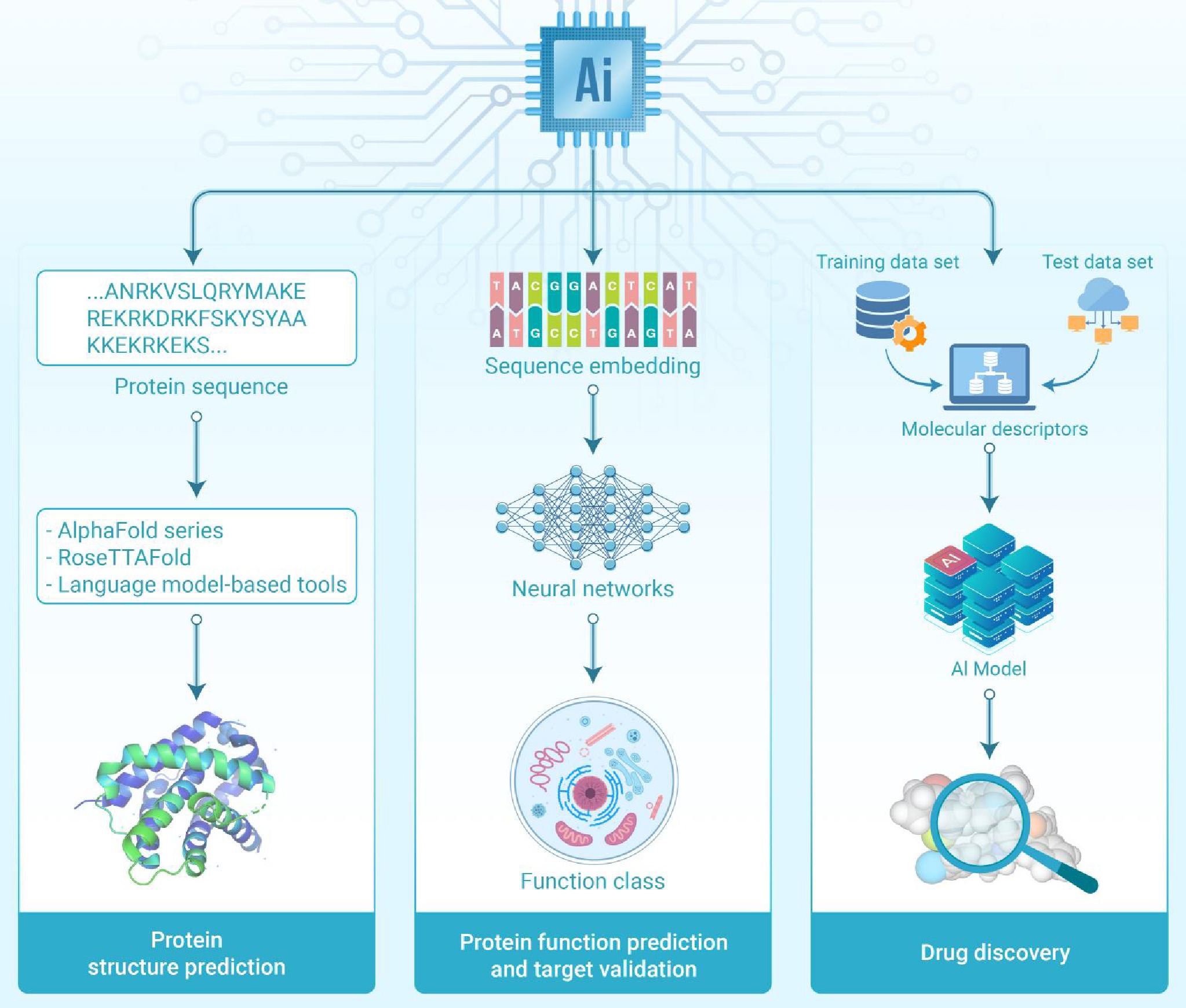
AI-driven workflow in molecular biology, from protein sequence to drug discovery.
-
Figure 5.
AI for cell and developmental biology
-
Figure 6.
AI applications in molecular/cellular genetics, population genetics, and medical genetics.
-
Figure 7.
AI applications in neuroscience and psychology.
-
Figure 8.
The AI application in pharmacology and clinical medicine.
-
Figure 9.
Key aspects of AI applications in biomaterials.
-
Figure 10.
The innovations and challenges of AI for environmental science.
