
USP7 restricts lineage potency in human embryonic stem cells through modulating mTOR activity
-
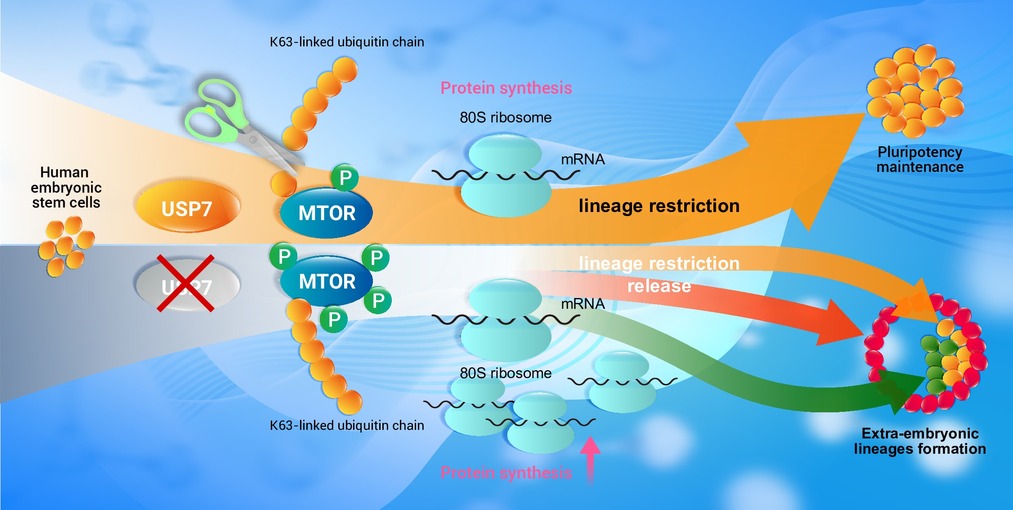
GRAPHICAL ABSTRACT
 DownLoad:
Full size image
DownLoad:
Full size image
-
PUBLIC SUMMARY
-
USP7 deficiency enables human embryonic stem cells to self-organize into tri-lineage aggregates autonomously.
USP7 restricts lineage potency by modulating the mTOR signaling-mediated protein synthesis.
The deubiquitinase USP7 constrains mTOR activity via reducing K63-linked polyubiquitination.
-
-
ABSTRACT
During early embryonic development, totipotent cells undergo cell-autonomous lineage restriction to give rise to extra-embryonic (ExE) lineages, including the trophectoderm (TE). Conventional human embryonic stem cells (hESCs), derived from the inner cell mass (ICM), possess limited ExE potential; However, the underlying intrinsic determinants remain elusive. Here, we demonstrate that deficiency of USP7, a deubiquitinase, releases this lineage restriction in hESCs and enhances their ExE potency. USP7-deficient hESCs exhibit elevated naïve pluripotency characteristics and self-organize into aggregate structures with markerdly enhanced ExE specification. We further show that USP7 constrains protein synthesis in conventional hESCs, which in turn limits their developmental potency. Mechanistically, we identify that USP7 attenuates mTOR activity through modulating K63-linked polyubiquitination in hESCs. Collectively, our findings uncover a cell-intrinsic regulatory mechanism by which USP7 governs mTOR activity to restrict the developmental potency in hESCs. -

-
REFERENCES
[1] Arnold S. J. and Robertson E. J. (2009). Making a commitment: Cell lineage allocation and axis patterning in the early mouse embryo. Nat. Rev. Mol. Cell. Biol. 10:91−103. DOI:10.1038/nrm2618 [2] Rossant J. and Tam P. P. L. (2022). Early human embryonic development: Blastocyst formation to gastrulation. Dev. Cell 57:152−165. DOI:10.1016/j.devcel.2021.12.022 [3] De Paepe C., Krivega M., Cauffman G., et al. (2014). Totipotency and lineage segregation in the human embryo. Mol. Hum. Reprod. 20:599−618. DOI:10.1093/molehr/gau027 [4] Zernicka-Goetz M., Morris S. A. and Bruce A. W. (2009). Making a firm decision: Multifaceted regulation of cell fate in the early mouse embryo. Nat. Rev. Genet. 10:467−477. DOI:10.1038/nrg2564 [5] Christodoulou N., Weberling A., Strathdee D., et al. (2019). Morphogenesis of extra-embryonic tissues directs the remodelling of the mouse embryo at implantation. Nat. Commun. 10:3557. DOI:10.1038/s41467-019-11482-5 [6] Beddington R. S. and Robertson E. J. (1989). An assessment of the developmental potential of embryonic stem cells in the midgestation mouse embryo. Development 105:733−737. DOI:10.1242/dev.105.4.733 [7] Nagy A., Rossant J., Nagy R., et al. (1993). Derivation of completely cell culture-derived mice from early-passage embryonic stem cells. Proc. Natl. Acad. Sci. USA 90:8424−8428. DOI:10.1073/pnas.90.18.8424 [8] Tesar P. J., Chenoweth J. G., Brook F. A., et al. (2007). New cell lines from mouse epiblast share defining features with human embryonic stem cells. Nature 448:196−199. DOI:10.1038/nature05972 [9] Thomson J. A., Itskovitz-Eldor J., Shapiro S. S., et al. (1998). Embryonic stem cell lines derived from human blastocysts. Science 282:1145−1147. DOI:10.1126/science.282.5391.1145 [10] Weinberger L., Ayyash M., Novershtern N., et al. (2016). Dynamic stem cell states: Naive to primed pluripotency in rodents and humans. Nat. Rev. Mol. Cell Biol. 17:155−169. DOI:10.1038/nrm.2015.28 [11] Le R. R., Huang Y. X., Zhao A. Q., et al. (2020). Lessons from expanded potential of embryonic stem cells: Moving toward totipotency. J. Genet. Genomics 47:123−130. DOI:10.1016/j.jgg.2020.02.003 [12] Abad M., Mosteiro L., Pantoja C., et al. (2013). Reprogramming in vivo produces teratomas and iPS cells with totipotency features. Nature 502:340−345. DOI:10.1038/nature12586 [13] Choi Y. J., Lin C. P., Risso D., et al. (2017). Deficiency of microRNA miR-34a expands cell fate potential in pluripotent stem cells. Science 355. DOI:10.1126/science.aag1927 [14] Yang Y., Liu B., Xu J., et al. (2017). Derivation of pluripotent stem cells with in vivo embryonic and extraembryonic potency. Cell 169:243-257 e225. DOI:10.1016/j.cell.2017.02.005 [15] Gao X., Nowak-Imialek M., Chen X., et al. (2019). Establishment of porcine and human expanded potential stem cells. Nat. Cell Biol. 21:687−699. DOI:10.1038/s41556-019-0333-2 [16] Io S., Kabata M., Iemura Y., et al. (2021). Capturing human trophoblast development with naive pluripotent stem cells in vitro. Cell Stem Cell 28:1023-1039 e1013. DOI:10.1016/j.stem.2021.03.013 [17] Guo G., Stirparo G. G., Strawbridge S. E., et al. (2021). Human naive epiblast cells possess unrestricted lineage potential. Cell Stem Cell 28:1040-1056 e1046. DOI:10.1016/j.stem.2021.02.025 [18] Huang K., Zhu Y., Ma Y., et al. (2018). BMI1 enables interspecies chimerism with human pluripotent stem cells. Nat. Commun. 9:4649. DOI:10.1038/s41467-018-07098-w [19] Zhu Y., Zhang Z., Fan N., et al. (2022). Generating functional cells through enhanced interspecies chimerism with human pluripotent stem cells. Stem Cell Rep. 17:1059−1069. DOI:10.1016/j.stemcr.2022.03.009 [20] Wang X., Li T., Cui T., et al. (2018). Human embryonic stem cells contribute to embryonic and extraembryonic lineages in mouse embryos upon inhibition of apoptosis. Cell Res. 28:126−129. DOI:10.1038/cr.2017.138 [21] Wei Y. X., Wang T. Y., Ma L. S., et al. (2021). Efficient derivation of human trophoblast stem cells from primed pluripotent stem cells. Sci. Adv. 7:eabf4416. DOI:10.1126/sciadv.abf4416 [22] Bhattacharya S., Chakraborty D., Basu M., et al. (2018). Emerging insights into HAUSP (USP7) in physiology, cancer and other diseases. Sig. Transduct. Target Ther. 3:17. DOI:10.1038/s41392-018-0012-y [23] Hayal T. B. (2022). Ubiquitin specific protease 7 maintains pluripotency of mouse embryonic stem cells through stabilization of β-catenin. Turk. J. Biol. 46:82−94. DOI:10.3906/biy-2108-45 [24] Liu C., Sun L. G., Tan Y. J., et al. (2023). USP7 represses lineage differentiation genes in mouse embryonic stem cells by both catalytic and noncatalytic activities. Science Advances 9:eade3888. DOI:10.1126/sciadv.ade3888 [25] Yu T., Zhao X. Y., Tang Y. J., et al. (2024). Deubiquitylase ubiquitin-specific protease 7 plays a crucial role in the lineage differentiation of preimplantation blastocysts. Biol. Reprod. 111:28−42. DOI:10.1093/biolre/ioae034 [26] Kuckenberg P., Kubaczka C. and Schorle H. (2012). The role of transcription factor Tcfap2c/TFAP2C in trophectoderm development. Reprod. Biomed. Online 25:12−20. DOI:10.1016/j.rbmo.2012.02.015 [27] Bi Y., Tu Z., Zhou J., et al. (2022). Cell fate roadmap of human primed-to-naive transition reveals preimplantation cell lineage signatures. Nat. Commun. 13:3147. DOI:10.1038/s41467-022-30924-1 [28] Petropoulos S., Edsgard D., Reinius B., et al. (2016). Single-Cell RNA-Seq Reveals Lineage and X Chromosome Dynamics in Human Preimplantation Embryos. Cell 167:285. DOI:10.1016/j.cell.2016.08.009 [29] Liu X., Tan J. P., Schroder J., et al. (2021). Modelling human blastocysts by reprogramming fibroblasts into iBlastoids. Nature 591:627−632. DOI:10.1038/s41586-021-03372-y [30] Turco M. Y., Gardner L., Kay R. G., et al. (2018). Trophoblast organoids as a model for maternal-fetal interactions during human placentation. Nature 564:263−267. DOI:10.1038/s41586-018-0753-3 [31] Liu G. Y. and Sabatini D. M. (2020). mTOR at the nexus of nutrition, growth, ageing and disease. Nat. Rev. Mol. Cell Biol. 21:183−203. DOI:10.1038/s41580-019-0199-y [32] Mossmann D., Park S. and Hall M. N. (2018). mTOR signalling and cellular metabolism are mutual determinants in cancer. Nat. Rev. Cancer 18:744−757. DOI:10.1038/s41568-018-0074-8 [33] Rossant J. (2018). Genetic control of early cell lineages in the mammalian embryo. Annu. Rev. Genet. 52:185−201. DOI:10.1146/annurev-genet-120116-024544 [34] Chazaud C., Yamanaka Y., Pawson T., et al. (2006). Early lineage segregation between epiblast and primitive endoderm in mouse blastocysts through the Grb2-MAPK pathway. Dev. Cell 10:615−624. DOI:10.1016/j.devcel.2006.02.020 [35] Posfai E., Schell J. P., Janiszewski A., et al. (2021). Evaluating totipotency using criteria of increasing stringency. Nat. Cell Biol. 23:49−60. DOI:10.1038/s41556-020-00609-2 [36] Yu L., Wei Y., Duan J., et al. (2021). Blastocyst-like structures generated from human pluripotent stem cells. Nature 591:620−626. DOI:10.1038/s41586-021-03356-y [37] Kagawa H., Javali A., Khoei H. H., et al. (2022). Human blastoids model blastocyst development and implantation. Nature 601:600−605. DOI:10.1038/s41586-021-04267-8 [38] Yanagida A., Spindlow D., Nichols J., et al. (2021). Naive stem cell blastocyst model captures human embryo lineage segregation. Cell Stem Cell 28:1016-1022 e1014. DOI:10.1016/j.stem.2021.04.031 [39] Rivron N. C., Frias-Aldeguer J., Vrij E. J., et al. (2018). Blastocyst-like structures generated solely from stem cells. Nature 557:106−111. DOI:10.1038/s41586-018-0051-0 [40] Harrison S. E., Sozen B., Christodoulou N., et al. (2017). Assembly of embryonic and extraembryonic stem cells to mimic embryogenesis in vitro. Science 356. DOI:10.1126/science.aal1810 [41] Zhang W., Sun S., Wang Q., et al. (2023). Haploid-genetic screening of trophectoderm specification identifies Dyrk1a as a repressor of totipotent-like status. Sci. Adv. 9:eadi5683. DOI:10.1126/sciadv.adi5683 [42] Zhang W., Yao C., Luo Y., et al. (2022). Rif1 and Hmgn3 regulate the conversion of murine trophoblast stem cells. Cell Rep. 38:110570. DOI:10.1016/j.celrep.2022.110570 [43] Zhang W., Zhao Y., Yang Z., et al. (2025). Capture of totipotency in mouse embryonic stem cells in the absence of Pdzk1. Adv. Sci. (Weinh) 12:e2408852. DOI:10.1002/advs.202408852 [44] Shan Y., Liang Z., Xing Q., et al. (2017). PRC2 specifies ectoderm lineages and maintains pluripotency in primed but not naive ESCs. Nat. Commun. 8:672. DOI:10.1038/s41467-017-00668-4 [45] Saba J. A., Liakath-Ali K., Green R., et al. (2021). Translational control of stem cell function. Nat. Rev. Mol. Cell Biol. 22:671−690. DOI:10.1038/s41580-021-00386-2 [46] Bulut-Karslioglu A., Biechele S., Jin H., et al. (2016). Inhibition of mTOR induces a paused pluripotent state. Nature 540:119−123. DOI:10.1038/nature20578 [47] Gangloff Y. G., Mueller M., Dann S. G., et al. (2004). Disruption of the mouse mTOR gene leads to early postimplantation lethality and prohibits embryonic stem cell development. Mol. Cell Biol. 24:9508−9516. DOI:10.1128/Mcb.24.21.9508-9516.2004 [48] Hentges K. E., Sirry B., Gingras A. C., et al. (2001). FRAP/mTOR is required for proliferation and patterning during embryonic development in the mouse. Proc. Natl. Acad. Sci. USA 98:13796−13801. DOI:10.1073/pnas.241184198 [49] Yau R. and Rape M. (2016). The increasing complexity of the ubiquitin code. Nat. Cell Biol. 18:579−586. DOI:10.1038/ncb3358 [50] Kwon Y. T. and Ciechanover A. (2017). The ubiquitin code in the ubiquitin-proteasome system and autophagy. Trends Biochem. Sci. 42:873−886. DOI:10.1016/j.tibs.2017.09.002 [51] Lauwers E., Jacob C. and Andre B. (2009). K63-linked ubiquitin chains as a specific signal for protein sorting into the multivesicular body pathway. J. Cell Biol. 185:493−502. DOI:10.1083/jcb.200810114 [52] Komander D. and Rape M. (2012). The ubiquitin code. Annu. Rev. Biochem. 81:203−229. DOI:10.1146/annurev-biochem-060310-170328 [53] Madiraju C., Novack J. P., Reed J. C., et al. (2022). K63 ubiquitination in immune signaling. Trends Immunol. 43:148−162. DOI:10.1016/j.it.2021.12.005 -
ABOUT THIS ARTICLE
Cite this article:
Xing Q., Li F., Feng Y., et al. (2025). USP7 restricts lineage potency in human embryonic stem cells through modulating mTOR activity. The Innovation Life 3:100171. https://doi.org/10.59717/j.xinn-life.2025.100171
Welcome!
To request copyright permission to republish or share portions of our works, please visit Copyright Clearance Center's (CCC) Marketplace website at marketplace.copyright.com.
Article Metrics
Relative Articles
Cited by
Export File
Citation
Xing Q., Li F., Feng Y., et al. (2025). USP7 restricts lineage potency in human embryonic stem cells through modulating mTOR activity. The Innovation Life 3:100171. https://doi.org/10.59717/j.xinn-life.2025.100171

Format
Content
-
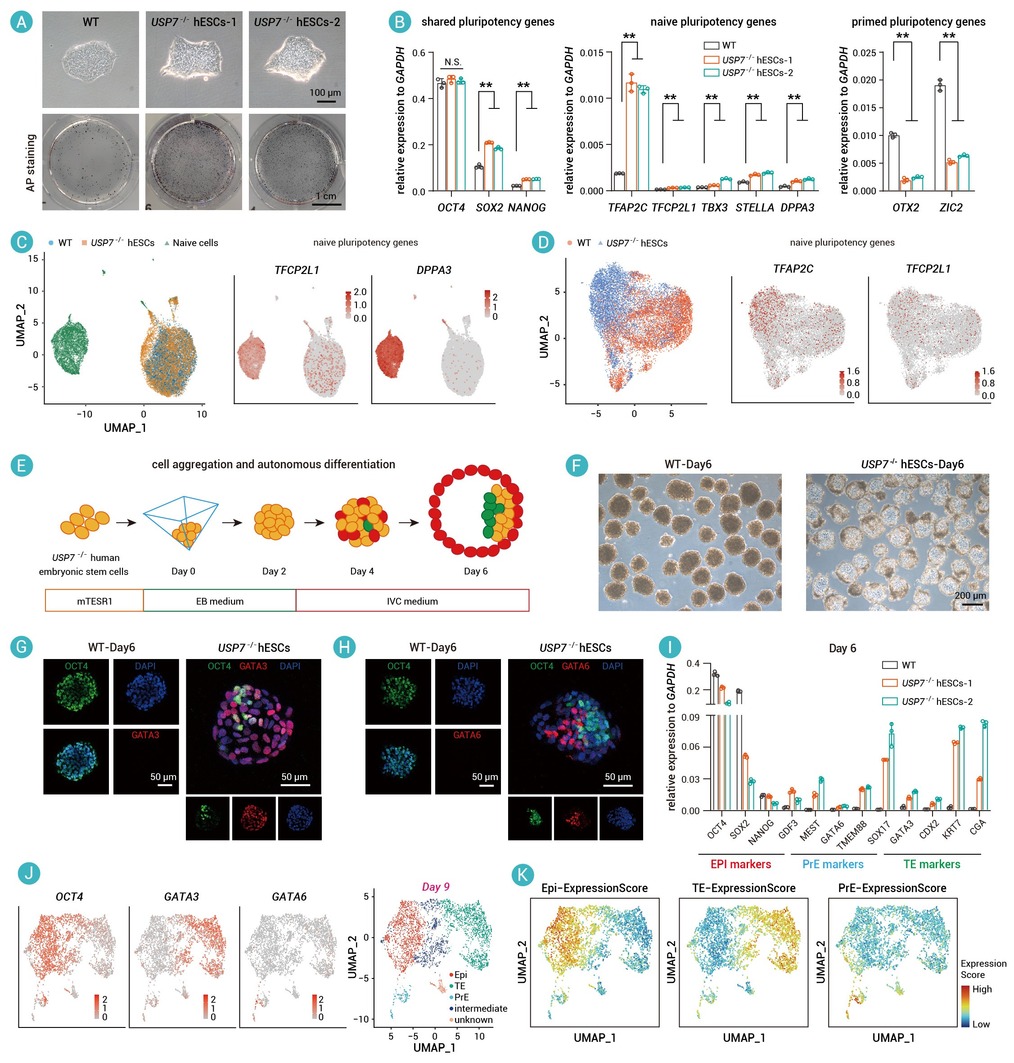
Figure 1.
USP7-/- hESCs exhibit enhanced extra-embryonic lineage specification
-
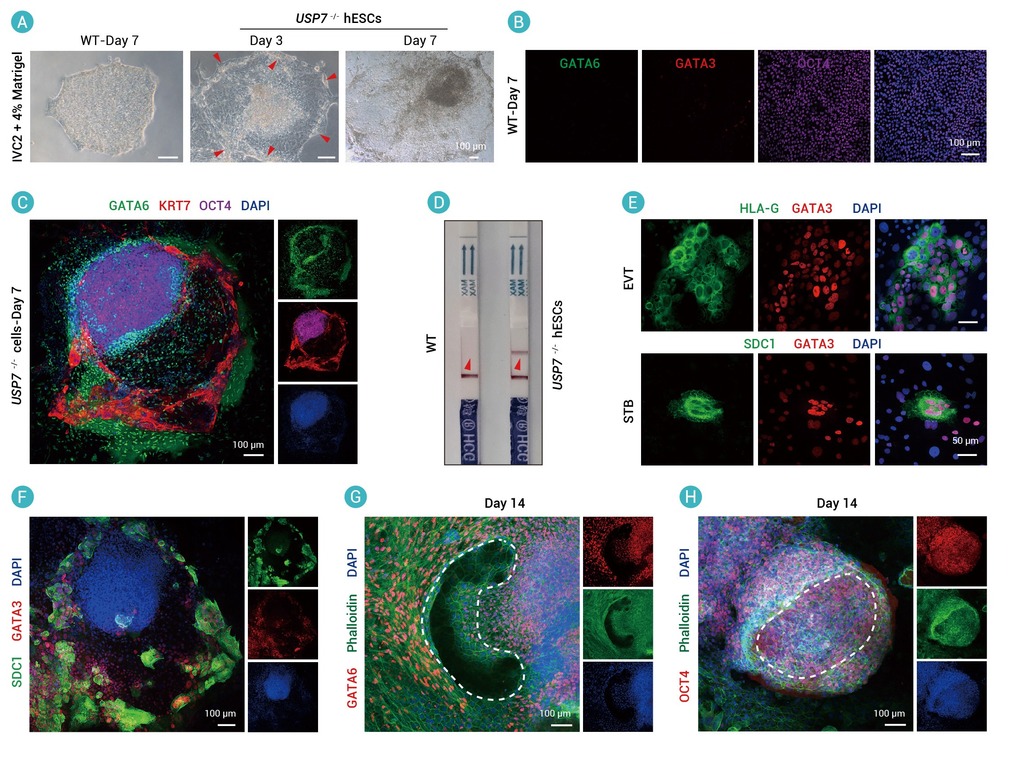
Figure 2.
Attached culture of USP7-/- hESCs derived cell aggregates
-
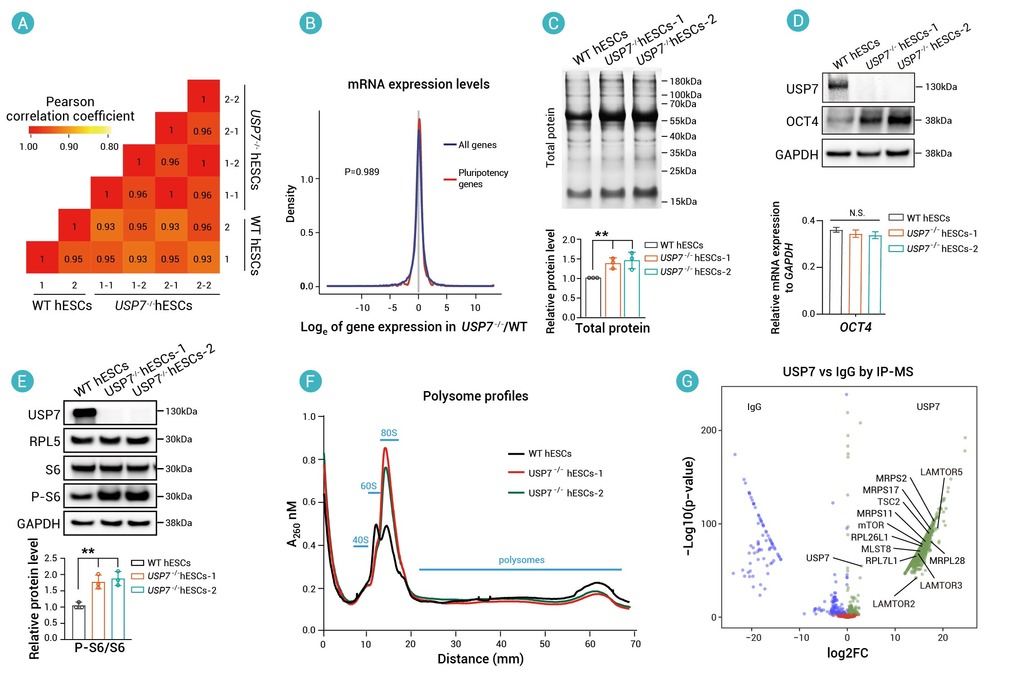
Figure 3.
USP7 negatively regulates ribosome activity and protein synthesis
-
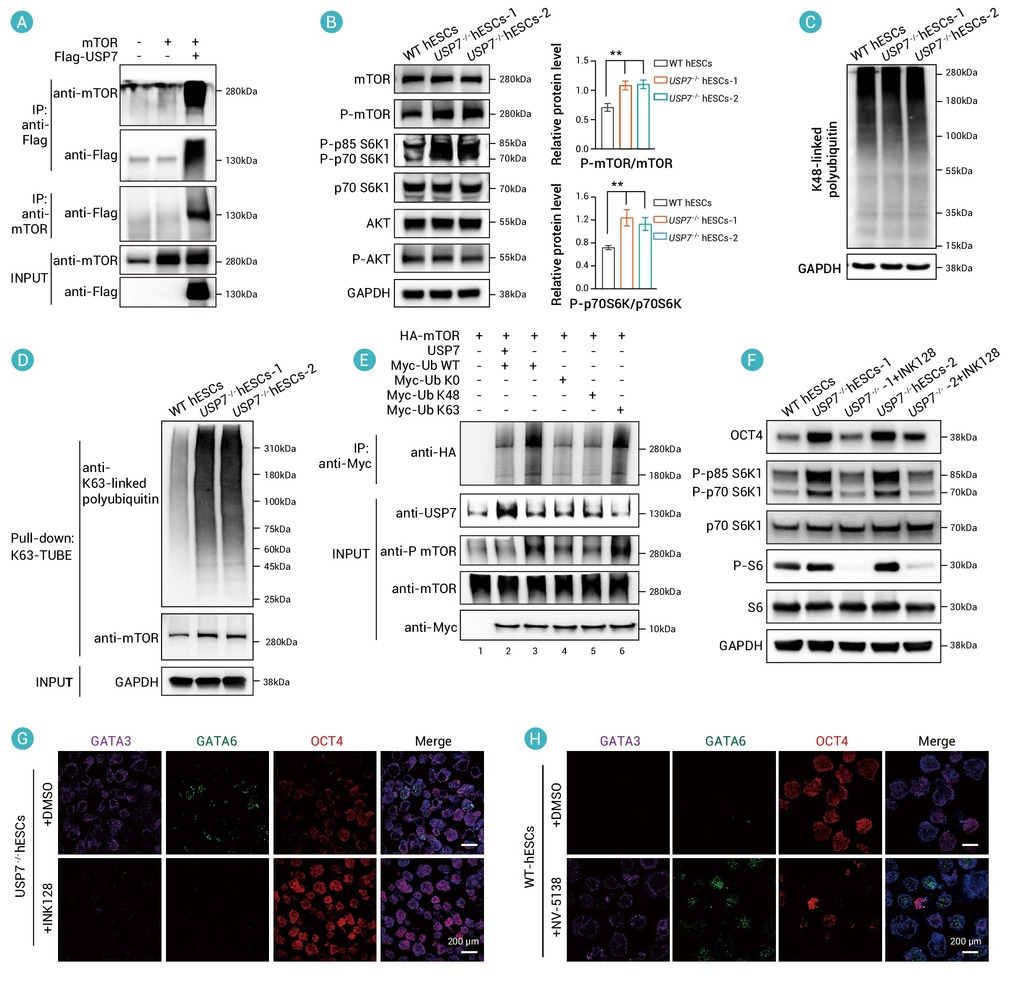
Figure 4.
USP7 modulates mTOR activity through K63-linked polyubiquitination
