
Sus scrofa domesticus reveals the genetic evolution of adaptive traits during early divergence
-
GRAPHICAL ABSTRACT
 DownLoad:
Full size image
DownLoad:
Full size image
-
PUBLIC SUMMARY
-
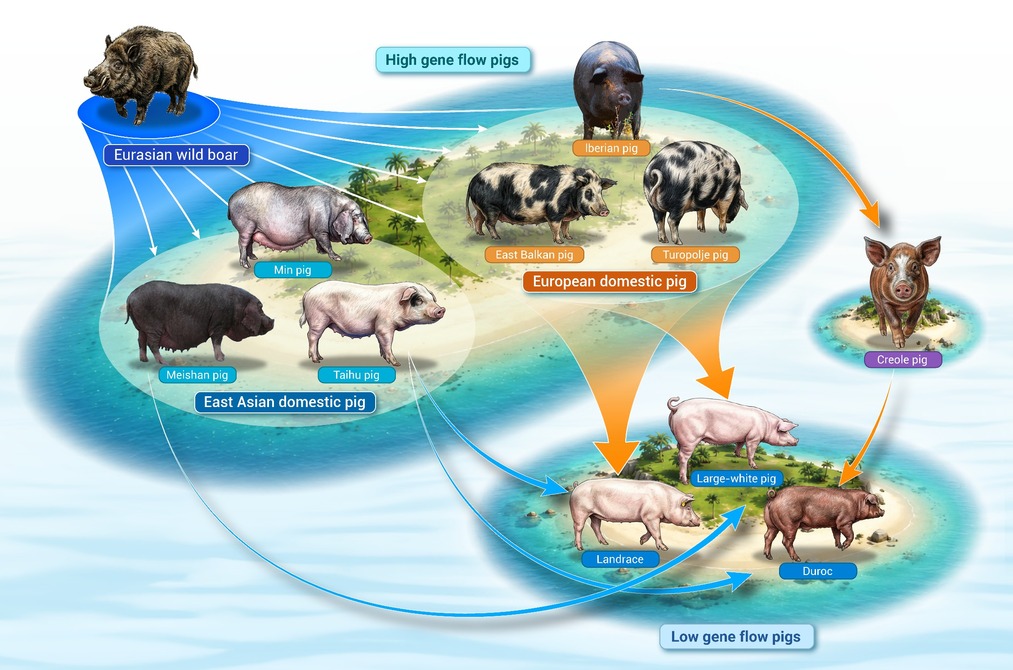
Domestic pigs diverge from wild boars yet remain interfertile, serving as a model for early speciation.
Pigs split into high and low gene flow groups shaped by introgression and selection.
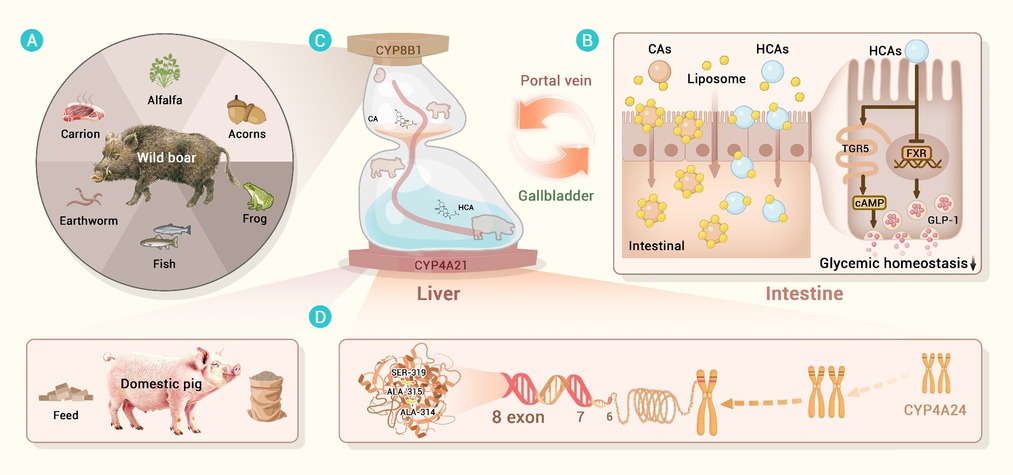
The profile of bile acid shift improves glucose balance and metabolic health under energy-rich domestic diets.
Regulatory changes precede coding alterations, showing traits evolve before reproductive isolation.
-
-
ABSTRACT
Domestication has generated extensive phenotypic diversity within Sus scrofa, producing marked divergence from wild boars in morphology, behavior, and metabolic physiology across numerous distinct breeds. Yet domestic pigs and wild boars remain interfertile, as effective reproductive barriers have not emerged. This condition, phenotypic divergence without reproductive isolation, makes domestic pigs an informative model for studying genetic processes during the earliest phases of speciation, capturing the tension between selection-driven innovation and gene flow–maintained continuity. Here, we categorize domestic pig breeds by historical gene flow intensity with wild boars (high vs. low) and examine their contrasting genetic architectures, assessing how environmental adaptation and artificial selection shape genomic homogeneity and heterogeneity. Using bile acid (BA) metabolism as an illustrative example, we show that domestic pigs experienced a functional shift in which cytochrome P450 family 8 subfamily B member 1 (CYP8B1) silencing and 4 subfamily A member 21 (CYP4A21) neofunctionalization replaced cholic acid (CA) with hyocholic acid (HCA) as the primary BA. This transition suggests that phenotypic diversification can precede reproductive isolation and that evolutionary changes in regulatory regions may occur before alterations in coding sequences.-
Keywords:
- Sus scrofa /
- Domestication /
- Gene Flow /
- CYP8B1 /
- CYP4A21
-

-
REFERENCES
[1] Wolf J.B. and Ellegren H. (2017). Making sense of genomic islands of differentiation in light of speciation. Nat. Rev. Genet. 18:87−100. DOI:10.1038/nrg.2016.133 [2] Johnson N.A. (2022). Speciation: Genomic sequence data and the biogeography of speciation. Natl. Sci. Rev. 9:nwac294. DOI:10.1093/nsr/nwac294 [3] Jarrett B.J.M., Downing P.A. and Svensson E.I. (2025). Meta-analysis reveals that phenotypic plasticity and divergent selection promote reproductive isolation during incipient speciation. Nat. Ecol. Evol. 9:833−844. DOI:10.1038/s41559-025-02687-7 [4] Diaz F., Allan C.W., Chen X., et al. (2022). Divergent evolutionary trajectories shape the postmating transcriptional profiles of conspecifically and heterospecifically mated cactophilic Drosophila females. Commun. Biol. 5:842. DOI:10.1038/s42003-022-03758-2 [5] Fotopulosova V., Tanieli G., Fusek K., et al. (2024). A minimal hybrid sterility genome assembled by chromosome swapping between mouse subspecies (Mus musculus). Mol. Biol. Evol. 41:msae211. DOI:10.1093/molbev/msae211 [6] Ramírez O., Ojeda A., Tomàs A., et al. (2009). Integrating Y-chromosome, mitochondrial, and autosomal data to analyze the origin of pig breeds. Mol. Biol. Evol. 26:2061−72. DOI:10.1093/molbev/msp118 [7] Mabry M.E., Rowan T.N., Pires J.C., et al. (2021). Feralization: Confronting the complexity of domestication and evolution. Trends. Genet. 37:302−305. DOI:10.1016/j.tig.2021.01.005 [8] Zhu Y., Li W., Yang B., et al. (2017). Signatures of selection and interspecies introgression in the genome of Chinese domestic pigs. Genome. Biol. Evol. 9:2592−2603. DOI:10.1093/gbe/evx186 [9] Ai H., Zhang M., Yang B., et al. (2021). Human-mediated admixture and selection shape the diversity on the modern swine (Sus scrofa) Y chromosomes. Mol. Biol. Evol. 38:5051−5065. DOI:10.1093/molbev/msab230 [10] Liu L., Bosse M., Megens H.J., et al. (2019). Genomic analysis on pygmy hog reveals extensive interbreeding during wild boar expansion. Nat. Commun. 10:1992. DOI:10.1038/s41467-019-10017-2 [11] Frantz L.A., Schraiber J.G., Madsen O., et al. (2015). Evidence of long-term gene flow and selection during domestication from analyses of Eurasian wild and domestic pig genomes. Nat. Genet. 47:1141−8. DOI:10.1038/ng.3394 [12] Bosse M., Megens H.J., Madsen O., et al. (2014). Untangling the hybrid nature of modern pig genomes: A mosaic derived from biogeographically distinct and highly divergent Sus scrofa populations. Mol. Ecol. 23:4089−102. DOI:10.1111/mec.12807 [13] Zhang Z., Zhang Q., Xiao Q., et al. (2018). Distribution of runs of homozygosity in Chinese and Western pig breeds evaluated by reduced-representation sequencing data. Anim. Genet. 49:579−591. DOI:10.1111/age.12730 [14] Rubin C.J., Megens H.J., Martinez Barrio A., et al. (2012). Strong signatures of selection in the domestic pig genome. Proc. Natl. Acad. Sci. USA 109:19529−36. DOI:10.1073/pnas.1217149109 [15] Bovo S., Ribani A., Muñoz M., et al. (2020). Whole-genome sequencing of European autochthonous and commercial pig breeds allows the detection of signatures of selection for adaptation of genetic resources to different breeding and production systems. Genet. Sel. Evol. 52:33. DOI:10.1186/s12711-020-00553-7 [16] Revidatti M.A., Gama L.T., Martin Burriel I., et al. (2021). On the origins of American Criollo pigs: A common genetic background with a lasting Iberian signature. PLoS One 16:e0251879. DOI:10.1371/journal.pone.0251879 [17] Erven J.A.M., Mattiangeli V., Dreshaj M., et al. (2025). Archaeogenomic insights into commensalism and regional variation in pig management in Neolithic northwest Europe. Proc. Natl. Acad. Sci. USA 122:e2410235122. DOI:10.1073/pnas.2410235122 [18] Frantz L.A., Schraiber J.G., Madsen O., et al. (2013). Genome sequencing reveals fine scale diversification and reticulation history during speciation in Sus. Genome. Biol. 14:R107. DOI:10.1186/gb-2013-14-9-r107 [19] Bosse M., Megens H.J., Madsen O., et al. (2012). Regions of homozygosity in the porcine genome: Consequence of demography and the recombination landscape. PLoS. Genet. 8:e1003100. DOI:10.1371/journal.pgen.1003100 [20] Rowley-Conwy P. (2025). European Neolithic farmers interbred their domestic pigs with wild boar. Proc. Natl. Acad. Sci. USA 122:e2504472122. DOI:10.1073/pnas.2504472122 [21] Groenen M.A., Archibald A.L., Uenishi H., et al. (2012). Analyses of pig genomes provide insight into porcine demography and evolution. Nature 491:393−8. DOI:10.1038/nature11622 [22] Yang G., Ren J., Zhang Z., et al. (2009). Genetic evidence for the introgression of Western NR6A1 haplotype into Chinese Licha breed associated with increased vertebral number. Anim. Genet. 40:247−50. DOI:10.1111/j.1365-2052.2008.01820.x [23] Larson G., Albarella U., Dobney K., et al. (2007). Ancient DNA, pig domestication, and the spread of the Neolithic into Europe. Proc. Natl. Acad. Sci. USA 104:15276−81. DOI:10.1073/pnas.0703411104 [24] Yang L., Yin H., Bai L., et al. (2024). Mapping and functional characterization of structural variation in 1060 pig genomes. Genome. Biol. 25:116. DOI:10.1186/s13059-024-03253-3 [25] Pérez-Montarelo D., Rodríguez M.C., Fernández A., et al. (2015). Haplotypic diversity of porcine LEP and LEPR genes involved in growth and fatness regulation. J. Appl. Genet. 56:525−533. DOI:10.1007/s13353-015-0284-7 [26] Bosse M., Megens H.J., Frantz L.A., et al. (2014). Genomic analysis reveals selection for Asian genes in European pigs following human-mediated introgression. Nat. Commun. 5:4392. DOI:10.1038/ncomms5392 [27] Stanton D.W.G., Manin A., Evin A., et al. (2026). Genomic and morphometric evidence for Austronesian-mediated pig translocation in the Pacific. Science 391:eadv4963. DOI:10.1126/science.adv4963 [28] Larson G., Dobney K., Albarella U., et al. (2005). Worldwide phylogeography of wild boar reveals multiple centers of pig domestication. Science 307:1618−21. DOI:10.1126/science.1106927 [29] Goedbloed D.J., Megens H.J., Van Hooft P., et al. (2013). Genome-wide single nucleotide polymorphism analysis reveals recent genetic introgression from domestic pigs into Northwest European wild boar populations. Mol. Ecol. 22:856−66. DOI:10.1111/j.1365-294X.2012.05670.x [30] Amaral A.J., Megens H.J., Crooijmans R.P., et al. (2008). Linkage disequilibrium decay and haplotype block structure in the pig. Genetics 179:569−79. DOI:10.1534/genetics.107.084277 [31] Ma Y.F., Han X.M., Huang C.P., et al. (2019). Population genomics analysis revealed origin and high-altitude adaptation of Tibetan pigs. Sci. Rep. 9:11463. DOI:10.1038/s41598-019-47711-6 [32] Tong X., Chen D., Hu J., et al. (2023). Accurate haplotype construction and detection of selection signatures enabled by high quality pig genome sequences. Nat. Commun. 14:5126. DOI:10.1038/s41467-023-40434-3 [33] Ding J., Cui X., Wang X., et al. (2024). Multi-omics analysis of gut microbiota and metabolites reveals contrasting profiles in domestic pigs and wild boars across urban environments. Front. Microbiol. 15:1450306. DOI:10.3389/fmicb.2024.1450306 [34] Zong W., Chen L., Zhang D., et al. (2025). Two telomere-to-telomere pig genome assemblies and pan-genome analyses provide insights into genomic structural landscape and genetic adaptations. Imeta 4:e70013. DOI:10.1002/imt2.70013 [35] Rong B., Zhang Q., Zhang X., et al. (2024). Hyocholic acid: A novel therapeutic strategy for metabolic syndrome. Innov. Life 2:100093. DOI:10.59717/j.xinn-life.2024.100093 [36] Zheng X., Chen T., Jiang R., et al. (2021). Hyocholic acid species improve glucose homeostasis through a distinct TGR5 and FXR signaling mechanism. Cell. Metab. 33:791−803. DOI:10.1016/j.cmet.2020.11.017 [37] Fan M., Yang Z., Jin L., et al. (2025). Differential roles of individual bile acid in physiology and disease. Pharmacol. Res. 218:107845. DOI:10.1016/j.phrs.2025.107845 [38] Lundell K. and Wikvall K. (2003). Gene structure of pig sterol 12alpha-hydroxylase (CYP8B1) and expression in fetal liver: Comparison with expression of taurochenodeoxycholic acid 6alpha-hydroxylase (CYP4A21). Biochim. Biophys. Acta. 1634:86−96. DOI:10.1016/j.bbalip.2003.09.002 [39] Lundell K. and Wikvall K. (2008). Species-specific and age-dependent bile acid composition: Aspects on CYP8B and CYP4A subfamilies in bile acid biosynthesis. Curr. Drug. Metab. 9:323−31. DOI:10.2174/138920008784220574 [40] Morita S., Yamasaki H. and Ogura M. (1970). Bile acids of wild boar, Sus scrofa leucomystax (Temminck et Schlegel). Yonago. Acta. Med. 14:82−6. DOI:10.3109/00365517009046222 [41] Boström H. (1986). Characterization of 6 alpha-hydroxylation of taurochenodeoxycholic acid in pig liver. J. Lipid. Res. 27:807−12. DOI:10.1016/j.ygyno.2004.08.046 [42] Patience J.F., Rossoni-Serão M.C. and Gutiérrez N.A. (2015). A review of feed efficiency in swine: Biology and application. J. Anim. Sci. Biotechnol. 6:33. DOI:10.1186/s40104-015-0031-2 [43] Robeson M.S. II, Khanipov K., Golovko G., et al. (2017). Assessing the utility of metabarcoding for diet analyses of the omnivorous wild pig (Sus scrofa). Ecol. Evol. 8:185−196. DOI:10.1002/ece3.3638 [44] Heng Y.C., Chua J.H.X., Silvaraju S., et al. (2026). Metagenomic insights into the global wild boar faecal microbiome reveal novel taxa and carbohydrate degraders distinguishing wild and domesticated Sus. MicrobiomeVOLME 14:123. DOI:10.1186/s40168-026-02392-y [45] Canright V.R., Piaggio A.J. and Beasley J.C. (2024). Invasive wild pig (Sus scrofa) diets on barrier islands in the southeastern United States. Pest. Manag. Sci. 80:3901−3911. DOI:10.1002/ps.8093 [46] Zhang B., Sun Z., Yu Z., et al. (2022). Transcriptome and targeted metabolome analysis provide insights into bile acids' new roles and mechanisms on fat deposition and meat quality in lamb. Food. Res. Int. 162:111941. DOI:10.1016/j.foodres.2022.111941 [47] Lundell K. (2004). The porcine taurochenodeoxycholic acid 6alpha-hydroxylase (CYP4A21) gene: Evolution by gene duplication and gene conversion. Biochem. J. 378:1053−8. DOI:10.1042/BJ20031657 [48] Ai H., Fang X., Yang B., et al. (2015). Adaptation and possible ancient interspecies introgression in pigs identified by whole-genome sequencing. Nat. Genet. 47:217−25. DOI:10.1038/ng.3199 [49] Mikawa S., Morozumi T., Shimanuki S.I., et al. (2007). Fine mapping of a swine quantitative trait locus for number of vertebrae and analysis of an orphan nuclear receptor, germ cell nuclear factor (NR6A1). Genome. Res. 17:586−593. DOI:10.1101/gr.6085507 [50] Herrero-Medrano J.M., Megens H.J., Groenen M.A., et al. (2013). Conservation genomic analysis of domestic and wild pig populations from the Iberian Peninsula. BMC. Genet. 14:106. DOI:10.1186/1471-2156-14-106 [51] Zorc M., Škorput D., Gvozdanović K., et al. (2022). Genetic diversity and population structure of six autochthonous pig breeds from Croatia, Serbia, and Slovenia. Genet. Sel. Evol. 54:30. DOI:10.1186/s12711-022-00718-6 [52] Atrian-Afiani F., Berger B., Draxl C., et al. (2023). Selective sweeps in the Austrian Turopolje and other commercial pig populations. Animals (Basel) 13:3749. DOI:10.3390/ani13243749 [53] Ishikawa K., Doneva R., Raichev E.G., et al. (2021). Population genetic structure and diversity of the East Balkan Swine (Sus scrofa) in Bulgaria, revealed by mitochondrial DNA and microsatellite analyses. Anim. Sci. J. 92:e13630. DOI:10.1111/asj.13630 [54] Liu T., Ji D., Li X., et al. (2024). Population genetics reveals new introgression in the nucleus herd of min pigs. Genes Genomics 46:389−398. DOI:10.1007/s13258-024-01490-1 [55] Burgos C., Latorre P., Altarriba J., et al. (2015). Allelic frequencies of NR6A1 and VRTN, two genes that affect vertebrae number in diverse pig breeds: A study of the effects of the VRTN insertion on phenotypic traits of a Duroc×Landrace-Large White cross. Meat. Sci. 100:150−155. DOI:10.1016/j.meatsci.2014.09.143 [56] Muñoz M., Bozzi R., García F., et al. (2018). Diversity across major and candidate genes in European local pig breeds. PLoS One 13:e0207475. DOI:10.1371/journal.pone.0207475 [57] Molinero E., Pena R.N., Estany J., et al. (2025). Unravelling novel and closely linked association signals for fat-related traits in pigs using prioritised variants from whole-genome sequence data. Animal 19:101496. DOI:10.1016/j.animal.2025.101496 [58] Poklukar K., Mestre C., Škrlep M., et al. (2023). A meta-analysis of genetic and phenotypic diversity of European local pig breeds reveals genomic regions associated with breed differentiation for production traits. Genet. Sel. Evol. 55:88. DOI:10.1186/s12711-023-00858-3 [59] Huang Y., Zhou L., Zhang J., et al. (2020). A large-scale comparison of meat quality and intramuscular fatty acid composition among three Chinese indigenous pig breeds. Meat. Sci. 168:108182. DOI:10.1016/j.meatsci.2020.108182 [60] Jørgensen D. (2024). The Medieval Pig. Woodbridge: The Boydell Press. DOI:10.1017/9781805432456 [61] Wang L., Li K., Yang G., et al. (2011). Animal genetic resources in China: Pigs (ed. China National Commission of Animal Genetic Resources). China Agricultural Press. http://course.syt126.com/?m=course&p=detail&cid=8&kid=341 [62] Innan H. and Kim Y. (2004). Pattern of polymorphism after strong artificial selection in a domestication event. Proc. Natl. Acad. Sci. USA 101:10667−72. DOI:10.1073/pnas.0401720101 [63] Samuk K., Owens G.L., Delmore K.E., et al. (2017). Gene flow and selection interact to promote adaptive divergence in regions of low recombination. Mol. Ecol. 26:4378−4390. DOI:10.1111/mec.14226 [64] Burbrink F.T., DeBaun D., Foley N.M., et al. (2025). Recombination-aware phylogenomics. Trends. Ecol. Evol. 40:900−912. DOI:10.1016/j.tree.2025.06.011 [65] Han Y., Zhao Z., Stanton D.W.G., et al. (2025). Ancient genomics reveals the origin, dispersal, and human management of East Asian domestic pigs. Mol. Biol. Evol. 42:msaf214. DOI:10.1093/molbev/msaf214 [66] Barmentlo N.W.G., Meirmans P.G., Stiver W.H., et al. (2024). Natural selection on feralization genes contributed to the invasive spread of wild pigs throughout the United States. Mol. Ecol. 33:e17383. DOI:10.1111/mec.17383 [67] Zhang C. and Plastow G. (2011). Genomic diversity in pig (Sus scrofa) and its comparison with human and other livestock. Curr. Genomics. 12:138−46. DOI:10.2174/138920211795564386 [68] Chen Z., Zhou M., Sun Y., et al. (2024). Exploration of genome-wide recombination rate variation patterns at different scales in pigs. Animals (Basel) 14:1345. DOI:10.3390/ani14091345 [69] Ribani A., Taurisano V., Karatosidi D., et al. (2023). Signatures of admixture and genetic uniqueness in the autochthonous Greek black pig breed deduced from gene polymorphisms affecting domestication-derived traits. Animals (Basel) 13:1763. DOI:10.3390/ani13111763 [70] Wu G.S., Yao Y.G., Qu K.X., et al. (2007). Population phylogenomic analysis of mitochondrial DNA in wild boars and domestic pigs revealed multiple domestication events in East Asia. Genome. Biol. 8:R245. DOI:10.1186/gb-2007-8-11-r245 [71] Bosse M., Megens H.J., Madsen O., et al. (2015). Using genome-wide measures of coancestry to maintain diversity and fitness in endangered and domestic pig populations. Genome. Res. 25:970−81. DOI:10.1101/gr.187039.114 [72] Touma S., Fusho K. and Arakawa A. et al. (2025). Assessment of genetic diversity and inbreeding in the Okinawa indigenous Agu pig through pedigree analysis. Anim. Biosci. 38:1105−1115. DOI:10.5713/ab.24.0646 [73] Qiao R., Li X., Madsen O., et al. (2023). Potential selection for lipid kinase activity and spermatogenesis in Henan native pig breeds and growth shaping by introgression of European genes. Genet. Sel. Evol. 55:64. DOI:10.1186/s12711-023-00841-y [74] Kim J., Cho S., Caetano-Anolles K., et al. (2015). Genome-wide detection and characterization of positive selection in Korean Native Black Pig from Jeju Island. BMC. Genet. 16:3. DOI:10.1186/s12863-014-0160-1 [75] Yang R., Jin S., Fang S., et al. (2024). Genetic introgression from commercial European pigs to the indigenous Chinese Lijiang breed and associated changes in phenotypes. Genet. Sel. Evol. 56:24. DOI:10.1186/s12711-024-00893-8 [76] Patterson N., Price A.L. and Reich D. (2006). Population structure and eigenanalysis. PLoS. Genet. 2:e190. DOI:10.1371/journal.pgen.0020190 [77] Lawson D.J., van Dorp L. and Falush D. (2018). A tutorial on how not to over-interpret STRUCTURE and ADMIXTURE bar plots. Nat. Commun. 9:3258. DOI:10.1038/s41467-018-05257-7 [78] Feng X., Diao S., Liu Y., et al. (2023). Exploring the mechanism of artificial selection signature in Chinese indigenous pigs by leveraging multiple bioinformatics database tools. BMC Genomics 24:743. DOI:10.1186/s12864-023-09848-7 [79] Hongo H., Ishiguro N., Watanobe T., et al. (2002). Variation in mitochondrial DNA of Vietnamese pigs: Relationships with Asian domestic pigs and Ryukyu wild boars. Zoolog. Sci. 19:1329−35. DOI:10.2108/zsj.19.1329 [80] Cao M., Yuan T., Li D., et al. (2025). Whole-genome resequencing reveals positive selection and introgression signatures and genetic loci associated with early puberty traits in Chinese indigenous pigs. Genet. Sel. Evol. 57:29. DOI:10.1186/s12711-025-00975-1 [81] Li D., Wang Y., Yuan T., et al. (2024). Pangenome and genome variation analyses of pigs unveil genomic facets for their adaptation and agronomic characteristics. Imeta 3:e257. DOI:10.1002/imt2.257 [82] Ishihara S., Arakawa A., Ba N.V., et al. (2023). Population structure of Vietnamese pigs using mitochondrial DNA. Anim. Sci. J. 94:e13875. DOI:10.1111/asj.13875 [83] A V., Kumar A., Mahala S., et al. (2024). Revelation of genetic diversity and genomic footprints of adaptation in Indian pig breeds. Gene 893:147950. DOI:10.1016/j.gene.2023.147950 [84] Du H., Zhou L., Liu Z., et al. (2024). The 1000 Chinese indigenous pig genomes project provides insights into the genomic architecture of pigs. Nat. Commun. 15:10137. DOI:10.1038/s41467-024-54471-z [85] Li Z., Wei S., Li H., et al. (2017). Genome-wide genetic structure and differentially selected regions among Landrace, Erhualian, and Meishan pigs using specific-locus amplified fragment sequencing. Sci. Rep. 7:10063. DOI:10.1038/s41598-017-09969-6 [86] Larson G., Liu R., Zhao X., et al. (2010). Patterns of East Asian pig domestication, migration, and turnover revealed by modern and ancient DNA. Proc. Natl. Acad. Sci. USA 107:7686−91. DOI:10.1073/pnas.0912264107 [87] Li Z., Liu X., Wang C., et al. (2023). The pig pangenome provides insights into the roles of coding structural variations in genetic diversity and adaptation. Genome. Res. 33:1833−1847. DOI:10.1101/gr.277638.122 [88] Yuan H., Li C., Zhao S., et al. (2025). Unraveling the genetic diversity and adaptive traits of laboratory pig breeds within the perspective of whole - genome resequencing. BMC Genomics 26:604. DOI:10.1186/s12864-025-11790-9 [89] Wen H., Blackburn H.D., Mulim H.A., et al. (2025). Characterization of genomic diversity and population structure of worldwide Duroc subpopulations and other pig breeds. Genet. Sel. Evol. 58:1. DOI:10.1186/s12711-025-01017-6 [90] Kim K.S., Larsen N., Short T., et al. (2000). A missense variant of the porcine melanocortin-4 receptor (MC4R) gene is associated with fatness, growth, and feed intake traits. Mamm. Genome. 11:131−5. DOI:10.1007/s003350010025 [91] Jokubka R., Maak S., Kerziene S., et al. (2006). Association of a melanocortin 4 receptor (MC4R) polymorphism with performance traits in Lithuanian White pigs. J. Anim. Breed. Genet. 123:17−22. DOI:10.1111/j.1439-0388.2006.00559.x [92] Fontanesi L., Schiavo G., Scotti E., et al. (2015). A retrospective analysis of allele frequency changes of major genes during 20 years of selection in the Italian Large White pig breed. J. Anim. Breed. Genet. 132:239−46. DOI:10.1111/jbg.12127 [93] Liu Y., Xu Y., Li G., et al. (2025). Local climate adaptation in Chinese indigenous pig genomes. Animals 15:2412. DOI:10.3390/ani15162412 [94] Liu C., Ao N., Liang Y., et al. (2024). Analysis of cis-regulatory changes underlying phenotype divergence shaped by domestication in pigs. Front. Genet. 15:1421859. DOI:10.3389/fgene.2024.1421859 [95] Luo Y.B., Huang N., Zha C.W., et al. (2026). Telomere-to-telomere genome assembly of a male pig provides insight into population structure and selection for body stature. Nat. Genet. 58:195−205. DOI:10.1038/s41588-025-02433-6 [96] Wang Y., Feng R., Hu X., et al. (2025). Latitude-driven adaptive evolution of body length in diverse pig breeds across China. BMC. Biol. 23:150. DOI:10.1186/s12915-025-02265-0 [97] Wang Z., Song B., Yao J., et al. (2024). Whole-genome analysis reveals distinct adaptation signatures to diverse environments in Chinese domestic pigs. J. Anim. Sci. Biotechnol. 15:97. DOI:10.1186/s40104-024-01053-0 [98] Gao Y., Feng X., Diao S., et al. (2024). Deciphering genetic characteristics of South China and North China indigenous pigs through selection signatures. BMC Genomics 25:1191. DOI:10.1186/s12864-024-11119-y [99] Du H., Liu Z., Lu SY., et al. (2024). Genomic evidence for human-mediated introgressive hybridization and selection in the developed breed. BMC Genomics 25:331. DOI:10.1186/s12864-024-10259-5 [100] Liu C., Huang R., Su G., et al. (2023). Introgression of pigs in Taihu Lake region possibly contributed to the improvement of fertility in Danish Large White pigs. BMC Genomics 24:733. DOI:10.1186/s12864-023-09860-x [101] Fontanesi L. (2022). Invited review: Genetics and genomics of pigmentation variability in pigs: A review. Livest. Sci. 265:105079. DOI:10.1016/j.livsci.2022.105079 [102] Giovannini S., Strillacci M.G., Bagnato A., et al. (2023). Genetic and phenotypic characteristics of belted pig breeds: A review. Animals (Basel) 13:3072. DOI:10.3390/ani13193072 [103] Fang M., Larson G., Ribeiro H.S., et al. (2009). Contrasting mode of evolution at a coat color locus in wild and domestic pigs. PLoS. Genet. 5:e1000341. DOI:10.1371/journal.pgen.1000341 [104] Giuffra E., Evans G., Törnsten A., et al. (1999). The Belt mutation in pigs is an allele at the Dominant white (I/KIT) locus. Mamm. Genome. 10:1132−6. DOI:10.1007/s003359901178 [105] Hirooka H., de Koning D.J., van Arendonk J.A., et al. (2002). Genome scan reveals new coat color loci in exotic pig cross. J. Hered. 93:1−8. DOI:10.1093/jhered/93.1.1 [106] Muñoz M., Bozzi R., García-Casco J., et al. (2019). Genomic diversity, linkage disequilibrium and selection signatures in European local pig breeds assessed with a high density SNP chip. Sci. Rep. 9:13546. DOI:10.1038/s41598-019-49830-6 [107] Twining C.W., Bernhardt J.R., Derry A.M., et al. (2021). The evolutionary ecology of fatty-acid variation: Implications for consumer adaptation and diversification. Ecol. Lett. 24:1709−1731. DOI:10.1111/ele.13771 [108] Haslewood G.A. (1967). Bile salt evolution. J. Lipid. Res. 8:535−50. DOI:10.1016/S0022-2275(20)38873-8 [109] Sasaki T. (1966). Stero-bile acids and bile alcohols: LXXXII. Comparative studies on the bile salts of fishes by thin layer chromatography. J. Biochem. 60:56−62. DOI:10.1093/oxfordjournals.jbchem.a128399 [110] Hofmann A.F. and Roda A. (1984). Physicochemical properties of bile acids and their relationship to biological properties: An overview of the problem. J. Lipid. Res. 25:1477−89. DOI:10.1016/S0022-2275(20)34421-7 [111] Watt S.M. and Simmonds W.J. (1984). Effects of four taurine-conjugated bile acids on mucosal uptake and lymphatic absorption of cholesterol in the rat. J. Lipid. Res. 25:448−55. DOI:10.1016/S0022-2275(20)37796-8 [112] Heuman D.M., Hylemon P.B. And Vlahcevic Z.R. (1989). Regulation of bile acid synthesis. III. Correlation between biliary bile salt hydrophobicity index and the activities of enzymes regulating cholesterol and bile acid synthesis in the rat. J. Lipid. Res. 30:1161−71. DOI:10.1016/S0022-2275(20)38276-6 [113] Sheriha G.M., Waller G.R., Chan T., et al. (1968). Composition of bile acids in ruminants. Lipids 3:72−8. DOI:10.1007/BF02530972 [114] Martínez-Álvaro M., Mattock J., Auffret M., et al. (2022). Microbiome-driven breeding strategy potentially improves beef fatty acid profile benefiting human health and reduces methane emissions. Microbiome 10:166. DOI:10.1186/s40168-022-01352-6 [115] Lin L., Lai Z., Yang H., et al. (2023). Genome-centric investigation of bile acid metabolizing microbiota of dairy cows and associated diet-induced functional implications. ISME. J. 17:172−184. DOI:10.1038/s41396-022-01333-5 [116] Zheng K., Guo L., Cao Y., et al. (2024). High-concentrate diet decreases lamb fatty acid contents by regulating bile acid composition. Food. Chem. X. 24:101871. DOI:10.1016/j.fochx.2024.101871 [117] Araya Z., Hellman U. and Hansson R. (1995). Characterisation of taurochenodeoxycholic acid 6 alpha-hydroxylase from pig liver microsomes. Eur. J. Biochem. 231:855−61. DOI:10.1111/j.1432-1033.1995.0855d.x [118] Takahashi S., Fukami T., Masuo Y., et al. (2016). Cyp2c70 is responsible for the species difference in bile acid metabolism between mice and humans. J. Lipid. Res. 57:2130−2137. DOI:10.1194/jlr.M071183 [119] Tavoloni N. (1986). Bile acid structure and bile formation in the guinea pig. Biochim. Biophys. Acta. 879:186−201. DOI:10.1016/0005-2760(86)90102-5 [120] Li J. and Dawson P.A. (2019). Animal models to study bile acid metabolism. Biochim. Biophys. Acta. Mol. Basis. Dis. 1865:895−911. DOI:10.1016/j.bbadis.2018.05.011 [121] van Hees H.M.J., Ballari S.A., Dieste-Pérez L., et al. (2023). Diet and stomach characteristics of feral piglets (Sus scrofa): Implications for farmed piglets. J. Anim. Physiol. Anim. Nutr. (Berl). 107:529−540. DOI:10.1111/jpn.13726 [122] Canright V.R., Piaggio A.J., Chinn S.M., et al. (2023). DNA metabarcoding reveals consumption of diverse community of amphibians by invasive wild pigs (Sus scrofa) in the southeastern United States. Sci. Rep. 13:20889. DOI:10.1038/s41598-023-48139-9 [123] Russo G., Danieli P.P., Primi R., et al. (2017). Stable isotopes in tissues discriminate the diet of free-living wild boar from different areas of central Italy. PLoS One 12:e0183333. DOI:10.1371/journal.pone.0183333 [124] Castillo-Contreras R., Mentaberre G., Fernandez Aguilar X., et al. (2021). Wild boar in the city: Phenotypic responses to urbanisation. Sci. Total. Environ. 773:145593. DOI:10.1016/j.scitotenv.2021.145593 [125] Sayin S.I., Wahlström A., Felin J., et al. (2013). Gut microbiota regulates bile acid metabolism by reducing the levels of tauro-beta-muricholic acid, a naturally occurring FXR antagonist. Cell. Metab. 17:225−35. DOI:10.1016/j.cmet.2013.01.003 [126] Lauridsen C. (2020). Effects of dietary fatty acids on gut health and function of pigs pre- and post-weaning. J. Anim. Sci. 98:skaa086. DOI:10.1093/jas/skaa086 [127] Lundell K., Hansson R. and Wikvall K. (2001). Cloning and expression of a pig liver taurochenodeoxycholic acid 6alpha-hydroxylase (CYP4A21): A novel member of the CYP4A subfamily. J. Biol. Chem. 276:9606−12. DOI:10.1074/jbc.M006584200 [128] Pellicoro A., van den Heuvel FA., Geuken M., et al. (2007). Human and rat bile acid-CoA: Amino acid N-acyltransferase are liver-specific peroxisomal enzymes: Implications for intracellular bile salt transport. Hepatology 45:340−8. DOI:10.1002/hep.21528 [129] Smith Z., Ryerson D. and Kemper J.K. (2013). Epigenomic regulation of bile acid metabolism: Emerging role of transcriptional cofactors. Mol. Cell. Endocrinol. 368:59−70. DOI:10.1016/j.mce.2012.04.008 [130] Yin C., Liu X., Fang W., et al. (2025). Hyocholic acid species as the key modulator for cecal epithelial homeostasis in low-birth-weight piglets. Nutrients 17:3415. DOI:10.3390/nu17213415 [131] Qi D., Zheng T., Yang M., et al. (2024). Bile acid composition and transcriptome analysis of the liver and small intestine in different species. Metabolites 14:451. DOI:10.3390/metabo14080451 [132] Yamada S., Kawaguchi H., Yamada T., et al. (2017). Cholic acid enhances visceral adiposity, atherosclerosis and nonalcoholic fatty liver disease in microminipigs. J. Atheroscler. Thromb. 24:1150−1166. DOI:10.5551/jat.39909 [133] Gåfvels M., Olin M., Chowdhary BP., et al. (1999). Structure and chromosomal assignment of the sterol 12alpha-hydroxylase gene (CYP8B1) in human and mouse: Eukaryotic cytochrome P-450 gene devoid of introns. Genomics 56:184−196. DOI:10.1006/geno.1998.5606 [134] Simpson A.E. (1997). The cytochrome P450 4 (CYP4) family. Gen. Pharmacol. 28:351−9. DOI:10.1016/s0306-3623(96)00246-7 [135] Shinde S.S., Teekas L., Sharma S., et al. (2019). Signatures of relaxed selection in the CYP8B1 gene of birds and mammals. J. Mol. Evol. 87:209−220. DOI:10.1007/s00239-019-09903-6 [136] Dehal P., Predki P., Olsen A.S., et al. (2001). Human chromosome 19 and related regions in mouse: Conservative a4d lineage-specific evolution. Science 293:104−11. DOI:10.1126/science.1060310 [137] Tennyson C.N., Klamut H.J. and Worton R.G. (1995). The human dystrophin gene requires 16 hours to be transcribed and is cotranscriptionally spliced. Nat. Genet. 9:184−90. DOI:10.1038/ng0295-184 [138] Yan B., Sun Y., Fu K., et al. (2023). Effects of glyphosate exposure on gut-liver axis: Metabolomic and mechanistic analysis in grass carp (Ctenopharyngodon idellus). Sci. Total. Environ. 902:166062. DOI:10.1016/j.scitotenv.2023.166062 [139] Endo Y., Kamei K.I. and Inoue-Murayama M. (2018). Genetic signatures of lipid metabolism evolution in Cetacea since the divergence from terrestrial ancestor. J. Evol. Biol. 31:1655−1665. DOI:10.1111/jeb.13361 [140] Sharma V. and Hiller M. (2018). Loss of enzymes in the bile acid synthesis pathway explains differences in bile composition among mammals. Genome. Biol. Evol. 10:3211−3217. DOI:10.1093/gbe/evy243 [141] Zhang M. and Chiang JY. (2001). Transcriptional regulation of the human sterol 12alpha-hydroxylase gene (CYP8B1): Roles of heaptocyte nuclear factor 4alpha in mediating bile acid repression. J. Biol. Chem. 276:41690−9. DOI:10.1074/jbc.M105117200 [142] Arthur R.K. and Ruvinsky I. (2011). Evidence that purifying selection acts on promoter sequences. Genetics 189:1121−6. DOI:10.1534/genetics.111.133637 [143] She X., Rohl C.A., Castle J.C., et al. (2009). Definition, conservation and epigenetics of housekeeping and tissue-enriched genes. BMC Genomics 10:269. DOI:10.1186/1471-2164-10-269 [144] Wei K., Ma L. and Zhang T. (2019). Characterization of gene promoters in pig: Conservative elements, regulatory motifs and evolutionary trend. PeerJ 7:e7204. DOI:10.7717/peerj.7204 [145] Zhang M. and Chiang J.Y. (2001). Transcriptional regulation of the human sterol 12alpha-hydroxylase gene (CYP8B1): Roles of heaptocyte nuclear factor 4alpha in mediating bile acid repression. J. Biol. Chem. 276:41690−9. DOI:10.1074/jbc.M105117200 [146] Maj M.A., Burrin D.G. and Manjarín R. (2023). Decreased FXR agonism in the bile acid pool is associated with impaired FXR signaling in a pig model of pediatric NAFLD. Biomedicines 11:3303. DOI:10.3390/biomedicines11123303 [147] Schiöth H.B., Boström A., Murphy S.K., et al. (2016). A targeted analysis reveals relevant shifts in the methylation and transcription of genes responsible for bile acid homeostasis and drug metabolism in non-alcoholic fatty liver disease. BMC Genomics 17:462. DOI:10.1186/s12864-016-2814-z [148] Sohn H.A., Go H., An T.H., et al. (2026). DNMT1 Facilitates the progression of MASLD by impeding transcription mediated by HNF4α and PPARα. Clin. Mol. Hepatol. DOI: 10.3350/cmh.2025.1099. [149] Leighton G. and Williams D.C. Jr. (2020). The methyl-CpG-binding domain 2 and 3 proteins and formation of the nucleosome remodeling and deacetylase complex. J. Mol. Biol. 432:1624−1639. DOI:10.1016/j.jmb.2019.10.007 [150] Kaluscha S., Domcke S., Wirbelauer C., et al. (2022). Evidence that direct inhibition of transcription factor binding is the prevailing mode of gene and repeat repression by DNA methylation. Nat. Genet. 54:1895−1906. DOI:10.1038/s41588-022-01241-6 [151] Kim D.H., Kwon S., Byun S., et al. (2016). Critical role of RanBP2-mediated SUMOylation of Small Heterodimer Partner in maintaining bile acid homeostasis. Nat. Commun. 7:12179. DOI:10.1038/ncomms12179 [152] Mao W., Ge X., Chen Q., et al. (2025). Epigenetic mechanisms in the transcriptional regulation of circadian rhythm in mammals. Biology (Basel). 14:42. DOI:10.3390/biology14010042 [153] Zhang Y., Lin Y., Cai H., et al. (2025). EZH2 confers lenvatinib resistance in hepatocellular carcinoma by suppressing ACSL1-Mediated ferroptosis. BMC Cancer 25:1638. DOI:10.1186/s12885-025-15086-9 [154] Choi J., Ryoo Z.Y., Cho D.H., et al. (2021). Trans-tail regulation-mediated suppression of cryptic transcription. Exp. Mol. Med. 53:1683−1688. DOI:10.1038/s12276-021-00711-x [155] Sharma R., Lake B.G., Foster J., et al. (1988). Microsomal cytochrome P-452 induction and peroxisome proliferation by hypolidaemic agents in rat liver, k mechanistic interrelationship. Biochem. Pharmac. 37:1193−1201. DOI:10.1016/0006-2952(88)90770-8 [156] Long M. (2001). Evolution of novel genes. Curr. Opin. Genet. Dev. 11:673−80. DOI:10.1016/S0959-437X(00)00252-5 [157] Lee J.S., Galvin K.M. and Shi Y. (1993). Evidence for physical interaction between the zinc-finger transcription factors YY1 and Sp1. Proc. Natl. Acad. Sci. USA 90:6145−9. DOI:10.1073/pnas.90.13.6145 -
ABOUT THIS ARTICLE
Cite this article:
Rong B., Niu N., Zong W., et al. (2026). Sus scrofa domesticus reveals the genetic evolution of adaptive traits during early divergence. The Innovation Life 4:100222. https://doi.org/10.59717/j.xinn-life.2026.100222
Welcome!
To request copyright permission to republish or share portions of our works, please visit Copyright Clearance Center's (CCC) Marketplace website at marketplace.copyright.com.
Export File
Citation
Rong B., Niu N., Zong W., et al. (2026). Sus scrofa domesticus reveals the genetic evolution of adaptive traits during early divergence. The Innovation Life 4:100222. https://doi.org/10.59717/j.xinn-life.2026.100222

Format
Content
-
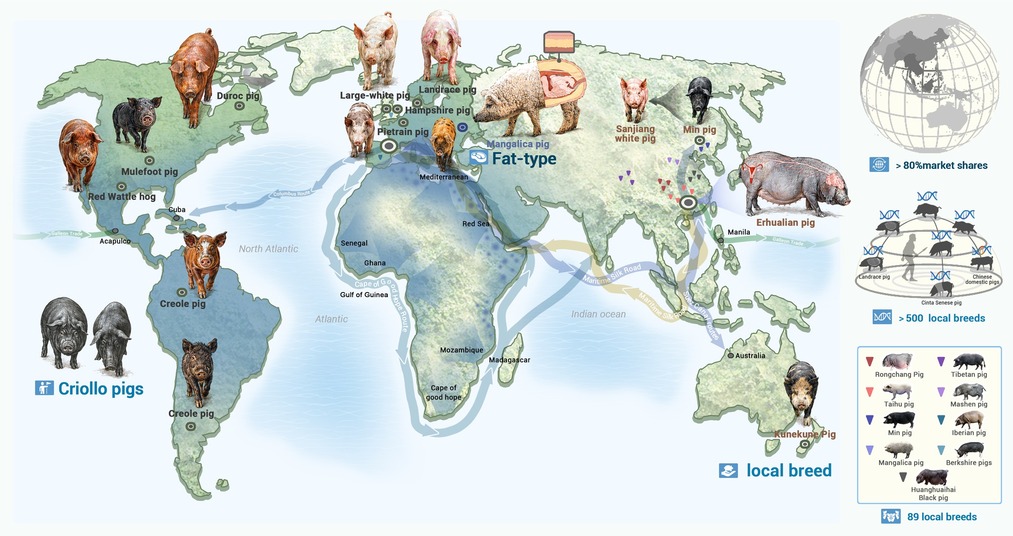
Figure 1.
Global distribution and genetic diversity of domestic pigs
-
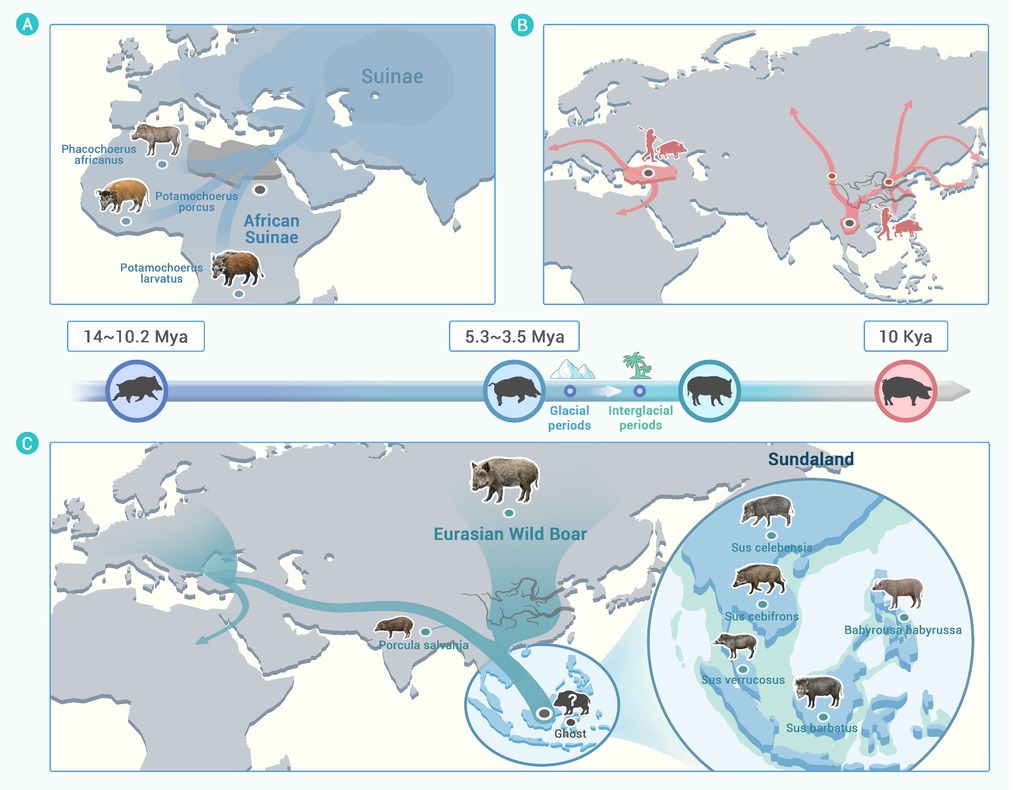
Figure 2.
Schematic illustration of the geographic evolution of Sus scrofa within the family Suidae
-
Figure 3.
Genetic basis and metabolic modifications of elevated hyocholic acid species (HCAs) in the total bile acid pool during the evolution from wild boar to domestic pigs
