
Flexible ultrasound patches for cardiovascular function and disease monitoring
-
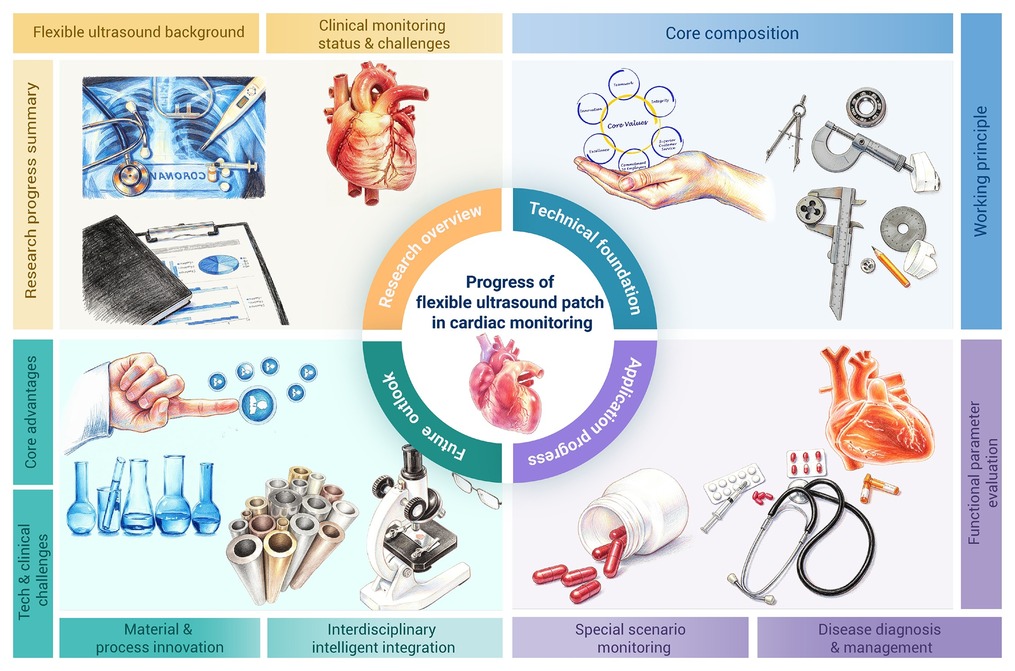
GRAPHICAL ABSTRACT
 DownLoad:
Full size image
DownLoad:
Full size image
-
PUBLIC SUMMARY
-
Cardiovascular diseases show subtle early lesions, fueling demand for real-time noninvasive circulatory monitors.
Flexible ultrasound patches achieve long-term noninvasive detection of key cardiovascular physiological indicators.
This review outlines the structure, mechanism and latest monitoring applications of flexible ultrasound patches.
Analyzes key performance conflicts, suggests optimizations, and summarizes clinical industrialization hurdles.
-
-
ABSTRACT
Cardiovascular diseases, one of the leading causes of death worldwide, often present with subtle early-stage lesions, making it imperative to obtain continuous, quantifiable circulatory physiological information in real-life settings. Flexible ultrasound patches integrate piezoelectric transducer arrays, flexible packaging, and acoustic coupling materials into an ultra-thin platform that adheres to the skin. They enable long-term, noninvasive monitoring of key indicators, such as cardiac structure, hemodynamics, and vascular elasticity. This article systematically reviews the structural composition and working principles of flexible ultrasound patches, as well as their functional capabilities, including blood flow detection and tissue imaging. It further summarizes recent research progress and representative achievements in applications such as the assessment of cardiac structural and functional parameters, continuous monitoring during rest and exercise stress, and use in heart failure, coronary heart disease, cardiomyopathy, and postoperative follow-up. Offering a fresh perspective, we identify a central bottleneck: the inherent trade-off between skin conformability and acoustic performance. Based on this, we propose design principles centered on adaptive compliance, modular system architecture, and on-patch intelligent processing. We then prioritize three future directions: low-cost manufacturing, standardized clinical validation, and integration with telemedicine platforms, to guide the field. Finally, we discuss the core challenges facing their clinical translation, including limited spatial resolution, motion artifacts, long-term wear stability, algorithm development and standardization, and validation against gold-standard measurements. Future directions-including innovations in materials and manufacturing processes, intelligent algorithms and multimodal data fusion, and large-scale clinical validation-are also highlighted to promote industrialization and clinical implementation. -

-
REFERENCES
[1] Amado Rey A. B., Goncalves Seabra A. C. and Stieglitz T. (2025). Towards ultrasound wearable technology for cardiovascular monitoring: From device development to clinical validation. IEEE Rev. Biomed. Eng. 18:93−112. DOI:10.1109/rbme.2024.3410399 [2] Laranjo L., Lanas F., Sun M. C., et al. (2024). World heart federation roadmap for secondary prevention of cardiovascular disease: 2023 update. Glob. Heart 19:8. DOI:10.5334/gh.1278 [3] Zhang B. B., Zhang D., Li Y., et al. (2024). Monitoring long-term cardiac activity with contactless radio frequency signals. Nat. Commun. 15:10598. DOI:10.1038/s41467-024-55061-9 [4] Xie H., Yang L., Jiang B., et al. (2025). State-of-the-art wearable sensors for cardiovascular health: A review. NPJ Cardiovasc. Health 2:53. DOI:10.1038/s44325-025-00090-6 [5] GBD 2023 Demographics Collaborators. (2025). Global age-sex-specific all-cause mortality and life expectancy estimates for 204 countries and territories and 660 subnational locations, 1950-2023: A demographic analysis for the global burden of disease study 2023. Lancet 406:1731−1810. DOI:10.1016/s0140-6736(25)01330-3 [6] Kawai K., Muhere C. F., Lemos E. V., et al. (2025). Viral infections and risk of cardiovascular disease: systematic review and meta-analysis. J. Am. Heart Assoc. 14:e042670. DOI:10.1161/jaha.125.042670 [7] Dave J. K., Mc Donald M. E., Mehrotra P., et al. (2018). Recent technological advancements in cardiac ultrasound imaging. Ultrasonics 84:329−340. DOI:10.1016/j.ultras.2017.11.013 [8] Naqvi J., Yap K. H., Ahmad G., et al. (2013). Transcranial doppler ultrasound: a review of the physical principles and major applications in critical care. Int. J. Vasc. Med. 2013:629378. DOI:10.1155/2013/629378 [9] Kenny J. S. (2024). Wearable ultrasound for continuous deep-tissue monitoring. Nat. Biotechnol. 42:386−387. DOI:10.1038/s41587-023-02098-8 [10] Kang D. H., Cho S., Kim H. Y., et al. (2025). Silicon nanocolumn-based disposable and flexible ultrasound patches. Nat. Commun. 16:6609. DOI:10.1038/s41467-025-61903-x [11] Tian Y., Yang Y., Tang H., et al. (2025). An implantable hydrogel-based phononic crystal for continuous and wireless monitoring of internal tissue strains. Nat. Biomed. Eng. 9:1335−1348. DOI:10.1038/s41551-025-01374-z [12] Hu H., Ma Y., Gao X., et al. (2023). Stretchable ultrasonic arrays for the three-dimensional mapping of the modulus of deep tissue. Nat. Biomed. Eng. 7:1321−1334. DOI:10.1038/s41551-023-01038-w [13] Zhao J., Huang Y., Zhang Y., et al. (2026). Ultrasound patches toward intelligent theranostics: from flexible materials to closed-loop biomedical systems. Bioengineering (Basel) 13:345. DOI:10.3390/bioengineering13030345 [14] Dang C., Wang Z., Hughes-Riley T., et al. (2024). Fibres-threads of intelligence-enable a new generation of wearable systems. Chem. Soc. Rev. 53:8790−8846. DOI:10.1039/d4cs00286e [15] Zhang T., Liu N., Xu J., et al. (2023). Flexible electronics for cardiovascular healthcare monitoring. The Innovation 4:100485. DOI:10.1016/j.xinn.2023.100485 [16] Lyu W., Ma Y., Chen S., et al. (2021). Flexible ultrasonic patch for accelerating chronic wound healing. Adv. Healthc. Mater. 10:e2100785. DOI:10.1002/adhm.202100785 [17] Xue X., Wu H., Cai Q., et al. (2024). Flexible ultrasonic transducers for wearable biomedical applications: a review on advanced materials, structural designs, and future prospects. IEEE Trans. Ultrason. Ferroelectr. Freq. Control 71:786−810. DOI:10.1109/tuffc.2023.3333318 [18] Hu H., Zhu X., Wang C., et al. (2018). Stretchable ultrasonic transducer arrays for three-dimensional imaging on complex surfaces. Sci. Adv. 4:eaar3979. DOI:10.1126/sciadv.aar3979 [19] Hu H., Huang H., Li M., et al. (2023). A wearable cardiac ultrasound imager. Nature 613:667−675. DOI:10.1038/s41586-022-05498-z [20] Wang C., Chen X., Wang L., et al. (2022). Bioadhesive ultrasound for long-term continuous imaging of diverse organs. Science 377:517−523. DOI:10.1126/science.abo2542 [21] Guo L., Liu J., Li Y., et al. (2026). Wearable flexible ultrasonic transducers: Materials, applications, and challenges. Ultrasonics 159:107872. DOI:10.1016/j.ultras.2025.107872 [22] Wang F., Jin P., Feng Y., et al. (2021). Flexible Doppler ultrasound device for the monitoring of blood flow velocity. Sci. Adv. 7:eabi9283. DOI:10.1126/sciadv.abi9283 [23] Kenny J. S., Munding C. E., Eibl J. K., et al. (2021). A novel, hands-free ultrasound patch for continuous monitoring of quantitative doppler in the carotid artery. Sci. Rep. 11:7780. DOI:10.1038/s41598-021-87116-y [24] Wang C., Li X., Hu H., et al. (2018). Monitoring of the central blood pressure waveform via a conformal ultrasonic device. Nat. Biomed. Eng. 2:687−695. DOI:10.1038/s41551-018-0287-x [25] Lin M., Zhang Z., Gao X., et al. (2024). A fully integrated wearable ultrasound system to monitor deep tissues in moving subjects. Nat. Biotechnol. 42:448−457. DOI:10.1038/s41587-023-01800-0 [26] Ho Y. J., Li J. P., Fan C. H., et al. (2020). Ultrasound in tumor immunotherapy: Current status and future developments. J. Control Release 323:12−23. DOI:10.1016/j.jconrel.2020.04.023 [27] Lei Y., Duan J., Qi Q., et al. (2025). The design and application of wearable ultrasound devices for detection and imaging. Biosensors (Basel) 15:561. DOI:10.3390/bios15090561 [28] Wang C., Qi B., Lin M., et al. (2021). Continuous monitoring of deep-tissue haemodynamics with stretchable ultrasonic phased arrays. Nat. Biomed. Eng. 5:749−758. DOI:10.1038/s41551-021-00763-4 [29] Hang C., Jiang Y., Rao Q., et al. (2025). Long-Term cardiac electrical imaging enabled by ultrahigh-resolution foldable heart-machine interfaces. Nano Lett. 25:15945−15954. DOI:10.1021/acs.nanolett.5c04419 [30] Yuan J., Li Z., Zhao Y., et al. (2025). Skin-adaptive focused flexible micromachined ultrasound transducers for wearable cardiovascular health monitoring. Sci. Adv. 11:eadw7632. DOI:10.1126/sciadv.adw7632 [31] Min S., Kim D. H., Joe D. J., et al. (2023). Clinical validation of a wearable piezoelectric blood-pressure sensor for continuous health monitoring. Adv. Mater. 35:e2301627. DOI:10.1002/adma.202301627 [32] Zeng Y., Sun X., Zhang J., et al. (2024). High-frequency wearable ultrasound array belt for small animal echocardiography. IEEE T. Ultrason. Ferr. 71:1915−1923. DOI:10.1109/TUFFC.2024.3492197 [33] Timmermans M., Van O. K., Fattori M., et al. (2025). An ultrasound imaging system exploiting transducers and multiplexers on a flexible substrate together with a log-delta CMOS ADC. NPJ Flex. Electron. 9:104. DOI:10.1038/s41528-025-00478-5 [34] Du W., Zhang L., Suh E., et al. (2023). Conformable ultrasound breast patch for deep tissue scanning and imaging. Sci. Adv. 9:eadh5325. DOI:10.1126/sciadv.adh5325 [35] McDonagh T. A., Metra M., Adamo M., et al. (2024). 2023 Focused Update of the 2021 ESC Guidelines for the diagnosis and treatment of acute and chronic heart failure: Developed by the task force for the diagnosis and treatment of acute and chronic heart failure of the European Society of Cardiology (ESC) with the special contribution of the Heart Failure Association (HFA) of the ESC. Eur. J. Heart Fail 26:5−17. DOI:10.1002/ejhf.3024 [36] Hofer L. M., Kenny J. S., Munding C. E., et al. (2025). Defining the physiological bounds of left ventricular ejection time with a wireless, wearable ultrasound: An analysis of over 137,000 cardiac cycles. Digit. Health 11:20552076251323838. DOI:10.1177/20552076251323838 [37] Van Neer P., Peters L., Verbeek R., et al. (2024). Flexible large-area ultrasound arrays for medical applications made using embossed polymer structures. Nat. Commun. 15:2802. DOI:10.1038/s41467-024-47074-1 [38] Kenny J. S., Eibl A. M., Parrotta M., et al. (2021). The feasibility of a novel index from a wireless doppler ultrasound patch to detect decreasing cardiac output in healthy volunteers. Mil. Med. 186:751−756. DOI:10.1093/milmed/usaa248 [39] Skytioti M., Søvik S. and Elstad M. (2016). Internal carotid artery blood flow in healthy awake subjects is reduced by simulated hypovolemia and noninvasive mechanical ventilation. Physiol. Rep. 4:e12969. DOI:10.14814/phy2.12969 [40] Serrani A. and Aliverti A. (2026). Innovative wearable platform for synchronized biosignals acquisition: a proof of concept in a cuff-less blood pressure monitoring case study. IEEE J. Transl. Eng. Health Med. 14:234−247. DOI:10.1109/jtehm.2026.3687981 [41] Song P., Andre M., Chitnis P., et al. (2024). Clinical, safety, and engineering perspectives on wearable ultrasound technology: A review. IEEE Trans. Ultrason. Ferroelectr. Freq. Control 71:730−744. DOI:10.1109/tuffc.2023.3342150 [42] Lee J., Vasan R. S. and Xanthakis V. (2020). Association of blood pressure responses to submaximal exercise in midlife with the incidence of cardiovascular outcomes and all-cause mortality: the framingham heart study. J. Am. Heart Assoc. 9:e015554. DOI:10.1161/jaha.119.015554 [43] Siontis K. C., Noseworthy P. A., Attia Z. I., et al. (2021). Artificial intelligence-enhanced electrocardiography in cardiovascular disease management. Nat. Rev. Cardiol. 18:465−478. DOI:10.1038/s41569-020-00503-2 [44] Kaptoge S., Pennells L., De Bacquer D., et al. (2019). World Health Organization cardiovascular disease risk charts: revised models to estimate risk in 21 global regions. Lancet Glob. Health 7:e1332−e1345. DOI:10.1016/s2214-109x(19)30318-3 [45] Kenyon C. R., Van Wyk L., Flom A., et al. (2026). Advances in diagnosis and treatment of acute and chronic heart failure: a comprehensive review. J. Clin. Med. 15:618. DOI:10.3390/jcm15020618 [46] Devin J., Powell E., McGagh D., et al. (2025). Non-invasive wearable technology to predict heart failure decompensation. J. Clin. Med. 14:7423. DOI:10.3390/jcm14207423 [47] Aslan U., Zwaenepoel B. A. C., Kirchhof B., et al. (2026). Clinical impact of device-based multisensory monitoring in heart failure: A propensity-matched study from the netherlands. JACC Heart Fail 14:102897. DOI:10.1016/j.jchf.2025.102897 [48] Fonseca C., Baptista R., Franco F., et al. (2025). Worsening heart failure: progress, pitfalls, and perspectives. Heart Fail Rev. 30:715−734. DOI:10.1007/s10741-025-10497-z [49] Zwaenepoel B. A., Kluft A., Feijen M., et al. (2025). Impact of multisensor CIED-based heart failure monitoring on mortality, heart failure hospitalizations and outpatient visits: A systematic review. Curr. Heart Fail Rep. 22:21. DOI:10.1007/s11897-025-00707-y [50] Perramon-Llussà J., Skorupko G., Rao S., et al. (2026). Big data and trustworthy ai for heart failure: A review. Circ. Heart Fail 125:e013823. DOI:10.1161/circheartfailure.125.013823 [51] Elechi U. S., Udoh K., Orobator E. T., et al. (2025). Multi-sensor wearables re-shaping care of chronic heart-failure: A narrative review. Indian J. Med. Res. 162:471−478. DOI:10.25259/ijmr_1617_2025 [52] Gregório C., Agostinho J. R., Rigueira J., et al. (2024). From wristbands to implants: The transformative role of wearables in heart failure care. Healthcare (Basel) 12:2572. DOI:10.3390/healthcare12242572 [53] Chen S., Ouyang Q., Miao X., et al. (2025). Wearable ultrasound devices for therapeutic applications. Nanomicro Lett. 18:45. DOI:10.1007/s40820-025-01890-2 [54] De Armas R. E. and Singh J. P. (2026). Artificial intelligence powered wearable and portable devices for remote cardiac care and population health. Curr. Cardiol. Rep. 28:46. DOI:10.1007/s11886-026-02358-4 [55] National Center for Cardiovascular Diseases The Writing Committee of the Report on Cardiovascular Health and Diseases in China. (2024). Report on cardiovascular health and diseases in china 2023: an updated summary. Biomed. Environ. Sci. 37:949−992. DOI:10.3967/bes2024.162 [56] Zucker E. J. (2022). Computed tomography in tetralogy of Fallot: pre- and postoperative imaging evaluation. Pediatr. Radiol. 52:2485−2497. DOI:10.1007/s00247-021-05179-5 [57] Li S., Dai X., Lv R., et al. (2021). Analysis of the application of echocardiography technology in diagnosis of acute myocardial infection. J. Infect. Public Health 14:428−431. DOI:10.1016/j.jiph.2019.08.005 [58] Her A. Y., Dischl D., Kim Y. H., et al. (2023). Magnetocardiography for the detection of myocardial ischemia. Front. Cardiovasc. Med. 10:1242215. DOI:10.3389/fcvm.2023.1242215 [59] Berthelot M., Yang G. Z. and Lo B. (2018). Preliminary study for hemodynamic monitoring using a wearable device network. IEEE 2017:115−118. DOI:10.1109/bsn.2017.7936021 [60] Li Y., Li Z. and Peng C. (2026). A stretchable wearable doppler ultrasound patch for continuous vascular monitoring. Measurement 266:120490. DOI:10.1016/j.measurement.2026.120490 [61] Tunstall-Pedoe H., Kuulasmaa K., Mähönen M., et al. (1999). Contribution of trends in survival and coronary-event rates to changes in coronary heart disease mortality: 10-year results from 37 WHO MONICA project populations. Lancet 353:1547−1557. DOI:10.1016/s0140-6736(99)04021-0 [62] Zhou J., Ji X., Xue Y., et al. (2025). Immune-modulated adhesive hydrogel for enhancing osteochondral graft adhesion and cartilage repair. Bioact. Mater. 49:23−38. DOI:10.1016/j.bioactmat.2025.02.035 [63] Fadnes S., Nyrnes S. A., Torp H., et al. (2014). Shunt flow evaluation in congenital heart disease based on two-dimensional speckle tracking. Ultrasound Med. Biol. 40:2379−2391. DOI:10.1016/j.ultrasmedbio.2014.03.029 [64] Sun H., Lv C., Wang L., et al. (2026). Flexible ultrasonic transducer array with automatic phase calibration for arteriosclerosis detection. Ultrasonics 159:107850. DOI:10.1016/j.ultras.2025.107850 [65] Zhang W., Ma T., Han L., et al. (2024). A flexible ultrasound transducer array patch. J. Phys.: Conf. Ser. 2740:012006. DOI:10.1088/1742-6596/2740/1/012006 [66] Brieler J., Breeden M. A. and Tucker J. (2017). Cardiomyopathy: An overview. Am. Fam. Physician 96:640−646. DOI:10.3390/ijms22147722 [67] Maron B. J., Desai M. Y., Nishimura R. A., et al. (2022). Diagnosis and evaluation of hypertrophic cardiomyopathy: JACC state-of-the-art review. J. Am. Coll. Cardiol. 79:372−389. DOI:10.1016/j.jacc.2021.12.002 [68] Sorella A., Galanti K., Iezzi L., et al. (2025). Diagnosis and management of dilated cardiomyopathy: A systematic review of clinical practice guidelines and recommendations. Eur. Heart. J. Qual. Care Clin. Outcomes 11:206−222. DOI:10.1093/ehjqcco/qcae109 [69] Chen S., Ouyang Q., Meng X., et al. (2025). Starfish-inspired wearable bioelectronic systems for physiological signal monitoring during motion and real-time heart disease diagnosis. Sci. Adv. 11:eadv2406. DOI:10.1126/sciadv.adv2406 [70] Murat S. and Çavuşoğlu Y. (2023). Left bundle branch block-induced cardiomyopathy. Turk. Kardiyol. Dern. A. 51:274−282. DOI:10.5543/tkda.2023.06737 [71] Lukas Laws J., Lancaster M. C., Ben Shoemaker M., et al. (2022). Arrhythmias as presentation of genetic cardiomyopathy. Circ. Res. 130:1698−1722. DOI:10.1161/circresaha.122.319835 [72] Collis R. and Elliott P. M. (2017). Sudden cardiac death in inherited cardiomyopathy. Int. J. Cardiol 237:56−59. DOI:10.1016/j.ijcard.2017.04.006 [73] Sinagra G., Carriere C., Clemenza F., et al. (2020). Risk stratification in cardiomyopathy. Eur. J. Prev. Cardiol 27:52−58. DOI:10.1177/2047487320961898 [74] Wang Y., Wu G., Song J., et al. (2025). Innovative wearable technology for continuous echocardiographic monitoring: First-in-neonate case report. Front. Pediatr. 13:1567386. DOI:10.3389/fped.2025.1567386 [75] Mohamed N., Kim H. S., Mohamed M., et al. (2023). Tablet-based wearable patch sensor design for continuous cardiovascular system monitoring in postoperative settings. Biosensors (Basel) 13:615. DOI:10.3390/bios13060615 [76] Yin S., Zhang H., Shi F., et al. (2025). Bendable phased-array ultrasound transducer for imaging on curved surfaces. ACS Nano 19:8030−8039. DOI:10.1021/acsnano.4c16028 [77] Tian Y., Yang Y., Wang J., et al. (2025). Biodegradable ultrasound contrast tape for tracing intestinal motility. Nat. Commun. 16:7910. DOI:10.1038/s41467-025-63310-8 [78] Chen W., Liu J., Lei S., et al. (2023). Flexible ultrasound transducer with embedded optical shape sensing fiber for biomedical imaging applications. IEEE Trans. Biomed. Eng. 70:2841−2851. DOI:10.1109/tbme.2023.3266367 [79] Chen J., Yin J., Liu Y., et al. (2026). Advances in wearable bioimaging. Adv. Mater. 0:e22393. DOI:10.1002/adma.202522393 [80] Ren M. X., Zeng Y., Nowlen P., et al. (2025). Advancements in flexible and wearable echocardiograms for real-time continuous cardiovascular monitoring. Curr. Treat. Opt. Card. 27:53. DOI:10.1007/s11936-025-01110-5 [81] Zhou J., Zhang Q., Zhang M., et al. (2026). Flexible wearable medical devices: From material innovations and data processing to intelligent healthcare applications. J. Adv. Res. 83:1195−1218. DOI:10.1016/j.jare.2025.08.036 [82] Zhou S., Park G., Lin M., et al. (2025). Wearable ultrasound technology. Nat. Rev. Bioeng. 3:835−854. DOI:10.1038/s44222-025-00329-y [83] Sempionatto J. R., Lasalde-Ramírez J. A., Mahato K., et al. (2022). Wearable chemical sensors for biomarker discovery in the omics era. Nat. Rev. Chem. 6:899−915. DOI:10.1038/s41570-022-00439-w [84] Li D., Cui T. R., Liu J. H., et al. (2025). Motion-unrestricted dynamic electrocardiogram system utilizing imperceptible electronics. Nat. Commun. 16:3259. DOI:10.1038/s41467-025-58390-5 [85] Caiani E. G., Kemps H., Hoogendoorn P., et al. (2024). Standardized assessment of evidence supporting the adoption of mobile health solutions: A clinical consensus statement of the ESC Regulatory Affairs Committee: Developed in collaboration with the European Heart Rhythm Association (EHRA), the Association of Cardiovascular Nursing & Allied Professions (ACNAP) of the ESC, the Heart Failure Association (HFA) of the ESC, the ESC Young Community, the ESC Working Group on e-Cardiology, the ESC Council for Cardiology Practice, the ESC Council of Cardio-Oncology, the ESC Council on Hypertension, the ESC Patient Forum, the ESC Digital Health Committee, and the European Association of Preventive Cardiology (EAPC). Eur. Heart J. Digit. Health 5:509−523. DOI:10.1093/ehjdh/ztae042 [86] Habib M., Lantgios I. and Hornbostel K. (2022). A review of ceramic, polymer and composite piezoelectric materials. J. Phys. D: Appl. Phys. 55:423002. DOI:10.1088/1361-6463/ac8687 [87] Li A. and Wang Y. (2022). Non-uniform micro-nanoarchitectonics of ZnO structure for the regulation of electrical properties of barium titanate lead-free piezoceramics. Appl. Phys. 128:959. DOI:10.1007/s00339-022-06102-x [88] Liu Z., Li P., Liu H., et al. (2026). Wearable flexible piezoelectric sensors enhanced by sequential induction and functional synergy for monitoring human motion. Adv. Funct. Mater. 36:e18277. DOI:10.1002/adfm.202518277 [89] Keller K., Leitner C., Baumgartner C., et al. (2023). Fully printed flexible ultrasound transducer for medical applications. Adv. Mater. Technol-us. 8:9. DOI:10.1002/admt.202300577 [90] Zhou H., Qiu Y., He P., et al. (2026). Fully-Printed optical-electric dual mode flexible sensor. Adv. Mater. 38:e17426. DOI:10.1002/adma.202517426 [91] Zhang T., Li C. H., Li W., et al. (2024). A self-healing optoacoustic patch with high damage threshold and conversion efficiency for biomedical applications. Nanomicro Lett. 16:122. DOI:10.1007/s40820-024-01346-z [92] Yang J., Ye Z., Chen G., et al. (2026). Multifunctional liquid metal-2D material composites: Structural design, properties, and applications in advanced electronics. Adv. Mater. 38:e15083. DOI:10.1002/adma.202515083 [93] Xu M., Li D., Feng Y., et al. (2024). Microporous materials in polymer electrolytes: The merit of order. Adv. Mater. 36:2405079. DOI:10.1002/adma.202405079 [94] Sun T., Feng B., Huo J., et al. (2024). Artificial intelligence meets flexible sensors: Emerging smart flexible sensing systems driven by machine learning and artificial synapses. Nanomicro Lett. 16:14. DOI:10.1007/s40820-023-01235-x -
ABOUT THIS ARTICLE
Cite this article:
Zhou Y., Xu X., Zhang Z., et al. (2026). Flexible ultrasound patches for cardiovascular function and disease monitoring. The Innovation Materials 4:100231. https://doi.org/10.59717/j.xinn-mater.2026.100231
Welcome!
To request copyright permission to republish or share portions of our works, please visit Copyright Clearance Center's (CCC) Marketplace website at marketplace.copyright.com.
Export File
Citation
Zhou Y., Xu X., Zhang Z., et al. (2026). Flexible ultrasound patches for cardiovascular function and disease monitoring. The Innovation Materials 4:100231. https://doi.org/10.59717/j.xinn-mater.2026.100231

Format
Content
-
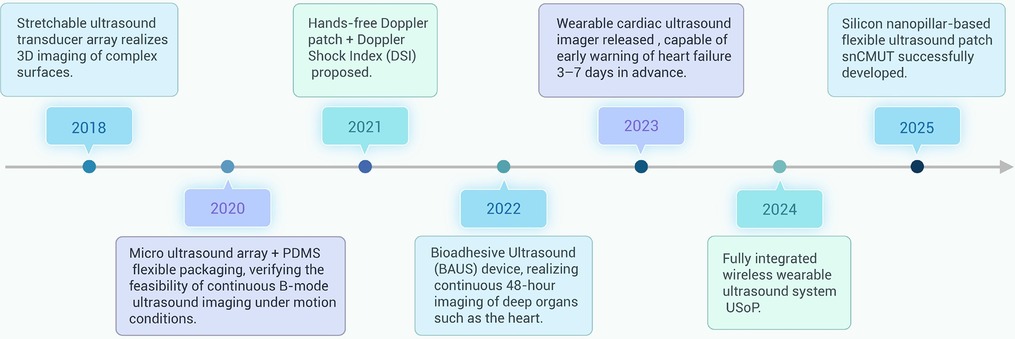
Figure 1.
Key advances in wearable cardiovascular ultrasound
-
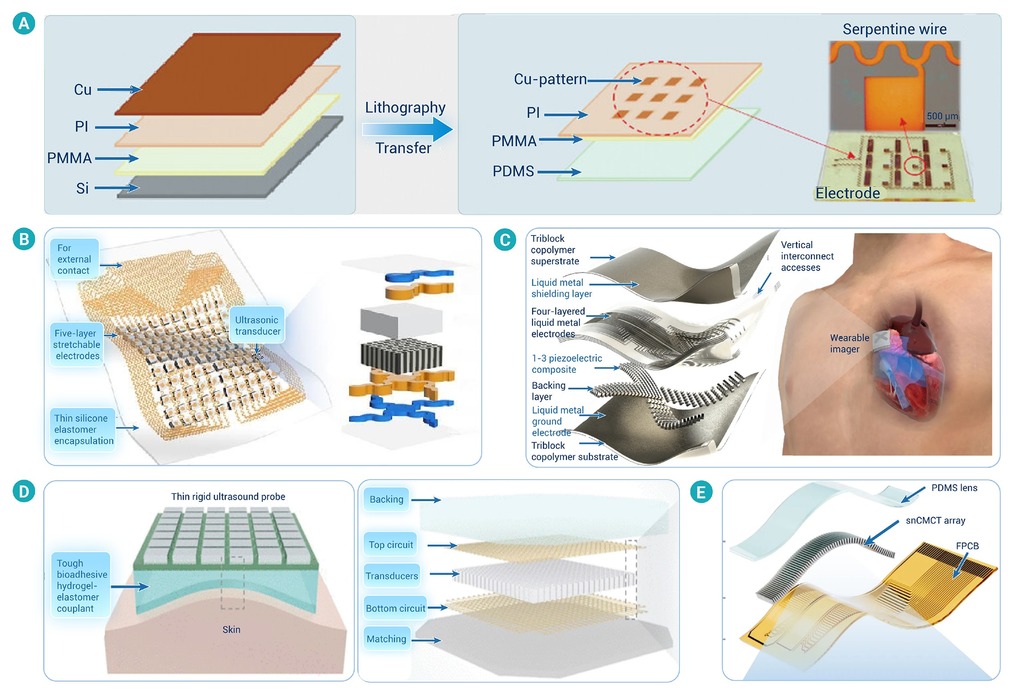
Figure 2.
Structure of flexible ultrasound patches
-
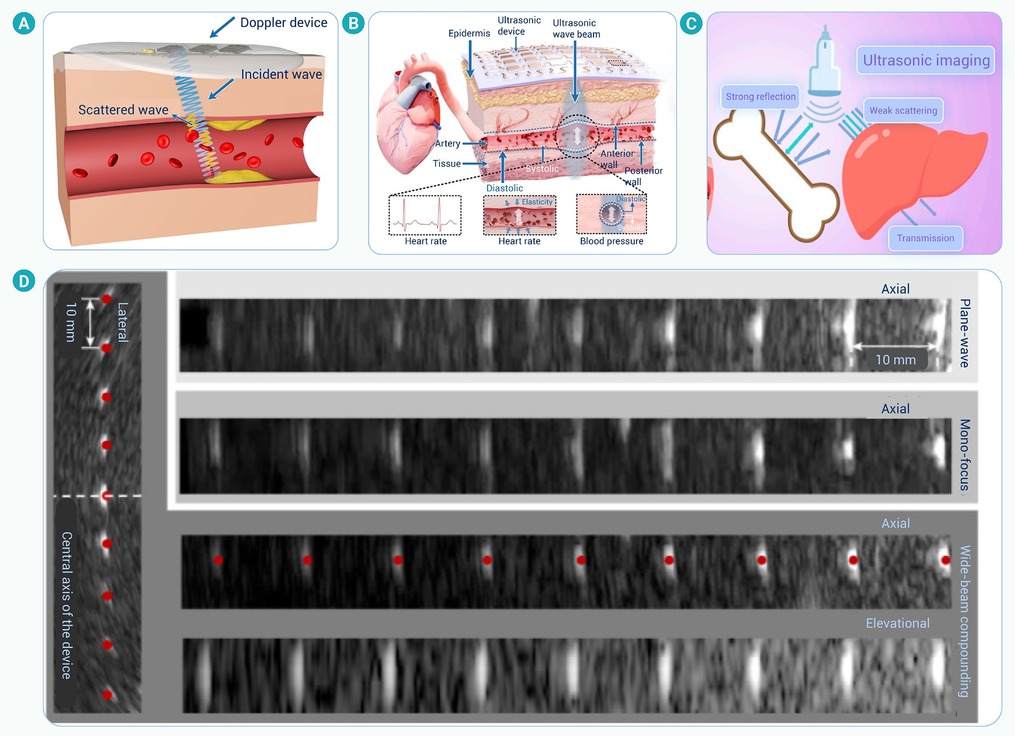
Figure 3.
Working principles of the flexible ultrasound patch
-
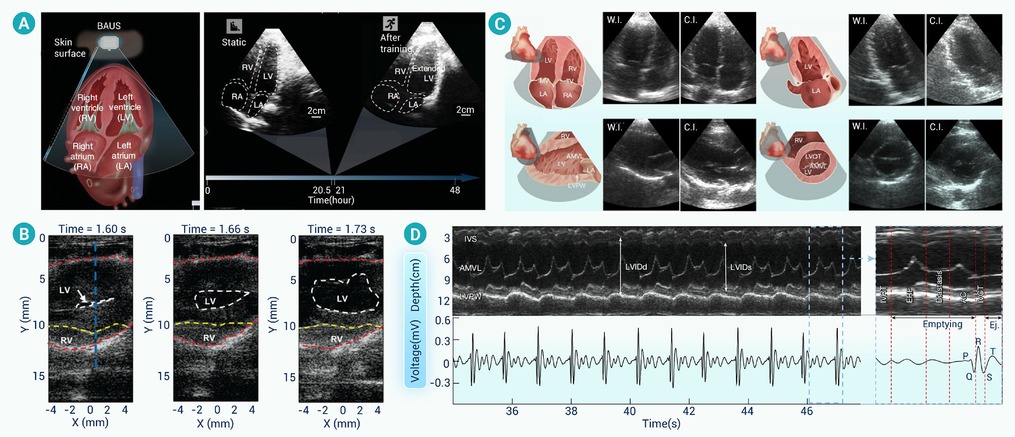
Figure 4.
Monitoring cardiac structures using flexible ultrasound patches
-
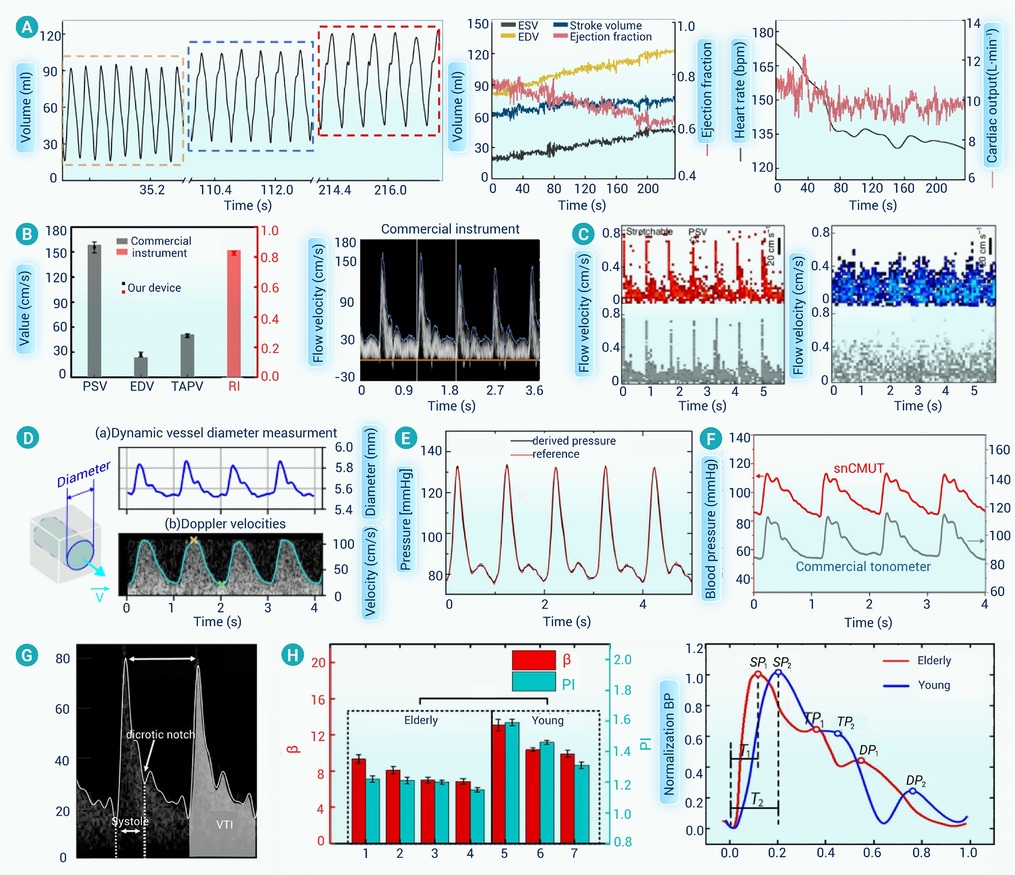
Figure 5.
Monitoring cardiovascular function at rest
-
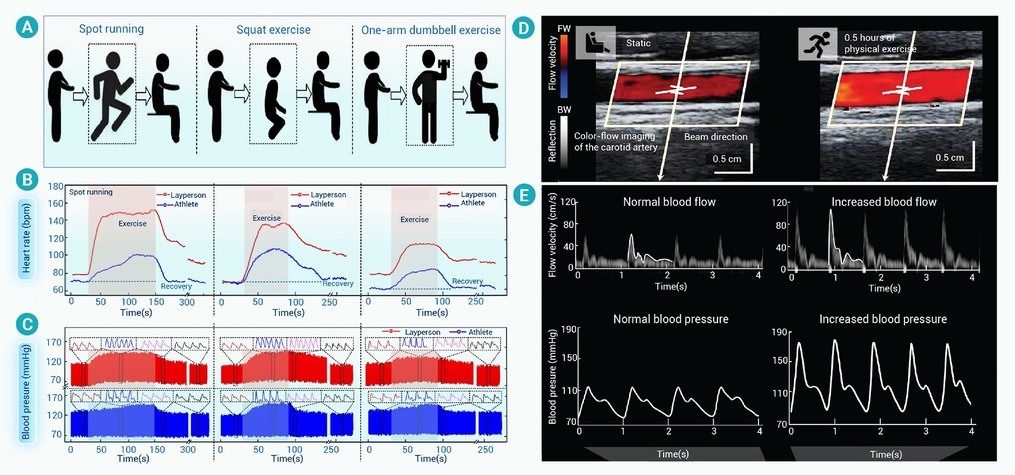
Figure 6.
Continuous real-time monitoring of cardiac function during different phases of exercise
