
Interaction-density-directed supramolecular engineering in lignin toward adhesive–porous composite materials
-
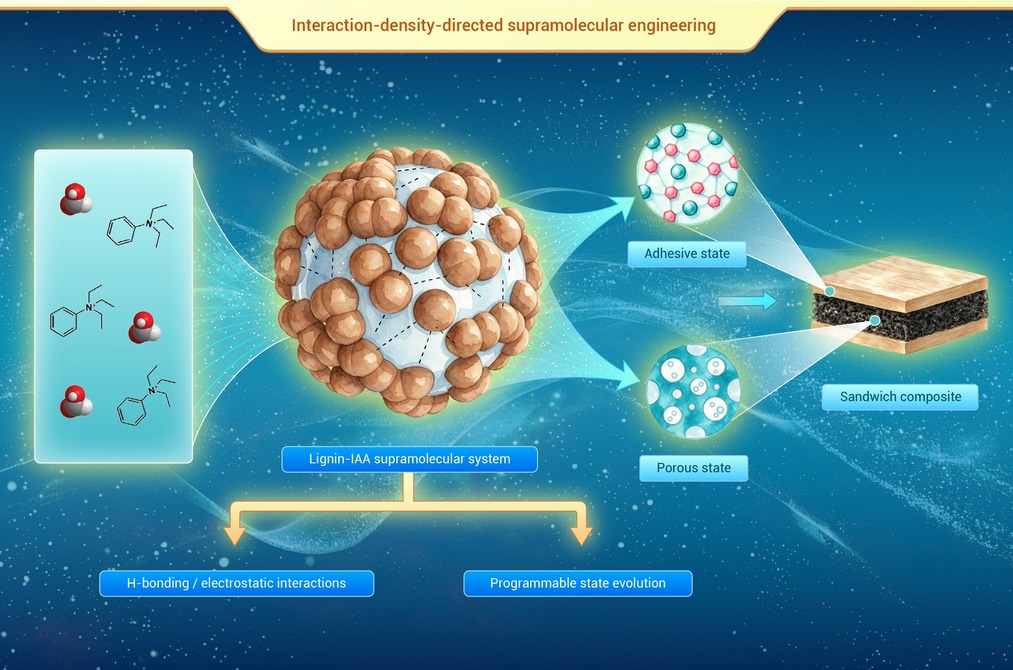
GRAPHICAL ABSTRACT
 DownLoad:
Full size image
-
PUBLIC SUMMARY
-
Interaction-density regulation directs lignin into adhesive- or porous-dominated material states.
The KL-based adhesive reaches a lap shear strength of 5.46 ± 0.12 MPa at room temperature.
Lignin-derived adhesive and porous components enable multifunctional sandwich composites.
-
-
ABSTRACT
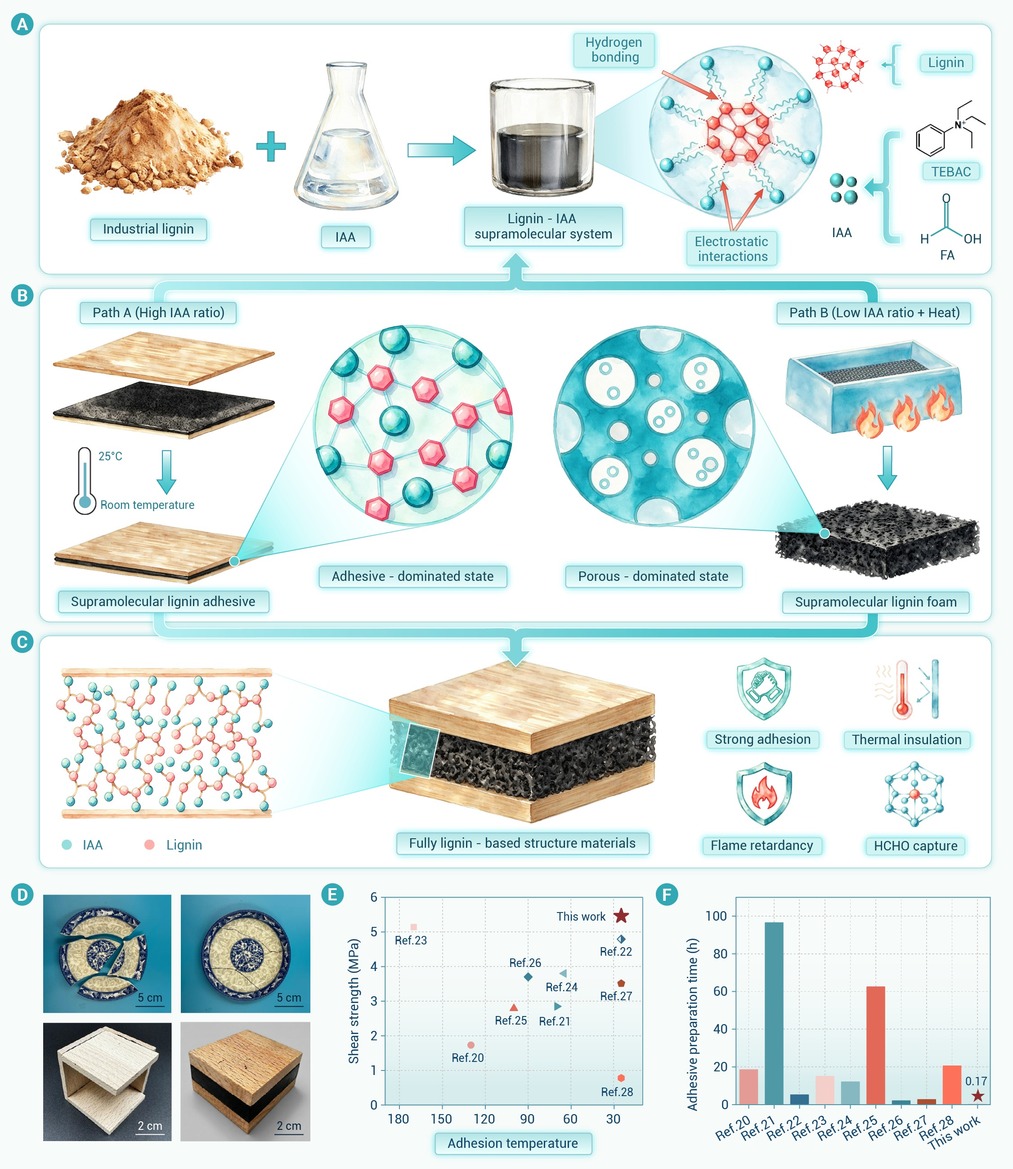
Achieving structurally integrated adhesive and porous materials from heterogeneous biopolymers remains challenging because current strategies typically rely on covalent modification, multicomponent blending, or separately processed constituents. Here, we report an interaction-density-directed supramolecular engineering strategy to derive adhesive and porous architectures from a single lignin platform. Driven by enhanced hydrogen-bonding and electrostatic interactions, an interfacial amphiphilic agent (IAA)-mediated lignin network exhibits restricted chain mobility, enabling rapid interfacial locking at room temperature. In this regime, the lignin system functions as a strong supramolecular adhesive with lap shear strengths of up to 5.46 MPa. By combining pre-oxidation with reduced effective interaction density and thermal activation, the same platform is redirected into a porous architecture featuring low density, high specific surface area, low thermal conductivity, and enhanced flame retardancy. Because both the adhesive and porous components are derived from the same lignin-based supramolecular platform, they can be assembled with wood veneers into a sandwich composite comprising veneer facings, adhesive interlayers, and a multifunctional porous foam core for bonding, thermal insulation, flame retardancy, and formaldehyde capture.-
Keywords:
- Lignin /
- Adhesive /
- Lignin-based materials /
- Biomass composites
-

-
REFERENCES
[1] Bechthold M. and Weaver J. C. (2017). Materials science and architecture. Nat. Rev. Mater. 2:17082. DOI:10.1038/natrevmats.2017.82 [2] An L., Guo Z., Li Z., et al. (2022). Tailoring thermal insulation architectures from additive manufacturing. Nat. Commun. 13:4309. DOI:10.1038/s41467-022-32027-3 [3] Zhang Y., Liu Y., Ren G., et al. (2025). High-throughput printing of functionally gradient material from self-propagation. Nat. Commun. 16:9706. DOI:10.1038/s41467-025-65189-x [4] Hayes G., Laurel M., MacKinnon D., et al. (2023). Polymers without petrochemicals: Sustainable routes to conventional monomers. Chem. Rev. 123:2609−2734. DOI:10.1021/acs.chemrev.2c00354 [5] Cavalcante J., Oldal D. G., Peskov M. V., et al. (2024). Biobased interpenetrating polymer network membranes for sustainable molecular sieving. ACS Nano 18:7433−7443. DOI:10.1021/acsnano.3c10827 [6] Weyhrich C. W., Petrova S. P., Edgar K. J., et al. (2023). Renewed interest in biopolymer composites: Incorporation of renewable, plant-sourced fibers. Green Chem. 25:106−129. DOI:10.1039/d2gc03384d [7] Seidi F., Liu Y., Huang Y., et al. (2025). Chemistry of lignin and condensed tannins as aromatic biopolymers. Chem. Soc. Rev. 54:3140−3232. DOI:10.1039/d4cs00440j [8] Sun R. C. (2020). Lignin source and structural characterization. ChemSusChem 13:4385−4393. DOI:10.1002/cssc.202001324 [9] Yan L., Huertas-Alonso A. J., Liu H., et al. (2025). Lignin polymerization: Towards high-performance materials. Chem. Soc. Rev. 54:6634−6651. DOI:10.1039/d4cs01044b [10] Sulis D. B., Lavoine N., Sederoff H., et al. (2025). Advances in lignocellulosic feedstocks for bioenergy and bioproducts. Nat. Commun. 16:1244. DOI:10.1038/s41467-025-56472-y [11] Liu R. Y., Li B. Z., Yuan Y. J., et al. (2025). Multiscale metabolic engineering in biological lignin valorization. The Innovation 6:100993. DOI:10.1016/j.xinn.2025.100993 [12] Zhang B., Qiang G., Barta K., et al. (2024). Bio–based polymers from lignin. Innov. Mater. 2:100062. DOI:10.59717/j.xinn-mater.2024.100062 [13] Pang T., Wang G., Sun H., et al. (2021). Lignin fractionation: Effective strategy to reduce molecule weight dependent heterogeneity for upgraded lignin valorization. Ind. Crop. Prod. 165:113442. DOI:10.1016/j.indcrop.2021.113442 [14] Upton B. M. and Kasko A. M. (2016). Strategies for the conversion of lignin to high-value polymeric materials: Review and perspective. Chem. Rev. 116:2275−2306. DOI:10.1021/acs.chemrev.5b00345 [15] Shanker R., Mao A., Liu L., et al. (2025). Structurally colored thin films based on acetylated lignin nanoparticles. ACS Nano 19:24713−24723. DOI:10.1021/acsnano.4c16679 [16] Liu T., Xue W., Liu Y., et al. (2026). Cellulose‐tannin‐glycerol (CTG): A biomass‐based, recyclable, and high‐performance adhesive via water‐regulated cohesion. Adv. Funct. Mater. 36:2532068. DOI:10.1002/adfm.202532068 [17] Gong Z., Yang G., Wu T., et al. (2026). Screening high-quality lignins extracted from biomass to prepare biobased wood adhesives. Nat. Protoc. 21:3614−3641. DOI:10.1038/s41596-025-01316-8 [18] Liu K., Kang Y., Wang Z., et al. (2013). 25th anniversary article: reversible and adaptive functional supramolecular materials: "noncovalent interaction" matters. Adv. Mater. 25:5530−5548. DOI:10.1002/adma201302015 [19] Zheng N., Xu Y., Zhao Q., et al. (2021). Dynamic covalent polymer networks: A molecular platform for designing functions beyond chemical recycling and self-healing. Chem. Rev. 121:1716−1745. DOI:10.1021/acs.chemrev.0c00938 [20] Zhan B., Zhang L., Deng Y., et al. (2023). A multifunctional lignin-based composite ultra-adhesive for wood processing. Green Chem. 25:10061−10071. DOI:10.1039/d3gc03542e [21] Liu Q., Wang Y., Wang H., et al. (2023). Fluidic lignin with ultra-low glass transition temperature (Tg < −57 °C): a versatile polyelectrolyte solvent platform. Green Chem. 25:5142−5149. DOI:10.1039/d3gc01248d [22] Zhang L., Sun Y., Huang S., et al. (2025). Poly(acrylic acid)-grafted cellulose nanocrystal reinforced supramolecular adhesives: Ultrahigh strength, humidity resistance, and pH-controlled recyclability. Carbohydr. Polym. 363:123705. DOI:10.1016/j.carbpol.2025.123705 [23] Wu T., Jia Z., Meng Y., et al. (2025). Biomass-based strong adhesive based on supramolecular deep eutectic solvents pretreatment. Chem. Eng. J. 505:159055. DOI:10.1016/j.cej.2024.159055 [24] Lin H. Y., Li L., Zhang Q., et al. (2025). Robust supramolecular adhesives based on natural small molecules through hydrogen bonding. Chem.-Eur. J. 31:e202500900. DOI:10.1002/chem.202500900 [25] Zhang J., Wang W., Zhang Y., et al. (2022). Small-molecule ionic liquid-based adhesive with strong room-temperature adhesion promoted by electrostatic interaction. Nat. Commun. 13:5214. DOI:10.1038/s41467-022-32997-4 [26] Xie X., Jiang Y., Yao X., et al. (2024). A solvent-free processed low-temperature tolerant adhesive. Nat. Commun. 15:5017. DOI:10.1038/s41467-024-49503-7 [27] Lei Z., Shao J., Li C., et al. (2025). Skin‐Inspired durable and cost‐effective biomass‐based supramolecular adhesives. Adv. Funct. Mater. 35:2501624. DOI:10.1002/adfm.202501624 [28] Ju H., Yin Z., Demchuk Z., et al. (2024). Constructing crown ether‐based supramolecular adhesives with ambient‐temperature applicable and durable adhesion. Adv. Funct. Mater. 34:2402165. DOI:10.1002/adfm.202402165 [29] Neese F. (2012). The ORCA program system. Wiley Interdiscip. Rev. Comput. Mol. Sci 2:73−78. DOI:10.1002/wcms.81 [30] Lu T. and Chen F. (2012). Multiwfn: A multifunctional wavefunction analyzer. J. Comput. Chem 33:580−592. DOI:10.1002/jcc.22885 [31] Lu T. and Chen Q. (2021). Interaction region indicator: A simple real space function clearly revealing both chemical bonds and weak interactions. Chem. Methods 1:231−239. DOI:10.1002/cmtd.202100007 [32] Abraham M. J., Murtola T., Schulz R., et al. (2015). GROMACS: High performance molecular simulations through multi-level parallelism from laptops to supercomputers. SoftwareX 1-2:19−25. DOI:10.1016/j.softx.2015.06.001. [33] Humphrey W., Dalke A., and Schulten K. (1996). VMD: Visual molecular dynamics. J. Mol. Graph 14:33−38. DOI:10.1016/0263-7855(96)00018-5 [34] Hess B., Bekker, H., Berendsen, H.J.C., and Fraaije, J.G.E.M. (1997). LINCS: A linear constraint solver for molecular simulations. J. Comput. Chem 18:1463−1472. DOI:3.0.CO;2-H">10.1002/(SICI)1096-987X(199709)18:12<1463::AID-JCC4>3.0.CO;2-H [35] Wen J.-L., Yuan T.-Q., Sun S.-L., et al. (2014). Understanding the chemical transformations of lignin during ionic liquid pretreatment. Green Chem. 16:181−190. DOI:10.1039/c3gc41752b [36] Zuo C., Hui X.-Y., Xin P.-A., et al. (2026). A green one-pot strategy for sustainable fully lignin-based adhesives. Green Chem. 28:974−985. DOI:10.1039/d5gc05305f [37] Yi L., Luo D., Feng M., et al. (2026). Unraveling molecular interactions in coal-derived phenolic–aromatic systems: A decoupling principle governing assembly. Fuel 413:138232. DOI:10.1016/j.fuel.2025.138232 [38] Yin Z. Z., Ma J. M., Zhao B., et al. (2026). PVA-based hydrogen-bonded supramolecular adhesive with core-shell nanoarchitectures for multifunctional and sustainable applications. J. Adv. Res. 85:615−631. DOI:10.1016/j.jare.2025.10.051 [39] Ban L., Zhang Y., Sun D., et al. (2025). Photocatalytic hydrogen evolution driven by advanced metal sulfides from sustainable multilevel biomass and waste plastics. Adv. Funct. Mater. 35:2506114. DOI:10.1002/adfm.202506114 [40] Afewerki S. and Edlund U. (2023). Combined catalysis: A powerful strategy for engineering multifunctional sustainable lignin-based materials. ACS Nano 17:7093−7108. DOI:10.1021/acsnano.3c00436 [41] Osterberg M., Henn K. A., Farooq M., et al. (2023). Biobased nanomaterials-the role of interfacial interactions for advanced materials. Chem. Rev. 123:2200−2241. DOI:10.1021/acs.chemrev.2c00492 [42] Kirui A., Zhao W., Deligey F., et al. (2022). Carbohydrate-aromatic interface and molecular architecture of lignocellulose. Nat. Commun. 13:538. DOI:10.1038/s41467-022-28165-3 [43] Rahimi A., Ulbrich A., Coon J. J., et al. (2014). Formic-acid-induced depolymerization of oxidized lignin to aromatics. Nature 515:249−252. DOI:10.1038/nature13867 [44] Li Q., Dong Y., Hammond K. D., et al. (2021). Revealing the role of hydrogen bonding interactions and supramolecular complexes in lignin dissolution by deep eutectic solvents. J. Mol. Liq. 344:117779. DOI:10.1016/j.molliq.2021.117779 [45] Zhang Y., Zhou Y., Patria R. D., et al. (2025). Formic acid drives lignin valorization: Multiple pathways to value-added products. Innov. Mater. 3:100139. DOI:10.59717/j.xinn-mater.2025.100139 [46] Singh S. K. (2022). Ionic liquids and lignin interaction: An overview. Bioresour. Technol. Rep. 17:100958. DOI:10.1016/j.biteb.2022.100958 [47] Kang X., Kirui A., Dickwella Widanage M. C., et al. (2019). Lignin-polysaccharide interactions in plant secondary cell walls revealed by solid-state NMR. Nat. Commun. 10:347. DOI:10.1038/s41467-018-08252-0 [48] Talebi Amiri M., Bertella S., Questell-Santiago Y. M., et al. (2019). Establishing lignin structure-upgradeability relationships using quantitative 1H–13C heteronuclear single quantum coherence nuclear magnetic resonance (HSQC-NMR) spectroscopy. Chem. Sci. 10:8135−8142. DOI:10.1039/c9sc02088h [49] Aida T., Meijer E. and Stupp S. (2012). Functional supramolecular polymers. Science 335:813−817. DOI:10.1126/science.1205962 [50] Lundberg D. J., Brown C. M., Bobylev E. O., et al. (2024). Nested non-covalent interactions expand the functions of supramolecular polymer networks. Nat. Commun. 15:3951. DOI:10.1038/s41467-024-47666-x [51] Fu R., Xiao C., Du Z., et al. (2026). Switchable supramolecular adhesive by tuning interfacial bonding and modulus. Adv. Funct. Mater. 36:e23966. DOI:10.1002/adfm.202523966 [52] Xie X., Li R., Qiao Y., et al. (2025). An in-situ assembled cobweb-like adhesive with high processability. Nat. Commun. 16:4872. DOI:10.1038/s41467-025-60076-x [53] Seiffert S. and Sprakel J. (2012). Physical chemistry of supramolecular polymer networks. Chem. Soc. Rev. 41:909−930. DOI:10.1039/c1cs15191f [54] Zhang S., Koskela S., Meinhard H., et al. (2025). Multiscale interface engineering enables strong and water resistant wood bonding. Nat. Commun. 16:7902. DOI:10.1038/s41467-025-63239-y [55] Han P. C., Chuang C. H., Lin S. W., et al. (2024). Phase-transformable metal-organic polyhedra for membrane processing and switchable gas separation. Nat. Commun. 15:9523. DOI:10.1038/s41467-024-53560-3 [56] Chen G., Fu S., Liu R., et al. (2010). Analysis of structural changes of masson pine lignin reacted with superoxide anion radical using nmr spectroscopy. BioResources 5:1156−1163. DOI:10.15376/biores.5.2.1156-1163 [57] Meng X., Crestini C., Ben H., et al. (2019). Determination of hydroxyl groups in biorefinery resources via quantitative 31P NMR spectroscopy. Nat. Protoc. 14:2627−2647. DOI:10.1038/s41596-019-0191-1 [58] Bujosa S., Doncel-Gimenez A., Baumer N., et al. (2022). Thermoreversible polymorph transitions in supramolecular polymers of hydrogen-bonded squaramides. Angew. Chem. Int. Ed. 61:e202213345. DOI:10.1002/anie.202213345 [59] Rahimidehgolan F. and Altenhof W. (2023). Compressive behavior and deformation mechanisms of rigid polymeric foams: A review. Compos. Pt. B-Eng. 253:110513. DOI:10.1016/j.compositesb.2023.110513 [60] Xu J., Chen K., Maturilli A., et al. (2025). Biomass-derived polysilsesquioxane nanofilament reinforced porous aerogel for durable passive radiative cooling across all day and weather conditions. ACS Nano 19:38395−38407. DOI:10.1021/acsnano.5c11008 [61] General Administration of Quality Supervision, Inspection and Quarantine of the People's Republic of China, and Standardization Administration of China (2012). Classification for burning behavior of building materials and products (GB 8624-2012). Beijing, China. [62] Yang H., Yu B., Xu X., et al. (2020). Lignin-derived bio-based flame retardants toward high-performance sustainable polymeric materials. Green Chem. 22:2129−2161. DOI:10.1039/d0gc00449a [63] Liu H. and Zhao X. (2022). Thermal conductivity analysis of high porosity structures with open and closed pores. Int. J. Heat Mass Transf. 183:122089. DOI:10.1016/j.ijheatmasstransfer.2021.122089 [64] Kumar D., Alam M., Zou P. X. W., et al. (2020). Comparative analysis of building insulation material properties and performance. Renew. Sust. Energ. Rev. 131:110038. DOI:10.1016/j.rser.2020.110038 [65] Barker-Rothschild D., Chen J., Wan Z., et al. (2025). Lignin-based porous carbon adsorbents for CO2 capture. Chem. Soc. Rev. 54:623−652. DOI:10.1039/d4cs00923a -
ABOUT THIS ARTICLE
Cite this article:
Hui X., Zuo C., Qi J., et al. (2026). Interaction-density-directed supramolecular engineering in lignin toward adhesive–porous composite materials. The Innovation Materials 4:100243. https://doi.org/10.59717/j.xinn-mater.2026.100243
Welcome!
To request copyright permission to republish or share portions of our works, please visit Copyright Clearance Center's (CCC) Marketplace website at marketplace.copyright.com.
Export File
Citation
Hui X., Zuo C., Qi J., et al. (2026). Interaction-density-directed supramolecular engineering in lignin toward adhesive–porous composite materials. The Innovation Materials 4:100243. https://doi.org/10.59717/j.xinn-mater.2026.100243

Format
Content
-
Figure 1.
Interaction-density-directed supramolecular engineering of lignin for adhesive–porous integrated composite materials
-
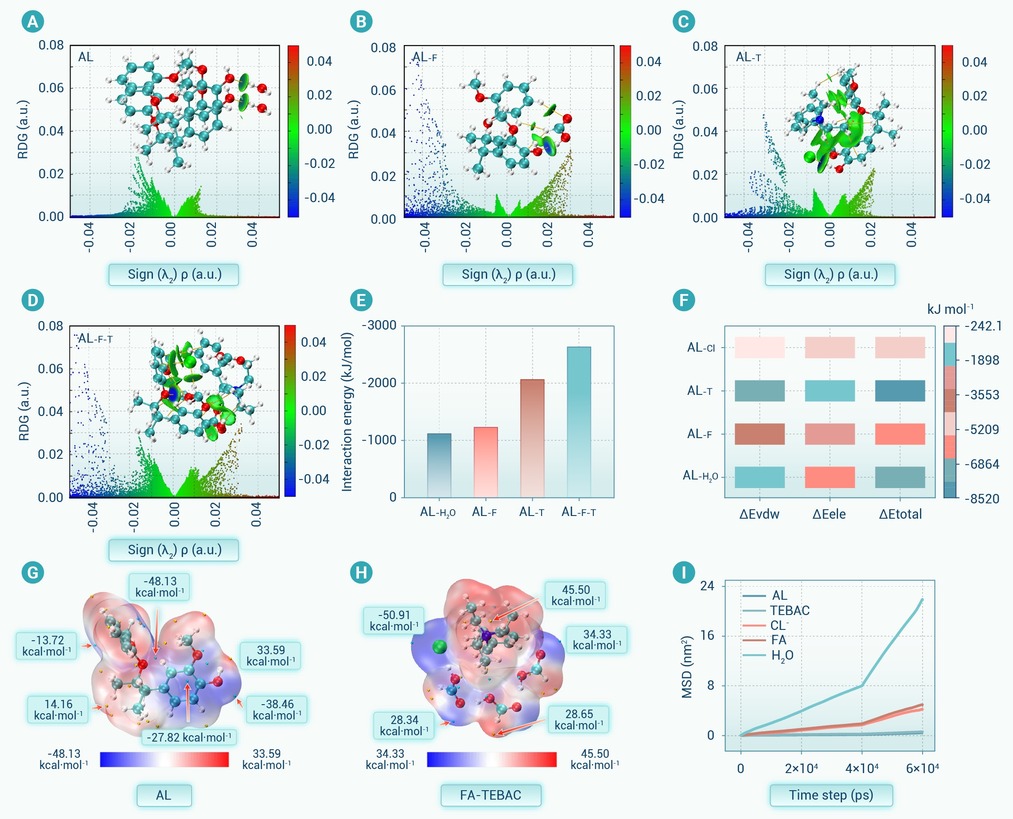
Figure 2.
Molecular basis and tunability of interaction density in the lignin–IAA supramolecular system
-
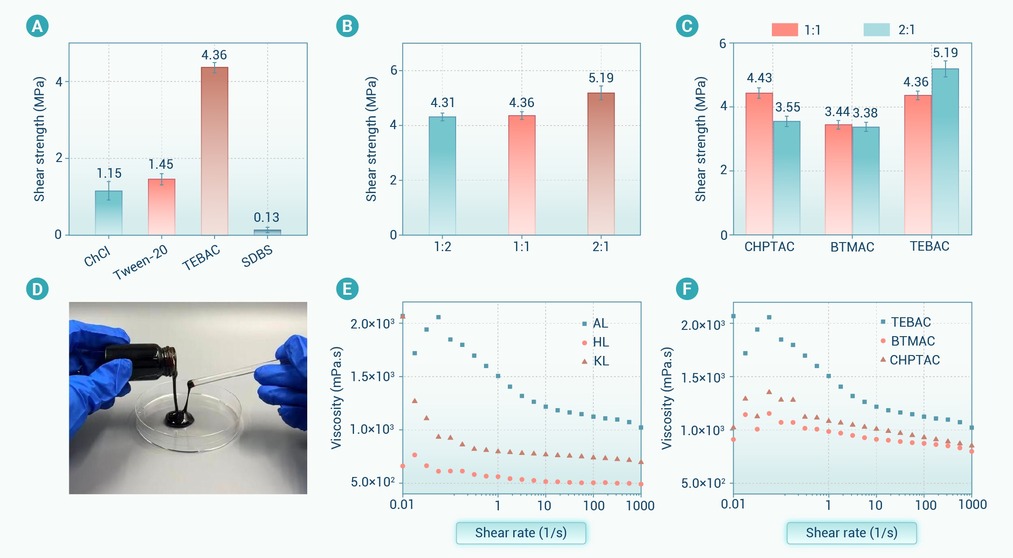
Figure 3.
Adhesive-dominated solid state enabled by high interaction density in the lignin–IAA system
-
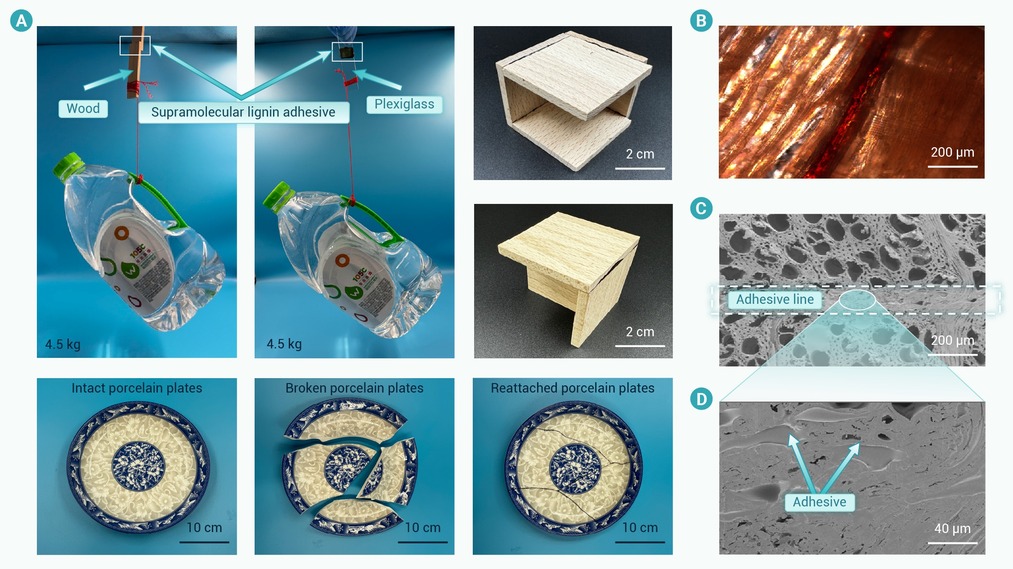
Figure 4.
Practical bonding demonstrations and adhesive–wood interfacial structure
-
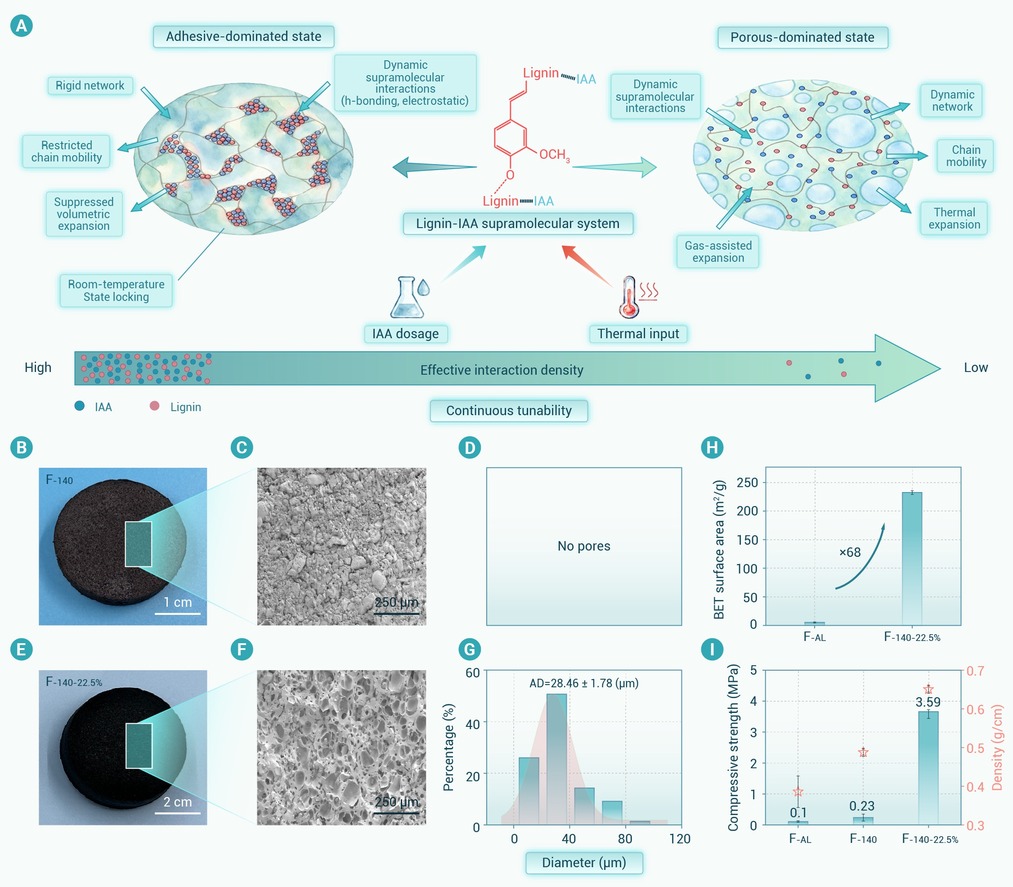
Figure 5.
Reduced effective interaction density redirects the lignin–IAA system toward porous architectures
-
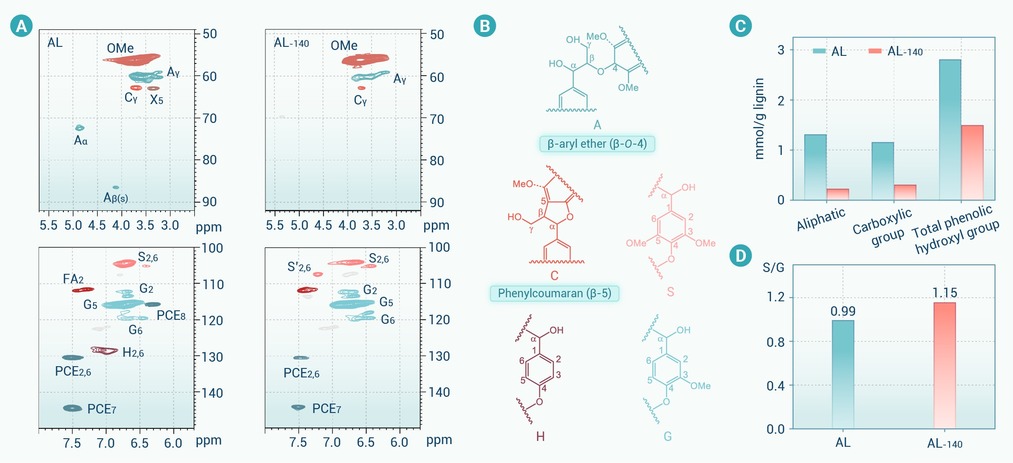
Figure 6.
Structural evolution of lignin during pre-oxidation
-
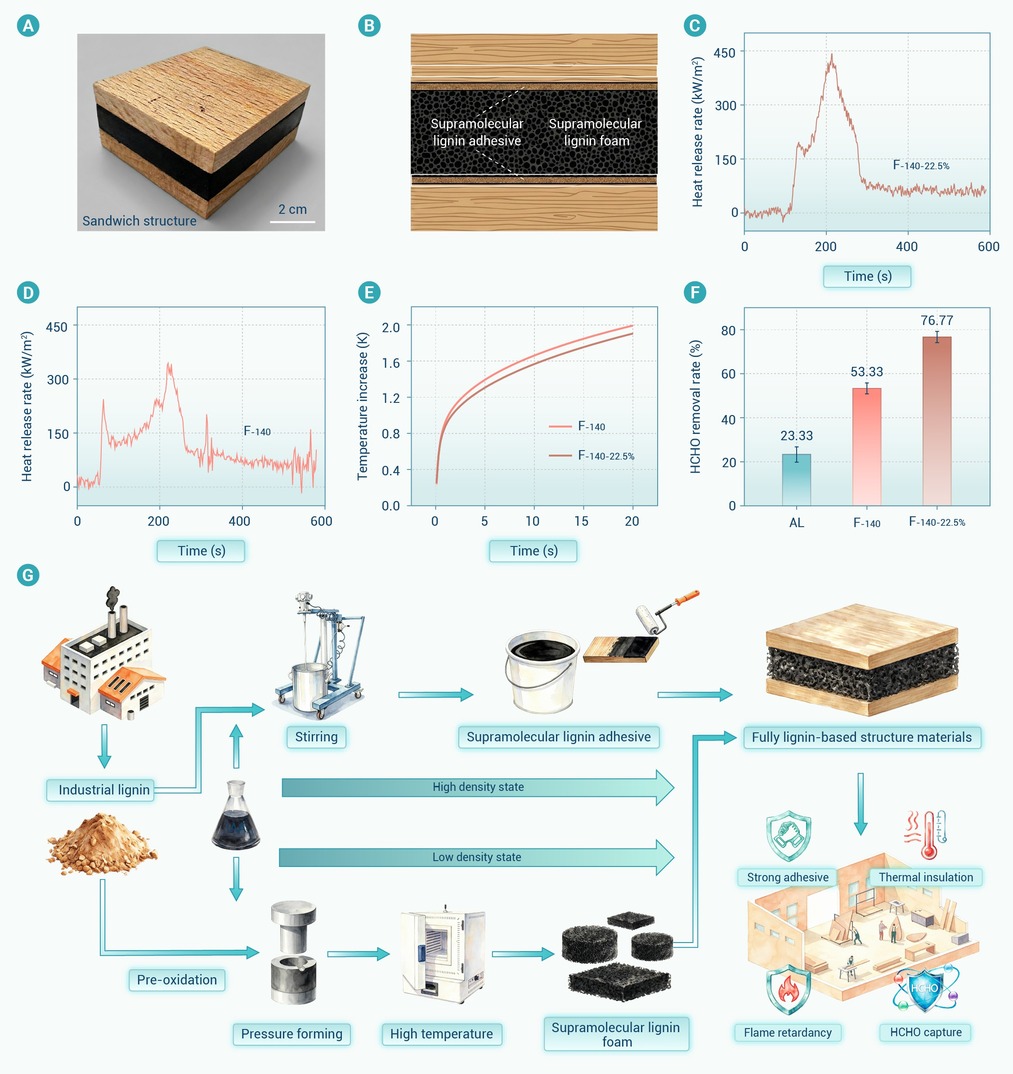
Figure 7.
Integration of adhesive- and porous-dominated states into sandwich composite structures with multifunctionality
