
Revisiting real-world data studies: Progress, value, and challenges
-
GRAPHICAL ABSTRACT
 DownLoad:
Full size image
DownLoad:
Full size image
-
PUBLIC SUMMARY
-
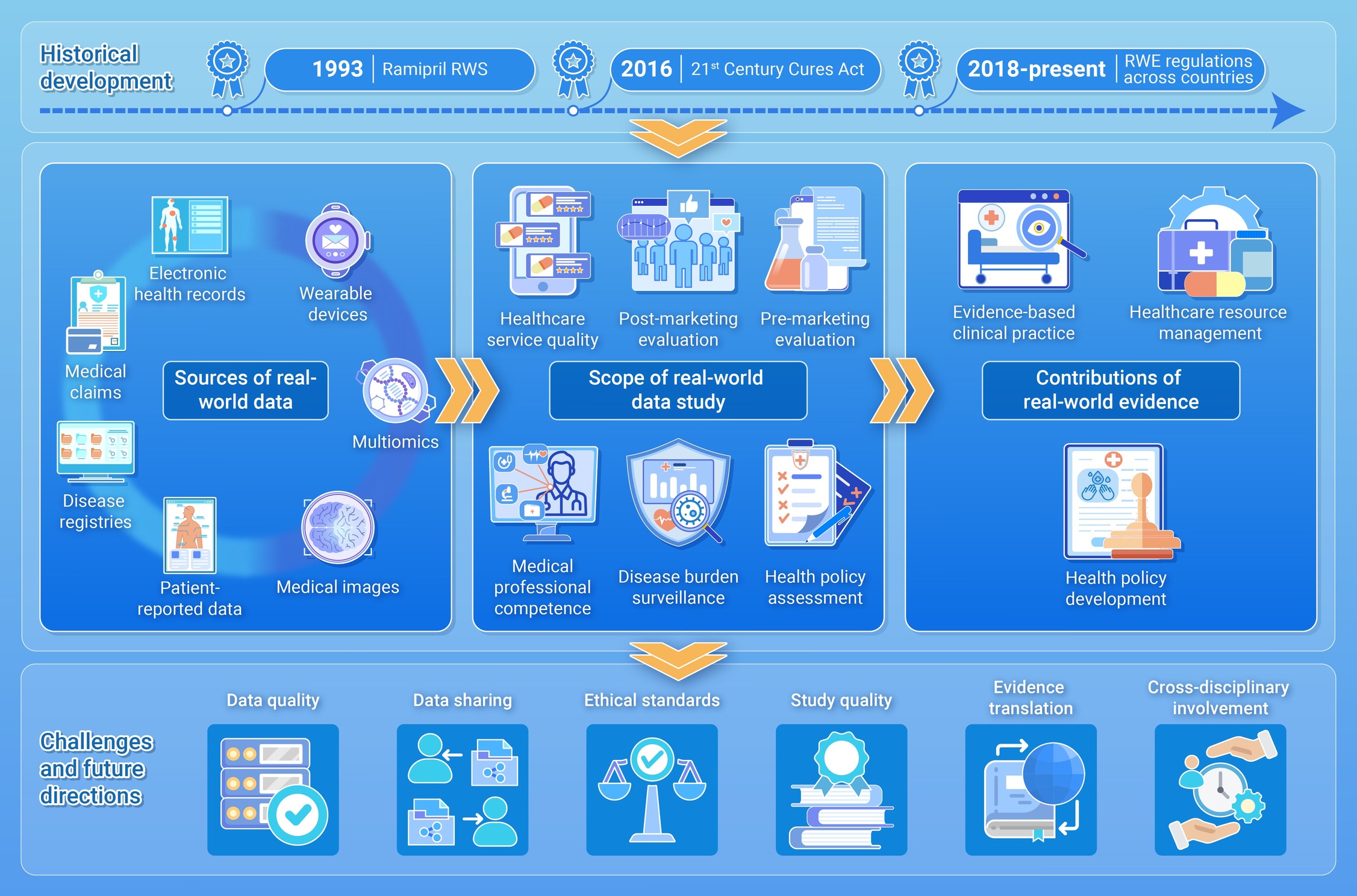
Real-world data can derive from clinical records, insurance claims, health devices, and multi-omics sources.
Real-world data studies investigate treatment effects, service quality, and health policy impacts.
Real-world evidence can support better health care and more informed decisions.
Key challenges include data quality, study validity, ethical standards, and interdisciplinary teamwork.
-
-
ABSTRACT
This review highlights the indispensable role of real-world data studies (RWS) in complementing randomized controlled trials by generating real-world evidence (RWE) that reflects diverse patient populations and clinical settings. It explores the origins and regulatory frameworks of RWS, the evolution of real-world data sources, and their expanding applications in evaluating post-marketing medical products, optimizing pre-marketing medical product development, measuring disease burden, assessing medical professional competence, evaluating healthcare service quality, and informing clinical guidelines and public health policies. The contributions of RWE to personalized medicine, healthcare resource management, and regulatory decisions underscore its significance in evidence-based practice. Despite its potential, RWS faces challenges such as data quality, purpose-driven data sharing, ethical standards, RWE validity and transparency, RWE translation, and multidisciplinary expertise, and this review proposes some strategies to advance these fields. By addressing these challenges, RWS can enhance their impact on healthcare innovation and translate into better patient outcomes globally. -

-
REFERENCES
[1] Dang A. (2023). Real-world evidence: A primer. Pharmaceut. Med. 37:25−36. DOI:10.1007/s40290-022-00456-6 [2] Zuidgeest M., Goetz I., Groenwold R., et al. (2017). Series: Pragmatic trials and real world evidence: Paper 1. Introduction. J. Clin. Epidemiol. 88:7−13. DOI:10.1016/j.jclinepi.2016.12.023 [3] Nambudiri V. E. and Qureshi A. (2013). Comparative effectiveness research. J. Invest. Dermatol. 133:e5;quiz e5. DOI:10.1038/jid.2012.497 [4] Kaplan N. M., Sproul L. E. and Mulcahy W. S. (1993). Large prospective study of ramipril in patients with hypertension. CARE Investigators. Clin. Ther. 15:810−818. [5] Khoury M. J., Rich E. C., Randhawa G., et al. (2009). Comparative effectiveness research and genomic medicine: an evolving partnership for 21st century medicine. Genet. Med. 11:707−711. DOI:10.1097/GIM.0b013e3181b99b90 [6] US Food and Drug Administration (2020). 21st Century Cures Act. https://www.fda.gov/regulatory-information/selected-amendments-fdc-act/21st-century-cures-act. [7] Feng G., Xu H., Wan S., et al. (2024). Twelve practical recommendations for developing and applying clinical predictive models. Innov. Med. 2:100105. DOI:10.59717/j.xinn-med.2024.100105 [8] Flynn R., Plueschke K., Quinten C., et al. (2022). Marketing authorization applications made to the European medicines agency in 2018–2019: What was the contribution of real‐world evidence. Clin. Pharmacol. Ther. 111:90−97. DOI:10.1002/cpt.2461 [9] US Food and Drug Administration (2018). Framework for FDA's Real-World Evidence Program. https://www.fda.gov/media/120060/download. [10] Ball R., Robb M., Anderson S. A., et al. (2016). The FDA's sentinel initiative--A comprehensive approach to medical product surveillance. Clin. Pharmacol. Ther. 99:265-268. DOI:10.1002/cpt.320 [11] Brown J. P., Wing K., Evans S. J., et al. (2019). Use of real-world evidence in postmarketing medicines regulation in the European Union: A systematic assessment of European Medicines Agency referrals 2013-2017. BMJ Open 9:e028133. DOI:10.1136/bmjopen-2018-028133 [12] Hatswell A. J., Baio G., Berlin J. A., et al. (2016). Regulatory approval of pharmaceuticals without a randomised controlled study: Analysis of EMA and FDA approvals 1999-2014. BMJ Open 6:e011666. DOI:10.1136/bmjopen-2016-011666 [13] Pontes C., Fontanet J. M., Vives R., et al. (2018). Evidence supporting regulatory-decision making on orphan medicinal products authorisation in Europe: Methodological uncertainties. Orphanet. J. Rare Dis. 13:206. DOI:10.1186/s13023-018-0926-z [14] Mahendraratnam N., Mercon K., Gill M., et al. (2022). Understanding use of real-world data and real-world evidence to support regulatory decisions on medical product effectiveness. Clin. Pharmacol. Ther. 111:150−154. DOI:10.1002/cpt.2272 [15] Center for Drug Evaluation and Research, Center for Biologics Evaluation and Research and Oncology Center of Excellence (2024). Real-World Data: Assessing Electronic Health Records and Medical Claims Data To Support Regulatory Decision-Making for Drug and Biological Products: Guidance for Industry. https://www.fda.gov/regulatory-information/search-fda-guidance-documents/real-world-data-assessing-electronic-health-records-and-medical-claims-data-support-regulatory. [16] U.S. Department of Health and Human Services, Food and Drug Administration, Center for Drug Evaluation and Research (CDER), et al. (2023). Considerations for the Use of Real-World Data and Real-World Evidence To Support Regulatory Decision-Making for Drug and Biological Products: Guidance for Industry. https://www.fda.gov/regulatory-information/search-fda-guidance-documents/considerations-use-real-world-data-and-real-world-evidence-support-regulatory-decision-making-drug. [17] Rosso A., Pacurariu A., Cave A., et al. (2017). Observational Data (Real World Data)-subgroup report. https://www.ema.europa.eu/en/documents/report/observational-data-real-world-data-subgroup-report_en.pdf. [18] National institute for Health and Care Excellence (2022). NICE real-world evidence framework. https://www.nice.org.uk/corporate/ecd9/chapter/overview. [19] Chinese National Medical Products Administration (2020). Notice from the National Medical Products Administration on the release of Guiding Principles for Real-world Evidence Supporting drug development and Evaluation (trial). https://www.nmpa.gov.cn/xxgk/ggtg/ypggtg/ypqtggtg/20200107151901190.html. [20] Center for Drug Evaluation and Chinese National Medical Products Administration (2023). Notice from the Center for Drug Evaluation of the National Medical Products Administration on the Release of the "Guiding Principles for Communication and Exchange on Real-World Evidence Supporting Drug Registration Applications (Trial Version)". https://www.cde.org.cn/main/news/viewInfoCommon/8b59a85b13019b5084675edc912004f1. [21] Chinese National Medical Products Administration (2020). Notice of the National Medical Products Administration on the release of T Technical Guiding Principles for the Use of Real-World Data for Clinical Evaluation of Medical Devices (trial). https://www.nmpa.gov.cn/xxgk/ggtg/ylqxggtg/ylqxqtggtg/20201126090030150.html. [22] Pharmaceuticals and Medical Devices Agency (2023). RWD WG. https://www.pmda.go.jp/english/rs-sb-std/rs/0023.html. [23] Verkerk K. and Voest E. E. (2024). Generating and using real-world data: A worthwhile uphill battle. Cell 187:1636−1650. DOI:10.1016/j.cell.2024.02.012 [24] Makady A., de Boer A., Hillege H., et al. (2017). What is real-world data. A review of definitions based on literature and stakeholder interviews. Value Health 20:858−865. DOI:10.1016/j.jval.2017.03.008 [25] Liu F. and Panagiotakos D. (2022). Real-world data: A brief review of the methods, applications, challenges and opportunities. BMC Med. Res. Methodol. 22:287−287. DOI:10.1186/s12874-022-01768-6 [26] Penberthy L. T., Rivera D. R., Lund J. L., et al. (2022). An overview of real-world data sources for oncology and considerations for research. CA Cancer J. Clin. 72:287−300. DOI:10.3322/caac.21714 [27] Omberg L., Chaibub N. E., Perumal T. M., et al. (2022). Remote smartphone monitoring of Parkinson's disease and individual response to therapy. Nat. Biotechnol. 40:480−487. DOI:10.1038/s41587-021-00974-9 [28] Klonoff D. C., Gutierrez A., Fleming A., et al. (2019). Real-world evidence should be used in regulatory decisions about new pharmaceutical and medical device products for diabetes. J. Diabetes Sci. Technol. 13:995−1000. DOI:10.1177/1932296819839996 [29] Savitz S. T., Savitz L. A., Fleming N. S., et al. (2020). How much can we trust electronic health record data. Healthcare 8:100444. DOI:10.1016/j.hjdsi.2020.100444 [30] Behrendt C.-A., Debus E. S., Mani K., et al. (2018). The strengths and limitations of claims based research in countries with fee for service reimbursement. Eur. J. Vasc. Endovasc. Surg. 56:615−616. DOI:10.1016/j.ejvs.2018.06.001 [31] Gliklich R. E., Leavy M. B. and Dreyer N. A. (2020). Registries for evaluating patient outcomes: A user's guide fourth edition (Rockville (MD): Agency for healthcare research and quality (US)). https://www.ncbi.nlm.nih.gov/books/NBK562575/. [32] Weinfurt K. P. and Reeve B. B. (2022). Patient-reported outcome measures in clinical research. JAMA 328:472−473. DOI:10.1001/jama.2022.11238 [33] Campbell R., Ju A., King M. T., et al. (2022). Perceived benefits and limitations of using patient-reported outcome measures in clinical practice with individual patients: A systematic review of qualitative studies. Qual. Life Res. 31:1597−1620. DOI:10.1007/s11136-021-03003-z [34] Kroenke K., Miksch T. A., Spaulding A. C., et al. (2022). Choosing and using patient-reported outcome measures in clinical practice. Arch. Phys. Med. Rehabil. 103:S108−S117. DOI:10.1016/j.apmr.2020.12.033 [35] Su Y., Chen D., Yuan D., et al. (2020). Multi-omics resolves a sharp disease-state shift between mild and moderate COVID-19. Cell 183:1479−1495.e1420. DOI:10.1016/j.cell.2020.10.037 [36] Huang T., Xu H., Wang H., et al. (2023). Artificial intelligence for medicine: Progress, challenges, and perspectives. Innov. Med. 1:100030. DOI:10.59717/j.xinn-med.2023.100030 [37] Santi I., Vellekoop H., M V. M., et al. (2024). Estimating the prognostic value of the NTRK fusion biomarker for comparative effectiveness research in the Netherlands. Mol. Diagn. Ther. 28:319−328. DOI:10.1007/s40291-024-00704-2 [38] Kather J. N., Pearson A. T., Halama N., et al. (2019). Deep learning can predict microsatellite instability directly from histology in gastrointestinal cancer. Nat. Med. 25:1054−1056. DOI:10.1038/s41591-019-0462-y [39] Bedrikovetski S., Dudi-Venkata N. N., Kroon H. M., et al. (2021). Artificial intelligence for pre-operative lymph node staging in colorectal cancer: a systematic review and meta-analysis. BMC Cancer 21:1058. DOI:10.1186/s12885-021-08773-w [40] Farmer R., Mathur R., Bhaskaran K., et al. (2018). Promises and pitfalls of electronic health record analysis. Diabetologia 61:1241−1248. DOI:10.1007/s00125-017-4518-6 [41] Herrett E., Gallagher A. M., Bhaskaran K., et al. (2015). Data resource profile: Clinical practice research datalink (CPRD). Int. J. Epidemiol. 44:827−836. DOI:10.1093/ije/dyv098 [42] Yamaguchi M., Inomata S., Harada S., et al. (2019). Establishment of the MID-NET(®) medical information database network as a reliable and valuable database for drug safety assessments in Japan. Pharmacoepidemiol. Drug Saf. 28:1395−1404. DOI:10.1002/pds.4879 [43] Enewold L., Parsons H., Zhao L., et al. (2020). Updated overview of the SEER-medicare data: Enhanced content and applications. J. Natl. Cancer Inst. Monogr. 2020:3−13. DOI:10.1093/jncimonographs/lgz029 [44] Warren J. L., Parsons H. M., Mariotto A. B., et al. (2023). Evaluation of the completeness of managed care data to identify cancer diagnoses and treatments for patients in the SEER-medicare data. Med. Care 61:846−857. DOI:10.1097/MLR.0000000000001936 [45] Reich C., Ostropolets A., Ryan P., et al. (2024). OHDSI Standardized Vocabularies-a large-scale centralized reference ontology for international data harmonization. J. Am. Med. Inform. Assoc. 31:583−590. DOI:10.1093/jamia/ocad247 [46] Hripcsak G., Ryan P. B., Duke J. D., et al. (2016). Characterizing treatment pathways at scale using the OHDSI network. Proc. Natl. Acad. Sci. U. S. A. 113:7329−7336. DOI:10.1073/pnas.1510502113 [47] Sim Y. K., Chong M. C., Gandhi M., et al. (2024). Real-world data on the diagnosis, treatment, and management of hepatocellular carcinoma in the Asia-Pacific: The INSIGHT study. Liver Cancer 13:298−313. DOI:10.1159/000534513 [48] Lee D. H., Oh J. H., Jeon H. J., et al. (2024). The efficacy and safety of sodium-glucose co-transporter 2 (SGLT2) Inhibitors in real-world clinical practice: Potential cautionary use in elderly patients with Type 2 diabetes (T2D). Diabetes Ther. 15:1615−1626. DOI:10.1007/s13300-024-01604-8 [49] Dai W. F., Beca J. M., Nagamuthu C., et al. (2022). Cost-effectiveness analysis of pertuzumab with trastuzumab in patients with metastatic breast cancer. JAMA Oncol. 8:597−606. DOI:10.1001/jamaoncol.2021.8049 [50] Zang C., Zhang H., Xu J., et al. (2023). High-throughput target trial emulation for Alzheimer's disease drug repurposing with real-world data. Nat. Commun. 14:8180. DOI:10.1038/s41467-023-43929-1 [51] Dietz-Fricke C., Degasperi E., Jachs M., et al. (2024). Safety and efficacy of off-label bulevirtide monotherapy in patients with HDV with decompensated Child-B cirrhosis-A real-world case series. Hepatology 80:664−673. DOI:10.1097/HEP.0000000000000847 [52] Yu A., Ha N. B., Shi B., et al. (2023). Real-world experience with tofacitinib dose de-escalation in patients with moderate and severe ulcerative colitis. Clin. Gastroenterol. Hepatol. 21:3115−3124.e3113. DOI:10.1016/j.cgh.2023.05.001 [53] Reinold J., Kollhorst B., Wentzell N., et al. (2024). Use of isotretinoin among girls and women of childbearing age and occurrence of isotretinoin-exposed pregnancies in Germany: A population-based study. PLoS Med. 21:e1004339. DOI:10.1371/journal.pmed.1004339 [54] Lv J. W., Qi Z. Y., Zhou G. Q., et al. (2018). Optimal cumulative cisplatin dose in nasopharyngeal carcinoma patients receiving additional induction chemotherapy. Cancer Sci. 109:751−763. DOI:10.1111/cas.13474 [55] Liu S. L., Sun X. S., Yan J. J., et al. (2019). Optimal cumulative cisplatin dose in nasopharyngeal carcinoma patients based on induction chemotherapy response. Radiother. Oncol. 137:83−94. DOI:10.1016/j.radonc.2019.04.020 [56] Liu R., Wang L., Rizzo S., et al. (2024). Systematic analysis of off-label and off-guideline cancer therapy usage in a real-world cohort of 165,912 US patients. Cell Rep. Med. 5:101444. DOI:10.1016/j.xcrm.2024.101444 [57] Atrash S., Flahavan E. M., Xu T., et al. (2022). Treatment patterns and outcomes according to cytogenetic risk stratification in patients with multiple myeloma: A real-world analysis. Blood Cancer J. 12:46. DOI:10.1038/s41408-022-00638-0 [58] Broder M. S., Cai B., Chang E., et al. (2018). Incidence and prevalence of neuroendocrine tumors of the lung: Analysis of a US commercial insurance claims database. BMC Pulm. Med. 18:135. DOI:10.1186/s12890-018-0678-5 [59] Birkmeyer J. D., Finks J. F., O'Reilly A., et al. (2013). Surgical skill and complication rates after bariatric surgery. N. Engl. J. Med. 369:1434−1442. DOI:10.1056/NEJMsa1300625 [60] Huisman M. V., Rothman K. J., Paquette M., et al. (2018). Two-year follow-up of patients treated with dabigatran for stroke prevention in atrial fibrillation: Global Registry on Long-Term Antithrombotic Treatment in Patients with Atrial Fibrillation (GLORIA-AF) registry. Am. Heart J. 198:55−63. DOI:10.1016/j.ahj.2017.08.018 [61] Steinberg B. A., Shrader P., Thomas L., et al. (2016). Off-label dosing of non-vitamin K antagonist oral anticoagulants and adverse outcomes: The ORBIT-AF II registry. J. Am. Coll. Cardiol. 68:2597−2604. DOI:10.1016/j.jacc.2016.09.966 [62] Camm A. J., Amarenco P., Haas S., et al. (2016). XANTUS: A real-world, prospective, observational study of patients treated with rivaroxaban for stroke prevention in atrial fibrillation. Eur. Heart J 37:1145−1153. DOI:10.1093/eurheartj/ehv466 [63] Lee S.-R., Choi E.-K., Han K.-D., et al. (2018). Edoxaban in Asian patients with atrial fibrillation: Effectiveness and safety. J. Am. Coll. Cardiol. 72:838−853. DOI:10.1016/j.jacc.2018.05.066 [64] Chao T.-F., Liu C.-J., Lin Y.-J., et al. (2018). Oral anticoagulation in very elderly patients with atrial fibrillation: A nationwide cohort study. Circulation 138:37−47. DOI:10.1161/CIRCULATIONAHA.117.031658 [65] Yao X., Shah N. D., Sangaralingham L. R., et al. (2017). Non-Vitamin K Antagonist Oral Anticoagulant Dosing in Patients With Atrial Fibrillation and Renal Dysfunction. J. Am. Coll. Cardiol. 69:2779−2790. DOI:10.1016/j.jacc.2017.03.600 [66] Docherty A. B., Harrison E. M., Green C. A., et al. (2020). Features of 20 133 UK patients in hospital with covid-19 using the ISARIC WHO Clinical Characterisation Protocol: Prospective observational cohort study. BMJ 369:m1985. DOI:10.1136/bmj.m1985 [67] Grasselli G., Zangrillo A., Zanella A., et al. (2020). Baseline characteristics and outcomes of 1591 patients infected with SARS-CoV-2 admitted to ICUs of the Lombardy Region, Italy. JAMA 323:1574−1581. DOI:10.1001/jama.2020.5394 [68] Berger M. L., Sox H., Willke R. J., et al. (2017). Good practices for real-world data studies of treatment and/or comparative effectiveness: Recommendations from the joint ISPOR-ISPE Special Task Force on real-world evidence in health care decision making. Pharmacoepidemiol. Drug Saf. 26:1033−1039. DOI:10.1002/pds.4297 [69] Franklin J. M. and Schneeweiss S. (2017). When and how can real world data analyses substitute for randomized controlled trials. Clin. Pharmacol. Ther. 102:924−933. DOI:10.1002/cpt.857 [70] Dhodapkar M. M., Shi X., Ramachandran R., et al. (2022). Characterization and corroboration of safety signals identified from the US Food and Drug Administration Adverse Event Reporting System, 2008-19: cross sectional study. BMJ 379:e071752. DOI:10.1136/bmj-2022-071752 [71] Roy S., Dhaneshwar S. and Bhasin B. (2021). Drug repurposing: An emerging tool for drug reuse, recycling and discovery. Curr. Drug Res. Rev. 13:101−119. DOI:10.2174/2589977513666210211163711 [72] Tan G., Sloan E. K., Lambert P., et al. (2023). Drug repurposing using real-world data. Drug Discov. Today 28:103422. DOI:10.1016/j.drudis.2022.103422 [73] Cavalla D. (2019). Using human experience to identify drug repurposing opportunities: Theory and practice. Br. J. Clin. Pharmacol. 85:680−689. DOI:10.1111/bcp.13851 [74] Kim Y., Ahn I., Cho H. N., et al. (2022). RIDAB: Electronic medical record-integrated real world data platform for predicting and summarizing interactions in biomedical research from heterogeneous data resources. Comput. Methods Programs Biomed. 221:106866. DOI:10.1016/j.cmpb.2022.106866 [75] Huang K., Chandak P., Wang Q., et al. (2024). A foundation model for clinician-centered drug repurposing. Nat. Med. 30:3601−3613. DOI:10.1038/s41591-024-03233-x [76] Kane Z., Cheng I., McGarrity O., et al. (2023). Model based estimation of Posaconazole tablet and suspension bioavailability in hospitalized children using real-world therapeutic drug monitoring data in patients receiving intravenous and oral dosing. Antimicrob. Agents Chemother. 67:e0007723. DOI:10.1128/aac.00077-23 [77] Szabados B., Ponz-Sarvisé M., Machado R., et al. (2022). Clinico-genomic characterization of patients with metastatic urothelial carcinoma in real-world practice identifies a novel bladder immune performance index (BIPI). Clin. Cancer Res. 28:4083−4091. DOI:10.1158/1078-0432.CCR-22-0200 [78] Dagenais S., Russo L., Madsen A., et al. (2022). Use of real-world evidence to drive drug development strategy and inform clinical trial design. Clin. Pharmacol. Ther. 111:77−89. DOI:10.1002/cpt.2480 [79] Chow S. C., Pong A. and Chow S. S. (2024). Novel design and analysis for rare disease drug development. Mathematics 12:631. DOI:10.3390/math12050631 [80] Bagley S. C. and Altman R. B. (2016). Computing disease incidence, prevalence and comorbidity from electronic medical records. J. Biomed. Inform. 63:108−111. DOI:10.1016/j.jbi.2016.08.005 [81] Al-Azazi S., Singer A., Rabbani R., et al. (2019). Combining population-based administrative health records and electronic medical records for disease surveillance. BMC Med. Inform. Decis. Mak . 19:120. DOI:10.1186/s12911-019-0845-5 [82] Rassen J. A., Bartels D. B., Schneeweiss S., et al. (2019). Measuring prevalence and incidence of chronic conditions in claims and electronic health record databases. Clin. Epidemiol. 11:1−15. DOI:10.2147/clep.s181242 [83] Wagaw F., Okoro C. A., Kim S., et al. (2018). Linking data from health surveys and electronic health records: A demonstration project in two Chicago health center clinics. Prev. Chronic. Dis. 15:E09. DOI:10.5888/pcd15.170085 [84] Lai W.-W., Chung C.-H., Lin C.-N., et al. (2021). QALYs and medical costs saved from prevention of a cancer: Analysis of nation-wide real-world data of Taiwan with lifetime horizon. J. Formos. Med. Assoc. 120:2089−2099. DOI:10.1016/j.jfma.2021.04.023 [85] Ward M. M. (2013). Estimating disease prevalence and incidence using administrative data: Some assembly required. J. Rheumatol. 40:1241−1243. DOI:10.3899/jrheum.130675 [86] Ullah F. and Kaelber D. C. (2021). Using large aggregated de-identified electronic health record data to determine the prevalence of common chronic diseases in pediatric patients who visited primary care clinics. Acad. Pediatr. 21:1084−1093. DOI:10.1016/j.acap.2021.05.007 [87] Figgatt M., Chen J., Capper G., et al. (2021). Chronic disease surveillance using electronic health records from health centers in a large urban setting. J. Public Health Manag. Pract. 27:186−192. DOI:10.1097/phh.0000000000001097 [88] Yaqoob M. A. J. F., Kvist T., Azimirad M., et al. (2021). A systematic review of healthcare professionals' core competency instruments. Nurs. Health Sci. 23:87−102. DOI:10.1111/nhs.12804 [89] Harvey D., Plummer D., Nielsen I., et al. (2016). Becoming a clinician researcher in allied health. Aust. Health Rev. 40:562−569. DOI:10.1071/ah15174 [90] Sun F., Bedenkov A., Liu B.-C., et al. (2024). Maximizing the value of real-world data and real-world evidence to accelerate healthcare transformation in China: Summary of external advisory committee meetings. Pharmaceut. Med. 38:157−166. DOI:10.1007/s40290-024-00520-3 [91] Matus J., Walker A. and Mickan S. (2018). Research capacity building frameworks for allied health professionals - a systematic review. BMC Health Serv. Res. 18:716. DOI:10.1186/s12913-018-3518-7 [92] Longhurst C. A., Harrington R. A. and Shah N. H. (2014). A 'green button' for using aggregate patient data at the point of care. Health Affairs 33:1229−1235. DOI:10.1377/hlthaff.2014.0099 [93] Schuler A., Callahan A., Jung K., et al. (2018). Performing an informatics consult: Methods and challenges. J. Am. Coll. Radiol. 15:563−568. DOI:10.1016/j.jacr.2017.12.023 [94] Rudrapatna V. A. and Butte A. J. (2020). Opportunities and challenges in using real-world data for health care. J. Clin. Invest. 130:565−574. DOI:10.1172/JCI129197 [95] Quentin W., Partanen V.-M., Brownwood I., et al. (2019). Measuring healthcare quality. In Improving healthcare quality in Europe: Characteristics, effectiveness and implementation of different strategies, (European Observatory on Health Systems and Policies). [96] Chan K. S., Fowles J. B. and Weiner J. P. (2010). Review: Electronic health records and the reliability and validity of quality measures: a review of the literature. Med. Care Res. Rev. 67:503−527. DOI:10.1177/1077558709359007 [97] Krumholz H. M. (2013). Variations in health care, patient preferences, and high-quality decision making. JAMA 310:151−152. DOI:10.1001/jama.2013.7835 [98] Clarke G. M., Conti S., Wolters A. T., et al. (2019). Evaluating the impact of healthcare interventions using routine data. BMJ 365:l2239−l2239. DOI:10.1136/bmj.l2239 [99] Dal Pan G. J. (2022). The use of real‐world data to assess the impact of safety‐related regulatory interventions. Clin. Pharmacol. Ther. 111:98−107. DOI:10.1002/cpt.2464 [100] Williams D. M. and Evans M. (2023). The evolution of real-world evidence in healthcare decision making. Expert Opin. Drug Saf. 22:443−445. DOI:10.1080/14740338.2023.2224559 [101] Goedecke T., Morales D. R., Pacurariu A., et al. (2018). Measuring the impact of medicines regulatory interventions - Systematic review and methodological considerations. Br. J. Clin. Pharmacol. 84:419−433. DOI:10.1111/bcp.13469 [102] Swift B., Jain L., White C., et al. (2018). Innovation at the intersection of clinical trials and real‐world data science to advance patient care. Clin. Transl. Sci. 11:450−460. DOI:10.1111/cts.12559 [103] Sherman R. E., Anderson S. A., Dal Pan G. J., et al. (2016). Real-world evidence - What is it and what can it tell us. N. Engl. J. Med. 375:2293−2297. DOI:10.1056/NEJMsb1609216 [104] Hindricks G., Potpara T., Dagres N., et al. (2021). 2020 ESC Guidelines for the diagnosis and management of atrial fibrillation developed in collaboration with the European Association for Cardio-Thoracic Surgery (EACTS): The Task Force for the diagnosis and management of atrial fibrillation of the European Society of Cardiology (ESC) Developed with the special contribution of the European Heart Rhythm Association (EHRA) of the ESC. Eur. Heart J. 42:373−498. DOI:10.1093/eurheartj/ehaa612 [105] Veroniki A. A., Cogo E., Rios P., et al. (2017). Comparative safety of anti-epileptic drugs during pregnancy: A systematic review and network meta-analysis of congenital malformations and prenatal outcomes. BMC Med. 15:95. DOI:10.1186/s12916-017-0845-1 [106] Tomson T., Battino D., Bromley R., et al. (2019). Management of epilepsy in pregnancy: A report from the International League Against Epilepsy Task Force on Women and Pregnancy. Epileptic. Disord. 21:497−517. DOI:10.1684/epd.2019.1105 [107] Boon P., Ferrao S. S., Jansen A. C., et al. (2021). Recommendations for the treatment of epilepsy in adult and pediatric patients in Belgium: 2020 update. Acta Neurol. Belg. 121:241−257. DOI:10.1007/s13760-020-01488-y [108] Koch E., Pardiñas A. F., O'Connell K. S., et al. (2024). How real-world data can facilitate the development of precision medicine treatment in psychiatry. Biol. Psychiatry 96:543−551. DOI:10.1016/j.biopsych.2024.01.001 [109] Di Maio M., Perrone F. and Conte P. (2020). Real-world evidence in oncology: Opportunities and limitations. Oncologist 25:e746−e752. DOI:10.1634/theoncologist.2019-0647 [110] Shen L., Jiang Y., Lu L., et al. (2025). Dynamic prognostication and treatment planning for hepatocellular carcinoma: A machine learning-enhanced survival study using multi-centric data. Innov. Med. 3:100125. DOI:10.59717/j.xinn-med.2025.100125 [111] Bhati D., Deogade M. S. and Kanyal D. (2023). Improving patient outcomes through effective hospital administration: A comprehensive review. Cureus 15:e47731. DOI:10.7759/cureus.47731 [112] Ben-Assuli O. and Padman R. (2018). Analysing repeated hospital readmissions using data mining techniques. Health Syst. (Basingstoke) 7:166−180. DOI:10.1080/20476965.2018.1510040 [113] Wind A. and van Harten W. H. (2017). Benchmarking specialty hospitals, a scoping review on theory and practice. BMC Health Serv. Res. 17:245. DOI:10.1186/s12913-017-2154-y [114] Braithwaite J., Churruca K., Ellis L. A., et al. (2024). Resilient health care performance in the real world: fixing problems that never happened. BMC Health Serv. Res. 24:1250. DOI:10.1186/s12913-024-11639-z [115] Bollaerts K., Wyndham-Thomas C., Miller E., et al. (2024). The role of real-world evidence for regulatory and public health decision-making for Accelerated Vaccine Deployment-a meeting report. Biologicals 85:101750. DOI:10.1016/j.biologicals.2024.101750 [116] Bolislis W. R., Fay M. and Kühler T. C. (2020). Use of real-world data for new drug applications and line extensions. Clin. Ther. 42:926−938. DOI:10.1016/j.clinthera.2020.03.006 [117] Beaulieu-Jones B. K., Finlayson S. G., Yuan W., et al. (2020). Examining the use of real-world evidence in the regulatory process. Clin. Pharmacol. Ther. 107:843−852. DOI:10.1002/cpt.1658 [118] Gregg E. W., Patorno E., Karter A. J., et al. (2023). Use of real-world data in population science to improve the prevention and care of diabetes-related outcomes. Diabetes Care 46:1316−1326. DOI:10.2337/dc22-1438 [119] Castelo-Branco L., Lee R., Brandão M., et al. (2023). Learning lessons from the COVID-19 pandemic for real-world evidence research in oncology-shared perspectives from international consortia. ESMO Open 8:101596. DOI:10.1016/j.esmoop.2023.101596 [120] Näher A. F., Schulte-Althoff M., Kopka M., et al. (2024). Effects of face mask mandates on COVID-19 transmission in 51 countries: Retrospective event study. JMIR Public Health Surveill. 10:e49307. DOI:10.2196/49307 [121] Khunti K., Almalki M., Chan J., et al. (2023). The role of real-world evidence in treatment decision-making, regulatory assessment, and understanding the perspectives of people with Type 2 diabetes: Examples with Gliclazide MR. Diabetes Ther. 14:1609−1625. DOI:10.1007/s13300-023-01458-6 [122] Pathak A., Poulter N. R., Kavanagh M., et al. (2022). Improving the management of hypertension by tackling awareness, adherence, and clinical inertia: A symposium report. Am. J. Cardiovasc. Drugs 22:251−261. DOI:10.1007/s40256-021-00505-6 [123] Rivera D. R., Henk H. J., Garrett-Mayer E., et al. (2022). The friends of cancer research real-world data collaboration pilot 2.0: Methodological recommendations from oncology case studies. Clin. Pharmacol. Ther. 111:283-292. DOI:10.1002/cpt.2453 [124] Chatzidionysiou K., Hetland M. L., Frisell T., et al. (2018). Opportunities and challenges for real-world studies on chronic inflammatory joint diseases through data enrichment and collaboration between national registers: The Nordic example. RMD Open 4:e000655. DOI:10.1136/rmdopen-2018-000655 [125] Thapa C. and Camtepe S. (2021). Precision health data: Requirements, challenges and existing techniques for data security and privacy. Comput. Biol. Med. 129:104130. DOI:10.1016/j.compbiomed.2020.104130 [126] Bhatt A. (2024). Ethical considerations for real-world evidence studies. Perspect. Clin. Res. 15:152−154. DOI:10.4103/picr.picr_256_23 [127] Hernán M. A. and Robins J. M. (2016). Using big data to emulate a target trial when a randomized trial is not available. Am. J. Epidemiol. 183:758−764. DOI:10.1093/aje/kwv254 [128] Yang Q., Yang Z., Cai X., et al. (2024). Advances in methodologies of negative controls: A scoping review. J. Clin. Epidemiol. 166:111228. DOI:10.1016/j.jclinepi.2023.111228 [129] Walker V., Sanderson E., Levin M. G., et al. (2024). Reading and conducting instrumental variable studies: Guide, glossary, and checklist. BMJ 387:e078093. DOI:10.1136/bmj-2023-078093 [130] Sterne J. A., Hernán M. A., Reeves B. C., et al. (2016). ROBINS-I: A tool for assessing risk of bias in non-randomised studies of interventions. BMJ 355:i4919. DOI:10.1136/bmj.i4919 [131] Sterne J., Savović J., Page M. J., et al. (2019). RoB 2: A revised tool for assessing risk of bias in randomised trials. BMJ 366:l4898. DOI:10.1136/bmj.l4898 [132] von Elm E., Altman D. G., Egger M., et al. (2007). The strengthening the reporting of observational studies in epidemiology (STROBE) statement: Guidelines for reporting observational studies. PLoS Med. 4:e296. DOI:10.1371/journal.pmed.0040296 [133] Benchimol E. I., Smeeth L., Guttmann A., et al. (2015). The REporting of studies Conducted using Observational Routinely-collected health Data (RECORD) statement. PLoS Med. 12:e1001885. DOI:10.1371/journal.pmed.1001885 [134] Langan S. M., Schmidt S. A., Wing K., et al. (2018). The reporting of studies conducted using observational routinely collected health data statement for pharmacoepidemiology (RECORD-PE). BMJ 363:k3532. DOI:10.1136/bmj.k3532 [135] Zwarenstein M., Treweek S., Gagnier J. J., et al. (2008). Improving the reporting of pragmatic trials: an extension of the CONSORT statement. BMJ 337:a2390. DOI:10.1136/bmj.a2390 [136] Simon G. E., Platt R., Watanabe J. H., et al. (2022). When can we rely on real-world evidence to evaluate new medical treatments. Clin. Pharmacol. Ther. 111:30−34. DOI:10.1002/cpt.2253 [137] Camm A. J. and Fox K. A. A. (2018). Strengths and weaknesses of 'real-world' studies involving non-vitamin K antagonist oral anticoagulants. Open Heart 5:e000788−e000788. DOI:10.1136/openhrt-2018-000788 [138] Grimberg F., Asprion P. M., Schneider B., et al. (2021). The real-world data challenges radar: A review on the challenges and risks regarding the use of real-world data. Digit. Biomark. 5:148−157. DOI:10.1159/000516178 [139] Urquhart R., Grunfeld E., Jackson L., et al. (2013). Cross-disciplinary research in cancer: An opportunity to narrow the knowledge-practice gap. Curr. Oncol. 20:e512−521. DOI:10.3747/co.20.1487 -
ABOUT THIS ARTICLE
Cite this article:
Yang Z., Zhao H., Zhang M., et al. (2025). Revisiting real-world data studies: Progress, value, and challenges. The Innovation Medicine 3:100143. https://doi.org/10.59717/j.xinn-med.2025.100143
Welcome!
To request copyright permission to republish or share portions of our works, please visit Copyright Clearance Center's (CCC) Marketplace website at marketplace.copyright.com.

Export File
Citation
Yang Z., Zhao H., Zhang M., et al. (2025). Revisiting real-world data studies: Progress, value, and challenges. The Innovation Medicine 3:100143. https://doi.org/10.59717/j.xinn-med.2025.100143

Format
Content
-
Figure 1.
Relevant policies or guidelines from various countries on advancing the development of real-world data or real-world evidence
