
Integrating statistical design and inference: A roadmap for robust and trustworthy medical AI
-
GRAPHICAL ABSTRACT
 DownLoad:
Full size image
DownLoad:
Full size image
-
PUBLIC SUMMARY
-
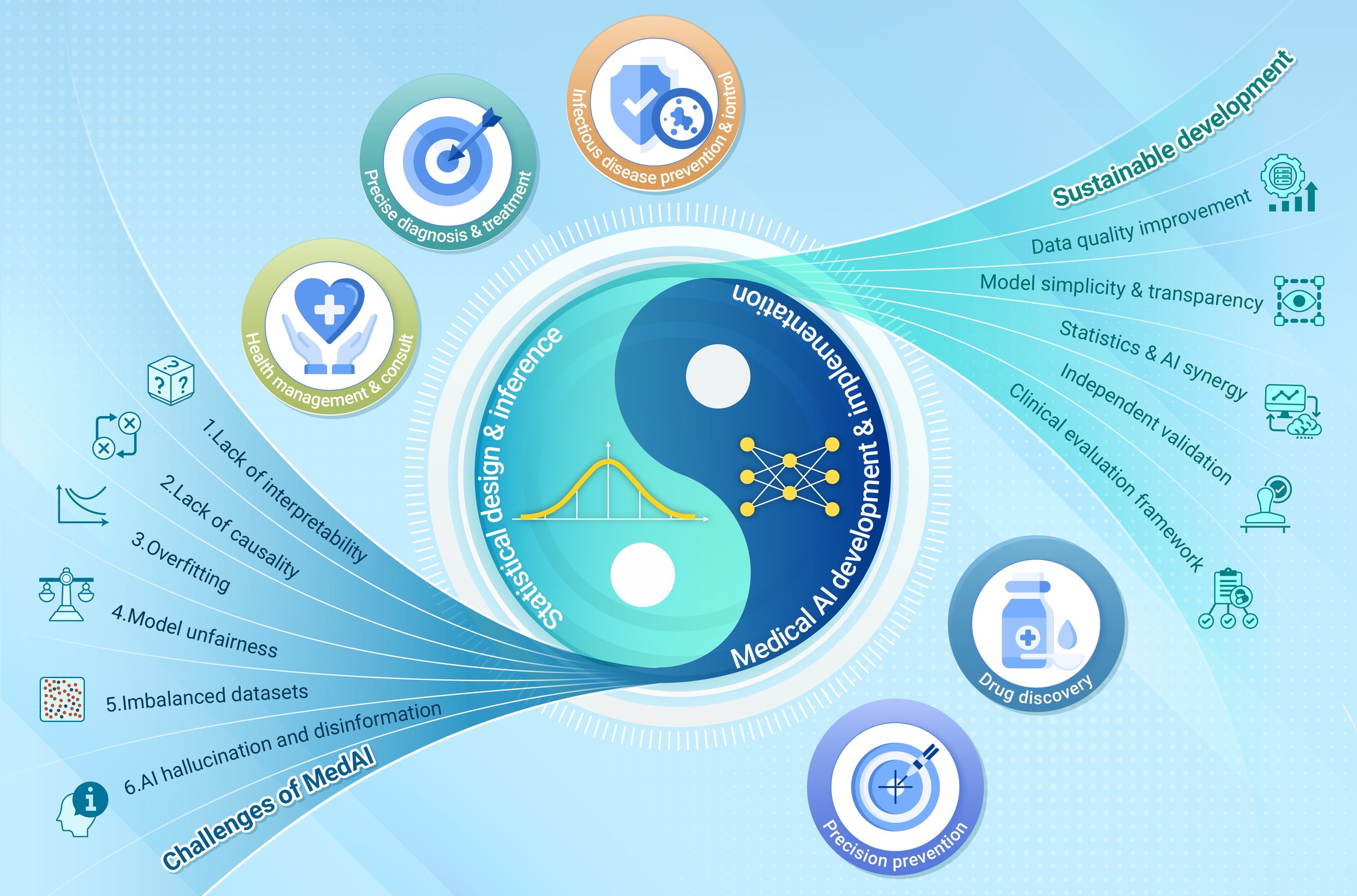
Sustainable medical artificial intelligence development relies on robust statistical design and inference.
Statistics address key medical AI issues: limited interpretability, overfitting, AI "hallucinations", etc.
Randomized controlled trials are key to validating medical AI systems before clinical implementation.
-
-
ABSTRACT
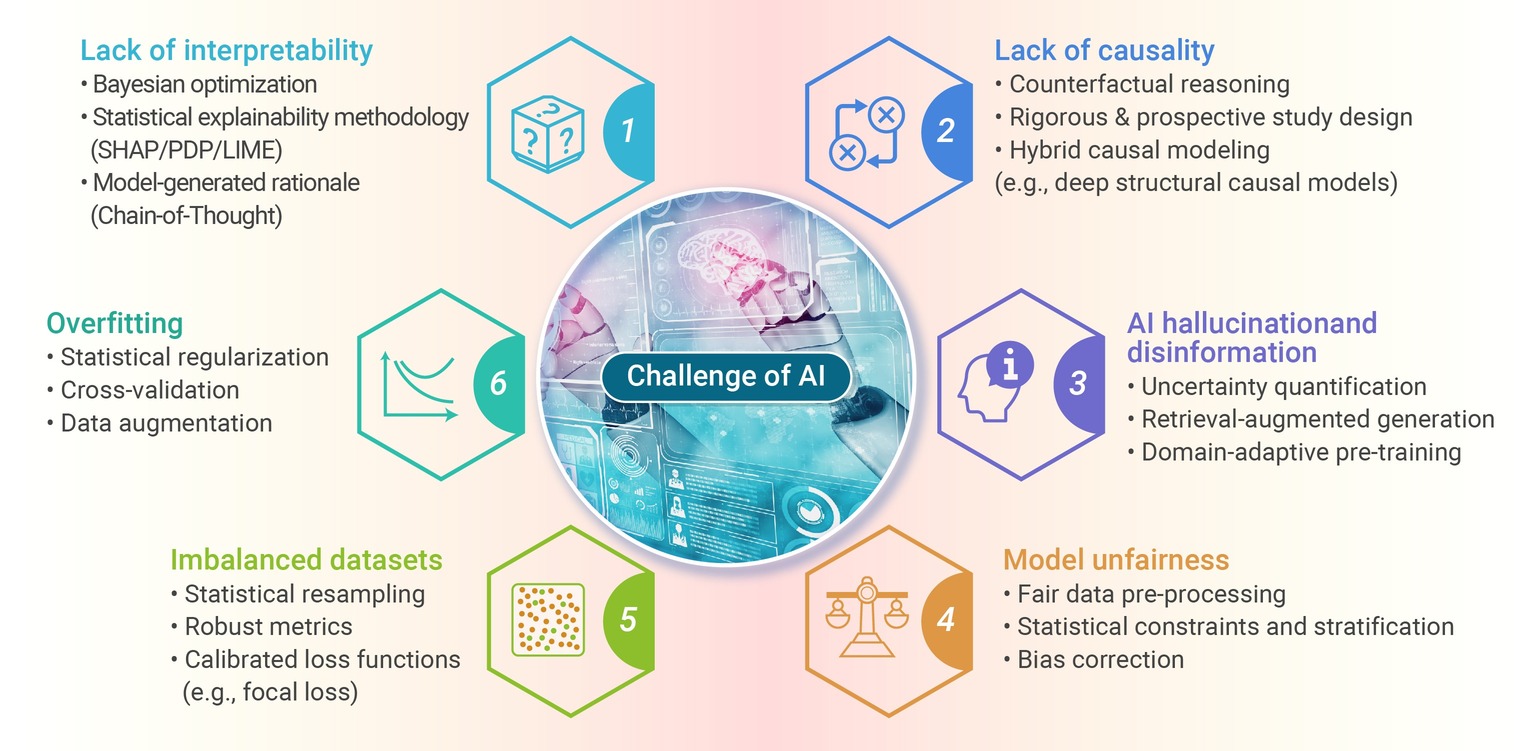
In the rapidly evolving field of artificial intelligence (AI), statistics plays a crucial role in addressing challenges faced by medical AI. This review begins by highlighting the primary tasks of medical AI and the integration of statistical methodologies into their modeling processes. Despite the widespread application of AI in medicine and healthcare, key challenges persist: poor model interpretability, lack of causal reasoning, overfitting, unfairness, imbalanced dataset, AI "hallucinations" and "disinformation". Statistics provides unique strategies to tackle these challenges, including rigorous statistical design, regularization techniques, and statistical frameworks grounded in causal inference. Finally, the review offers several recommendations for the sustainable development of medical AI: enhancing data quality, promoting model simplicity and transparency, fostering independent validation standards, and facilitating interdisciplinary collaboration between statisticians and medical AI practitioners. -

-
REFERENCES
[1] Nilsson N. J. (2009). The Quest for Artificial Intelligence (Cambridge University Press). DOI: 10.1017/CBO9780511819346. https://www.cambridge.org/core/product/32C727961B24223BBB1B3511F44F343E. [2] Feigenbaum E. A. (1977). The art of artificial intelligence: Themes and case studies of knowledge engineering. International Joint Conference on Artificial Intelligence. DOI:10.5555/892148. [3] Michalski R. S., Carbonell J. G. and Mitchell T. M. (1985). Machine learning: An artificial intelligence approach. Artif. Intell. 25:236−238. DOI:10.1016/0004-3702(85)90005-0 [4] Biffi C., Cerrolaza J. J., Tarroni G., et al. (2020). Explainable anatomical shape analysis through deep hierarchical generative models. IEEE Trans. Med. Imaging 39:2088−2099. DOI:10.1109/TMI.2020.2964499 [5] Brown T. B., Mann B., Ryder N., et al. (2020). Language models are few-shot learners. Proceedings of the 34th International Conference on Neural Information Processing Systems:Article 159. DOI:10.48550/arXiv.2005.14165 [6] Topol E. J. (2019). High-performance medicine: The convergence of human and artificial intelligence. Nat. Med. 25:44−56. DOI:10.1038/s41591-018-0300-7 [7] Esteva A., Kuprel B., Novoa R. A., et al. (2017). Dermatologist-level classification of skin cancer with deep neural networks. Nature 542:115−118. DOI:10.1038/nature21056 [8] Huff D. T., Weisman A. J. and Jeraj R. (2021). Interpretation and visualization techniques for deep learning models in medical imaging. Phys. Med. Biol. 66:04tr01. DOI:10.1088/1361-6560/abcd17 [9] Miotto R., Li L., Kidd B. A., et al. (2016). Deep patient: An unsupervised representation to predict the future of patients from the electronic health records. Sci. Rep. 6:26094. DOI:10.1038/srep26094 [10] Li Y., Xu Y., Möller J., et al. (2020). Life-course blood pressure trajectories and cardiovascular diseases: A population-based cohort study in China. Plos One 15:e0240804. DOI:10.1371/journal.pone.0240804 [11] Liu Y., Logan B., Liu N., et al. (2017). Deep reinforcement learning for dynamic treatment regimes on medical registry data. 2017 IEEE International Conference on Healthcare Informatics (ICHI) pp:380-385. DOI:10.1109/ICHI.2017.45 [12] Bzdok D. (2017). Classical statistics and statistical learning in imaging neuroscience. Front. Neurosci. 11:543. DOI:10.3389/fnins.2017.00543 [13] Jordan M. I. and Mitchell T. M. (2015). Machine learning: Trends, perspectives, and prospects. Science 349:255−260. DOI:10.1126/science.aaa8415 [14] Hastie T., Tibshirani R., Friedman J., et al. (2004). The elements of statistical learning: Data mining, inference, and prediction. Math. Intell. 27:83−85. DOI:10.1007/BF02985802 [15] Murphy K. P. (2012). Machine learning: a probabilistic perspective (MIT press). https://www.cs.ubc.ca/~murphyk/MLbook/pml-toc-1may12.pdf. [16] Sokolova M. and Lapalme G. (2009). A systematic analysis of performance measures for classification tasks. Inform. Process. Manag. 45:427−437. DOI:10.1016/j.ipm.2009.03.002 [17] Bishop C. M. and Nasrabadi N. M. (2006). Pattern recognition and machine learning (Springer). https://link.springer.com/book/9780387310732. [18] LeCun Y., Bengio Y. and Hinton G. (2015). Deep learning. Nature 521:436−444. DOI:10.1038/nature14539 [19] Gelman A., Carlin J. B., Stern H. S., et al. (1995). Bayesian data analysis (Chapman and Hall/CRC). https://sites.stat.columbia.edu/gelman/book/BDA3.pdf. [20] Goodfellow I., Bengio Y. and Courville A. (2016). Deep learning (The MIT press). https://mitpress.mit.edu/9780262035613/deep-learning/. [21] Pan S. J. and Yang Q. (2009). A survey on transfer learning. IEEE Trans. Knowl. Data Eng. 22:1345−1359. DOI:10.1109/tkde.2009.191 [22] Hastie T., Tibshirani R., Friedman J. (2009). The elements of statistical learning: Data mining, inference, and prediction (Springer). https://link.springer.com/book/10.1007/978-0-387-84858-7. [23] Qi L., Zhang J., Qi Z.-F., et al. (2023). Measurement and evaluation method of radar anti-jamming effectiveness based on principal component analysis and machine learning. EURASIP Journal on Wireless Communications and Networking 2023:58. DOI:10.1186/s13638-023-02262-3 [24] John Lu Z. Q. (2010). Bayesian methods for data analysis, third edition. J. Appl. Stat. 37:705−706. DOI:10.1080/02664760902811621 [25] Maharana K., Mondal S. and Nemade B. (2022). A review: Data pre-processing and data augmentation techniques. Global Transitions Proceedings 3:91−99. DOI:10.1016/j.gltp.2022.04.020 [26] Wang Q., Reps J. M., Kostka K. F., et al. (2020). Development and validation of a prognostic model predicting symptomatic hemorrhagic transformation in acute ischemic stroke at scale in the OHDSI network. PLoS One 15:e0226718. DOI:10.1371/journal.pone.0226718 [27] Liu H. and Dong G. (2018). Feature engineering for machine learning and data analytics. (CRC Press). DOI:10.1201/9781315181080 [28] Demirtas H. (2018). Flexible imputation of missing data. J. Stat. Softw. 85:1−5. DOI:10.18637/jss.v085.b04 [29] Kuhn M. and Johnson K. (2013). Applied Predictive Modeling. (Springer Publishing Company, Incorporated). DOI:10.1007/978-1-4614-6849-3 [30] Pedregosa F., Varoquaux G., Gramfort A., et al. (2011). Scikit-learn: Machine learning in Python. J. Mach. Learn. Res. 12:2825−2830. DOI:10.48550/arXiv.1201.0490 [31] Jensen F. and Nielsen T. (2001). Bayesian networks and decision graphs. (Springer Publishing Company, Incorporated). DOI:10.1007/978-1-4757-3502-4 [32] Jurafsky D. and Martin J. (2008). Speech and Language Processing: An Introduction to Natural Language Processing, Computational Linguistics, and Speech Recognition. (Prentice Hall Press). https://pages.ucsd.edu/~bakovic/compphon/Jurafsky,%20Martin.-Speech%20and%20Language%20Processing_%20An%20Introduction%20to%20Natural%20Language%20Processing%20(2007).pdf. [33] Snoek J., Larochelle H. and Adams R. (2012). Practical bayesian optimization of machine learning algorithms. Advances in Neural Information Processing Systems 4. DOI:10.48550/arXiv.1206.2944 [34] Stone M. (1974). Cross-validatory choice and assessment of statistical predictions. Journal of the Royal Statistical Society: Series B (Methodological) 36:111−133. DOI:10.1111/j.2517-6161.1974.tb00994.x [35] Powers D. and Ailab (2011). Evaluation: From precision, recall and F-measure to ROC, informedness, markedness & correlation. J. Mach. Learn. Technol. 2:2229-3981. DOI:10.9735/2229-3981 [36] Hutter F., Kotthoff L. and Vanschoren J. (2019). Automated machine learning: Methods, systems, challenges (Springer Publishing Company, Incorporated). DOI:10.1007/978-3-030-05318-5 [37] Sengar S. S., Hasan A. B., Kumar S., et al. (2024). Generative artificial intelligence: A systematic review and applications. Machine Learning arXiv:2405.11029. DOI:10.48550/arXiv.2405.11029 [38] Dhoni P. S. (2023). Exploring the synergy between generative AI, data and analytics in the modern age. Authorea Preprints. https://www.techrxiv.org/users/691566/articles/682737-exploring-the-synergy-between-generative-ai-data-and-analytics-in-the-modern-age. [39] Adams S. and Beling P. A. (2019). A survey of feature selection methods for Gaussian mixture models and hidden Markov models. Artif. Intell. Rev. 52:1739−1779. DOI:10.1007/s10462-017-9581-3 [40] Kalingeri V. (2022). Latent variable modelling using variational autoencoders: A survey. Machine Learning arXiv:2206.09891. DOI:10.48550/arXiv.2206.09891 [41] Rizvi S. K. J., Azad M. A. and Fraz M. M. (2021). Spectrum of advancements and developments in multidisciplinary domains for generative adversarial networks (GANs). Arch. Comput. Methods Eng. 28:4503−4521. DOI:10.1007/s11831-021-09543-4 [42] Jiang K. and Huang J. (2024). A Survey on vision autoregressive model. arXiv preprint arXiv:2411.08666. DOI:10.48550/2411.08666 [43] Kondurkar I., Raj A. and Lakshmi D. (2024). Modern applications with a focus on training ChatGPT and GPT models: Exploring generative AI and NLP. Obaid, A. J., et al (Eds). Advanced Applications of Generative AI and Natural Language Processing Models (IGI Global) pp:186-227. DOI:10.4018/979-8-3693-0502-7.ch010 [44] Chapman A. D. (2023). Artificial Intelligence and Machine Learning (The Autodidact’s Toolkit). [45] Bacanin N., Stoean R., Zivkovic M., et al. (2021). Performance of a novel chaotic firefly algorithm with enhanced exploration for tackling global optimization problems: Application for dropout regularization. Mathematics 9:2705. DOI:10.3390/math9212705 [46] Wang H. and Yeung D.-Y. (2020). A survey on Bayesian deep learning. arXiv preprint 53:1−37. DOI:10.48550/arXiv.1604.01662 [47] Dai J., Xu H., Chen T., et al. (2025). Artificial intelligence for medicine 2025: Navigating the endless frontier. Innov. Med. 3:100120. DOI:10.59717/j.xinn-med.2025.100120 [48] Tang Y.-D., Dong E.-D. and Gao W. (2024). LLMs in medicine: The need for advanced evaluation systems for disruptive technologies. The Innovation 5:100622. DOI:10.1016/j.xinn.2024.100622 [49] Huang T., Xu H., Wang H., et al. (2023). Artificial intelligence for medicine: Progress, challenges, and perspectives. Innov. Med. 1:100030. DOI:10.59717/j.xinn-med.2023.100030 [50] Announcement H., Memo H., Statement C. R. O., et al. (2023). Health Subcommittee Hearing: "Understanding How AI is Changing Health Care". https://energycommerce.house.gov/events/health-subcommittee-hearing-understanding-how-ai-is-changing-health-care. [51] House T. W. (2023). Delivering on the Promise of AI to Improve Health Outcomes. https://www.whitehouse.gov/briefing-room/blog/2023/12/14/delivering-on-the-promise-of-ai-to-improve-health-outcomes/. [52] Commission N. H. (2024). http://www.nhc.gov.cn/guihuaxxs/gongwen12/202411/647062ee76764323b29a1f0124b64400.shtml. [53] Pan Z., Zhang R., Shen S., et al. (2023). OWL: An optimized and independently validated machine learning prediction model for lung cancer screening based on the UK Biobank, PLCO, and NLST populations. EBioMedicine 88:104443. DOI:10.1016/j.ebiom.2023.104443 [54] Thirunavukarasu A. J., Ting D. S. J., Elangovan K., et al. (2023). Large language models in medicine. Nat. Med. 29:1930−1940. DOI:10.1038/s41591-023-02448-8 [55] Kraljevic Z., Bean D., Shek A., et al. (2022). Foresight--generative pretrained transformer (GPT) for modelling of patient timelines using Ehrs. arXiv preprint arXiv:2212.08072. DOI:10.48550/arXiv.2212.08072 [56] Mayourian J., El-Bokl A., Lukyanenko P., et al. (2024). Electrocardiogram-based deep learning to predict mortality in paediatric and adult congenital heart disease. Eur. Heart J. 46:856−868. DOI:10.1093/eurheartj/ehae651 [57] Vamathevan J., Clark D., Czodrowski P., et al. (2019). Applications of machine learning in drug discovery and development. Nat. Rev. Drug Discovery 18:463−477. DOI:10.1038/s41573-019-0024-5 [58] Rohl C. A., Strauss C. E., Misura K. M., et al. (2004). Protein structure prediction using Rosetta. Methods Enzymol. 383:66−93. DOI:10.1016/s0076-6879(04)83004-0 [59] Abramson J., Adler J., Dunger J., et al. (2024). Accurate structure prediction of biomolecular interactions with AlphaFold 3. Nature 630:493−500. DOI:10.1038/s41586-024-07487-w [60] AlQuraishi M. (2019). AlphaFold at CASP13. Bioinformatics 35:4862−4865. DOI:10.1093/bioinformatics/btz422 [61] Dauparas J., Anishchenko I., Bennett N., et al. (2022). Robust deep learning–based protein sequence design using ProteinMPNN. Science 378:49−56. DOI:10.1126/science.add2187 [62] Zhavoronkov A., Ivanenkov Y. A., Aliper A., et al. (2019). Deep learning enables rapid identification of potent DDR1 kinase inhibitors. Nat. Biotechnol. 37:1038−1040. DOI:10.1038/s41587-019-0224-x [63] Tu T., Schaekermann M., Palepu A., et al. (2025). Towards conversational diagnostic artificial intelligence. Nature 642:442−450. DOI:10.1038/s41586-025-08866-7 [64] Waisberg E., Ong J., Masalkhi M., et al. (2023). GPT-4: A new era of artificial intelligence in medicine. Ir. J. Med. Sci. 192:3197−3200. DOI:10.1007/s11845-023-03377-8 [65] Singhal K., Tu T., Gottweis J., et al. (2025). Toward expert-level medical question answering with large language models. Nat. Med. 31:943−950. DOI:10.1038/s41591-024-03423-7 [66] Li Y., Li Z., Zhang K., et al. (2023). Chatdoctor: A medical chat model fine-tuned on a large language model meta-ai (llama) using medical domain knowledge. Cureus 15:e40895. DOI:10.7759/cureus.40895 [67] Han T., Adams L., Papaioannou M., et al. (2023). MedAlpaca -- An Open-Source Collection of Medical Conversational AI Models and Training Data. arXiv preprint arXiv:2304.08247. DOI:10.48550/arXiv.2304.08247 [68] Wu C., Zhang X., Zhang Y., et al. (2023). Pmc-llama: Further finetuning llama on medical papers. arXiv preprint 2:6. DOI:10.48550/arXiv.2304.14454 [69] Wang H., Liu C., Xi N., et al. (2023). Huatuo: Tuning llama model with chinese medical knowledge. arXiv preprint arXiv:2304.06975. DOI:10.48550/arXiv.2304.06975 [70] Toma A., Lawler P. R., Ba J., et al. (2023). Clinical camel: An open-source expert-level medical language model with dialogue-based knowledge encoding. arXiv preprint arXiv:2305.1203. DOI:10.48550/arXiv.2305.1203 [71] Liu X., Liu H., Yang G., et al. (2025). A generalist medical language model for disease diagnosis assistance. Nat. Med. 31:932−942. DOI:10.1038/s41591-024-03416-6 [72] Patel S. B. and Lam K. (2023). ChatGPT: The future of discharge summaries. Lancet Digit. Health 5:e107−e108. DOI:10.1016/S2589-7500(23)00021-3 [73] Hall A., Mitchell A. R. J., Wood L., et al. (2020). Effectiveness of a single lead AliveCor electrocardiogram application for the screening of atrial fibrillation: A systematic review. Medicine (Baltimore) 99:e21388. DOI:10.1097/MD.0000000000021388 [74] Abraham S. B., Arunachalam S., Zhong A., et al. (2021). Improved real-world glycemic control with continuous glucose monitoring system predictive alerts. J. Diabetes Sci. Technol. 15:91−97. DOI:10.1177/1932296819859334 [75] Li J., Guan Z., Wang J., et al. (2024). Integrated image-based deep learning and language models for primary diabetes care. Nat. Med. 30:2886−2896. DOI:10.1038/s41591-024-03139-8 [76] Subramanian M., Wojtusciszyn A., Favre L., et al. (2020). Precision medicine in the era of artificial intelligence: implications in chronic disease management. J. Transl. Med. 18:472. DOI:10.1186/s12967-020-02658-5 [77] Mendes-Soares H., Raveh-Sadka T., Azulay S., et al. (2019). Assessment of a personalized approach to predicting postprandial glycemic responses to food among individuals without diabetes. JAMA Netw. Open 2:e188102. DOI:10.1001/jamanetworkopen.2018.8102 [78] Xie Y., Seth I., Hunter-Smith D. J., et al. (2023). Aesthetic surgery advice and counseling from artificial intelligence: A rhinoplasty consultation with ChatGPT. Aesthetic Plast. Surg. 47:1985−1993. DOI:10.1007/s00266-023-03338-7 [79] Montazeri M., Multmeier J., Novorol C., et al. (2021). Optimization of patient flow in urgent care centers using a digital tool for recording patient symptoms and history: Simulation study. JMIR Form. Res. 5:e26402. DOI:10.2196/26402 [80] Cotte F., Mueller T., Gilbert S., et al. (2022). Safety of triage self-assessment using a symptom assessment app for walk-in patients in the emergency care setting: Observational prospective cross-sectional study. JMIR Mhealth Uhealth 10:e32340. DOI:10.2196/32340 [81] Fraser H. S. F., Cohan G., Koehler C., et al. (2022). Evaluation of diagnostic and triage accuracy and usability of a symptom checker in an emergency department: Observational study. JMIR Mhealth Uhealth 10:e38364. DOI:10.2196/38364 [82] Gilbert S., Mehl A., Baluch A., et al. (2020). How accurate are digital symptom assessment apps for suggesting conditions and urgency advice. A clinical vignettes comparison to GPs. BMJ Open 10:e040269. DOI:10.1136/bmjopen-2020-040269 [83] health A. (2025). Health. Powered by Ada. https://ada.com/. [84] Yan W., Hu J., Zeng H., et al. (2025). The application of large language models in primary healthcare services and the challenges. Chinese General Practice 28:1−6. DOI:10.12114/j.issn.1007-9572.2024.0277 [85] Tsinghua University Vanke School of Public Health, Peking University School of Public Health, Chinese Association of General Practitioners of Chinese Medical Doctor Association. (2025). Chinese expert consensus on artificial intelligence general practitioner (AIGP). Chinese General Practice 28:135−142. DOI:10.12114/j.issn.1007-9572.2024.0453 [86] Liu J. and Liang W. (2024). Technological innovations to address health challenges. Chinese General Practice 27:3449−3452. DOI:10.12114/j.issn.1007-9572.2024.0210 [87] Yuan B., Dai H., Wu J., et al. (2021). Application of artificial intelligence applications in general practice. Chinese General Practice 19:1433−1436,1572. DOI:10.16766/j.cnki.issn.1674-4152.002079 [88] Li Y. H., Li Y. L., Wei M. Y., et al. (2024). Innovation and challenges of artificial intelligence technology in personalized healthcare. Sci. Rep. 14:18994. DOI:10.1038/s41598-024-70073-7 [89] Lopez R. P., Laleh N. G., Mahmood F., et al. (2024). A guide to artificial intelligence for cancer researchers. Nat. Rev. Cancer 24:427−441. DOI:10.1038/s41568-024-00694-7 [90] Michael M., Oishi B., Hossein A. Z. S., et al. (2023). Foundation models for generalist medical artificial intelligence. Nature 616:259−265. DOI:10.1038/s41586-023-05881-4 [91] Shi Y. (2024). Drug development in the AI era: AlphaFold 3 is coming! The Innovation 5:100685. DOI:10.1016/j.xinn.2024.100685 [92] Xu Y., Liu X., Cao X., et al. (2021). Artificial intelligence: A powerful paradigm for scientific research. The Innovation 2:100179. DOI:10.1016/j.xinn.2021.100179 [93] Huang T. and Li Y. (2023). Current progress, challenges, and future perspectives of language models for protein representation and protein design. The Innovation 4:100446. DOI:10.1016/j.xinn.2023.100446 [94] Freifeld C. C., Mandl K. D., Reis B. Y., et al. (2008). HealthMap: Global infectious disease monitoring through automated classification and visualization of Internet media reports. J. Am. Med. Inform. Assoc. 15:150−157. DOI:10.1197/jamia.M2544 [95] Baddal B., Taner F. and Uzun Ozsahin D. (2024). Harnessing of artificial intelligence for the diagnosis and prevention of hospital-acquired infections: A systematic review. Diagnostics 14:484. DOI:10.3390/diagnostics14050484 [96] Zhou Z., Yang T. and Hu K. (2023). Traditional chinese medicine epidemic prevention and treatment question-answering model based on llms. 2023 IEEE International Conference on Bioinformatics and Biomedicine (BIBM) pp:4755-4760. DOI:10.1109/BIBM58861.2023.10385748 [97] Rosa G. J. (2010). The Elements of Statistical Learning. Oxford University Press. https://www.sas.upenn.edu/~fdiebold/NoHesitations/BookAdvanced.pdf. [98] Ribeiro M. T., Singh S. and Guestrin C. (2016). "Why Should I Trust You?": Explaining the Predictions of Any Classifier. Proceedings of the 22nd ACM SIGKDD International Conference on Knowledge Discovery and Data Mining pp:1135-1144. DOI:10.48550/arXiv.1602.04938 [99] Shrikumar A., Greenside P. and Kundaje A. (2017). Learning important features through propagating activation differences. International conference on machine learning pp:3145-3153. DOI:10.48550/arXiv.1704.02685 [100] Lundberg S. and Lee S. (2017). A unified approach to interpreting model predictions. arXiv preprint arXiv:1705.07874. DOI:10.48550/arXiv.1705.07874 [101] He X. and Lin X. (2020). Challenges and opportunities in statistics and data science: Ten research areas. Harv. Data Sci. Rev. 2:10.1162/99608f92.95388fcb. DOI:10.1162/99608f92.95388fcb [102] Yang Z., Zhang A. and Sudjianto A. (2020). GAMI-net: An explainable neural network based on generalized additive models with structured interactions. arXiv preprint arXiv:2003.07132. DOI:10.48550/arXiv.2003.07132 [103] Agarwal R., Frosst N., Zhang X., et al. (2020). Neural additive models: Interpretable machine learning with neural nets. arXiv preprint arXiv:2004.13912. DOI:10.48550/arXiv.2004.13912 [104] Aubry M. and Russell B. C. (2015). Understanding deep features with computer-generated imagery. 2015 IEEE International Conference on Computer Vision (ICCV):2875-2883. DOI:10.1109/iccv.2015.329 [105] Rauber P. E., Fadel S. G., Falcao A. X., et al. (2017). Visualizing the hidden activity of artificial neural networks. IEEE Transactions on Visualization and Computer Graphics 23:101−110. DOI:10.1109/tvcg.2016.2598838 [106] Hong S. and Fan X. (2024). Reconciling explanations in multi-model systems through probabilistic argumentation. arXiv preprint arXiv:2404.13419. DOI:10.48550/arXiv.2404.13419 [107] Goldstein B. A., Navar A. M. and Carter R. E. (2017). Moving beyond regression techniques in cardiovascular risk prediction: applying machine learning to address analytic challenges. Eur. Heart J. 38:1805−1814. DOI:10.1093/eurheartj/ehw302 [108] Bzdok D., Engemann D. and Thirion B. (2020). Inference and prediction diverge in biomedicine. Patterns 1:100119. DOI:10.1016/j.patter.2020.100119 [109] Peters J., Janzing D. and Schlkopf B. (2017). Elements of Causal Inference: Foundations and Learning Algorithms (The MIT Press). https://library.oapen.org/bitstream/id/056a11be-ce3a-44b9-8987-a6c68fce8d9b/11283.pdf. [110] Blakely T., Lynch J., Simons K., et al. (2019). Reflection on modern methods: When worlds collide-prediction, machine learning and causal inference. Int. J. Epidemiol. 49:2058−2064. DOI:10.1093/ije/dyz132 [111] Sanchez P., Voisey J., Xia T., et al. (2022). Causal machine learning for healthcare and precision medicine. R. Soc. Open Sci. 9:220638. DOI:10.1098/rsos.220638 [112] Yao M., Miller G. W., Vardarajan B. N., et al. Deciphering proteins in Alzheimer's disease: A new Mendelian randomization method integrated with AlphaFold3 for 3D structure prediction. Cell Genom. 4:100700. DOI:10.1016/j.xgen.2024.100700 [113] So A., Hooshyar D., Park K. W., et al. (2017). Early diagnosis of dementia from clinical data by machine learning techniques. Appl. Sci. 7:651. DOI:10.3390/app7070651 [114] Parafita Á. and Vitrià J. (2021). Deep Causal Graphs for Causal Inference, Black-Box Explainability and Fairness. International Conference of the Catalan Association for Artificial Intelligence. DOI:10.3233/FAIA210162 [115] Zapata D., Meyer M. and Muller O. (2024). Bridging the Gap Between Data-Driven and Theory-Driven Modelling -- Leveraging Causal Machine Learning for Integrative Modelling of Dynamical Systems. https://synthical.com/article/Bridging-the-Gap-Between-Data-Driven-and-Theory-Driven-Modelling--Leveraging-Causal-Machine-Learning-for-Integrative-Modelling-of-Dynamical-Systems-166a4e01-b49d-4574-8302-e217d3e706bc. [116] Giudice E., Kuipers J. and Moffa G. (2024). Bayesian causal inference with gaussian process networks. arXiv preprint arXiv:2402.00623. DOI:10.48550/arXiv.2402.00623 [117] Wang B., Li J., Chang H., et al. (2025). Heterophilic graph neural networks optimization with causal message-passing. Proceedings of the Eighteenth ACM International Conference on Web Search and Data Mining pp:829-837. DOI:10.1145/3701551.3703568 [118] Gimenez J. R. and Rothenhäusler D. (2021). Causal aggregation: Estimation and inference of causal effects by constraint-based data fusion. J. Mach. Learn. Res. 23:335:331-335:360. https://www.jmlr.org/papers/volume23/21-0656/21-0656.pdf. [119] Ma C. and Zhang C. (2023). High precision causal model evaluation with conditional randomization. arXiv preprint arXiv:2311.01902. DOI:10.48550/arXiv.2311.01902 [120] Yadav P., Pruinelli L., Hoff A., et al. (2016). Causal inference in observational data. arXiv preprint arXiv:1611.04660. DOI:10.48550/arXiv.1611.04660 [121] Wiegrebe S., Kopper P., Sonabend R., et al. (2024). Deep learning for survival analysis: A review. Artif. Intell. Rev. 57:65. DOI:10.1007/s10462-023-10681-3 [122] Olden J. D. and Jackson D. A. (2002). Illuminating the “black box”: A randomization approach for understanding variable contributions in artificial neural networks. Ecol. modell. 154:135−150. DOI:10.1016/s0304-3800(02)00064-9 [123] Refenes A. P. and Zapranis A. (1999). Neural model identification, variable selection and model adequacy. J. Forecast. 18:299−332. DOI:3.0.co;2-t">10.1002/(sici)1099-131x(199909)18:5<299::aid-for725>3.0.co;2-t [124] Fan Y. and Li Q. (1996). Consistent model specification tests: omitted variables and semiparametric functional forms. Econometrica 64:865−890. DOI:10.2307/2171848 [125] Lavergne P. and Vuong Q. (2000). Nonparametric significance testing. Econom. Theory 16:576−601. DOI:10.1017/s0266466600164059 [126] Gu J., Li D. and Liu D. (2007). Bootstrap non-parametric significance test. J. Nonparametr. Stat. 19:215−230. DOI:10.1080/10485250701734497 [127] Horel E. and Giesecke K. (2020). Significance tests for neural networks. JMLR 21:1−29. DOI:10.48550/arXiv.1902.06021 [128] Liu Z., Li Z., Wang J., et al. (2024). Full Bayesian Significance Testing for Neural Networks. Proceedings of the AAAI Conference on Artificial Intelligence 38:8841−8849. DOI:10.1609/aaai.v38i8.28731 [129] McKinney S. M., Sieniek M., Godbole V., et al. (2020). International evaluation of an AI system for breast cancer screening. Nature 577:89−94. DOI:10.1038/s41586-019-1799-6 [130] Yang Y.-C. and Chen H.-H. (2025). Dynamic DropConnect: Enhancing neural network robustness through adaptive edge dropping strategies. arXiv preprint arXiv:2502.19948. DOI:10.48550/arXiv.2502.19948 [131] Tack J., Yu S., Jeong J., et al. (2022). Consistency Regularization for Adversarial Robustness. Proceedings of the AAAI conference on artificial intelligence 36:8414−8422. DOI:10.1609/aaai.v36i8.20817 [132] Chen R. J., Wang J. J., Williamson D. F. K., et al. (2023). Algorithmic fairness in artificial intelligence for medicine and healthcare. Nat. Biomed. Eng. 7:719−742. DOI:10.1038/s41551-023-01056-8 [133] Liu M., Ning Y., Teixayavong S., et al. (2023). A translational perspective towards clinical AI fairness. NPJ Digit. Med. 6:172. DOI:10.1038/s41746-023-00918-4 [134] Obermeyer Z., Powers B., Vogeli C., et al. (2019). Dissecting racial bias in an algorithm used to manage the health of populations. Science 366:447−453. DOI. DOI:10.1126/science.aax2342 [135] Hasanzadeh F., Josephson C. B., Waters G., et al. (2025). Bias recognition and mitigation strategies in artificial intelligence healthcare applications. NPJ Digit. Med. 8:154. DOI:10.1038/s41746-025-01503-7 [136] Taskesen B., Blanchet J., Kuhn D., et al. (2021). A Statistical Test for Probabilistic Fairness. Proceedings of the 2021 ACM Conference on Fairness, Accountability, and Transparency pp:648–665. DOI:10.1145/3442188.3445927 [137] Jin Y. (2023). Robust Statistical Inference with Privacy and Fairness Constraints. UC Davis. https://escholarship.org/uc/item/4g91c7rr. [138] Zhao Y., Wong Z. S.-Y. and Tsui K. L. (2018). A framework of rebalancing imbalanced healthcare data for rare events’ classification: A case of look-alike sound-alike mix-up incident detection. J. Healthcare Eng. 2018:1−11. DOI:10.1155/2018/6275435 [139] Gan D.-S. H. Y., Bevilacqua V. and Figueroa J. C. (2005). Advanced Intelligent Computing Technology and Applications. Proceedings of the 2024 International Conference on Intelligent Computing DOI:10.1007/978-981-97-5612-4 [140] He H., Bai Y., Garcia E. A., et al. (2008). ADASYN: Adaptive synthetic sampling approach for imbalanced learning. Proceedings of the 2008 IEEE international joint conference on neural networks (IEEE world congress on computational intelligence) pp:1322-1328. DOI:10.1109/IJCNN.2008.4633969 [141] Mathew J., Luo M., Pang C. K., et al. (2015). Kernel-based SMOTE for SVM classification of imbalanced datasets. Proceedings of the IECON 2015-41ST annual conference of the IEEE industrial electronics society pp:001127-001132. DOI:10.1109/IECON.2015.7392251 [142] Wang J., Wang K., Yu Y., et al. (2025). Self-improving generative foundation model for synthetic medical image generation and clinical applications. Nat. Med. 31:609−617. DOI:10.1038/s41591-024-03359-y [143] Pan X., Cheng J., Hou F., et al. (2023). SMILE: Cost-sensitive multi-task learning for nuclear segmentation and classification with imbalanced annotations. Med. Image Anal. 88:102867. DOI:10.1016/j.media.2023.102867 [144] Yeung M., Sala E., Schönlieb C.-B., et al. (2022). Unified Focal loss: Generalising Dice and cross entropy-based losses to handle class imbalanced medical image segmentation. Comput. Med. Imaging Graph. 95:102026. DOI:10.1016/j.compmedimag.2021.102026 [145] Wang S., Zhou T., Shen Y., et al. (2025). Generative AI Enables EEG Super-Resolution via Spatio-Temporal Adaptive Diffusion Learning. IEEE Transactions on Consumer Electronics 71:1034-1045. https://ieeexplore.ieee.org/stamp/stamp.jsp?arnumber=10839074. [146] Li Y., Wang Y., Lei B., et al. (2025). SCDM: Unified representation learning for EEG-to-fNIRS cross-modal generation in MI-BCIs. IEEE Trans. Med. Imaging 44:2384−2394. DOI:10.1109/TMI.2025.3532480 [147] Colasacco C. J. and Born H. L. (2024). A case of artificial intelligence chatbot hallucination. JAMA Otolaryngol. Head Neck Surg. 150:457−458. DOI:10.1001/jamaoto.2024.0428 [148] Arif T. B., Munaf U. and Ul-Haque I. (2023). The future of medical education and research: Is ChatGPT a blessing or blight in disguise. Med. Educ. Online 28:2181052. DOI:10.1080/10872981.2023.2181052 [149] Gordijn B. and Have H. T. (2023). ChatGPT: Evolution or revolution. Med. Health Care Philos. 26:1−2. DOI:10.1007/s11019-023-10136-0 [150] Howard A., Hope W. and Gerada A. (2023). ChatGPT and antimicrobial advice: The end of the consulting infection doctor. Lancet Infect. Dis. 23:405−406. DOI:10.1016/S1473-3099(23)00113-5 [151] Kelly C. J., Karthikesalingam A., Suleyman M., et al. (2019). Key challenges for delivering clinical impact with artificial intelligence. BMC Med. 17:195. DOI:10.1186/s12916-019-1426-2 [152] Aljamaan F., Temsah M.-H., Altamimi I., et al. (2024). Reference hallucination score for medical artificial intelligence chatbots: Development and usability study. JMIR Med. Inform. 12:e54345. DOI:10.2196/54345 [153] Su J., Kempe J. and Ullrich K. (2024). Mission impossible: A statistical perspective on jailbreaking LLMs. arXiv preprint arXiv:2408.01420. DOI:10.48550/arXiv.2408.01420 [154] W. H. O. (2010). Monitoring the building blocks of health systems: A handbook of indicators and their measurement strategies (World Health Organization). https://iris.who.int/bitstream/handle/10665/258734/9789241564052-eng.pdf. [155] Chan M., Kazatchkine M., Lob-Levyt J., et al. (2010). Meeting the demand for results and accountability: A call for action on health data from eight global health agencies. PLoS Med. 7:e1000223. DOI:10.1371/journal.pmed.1000223 [156] Chinta S. V., Wang Z., Zhang X., et al. (2024). AI-driven healthcare: A survey on ensuring fairness and mitigating bias. arXiv preprint arXiv:2407.19655. DOI:10.48550/arXiv.2407.19655 [157] Rudroff T., Rainio O. and Klén R. (2024). AI for the prediction of early stages of Alzheimer's disease from neuroimaging biomarkers–A narrative review of a growing field. Neurol. Sci. 45:5117−5127. DOI:10.1007/s10072-024-07649-8 [158] Patharkar A., Cai F., Al-Hindawi F., et al. (2024). Predictive modeling of biomedical temporal data in healthcare applications: Review and future directions. Front. Physiol. 15:1386760. DOI:10.3389/fphys.2024.1386760 [159] Janga B., Asamani G. P., Sun Z., et al. (2023). A review of practical ai for remote sensing in earth sciences. Remote Sens. 15:4112. DOI:10.3390/rs15164112 [160] Chen H., Hailey D., Wang N., et al. (2014). A review of data quality assessment methods for public health information systems. International journal of environmental research and public health 11:5170−5207. DOI:10.48550/arXiv.2502.19948 [161] Vollmer S., Mateen B. A., Bohner G., et al. (2020). Machine learning and artificial intelligence research for patient benefit: 20 critical questions on transparency, replicability, ethics, and effectiveness. BMJ 368:l6927. DOI:10.1136/bmj.l6927 [162] Haibe-Kains B., Adam G. A., Hosny A., et al. (2020). Transparency and reproducibility in artificial intelligence. Nature 586:E14−E16. DOI:10.1038/s41586-020-2766-y [163] Pearl J. (2009). Causality: Models, Reasoning and Inference (Cambridge University Press). Econometric Theory 19:675−685. DOI:10.1017/S0266466603004109 [164] Andrieu C., De Freitas N., Doucet A., et al. (2003). An introduction to MCMC for machine learning. Mach. Learn. 50:5−43. DOI:10.1023/A:1020281327116 [165] Hunter D. J. and Holmes C. (2023). Where medical statistics meets artificial intelligence. N. Engl. J. Med. 389:1211−1219. DOI:10.1056/NEJMra2212850 [166] Bragazzi N. L. and Garbarino S. (2024). Toward clinical generative AI: Conceptual framework. JMIR AI 3:e55957. DOI:10.2196/55957 [167] Liu L., Yang X., Lei J., et al. (2024). A survey on medical large language models: Technology, application, trustworthiness, and future directions. arXiv preprint arXiv:2406.03712. DOI:10.48550/arXiv.2406.03712 [168] He K., Mao R., Lin Q., et al. (2025). A survey of large language models for healthcare: From data, technology, and applications to accountability and ethics. Inform. Fusion 118:102963. DOI:10.1016/j.inffus.2025.102963 [169] Wang D. and Zhang S. (2024). Large language models in medical and healthcare fields: applications, advances, and challenges. Artif. Intell. Rev. 57:299. DOI:10.1007/s10462-024-10921-0 [170] Joshi G., Jain A., Araveeti S. R., et al. (2024). FDA-approved artificial intelligence and machine learning (AI/ML)-enabled medical devices: An updated landscape. Electronics 13:498. DOI:10.3390/electronics13030498 [171] Schaffter T., Buist D. S., Lee C. I., et al. (2020). Evaluation of combined artificial intelligence and radiologist assessment to interpret screening mammograms. JAMA Netw. Open 3:e200265−200265. DOI:10.1001/jamanetworkopen.2020.0265 [172] Houssami N., Kirkpatrick-Jones G., Noguchi N., et al. (2019). Artificial Intelligence (AI) for the early detection of breast cancer: A scoping review to assess AI’s potential in breast screening practice. Expert Rev. Med. Devices 16:351−362. DOI:10.1080/17434440.2019.1610387 [173] Park S. H. and Han K. (2018). Methodologic guide for evaluating clinical performance and effect of artificial intelligence technology for medical diagnosis and prediction. Radiology 286:800−809. DOI:10.1148/radiol.2017171920 [174] Ouyang D. and Hogan J. (2024). We need more randomized clinical trials of AI. NEJM AI 1:AIe2400881. DOI:10.1056/AIe2400881 [175] Sedano R., Solitano V., Vuyyuru S. K., et al. (2025). Artificial intelligence to revolutionize IBD clinical trials: A comprehensive review. Therap. Adv. Gastroenterol. 18:17562848251321915. DOI:10.1177/17562848251321915 -
ABOUT THIS ARTICLE
Cite this article:
Wei Q., Cui M., Liu Z., et al. (2025). Integrating statistical design and inference: A roadmap for robust and trustworthy medical AI. The Innovation Medicine 3:100145. https://doi.org/10.59717/j.xinn-med.2025.100145
Welcome!
To request copyright permission to republish or share portions of our works, please visit Copyright Clearance Center's (CCC) Marketplace website at marketplace.copyright.com.

Figures(2)
Tables(2)
Article Metrics
Relative Articles
Cited by
Export File
Citation
Wei Q., Cui M., Liu Z., et al. (2025). Integrating statistical design and inference: A roadmap for robust and trustworthy medical AI. The Innovation Medicine 3:100145. https://doi.org/10.59717/j.xinn-med.2025.100145

Format
Content
-
Figure 1.
Main application scenarios of AI in medicine and healthcare.
-
Figure 2.
Challenges of medical AI and corresponding statistical solutions.
