
-
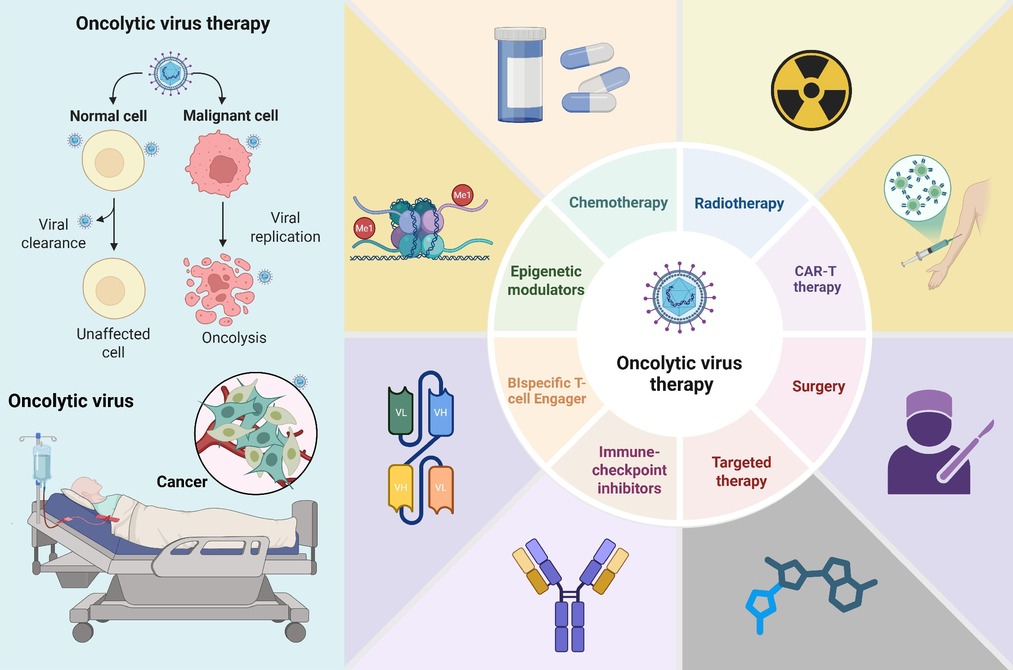
GRAPHICAL ABSTRACT
 DownLoad:
Full size image
DownLoad:
Full size image
-
PUBLIC SUMMARY
-
Oncolytic virus therapy (OVT) displays considerable promise for treating solid cancers.
Oncolytic viruses (OVs) enhance cancer therapy through diverse combination strategies.
Provides insights into the rational design of next-generation OVs.
-
-
ABSTRACT
Despite advancements in oncology, a significant unmet need remains for therapies that effectively target and eradicate solid tumors while overcoming resistance mechanisms and minimizing damage to healthy tissues. Oncolytic virotherapy (OVT) has emerged as a promising approach to treating solid tumors by directly lysing cancer cells and simultaneously stimulating immune responses. A diverse range of viruses have been engineered to enhance their tumor-targeting capabilities. Preclinical studies show that these oncolytic viruses can induce immunogenic cell death, remodel the tumor microenvironment, and synergize with various established therapies. Their efficacy involves diverse mechanisms, including interferon signaling, metabolic reprogramming, and epigenetic regulation. While early clinical trials demonstrate promising safety and efficacy across multiple cancers, challenges such as systemic delivery and tumor heterogeneity persist. Ongoing optimization of viral engineering and combination strategies is crucial for unlocking the full clinical potential of this approach against solid tumors. This review summarizes the current landscape of OVT, highlighting its mechanistic basis, clinical progress, and the strategic innovations needed to overcome existing barriers and fully realize its potential in oncology. -

-
REFERENCES
[1] Hua X., Tang H., Liang K., et al. (2026). Bridging mechanism and clinic: Unlocking the full potential of oncolytic virus-based immunotherapy. Mol. Cancer. DOI:10.1186/s12943-026-02651-4. [2] Fayyad-Kazan M., Al-Tameemi S. and Ouhtit A. (2026). Oncolytic viruses in cancer immunotherapy: From molecular engineering to clinical translation. Cells 15:393. DOI:10.3390/cells15050393 [3] Dyer A., Baugh R., Chia S. L., et al. (2019). Turning cold tumours hot: Oncolytic virotherapy gets up close and personal with other therapeutics at the 11th Oncolytic Virus Conference. Cancer Gene. Ther. 26:59−73. DOI:10.1038/s41417-018-0042-1 [4] Vázquez-Arreguín K., Rivera-Caraballo K. A., Ventarapragada D., et al. (2025). Oncolytic HSV and cancer drug interactions: Current clinical status and future directions. Mol. Ther. 33:4748−4765. DOI:10.1016/j.ymthe.2025.07.034 [5] Abou-Alfa G. K., Galle P. R., Chao Y., et al. (2024). PHOCUS: A phase 3, randomized, open-label study of sequential treatment with Pexa-Vec (JX-594) and Sorafenib in patients with advanced hepatocellular carcinoma. Liver Cancer 13:248−264. DOI:10.1159/000533650 [6] Hajda J., Leuchs B., Angelova A. L., et al. (2021). Phase 2 trial of oncolytic H-1 parvovirus therapy shows safety and signs of immune system activation in patients with metastatic pancreatic ductal adenocarcinoma. Clin. Cancer Res. 27:5546−5556. DOI:10.1158/1078-0432.Ccr-21-1020 [7] Smestad J., Rieth J., Laux D., et al. (2025). The evolution, current landscape, and future prospects of oncolytic virotherapy in melanoma: Talimogene laherparepvec and beyond. Cells 14:1620. DOI:10.3390/cells14201620 [8] Xie D., Tian Y., Hu D., et al. (2023). Oncolytic adenoviruses expressing checkpoint inhibitors for cancer therapy. Signal Transduct. Target Ther. 8:436. DOI:10.1038/s41392-023-01683-2 [9] Guo X., Feng H., Xi Z., et al. (2025). Targeting TBK1 potentiates oncolytic virotherapy via amplifying ICAM1-mediated NK cell immunity in chemo-resistant colorectal cancer. J. Immunother. Cancer 13:e011455. DOI:10.1136/jitc-2024-011455 [10] Zhang H., Du Y., Qi L., et al. (2023). Targeting GBM with an oncolytic picornavirus SVV-001 alone and in combination with fractionated radiation in a novel panel of orthotopic PDX models. J. Transl. Med. 21:444. DOI:10.1186/s12967-023-04237-w [11] Shen Y., Zhang H., Xue M., et al. (2025). HSV-1 as a gene delivery platform for cancer gene therapy. Trends Pharmacol. Sci. 46:324−336. DOI:10.1016/j.tips.2025.02.006 [12] Bommareddy P. K., Wakimoto H., Martuza R. L., et al. (2024). Oncolytic herpes simplex virus expressing IL-2 controls glioblastoma growth and improves survival. J. Immunother. Cancer 12:e008880. DOI:10.1136/jitc-2024-008880 [13] Martin A. K., Hedberg J., Hernandez-Aguirre I., et al. (2025). Oncolytic HSV-IL27 expression improves CD8 T cell function and therapeutic activity in syngeneic glioma models. J. Immunother. Cancer 13:e012227. DOI:10.1136/jitc-2025-012227 [14] Zhang K., Zuo D., Wang Z., et al. (2025). Heterologous prime-boost with an mRNA vaccine and an oncolytic virus enhances tumor regression through overcoming intratumoral immune suppression. Cell Rep. 44:115745. DOI:10.1016/j.celrep.2025.115745 [15] Dai W., Tian R., Yu L., et al. (2024). Overcoming therapeutic resistance in oncolytic herpes virotherapy by targeting IGF2BP3-induced NETosis in malignant glioma. Nat. Commun. 15:131. DOI:10.1038/s41467-023-44576-2 [16] Wang S., Song A., Xie J., et al. (2024). Fn-OMV potentiates ZBP1-mediated PANoptosis triggered by oncolytic HSV-1 to fuel antitumor immunity. Nat. Commun. 15:3669. DOI:10.1038/s41467-024-48032-7 [17] Streby K. A., Currier M. A., Triplet M., et al. (2019). First-in-human intravenous seprehvir in young cancer patients: A phase 1 clinical trial. Mol. Ther. 27:1930−1938. DOI:10.1016/j.ymthe.2019.08.020 [18] Shen Y., Bai X., Zhang Q., et al. (2025). Oncolytic virus VG161 in refractory hepatocellular carcinoma. Nature 641:503−511. DOI:10.1038/s41586-025-08717-5 [19] Ling A. L., Solomon I. H., Landivar A. M., et al. (2023). Clinical trial links oncolytic immunoactivation to survival in glioblastoma. Nature 623:157−166. DOI:10.1038/s41586-023-06623-2 [20] Wang X., Tian H., Chi Z., et al. (2025). Oncolytic virus OH2 extends survival in patients with PD-1 pretreated melanoma: Phase Ia/Ib trial results and biomarker insights. J. Immunother. Cancer 13:e010662. DOI:10.1136/jitc-2024-010662 [21] Robert C., Gastman B., Gogas H., et al. (2024). Open-label, phase II study of talimogene laherparepvec plus pembrolizumab for the treatment of advanced melanoma that progressed on prior anti-PD-1 therapy: MASTERKEY-115. Eur. J. Cancer 207:114120. DOI:10.1016/j.ejca.2024.114120 [22] Liu J., Wang X., Li Z., et al. (2024). Neoadjuvant oncolytic virus orienx010 and toripalimab in resectable acral melanoma: A phase Ib trial. Signal Transduct. Target Ther. 9:318. DOI:10.1038/s41392-024-02029-2 [23] Greseth M. D. and Traktman P. (2022). The life cycle of the vaccinia virus genome. Annu. Rev. Virol. 9:239−259. DOI:10.1146/annurev-virology-091919-104752 [24] Chen Z., Cai Y., Zhao K., et al. (2025). A novel oncolytic poxvirus carrying CD47 nanomabs in the treatment of pancreatic cancer by reshaping the immune microenvironment. Cancer Lett. 632:217934. DOI:10.1016/j.canlet.2025.217934 [25] DePeaux K., Rivadeneira D. B., Lontos K., et al. (2023). An oncolytic virus-delivered TGFβ inhibitor overcomes the immunosuppressive tumor microenvironment. J. Exp. Med. 220:e20230053. DOI:10.1084/jem.20230053 [26] West E. J., Sadoun A., Bendjama K., et al. (2025). A phase I clinical trial of intrahepatic artery delivery of TG6002 in combination with oral 5-Fluorocytosine in patients with liver-dominant metastatic colorectal cancer. Clin. Cancer Res. 31:1243−1256. DOI:10.1158/1078-0432.Ccr-24-2498 [27] Monge C., Xie C., Myojin Y., et al. (2023). Phase I/II study of PexaVec in combination with immune checkpoint inhibition in refractory metastatic colorectal cancer. J. Immunother. Cancer 11:e005640. DOI:10.1136/jitc-2022-005640 [28] Chintala N. K., Choe J. K., McGee E., et al. (2023). Correlative analysis from a phase I clinical trial of intrapleural administration of oncolytic vaccinia virus (Olvi-vec) in patients with malignant pleural mesothelioma. Front. Immunol. 14:1112960. DOI:10.3389/fimmu.2023.1112960 [29] Wang X., Hetzel M., Zhang W., et al. (2023). Comparative analysis of the impact of 40 adenovirus types on dendritic cell activation and CD8(+) T cell proliferation capacity for the identification of favorable immunization vector candidates. Front. Immunol. 14:1286622. DOI:10.3389/fimmu.2023.1286622 [30] Schröer K., Fiege L., Wolf A., et al. (2025). State-of-the-art in oncolytic virotherapy using adenoviruses other than the commonly applied adenovirus type 5. Curr. Opin. Virol. 72:101472. DOI:10.1016/j.coviro.2025.101472 [31] Zhang Y., He B., Zou P., et al. (2025). Targeted release of a bispecific fusion protein SIRPα/Siglec-10 by oncolytic adenovirus reinvigorates tumor-associated macrophages to improve therapeutic outcomes in solid tumors. J. Immunother. Cancer 13:e010767. DOI:10.1136/jitc-2024-010767 [32] Zhang Y., Zhang H., Wei M., et al. (2019). Recombinant adenovirus expressing a soluble fusion protein PD-1/CD137L subverts the suppression of CD8(+) T cells in HCC. Mol. Ther. 27:1906−1918. DOI:10.1016/j.ymthe.2019.07.019 [33] Dong J., Kong L., Wang S., et al. (2024). Oncolytic adenovirus encoding apolipoprotein A1 suppresses metastasis of triple-negative breast cancer in mice. J. Exp. Clin. Cancer Res. 43:102. DOI:10.1186/s13046-024-03011-0 [34] Ning W., Qian X., Dunmall L. C., et al. (2024). Non-secreting IL12 expressing oncolytic adenovirus Ad-TD-nsIL12 in recurrent high-grade glioma: a phase I trial. Nat. Commun. 15:9299. DOI:10.1038/s41467-024-53041-7 [35] Pakola S. A., Peltola K. J., Clubb J. H. A., et al. (2024). Safety, efficacy, and biological data of T-cell-enabling oncolytic adenovirus TILT-123 in advanced solid cancers from the TUNIMO monotherapy phase I trial. Clin. Cancer Res. 30:3715−3725. DOI:10.1158/1078-0432.Ccr-23-3874 [36] Naing A., Khalil D., Rosen O., et al. (2024). First-in-human clinical outcomes with NG-350A, an anti-CD40 expressing tumor-selective vector designed to remodel immunosuppressive tumor microenvironments. J. Immunother. Cancer 12:e010016. DOI:10.1136/jitc-2024-010016 [37] Li R., Shah P. H., Stewart T. F., et al. (2024). Oncolytic adenoviral therapy plus pembrolizumab in BCG-unresponsive non-muscle-invasive bladder cancer: The phase 2 CORE-001 trial. Nat. Med. 30:2216−2223. DOI:10.1038/s41591-024-03025-3 [38] He Y., Huang X., Li X., et al. (2024). Preliminary efficacy and safety of YSCH-01 in patients with advanced solid tumors: An investigator-initiated trial. J. Immunother. Cancer 12:e008999. DOI:10.1136/jitc-2024-008999 [39] Musher B. L., Rowinsky E. K., Smaglo B. G., et al. (2024). LOAd703, an oncolytic virus-based immunostimulatory gene therapy, combined with chemotherapy for unresectable or metastatic pancreatic cancer (LOKON001): Results from arm 1 of a non-randomised, single-centre, phase 1/2 study. Lancet Oncol. 25:488−500. DOI:10.1016/s1470-2045(24)00079-2 [40] Lu Y., He W., Huang X., et al. (2021). Strategies to package recombinant Adeno-Associated Virus expressing the N-terminal gasdermin domain for tumor treatment. Nat. Commun. 12:7155. DOI:10.1038/s41467-021-27407-0 [41] Stegelmeier A. A., Santry L. A., Guilleman M. M., et al. (2022). AAV-vectored expression of the vascular normalizing agents 3TSR and Fc3TSR, and the anti-angiogenic Bevacizumab extends survival in a murine model of end-stage epithelial ovarian carcinoma. Biomedicines 10:362. DOI:10.3390/biomedicines10020362 [42] Li J., Bonifati S., Hristov G., et al. (2013). Synergistic combination of valproic acid and oncolytic parvovirus H-1PV as a potential therapy against cervical and pancreatic carcinomas. EMBO Mol. Med. 5:1537−1555. DOI:10.1002/emmm.201302796 [43] Geletneky K., Hajda J., Angelova A. L., et al. (2017). Oncolytic H-1 parvovirus shows safety and signs of immunogenic activity in a first phase I/IIa glioblastoma trial. Mol. Ther. 25:2620−2634. DOI:10.1016/j.ymthe.2017.08.016 [44] Burman B., Pesci G. and Zamarin D. (2020). Newcastle disease virus at the forefront of cancer immunotherapy. Cancers (Basel) 12:3552. DOI:10.3390/cancers12123552 [45] Fan X., Lu H., Cui Y., et al. (2018). Overexpression of p53 delivered using recombinant NDV induces apoptosis in glioma cells by regulating the apoptotic signaling pathway. Exp. Ther. Med. 15:4522−4530. DOI:10.3892/etm.2018.5935 [46] Qu Y., Ren S., Liao Y., et al. (2026). Newcastle disease virus hijacks mitophagy to reprogram amino acid metabolism for enhanced replication. Autophagy 22:1044-1062. DOI:10.1080/15548627.2026.2624746 [47] Kortum F., Hartmann N., Bryan A., et al. (2025). Syncytial death mediated by oncolytic rVSV-NDV dynamically activates immunogenic apoptosis and necroptosis in human lung cancer cells. Mol. Ther. Oncol. 33:201027. DOI:10.1016/j.omton.2025.201027 [48] Liu M., Li C., Feng L. T., et al. (2025). hCCL19-expressing recombinant Newcastle disease virus boosts CAR T cell infiltration and efficacy in solid tumor. J. Immunother. Cancer 13:e011783. DOI:10.1136/jitc-2025-011783 [49] Vijayakumar G., Palese P. and Goff P. H. (2019). Oncolytic Newcastle disease virus expressing a checkpoint inhibitor as a radioenhancing agent for murine melanoma. EBioMedicine 49:96−105. DOI:10.1016/j.ebiom.2019.10.032 [50] Zhong L., Gan L., Wang B., et al. (2025). Hyperacute rejection-engineered oncolytic virus for interventional clinical trial in refractory cancer patients. Cell 188:1119−1136.e1123. DOI:10.1016/j.cell.2024.12.010 [51] Davar D., Carneiro B. A., Dy G. K., et al. (2024). Phase I study of a recombinant attenuated oncolytic virus, MEDI5395 (NDV-GM-CSF), administered systemically in combination with durvalumab in patients with advanced solid tumors. J. Immunother. Cancer 12:e009336. DOI:10.1136/jitc-2024-009336 [52] Abdelmageed A. A. and Ferran M. C. (2020). The propagation, quantification, and storage of vesicular stomatitis virus. Curr. Protoc. Microbiol. 58:e110. DOI:10.1002/cpmc.110 [53] Barber G. N. (2005). VSV-tumor selective replication and protein translation. Oncogene 24:7710−7719. DOI:10.1038/sj.onc.1209042 [54] Mullins-Dansereau V., Myre M. L., Bardoul A., et al. (2025). Oncolytic VSV-IL-2 has enhanced anticancer vaccination adjuvant abilities. J. Immunother. Cancer 13:e010570. DOI:10.1136/jitc-2024-010570 [55] Wu C., Wu M., Liang M., et al. (2019). A novel oncolytic virus engineered with PD-L1 scFv effectively inhibits tumor growth in a mouse model. Cell Mol. Immunol. 16:780−782. DOI:10.1038/s41423-019-0264-7 [56] Rajwani J., Vishnevskiy D., Turk M., et al. (2024). VSV(∆M51) drives CD8(+) T cell-mediated tumour regression through infection of both cancer and non-cancer cells. Nat. Commun. 15:9933. DOI:10.1038/s41467-024-54111-6 [57] Kurmasheva N., Said A., Wong B., et al. (2024). Octyl itaconate enhances VSVΔ51 oncolytic virotherapy by multitarget inhibition of antiviral and inflammatory pathways. Nat. Commun. 15:4096. DOI:10.1038/s41467-024-48422-x [58] Kottke T., Tonne J., Evgin L., et al. (2021). Oncolytic virotherapy induced CSDE1 neo-antigenesis restricts VSV replication but can be targeted by immunotherapy. Nat. Commun. 12:1930. DOI:10.1038/s41467-021-22115-1 [59] Xiao J., Liang J., Fan J., et al. (2022). CDK4/6 inhibition enhances oncolytic virus efficacy by potentiating tumor-selective cell killing and T-cell activation in refractory glioblastoma. Cancer Res. 82:3359−3374. DOI:10.1158/0008-5472.Can-21-3656 [60] Cook J., Peng K. W., Witzig T. E., et al. (2022). Clinical activity of single-dose systemic oncolytic VSV virotherapy in patients with relapsed refractory T-cell lymphoma. Blood Adv. 6:3268−3279. DOI:10.1182/bloodadvances.2021006631 [61] Müller L., Berkeley R., Barr T., et al. (2020). Past, present and future of oncolytic reovirus. Cancers (Basel) 12:3219. DOI:10.3390/cancers12113219 [62] Kyula-Currie J., Roulstone V., Wright J., et al. (2025). The PARP inhibitor talazoparib synergizes with reovirus to induce cancer killing and tumour control in vivo in mouse models. Nat. Commun. 16:6299. DOI:10.1038/s41467-025-61297-w [63] Roulstone V., Kyula-Currie J., Wright J., et al. (2025). Palbociclib and dsRNA sensor co-operate to enhance anti-cancer effects through ER stress and modulation of immune evasion. Nat. Commun. 16:4855. DOI:10.1038/s41467-025-60133-5 [64] Samson A., Bentham M. J., Scott K., et al. (2018). Oncolytic reovirus as a combined antiviral and anti-tumour agent for the treatment of liver cancer. Gut 67:562−573. DOI:10.1136/gutjnl-2016-312009 [65] Noonan A. M., Farren M. R., Geyer S. M., et al. (2016). Randomized phase 2 trial of the oncolytic virus pelareorep (Reolysin) in upfront treatment of metastatic pancreatic adenocarcinoma. Mol. Ther. 24:1150−1158. DOI:10.1038/mt.2016.66 [66] Roulstone V., Khan K., Pandha H. S., et al. (2015). Phase I trial of cyclophosphamide as an immune modulator for optimizing oncolytic reovirus delivery to solid tumors. Clin. Cancer Res. 21:1305−1312. DOI:10.1158/1078-0432.Ccr-14-1770 [67] Nawrocki S. T., Olea J., Villa Celi C., et al. (2023). Comprehensive single-cell immune profiling defines the patient multiple myeloma microenvironment following oncolytic virus therapy in a phase Ib trial. Clin. Cancer Res. 29:5087−5103. DOI:10.1158/1078-0432.Ccr-23-0229 [68] Mondal M., Guo J., He P., et al. (2020). Recent advances of oncolytic virus in cancer therapy. Hum. Vaccin. Immunother. 16:2389−2402. DOI:10.1080/21645515.2020.1723363 [69] Aref S., Castleton A. Z., Bailey K., et al. (2020). Type 1 interferon responses underlie tumor-selective replication of oncolytic measles virus. Mol. Ther. 28:1043−1055. DOI:10.1016/j.ymthe.2020.01.027 [70] Panagioti E., Kurokawa C., Viker K., et al. (2021). Immunostimulatory bacterial antigen-armed oncolytic measles virotherapy significantly increases the potency of anti-PD1 checkpoint therapy. J. Clin. Invest. 131:e141614. DOI:10.1172/jci141614 [71] Lv Y., Zhou D., Hao X. Q., et al. (2019). A recombinant measles virus vaccine strain rMV-Hu191 has oncolytic effect against human gastric cancer by inducing apoptotic cell death requiring integrity of lipid raft microdomains. Cancer Lett. 460:108−118. DOI:10.1016/j.canlet.2019.06.010 [72] Floerchinger A., Klein J. E., Finkbeiner M. S. C., et al. (2023). A vector-encoded bispecific killer engager to harness virus-activated NK cells as anti-tumor effectors. Cell Death Di.s 14:104. DOI:10.1038/s41419-023-05624-3 [73] Galanis E., Dooley K. E., Keith Anderson S., et al. (2024). Carcinoembryonic antigen-expressing oncolytic measles virus derivative in recurrent glioblastoma: A phase 1 trial. Nat. Commun. 15:493. DOI:10.1038/s41467-023-43076-7 [74] Packiriswamy N., Upreti D., Zhou Y., et al. (2020). Oncolytic measles virus therapy enhances tumor antigen-specific T-cell responses in patients with multiple myeloma. Leukemia 34:3310−3322. DOI:10.1038/s41375-020-0828-7 [75] Cai J., Zhu W., Lin Y., et al. (2020). Systematic characterization of the biodistribution of the oncolytic virus M1. Hum. Gene. Ther. 31:1203−1213. DOI:10.1089/hum.2020.114 [76] Han Y., Guo C., Chen C., et al. (2026). Oncolytic virus M1 reinvigorates CD8(+) T-cell immunity against glioblastoma through B-cell-dependent antigen cross-presentation in the spleen. Cell Mol. Immunol. 23:349−366. DOI:10.1038/s41423-026-01396-w [77] Cai J., Lin Y., Zhang H., et al. (2017). Selective replication of oncolytic virus M1 results in a bystander killing effect that is potentiated by Smac mimetics. Proc. Natl. Acad. Sci. U. S. A. 114:6812−6817. DOI:10.1073/pnas.1701002114 [78] Fan Z., Liu Y., Lin X., et al. (2025). Suppression of multiple mouse models of refractory malignancies by reprogramming IL-18 ligand-receptor interaction. Nat. Commun. 16:6136. DOI:10.1038/s41467-025-61439-0 [79] Xie C., Zheng X., He S., et al. (2025). Clinical evaluation of M1-c6v1 oncolytic virus combined with camrelizumab and apatinib in advanced hepatocellular carcinoma. Clin. Cancer Res. 31:4288−4298. DOI:10.1158/1078-0432.Ccr-25-1620 [80] Tinnirello R., Chinnici C. M., Miceli V., et al. (2023). Two sides of the same coin: Normal and tumoral stem cells, the relevance of in vitro models and therapeutic approaches: The experience with Zika virus in nervous system development and glioblastoma treatment. Int. J. Mol. Sci. 24:13550. DOI:10.3390/ijms241713550 [81] Novaes G. M., Lima C., Longo C., et al. (2024). Genetically modified ZIKA virus as a microRNA-sensitive oncolytic virus against central nervous system tumors. Mol. Ther. 32:440−456. DOI:10.1016/j.ymthe.2024.01.006 [82] Zhu Z., Mesci P., Bernatchez J. A., et al. (2020). Zika virus targets glioblastoma stem cells through a SOX2-integrin α(v)β(5) axis. Cell Stem Cell 26:187−204.e110. DOI:10.1016/j.stem.2019.11.016 [83] Kang Z., Zhang L. and Yang Z. (2025). Role of non-coding RNAs in the pathogenesis of viral myocarditis. Virulence 16:2466480. DOI:10.1080/21505594.2025.2466480 [84] Yu L., Zhao H., Zhao X., et al. (2026). Epidemiological shifts in coxsackievirus A-induced hand, foot, and mouth disease in China, 2008-2024. Expert Rev. Vaccines 25:2652927. DOI:10.1080/14760584.2026.2652927 [85] Tran T. Q., Grein J., Selman M., et al. (2024). Oncolytic virus V937 in combination with PD-1 blockade therapy to target immunologically quiescent liver and colorectal cancer. Mol. Ther. Oncol. 32:200807. DOI:10.1016/j.omton.2024.200807 [86] Dummer R., Robert C., Scolyer R. A., et al. (2025). Neoadjuvant anti-PD-1 alone or in combination with anti-TIGIT or an oncolytic virus in resectable stage IIIB-D melanoma: A phase 1/2 trial. Nat. Med. 31:144−151. DOI:10.1038/s41591-024-03411-x [87] Rudin C. M., Pandha H. S., Zibelman M., et al. (2023). Phase 1, open-label, dose-escalation study on the safety, pharmacokinetics, and preliminary efficacy of intravenous Coxsackievirus A21 (V937), with or without pembrolizumab, in patients with advanced solid tumors. J. Immunother. Cancer 11:e005007. DOI:10.1136/jitc-2022-005007 [88] Hamilton J. R., Vijayakumar G. and Palese P. (2018). A recombinant antibody-expressing influenza virus delays tumor growth in a mouse model. Cell Rep. 22:1−7. DOI:10.1016/j.celrep.2017.12.025 [89] Chen J., Guo X., Ma Y., et al. (2025). Selective activation of conditionally replicating influenza A virus in pulmonary tumors for enhanced oncolytic efficacy and systemic safety. Adv. Healthc. Mater. 15:e02017. DOI:10.1002/adhm.202502017 [90] Masemann D., Meissner R., Schied T., et al. (2021). Synergistic anti-tumor efficacy of oncolytic influenza viruses and B7-H3 immune- checkpoint inhibitors against IC-resistant lung cancers. Oncoimmunology 10:1885778. DOI:10.1080/2162402x.2021.1885778 [91] Wang G., Zhang Z., Zhong K., et al. (2023). CXCL11-armed oncolytic adenoviruses enhance CAR-T cell therapeutic efficacy and reprogram tumor microenvironment in glioblastoma. Mol. Ther. 31:134−153. DOI:10.1016/j.ymthe.2022.08.021 [92] Evgin L., Kottke T., Tonne J., et al. (2022). Oncolytic virus-mediated expansion of dual-specific CAR T cells improves efficacy against solid tumors in mice. Sci. Transl. Med. 14:eabn2231. DOI:10.1126/scitranslmed.abn2231 [93] Rosewell Shaw A., Porter C. E., Yip T., et al. (2021). Oncolytic adeno-immunotherapy modulates the immune system enabling CAR T-cells to cure pancreatic tumors. Commun. Biol. 4:368. DOI:10.1038/s42003-021-01914-8 [94] McKenna M. K., Englisch A., Brenner B., et al. (2021). Mesenchymal stromal cell delivery of oncolytic immunotherapy improves CAR-T cell antitumor activity. Mol. Ther. 29:1808−1820. DOI:10.1016/j.ymthe.2021.02.004 [95] Park A. K., Fong Y., Kim S. I., et al. (2020). Effective combination immunotherapy using oncolytic viruses to deliver CAR targets to solid tumors. Sci. Transl. Med. 12:eaaz1863. DOI:10.1126/scitranslmed.aaz1863 [96] Evgin L., Huff A. L., Wongthida P., et al. (2020). Oncolytic virus-derived type I interferon restricts CAR T cell therapy. Nat. Commun. 11:3187. DOI:10.1038/s41467-020-17011-z [97] Ju F., Luo Y., Lin C., et al. (2022). Oncolytic virus expressing PD-1 inhibitors activates a collaborative intratumoral immune response to control tumor and synergizes with CTLA-4 or TIM-3 blockade. J. Immunother. Cancer 10:e004762. DOI:10.1136/jitc-2022-004762 [98] Zuo S., Wei M., Xu T., et al. (2021). An engineered oncolytic vaccinia virus encoding a single-chain variable fragment against TIGIT induces effective antitumor immunity and synergizes with PD-1 or LAG-3 blockade. J. Immunother. Cancer 9:e002843. DOI:10.1136/jitc-2021-002843 [99] Fan Z., Wu C., Chen M., et al. (2022). The generation of PD-L1 and PD-L2 in cancer cells: From nuclear chromatin reorganization to extracellular presentation. Acta Pharm. Sin. B 12:1041−1053. DOI:10.1016/j.apsb.2021.09.010 [100] Zhao J., Hu S., Qi Z., et al. (2024). Mitochondrial metabolic reprogramming of macrophages and T cells enhances CD47 antibody-engineered oncolytic virus antitumor immunity. J. Immunother. Cancer 12:e009768. DOI:10.1136/jitc-2024-009768 [101] Yang N., Wang Y., Liu S., et al. (2023). OX40L-expressing recombinant modified vaccinia virus Ankara induces potent antitumor immunity via reprogramming Tregs. J. Exp. Med. 220:e20221166. DOI:10.1084/jem.20221166 [102] Zhang Z., Yang N., Lu H., et al. (2024). Improved antitumor effects elicited by an oncolytic HSV-1 expressing a novel B7H3nb/CD3 BsAb. Cancer Lett. 588:216760. DOI:10.1016/j.canlet.2024.216760 [103] Zhu H., Zhang W., Guo Q., et al. (2024). Engineered oncolytic virus expressing B7H3-targeting BiTE enhances antitumor T-cell immune response. J. Immunother. Cancer 12:e009901. DOI:10.1136/jitc-2024-009901 [104] Baugh R., Khalique H., Page E., et al. (2024). Targeting NKG2D ligands in glioblastoma with a bispecific T-cell engager is augmented with conventional therapy and enhances oncolytic virotherapy of glioma stem-like cells. J. Immunother. Cancer 12:e008460. DOI:10.1136/jitc-2023-008460 [105] Wei M., Zuo S., Chen Z., et al. (2022). Oncolytic vaccinia virus expressing a bispecific T-cell engager enhances immune responses in EpCAM positive solid tumors. Front. Immunol. 13:1017574. DOI:10.3389/fimmu.2022.1017574 [106] Wang Q., Ma X., Wu H., et al. (2022). Oncolytic adenovirus with MUC16-BiTE shows enhanced antitumor immune response by reversing the tumor microenvironment in PDX model of ovarian cancer. Oncoimmunology 11:2096362. DOI:10.1080/2162402x.2022.2096362 [107] Arnone C. M., Polito V. A., Mastronuzzi A., et al. (2021). Oncolytic adenovirus and gene therapy with EphA2-BiTE for the treatment of pediatric high-grade gliomas. J. Immunother. Cancer 9:e001930. DOI:10.1136/jitc-2020-001930 [108] Khalique H., Baugh R., Dyer A., et al. (2021). Oncolytic herpesvirus expressing PD-L1 BiTE for cancer therapy: Exploiting tumor immune suppression as an opportunity for targeted immunotherapy. J. Immunother. Cancer 9:e001292. DOI:10.1136/jitc-2020-001292 [109] Freedman J. D., Hagel J., Scott E. M., et al. (2017). Oncolytic adenovirus expressing bispecific antibody targets T-cell cytotoxicity in cancer biopsies. EMBO Mol. Med. 9:1067−1087. DOI:10.15252/emmm.201707567 [110] Lei W., Ye Q., Hao Y., et al. (2022). CD19-targeted BiTE expression by an oncolytic vaccinia virus significantly augments therapeutic efficacy against B-cell lymphoma. Blood Cancer J 12:35. DOI:10.1038/s41408-022-00634-4 [111] Shen J., Qian N., Xu G., et al. (2024). IMT030122, A novel engineered EpCAM/CD3/4-1BB tri-specific antibody, enhances T-cell recruitment and demonstrates anti-tumor activity in mouse models of colorectal cancer. Int. Immunopharmacol. 137:112424. DOI:10.1016/j.intimp.2024.112424 [112] Ponce S., Cedrés S., Ricordel C., et al. (2023). ONCOS-102 plus pemetrexed and platinum chemotherapy in malignant pleural mesothelioma: A randomized phase 2 study investigating clinical outcomes and the tumor microenvironment. J. Immunother. Cancer 11:e007552. DOI:10.1136/jitc-2023-007552 [113] Soliman H., Hogue D., Han H., et al. (2023). Oncolytic T-VEC virotherapy plus neoadjuvant chemotherapy in nonmetastatic triple-negative breast cancer: A phase 2 trial. Nat. Med. 29:450−457. DOI:10.1038/s41591-023-02210-0 [114] Martinez-Velez N., Marigil M., García-Moure M., et al. (2019). Delta-24-RGD combined with radiotherapy exerts a potent antitumor effect in diffuse intrinsic pontine glioma and pediatric high grade glioma models. Acta Neuropathol. Commun. 7:64. DOI:10.1186/s40478-019-0714-6 [115] Storozynsky Q. T., Agopsowicz K. C., Noyce R. S., et al. (2023). Radiation combined with oncolytic vaccinia virus provides pronounced antitumor efficacy and induces immune protection in an aggressive glioblastoma model. Cancer Lett. 562:216169. DOI:10.1016/j.canlet.2023.216169 [116] Chen W. Y., Chen Y. L., Lin H. W., et al. (2021). Stereotactic body radiation combined with oncolytic vaccinia virus induces potent anti-tumor effect by triggering tumor cell necroptosis and DAMPs. Cancer Lett. 523:149−161. DOI:10.1016/j.canlet.2021.09.040 [117] Xu C., Chen L., Liu G., et al. (2025). Tailoring an intravenously injectable oncolytic virus for augmenting radiotherapy. Cell Rep. Med. 6:102078. DOI:10.1016/j.xcrm.2025.102078 [118] Zhu Z., Chen H., Feng C., et al. (2025). Specific inhibitor to KRAS(G12C) induces tumor-specific immunity and synergizes with oncolytic virus for enhanced cancer immunotherapy. J. Immunother. Cancer 13:e010514. DOI:10.1136/jitc-2024-010514 [119] Wedge M. E., Jennings V. A., Crupi M. J. F., et al. (2022). Virally programmed extracellular vesicles sensitize cancer cells to oncolytic virus and small molecule therapy. Nat. Commun. 13:1898. DOI:10.1038/s41467-022-29526-8 [120] Rodríguez Stewart R. M., Berry J. T. L., Berger A. K., et al. (2019). Enhanced killing of triple-negative breast cancer cells by reassortant reovirus and topoisomerase inhibitors. J. Virol. 93:e01411-01119. DOI:10.1128/jvi.01411-19 [121] Roulstone V., Pedersen M., Kyula J., et al. (2015). BRAF- and MEK-targeted small molecule inhibitors exert enhanced antimelanoma effects in combination with oncolytic reovirus through ER stress. Mol. Ther. 23:931−942. DOI:10.1038/mt.2015.15 [122] Dona A. A., Tandoh T., Nigam L., et al. (2025). Proteasome inhibition enhances oncolytic reovirus therapy in multiple myeloma independently of its direct cytotoxic effects. J. Hematol. Oncol. 18:1. DOI:10.1186/s13045-024-01645-3 [123] Wong B., Bergeron A., Maznyi G., et al. (2023). Pevonedistat, a first-in-class NEDD8-activating enzyme inhibitor, sensitizes cancer cells to VSVΔ51 oncolytic virotherapy. Mol. Ther. 31:3176−3192. DOI:10.1016/j.ymthe.2023.09.017 [124] Cui B., Song L., Wang Q., et al. (2023). Non-small cell lung cancers (NSCLCs) oncolysis using coxsackievirus B5 and synergistic DNA-damage response inhibitors. Signal Transduct. Target Ther. 8:366. DOI:10.1038/s41392-023-01603-4 [125] Chen J., Wang Z., Phuc T., et al. (2023). Oncolytic strategy using new bifunctional HDACs/BRD4 inhibitors against virus-associated lymphomas. PLoS Pathog. 19:e1011089. DOI:10.1371/journal.ppat.1011089 [126] Guo C., Long Z., Lin P., et al. (2025). BRD9 inhibition overcomes oncolytic virus therapy resistance in glioblastoma. Cell Rep. Med. 6:102258. DOI:10.1016/j.xcrm.2025.102258 [127] Catacalos-Goad C., Hawkins J., Krueger Q., et al. (2025). METTL3 depletion blocks vesicular stomatitis virus replication in pancreatic cancer cells through the establishment of an intrinsic antiviral state. J. Virol. 99:e0228424. DOI:10.1128/jvi.02284-24 [128] Muscolini M., Castiello L., Palermo E., et al. (2019). SIRT1 modulates the sensitivity of prostate cancer cells to vesicular stomatitis virus oncolysis. J. Virol. 93:e0062619. DOI:10.1128/jvi.00626-19. [129] Wu G., Pan B., Shi H., et al. (2024). Neutrophils' dual role in cancer: from tumor progression to immunotherapeutic potential. Int. Immunopharmacol. 140:112788. DOI:10.1016/j.intimp.2024.112788 [130] Zhou D., Xu W., Ding X., et al. (2024). Transient inhibition of neutrophil functions enhances the antitumor effect of intravenously delivered oncolytic vaccinia virus. Cancer Sci. 115:1129−1140. DOI:10.1111/cas.16105 [131] Zhao X., Huang H., Liu M., et al. (2025). In vivo neutrophils hitchhiking for tumor targeting and microenvironment regulation boosts oncolytic virus therapy. Cell Rep. Med. 6:102314. DOI:10.1016/j.xcrm.2025.102314 [132] Minott J. A., van Vloten J. P., Chan L., et al. (2022). The role of neutrophils in oncolytic orf virus-mediated cancer immunotherapy. Cells 11:2858. DOI:10.3390/cells11182858 [133] Labiano S., Marco-Sanz J., Ausejo-Mauleon I., et al. (2025). Targeting the CD40 costimulatory receptor to improve virotherapy efficacy in diffuse midline gliomas. Cell Rep. Med. 6:102204. DOI:10.1016/j.xcrm.2025.102204 [134] Kim I. W., Yoon A. R., Hong J., et al. (2024). Synergistic antitumor immune response mediated by paclitaxel-conjugated nanohybrid oncolytic adenovirus with dendritic cell therapy. Front. Immunol. 15:1355566. DOI:10.3389/fimmu.2024.1355566 [135] Dan J., Cai J., Zhong Y., et al. (2023). Oncolytic virus M1 functions as a bifunctional checkpoint inhibitor to enhance the antitumor activity of DC vaccine. Cell Rep. Med. 4:101229. DOI:10.1016/j.xcrm.2023.101229 [136] Li M., Zhang Y., Zong L., et al. (2025). An oncolytic vaccinia virus expressing anti-CD47 nanobody exerts enhanced antitumor activity by mediating innate and adaptive immune cell infiltration and activation in the lymphoma tumor microenvironment. Haematologica 110:2113. DOI:10.3324/haematol.2024.286923 [137] Wang S., Yan W., Kong L., et al. (2023). Oncolytic viruses engineered to enforce cholesterol efflux restore tumor-associated macrophage phagocytosis and anti-tumor immunity in glioblastoma. Nat. Commun. 14:4367. DOI:10.1038/s41467-023-39683-z [138] Wang S., Kong L., Wang L., et al. (2025). Viral expression of NE/PPE enhances anti-colorectal cancer efficacy of oncolytic adenovirus by promoting TAM M1 polarization to reverse insufficient effector memory/effector CD8(+) T cell infiltration. J. Exp. Clin. Cancer Res. 44:97. DOI:10.1186/s13046-025-03358-y [139] Kyritsi K., Pacholczyk R., Douglass E., et al. (2025). β-blocker suppresses both tumoral sympathetic neurons and perivascular macrophages during oncolytic herpes virotherapy. J. Immunother. Cancer 13:e011322. DOI:10.1136/jitc-2024-011322 [140] Liu K., Kong L., Cui H., et al. (2024). Thymosin α1 reverses oncolytic adenovirus-induced M2 polarization of macrophages to improve antitumor immunity and therapeutic efficacy. Cell Rep. Med. 5:101751. DOI:10.1016/j.xcrm.2024.101751 [141] Tomita K., Yamashita M., Ikegami K., et al. (2025). Combination with oxaliplatin improves abscopal effect of oncolytic virotherapy through reorganization of intratumoral macrophages. Mol. Ther. 33:401−414. DOI:10.1016/j.ymthe.2024.12.007 [142] Wu M., Wang Y., Wu C., et al. (2024). A novel vesicular stomatitis virus armed with IL-2 mimic for oncolytic therapy. Virol. Sin. 39:821−832. DOI:10.1016/j.virs.2024.09.007 [143] Wang W., Chu Y., Zhao L., et al. (2025). HBsAg-tagged tumour vaccine system eliminates solid tumours through virus-specific memory T cells. Nat. Biomed. Eng. pp:1-17. DOI:10.1038/s41551-025-01555-w [144] Li X., Zhang Y., Mao Z., et al. (2024). Decorin-armed oncolytic adenovirus promotes natural killers (NKs) activation and infiltration to enhance NK therapy in CRC model. Mol. Biomed. 5:48. DOI:10.1186/s43556-024-00212-z [145] Ma R., Lu T., Li Z., et al. (2021). An oncolytic virus expressing IL15/IL15Rα combined with off-the-shelf EGFR-CAR NK cells targets glioblastoma. Cancer Res. 81:3635−3648. DOI:10.1158/0008-5472.Can-21-0035 [146] Li F., Sheng Y., Hou W., et al. (2020). CCL5-armed oncolytic virus augments CCR5-engineered NK cell infiltration and antitumor efficiency. J. Immunother. Cancer 8:e000131. DOI:10.1136/jitc-2019-000131 [147] Panisello C., Aschero R., Martinez-Moreno A., et al. (2024). NSGS mice humanized with cord blood mononuclear cells show sustained and functional myeloid-lymphoid representation with limited graft-versus-host disease. J. Immunother. Cancer 12:e009198. DOI:10.1136/jitc-2024-009198 [148] Kulkarni A., Ferreira T., Bretscher C., et al. (2021). Oncolytic H-1 parvovirus binds to sialic acid on laminins for cell attachment and entry. Nat. Commun. 12:3834. DOI:10.1038/s41467-021-24034-7 [149] Schwertner B., Lindner G., Toledo Stauner C., et al. (2021). Nectin-1 expression correlates with the susceptibility of malignant melanoma to oncolytic herpes simplex virus in vitro and in vivo. Cancers (Basel) 13:3058. DOI:10.3390/cancers13123058 [150] Okamura K., Inoue H., Tanaka K., et al. (2023). Immunostimulatory oncolytic activity of coxsackievirus A11 in human malignant pleural mesothelioma. Cancer Sci. 114:1095−1107. DOI:10.1111/cas.15645 [151] Hu J. C., Coffin R. S., Davis C. J., et al. (2006). A phase I study of OncoVEXGM-CSF, a second-generation oncolytic herpes simplex virus expressing granulocyte macrophage colony-stimulating factor. Clin. Cancer Res. 12:6737−6747. DOI:10.1158/1078-0432.Ccr-06-0759 [152] Senzer N. N., Kaufman H. L., Amatruda T., et al. (2009). Phase II clinical trial of a granulocyte-macrophage colony-stimulating factor-encoding, second-generation oncolytic herpesvirus in patients with unresectable metastatic melanoma. J. Clin. Oncol. 27:5763−5771. DOI:10.1200/jco.2009.24.3675 [153] Andtbacka R. H., Kaufman H. L., Collichio F., et al. (2015). Talimogene laherparepvec improves durable response rate in patients with advanced melanoma. J. Clin. Oncol. 33:2780−2788. DOI:10.1200/jco.2014.58.3377 [154] Xu Y., Zhang X., Han X., et al. (2026). Sensitized mast cells for targeted drug delivery and augmented cancer immunotherapy. Cell 189:872−886.e823. DOI:10.1016/j.cell.2025.11.015 -
ABOUT THIS ARTICLE
Cite this article:
Wu C., Xin T., Cheng X., et al. (2026). Viral immunotherapy: Oncolytic approaches for solid tumors. The Innovation Medicine 4:100216. https://doi.org/10.59717/j.xinn-med.2026.100216
Welcome!
To request copyright permission to republish or share portions of our works, please visit Copyright Clearance Center's (CCC) Marketplace website at marketplace.copyright.com.
Export File
Citation
Wu C., Xin T., Cheng X., et al. (2026). Viral immunotherapy: Oncolytic approaches for solid tumors. The Innovation Medicine 4:100216. https://doi.org/10.59717/j.xinn-med.2026.100216

Format
Content
-
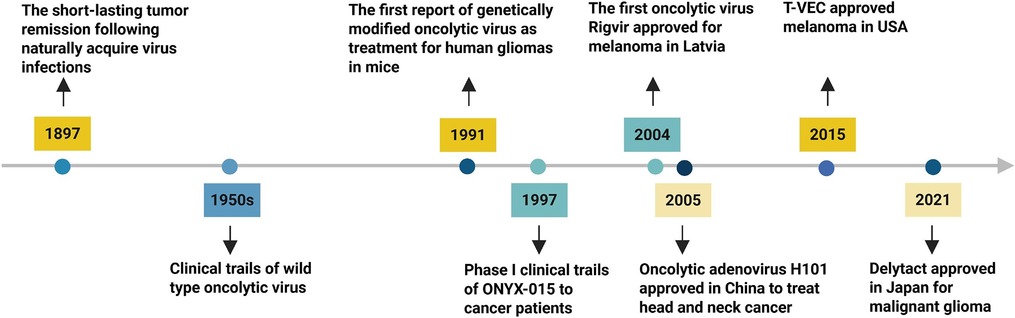
Figure 1.
A timeline of key milestones in the development of oncolytic viruses as a cancer therapy.
-
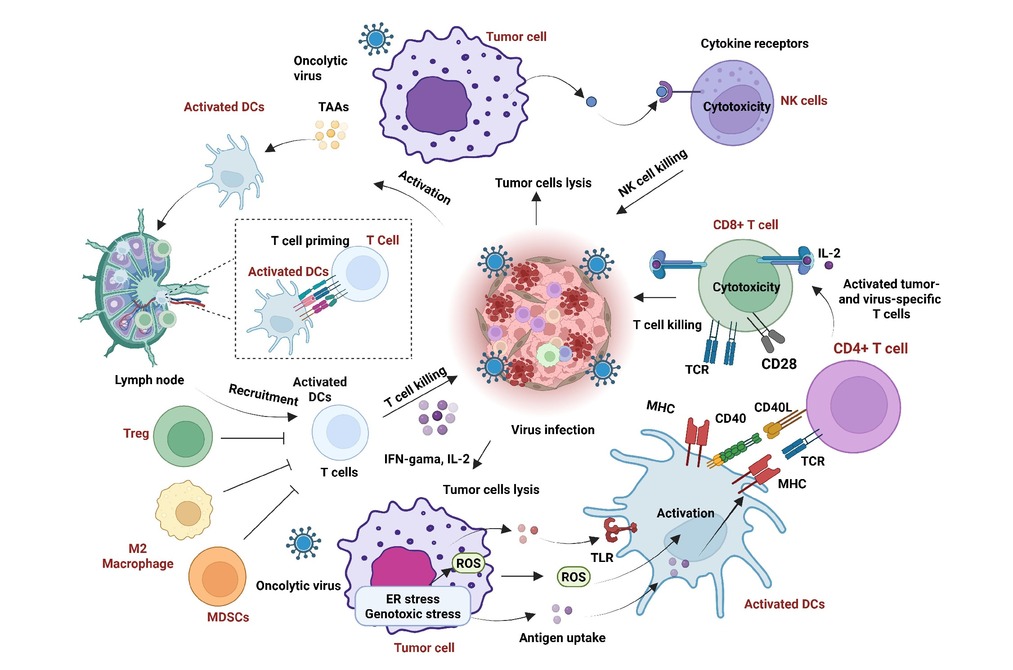
Figure 2.
Oncolytic viruses reshape the tumor microenvironment.
-
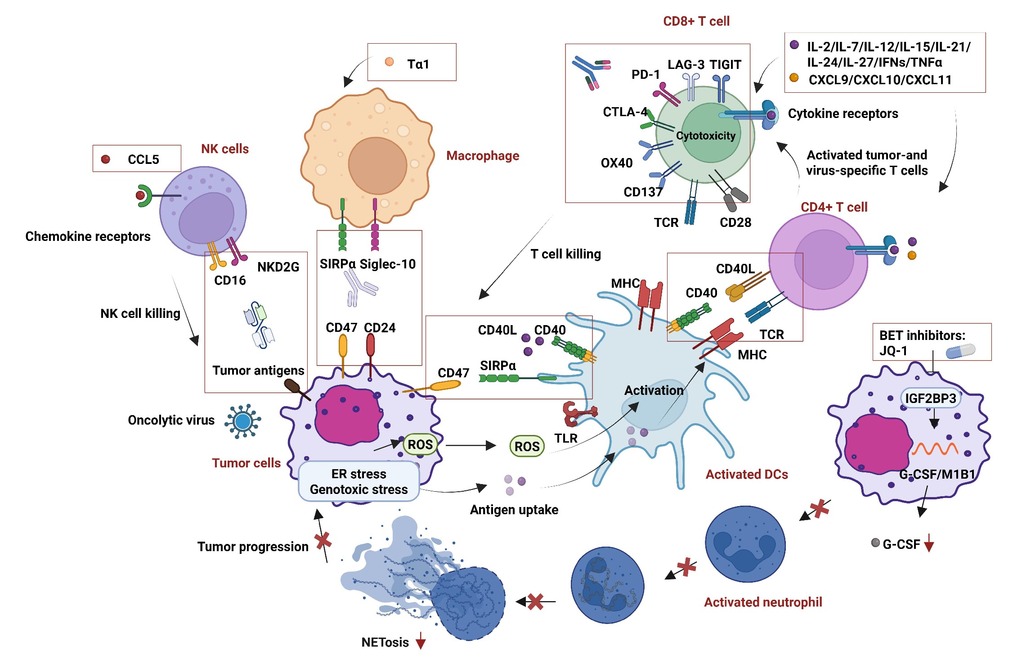
Figure 3.
The remodeling strategies of oncolytic virus-induced immune activation and its synergistic effect with immunotherapy.
