
Efficacy and safety of fruquintinib plus chemotherapy as second-line therapy in metastatic colorectal cancer: A multicenter trial
-
GRAPHICAL ABSTRACT
 DownLoad:
Full size image
DownLoad:
Full size image
-
PUBLIC SUMMARY
-
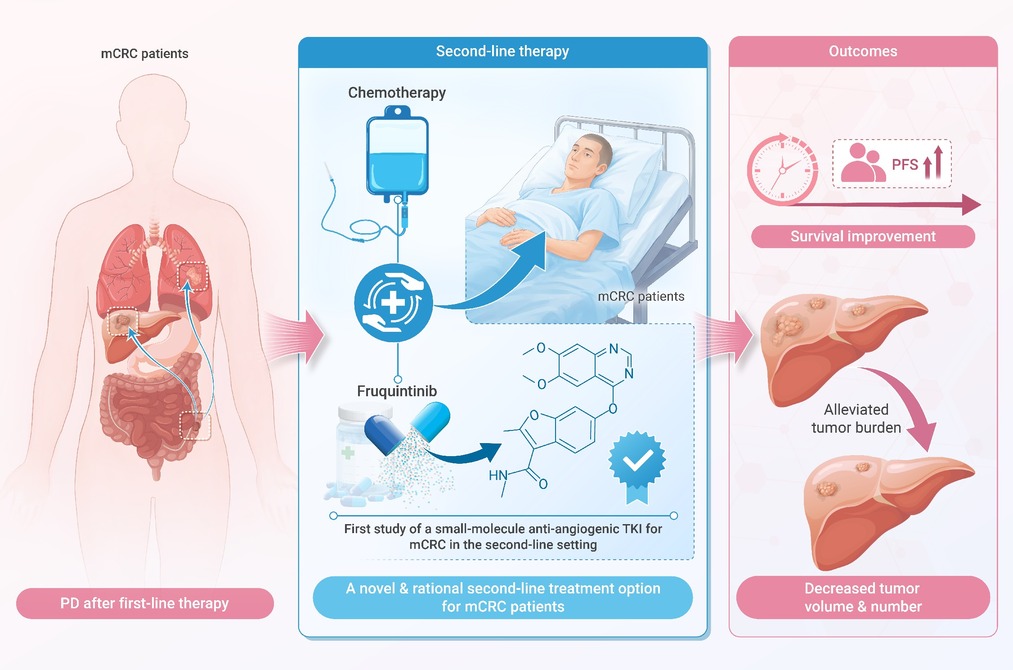
We evaluated fruquintinib plus chemotherapy as second-line therapy in metastatic colorectal cancer (mCRC).
It is the first study of a small-molecule tyrosine kinase inhibitor for mCRC patients at second-line setting.
The real-world mCRC patients with second-line treatment were screened for propensity score matching analysis.
Results showed progression-free survival benefit and favorable safety profile compared to real-world data.
Fruquintinib plus chemotherapy may represent a novel and rational second-line treatment option for mCRC.
-
-
ABSTRACT
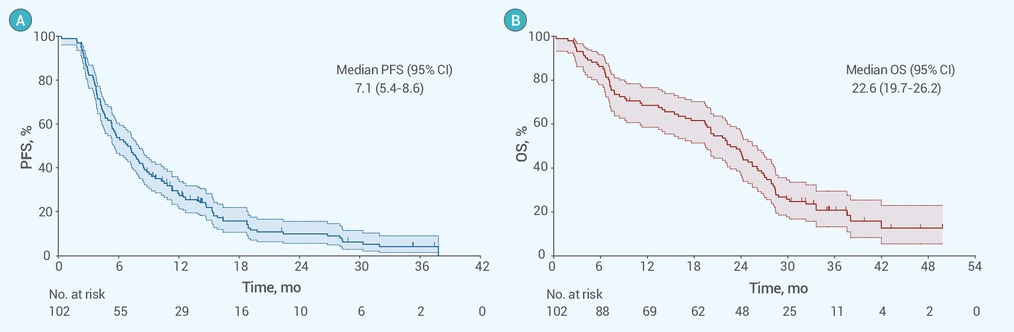
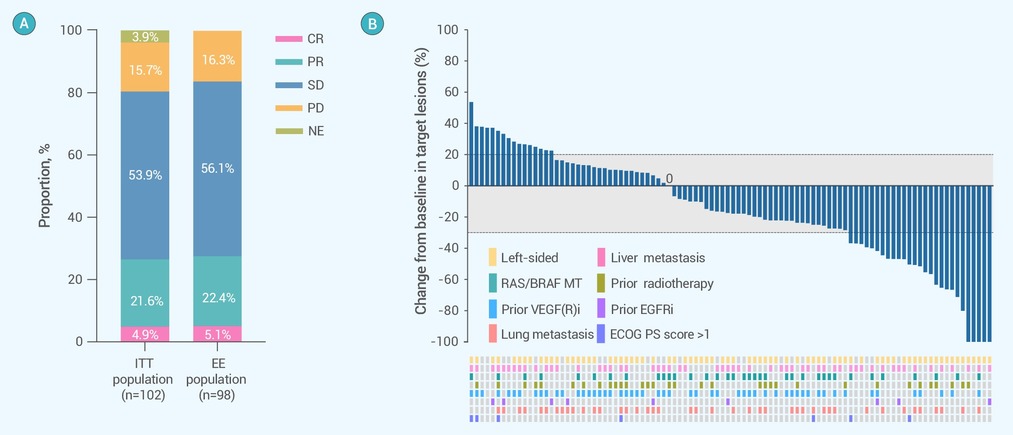
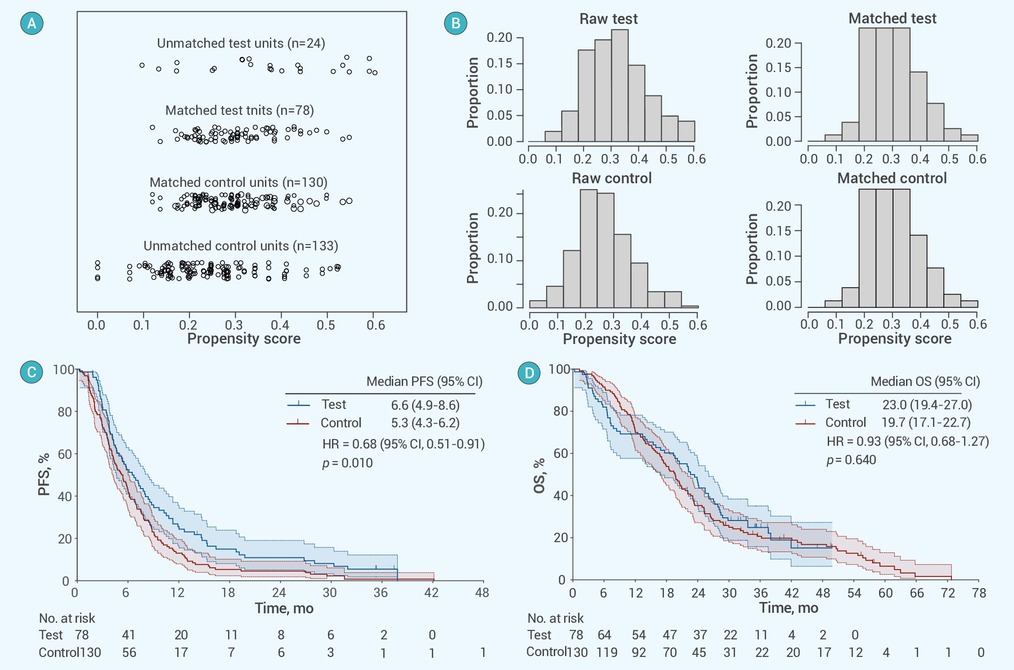
To evaluate the efficacy and safety of fruquintinib combined with chemotherapy as second-line treatment for metastatic colorectal cancer (mCRC), we performed an open-label phase II trial. A total of 102 Chinese mCRC patients who progressed after first-line therapy were enrolled and received fruquintinib plus chemotherapy. Fruquintinib was administered in a standard 4-week regimen or an adjusted 3-week regimen. Primary endpoint was progression-free survival (PFS). Efficacy and adverse events (AEs) were compared to a real-world control group. As of data cutoff on January 10, 2026, with a median follow-up of 33.2 months, the median PFS was 7.1 months (95% CI, 5.4-8.6) and overall survival (OS) was 22.6 months (95% CI, 19.7-26.2). Objective response rate was 27.6% (95% CI: 19.2-37.7), disease control rate (DCR) was 83.7% (95% CI: 74.5-90.1), and median duration of response (DoR) was 11.9 months (95% CI: 8.8-15.0). Patients with primary tumor resection, no liver metastasis, or no prior history of anti-vascular endothelial growth factor (receptor) therapy had improved survival. Grade ≥ 3 AEs occurred in 38.2% of patients, common grade ≥ 3 AEs were neutropenia (11.8%) and leukopenia (5.9%). Compared to the control group, the fruquintinib group showed significantly improved median PFS (6.6 vs. 5.3 months; HR, 0.68, 95% CI, 0.51-0.91; P = 0.010), higher ORR (23.1% vs. 16.9%) and DCR (79.5% vs. 67.7%), and a numerically longer OS (23.0 vs. 19.7 months; P = 0.640). These results showed fruquintinib plus chemotherapy may represent a novel and rational second-line option for mCRC with promising efficacy and favorable safety. -

-
REFERENCES
[1] Sung H., Ferlay J., Siegel R.L., et al. (2021). Global cancer statistics 2020: GLOBOCAN estimates of incidence and mortality worldwide for 36 cancers in 185 countries. CA Cancer J. Clin. 71:209−249. DOI:10.3322/caac.21660 [2] Wang S., Zheng R., Li J., et al. (2024). Global, regional, and national lifetime risks of developing and dying from gastrointestinal cancers in 185 countries: A population-based systematic analysis of GLOBOCAN. Lancet Gastroenterol. Hepatol. 9:229−237. DOI:10.1016/S2468-1253(23)00366-7 [3] Han B., Zheng R., Zeng H., et al. (2024). Cancer incidence and mortality in China, 2022. J. Natl. Cancer Cent. 4:47−53. DOI:10.1016/j.jncc.2024.01.006 [4] Benson A.B., Venook A.P., Al-Hawary M.M., et al. (2021). Colon cancer, version 2.2021, NCCN clinical practice guidelines in oncology. J. Natl. Compr. Cancer Netw. 19:329-359. DOI:10.6004/jnccn.2021.0012 [5] Benson A.B., Venook A.P., Al-Hawary M.M., et al. (2022). Rectal cancer, version 2.2022, NCCN clinical practice guidelines in oncology. J. Natl. Compr. Cancer Netw. 20:1139-1167. DOI:10.6004/jnccn.2022.0051 [6] Biller L.H. and Schrag D. (2021). Diagnosis and treatment of metastatic colorectal cancer: A review. JAMA 325:669−685. DOI:10.1001/jama.2021.0106 [7] De Falco V., Napolitano S., Rosello S., et al. (2020). How we treat metastatic colorectal cancer. ESMO Open 4:e000813. DOI:10.1136/esmoopen-2020-000813 [8] Bennouna J., Sastre J., Arnold D., et al. (2013). Continuation of bevacizumab after first progression in metastatic colorectal cancer (ML18147): A randomised phase 3 trial. Lancet Oncol. 14:29−37. DOI:10.1016/S1470-2045(12)70477-1 [9] Masi G., Salvatore L., Boni L., et al. (2015). Continuation or reintroduction of bevacizumab beyond progression to first-line therapy in metastatic colorectal cancer: Final results of the randomized BEBYP trial. Ann. Oncol. 26:724−730. DOI:10.1093/annonc/mdv012 [10] Tabernero J., Yoshino T., Cohn A.L., et al. (2015). Ramucirumab versus placebo in combination with second-line FOLFIRI in patients with metastatic colorectal carcinoma that progressed during or after first-line therapy with bevacizumab, oxaliplatin, and a fluoropyrimidine (RAISE): A randomised, double-blind, multicentre, phase 3 study. Lancet Oncol. 16:499−508. DOI:10.1016/S1470-2045(15)70127-0 [11] Van Cutsem E., Tabernero J., Lakomy R., et al. (2012). Addition of aflibercept to fluorouracil, leucovorin, and irinotecan improves survival in a phase III randomized trial in patients with metastatic colorectal cancer previously treated with an oxaliplatin-based regimen. J. Clin. Oncol. 30:3499−3506. DOI:10.1200/JCO.2012.42.8201 [12] Grothey A., Van Cutsem E., Sobrero A., et al. (2013). Regorafenib monotherapy for previously treated metastatic colorectal cancer (CORRECT): An international, multicentre, randomised, placebo-controlled, phase 3 trial. Lancet (London, England) 381:303−312. DOI:10.1016/S0140-6736(12)61900-X [13] Li J., Qin S., Xu R.H., et al. (2018). Effect of fruquintinib vs placebo on overall survival in patients with previously treated metastatic colorectal cancer: The FRESCO randomized clinical trial. JAMA 319:2486−2496. DOI:10.1001/jama.2018.7855 [14] Dasari A., Lonardi S., Garcia-Carbonero R., et al. (2023). Fruquintinib versus placebo in patients with refractory metastatic colorectal cancer (FRESCO-2): An international, multicentre, randomised, double-blind, phase 3 study. Lancet (London, England) 402:41−53. DOI:10.1016/S0140-6736(23)00772-9 [15] Ma S., Chen R., Duan L., et al. (2023). Efficacy and safety of toripalimab with fruquintinib in the third-line treatment of refractory advanced metastatic colorectal cancer: Results of a single-arm, single-center, prospective, phase II clinical study. J Gastrointest. Oncol. 14:1052−1063. DOI:10.21037/jgo-23-108 [16] Zhao W., Lei J., Ke S., et al. (2023). Fecal microbiota transplantation plus tislelizumab and fruquintinib in refractory microsatellite stable metastatic colorectal cancer: An open-label, single-arm, phase II trial (RENMIN-215). EClinicalMedicine 66:102315. DOI:10.1016/j.eclinm.2023.102315 [17] Ma X., Ou K., Liu X., et al. (2026). Efficacy and safety of fruquintinib combined with albumin-bound paclitaxel as second-line therapy for advanced gastric cancer following failure of PD-1 inhibitor-containing treatment (TACTIC GC-01): A phase II single-arm study. Int. J. Cancer 158:2219−2228. DOI:10.1002/ijc.70299 [18] Zhang Y., Wang Z.X., Shen L., et al. (2023). A phase Ib/II study of fruquintinib in combination with paclitaxel as the second-line therapy for advanced gastric cancer. Cancer Commun. (Lond) 43:150−153. DOI:10.1002/cac2.12379 [19] Zhang X., Zhao T., Zheng B., et al. (2025). Fruquintinib as first-line or second-line treatment in unresectable or metastatic soft-tissue sarcoma: A prospective, single-arm phase II study. Clin. Transl. Med. 15:e70308. DOI:10.1002/ctm2.70308 [20] Bang Y.J., Kang Y.K., Kang W.K., et al. (2011). Phase II study of sunitinib as second-line treatment for advanced gastric cancer. Invest. New Drugs 29:1449−1458. DOI:10.1007/s10637-010-9438-y [21] Martin-Richard M., Gallego R., Pericay C., et al. (2013). Multicenter phase II study of oxaliplatin and sorafenib in advanced gastric adenocarcinoma after failure of cisplatin and fluoropyrimidine treatment. A GEMCAD study. Invest. New Drugs 31:1573−1579. DOI:10.1007/s10637-013-0020-2 [22] Guo Y., Zhang W., Ying J., et al. (2023). Phase 1b/2 trial of fruquintinib plus sintilimab in treating advanced solid tumours: The dose-escalation and metastatic colorectal cancer cohort in the dose-expansion phases. Eur. J. Cancer 181:26−37. DOI:10.1016/j.ejca.2022.12.004 [23] Ciardiello F., Ciardiello D., Martini G., et al. (2022). Clinical management of metastatic colorectal cancer in the era of precision medicine. CA Cancer J. Clin. 72:372−401. DOI:10.3322/caac.21728 [24] Giantonio B.J., Catalano P.J., Meropol N.J., et al. (2023). Bevacizumab in combination with Oxaliplatin, Fluorouracil, and Leucovorin (FOLFOX4) for previously treated metastatic colorectal cancer: Results from the eastern cooperative oncology group study E3200. J. Clin. Oncol. 41:3670−3675. DOI:10.1200/JCO.22.02761 [25] Iwamoto S., Takahashi T., Tamagawa H., et al. (2015). FOLFIRI plus bevacizumab as second-line therapy in patients with metastatic colorectal cancer after first-line bevacizumab plus oxaliplatin-based therapy: The randomized phase III EAGLE study. Ann. Oncol. 26:1427−1433. DOI:10.1093/annonc/mdv197 [26] Peeters M., Price T.J., Cervantes A., et al. (2010). Randomized phase III study of panitumumab with fluorouracil, leucovorin, and irinotecan (FOLFIRI) compared with FOLFIRI alone as second-line treatment in patients with metastatic colorectal cancer. J. Clin. Oncol. 28:4706−4713. DOI:10.1200/JCO.2009.27.6055 [27] Sobrero A.F., Maurel J., Fehrenbacher L., et al. (2008). EPIC: Phase III trial of cetuximab plus irinotecan after fluoropyrimidine and oxaliplatin failure in patients with metastatic colorectal cancer. J. Clin. Oncol. 26:2311−2319. DOI:10.1200/JCO.2007.13.1193 [28] Cardone C., De Stefano A., Rosati G., et al. (2023). Regorafenib monotherapy as second-line treatment of patients with RAS-mutant advanced colorectal cancer (STREAM): An academic, multicenter, single-arm, two-stage, phase II study. ESMO Open 8:100748. DOI:10.1016/j.esmoop.2022.100748 [29] Wu L., Yan H., Qin Y., et al. (2024). Fruquintinib plus oxaliplatin combined with S-1 (SOX) as neoadjuvant therapy for locally advanced gastric cancer (GC) or gastro-oesophageal junction adenocarcinoma (GEJ): A multicentre, phase II, single-arm, open-label clinical trial (FRUTINEOGA) protocol. BMJ Open 14:e075696. DOI:10.1136/bmjopen-2023-075696 [30] Wang F., Shen L., Guo W., et al. (2024). Fruquintinib plus paclitaxel versus placebo plus paclitaxel for gastric or gastroesophageal junction adenocarcinoma: The randomized phase 3 FRUTIGA trial. Nat. Med. 30:2189−2198. DOI:10.1038/s41591-024-02989-6 [31] Song Y., Qu T., Zhang H., et al. (2021). The real-world practice of Fruquintinib for Chinese patients with metastatic colorectal cancer. Cancer Manag. Res. 13:6199−6205. DOI:10.2147/CMAR.S313275 [32] Bai Y., Qin S., Li J., et al. (2020). Early carcinoembryonic antigen (CEA) dynamics to predict fruquintinib efficacy in FRESCO, a 3+ line metastatic colorectal carcinoma (mCRC) phase III trial. J. Clin. Oncol. 38:e16001. DOI:10.1200/JCO.2020.38.15_suppl.e16001 -
ABOUT THIS ARTICLE
Cite this article:
Zhao W., Lei J., Shi W., et al. (2026). Efficacy and safety of fruquintinib plus chemotherapy as second-line therapy in metastatic colorectal cancer: A multicenter trial. The Innovation Oncology 1:100026. https://doi.org/10.59717/j.xinn-oncol.2026.100026
Welcome!
To request copyright permission to republish or share portions of our works, please visit Copyright Clearance Center's (CCC) Marketplace website at marketplace.copyright.com.
Export File
Citation
Zhao W., Lei J., Shi W., et al. (2026). Efficacy and safety of fruquintinib plus chemotherapy as second-line therapy in metastatic colorectal cancer: A multicenter trial. The Innovation Oncology 1:100026. https://doi.org/10.59717/j.xinn-oncol.2026.100026

Format
Content
-
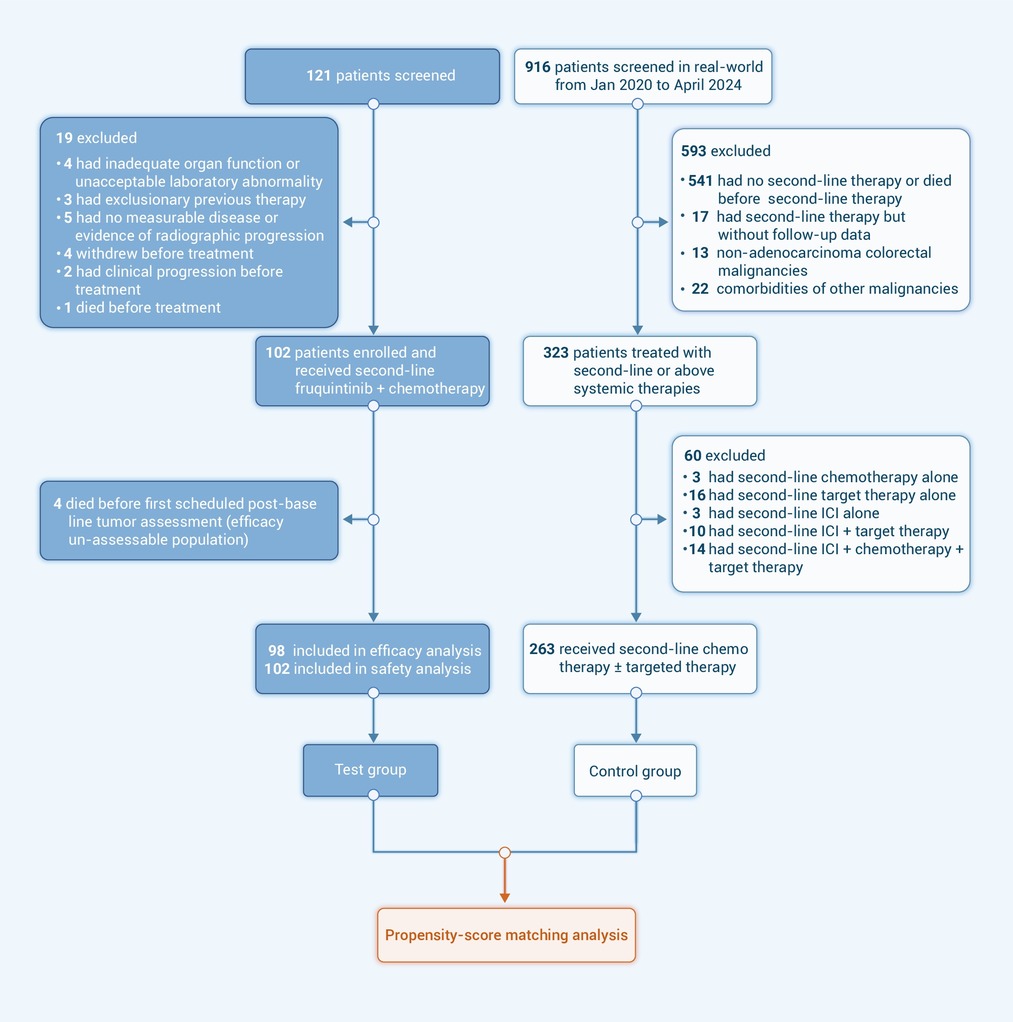
Figure 1.
Trial flowchart.
-
Figure 2.
Kaplan-Meier survival curves in study patients
-
Figure 3.
Tumor response in study patients
-
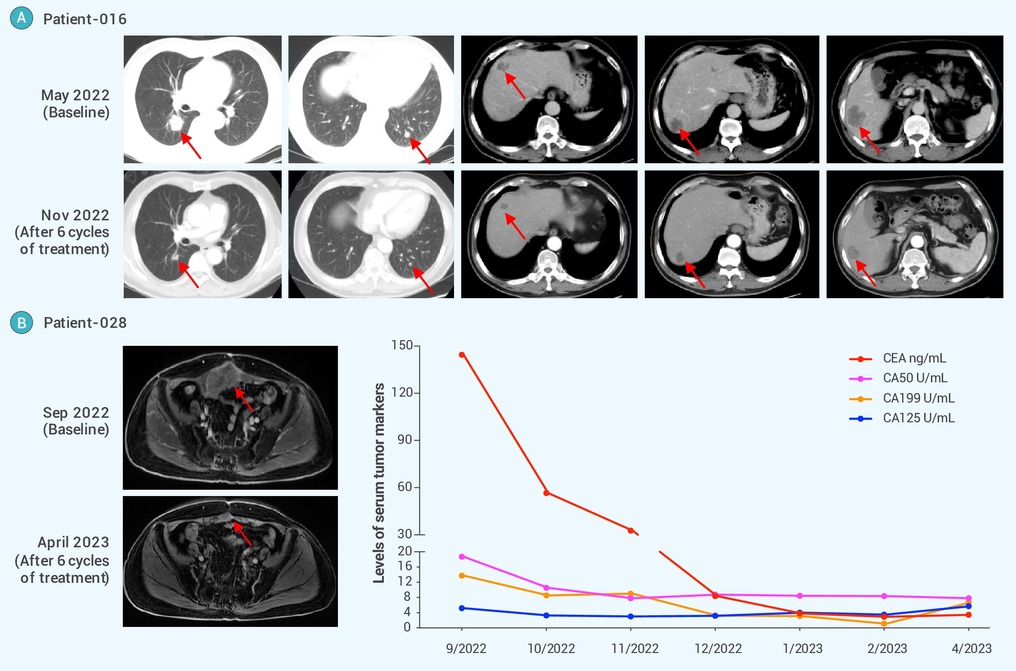
Figure 4.
Typical cases presentation
-
Figure 6.
PSM and survival curves of matched patients after PSM
