
Efficacy of first-line immunochemotherapy by PD-L1 in HER2-negative gastric or gastroesophageal junction cancer: A meta-analysis
-
GRAPHICAL ABSTRACT
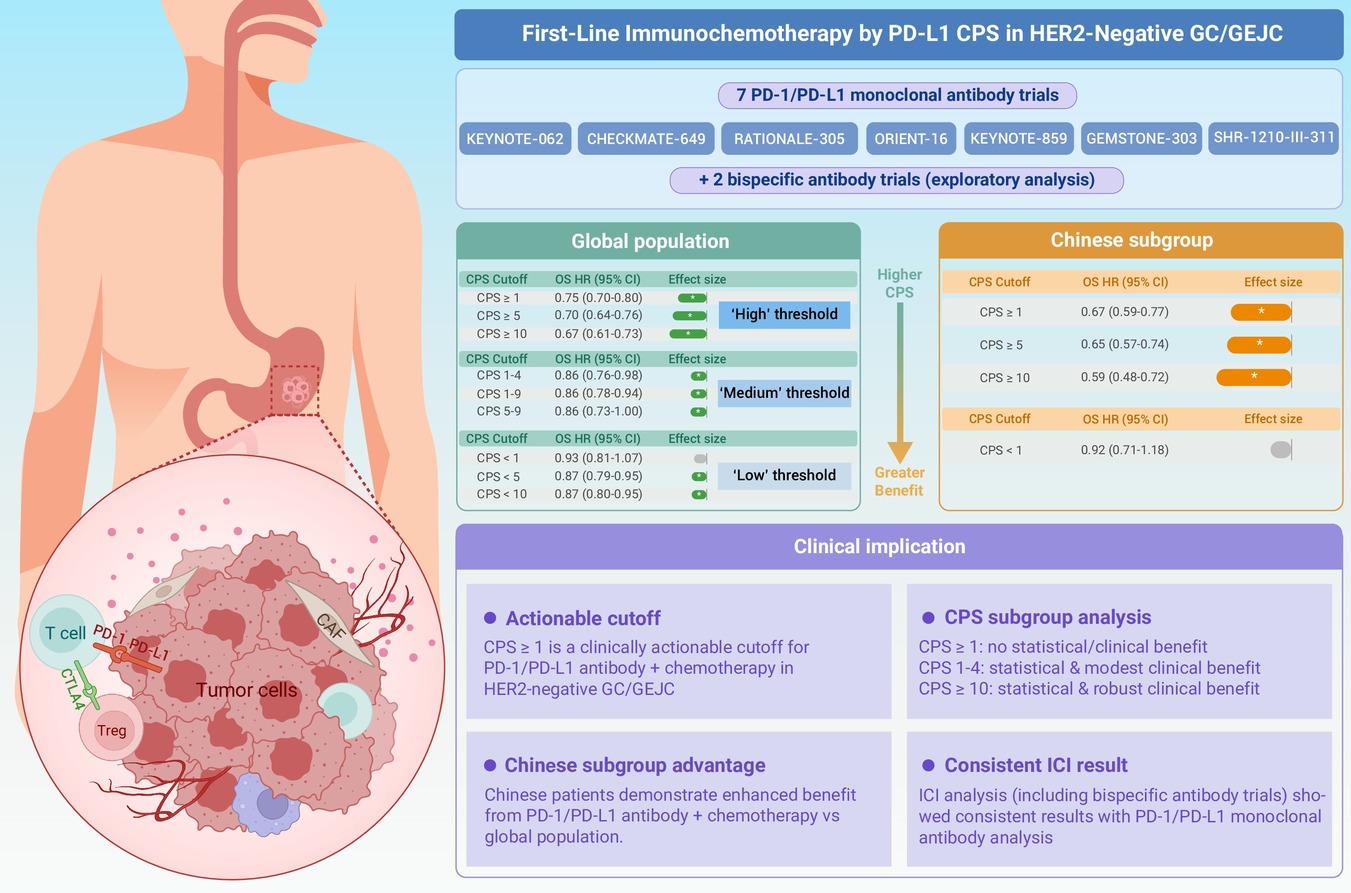
 DownLoad:
Full size image
DownLoad:
Full size image
-
PUBLIC SUMMARY
-
This meta-analysis compared immunochemotherapy versus chemotherapy in HER2-negative gastric cancer.
7 monoclonal antibody trials were primary analysis, with two bispecific antibody trials as exploratory.
Patients with PD-L1 CPS ≥1 showed significant survival benefit, while CPS <1 patients did not benefit.
Chinese patients achieved greater benefits in OS/PFS than the global population.
CPS ≥1 may serve as a practical cutoff for selecting first-line PD-1/PD-L1 antibody plus chemotherapy.
-
-
ABSTRACT
Identifying optimal PD-L1 expression cutoff thresholds to guide programmed cell death protein-1/programmed death ligand-1 (PD-1/PD-L1) antibody combined with chemotherapy for patients with advanced HER2-negative gastric or gastroesophageal junction adenocarcinoma (GC/GEJC) remains a major challenge in clinical decision-making. This meta-analysis included nine randomized controlled trials of immunochemotherapy versus chemotherapy in patients with HER2-negative GC/GEJC; eight trials included Chinese patients. Among the global population, PD-1/PD-L1 antibodies plus chemotherapy significantly reduced mortality risk versus chemotherapy, with a positive association between CPS and overall survival (OS) benefit (CPS ≥1: HROS 0.75, 95% CI 0.70–0.80; CPS ≥5: HROS 0.70, 95% CI 0.64–0.76 and CPS ≥10: HROS 0.67, 95% CI 0.61–0.73; all p<0.0001 vs. chemotherapy), and an OS benefit for intermediate CPS cutoffs (1–4, 1–9, 5–9, <5 and <10). A similar trend was observed for progression-free survival (PFS). The OS and PFS benefits in Chinese patients were numerically greater versus the global population. Patients with CPS <1 did not benefit from immunochemotherapy. In conclusion, CPS ≥1 may be a clinically actionable cutoff for selecting PD-1/PD-L1 monoclonal antibody combined with chemotherapy in patients with HER2-negative GC/GEJC and Chinese patients derived a modestly greater OS and PFS benefit from that versus the global population. Analyses including studies of bispecific antibodies showed consistent results with those only including PD-1/PD-L1 antibodies. -

-
REFERENCES
[1] International Agency for Research on Cancer. (2025). GLOBOCAN cancer today. https://gco.iarc.fr/today/en. Accessed June 2025. [2] Patel A.K., Sethi N.S. and Park H. (2026). Gastric cancer: A review. JAMA 335:439−450. DOI:10.1001/jama.2025.20034 [3] Li Y., Feng A., Zheng S., et al. (2022). Recent estimates and predictions of 5-year survival in patients with gastric cancer: A model-based period analysis. Cancer Control 29:10732748221099227. DOI: 10.1177/10732748221099227. [4] Wang Y. and Chong G. (2025). Immunotherapy in gastric adenocarcinoma - a rapidly evolving treatment landscape. Crit. Rev. Oncol. Hematol. 216:104941. DOI:10.1016/j.critrevonc.2025.104941 [5] Janjigian Y.Y., Shitara K., Moehler M., et al. (2021). First-line nivolumab plus chemotherapy versus chemotherapy alone for advanced gastric, gastro-oesophageal junction, and oesophageal adenocarcinoma (CheckMate 649): A randomised, open-label, phase 3 trial. Lancet 398:27−40. DOI:10.1016/S0140-6736(21)00797-2 [6] Xu J., Jiang H., Pan Y., et al. (2023). Sintilimab plus chemotherapy for unresectable gastric or gastroesophageal junction cancer: The ORIENT-16 randomized clinical trial. JAMA 330:2064−2074. DOI:10.1001/jama.2023.19918 [7] Moehler M.H., Kato K., Arkenau H.-T., et al. (2023). Rationale 305: Phase 3 study of tislelizumab plus chemotherapy vs placebo plus chemotherapy as first-line treatment (1L) of advanced gastric or gastroesophageal junction adenocarcinoma (GC/GEJC). J. Clin. Oncol. 41:286. DOI:10.1200/JCO.2023.41.4_suppl.286 [8] Arkenau H.-T., Tabernero J., Cruz-Correa M., et al. (2024). Tislelizumab plus chemotherapy (chemo) versus placebo plus chemo as first-line treatment for locally advanced unresectable or metastatic gastric or gastroesophageal junction adenocarcinoma: RATIONALE-305 European/North American patient subgroup. J. Clin. Oncol. 42:330. DOI:10.1200/JCO.2024.42.3_suppl.330 [9] Rha S.Y., Oh D.Y., Yanez P., et al. (2023). Pembrolizumab plus chemotherapy versus placebo plus chemotherapy for HER2-negative advanced gastric cancer (KEYNOTE-859): A multicentre, randomised, double-blind, phase 3 trial. Lancet Oncol. 24:1181−1195. DOI:10.1016/S1470-2045(23)00515-6 [10] Shen L., Ji J.F., Li Z.Y., et al. (2025). Final analysis of COMPASSION-15: Cadonilimab plus XELOX versus XELOX alone as first-line therapy for unresectable locally advanced/metastatic HER2-negative gastric/gastroesophageal junction adenocarcinoma. ESMO Congress 2025. Abstract No. 2098MO. Available from: https://www.esmo.org/congress-2025/abstracts/2098MO. [11] Formica V., Morelli C., Fornaro L., et al. (2024). PD-L1 thresholds predict efficacy of immune checkpoint inhibition in first-line treatment of advanced gastroesophageal adenocarcinoma. A systematic review and meta-analysis of seven phase III randomized trials. ESMO Open 9:103967. DOI:10.1016/j.esmoop.2024.103967 [12] Leone A.G., Mai A.S., Fong K.Y., et al. (2024). Immune checkpoint inhibitors in advanced gastroesophageal adenocarcinoma: A series of patient-level meta-analyses in different programmed death-ligand 1 subgroups. ESMO Open 9:103962. DOI:10.1016/j.esmoop.2024.103962 [13] Li J.B., Lai M.Y., Lin Z.C., et al. (2024). The optimal threshold of PD-L1 combined positive score to predict the benefit of PD-1 antibody plus chemotherapy for patients with HER2-negative gastric adenocarcinoma: A meta-analysis. Cancer Immunol. Immunother. 73:132. DOI:10.1007/s00262-024-03726-1 [14] Zhang W., Guo K. and Zheng S. (2025). Immunotherapy combined with chemotherapy in the first-line treatment of advanced gastric cancer: Systematic review and bayesian network meta-analysis based on specific PD-L1 CPS. Curr. Oncol. 32:112. DOI:10.3390/curroncol32020112 [15] National Comprehensive Cancer Network. (2026). Gastric Cancer (Version 2.2026). https://www.nccn.org/professionals/physician_gls/pdf/gastric.pdf. Accessed July 6, 2026. [16] Food and Drug Administration Center for Drug Evaluation and Research. (2026). Oncologic Drugs Advisory Committee (ODAC) Meeting. https://www.fda.gov/media/184453/download. Accessed May 2026. [17] Zhao C., Ye S., Chen M., et al. (2026). First-line immunotherapy for advanced HER2-negative gastric cancer: Differences between Asian and non-Asian patients. Cancer Biol. Med. 23:201−217. DOI:10.20892/j.issn.2095-3941.2025.0398 [18] Zhao J.J., Syn N.L., Tan B.K.J., et al. (2022). KMSubtraction: Reconstruction of unreported subgroup survival data utilizing published Kaplan-Meier survival curves. BMC Med. Res. Methodol. 22:93. DOI:10.1186/s12874-022-01567-z [19] Page M.J., McKenzie J.E., Bossuyt P.M., et al. (2021). The PRISMA 2020 statement: An updated guideline for reporting systematic reviews. BMJ 372:n71. DOI:10.1136/bmj.n71 [20] Sterne J.A.C., Savović J., Page M.J., et al. (2019). RoB 2: A revised tool for assessing risk of bias in randomised trials. BMJ 366:l4898. DOI:10.1136/bmj.l4898 [21] Guyot P., Ades A.E., Ouwens M.J., et al. (2012). Enhanced secondary analysis of survival data: Reconstructing the data from published Kaplan-Meier survival curves. BMC Med. Res. Methodol. 12:9. DOI:10.1186/1471-2288-12-9 [22] Liu N., Zhou Y. and Lee J.J. (2021). IPDfromKM: Reconstruct individual patient data from published Kaplan-Meier survival curves. BMC Med. Res. Methodol. 21:111. DOI:10.1186/s12874-021-01308-8 [23] Kuhn H.W. (1955). The Hungarian method for the assignment problem. Nav. Res. Logist. Q. 2:83−97. https://doi.org/10.1007/978-3-540-68279-0_2 [24] Liu D., Zhou J., Wang Y., et al. (2022). Bifunctional anti-PD-L1/TGF-βRII agent SHR-1701 in advanced solid tumors: A dose-escalation, dose-expansion, and clinical-expansion phase 1 trial. BMC Med. 20:408. DOI:10.1186/s12916-022-02605-9 [25] Kang Y.K., Chen L.T., Ryu M.H., et al. (2022). Nivolumab plus chemotherapy versus placebo plus chemotherapy in patients with HER2-negative, untreated, unresectable advanced or recurrent gastric or gastro-oesophageal junction cancer (ATTRACTION-4): A randomised, multicentre, double-blind, placebo-controlled, phase 3 trial. Lancet Oncol. 23:234−247. DOI:10.1016/s1470-2045(21)00692-6 [26] Sun J.M., Shen L., Shah M.A., et al. (2021). Pembrolizumab plus chemotherapy versus chemotherapy alone for first-line treatment of advanced oesophageal cancer (KEYNOTE-590): A randomised, placebo-controlled, phase 3 study. Lancet 398:759−771. DOI:10.1016/S0140-6736(21)01234-4 [27] Shen L., Zhang Y., Li Z., et al. (2025). First-line cadonilimab plus chemotherapy in HER2-negative advanced gastric or gastroesophageal junction adenocarcinoma: A randomized, double-blind, phase 3 trial. Nat. Med. 31:1163−1170. DOI:10.1038/s41591-024-03450-4 [28] Shen L., Zhang Y., Li Z., et al. (2025). 2098MO Cadonilimab (Cado) plus chemotherapy (chemo) versus chemotherapy as first-line (1L) treatment for advanced gastric or gastroesophageal junction (G/GEJ) adenocarcinoma: Final results of the phase III COMPASSION-15 trial. Ann. Oncol. 36:S1103. DOI:10.1016/j.annonc.2025.08.2719 [29] Peng Z., Wang J., Zhang Y., et al. (2024). LBA60 phase III study of SHR-1701 versus placebo in combination with chemo as first-line (1L) therapy for HER2-negative gastric/gastroesophageal junction adenocarcinoma (G/GEJA). Ann. Oncol. 35:S1250. DOI:10.1016/j.annonc.2024.08.2302 [30] Peng Z., Wang J., Zhang Y., et al. (2025). 298P SHR-1701 plus CAPOX in patients with advanced gastric or gastroesophageal junction adenocarcinoma and PD-L1 combined positive score ≥1: A post-hoc analysis of a phase III study. Ann. Oncol. 36:S1874. DOI:10.1016/j.annonc.2025.10.125 [31] Janjigian Y.Y., Ajani J.A., Moehler M., et al. (2024). First-line nivolumab plus chemotherapy for advanced gastric, gastroesophageal junction, and esophageal adenocarcinoma: 3-year follow-up of the phase III CheckMate 649 trial. J. Clin. Oncol. 42:2012−2020. DOI:10.1200/jco.23.01601 [32] Qiu M.Z., Oh D.Y., Kato K., et al. (2024). Tislelizumab plus chemotherapy versus placebo plus chemotherapy as first line treatment for advanced gastric or gastro-oesophageal junction adenocarcinoma: RATIONALE-305 randomised, double blind, phase 3 trial. BMJ 385:e078876. DOI:10.1136/bmj-2023-078876 [33] Maruyama M., Takeshita K., Endo M., et al. (1998). Clinicopathological study of gastric carcinoma in high- and low-mortality countries: Comparison between Japan and the United States. Gastric Cancer 1:64−70. DOI:10.1007/s101200050056 [34] Wang J., Sun Y. and Bertagnolli M.M. (2015). Comparison of gastric cancer survival between Caucasian and Asian patients treated in the United States: Results from the Surveillance Epidemiology and End Results (SEER) database. Ann. Surg. Oncol. 22:2965−2971. DOI:10.1245/s10434-015-4388-4 [35] Zhao L., Niu P., Zhao D., et al. (2021). Regional and racial disparity in proximal gastric cancer survival outcomes 1996-2016: Results from SEER and China National Cancer Center database. Cancer Med. 10:4923−4938. DOI:10.1002/cam4.4033 [36] Xing Y., Hosaka H., Moki F., et al. (2024). Gender differences in patients with gastric adenocarcinoma. J. Clin. Med. 13:2524. DOI:10.3390/jcm13092524 [37] Theuer C.P., Kurosaki T., Ziogas A., et al. (2000). Asian patients with gastric carcinoma in the United States exhibit unique clinical features and superior overall and cancer specific survival rates. Cancer 89:1883−1892. DOI:3.3.co;2-8">10.1002/1097-0142(20001101)89:9<1883::aid-cncr3>3.3.co;2-8 [38] Chiarello M.M., Fico V., Pepe G., et al. (2022). Early gastric cancer: A challenge in Western countries. World J. Gastroenterol. 28:693−703. DOI:10.3748/wjg.v28.i7.693 [39] Yao J.C., Schnirer II, Reddy S., et al. (2002). Effects of sex and racial/ethnic group on the pattern of gastric cancer localization. Gastric Cancer 5:208−212. DOI:10.1007/s101200200036 [40] Wu S.P., Keshavjee S.H., Yoon S.S., et al. (2023). Survival outcomes and patterns of care for stage II or III resected gastric cancer by race and ethnicity. JAMA Netw. Open 6:e2349026. DOI:10.1001/jamanetworkopen.2023.49026 [41] Jia F., Teer J.K., Knepper T.C., et al. (2017). Discordance of somatic mutations between Asian and Caucasian patient populations with gastric cancer. Mol. Diagn. Ther. 21:179−185. DOI:10.1007/s40291-016-0250-z [42] Gilmore G.A., Barakat M., Chaudhary U.B., et al. (2019). Genomic profile of gastric cancer in the United States versus East Asia. J. Clin. Oncol. 37:45. DOI:10.1200/JCO.2019.37.4_suppl.45 [43] Tabernero J., Van Cutsem E., Bang Y.-J., et al. (2019). Pembrolizumab with or without chemotherapy versus chemotherapy for advanced gastric or gastroesophageal junction (G/GEJ) adenocarcinoma: The phase III KEYNOTE-062 study. J. Clin. Oncol. 37:LBA4007. DOI:10.1200/JCO.2019.37.18_suppl.LBA4007 [44] Shitara K., Van Cutsem E., Bang Y.J., et al. (2020). Efficacy and safety of pembrolizumab or pembrolizumab plus chemotherapy vs chemotherapy alone for patients with first-line, advanced gastric cancer: The KEYNOTE-062 phase 3 randomized clinical trial. JAMA Oncol. 6:1571−1580. DOI:10.1001/jamaoncol.2020.3370 [45] Zhao J.J., Yap D.W.T., Chan Y.H., et al. (2022). Low programmed death-ligand 1-expressing subgroup outcomes of first-line immune checkpoint inhibitors in gastric or esophageal adenocarcinoma. J. Clin. Oncol. 40:392−402. DOI:10.1200/JCO.21.01862 [46] Janjigian Y.Y., Moehler M.H., Ajani J.A., et al. (2025). Nivolumab (NIVO) + chemotherapy (chemo) vs chemo as first-line (1L) treatment for advanced gastric cancer/gastroesophageal junction cancer/esophageal adenocarcinoma (GC/GEJC/EAC): 5-year (y) follow-up results from CheckMate 649. J. Clin. Oncol. 43:398. DOI:10.1200/JCO.2025.43.4_suppl.398 [47] Xu J., Jiang H., Pan Y., et al. (2023). Abstract CT078: First-line treatment with sintilimab (sin) vs placebo in combination with chemotherapy (chemo) in patients (pts) with unresectable gastric or gastroesophageal junction (G/GEJ) cancer: Final overall survival (OS) results from the randomized, phase III ORIENT-16 trial. Cancer Res. 83:CT078. DOI:10.1158/1538-7445.Am2023-ct078 [48] Rha S.Y., Wyrwicz L., Weber P.E.Y., et al. (2025). KEYNOTE-859: 4.5-year median follow-up of pembrolizumab plus chemotherapy for previously untreated advanced HER2-negative gastric or gastroesophageal junction (G/GEJ) adenocarcinoma. J. Clin. Oncol. 43:4036. DOI: 10.1200/JCO.2025.43.16_suppl.4036. [49] European Medicines Agency. (2023). Keytruda Assessment Report (Procedure No. EMEA/H/C/003820/II/0135). Committee for Medicinal Products for Human Use (CHMP). October 12, 2023. [50] Cruz-Correa M., Oh D.Y., Kato K., et al. (2026). Tislelizumab + chemotherapy in gastric cancer: Long-term RATIONALE-305 randomized trial follow-up. Adv. Ther. 43:165−183. DOI:10.1007/s12325-025-03415-0 [51] Moehler M., Oh D.Y., Kato K., et al. (2024). 397MO Tislelizumab (TIS) plus chemotherapy (CT) vs placebo (PBO) plus CT in HER2-negative advanced or metastatic gastric or gastro-esophageal junction adenocarcinoma (GC/GEJC): PD-L1 biomarker analysis from RATIONALE-305. Ann. Oncol. 35:S160−S161. DOI:10.1016/j.annonc.2024.05.312 [52] Zhang X., Wang J., Wang G., et al. (2025). First-line sugemalimab plus chemotherapy for advanced gastric cancer: The GEMSTONE-303 randomized clinical trial. JAMA 333:1305−1314. DOI:10.1001/jama.2024.28463 [53] Peng Z., Zhang Y., Xu H., et al. (2026). Camrelizumab plus CAPOX with camrelizumab based maintenance versus CAPOX alone as initial treatment for gastric or gastro-oesophageal junction adenocarcinoma: Randomised phase 3 trial. BMJ 392:e086115. DOI:10.1136/bmj-2025-086115 -
ABOUT THIS ARTICLE
Cite this article:
Xie T., Zhang X., Peng Z., et al. (2026). Efficacy of first-line immunochemotherapy by PD-L1 in HER2-negative gastric or gastroesophageal junction cancer: A meta-analysis. The Innovation Oncology 1:100030. https://doi.org/10.59717/j.xinn-oncol.2026.100030
Welcome!
To request copyright permission to republish or share portions of our works, please visit Copyright Clearance Center's (CCC) Marketplace website at marketplace.copyright.com.
Export File
Citation
Xie T., Zhang X., Peng Z., et al. (2026). Efficacy of first-line immunochemotherapy by PD-L1 in HER2-negative gastric or gastroesophageal junction cancer: A meta-analysis. The Innovation Oncology 1:100030. https://doi.org/10.59717/j.xinn-oncol.2026.100030

Format
Content
-
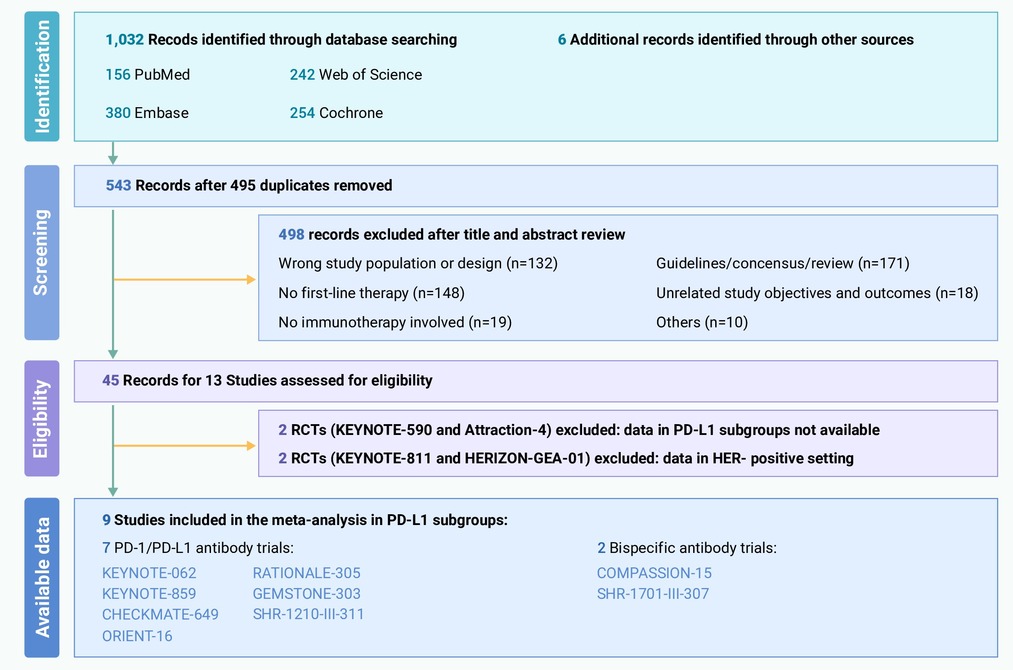
Figure 1.
Preferred reporting items for systematic reviews and meta-analyses (PRISMA) flowchart diagram
-
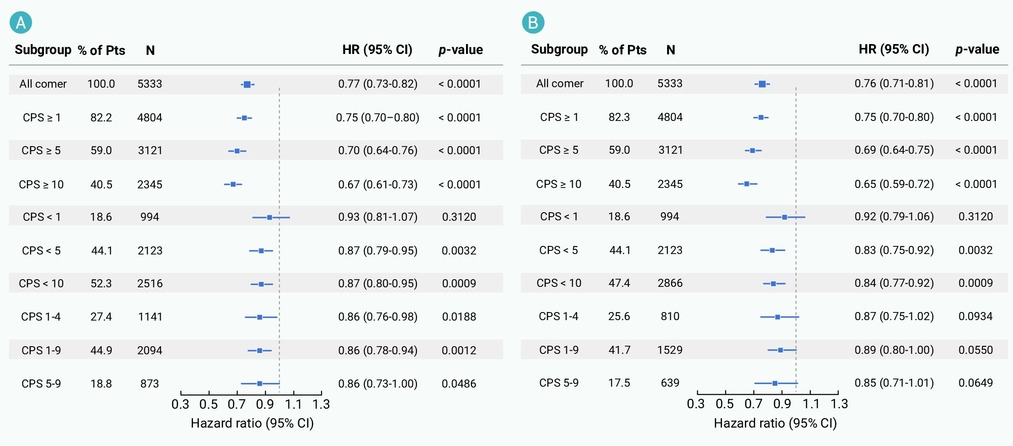
Figure 2.
Global patient population: (A) overall survival and (B) progression-free survival for PD-1/PD-L1 antibodies plus chemotherapy versus chemotherapy alone stratified by PD-L1 CPS threshold
-
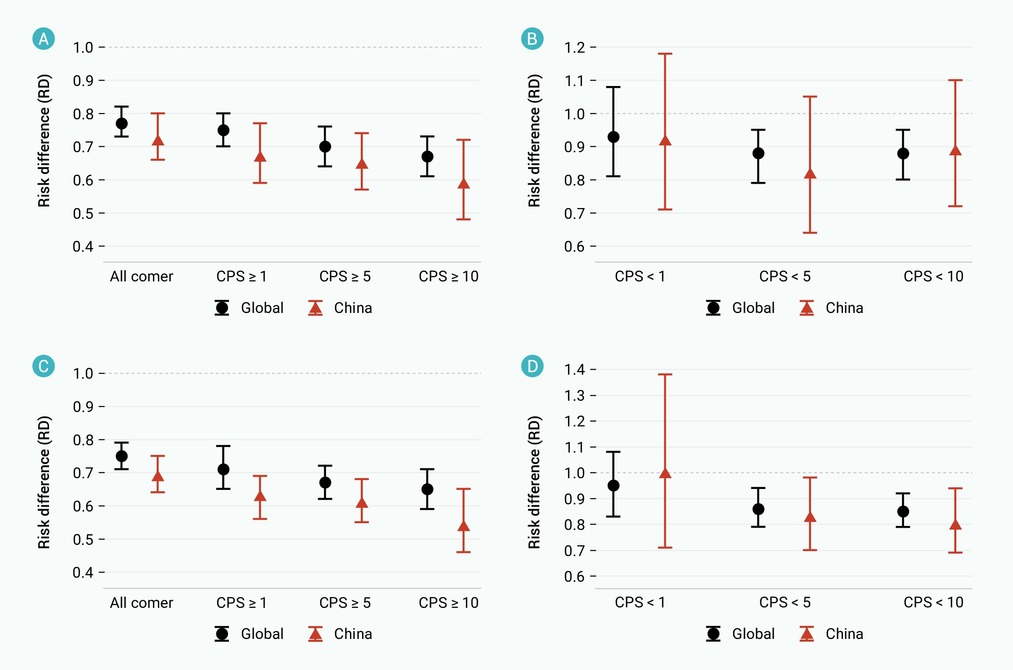
Figure 3.
Comparison of hazard ratio for overall survival by PD-L1 CPS subgroup in China and global populations for studies of PD-1/PD-L1 antibodies (A & B) and immunotherapies (C & D) plus chemotherapy, versus chemotherapy alone.
-
Figure 4.
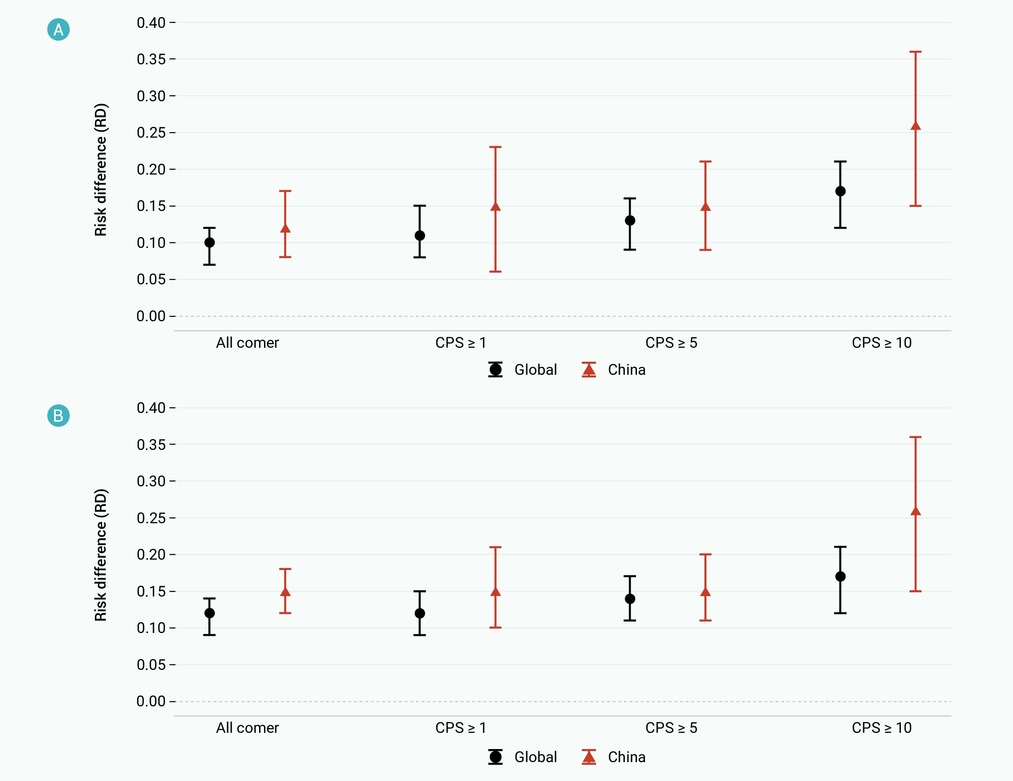
Comparison of China and global population: risk difference for objective response with (A) PD-1/PD-L1 antibodies and (B) immunotherapy, plus chemotherapy versus chemotherapy alone
