
Absorption Thermal Battery: A Rising Frontier for Efficient Thermal Utilization and Renewable Integration
-
GRAPHICAL ABSTRACT

 DownLoad:
Full size image
DownLoad:
Full size image
-
PUBLIC SUMMARY
-
Evolution of thermodynamic cycles enhancing energy storage density, efficiency, and adaptability.
Development of novel absorbent-refrigerant pairs like ionic liquids and deep eutectic solvents.
Experimental validation of ATB prototypes and integration into real-world applications for low-carbon energy.
-
-
ABSTRACT
Absorption thermal batteries (ATBs) have emerged as a promising thermal energy storage technology capable of converting surplus low-grade heat into dispatchable heating and cooling outputs. By decoupling energy storage from temperature via concentration gradients, ATBs offer unique advantages over traditional sensible and latent heat storage systems, including low thermal losses, high energy storage density (ESD), and flexible output forms. This work provides a comprehensive overview of the recent progress in ATB research across three key dimensions. First, we examine the evolution of thermodynamic cycle designs—from basic configurations to advanced cycles— highlighting their impact on ESD, energy storage efficiency (ESE), and adaptability under varying thermal conditions. Also, some regulation strategies for stabilizing the discharging rate to improve the temporal flexibility and user-aligned performance of ATBs have been analyzed. Second, we explore the development of novel absorbent-refrigerant working pairs, focusing on emerging candidates such as ionic liquids (ILs) and deep eutectic solvents (DES), and discuss how data-driven molecular design approaches may accelerate breakthroughs in material discovery. Third, we review the experimental validation of ATB systems, summarizing the design, performance, and challenges of existing prototypes. Finally, we identify critical research directions for advancing ATBs toward real-world deployment: expanding experimental validation of advanced cycles, leveraging artificial intelligence for tailored working pair discovery, and integrating ATBs into application-driven contexts such as electronics and data center cooling, building HVAC, and cold-chain logistics. These efforts will be vital to realizing ATBs as a core solution for resilient and low-carbon thermal energy systems. -

-
REFERENCES
[1] Wang C., Engels A. and Wang Z. (2018). Overview of research on China's transition to low-carbon development: The role of cities, technologies, industries and the energy system. Renew. Sustain. Energy Rev. 81:1350-64. DOI:10.1016/j.rser.2017.05.099 [2] Sadeghi G. (2022). Energy storage on demand: Thermal energy storage development, materials, design, and integration challenges. Energy Stor. Mater. 46:192-222. DOI:10.1016/j.ensm.2022.01.017 [3] Saher S., Johnston S., Esther-Kelvin R., et al. (2024). Trimodal thermal energy storage material for renewable energy applications. Nature 636:622-6. DOI:10.1038/s41586-024-08214-1 [4] Durvasulu V., Balliet W.H., Lopez C.J., et al. (2024). Rationale for adding batteries to hydropower plants and tradeoffs in hybrid system operation: A review. Renew. Sustain. Energy Rev. 202:114673. DOI:10.1016/j.rser.2024.114673 [5] Witter E., Dobson P., Akindipe D., et al. (2025). A review of Geological Thermal Energy Storage for seasonal, grid-scale dispatching. Renew. Sustain. Energy Rev. 218:115761. DOI:10.1016/j.rser.2025.115761 [6] Costa E. (2022). Renewables 2022: Global Status Report. REN21. [7] Zhang Y. and Wang R. (2020). Sorption thermal energy storage: Concept, process, applications and perspectives. Energy Stor. Mater. 27:352-69. DOI:10.1016/j.ensm.2020.02.024 [8] Ding Z., Wu W. and Leung M. (2021). Advanced/hybrid thermal energy storage technology: material, cycle, system and perspective. Renew. Sustain. Energy Rev. 145:111088. DOI:10.1016/j.rser.2021.111088 [9] James N., Huang R., Woods J., et al. (2025). Investigation of ventilation-coupled high energy density sensible thermal energy storage. Appl. Energy 387:125576. DOI:10.1016/j.apenergy.2025.125576 [10] Xie B., Du S., Wang R., et al. (2024). Heat pump integrated with latent heat energy storage. Energy Environ. Sci. 17:6943-73. DOI:10.1039/D4EE02350A [11] Xu H., Han X., Hua W., et al. (2025). Progress on thermal storage technologies with high heat density in renewables and low carbon applications: Latent and thermochemical energy storage. Renew. Sustain. Energy Rev. 215:115587. DOI:10.1016/j.rser.2025.115587 [12] Huang X., Hu R., Gao X., et al. (2024). Study on melting process of latent heat energy storage system by nano-enhanced phase change material under rotation condition. Appl. Therm. Eng. 247:123040. DOI:10.1016/j.applthermaleng.2024.123040 [13] Huang X., Li Y., Lu L., et al. (2025). Numerical investigations on heat release performance of phase change mixture of paraffin and water. Solar Energy Mater. Solar Cells 280:113266. DOI:10.1016/j.solmat.2024.113266 [14] Yang S., Shi H.Y., Liu J., et al. (2024). Supercooled erythritol for high-performance seasonal thermal energy storage. Nat. Commun. 15:4948. DOI:10.1038/s41467-024-49333-7 [15] Geng L., Wang J., Yang X., et al. (2024). Synergistic enhancement of phase change materials through three-dimensional porous layered covalent triazine framework/expanded graphite composites for solar energy storage and beyond. Chem. Eng. J. 487:150749. DOI:10.1016/j.cej.2024.150749 [16] Desai F., Prasad J.S., Muthukumar P., et al. Thermochemical energy storage system for cooling and process heating applications: A review. Energy Conver. Manag. 229:113617. DOI:10.1016/j.enconman.2020.113617 [17] Wu W., Bai Y., Huang H., et al. (2019). Charging and discharging characteristics of absorption thermal energy storage using ionic-liquid-based working fluids. Energy 189:116126. DOI:10.1016/j.energy.2019.116126 [18] Duffy A.M., Lockyear K.T., Hughes M.T., et al. (2025). Investigation of a novel combined ab-and ad-sorption based thermal energy storage and upgrade system. Appl. Therm. Eng. 258:124520. DOI:10.1016/j.applthermaleng.2024.124520 [19] FanY., Zhang W., Chen S., et al. (2025). A solar adsorption thermal battery for seasonal energy storage. Cell Rep. Phys. Sci. 6. DOI:10.1016/j.xcrp.2025.102467 [20] Zhang W., Mehari A., Zhang X., et al. (2023). Ammonia-based sorption thermal battery: Concepts, thermal cycles, applications, and perspectives. Energy Stor. Mater. 62:102930. DOI:10.1016/j.ensm.2023.102930 [21] You J., Gao J., Li R., et al. Air-source heat pump assisted absorption heat storage for discharging under low ambient temperature. Appl. Energy 380:125121. DOI:10.1016/j.apenergy.2024.125121 [22] Gao J., Xu Z. and Wang R. (2021). Towards high-performance sorption cold energy storage and transmission with ionic liquid absorbents. Energy Conver. Manag. 241:114296. DOI:10.1016/j.enconman.2021.114296 [23] Zhou C., Lv F., Wan Z., et al. (2022). A double-effect/two-stage absorption refrigeration and thermal energy storage hybrid cycle using dual working fluids. Appl. Therm. Eng. 214:118858. DOI:10.1016/j.applthermaleng.2022.118858 [24] Xu Z. and Wang R. (2022). High-performance absorption thermal storage with once-through discharging. ACS Sustain. Chem. Eng. 10:720-30. DOI:10.1021/acssuschemeng.1c04370 [25] Mehari A., Xu Z. and Wang R. (2020). Thermal energy storage using absorption cycle and system: A comprehensive review. Energy Conver. Manag. 206:112482. DOI:10.1016/j.enconman.2020.112482 [26] Hao Z., He G., Wu A.,et al. (2025). Dynamic characteristics and performance enhancement of a novel hybrid system integrating transcritical CO2 heat pump and absorption thermal energy storage. Energy 2025:136874. DOI:10.1016/j.energy.2025.136874 [27] Jeong J., Jung H.S., Lee J.W., et al. (2023). Hybrid cooling and heating absorption heat pump cycle with thermal energy storage. Energy 283:129027. DOI:10.1016/j.energy.2023.129027 [28] Wang L., Liu X., Yang Z., et al. (2020). Experimental study on a novel three-phase absorption thermal battery with high energy density applied to buildings. Energy 208:118311. DOI:10.1016/j.energy.2020.118311 [29] Zhai C. and Wu W. (2024). A compact modular microchannel membrane-based absorption thermal energy storage system for highly efficient solar cooling. Energy 294:130783. DOI:10.1016/j.energy.2024.130783 [30] Choi H.W., Jeong J. and Kang Y.T. (2024). Optimal discharging of solar driven sorption thermal battery for building cooling applications. Energy 296:131087. DOI:10.1016/j.energy.2024.131087 [31] Wang S., Deng Z., Chen H., et al. (2025). Fluctuation smoothing performance of wind-powered absorption chiller based on absorption thermal energy storage. J. Energy Stor. 121:116480. DOI:10.1016/j.est.2025.116480 [32] Choi H.W., Koo J.R. and Kang Y.T. (2025). Optimization of sorption thermal battery integrated with heat pump for plus energy building applications. Energy Conver. Manag. 332:119693. DOI:10.1016/j.enconman.2025.119693 [33] Min H., Choi H.W., Jeong J., et al. (2023). Daily sorption thermal battery cycle for building applications. Energy 282:129016. DOI:10.1016/j.energy.2023.129016 [34] Rubitherm. (2024). (accessed 12 Dec 2024). DOI:https://www.rubitherm.eu/ [35] Limited PCMP. (2023). PCM Solutions. (accessed 27 November 2023). DOI:https://www.pcmproducts.net/ [36] Hui L., N’Tsoukpoe K.E. and Lingai L. (2011). Evaluation of a seasonal storage system of solar energy for house heating using different absorption couples. Energy Conver.Manag. 52:2427-36. DOI:10.1016/j.enconman.2010.12.049 [37] Kerskes H., Mette B., Asenbeck S., et al. (2010). Experimental and numerical investigations on thermo chemical heat storage. Eurosun 2010. DOI:10.18086/eurosun.2010.16.14 [38] Zondag H., Kikkert B., Smeding S., et al. (2013). Prototype thermochemical heat storage with open reactor system. Appl. Energy 109:360-5. DOI:10.1016/j.apenergy.2013.01.082 [39] Bales C., Gantenbein P., Jaenig D., et al. (2008). Laboratory tests of chemical reactions and prototype sorption storage units. IEA Solar Heat. Cool. Program. Task. 32. DOI:www.mendeley.com/catalogue/f0a889ce-00f0-3e58-8b3e-6f7f9d807b4f/ [40] Ding Z., Wu W. and Leung M.K. (2022). On the rational development of advanced thermochemical thermal batteries for short-term and long-term energy storage. Renew. Sustain. Energy Rev. 164:112557. DOI:10.1016/j.rser.2022.112557 [41] Ding Z. and Wu W. (2024). A phase-change-material-assisted absorption thermal battery for space heating under low ambient temperatures. Energy 299:131407. DOI:10.1016/j.energy.2024.131407 [42] Xu Z. and Wang R. (2017). A sorption thermal storage system with large concentration glide. Energy 141:380-8. DOI:10.1016/j.energy.2017.09.088 [43] Xu Z. and Wang R. (2019). Absorption seasonal thermal storage cycle with high energy storage density through multi-stage output. Energy 167:1086-96. DOI:10.1016/j.energy.2018.11.072 [44] Ding Z., Sui Y., Lin H., et al. (2024). Experimental study on a two-stage absorption thermal battery with absorption-enhanced generation for high storage density and extremely low charging temperature ( ~ 50° C). Appl. Energy 363:123050. DOI:10.1016/j.apenergy.2024.123050 [45] Ding Z. and Wu W. (2025). Dynamic characteristics and performance enhancement of two-stage absorption thermal battery for long-term renewable energy storage. Appl. Energy 377:124752. DOI:10.1016/j.apenergy.2024.124752 [46] Wu W., Ding Z., Sui Y., et al. (2021). Comparative dynamic performance of hybrid absorption thermal batteries using H2O/1, 3-dimethylimidazolium dimethylphosphate. Energy Conver. Manag. 228:113690. DOI:10.1016/j.enconman.2020.113690 [47] Ding Z. and Wu W. (2021). A hybrid compression-assisted absorption thermal battery with high energy storage density/efficiency and low charging temperature. Appl. Energy 282:116068. DOI:10.1016/j.apenergy.2020.116068 [48] Ding Z., Wu W., Chen Y., et al. (2020). Dynamic characteristics and performance improvement of a high-efficiency double-effect thermal battery for cooling and heating. Appl. Energy 264:114768. DOI:10.1016/j.apenergy.2020.114768 [49] Ding Z. and Wu W. (2022). A novel double-effect compression-assisted absorption thermal battery with high storage performance for thermal energy storage. Renew. Energy 191:902-18. DOI:10.1016/j.renene.2022.04.071 [50] Liu G., Ji D. and Markides C.N. (2024). Progress and prospects of low-grade thermal energy utilization technologies. Appl. Therm. Eng. 254:123859. DOI:10.1016/j.applthermaleng.2024.123859 [51] Ding Z. and Wu W. (2022). Type II absorption thermal battery for temperature upgrading: Energy storage heat transformer. Appl. Energy 324:119748. DOI:10.1016/j.apenergy.2022.119748 [52] Ding Z., Wu W., Huang S.M., et al. (2023). A novel compression-assisted energy storage heat transformer for low-grade renewable energy utilization. Energy 263:125681. DOI:10.1016/j.energy.2022.125681 [53] Wang C. and Bi Y. (2024). Dynamic characteristics and performance analysis of a double-stage energy storage heat transformer with a large temperature lift. Energy 308:132963. DOI:10.1016/j.energy.2024.132963 [54] Wang C. and Bi Y. (2025). A novel double absorption energy storage heat transformer for low-grade energy recovery. J. Energy Stor. 118:116302. DOI:10.1016/j.est.2025.116302 [55] Ding Z. and Wu W. (2025). Large-temperature-lift energy storage heat transformer for deep thermal energy utilization. Appl. Energy 384:125481. DOI:10.1016/j.apenergy.2025.125481 [56] Ding Z., Sui Y. and Wu W. (2025). Research Progress in Absorption Thermal Energy Storage. J. Refrig. 46:11-23. DOI:10.12465/j.issn.0253-4339.2025.03.011 [57] Gao J., Xu Z. and Wang R. (2020). Experimental study on a double-stage absorption solar thermal storage system with enhanced energy storage density. Appl. Energy 262:114476. DOI:10.1016/j.apenergy.2019.114476 [58] Ding Z. and Wu W. (2021). A hybrid compression-assisted absorption thermal battery with high energy storage density/efficiency and low charging temperature. Appl. Energy 282:116068. DOI:10.1016/j.apenergy.2020.116068 [59] Chen R., Lu D., Shen T., et al. (2025). Performance evaluation of an absorption thermal energy storage system: A new thermodynamic analysis method based on chemical potential. J. Energy Stor. 128:117198. DOI:10.1016/j.est.2025.117198 [60] Chen R., Lu D., Shen T., et al. (2025). A new dynamic control strategy for a solar-driven absorption thermal energy storage system: Modeling and performance evaluation. Appl. Therm. Eng. 260:124983. DOI:10.1016/j.applthermaleng.2024.124983 [61] Ding Z. and Wu W. (2024). Simulation of a multi-level absorption thermal battery with variable solution flow rate for adjustable cooling capacity. Energy 301:131691. DOI:10.1016/j.energy.2024.131691 [62] Ding Z. and Wu W. (2023). Dynamic discharging characteristics of absorption thermal battery under different capacity regulation strategies. Energy Built. Environ. 4:341-53. DOI:10.1016/j.enbenv.2022.02.004 [63] Ding Z., Sui Y., Zhai C., et al. (2023). Transient supply-demand matching and numerical parametric study of solar absorption thermal battery for space cooling. Energy Conver. Manag. 288:117177. DOI:10.1016/j.enconman.2023.117177 [64] Mehari A., Wang R. and Xu Z. (2022). Evaluation of a high-performance evaporative cooler-assisted open three-phase absorption thermal energy storage cycle for cooling. Appl. Energy 325:119818. DOI:10.1016/j.apenergy.2022.119818 [65] Hernández J., Rivera W., Colorado D., et al. (2012). Optimal COP prediction of a solar intermittent refrigeration system for ice production by means of direct and inverse artificial neural networks. Solar Energy 86:1108-17. DOI:10.1016/j.solener.2011.12.021 [66] Altamirano A., Le Pierrès N. and Stutz B. (2019). Review of small-capacity single-stage continuous absorption systems operating on binary working fluids for cooling: Theoretical, experimental and commercial cycles. I. J. Refrig. 106:350-73. DOI:10.1016/j.ijrefrig.2019.06.033 [67] Cai D., Jiang J., He G., et al. (2016). Experimental evaluation on thermal performance of an air-cooled absorption refrigeration cycle with NH3–LiNO3 and NH3–NaSCN refrigerant solutions. Energy Conver. Manag. 120:32-43. DOI:10.1016/j.enconman.2016.04.089 [68] Wu W., Wang B., Shi W., et al. (2013). Crystallization analysis and control of ammonia-based air source absorption heat pump in cold regions. Adv. Mech. Eng. 5:140341. DOI:10.1155/2013/140341 [69] Sui Y., Ding Z., Zhai C., et al. Crystallization-free and low-cost deep eutectic solvents for absorption thermal battery utilizing ultra-low-grade energy. Energy Conver. Manag. 284:116984. DOI:10.1016/j.enconman.2023.116984 [70] Sui Y., Zhai C., Wu W., et al. (2022). Multi-scale Computer-aided molecular design of Ionic liquid for absorption heat transformer based on Machine learning. Energy Conver. Manag. 261:115617. DOI:10.1016/j.enconman.2022.115617 [71] Zuo G., Zhao Z., Yan S., et al. (2010). Thermodynamic properties of a new working pair: 1-Ethyl-3- methylimidazolium ethylsulfate and water. Chem. Eng. J. 156:613-7. DOI:10.1016/j.cej.2009.06.020 [72] Zhou T., Gui C., Sun L., et al. (2023). Energy applications of ionic liquids: recent developments and future prospects. Chem. Rev. 123:12170-253. DOI:10.1021/acs.chemrev.3c00391 [73] Faizan M., Ahmed R. and Ali H.M. (2021). A critical review on thermophysical and electrochemical properties ofIonanofluids (nanoparticles dispersed in ionic liquids) and their applications. J. Taiwan Ins. Chemi. Eng. 124:391-423. DOI:10.1016/j.jtice.2021.02.004 [74] Koutsoukos S., Philippi F., Malaret F., et al. (2021). A review on machine learning algorithms for the ionic liquid chemical space. Chem. Sci. 12:6820-43. DOI:10.1039/D1SC01000J [75] Sen M. and Paolucci S. (2006). The use of ionic liquids in refrigeration. ASME IMECE :131-4. DOI:10.1115/IMECE2006-14712 [76] Yokozeki A. and Shiflett M.B. (2007). Vapor–liquid equilibria of ammonia+ionic liquid mixtures. Appl. Energy 84:1258-73. DOI:10.1016/j.apenergy.2007.02.005 [77] Yokozeki A. and Shiflett M.B. (2010). Water Solubility in Ionic Liquids and Application to Absorption Cycles. Ind. Eng. Chem. Res. 49:9496-503. DOI:10.1021/ie1011432 [78] Zhang X. and Hu D. (2011). Performance simulation of the absorption chiller using water and ionic liquid 1-ethyl-3-methylimidazolium dimethylphosphate as the working pair. Appl. Therm. Eng. 31:3316-21. DOI:10.1016/j.applthermaleng.2011.06.011 [79] Hansen B.B., Spittle S., Chen B., et al. (2021). Deep Eutectic Solvents: A Review of Fundamentals and Applications. Chem. Rev. 121:1232-85. DOI:10.1021/acs.chemrev.0c00385 [80] Boman D.B., Hoysall D.C., Staedter M.A., et al. (2017). A method for comparison of absorption heat pump working pairs. I. J. Refrig. 77:149-75. DOI:10.1016/j.ijrefrig.2017.02.023 [81] Gao J.T., Xu Z.Y. and Wang R.Z. (2021). Towards high-performance sorption cold energy storage and transmission with ionic liquid absorbents. Energy Conver. Manag. 241:114296. DOI:10.1016/j.enconman.2021.114296 [82] Gao J. and Xu Z. (2022). Performance evaluation of absorption thermal energy storage/transmission using ionic liquid absorbents. Energy Built. Environ. 4. DOI:10.1016/j.enbenv.2022.01.001 [83] Wu W., Ding Z.X., Sui Y.R., et al. (2021). Comparative dynamic performance of hybrid absorption thermal batteries using H2O/1,3-dimethylimidazolium dimethylphosphate. Energy Conver. Manag. 228. DOI:10.1016/j.enconman.2020.113690 [84] Sui Y., Lin H., Ding Z., et al. (2024). Compact, efficient, and affordable absorption Carnot battery for long-term renewable energy storage. Appl. Energy 357:122504. DOI:10.1016/j.apenergy.2023.122504 [85] Sui Y.R., Zhai C., Wu W., et al. (2022). Multi-scale Computer-aided molecular design of Ionic liquid for absorption heat transformer based on Machine learning. Energy Conver. Manag. 261:115617. DOI:10.1016/j.enconman.2022.115617 [86] Sui Y., Zhai C., Lin H., et al. (2023). How to rationally screen refrigerant/ionic liquids for thermal cooling: A multi-criteria approach based on machine learning. Energy Conver. Manag. 282:116853. DOI:10.1016/j.enconman.2023.116853 [87] Mehari A., Xu Z.Y. and Wang R.Z. (2020). Thermal energy storage using absorption cycle and system: A comprehensive review. Energy Conver. Manag. 206. DOI:10.1016/j.enconman.2020.112482 [88] Liu Y., Friesen J.B., McAlpine J.B., et al. (2018). Natural Deep Eutectic Solvents: Properties, Applications, and Perspectives. J. Nat. Prod. 81:679-90. DOI:10.1021/acs.jnatprod.7b00945 [89] Abo-Hamad A., Hayyan M., AlSaadi M.A., et al. (2015). Potential applications of deep eutectic solvents in nanotechnology. Chem. Eng. J. 273:551-67. DOI:10.1016/j.cej.2015.03.091 [90] Deng D.S., Gao B., Zhang C., et al. (2019). Investigation of protic NH4SCN-based deep eutectic solvents as highly efficient and reversible NH3 absorbents. Chem. Eng. J. 358:936-43. DOI:10.1016/j.cej.2018.10.077 [91] Dai Y., van Spronsen J., Witkamp G.J., et al. (2013). Natural deep eutectic solvents as new potential media for green technology. Analyt. Chim. Acta. 766:61-8. DOI:10.1016/j.aca.2012.12.019 [92] Abedin R., Heidarian S., Flake J.C., et al. (2017). Computational Evaluation of Mixtures of Hydrofluorocarbons and Deep Eutectic Solvents for Absorption Refrigeration Systems. Langmuir 33:11611-25. DOI:10.1021/acs.langmuir.7b02003 [93] Abedin R., Shen Y., Flake J.C., et al. (2020). Deep Eutectic Solvents Mixed with Fluorinated Refrigerants for Absorption Refrigeration: A Molecular Simulation Study. J. Phys. Chem. B 124:4536-50. DOI:10.1021/acs.jpcb.0c01860 [94] Haghbakhsh R., Peyrovedin H., Raeissi S., et al. (2020). Investigating the performance of novel green solvents in absorption refrigeration cycles: Energy and exergy analyses. I. J. Refrig. 113:174-86. DOI:10.1016/j.ijrefrig.2020.01.013 [95] Haghbakhsh R., Peyrovedin H., Raeissi S., et al. (2020). Energy Conservation in Absorption Refrigeration Cycles Using DES as a New Generation of Green Absorbents. Entropy (Basel) 22:409. DOI:10.3390/e22040409 [96] Nessakh FZ., Mutelet F. and NegadiA. (2022). Efficiency of two working fluids constituted ofa deep eutectic solvent and water in absorption heat transformer. I. J. Energy Res. 46:23578-94. DOI:10.1002/er.8658 [97] Sui Y., Ding Z., Sui Z., et al. (2025). Seasonal Thermochemical Energy Storage with Affordable and High-Energy-Density Deep Eutectic Solvents. Appl. Energy 386:125577. DOI:10.1016/j.apenergy.2025.125577 [98] Weber R. and Dorer V. (2008). Long-term heat storage with NaOH. Vacuum 82:708-16. DOI:10.1016/j.vacuum.2007.10.018 [99] N'Tsoukpoe K., Le Pierrès N. and Luo L. (2013). Experimentation of a LiBr–H2O absorption process for long-term solar thermal storage: Prototype design and first results. Energy 53:179-98. DOI:10.1016/j.energy.2013.02.023 [100] Zhang X., Li M., Shi W., et al. (2014). Experimental investigation on charging and discharging performance of absorption thermal energy storage system. Energy Conver. Manag. 85:425-34. DOI:10.1016/j.enconman.2014.05.100 [101] Lin Y., Xiao F., Wang S., et al. (2024). Experimental study on a closed absorption thermal energy storage system using modified LiCl solution for enhancing energy storage density. J. Energy Stor. 103:114551. DOI:10.1016/j.est.2024.114551 [102] Lin Y., Xiao F., Wang L., et al. (2024). Experimental investigation and performance evaluation of a closed three-phase absorption thermal energy storage system. Energy 313:134038. DOI:10.1016/j.energy.2024.134038 [103] You J., Gao J., Wang R., et al. (2024). High-density and anti-clogging three-phase absorption heat storage with crystallization management. Appl. Energy 376:124240. DOI:10.1016/j.apenergy.2024.124240 [104] Ding Z., Sui Y., Sui Z., et al. (2025). Solar-driven hygroscopic-material-based absorption thermal battery for global heating decarbonization. Energy Stor. Mater. 77:104184. DOI:10.1016/j.ensm.2025.104184 -
ABOUT THIS ARTICLE
Cite this article:
Ding Z., Sui Y. and Wu W. (2025). Absorption Thermal Battery: A Rising Frontier for Efficient Thermal Utilization and Renewable Integration. Energy Use 1:100002. https://doi.org/10.59717/ipj.energy-use.2025.100002
Welcome!
To request copyright permission to republish or share portions of our works, please visit Copyright Clearance Center's (CCC) Marketplace website at marketplace.copyright.com.
Export File
Citation
Ding Z., Sui Y. and Wu W. (2025). Absorption Thermal Battery: A Rising Frontier for Efficient Thermal Utilization and Renewable Integration. Energy Use 1:100002. https://doi.org/10.59717/ipj.energy-use.2025.100002

Format
Content

-
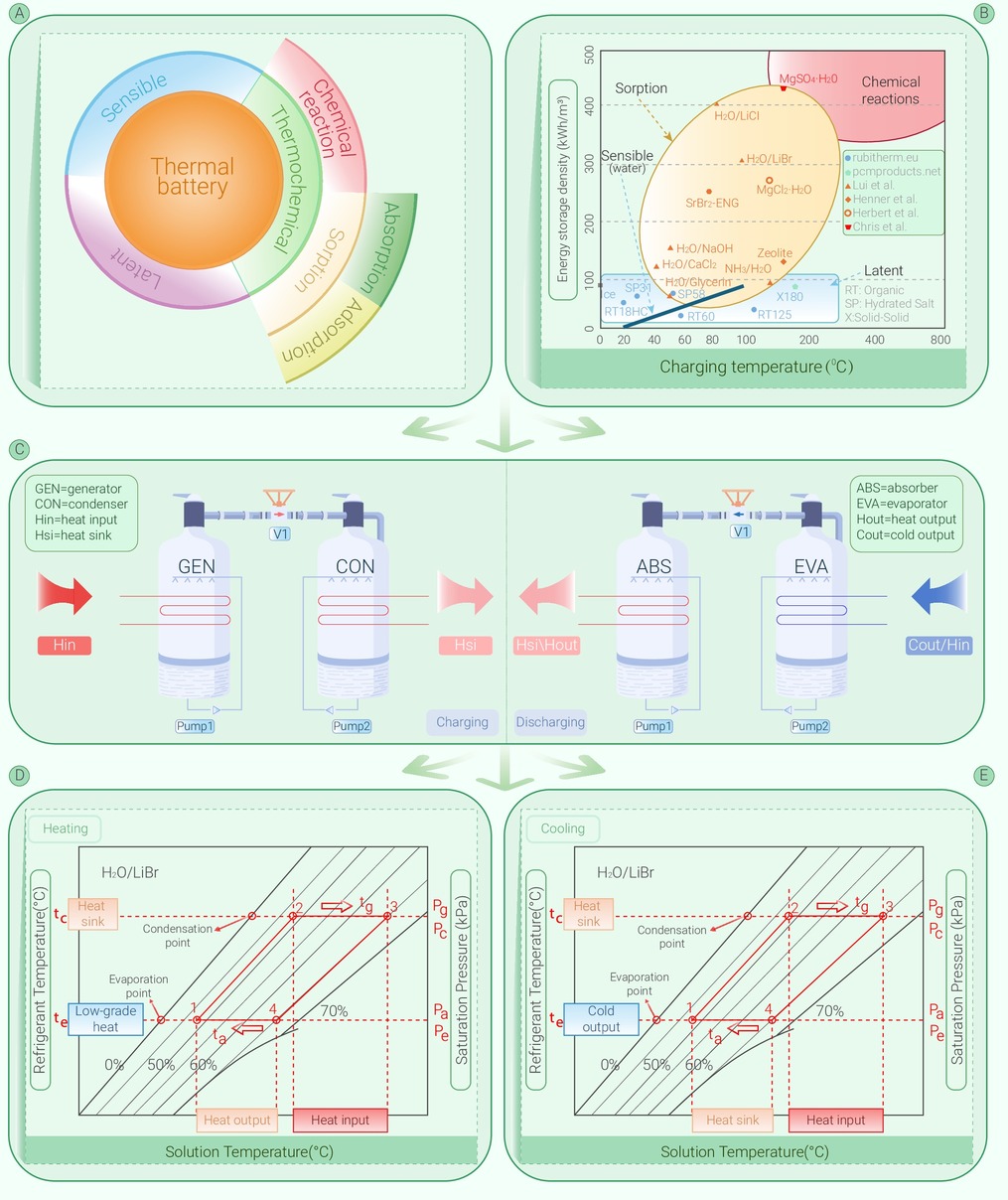
Figure 1.
(A) Classification of thermal batteries, (B) comparison of ESD and charging temperatures between various thermal batteries,34, 35, 36, 37, 38, 39 (C) a typical configuration of ATB system, (D) working flow of cooling mode on PTX diagram, (E) working flow of heating mode on PTX diagram.
-
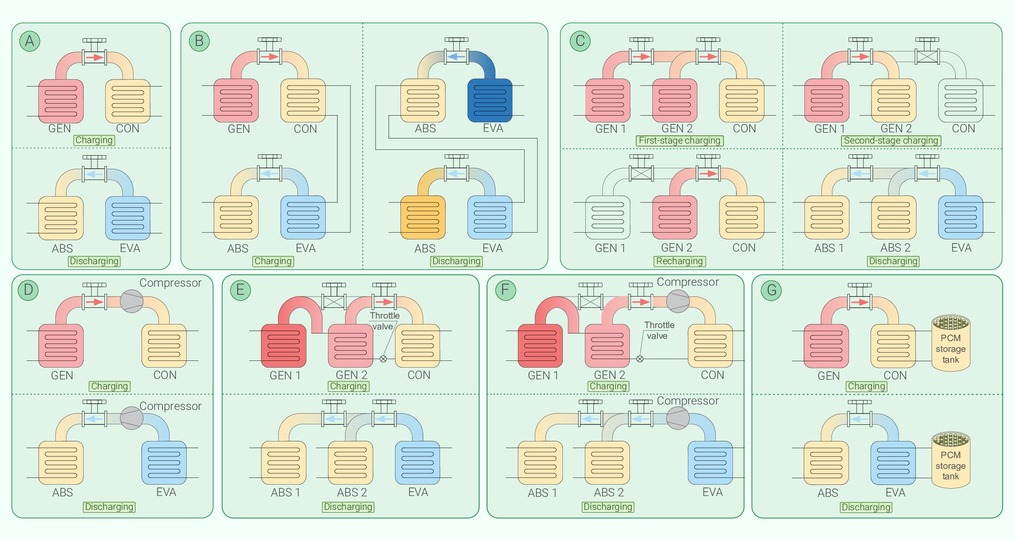
Figure 2.
Advanced/hybrid ATB cycles.
-
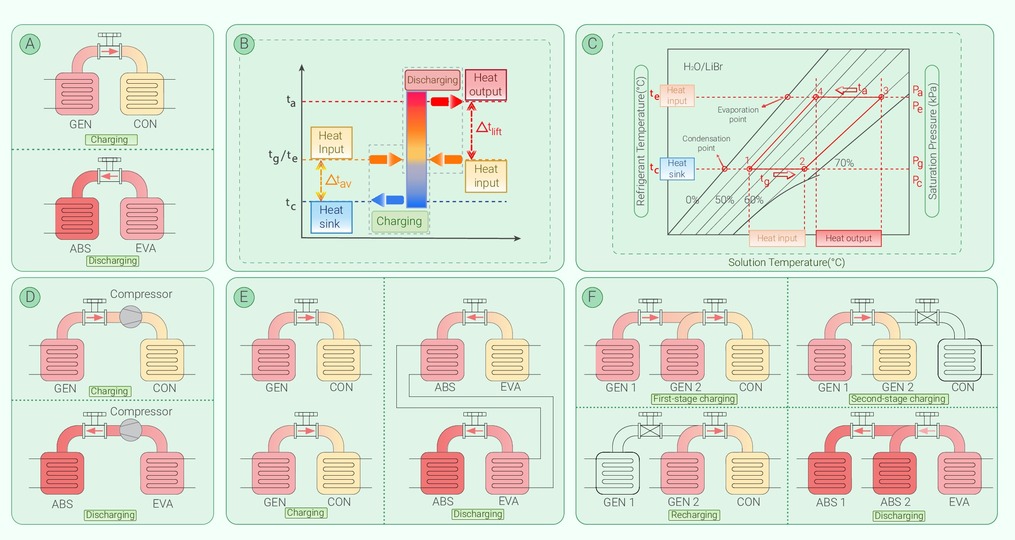
Figure 3.
Type II ATB (ESHT) cycles for temperature upgrading.
-
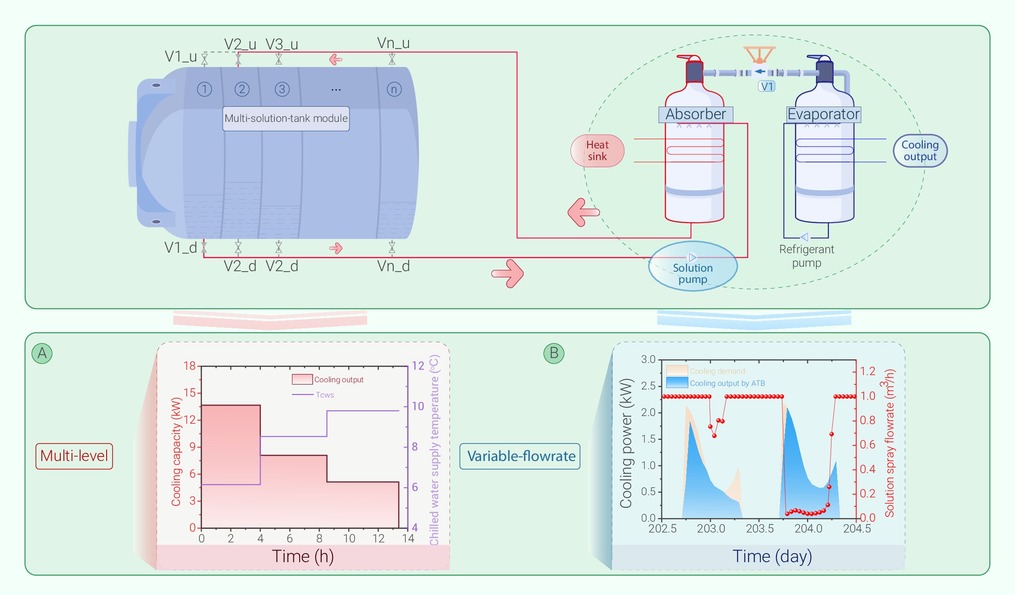
Figure 4.
Discharging regulation strategies.
-
Figure 5.
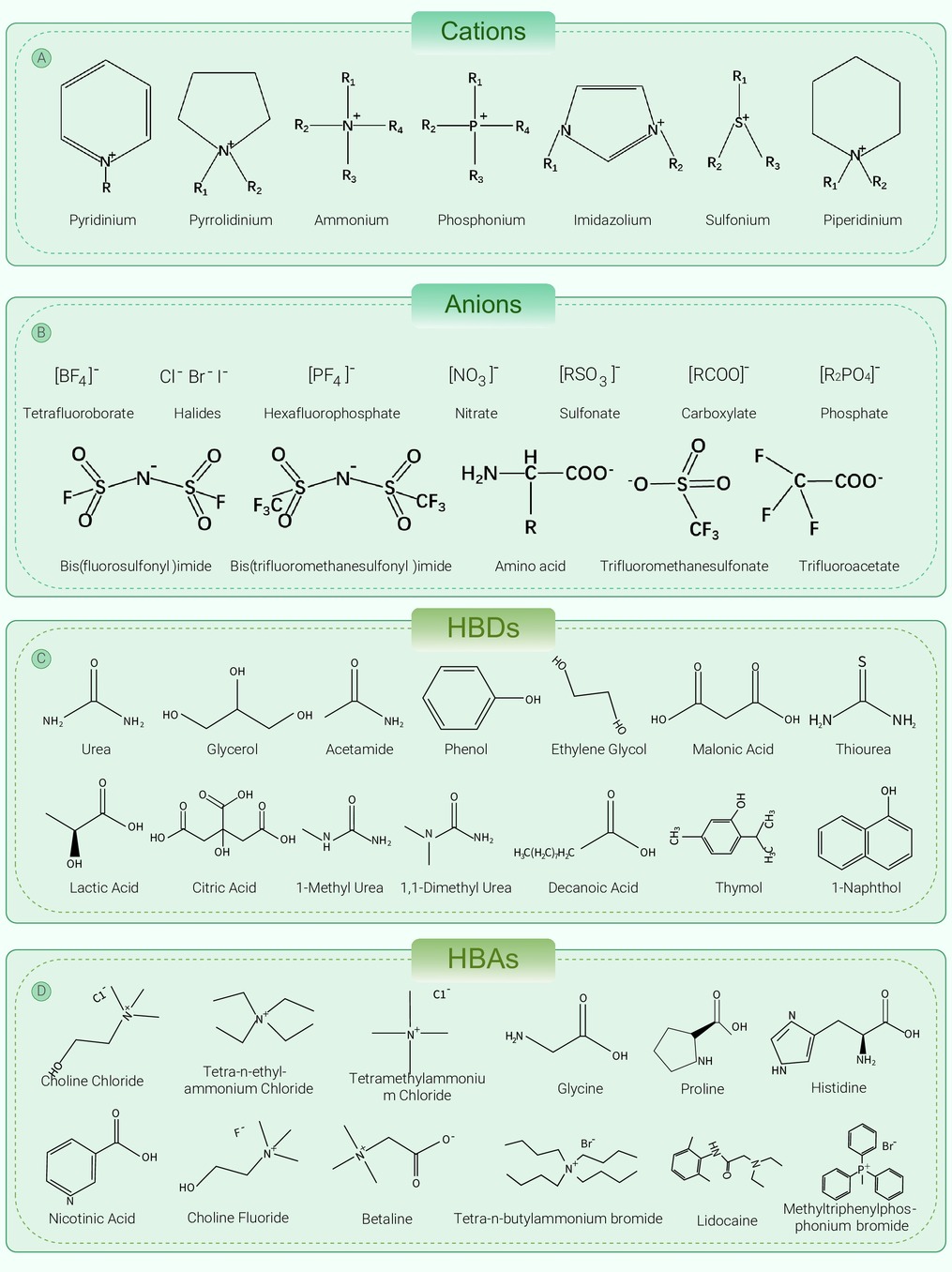
Potential working fluids for absorption thermal batteries.
-
Figure 6.
Performance evaluation of novel working fluids for absorption thermal batteries.
-
Figure 7.
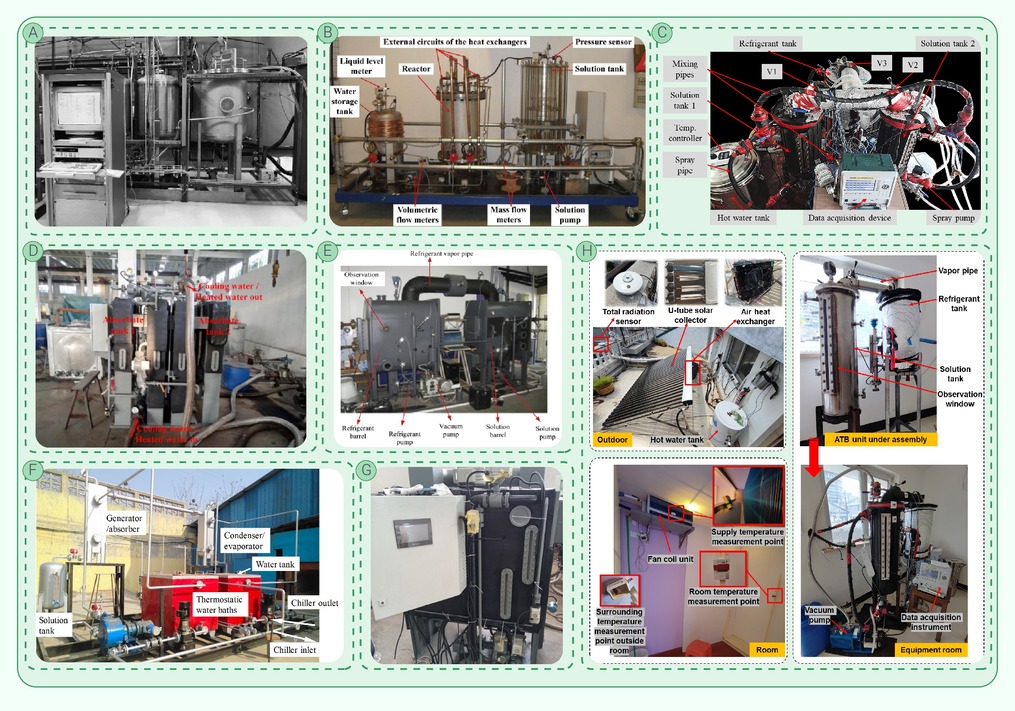
Development of ATB experimental prototype.