
Coordinated Optimization of Carbon-Electricity-Gas Trading in Multi-Vector Energy Systems across Buildings
-
GRAPHICAL ABSTRACT

 DownLoad:
Full size image
DownLoad:
Full size image
-
PUBLIC SUMMARY
-
Evolution of thermodynamic cycles enhancing energy storage density, efficiency, and adaptability.
Uses enhanced Lyapunov optimization for real-time stochastic decision-making.
Introduces dynamic storage pricing and auction-based energy trading.
Case studies show improved energy efficiency, battery use, and cost savings.
Achieves near-optimal cost with combined emission reduction and efficiency.
-
-
ABSTRACT
High building power demand contributes significantly to carbon emissions and places considerable stress on power grid energy supply. While control and optimization methods in buildings can effectively reduce energy consumption and reshape load profiles, existing approaches often overlook the strong coupling between energy and carbon, and lack real-time, incentive-compatible mechanisms to coordinate operations across buildings and distributed energy resources. To address these limitations, this study develops a synergistic carbon–electricity–gas trading mechanism to optimize the operation of multiple buildings integrated with multi-vector energy systems, targeting improved energy efficiency, cost reduction, and emission mitigation. An enhanced Lyapunov optimization approach is proposed to transform the long-term stochastic optimization problem into a series of online-solvable subproblems, maximizing the benefits of energy storage systems and enabling efficient real-time decision-making at each operational time slot. Additionally, a dynamic storage-based pricing mechanism is introduced to reflect true trading demands, complemented by an auction-based matching strategy to facilitate inter-building energy trading. Case studies conducted on five UK campus buildings demonstrate that the proposed mechanism enhances energy efficiency and battery performance, and asymptotically approaches optimal cost performance through calibrated weighting and auxiliary parameters. -

-
REFERENCES
[1] Global Status Report. (2025). Global Status Report for Buildings and Construction 2024/2025. https://www.developmentaid.org/api/frontend/cms/file/2025/03/Global- Status-Report-2024-2025.pdf. [2] Zheng Z., Tang R., Luo X., et al. (2024). A distributed coordination strategy for heterogeneous building flexible thermal loads in responding to smart grids. IEEE Trans. Smart Grid. 15:1620−1633. DOI:10.1109/TSG.2023.3306044 [3] Zhu D., Yang B., Li L., et al. (2025). Industrial energy management and production decision making via Lyapunov-guided learning. IEEE Trans. Smart Grid 16:2184−2196. DOI:10.1109/TSG.2025.3549723 [4] Tang R., Li H. and Wang S. (2019). A game theory-based decentralized control strategy for power demand management of building cluster using thermal mass and energy storage. Appl. Energy 242:809−820. DOI:10.1016/j.apenergy.2019.03.152 [5] Antoniadou-Plytaria K., Steen D., Tuan L.A., et al. (2021). Market-based energy management model of a building microgrid considering battery degradation. IEEE Trans. Smart Grid 12:1794−1804. DOI:10.1109/TSG.2020.3037120 [6] Nikkhah S., Allahham A., Royapoor M., et al. (2022). Optimising building-to-building and building-for-grid services under uncertainty: A robust rolling horizon approach. IEEE Trans. Smart Grid 13:1453−1467. DOI:10.1109/TSG.2021.3135570 [7] He B., Zhang N., Fang C., et al. (2024). Flexible building energy management with neural ODEs-based model predictive control. IEEE Trans. Smart Grid 15:4690−4704. DOI:10.1109/TSG.2024.3401227 [8] Saberi H., Zhang C. and Dong Z.Y. (2024). A multi-agent deep constrained Q-learning method for smart building energy management under uncertainties. IEEE Trans. Smart Grid 15:4649−4661. DOI:10.1109/TSG.2024.3386896 [9] Wu Z., Chen Z., Ren Y., et al. (2025). Data-driven analysis of the interaction between storage ownership and market behavior. IEEE Trans. Ind. Appl. 61:1735−1747. DOI:10.1109/TIA.2024.3462304 [10] Jin X., Wang X., Jia H., et al. (2025). Peer-to-peer multi-energy trading among heterogeneous building prosumers via asynchronous distributed algorithm. IEEE Trans. Smart Grid 16:1590−1603. DOI:10.1109/TSG.2024.3483280 [11] Yu L., Yue D., Tan Y., et al. (2024). Online distributed coordination operation for grid-interactive efficient residential buildings. IEEE Trans. Smart Grid 15:3639−3652. DOI:10.1109/TSG.2023.3339761 [12] Yang Y., Hu G. and Spanos C.J. (2021). Optimal sharing and fair cost allocation of community energy storage. IEEE Trans. Smart Grid12:4185−4194. DOI:10.1109/TSG.2021.3083882 [13] X. Chen, A. Sun, W. Shi and N. Li, ”Carbon-Aware Optimal Power Flow,” IEEE Transactions on Power Systems, doi: 10.1109/TPWRS.2024.3514516. [14] Yang Y., Shi J., Wang D., et al. (2024). Net-zero scheduling of multi-energy building energy systems: A learning-based robust optimization approach with statistical guarantees. IEEE Trans. Sustain. Energy 15:2675−2689. DOI:10.1109/TSTE.2024.3437210 [15] Yan Z., Li C., Yao Y., et al. (2023). Bi-level carbon trading model on demand side for integrated electricity-gas system. IEEE Trans. Smart Grid 14:2681−2696. DOI:10.1109/TSG.2022.3229278 [16] Yu L., Xu Z., Guan X., et al. (2023). Joint optimization and learning approach for smart operation of hydrogen-based building energy systems. IEEE Trans. Smart Grid 14:199−216. DOI:10.1109/TSG.2022.3197657 [17] Lakshminarayana S., Quek T.Q.S. and Poor H.V. (2014). Cooperation and storage tradeoffs in power grids with renewable energy resources. IEEE J. Sel. Areas Commun. 32:1386−1397. DOI:10.1109/JSAC.2014.2332093 [18] Yu L., Xie D., Huang C., et al. (2019). Energy optimization of HVAC systems in commercial buildings considering indoor air quality management. IEEE Trans. Smart Grid 10:5103−5113. DOI:10.1109/TSG.2018.2875727 [19] Chen S., Zhang S., He S. and Yang H. (2025). Two-timescale online optimization of behind-the-meter battery storage for stacked revenue by providing multi-services. IEEE Trans. Smart Grid 16:2222−2233. DOI:10.1109/TSG.2025.3538014 [20] Chen Y., Wei W., Liu F., et al. (2019). Energy trading and market equilibrium in integrated heat-power distribution systems. IEEE Trans. Smart Grid 10:4080−4094. DOI:10.1109/TSG.2018.2849227 [21] Wang Y., Qiu J. and Tao Y. (2022). Optimal power scheduling using data-driven carbon emission flow modelling for carbon intensity control. IEEE Trans. Power Syst. 37:2894−2905. DOI:10.1109/TPWRS.2021.3126701 [22] Zhang C. and Kuang Y. (2024). Low-carbon economy optimization of integrated energy system considering electric vehicles charging mode and multi-energy coupling. IEEE Trans. Power Syst. 39:3649−3660. DOI:10.1109/TPWRS.2023.3280067 [23] Chen Y. and Zhao C. (2023). Improved approximation of dispatchable region in radial distribution networks via dual SOCP. IEEE Trans. Power Syst. 38:5585−5597. DOI:10.1109/TPWRS.2022.3226894 [24] Wang Y., Saad W., Han Z., et al. (2014). A game-theoretic approach to energy trading in the smart grid. IEEE Trans. Smart Grid 5:1439−1450. DOI:10.1109/TSG.2013.2284664 [25] Elexonportal.co.uk, https://bmrs.elexon.co.uk/market–index–prices. [26] Renewables.ninja, https://www.renewables.ninja. [27] Chen Y., Wei W., Liu F., et al. (2017). A multi-lateral trading model for coupled gas-heat-power energy networks. Appl. Energy 200:180−191. DOI:10.1016/j.apenergy.2017.05.060 [28] Yan D. and Chen Y. (2023). A distributed online algorithm for promoting energy sharing between EV charging stations. IEEE Trans. Smart Grid 14:1158−1172. DOI:10.1109/TSG.2022.3203522 [29] Zou Y., Xu Y., Feng X. et al. (2023). Peer-to-peer transactive energy trading of a reconfigurable multi-energy network. IEEE Trans. Smart Grid 14:2236−2249. DOI:10.1109/TSG.2022.3223378 [30] Cui S., Wang Y.W. and Xiao J.W. (2019). Peer-to-peer energy sharing among smart energy buildings by distributed transaction. IEEE Trans. Smart Grid 10:6491−6501. DOI:10.1109/TSG.2019.2906059 [31] Tang R. and Wang S. (2019). Model predictive control for thermal energy storage and thermal comfort optimization of building demand response in smart grids. Appl. Energy 242:873−882. DOI:10.1016/j.apenergy.2019.03.038 -
ABOUT THIS ARTICLE
Cite this article:
Zhu D., Korolija I., Dong Z. Y., et al. (2025). Coordinated Optimization of Carbon-Electricity-Gas Trading in Multi-Vector Energy Systems across Buildings. Energy Use 1:100003. https://doi.org/10.59717/ipj.energy-use.2025.100003
Welcome!
To request copyright permission to republish or share portions of our works, please visit Copyright Clearance Center's (CCC) Marketplace website at marketplace.copyright.com.

Article Metrics
Relative Articles
Cited by
Export File
Citation
Zhu D., Korolija I., Dong Z. Y., et al. (2025). Coordinated Optimization of Carbon-Electricity-Gas Trading in Multi-Vector Energy Systems across Buildings. Energy Use 1:100003. https://doi.org/10.59717/ipj.energy-use.2025.100003

Format
Content

-
Figure 1.
Low-carbon multi-energy management among BESs
-
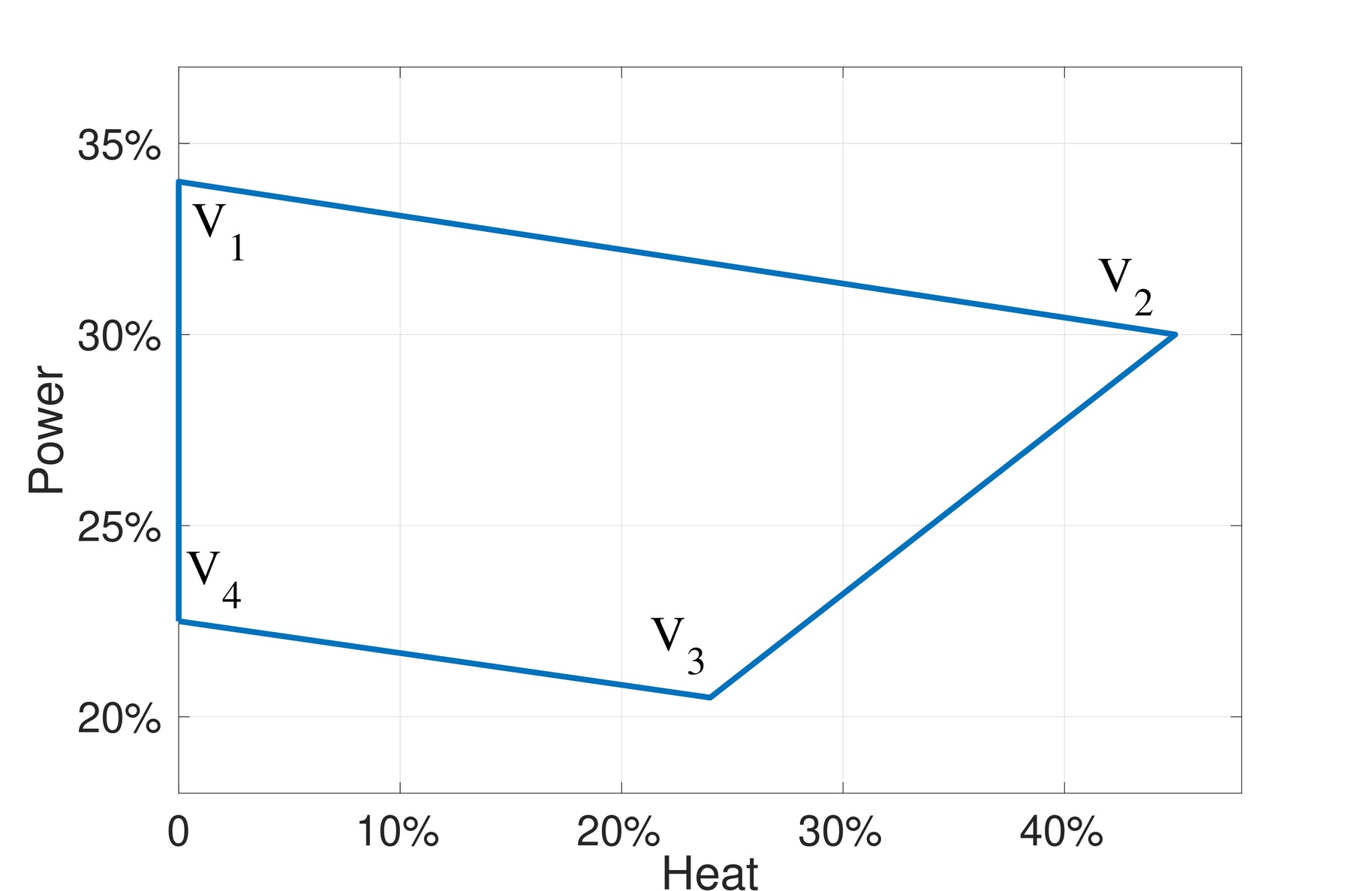
Figure 2.
Feasible operating region for heat and power generation.
-
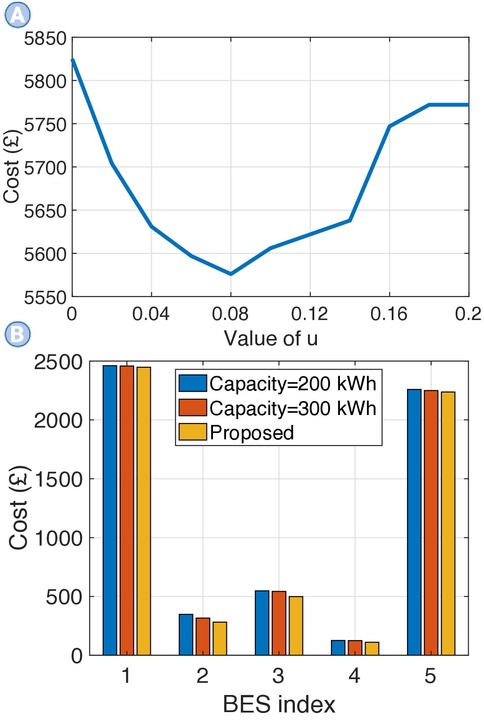
Figure 3.
(A) Variation of total cost with auxiliary variable u. (B)Costs of five BESs for three capacity levels.
-
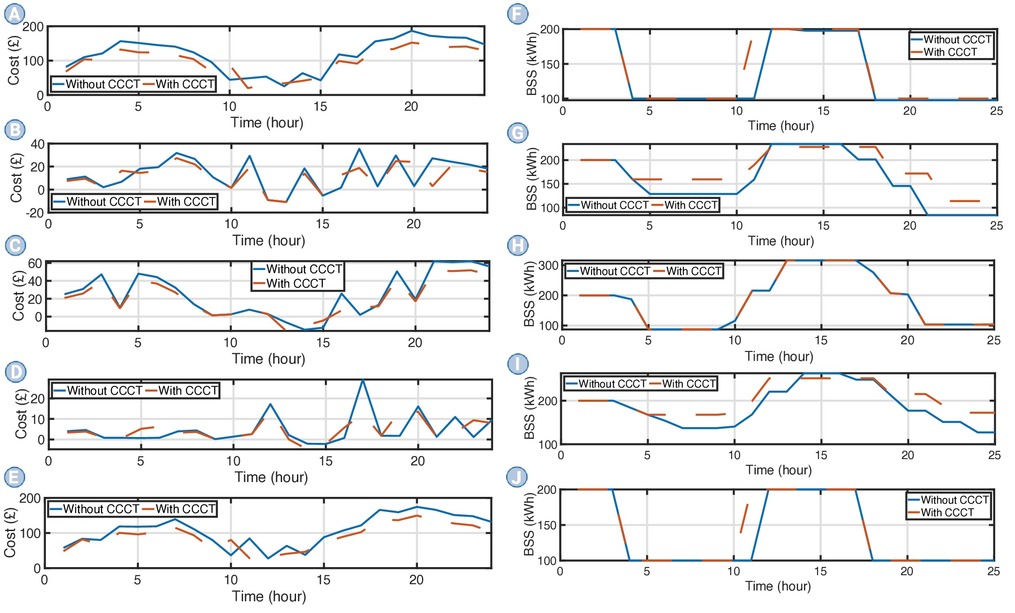
Figure 4.
Comparison of five BESs without and with CCCT.
-
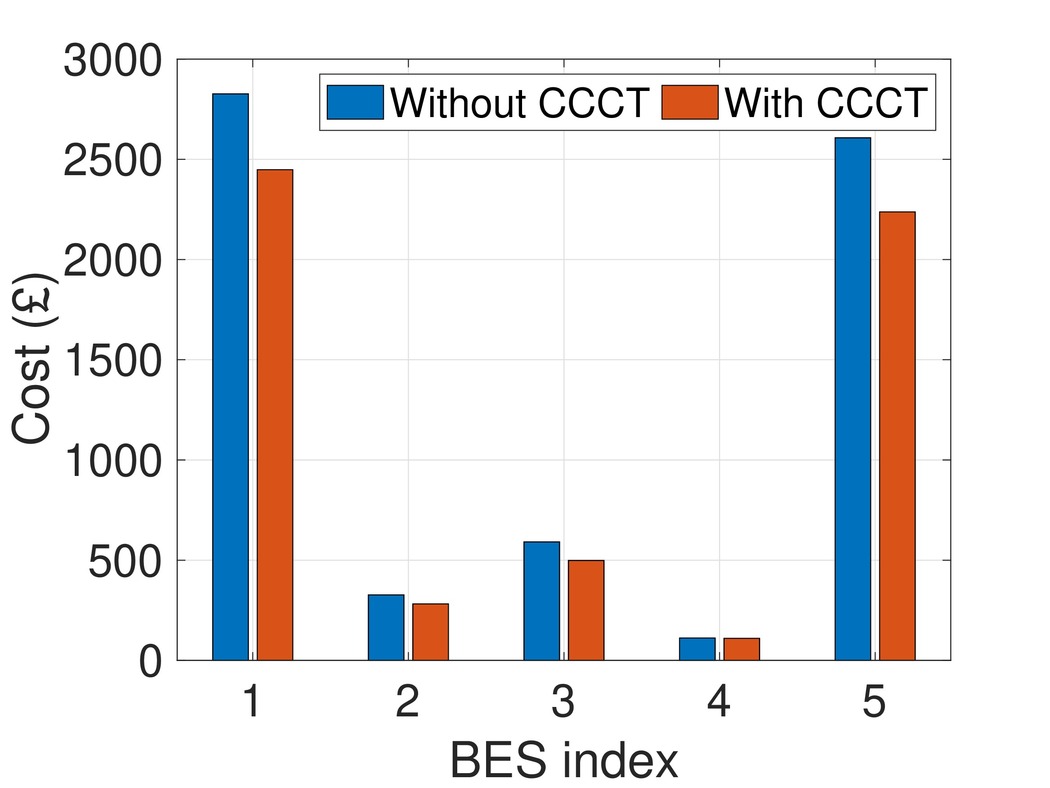
Figure 5.
Cost across five BESs with and without CCCT.
-
Figure 6.
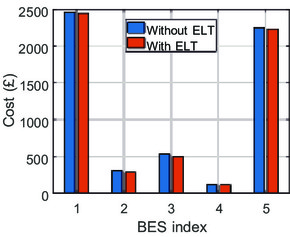
Cost of five BESs without and with ELT.
-
Figure 7.
Gas traded across five BESs.
-
Figure 8.
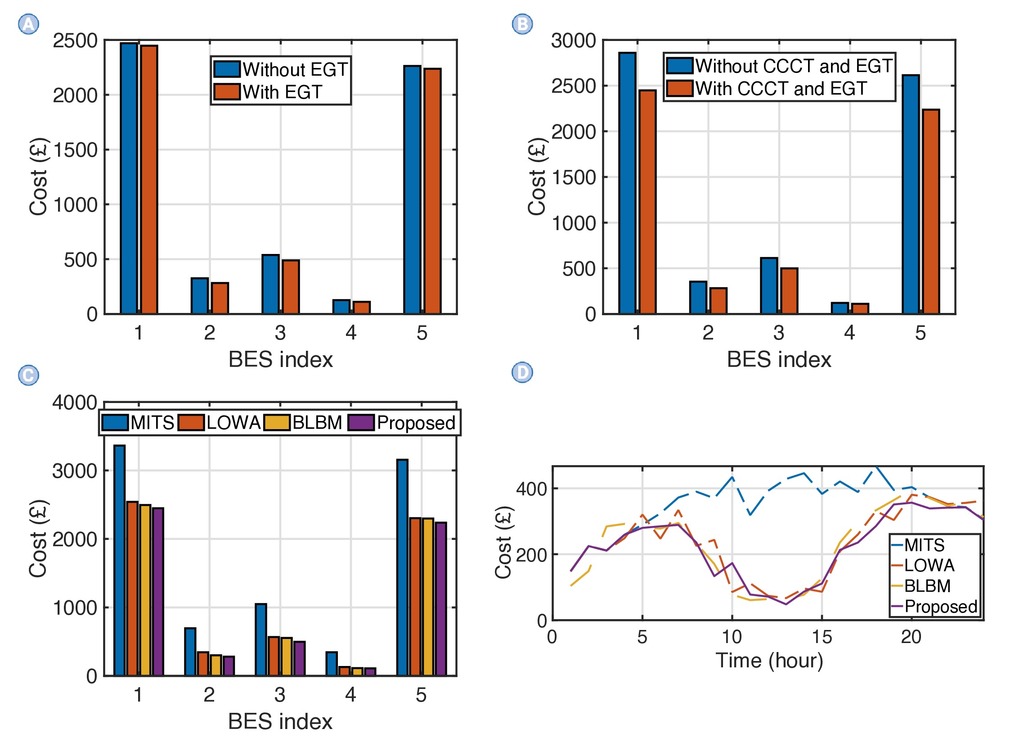
Comparison of five BESs without and with EGT.