
High-speed Railway Thermal Management for Sustainable Future Transportation
-
GRAPHICAL ABSTRACT

 DownLoad:
Full size image
DownLoad:
Full size image
-
PUBLIC SUMMARY
-
Study proposes a thermal management system with cooling tubes for track slab temperature regulation.
Multiphysics model reflects hydraulic-thermal-mechanical mechanisms in Guangzhou's hot climate.
Cooling system reduces temperature difference by 70%, from 18.3°C to 6.7°C.
Vertical displacement decreases by 40%, from 0.156 mm to 0.099 mm.
Cooling tubes' heat transfer capacity reaches 2296 W, powered by renewable solar energy.
-
-
ABSTRACT
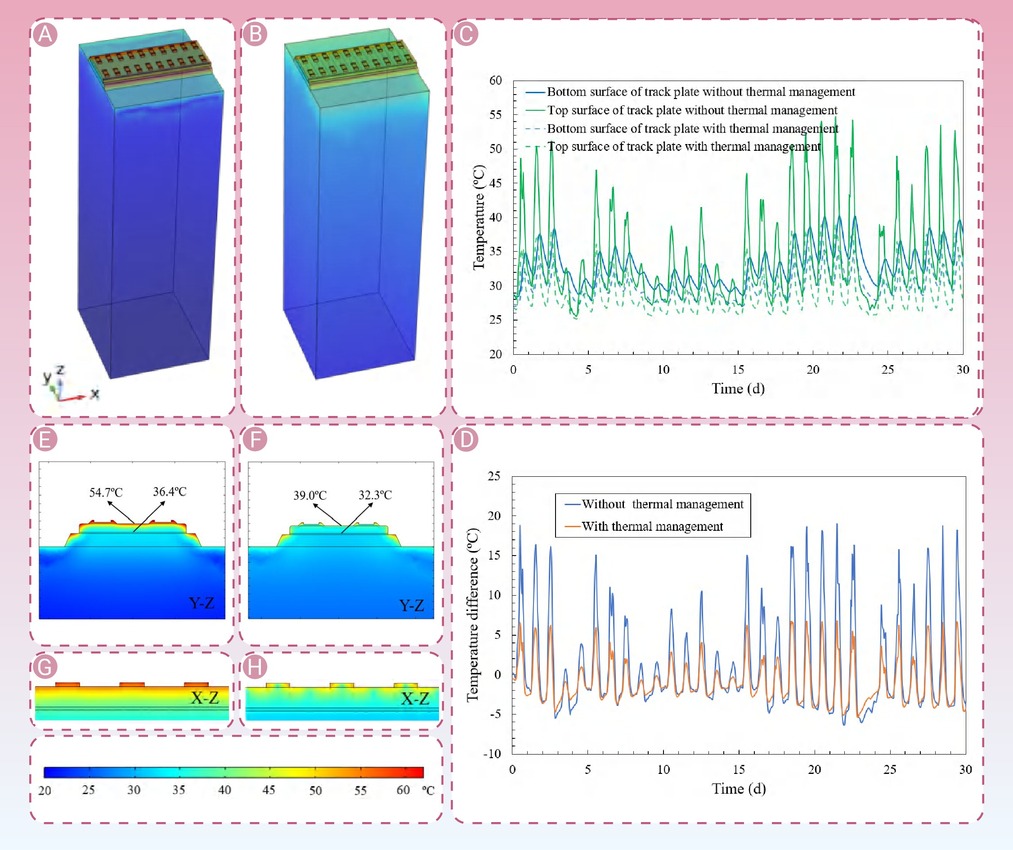
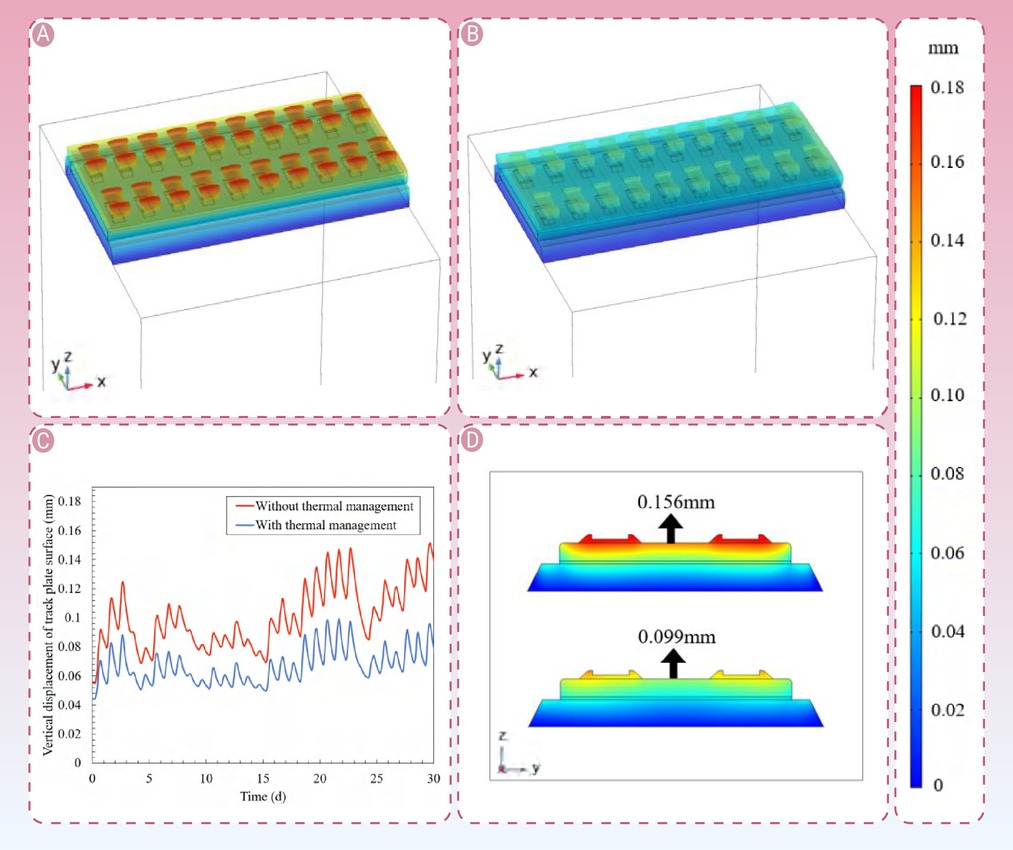
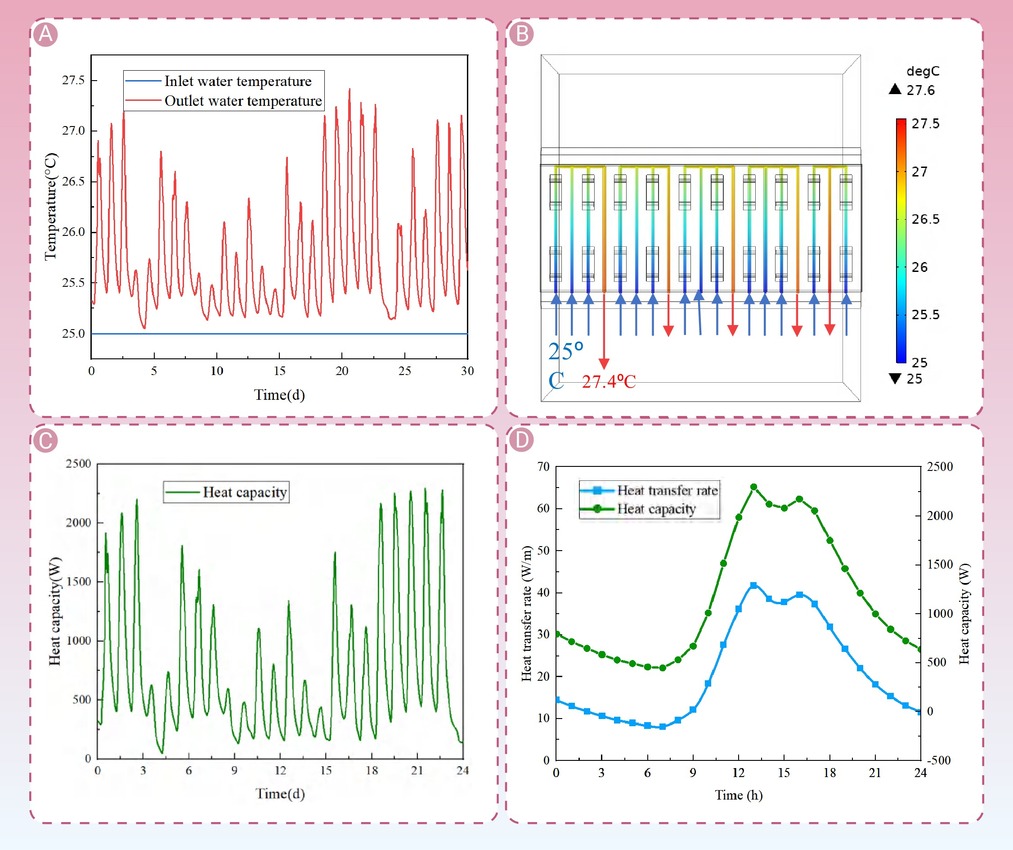
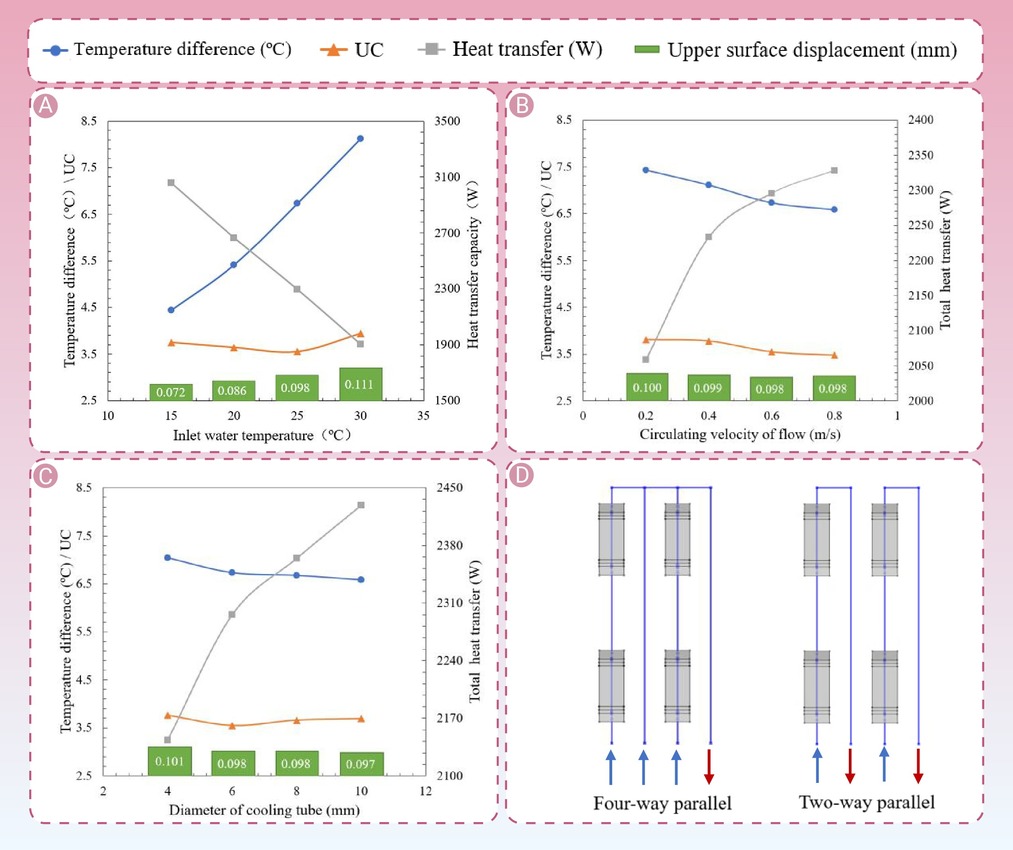
High-speed railways suffer from engineering damage, such as cracks and fractures, which are caused by the high internal temperature stress of the ballastless track slabs in hot climates. To address this issue, this study proposes a thermal management system using cooling tubes to actively regulate the temperature of the track slab. A multiphysics model of a high-speed railway in Guangzhou is established to reflect the hydraulic-thermal-mechanical mechanisms. Moreover, a full-scale experimental platform are established to monitor the dynamic temperature distribution of the track slab in hot climates in real-time and validate the numerical model. The study demonstrates that the maximum temperature difference of conventional ballastless track slabs can reach 18.3 °C, and the uniformity coefficient (UC) is 5.75. However, the thermal management system can effectively reduce the temperature difference by 70% to 6.7 °C, and the UC to 3.55. The corresponding vertical displacement decreases by 40% from 0.156 mm to 0.099 mm. The cooling tube’s maximum heat transfer capacity is2296 W, which is powered by renewable solar energy. Then, the factors that affect the system performance have been studied. This study can ensure the smooth and efficient operation of high-speed railways in hot climates. -

-
REFERENCES
[1] Wu X., Qi L., Zhang T., et al. (2021). A novel kinetic energy harvester using vibration rectification mechanism for self-powered applications in railway. Energy Convers. Manag. 228:113720. DOI:10.1016/j.enconman.2021.113720 [2] Deng K., Liu Y., Hai D., et al. (2022). Deep reinforcement learning based energy management strategy of fuel cell hybrid railway vehicles considering fuel cell aging. Energy Convers. Manag. 251:115030. DOI:10.1016/j.enconman.2022.115030 [3] Yin F. and Mei S. (2022). The Ministry of Transport releases 2021 Statistical Communique on the Development of the Transport Industry. Waterway Port 43:346. (in Chinese). [4] Pan Y., Zuo L. and Ahmadian M. (2022). A half-wave electromagnetic energy-harvesting tie towards safe and intelligent rail transportation. Appl. Energy 313:118844. DOI:10.1016/j.apenergy.2022.118844 [5] Indraratna B., Sajjad M. B., Ngo T., et al. (2019). Improved performance of ballasted tracks at transition zones: A review of experimental and modelling approaches. Transport. Geotech. 21:100260. DOI:10.1016/j.trgeo.2019.100260 [6] Zhang T., Wu X., Pan Y., et al. (2022). Vibration energy harvesting system based on track energy-recycling technology for heavy-duty freight railroads. Appl. Energy 323:119673. DOI:10.1016/j.apenergy.2022.119673 [7] Yang J., Zhu S. and Zhai W. (2020). A novel dynamics model for railway ballastless track with medium-thick slabs. Appl. Math. Model. 78:907−931. DOI:10.1016/j.apm.2020.06.007 [8] Liu X., Zhao P., Dai F., et al. (2011). Advances in design theories of high-speed railway ballastless tracks. J. Mod. Transport. 19:154−162. DOI:10.1007/s40534-011-0021-2 [9] Hu J., Bian X., Xu W., et al. (2019). Investigation into the critical speed of ballastless track. Transport. Geotech. 18:142−148. DOI:10.1016/j.trgeo.2019.02.003 [10] Köllő S., Puskás A., Köllő G. (2015). Ballasted track versus ballastless track. Key Eng. Mater. 660:219−224. DOI:10.4028/www.scientific.net/KEM.660.219 [11] Freudenstein S., Geisler K., Molter T., et al. (2018). Ballastless Tracks. John Wiley Sons. DOI:10.1002/9781119380603 [12] Huang S., You T., Xie Y. (2025). Radiative cooling for thermal management of ballastless track slab in high-speed railways. Appl. Energy 382:125164. DOI:10.1016/j.apenergy.2025.125164 [13] Song L., Liu H., Cui C., et al. (2020). Thermal deformation and interfacial separation of a CRTS II slab ballastless track multilayer structure used in high-speed railways based on meteorological data. Construct. Build. Mater. 237:117528. DOI:10.1016/j.conbuildmat.2020.117528 [14] Cai X., Luo B., Zhong Y., et al. (2019). Arching mechanism of the slab joints in CRTSII slab track under high temperature conditions. Eng. Fail. Analy. 98:95−108. DOI:10.1016/j.engfailanal.2019.03.019 [15] Zhou R., Zhu X., Ren W., et al. (2022). Thermal evolution of CRTS Ⅱ slab track under various environmental temperatures: Experimental study. Construct. Build. Mater. 325:126699. DOI:10.1016/j.conbuildmat.2022.126699 [16] Kosmadakis G., Arpagaus C., Neofytou P., et al. (2020). Techno-economic analysis of high-temperature heat pumps with low-global warming potential refrigerants for upgrading waste heat up to 150 C. Energy Conver. Manag. 226:113488. DOI:10.1016/j.enconman.2020.113488 [17] Kev K., Modi N., Milani D., et al. (2023). A comparative life cycle impact assessment for solar heat integration in post-combustion carbon capture. Energy Conver. Manag. 297:117745. DOI:10.1016/j.enconman.2023.117745 [18] Ling Z., Lin W., Zhang Z., et al. (2020). Computationally efficient thermal network model and its application in optimization of battery thermal management system with phase change materials and long-term performance assessment. Appl. Energy 259:114120. DOI:10.1016/j.apenergy.2019.114120 [19] Mortazavi B., Yang H., et al. (2017). Graphene or h-BN paraffin composite structures for the thermal management of Li-ion batteries: a multiscale investigation. Appl. Energy 202:323−334. DOI:10.1016/j.apenergy.2017.03.051 [20] Santamouris M., Pavlou K., Synnefa A., et al. (2007). Recent progress on passive cooling techniques: Advanced technological developments to improve survivability levels in low-income households. Energy Build. 39:859−866. DOI:10.1016/j.enbuild.2007.03.003 [21] Jiang H., Zhang J., Zhou F., et al. (2020). Optimization of PCM coating and its influence on the temperature field of CRTSII ballastless track slab. Construct. Build. Mater. 236:117498. DOI:10.1016/j.conbuildmat.2020.117498 [22] Zhang J., Jiang H., Ding F., et al. (2020). Effects of metal–ceramic anticorrosion coating on the performance of ballastless tracks at high temperature. Arch. Civil Mechan. Eng. 20:1−14. DOI:10.1016/j.acme.2020.04.016 [23] Xiang B., Cao X., Yuan Y., et al. (2018). A novel hybrid energy system combined with solar-road and soil-regenerator: Dynamic model and operational performance. Energy Conver. Manag. 156:376−387. DOI:10.1016/j.enconman.2017.12.044 [24] Zhou L., Zhou F., Ge H. (2021). Improving Heat Exchange Performance of Massive Concrete Using Annular Finned Cooling Pipes. Adv. Mater. Sci. Eng. 2021:6715468. DOI:10.1155/2021/6715468 [25] Zhang Y., You T., Sun Z., et al. (2022). Performance of thermal management for ballastless track plate of high-speed railway in hot regions. Case Stud. Therm. Eng. 40:102525. DOI:10.1016/j.csite.2022.102525 [26] Kreith F. and Manglik R. M. (2016). Principles of Heat Transfer. Cengage Learn. DOI:10.1016/B978-0-12-429868-1.00006-2 [27] Zhang H. (2019). The Reverse Carnot Cycle Is a Pumping Heat Machine. Energy 186:116−118. DOI:10.1016/j.energy.2019.07.122 [28] Feidt M. (2020). Carnot cycle and heat engine: Fundamentals and applications. Entropy 22:348. DOI:10.3390/e22030348 [29] Hayat M., Ali D., Monyake K. C., et al. (2019). Solar energy—A look into power generation, challenges, and a solar‐powered future. Int. J. Energy Res. 43:1049−1067. DOI:10.1002/er.4505 [30] Ling F. and Wu Z. (1999). Numerical simulation of the influence of seepage on temperature field of roadbed in permafrost regions. J. Glac. Geocry. 21:115-119. (in Chinese). [31] Wang X., Chen Y., Xu Y., et al. (2011). Recommended values of soil temperature in Guangzhou based on long-term monitoring. Guangdong Electric Power 24:10−13. [32] Liu W. and Geng Y. (2004). Experimental research on solar absorption coefficient of concrete surface. Concr. Cem. Prod. 4:8-11. (in Chinese). [33] Zhang J. and Liu Z. (2006). Experimental study on convective heat transfer coefficient of concrete in wind tunnel. J. Civil Eng. 39:39−42. [34] Yuan Z., Chen YC. (2012). Engineering Heat Transfer Property-Theoretical Basis and Special Application. Science Press. (in Chinese). [35] Liu S. and Huang Y. (1983). Discussion of sky effective temperature. Journal of Solar Energy 1:65-70. (in Chinese). [36] Department of Building Science of Tsinghua University. (2005). Chinese Architecture-specific Meteorological Data Sets for Thermal Environment Analysis. China Architecture and Building Press. (in Chinese). [37] Kaliakin V. (2018). Introduction to Approximate Solution Techniques, Numerical Modeling, and Finite Element Methods. CRC Press. [38] Liu F., Zeng Z., Wu B., et al. (2016). Study on temperature field of continuous ballastless track for high-speed railway. J. Rail. Soc. 12:87−93. [39] Ou Z. and Li F. (2014). Analysis and prediction of the temperature field based on in-situ measured temperature for CRTS II ballastless track. Energy Procedia 61:1290−1293. DOI:10.1016/j.egypro.2014.11.164 [40] Han Z. and Li S. (2011). Temperature measurement and deformation analysis for CRTS II ballastless track slabs. Rail. Stand. Design 10:41−44. [41] Yang R., Li J., Kang W., et al. (2017). Temperature characteristics analysis of the ballastless track under continuous hot weather. J. Transport. Eng. A Sys. 143:04017048. DOI:10.1061/JTEPBS.0000150 [42] Bayrak F., Hakan F., et al. (2020). Experimental study for the application of different cooling techniques in photovoltaic (PV) panels. Energy Conver. Manag. 212:112789. DOI:10.1016/j.enconman.2020.112789 -
ABOUT THIS ARTICLE
Cite this article:
You T., Zhang Y., Sun Z., et al. (2025). High-speed Railway Thermal Management for Sustainable Future Transportation. Energy Use 1:100024. https://doi.org/10.59717/ipj.energy-use.2025.100024
Welcome!
To request copyright permission to republish or share portions of our works, please visit Copyright Clearance Center's (CCC) Marketplace website at marketplace.copyright.com.
Export File
Citation
You T., Zhang Y., Sun Z., et al. (2025). High-speed Railway Thermal Management for Sustainable Future Transportation. Energy Use 1:100024. https://doi.org/10.59717/ipj.energy-use.2025.100024

Format
Content
-
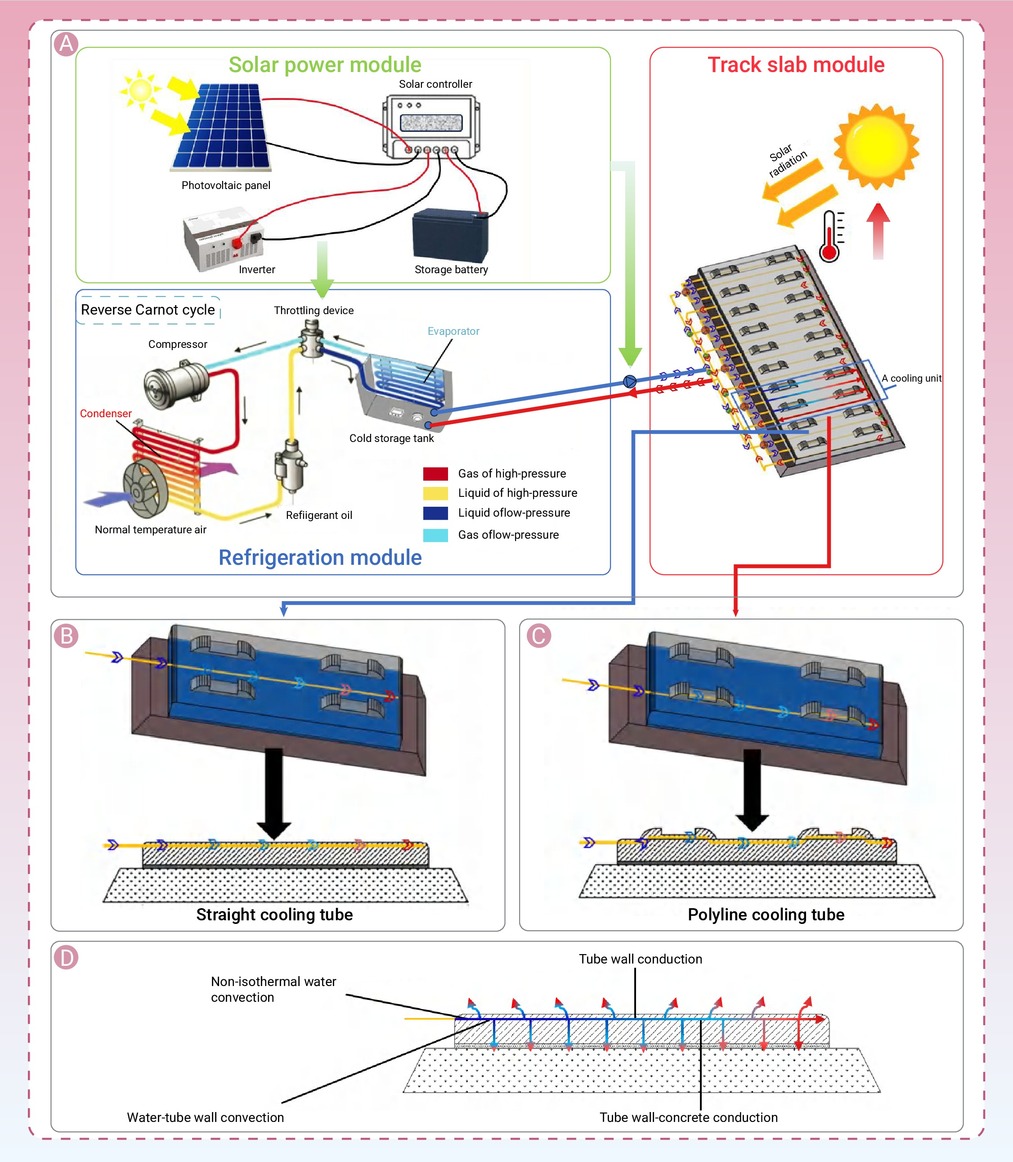
Figure 1.
Schematic diagram and principle of track slab module of the thermal management system
-
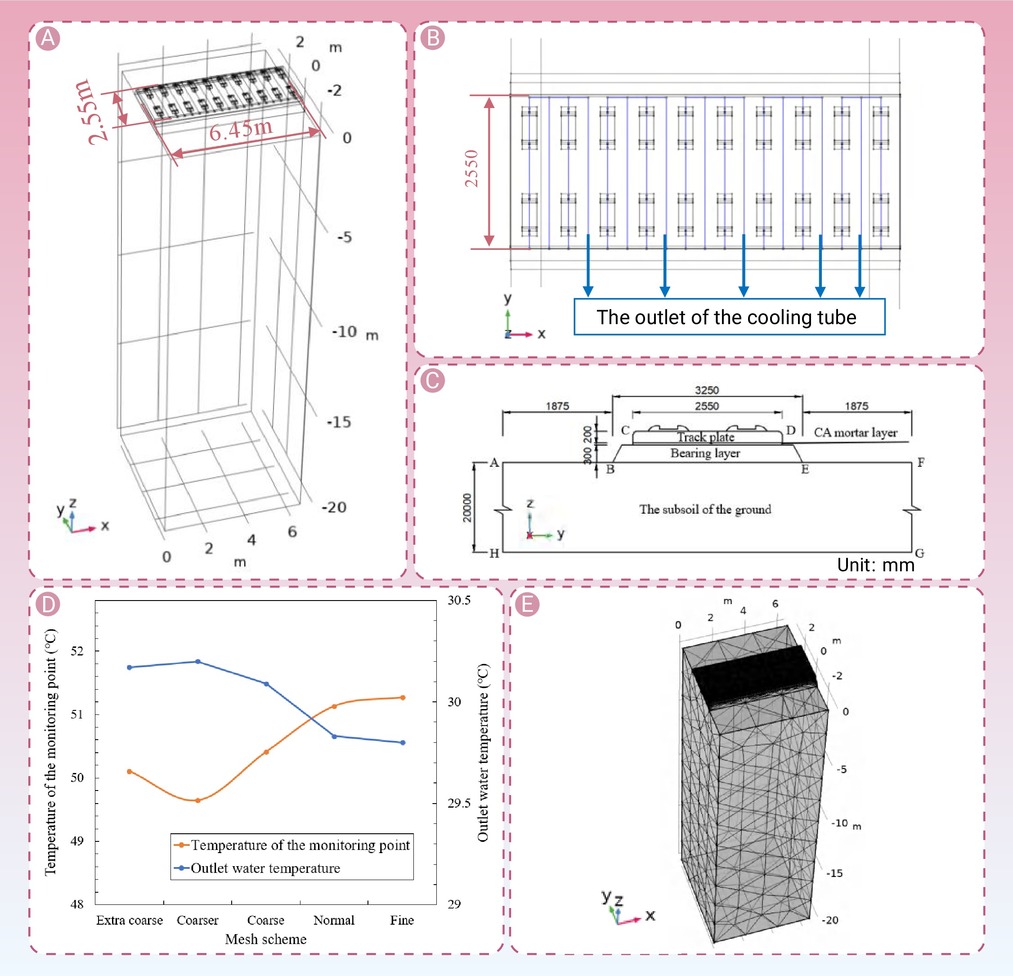
Figure 2.
Numerical model of a ballastless track slab with the thermal management system
-
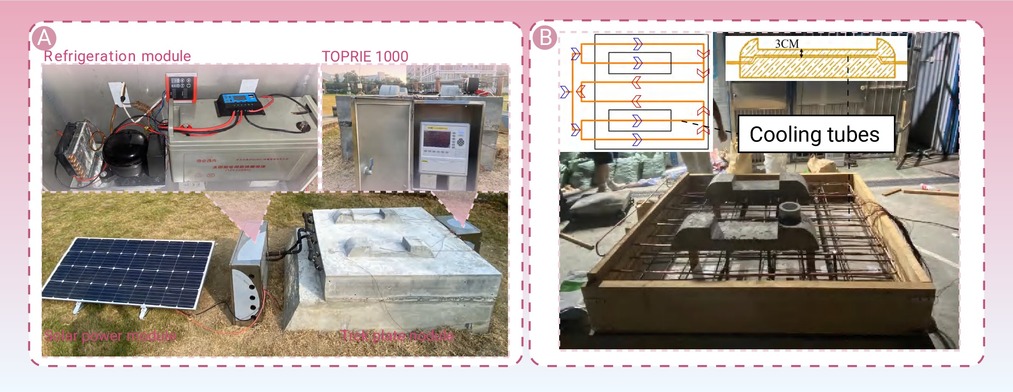
Figure 3.
Experimental setup
-
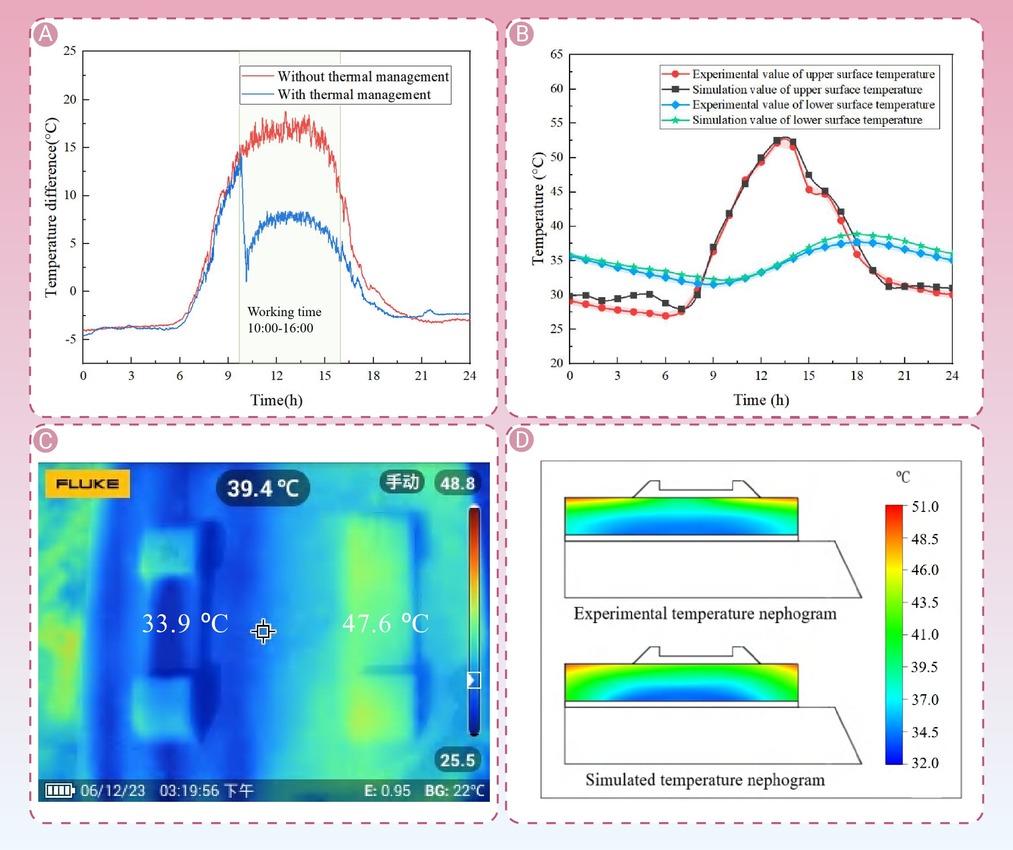
Figure 4.
Testing result and validation
-
Figure 5.
Three-dimensional temperature field
-
Figure 6.
Three-dimensional displacement field
-
Figure 7.
Temperature fields of non-isothermal pipe flow
-
Figure 8.
Influence of operation conditions and tube designs on the thermal management performance