
Planning High-PV Penetration Park: Enhancing Local PV Utilization and Economic Efficiency through Multi-Energy Storage
-
GRAPHICAL ABSTRACT
 DownLoad:
Full size image
DownLoad:
Full size image
-
PUBLIC SUMMARY
-
Introduced a bi-level optimization framework for energy planning in high-PV-penetration parks.
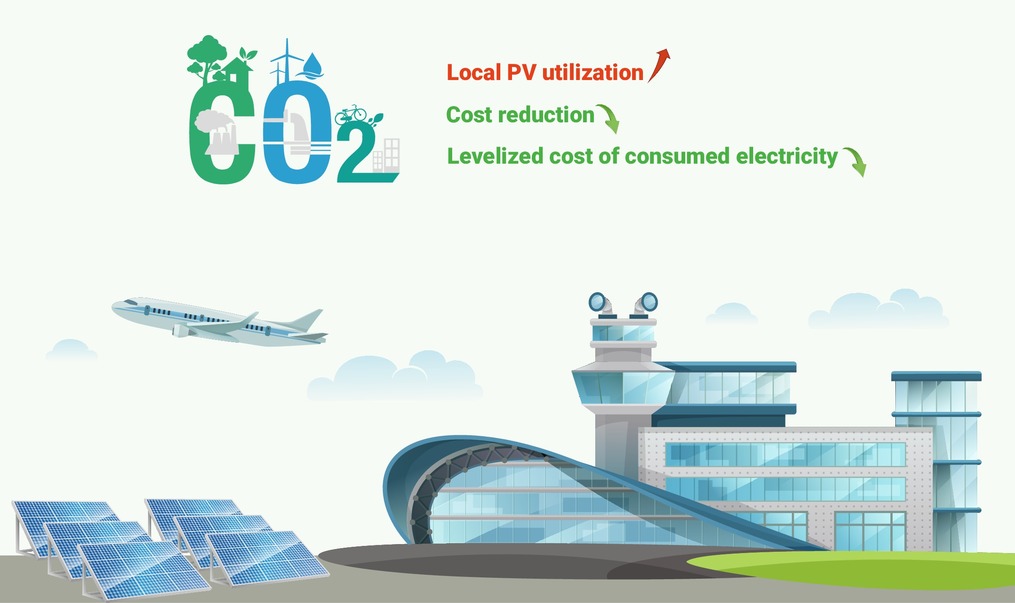
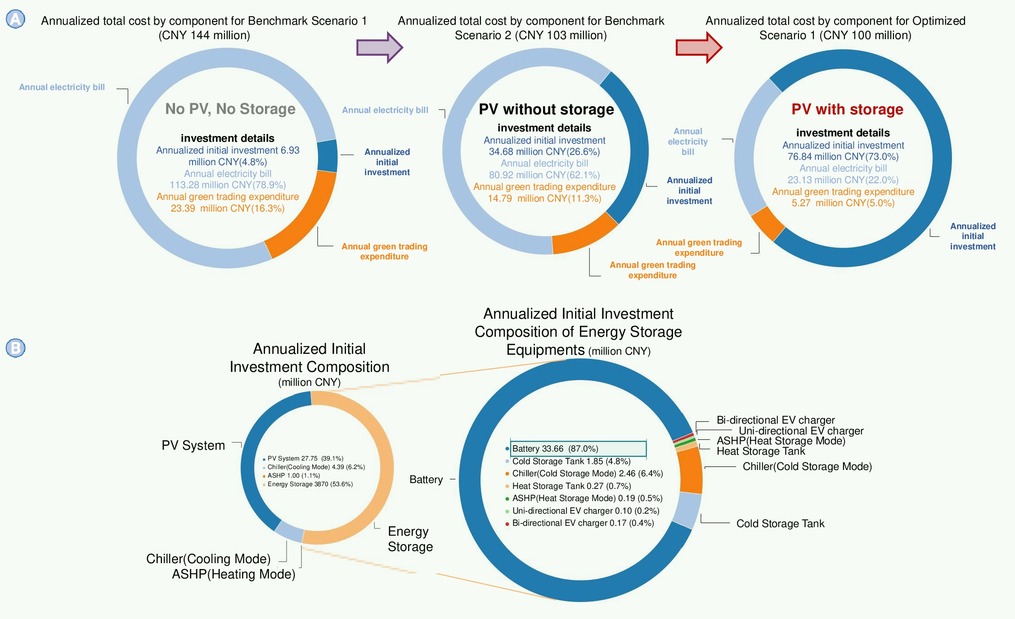
Demonstrated that optimized configurations can increase local PV utilization from 33.6% to 73.0%, reducing annualized costs by 30.2%.
Showed that battery storage becomes crucial under high PV penetration, while thermal storage plays a supplementary role, with charging and discharging patterns aligned to daytime and nighttime/off-peak hours.
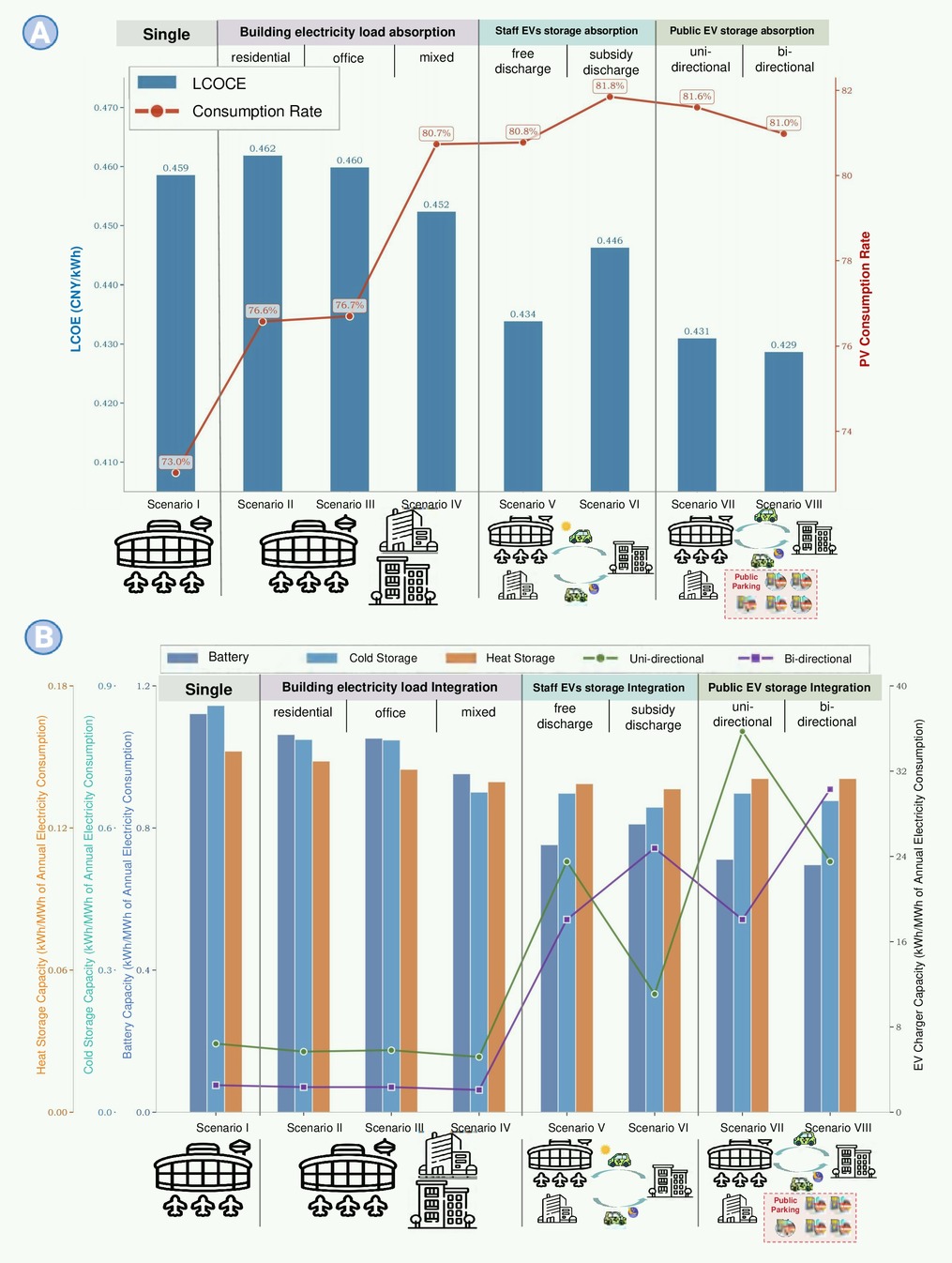
Explored external resource integration, boosting PV utilization to 81.6% and reducing the levelized cost of consumed electricity (LCOCE) by 6.5%.
Highlighted the need for internal multi-energy flexibility and external resource integration to optimize PV absorption, cost-effectiveness, and carbon reduction in net-zero parks.
-
-
ABSTRACT
Large airports have substantial energy consumption demands while possessing significant spatial resources for photovoltaic (PV) development. However, addressing the mismatch between PV generation and airport electricity demand to achieve efficient local consumption and optimal energy utilization remains a critical research challenge. This study investigates energy planning strategies for high-PV-penetration parks under net-zero development, using a major Chinese airport terminal expansion as a case study. The proposed bi-level optimization framework jointly determines installed capacities and annual hourly operation of multi-energy systems, integrating cooling, heating, and electricity with flexible resources including battery storage, chilled/hot water storage, and uni/bi-directional EV charging. A net-zero carbon constraint through carbon trading ensures environmental alignment while minimizing annualized costs. Results demonstrate local PV utilization improves from 33.6% without flexible storage to 73.0% with optimized configuration, accompanied by 30.2% cost reduction. Battery storage gains greater importance under high PV penetration due to unconstrained flexibility, while thermal storage serves supplementary roles. The system follows daytime charging and nighttime or off-peak discharging patterns. Beyond internal optimization, the study explores strategies for incorporating external resources such as adjacent buildings and surrounding EV fleets. Results show that these measures further raise PV utilization to 81.6% and reduce the levelized cost of consumed electricity (LCOCE) by 6.5%. Integrating surrounding buildings enhances source-load matching and reduces storage demand, while staff vehicles and external vehicle fleets substitute partial battery capacity. The findings highlight that high-PV parks require both internal multi-energy flexibility and external resource integration for efficient PV absorption, cost-effectiveness, and carbon reduction. This research establishes a paradigm for zero-carbon park planning under policy constraints, offering transferable insights for transport hubs and urban districts maximizing local PV consumption while improving economic performance.-
Keywords:
- . Photovoltaic /
- Energy Storage /
- Airport Planning /
- Carbon Neutrality /
- Local Coordination.
-

-
REFERENCES
[1] Daniels D. and Eek M. (2024). The airport as an energy hub. DOI:https://www.diva-portal.org/smash/get/diva2:1989658/FULLTEXT01.pdf [2] Chen Q., Kuang Z., Liu X., et al. (2024). Optimal sizing and techno-economic analysis of the hybrid PV-battery-cooling storage system for commercial buildings in China. Appl. Energy 355:122231. DOI:10.1016/j.apenergy.2023.122231 [3] Kang X., Wang X., Liu Z., Wu Y., Liu X., Yan D. (2025). Capacity optimization and carbon-effective assessment of building micro-grids integrating PV, EV, and energy storages. Sustain. Cities Soc. 130:106566. DOI:10.1016/j.scs.2025.106566 [4] Wei Z., Geng Y., Tang H., Zhao Y., Lin B. (2024). Cost-effective sizing method of Vehicle-to-Building chargers and energy storage systems during the planning stage of smart micro-grid. eTransp. 21:100343. DOI:10.1016/j.etran.2024.100343 [5] Chen Q., Kuang Z., Liu X., et al. (2023). Techno-economic comparison of cooling storage and battery for electricity flexibility at long and short timescales in buildings. Energy Convers. Manag. 289:117183. DOI:10.1016/j.enconman.2023.117183 [6] Li H., Chen Q., Zhang T., et al. (2024). Can distributed photovoltaic-battery systems power buildings with favorable matching performance and techno-economic feasibility. Energy Convers. Manag. 306:118260. DOI:10.1016/j.enconman.2024.118260 [7] Hu Z., Chan K.W., Zhu Z., Wei X., Zheng W., Bu S. (2024). Techno–Economic Modeling and Safe Operational Optimization of Multi-Network Constrained Integrated Community Energy Systems. Adv. Appl. Energy 15:100183. DOI:10.1016/j.adapen.2024.100183 [8] Ren H., Gao D., Ma Z., et al. (2024). Data-driven surrogate optimization for deploying heterogeneous multi-energy storage to improve demand response performance at building cluster level. Appl. Energy 356:122312. DOI:10.1016/j.apenergy.2023.122312 [9] Mu Y., Guo H., Wu Z., et al. (2024). A two-layer low-carbon economic planning method for park-level integrated energy systems with carbon-energy synergistic hub. Energy AI 18:100435. DOI:10.1016/j.egyai.2024.100435 [10] Kumar M. and Tyagi B. (2020). Capital cost based planning and optimal sizing of a small community smart microgrid. 12th KST IEEE :121–126. DOI:10.1109/KST48564.2020.9059419 [11] Chen C., Shen X., Guo Q., et al. (2019). Robust planning-operation co-optimization of energy hub considering precise model of batteries’ economic efficiency. Energy Procedia 158:6496−6501. DOI:10.1016/j.egypro.2019.01.111 [12] Khodaei A., Bahramirad S., Shahidehpour M. (2014). Microgrid planning under uncertainty. IEEE Trans. Power Syst. 30:2417−2425. DOI:10.1109/TPWRS.2014.2361094 [13] Moravej Z. and Afshar H. (2014). Optimal planning of microgrid using multi criteria decision analysis. Int. J. Multidiscip. Sci. Eng. 5:1–6. https://www.ijmse.org/Volume5/Issue8/paper1.pdf. [14] Quashie M., Marnay C., Bouffard F., Joós G. (2018). Optimal planning of microgrid power and operating reserve capacity. Appl. Energy 210:1229−1236. DOI:10.1016/j.apenergy.2017.08.015 [15] Han B., Li H., Wang S. (2024). A probabilistic model for real-time quantification of building energy flexibility. Adv. Appl. Energy 15:100186. DOI:10.1016/j.adapen.2024.100186 [16] Haghifam S., Zare K., Dadashi M. (2019). Bi‐level operational planning of microgrids with considering demand response technology and contingency analysis. IET Gener. Transm. Distrib. 13:2721−2730. DOI:10.1049/iet-gtd.2018.6516 [17] Nazemi S.D., Mahani K., Ghofrani A., et al. (2020). Techno-economic analysis and optimization of a microgrid considering demand-side management. TPEC IEEE :1–6. DOI:10.48550/arXiv.1908.06352 [18] Liu X., Li M., Liu X., et al. (2024). Quantifying energy flexibility potential of ground electric vehicles in an airport with real behavior data. Sustain. Cities Soc. 105:105331. DOI:10.1016/j.scs.2024.105331 [19] Guo Z., Li B., Taylor G., et al. (2023). Infrastructure planning for airport microgrid integrated with electric aircraft and parking lot electric vehicles. eTransp. 17:100257. DOI:10.1016/j.etran.2023.100257 [20] Xiang Y., Cai H., Liu J., Zhang X. (2021). Techno-economic design of energy systems for airport electrification: A hydrogen-solar-storage integrated microgrid solution. Appl. Energy 283:116374. DOI:10.1016/j.apenergy.2020.116374 [21] Jia Q., Yu J.-L., Tao Z. (2023). Airports Integrated Multi-energy Complementary Energy System Design and Multi-scenario Application Analysis. ICoPESA IEEE :514–519. DOI:10.1109/ICoPESA56898.2023.10141512 [22] Lerbinger A., Powell S., Mavromatidis G. (2024). MANGOever: An optimization framework for the long-term planning and operations of integrated electric vehicle and building energy systems. Adv. Appl. Energy 16:100193. DOI:10.1016/j.adapen.2024.100193 [23] Zhang Q., Yan J., Gao H.O., et al. (2023). A Systematic Review on power systems planning and operations management with grid integration of transportation electrification at scale. Adv. Appl. Energy 11:100147. DOI:10.1016/j.adapen.2023.100147 [24] Zhang Y., Han X., Wei T., Zhao X., Zhang Y. (2023). Techno-environmental-economical performance of allocating multiple energy storage resources for multi-scale and multi-type urban forms towards low carbon district. Sustain. Cities Soc. 99:104974. DOI:10.1016/j.scs.2023.104974 [25] Huang P. and Sun Y. (2019). A clustering based grouping method of nearly zero energy buildings for performance improvements. Appl. Energy 235:43−55. DOI:10.1016/j.apenergy.2018.10.116 [26] Qi S., Cheng S., Tan X., et al. (2022). Predicting China's carbon price based on a multi-scale integrated model. Appl. Energy 324:119784. [27] Gamarra C. and Guerrero J.M. (2015). Computational optimization techniques applied to microgrids planning: A review. Renew. Sustain. Energy Rev. 48:413−424. DOI:10.1016/j.rser.2015.04.025 [28] Dobos A.P. (2014). PVWatts version 5 manual. National Renewable Energy Laboratory (NREL), Golden, CO. [29] Zhou H., Chen S., Liang G., et al. (2013). Analysis of Load Characteristics in a Residential Community. Mod. Build. Electr. :32–36. DOI:10.16618/j.cnki.1674-8417.2013.s1.036 [30] Liu X., Fu Z., Qiu S., et al. (2023). Charging private electric vehicles solely by photovoltaics: A battery-free direct-current microgrid with distributed charging strategy. Appl. Energy 341:121058. DOI:10.1016/j.apenergy.2023.121058 [31] Durmaz T. and Pommeret A. (2020). Levelized Cost of Consumed Electricity. Econ. Energy Environ. Policy 9:243−262. DOI:10.5547/2160-5890.9.1.tdur -
ABOUT THIS ARTICLE
Cite this article:
Zhu J., Han L., Yu J., et al. (2026). Planning High-PV Penetration Park: Enhancing Local PV Utilization and Economic Efficiency through Multi-Energy Storage. Energy Use 2:100042. https://doi.org/10.59717/ipj.energy-use.2025.100042
Welcome!
To request copyright permission to republish or share portions of our works, please visit Copyright Clearance Center's (CCC) Marketplace website at marketplace.copyright.com.
Export File
Citation
Zhu J., Han L., Yu J., et al. (2026). Planning High-PV Penetration Park: Enhancing Local PV Utilization and Economic Efficiency through Multi-Energy Storage. Energy Use 2:100042. https://doi.org/10.59717/ipj.energy-use.2025.100042

Format
Content
-
Figure 1.
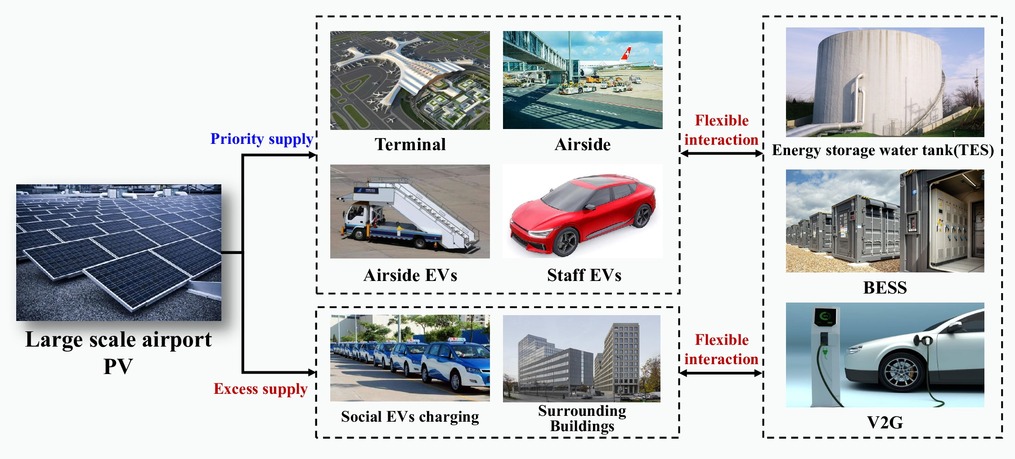
Schematic diagram of energy system planning for the airport
-
Figure 2.
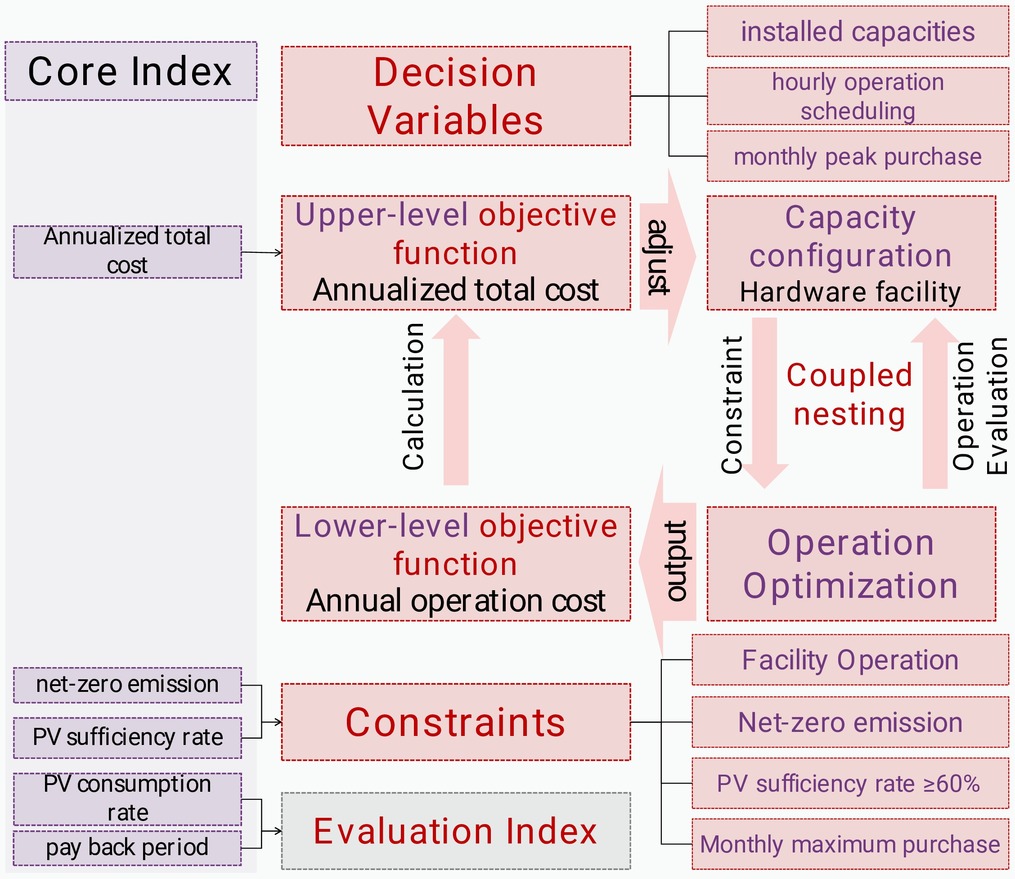
Structure of the bi-level planning framework
-
Figure 3.
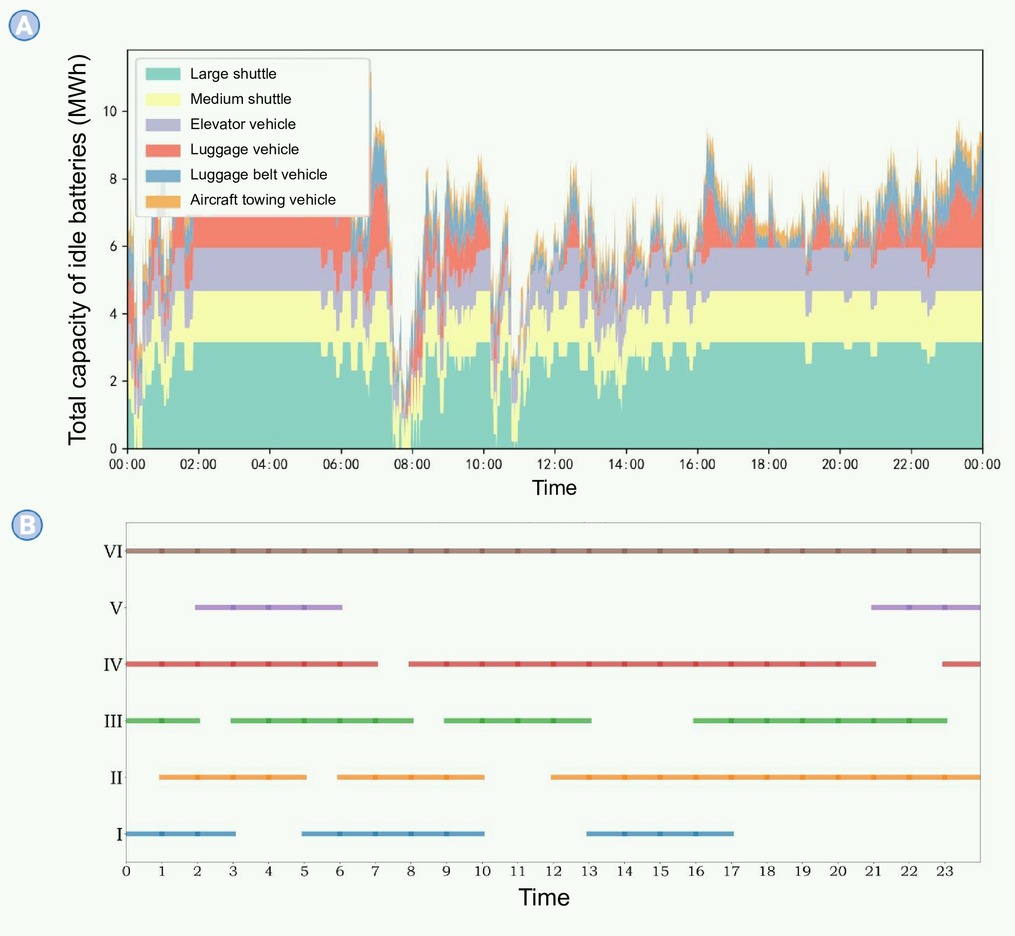
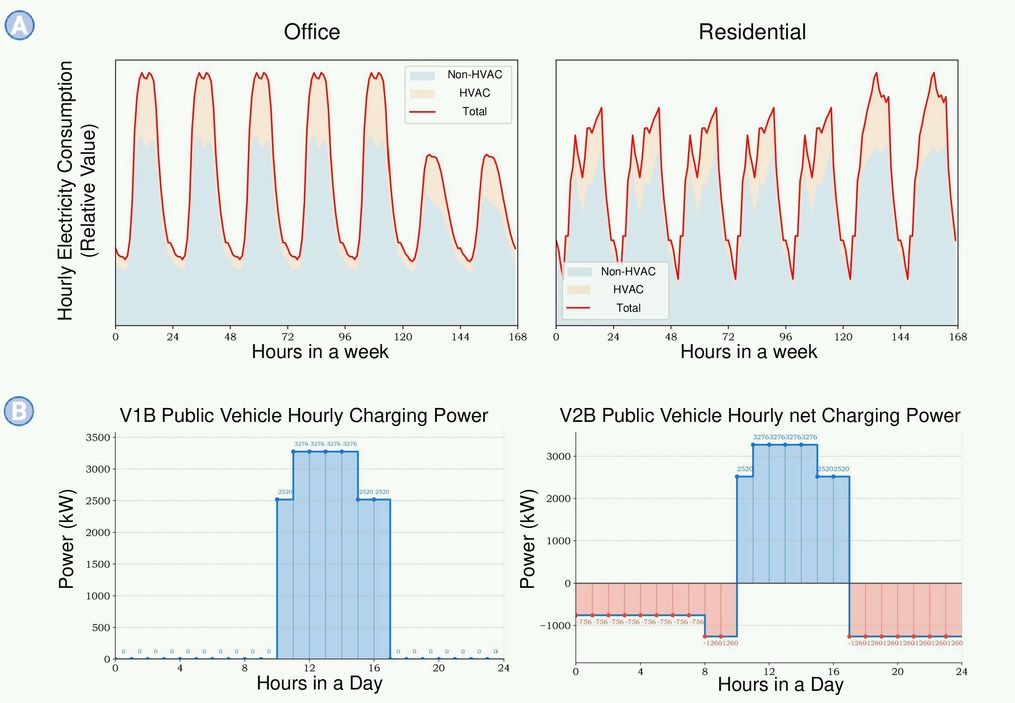
Simulation and Setting of Airside Vehicle Behavior
-
Figure 4.
The results of independent planning of the terminal area
-
Figure 5.
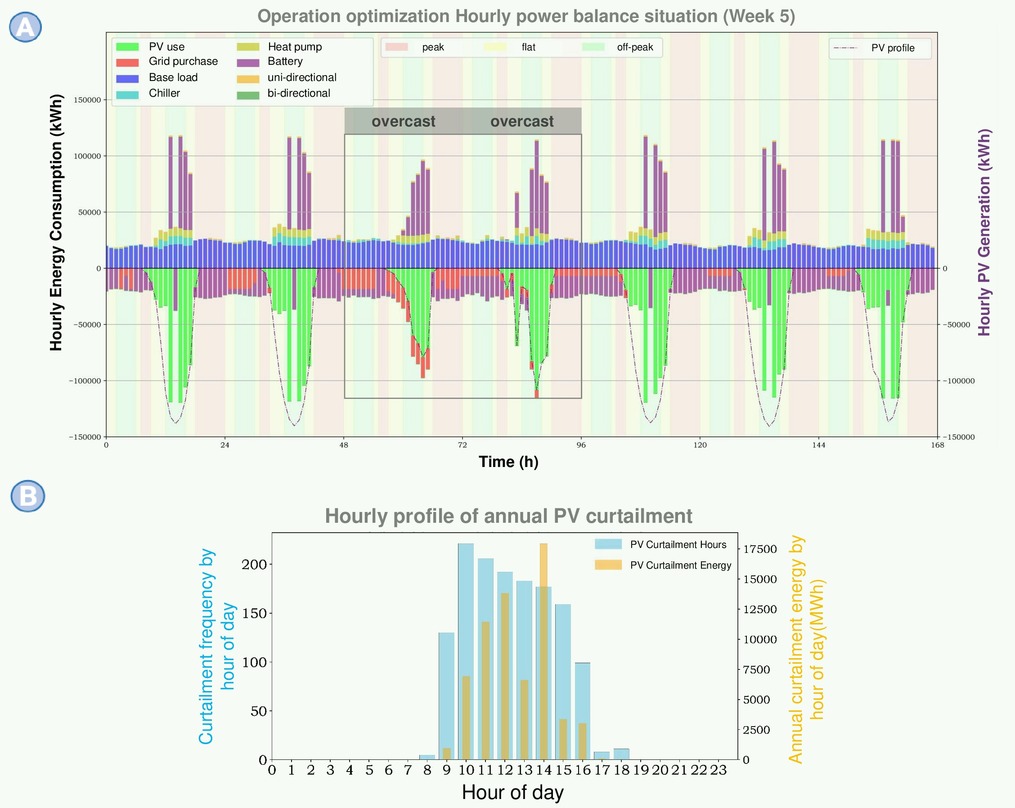
Hourly energy balance and consumption results
-
Figure 6.
Surrounding Resource Settings
-
Figure 7.
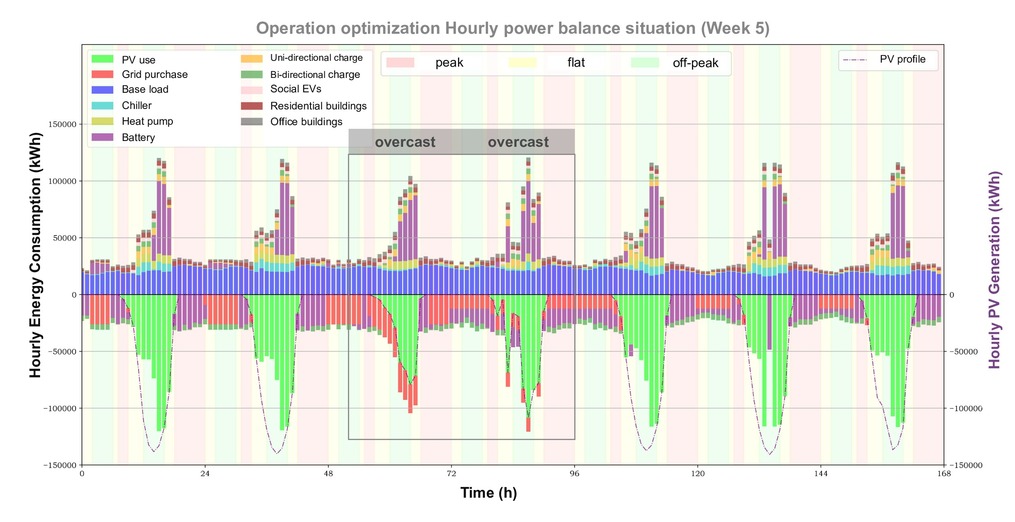
Optimized scheduling operation results in representative week after integrated planning (Scenario VII)
-
Figure 8.
Summary of the planning results of scenarios