
-
GRAPHICAL ABSTRACT

 DownLoad:
Full size image
DownLoad:
Full size image
-
PUBLIC SUMMARY
-
Review formulates a framework for building-to-grid energy governance, turning buildings into active grid-interactive hubs.
Explores how individual building flexibility can be quantified, aggregated, and coordinated to support grid operation across timescales.
Analyzes the evolution of control strategies, shifting from standalone building optimization to multi-building hierarchical coordination.
Examines the cyber-physical infrastructure needed for deployment, including communication protocols, data models, and hardware-in-the-loop validation.
Discusses enabling conditions for large-scale adoption, emphasizing policy support, market mechanisms, and standardization frameworks.
-
-
ABSTRACT
Rapid electrification and the rising penetration of variable renewable energy are fundamentally increasing the volatility of global power systems. In this context, activating demand-side flexibility has emerged as a critical strategy to maintain grid stability. Buildings, accounting for approximately 30% of global energy demand, offer a massive and controllable resource for such flexibility. By leveraging adjustable end-users, inherent thermal mass, and distributed energy resources, modern buildings can transform from passive consumers into active grid-interactive hubs. To navigate this paradigm shift, this review formulates a holistic framework for collaborative building-to-grid energy governance. It systematically examines how individual building flexibility can be quantified, aggregated, and coordinated into dispatchable resources to support grid operation across multiple timescales. The review further analyzes the evolution of control strategies, highlighting a clear shift from standalone building optimization toward multi-building hierarchical coordination. Recognizing that the practical implementation of these strategies depends on more than control algorithms alone, the review also examines the cyber-physical foundations required for deployment, including hardware infrastructure, communication protocols, semantic data models, and hardware-in-the-loop validation. In addition, it discusses the broader enabling conditions for large-scale adoption, with particular attention to policy support, market mechanisms, and standardization frameworks. By clarifying the technical, cyber-physical, and regulatory interdependencies of building-to-grid systems, this review provides an integrated reference for advancing flexible, resilient, and low-carbon energy systems. -

-
REFERENCES
[1] International Energy Agency. (2025). Electricity mid-year update. IEA. [2] International Energy Agency. (2025). Global energy review. IEA. [3] International Energy Agency. (2023). Electricity grids and secure energy transitions: Enhancing the foundations of resilient, sustainable and affordable power systems. OECD. DOI:10.1787/455dd4fb-en. [4] International Energy Agency. (2025). Renewables. IEA. [5] International Energy Agency. (2018). Electricity. IEA. [6] Falchetta G., Cian E. D., Pavanello F. and Wing I. S. (2024). Inequalities in global residential cooling energy use to 2050. Nat. Commun. 15:7874. DOI:10.1038/s41467-024-52028-8 [7] Amonkar Y., Doss-Gollin J., Farnham D. J., Modi V. and Lall U. (2023). Differential effects of climate change on average and peak demand for heating and cooling across the contiguous USA. Commun. Earth Environ. 4:402. DOI:10.1038/s43247-023-01048-1 [8] Sepulveda N. A., Jenkins J. D., De Sisternes F. J. and Lester R. K. (2018). The role of firm low-carbon electricity resources in deep decarbonization of power generation. Joule 2:2403−2420. DOI:10.1016/j.joule.2018.08.006 [9] International Energy Agency. (2025). Energy efficiency. IEA. [10] Satchwell A., Piette M. A., Khandekar A., Granderson J., Frick N. M., Hledik R., et al. (2021). A national roadmap for grid-interactive efficient buildings. U.S. Department of Energy. DOI:10.2172/1784302. [11] International Energy Agency. (2023). Efficient grid-interactive buildings: Future of buildings in ASEAN. OECD. DOI:10.1787/3feb1dcc-en. [12] Van Heerden R., Edelenbosch O. Y., Daioglou V., Le Gallic T., Baptista L. B., Di Bella A., et al. (2025). Demand-side strategies enable rapid and deep cuts in buildings and transport emissions to 2050. Nat. Energy 10:380−394. DOI:10.1038/s41560-025-01703-1 [13] ANSI/ASHRAE/IES. (2022). Standard 90.1-2022: Energy standard for sites and buildings except low-rise residential buildings. ASHRAE. [14] Ninagawa C. (2024). OpenADR communication control. In: Ninagawa C. (ed). IoT/AI control of VRF distributed building air-conditioners (Springer Nature), pp:143–163. DOI:10.1007/978-981-99-9199-0_9. [15] Wang H., Wang S. and Tang R. (2019). Development of grid-responsive buildings: Opportunities, challenges, capabilities and applications of HVAC systems in non-residential buildings in providing ancillary services by fast demand responses to smart grids. Appl. Energy 250:697−712. DOI:10.1016/j.apenergy.2019.04.159 [16] Yin R., Liu J., Piette M. A., Xie J., Pritoni M., Casillas A., et al. (2023). Comparing simulated demand flexibility against actual performance in commercial office buildings. Build. Environ. 243:110663. DOI:10.1016/j.buildenv.2023.110663 [17] Yu M. G. and Pavlak G. S. (2023). Risk-aware sizing and transactive control of building portfolios with thermal energy storage. Appl. Energy 332:120474. DOI:10.1016/j.apenergy.2022.120474 [18] Backe S., Delgado B. M., Askeland M., Walnum H. T., Sørensen Å. L. and Sartori I. (2025). Impact of activating energy demand flexibility in the building stock: A case study of Norway as a highly electrified country in the European power market. Energy 318:134688. DOI:10.1016/j.energy.2025.134688 [19] Lu X., Li K., Xu H., Wang F., Zhou Z. and Zhang Y. (2020). Fundamentals and business model for resource aggregator of demand response in electricity markets. Energy 204:117885. DOI:10.1016/j.energy.2020.117885 [20] Khan A. S. M., Verzijlbergh R. A., Sakinci O. C. and De Vries L. J. (2018). How do demand response and electrical energy storage affect (the need for) a capacity market. Appl. Energy 214:39−62. DOI:10.1016/j.apenergy.2018.01.057 [21] Gerke B. F., Zhang C., Murthy S., Satchwell A. J., Present E., Horsey H., et al. (2022). Load-driven interactions between energy efficiency and demand response on regional grid scales. Adv. Appl. Energy 6:100092. DOI:10.1016/j.adapen.2022.100092 [22] Rabie D. and Farzaneh H. (2026). A novel modeling framework for demand response-based energy management systems in smart electricity markets, using optimization and multi-criteria decision making techniques. Appl. Energy 405:127228. DOI:10.1016/j.apenergy.2025.127228 [23] El Makroum R., Zwickl-Bernhard S., Kranzl L. and Auer H. (2026). Load scheduling optimization for user-centric residential demand response leveraging time use surveys. Appl. Energy 403:127080. DOI:10.1016/j.apenergy.2025.127080 [24] Bae M., Kim H., Kim E., Chung A. Y., Kim H. and Roh J. H. (2014). Toward electricity retail competition: Survey and case study on technical infrastructure for advanced electricity market system. Appl. Energy 133:252−273. DOI:10.1016/j.apenergy.2014.07.044 [25] Rasheed M. B. and R-Moreno M. D. (2022). Minimizing pricing policies based on user load profiles and residential demand responses in smart grids. Appl. Energy 310:118492. DOI:10.1016/j.apenergy.2021.118492 [26] Ge S., Li J., He X. and Liu H. (2021). Joint energy market design for local integrated energy system service procurement considering demand flexibility. Appl. Energy 297:117060. DOI:10.1016/j.apenergy.2021.117060 [27] Liao W., Xiao F., Li Y. and Peng J. (2024). Comparative study on electricity transactions between multi-microgrid: A hybrid game theory-based peer-to-peer trading in heterogeneous building communities considering electric vehicles. Appl. Energy 367:123459. DOI:10.1016/j.apenergy.2024.123459 [28] Basilico P., Biancardi A., D’Adamo I., Gastaldi M. and Yigitcanlar T. (2025). Renewable energy communities for sustainable cities: Economic insights into subsidies, market dynamics and benefits distribution. Appl. Energy 389:125752. DOI:10.1016/j.apenergy.2025.125752 [29] Madler J., Harding S. and Weibelzahl M. (2023). A multi-agent model of urban microgrids: Assessing the effects of energy-market shocks using real-world data. Appl. Energy 343:121180. DOI:10.1016/j.apenergy.2023.121180 [30] Lynch M. Á., Nolan S., Devine M. T. and O’Malley M. (2019). The impacts of demand response participation in capacity markets. Appl. Energy 250:444−451. DOI:10.1016/j.apenergy.2019.05.063 [31] Gruber K., Gauster T., Laaha G., Regner P. and Schmidt J. (2022). Profitability and investment risk of Texan power system winterization. Nat. Energy 7:409−416. DOI:10.1038/s41560-022-00994-y [32] Smith S. J., Stuebs M., Murthy S., Baik S., Cappers P., Gerke B. F., et al. (2025). Potential impacts of dynamic electricity pricing in California: Load shape and customer bill impacts under elastic customer response. Lawrence Berkeley National Laboratory. DOI:10.2172/2574291. [33] Rafizadeh N. (2026). The economics of negative price phenomenon in renewable-integrated electricity markets. Energy Econ. 153:109086. DOI:10.1016/j.eneco.2025.109086 [34] Yang Y., Raman G. and Peng J. C.-H. (2026). Shaping residential electricity demand with negative pricing. Nat. Energy 11:58−65. DOI:10.1038/s41560-025-01901-x [35] Utama C., Troitzsch S. and Thakur J. (2021). Demand-side flexibility and demand-side bidding for flexible loads in air-conditioned buildings. Appl. Energy 285:116418. DOI:10.1016/j.apenergy.2020.116418 [36] Ma S., Liu H., Wang N., Huang L. and Goh H. H. (2023). Incentive-based demand response under incomplete information based on the deep deterministic policy gradient. Appl. Energy 351:121838. DOI:10.1016/j.apenergy.2023.121838 [37] Talebi H., Kazemi A., Shakouri G. H., Kocaman A. S. and Caldwell N. (2024). An integrated price- and incentive-based demand response program for smart residential buildings: A robust multi-objective model. Sustain. Cities Soc. 113:105664. DOI:10.1016/j.scs.2024.105664 [38] Raman G., Zhao B., Peng J. C.-H. and Weidlich M. (2022). Adaptive incentive-based demand response with distributed non-compliance assessment. Appl. Energy 326:119998. DOI:10.1016/j.apenergy.2022.119998 [39] Zhen C., Niu J., Tian Z., Lu Y. and Liang C. (2025). Risk-averse transactions optimization strategy for building users participating in incentive-based demand response programs. Appl. Energy 380:125009. DOI:10.1016/j.apenergy.2024.125009 [40] Wei Y., Meng Q., Zhao F., Yu L., Zhang L. and Jiang L. (2024). Direct load control-based optimal scheduling strategy for demand response of air-conditioning systems in rural building complex. Build. Environ. 258:111584. DOI:10.1016/j.buildenv.2024.111584 [41] Lu S., Gu W., Ding S., Yao S., Lu H. and Yuan X. (2022). Data-driven aggregate thermal dynamic model for buildings: A regression approach. IEEE Trans. Smart Grid 13:227−242. DOI:10.1109/TSG.2021.3101357 [42] Nweye K., Sankaranarayanan S. and Nagy Z. (2023). MERLIN: Multi-agent offline and transfer learning for occupant-centric operation of grid-interactive communities. Appl. Energy 346:121323. DOI:10.1016/j.apenergy.2023.121323 [43] Moradi-Sarvestani S., Jooshaki M., Fotuhi-Firuzabad M. and Lehtonen M. (2023). Incorporating direct load control demand response into active distribution system planning. Appl. Energy 339:120897. DOI:10.1016/j.apenergy.2023.120897 [44] Chen X., Hu Q., Zhang Y., Song M., Wu Z., Xiong J. (2024). POMDP-based dispatch scheme for residential distributed energy resources under customer fatigue consideration. IEEE Trans. Smart Grid 15:5665−5677. DOI:10.1109/TSG.2024.3420805 [45] Tiwari A. and Pindoriya N. M. (2022). Automated demand response in smart distribution grid: A review on metering infrastructure, communication technology and optimization models. Electr. Power Syst. Res. 206:107835. DOI:10.1016/j.epsr.2022.107835 [46] Samad T., Koch E. and Stluka P. (2016). Automated demand response for smart buildings and microgrids: The state of the practice and research challenges. Proc. IEEE 104:726−744. DOI:10.1109/JPROC.2016.2520639 [47] Althaher S., Mancarella P. and Mutale J. (2015). Automated demand response from home energy management system under dynamic pricing and power and comfort constraints. IEEE Trans. Smart Grid 6:1874−1883. DOI:10.1109/TSG.2014.2388357 [48] Wu H., Qiu D., Zhang L. and Sun M. (2024). Adaptive multi-agent reinforcement learning for flexible resource management in a virtual power plant with dynamic participating multi-energy buildings. Appl. Energy 374:123998. DOI:10.1016/j.apenergy.2024.123998 [49] Aguilar J., Garces-Jimenez A., R-Moreno M. D. and García R. (2021). A systematic literature review on the use of artificial intelligence in energy self-management in smart buildings. Renew. Sustain. Energy Rev. 151:111530. DOI:10.1016/j.rser.2021.111530 [50] Luo Z., Peng J., Cao J., Yin R., Zou B., Tan Y., et al. (2022). Demand flexibility of residential buildings: Definitions, flexible loads, and quantification methods. Engineering 16:123−140. DOI:10.1016/j.eng.2022.01.010 [51] Li H., Wang Z., Hong T. and Piette M. A. (2021). Energy flexibility of residential buildings: A systematic review of characterization and quantification methods and applications. Adv. Appl. Energy 3:100054. DOI:10.1016/j.adapen.2021.100054 [52] Sun M., Djapic P., Aunedi M., Pudjianto D. and Strbac G. (2019). Benefits of smart control of hybrid heat pumps: An analysis of field trial data. Appl. Energy 247:525−536. DOI:10.1016/j.apenergy.2019.04.068 [53] Le Ray G., Larsen E. M. and Pinson P. (2018). Evaluating price-based demand response in practice—With application to the EcoGrid EU experiment. IEEE Trans. Smart Grid 9:2304−2313. DOI:10.1109/TSG.2016.2610518 [54] Jensen S. Ø., Marszal-Pomianowska A., Lollini R., Pasut W., Knotzer A., Engelmann P., et al. (2017). IEA EBC Annex 67 energy flexible buildings. Energy Build. 155:25−34. DOI:10.1016/j.enbuild.2017.08.044 [55] Alizadeh M. I., Parsa Moghaddam M., Amjady N., Siano P. and Sheikh-El-Eslami M. K. (2016). Flexibility in future power systems with high renewable penetration: A review. Renew. Sustain. Energy Rev. 57:1186−1193. DOI:10.1016/j.rser.2015.12.200 [56] Lund P. D., Lindgren J., Mikkola J. and Salpakari J. (2015). Review of energy system flexibility measures to enable high levels of variable renewable electricity. Renew. Sustain. Energy Rev. 45:785−807. DOI:10.1016/j.rser.2015.01.057 [57] Kirby B., Kueck J., Laughner T. and Morris K. (2008). Spinning reserve from hotel load response. Electr. J. 21:59−66. DOI:10.1016/j.tej.2008.11.004 [58] D’hulst R., Labeeuw W., Beusen B., Claessens S., Deconinck G. and Vanthournout K. (2015). Demand response flexibility and flexibility potential of residential smart appliances: Experiences from large pilot test in Belgium. Appl. Energy 155:79−90. DOI:10.1016/j.apenergy.2015.05.101 [59] Six D., Desmedt J., Vanhoudt D. and Van Bael J. (2011). Exploring the flexibility potential of residential heat pumps combined with thermal energy storage for smart grids. 21st Int. Conf. Electr. Distrib.:0442. [60] Kathirgamanathan A., De Rosa M., Mangina E. and Finn D. P. (2021). Data-driven predictive control for unlocking building energy flexibility: A review. Renew. Sustain. Energy Rev. 135:110120. DOI:10.1016/j.rser.2020.110120 [61] Péan T., Costa-Castelló R., Fuentes E. and Salom J. (2019). Experimental testing of variable speed heat pump control strategies for enhancing energy flexibility in buildings. IEEE Access 7:37071−37087. DOI:10.1109/ACCESS.2019.2903084 [62] De Coninck R. and Helsen L. (2016). Quantification of flexibility in buildings by cost curves – Methodology and application. Appl. Energy 162:653−665. DOI:10.1016/j.apenergy.2015.10.114 [63] Finck C., Li R. and Zeiler W. (2020). Optimal control of demand flexibility under real-time pricing for heating systems in buildings: A real-life demonstration. Appl. Energy 263:114671. DOI:10.1016/j.apenergy.2020.114671 [64] Langevin J., Harris C. B., Satre-Meloy A., Chandra-Putra H., Speake A., Present E., et al. (2021). US building energy efficiency and flexibility as an electric grid resource. Joule 5:2102−2128. DOI:10.1016/j.joule.2021.06.002 [65] Clauß J., Stinner S., Sartori I. and Georges L. (2019). Predictive rule-based control to activate the energy flexibility of Norwegian residential buildings: Case of an air-source heat pump and direct electric heating. Appl. Energy 237:500−518. DOI:10.1016/j.apenergy.2018.12.074 [66] Luthander R., Widén J., Nilsson D. and Palm J. (2015). Photovoltaic self-consumption in buildings: A review. Appl. Energy 142:80−94. DOI:10.1016/j.apenergy.2014.12.028 [67] Sharifi R., Fathi S. H. and Vahidinasab V. (2016). Customer baseline load models for residential sector in a smart-grid environment. Energy Rep. 2:74−81. DOI:10.1016/j.egyr.2016.04.003 [68] Reynders G., Diriken J. and Saelens D. (2017). Generic characterization method for energy flexibility: Applied to structural thermal storage in residential buildings. Appl. Energy 198:192−202. DOI:10.1016/j.apenergy.2017.04.061 [69] Li X. and Wen J. (2014). Review of building energy modeling for control and operation. Renew. Sustain. Energy Rev. 37:517−537. DOI:10.1016/j.rser.2014.05.056 [70] Serale G., Fiorentini M., Capozzoli A., Bernardini D. and Bemporad A. (2018). Model predictive control (MPC) for enhancing building and HVAC system energy efficiency: Problem formulation, applications and opportunities. Energies 11:631. DOI:10.3390/en11030631 [71] Deng Z., Chen Y., Yang J. and Chen Z. (2022). Archetype identification and urban building energy modeling for city-scale buildings based on GIS datasets. Build. Simul. 15:1547−1559. DOI:10.1007/s12273-021-0878-4 [72] Bozkaya B., Li R. and Zeiler W. (2018). A dynamic building and aquifer co-simulation method for thermal imbalance investigation. Appl. Therm. Eng. 144:681−694. DOI:10.1016/j.applthermaleng.2018.08.095 [73] Zhu J., Niu J., Tian Z., Zhou R. and Ye C. (2022). Rapid quantification of demand response potential of building HVAC system via data-driven model. Appl. Energy 325:119796. DOI:10.1016/j.apenergy.2022.119796 [74] Wang H., Weng X., Ji Y., Mai D., Cui H. and Niu J. (2025). A novel RC-mapping model of building air conditioning systems dedicated to demand response and training condition analysis. J. Build. Eng. 108:112774. DOI:10.1016/j.jobe.2025.112774 [75] Prívara S., Váňa Z., Gyalistras D., Cigler J., Sagerschnig C., Morari M., et al. (2011). Modeling and identification of a large multi-zone office building. IEEE Int. Conf. Control Appl.:55–60. DOI:10.1109/CCA.2011.6044402. [76] Xu X. and Wang S. (2008). A simplified dynamic model for existing buildings using CTF and thermal network models. Int. J. Therm. Sci. 47:1249−1262. DOI:10.1016/j.ijthermalsci.2007.10.011 [77] Liang W., Li H., Zhan S., Chong A. and Hong T. (2024). Energy flexibility quantification of a tropical net-zero office building using physically consistent neural network-based model predictive control. Adv. Appl. Energy 14:100167. DOI:10.1016/j.adapen.2024.100167 [78] Vázquez-Canteli J. R. and Nagy Z. (2019). Reinforcement learning for demand response: A review of algorithms and modeling techniques. Appl. Energy 235:1072−1089. DOI:10.1016/j.apenergy.2018.11.002 [79] Mirakhorli A. and Dong B. (2018). Model predictive control for building loads connected with a residential distribution grid. Appl. Energy 230:627−642. DOI:10.1016/j.apenergy.2018.08.051 [80] Jiang S., Hui H. and Song Y. (2025). Credible demand response capacity evaluation for building HVAC systems based on grey-box models. SSRN Electron. J. DOI:10.2139/ssrn.5098961 [81] Ashraf J., Azam R., Rifa A. A. and Rana M. J. (2025). Multiple machine learning models for predicting annual energy consumption and demand of office buildings in subtropical monsoon climate. Asian J. Civ. Eng. 26:293−309. DOI:10.1007/s42107-024-01190-x [82] Yin R., Ghatikar G. and Piette M. (2019). Big-data analytics for electric grid and demand-side management. Lawrence Berkeley National Laboratory. DOI:10.2172/1773709. [83] Smarra F., Jain A., De Rubeis T., Ambrosini D., D’Innocenzo A. and Mangharam R. (2018). Data-driven model predictive control using random forests for building energy optimization and climate control. Appl. Energy 226:1252−1272. DOI:10.1016/j.apenergy.2018.02.126 [84] Langevin J., Harris C. B. and Reyna J. L. (2019). Assessing the potential to reduce U.S. building CO2 emissions 80% by 2050. Joule 3:2403–2424. DOI:10.1016/j.joule.2019.07.013 [85] Vázquez-Canteli J. R. and Nagy Z. (2024). Aggregation of building predictive energy flexibility in smart microgrid. Int. J. Electr. Power Energy Syst. 160:110073. DOI:10.1016/j.ijepes.2024.110073 [86] Hahm S. and Kim Y.-J. (2026). Modeling and control of aggregated energy flexibility in multi-zone HVAC systems. Energy Build. 353:116799. DOI:10.1016/j.enbuild.2025.116799 [87] Coffman A. R., Cammardella N., Barooah P. and Meyn S. (2023). Aggregate flexibility capacity of TCLs with cycling constraints. IEEE Trans. Power Syst. 38:52−62. DOI:10.1109/TPWRS.2022.3160071 [88] Zhao L., Zhang W., Hao H. and Kalsi K. (2017). A geometric approach to aggregate flexibility modeling of thermostatically controlled loads. IEEE Trans. Power Syst. 32:4721−4731. DOI:10.1109/TPWRS.2017.2674699 [89] Zhao L., Hao H. and Zhang W. (2016). Extracting flexibility of heterogeneous deferrable loads via polytopic projection approximation. In: IEEE Conf. Decis. Control: 6651–6656. DOI:10.1109/CDC.2016.7799293 [90] Hao H., Sanandaji B. M., Poolla K. and Vincent T. L. (2015). Aggregate flexibility of thermostatically controlled loads. IEEE Trans. Power Syst. 30:189−198. DOI:10.1109/TPWRS.2014.2328865 [91] Hatton L., Charpentier P. and Matzner-Løber E. (2016). Statistical estimation of the residential baseline. IEEE Trans. Power Syst. 31:1752−1759. DOI:10.1109/TPWRS.2015.2453889 [92] Lee E., Lee K., Lee H., Kim E. and Rhee W. (2019). Defining virtual control group to improve customer baseline load calculation of residential demand response. Appl. Energy 250:946−958. DOI:10.1016/j.apenergy.2019.05.019 [93] EIA. (2019). Annual energy outlook 2019. U.S. Energy Information Administration. [94] Liu P., Chokwitthaya C., Olofsson T. and Lu W. (2026). Demand response optimization incorporating thermal comfort in single-family houses with on-site generation: A systematic review. Appl. Energy 406:127305. DOI:10.1016/j.apenergy.2025.127305 [95] Alimohammadisagvand B., Jokisalo J. and Sirén K. (2018). Comparison of four rule-based demand response control algorithms in an electrically and heat pump-heated residential building. Appl. Energy 209:167−179. DOI:10.1016/j.apenergy.2017.10.088 [96] Zhou Y., Cao S., Hensen J. L. M. and Hasan A. (2020). Heuristic battery-protective strategy for energy management of an interactive renewables-buildings-vehicles energy sharing network with high energy flexibility. Energy Convers. Manag. 214:112891. DOI:10.1016/j.enconman.2020.112891 [97] Dai M., Li H. and Wang S. (2023). Event-driven demand response control of air-conditioning to enable grid-responsive buildings. Autom. Constr. 150:104815. DOI:10.1016/j.autcon.2023.104815 [98] Huang L., Sun W., Li Q. and Li W. (2023). Distributed real-time economic dispatch for islanded microgrids with dynamic power demand. Appl. Energy 342:121156. DOI:10.1016/j.apenergy.2023.121156 [99] Pallonetto F., De Rosa M., Milano F. and Finn D. P. (2019). Demand response algorithms for smart-grid ready residential buildings using machine learning models. Appl. Energy 239:1265−1282. DOI:10.1016/j.apenergy.2019.02.020 [100] Sánchez Ramos J., Pavón Moreno M. C., Romero Rodríguez L., Guerrero Delgado M. C. and Álvarez Domínguez S. (2019). Potential for exploiting the synergies between buildings through DSM approaches. Case study: La Graciosa Island. Energy Convers. Manag. 194:199−216. DOI:10.1016/j.enconman.2019.04.084 [101] Shi S., Miyata S. and Akashi Y. (2025). Event-driven model-based optimal demand-controlled ventilation for multizone VAV systems: Enhancing energy efficiency and indoor environmental quality. Appl. Energy 377:124683. DOI:10.1016/j.apenergy.2024.124683 [102] Toderean L., Cioara T., Anghel I., Sarmas E., Michalakopoulos V. and Marinakis V. (2025). Demand response optimization for smart grid integrated buildings: Review of technology enablers landscape and innovation challenges. Energy Build. 326:115067. DOI:10.1016/j.enbuild.2024.115067 [103] Tang H. and Wang S. (2022). A model-based predictive dispatch strategy for unlocking and optimizing the building energy flexibilities of multiple resources in electricity markets of multiple services. Appl. Energy 305:117889. DOI:10.1016/j.apenergy.2021.117889 [104] Bay C. J., Chintala R., Chinde V. and King J. (2022). Distributed model predictive control for coordinated, grid-interactive buildings. Appl. Energy 312:118612. DOI:10.1016/j.apenergy.2022.118612 [105] Razmara M., Bharati G. R., Hanover D., Shahbakhti M., Paudyal S. and Robinett R. D. (2017). Building-to-grid predictive power flow control for demand response and demand flexibility programs. Appl. Energy 203:128−141. DOI:10.1016/j.apenergy.2017.06.040 [106] Liu Z., Chen Y., Yang X. and Yan J. (2023). Power to heat: Opportunity of flexibility services provided by building energy systems. Adv. Appl. Energy 11:100149. DOI:10.1016/j.adapen.2023.100149 [107] Yang S., Gao H. O. and You F. (2024). Demand flexibility and cost-saving potentials via smart building energy management: Opportunities in residential space heating across the US. Adv. Appl. Energy 14:100171. DOI:10.1016/j.adapen.2024.100171 [108] Zhang K., Prakash A., Paul L., Blum D., Alstone P., Zoellick J., et al. (2022). Model predictive control for demand flexibility: Real-world operation of a commercial building with photovoltaic and battery systems. Adv. Appl. Energy 7:100099. DOI:10.1016/j.adapen.2022.100099 [109] Yang S., Gao H. O. and You F. (2023). Building electrification and carbon emissions: Integrated energy management considering the dynamics of the electricity mix and pricing. Adv. Appl. Energy 10:100141. DOI:10.1016/j.adapen.2023.100141 [110] Strauch P., Wang W. and Langner F. (2024). Model predictive control for demand flexibility of a residential building with multiple distributed energy resources. Energy Build. 305:113884. DOI:10.1016/j.enbuild.2023.113884 [111] Fontenot H., Ayyagari K. S., Dong B., Gatsis N. and Taha A. (2021). Buildings-to-distribution-network integration for coordinated voltage regulation and building energy management via distributed resource flexibility. Sustain. Cities Soc. 69:102832. DOI:10.1016/j.scs.2021.102832 [112] Bünning F., Heer P., Smith R. S. and Lygeros J. (2023). Increasing electrical reserve provision in districts by exploiting energy flexibility of buildings with robust model predictive control. Adv. Appl. Energy 10:100130. DOI:10.1016/j.adapen.2023.100130 [113] Li A., Xiao F., Zhang C. and Fan C. (2021). Attention-based interpretable neural network for building cooling load prediction. Appl. Energy 299:117238. DOI:10.1016/j.apenergy.2021.117238 [114] Ding X., Cerpa A. and Du W. (2024). Exploring deep reinforcement learning for holistic smart building control. ACM Trans. Sens. Netw. 20:1−28. DOI:10.1145/3656043 [115] Zhang X., Biagioni D., Cai M., Graf P. and Rahman S. (2021). An edge-cloud integrated solution for buildings demand response using reinforcement learning. IEEE Trans. Smart Grid 12:420−431. DOI:10.1109/TSG.2020.3014055 [116] Fu Y., Xu S., Zhu Q., O’Neill Z. and Adetola V. (2023). How good are learning-based control v. s. model-based control for load shifting? Investigations on a single zone building energy system. Energy 273:127073. DOI:10.1016/j.energy.2023.127073 [117] Hu J., Zheng W., Zhang S., Li H., Liu Z., Zhang G., et al. (2021). Thermal load prediction and operation optimization of office building with a zone-level artificial neural network and rule-based control. Appl. Energy 300:117429. DOI:10.1016/j.apenergy.2021.117429 [118] Petrucci A., Vallianos C., Buonomano A., Delcroix B. and Athienitis A. (2025). Coordinated load management of building clusters and electric vehicles charging: An economic model predictive control investigation in demand response. Energy Convers. Manag. 339:119965. DOI:10.1016/j.enconman.2025.119965 [119] Pinto G., Piscitelli M. S., Vázquez-Canteli J. R., Nagy Z. and Capozzoli A. (2021). Coordinated energy management for a cluster of buildings through deep reinforcement learning. Energy 229:120725. DOI:10.1016/j.energy.2021.120725 [120] Kaspar K., Ouf M. and Eicker U. (2022). A critical review of control schemes for demand-side energy management of building clusters. Energy Build. 257:111731. DOI:10.1016/j.enbuild.2021.111731 [121] Zheng L., Zhou B., Cao Y., Wing Or S., Li Y. and Wing Chan K. (2022). Hierarchical distributed multi-energy demand response for coordinated operation of building clusters. Appl. Energy 308:118362. DOI:10.1016/j.apenergy.2021.118362 [122] Xie J., Ajagekar A. and You F. (2023). Multi-agent attention-based deep reinforcement learning for demand response in grid-responsive buildings. Appl. Energy 342:121162. DOI:10.1016/j.apenergy.2023.121162 [123] Chen L., Hui H., Song Y., Chen Y. and Feng W. (2026). Distributed consensus-based model predictive control of inverter air conditioners for voltage regulation in distribution systems. IEEE Trans. Power Syst. 41:1−13. DOI:10.1109/TPWRS.2026.3665716 [124] Thomas D., D’Hoop G., Deblecker O., Genikomsakis K. N. and Ioakimidis C. S. (2020). An integrated tool for optimal energy scheduling and power quality improvement of a microgrid under multiple demand response schemes. Appl. Energy 260:114314. DOI:10.1016/j.apenergy.2019.114314 [125] Hong J., Hui H., Zhang H., Dai N. and Song Y. (2022). Distributed control of large-scale inverter air conditioners for providing operating reserve based on consensus with nonlinear protocol. IEEE Internet Things J. 9:15847−15857. DOI:10.1109/JIOT.2022.3151817 [126] Xiong C., Sun Z., Meng Q., Li Z., Wei Y., Zhao F., et al. (2022). A simplified improved transactive control of air-conditioning demand response for determining room set-point temperature: Experimental studies. Appl. Energy 323:119521. DOI:10.1016/j.apenergy.2022.119521 [127] Ying C., Zou Y. and Xu Y. (2024). Decentralized energy management of a hybrid building cluster via peer-to-peer transactive energy trading. Appl. Energy 372:123803. DOI:10.1016/j.apenergy.2024.123803 [128] Zou Y., Xu Y., Feng X., Naayagi R. T. and Soong B. (2022). Transactive energy systems in active distribution networks: A comprehensive review. CSEE J. Power Energy Syst. 8:1302−1317. DOI:10.17775/CSEEJPES.2021.03290 [129] Mignoni N., Scarabaggio P., Carli R. and Dotoli M. (2023). Control frameworks for transactive energy storage services in energy communities. Control Eng. Pract. 130:105364. DOI:10.1016/j.conengprac.2022.105364 [130] Daneshvar M., Mohammadi-Ivatloo B. and Zare K. (2023). An innovative transactive energy architecture for community microgrids in modern multi-carrier energy networks: A Chicago case study. Sci. Rep. 13:1529. DOI:10.1038/s41598-023-28563-7 [131] Wang H. and Wang S. (2021). A hierarchical optimal control strategy for continuous demand response of building HVAC systems to provide frequency regulation service to smart power grids. Energy 230:120741. DOI:10.1016/j.energy.2021.120741 [132] Wang C., Wang B. and You F. (2024). Demand response for residential buildings using hierarchical nonlinear model predictive control for plug-and-play. Appl. Energy 369:123581. DOI:10.1016/j.apenergy.2024.123581 [133] Vrettos E., Kara E. C., MacDonald J., Andersson G. and Callaway D. S. (2018). Experimental demonstration of frequency regulation by commercial buildings—Part I: Modeling and hierarchical control design. IEEE Trans. Smart Grid 9:3213−3223. DOI:10.1109/TSG.2016.2628897 [134] Duan Y., Li L., Rezaee Jordehi A., Tostado-Véliz M. and Safaraliev M. (2024). A hierarchical framework for integration of smart buildings in fully-renewable multi-microgrids and distribution systems: Towards more sustainable societies. Sustain. Cities Soc. 115:105800. DOI:10.1016/j.scs.2024.105800 [135] Chen L. and Hui H. (2025). Model predictive control-based active/reactive power regulation of inverter air conditioners for improving voltage quality of distribution systems. IEEE Trans. Ind. Inform. 21:922−931. DOI:10.1109/TII.2024.3468475 [136] Antonopoulos I., Robu V., Couraud B., Kirli D., Norbu S., Kiprakis A., et al. (2020). Artificial intelligence and machine learning approaches to energy demand-side response: A systematic review. Renew. Sustain. Energy Rev. 130:109899. DOI:10.1016/j.rser.2020.109899 [137] Khan M. A., Khan T., Waseem M., Saleh A. M., Qamar N. and Muqeet H. A. (2024). Investigation and analysis of demand response approaches, bottlenecks, and future potential capabilities for IoT-enabled smart grid. IET Renew. Power Gener. 18:3509−3535. DOI:10.1049/rpg2.13011 [138] Li H. and Hong T. (2022). A semantic ontology for representing and quantifying energy flexibility of buildings. Adv. Appl. Energy 8:100113. DOI:10.1016/j.adapen.2022.100113 [139] Liu D., De Din E., Carta D. and Benigni A. (2025). Controller hardware-in-the-loop testing of a multitimescale control architecture for multienergy systems. IEEE J. Emerg. Sel. Top. Ind. Electron. 6:499−510. DOI:10.1109/JESTIE.2025.3546680 [140] Li W., Tang R., Wang S. and Zheng Z. (2023). An optimal design method for communication topology of wireless sensor networks to implement fully distributed optimal control in IoT-enabled smart buildings. Appl. Energy 349:121539. DOI:10.1016/j.apenergy.2023.121539 [141] Hernández J. L., de Miguel I., Vélez F. and Vasallo A. (2024). Challenges and opportunities in European smart buildings energy management: A critical review. Renew. Sustain. Energy Rev. 199:114472. DOI:10.1016/j.rser.2024.114472 [142] Shu L., Mo Y. and Zhao D. (2024). Energy retrofits for smart and connected communities: Scopes and technologies. Renew. Sustain. Energy Rev. 199:114510. DOI:10.1016/j.rser.2024.114510 [143] Huang C., Sun C.-C., Duan N., Jiang Y., Applegate C., Barnes P. D., et al. (2022). Smart meter pinging and reading through AMI two-way communication networks to monitor grid edge devices and DERs. IEEE Trans. Smart Grid 13:4144−4153. DOI:10.1109/TSG.2021.3133952 [144] Li W. and Wang S. (2022). A fully distributed optimal control approach for multi-zone dedicated outdoor air systems to be implemented in IoT-enabled building automation networks. Appl. Energy 308:118408. DOI:10.1016/j.apenergy.2021.118408 [145] Pan Y., Zhu M., Lv Y., Yang Y., Liang Y., Yin R., et al. (2023). Building energy simulation and its application for building performance optimization: A review of methods, tools, and case studies. Adv. Appl. Energy 10:100135. DOI:10.1016/j.adapen.2023.100135 [146] Abtahi M., Athienitis A. and Delcroix B. (2024). Predictive heating load management and energy flexibility analysis in residential sector using an archetype gray-box modeling approach: Application to an experimental house in Québec. J. Build. Phys. 48:442−466. DOI:10.1177/17442591241267833 [147] Lee Z. E. and Zhang K. M. (2022). Unintended consequences of smart thermostats in the transition to electrified heating. Appl. Energy 322:119384. DOI:10.1016/j.apenergy.2022.119384 [148] Bachoumis A., Mylonas C., Plakas K., Birbas M. and Birbas A. (2023). Data-driven analytics for reliability in the buildings-to-grid integrated system framework: A systematic text-mining-assisted literature review and trend analysis. IEEE Access 11:130763−130787. DOI:10.1109/ACCESS.2023.3335191 [149] Murari K., Padhy N. P. and Kamalasadan S. (2023). A backward-forward sweep based power flow algorithm for generalized AC-DC distribution network with distributed generations. IEEE Trans. Ind. Appl. 59:5032−5047. DOI:10.1109/TIA.2023.3260821 [150] Xia C., Li W., Chang X., Zhao T. and Zomaya A. Y. (2022). Lightweight online scheduling for home energy management systems under uncertainty. IEEE Trans. Sustain. Comput. 7:887−898. DOI:10.1109/TSUSC.2022.3153652 [151] Dong Z. and Zhang M. (2025). Task offloading method of edge computing in IoT based on deep Q learning algorithm. J. Inf. Telecommun. 0:1−16. DOI:10.1080/24751839.2025.2578892 [152] Giri J. (2015). Proactive management of the future grid. IEEE Power Energy Technol. Syst. J. 2:43−52. DOI:10.1109/JPETS.2015.2408212 [153] Mohanty A., Mohanty S., Satapathy A. S., Soudagar M. E. M., Shahapurkar K. and Cuce E. (2025). Empowering smart city through smart grid communication and measurement technology. Int. J. Low-Carbon Technol. 20:404−420. DOI:10.1093/ijlct/ctae224 [154] Rita J., Salvado J., Rocha H. and Espírito-Santo A. (2025). A comprehensive review of IoT standards: The role of IEEE 1451 in smart cities and smart buildings. Smart Cities 8:108. DOI:10.3390/smartcities8040108 [155] Lakhal H., Zegrari M. and Bahnasse A. (2025). Next-generation smart grid cybersecurity: A systematic review of OT cyber threats, AI-driven defense, cyber deception techniques, and emerging security strategies. IEEE Access 13:181519−181552. DOI:10.1109/ACCESS.2025.3623834 [156] Yang T., Li H., Cai S. and Liu Y. (2024). Distributed voltage control for microgrids against time-varying communication delay interference. IEEE Trans. Smart Grid 15:2411−2423. DOI:10.1109/TSG.2023.3321117 [157] Zhang C., Dou X., Quan X., Hu Q., Wu Z. and Lv Y. (2023). Distributed secondary control for island microgrids with expected dynamic performance under communication delays. IEEE Trans. Smart Grid 14:2011−2022. DOI:10.1109/TSG.2022.3212193 [158] Su X., Deng C., Yang J., Li F., Li C., Fu Y., et al. (2024). DAMGAT-based interpretable detection of false data injection attacks in smart grids. IEEE Trans. Smart Grid 15:4182−4195. DOI:10.1109/TSG.2024.3364665 [159] Kesici M., Pal B. and Yang G. (2024). Detection of false data injection attacks in distribution networks: A vertical federated learning approach. IEEE Trans. Smart Grid 15:5952−5964. DOI:10.1109/TSG.2024.3399396 [160] Shahid K., Nainar K., Olsen R. L., Iov F., Lyhne M. and Morgante G. (2021). On the use of common information model for smart grid applications—a conceptual approach. IEEE Trans. Smart Grid 12:5061−5072. DOI:10.1109/TSG.2021.3095896 [161] Mwinuka L., Sundsgaard K., Cafaro M., Yang G., Pereira L. and Morais H. (2025). A CIM-based graph data model for reliability studies of medium-voltage cables. IEEE PES Innov. Smart Grid Technol. Conf. Eur.:1–5. DOI:10.1109/ISGTEurope64741.2025.11305336 [162] Lee S., Cui B., Bhandari M. S. and Im P. (2023). Visual brick model authoring tool for building metadata standardization. Autom. Constr. 156:105122. DOI:10.1016/j.autcon.2023.105122 [163] Panagoulia E., Lancaster Z. and Rakha T. (2021). Semantic web ontologies for buildings objects and their performance data. Build. Simul. Conf. IBPSA:1481–1489. DOI:10.26868/25222708.2021.30364 [164] Balaji B., Bhattacharya A., Fierro G., Gao J., Gluck J., Hong D., et al. (2018). Brick: Metadata schema for portable smart building applications. Appl. Energy 226:1273−1292. DOI:10.1016/j.apenergy.2018.02.091 [165] Santodomingo R., Rodríguez-Mondéjar J. A. and Sanz-Bobi M. A. (2010). Ontology matching approach to the harmonization of CIM and IEC 61850 standards. IEEE Int. Conf. Smart Grid Commun.:55–60. DOI:10.1109/SMARTGRID.2010.5622017 [166] Lv Z., Cheng C. and Lv H. (2023). Digital twins for secure thermal energy storage in building. Appl. Energy 338:120907. DOI:10.1016/j.apenergy.2023.120907 [167] Naderi E. and Asrari A. (2023). Experimental validation of a remedial action via hardware-in-the-loop system against cyberattacks targeting a lab-scale PV/wind microgrid. IEEE Trans. Smart Grid 14:4061−4072. DOI:10.1109/TSG.2023.3253431 [168] Zografopoulos I., Srivastava A., Konstantinou C., Zhao J., Abiri Jahromi A., Chawla A., et al. (2025). Cyber-physical interdependence for power system operation and control. IEEE Trans. Smart Grid 16:2554−2573. DOI:10.1109/TSG.2025.3538012 [169] Gadde P., Brahma S. and Patel T. (2023). Real-time hardware-in-the-loop implementation of protection and self-healing of microgrids. IEEE Trans. Ind. Appl. 59:403−411. DOI:10.1109/TIA.2022.3215624 [170] Westman J., Hadidi R., Fox C., Leonard J. and Harrell A. (2021). Controller hardware-in-the-loop testing of an IEC 61850 GOOSE based control for seamless transition of a microgrid between island and grid-connected modes. IEEE Trans. Ind. Appl. 57:61−69. DOI:10.1109/TIA.2020.3029021 [171] She B., Li F., Cui H., Shuai H., Oboreh-Snapps O., Bo R., et al. (2024). Inverter PQ control with trajectory tracking capability for microgrids based on physics-informed reinforcement learning. IEEE Trans. Smart Grid 15:99−112. DOI:10.1109/TSG.2023.3277330 [172] Davari M., Qasem O., Gao W., Blaabjerg F., Kotsampopoulos P. C., Lauss G., et al. (2025). A reinforcement-learning, optimal approach to in situ power hardware-in-the-loop interface control for testing inverter-based resources: Theory and application of the adaptive dynamic programming based on the hybrid iteration to tackle uncertain dynamics. IEEE Trans. Ind. Electron. 72:5867−5883. DOI:10.1109/TIE.2024.3426038 [173] Thornton M., Motalleb M., Smidt H., Branigan J., Siano P. and Ghorbani R. (2018). Internet-of-things hardware-in-the-loop simulation architecture for providing frequency regulation with demand response. IEEE Trans. Ind. Inform. 14:5021−5028. DOI:10.1109/TII.2017.2782885 [174] Guruwacharya N., Chakraborty S., Saraswat G., Bryce R., Hansen T. M. and Tonkoski R. (2024). Data-driven modeling of grid-forming inverter dynamics using power hardware-in-the-loop experimentation. IEEE Access 12:52267−52281. DOI:10.1109/ACCESS.2024.3383323 [175] Baltensperger D., Sanchez S., D’Arco S. and Uhlen K. (2023). Assessing hardware in the loop approaches for wide-area monitoring control and protection devices. IEEE Trans. Power Deliv. 38:2724−2734. DOI:10.1109/TPWRD.2023.3255414 [176] Amin A., Kem O., Gallegos P., Chervet P., Ksontini F. and Mourshed M. (2022). Demand response in buildings: Unlocking energy flexibility through district-level electro-thermal simulation. Appl. Energy 305:117836. DOI:10.1016/j.apenergy.2021.117836 [177] U.S. Department of Energy. (2018). Grid-interactive efficient buildings. U.S. Department of Energy. [178] European Parliament and Council of the European Union. (2024). Regulation (EU) 2024/1747 of 13 June 2024 amending Regulations (EU) 2019/942 and (EU) 2019/943 as regards improving the Union’s electricity market design. Off. J. Eur. Union. [179] State Council of the People’s Republic of China. (2021). Action plan for carbon peaking before 2030. State Council of the People’s Republic of China. [180] National Development and Reform Commission. (2023). Measures for electricity demand-side management (2023). National Development and Reform Commission. [181] International Energy Agency. (2022). Japan electricity security policy. IEA. [182] International Energy Agency and KEEi. (2021). Korea electricity security review. IEA. [183] Razdan S., Downing J. and White L. (2025). Pathways to commercial liftoff: Virtual power plants 2025 update. U.S. Department of Energy. [184] California Energy Commission. (2024). California’s demand side grid support program grows to 500 megawatts of capacity. CEC. [185] International Renewable Energy Agency. (2020). Peer-to-peer electricity trading innovation landscape brief. IREA. [186] Lawson A. J. (2025). PJM’s electric capacity market: Background and current issues. Congressional Research Service. [187] Quak N. (2020). How are units in a VPP selected to provide ancillary services? Next Kraftwerke. [188] Enel X. (2024). Tight supply and demand drives new demand response record in the capacity market. Enel. X. [189] GB 50189-2015. (2015). Design standard for energy efficiency of public buildings. China Architecture & Building Press. [190] GB 50034-2013. (2013). Standard for lighting design of buildings. China Architecture & Building Press. [191] International Code Council. (2024). 2024 international energy conservation code. ICC. [192] European Parliament and Council of the European Union. (2024). Directive (EU) 2024/1275 of 24 April 2024 on the energy performance of buildings (recast). Off. J. Eur. Union. [193] Japan. (1979). Act on rationalization of energy use and shift to non-fossil energy. [194] Australian Building Codes Board. (2022). National construction code 2022, Volume 6: Energy efficiency. ABCB. [195] GB 51368-2019. (2019). Technical standard for application of building PV systems. China Planning Press. [196] AS/NZS 4777.2:2020. (2020). Grid connection of energy systems via inverters - Inverter requirements. Standards Australia/Standards New Zealand. [197] ANSI/ASHRAE Standard 135-2020. (2020). BACnet - A data communication protocol for building automation and control networks. American Society of Heating, Refrigerating and Air-Conditioning Engineers. [198] ANSI/ASHRAE/USGBC/IES Standard 189.1-2020. (2020). Standard for the design of high-performance green buildings. ASHRAE. [199] California Energy Commission. (2022). 2022 building energy efficiency standards, Title 24, Part 6, California Code of Regulations. California Energy Commission. [200] Ministry of Land, Infrastructure, Transport and Tourism. (n.d.). Next-generation housing standard. Japan. [201] GB/T 44241-2024. (2024). Virtual power plant management specification. State Administration for Market Regulation and Standardization Administration of China. [202] ASHRAE. (2023). Grid-interactive buildings for decarbonization: Design and operation resource guide. American Society of Heating, Refrigerating and Air-Conditioning Engineers. [203] Germany. (2023). Gesetz über die Elektrizitäts- und Gasversorgung (Energiewirtschaftsgesetz - EnWG). [204] Germany. (2023). Erneuerbare-Energien-Gesetz (EEG) 2023. [205] HM Government. (2022). The building regulations 2010, Part S: Infrastructure for the charging of electric vehicles. HM Government. -
ABOUT THIS ARTICLE
Cite this article:
Xiang Y., Chen L., Wuyun Q., et al. (2026). A Comprehensive Review of Building-to-Grid Interaction. Energy Use 2:100043. https://doi.org/10.59717/ipj.energy-use.2025.100043
Welcome!
To request copyright permission to republish or share portions of our works, please visit Copyright Clearance Center's (CCC) Marketplace website at marketplace.copyright.com.
Export File
Citation
Xiang Y., Chen L., Wuyun Q., et al. (2026). A Comprehensive Review of Building-to-Grid Interaction. Energy Use 2:100043. https://doi.org/10.59717/ipj.energy-use.2025.100043

Format
Content

-
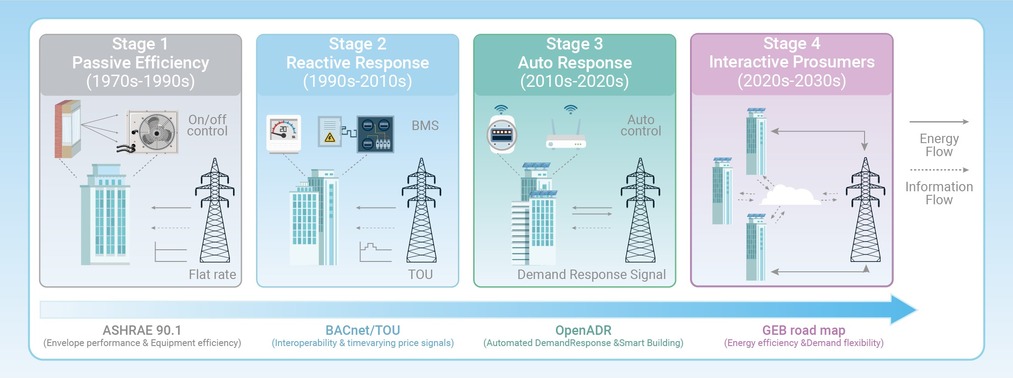
Figure 1.
Evolution of Building-to-Grid Interaction
-
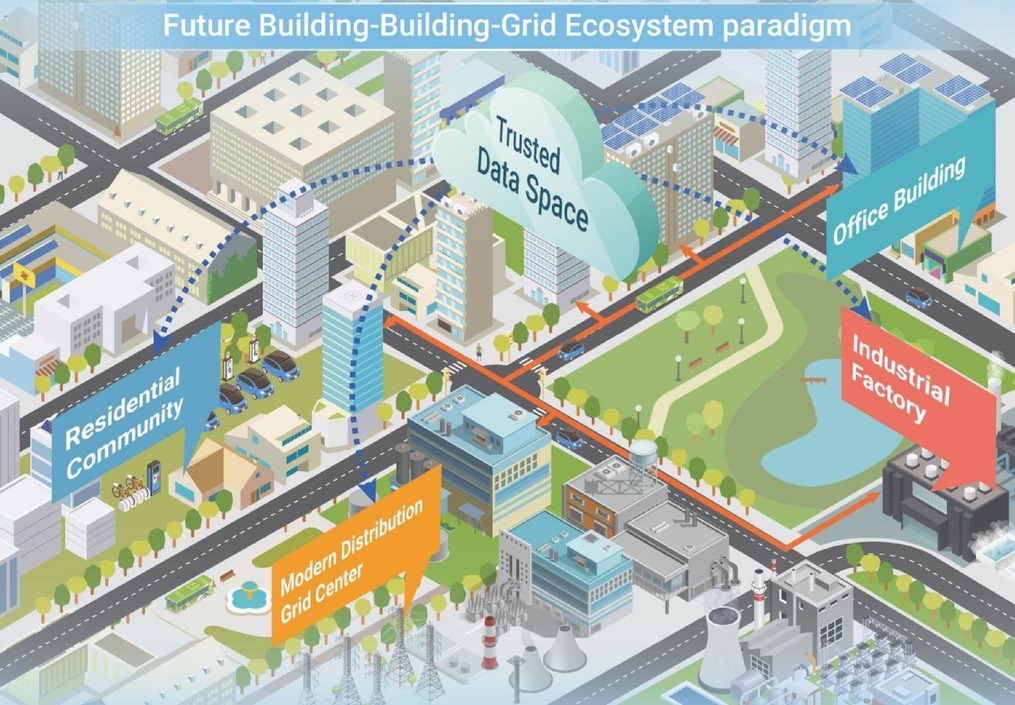
Figure 2.
Future Building-Building-Grid Ecosystem paradigm
-
Figure 3.
Conceptual Framework of Building-to-grid Integration
-
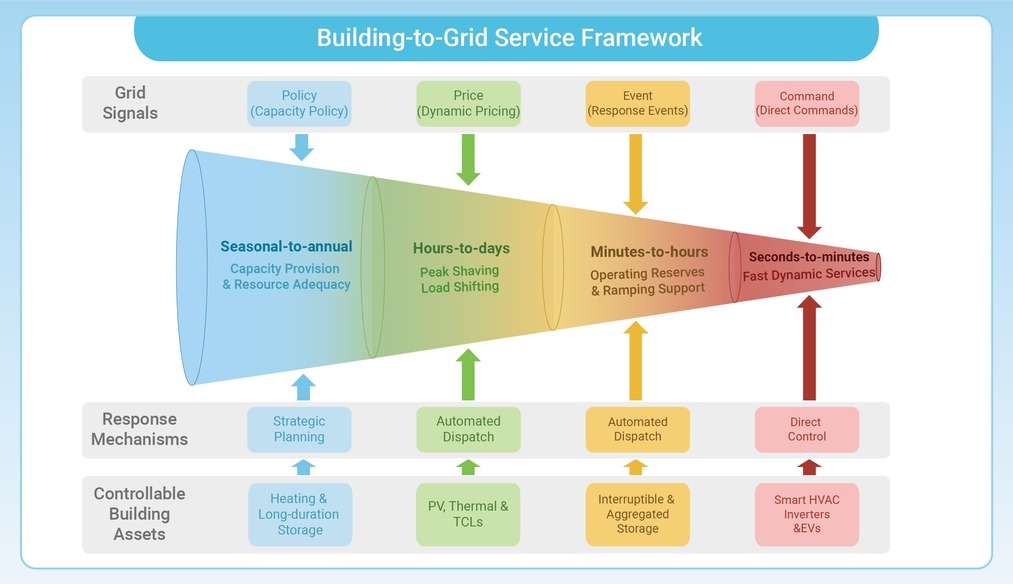
Figure 4.
A framework for B2G grid services across market levels and time scales (Adapted from Ref. 15).
-
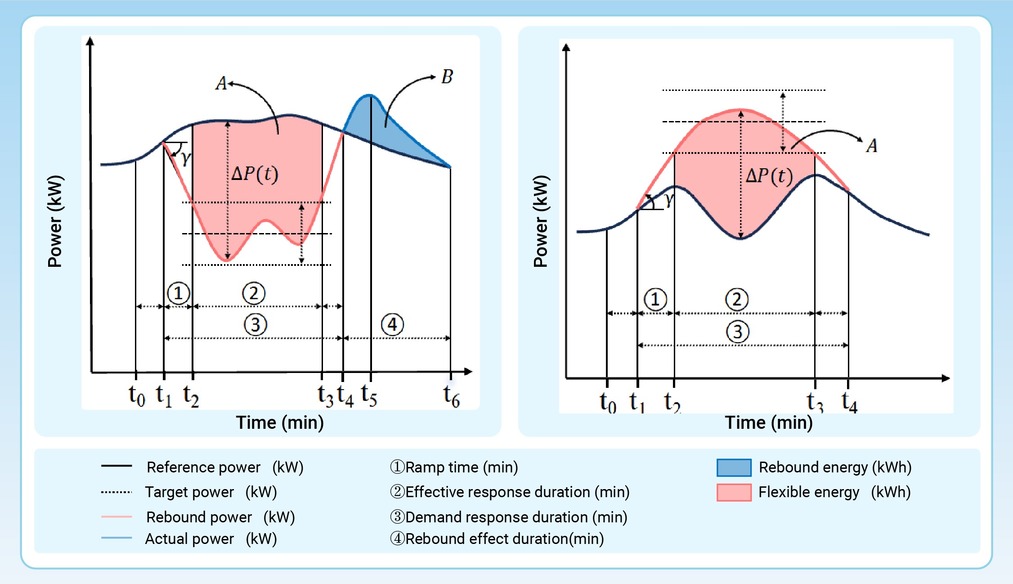
Figure 5.
Micro-level indicators
-
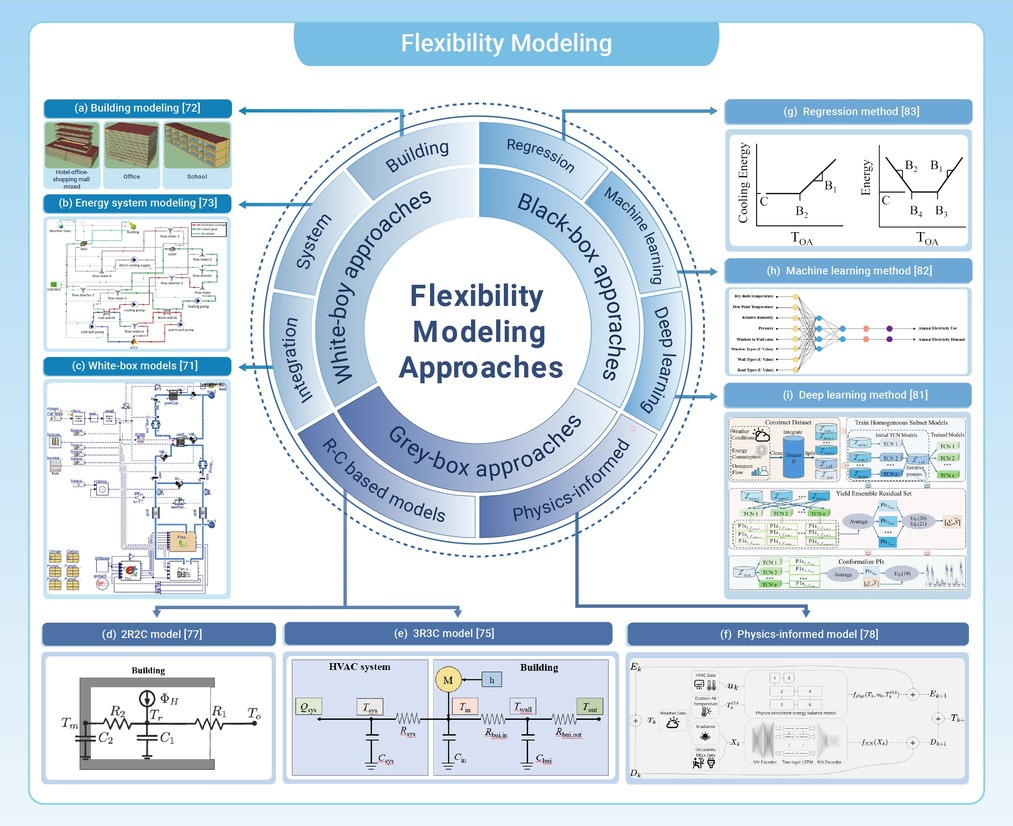
Figure 6.
Building-level flexibility modeling approach
-
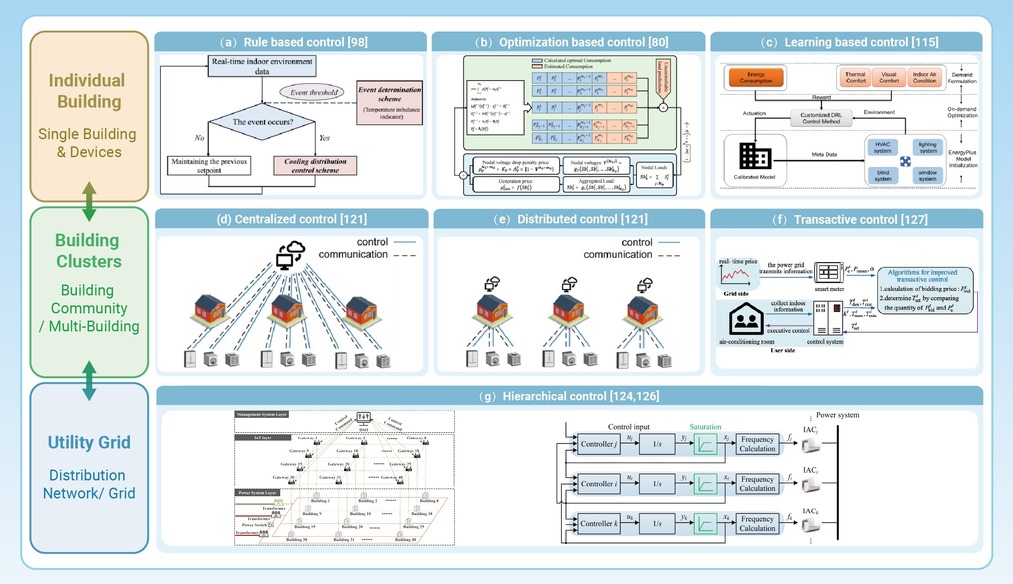
Figure 7.
Typical applications of control and coordination strategies across building-level, multi-building, and hierarchical architectures
-
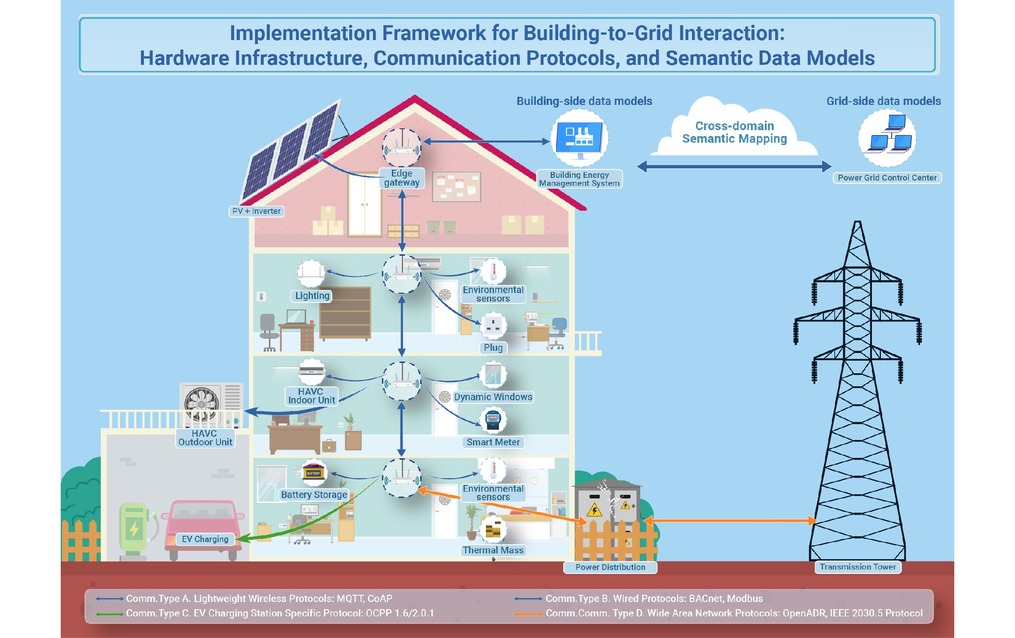
Figure 8.
Implementation framework for building-to-grid interaction: hardware infrastructure, communication protocols, and semantic data models (Adapted from Ref.141).