
Household Cost Burdens Limit the Transition from Residential Coal to Clean Heating in China's North-South Transitional Region
-
GRAPHICAL ABSTRACT
 DownLoad:
Full size image
DownLoad:
Full size image
-
PUBLIC SUMMARY
-
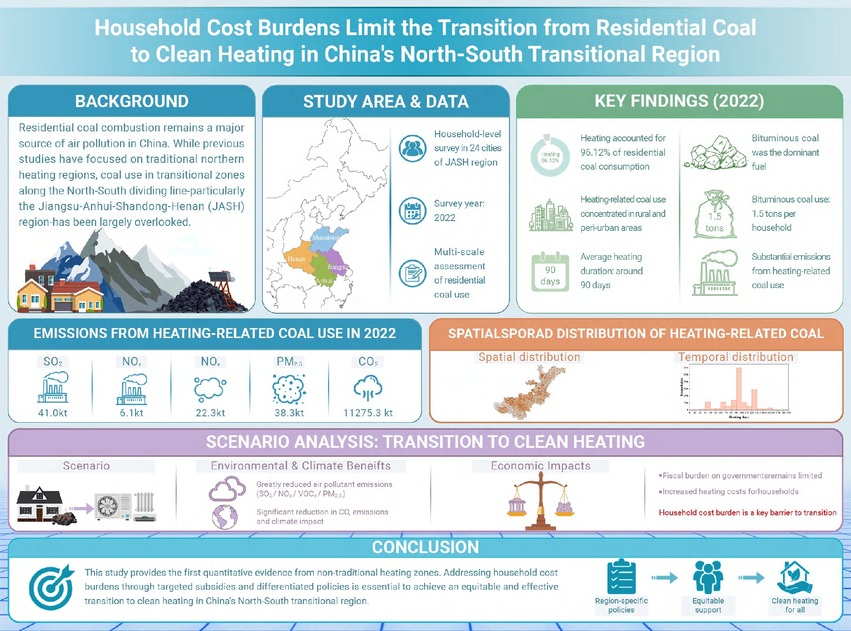
Residential coal use remains a major pollution source in China’s JASH transition region.
Heating accounted for 96.1% of household coal consumption, concentrated in rural and peri-urban areas.
Heating-related coal use emitted substantial PM2.5, SO2, NOx, VOCs, and CO2 in 2022.
Clean-heating transition could significantly reduce emissions and climate impacts.
Higher household heating costs are a key barrier despite limited fiscal pressure on governments.
-
-
ABSTRACT
Residential coal combustion continues to be a significant source of air pollution in China. While prior studies have primarily targeted traditional northern heating regions, coal use in transitional zones along the North-South dividing line, particularly the Jiangsu-Anhui-Shandong-Henan (JASH) region, has been largely overlooked. This study fills this critical gap by conducting a multi-scale assessment of residential coal use based on household-level survey data from 24 cities in JASH in 2022. Results indicated that heating accounted for 96.12% of residential coal consumption in the JASH region in 2022. Heating-related coal use exhibited strong spatial heterogeneity, concentrated in rural and peri-urban areas, with an average heating duration of around 90 days. Bituminous coal was the dominant fuel, with a median use of 1.5 tons per household. In 2022, air pollutant emissions from heating-related coal use were substantial, including 41.0 kt SO2, 6.1 kt NOx, 22.3 kt VOCs, 38.3 kt PM2.5 and11275.3 kt CO2. We conducted scenario analyses to explore the environmental, climate, and economic impacts of transitioning to clean heating. The result revealed that eliminating residential coal use could greatly reduce emissions, although it may also lead to increased heating costs for households. While the fiscal burden on governments remains limited, the cost burden on residents presents a key barrier. This study provided the first quantitative evidence from non-traditional heating zones and offers actionable insights for developing region-specific, equitable clean heating policies.-
Keywords:
- residential coal /
- clean heating /
- air pollutants /
- carbon /
- heating technology /
- cost
-

-
REFERENCES
[1] Liu C., Zhu B., Ni J., et al. (2021). Residential coal-switch policy in China: Development, achievement, and challenge. Energy Policy 151:112165. DOI:10.1016/j.enpol.2021.1121654 [2] Meng W., Zhu L., Liang Z., et al. (2023). Significant but Inequitable Cost-Effective Benefits of a Clean Heating Campaign in Northern China. Environ. Sci. Technol. 57:8467−8475. DOI:10.1021/acs.est.2c07492 [3] China Statistics Press. (2024). China Energy Statistical Yearbook 2023. CPS. [4] National Bureau of Statistics. (2023). China Statistical Yearbook 2023. NBSC. [5] Zhao X., Zhao X., Liu P., et al. (2020). Pollution levels, composition characteristics and sources of atmospheric PM2.5 in a rural area of the North China Plain during winter. J. Environ. Sci. 95:172–182. DOI:10.1016/j.jes.2020.03.053 Purchase PDF. [6] Wang H., Zhou S. and Zhang P. (2024). Clean heating and clean air: Evidence from the coal-to-gas program in China. China Econ. Rev. 85:102179. DOI:10.1016/j.chieco.2024.102179 [7] Yang X. and Teng F. (2018). The air quality co-benefit of coal control strategy in China. Resour. Conserv. Recycl. 129:373−382. DOI:10.1016/j.resconrec.2016.08.011 [8] National Development and Reform Commission. (2017). Winter Clean Heating Plan for Northern Regions (2017-2021). Available: https://docs.nrel.gov/docs/fy25osti/93310.pdf [9] National Development and Reform Commission. (2018). Three Year Action Plan to Win the Blue-Sky Defense War. Available: https://www.gov.cn/zhengce/zhengceku/2018-07/03/content_5303158.htm [10] National Development and Reform Commission. (2024). Action Plan for Energy Conservation and Carbon Reduction from 2024 to 2025. Available: https://www.gov.cn/gongbao/2024/issue_11406/202406/content_6958082.html [11] Zhu M., Liu L., Yin S., et al. (2020). County-level emission inventory for rural residential combustion and emission reduction potential by technology optimization: A case study of Henan, China. Atmos. Environ. 228:117436. DOI:10.1016/j.atmosenv.2020.117436 [12] Cheng T. and Wang X. (2022). Limiting factors and feasible solutions for central heating in southern China (In Chinese). Innovation 16:86−92. [13] Guo J., Huang Y. and Wei C. (2015). North–South debate on district heating: Evidence from a household survey. Energy Policy 86:295−302. DOI:10.1016/j.enpol.2015.07.017 [14] Han X., Guo J. and Wei C. (2022). Residential space-heating energy demand in urban Southern China: An assessment for 2030. Energy Build. 254:111598. DOI:10.1016/j.enbuild.2021.111598 [15] Li X., Wu J., Elser M., et al. (2018). Contributions of residential coal combustion to the air quality in Beijing–Tianjin–Hebei (BTH), China: a case study. Atmos. Chem. Phys. 18:10675−10691. DOI:10.5194/acp-18-10675-2018 [16] Zhang R., Chen C., Liu S., et al. (2023). Emission inventory of air pollutants from residential coal combustion over the Beijing-Tianjin-Hebei Region in 2020. Air Qual. Atmos. Health 16:1823−1832. DOI:10.1007/s11869-023-01375-4 [17] Cheng M., Zhi G., Tang W., et al. (2017). Air pollutant emission from the underestimated households' coal consumption source in China. Sci. Total Environ. 580:641−650. DOI:10.1016/j.scitotenv.2016.12.143 [18] Xue Y., Zhou Z., Nie T., et al. (2016). Trends of multiple air pollutants emissions from residential coal combustion in Beijing and its implication on improving air quality for control measures. Atmos. Environ. 142:303−312. DOI:10.1016/j.atmosenv.2016.08.004 [19] Peng L., Zhang Q., Yao Z., et al. (2019). Underreported coal in statistics: A survey-based solid fuel consumption and emission inventory for the rural residential sector in China. Appl. Energy 235:1169−1182. DOI:10.1016/j.apenergy.2018.11.043 [20] Zhou Y., Liu J., Lang J., et al. (2024). Necessary CO2 emissions improvement based on rural residential coal/stove-specific coal combustion and prefectural-differentiation synergistic effect of pollutants and carbon emission reduction. J. Clean. Prod. 449:141555. DOI:10.1016/j.jclepro.2024.141555 [21] Feng T., Du H., Coffman D. M., et al. (2021). Clean heating and heating poverty: A perspective based on cost-benefit analysis. Energy Policy 152:112205. DOI:10.1016/j.enpol.2021.112205 [22] Han H., Wu S. and Zhang Z. (2018). Factors underlying rural household energy transition: A case study of China. Energy Policy 114:234−244. DOI:10.1016/j.enpol.2017.11.052 [23] Zheng X., Wei C., Qin P., et al. (2014). Characteristics of residential energy consumption in China: Findings from a household survey. Energy Policy 75:126−135. DOI:10.1016/j.enpol.2014.07.016 [24] Chen J., Wu Y., Song M., et al. (2018). The residential coal consumption: Disparity in urban–rural China. Resour. Conserv. Recycl. 130:60−69. DOI:10.1016/j.resconrec.2017.11.003 [25] Pallavidino L., Prandi R., Bertello A., et al. (2014). Compilation of a road transport emission inventory for the Province of Turin: Advantages and key factors of a bottom–up approach. Atmos. Pollut. Res. 5:648−655. DOI:10.5094/APR.2014.074 [26] Yang Y., Liu J., Lin Y., Li Q. (2019). The impact of urbanization on China’s residential energy consumption. Struct. Chang. Econ. Dyn. 49:170−182. DOI:10.1016/j.strueco.2018.09.002 [27] Wang S., Zhao C., Liu H., et al. (2021). Exploring the spatial spillover effects of low-grade coal consumption and influencing factors in China. Resour. Policy 70:101906. DOI:10.1016/j.resourpol.2020.101906 [28] Yuan P., Duanmu L. and Wang Z. (2019). Coal consumption prediction model of space heating with feature selection for rural residences in China. Sustain. Cities Soc. 50:101643. DOI:10.1016/j.scs.2019.101643 [29] Zhou Y., Zi T., Lang J., et al. (2020). Impact of rural residential coal combustion on air pollution in Shandong, China. Chemosphere 260:127517. DOI:10.1016/j.chemosphere.2020.127517 [30] Xu S. and Ge J. (2020). Sustainable shifting from coal to gas in North China: An analysis of resident satisfaction. Energy Policy 138:111296. DOI:10.1016/j.enpol.2020.111296 [31] Zhu Y., Taylor D. and Wang Z. (2022). The role of renewable energy in reducing residential fossil energy-related CO2 emissions: Evidence from rural China. J. Clean. Prod. 366:132891. DOI:10.1016/j.jclepro.2022.132891 [32] Yao C., Chen C. and Li M. (2012). Analysis of rural residential energy consumption and corresponding carbon emissions in China. Energy Policy 41:445−450. DOI:10.1016/j.enpol.2011.11.005 [33] Zhang X., Jin Y., Dai H., et al. (2019). Health and economic benefits of cleaner residential heating in the Beijing–Tianjin–Hebei region in China. Energy Policy 127:165−178. DOI:10.1016/j.enpol.2018.12.008 [34] Cai S., Li Q., Wang S., et al. (2018). Pollutant emissions from residential combustion and reduction strategies estimated via a village-based emission inventory in Beijing. Environ. Pollut. 238:230−237. DOI:10.1016/j.envpol.2018.03.036 [35] He J., Song L., Xu W.,et al. (2020). Research on sustainable development policies for clean heating in winter in northern China (In Chinese). China Environment Publishing Group. [36] You H., Li N., Gao C-k., et al. (2025). Village-level emission inventory of residential coal combustion and reduction analysis: A case study of Liaoning Province, China. Renew. Sustain. Energy Rev. 208:115046. DOI:10.1016/j.rser.2024.115046 -
ABOUT THIS ARTICLE
Cite this article:
Wang H., Chen X., Dong Y., et al. (2026). Household Cost Burdens Limit the Transition from Residential Coal to Clean Heating in China's North-South Transitional Region. Energy Use 2:100051. https://doi.org/10.59717/ipj.energy-use.2026.100051
Welcome!
To request copyright permission to republish or share portions of our works, please visit Copyright Clearance Center's (CCC) Marketplace website at marketplace.copyright.com.
Export File
Citation
Wang H., Chen X., Dong Y., et al. (2026). Household Cost Burdens Limit the Transition from Residential Coal to Clean Heating in China's North-South Transitional Region. Energy Use 2:100051. https://doi.org/10.59717/ipj.energy-use.2026.100051

Format
Content
-
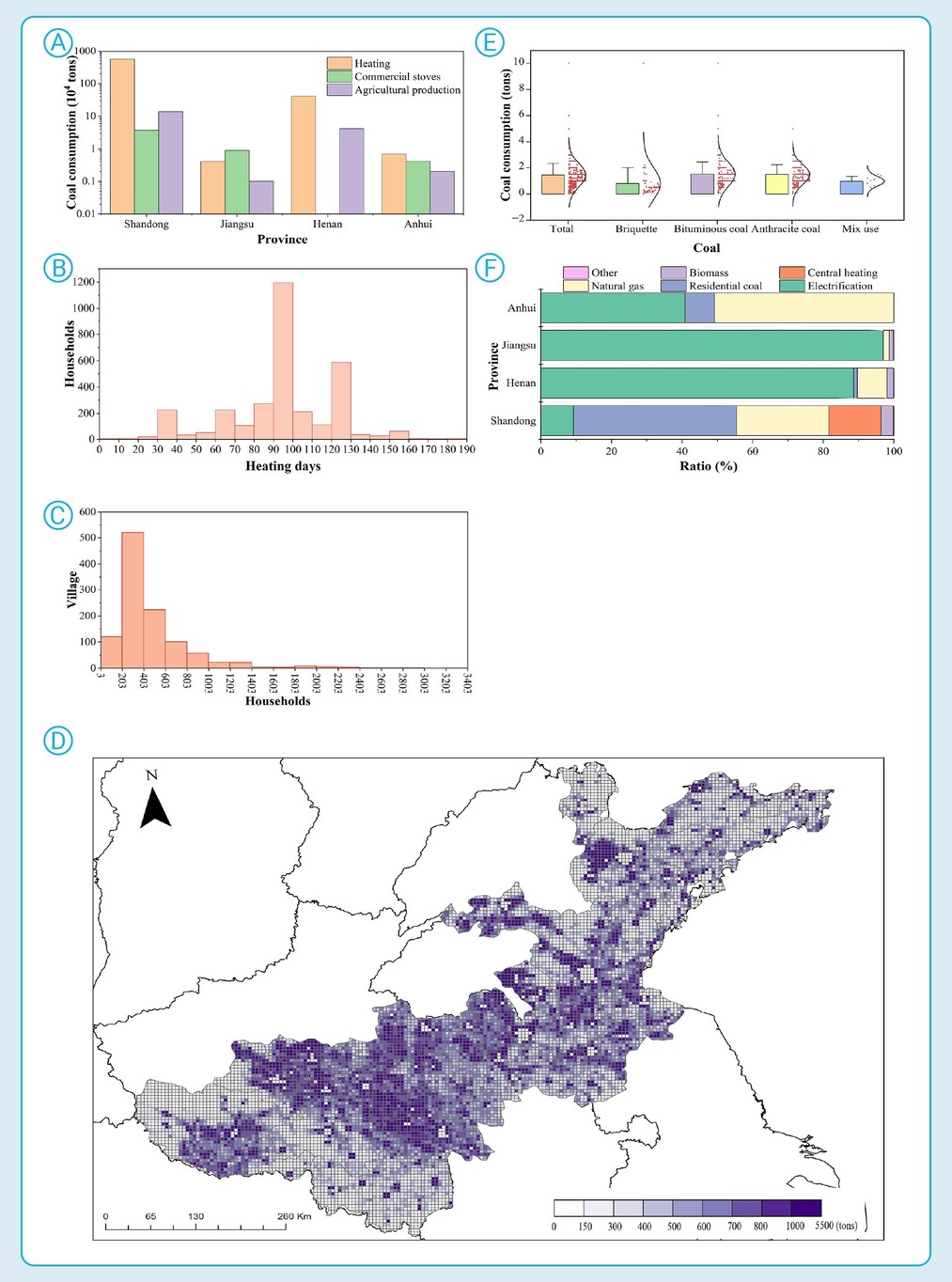
Figure 1.
(A) Residential coal consumption from different end uses; (B) Distributions of heating days in JASH; (C) Distributions of villages and households in the survey; (D) Spatial distribution of residential coal consumption in JASH; (E) Average household residential coal consumptions; (F) Heating methods in JASH.
-
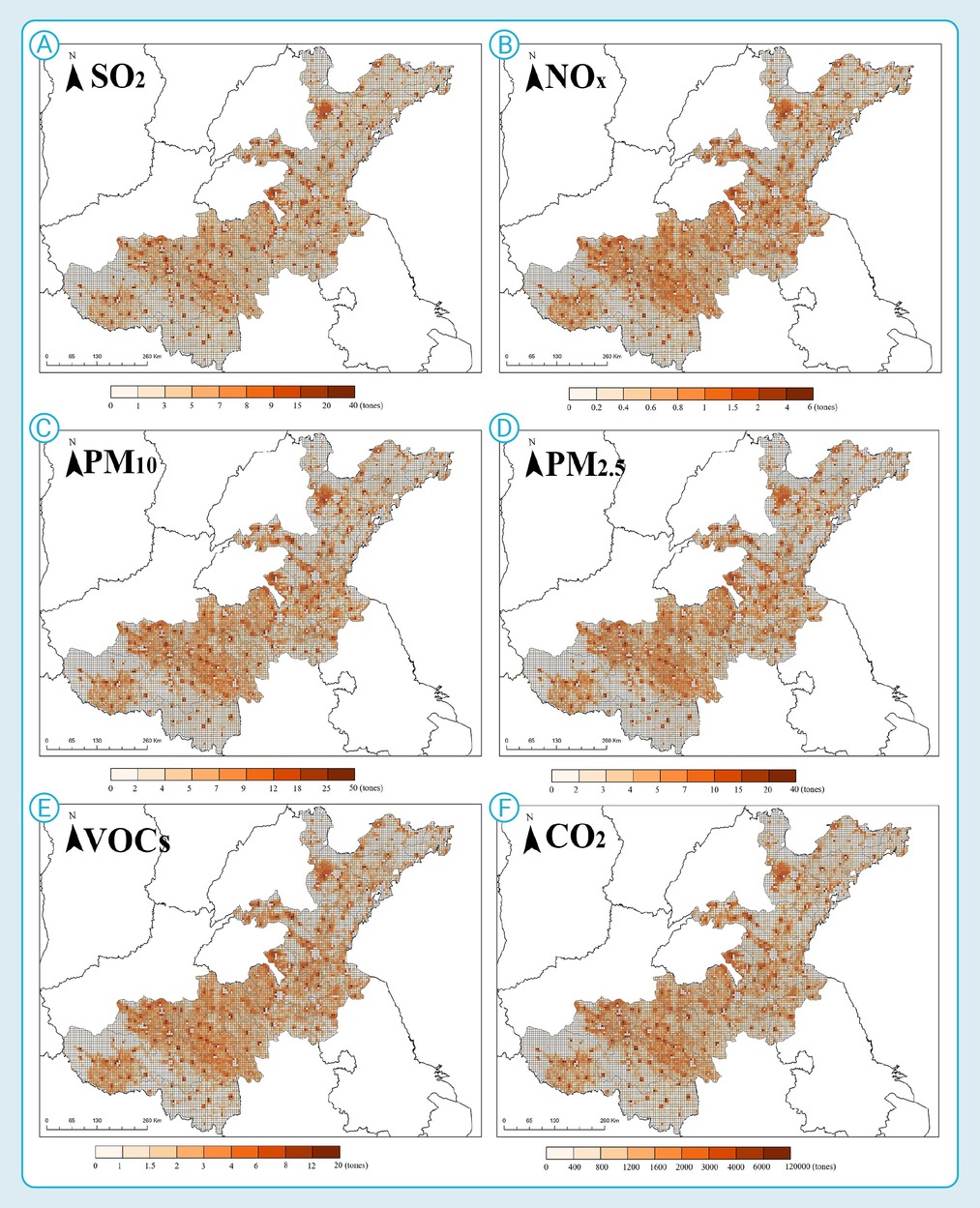
Figure 2.
Spatial distribution of air pollutants (A-E)and CO2 (F)emissions from heating-relatedresidential coal in JASH.
-
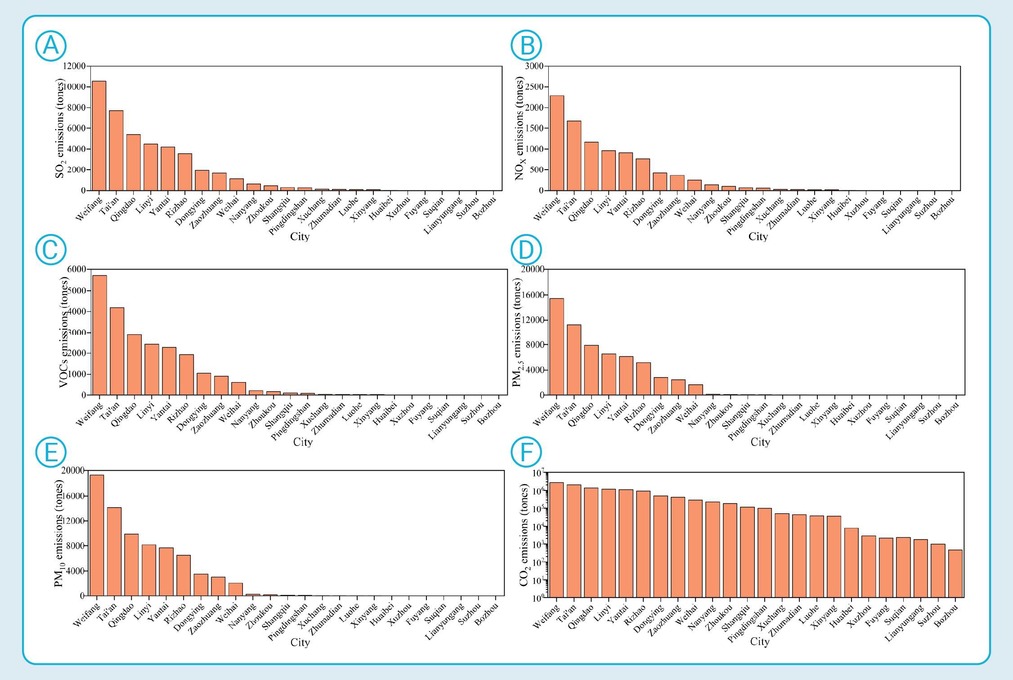
Figure 3.
Air pollutants and CO2 emissions at the city level. (A) to (F) were SO2, NOx, VOCs, PM2.5, PM10 and CO2, respectively.
-
Figure 4.
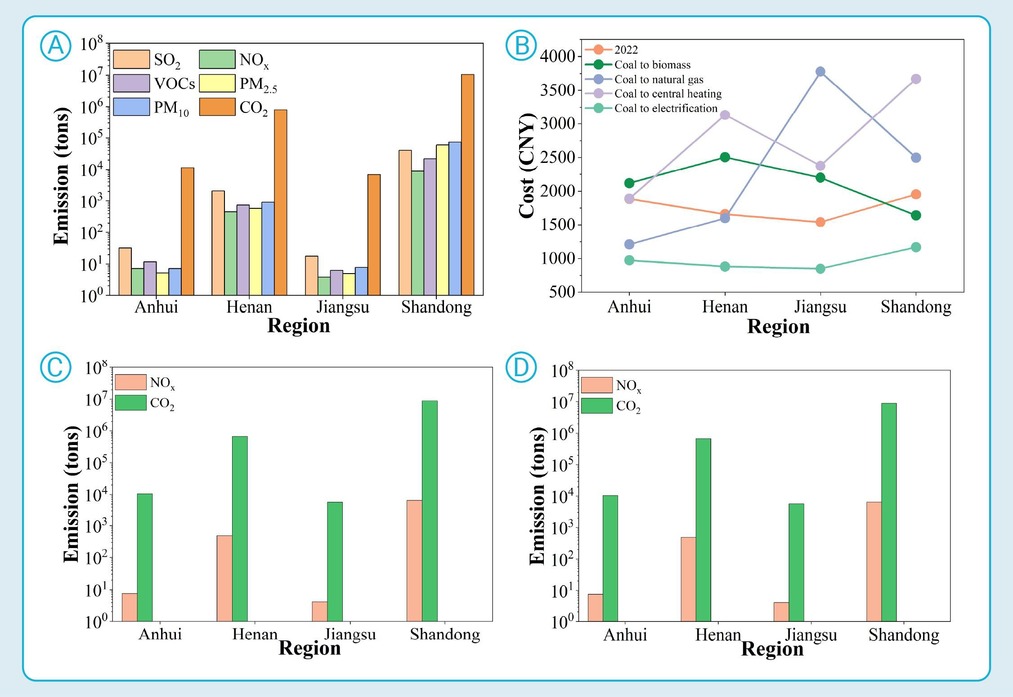
(A) Air pollutants and CO2 emissions in 2022; (B) Heating cost under different extreme conditions; (C) Air pollutants and CO2 emissions under “coal to biomass” condition; (D) Air pollutants and CO2 emissions under “coal to gas” condition.
-
Figure 5.
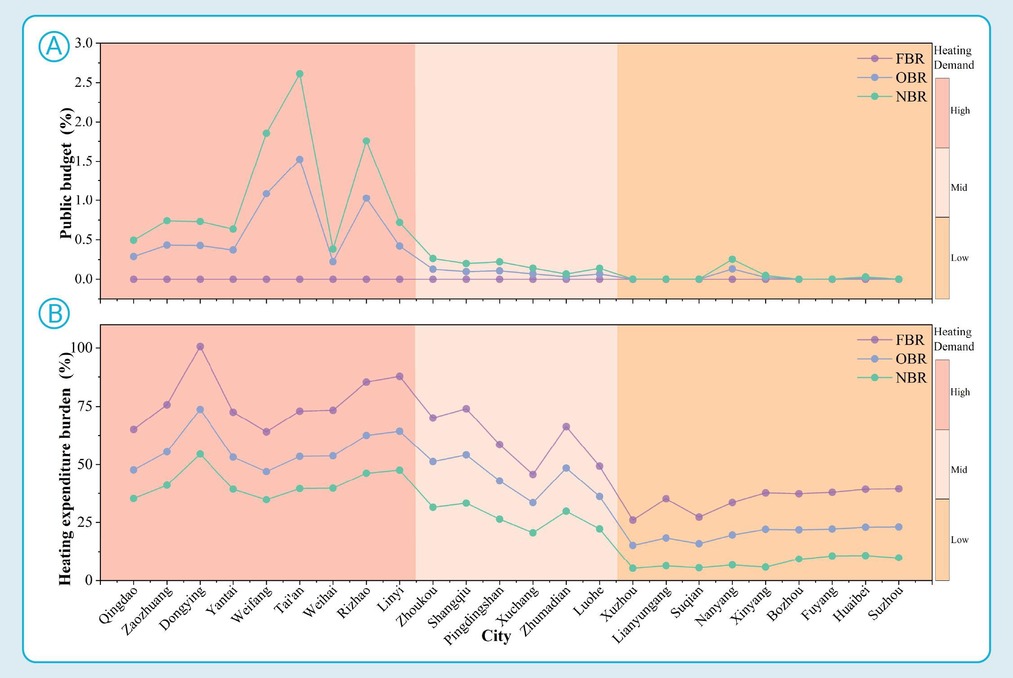
(A) Proportion of the public budget of the general treasury under three scenarios; (B) Heating expenditure burden of residents.