
Optimization and benefit analysis of the supply chain for sweet sorghum bioenergy production in China
-
GRAPHICAL ABSTRACT

 DownLoad:
Full size image
DownLoad:
Full size image
-
PUBLIC SUMMARY
-
Bio-liquid fuels are one of the effective ways to alleviate energy shortages and reduce greenhouse gas emissions.
Aboveground biomass of sweet sorghum was 595.39 million tons in China, which could meet the demand of promoting automobile ethanol gasoline in China.
Feedstock collection station, ethanol processing plant, gasoline blending center are the three basic units of ethanol supply chain.
Establishing large ethanol plants near the Hu Huanyong Line helps to reduce costs.
-
-
ABSTRACT
Bio-liquid fuel is one of the effective ways to alleviate energy shortages and reduce greenhouse gas emissions. Sweet sorghum, as an energy crop used in fuel ethanol production, has enormous potential for development. However, due to seasonality, vulnerability, and logistical scheduling costs during transportation, the sweet sorghum ethanol supply chain faces significant difficulties and challenges in its development. To address the research gap, this paper proposes a multi-objective sustainable supply chain optimization model for Chinese sweet sorghum bioenergy based on mixed-integer linear programming. In this framework, the crop growth process model is first spatially extended to obtain the feedstock sources of the sweet sorghum ethanol supply chain. Then a site selection model for the feedstock collection stations and ethanol processing plants is constructed based on the geographic information system (GIS) to determine the candidate locations of the basic units of the sweet sorghum ethanol supply chain. Finally, a multi-objective supply chain optimization model based on the mixed-integer linear programming methodology is created to achieve the sweet sorghum ethanol supply chain layout and optimization at the national level. This framework takes into account the fuel ethanol market demand in China and the current state of the sweet sorghum ethanol supply chain industry, achieving national-level layout and optimization of the sweet sorghum ethanol supply chain. The total aboveground biomass (dry weight) of sweet sorghum on marginal land in China can be converted into approximately 37.212 million tons of fuel ethanol production, meeting the requirement to promote a nationwide 10% substitution rate for automotive ethanol gasoline. The lowest-cost supply chain layout scheme suggests establishing large ethanol processing plants near the Hu Huanyong Line, as this area benefits from abundant sweet sorghum yield on marginal lands and lower east-west direction transportation costs. However, the lowest carbon emission supply chain layout scheme recommends reducing the raw material supply area and increasing the ethanol transportation route to lower carbon emissions. The results of the sensitivity analyses indicate that lowering feedstock production and increasing ethanol demand increases the overall cost and carbon emissions of the sweet sorghum ethanol supply chain, while using rail transportation methods, increasing feedstock production, and decreasing ethanol demand reduces costs and carbon emissions. -

-
REFERENCES
[1] Fan, J.L., Fu, J., Zhang, X., et al. (2023). Co-firing plants with retrofitted carbon capture and storage for power-sector emissions mitigation. Nat. Clim. Change 13: 807−815. DOI: 10.1038/s41558-023-01736-y. [2] Fajardy, M., Morris, J., Gurgel, A., et al. (2021). The economics of bioenergy with carbon capture and storage (BECCS) deployment in a 1.5 ℃ or 2 ℃ world. Glob. Environ. Change 68: 102262. DOI: 10.1016/j.gloenvcha.2021.102262. [3] Zhang, B., Hastings, A., Clifton‐Brown, J.C., et al. (2020). Modeled spatial assessment of biomass productivity and technical potential of Miscanthus × giganteus, Panicum virgatum L. , and Jatropha on marginal land in China. GCB Bioenergy 12: 328−345. DOI: 10.1111/gcbb.12673. [4] Soleimani, H., Govindan, K., Saghafi, H., et al. (2017). Fuzzy multi-objective sustainable and green closed-loop supply chain network design. Comput. Ind. Eng. 109: 191−203. DOI: 10.1016/j.cie.2017.04.038. [5] Jayarathna, L., Kent, G., O’Hara I, et al. (2020). A Geographical Information System based framework to identify optimal location and size of biomass energy plants using single or multiple biomass types. Appl. Energy 275: 115398. DOI: 10.1016/j.apenergy.2020.115398. [6] Fang, Y.R., Shi, W., and Xie, G.H. (2022). Implications of wheat straw logistic systems for bioenergy sustainable development in China: Costs, energy consumption, and GHG emissions. Sci. Total Environ. 837: 155633. DOI: 10.1016/j.scitotenv.2022.155633. [7] Rabbani, M., Saravi, N.A., Farrokhi-Asl, H., et al. (2018). Developing a sustainable supply chain optimization model for switchgrass-based bioenergy production: A case study. J. Clean. Prod. 200: 827−843. DOI: 10.1016/j.jclepro.2018.07.226. [8] Mamoudan, M.M., Jafari, A., Mohammadnazari, Z., et al. (2023). Hybrid machine learning-metaheuristic model for sustainable agri-food production and supply chain planning under water scarcity. Resour. Environ. Sustain. 14: 100133. DOI: 10.1016/j.resenv.2023.100133. [9] Valderrama, C.V., Santibanez-González, E., Pimentel, B., et al. (2020). Designing an environmental supply chain network in the mining industry to reduce carbon emissions. J. Clean. Prod. 254: 119688. DOI: 10.1016/j.jclepro.2019.119688. [10] Zhang, S., Liu, L., Zhang, L., et al. (2018). An optimization model for carbon capture utilization and storage supply chain: A case study in Northeastern China. Appl. Energy 231: 194−206. DOI: 10.1016/j.apenergy.2018.09.129. [11] Lin, T., Rodríguez, L.F., Shastri, Y.N., et al. (2014). Integrated strategic and tactical biomass–biofuel supply chain optimization. Bioresour. technol. 156: 256−266. DOI: 10.1016/j.biortech.2013.12.121. [12] Sharma, B., Ingalls, R.G., Jones, C.L., et al. (2013). Biomass supply chain design and analysis: Basis, overview, modeling, challenges, and future. Renew. Sust. Energ. Rev. 24: 608−627. DOI: 10.1016/j.rser.2013.03.049. [13] Marvin, W.A., Schmidt, L.D., Benjaafar, S., et al. (2011). Optimizing the lignocellulosic biomass-to-ethanol supply chain: A case study for the Midwestern United States. Comput. Aided Chem. Eng. 29: 1728−1732. DOI: 10.1016/B978-0-444-54298-4.50124-0. [14] Durmaz, Y.G. and Bilgen, B. (2020). Multi-objective optimization of sustainable biomass supply chain network design. Appl. Energy 272: 115259. DOI: 10.1016/j.apenergy.2020.115259. [15] Goli, A., Ala, A., and Mirjalili, S. (2023a). A robust possibilistic programming framework for designing an organ transplant supply chain under uncertainty. Ann. Oper. Res. 328: 493−530. DOI: 10.1007/s10479-022-04829-7. [16] Goli, A., Ala, A., and Hajiaghaei-Keshteli, M. (2023b). Efficient multi-objective meta-heuristic algorithms for energy-aware non-permutation flow-shop scheduling problem. Expert Syst. Appl. 213: 119077. DOI: 10.1016/j.eswa.2022.119077. [17] Goli, A. and Tirkolaee, E.B. (2023c). Designing a portfolio-based closed-loop supply chain network for dairy products with a financial approach: Accelerated Benders decomposition algorithm. Comput. Oper. Res. 155: 106244. DOI: 10.1016/j.cor.2023.106244. [18] Goli, A. (2023d). Integration of blockchain-enabled closed-loop supply chain and robust product portfolio design. Comput. Ind. Eng. 179: 109211. DOI: 10.1016/j.cie.2023.109211. [19] Kostin, A., Macowski, D.H., Pietrobelli, J.M.T.A., et al. (2018). Optimization-based approach for maximizing profitability of bioethanol supply chain in Brazil. Comput. Chem. Eng. 115: 121−132. DOI: 10.1016/j.compchemeng.2018.04.001. [20] Huang, E., Zhang, X., Rodriguez, L., et al. (2019). Multi-objective optimization for sustainable renewable jet fuel production: A case study of corn stover based supply chain system in Midwestern U. S. Renew. Sust. Energ. Rev. 115: 109403. DOI: 10.1016/j.rser.2019.109403. [21] Galanopoulos, C., Giuliano, A., Barletta, D., et al. (2020). An integrated methodology for the economic and environmental assessment of a biorefinery supply chain. Chem. Eng. Res. Des. 160: 199−215. DOI: 10.1016/j.cherd.2020.05.016. [22] Ahranjani, P.M., Ghaderi, S.F., Azadeh, A., et al. (2020). Robust design of a sustainable and resilient bioethanol supply chain under operational and disruption risks. Clean Techn. Environ. Policy 22: 119−151. DOI: 10.1007/s10098-019-01773-2. [23] Akbarian-Saravi, N., Mobini, M., and Rabbani, M. (2020). Development of a comprehensive decision support tool for strategic and tactical planning of a sustainable bioethanol supply chain: Real case study, discussions and policy implications. J. Clean. Prod. 244: 118871. DOI: 10.1016/j.jclepro.2019.118871. [24] Jiang, D., Hao, M., Fu, J., et al. (2019). Potential bioethanol production from sweet sorghum on marginal land in China. J. Clean. Prod. 220: 225−234. DOI: 10.1016/j.jclepro.2019.01.294. [25] Fu, J., Yan, X., and Jiang, D. (2021). Assessing the sweet sorghum-based ethanol potential on saline–alkali land with DSSAT model and LCA approach. Biotech. Biofuel. 14: 1−14. DOI: 10.1186/s13068-021-01896-z. [26] Kong, J., Luo, Y., and Hu, A. (2023). Review of China’s refined oil market in 2022 and forecast of supply and demand in 2023. Int. Petrol. Eco. 31: 59−66. [27] Saltelli, A., Tarantola, S., Campolongo, F., et al. (2004). Sensitivity analysis in practice: A guide to assessing scientific models (Halsted Press, USA). [28] Blasone, R.S., Vrugt, J.A., Madsen, H., et al. (2008). Generalized likelihood uncertainty estimation (GLUE) using adaptive Markov Chain Monte Carlo sampling. Adv. Water Resour. 31: 630−648. DOI: 10.1016/j.advwatres.2007.12.003. [29] Wang, Z., Yue, Q., Xia, H., et al. (2016). China 2050: Climate scenarios and stability of Hu-line. Sci. Sin. Terrae 46: 1505−1514. DOI: 10.1360/N072015-00527. [30] Liu, Z., Qiu, T., and Chen, B. (2014). A study of the LCA based biofuel supply chain multi-objective optimization model with multi-conversion paths in China. Appl. Energy 126: 221−234. DOI: 10.1016/j.apenergy.2014.04.001. [31] Tian, Y.S., Li, S.Z., Zhao, L.X., et al. (2011). Life cycle assessment on fuel ethanol producing from sweet sorghum stalks. Tran. Chin. Soc. Agri. Machin. 42: 132−137. [32] Wang, J.Y., Fu, J.Y., Zhao, Z.T., et al. (2023). Benefit analysis of multi-approach biomass energy utilization toward carbon neutrality. The Innovation 4: 100423. DOI: 10.1016/j.xinn.2023.100423. [33] Yin, Z.C., Zhou, B.T., Duan, M.K., et al. Climate extremes become increasingly fierce in China. The Innovation 4: 100406. DOI: 10.1016/j.xinn.2023.100406. -
ABOUT THIS ARTICLE
Cite this article:
Jiang D., Peng T., Bu Z., et al., (2024). Optimization and benefit analysis of the supply chain for sweet sorghum bioenergy production in China. The Innovation Energy 1(3): 100038. https://doi.org/10.59717/j.xinn-energy.2024.100038
Welcome!
To request copyright permission to republish or share portions of our works, please visit Copyright Clearance Center's (CCC) Marketplace website at marketplace.copyright.com.
Article Metrics
Relative Articles
Cited by
Export File
Citation
Jiang D., Peng T., Bu Z., et al., (2024). Optimization and benefit analysis of the supply chain for sweet sorghum bioenergy production in China. The Innovation Energy 1(3): 100038. https://doi.org/10.59717/j.xinn-energy.2024.100038

Format
Content
-
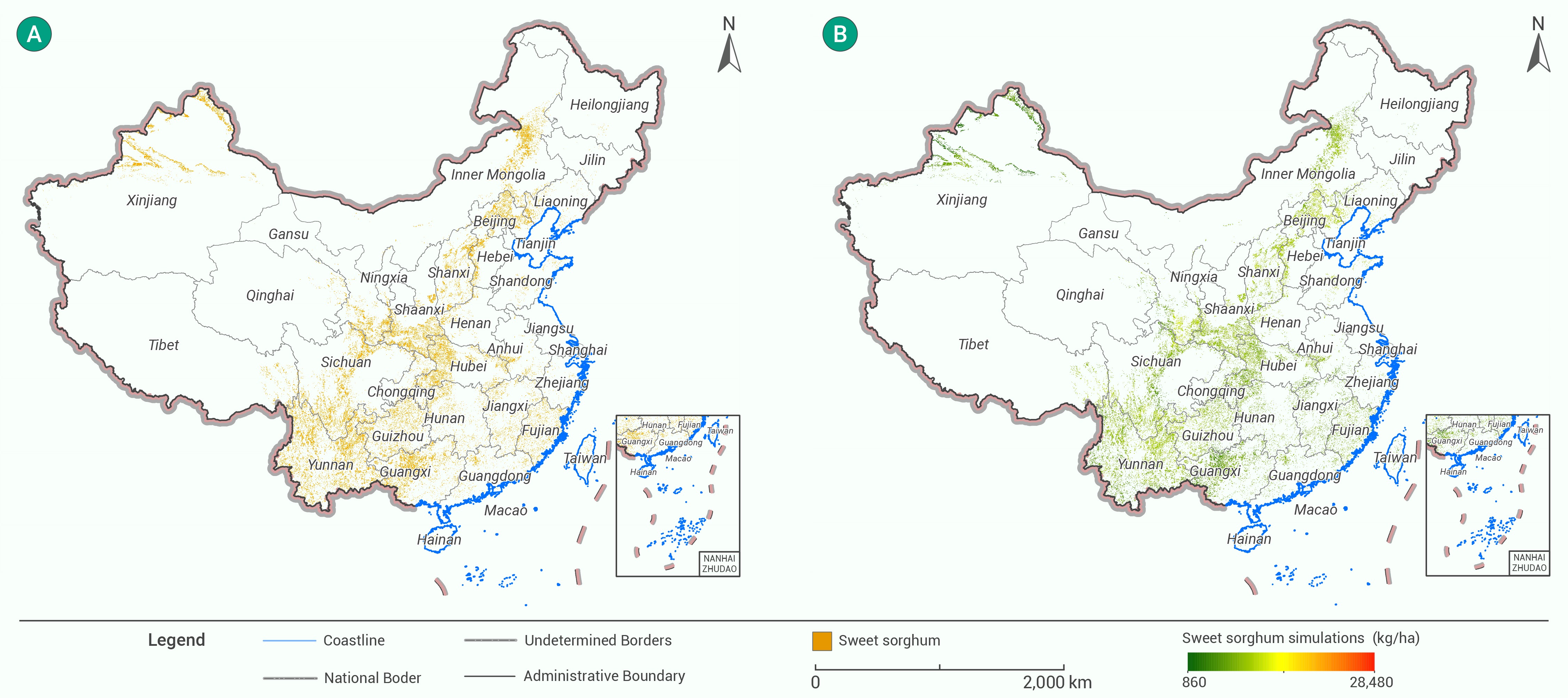
Figure 1.
Assessment of sweet sorghum production potential
-
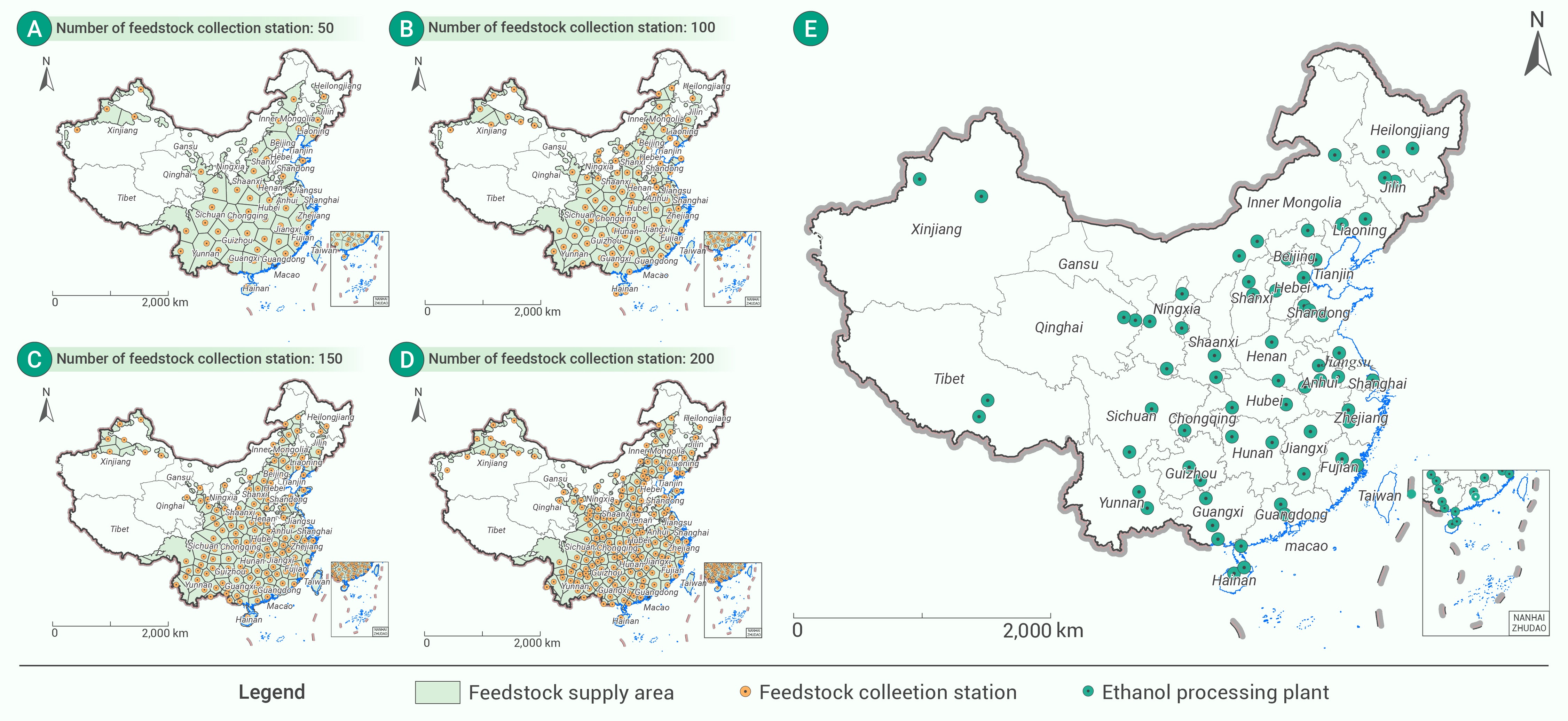
Figure 2.
Sweet sorghum feedstock collection station and ethanol processing plant site selection simulation
-
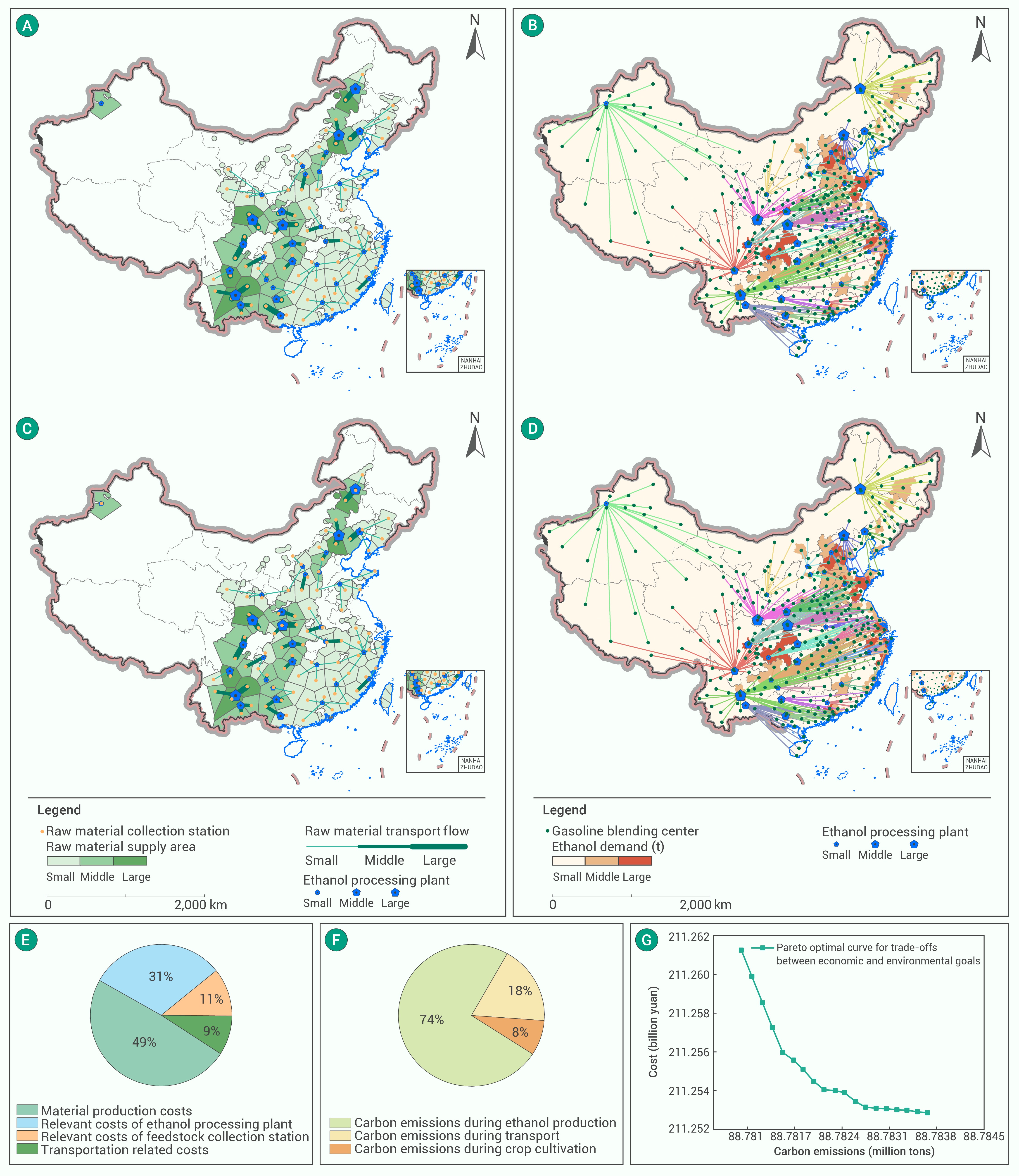
Figure 3.
Optimization Layout and Comprehensive Benefits of Sweet Sorghum Ethanol Supply Chain
-
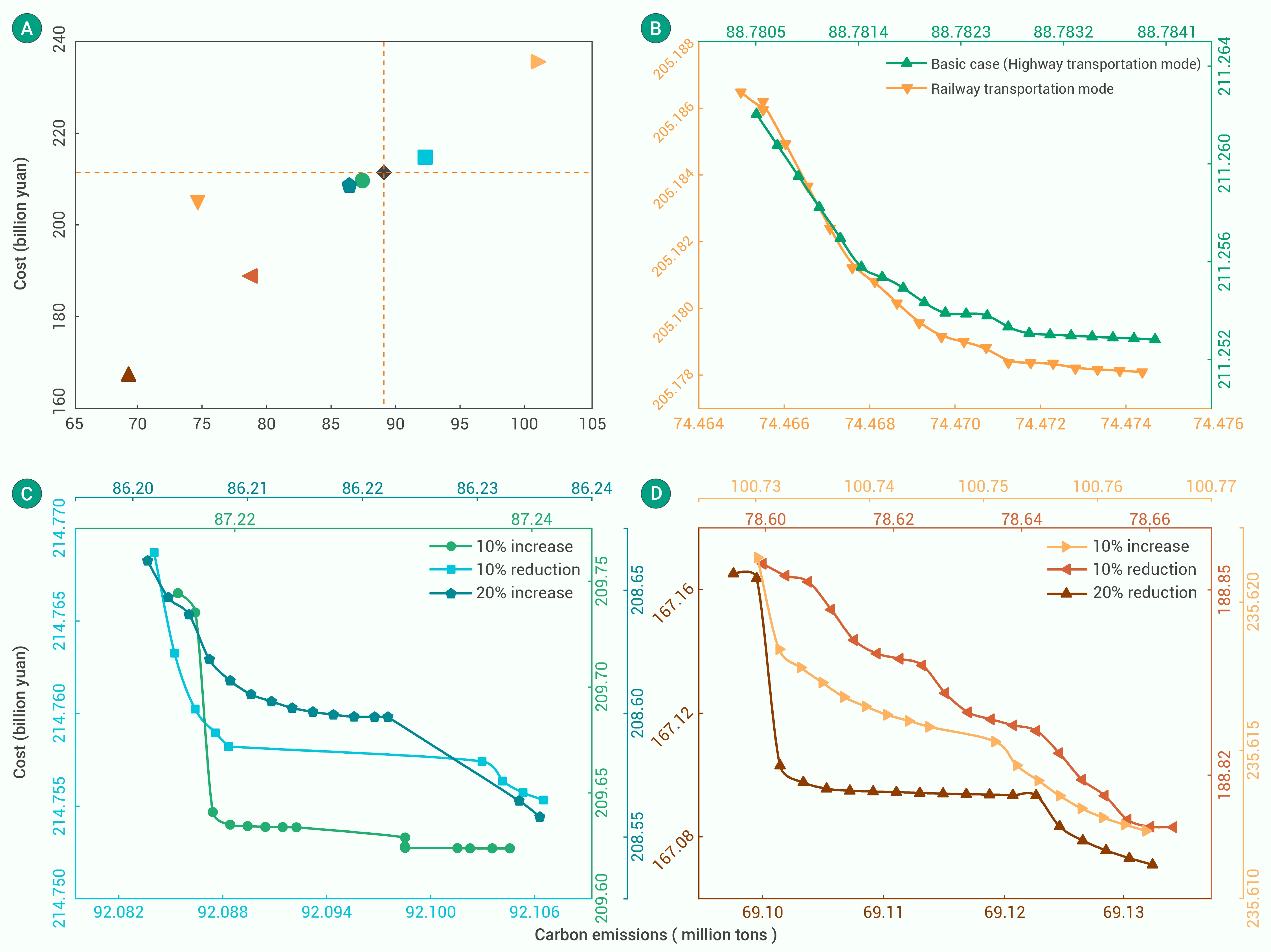
Figure 4.
Sensitivity analysis of key parameters
