
Intelligent optimization for building energy management considering indoor heat transfer
-
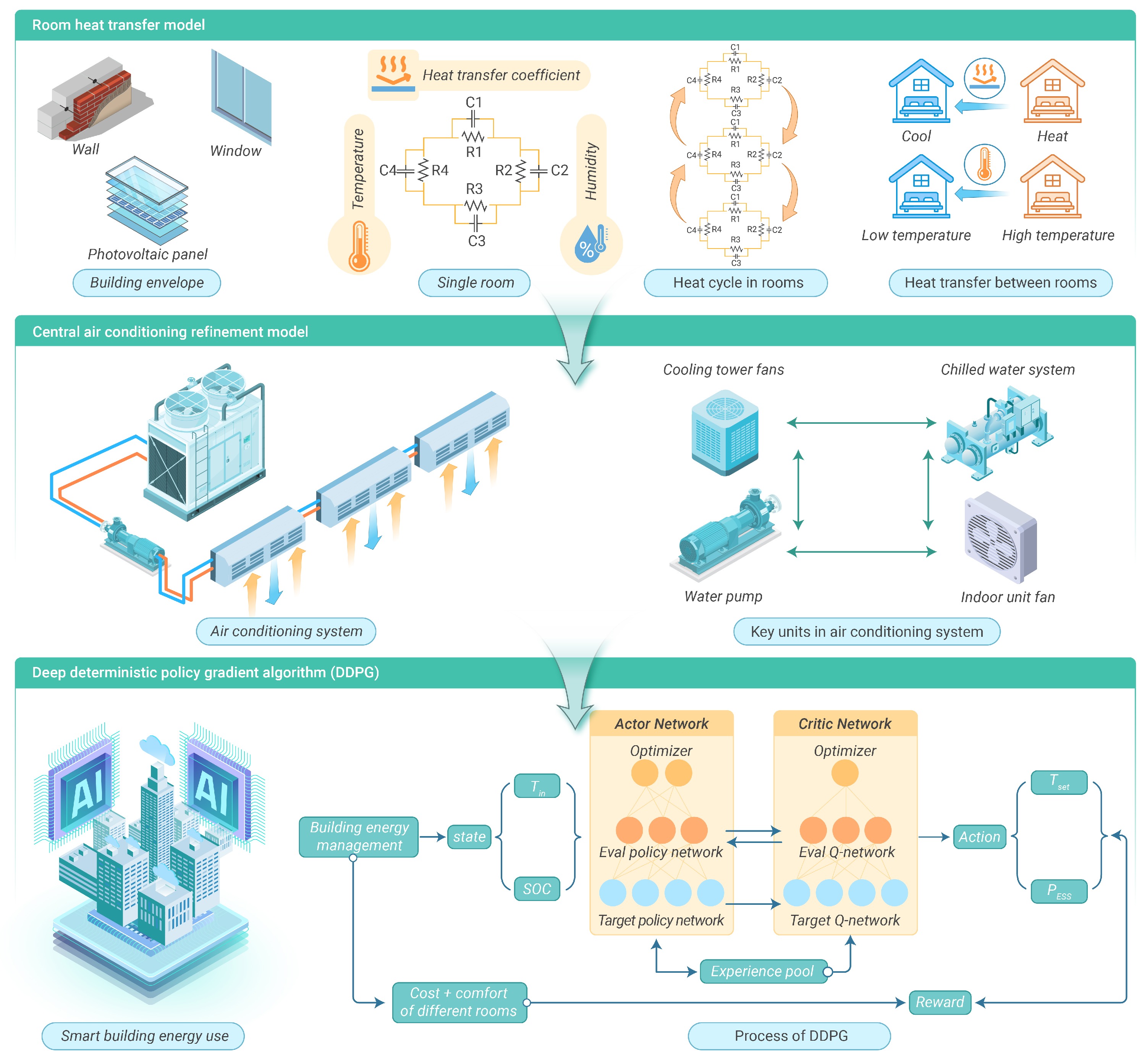
GRAPHICAL ABSTRACT

 DownLoad:
Full size image
DownLoad:
Full size image
-
PUBLIC SUMMARY
-
Whole-building comfort control ignores individual room needs, lacking precise energy use.
DDPG algorithm optimizes comfort by modeling inter-room heat transfer.
Achieves 9.82% cost savings while meeting varied comfort needs.
-
-
ABSTRACT
To achieve green and low-carbon goals in the building energy sector, precise energy management strategies are essential to support user comfort and energy-saving needs during operation. However, the thermal comfort requirements of building users may conflict with societal demands for low-carbon and energy efficiency. This creates a challenge between the precision of energy use models and the speed of energy management strategies. It is necessary to combine the advantages of building physical models and deep reinforcement learning to develop faster and more accurate energy management strategies. This paper proposes a smart energy management optimization for buildings, considering indoor heat transfer. First, a third-order heat transfer model for rooms is constructed to quantify the heat transfer between them. Next, a detailed model of the central air conditioning system is developed, considering the relationships between its internal components. To achieve green and low-carbon building operations while maintaining user comfort, a multi-objective optimization algorithm based on deep policy gradient decision-making is proposed. The method is validated on actual building energy systems using real data with 15-minute resolution. We find significant differences in heat transfer between different rooms within a building, and the proposed intelligent energy management optimization method effectively balances low-carbon, energy-efficient operation with user comfort. -

-
REFERENCES
[1] Chen, X., (2024).Green and low-carbon energy-use.The Innovation Energy 1(1): 100003. DOI:https://doi.org/10.59717/j.xinn-energy.2024.100003. [2] Yu, K.,Cao, J.,Chen, X., et al.(2023).Residential load forecasting based on electricity consumption pattern clustering. Front. Energy Res. 10:1-13.DOI: 10.3389/fenrg.2022.1113733. [3] Wu, C., Chen, X., Hua, H., et al.( 2024).Peer-to-peer energy trading optimization for community prosumers considering carbon cap-and-trade. Appl. Energy 358: 122611. DOI: 10.1016/j.apenergy.2023.122611. [4] Selvaraj, R., Kuthadi, V., Baskar, S., et al. (2023). Smart building energy management and monitoring system based on artificial intelligence in smart city. Sustain. Energy Technol. Assess. 56: 103090. DOI: 10.1016/j.seta.2023.103090. [5] Serale, G., Fiorentini, M., Capozzoli, A., et al.(2018).Model Predictive Control (MPC) for Enhancing Building and HVAC System Energy Efficiency: Problem Formulation, Applications and Opportunities. Energies 11(3): 631. DOI:10.3390/en11030631. [6] Mariano-Hernández, D., Hernández-Callejo, L., Zorita-Lamadrid, A., et al. (2021). A review of strategies for building energy management system: Model predictive control, demand side management, optimization, and fault detect & diagnosis. J. Build. Eng. 33: 101692. DOI: 10.1016/j.jobe.2020.101692. [7] Shaikh, P H., Nor, N. B. M., Nallagownden, P., et al. (2014). A review on optimized control systems for building energy and comfort management of smart sustainable buildings. Renew. Sustain. Energy Rev. 34: 409−429. DOI: 10.1016/j.rser.2014.03.027. [8] Lu, C., Li, S., Lu, Z., et al. (2022). Building energy prediction using artificial neural networks: A literature survey. Energy Build. 262: 111718. DOI: 10.1016/j.enbuild.2021.111718. [9] AAM, OMARA. and AAA, ABUELNOUR. (2019). Improving the performance of air conditioning systems by using phase change materials:A review. Int. J. Energy Res. 43(10): 5175−5198. DOI: 10.1002/er.4507. [10] Gan, L., Yang, T., Wang, B., et al. (2023). Three-stage coordinated operation of steel plant-based multi-energy microgrids considering carbon reduction. Energy 278: 127639. DOI: 10.1016/j.energy.2023.127639. [11] Lamnatou, Chr., Chemisana, D., Cristofari, C., et al. (2022). Smart grids and smart technologies in relation to photovoltaics, storage systems, buildings and the environment. Renew. Energy 185: 1376−1391. DOI: 10.1016/j.renene.2021.11.019. [12] Hua, H., Chen, X., Gan, L., et al. (2024). Demand-side joint electricity and carbon trading mechanism. IEEE T. Ind. Cyber-Phys. Sys. 2: 14−25. DOI: 10.1109/TICPS.2023.3335328. [13] Li, Z., Su, S., Jin, X., et al.(2024).Stochastic and Distributed Optimal Energy Management of Active Distribution Networks Within Integrated Office Buildings. CSEE J. Power Energy Syst. 10(2). DOI:10.17775/CSEEJPES.2021.04510. [14] Hu, Z., Gao, Y., Ji, S., et al.(2024).Improved multistep ahead photovoltaic power prediction model based on LSTM and self-attention with weather forecast data. Appl. Energy. 359:122709. DOI: 10.1016/j.apenergy.2024.122709. [15] Li, Z., Jin, X., Jia, H., et al. (2020). Hvac Model Predictive Control Method considering thermal dynamic Characteristics of buildings. Proceed. CSEE 40(12): 3928−3940. DOI: 10.13334/j.0258-8013.pcsee.190268. [16] Pinzon, J. A., Vergara, PP., DaSilva, LCP., et al. (2019). Optimal Management of Energy Consumption and Comfort for Smart Buildings Operating in a Microgrid. IEEE T. Smart Grid 10(3): 3236−3247. DOI: 10.1109/TSG.2018.2822276. [17] Baldi, S., Korkas, C. D., Lv, M., et al. (2018). Automating occupant-building interaction via smart zoning of thermostatic loads: A switched self-tuning approach. Appl. Energy 231: 1246−1258. DOI: 10.1016/j.apenergy.2018.09.188. [18] Meng, X. (2024). Influence of air-conditioning intermittent operation on the cooling load from opaque envelopes in residences. Case Stud. Therm. Eng. 58: 104393. DOI: 10.1016/j.csite.2024.104393. [19] Anvari-Moghaddam, A. A., Rahimi-Kian, A., and Mirian, S. M. (2017). multi-agent based energy management solution for integrated buildings and microgrid system. Appl. Energy: 203: 41−56. DOI: 10.1016/j.apenergy.2017.06.007. [20] Paterakis, N.G., Erinc, O., Bakirtzis, A.G., et al. (2015). Optimal Household Appliances Scheduling Under Day-Ahead Pricing and Load-Shaping Demand Response Strategies. IEEE T. Ind. Inform. 11(6): 1509−1519. DOI: 10.1109/TII.2015.2438534. [21] Zhou, K. and Yang, S. (2016). Understanding household energy consumption behavior_The contribution of energy big data analytics. Renew. Sustain. Energy Rev. 56: 810−819. DOI: 10.1016/j.rser.2015.12.001. [22] Korkas, C.D., Baldi, S., Michailidis, I., et al. (2015). Intelligent energy and thermal comfort management in grid-connected microgrids with heterogeneous occupancy schedule. Appl. Energy 149: 194−203. DOI: 10.1016/j.apenergy.2015.01.145. [23] Korkas, C.D., Baldi, S., Michailidis, I., et al. (2016). Occupancy-based demand response and thermal comfort optimization in microgrids with renewable energy sources and energy storage. Appl. Energy 163: 93−104. DOI: 10.1016/j.apenergy.2015.10.140. [24] Wang, B., Wang, X., Wang, N., et al. (2023). Machine learning optimization model for reducing the electricity loads in residential energy forecasting. Sustain. Comp. Inf. Sys. 38: 100876. DOI: 10.1016/j.suscom.2023.100876. [25] Li, B., Liu, Z., Wu,Y., et al. (2023). Review on photovoltaic with battery energy storage system for power supply to buildings: Challenges and opportunities. J. Energy Storage 61: 106763. DOI: 10.1016/j.est.2023.106763. [26] Zhuang, D., Gan, V. J. L., Duygu Tekler, Z., et al. (2023). Data-driven predictive control for smart HVAC system in IoT-integrated buildings with time-series forecasting and reinforcement learning. Appl. Energy 338: 120936. DOI: 10.1016/j.apenergy.2023.120936. [27] Liu, J., Chen, X., Yang, H., et al. (2020). Energy storage and management system design optimization for a photovoltaic integrated low-energy building. Energy 190: 116424. DOI: 10.1016/j.energy.2019.116424. [28] Mariaud, A., Acha, S., Ekins-Daukes, N., et al. (2017). Integrated optimisation of photovoltaic and battery storage systems for UK commercial buildings. Appl. Energy 199: 466−478. DOI:. DOI: 10.1016/j.apenergy.2017.04.067. [29] Wu, X., Zhang, Z., Liu, B., et al. (2023). Intraday optimal scheduling method for building energy management system based on approximate dynamic programming. Power Auto. Equip. 43(10): 225−232. DOI: 10.16081/j.epae.202305005. [30] Cui, X., Liu, J., Zhou, Y., et al. (2024). Enabling Net Zero Energy Buildings With Shared Storage: A Cyber–Physical Perspective. IEEE Internet Things. J. 11(14): 24353−24363. DOI: 10.1109/JIOT.2023.3322520. [31] Qiu, Y., Li, Q., Ai, Y., et al. (2023). Two-stage distributionally robust optimization-based coordinated scheduling of integrated energy system with electricity-hydrogen hybrid energy storage. Prot. Contr. Modern Power Sys. 8(1): 33. DOI: 10.1186/s41601-023-00308-8. [32] Alzahrani, A., Sajjad, K., Hafeez, G., et al. (2023). Real-time energy optimization and scheduling of buildings integrated with renewable microgrid. Appl. Energy 335: 120640. DOI: 10.1016/j.apenergy.2023.120640. [33] Mansouri, S.A., Nematbakhsh, E., Jordehi, A.R., et al. (2023). An interval-based nested optimization framework for deriving flexibility from smart buildings and electric vehicle fleets in the TSO-DSO coordination. Appl. Energy 341: 121062. DOI: 10.1016/j.apenergy.2023.121062. [34] Lu, Z., Wang, Y., Tong, X., et al. (2023). Data-Driven Many-Objective Crowd Worker Selection for Mobile Crowdsourcing in Industrial IoT. IEEE T. Ind. Inf. 19(1): 531−540. DOI: 10.1109/TII.2021.3076811. [35] Li, Y., Han, M., Shahidehpour, M., et al. (2023). Data-driven distributionally robust scheduling of community integrated energy systems with uncertain renewable generations considering integrated demand response. Appl. Energy 335: 120749. DOI: 10.1016/j.apenergy.2023.120749. [36] Jia, H., Wang, X., Jin, X., et al.(2024). Optimal pricing of integrated community energy system for building prosumers with P2P multi-energy trading. Appl. Energy 365: 123259.DOI:doi.org/10.1016/j.apenergy.2024.123259. [37] Forootani, A., Rastegar, M., Jooshaki, M., et al. (2022). An Advanced Satisfaction-Based Home Energy Management System Using Deep Reinforcement Learning. IEEE Access 10: 47896−47905. DOI: 10.1109/ACCESS.2022.3172327. [38] Ding, X., Chen, X., Yu, K., et al. (2024). Multi-time-scale voltage control of the distribution network with energy storage equipped soft open points. Front. Energy Res. 12:1374704. DOI: 10.3389/fenrg.2024.1374704. [39] Sun, J., Gan, L., Chen, X., et al. (2023). Adjustable Potential Evaluation of Massive Flexible Load Resources from the Perspective of CPS. 2023 IEEE/IAS I&CPS Asia. Chongqing, China : 889-895. DOI: 10.1109/ICPSAsia58343.2023.10294690. [40] Bu, L., Chen, X., Gan, L., et al. (2023). Low-carbon operation method of the building based on dynamic carbon emission factor of power system. IET Smart Grid 6(1): 67−85. DOI: 10.1049/stg2.12085. [41] Wang, S., Chen, X., Bu, L., et al.(2023). A DQN-based Coordination Method of HVAC and Energy Storage for Building Energy Management . The 7th IEEE Conference on Energy Internet and Energy System Integration EI2 : 1-6. DOI: 10.1109/EI259745.2023.10512933. [42] Ding, X., Chen, X., Yang, X., et al.(2024).Two-stage Coordination of Distribution Network Reconfiguration and Partition Considering Switch Lifespan Limitation. 2024 9th Asia Conference on Power and Electrical Engineering: 233-239. DOI: 10.1109/ACPEE60788.2024.10532369. [43] Li, S., Chen, X., Bu, L., et al. (2023). Two-stage optimization for the air conditioning system in public buildings with flexible control of indoor load. Energy Build. 312: 114162. DOI: 10.1016/j.enbuild.2024.114162. [44] Wang, Y., Wang, Z., Wang, Z., et al. (2021). A stochastic load demand-oriented synergetic optimal control strategy for variable-speed pumps in residential district heating or cooling systems. Energy Build. 238: 110853. DOI: 10.1016/j.enbuild.2021.110853. [45] Zheng, Z., Chen, Q., Fan, C., et al.(2018).Data driven chiller sequencing for reducing HVAC electricity consumption in commercial buildings. Proceedings of the 9th International Conference on Future Energy Systems :236-248. DOI:10.1145/3208903.3208913. -
ABOUT THIS ARTICLE
Cite this article:
Jing Z., Chen X., Bu L., et al., (2024). Intelligent optimization for building energy management considering indoor heat transfer. The Innovation Energy 1(4): 100058. https://doi.org/10.59717/j.xinn-energy.2024.100058
Welcome!
To request copyright permission to republish or share portions of our works, please visit Copyright Clearance Center's (CCC) Marketplace website at marketplace.copyright.com.

Article Metrics
Relative Articles
Cited by
Export File
Citation
Jing Z., Chen X., Bu L., et al., (2024). Intelligent optimization for building energy management considering indoor heat transfer. The Innovation Energy 1(4): 100058. https://doi.org/10.59717/j.xinn-energy.2024.100058

Format
Content

-
Figure 1.
Schematic Diagram of Building Energy Management Structure
-
Figure 2.
Intelligent Optimization Flowchart for Building Energy Management
-
Figure 3.
Schematic diagram of rooms' location in the building
-
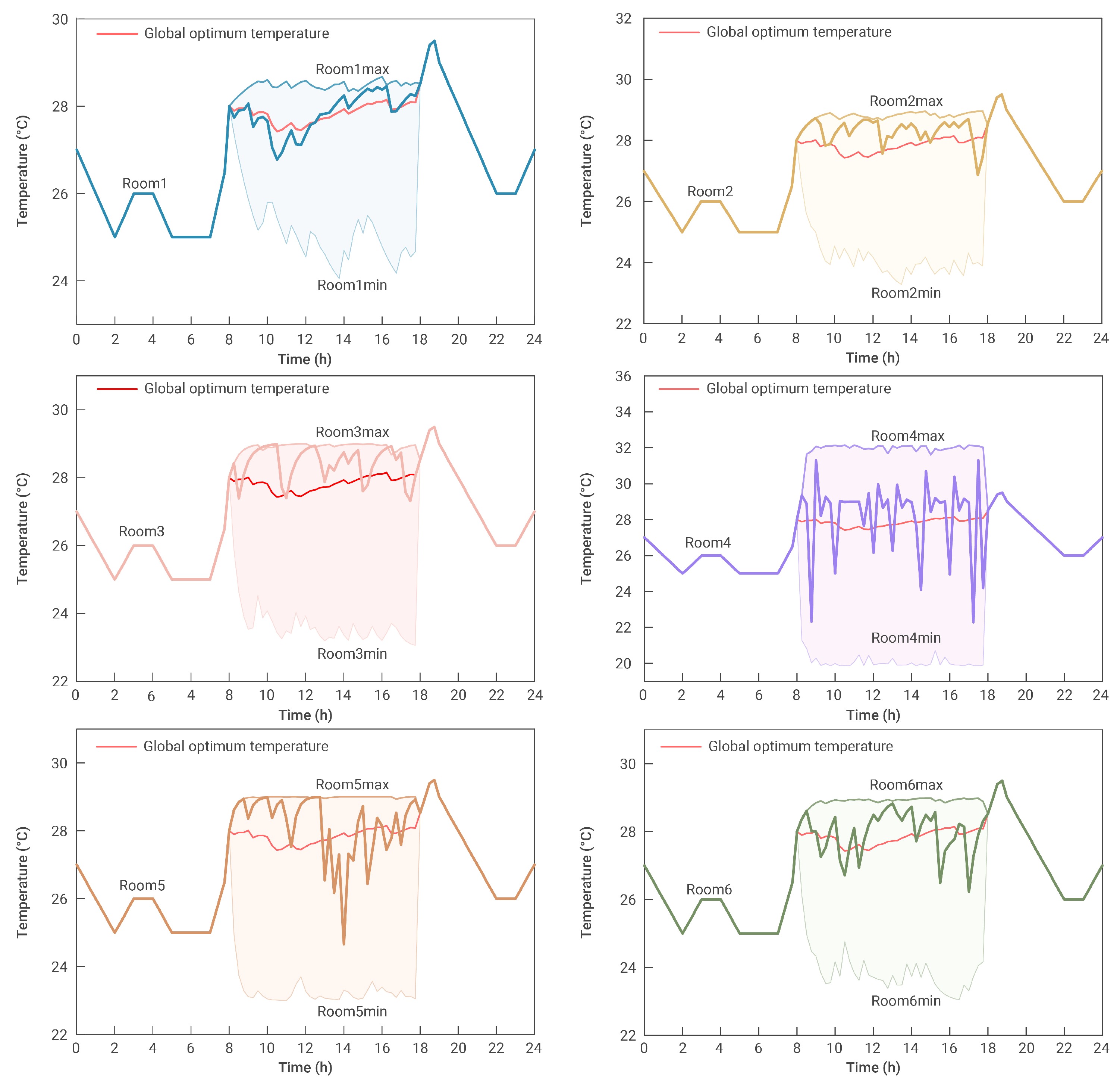
Figure 4.
Comparative analysis of indoor temperature changes in rooms considering heat transfer and without heat transfer
-
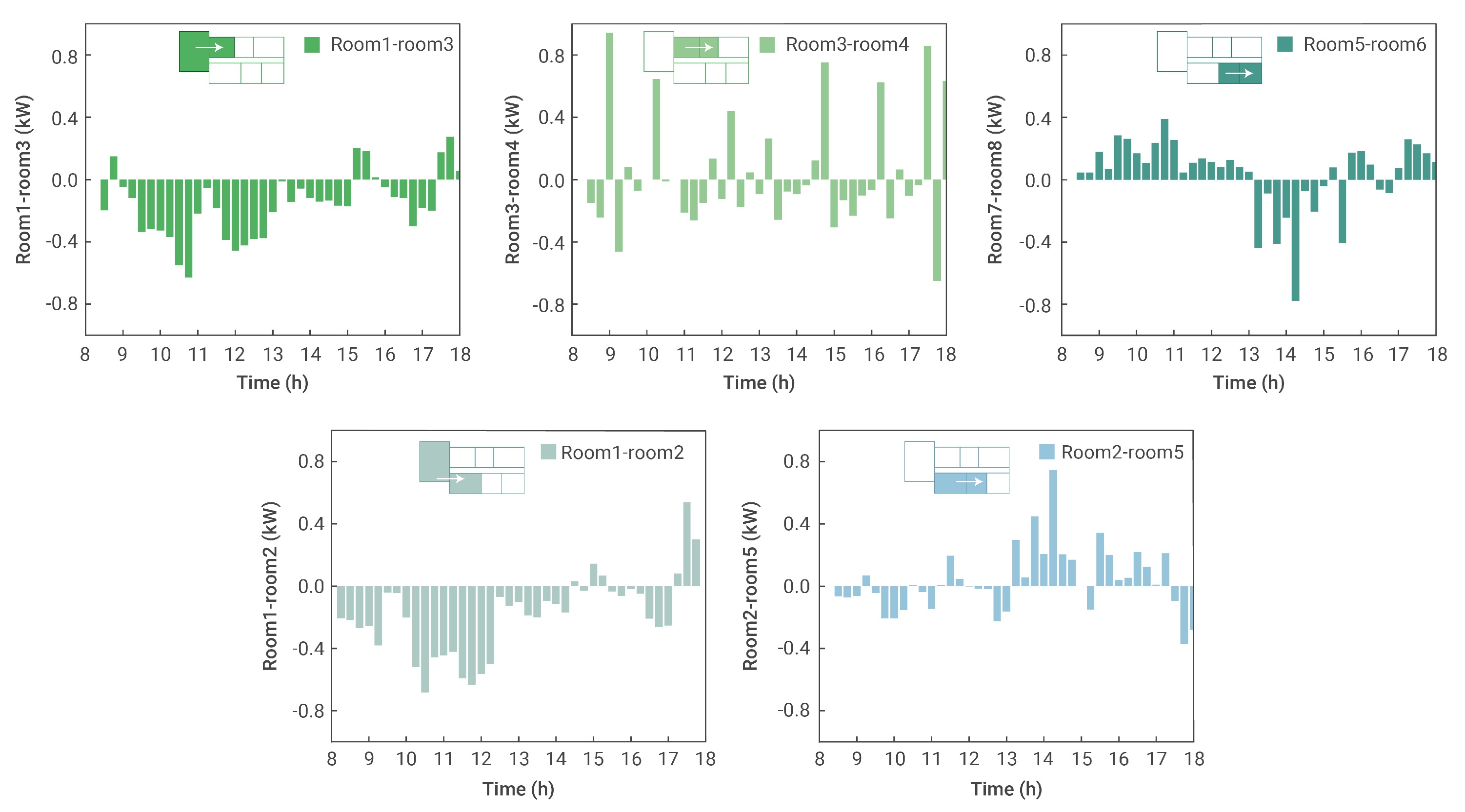
Figure 5.
Heat transfer between rooms
-
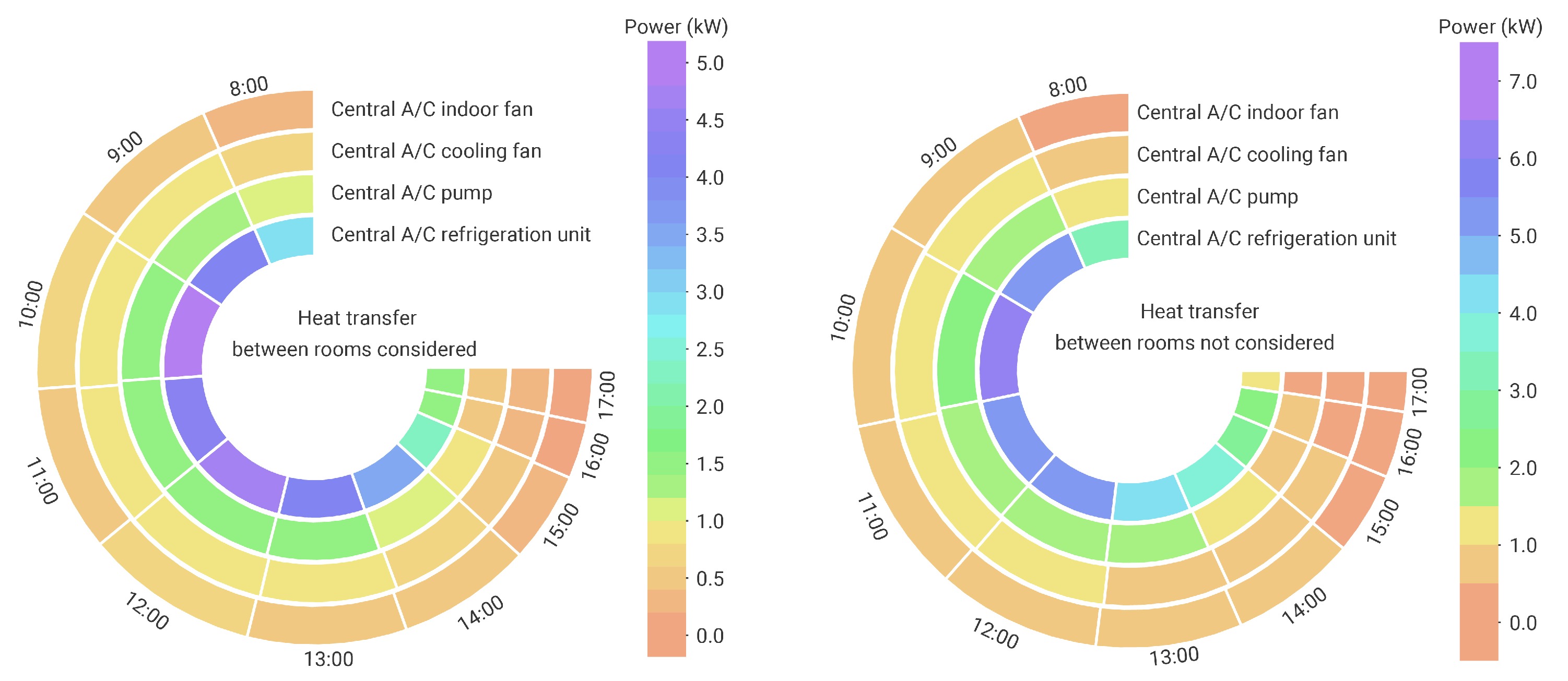
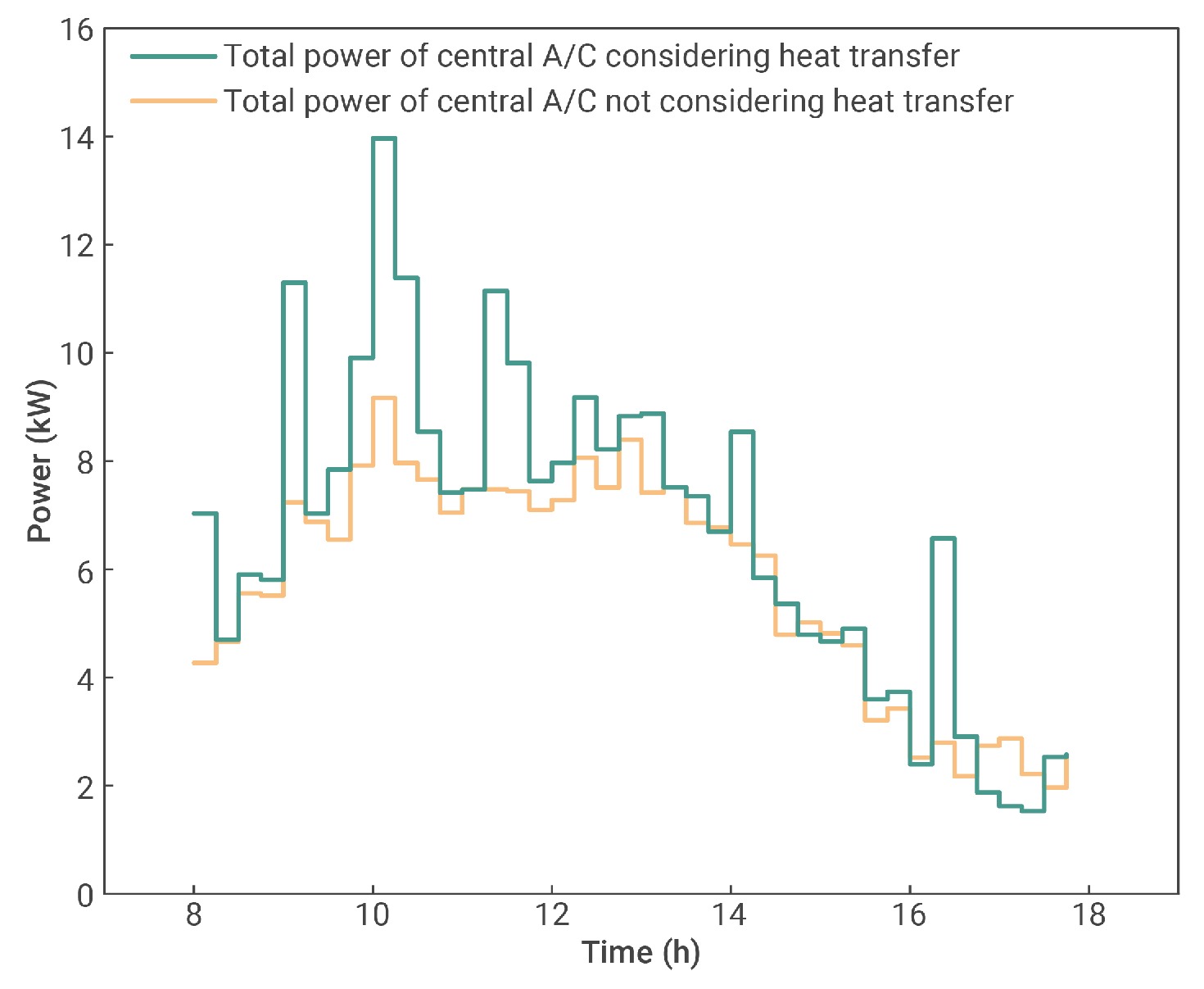
Figure 6.
Central A/C system's internal unit power in rooms considering heat transfer and without heat transfer
-
Figure 7.
Central A/C system's internal unit power in rooms considering heat transfer and without heat transfer
-
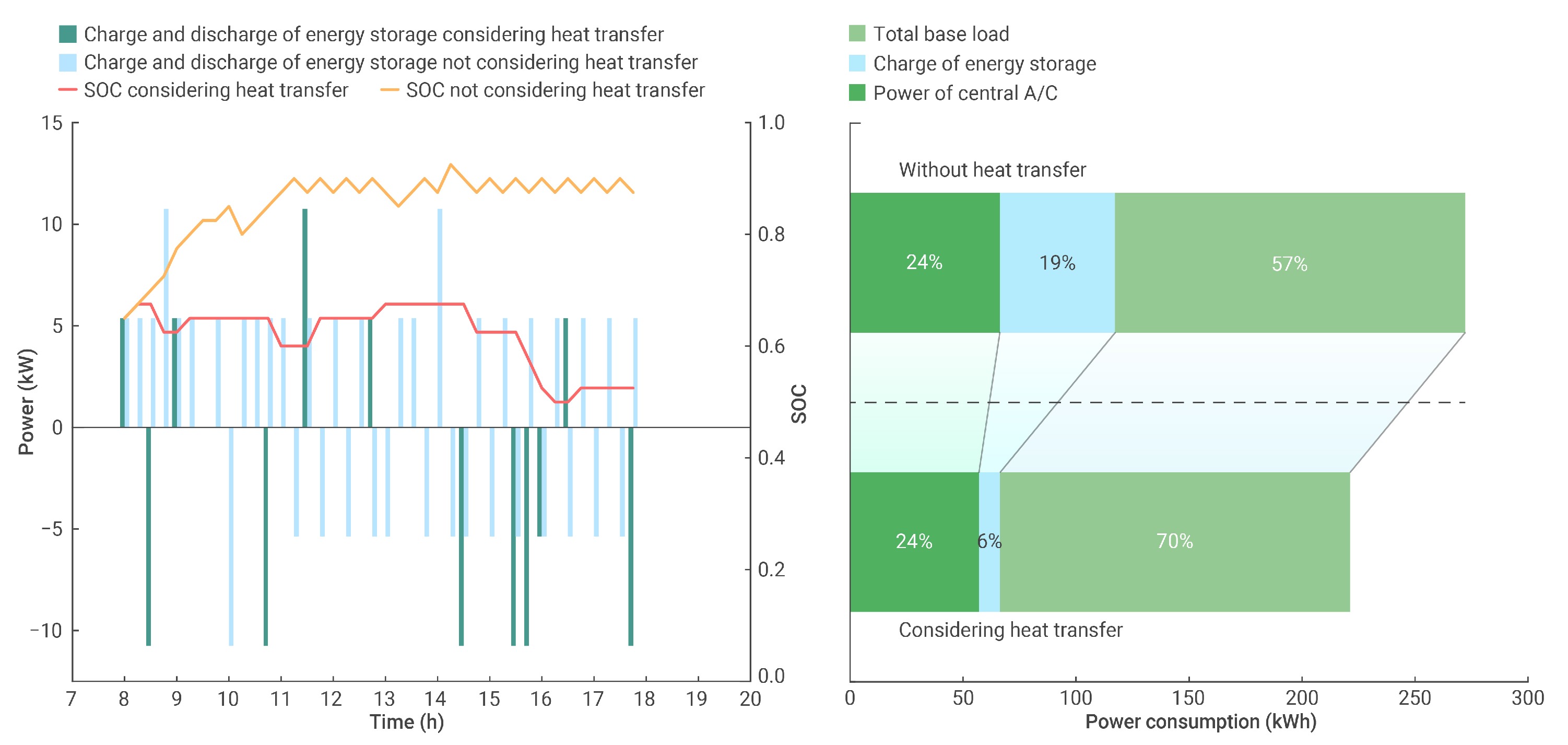
Figure 8.
Energy storage state and energy consumption ratio analysis considering room heat transfer and not considering room heat transfer
