
Comparative study of thermal management system for wide temperature safety of large-capacity energy storage batteries
-
GRAPHICAL ABSTRACT

 DownLoad:
Full size image
DownLoad:
Full size image
-
PUBLIC SUMMARY
-
Immersion heating provides the fastest battery heating rate compared to other methods.
Immersion cooling requires more power but slows down battery capacity fading.
Liquid cooling and immersion cooling delay thermal runaway propagation.
Boiling-based systems prevent thermal runaway through phase change cooling.
Longer heat transfer paths lead to larger thermal inhomogeneities in some methods.
-
-
ABSTRACT
Even though thermal management systems have been widely developed to maintain the thermal stability and safety of lithium-ion battery, a comprehensive comparison remains insufficient for large-scale battery module, particularly across wide temperature ranges. For this purpose, a numerical framework that includes electrochemical-thermal coupled model, aging model, thermal runaway model, and hydrodynamic model is established for 46.592 kWh battery module. The aim of this study is to comprehensively assess the thermal management efficiency of different methods under low-temperature preheating, normal cooling, and thermal runaway protection scenarios. Results found that under the given configuration, battery heating rate is ordered as immersion heating > film heating > liquid heating plate, and the latter two approaches show larger thermal inhomogeneities due to battery anisotropy and longer heat transfer paths. For normal cooling condition, immersion cooling needs more power consumption to maintain the same inlet flow rate than air cooling and liquid cooling plate, but its superior cooling performance can slow down battery capacity fading after long-term cycling. Additionally, liquid cooling plate and immersion cooling allow for delaying thermal propagation after onset of thermal runaway, whereas boiling-based system can effectively prohibit thermal runaway from local overheating due to its phase change cooling effect. -

-
REFERENCES
[1] Zheng Y., Che Y., Hu X., et al. (2024). Thermal state monitoring of lithium-ion batteries: Progress, challenges, and opportunities. Prog. Energy Combust. Sci. 100:101120. DOI:10.1016/j.pecs.2023.101120 [2] Liu L. and Shao S. (2023). Recent advances of low-temperature cascade phase change energy storage technology: A state-of-the-art review. Renew. Sustain. Energy Rev. 186:113641. DOI:10.1016/j.rser.2023.113641 [3] Lin J., Zhang X., Fan E., et al. (2023). Carbon neutrality strategies for sustainable batteries: from structure, recycling, and properties to applications. Energy Environ. Sci. 16:745−791. DOI:10.1039/D2EE03257K [4] Yu H., Wang L., Zhang Z., et al. (2024). Insight Understanding of External Pressure on Lithium Plating in Commercial Lithium-Ion Batteries. Adv. Funct. Mater. 34:2406966. DOI:10.1002/adfm.202406966 [5] Lin X., Zhang X., Ji J., et al. (2021). Development of flexible form-stable phase change material with enhanced electrical resistance for thermal management. J. Clean. Product. 311:127517. DOI:10.1016/j.jclepro.2021.127517 [6] Li Y., Kong B., Qiu C., et al. (2025). Numerical study on air-cooled battery thermal management system considering the sheer altitude effect. Appl. Therm. Eng. 258:124707. DOI:10.1016/j.applthermaleng.2024.124707 [7] Hu X., Zheng Y., Howey D. A., et al. (2020). Battery warm-up methodologies at subzero temperatures for automotive applications: Recent advances and perspectives. Prog. Energy Combust. Sci. 77:100806. DOI:10.1016/j.pecs.2019.100806 [8] Wang Y., Zhang X. and Chen Z. (2022). Low temperature preheating techniques for Lithium-ion batteries: Recent advances and future challenges. Appl. Energy 313:118832. DOI:10.1016/j.apenergy.2022.118832 [9] Huang X., Meng J., Jiang W., et al. (2024). Alternating current heating techniques for lithium-ion batteries in electric vehicles: Recent advances and perspectives. J. Energy Chem. 96:679−697. DOI:10.1016/j.jechem.2024.05.027 [10] Liu L., Zhang X. and Lin X. (2022). Recent Developments of Thermal Management Strategies for Lithium-Ion Batteries: A State-of-The-Art Review. Energy Tech. 10:2101135. DOI:10.1002/ente.202101135 [11] Yang X.G., Liu T. and Wang C.Y. (2021). Thermally modulated lithium iron phosphate batteries for mass-market electric vehicles. Nat. Energy 6:176−185. DOI:10.1038/s41560-020-00757-7 [12] Wang C.Y., Zhang G., Ge S., et al. (2016). Lithium-ion battery structure that self-heats at low temperatures. Nature 529:515−518. DOI:10.1038/nature16502 [13] Qin Y., Du J., Lu L., et al. (2020). A rapid lithium-ion battery heating method based on bidirectional pulsed current: Heating effect and impact on battery life. Appl. Energy 280:115957. DOI:10.1016/j.apenergy.2020.115957 [14] Zhang Z., Chen Z., Zhu W., et al. (2024). Study of the effects of preheating on discharge characteristics and capacity benefit of Li-ion batteries in the cold. J. Energy Storage 86:111228. DOI:10.1016/j.est.2024.111228 [15] Song Z., Hofmann H., Li J., et al. (2015). The optimization of a hybrid energy storage system at subzero temperatures: Energy management strategy design and battery heating requirement analysis. Appl. Energy 159:576−588. DOI:10.1016/j.apenergy.2015.08.120 [16] An Z., Zhang C., Luo Y., et al. (2023). Cooling and preheating behavior of compact power Lithium-ion battery thermal management system. Appl. Therm. Eng. 226:120238. DOI:10.1016/j.applthermaleng.2023.120238 [17] Lin X.-W., Zhou Z.-F., Liu T.-F., et al. (2023). Rate capability and Ragone plots for designing battery thermal management system based on phase change material. J. Energy Storage 74:109539. DOI:10.1016/j.est.2023.109539 [18] Ramadass P., Haran B., White R., et al. (2002). Capacity fade of Sony 18650 cells cycled at elevated temperatures: Part I. Cycling performance. J. Power Sources 112:606−613. DOI:10.1016/S0378-7753(02)00474-3 [19] Seong W. M., Park K.-Y., Lee M. H., et al. (2018). Abnormal self-discharge in lithium-ion batteries. Energy Environ. Sci. 11:970−978. DOI:10.1039/C8EE00186C [20] Lin X.-W., Li Y.-B., Wu W.-T., et al. (2024). Advances on two-phase heat transfer for lithium-ion battery thermal management. Renew. Sustain. Energy Rev. 189:114052. DOI:10.1016/j.rser.2023.114052 [21] Lin X.-W., Zhou Z.-F., Zhu X.-G., et al. (2023). Non-uniform thermal characteristics investigation of three-dimensional electrochemical-thermal coupled model for pouch lithium-ion battery. J. Clean. Product. 417:137912. DOI:10.1016/j.jclepro.2023.137912 [22] Liu F., Yang Q., Zheng D., et al. (2025). A novel battery thermal management system with air–liquid coupled cooling based on particle swarm optimization. Appl. Therm. Eng. 271:126391. DOI:10.1016/j.applthermaleng.2025.126391 [23] Wu C., Sun Y., Tang H., et al. (2024). A review on the liquid cooling thermal management system of lithium-ion batteries. Appl. Energy 375:124173. DOI:10.1016/j.apenergy.2024.124173 [24] Han H., Xiong F., Qin M., et al. (2025). Intrinsic flame-retardant phase change materials for battery thermal management during rapid cycling and thermal runaway. Energy Storage Mater. 77:104175. DOI:10.1016/j.ensm.2025.104175 [25] Chen K., Tang A., Pan J., et al. (2024). Experimental study on heat transfer characteristics and Capillary-Assisted enhancement of Dual-Phase immersion battery thermal management system. Energy Conver. Manag. 322:119149. DOI:10.1016/j.enconman.2024.119149 [26] He Z., Li R., Yang L., et al. (2024). Performance analysis of a battery thermal management system based on phase change materials with micro heat pipe arrays. Energy Conver. Manag. 311:118506. DOI:10.1016/j.enconman.2024.118506 [27] Lander L., Kallitsis E., Hales A., et al. (2021). Cost and carbon footprint reduction of electric vehicle lithium-ion batteries through efficient thermal management. Appl. Energy 289:116737. DOI:10.1016/j.apenergy.2021.116737 [28] Zhang X., Gao Q., Yang S., et al. (2023). Co-regulation of integrated thermal management based on refrigerant cooling for electric vehicles. Appl. Therm. Eng. 226:120306. DOI:10.1016/j.applthermaleng.2023.120306 [29] Haddad R. A., Mansour C., Kim N., et al. (2025). Comparative analysis of thermal management systems in electric vehicles at extreme weather conditions: Case study on Nissan Leaf 2019 Plus, Chevrolet Bolt 2020 and Tesla Model 3 2020. Energy Conver. Manag. 332:119706. DOI:10.1016/j.enconman.2025.119706 [30] Wang C.-Y., Liu T., Yang X.-G., et al. (2022). Fast charging of energy-dense lithium-ion batteries. Nature 611:485−490. DOI:10.1038/s41586-022-05281-0 [31] Chen D., Jiang J., Kim G.-H., et al. (2016). Comparison of different cooling methods for lithium ion battery cells. Appl. Therm. Eng. 94:846−854. DOI:10.1016/j.applthermaleng.2015.10.015 [32] Akbarzadeh M., Kalogiannis T., Jaguemont J., et al. (2021). A comparative study between air cooling and liquid cooling thermal management systems for a high-energy lithium-ion battery module. Appl. Therm. Eng. 198:117503. DOI:10.1016/j.applthermaleng.2021.117503 [33] Lin X.-W., Zhou Z.-F., Yin J., et al. (2024). A comparative investigation of two-phase immersion thermal management system for lithium-ion battery pack. J. Clean. Product. 434:140472. DOI:10.1016/j.jclepro.2023.140472 [34] Wang Y., Wang Y., He T., et al. (2024). A numerical study on a hybrid battery thermal management system based on PCM and wavy microchannel liquid cooling. Renew. Energy 235:121273. DOI:10.1016/j.renene.2024.121273 [35] Dong H., Chen X., Yan S., et al. (2025). Multi-objective optimization of lithium-ion battery pack thermal management systems with novel bionic lotus leaf channels using NSGA-II and RSM. Energy 314:134226. DOI:10.1016/j.energy.2024.134226 [36] Khoshvaght-Aliabadi M., Ghodrati P. and Kang Y. T. (2025). Developing a novel battery thermal management system utilizing supercritical CO2 as the cooling medium. Appl. Energy 381:125207. DOI:10.1016/j.apenergy.2024.125207 [37] Amer M. M., Salem M. S., Kannan A. M., et al. (2025). Exploratory study on electric batteries thermal performance metrics and thermal management systems evaluation. J. Energy Storage 110:115282. DOI:10.1016/j.est.2024.115282 [38] Lin X.-W., Zhou Z.-F., Li M.-X., et al. (2024). Exploration on the liquid-based energy storage battery system from system design, parametric optimization, and control strategy. Renew. Energy 237:121904. DOI:10.1016/j.renene.2024.121904 [39] Zhang Y., Zhang W. and Kong W. (2024). Numerical and experimental study on thermal behavior of prismatic lithium-ion battery for large-capacity energy storage. J. Energy Storage 83:110620. DOI:10.1016/j.est.2024.110620 [40] Lin X.-W., Shi M.-Y., Zhou Z.-F., et al. (2025). Multi-objective topology optimization design of liquid-based cooling plate for 280 Ah prismatic energy storage battery thermal management. Energy Conver. Manag. 325:119440. DOI:10.1016/j.enconman.2024.119440 [41] Zhang F., Liu P., He Y., et al. (2022). Cooling performance optimization of air cooling lithium-ion battery thermal management system based on multiple secondary outlets and baffle. J. Energy Storage 52:104678. DOI:10.1016/j.est.2022.104678 [42] Xu Y., Zhao J., Chen J., et al. (2024). Performance analyses on the air cooling battery thermal management based on artificial neural networks. Appl. Therm. Eng. 252:123567. DOI:10.1016/j.applthermaleng.2024.123567 [43] Shi Q., Liu Q., He K., et al. (2025). Optimization study on the immersion flow structure design for high-capacity battery module using 4-heat-source electro-thermal model. Appl. Therm. Eng. 262:125226. DOI:10.1016/j.applthermaleng.2024.125226 [44] Shi Q., Liu Q., Zhang B., et al. (2025). Multi-objective optimization of an immersion cooling battery module with manifold jet impingement: Based on precision model for high-capacity batteries. Int. Commun. Heat Mass Tran. 161:108448. DOI:10.1016/j.icheatmasstransfer.2024.108448 [45] Doyle M., Newman J., Gozdz A. S., et al. (1996). Comparison of Modeling Predictions with Experimental Data from Plastic Lithium Ion Cells. J. Electrochem. Soc. 143:1890. DOI:10.1149/1.1836921 [46] Lin X.-W., Jiang Y., Yu H.-T., et al. (2024). A comprehensive investigation on the electrochemical and thermal inconsistencies for 280 Ah energy storage lithium-ion battery. Energy Conver. Manag. 315:118750. DOI:10.1016/j.enconman.2024.118750 [47] Mastali M., Foreman E., Modjtahedi A., et al. (2018). Electrochemical-thermal modeling and experimental validation of commercial graphite/LiFePO4 pouch lithium-ion batteries. International J. Therm. Sci. 129:218−230. DOI:10.1016/j.ijthermalsci.2018.03.004 [48] He T., Zhang T., Wang Z., et al. (2022). A comprehensive numerical study on electrochemical-thermal models of a cylindrical lithium-ion battery during discharge process. Appl. Energy 313:118797. DOI:10.1016/j.apenergy.2022.118797 [49] He C. X., Yue Q. L., Wu M. C., et al. (2021). A 3D electrochemical-thermal coupled model for electrochemical and thermal analysis of pouch-type lithium-ion batteries. Int. J. Heat Mass Trans. 181:121855. DOI:10.1016/j.ijheatmasstransfer.2021.121855 [50] Guo Z., Xu Q., Wang Y., et al. (2023). Battery thermal management system with heat pipe considering battery aging effect. Energy 263:126116. DOI:10.1016/j.energy.2022.126116 [51] Ekström H. and Lindbergh G. (2015). A Model for Predicting Capacity Fade due to SEI Formation in a Commercial Graphite/LiFePO4 Cell. J. Electrochem. Soc. 162:A1003. DOI:10.1149/2.0641506jes [52] Guo Z., Xu Q. and Ni M. (2023). A numerical study on the battery thermal management system with mini-channel cold plate considering battery aging effect. Appl. Therm. Eng. 219:119564. DOI:10.1016/j.applthermaleng.2022.119564 [53] Ouyang T., Liu B., Xu P., et al. (2022). Electrochemical-thermal coupled modelling and multi-measure prevention strategy for Li-ion battery thermal runaway. Int. J. Heat Mass Trans. 194:123082. DOI:10.1016/j.ijheatmasstransfer.2022.123082 [54] Yang S., Luo X., Li X., et al. (2024). Comparing different battery thermal management systems for suppressing thermal runaway propagation. J. Energy Storage 101:114005. DOI:10.1016/j.est.2024.114005 [55] Zhang W., Huang L., Zhang Z., et al. (2022). Non-uniform phase change material strategy for directional mitigation of battery thermal runaway propagation. Renew. Energy 200:1338−1351. DOI:10.1016/j.renene.2022.10.070 [56] Hussain M., Khan M. K. and Pathak M. (2024). Thermal management of high-energy lithium titanate oxide batteries using an effective channeled dielectric fluid immersion cooling system. Energy Conver. Manag. 313:118644. DOI:10.1016/j.enconman.2024.118644 [57] Huang C., Zhu H., Ma Y., et al. (2023). Evaluation of lithium battery immersion thermal management using a novel pentaerythritol ester coolant. Energy 284:129250. DOI:10.1016/j.energy.2023.129250 [58] Zhang C., Wang H., Huang Y., et al. (2025). Immersion liquid cooling for electronics: Materials, systems, applications and prospects. Renew. Sustain. Energy Rev. 208:114989. DOI:10.1016/j.rser.2024.114989 [59] Volodin O. A., Shvetsov D. A., Serdyukov V. S., et al. (2025). Enhanced boiling and evaporation of dielectric fluids on modified surfaces for immersion cooling of electronic components – a review. Appl. Therm. Eng. 277:127088. DOI:10.1016/j.applthermaleng.2025.127088 [60] Hong Y., Wu H., Wong S. K., et al. (2024). Dynamic thermophysical modeling and parametric sensitivity analysis of flood cooling suppressing the thermal runaway propagation for electric bicycle battery. J. Energy Storage 98:113084. DOI:10.1016/j.est.2024.113084 [61] Zhao W., Meng C., Zhao Y., et al. (2025). Research on aging-thermal characteristics coupling and aging thermal management analysis of large-capacity LiFePO4 battery. J. Energy Storage 114:115675. DOI:10.1016/j.est.2025.115675 [62] Zhang Y., Song L., Tian J., et al. (2024). Modeling the propagation of internal thermal runaway in lithium-ion battery. Appl. Energy 362:123004. DOI:10.1016/j.apenergy.2024.123004 [63] Tao Z., Lin C., Tian Y., et al. (2025). A systematic approach for determining the optimal battery preheating cut-off temperature for electric vehicles operating in cold climates. Appl. Energy 383:125308. DOI:10.1016/j.apenergy.2025.125308 [64] Guo Z., Wang Y., Zhao S., et al. (2023). Investigation of battery thermal management system with considering effect of battery aging and nanofluids. Int. J. Heat Mass Trans. 202:123685. DOI:10.1016/j.ijheatmasstransfer.2022.123685 -
ABOUT THIS ARTICLE
Cite this article:
Lin X., Rong B., Lin X., et al. (2026). Comparative study of thermal management system for wide temperature safety of large-capacity energy storage batteries. The Innovation Energy 3:100133. https://doi.org/10.59717/j.xinn-energy.2026.100133
Welcome!
To request copyright permission to republish or share portions of our works, please visit Copyright Clearance Center's (CCC) Marketplace website at marketplace.copyright.com.
Article Metrics
Relative Articles
Cited by
Export File
Citation
Lin X., Rong B., Lin X., et al. (2026). Comparative study of thermal management system for wide temperature safety of large-capacity energy storage batteries. The Innovation Energy 3:100133. https://doi.org/10.59717/j.xinn-energy.2026.100133

Format
Content
-
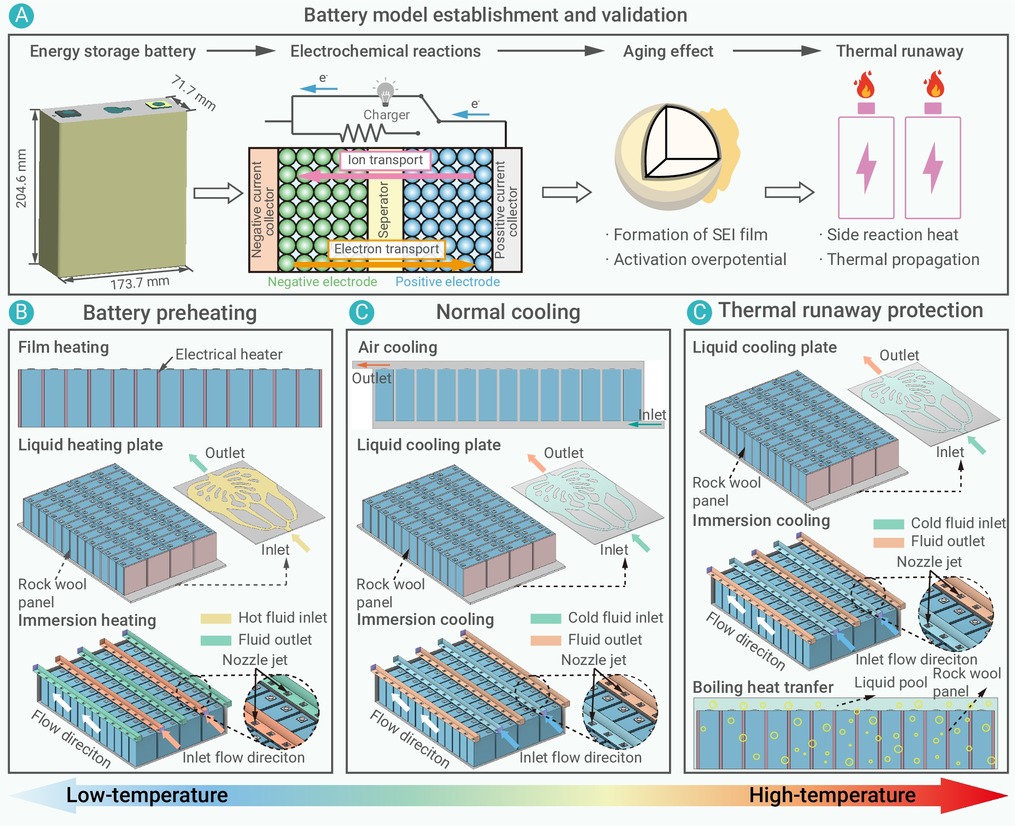
Figure 1.
Illustration of the research method and technical roadmap of the present work.
-
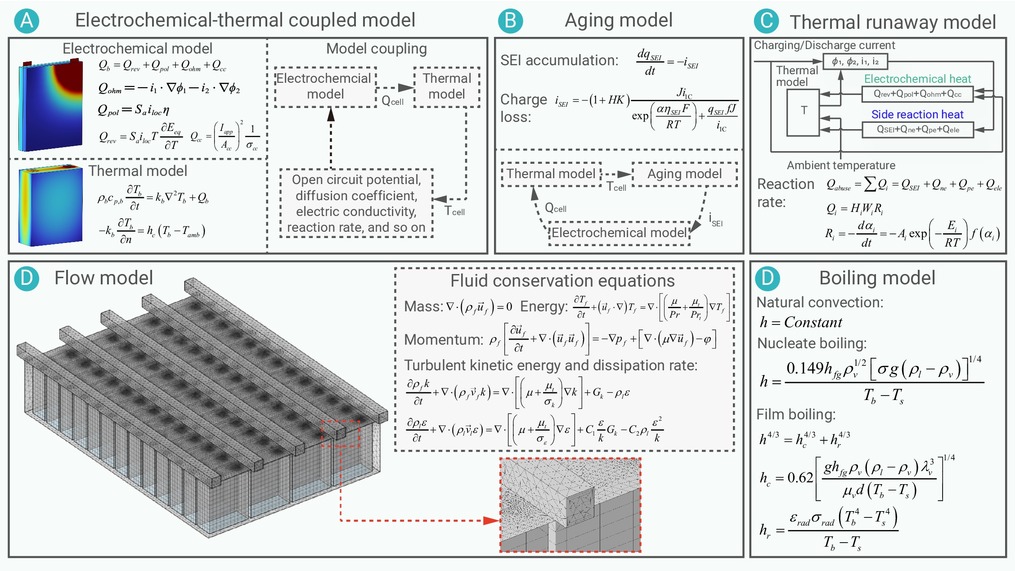
Figure 2.
Framework of multi-physics model used in this work.
-
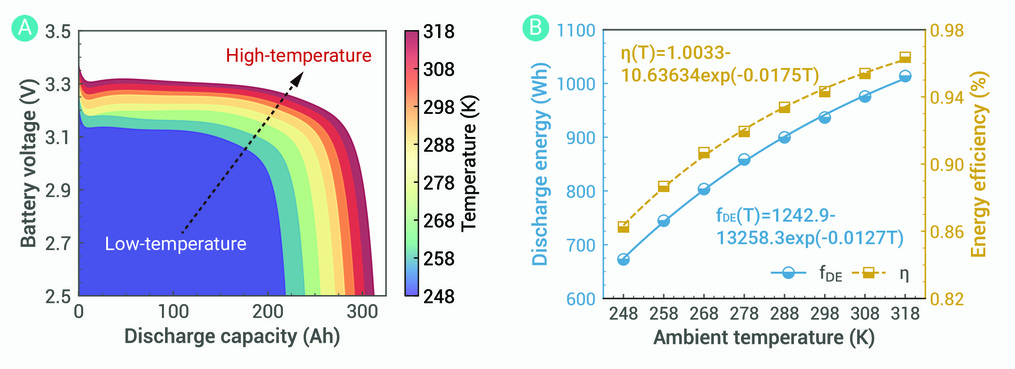
Figure 3.
(A) Electrochemical characteristics of energy storage battery under different temperatures; (B) Summary of discharge energy and energy efficiency in terms of ambient temperature.
-
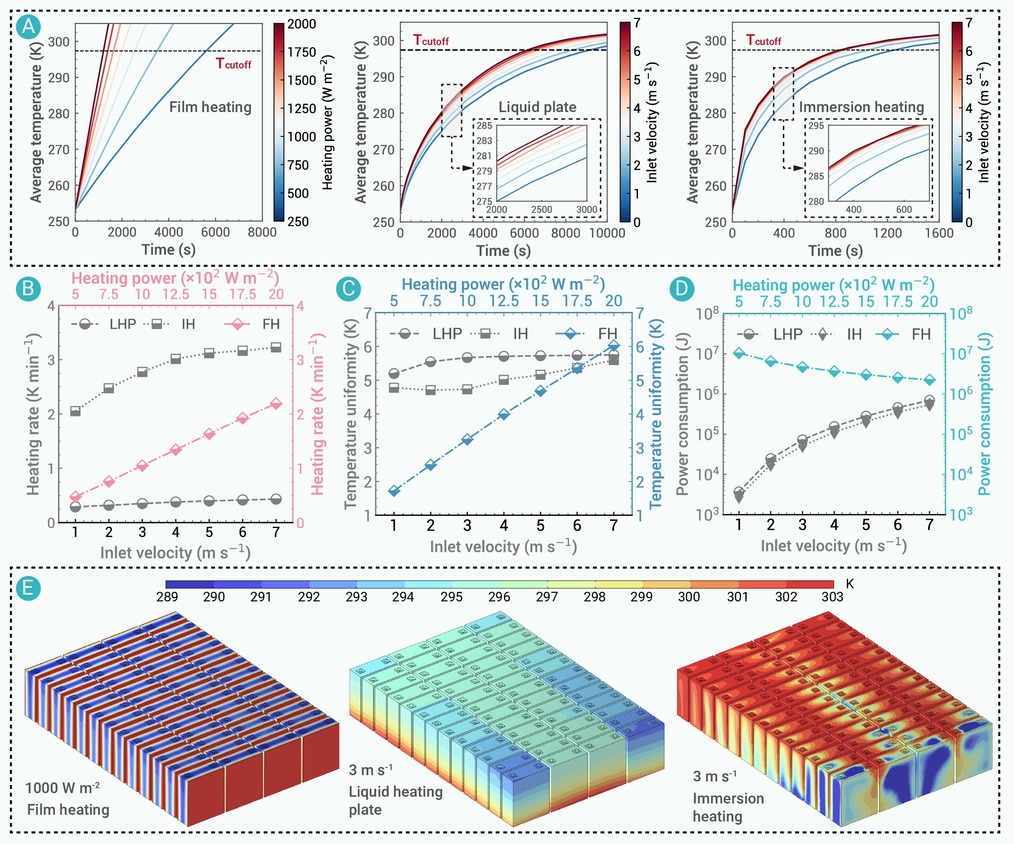
Figure 4.
(A) Evolution of average temperature of battery module under different preheating methods and operating conditions; (B-D) Comparison of heating rate, temperature uniformity, and power consumption obtained from three BTMSs; (E) Temperature distribution of battery module at the end of preheating period with heating power of
1000 W m−2 or inlet velocity of 3 m s−1. -
Figure 5.
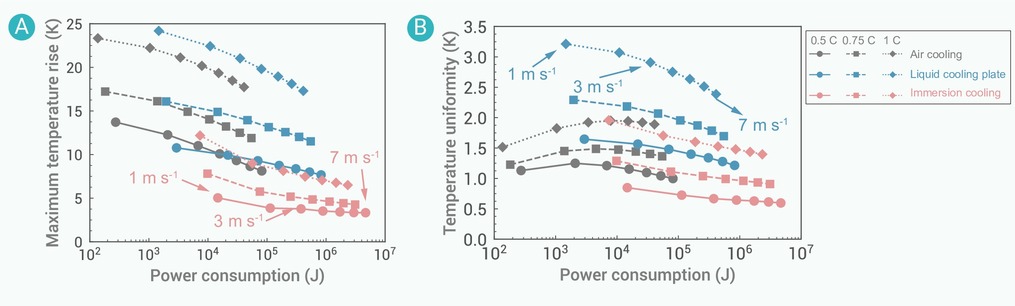
Comparison of maximum temperature rise, temperature uniformity, and power consumption obtained from three BTMSs
-
Figure 6.
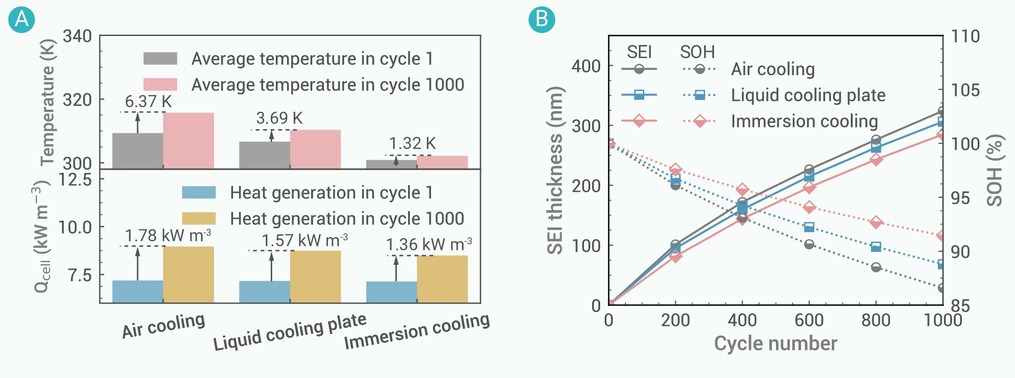
(A) Comparison of average temperature and heat generation obtained from cycle 1 and cycle
1000 ; (B) Comparison of SEI thickness and SOH of three BTMSs during cycling process. -
Figure 7.
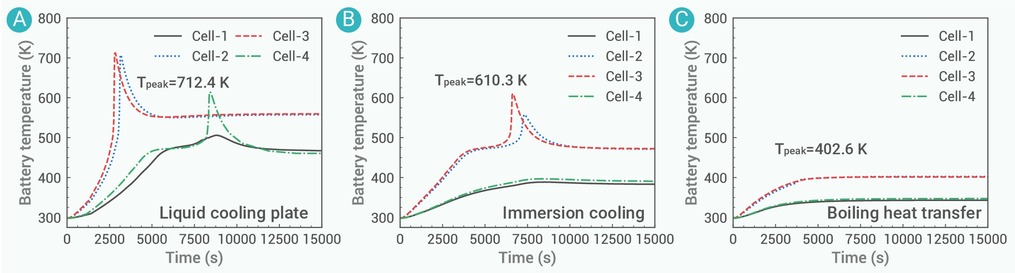
Comparison of battery temperature rise of three BTMSs during local overheating process.
-
Figure 8.
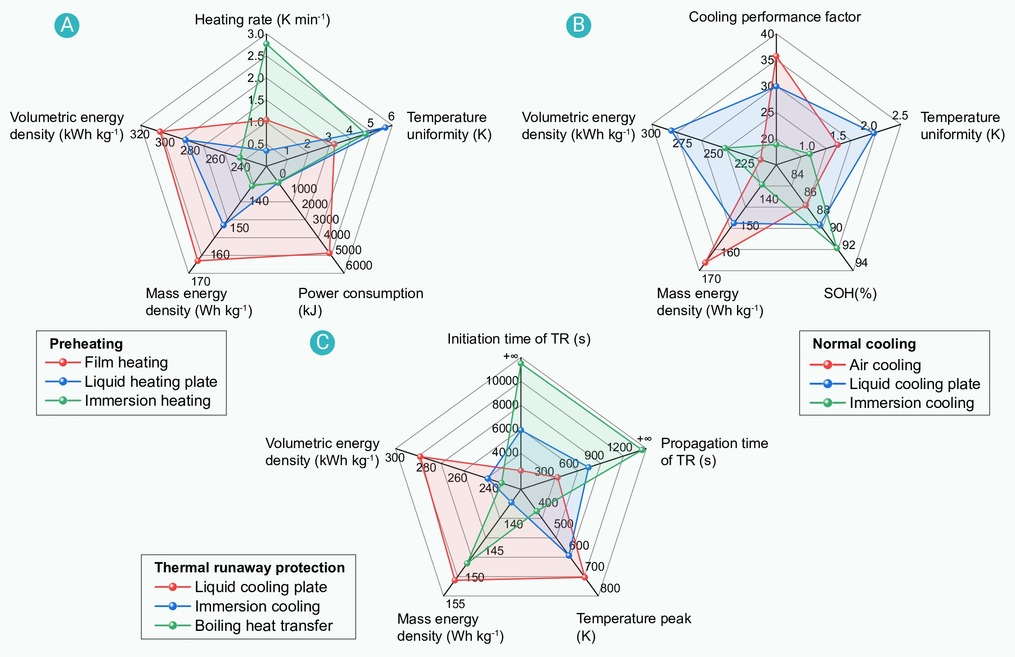
Comprehensive comparison of various BTMSs used for low-temperature preheating, normal cooling, and thermal runaway protection.
