
Unusual fullerene-like curved surface with unique Fe-N4 sites for highly efficient oxygen reduction reaction in zinc-air battery
-
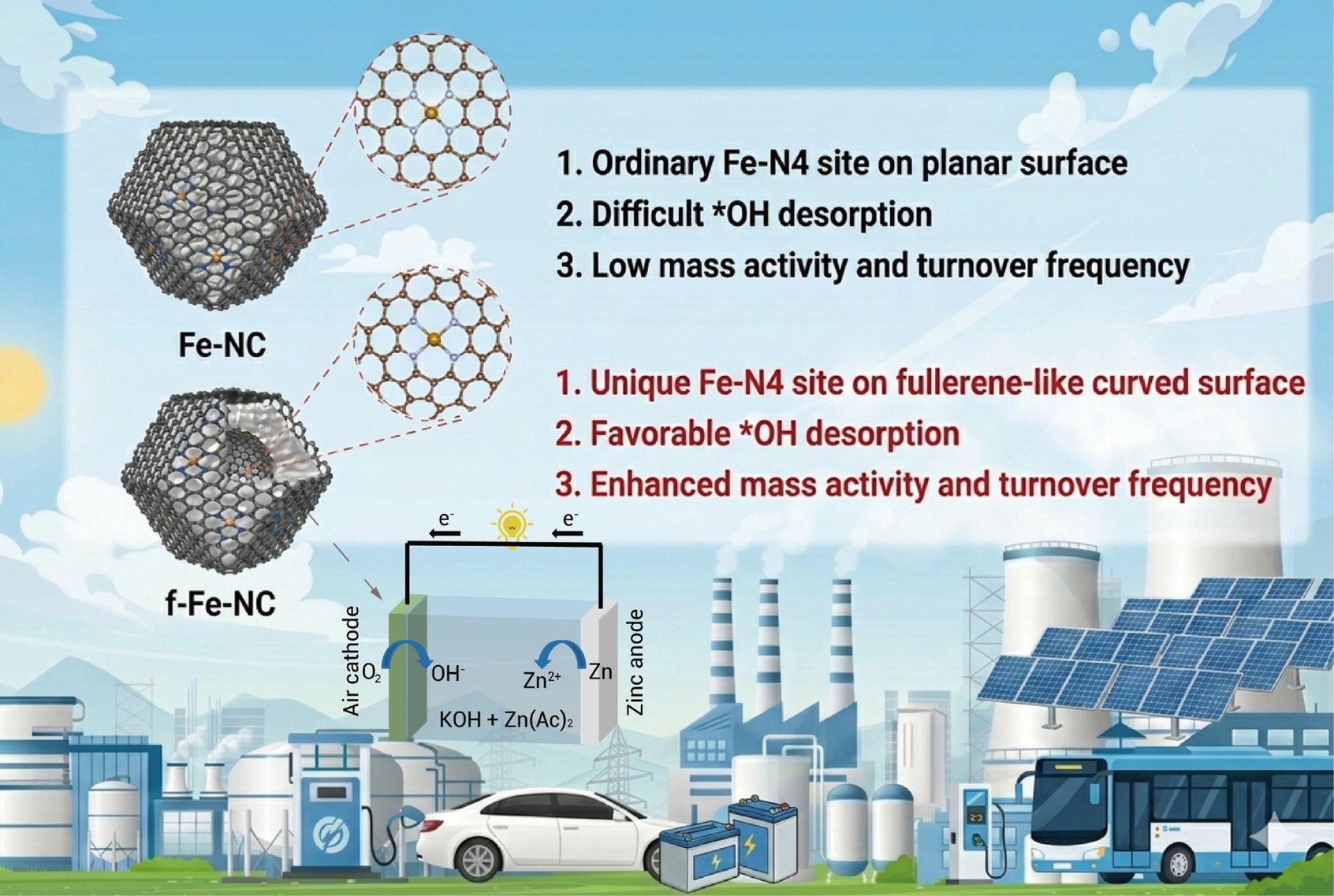
GRAPHICAL ABSTRACT
 DownLoad:
Full size image
DownLoad:
Full size image
-
PUBLIC SUMMARY
-
A composite-template strategy creates Fe–N–C catalysts with curved Fe–N4 sites and hierarchical porosity.
Curved surfaces stretch Fe–N bonds, promoting *OH desorption and accelerating ORR kinetics.
The catalyst achieves a high half-wave potential of 0.91 V and ~7× higher mass activity.
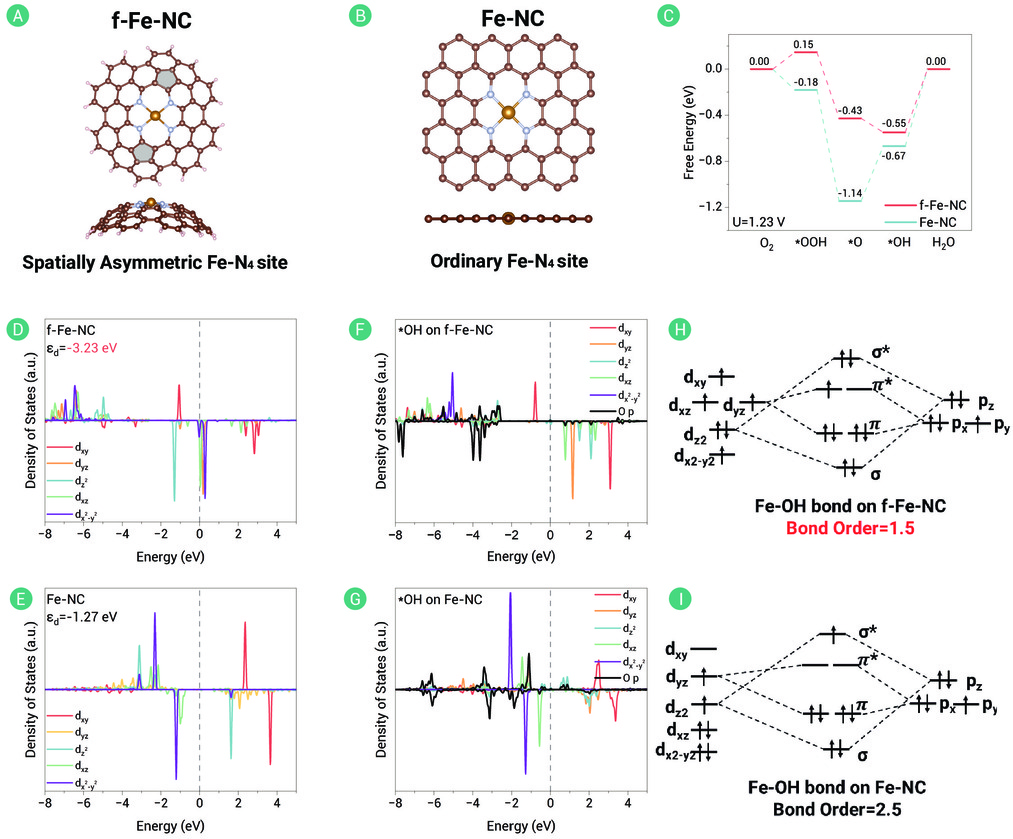
Calculations show a lower rate-determining barrier and weakened Fe–OH bonding.
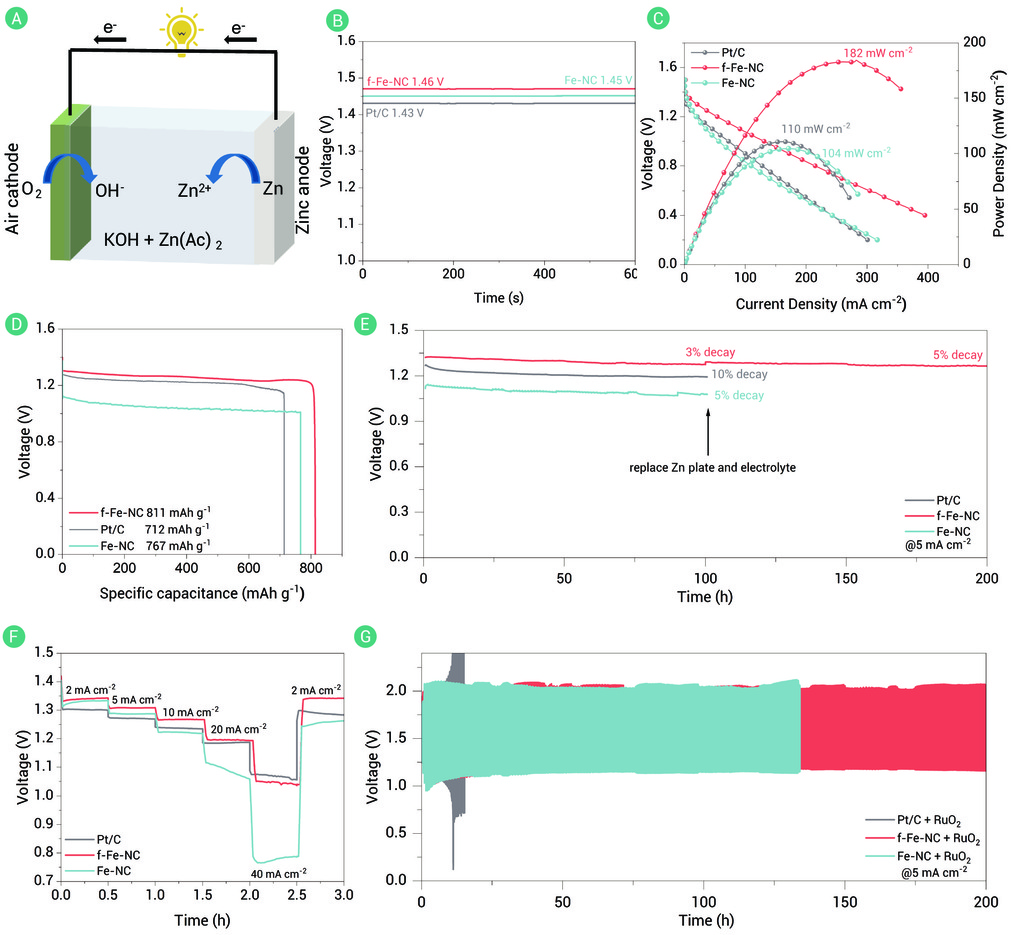
In Zn–air batteries, it outperforms Pt/C with higher power density and capacity.
-
-
ABSTRACT
Iron-Nitrogen-carbon (Fe-N-C) catalysts are promising substitutes for Pt-based catalysts in oxygen reduction reaction (ORR) for zinc-air battery. However, the sluggish kinetics of ORR on conventional Fe-N-C catalysts resulted from difficult desorption of *OH intermediate and the slow mass transfer significantly impede their practical application. Herein, a novel composite template-assisted strategy is proposed to prepare Fe-N4 sites on unusual fullerene-like curved surface featuring stretched Fe-N bonds and hierarchically porous structure (denoted as f-Fe-NC). With unique curved Fe-N4 sites and hierarchical porosity, f-Fe-NC exhibits an impressive half-wave potential (E1/2) of 0.91 V vs. RHE. Moreover, the mass activity of f-Fe-NC is nearly sevenfold of that of ordinary Fe-NC featuring planar Fe-N4 sites and microporous structure, and the turnover frequency of f-Fe-NC increases at exponent level compared to ordinary Fe-NC. Theoretical calculations demonstrate the reduced energy barrier of rate-determining step and favorable *OH desorption on f-Fe-NC because of the degradation of bond order of Fe-OH bond. Zinc-air battery based on f-Fe-NC exhibits a power density of 182 mW cm-2 and a specific capacity of 811 mAh g-1 at 10 mA cm-2, overtaking those of commercial Pt/C. Our study opens a new avenue for the rational design of electrochemically and structurally advanced ORR catalysts.-
Keywords:
- Oxygen Reduction Reaction /
- Fe-N-C /
- Single atom catalysts /
- Zinc-Air battery /
- Surface curvature
-

-
REFERENCES
[1] Liang J., Zhu Y., Yang H., et al. (2025). Structural design and active-site modulation of bifunctional electrocatalysts and electrolyte chemistry for zinc–air batteries. Adv. Funct. Mater. 35:10535. DOI:10.1002/adfm.202510535 [2] Lee J., Kim S.T., Cao R., et al. (2011). Metal–air batteries with high energy density: Li–air versus Zn–air. Adv. Energy Mater. 1:34−50. DOI:10.1002/aenm.201000010 [3] Chung H.T., Cullen D.A., Higgins D., et al. (2017). Direct atomic-level insight into the active sites of a high-performance PGM-free ORR catalyst. Science 357:479−484. DOI:10.1126/science.aan2255 [4] Cao P., Mu X., Chen F., et al. (2025). Breaking symmetry for better catalysis: insights into single-atom catalyst design. Chem. Soc. Rev. DOI:10.1039/D4CS01031K [5] Yu A. and Yang Y. (2025). Atomically dispersed metal catalysts for oxygen reduction reaction: Two-electron vs. four-electron pathways. Angew. Chem. Int. Ed. DOI:10.1002/anie.202424161 [6] Xiong Y., Li H., Liu C., et al. (2022). Single-atom Fe catalysts for Fenton-like reactions: Roles of different N species. Adv. Mater. 34:2110653. DOI:10.1002/adma.202110653 [7] Hu X., Chen S., Chen L., et al. (2022). What is the real origin of the activity of Fe–N–C electrocatalysts in the O2 reduction reaction. J. Am. Chem. Soc. 144:18144−18152. DOI:10.1021/jacs.2c08743 [8] Wang Y., Tang Y.-J. and Zhou K. (2019). Self-adjusting activity induced by intrinsic reaction intermediate in Fe–N–C single-atom catalysts. J. Am. Chem. Soc. 141:14115−14119. DOI:10.1021/jacs.9b07712 [9] Li Y., Luo X., Wei Z., et al. (2024). Precisely constructing charge-asymmetric dual-atom Fe sites for efficient oxygen reduction. Energy Environ. Sci. 17:4646−4657. DOI:10.1039/D4EE01309C [10] Zhang D., She F., Chen J. and Li H. (2025). Why do weak-binding M–N–C single-atom catalysts possess anomalously high ORR activity? J. Am. Chem. Soc. DOI:10.1021/jacs.4c16733 [11] Ji S., Mou Y., Liu H., et al. (2024). Manipulating electronic properties of Fe single atom catalyst via coordination engineering. Adv. Mater. 36:2410121. DOI:10.1002/adma.202410121 [12] Zhao T., Wang G., Xiao D., et al. (2025). Manipulating adjacent microenvironment of FeN4 sites for efficient ORR. ACS Catal. 15:1477−1486. DOI:10.1021/acscatal.4c06546 [13] Zhou Q., Xue W., Cui X., et al. (2024). Oxygen-bridging Fe, Co dual-metal dimers boost reversible oxygen electrocatalysis. Proc. Natl. Acad. Sci. U.S.A. 121:e2404013121. DOI:10.1073/pnas.2404013121 [14] Zhang Z., Dai Y., Guo P., et al. (2024). Noncovalent assembly strategy for efficient synthesis of dual-atom catalysts. Adv. Funct. Mater. 34:2407128. DOI:10.1002/adfm.202407128 [15] Wang B., Yang X., Xie C., et al. (2024). A general metal ion recognition strategy to mediate dual-atomic-site catalysts. J. Am. Chem. Soc. 146:24945−24955. DOI:10.1021/jacs.4c06173 [16] Musgrave C.B., Su J., Xiong P., et al. (2025). Molecular strain accelerates electron transfer for enhanced oxygen reduction. J. Am. Chem. Soc. 147:3786−3795. DOI:10.1021/jacs.4c16637 [17] Zhao Y. (2025). Acidic oxygen reduction by single-atom Fe catalysts on curved supports. Nature 664:668−675. DOI:10.1038/s41586-025-09364-6 [18] Mao J., Iocozzia J., Huang J., et al. (2025). From lab-scale to industrialization: atomically M–N–C catalysts for ORR. Energy Environ. Sci. 11:772−799. DOI:10.1039/C7EE03031B [19] Qiao M., Wang Y., Wang Q., et al. (2019). Hierarchically ordered porous carbon with FeN4 for ORR. Angew. Chem. Int. Ed. 59:2688−2694. DOI:10.1002/anie.201914123 [20] Tan H., Tang J., Kim J., et al. (2019). Nanoporous Fe–N–C electrocatalysts for ORR. J. Mater. Chem. A 7:1380−1393. DOI:10.1039/C8TA08870E [21] Peng L., Yang J., Yang Y., et al. (2022). Mesopore-rich Fe–N–C catalyst with FeN4 sites. Adv. Mater. 34:2202544. DOI:10.1002/adma.202202544 [22] Xu Z., Xiao T., Li Y., et al. (2024). Effect of Schwarz P surface on ORR performance. Adv. Mater. 36:2416204. DOI:10.1002/adma.202416204 [23] Cui X., Jin R., Gao L., et al. (2025). High-loading single atoms via porous nanospheres for ORR. Adv. Funct. Mater. 35:2510108. DOI:10.1002/adfm.202510108 [24] Huang Y., Chen S., Li Y., et al. (2024). Flexible piezoelectric sensor based on PAN/MXene/ZnO composite. Chem. Eng. J. 488:150997. DOI:10.1016/j.cej.2024.150997 [25] Yan Y. (2025). General synthesis of neighboring dual-atomic sites. Nat. Commun. 16:334. DOI:10.1038/s41467-024-55630-y [26] Wu Q., Jia Y., Liu Q., et al. (2022). Ultra-dense carbon defects as active ORR sites. Chem 8:2715−2733. DOI:10.1016/j.chempr.2022.06.013 [27] Tian H., Song A., Zhang P., et al. (2023). High durability Fe–N–C single-atom catalysts. Adv. Mater. 35:2210714. DOI:10.1002/adma.202210714 [28] Xia H., Pang R., Dong X., et al. (2023). Vacancy-coupling pentagons boosting ORR kinetics. J. Am. Chem. Soc. 145:25695−25704. DOI:10.1021/jacs.3c08556 [29] Liu S., Meyer Q., Jia C., et al. (2023). Degradation mechanisms of Fe–N–C catalysts. Energy Environ. Sci. 16:3792−3802. DOI:10.1039/D3EE01166F [30] Li J., Xia W., Tang J., et al. (2022). MOF-derived graphene mesh for Fe–N4 active sites. J. Am. Chem. Soc. 144:9280−9291. DOI:10.1021/jacs.2c00719 [31] Zhang P., Chen H.-C., Zhu H., et al. (2024). Inter-site structural heterogeneity in Fe catalysts. Nat. Commun. 15:2062. DOI:10.1038/s41467-024-46389-3 [32] Wu J. (2024). Structural engineering of Fe single-atom catalysts. J. Energy Chem. 98:634−644. DOI:10.1016/j.jechem.2024.07.028 [33] Guo W., Pan M., Xie Q., et al. (2025). pH-universal oxygen electrolysis via Fe catalysts. Nat. Commun. 16:2920. DOI:10.1038/s41467-025-58297-1 [34] Yu Y., Wang Y., Yang F., et al. (2024). Curved Fe–N4 sites boosting ORR activity. Angew. Chem. Int. Ed. DOI:10.1002/anie.202415691 [35] Zhang C., Shen W., Guo K., et al. (2023). Pentagonal defect-rich carbon electrocatalyst. J. Am. Chem. Soc. DOI:10.1021/jacs.3c00689 [36] Yang J., Dai Q., Hou S., et al. (2025). Anti-self-discharge capability of Zn–halogen batteries. Adv. Mater. 37:2418258. DOI:10.1002/adma.202418258 [37] Zheng F., Zhang Y., Ding G., et al. (2024). Pentagon defects enabling sodium–sulfur batteries. Adv. Funct. Mater. 34:2310598. DOI:10.1002/adfm.202310598 [38] Ye G., Liu S., Zhao K. and He Z. (2023). Singlet oxygen induced etching boosting ORR. Angew. Chem. Int. Ed. 62:e202303409. DOI:10.1002/anie.202303409 [39] Wang Q., Lyu L., Hu X., et al. (2025). Surface curvature tuning Fe–N–C catalysts. Angew. Chem. Int. Ed. 64:e202422920. DOI:10.1002/anie.202422920 [40] Tang C., Jin R., Xia Y., et al. (2025). Asymmetric tailoring of Co single-atom catalysts. Nano Energy 137:110776. DOI:10.1016/j.nanoen.2025.110776 [41] Ma R., Tang C., Wang Y., et al. (2024). Electronic-state manipulation of polymers for ORR. Angew. Chem. Int. Ed. 63:e202405594. DOI:10.1002/anie.202405594 [42] Zhang S., Han Y., Zhang R., et al. (2024). Regulating Fe spin states for ORR. Adv. Energy Mater. 14:2403899. DOI:10.1002/aenm.202403899 [43] Liu M., Liu Y., Zhang X., et al. (2025). Axial Cl-mediated Fe–N–C catalysts. Angew. Chem. Int. Ed. DOI:10.1002/anie.202504923. [44] Xu Z., Zhu J., Shao J., et al. (2024). Anti-dissolving Fe2N6 sites for Zn–air batteries. Energy Environ. Sci. 17:8722−8733. DOI:10.1039/D4EE03148B [45] Zhao S., Liu M., Qu Z., et al. (2024). Cascade synthesis of Fe–N2–Fe dual-atom catalysts. Angew. Chem. Int. Ed. DOI:10.1002/anie.202408914. [46] Yuan M., Liu Y., Du Y., et al. (2024). Dual-shelled carbon support with asymmetric Fe sites. Adv. Funct. Mater. 34:2401484. DOI:10.1002/adfm.202401484 [47] Liu C., Yang R., Wang J., et al. (2025). Synergistic catalysts with Fe single atoms and Fe3C clusters. Angew. Chem. Int. Ed. DOI:10.1002/anie.202501266. [48] Ma Q., Liao Y., Zhao Q., et al. (2025). PtNPs–Fe/NC catalyst for Zn–air batteries. Small 21:2500344. DOI:10.1002/smll.202500344 [49] Wu W., Hou Q., Huang T., et al. (2025). D-band modulation for efficient ORR. Appl. Catal. B: Environ. Energy 365:124921. DOI:10.1016/j.apcatb.2024.124921 [50] Wan Z., Ma Z., Deng X., et al. (2025). Weakening hydroxyl dissociation barrier in Fe–N–C catalysts. Adv. Energy Mater. DOI:10.1002/aenm.202501630. [51] Tian S., Chen L., Wu S., et al. (2025). FeN4–NiN3O diatomic catalysts for Zn–air batteries. Chem. Eng. J. 520:166120. DOI:10.1016/j.cej.2025.166120 [52] Liu Q., Chen J., Cao L., et al. (2025). Electronic communication between Ni and Fe–N species. Adv. Funct. Mater. 35:2424597. DOI:10.1002/adfm.202424597 [53] Pang H., Guo W., Ji X., et al. (2025). FeN4 single atoms and Ir clusters synergy. Chem. Eng. J. 521:166735. DOI:10.1016/j.cej.2025.166735 [54] Zhao Y.-H., Ji Y.-R., Chen X.-Q., et al. (2025). Regulation of Fe coordination shells by S and P. J. Colloid Interface Sci. 688:161−171. DOI:10.1016/j.jcis.2025.02.142 [55] Wu S., Liu X., Mao H., et al. (2024). Tandem effect of nitrogen configuration promoting ORR. Adv. Energy Mater. 14:2400183. DOI:10.1002/aenm.202400183 [56] Lu Z., Wang Z., Yang Z., et al. (2025). Engineering CoN4 and FeN4 dual sites. Adv. Funct. Mater. 35:2418489. DOI:10.1002/adfm.202418489 [57] Chen L., Wang X., Lu T., et al. (2025). d-orbital spin polarization of Fe single atomic sites. Appl. Catal. B: Environ. Energy 366:125007. DOI:10.1016/j.apcatb.2024.125007 [58] Shen D., Sun F., Liang Z., et al. (2025). Axial-N induced Fe sites for ORR. Angew. Chem. Int. Ed. DOI:10.1002/anie.202505937. [59] Yu S., Levell Z., Jiang Z., et al. (2023). Rate-limiting step of ORR on Fe–N–C catalysts. J. Am. Chem. Soc. 145:25352−25356. DOI:10.1021/jacs.3c09193 [60] Zeng Y., Li C., Li B., et al. (2023). Breaking activity–stability trade-off of Fe–N–C catalysts. Nat. Catal. 6:1215−1227. DOI:10.1038/s41929-023-01062-8 [61] Zhao Z.-J., Liu S., Zha S., et al. (2019). Theory-guided design of catalytic materials. Nat. Rev. Mater. 4:792−804. DOI:10.1038/s41578-019-0152-x [62] Liu B., Guo P., Dai Y., et al. (2025). Tailoring asymmetric atomic strain of FeN4 sites. Chem. Eng. J. 507:160174. DOI:10.1016/j.cej.2025.160174 [63] Zhang Y.-L., Dai Y.-K., Liu B., et al. (2022). Atom–nanoparticle composite catalysts for Zn–air batteries. J. Mater. Chem. A 10:3112−3121. DOI:10.1039/D1TA10559K [64] Liu K., Fu J., Lin Y., et al. (2022). Activity of Fe–N–C catalysts for ORR. Nat. Commun. 13:2075. DOI:10.1038/s41467-022-29797-1 [65] Yu M., Li A., Kan E. and Zhan C. (2024). Spin state evolution in Fe–N–C catalysis. ACS Catal. 14:6816−6826. DOI:10.1021/acscatal.3c06122 [66] Guo P., Liu B., Tu F., et al. (2024). Breaking Sabatier’s vertex via dual active sites. Energy Environ. Sci. DOI:10.1039/D4EE00823E -
ABOUT THIS ARTICLE
Cite this article:
Hong S., Yuan L., Liu S., et al. (2026). Unusual fullerene-like curved surface with unique Fe-N4 sites for highly efficient oxygen reduction reaction in zinc-air battery. The Innovation Energy 3:100154. https://doi.org/10.59717/j.xinn-energy.2026.100154
Welcome!
To request copyright permission to republish or share portions of our works, please visit Copyright Clearance Center's (CCC) Marketplace website at marketplace.copyright.com.
Export File
Citation
Hong S., Yuan L., Liu S., et al. (2026). Unusual fullerene-like curved surface with unique Fe-N4 sites for highly efficient oxygen reduction reaction in zinc-air battery. The Innovation Energy 3:100154. https://doi.org/10.59717/j.xinn-energy.2026.100154

Format
Content
-
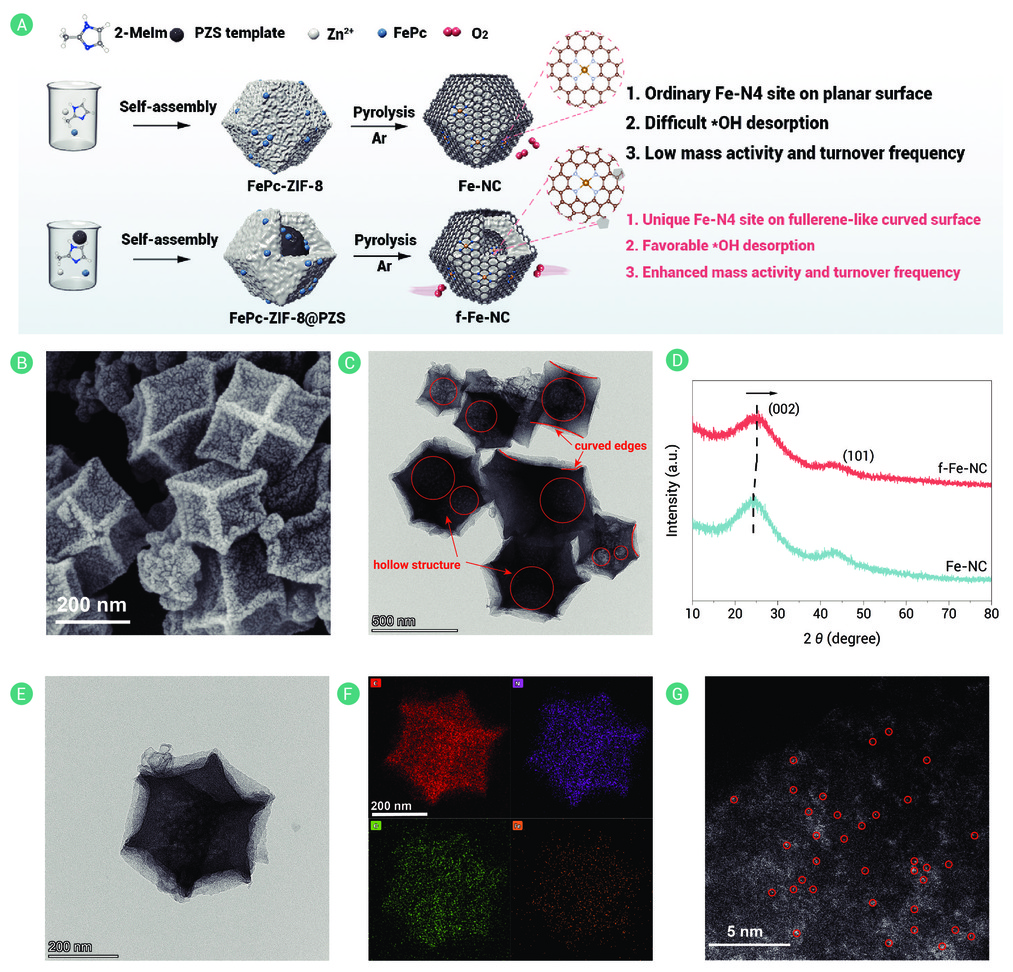
Figure 1.
Schematic of the synthesis and structural characterizations of f-Fe-NC and Fe-NC
-
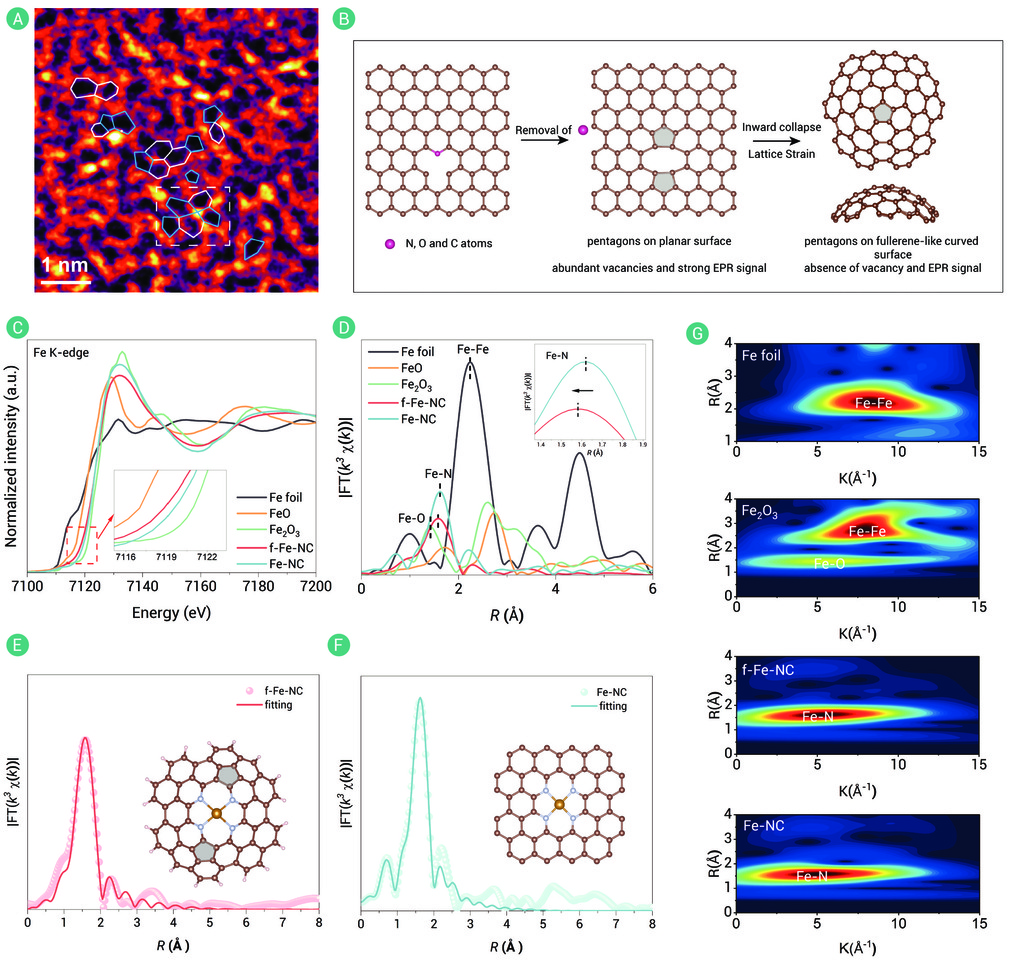
Figure 2.
Coordination environment of f-Fe-NC and Fe-NC
-
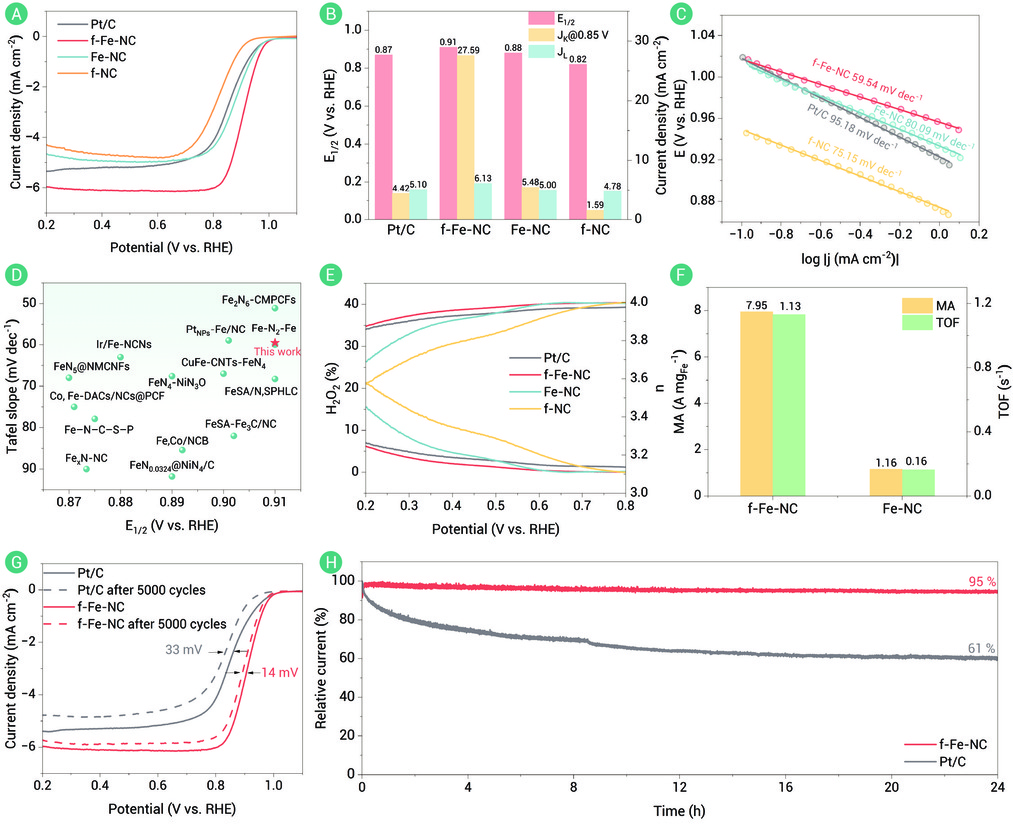
Figure 3.
ORR performance in O2-saturated 0.1 M KOH solution
-
Figure 4.
Theoretical calculations
-
Figure 5.
Performance of zinc-air battery
