
Ubiquitous geographic information for building digital twins of geographic environments
-

-
REFERENCES
[1] Lü, G., Yuan, L., and Yu, Z. (2022). Information Geography: a new fulcrum of geographic ternary world. Sci. China Earth Sci. 65, 383-386. DOI: 10.1007/s11430-021-9859-9. [2] Caldarelli, G., Arcaute, E., Barthelemy, M., et al. (2023). The role of complexity for digital twins of cities. Nat Comput Sci 3, 374-381. DOI: 10.1038/s43588-023-00431-4. [3] Bauer, P., Stevens, B. and Hazeleger, W. (2021). A digital twin of Earth for the green transition. Nat. Clim. Chang. 11, 80-83. DOI: 10.1038/s41558-021-00986-y. [4] Li, X., Feng, M., Ran, Y., et al. (2023). Big Data in Earth system science and progress towards a digital twin. Nat Rev Earth Environ 4, 319-332. DOI: 10.1038/s43017-023-00409-w. [5] Tzachor, A., Sabri, S., Richards, C. E., et al. (2022). Potential and limitations of digital twins to achieve the Sustainable Development Goals. Nat Sustain 5, 822-829. DOI: 10.1038/s41893-022-00923-7. -
ABOUT THIS ARTICLE
Cite this article:
Lü G., Yue S., Yu Z., et al., (2023). Ubiquitous geographic information for building digital twins of geographic environments. The Innovation Geoscience 1(2), 100023. https://doi.org/10.59717/j.xinn-geo.2023.100023
Welcome!
To request copyright permission to republish or share portions of our works, please visit Copyright Clearance Center's (CCC) Marketplace website at marketplace.copyright.com.
Export File
Citation
Lü G., Yue S., Yu Z., et al., (2023). Ubiquitous geographic information for building digital twins of geographic environments. The Innovation Geoscience 1(2), 100023. https://doi.org/10.59717/j.xinn-geo.2023.100023

Format
Content
 DownLoad:
-
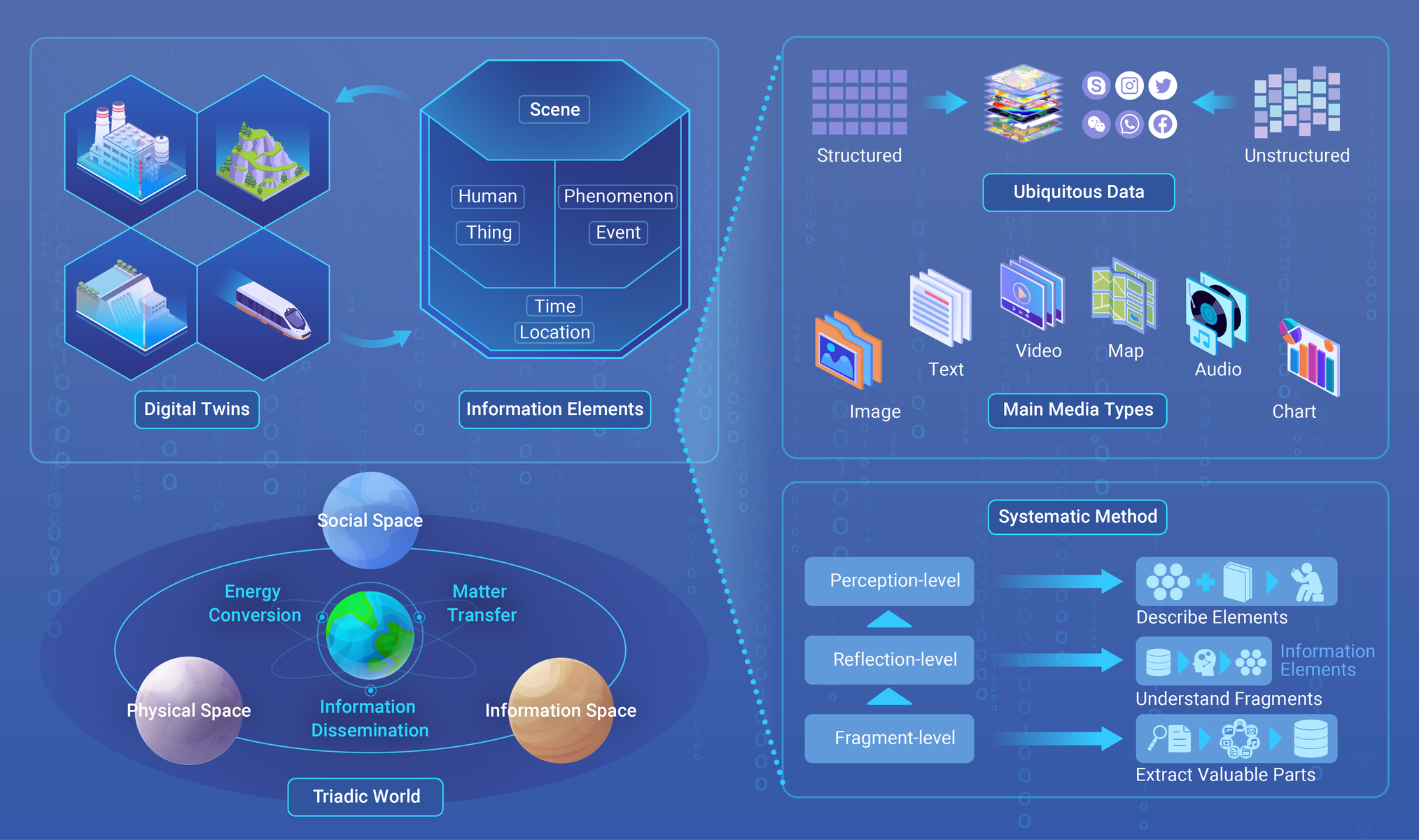
Figure 1.
Interpreting information elements from ubiquitous data for digital twins
