
Real-time and dynamic estimation of CO2 emissions from China’s lakes and reservoirs
-
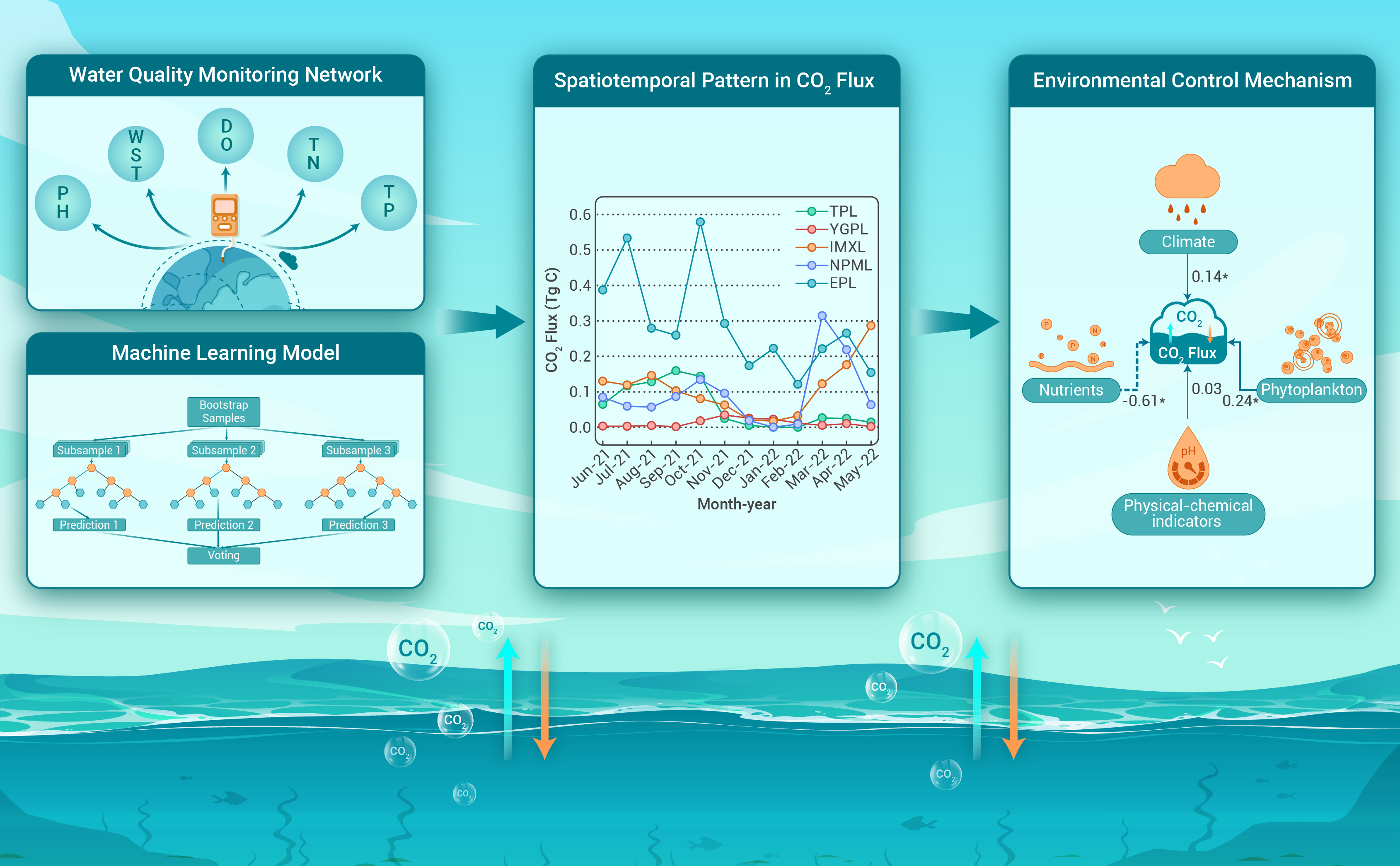
GRAPHICAL ABSTRACT
 DownLoad:
Full size image
DownLoad:
Full size image
-
PUBLIC SUMMARY
-
Lake CO2 emissions were estimated using real-time water quality monitoring data.
China’s total lake and reservoir CO2 emission between 2021-2022 was 6.78 Tg C yr−1.
General environmental controls were pH, dissolved oxygen, and air temperature.
-
-
ABSTRACT
Lakes and reservoirs act as active carbon (C) reactors and regulators. Both play a crucial terrestrial ecosystem C balance role via carbon dioxide (CO2) exchange processes across the water-air interface. It has previously been confirmed that CO2 flux from lakes and reservoirs generally exhibits significant spatiotemporal heterogeneity. Nevertheless, spatiotemporal CO2 flux variation has seldom been considered in global and regional CO2 emission estimates from lakes and reservoirs. By accounting for spatiotemporal CO2 flux and water surface area variability, we evaluated spatial and temporal CO2 emission dynamics from China’s inland lakes and reservoirs using national real-time water quality monitoring data and machine learning (ML) models. Between 2021–2022, we estimated total C emission flux at 6.78 (±2.5) Tg C yr−1, where seasonal and regional distribution both exhibited significant heterogeneity. Our state-of-the-art estimate is significantly lower than previous estimates of 7.9~25 Tg C yr−1 from the 1980s to the 2010s. Water quality parameters (pH and dissolved oxygen [DO]) and climate factors (air temperature) were identified as the general environmental CO2 flux controls. For the first time, this study clarifies the spatiotemporal patterns and drivers of CO2 flux from China’s inland lakes and reservoirs, providing a more complete C budget picture of China’s aquatic ecosystems. -

-
REFERENCES
[1] Cole, J.J., Prairie, Y.T., Caraco, N.F., et al. (2007). Plumbing the Global Carbon Cycle: Integrating Inland Waters into the Terrestrial Carbon Budget. Ecosystems 10, 172−185. [2] Battin, T.J., Luyssaert, S., Kaplan, L.A., et al. (2009). The boundless carbon cycle. Nat. Geosci. 2, 598−600. [3] Regnier, P., Resplandy, L., Najjar, R.G., and Ciais, P. (2022). The land-to-ocean loops of the global carbon cycle. Nature 603, 401−410. [4] Koehler, B., Landelius, T., Weyhenmeyer, G.A., et al. (2014). Sunlight-induced carbon dioxide emissions from inland waters. Glob. Biogeochem. Cycle. 28, 696−711. [5] Pilla, R.M., Griffiths, N.A., Gu, L., et al. (2022). Anthropogenically driven climate and landscape change effects on inland water carbon dynamics: What have we learned and where are we going. Glob. Change Biol. 28, 5601−5629. [6] Borges, A.V., Darchambeau, F., Lambert, T., et al. (2018). Effects of agricultural land use on fluvial carbon dioxide, methane and nitrous oxide concentrations in a large European river, the Meuse (Belgium). Sci. Total Environ. 610-611 , 342-355. [7] Borges, A.V., Darchambeau, F., Lambert, T., et al. (2019). Variations in dissolved greenhouse gases (CO2, CH4, N2O) in the Congo River network overwhelmingly driven by fluvial-wetland connectivity. Biogeosciences 16, 3801−3834. [8] Borges, A.V., Okello, W., Bouillon, S., et al. (2023). Spatial and temporal variations of dissolved CO2, CH4 and N2O in Lakes Edward and George (East Africa). J. Gt. Lakes Res. 49, 229−245. [9] Xiao, W., Liu, S., Li, H., et al. (2014). A Flux-Gradient System for Simultaneous Measurement of the CH4, CO2, and H2O Fluxes at a Lake–Air Interface. Environ. Sci. Technol. 48, 14490−14498. [10] Shi, W., Chen, Q., Yi, Q., et al. (2017). Carbon Emission from Cascade Reservoirs: Spatial Heterogeneity and Mechanisms. Environ. Sci. Technol. 51, 12175−12181. [11] Xu, Y.J., Xu, Z., and Yang, R. (2019). Rapid daily change in surface water pCO2 and CO2 evasion: A case study in a subtropical eutrophic lake in Southern USA. J. Hydrol. 570, 486−494. [12] Yang, R., Xu, Z., Liu, S., and Xu, Y.J. (2019). Daily pCO2 and CO2 flux variations in a subtropical mesotrophic shallow lake. Water Res. 153, 29−38. [13] Raymond, P.A., Hartmann, J., Lauerwald, R., et al. (2013). Global carbon dioxide emissions from inland waters. Nature 503, 355−359. [14] Golub, M., Koupaei-Abyazani, N., Vesala, T., et al. (2023). Diel, seasonal, and inter-annual variation in carbon dioxide effluxes from lakes and reservoirs. Environ. Res. Lett. 18, 034046. [15] Campbell, A.D., Fatoyinbo, T., Charles, S.P., et al. (2022). A review of carbon monitoring in wet carbon systems using remote sensing. Environ. Res. Lett. 17, 025009. [16] Borges, A.V., Deirmendjian, L., Bouillon, S., et al. (2022). Greenhouse gas emissions from African lakes are no longer a blind spot. Sci. Adv. 8, eabi8716. [17] Li, S., Bush, R.T., Santos, I.R., et al. (2018). Large greenhouse gases emissions from China's lakes and reservoirs. Water Res. 147, 13−24. [18] Ran, L., Butman, D.E., Battin, T.J., et al. (2021). Substantial decrease in CO2 emissions from Chinese inland waters due to global change. Nat. Commun. 12, 1730. [19] Gómez-Gener, L., Rocher-Ros, G., Battin, T., et al. (2021). Global carbon dioxide efflux from rivers enhanced by high nocturnal emissions. Nat. Geosci. 14, 289−294. [20] Liu, S., Kuhn, C., Amatulli, G., et al. (2022). The importance of hydrology in routing terrestrial carbon to the atmosphere via global streams and rivers. Proc. Natl. Acad. Sci. U. S. A. 119, e2106322119. [21] Wang, J., Zhou, Y., Zhou, L., et al. (2023). Urbanization in developing countries overrides catchment productivity in fueling inland water CO2 emissions. Glob. Change Biol. 29, 1−4. [22] Donchyts, G., Winsemius, H., Baart, F., et al. (2022). High-resolution surface water dynamics in Earth’s small and medium-sized reservoirs. Sci Rep. 12, 13776. [23] Pi, X., Luo, Q., Feng, L., et al. (2022). Mapping global lake dynamics reveals the emerging roles of small lakes. Nat. Commun. 13, 5777. [24] Keller, P.S., Marcé, R., Obrador, B., and Koschorreck, M. (2021). Global carbon budget of reservoirs is overturned by the quantification of drawdown areas. Nat. Geosci. 14, 402−408. [25] Holgerson, M.A., and Raymond, P.A. (2016). Large contribution to inland water CO2 and CH4 emissions from very small ponds. Nat. Geosci. 9, 222−226. [26] Aufdenkampe, A.K., Mayorga, E., Raymond, P.A., et al. (2011). Riverine coupling of biogeochemical cycles between land, oceans, and atmosphere. Front. Ecol. Environ. 9, 53−60. [27] Pu, J., Li, J., Zhang, T., et al. (2020). Varying thermal structure controls the dynamics of CO2 emissions from a subtropical reservoir, south China. Water Res. 178, 115831. [28] Xiao, Q., Xu, X., Duan, H., et al. (2020). Eutrophic Lake Taihu as a significant CO2 source during 2000–2015. Water Res. 170, 115331. [29] Guo, Y., Zhang, Y., Ma, N., et al. (2022). Significant CO2 sink over the Tibet's largest lake: Implication for carbon neutrality across the Tibetan Plateau. Sci. Total Environ. 843, 156792. [30] Wang, S., Gao, Y., Jia, J., et al. (2022). Determining whether hydrological processes drive carbon source and sink conversion shifts in a large floodplain-lake system in China. Water Res. 224, 119105. [31] Song, K., Wen, Z., Shang, Y., et al. (2018). Quantification of dissolved organic carbon (DOC) storage in lakes and reservoirs of mainland China. J. Environ. Manage. 217, 391−402. [32] Zhou, N., Liu, Z., Liu, K., et al. (2022). Carbon, nitrogen, and phosphorus dynamics in China’s lakes: climatic and geographic influences. Environ. Monit. Assess. 195, 113. [33] Qu, L., He, C., Wu, Z., et al. (2022). Hypolimnetic deoxygenation enhanced production and export of recalcitrant dissolved organic matter in a large stratified reservoir. Water Res. 219, 118537. [34] Yang, P., Wang, N.a., Zhao, L., et al. (2021). Variation characteristics and influencing mechanism of CO2 flux from lakes in the Badain Jaran Desert: A case study of Yindeer Lake. Ecol. Indic. 127, 107731. [35] Xiao, Q., Duan, H., Qin, B., et al. (2022). Eutrophication and temperature drive large variability in carbon dioxide from China's Lake Taihu. Limnol. Oceanogr. 67, 379−391. [36] Lu, Y., Gao, Y., Jia, J., et al. (2022). Water Conveyance-Type Lake Systems Shift toward Carbon Sources under Regulatory Balanced Water Level Metabolic Processes. ACS Earth Space Chem. 6, 2400−2411. [37] Zhang, J., Jiang, Y., Gao, Y., et al. (2013). CO2 emission from Dianshan Lake in summer, East China. Chin. J. Geochem. 32, 430−435. [38] Wen, Z., Song, K., Shang, Y., et al. (2017). Carbon dioxide emissions from lakes and reservoirs of China: A regional estimate based on the calculated pCO2. Atmos. Environ. 170, 71−81. [39] Hood, E., Battin, T.J., Fellman, J., et al. (2015). Storage and release of organic carbon from glaciers and ice sheets. Nat. Geosci. 8, 91−96. [40] Wang, J., Hilton, R.G., Jin, Z., et al. (2019). The isotopic composition and fluxes of particulate organic carbon exported from the eastern margin of the Tibetan Plateau. Geochim. Cosmochim. Acta 252, 1−15. [41] Attermeyer, K., Casas-Ruiz, J.P., Fuss, T., et al. (2021). Carbon dioxide fluxes increase from day to night across European streams. Commun. Earth Environ. 2, 118. [42] Xiao, S., Wang, Y., Liu, D., et al. (2013). Diel and seasonal variation of methane and carbon dioxide fluxes at Site Guojiaba, the Three Gorges Reservoir. J. Environ. Sci. 25, 2065−2071. [43] Zhang, Z., Yu, R., Xia, X., et al. (2022). Significant diurnal variation of CO2 flux from a shallow eutrophic lake: effects of submerged aquatic vegetation and algae bloom. Aquat. Sci. 84, 62. [44] Humborg, C., MÖRth, C.-M., Sundbom, M., et al. (2010). CO2 supersaturation along the aquatic conduit in Swedish watersheds as constrained by terrestrial respiration, aquatic respiration and weathering. Glob. Change Biol. 16, 1966−1978. [45] Jia, J., Sun, K., Lü, S., et al. (2022). Determining whether Qinghai–Tibet Plateau waterbodies have acted like carbon sinks or sources over the past 20 years. Sci. Bull. 67, 2345−2357. [46] Li, X.-Y., Shi, F.-Z., Ma, Y.-J., et al. (2022). Significant winter CO2 uptake by saline lakes on the Qinghai-Tibet Plateau. Glob. Change Biol. 28, 2041−2052. [47] Yan, F., Sillanpää, M., Kang, S., et al. (2018). Lakes on the Tibetan Plateau as Conduits of Greenhouse Gases to the Atmosphere. J. Geophys. Res.-Biogeosci. 123, 2091−2103. [48] Staehr, P.A., Testa, J.M., Kemp, W.M., et al. (2012). The metabolism of aquatic ecosystems: history, applications, and future challenges. Aquat. Sci. 74, 15−29. [49] Jia, J., Gao, Y., Qin, B., et al. (2022). Evolving geographical gross primary productivity patterns in global lake systems and controlling mechanisms of associated phytoplankton communities since the 1950s. Earth-Sci. Rev. 234, 104221. [50] Gao, Y., Jia, J., Lu, Y., et al. (2021). Determining dominating control mechanisms of inland water carbon cycling processes and associated gross primary productivity on regional and global scales. Earth-Sci. Rev. 213, 103497. [51] Piao, S., He, Y., Wang, X., and Chen, F. (2022). Estimation of China’s terrestrial ecosystem carbon sink: Methods, progress and prospects. Sci. China-Earth Sci. 65, 641−651. [52] Sharp, J.D., Pierrot, D., Humphreys, M.P., et al. (2021). CO2SYSv3 for MATLAB (v3.2.0). Zenodo. https://doi.org/10.5281/zenodo.4774718. [53] Liu, S., Butman, D.E., and Raymond, P.A. (2020). Evaluating CO2 calculation error from organic alkalinity and pH measurement error in low ionic strength freshwaters. Limnol. Oceanogr. Meth. 18, 606−622. [54] Read, J.S., Hamilton, D.P., Desai, A.R., et al. (2012). Lake-size dependency of wind shear and convection as controls on gas exchange. Geophys. Res. Lett. 39, L09405. [55] Kankaala, P., Huotari, J., Tulonen, T., and Ojala, A. (2013). Lake-size dependent physical forcing drives carbon dioxide and methane effluxes from lakes in a boreal landscape. Limnol. Oceanogr. 58, 1915−1930. [56] Ma, R., Duan, H., Hu, C., et al. (2010). A half-century of changes in China's lakes: Global warming or human influence. Geophys. Res. Lett. 37, L045514. [57] Khandelwal, A., Karpatne, A., Ravirathinam, P., et al. (2022). ReaLSAT, a global dataset of reservoir and lake surface area variations. Sci. Data 9, 356. -
ABOUT THIS ARTICLE
Cite this article:
Sun K., Jia J., Wang S., et al., (2023). Real-time and dynamic estimation of CO2 emissions from China’s lakes and reservoirs. The Innovation Geoscience 1(3), 100031. https://doi.org/10.59717/j.xinn-geo.2023.100031
Welcome!
To request copyright permission to republish or share portions of our works, please visit Copyright Clearance Center's (CCC) Marketplace website at marketplace.copyright.com.
Article Metrics
Relative Articles
Cited by
Export File
Citation
Sun K., Jia J., Wang S., et al., (2023). Real-time and dynamic estimation of CO2 emissions from China’s lakes and reservoirs. The Innovation Geoscience 1(3), 100031. https://doi.org/10.59717/j.xinn-geo.2023.100031

Format
Content
-
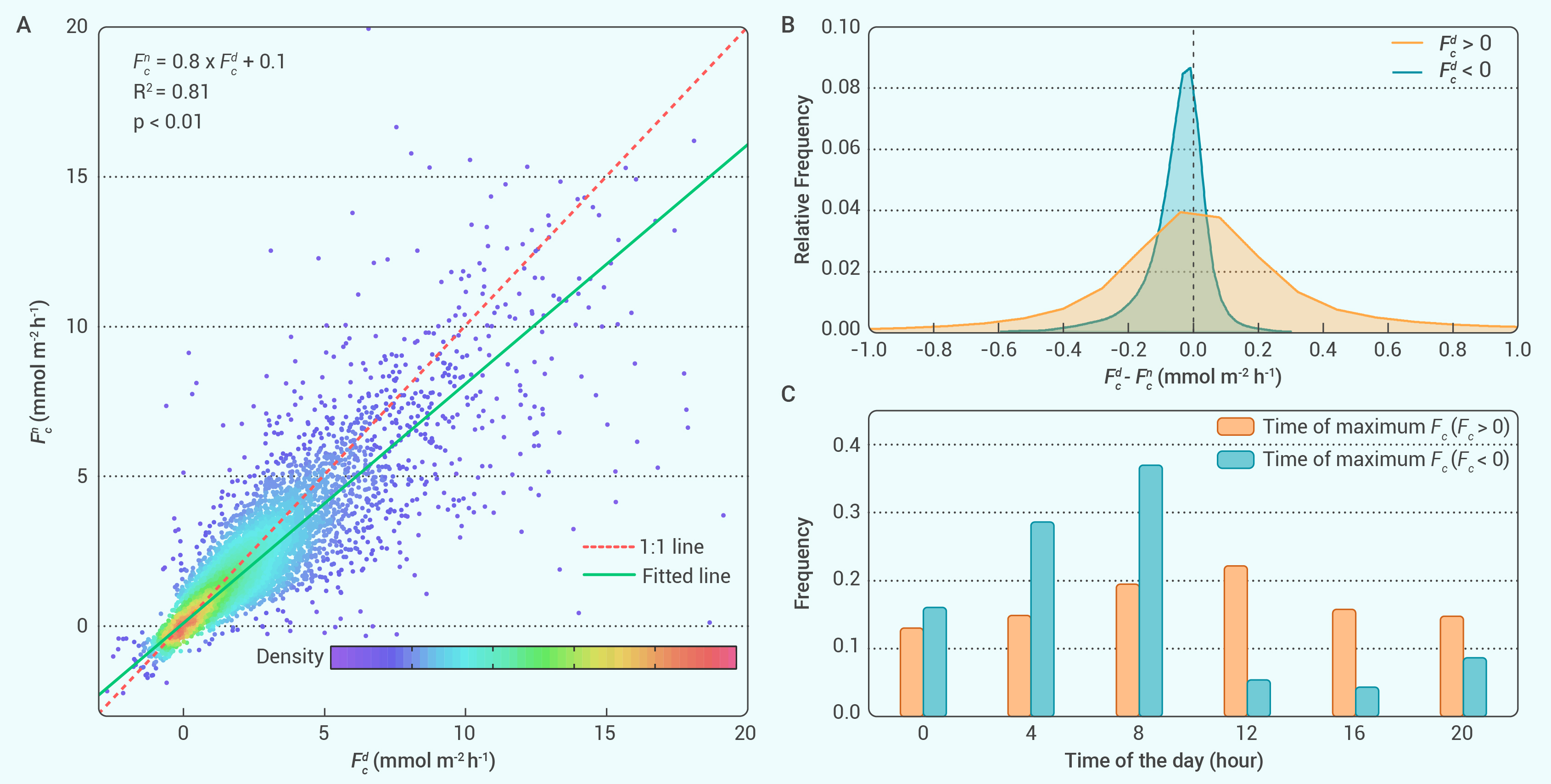
Figure 1.
Diurnal Fc variation in sampled lakes and reservoirs
-
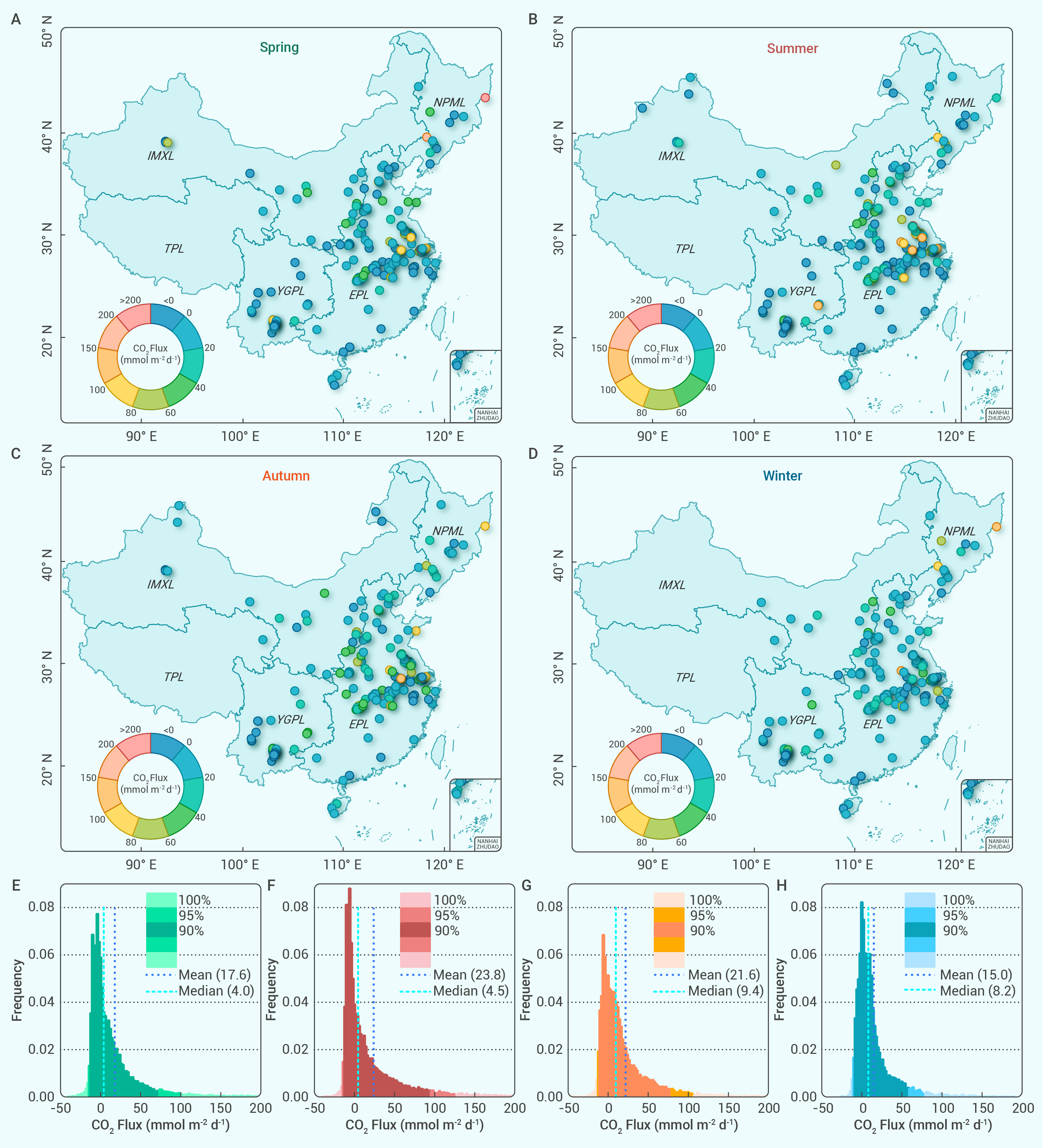
Figure 2.
Seasonal distribution of Fc in China’s inland lakes/reservoirs
-
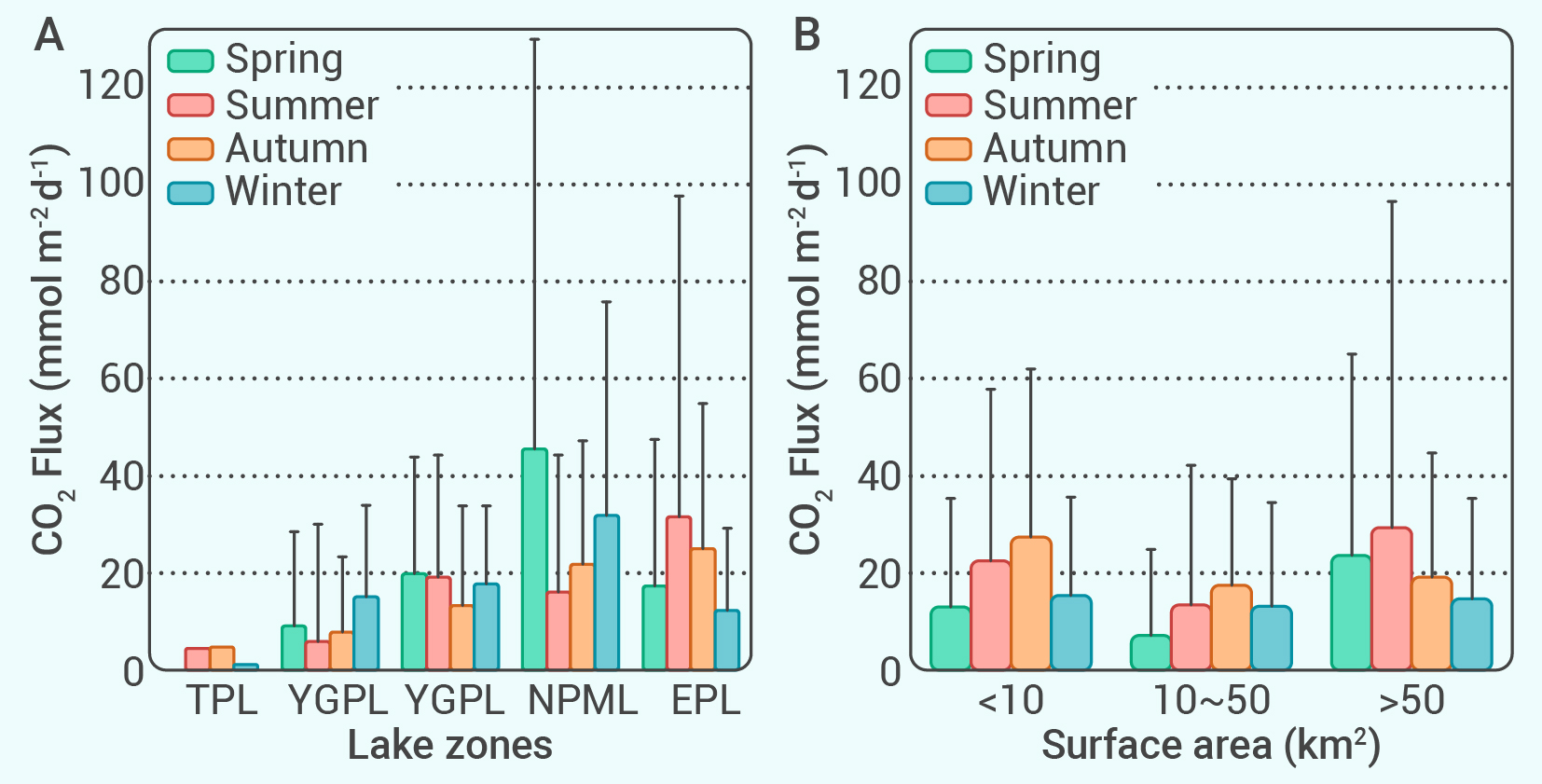
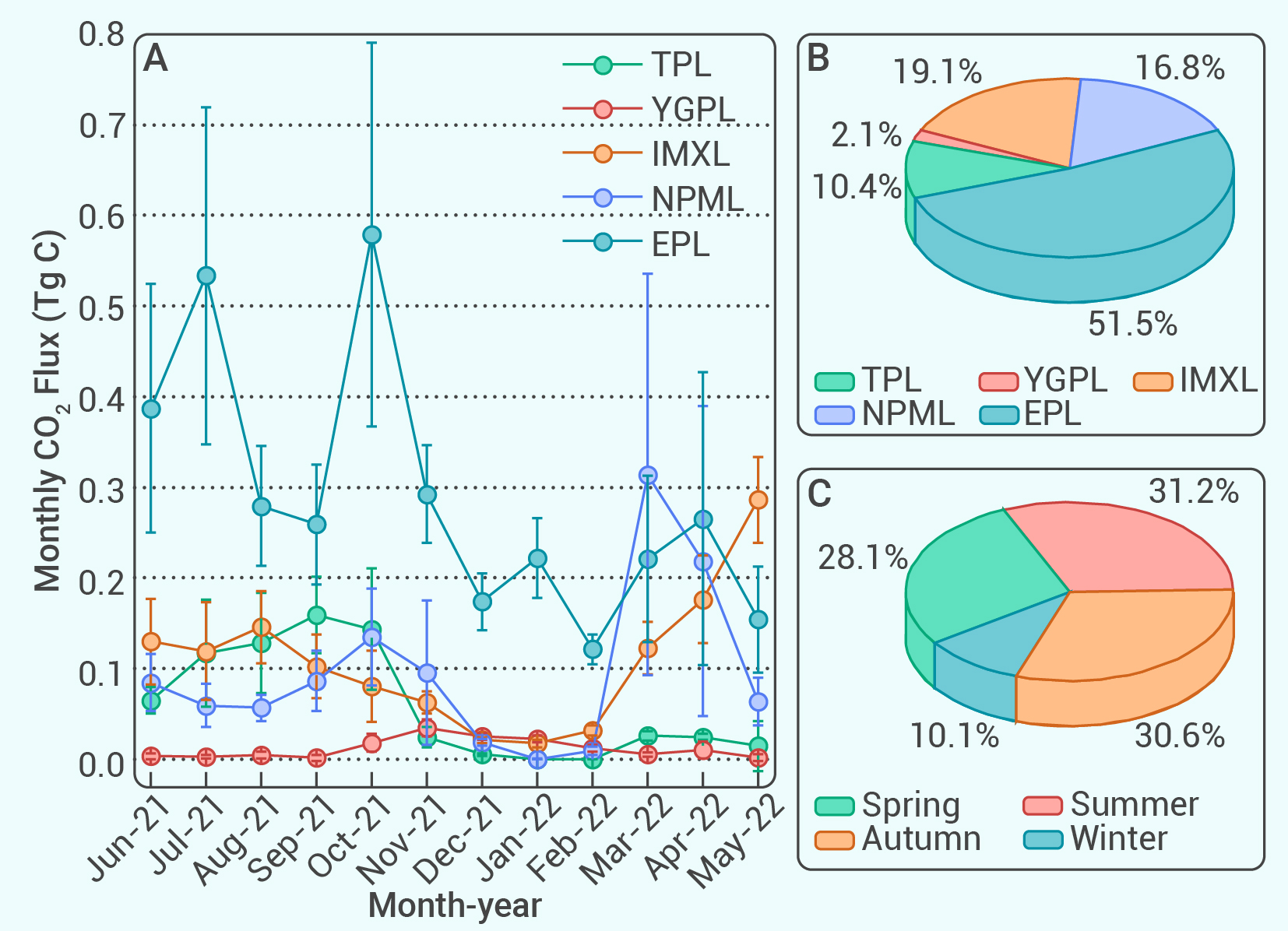
Figure 3.
Seasonal distribution of Fc across lake zone (A) and area size categories (B)
-
Figure 4.
Spatiotemporal variations in total CO2 emissions across all five lake zones
-
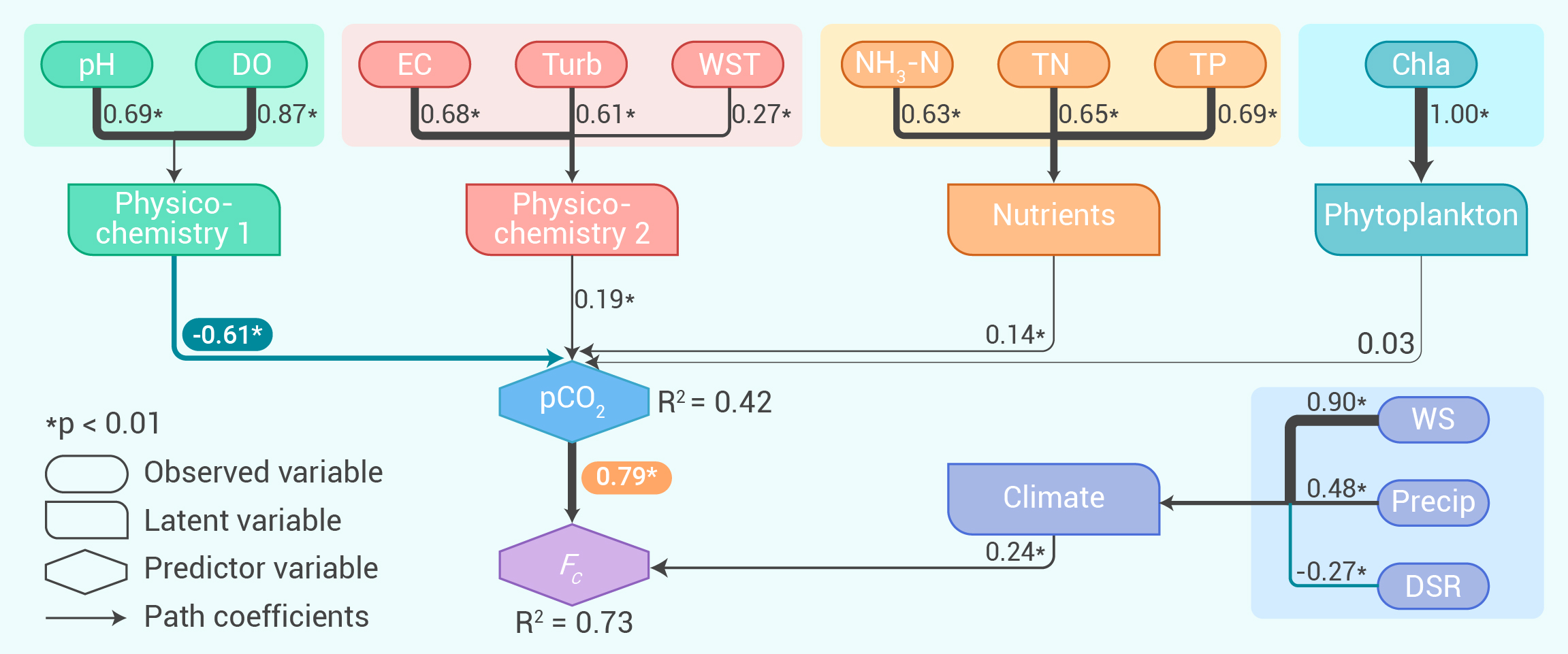
Figure 5.
Environmental controls on pCO2 and Fc from China’s lakes and reservoirs
