
Potential on joint development of three-gas reservoirs in the Qiongdongnan Basin
-
GRAPHICAL ABSTRACT

 DownLoad:
Full size image
DownLoad:
Full size image
-
PUBLIC SUMMARY
-
Gas hydrate, shallow gas and deep gas reservoirs are coexistent in the Qiongdongnan basin.
Gas chimney controls the spatial distribution of gas hydrates.
Multilateral well and dual production string are required for three-gas joint development.
-
-
ABSTRACT
Gas hydrates are typically found in the fine-grained sediments with low abundance and strong heterogeneity in the northern South China Sea. To date, although numerous gas hydrate reservoirs have been discovered, commercial exploitation remains highly challenging. Previous studies show that the Qiongdongnan Basin exhibits coexistence of gas hydrates, shallow gas and deep gas reservoirs. The hydrate-bound gases are a mixture of thermogenic and biogenic gas, mainly sourced from the granite buried hill reservoir, central canyon channel of the Lingshui Depression and the Yacheng Formation. In this study, we described a new development concept termed “Three-gas Joint Development” (TJD), to elucidate the simultaneous exploitation of these three gas reservoirs. Based on the distribution of three-gas reservoirs, three different TJD plans are proposed. If the relative distance between three-gas reservoirs does not exceeds the extension limit, a single production platform is capable of exploiting all three-gas reservoirs. A vertical well is suggested if the deep gas reservoir lies directly below the gas hydrates and shallow gas. Otherwise, multilateral well should be used to exploit different gas reservoirs with various branches in a main wellbore. However, several key issues remain unsolved. Numerical simulation of TJD should be conducted to evaluate interlayer interference and productivity. Efficient sand control and wellbore stability techniques, such as frac-packing and high-performance drilling fluids, are recommended when drilling unconsolidated sediments. Once these key technologies are overcome, TJD can provide a feasible approach for the commercial development of gas hydrates. -

-
REFERENCES
[1] Sun, Q., Wu, S., Cartwright, J., et al. (2012). Shallow gas and focused fluid flow systems in the Pearl River Mouth Basin, northern South China Sea. Mar Geol 315-318: 1−14. DOI: 10.1016/j.margeo.2012.05.003. [2] Wang, H., Yang, S., Wu, N., et al. (2013). Controlling factors for gas hydrate occurrence in Shenhu area on the northern slope of the South China Sea. Sci China Earth Sci 56: 513−520. DOI: 10.1007/s11430-013-4596-3. [3] Wan, Z., Xu, X., Wang, X., et al. (2017). Geothermal analysis of boreholes in the Shenhu gas hydrate drilling area, northern South China Sea: Influence of mud diapirs on hydrate occurrence. J Petrol Sci Eng 158: 424−432. DOI: 10.1016/j.petrol.2017.08.053. [4] Cox, D.R., Huuse, M., Newton, A.M.W., et al. (2021). Shallow gas and gas hydrate occurrences on the northwest Greenland shelf margin. Mar Geol 432: 106382. DOI: 10.1016/j.margeo.2020.106382. [5] Zhu, W., Shi, H., Huang, B., et al. (2021). Geology and geochemistry of large gas fields in the deepwater areas, continental margin basins of northern South China Sea. Mar Petrol Geol 126: 104901. DOI: 10.1016/j.marpetgeo.2021.104901. [6] Sloan, E.D. (2003). Fundamental principles and applications of natural gas hydrates. Nature 426(6964): 353−363. DOI: 10.1038/nature02135. [7] Moridis, G.J., Reagan, M.T., Kim, S., et al. (2011). Evaluation of the gas production potential of some particularly challenging types of oceanic hydrate deposits. Transport Porous Med 90: 269−299. DOI: 10.1007/s11242-011-9762-5. [8] Xia, Z., Hou, J., Liu, Y., et al. (2017). Production characteristic investigation of the Class Ⅰ, Class Ⅱ and Class Ⅲ hydrate reservoirs developed by the depressurization and thermal stimulation combined method. J Petrol Sci Eng 157: 56−67. DOI: 10.1016/j.petrol.2017.07.012. [9] Wang, L., Wang, G., Mao, L., et al. (2020). Experimental research on the breaking effect of natural gas hydrate sediment for water jet and engineering applications. J Petrol Sci Eng 184: 186−191. DOI: 10.1016/j.petrol.2019.106553. [10] Guan, D., Shi, K., Guo, X., et al. (2021). Progress on laboratory-scale reactors for simulating gas production from hydrate reservoir. Energy Fuels 35(20): 16416−16431. DOI: 10.1021/acs.energyfuels.1c03009. [11] Moridis, G.J., Collett, T.S., Pooladi-Darvish, M., et al. (2011). Challenges, uncertainties, and issues facing gas production from gas-hydrate deposits. SPE Reserv Eval Eng 14(1): 76−112. DOI: 10.2118/131792-PA. [12] Yoneda, J., Masui, A., Konno, Y., et al. (2017). Pressure-core-based reservoir characterization for geomechanics: Insights from gas hydrate drilling during 2012-2013 at the eastern Nankai Trough. Mar Petrol Geol 86: 1−16. DOI: 10.1016/j.marpetgeo.2017.05.024. [13] Boswell, R., Yamamoto, K., Tamaki, M., et al. (2022). New insights into the occurrence and implications of mobile water in gas hydrate systems. Energy Fuels 36(5): 2447−2461. DOI: 10.1021/acs.energyfuels.1c04101. [14] Li, J., Ye, J., Qin, X., et al. (2018). The first offshore natural gas hydrate production test in South China Sea. China Geol 1(1): 5−16. DOI: 10.31035/cg2018003. [15] Lu C., Qin, X., Ma, C., et al. (2022). Investigation of the impact of threshold pressure gradient on gas production from hydrate deposits. Fuel 319: 123569. DOI: 10.1016/j.fuel.2022.123569. [16] Yu, T., Guan, G., Wang, D., et al. (2021). Numerical evaluation on the effect of horizontal-well systems on the long-term gas hydrate production behavior at the second Shenhu test site. J Nat Gas Sci Eng 95: 104200. DOI: 10.1016/j.jngse.2021.104200. [17] Ye, J., Qin, X., Xie, W., et al. (2020). Main progress of the second gas hydrate trial production in the South China Sea. Geol. China 47(3): 557−568. DOI:1000-3657(2020)47:3<557:ZGNHTR>2.0.TX;2-I. [18] Hui, G., Li, S., Guo, L., et al. (2016). Source and accumulation of gas hydrate in the northern margin of the South China Sea. Mar Petrol Geol 69: 127−145. DOI: 10.1016/j.marpetgeo.2015.10.009. [19] Wei, J., Liang, J., Lu, J., et al. (2019). Characteristics and dynamics of gas hydrate systems in the northwestern South China Sea - results of the fifth gas hydrate drilling expedition. Mar Petrol Geol 110: 287−298. DOI: 10.1016/j.marpetgeo.2019.07.028. [20] Wei, N., Bai, R., Zhou, S., et al. (2022). China's deepwater gas hydrate development strategies under the goal of carbon peak. Natural Gas Industry 42(2): 156−165. DOI: 10.3787/j.issn.1000-0976.2022.02.017. [21] Zhou, S., Li, Q., Lv, X., et al. (2020). Key issues in development of offshore natural gas hydrate. Front Energy 14(3): 433−442. DOI: 10.1007/s11708-020-0684-1. [22] Wei, R., Xia, Y., Wang, Z., et al. (2022). Long-term numerical simulation of a joint production of gas hydrate and underlying shallow gas through dual horizontal wells in the South China Sea. Appl Energ 320: 119235. DOI: 10.1016/j.apenergy.2022.119235. [23] Zhu, Y., Sun, L., Hao, F., et al. (2018). Geochemical composition and origin of Tertiary oils in the Yinggehai and Qiongdongnan Basins, offshore South China Sea. Mar Petrol Geol 96: 139−153. DOI: 10.1016/j.marpetgeo.2018.05.029. [24] Cheng, C., Jiang, T., Kuang, Z., et al. (2021). Seismic characteristics and distributions of Quaternary mass transport deposits in the Qiongdongnan Basin, northern South China Sea. Mar Petrol Geol 129: 105118. DOI: 10.1016/j.marpetgeo.2021.105118. [25] Zhao, Z., Qiu, N., Sun, Z., et al. (2023). Spatial distribution and inventory of natural gas hydrate in the Qiongdongnan Basin, northern South China Sea. J Oceanol Limnol 41(2): 729−739. DOI: 10.1007/s00343-022-2106-1. [26] Liu, K., Cheng, P., Tian, H., et al. (2023). Development model of shallow lithologic traps and natural gas accumulation mechanisms in marine deep-water areas: A case study in the Qiongdongnan Basin, south China sea. Mar Petrol Geol 151: 106211. DOI: 10.1016/j.marpetgeo.2023.106211. [27] Zhao, Z., Sun, Z., Wang, Z., et al. (2015). The high resolution sedimentary filling in Qiongdongnan Basin, Northern South China Sea. Mar Geol 361: 11−24. DOI: 10.1016/j.margeo.2015.01.002. [28] Zhang, G., Cao, J., Deng, Y., et al. (2023). A 209,000-year-old history of methane seepage activity controlled by multiple factors in the South China Sea. Mar Petrol Geol 151: 106200. DOI: 10.1016/j.marpetgeo.2023.106200. [29] Zhang, W., Liang, J., Yang, X., et al. (2020). The formation mechanism of mud diapirs and gas chimneys and their relationship with natural gas hydrates: Insights from the deep-water area of Qiongdongnan Basin, northern South China Sea. Int Geol Rev 62(7-8): 789−810. DOI: 10.1080/00206814.2018.1491014. [30] Zhu, Li., Zhou, X., Sun, J., et al. (2023). Reservoir classification and log prediction of gas hydrate occurrence in the Qiongdongnan Basin, South China Sea. Front Mar Sci 10: 1055843. DOI: 10.3389/fmars.2023.1055843. [31] Liang, Q., Hu, Y., Feng, D., et al. (2017). Authigenic carbonates from newly discovered active cold seeps on the northwestern slope of the South China Sea: Constraints on fluid sources, formation environments, and seepage dynamics. Deep-Sea Res PT I 124: 31−41. DOI: 10.1016/j.dsr.2017.04.015. [32] Ye, J., Wei, J., Liang, J., et al. (2019). Complex gas hydrate system in a gas chimney, South China Sea. Mar Petrol Geol 104: 29−39. DOI: 10.1016/j.marpetgeo.2019.03.023. [33] Feng, D., Qiu, J., Hu, Y., et al. (2018). Cold seep systems in the South China Sea: An overview. J Asian Earth Sci 168: 3−16. DOI: 10.1016/j.jseaes.2018.09.021. [34] Xu, H., Du, M., Li, J., et al. (2020). Spatial distribution of seepages and associated biological communities within Haima cold seep field, South China Sea. J Sea Res 165: 101957. DOI: 10.1016/j.seares.2020.101957. [35] Liang, J., Zhang, W., Lu, J., et al. (2019). Geological occurrence and accumulation mechanism of natural gas hydrates in the eastern Qiongdongnan Basin of the South China Sea: Insights from site GMGS5-W9-2018. Mar Geol 418: 106042. DOI: 10.1016/j.margeo.2019.106042. [36] He, Y., Liang, J., Shi, W., et al. (2022). Influencing factors and accumulation modes of gas hydrate in South Low Uplift and its surrounding area of Qiongdongnan Basin. Earth Sci 47(5): 1711−1727. [37] Chen, M., Liao, J., Ouyang, M., et al. (2021). Characteristics and exploration potential of gas hydrate reservoir in Songnan Low Uplift, Qiongdongnan Basin. Well Log Technol 45(3): 290−296. DOI: 10.16489/j.issn.1004-1338.2021.03.011. [38] Liu, C., Jing, J., Zhao, Q., et al. (2023). High-resolution resistivity imaging of a transversely uneven gas hydrate reservoir: A case in the Qiongdongnan Basin, South China Sea. Remote Sens 15: 2000. DOI: 10.3390/rs15082000. [39] You, L., Xu, S., Mao, X., et al. (2021). Reservoir characteristics and genetic mechanisms of the Mesozoic granite buried hills in the deep-water of the Qiongdongnan Basin, Northern South China Sea. Aata Geol Sin-Engl 95(1): 259−267. DOI: 10.1111/1755-6724.14635. [40] Wei, Y., Kuang, Z., Ren, J., et al. (2022). The controlling factors of the natural gas hydrate accumulation in the Songnan Low Uplift, Qiongdongnan Basin, China. Front Earth Sci 10: 882080. DOI: 10.3389/feart.2022.882080. [41] Geng, M., Zhang, R., Yang, S., et al. (2021). Focused fluid flow, shallow gas hydrate, and cold seep in the Qiongdongnan Basin, Northwestern South China Sea. Geofluids 2021 :5594980. DOI:10.1155/2021/5594980. [42] Huang, B., Li, L., and Huang, H. (2012). Origin and accumulation mechanism of shallow gases in the North Baodao Slope, Qiongdongnan Basin, South China Sea. Petrol. Explor Dev 39(5): 567−573. DOI: 10.1016/S1876-3804(12)60077-9. [43] Feng, J., Yan, J., Wang, Y., et al. (2022). Methane mitigation: Learning from the natural marine environment. The Innovation 3(5): 100297. DOI: 10.1016/j.xinn.2022.100297. [44] Liao, F., Wu, X., and Huang, S. (2010). Geochemical characteristics of natural gas in the Yinggehai-Qiongdongnan Basin, South China Sea. Energ Explor Exploit 28(1): 1−12. DOI: 10.1260/0144-5987.28.1.1. [45] Fan, C., Jiang, T., Liu, K., et al. (2018). Genesis of Miocene litho-stratigraphic trap and hydrocarbon accumulation in the Qiongdongnan Basin, northern South China Sea. Geosci Lett 5: 1−13. DOI: 10.1186/s40562-018-0112-0. [46] Sun, Q., Wu, S., Lu, F., et al. (2010). Polygonal faults and their implications for hydrocarbon reservoirs in the southern Qiongdongnan Basin, South China Sea. J Asian Earth Sci 39(5): 470−479. DOI: 10.1016/j.jseaes.2010.04.002. [47] Wang, L., Zhu, J., Zhuo, H., et al. (2019). Seismic characteristics and mechanism of fluid flow structures in the Central Depression of Qiongdongnan Basin, northern margin of South China Sea. Int Geol Rev 62(7-8): 1108−1130. DOI: 10.1080/00206814.2019.1695002. [48] Zuo, T., Wang, R., He, Y., et al. (2022). Natural gas migration pathways and their influence on gas hydrate enrichment in the Qiongdongnan Basin, South China Sea. Geofluids:1954931. DOI: 10.1155/2022/1954931. [49] Zhang, W., Liang, J., Su, Pibo, et al. (2019). Distribution and characteristics of mud diapirs, gas chimneys, and bottom simulating reflectors associated with hydrocarbon migration and gas hydrate accumulation in the Qiongdongnan Basin, northern slope of the South China Sea. Geol J 54(6): 3556−357. DOI: 10.1002/gj.3351. [50] Deng, W., Kuang, Z., Liang, J., et al. (2023). The seismic and rock-physics evidences of the different migration efficiency between different types of gas chimneys. Deep-Sea Res PT I 191: 103942. DOI: 10.1016/j.dsr.2022.103942. [51] Lai, H., Fang, Y., Kuang, Z., et al. (2021). Geochemistry, origin and accumulation of natural gas hydrates in the Qiongdongnan Basin, South China Sea: Implications from site GMGS5-W08. Mar Petrol Geol 123: 104774. DOI: 10.1016/j.marpetgeo.2020.104774. [52] Zhu, H., Xu, T., Zhu, Z., et al. (2020). Numerical modeling of methane hydrate accumulation with mixed sources in marine sediments: Case study of Shenhu Area, South China Sea. Mar Geol 423: 106142. DOI: 10.1016/j.margeo.2020.106142. [53] Deng, W., Liang, J., Zhang, W., et al. (2021). Typical characteristics of fracture-filling hydrate-charged reservoirs caused by heterogeneous fluid flow in the Qiongdongnan Basin, northern south China sea. Mar Petrol Geol 124: 104810. DOI: 10.1016/j.marpetgeo.2020.104810. [54] Meng, M., Liang, J., Lu, J., et al. (2021). Quaternary deep-water sedimentary characteristics and their relationship with the gas hydrate accumulations in the Qiongdongnan Basin, Northwest South China Sea. Deep-Sea Res PT I 177: 103628. DOI: 10.1016/j.dsr.2021.103628. [55] Wang, Z., Jiang, T., Zhang, D., et al. (2015). Evolution of deepwater sedimentary environments and its implication for hydrocarbon exploration in Qiongdongnan Basin, northwestern South China Sea. Acta Oceanol Sin 34(4): 1−10. DOI: 10.1007/s13131-015-0645-4. [56] Garrouch, A.A., Haitham, M.S. Lababidi, E., et al. (2004). An integrated approach for the planning and completion of horizontal and multilateral wells. J Petrol Sci Eng 44(3-4): 283−301. DOI: 10.1016/j.petrol.2004.03.007. [57] Mao, P., Wu, N., Wan, Y., et al. (2022). Gas recovery enhancement from fine-grained hydrate reservoirs through positive inter-branch interference and optimized spiral multilateral well network. J Nat GAS Sci Eng 107: 104771. DOI: 10.1016/j.jngse.2022.104771. [58] Zhang, Y., Zhang, P., Hui, C., et al. (2023). Numerical analysis of the geomechanical responses during natural gas hydrate production by multilateral wells. Energy 269: 126810. DOI: 10.1016/j.energy.2023.126810. [59] Feng, J., Tang, L., Xie, Y., et al. (2023). Offshore carbon sequestration: Renewable energy and multi-carbon transformations prompt greener future. The Innovation Geoscience 1(2): 100016. DOI: 10.59717/j.xinn-geo.2023.100016. [60] Gao, D., Tan, C., and Tang, H. (2009). Limit analysis of extended reach drilling in South China Sea. Petrol Sci 6(2): 166−171. DOI: 10.1007/s12182-009-0026-8. [61] Huang, W., Gao, D., and Liu, Y. (2018). A study of mechanical extending limits for three-section directional wells. J Nat Gas Sci Eng 54: 163−174. DOI: 10.1016/j.jngse.2018.03.031. [62] Gao, D., Huang, W., and Li X. (2019). Research on extension limits and engineering design methods for extended reach drilling. Petrol Dril Tech 47(3): 1−8. DOI: 10.11911/syztjs.2019069. [63] Cao, X., Sun, J., Ning F., et al. (2022). Numerical analysis on gas production from heterogeneous hydrate system in Shenhu area by depressurizing: Effects of hydrate-free interlayers. J Nat Gas Sci Eng 101: 104504. DOI: 10.1016/j.jngse.2022.104504. [64] Chai, X., Tian, L., Dong, P., et al. (2022). Study on recovery factor and interlayer interference mechanism of multilayer co-production in tight gas reservoir with high heterogeneity and multi-pressure systems. J Petrol Sci Eng 210: 109699. DOI: 10.1016/j.petrol.2021.109699. [65] Tao, X., Chinedu, O., Su, G., and Zheng, L. (2022). Experimental and theoretical evaluation of interlayer interference in multi-layer commingled gas production of tight gas reservoirs. J Petrol Sci Eng 208: 109731. DOI: 10.1016/j.petrol.2021.109731. [66] Liang, W., Wang, J., Li, P., et al. (2023). New insight to interlayer interference during three-gas co-production based on a wellbore–reservoir coupling model. Nat Resour Res 32: 2037−2052. DOI: 10.1007/s11053-023-10230-3. [67] Tang, H., Zhang, K., Tang, R., et al. (2022). The Essence and Re-recognition of Interlayer Interference. Journal of Southwest Petroleum University (Science & Technology Edition) 44(5): 113−124. DOI: 10.11885/j.issn.1674-5086.2022.04.12.03. [68] Garrouch, A.A., Haitham, M.S., Lababidi, E., et al. (2005). A web-based expert system for the planning and completion of multilateral wells. J Petrol Sci Eng 49(3-4): 162−181. DOI: 10.1016/j.petrol.2005.05.009. [69] Delamaide, E. (2021). Application of multilateral wells for production and wnhanced oil recovery: case studies from Canada. SPE Reserv Eval Eng 24(4): 952−974. DOI: 10.1016/S1876-3804(09)60095-1. [70] Sun, J., Ning, F., Liu, T., et al. (2021). Numerical analysis of horizontal wellbore state during drilling at the first offshore hydrate production test site in Shenhu area of the South China Sea. Ocean Eng 238: 109614. DOI: 10.1016/j.oceaneng.2021.109614. [71] Zhao, X., Qiu, Z., Wang, M., et al. (2019). Experimental investigation of the effect of drilling fluid on wellbore stability in shallow unconsolidated formations in deep water. J Petrol Sci Eng 175: 595−603. DOI: 10.1016/j.petrol.2018.12.067. [72] Sun, Y., Wu, S., Dong, D. et al. (2012). Gas hydrates associated with gas chimneys in fine-grained sediments of the northern South China Sea. Mar Geol 311-314: 32−40. DOI: 10.1016/j.margeo.2012.04.003. [73] Yamamoto, K. (2015). Overview and introduction: Pressure core-sampling and analyses in the 2012-2013 offshore test of gas production from methane hydrates in the eastern Nankai Trough. Mar Petrol Geol 66 :296-309. DOI:10.1016/j.marpetgeo.2015.02.024. [74] Yoshihiro, K., Tetsuya F., Akihiko S., et al. (2017). Key findings of the world's first offshore methane hydrate production test off the coast of Japan: Toward future commercial production. Energy Fuel 31(3): 2607−2616. DOI: 10.1021/acs.energyfuels.6b03143. -
ABOUT THIS ARTICLE
Cite this article:
Wu S., Sun J., Li Q., et al., (2024). Potential on joint development of three-gas reservoirs in the Qiongdongnan Basin. The Innovation Geoscience 2(2): 100065. https://doi.org/10.59717/j.xinn-geo.2024.100065
Welcome!
To request copyright permission to republish or share portions of our works, please visit Copyright Clearance Center's (CCC) Marketplace website at marketplace.copyright.com.
Article Metrics
Relative Articles
Cited by
Export File
Citation
Wu S., Sun J., Li Q., et al., (2024). Potential on joint development of three-gas reservoirs in the Qiongdongnan Basin. The Innovation Geoscience 2(2): 100065. https://doi.org/10.59717/j.xinn-geo.2024.100065

Format
Content



-
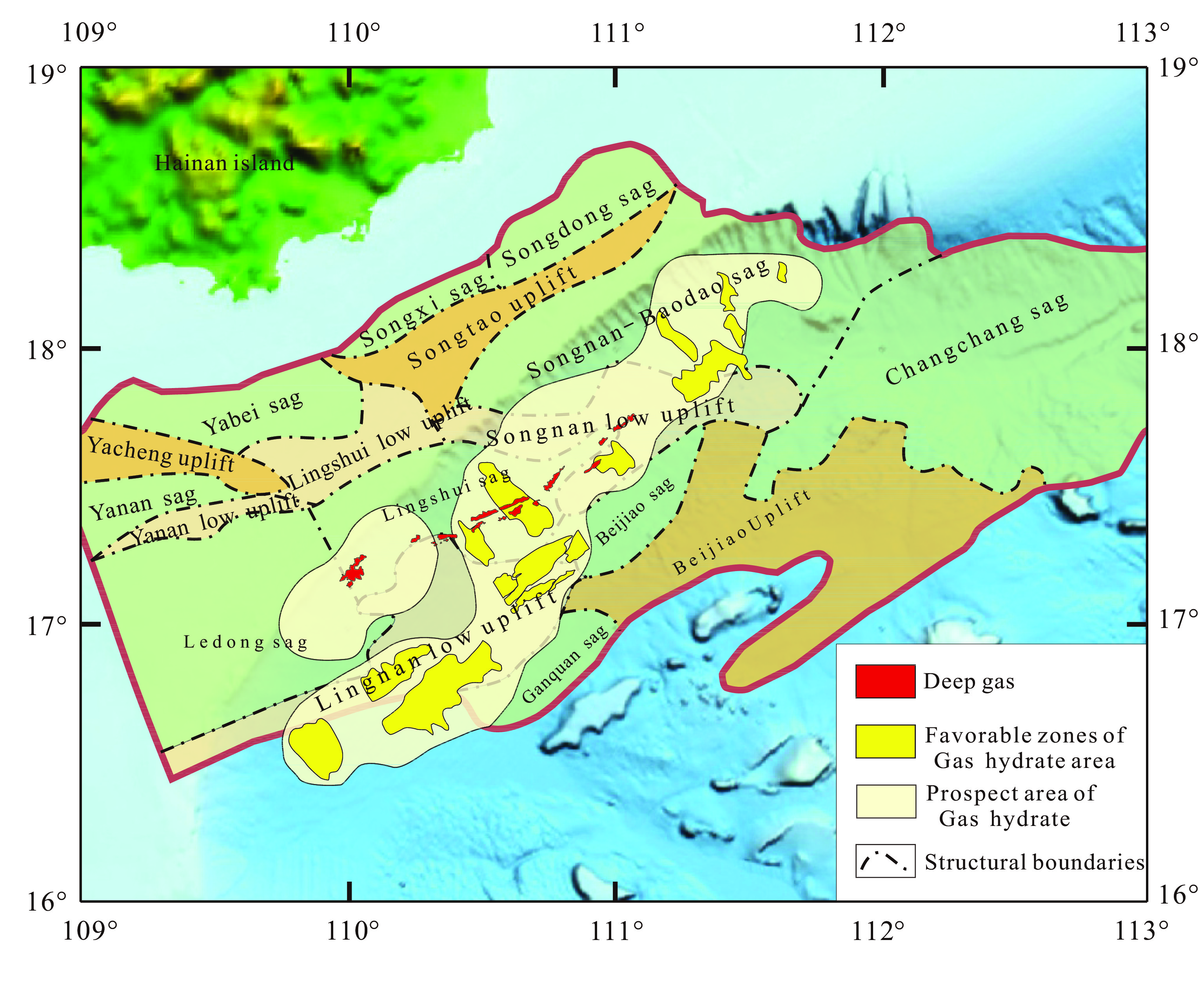
Figure 1.
Structural units and distribution of gas hydrates and deep gas reservoirs in the Qiongdongnan Basin.
-
Figure 2.
Seismic profile interpretation of fluid migration channels in the Qiongdongnan Basin, near Songnan Low Uplift
-
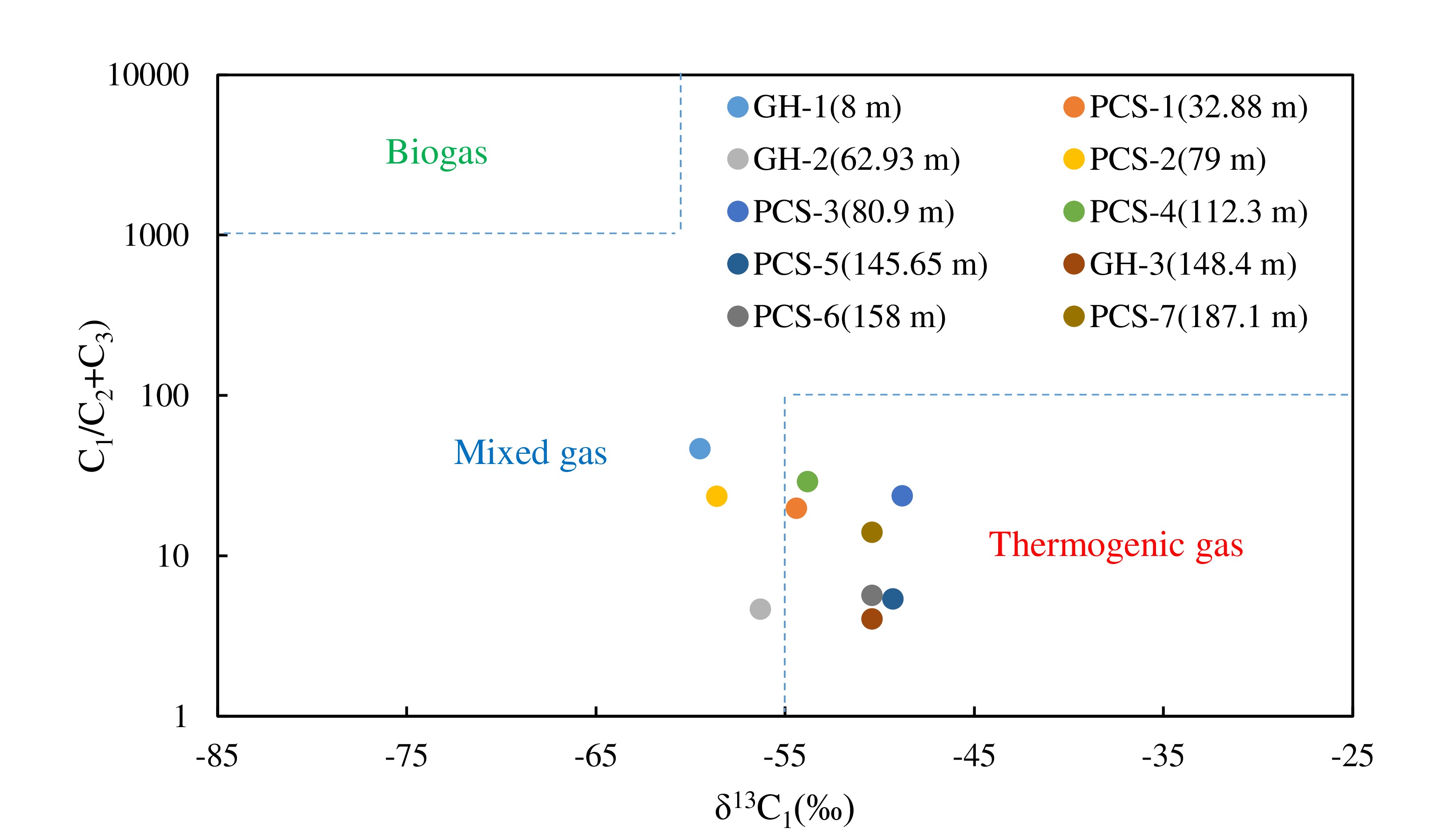
Figure 3.
Types of hydrate-bound gases in Well W8 in the Qiongdongnan Basin near Songnan Low Uplift.
-
Figure 4.
Reservoir accumulation model of natural gas hydrates in the Songnan Low Uplift
-
Figure 5.
3D Reservoir model of the gas hydrates, shallow gas and deep gas field in the Songnan Low Uplift of the Qiongdongnan Basin
-
Figure 7.
Schematic of production string of the TJD
