
Diversity and ecological potentials of viral assemblages from the seamount sediments of the Northwest Pacific Ocean
-
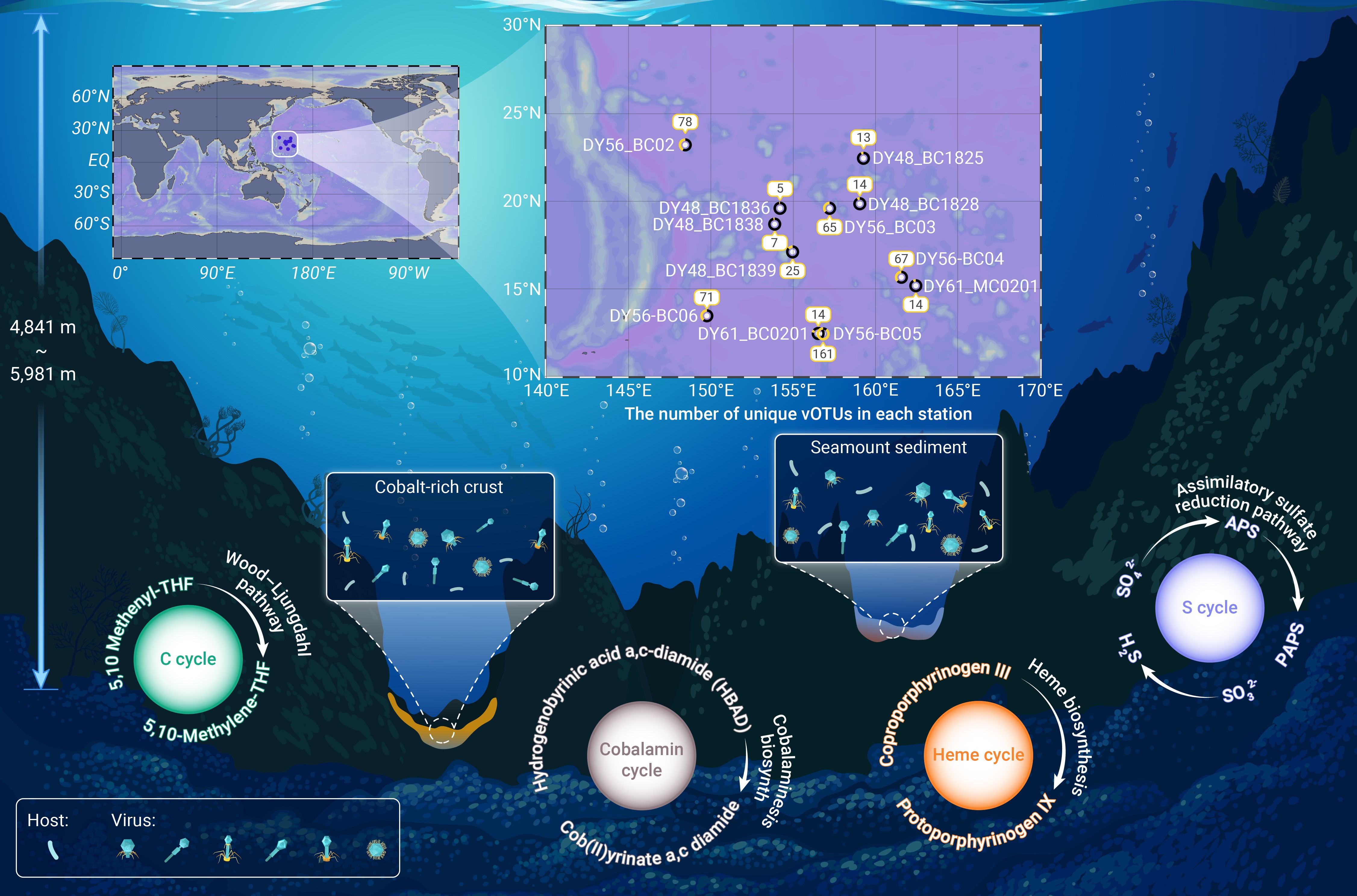
GRAPHICAL ABSTRACT
 DownLoad:
Full size image
DownLoad:
Full size image
-
PUBLIC SUMMARY
-
Seamount sediments harbor diverse viruses, cobalt-rich crust influent the virus communities.
Nitrososphaeria was one of the major hosts of seamount sediment viruses.
Viruses from cobalt-rich crusts are enriched with auxiliary metabolic genes for heme and cobalamin metabolism.
-
-
ABSTRACT
Viruses are the most abundant life forms in the sea, influencing the community structure and metabolism of host cells and biogeochemical cycles. However, the diversity of viruses and their ecological roles within seamount sediments ecosystems, natural microbiota havens characterized by high biodiversity, remain largely unknown. Here, the seamount viral genome (SMVG) dataset, based on a metagenomic analysis of twelve seamount sediment samples collected from the seamount regions of the Northwest Pacific Ocean, was established. A total of 78,069 viral operational taxonomic units (vOTUs) were found, spanning 18 viral classes and 63 viral families. The detection of sixteen viral auxiliary metabolic genes (AMGs) suggests that viruses may participate in the metabolic processes associated with sediment microbial communities and biogeochemical cycles, including carbon, sulfur, metal, heme, and cobalamin cycling. AMGs involved in the metabolism of heme, cobalamin, and metals were more often detected in seamount sediments than in trenches, cool seeps, and hydrothermal vents. This investigation of the viral communities in these seamount sediments provides new insights into the high diversity and ecological potential of the viruses and establishes a foundation for the future study of benthic viruses from deep-sea seamounts. -

-
REFERENCES
[1] Fuhrman, J.A. (1999). Marine viruses and their biogeochemical and ecological effects. Nature 399: 541−548. DOI: 10.1038/21119. [2] Brum, J.R. and Sullivan, M.B. (2015). Rising to the challenge: Accelerated pace of discovery transforms marine virology. Nat. Rev. Microbiol. 13: 147−159. DOI: 10.1038/nrmicro3404. [3] He, T., Li, H., and Zhang, X. (2017). Deep-sea hydrothermal vent viruses compensate for microbial metabolism in virus-host interactions. mBio 8 :00893-17. DOI: 10.1128/mBio.00893-17. [4] Zhao, K., Liu, A., and Xia, Y. (2020). Insights into hepatitis b virus DNA integration-55 years after virus discovery. The Innovation 1: 100034. DOI: 10.1016/j.xinn.2020.100034. [5] Brussaard, C.P., Wilhelm, S.W., Thingstad, F., et al. (2008). Global-scale processes with a nanoscale drive: The role of marine viruses. ISME J. 2: 575−578. DOI: 10.1038/ismej.2008.31. [6] Braga, L.P.P., Orland, C., Emilson, E.J.S., et al. (2022). Viruses direct carbon cycling in lake sediments under global change. Proc. Natl. Acad. Sci. U.S.A. 119: e2202261119. DOI: 10.1073/pnas.2202261119. [7] Yang, Q., Gao, C., Jiang, Y., et al. (2019). Metagenomic characterization of the viral community of the south scotia ridge. Viruses 11 : 95. DOI: 10.3390/v11020095. [8] Jian, H., Yi, Y., Wang, J., et al. (2021). Diversity and distribution of viruses inhabiting the deepest ocean on earth. ISME J. 15: 3094−3110. DOI: 10.1038/s41396-021-00994-y. [9] Zhou, H., Chen, P., Zhang, M., et al. (2021). Revealing the viral community in the hadal sediment of the new britain trench. Genes 12 : 990. DOI: 10.3390/genes12070990. [10] Rogers, A.D. (2018). The biology of seamounts: 25 years on. Adv. Mar. Biol. 79: 137−224. DOI: 10.1016/bs.amb.2018.06.001. [11] Rogers, A.D. (2019). Chapter 23 - threats to seamount ecosystems and their management. Sheppard, C. (ed). World seas: An environmental evaluation (second edition) (Academic Press), pp: 427-451. DOI: 10.1016/B978-0-12-805052-1.00018-8. [12] Marzia, B., Martina, C., Federico, B., et al. (2020). Unveiling the deep biodiversity of the janua seamount (ligurian sea): First mediterranean sighting of the rare atlantic bamboo coral chelidonisis aurantiaca studer, 1890. Deep-Sea Res. I 156: 103186. DOI: 10.1016/j.dsr.2019.103186. [13] Consalvey, M., Clark, M.R., Rowden, A.A., et al. (2010). Life on seamounts. Life in the World's Oceans. pp:123-139. DOI:10.1002/9781444325508.ch7. [14] Danovaro, R., Corinaldesi, C., Luna, G.M., et al. (2009). Prokaryote diversity and viral production in deep-sea sediments and seamounts. Deep-Sea Res. II 56: 738−747. DOI: 10.1016/j.dsr2.2008.10.011. [15] Rivera, J., Canals, M., Lastras, G., et al. (2016). Morphometry of concepcion bank: Evidence of geological and biological processes on a large volcanic seamount of the canary islands seamount province. PLOS One 11: e0156337. DOI: 10.1371/journal.pone.0156337. [16] Yesson, C., Clark, M.R., Taylor, M.L., et al. (2011). The global distribution of seamounts based on 30 arc seconds bathymetry data. Deep-Sea Res. I 58: 442−453. DOI: 10.1016/j.dsr.2011.02.004. [17] Rogers, A., Brierley, A., Croot, P., et al. (2015). Delving deeper: Critical challenges for 21st century deep-sea research. DOI: 10.13140/RG.2.1.1868.2327. https://www.marineboard.eu/sites/marineboard.eu/files/public/publication/EMB_PP22_Web_v4.pdf. [18] Thomas, E., Anderson, R.E., Li, V., et al. (2021). Diverse viruses in deep-sea hydrothermal vent fluids have restricted dispersal across ocean basins. mSystems 6: e0006821. DOI: 10.1128/mSystems.00068-21. [19] Dai, S., Zhao, Y., Li, X., et al. (2020). The seamount effect on phytoplankton in the tropical western pacific. Mar. Environ. Res. 162: 105094. DOI: 10.1016/j.marenvres.2020.105094. [20] McAllister, S.M., Vandzura, R., Keffer, J.L., et al. (2021). Aerobic and anaerobic iron oxidizers together drive denitrification and carbon cycling at marine iron-rich hydrothermal vents. ISME J. 15: 1271−1286. DOI: 10.1038/s41396-020-00849-y. [21] Liu, J., Zhang, W., Li, X., et al. (2017). Bacterial community structure and novel species of magnetotactic bacteria in sediments from a seamount in the mariana volcanic arc. Sci. Rep. 7: 17964. DOI: 10.1038/s41598-017-17445-4. [22] Gao, C., Liang, Y., Jiang, Y., et al. (2022). Virioplankton assemblages from challenger deep, the deepest place in the oceans. iScience 25: 104680. DOI: 10.1016/j.isci.2022.104680. [23] Dean, F.B., Hosono, S., Fang, L., et al. (2002). Comprehensive human genome amplification using multiple displacement amplification. Proc. Natl. Acad. Sci. U.S.A. 99: 5261−5266. DOI: 10.1073/pnas.082089499. [24] Thoendel, M., Jeraldo, P., Greenwood-Quaintance, K.E., et al. (2017). Impact of contaminating DNA in whole-genome amplification kits used for metagenomic shotgun sequencing for infection diagnosis. J. Clin. Microbiol. 55: 1789−1801. DOI: 10.1128/jcm.02402-16. [25] Chen, S., Zhou, Y., Chen, Y., et al. (2018). Fastp: An ultra-fast all-in-one fastq preprocessor. Bioinformatics (Oxford, England) 34: i884−i890. DOI: 10.1093/bioinformatics/bty560. [26] Kechin, A., Boyarskikh, U., Kel, A., et al. (2017). Cutprimers: A new tool for accurate cutting of primers from reads of targeted next generation sequencing. J. Comput. Biol. 24: 1138−1143. DOI: 10.1089/cmb.2017.0096. [27] Yang, Y., Liu, G., Ye, C., et al. (2019). Bacterial community and climate change implication affected the diversity and abundance of antibiotic resistance genes in wetlands on the qinghai-tibetan plateau. J. Hazard. Mater. 361: 283−293. DOI: 10.1016/j.jhazmat.2018.09.002. [28] Li, D., Luo, R., Liu, C.M., et al. (2016). Megahit v1.0: A fast and scalable metagenome assembler driven by advanced methodologies and community practices. Methods (San Diego, Calif.) 102 : 3-11. DOI: 10.1016/j.ymeth.2016.02.020. [29] Nurk, S., Meleshko, D., Korobeynikov, A., et al. (2017). Metaspades: A new versatile metagenomic assembler. Genome Res. 27: 824−834. DOI: 10.1101/gr.213959.116. [30] Gu, C., Liang, Y., Li, J., et al. (2021). Saline lakes on the qinghai-tibet plateau harbor unique viral assemblages mediating microbial environmental adaption. iScience 24: 103439. DOI: 10.1016/j.isci.2021.103439. [31] Mikheenko, A., Saveliev, V., and Gurevich, A. (2016). Metaquast: Evaluation of metagenome assemblies. Bioinformatics (Oxford, England) 32: 1088−1090. DOI: 10.1093/bioinformatics/btv697. [32] Roux, S., Enault, F., Hurwitz, B.L., et al. (2015). Virsorter: Mining viral signal from microbial genomic data. PeerJ 3: e985. DOI: 10.7717/peerj.985. [33] Ren, J., Ahlgren, N.A., Lu, Y.Y., et al. (2017). Virfinder: A novel k-mer based tool for identifying viral sequences from assembled metagenomic data. Microbiome 5: 69. DOI: 10.1186/s40168-017-0283-5. [34] Nayfach, S., Camargo, A.P., Schulz, F., et al. (2021). Checkv assesses the quality and completeness of metagenome-assembled viral genomes. Nat. Biotechnol. 39: 578−585. DOI: 10.1038/s41587-020-00774-7. [35] Fu, L., Niu, B., Zhu, Z., et al. (2012). Cd-hit: Accelerated for clustering the next-generation sequencing data. Bioinformatics (Oxford, England) 28: 3150−3152. DOI: 10.1093/bioinformatics/bts565. [36] Li, B., Ruotti, V., Stewart, R.M., et al. (2010). Rna-seq gene expression estimation with read mapping uncertainty. Bioinformatics (Oxford, England) 26: 493−500. DOI: 10.1093/bioinformatics/btp692. [37] Patro, R., Duggal, G., Love, M.I., et al. (2017). Salmon provides fast and bias-aware quantification of transcript expression. Nat. Methods 14: 417−419. DOI: 10.1038/nmeth.4197. [38] von Meijenfeldt, F.A.B., Arkhipova, K., Cambuy, D.D., et al. (2019). Robust taxonomic classification of uncharted microbial sequences and bins with cat and bat. Genome Biol. 20: 217. DOI: 10.1186/s13059-019-1817-x. [39] Kieft, K., Zhou, Z., and Anantharaman, K. (2020). Vibrant: Automated recovery, annotation and curation of microbial viruses, and evaluation of viral community function from genomic sequences. Microbiome 8: 90. DOI: 10.1186/s40168-020-00867-0. [40] Esterman, E.S., Wolf, Y.I., Kogay, R., et al. (2021). Evolution of DNA packaging in gene transfer agents. Virus Evol. 7: veab015. DOI: 10.1093/ve/veab015. [41] Endo, H., Blanc-Mathieu, R., Li, Y., et al. (2020). Biogeography of marine giant viruses reveals their interplay with eukaryotes and ecological functions. Nat. Ecol. Evol. 4: 1639−1649. DOI: 10.1038/s41559-020-01288-w. [42] Katoh, K. and Standley, D.M. (2016). A simple method to control over-alignment in the mafft multiple sequence alignment program. Bioinformatics (Oxford, England) 32: 1933−1942. DOI: 10.1093/bioinformatics/btw108. [43] Capella-Gutiérrez, S., Silla-Martínez, J.M., and Gabaldón, T. (2009). Trimal: A tool for automated alignment trimming in large-scale phylogenetic analyses. Bioinformatics (Oxford, England) 25: 1972−1973. DOI: 10.1093/bioinformatics/btp348. [44] Minh, B.Q., Schmidt, H.A., Chernomor, O., et al. (2020). Iq-tree 2: New models and efficient methods for phylogenetic inference in the genomic era. Mol. Biol. Evol. 37: 1530−1534. DOI: 10.1093/molbev/msaa015. [45] Letunic, I. and Bork, P. (2021). Interactive tree of life (itol) v5: An online tool for phylogenetic tree display and annotation. Nucleic Acids Res. 49: w293−w296. DOI: 10.1093/nar/gkab301. [46] Camargo, A.P., Nayfach, S., Chen, I.A., et al. (2023). Img/vr v4: An expanded database of uncultivated virus genomes within a framework of extensive functional, taxonomic, and ecological metadata. Nucleic Acids Res. 51: D733−d743. DOI: 10.1093/nar/gkac1037. [47] Li, Z., Pan, D., Wei, G., et al. (2021). Deep sea sediments associated with cold seeps are a subsurface reservoir of viral diversity. ISME J. 15: 2366−2378. DOI: 10.1038/s41396-021-00932-y. [48] Hyatt, D., Chen, G.L., Locascio, P.F., et al. (2010). Prodigal: Prokaryotic gene recognition and translation initiation site identification. BMC bioinformatics 11: 119. DOI: 10.1186/1471-2105-11-119. [49] Buchfink, B., Xie, C., and Huson, D.H. (2015). Fast and sensitive protein alignment using diamond. Nat. Methods 12: 59−60. DOI: 10.1038/nmeth.3176. [50] Bolduc, B., Jang, H.B., Doulcier, G., et al. (2017). Vcontact: An ivirus tool to classify double-stranded DNA viruses that infect archaea and bacteria. PeerJ 5: e3243. DOI: 10.7717/peerj.3243. [51] Shannon, P., Markiel, A., Ozier, O., et al. (2003). Cytoscape: A software environment for integrated models of biomolecular interaction networks. Genome Res. 13: 2498−2504. DOI: 10.1101/gr.1239303. [52] Chen, T., Zhang, H., Liu, Y., et al. (2021). Evenn: Easy to create repeatable and editable venn diagrams and venn networks online. J. Genet. Genomics 48: 863−866. DOI: 10.1016/j.jgg.2021.07.007. [53] Uritskiy, G.V., DiRuggiero, J., and Taylor, J. (2018). Metawrap-a flexible pipeline for genome-resolved metagenomic data analysis. Microbiome 6: 158. DOI: 10.1186/s40168-018-0541-1. [54] Olm, M.R., Brown, C.T., Brooks, B., et al. (2017). Drep: A tool for fast and accurate genomic comparisons that enables improved genome recovery from metagenomes through de-replication. The ISME journal 11: 2864−2868. DOI: 10.1038/ismej.2017.126. [55] Parks, D.H., Chuvochina, M., Waite, D.W., et al. (2018). A standardized bacterial taxonomy based on genome phylogeny substantially revises the tree of life. Nat. Biotechnol. 36: 996−1004. DOI: 10.1038/nbt.4229. [56] Ahlgren, N.A., Ren, J., Lu, Y.Y., et al. (2017). Alignment-free $d_2^*$ oligonucleotide frequency dissimilarity measure improves prediction of hosts from metagenomically-derived viral sequences. Nucleic Acids Res. 45: 39−53. DOI: 10.1093/nar/gkw1002. [57] Laslett, D. and Canback, B. (2004). Aragorn, a program to detect trna genes and tmrna genes in nucleotide sequences. Nucleic Acids Res. 32: 11−16. DOI: 10.1093/nar/gkh152. [58] Coutinho, F.H., Silveira, C.B., Gregoracci, G.B., et al. (2017). Marine viruses discovered via metagenomics shed light on viral strategies throughout the oceans. Nat. Commun. 8: 15955. DOI: 10.1038/ncomms15955. [59] Skennerton, C.T., Imelfort, M., and Tyson, G.W. (2013). Crass: Identification and reconstruction of crispr from unassembled metagenomic data. Nucleic Acids Res. 41: e105. DOI: 10.1093/nar/gkt183. [60] Emerson, J.B., Roux, S., Brum, J.R., et al. (2018). Host-linked soil viral ecology along a permafrost thaw gradient. Nat. Microbiol. 3: 870−880. DOI: 10.1038/s41564-018-0190-y. [61] Drula, E., Garron, M.L., Dogan, S., et al. (2022). The carbohydrate-active enzyme database: Functions and literature. Nucleic Acids Res. 50: D571−d577. DOI: 10.1093/nar/gkab1045. [62] Huerta-Cepas, J., Forslund, K., Coelho, L.P., et al. (2017). Fast genome-wide functional annotation through orthology assignment by eggnog-mapper. Mol. Biol. Evol. 34: 2115−2122. DOI: 10.1093/molbev/msx148. [63] Kanehisa, M., Sato, Y., and Morishima, K. (2016). Blastkoala and ghostkoala: Kegg tools for functional characterization of genome and metagenome sequences. J. Mol. Biol. 428: 726−731. DOI: 10.1016/j.jmb.2015.11.006. [64] Grazziotin, A.L., Koonin, E.V., and Kristensen, D.M. (2017). Prokaryotic virus orthologous groups (pvogs): A resource for comparative genomics and protein family annotation. Nucleic Acids Res. 45: D491−d498. DOI: 10.1093/nar/gkw975. [65] Chen, C., Chen, H., Zhang, Y., et al. (2020). Tbtools: An integrative toolkit developed for interactive analyses of big biological data. Mol. Plant 13: 1194−1202. DOI: 10.1016/j.molp.2020.06.009. [66] Cheng, R., Li, X., Jiang, L., et al. (2022). Virus diversity and interactions with hosts in deep-sea hydrothermal vents. Microbiome 10: 235. DOI: 10.1186/s40168-022-01441-6. [67] Dixon, P. (2003). Vegan, a package of r functions for community ecology. J. Veg. Sci. 14 : 927-930. DOI: 10.1111/j.1654-1103.2003.tb02228.x. [68] Kato, S., Hirai, M., Ohkuma, M., et al. (2019). Microbial metabolisms in an abyssal ferromanganese crust from the takuyo-daigo seamount as revealed by metagenomics. PLOS One 14: e0224888. DOI: 10.1371/journal.pone.0224888. [69] Dell'Anno, F., Rastelli, E., Tangherlini, M., et al. (2021). Highly contaminated marine sediments can host rare bacterial taxa potentially useful for bioremediation. Front. Microbiol. 12: 584850. DOI: 10.3389/fmicb.2021.584850. [70] Gregory, A.C., Zayed, A.A., Conceição-Neto, N., et al. (2019). Marine DNA viral macro- and microdiversity from pole to pole. Cell 177: 1109−1123.e1114. DOI: 10.1016/j.cell.2019.03.040. [71] Liang, Y., Wang, L., Wang, Z., et al. (2019). Metagenomic analysis of the diversity of DNA viruses in the surface and deep sea of the south china sea. Front. Microbiol. 10: 1951. DOI: 10.3389/fmicb.2019.01951. [72] Meiaoxue, H., Shunan, C., Guangfu, L., et al. (2022). Distributions of virio- and picoplankton and their relationships with ice-melting and upwelling in the indian ocean sector of east antarctica. Deep-Sea Res. II 197: 105044. DOI: 10.1016/j.dsr2.2022.105044. [73] Kato, S., Okumura, T., Uematsu, K., et al. (2018). Heterogeneity of microbial communities on deep-sea ferromanganese crusts in the takuyo-daigo seamount. Microbes Environ. 33: 366−377. DOI: 10.1264/jsme2.ME18090. [74] Akira, U., Keisuke, N., Hisaaki, S., et al. (2017). Continuous growth of hydrogenetic ferromanganese crusts since 17myr ago on takuyo-daigo seamount, nw pacific, at water depths of 800–5500m. Ore Geol. Rev. 87: 71−87. DOI: 10.1016/j.oregeorev.2016.09.032. [75] Kwan, Y.H., Mestre, N.C., Zhang, D., et al. (2023). Metal ecotoxicology: An essential component in environmental impact assessment of deep-sea mining. The Innovation Geoscience 1: 100004. DOI: 10.59717/j.xinn-geo.2023.100004. [76] Zhang, W., Liu, Y., and Zhao, W. (2023). Occurrence and enrichment of cobalt in ferromanganese nodules from the western pacific. Ore Geol. Rev. 163: 105758. DOI: 10.1016/j.oregeorev.2023.105758. [77] Liao, L., Xu, X.W., Jiang, X.W., et al. (2011). Microbial diversity in deep-sea sediment from the cobalt-rich crust deposit region in the pacific ocean. FEMS Microbiol. Ecol. 78: 565−585. DOI: 10.1111/j.1574-6941.2011.01186.x. [78] Chen, W., Na, J., and Zhang, D. (2021). Description of three species of ophioplinthacids, including a new species, from a deep seamount in the northwest pacific ocean. PeerJ 9: e11566. DOI: 10.7717/peerj.11566. [79] Molodtsova, T.N., Opresko, D.M., and Wagner, D. (2022). Description of a new and widely distributed species of bathypathes (Cnidaria: Anthozoa: Antipatharia: Schizopathidae) previously misidentified as bathypathes alternata Brook, 1889. Peer J. 10: e12638. DOI: 10.7717/peerj.12638. [80] Trubl, G., Jang, H.B., Roux, S., et al. (2018). Soil viruses are underexplored players in ecosystem carbon processing. mSystems 3 : 00076-18. DOI: 10.1128/mSystems.00076-18. [81] Paez-Espino, D., Eloe-Fadrosh, E.A., Pavlopoulos, G.A., et al. (2016). Uncovering earth's virome. Nature 536: 425−430. DOI: 10.1038/nature19094. [82] Roux, S., Hallam, S.J., Woyke, T., et al. (2015). Viral dark matter and virus-host interactions resolved from publicly available microbial genomes. eLife 4 : e08490. DOI: 10.7554/eLife.08490. [83] Kim, S., Kang, I., Lee, J.W., et al. (2021). Heme auxotrophy in abundant aquatic microbial lineages. Proc. Natl. Acad. Sci. U.S.A. 118 :e2102750118. DOI: 10.1073/pnas.2102750118. [84] Wiegand, S., Jogler, M., and Jogler, C. (2018). On the maverick planctomycetes. FEMS Microbiol. Rev. 42: 739−760. DOI: 10.1093/femsre/fuy029. [85] Shao, Q., Sun, D., Fang, C., et al. (2022). Biodiversity and biogeography of abundant and rare microbial assemblages in the western subtropical pacific ocean. Front. Microbiol. 13: 839562. DOI: 10.3389/fmicb.2022.839562. [86] Sun, Q., Song, J., Li, X., et al. (2020). Bacterial vertical and horizontal variability around a deep seamount in the tropical western pacific ocean. Mar. Pollut. Bull. 158: 111419. DOI: 10.1016/j.marpolbul.2020.111419. [87] Ma, J., Song, J., Li, X., et al. (2019). Environmental characteristics in three seamount areas of the tropical western pacific ocean: Focusing on nutrients. Mar. Pollut. Bull. 143: 163−174. DOI: 10.1016/j.marpolbul.2019.04.045. [88] Esposito, A., Tamburini, S., Triboli, L., et al. (2019). Insights into the genome structure of four acetogenic bacteria with specific reference to the wood-ljungdahl pathway. MicrobiologyOpen 8: e938. DOI: 10.1002/mbo3.938. [89] Youssef, N.H., Farag, I.F., Rudy, S., et al. (2019). The wood-ljungdahl pathway as a key component of metabolic versatility in candidate phylum bipolaricaulota (acetothermia, op1). Environ. Microbiol. Rep. 11: 538−547. DOI: 10.1111/1758-2229.12753. [90] Ragsdale, S.W. and Pierce, E. (2008). Acetogenesis and the wood-ljungdahl pathway of co(2) fixation. Biochim. Biophys. Acta 1784: 1873−1898. DOI: 10.1016/j.bbapap.2008.08.012. [91] Nardella, C., Boi, D., di Salvo, M.L., et al. (2019). Isolation of a complex formed between acinetobacter baumannii hema and heml, key enzymes of tetrapyrroles biosynthesis. Front. Mol. Biosci. 6: 6. DOI: 10.3389/fmolb.2019.00006. [92] Phadtare, S. (2004). Recent developments in bacterial cold-shock response. Curr. Issues Mol. Biol. 6: 125−136. DOI. [93] Jiang, W., Hou, Y., and Inouye, M. (1997). Cspa, the major cold-shock protein of escherichia coli, is an rna chaperone. J. Biol. Chem. 272: 196−202. DOI: 10.1074/jbc.272.1.196. [94] Behl, A., Kumar, V., Shevtsov, M., et al. (2020). Pleiotropic roles of cold shock proteins with special emphasis on unexplored cold shock protein member of plasmodium falciparum. Malar. J. 19: 382. DOI: 10.1186/s12936-020-03448-6. [95] Giljan, G., Kamennaya, N.A., Otto, A., et al. (2020). Bacterioplankton reveal years-long retention of atlantic deep-ocean water by the tropic seamount. Sci. Rep. 10: 4715. DOI: 10.1038/s41598-020-61417-0. [96] Liang, J., Feng, J.C., Zhang, S., et al. (2021). Role of deep-sea equipment in promoting the forefront of studies on life in extreme environments. iScience 24: 103299. DOI: 10.1016/j.isci.2021.103299. [97] Feng, J.C., Liang, J., Cai, Y., et al. (2022). Deep-sea organisms research oriented by deep-sea technologies development. Sci. Bull. 67: 1802−1816. DOI: 10.1016/j.scib.2022.07.016. [98] Dutt, S., Hamza, I., and Bartnikas, T.B. (2022). Molecular mechanisms of iron and heme metabolism. Annu. Rev. Nutr. 42: 311−335. DOI: 10.1146/annurev-nutr-062320-112625. [99] Anzaldi, L.L. and Skaar, E.P. (2010). Overcoming the heme paradox: Heme toxicity and tolerance in bacterial pathogens. Infect. Immun. 78: 4977−4989. DOI: 10.1128/iai.00613-10. [100] Dailey, H.A., Dailey, T.A., Gerdes, S., et al. (2017). Prokaryotic heme biosynthesis: Multiple pathways to a common essential product. Microbiol. Mol. Biol. 81 . DOI: 10.1128/mmbr.00048-16. [101] Brzezowski, P., Richter, A.S., and Grimm, B. (2015). Regulation and function of tetrapyrrole biosynthesis in plants and algae. Biochim. Biophys. Acta 1847: 968−985. DOI: 10.1016/j.bbabio.2015.05.007. [102] Richard, K.L., Kelley, B.R., and Johnson, J.G. (2019). Heme uptake and utilization by gram-negative bacterial pathogens. Front. Cell. Infect. Microbiol. 9: 81. DOI: 10.3389/fcimb.2019.00081. [103] Thompson, J.M., Jones, H.A., and Perry, R.D. (1999). Molecular characterization of the hemin uptake locus (hmu) from yersinia pestis and analysis of hmu mutants for hemin and hemoprotein utilization. Infect. Immun. 67: 3879−3892. DOI: 10.1128/iai.67.8.3879-3892.1999. [104] Sañudo-Wilhelmy, S.A., Gómez-Consarnau, L., Suffridge, C., et al. (2014). The role of b vitamins in marine biogeochemistry. Ann. Rev. Mar. Sci. 6: 339−367. DOI: 10.1146/annurev-marine-120710-100912. [105] Soto, M.A., Desai, D., Bannon, C., et al. (2023). Cobalamin producers and prokaryotic consumers in the northwest atlantic.Environ. Microbiol. DOI: 10.1111/1462-2920.16363. [106] Jin, X., Yang, Y., Cao, H., et al. (2022). Eco-phylogenetic analyses reveal divergent evolution of vitamin b(12) metabolism in the marine bacterial family 'psychromonadaceae'. Environ. Microbiol. Rep. 14: 147−163. DOI: 10.1111/1758-2229.13036. [107] Nahvi, A., Barrick, J.E., and Breaker, R.R. (2004). Coenzyme b12 riboswitches are widespread genetic control elements in prokaryotes. Nucleic Acids Res. 32: 143−150. DOI: 10.1093/nar/gkh167. [108] Zhang, J.H., Yuan, H., Wang, X., et al. (2021). Crystal structure of the large subunit of cobaltochelatase from mycobacterium tuberculosis. Proteins 89: 462−467. DOI: 10.1002/prot.26023. [109] Lundqvist, J., Elmlund, D., Heldt, D., et al. (2009). The AAA(+) motor complex of subunits CobS and CobT of cobaltochelatase visualized by single particle electron microscopy. J. Struct. Biol. 167: 227−234. DOI: 10.1016/j.jsb.2009.06.013. [110] Warren, M.J., Raux, E., Schubert, H.L., et al. (2002). The biosynthesis of adenosylcobalamin (vitamin b12). Nat. Prod. Rep. 19: 390−412. DOI: 10.1039/b108967f. [111] Chen, T., Chen, X., Zhang, S., et al. (2021). The genome sequence archive family: Toward explosive data growth and diverse data types. Genom. Proteom. Bioinform. 19: 578−583. DOI: 10.1016/j.gpb.2021.08.001. [112] Database resources of the national genomics data center, china national center for bioinformation in 2022. (2022). Nucleic Acids Res. 50 :D27-d38. DOI: 10.1093/nar/gkab951. -
ABOUT THIS ARTICLE
Cite this article:
Chen Y., Gao C., Liu Q., et al., (2024). Diversity and ecological potentials of viral assemblages from the seamount sediments of the Northwest Pacific Ocean. The Innovation Geoscience 2(3): 100088. https://doi.org/10.59717/j.xinn-geo.2024.100088
Welcome!
To request copyright permission to republish or share portions of our works, please visit Copyright Clearance Center's (CCC) Marketplace website at marketplace.copyright.com.
Cited by
Export File
Citation
Chen Y., Gao C., Liu Q., et al., (2024). Diversity and ecological potentials of viral assemblages from the seamount sediments of the Northwest Pacific Ocean. The Innovation Geoscience 2(3): 100088. https://doi.org/10.59717/j.xinn-geo.2024.100088

Format
Content


-
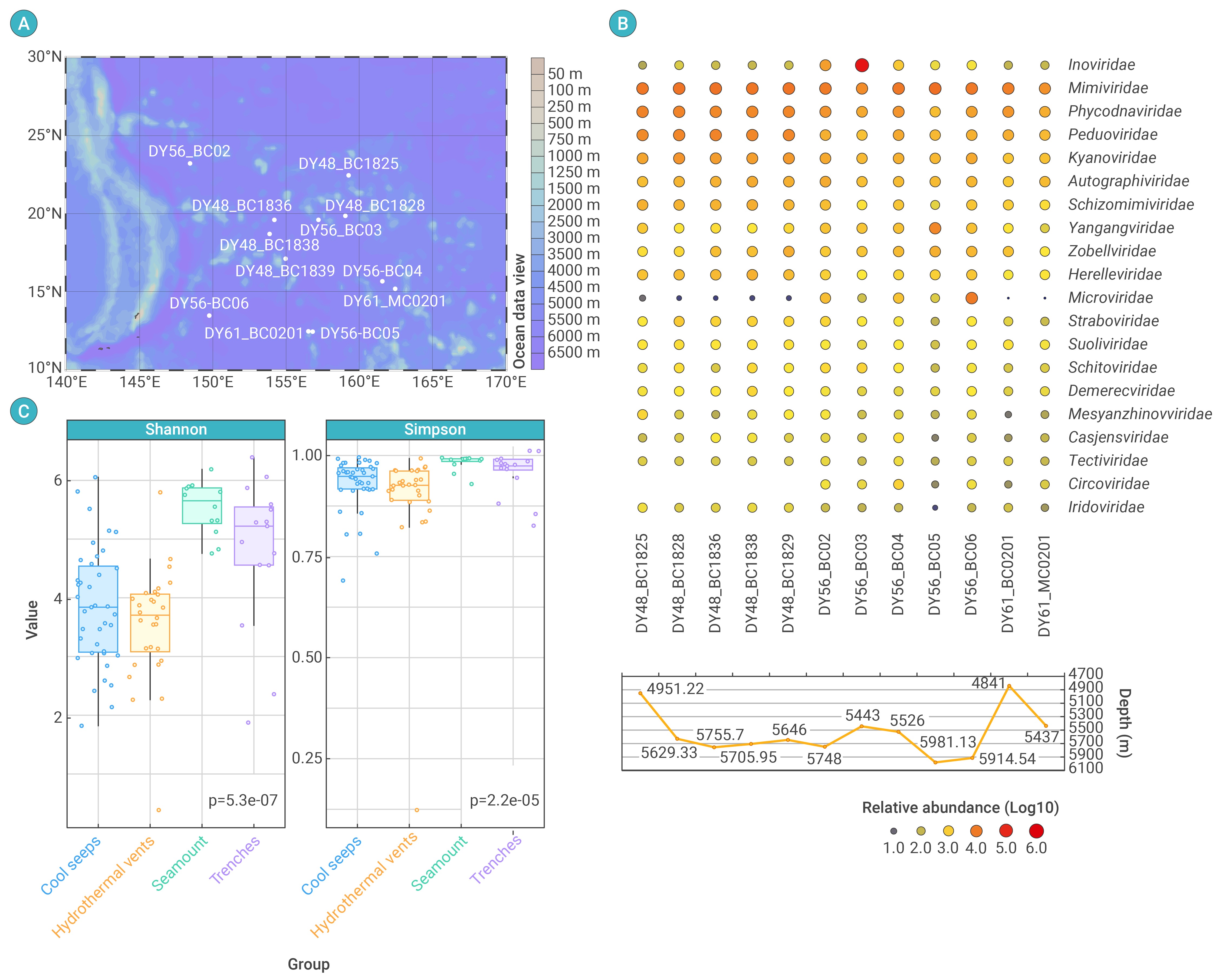
Figure 1.
Overview of the seamount sediments viruses distribution and identified in this study
-
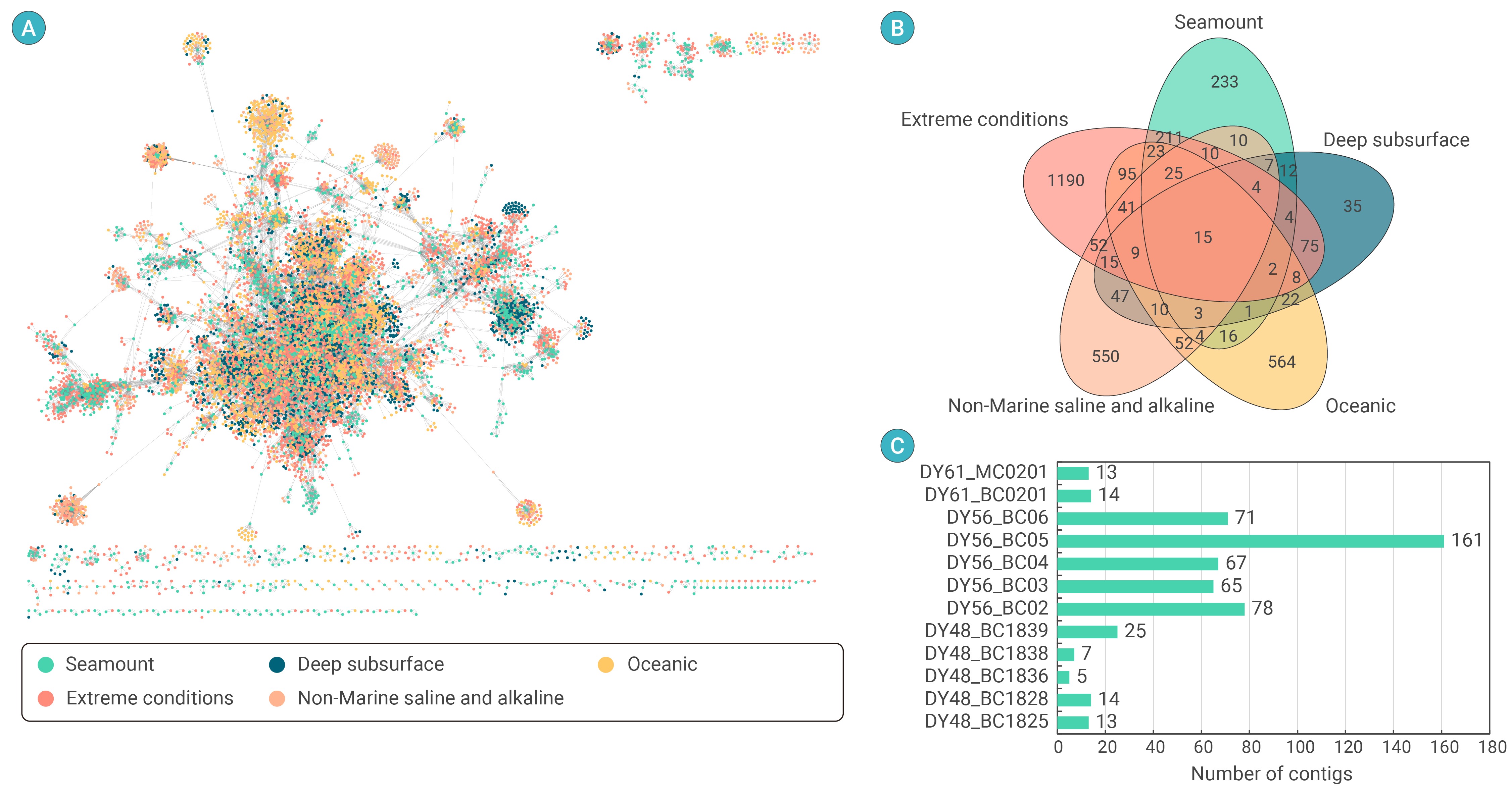
Figure 2.
Comparison analysis between seamount sediments vOTUs and other environmental data sets
-
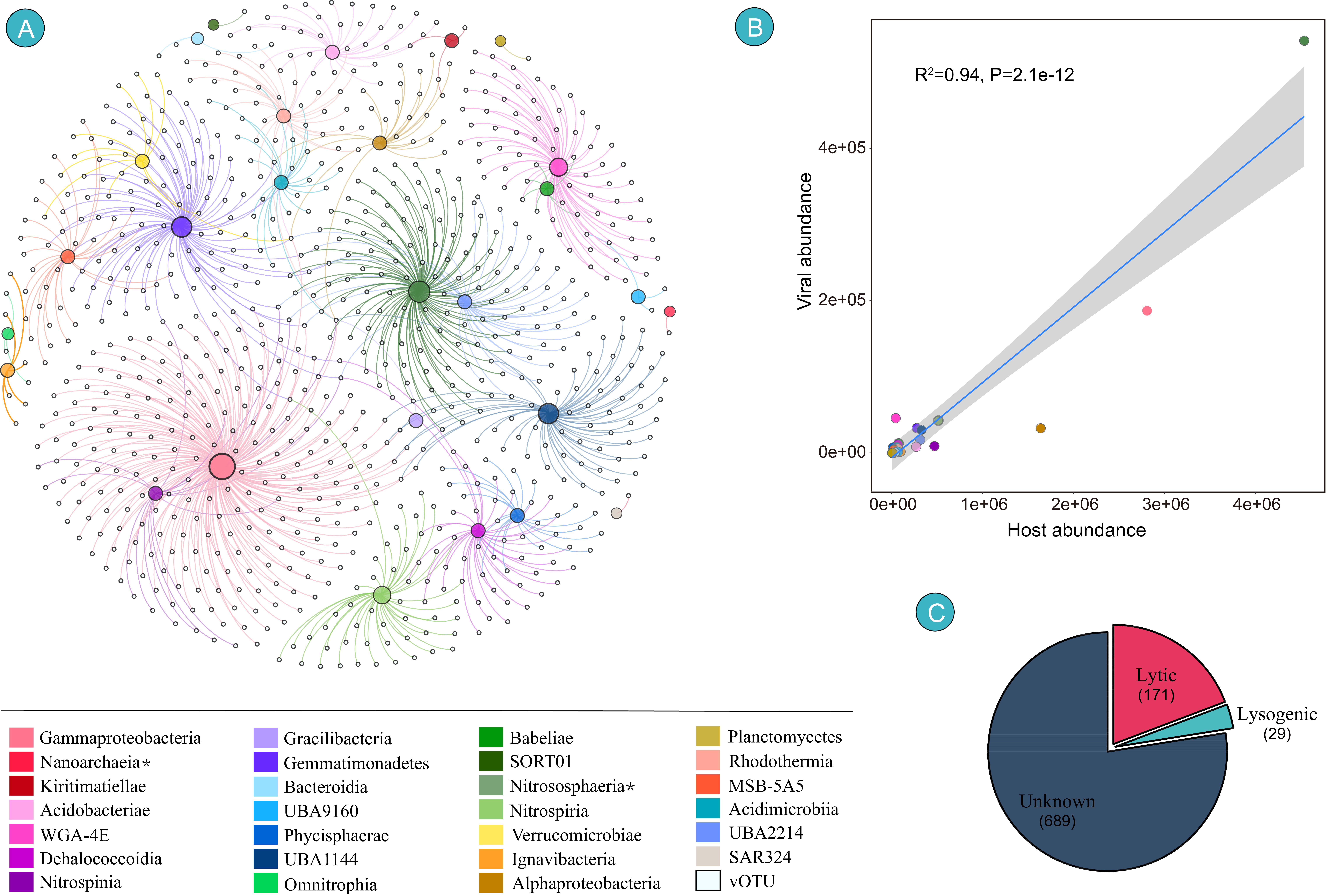
Figure 3.
Viruses and their potential host linkage in seamount sediments
-
Figure 4.
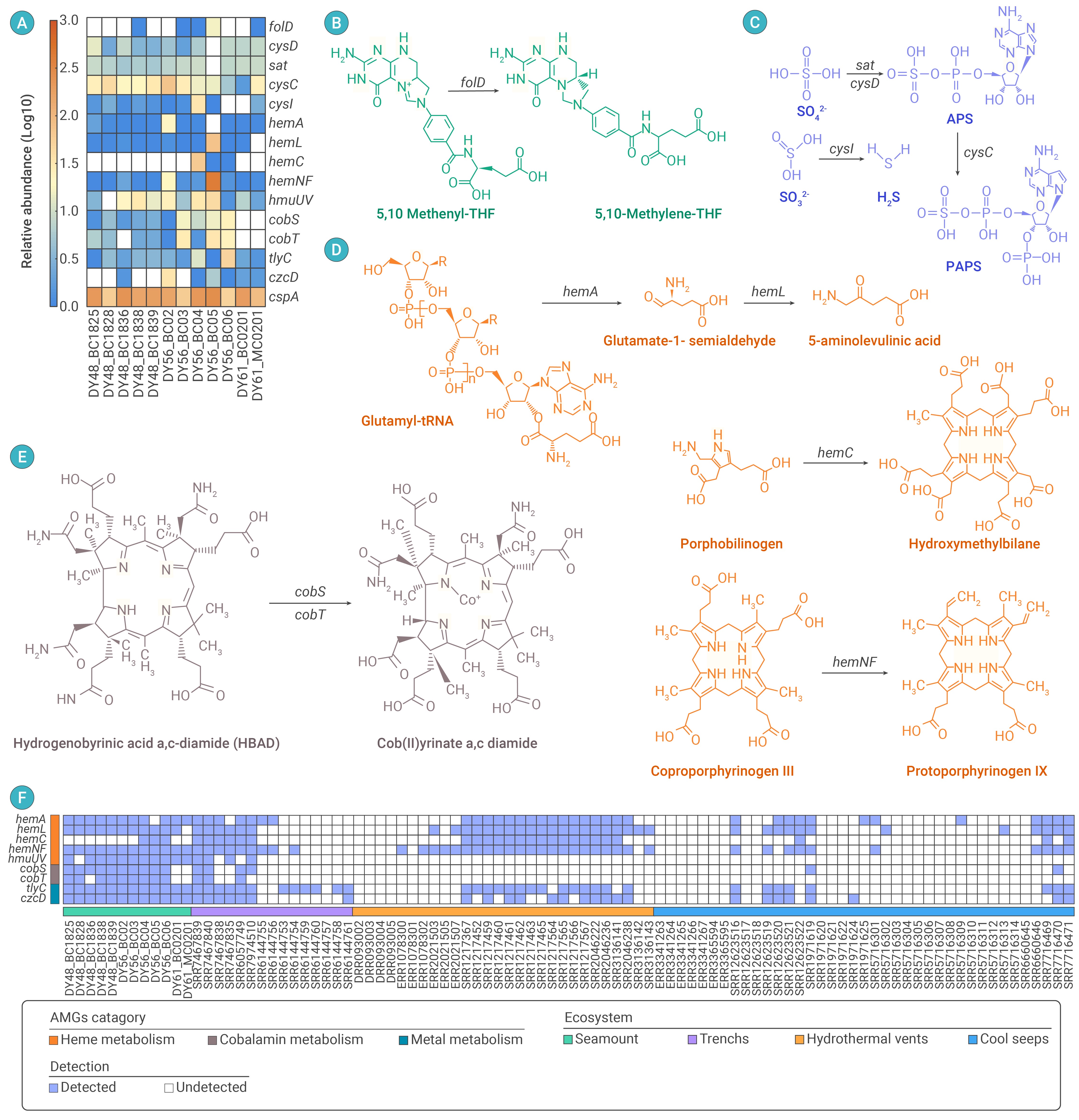
Viral auxiliary metabolic genes within the seamount viral genome (SMVG) dataset
-
Figure 5.
The maximum-likelihood phylogenetic tree of cobaltochelatase cobS
-
Figure 6.
Proposed elemental cycling in seamount sediments involving viruses encoding AMGs
