
Tectonic-triggered drainage reorganizations between the two largest tributaries of the Yangtze River, China
-
GRAPHICAL ABSTRACT
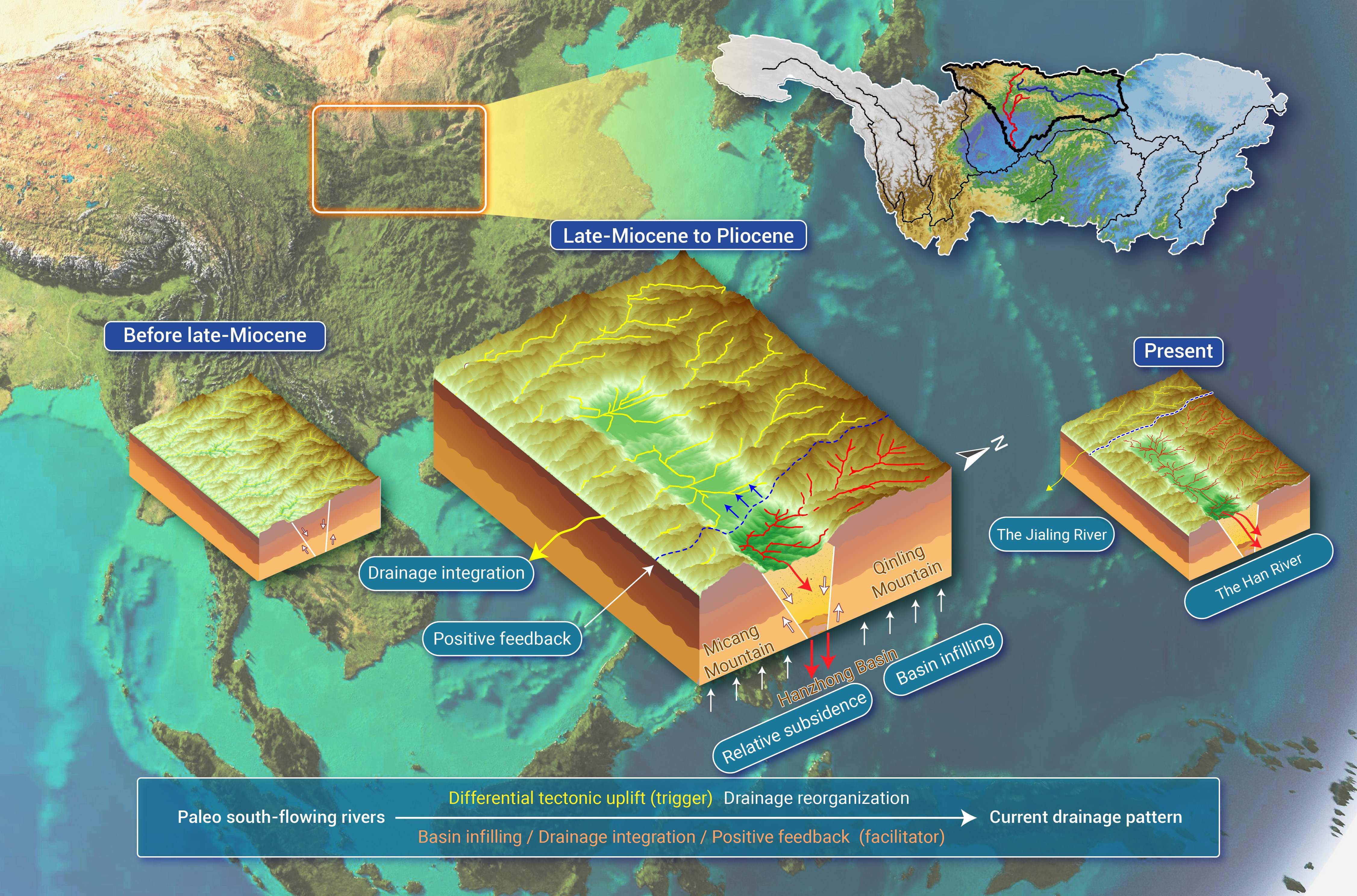
 DownLoad:
Full size image
DownLoad:
Full size image
-
PUBLIC SUMMARY
-
The drainage reorganization history of the Yangtze River's two largest tributaries has been reconstructed.
Tectonic subsidence can trigger mountainous drainage reorganization.
Processes of basin infilling and positive feedback profoundly impact mountainous drainage evolution.
-
-
ABSTRACT
The reorganization of the drainage system is a crucial process on the Earth's surface. However, there is insufficient understanding of the process and driving mechanism of the reorganization of the mountainous drainage system. Here we demonstrate an example of tectonic subsidence-induced drainage reorganizations between the two largest tributaries (Jialing and Han) of the Yangtze River. The upstream tributaries of the Han River, flowing in parallel from north to south, undergo an abrupt eastward deflection of approximately 90° within an intermontane basin. Through river profile analysis, we identified four knickpoints with progressively younger ages towards the west, indicating successive stream captures. We reconstructed the relict river profile upstream of the knickpoint, which consistently aligns with the downstream remnant features, including wind-gaps and terraces. Combining with landscape evolution models, we reconstructed the evolutionary history between the Han and Jialing Rivers. The Jialing River was once flowing southward. Following the tectonic subsidence of the intermontane basin during the late-Miocene to Pliocene, the south-flowing streams from the catchment of the paleo-Jialing River were progressively captured by the Han River from the east along the intermontane basin. Our findings highlight that tectonic subsidence can trigger mountainous drainage reorganization. Additionally, we suggest that the processes of basin infilling, drainage integration, and positive feedback are also essential components in the evolution of mountainous drainage networks. -

-
REFERENCES
[1] Bishop P. (1995). Drainage rearrangement by river capture, beheading and diversion. Prog. Phys. Geogr. 19:449−473. DOI:10.1177/030913339501900402 [2] He C., Braun J., Tang H., et al. (2024). Drainage divide migration and implications for climate and biodiversity. Nat. Rev. Earth Environ. 5:177−192. DOI:10.1038/s43017-023-00511-z [3] Willett S. D., McCoy S. W., Perron J. T., et al. (2014). Dynamic reorganization of river basins. Science 343:1117−1126. DOI:10.1126/science.1248765 [4] Seagren E. G., McMillan M. and Schoenbohm L. M. (2022). Tectonic control on drainage evolution in broken forelands: Examples from NW Argentina. Tectonics 41:e2020TC006536. DOI:10.1029/2020tc006536 [5] Stokes M. F., Goldberg S. L. and Perron J. T. (2018). Ongoing river capture in the Amazon. Geophys. Res. Lett. 45:5545−5552. DOI:10.1029/2018gl078129 [6] Clark M. K., Schoenbohm L. M., Royden L. H., et al. (2004). Surface uplift, tectonics, and erosion of eastern Tibet from large-scale drainage patterns. Tectonics 23:Tc1006. DOI:10.1029/2002tc001402 [7] Hoorn C., Wesselingh F. P., ter Steege H., et al. (2010). Amazonia through time: Andean uplift, climate change, landscape evolution, and biodiversity. Science 330:927−931. DOI:10.1126/science.1194585 [8] Lyons N. J., Val P., Albert J. S., et al. (2020). Topographic controls on divide migration, stream capture, and diversification in riverine life. Earth Surf. Dyn. 8:893−912. DOI:10.5194/esurf-8-893-2020 [9] Xie W., Wang X., Zhang H., et al. (2021). Drainage evolution in intermontane basins at the Qinling-Daba Mountains. Sci. China Earth Sci. 64:1949−1968. DOI:10.1007/s11430-020-9820-y [10] Zhang D., Wang X., Zhang H., et al. (2023). Drainage connection and terrace formation promoted early hominin occupation in the upper Hanjiang River during the Early-Middle Pleistocene. Acta Geogr. Sin. 78:1213−1232. DOI:10.3974/geodb.2023.05.04.V1 [11] Fadul C. M., Oliveira P. and Val P. (2022). Ongoing landscape transience in the eastern Amazon Craton consistent with lithologic control of base level. Earth Surf. Proc. Landf. 47:3117−3132. DOI:10.1002/esp.5447 [12] Geurts A. H., Whittaker A. C., Gawthorpe R. L., et al. (2020). Transient landscape and stratigraphic responses to drainage integration in the actively extending central Italian Apennines. Geomorphology 353:107013. DOI:10.1016/j.geomorph.2019.107013 [13] Attal M., Tucker G. E., Whittaker A. C., et al. (2008). Modeling fluvial incision and transient landscape evolution: Influence of dynamic channel adjustment. J. Geophys. Res. Earth Surf. 113:F03013. DOI:10.1029/2007jf000893 [14] Bracciali L., Najman Y., Parrish R. R., et al. (2015). The Brahmaputra tale of tectonics and erosion: Early Miocene river capture in the Eastern Himalaya. Earth Planet. Sci. Lett. 415:25−37. DOI:10.1016/j.jpgl.2015.01.022 [15] Korup O. and Montgomery D. R. (2008). Tibetan plateau river incision inhibited by glacial stabilization of the Tsangpo gorge. Nature 455:786−U784. DOI:10.1038/nature07322 [16] Forte A. M. and Whipple K. X. (2018). Criteria and tools for determining drainage divide stability. Earth Planet. Sci. Lett. 493:102−117. DOI:10.1016/j.jpgl.2018.04.026 [17] Wei H.-H., Wang E., Wu G.-L., et al. (2016). No sedimentary records indicating southerly flow of the paleo-Upper Yangtze River from the First Bend in southeastern Tibet. Gondw. Res. 32:93−104. DOI:10.1016/j.gr.2015.02.006 [18] Zhao X., Zhang H., Hetzel R., et al. (2021). Existence of a continental-scale river system in eastern Tibet during the late Cretaceous-early Palaeogene. Nat. Commun. 12:7231. DOI:10.1038/s41467-021-27587-9 [19] Fan N., Chu Z., Jiang L., et al. (2018). Abrupt drainage basin reorganization following a Pleistocene river capture. Nat. Commun. 9:3756. DOI:10.1038/s41467-018-06238-6 [20] Jackson J., Norris R. and Youngson J. (1996). The structural evolution of active fault and fold systems in central Otago, New Zealand: Evidence revealed by drainage patterns. J. Struct. Geol. 18:217−234. DOI:10.1016/s0191-8141(96)80046-0 [21] Chen C.-H., Shyu J. B. H., Willett S. D., et al. (2023). Structural control on drainage pattern development of the western Taiwan orogenic wedge. Earth Surf. Proc. Landf. 48:1830−1844. DOI:10.1002/esp.5590 [22] Hu X., Wu J., Wen Z., et al. (2022). Fluvial evolution in a growing thrust-fold range of the Yumu Shan, NE Tibetan Plateau. Earth Planet. Sci. Lett. 594:117704. DOI:10.1016/j.jpgl.2022.117704 [23] Bonnet S. (2009). Shrinking and splitting of drainage basins in orogenic landscapes from the migration of the main drainage divide. Nat. Geosci. 2:766−771. DOI:10.1038/ngeo666 [24] Habousha K., Goren L., Nativ R., et al. (2023). Plan-Form Evolution of Drainage Basins in Response to Tectonic Changes: Insights From Experimental and Numerical Landscapes. J. Geophys. Res. Earth Surf. 128:e2022JF006876. DOI:10.1029/2022jf006876 [25] Clift P. D. and Blusztajn J. (2005). Reorganization of the western Himalayan river system after five million years ago. Nature 438:1001−1003. DOI:10.1038/nature04379 [26] Zheng H., Clift P. D., Wang P., et al. (2013). Pre-Miocene birth of the Yangtze River. Proc. Natl. Acad. Sci. USA 110:7556−7561. DOI:10.1073/pnas.1216241110 [27] Shen Y. C. (1956). Geomorphology of the Hanshui valley. Acta Geogr. Sin. 22:295−323. DOI:10.11821/xb195604002 [28] Fan N., Kong P., Robl J. C., et al. (2021). Timing of river capture in major Yangtze River tributaries: Insights from sediment provenance and morphometric indices. Geomorphology 392:107915. DOI:10.1016/j.geomorph.2021.107915 [29] Dong Y., Neubauer F., Genser J., et al. (2018). Timing of orogenic exhumation processes of the Qinling Orogen: Evidence from 40Ar/39Ar dating. Tectonics 37:4037−4067. DOI:10.1029/2017tc004765 [30] Yang Z., Ratschbacher L., Jonckheere R., et al. (2013). Late-stage foreland growth of China's largest orogens (Qinling, Tibet): Evidence from the Hannan-Micang crystalline massifs and the northern Sichuan Basin, central China. Lithosphere 5:420−437. DOI:10.1130/l260.1 [31] Meng Q. (2017). Origin of the Qinling Mountains (in Chinese). Sci. Sin. Terrae 47:412−420. DOI:10.1360/N072016-00422 [32] Enkelmann E., Ratschbacher L., Jonckheere R., et al. (2006). Cenozoic exhumation and deformation of northeastern Tibet and the Qinling: Is Tibetan lower crustal flow diverging around the Sichuan Basin. GSA Bull. 118:651−671. DOI:10.1130/b25805.1 [33] Wang M., Zhou B., Yang X., et al. (2013). A study on the activity of the faults around the late Quaternary tectonic features in the Hanzhong Basin. Seismol. Geol. 35:778−792. DOI:10.3969/j.issn.0253-4967.2013.04.008 [34] Sun X., Lu H., Wang S., et al. (2017). Early human settlements in the southern Qinling Mountains, central China. Quat. Sci. Rev. 164:168−186. DOI:10.1016/j.quascirev.2017.04.005 [35] Teng Zhihong W. X. (1996). Studies of the tectonic uplift at the Cenozoic Era and the regionally environmental effect in the Qinlin gorogen belt. Geol. Shaanxi 14:33−42. [36] He C., Yang C.-J., Rao G., et al. (2020). Seismic assessment of the Weihe Graben, central China: Insights from geomorphological analyses and 10Be-derived catchment denudation rates. Geomorphology 359:107151. DOI:10.1016/j.geomorph.2020.107151 [37] Huang C. C., Pang J., Zha X., et al. (2013). Extraordinary hydro-climatic events during the period AD 200-300 recorded by slackwater deposits in the upper Hanjiang River valley, China. Palaeogeogr. Palaeoclimatol. Palaeoecol. 374:274−283. DOI:10.1016/j.palaeo.2013.02.001 [38] Whipple K. X. and Tucker G. E. (1999). Dynamics of the stream-power river incision model: Implications for height limits of mountain ranges, landscape response timescales, and research needs. J. Geophys. Res. Solid Earth 104:17661−17674. DOI:10.1029/1999jb900120 [39] Howard A. D. and Kerby G. (1983). Channel change in Badlands. GSA Bull. 94:739−752. DOI:2.0.Co;2">10.1130/0016-7606(1983)94<739:Ccib>2.0.Co;2 [40] Lague D. (2014). The stream power river incision model: evidence, theory and beyond. Earth Surf. Proc. Landf. 39:38−61. DOI:10.1002/esp.3462 [41] Hilley G. E., Porder S., Aron F., et al. (2019). Earth's topographic relief potentially limited by an upper bound on channel steepness. Nat. Geosci. 12:828−832. DOI:10.1038/s41561-019-0442-3 [42] Wang Y., Zheng D., Zhang H., et al. (2020). Channel profile response to abrupt increases in mountain uplift rates: Implications for late miocene to pliocene acceleration of intracontinental extension in the Northern Qinling Range-Weihe Graben, Central China. Lithosphere 2020:7866972. DOI:10.2113/2020/7866972 [43] Kirby E. and Whipple K. X. (2012). Expression of active tectonics in erosional landscapes. J. Struct. Geol. 44:54−75. DOI:10.1016/j.jsg.2012.07.009 [44] Ott R. F., Perez-Consuegrac N., Scherler D., et al. (2023). Erosion rate maps highlight spatio-temporal patterns of uplift and quantify sediment export of the Northern Andes. Earth Planet. Sci. Lett. 621:118354. DOI:10.1016/j.jpgl.2023.118354 [45] Su Q., Wang X., Lu H., et al. (2022). River piracy and its geomorphic effects in the northern Qilian Shan, northeastern Qinghai-Tibet Plateau. Palaeogeogr. Palaeoclimatol. Palaeoecol. 601:111147. DOI:10.1016/j.palaeo.2022.111147 [46] Yang R., Suhail H. A., Gourbet L., et al. (2020). Early Pleistocene drainage pattern changes in Eastern Tibet: Constraints from provenance analysis, thermochronometry, and numerical modeling. Earth Planet. Sci. Lett. 531:115955. DOI:10.1016/j.jpgl.2019.115955 [47] Royden L. and Perron J. T. (2013). Solutions of the stream power equation and application to the evolution of river longitudinal profiles. J. Geophys. Res. Earth Surf. 118:497−518. DOI:10.1002/jgrf.20031 [48] Goren L., Fox M. and Willett S. D. (2014). Tectonics from fluvial topography using formal linear inversion: Theory and applications to the Inyo Mountains, California. J. Geophys. Res. Earth Surf. 119:1651−1681. DOI:10.1002/2014jf003079 [49] Aslan A., Hood W. C., Karlstrom K. E., et al. (2014). Abandonment of Unaweep Canyon (1.4-0.8 Ma), western Colorado: Effects of stream capture and anomalously rapid Pleistocene river incision. Geosphere 10 :428-446. DOI:10.1130/ges00986.1. [50] Ma Z., Zhang H., Wang Y., et al. (2020). Inversion of Dadu River bedrock channels for the late Cenozoic pplift history of the eastern Tibetan Plateau. Geophys. Res. Lett. 47:e2019GL086882. DOI:10.1029/2019gl086882 [51] Schwanghart W. and Scherler D. (2014). Short Communication: TopoToolbox 2-MATLAB-based software for topographic analysis and modeling in Earth surface sciences. Earth Surf. Dyn. 2:1−7. DOI:10.5194/esurf-2-1-2014 [52] Hobley D. E. J., Adams J. M., Nudurupati S. S., et al. (2017). Creative computing with Landlab: an open-source toolkit for building, coupling, and exploring two-dimensional numerical models of Earth-surface dynamics. Earth Surf. Dyn. 5:21−46. DOI:10.5194/esurf-5-21-2017 [53] Yang Z., Shen C., Ratschbacher L., et al. (2017). Sichuan Basin and beyond: Eastward foreland growth of the Tibetan Plateau from an integration of Late Cretaceous-Cenozoic fission track and (U-Th)/He ages of the eastern Tibetan Plateau, Qinling, and Daba Shan. J. Geophys. Res. Solid Earth 122:4712−4740. DOI:10.1002/2016jb013751 [54] Whipple K. X., Forte A. M., DiBiase R. A., et al. (2017). Timescales of landscape response to divide migration and drainage capture: Implications for the role of divide mobility in landscape evolution. J. Geophys. Res. Earth Surf. 122:248−273. DOI:10.1002/2016jf003973 [55] Dal Pai M. O., Salgado A. A. R., de Sordi M. V., et al. (2023). Comparing morphological investigation with χ index and gilbert metrics for analysis of drainage rearrangement and divide migration in inland plateaus. Geomorphology 423:108554. DOI:10.1016/j.geomorph.2022.108554 [56] Babault J., Van Den Driessche J. and Teixell A. (2012). Longitudinal to transverse drainage network evolution in the High Atlas (Morocco): The role of tectonics. Tectonics 31:Tc4020. DOI:10.1029/2011tc003015 [57] Humphrey N. F. and Konrad S. K. (2000). River incision or diversion in response to bedrock uplift. Geology 28:43−46. DOI:2.3.Co;2">10.1130/0091-7613(2000)028<0043:Riodir>2.3.Co;2 [58] Li Z., Wang X., Yu Y., et al. (2021). The impacts of base level and lithology on fluvial geomorphic evolution at the tectonically active Laohu and Hasi Mountains, northeastern Tibetan Plateau. Sci. China Earth Sci. 64:906−919. DOI:10.1007/s11430-020-9743-1 [59] Tomkin J. H. and Braun J. (1999). Simple models of drainage reorganisation on a tectonically active ridge system. N. Z. J. Geol. Geophys. 42:1−10. DOI:10.1080/00288306.1999.9514827 [60] van der Beek P., Champel B. and Mugnier J. L. (2002). Control of detachment dip on drainage development in regions of active fault-propagation folding. Geology 30:471−474. DOI:2.0.Co;2">10.1130/0091-7613(2002)030<0471:Coddod>2.0.Co;2 [61] Stock J. D. and Montgomery D. R. (1999). Geologic constraints on bedrock river incision using the stream power law. J. Geophys. Res. Solid Earth 104:4983−4993. DOI:10.1029/98jb02139 -
ABOUT THIS ARTICLE
Cite this article:
Wu H., Wang X., He C., et al. (2025). Tectonic-triggered drainage reorganizations between the two largest tributaries of the Yangtze River, China. The Innovation Geoscience 3:100115. https://doi.org/10.59717/j.xinn-geo.2024.100115
Welcome!
To request copyright permission to republish or share portions of our works, please visit Copyright Clearance Center's (CCC) Marketplace website at marketplace.copyright.com.

Article Metrics
Relative Articles
Cited by
Export File
Citation
Wu H., Wang X., He C., et al. (2025). Tectonic-triggered drainage reorganizations between the two largest tributaries of the Yangtze River, China. The Innovation Geoscience 3:100115. https://doi.org/10.59717/j.xinn-geo.2024.100115

Format
Content



-
Figure 1.
Overviews of the topography and drainage systems in the study region
-
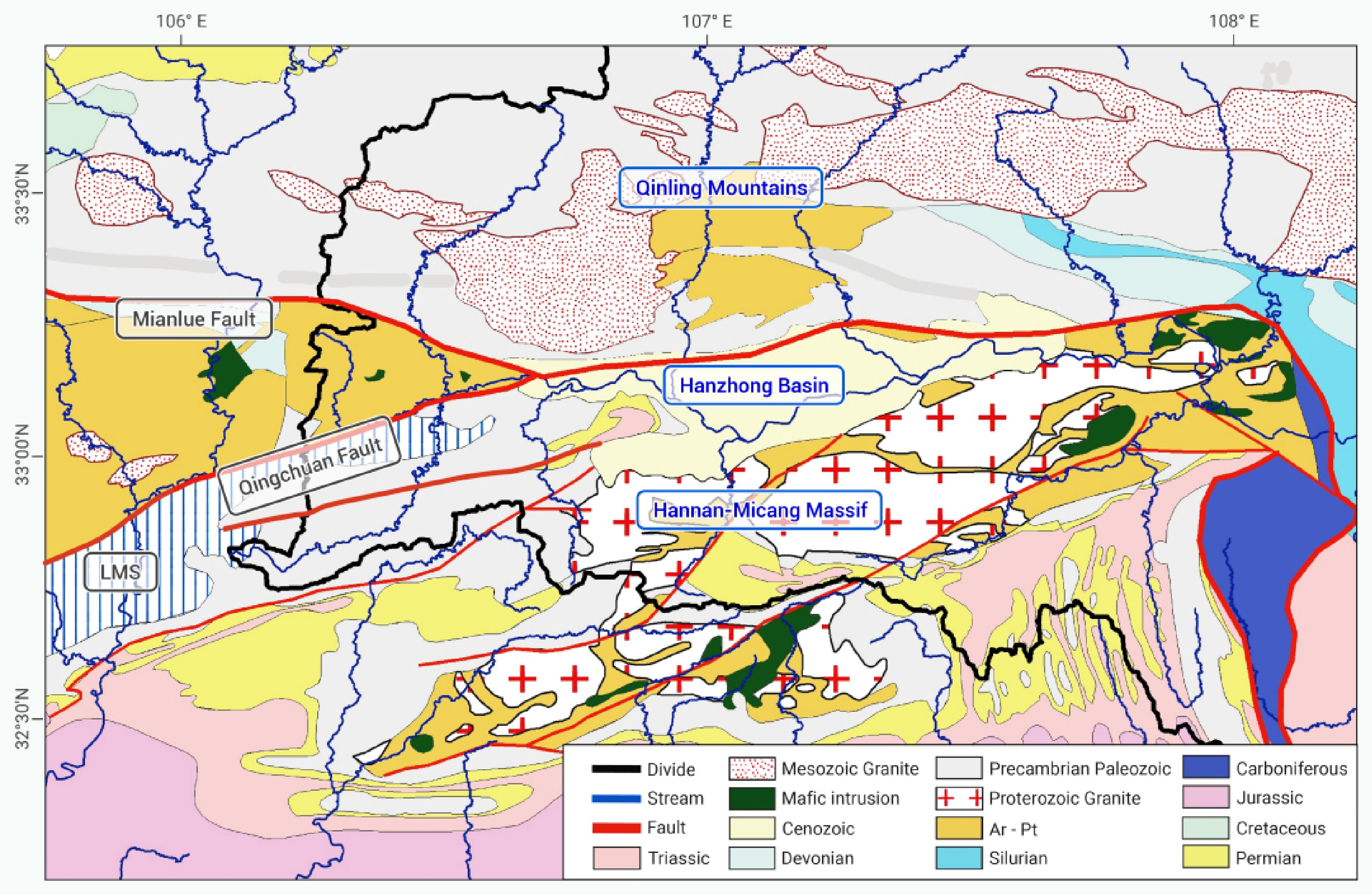
Figure 2.
Geological map of the study area.
-
Figure 3.
Landscape evolution model settings
-
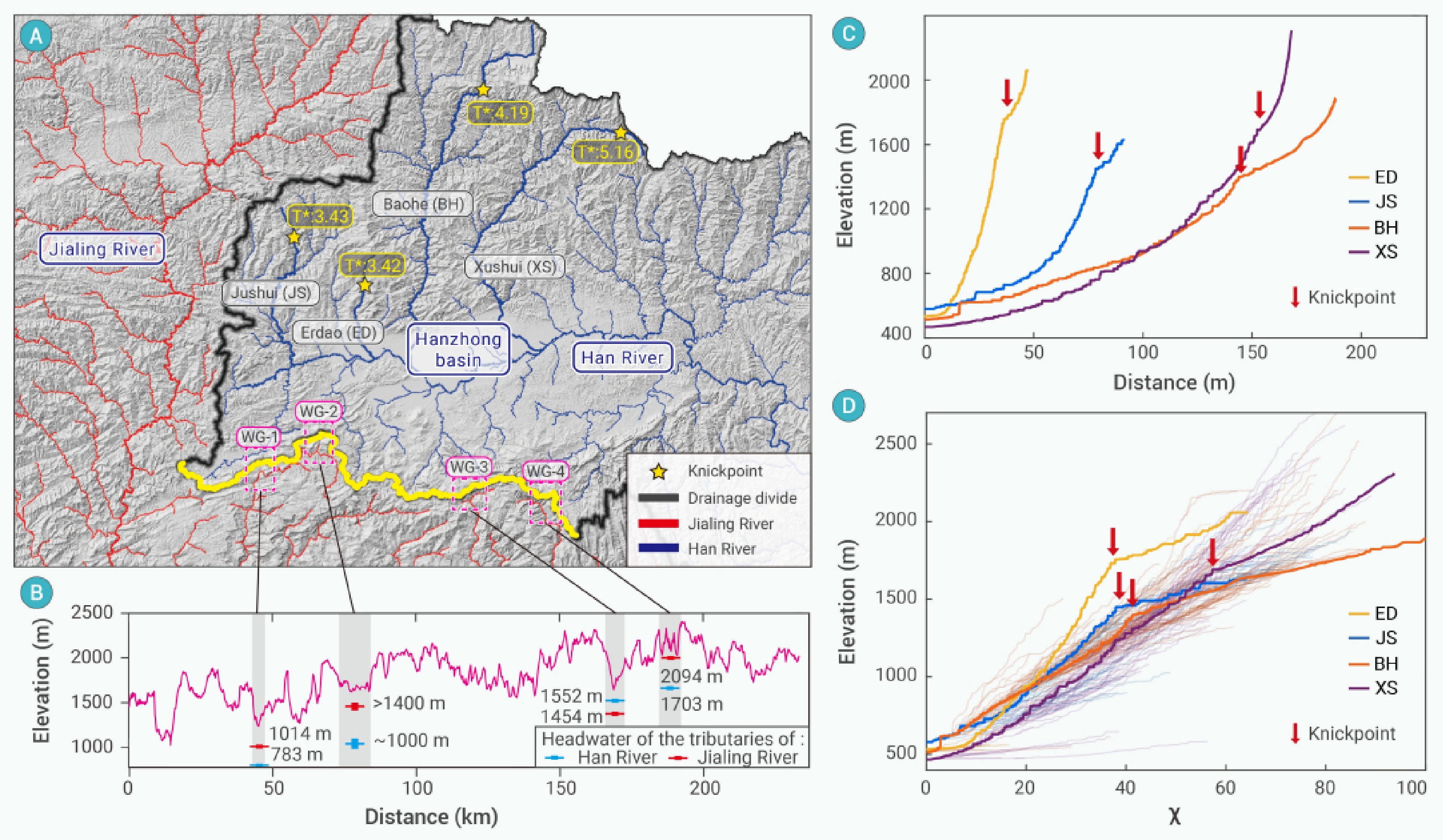
Figure 4.
Spatial distribution of knickpoints in the catchment of Han River
-
Figure 5.
Reconstruction of relict profile
-
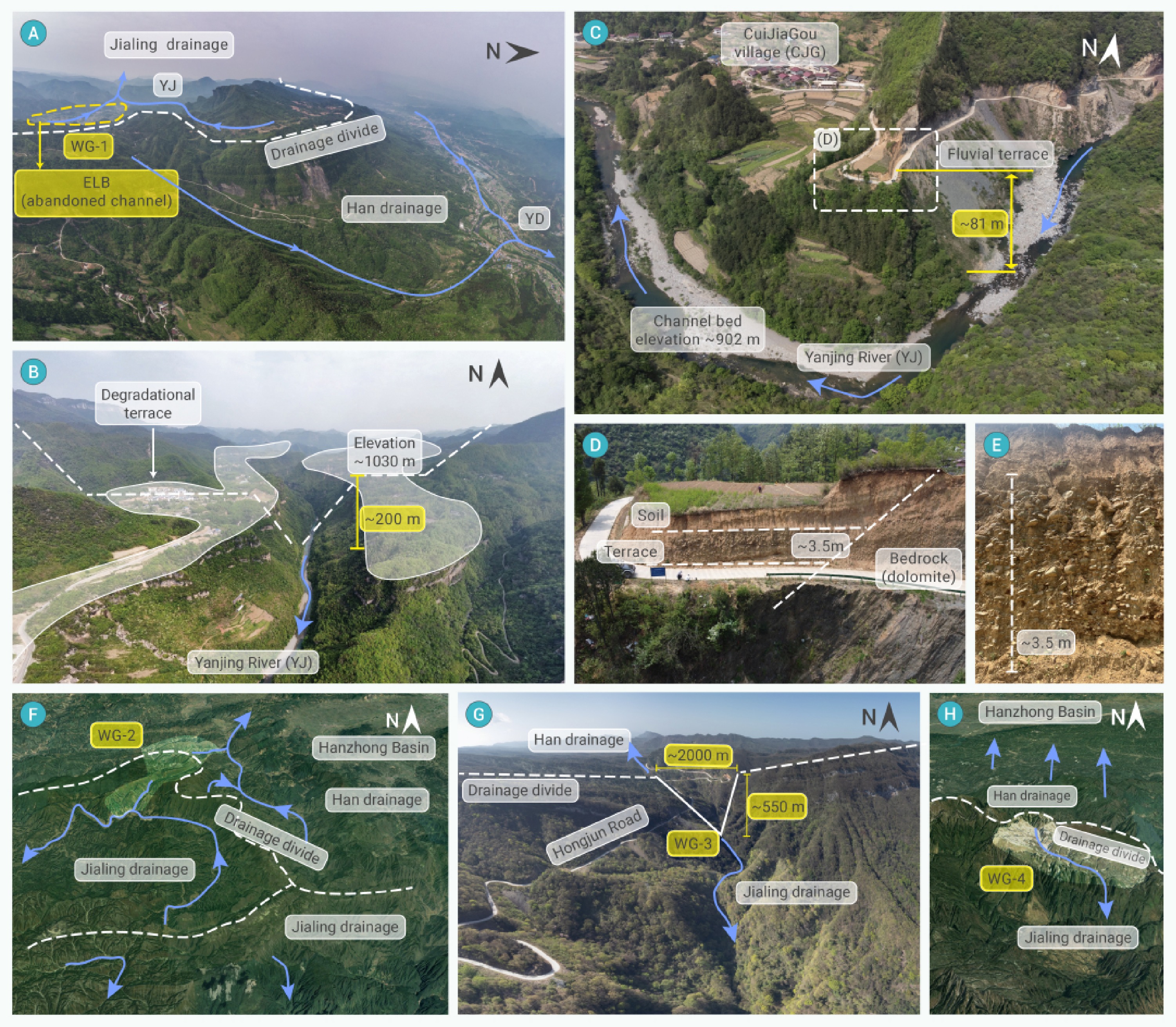
Figure 6.
Field and satellite images
-
Figure 7.
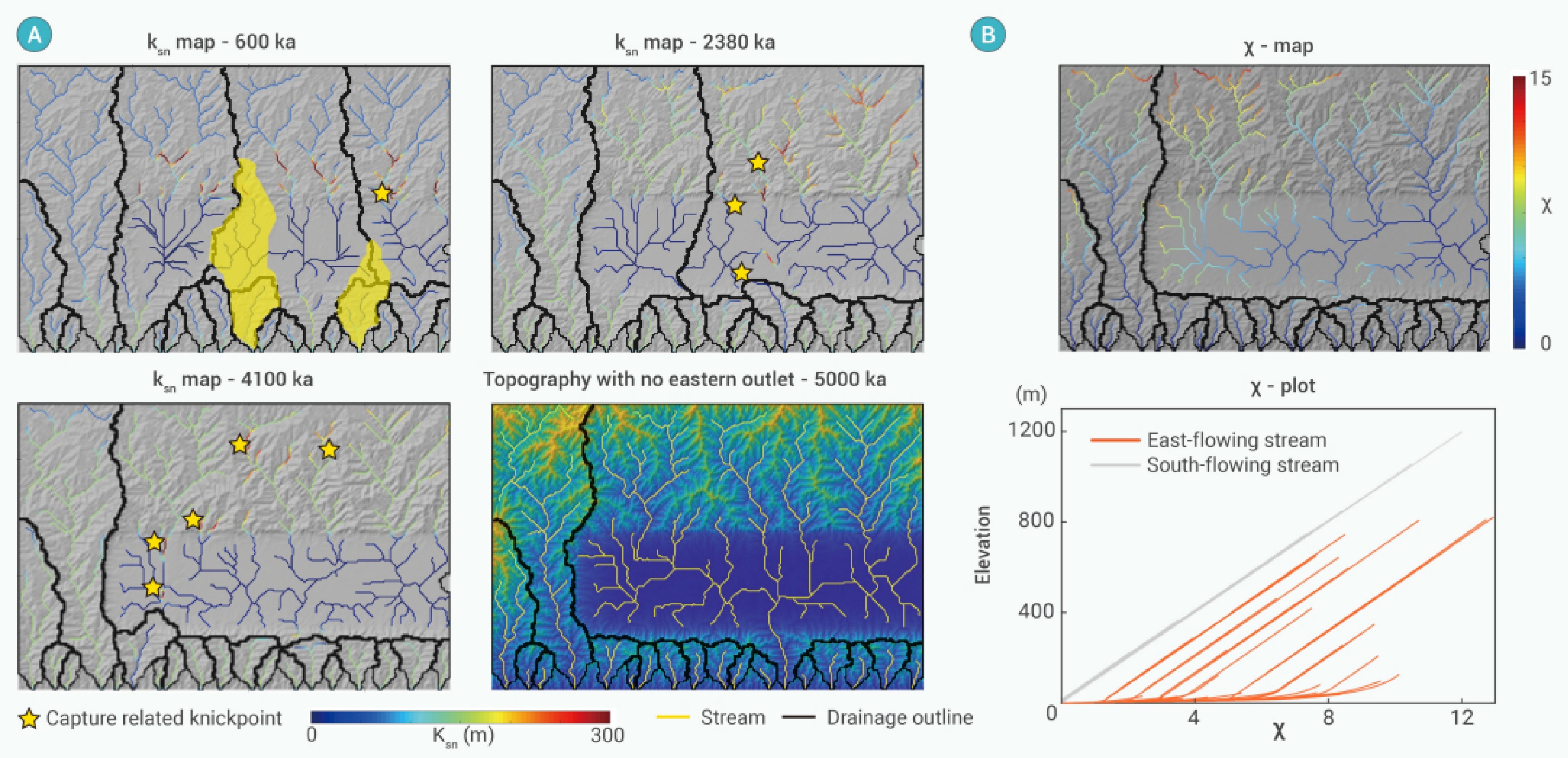
Landscape evolution model results
-
Figure 8.
Conceptual drainage network evolutionary history
