
Global lake carbon burial from endorheic zones since the Last Glacial Maximum and the future projection
-
GRAPHICAL ABSTRACT

 DownLoad:
Full size image
DownLoad:
Full size image
-
PUBLIC SUMMARY
-
Global closed-basin lakes buried twice as much inorganic carbon as organic carbon since the LGM.
Total carbon burial equals ~10% of dryland soil carbon, highlighting its global carbon cycle role.
Lake carbon burial rose since the LGM, driven by area fluctuations linked to westerlies and monsoons.
Projected drying may reduce lake carbon burial by 5% in global closed basins by 2100.
-
-
ABSTRACT
Lake inorganic carbon burial in global closed basins has been recognized as a significant component of the terrestrial carbon cycle. However, the controlling factors governing its long-term dynamics and its future trajectory remain insufficiently understood. Here, we present a comprehensive dataset encompassing lake inorganic and organic carbon burial records from global closed basins since the Last Glacial Maximum (LGM), along with associated lake-level reconstructions, modern observations and climate model outputs. Through integrated analysis of lake carbon burial records and lake area simulation, our results indicate that inorganic carbon burial in closed-basin lakes since the LGM has been approximately twice that of organic carbon burial. The total carbon burial is estimated to be around 174 Pg, which accounts for roughly one-tenth of the soil carbon pool in global drylands, underscoring its significance in the global carbon cycle. Lake carbon burial rate has shown a continuous increase since the LGM, with interannual variations of lake carbon burial amount closely linked to fluctuations in lake area, which are primarily modulated by westerly winds and monsoon circulation in different closed basins. Under future global warming scenarios, with projected drying trend in global closed basins, the lake carbon burial potential by2100 is estimated to be approximately 1 Pg, which is about 5% lower compared to scenarios with stable lake area, highlighting the substantial role of lake carbon burial in shaping the future global carbon budget. -

-
REFERENCES
[1] Falkowski P., Scholes R.J., Boyle E., et al. (2000). The Global Carbon Cycle: A Test of Our Knowledge of Earth as a System. Science 290:291−296. DOI:10.1126/science.290.5490.291 [2] Archer D. (2010). The Global Carbon Cycle. Princeton University Press. ISBN:9781400837076. [3] McBratney A., Field D.J. and Koch A. (2014). The dimensions of soil security. Geoderma 213:203−213. DOI:10.1016/j.geoderma.2013.08.013 [4] Xiang D., Wang G., Tian J., et al. (2023). Global patterns and edaphic-climatic controls of soil carbon decomposition kinetics predicted from incubation experiments. Nat. Commun. 14:2171. DOI:10.1038/s41467-023-37900-3 [5] Huang Y.Y., Song X.D., Wang Y.P., et al. (2024). Size, distribution, and vulnerability of the global soil inorganic carbon. Science 384:233−239. DOI:10.1126/science.adi7918 [6] Zamanian K., Pustovoytov K. and Kuzyakov Y. (2016). Pedogenic carbonates: Forms and formation processes. Earth Sci. Rev. 157:1−17. DOI:10.1016/j.earscirev.2016.03.003 [7] Li Y., Zhang C.Q., Wang N.A., et al. (2017). Substantial inorganic carbon sink in closed drainage basins globally. Nat. Geosci. 10:501−506. DOI:10.1038/NGEO2972 [8] Plaza C., Zaccone C., Sawicka K., et al. (2018). Soil resources and element stocks in drylands to face global issues. Sci. Rep. 8:13788. DOI:10.15928/j.1674-3075.202109220332 [9] Shen J. (2009). Progress and prospect of palaeolimnology research in China. J. Lake Sci. 21:307−313. DOI:10.18307/2009.0301 [10] Guo Y., Zhou Q.H., Wang P., et al. (2023). Research progress on the mechanism of carbon storage in inland waters. J. Hydroecol. 44:141−150. DOI:10.15928/j.1674-3075.202109220332 [11] Battin T.J., Luyssaert S., Kaplan L.A., et al. (2009). The boundless carbon cycle. Nat. Geosci. 2:598−600. DOI:10.1038/ngeo618 [12] Gao Y., Jia J.J., Lu Y., et al. (2021). Determining dominating control mechanisms of inland water carbon cycling processes and associated gross primary productivity on regional and global scales. Earth Sci. Rev. 213:103497. DOI:10.1016/j.earscirev.2020.103497 [13] Du Y.X., Chen F.Z., Zhang Y.L., et al. (2023). Human activity coupled with climate change strengthens the role of lakes as an active pipe of dissolved organic matter. Earths Future 11:e2022EF003412. DOI:10.1029/2022EF003412 [14] Zhang F.J., Yao S.C., Xue B., et al. (2017). Organic carbon burial in Chinese lakes over the past 150 years. Quat. Int. 438:94−103. DOI:10.1016/j.quaint.2017.03.047 [15] Yang P., Wang N.A., Zhao L.Q., et al. (2021). Variation characteristics and influencing mechanism of CO2 flux from lakes in the Badain Jaran Desert: A case study of Yindeer Lake. Ecol. Indic. 127:107731. DOI:10.1016/j.ecolind.2021.107731 [16] Jia J.J., Sun K., Lü S.D., et al. (2022). Determining whether Qinghai-Tibet Plateau waterbodies have acted like carbon sinks or sources over the past 20 years. Sci. Bull. 67:2345−2357. DOI:10.1016/j.scib.2022.10.023 [17] Xiao Q.T., Xu X.F., Qi T.C., et al. (2024). Lakes shifted from a carbon dioxide source to a sink over past two decades in China. Sci. Bull. 69:1857−1861. DOI:10.1016/j.scib.2024.03.022 [18] Li Y., Hao L., Han Q., et al. (2022). Provenance of inorganic carbon sinks in closed basins. Water Resour. Res. 58:e2021WR030270. DOI:10.1029/2021WR030270 [19] Mendonça R., Müller R.A., Clow D., et al. (2017). Organic carbon burial in global lakes and reservoirs. Nat. Commun. 8:1694. DOI:10.1038/s41467-017-01789-6 [20] Wang J.D., Song C.Q., Reager J.T., et al. (2018). Recent global decline in endorheic basin water storages. Nat. Geosci. 11:926−932. DOI:10.1038/s41561-019-0316-8 [21] Li Y. and Zhang Y.X. (2020). Synergy of the westerly winds and monsoons in the lake evolution of global closed basins since the Last Glacial Maximum and implications for hydrological change in central Asia. Clim. Past 16:2239−2254. DOI:10.5194/cp-16-2239-2020 [22] IPCC. (2013). Climate Change 2013: The Physical Science Basis. Contribution of Working Group I to the Fifth Assessment Report of the Intergovernmental Panel on Climate Change. Cambridge University Press, Cambridge, 1535 pp. [23] Ramsey B.C. (2009). Bayesian analysis of radiocarbon dates. Radiocarbon 51:337−360. DOI:10.1017/S0033822200033865 [24] Reimer P.J., Austin W.E.N., Bard E., et al. (2020). The IntCal20 Northern Hemisphere radiocarbon age calibration curve (0–55 cal kBP). Radiocarbon 62:725−757. DOI:10.1017/RDC.2020.41 [25] Santisteban J.I., Mediavilla R., López-Pamo E., et al. (2004). Loss on ignition: A qualitative or quantitative method for organic matter and carbonate mineral content in sediments. J. Paleolimnol. 32:287−299. DOI:10.1023/B:JOPL.0000042999.30131.5b [26] Avnimelech Y., Ritvo G., Meijer L.E., et al. (2001). Water content, organic carbon and dry bulk density in flooded sediments. Aquac. Eng. 25:25−33. DOI:10.1016/S0144-8609(01)00068-1 [27] Lehner B. and Grill G. (2013). Global River hydrography and network routing: Baseline data and new approaches to study the world's large river systems. Hydrol. Process. 27:2171−2186. DOI:10.1002/hyp.9740 [28] Downing J.A., Prairie Y.T., Cole J.J., et al. (2006). The global abundance and size distribution of lakes, ponds, and impoundments. Limnol. Oceanogr. 51:2388−2397. DOI:10.4319/lo.2006.51.5.2388 [29] Liu Z., Otto-Bliesner B.L., He F., et al. (2009). Transient simulation of last deglaciation with a new mechanism for Bølling-Allerød warming. Science 325:310−314. DOI:10.1126/science.1171041 [30] Cheng J., Liu Z., He F., et al. (2011). Impact of North Atlantic–GIN Sea exchange on deglaciation evolution of the Atlantic meridional overturning circulation. Clim. Past 7:935−940. DOI:10.5194/cp-7-935-2011 [31] He F., Shakun J.D., Clark P.U., et al. (2013). Northern Hemisphere forcing of Southern Hemisphere climate during the last deglaciation. Nature 494:81−85. DOI:10.1038/nature11822 [32] Tabor K. and Williams J.W. (2010). Globally downscaled climate projections for assessing the conservation impacts of climate change. Ecol. Appl. 20:554−565. DOI:10.1890/09-0173.1 [33] Zhang Y.Q., Li C.C., Chiew F.S., et al. (2023). Southern Hemisphere dominates recent decline in global water availability. Science 382:579−584. DOI:10.1126/science.adh0716 [34] Koriche S.A., Singarayer J.S., Cloke H.L., et al. (2022). What are the drivers of Caspian Sea level variation during the late Quaternary. Quat. Sci. Rev. 283:107457. DOI:10.1016/j.quascirev.2022.107457 [35] Samant R. and Prange M. (2023). Climate-driven 21st century Caspian Sea level decline estimated from CMIP6 projections. Commun. Earth Environ. 4:357. DOI:10.1038/s43247-023-01017-8 [36] Ren Z.B., Li C.J., Fu B.J., et al. (2023). Effects of aridification on soil total carbon pools in China's drylands. Glob. Change Biol. 30:e17091. DOI:10.1111/gcb.17091 [37] Zhang X.Z., Li Y., Ye W.T., et al. (2020). Wet-dry status change in global closed basins between the mid-Holocene and the Last Glacial Maximum and its implication for future projection. Clim. Past 16:1987−1998. DOI:10.5194/cp-16-1987-2020 [38] Li Y. and Zhang Y.X. (2020). Synergy of the westerly winds and monsoons in the lake evolution of global closed basins since the Last Glacial Maximum and implications for hydrological change in central Asia. Clim. Past 16:2239−2254. DOI:10.5194/cp-16-2239-2020 [39] Kohfeld K.E. and Harrison S.P. (2000). How well can we simulate past climates. Evaluating the models using global palaeoenvironmental datasets. Quat. Sci. Rev. 19:321−346. DOI:10.1016/S0277-3791(99)00068-2 [40] Li Y., Zhang Y., Zhang X., et al. (2020). A continuous simulation of Holocene effective moisture change represented by variability of virtual lake level in East and Central Asia. Sci. China Earth Sci. 63:1161−1175. DOI:10.1007/s11430-019-9576-x [41] Zhang S., Zhao H., Sheng Y.W., et al. (2022). Mega-lakes in the northwestern Tibetan Plateau formed by melting glaciers during the last deglacial. Quat. Sci. Rev. 285:107528. DOI:10.1016/j.quascirev.2022.107528 [42] Zhang F.J., Xue B. and Yao S.C. (2018). The organic carbon storage in Chinese lake sediments during the Holocene Megathermal. Quat. Sci. 38:887-889. Zhang Fengju, Xue Bin, Yao Shuchun. The organic carbon storage in Chinese lake sediments during the Holocene Megathermal[J]. Quaternary Sciences, 2018, 38(4): 887-899. DOI:10.11928/j.issn.1001-7410.2018.04.08. [43] Zheng J.F., Cheng K., Pan G.X., et al. (2011). Perspectives on studies on soil carbon stocks and the carbon sequestration potential of China. Chin. Sci. Bull. 56:2162−2173. DOI:10.1007/s11434-011-4693-7 [44] Treat C.C., Kleinen T., Broothaerts N., et al. (2019). Widespread global peatland establishment and persistence over the last 130,000 y. Proc. Natl. Acad. Sci. U.S.A. 116:4822−4827. DOI:10.1073/pnas.1813305116 [45] Wurtsbaugh W.A., Miller C., Null S.E., et al. (2017). Decline of the world's saline lakes. Nat. Geosci. 10:816−821. DOI:10.1038/ngeo3052 [46] Huang J.P., Yu H.P., Guan X.D., et al. (2016). Accelerated dryland expansion under climate change. Nat. Clim. Change 6:166−171. DOI:10.1038/NCLIMATE2837 -
ABOUT THIS ARTICLE
Cite this article:
Li Y., Zhang X., Zhang Z., et al. (2025). Global lake carbon burial from endorheic zones since the Last Glacial Maximum and the future projection. The Innovation Geoscience 3:100132. https://doi.org/10.59717/j.xinn-geo.2025.100132
Welcome!
To request copyright permission to republish or share portions of our works, please visit Copyright Clearance Center's (CCC) Marketplace website at marketplace.copyright.com.
Article Metrics
Relative Articles
Cited by
Export File
Citation
Li Y., Zhang X., Zhang Z., et al. (2025). Global lake carbon burial from endorheic zones since the Last Glacial Maximum and the future projection. The Innovation Geoscience 3:100132. https://doi.org/10.59717/j.xinn-geo.2025.100132

Format
Content


-
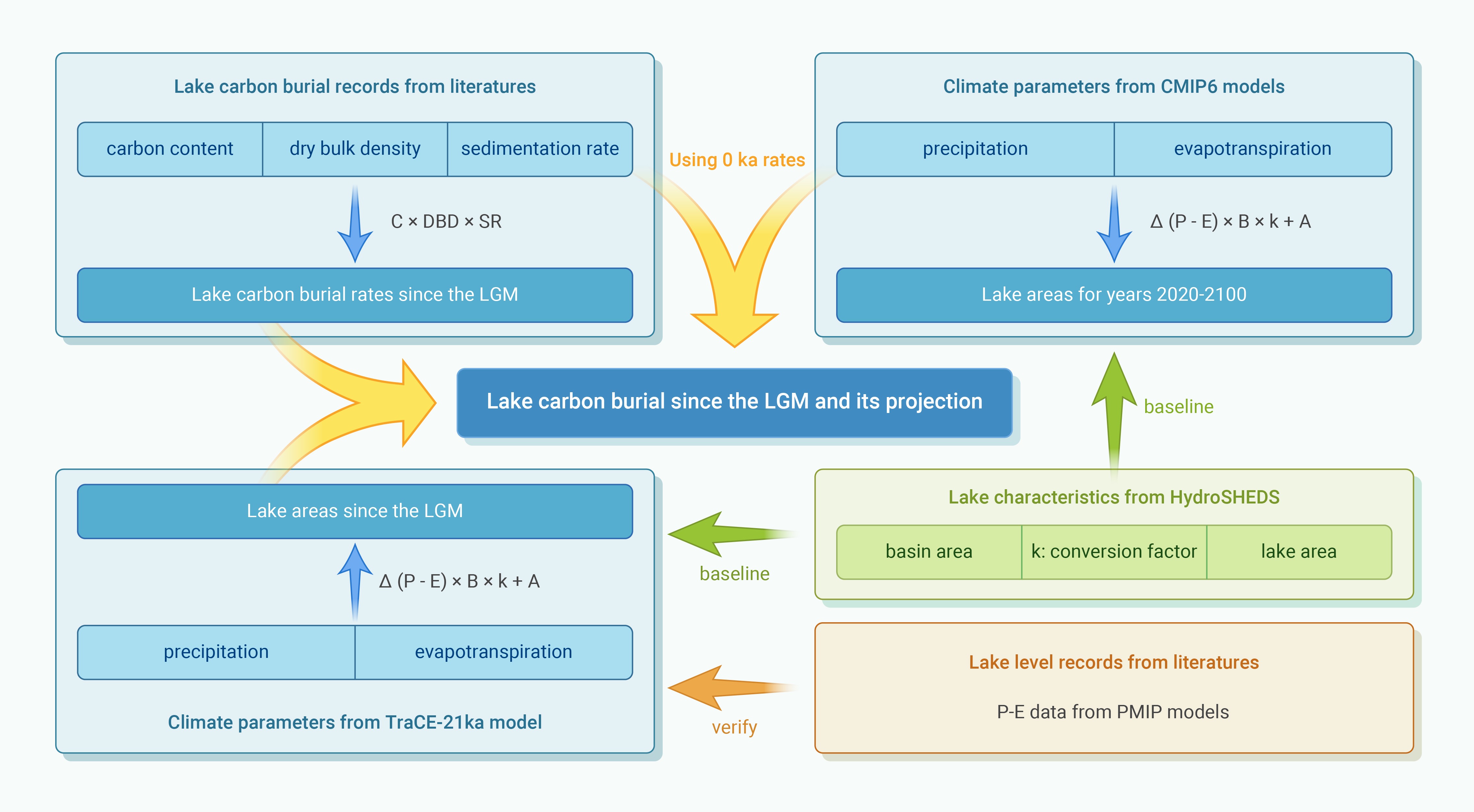
Figure 1.
Overall research framework.
-
Figure 2.
Spatial distributions of mean organic carbon burial rates (OCAR), inorganic carbon burial rates (ICAR), and total carbon burial rates (TCAR) (g/m2/yr) in global closed-basin lakes during the Holocene (A-C) and Last Deglaciation (D-F).
-
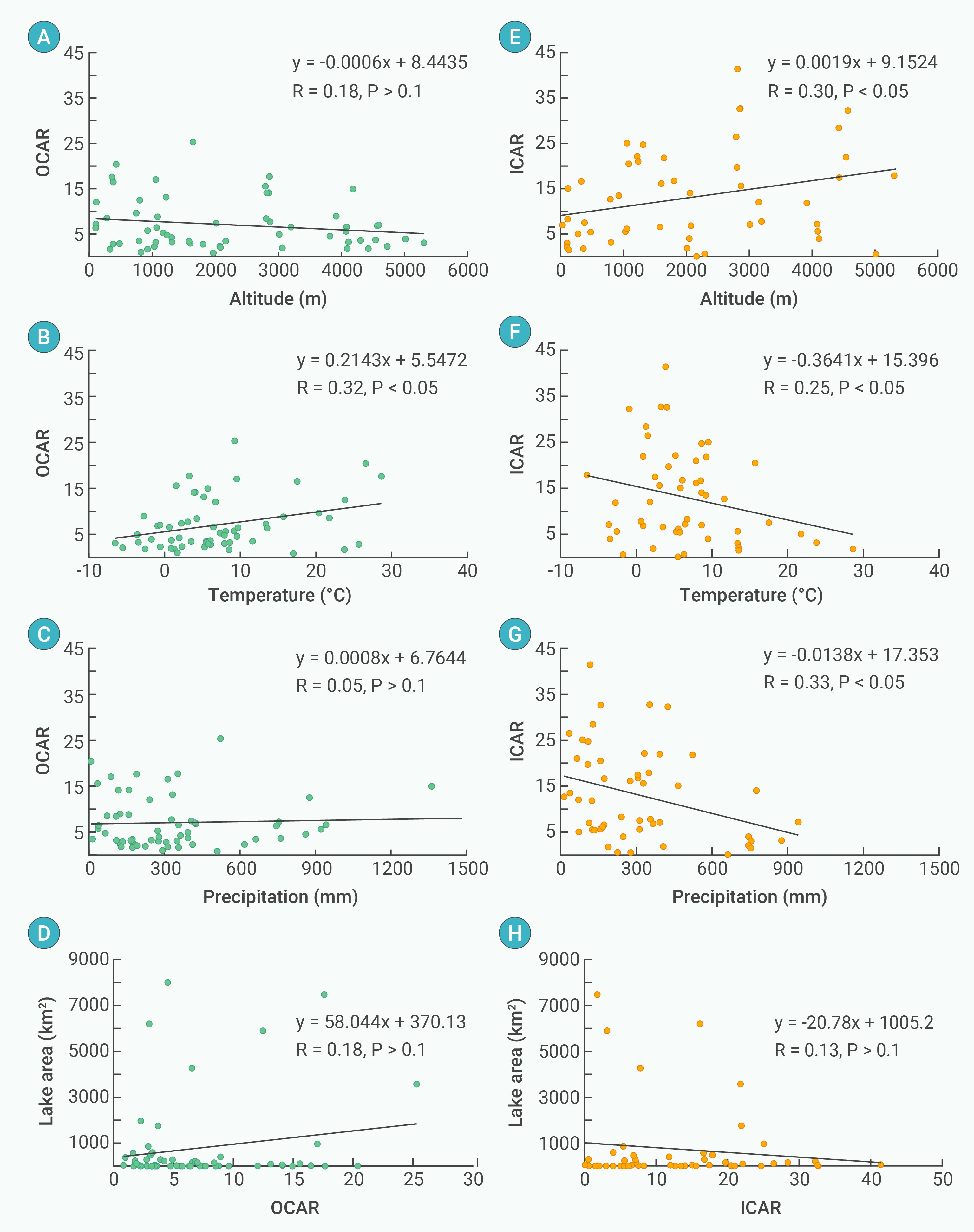
Figure 3.
Scatterplots illustrating correlations between lake organic carbon burial rates (OCAR; left column) and inorganic carbon burial rates (ICAR; right column) (g/m2/yr) with altitude, temperature, precipitation, and lake area in global closed basins
-
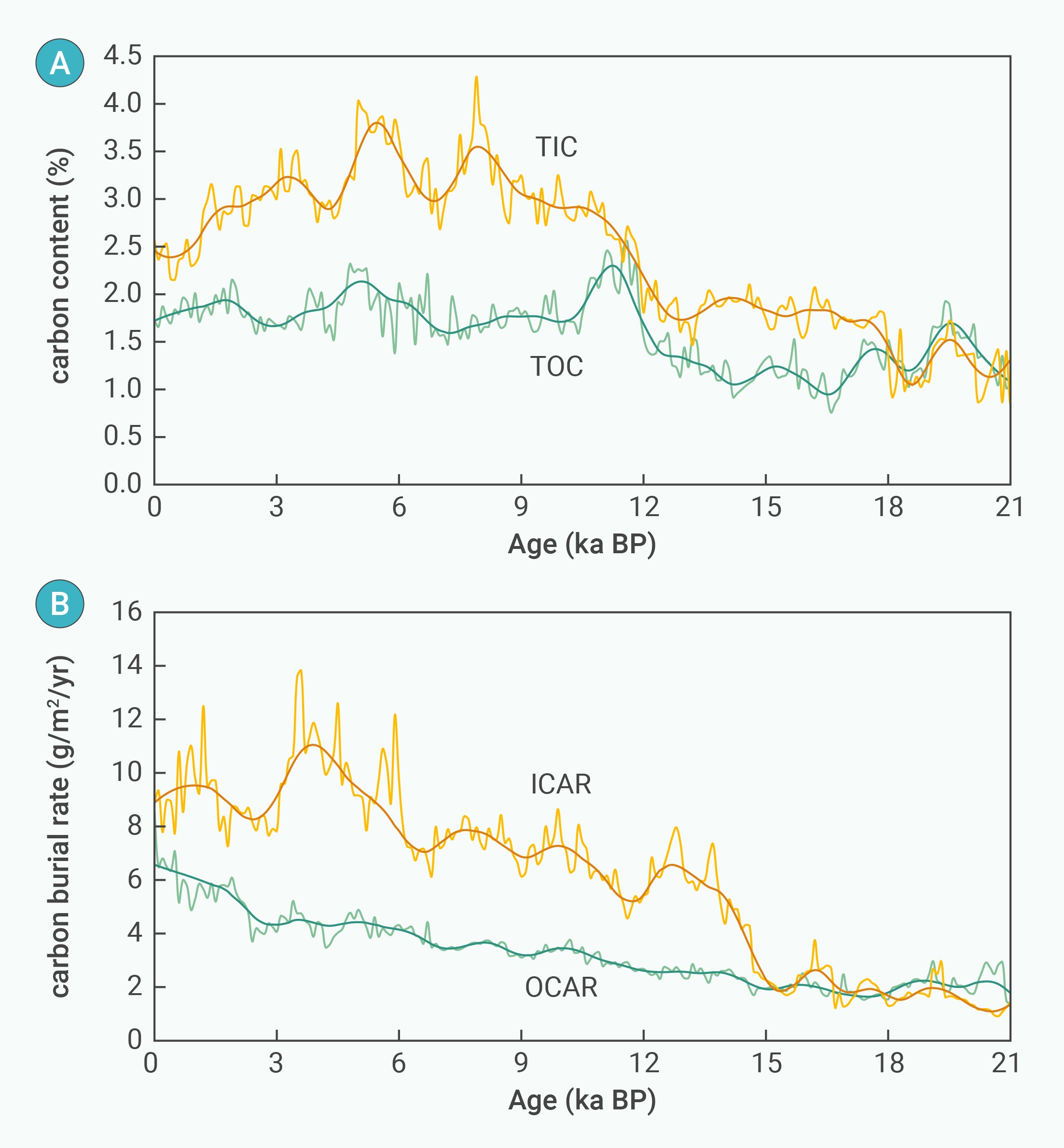
Figure 4.
Temporal variations in total organic carbon (TOC) and total inorganic carbon (TIC) content, as well as organic carbon burial rates (OCAR) and inorganic carbon burial rates (ICAR), in lake sediments from global closed basins since the LGM
-
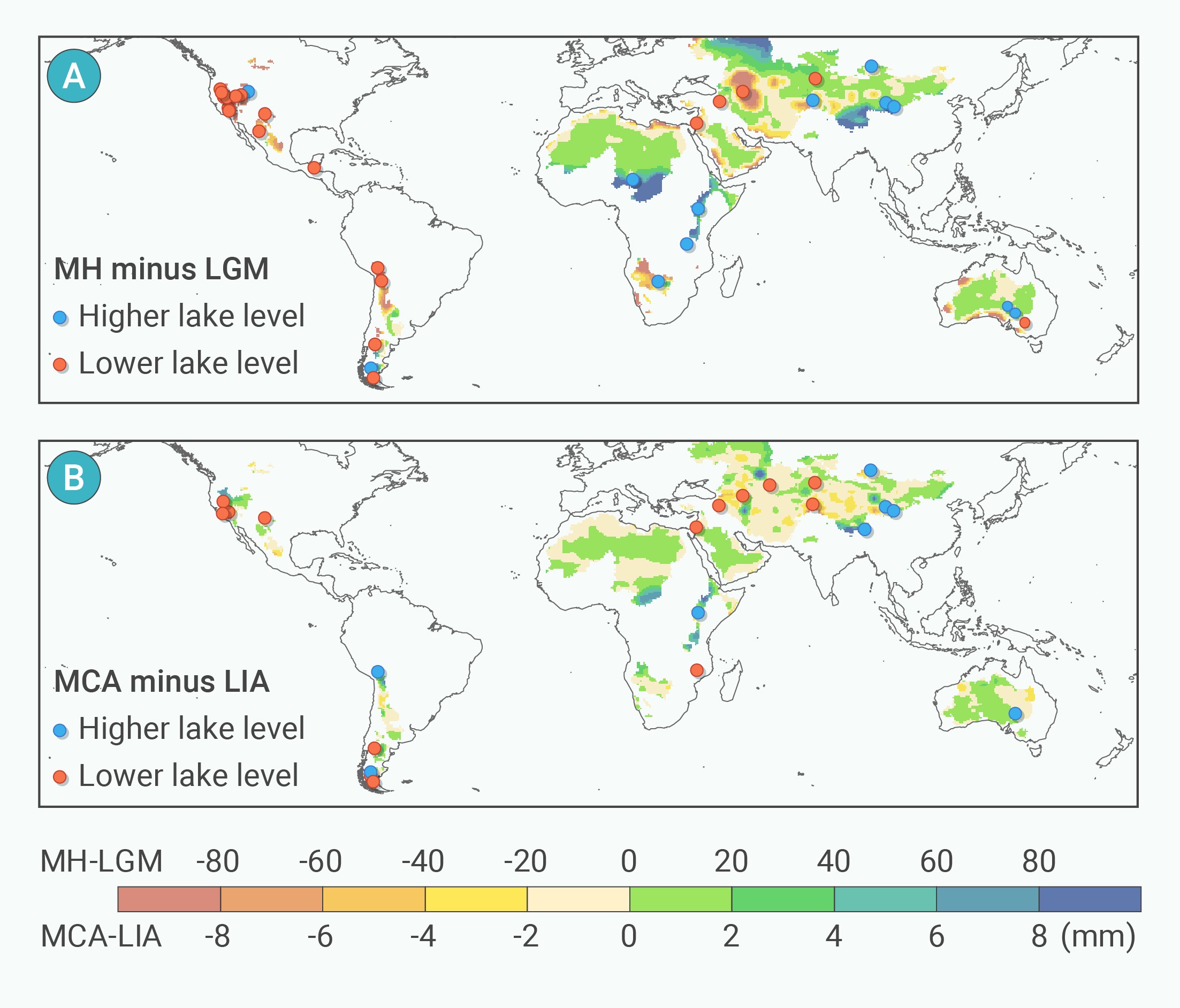
Figure 5.
Lake level changes in global closed basins, expressed as differences between the MH and LGM (a) and between the MCA and LIA (b)
-
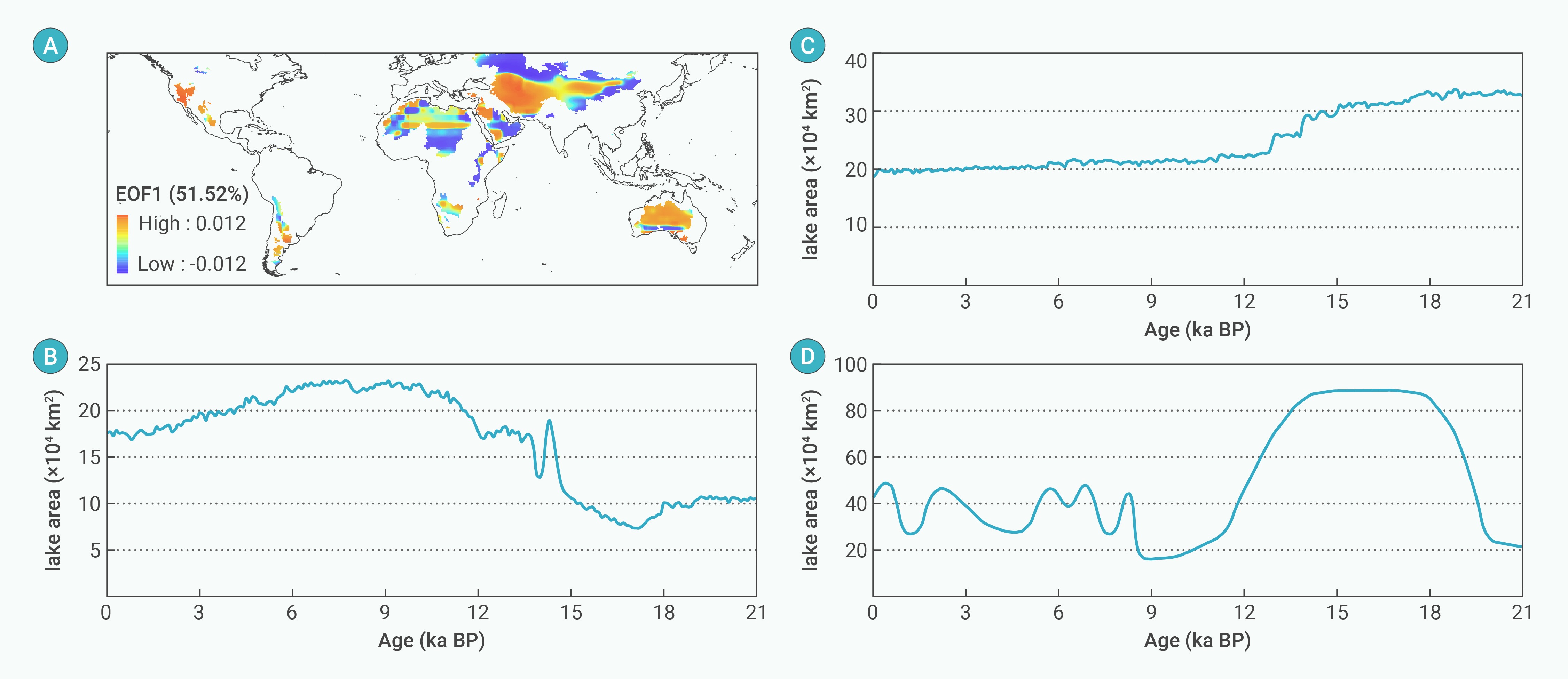
Figure 6.
Lake evolution pattern and area calculation results
-
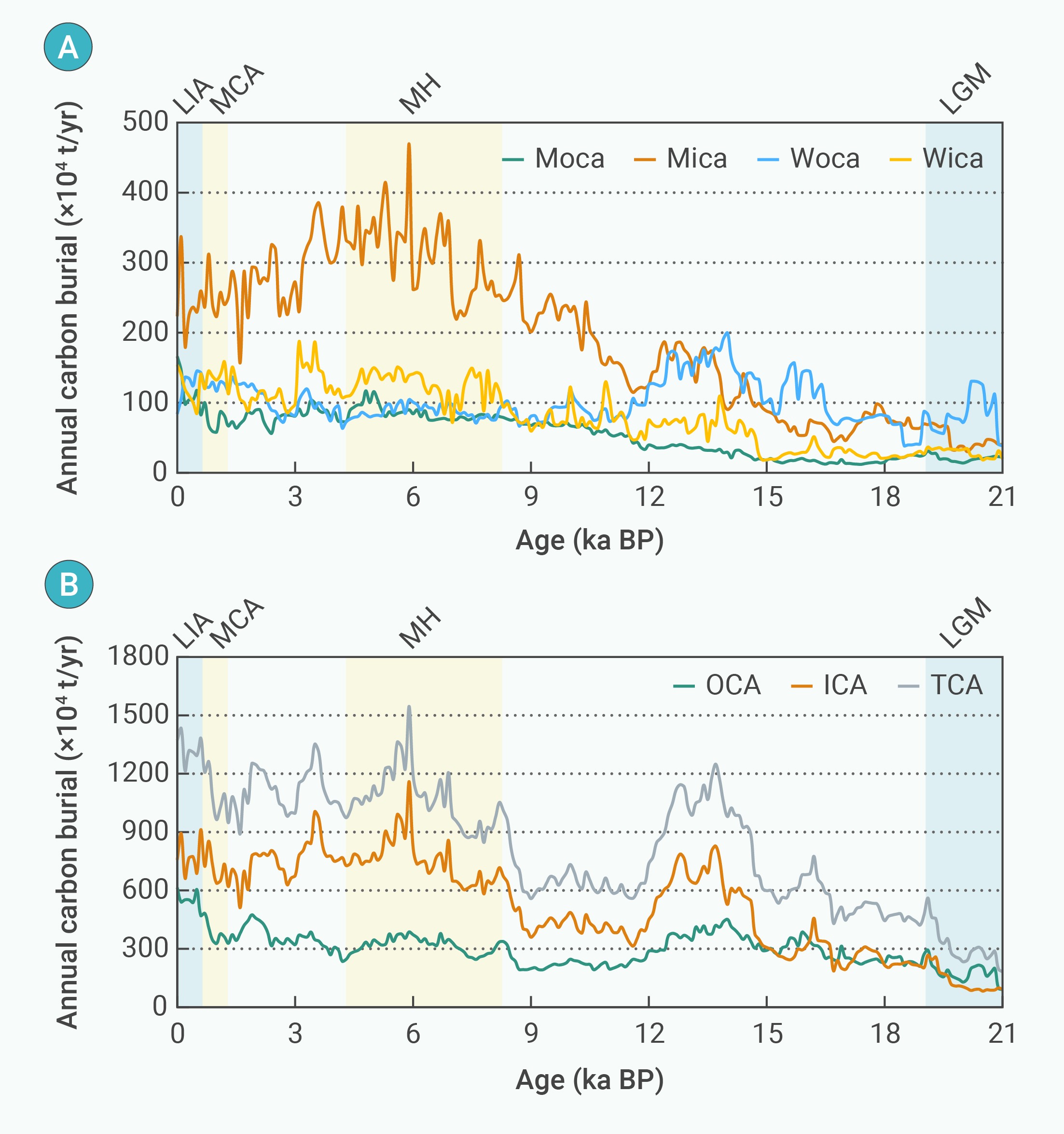
Figure 7.
Temporal variations in Lake carbon burial in westerlies-controlled closed basins, monsoon-influenced closed basins and global closed basins since the LGM
-
Figure 8.
Future hydroclimate and carbon burial changes
