
-
GRAPHICAL ABSTRACT
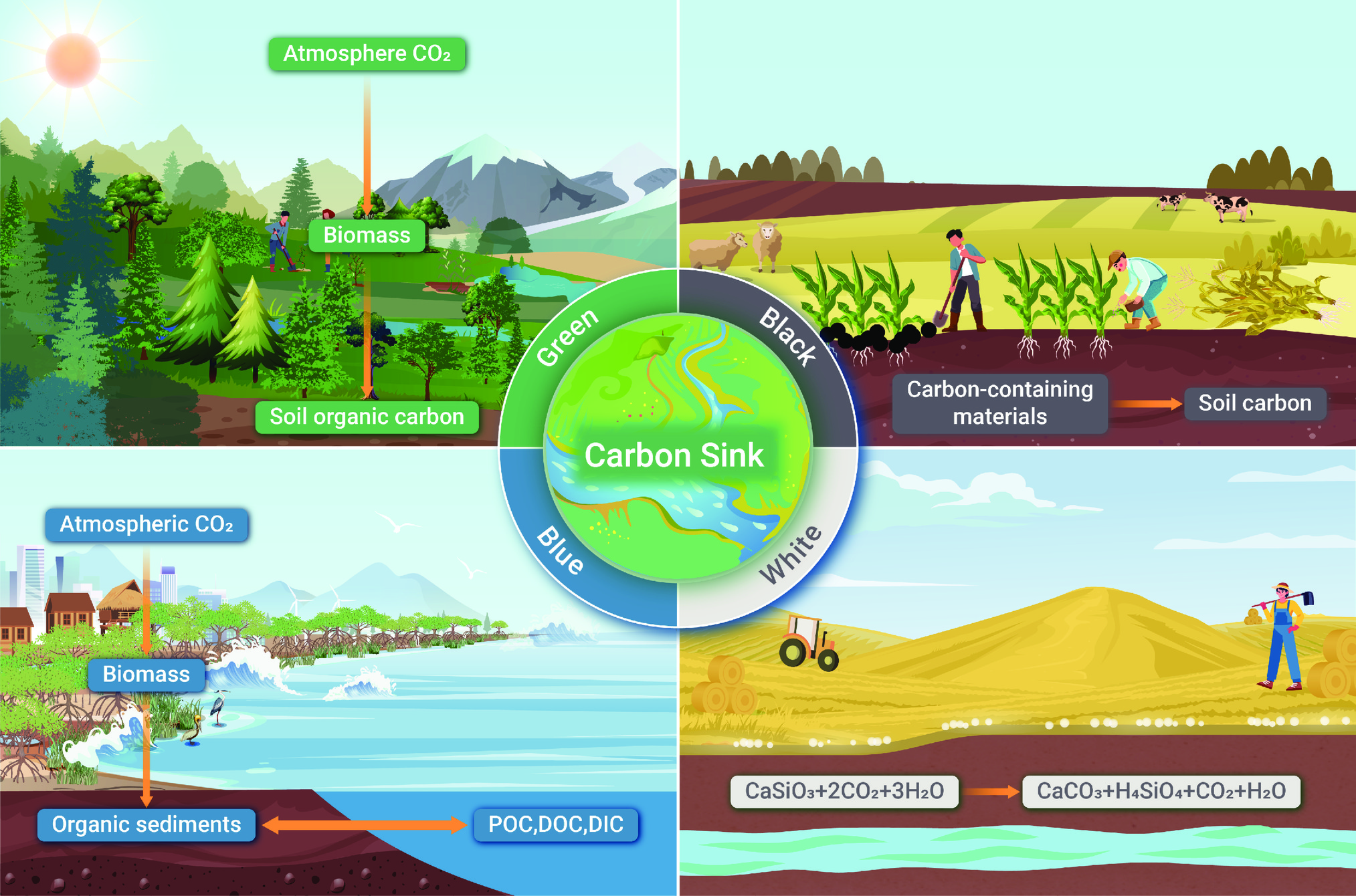
 DownLoad:
Full size image
DownLoad:
Full size image
-
PUBLIC SUMMARY
-
Enhancing terrestrial ecosystem carbon sinks is an effective strategy for achieving carbon neutrality.
Previous classifications of carbon sinks are often abstract and lack systematic descriptions.
This review introduces a new concept of four colours of carbon sinks across different ecosystems.
Nature-based solutions and their potential for enhancing the four colours of carbon sinks are identified.
Potential, costs, risks, and social acceptance of carbon sinks of these colours in China are also discussed.
-
-
ABSTRACT
Terrestrial ecosystems are important carbon (C) sinks that absorb 31% of anthropogenic carbon dioxide (CO2) emissions. Understanding the formation mechanisms and enhancement strategies of terrestrial carbon sinks is necessary for assessing their magnitude, spatiotemporal dynamics, and potential. This knowledge is also the foundation for implementing effective management measures and technological approaches to enhance terrestrial carbon sinks, which is essential for achieving carbon neutrality and limiting global warming to less than 1.5°C. Here we propose that the terrestrial carbon sinks can be systematically conceptualized into four colours, specifically green carbon, black carbon, blue carbon, and white carbon. We elucidate the definition, current distribution, and approaches for enhancing carbon sinks of these four colours. Our results indicate that the current four-colour carbon sink globally is 4.4 Pg C yr-1. The global potential to enhance the four-colour carbon sinks is estimated to be 11.9 ± 2.2 Pg C yr-1. Using China as a case study, where its current four-colour carbon sink amounts to 0.74 Pg C yr-1, we also introduce the approaches to enhancing carbon sinks of these colours, along with their mitigation potential, costs, environmental risks, and social acceptance. Finally, we highlight priority research areas for future studies to advance the scientific and practical understanding of terrestrial carbon sinks. -

-
REFERENCES
[1] IPCC (2023). Summary for Policymakers. In: Climate Change 2023: Synthesis Report. Contribution of Working Groups I, II and III to the Sixth Assessment Report of the Intergovernmental Panel on Climate Change [Core Writing Team, H. Lee and J. Romero (eds.)]. IPCC, Geneva, Switzerland, pp. 1-34. [2] United Nations Framework Convention on Climate Change (2015). COP 21 Climate Agreement (UNFCCC, Paris) Available at unfccc.int/resource/docs/2015/cop21/eng/l09r01.pdf Accessed June 20, 2017. [3] Friedlingstein P., O’Sullivan M., Jones M.W., et al. (2025). Global Carbon Budget 2024. Earth Syst. Sci. Data 17:965−1039. DOI:10.5194/essd-17-965-2025 [4] IPCC (2021). International panel on climate change: The physical science basis – the working group I contribution to the sixth assessment report addresses the most up-to-date physical understanding of the climate system and climate change, bringing together the latest advances in climate science. https://www.ipcc.ch/report/sixth-assessment-report-working-group-i/ [5] Wang F., Harindintwali J.D., Yuan Z., et al. (2021). Technologies and perspectives for achieving carbon neutrality. The Innovation 2:100180. DOI:10.1016/j.xinn.2021.100180 [6] Keenan T.F. and Williams C.A. (2018). The terrestrial carbon sink. Annu. Rev. Env. Resour. 43:219−243. DOI:10.1146/annurev-environ-102017-030204 [7] Piao S., Yue C., Ding J., et al. (2022). Perspectives on the role of terrestrial ecosystems in the “carbon neutrality” strategy. Sci. China Earth Sci 65:1178−1186. DOI:10.1007/s11430-022-9926-6 [8] Sha Z., Bai Y., Li R., et al. (2022). The global carbon sink potential of terrestrial vegetation can be increased substantially by optimal land management. Commun. Earth Environ. 3:8. DOI:10.1038/s43247-021-00333-1 [9] Zhang W., Shao Y., Zou X., et al. (2024). Fluctuating “soil CO2-lake” is key for understanding global climate change. Innovation 5:100642. DOI:10.1016/j.xinn.2024.100642 [10] Walker W.S., Gorelik S.R., Cook-Patton S.C., et al. (2022). The global potential for increased storage of carbon on land. Proc. Natl. Acad. Sci. U S A 119:e2111312119. DOI:10.1073/pnas.2111312119 [11] Ballantyne A.P., Alden C.B., Miller J.B., et al. (2012). Increase in observed net carbon dioxide uptake by land and oceans during the past 50 years. Nature 488:70−72. DOI:10.1038/nature11299 [12] Goymer P. (2018). A trillion trees. Nat. Ecol. Evol. 2:208−209. DOI:10.1038/s41559-018-0464-z [13] Lippke B., Puettmann M., Oneil E., et al. (2021). The plant a trillion trees campaign to reduce global warming – fleshing out the concept. J. Sustain. Forest. 40:1−31. DOI:10.1080/10549811.2021.1894951 [14] Yang Y., Shi Y., Sun W., et al. (2022). Terrestrial carbon sinks in China and around the world and their contribution to carbon neutrality. Sci. China Life Sci. 65:861−895. DOI:10.1007/s11427-021-2045-5 [15] Zinke L. (2020). The colours of carbon. Nat. Rev. Earth Env. 1:141−141. DOI:10.1038/s43017-020-0037-y [16] Harris N.L., Gibbs D.A., Baccini A., et al. (2021). Global maps of twenty-first century forest carbon fluxes. Nat. Clim. Change 11:234−240. DOI:10.1038/s41558-020-00976-6 [17] Pan Y., Birdsey R.A., Fang J., et al. (2011). A large and persistent carbon sink in the world’s forests. Science 333:988−993. DOI:10.1126/science.120160 [18] Pan Y., Birdsey R.A., Phillips O.L., et al. (2024). The enduring world forest carbon sink. Nature 631:563−569. DOI:10.1038/s41586-024-07602-x [19] Pugh T.A.M., Lindeskog M., Smith B., et al. (2019). Role of forest regrowth in global carbon sink dynamics. Proc. Natl. Acad. Sci. U S A 116:4382−4387. DOI:10.1073/pnas.1810512116 [20] Chang J., Ciais P., Gasser T., et al. (2021). Climate warming from managed grasslands cancels the cooling effect of carbon sinks in sparsely grazed and natural grasslands. Nat. Commun. 12:118. DOI:10.1038/s41467-020-20406-7 [21] Sulla-Menashe D. and Friedl M.A. (2018). User guide to collection 6 MODIS land cover (MCD12Q1 and MCD12C1) product. Reston: USGS. [22] Mitsch W.J., Bernal B., Nahlik A.M., et al. (2013). Wetlands, carbon, and climate change. Landscape Ecol. 28:583−597. DOI:10.1007/s10980-012-9758-8 [23] Bertram C., Quaas M., Reusch T.B.H., et al. (2021). The blue carbon wealth of nations. Nat. Clim. Change 11:704−709. DOI:10.1038/s41558-021-01089-4 [24] Temmink R.J.M., Lamers L.P.M., Angelini C., et al. (2022). Recovering wetland biogeomorphic feedbacks to restore the world’s biotic carbon hotspots. Science 376:eabn1479. DOI:10.1126/science.abn1479 [25] Li J., Liu Y., Sun H., et al. (2019). Analysis of blue carbon in China’s coastal zone (in Chinese). Environ. Sci. Technol. 42:207−216. DOI:10.19672/j.cnki.1003-6504.2019.10.031 [26] Zhang S., Bai X., Zhao C., et al. (2021). Global CO2 consumption by silicate rock chemical weathering: its past and future. Earths Future. 9:e2020EF001938. DOI:10.1029/2020EF001938 [27] Li H., Wang S., Bai X., et al. (2018). Spatiotemporal distribution and national measurement of the global carbonate carbon sink. Sci. Total Environ. 643:157−170. DOI:10.1016/j.scitotenv.2018.06.196 [28] Zeng S., Liu Z. and Groves C. (2022). Large-scale CO2 removal by enhanced carbonate weathering from changes in land-use practices. Earth Sci. Rev. 225:103915. DOI:10.1016/j.earscirev.2021.103915 [29] Lee C.T.A., Jiang H., Dasgupta R., et al. (2019). A Framework for Understanding Whole-Earth Carbon Cycling. In Deep Carbon: Past to Present, B.N. Orcutt, I. Daniel, and R. Dasgupta, eds. (Cambridge University Press), pp. 313-357. [30] Li Y., Wang Y., Houghton R.A., et al. (2015). Hidden carbon sink beneath desert. Geophys. Res. Lett. 42:5880−5887. DOI:10.1002/2015gl064222 [31] Bing L., Ma M., Liu L., et al. (2023). An investigation of the global uptake of CO2 by lime from 1930 to 2020. Earth Syst. Sci. Data 15:2431−2444. DOI:10.5194/essd-15-2431-2023 [32] Guo R., Wang J., Bing L., et al. (2021). Global CO2 uptake by cement from 1930 to 2019. Earth Syst. Sci. Data 13:1791−1805. DOI:10.5194/essd-13-1791-2021 [33] Xi F., Davis S.J., Ciais P., et al. (2016). Substantial global carbon uptake by cement carbonation. Nat. Geosci. 9:880−883. DOI:10.1038/ngeo2840 [34] FAO (2020). Global forest resources assessment 2020: Main report. Rome. DOI:10.4060/ca9825en. [35] Mo L., Zohner C.M., Reich P.B., et al. (2023). Integrated global assessment of the natural forest carbon potential. Nature 624:92−101. DOI:10.1038/s41586-023-06723-z [36] Ghosh P.K. and Mahanta S.K. (2014). Carbon sequestration in grassland systems. Range Manag. Agrofor. 35:173−181. [37] Stewart A.J., Halabisky M., Babcock C., et al. (2024). Revealing the hidden carbon in forested wetland soils. Nat. Commun. 15:726. DOI:10.1038/s41467-024-44888-x [38] Carvalhais N., Forkel M., Khomik M., et al. (2014). Global covariation of carbon turnover times with climate in terrestrial ecosystems. Nature 514:213−217. DOI:10.1038/nature13731 [39] Valach A.C., Kasak K., Hemes K.S., et al. (2021). Productive wetlands restored for carbon sequestration quickly become net CO2 sinks with site-level factors driving uptake variability. PloS one 16:e0248398. DOI:10.1371/journal.pone.0248398 [40] Zhang L., Luo Y., Yu G., et al. (2010). Estimated carbon residence times in three forest ecosystems of eastern China: Applications of probabilistic inversion. J. Geophys. Res. Biogeo. 115:G01010. DOI:10.1029/2009JG001004 [41] Liao Z., Yue C., He B., et al. (2024). Growing biomass carbon stock in China driven by expansion and conservation of woody areas. Nat. Geosci. 17:1127−1134. DOI:10.1038/s41561-024-01569-0 [42] Yu Z., You W., Agathokleous E., et al. (2021). Forest management required for consistent carbon sink in China’s forest plantations. For. Ecosyst. 8:54. DOI:10.1186/s40663-021-00335-7 [43] Fang J., Yu G., Liu L., et al. (2018). Climate change, human impacts, and carbon sequestration in China. Proc. Natl. Acad. Sci. U S A 115:4015−4020. DOI:10.1073/pnas.1700304115 [44] Lu F., Hu H., Sun W., et al. (2018). Effects of national ecological restoration projects on carbon sequestration in China from 2001 to 2010. Proc. Natl. Acad. Sci. U S A 115:4039−4044. DOI:10.1073/pnas.1700294115 [45] Cheng K., Yang H., Tao S., et al. (2024). Carbon storage through China’s planted forest expansion. Nat. Commun. 15:4016. DOI:10.1038/s41467-024-48546-0 [46] He Y., Piao S., Ciais P., et al. (2024). Future land carbon removals in China consistent with national inventory. Nat. Commun. 15:10426. DOI:10.1038/s41467-024-54846-2 [47] Xu H., Yue C., Zhang Y., et al. (2023). Forestation at the right time with the right species can generate persistent carbon benefits in China. Proc. Natl. Acad. Sci. U S A 120:e2304988120. DOI:10.1073/pnas.2304988120 [48] Yu Z., Ciais P., Piao S., et al. (2022). Forest expansion dominates China’s land carbon sink since 1980. Nat. Commun. 13:5374. DOI:10.1038/s41467-022-32961-2 [49] Zhu Y., Wang D., Smith P., et al. (2022). What can the Glasgow Declaration on Forests bring to global emission reduction. Innovation 3:100307. DOI:10.1016/j.xinn.2022.100307 [50] Bastin J.F., Finegold Y., Garcia C., et al. (2020). The global tree restoration potential. Science 369:1066−1066. DOI:10.1126/science.aax0 [51] Bai Y. and Cotrufo M.F. (2022). Grassland soil carbon sequestration: Current understanding, challenges, and solutions. Science 377:603−608. DOI:10.1126/science.abo2380 [52] Austin K.G., Baker J.S., Sohngen B.L., et al. (2020). The economic costs of planting, preserving, and managing the world’s forests to mitigate climate change. Nat. Commun. 11:5946. DOI:10.1038/s41467-020-19578-z [53] Federici S., Tubiello F.N., Salvatore M., et al. (2015). New estimates of CO2 forest emissions and removals: 1990–2015. For. Ecol. Manag. 352:89−98. DOI:10.1016/j.foreco.2015.04.022 [54] Griscom B.W., Adams J., Ellis P.W., et al. (2017). Natural climate solutions. Proc. Natl. Acad. Sci. U S A 114:11645−11650. DOI:10.1073/pnas.1710465114 [55] Houghton R.A. and Nassikas A.A. (2018). Negative emissions from stopping deforestation and forest degradation, globally. Glob. Chang. Biol. 24:350−359. DOI:10.1111/gcb.13876 [56] Nabuurs G.J., Mrabet R., Abu Hatab A., et al. (2022). Agriculture, Forestry and Other Land Uses (AFOLU). In IPCC, 2022: Climate Change 2022: Mitigation of Climate Change. Contribution of Working Group III to the Sixth Assessment Report of the Intergovernmental Panel on Climate Change[P.R. Shukla, J. Skea, R. Slade, A. Al Khourdajie, R. van Diemen, D. McCollum, M. Pathak, S. Some, P. Vyas, R. Fradera, M. Belkacemi, A. Hasija, G. Lisboa, S. Luz, J. Malley, (eds.)]. Cambridge University Press, Cambridge, UK and New York, NY, USA. DOI:10.1017/9781009157926.009. [57] Roe S., Streck C., Beach R., et al. (2021). Land-based measures to mitigate climate change: Potential and feasibility by country. Glob. Chang. Biol. 27:6025−6058. DOI:10.1111/gcb.15873 [58] Roe S., Streck C., Obersteiner M., et al. (2019). Contribution of the land sector to a 1.5°C world. Nat. Clim. Change 9:817-828. DOI:10/ggcfwn. [59] Doelman J.C., Stehfest E., Vuuren D.P., et al. (2020). Afforestation for climate change mitigation: Potentials, risks and trade‐offs. Glob. Chang. Biol. 26:1576−1591. DOI:10.1111/gcb.14887 [60] Fuss S., Lamb W.F., Callaghan M.W., et al. (2018). Negative emissions—Part 2: Costs, potentials and side effects. Environ. Res. Lett. 13:063002. DOI:10.1088/1748-9326/aabf9f [61] Humpenöder F., Popp A., Dietrich J.P., et al. (2014). Investigating afforestation and bioenergy CCS as climate change mitigation strategies. Environ. Res. Lett. 9:064029. DOI:10.1088/1748-9326/9/6/064029 [62] Kreidenweis U., Humpenoeder F., Stevanovic M., et al. (2016). Afforestation to mitigate climate change: impacts on food prices under consideration of albedo effects. Environ. Res. Lett. 11:085001. DOI:10.1088/1748-9326/11/8/085001 [63] Lenton T.M. (2010). The potential for land-based biological CO2 removal to lower future atmospheric CO2 concentration. Carbon Manag. 1:145−160. DOI:10.4155/cmt.10.12 [64] Lenton T.M. (2014). The global potential for carbon dioxide removal. In Geoengineering of the Climate System, R.M. Harrison, and R.E. Hester, eds. The Royal Society of Chemistry, 52-79. DOI:10.1039/9781782621225-00052. [65] Smith P., Davis S.J., Creutzig F., et al. (2016). Biophysical and economic limits to negative CO2 emissions. Nat. Clim. Chang. 6:42−50. DOI:10.1038/nclimate2870 [66] Sonntag S., Pongratz J., Reick C.H., et al. (2016). Reforestation in a high-CO2 world—Higher mitigation potential than expected, lower adaptation potential than hoped for. Geophys. Res. Lett. 43:6546−6553. DOI:10.1002/2016GL068824 [67] Bossio D.A., Cook-Patton S.C., Ellis P.W., et al. (2020). The role of soil carbon in natural climate solutions. Nat. Sustain. 3:391−398. DOI:10.1038/s41893-020-0491-z [68] Griscom B.W., Busch J., Cook-Patton S.C., et al. (2020). National mitigation potential from natural climate solutions in the tropics. Phil. Trans. R. Soc. B 375:20190126. DOI:10.1098/rstb.2019.0126 [69] Paustian K., Lehmann J., Ogle S., et al. (2016). Climate-smart soils. Nature 532:49−57. DOI:10.1038/nature17174 [70] IPCC (2019). Summary for Policymakers. In: IPCC Special Report on the Ocean and Cryosphere in a Changing Climate [H.-O. Pörtner, D.C. Roberts, V. Masson-Delmotte, P. Zhai, M. Tignor, E. Poloczanska, K. Mintenbeck, A. Alegría, M. Nicolai, A. Okem, J. Petzold, B. Rama, N.M. Weyer (eds.)]. Cambridge University Press, Cambridge, UK and New York, NY, USA, pp. 3–35. DOI:10.1017/9781009157964.001. [71] Humpenöder F., Karstens K., Lotze-Campen H., et al. (2020). Peatland protection and restoration are key for climate change mitigation. Environ. Res. Lett. 15:104093. DOI:10.1088/1748-9326/abae2a [72] Lal R. (2004). Soil carbon sequestration to mitigate climate change. Geoderma 123:1−22. DOI:10.1016/j.geoderma.2004.01.032 [73] Zomer R.J., Bossio D.A., Sommer R., et al. (2017). Global sequestration potential of increased organic carbon in cropland soils. Sci. Rep. 7:15554. DOI:10.1038/s41598-017-15794-8 [74] Dickie A., Streck C., Roe S., et al. (2014). Strategies for Mitigating Climate Change in Agriculture. https://www.climateandlandusealliance.org/reports/strategies-for-mitigating-climate-change-in-agriculture/. [75] Poeplau C. and Don A. (2015). Carbon sequestration in agricultural soils via cultivation of cover crops - A meta-analysis. Agric. Ecosyst. Environ. 200:33−41. DOI:10.1016/j.agee.2014.10.024 [76] Qiu T., Shi Y., Peñuelas J., et al. (2024). Optimizing cover crop practices as a sustainable solution for global agroecosystem services. Nat. Commun. 15:10617. DOI:10.1038/s41467-024-54536-z [77] Powlson D.S., Stirling C.M., Jat M.L., et al. (2014). Limited potential of no-till agriculture for climate change mitigation. Nat. Clim. Chang. 4:678−683. DOI:10.1038/nclimate2292 [78] Lee J.W. and Day D.M. (2013). Smokeless biomass pyrolysis for producing biofuels and biochar as a possible arsenal to control climate change. In Advanced Biofuels and Bioproducts, J.W. Lee, ed. (Springer New York), pp. 23-34. DOI:10.1007/978-1-4614-3348-4_3. [79] Lehmann J., Cowie A., Masiello C.A., et al. (2021). Biochar in climate change mitigation. Nat. Geosci. 14:883−892. DOI:10.1038/s41561-021-00852-8 [80] Lehmann J., Gaunt J. and Rondon M. (2006). Bio-char Sequestration in terrestrial ecosystems—A review. Mitig. Adapt. Strateg. Glob. Chang. 11:403−427. DOI:10.1007/s11027-005-9006-5 [81] Roberts K.G., Gloy B.A., Joseph S., et al. (2010). Life cycle assessment of biochar systems: estimating the energetic, economic, and climate change potential. Environ. Sci. Technol. 44:827−833. DOI:10.1021/es902266r [82] Smith P. (2016). Soil carbon sequestration and biochar as negative emission technologies. Glob. Chang. Biol. 22:1315−1324. DOI:10.1111/gcb.13178 [83] Woolf D., Amonette J.E., Street-Perrott F.A., et al. (2010). Sustainable biochar to mitigate global climate change. Nat. Commun. 1:56. DOI:10.1038/ncomms1053 [84] Chapman M., Walker W.S., Cook-Patton S.C., et al. (2020). Large climate mitigation potential from adding trees to agricultural lands. Glob. Chang. Biol. 26:4357−4365. DOI:10.1111/gcb.15121 [85] Lorenz K. and Lal R. (2014). Soil organic carbon sequestration in agroforestry systems. A review. Agron. Sustain. Dev. 34:443−454. DOI:10.1007/s13593-014-0212-y [86] Bindoff N.L., Cheung W.W.L., Kairo J.G., et al. (2019). Changing ocean, marine ecosystems, and dependent communities. In: IPCC Special Report on the Ocean and Cryosphere in a Changing Climate [H.-O. Pörtner, D.C. Roberts, V. Masson-Delmotte, P. Zhai, M. Tignor, E. Poloczanska, K. Mintenbeck, A. Alegría, M. Nicolai, A. Okem, J. Petzold, B. Rama, N.M. Weyer (eds.)]. Cambridge University Press, Cambridge, UK and New York, NY, USA, pp. 447-587. DOI:10.1017/9781009157964.007. [87] Howard J., Sutton-Grier A., Herr D., et al. (2017). Clarifying the role of coastal and marine systems in climate mitigation. Front. Eco. Environ. 15:42−50. DOI:10.1002/fee.1451 [88] Pendleton L., Donato D.C., Murray B.C., et al. (2012). Estimating global “blue carbon” emissions from conversion and degradation of vegetated coastal ecosystems. PloS One 7:e43542. DOI:10.1371/journal.pone.0043542 [89] Macreadie P.I., Costa M.D.P., Atwood T.B., et al. (2021). Blue carbon as a natural climate solution. Nat. Rev. Earth. Env. 2:826−839. DOI:10.1038/s43017-021-00224-1 [90] Beerling D.J., Kantzas E.P., Lomas M.R., et al. (2020). Potential for large-scale CO2 removal via enhanced rock weathering with croplands. Nature 583:242−248. DOI:10.1038/s41586-020-2448-9 [91] Goll D.S., Ciais P., Amann T., et al. (2021). Potential CO2 removal from enhanced weathering by ecosystem responses to powdered rock. Nat. Geosci. 14:545−549. DOI:10.1038/s41561-021-00798-x [92] Kohler P., Hartmann J. and Wolf-Gladrow D.A. (2010). Geoengineering potential of artificially enhanced silicate weathering of olivine. Proc. Natl. Acad. Sci. U S A 107:20228−20233. DOI:10.1073/pnas.1000545107 [93] Strefler J., Amann T., Bauer N., et al. (2018). Potential and costs of carbon dioxide removal by enhanced weathering of rocks. Environ. Res. Lett. 13:034010. DOI:10.1088/1748-9326/aaa9c4 [94] Knapp W.J. and Tipper E.T. (2022). The efficacy of enhancing carbonate weathering for carbon dioxide sequestration. Front. Clim. 4. DOI:10.3389/fclim.2022.928215. [95] Li Y., Zhang C., Wang N., et al. (2017). Substantial inorganic carbon sink in closed drainage basins globally. Nat. Geosci. 10:501−506. DOI:10.1038/ngeo2972 [96] Pan S.Y., Chen Y.H., Fan L.S., et al. (2020). CO2 mineralization and utilization by alkaline solid wastes for potential carbon reduction. Nat. Sustainability 3:399−405. DOI:10.1038/s41893-020-0486-9 [97] Pan S.Y., Chung T.C., Ho C.C., et al. (2017). CO2 mineralization and utilization using steel slag for establishing a waste-to-resource supply chain. Sci. Rep. 7:17227. DOI:10.1038/s41598-017-17648-9 [98] Renforth P. (2019). The negative emission potential of alkaline materials. Nat. Commun. 10:1401. DOI:10.1038/s41467-019-09475-5 [99] Kuhlbusch T.A.J. (1998). Black carbon and the carbon cycle. Science 280:1903−1904. DOI:10.1126/science.280.5371.1903 [100] Bond T.C., Doherty S.J., Fahey D.W., et al. (2013). Bounding the role of black carbon in the climate system: A scientific assessment. J. Geophys. Res. Atmos. 118:5380−5552. DOI:10.1002/jgrd.50171 [101] Liang F., Li J., Yang X., et al. (2016). Three-decade long fertilization-induced soil organic carbon sequestration depends on edaphic characteristics in six typical croplands. Sci. Rep. 6:30350. DOI:10.1038/srep30350 [102] Pan G. and Zhao Q. (2005). Study on evolution of organic carbon stock in agricultural soils of China: facing the challenge of global change and food security (in Chinese). Advances in Earth Science 20:384−393. DOI:10.11867/j.issn.1001-8166.2005.04.0384 [103] Schmidt H.P., Abiven S., Hageman N., et al. (2022). Permanence of soil applied biochar. An executive summary for Global Biochar Carbon Sink certification, the Biochar Journal 2022, Arbaz, Switzerland, www.biochar-journal.org/en/ct/109, pp 69-74. [104] Gross A. and Glaser B. (2021). Meta-analysis on how manure application changes soil organic carbon storage. Sci. Rep. 11:5516. DOI:10.1038/s41598-021-82739-7 [105] Xia L., Lam S.K., Yan X., et al. (2017). How does recycling of livestock manure in agroecosystems affect crop productivity, reactive nitrogen losses, and soil carbon balance. Environ. Sci. Technol. 51:7450−7457. DOI:10.1021/acs.est.6b06470 [106] Schoeneberger M.M. (2009). Agroforestry: working trees for sequestering carbon on agricultural lands. Agrofor. Syst. 75:27−37. DOI:10.1007/s10457-008-9123-8 [107] Chmura G.L., Anisfeld S.C., Cahoon D.R., et al. (2003). Global carbon sequestration in tidal, saline wetland soils. Global Biogeochem. Cycles 17:1111. DOI:10.1029/2002gb001917 [108] Kirwan M.L. and Mudd S.M. (2012). Response of salt-marsh carbon accumulation to climate change. Nature 489:550−553. DOI:10.1038/nature11440 [109] Nellemann C. (2009). Blue carbon. A UNEP rapid response assessment. [110] IPCC (2019). Climate Change and Land: an IPCC special report on climate change, desertification, land degradation, sustainable land management, food security, and greenhouse gas fluxes in terrestrial ecosystems [P.R. Shukla, J. Skea, E. Calvo Buendia, V. Masson-Delmotte, H.-O. Pörtner, D. C. Roberts, P. Zhai, R. Slade, S. Connors, R. van Diemen, M. Ferrat, E. Haughey, S. Luz, S. Neogi, M. Pathak, J. Petzold, J. Portugal Pereira, P. Vyas, E. Huntley, K. Kissick, M. Belkacemi, J. Malley, (eds.)]. In press. [111] Duarte C.M., Losada I.J., Hendriks I.E., et al. (2013). The role of coastal plant communities for climate change mitigation and adaptation. Nat. Clim. Change 3:961−968. DOI:10.1038/nclimate1970 [112] Wang F., Liu J., Qin G., et al. (2023). Coastal blue carbon in China as a nature-based solution toward carbon neutrality. Innovation 4:100481. DOI:10.1016/j.xinn.2023.100481 [113] McLeod E., Chmura G.L., Bouillon S., et al. (2011). A blueprint for blue carbon: toward an improved understanding of the role of vegetated coastal habitats in sequestering CO2. Front. Eco.Environ. 9:552−560. DOI:10.1890/110004 [114] Macreadie P.I., Anton A., Raven J.A., et al. (2019). The future of blue carbon science. Nat. Commun. 10:3998. DOI:10.1038/s41467-019-13126-0 [115] Wang F., Tang J., Ye S., et al. (2021). Blue carbon sink function of Chinese coastal wetlands and carbon neutrality strategy (in Chinese). Bulletin of Chinese Academy of Sciences 36:241−251. DOI:10.16418/j.issn.1000-3045.20210215101 [116] Han G. (2017). Effect of tidal action and drying-wetting cycles on carbon exchange in a salt marsh: progress and prospects (in Chinese). Acta Ecol. Sin. 37:8170−8178. DOI:10.5846/stxb201611182347 [117] Han G., Li J. and Qu W. (2021). Effects of nitrogen input on carbon cycle and carbon budget in a coastal salt marsh (in Chinese). Chin. J. Plant Eco. 45:321−333. DOI:10.17521/cjpe.2020.0353 [118] Radabaugh K.R., Moyer R.P., Chappel A.R., et al. (2018). Coastal blue carbon assessment of mangroves, salt marshes, and salt barrens in Tampa Bay, Florida, USA. Estuar. Coast. 41:1496−1510. DOI:10.1007/s12237-017-0362-7 [119] Han G., Song W., Li Y., et al. (2023). Enhancement of coastal blue carbon: concepts, techniques, and future suggestions (in Chinese). Bulletin of Chinese Academy of Sciences 38:492−503. DOI:10.16418/j.issn.1000-3045.20220619001 [120] Walker J.C.G., Hays P.B. and Kasting J.F. (1981). A negative feedback mechanism for the long-term stabilization of Earth’s surface temperature. J. Geophys. Res. 86:9776. DOI:10.1029/JC086iC10p09776 [121] Gaillardet J. and Galy A. (2008). Himalaya-carbon sink or source. Science 320:1727−1728. DOI:10.1126/science.1159279 [122] Liu Z., Dreybrodt W. and Liu H. (2011). Atmospheric CO2 sink: silicate weathering or carbonate weathering. Appl. Geochem. 26:S292−S294. DOI:10.1016/j.apgeochem.2011.03.085 [123] Liu Z., Macpherson G.L., Groves C., et al. (2018). Large and active CO2 uptake by coupled carbonate weathering. Earth Sci. Rev. 182:42−49. DOI:10.1016/j.earscirev.2018.05.007 [124] Zeng S., Liu Z. and Kaufmann G. (2019). Sensitivity of the global carbonate weathering carbon-sink flux to climate and land-use changes. Nat. Commun. 10:5749. DOI:10.1038/s41467-019-13772-4 [125] Beerling D.J., Leake J.R., Long S.P., et al. (2018). Farming with crops and rocks to address global climate, food and soil security. Nat. Plants 4:138−147. DOI:10.1038/s41477-018-0108-y [126] Schuiling R.D. and Krijgsman P. (2006). Enhanced weathering: an effective and cheap tool to sequester CO2. Clim. change 74:349−354. DOI:10.1007/s10584-005-3485-y [127] Seifritz W. (1990). CO2 disposal by means of silicates. Nature 345:486−486. DOI:10.1038/345486b0 [128] Lackner K.S., Wendt C.H., Butt D.P., et al. (1995). Carbon dioxide disposal in carbonate minerals. Energy 20:1153−1170. DOI:10.1016/0360-5442(95)00071-N [129] Meysman F.J. and Montserrat F. (2017). Negative CO2 emissions via enhanced silicate weathering in coastal environments. Biol. Lett. 13. DOI:10.1098/rsbl.2016.0905. [130] Sanei H., Rudra A., Przyswitt Z.M.M., et al. (2024). Assessing biochar’s permanence: An inertinite benchmark. Int. J. Coal. Geol. 281:104409. DOI:10.1016/j.coal.2023.104409 [131] Yu G., Zhu J., Xu L., et al. (2022). Technological approaches to enhance ecosystem carbon sink in China: Nature-based solutions (in Chinese). Bulletin of Chinese Academy of Sciences 37:490−501. DOI:10.16418/j.issn.1000-3045.20220121002 [132] Piao S., Fang J., Ciais P., et al. (2009). The carbon balance of terrestrial ecosystems in China. Nature 458:1009−1013. DOI:10.1038/nature07944 [133] Piao S., He Y., Wang X., et al. (2022). Estimation of China’s terrestrial ecosystem carbon sink: Methods, progress and prospects. Sci. China Earth Sci. 65:641−651. DOI:10.1007/s11430-021-9892-6 [134] Wang J., Feng L., Palmer P.I., et al. (2020). Large Chinese land carbon sink estimated from atmospheric carbon dioxide data. Nature 586:720−723. DOI:10.1038/s41586-020-2849-9 [135] Wang Y., Wang X., Wang K., et al. (2022). The size of the land carbon sink in China. Nature 603:E7−E9. DOI:10.1038/s41586-021-04255-y [136] Yue X., Zhou H., Cao Y., et al. (2024). Large potential of strengthening the land carbon sink in China through anthropogenic interventions. Sci. Bull. 69:2622−2631. DOI:10.1016/j.scib.2024.05.037 [137] Cai W., He N., Li M., et al. (2021). Carbon sequestration of Chinese forests from 2010 to 2060: spatiotemporal dynamics and its regulatory strategies. Sci. Bull. 67:836−843. DOI:10.1016/j.scib.2021.12.012 [138] Liu S., Wang H., Li H., et al. (2024). Projections of China’s forest carbon storage and sequestration and ways of their potential capacity enhancement (in Chinese). Scientia Silvae Sinicae 60:157−172. DOI:10.11707/j.1001-7488.LYKX20230206 [139] Zhang L., Zhou G., Ji Y., et al. (2016). Spatiotemporal dynamic simulation of grassland carbon storage in China. Sci. China Earth Sci. 59:1946−1958. DOI:10.1007/s11430-015-5599-4 [140] Lu M., Sheng L. and Zhang L. (2013). A review on carbon fluxes for typical wetlands in different climates of China (in Chinese). Wetland Science 11:114−120. DOI:10.13248/j.cnki.wetlandsci.2013.01.001 [141] Xiao D., Deng L., Kim D.G., et al. (2019). Carbon budgets of wetland ecosystems in China. Glob. Chang. Biol. 25:2061−2076. DOI:10.1111/gcb.14621 [142] Zhao Y., Xu S., Wang M., et al. (2018). Carbon sequestration potential in Chinese cropland soils: review, challenge, and research suggestions (in Chinese). Bulletin of Chinese Academy of Sciences 33:191−197. DOI:10.16418/j.issn.1000-3045.2018.02.009 [143] Zhou C., Mao Q., Xu X., et al. (2016). Preliminary analysis of c sequestration potential of blue carbon ecosystems on Chinese coastal zone (in Chinese). Sci Sin Vitae. 46:475−486. DOI:10.1360/N052016-00105 [144] Zeng S. and Liu Z. (2022). Karst-related carbon sink and the carbon neutral potential by carbonate liming in non-karst areas in China (in Chinese). Chin. Sci. Bull. 67:4116−4129. DOI:10.1360/TB-2022-0048 [145] Li H., Wang S., Bai X., et al. (2019). Spatiotemporal evolution of carbon sequestration of limestone weathering in China. Sci. China Earth Sci. 62:974−991. DOI:10.1007/s11430-018-9324-2 [146] Liu Z. and Zhao J. (2000). Contribution of carbonate rock weathering to the atmospheric CO2 sink. Environ. Geol. 39:1053−1058. DOI:10.1007/s002549900072 [147] Song X., Gao Y., Wen X., et al. (2016). Rock-weathering-related carbon sinks and associated ecosystem service functions in the karst critical zone in China (in Chinese). Acta Geogr. Sin. 71:1926−1938. DOI:10.11821/dlxb201611005 [148] Ge J., Zhang Z. and Lin B. (2023). Towards carbon neutrality: How much do forest carbon sinks cost in China. Environ. Impact Assess. Rev. 98:106949. DOI:10.1016/j.eiar.2022.106949 [149] Zhong W. and Xing Z. (2012). Analysis on cost and benefit of carbon sequestration in each province of China: based on afforestation and reforestation project (in Chinese). Chin. J. Popul. Resour. 22:33−41. DOI:10.3969/j.issn.1002-2104.2012.09.006 [150] Chang R. and Tang H. (2008). Sensitivity analysis on methods of estimating carbon sequestration in grassland ecosystem of Inner Mongolia, China (in Chinese). J. Plant Ecol. 32:810−814. DOI:10.3773/j.issn.1005-264x.2008.04.009 [151] Liu J. (2010). The unignorable and important role of grassland in response to global climate change (in Chinese). Acta Agrestia Sinica 18:1−4. [152] Hepburn C., Adlen E., Beddington J., et al. (2019). The technological and economic prospects for CO2 utilization and removal. Nature 575:87−97. DOI:10.1038/s41586-019-1681-6 [153] Zhou P., Hou H., Zhang H., et al. (2021). The development prospects and lmplementation suggestions of increasing soil carbon storage in the context of carbon neutrality (in Chinese). Environ. Prot. 49:63−67. DOI:10.14026/j.cnki.0253-9705.2021.16.014 [154] Li J., Hitch M., Power I.M., et al. (2018). Integrated mineral carbonation of ultramafic mine deposits-A review. Minerals 8:147. DOI:10.3390/min8040147 [155] Tang X., Zhao X., Bai Y., et al. (2018). Carbon pools in China’s terrestrial ecosystems: new estimates based on an intensive field survey. Proc. Natl. Acad. Sci. U S A 115:4021−4026. DOI:10.1073/pnas.1700291115 [156] Yao L., Liu T., Qin J., et al. (2024). Carbon sequestration potential of tree planting in China. Nat. Commun. 15:8398. DOI:10.1038/s41467-024-52785-6 [157] Ji C., Cao W., Chen Y., et al. (2016). Carbon balance and contribution of harvested wood products in China based on the production approach of the Intergovernmental Panel on Climate Change. Int. J. Environ. Res. Public Health 13:1132. DOI:10.3390/ijerph13111132 [158] Zhang X., Chen J., Dias A.C., et al. (2020). Improving carbon stock estimates for in-use harvested wood products by linking production and consumption—A global case study. Environ. Sci. Technol. 54:2565−2574. DOI:10.1021/acs.est.9b05721 [159] Zhang X., Yang H. and Chen J. (2018). Life-cycle carbon budget of China’s harvested wood products in 1900–2015. For. Policy Econ. 92:181−192. DOI:10.1016/j.forpol.2018.05.005 [160] Zhao J., Wei X., Diao J., et al. (2023). Exploring plausible contributions of end-use harvested wood products to store atmospheric carbon in China. Biomass Bioenergy 177:106934. DOI:10.1016/j.biombioe.2023.106934 [161] Johnston C.M.T. and Radeloff V.C. (2019). Global mitigation potential of carbon stored in harvested wood products. Proc. Natl. Acad. Sci. U S A 116:14526−14531. DOI:10.1073/pnas.1904231116 [162] Fang J., Geng X., Zhao X., et al. (2018). How many areas of grasslands are there in China (in Chinese). Chin. Sci. Bull. 63:1731−1739. DOI:10.1360/N972018-00032 [163] Zhu J., Sun Y., Zheng X., et al. (2023). A large carbon sink induced by the implementation of the largest afforestation program on Earth. Ecol. Process. 12:44. DOI:10.1186/s13717-023-00455-8 [164] Lu N., Tian H., Fu B., et al. (2022). Biophysical and economic constraints on China’s natural climate solutions. Nat. Clim. Change 12:847−853. DOI:10.1038/s41558-022-01432-3 [165] Yu Z., Liu S., Li H., et al. (2024). Maximizing carbon sequestration potential in Chinese forests through optimal management. Nat. Commun. 15:3154. DOI:10.1038/s41467-024-47143-5 [166] Deng L., Shangguan Z., Wu G., et al. (2017). Effects of grazing exclusion on carbon sequestration in China’s grassland. Earth-Sci. Rev. 173:84−95. DOI:10.1016/j.earscirev.2017.08.008 [167] Liu H., Li J., Li X., et al. (2015). Mitigating greenhouse gas emissions through replacement of chemical fertilizer with organic manure in a temperate farmland. Sci. Bull. 60:598−606. DOI:10.1007/s11434-014-0679-6 [168] Xu X., Cheng K., Wu H., et al. (2019). Greenhouse gas mitigation potential in crop production with biochar soil amendment-a carbon footprint assessment for cross-site field experiments from China. GCB Bioenergy 11:592−605. DOI:10.1111/gcbb.12561 [169] Yang Y., Su Y., He Z., et al. (2019). Transformation and distribution of straw-derived carbon in soil and the effects on soil organic carbon pool: A review (in Chinese). Chin. J. Appl. Ecol. 30:668−676. DOI:10.13287/j.1001-9332.201902.026 [170] Deng X., Teng F., Chen M., et al. (2024). Exploring negative emission potential of biochar to achieve carbon neutrality goal in China. Nat. Commun. 15:1085. DOI:10.1038/s41467-024-45314-y [171] Tian P., Li D., Lu H., et al. (2021). Trends, distribution, and impact factors of carbon footprints of main grains production in China. J. Cleaner Prod. 278:123347. DOI:10.1016/j.jclepro.2020.123347 [172] Ministry of Ecology and Environment of the People’s Republic of China. (2016). First Biennial Update Report on Climate Change of the People’s Republic of China. https://enlaw.zuel.edu.cn/upload/20240324/202403242258026877.pdf. [173] Wang X., Zhang H. and Han G. (2016). Carbon cycle and “blue carbon” potential in China’s coastal zone (in Chinese). Bulletin of Chinese Academy of Sciences 31:1218−1225. DOI:10.16418/j.issn.1000-3045.2016.10.012 [174] Barros V., Mastrandrea M., Abdrabo M., et al. (2014). Climate change 2014: impacts, adaptation, and vulnerability – IPCC WGII AR5 summary for policymakers. In pp. 1-32. [175] Jiang Z. and Yuan D. (1999). CO2 source-sink in karst processes in karst areas of China. Episodes 22:33−35. DOI:10.18814/epiiugs/1999/v22i1/005 [176] Yuan D. (1997). The carbon cycle in karst (in Chinese). Z. Geomorphol. - Suppl. 108:91−102. [177] The State Council of the People’s Republic of China. (2021). Opinions of the CPC Central Committee and the State Council on completely, accurately and comprehensively implementing the new development concept and doing a good job of carbon peak and carbon neutrality. https://www.gov.cn/zhengce/2021-10/24/content_5644613.htm. [178] The State Council of the People’s Republic of China. (2021). Action Plan for Carbon Peak by 2030. https://www.gov.cn/zhengce/content/2021-10/26/content_5644984.htm. [179] Liu Z. and Dreybrodt W. (2012). Comparison of carbon sequestration capacity between carbonate weathering and forests:The necessity to change traditional ideas and methods of study of carbon sinks (in Chinese). Carsologica Sinica 31:345−348. [180] Gao W., Chen Y. and Wang H. (2023). Enhanced silicate rock weathering—a new path of “carbon neutrality” (in Chinese). Adv. Earth Sci. 38:137−150. DOI:10.11867/j.issn.1001-8166.2022.093 [181] Beerling D.J., Epihov D.Z., Kantola I.B., et al. (2024). Enhanced weathering in the US Corn Belt delivers carbon removal with agronomic benefits. Proc. Natl. Acad. Sci. U S A 121:e2319436121. DOI:10.1073/pnas.2319436121 [182] Vandeginste V., Lim C. and Ji Y. (2024). Exploratory review on environmental aspects of enhanced weathering as a carbon dioxide removal method. Minerals 14:75. DOI:10.3390/min14010075 [183] Feng X., Fu B., Piao S., et al. (2016). Revegetation in China’s Loess Plateau is approaching sustainable water resource limits. Nat. Clim. Change 6:1019−1022. DOI:10.1038/nclimate3092 [184] Beerling D.J., Kantzas E.P., Lomas M.R., et al. (2025). Transforming US agriculture for carbon removal with enhanced weathering. Nature 638:425−434. DOI:10.1038/s41586-024-08429-2 [185] Shi Y., Yang C., Zhu J., et al. (2024). Estimation of national and provincial carbon emissions, terrestrial carbon sinks and their relative contribution to emission reductions during 1980~2020 (in Chinese). Sci. China Life Sci. 54:2459−2478. DOI:10.1360/SSV-2023-0214 [186] Jin L., Zhou H. and Liu R. (2022). Research on ecological protection compensation mechanism based on carbon sink value (in Chinese). Bulletin of Chinese Academy of Sciences 37:1623−1634. DOI:10.16418/j.issn.1000-3045.20220415001 -
ABOUT THIS ARTICLE
Cite this article:
Wang A., Liu Z., Kang R., et al. (2025). Four colours of carbon sinks in terrestrial ecosystems. The Innovation Geoscience 3:100162. https://doi.org/10.59717/j.xinn-geo.2025.100162
Welcome!
To request copyright permission to republish or share portions of our works, please visit Copyright Clearance Center's (CCC) Marketplace website at marketplace.copyright.com.
Export File
Citation
Wang A., Liu Z., Kang R., et al. (2025). Four colours of carbon sinks in terrestrial ecosystems. The Innovation Geoscience 3:100162. https://doi.org/10.59717/j.xinn-geo.2025.100162

Format
Content
-
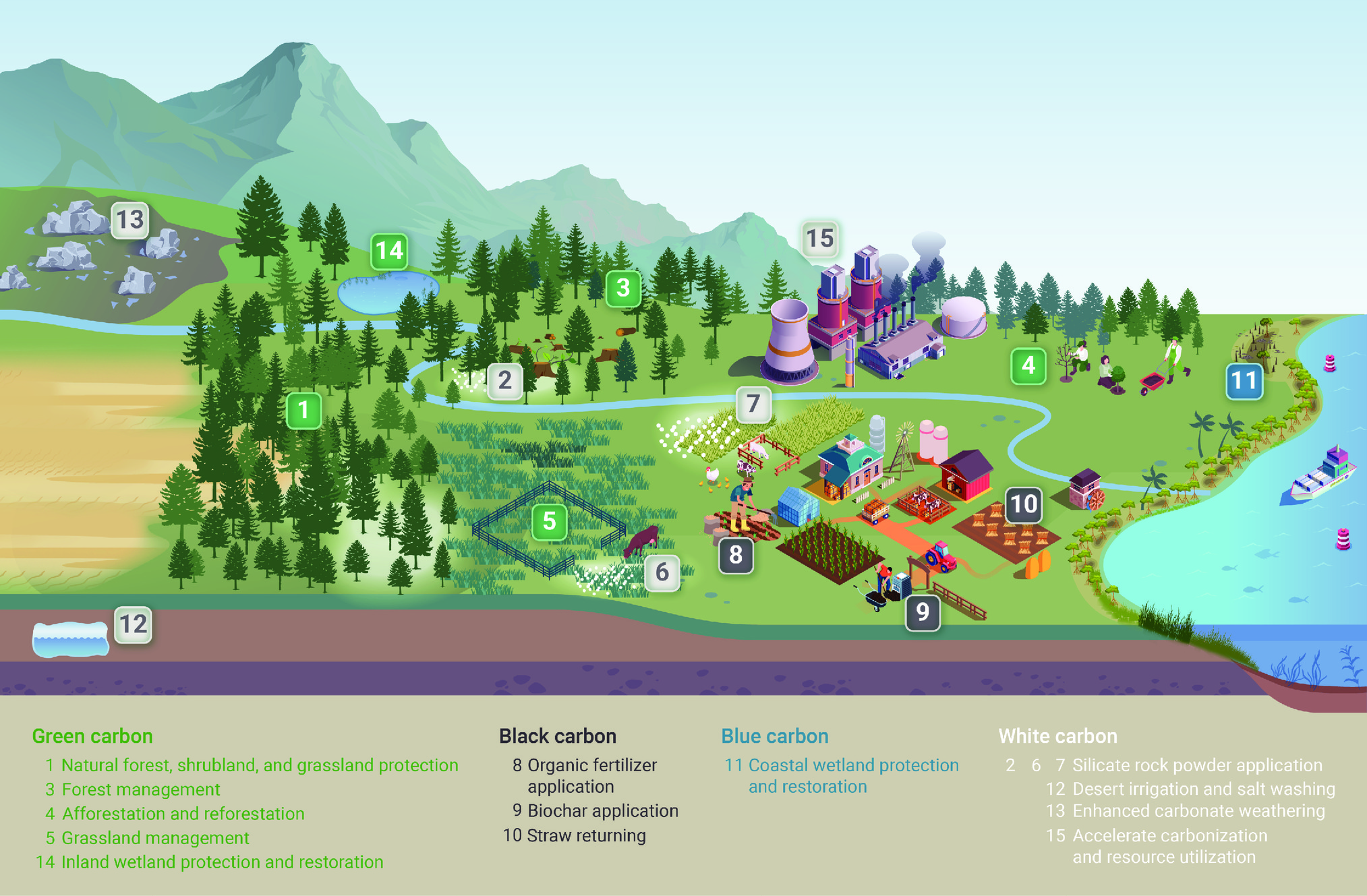
Figure 1.
Approaches to enhancing carbon sinks of four colours in terrestrial ecosystems.
-
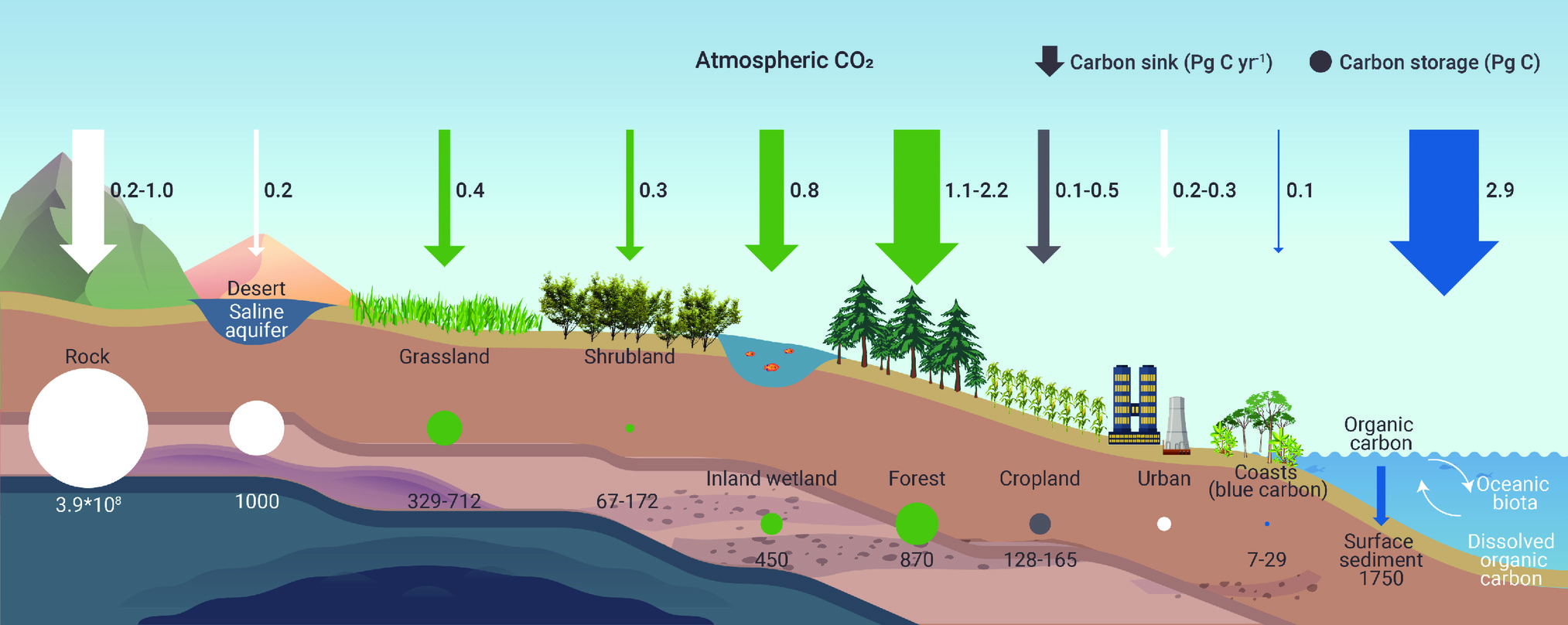
Figure 2.
Four colours of carbon sinks and their carbon storage in various terrestrial ecosystems globally
-
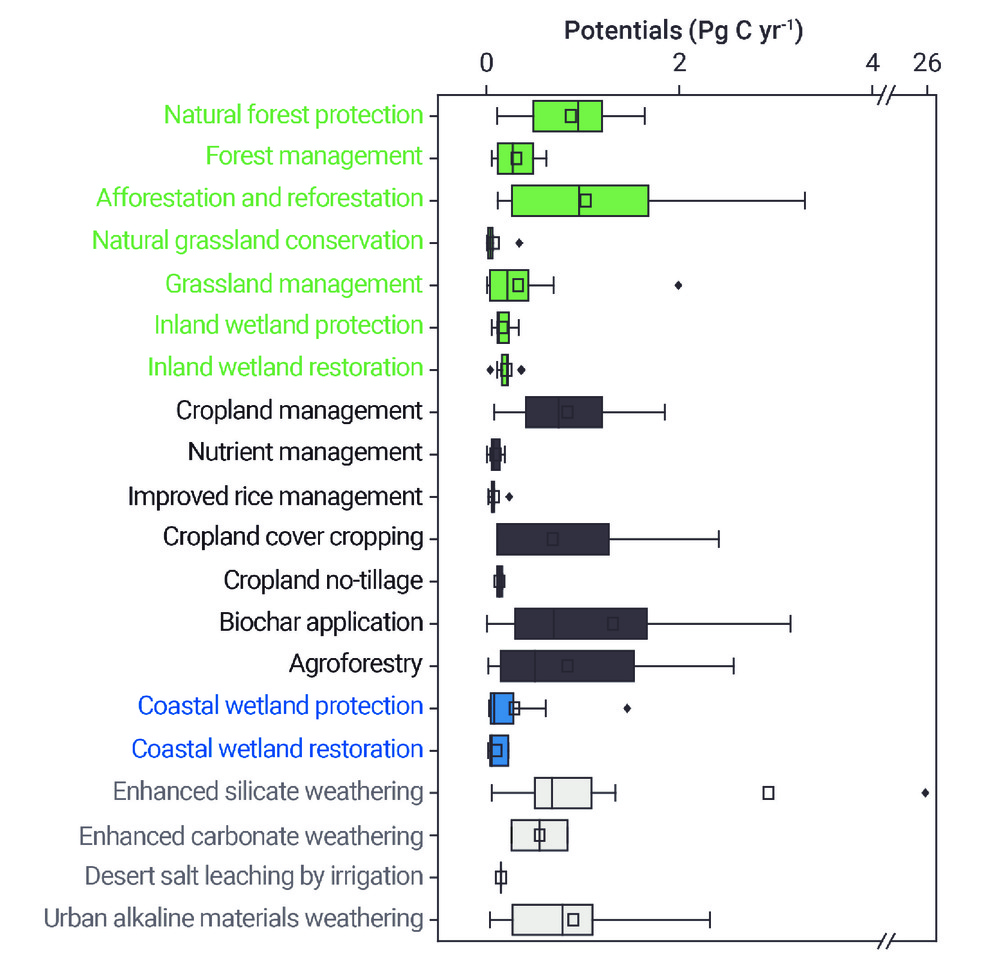
Figure 3.
Global potential for increasing carbon sinks of the four colours via different pathways
-
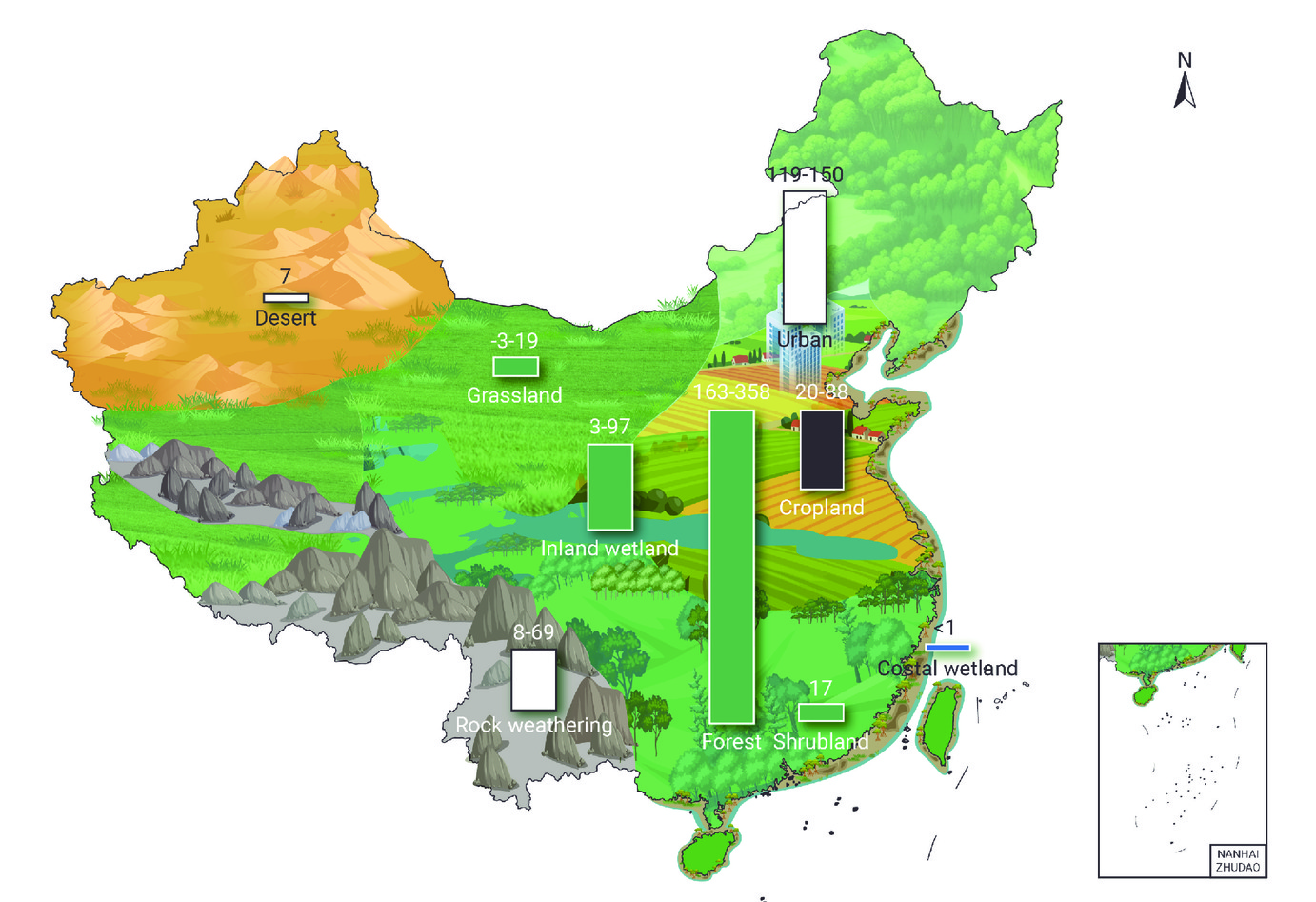
Figure 4.
Four colours of carbon sink (Tg C yr−1) in various terrestrial ecosystems in China
