
Contrasting vegetation productivity responses in arid and humid zones to recent changes in diurnal temperature range
-
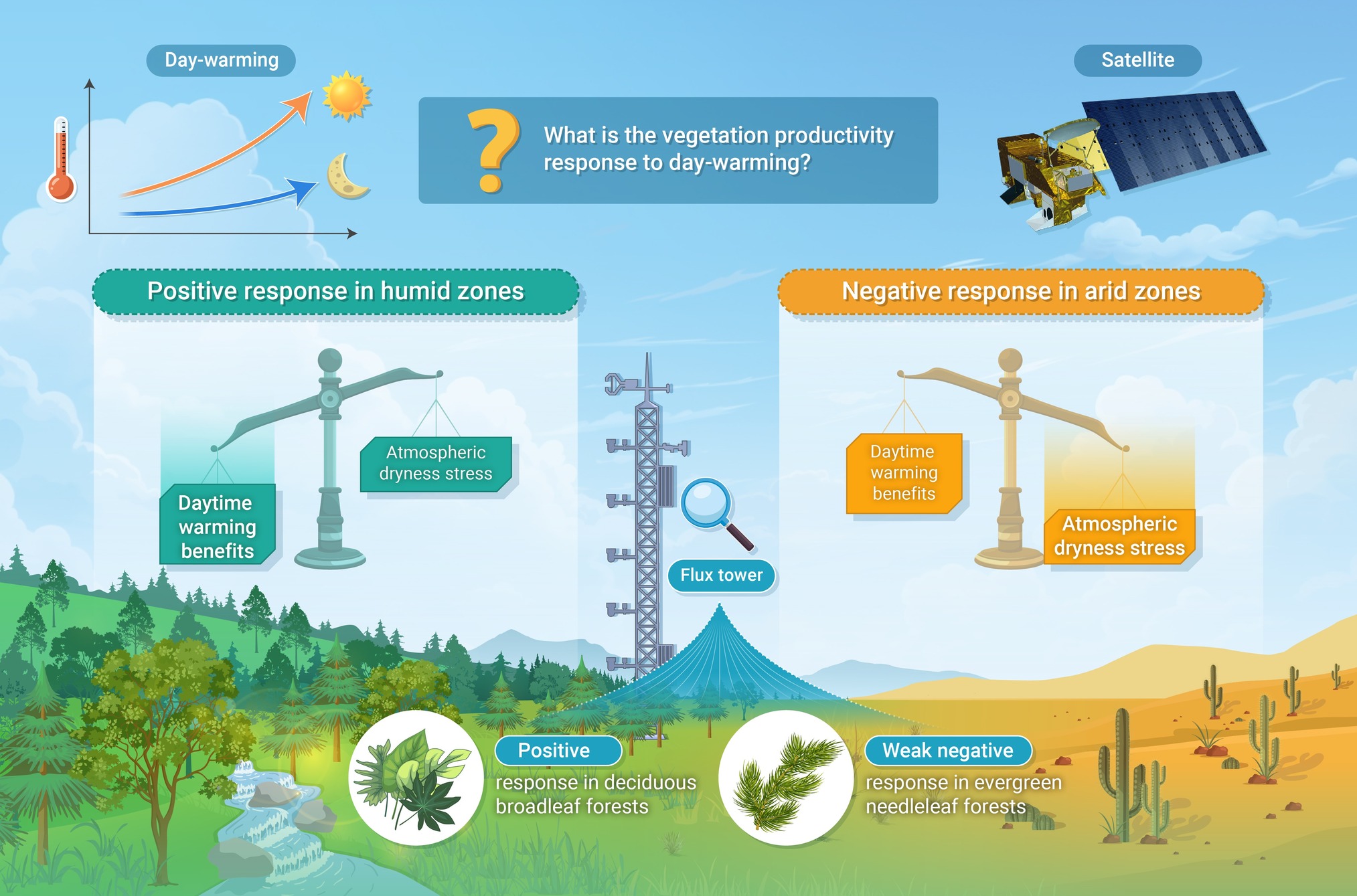
GRAPHICAL ABSTRACT
 DownLoad:
Full size image
DownLoad:
Full size image
-
PUBLIC SUMMARY
-
Diurnal temperature range (DTR) rose across the extratropical Northern Hemisphere during 2002-2021.
In humid zones, DTR increases have promoted vegetation productivity.
Vegetation productivity responds negatively to DTR change in arid zones.
Broadleaf and needleleaf forest ecosystems show contrasting productivity responses to DTR changes.
-
-
ABSTRACT
Biological and ecological processes regulating the ecosystem carbon cycle exhibit varying sensitivities to temperature fluctuations during the day and night. Consequently, the diurnal temperature range (DTR)—the difference between daily maximum and minimum temperatures—plays an important role in modulating carbon assimilation and consumption in plants. Over recent decades, daytime warming has outpaced nighttime warming over land, leading to a widening of the DTR, which is expected to impact plant productivity. However, how the recent DTR changes have influenced vegetation productivity across various climate zones remains unclear. Using remote sensing data and flux tower measurements from 2002 to 2021, we found divergent impacts of increased DTR on vegetation productivity in the extratropical Northern Hemisphere. In humid zones, summer DTR increases have promoted net primary production (NPP), while the opposite effect is found in arid zones. This contrast can largely be explained by the larger impact of accelerated daytime warming on increased vapor pressure deficit in arid zones, which consequently inhibits NPP. Our findings underscore the non-negligible impacts of recent DTR changes on vegetation productivity, emphasizing the need to consider sub-diurnal variations in assessments of climate change impacts. -

-
REFERENCES
[1] Tokarska K. B., Stolpe M. B., Sippel S., et al. (2020). Past warming trend constrains future warming in CMIP6 models. Sci. Adv. 6:eaaz9549. DOI:10.1126/sciadv.aaz9549 [2] Samset B. H., Zhou C., Fuglestvedt J. S., et al. (2022). Earlier emergence of a temperature response to mitigation by filtering annual variability. Nat. Commun. 13:1578. DOI:10.1038/s41467-022-29247-y [3] Xu L., Myneni R. B., Chapin Iii F. S., et al. (2013). Temperature and vegetation seasonality diminishment over northern lands. Nat. Clim. Change 3:581−586. DOI:10.1038/nclimate1836 [4] Mann M. E. and Park J. (1996). Greenhouse warming and changes in the seasonal cycle of temperature: Model versus observations. Geophys. Res. Lett. 23:1111-1114. DOI:10.1029/96GL01066 [5] Easterling D. R., Horton B., Jones P. D., et al. (1997). Maximum and Minimum Temperature Trends for the Globe. Science 277:364−367. DOI:10.1126/science.277.5324.364 [6] Braganza K., Karoly D. J. and Arblaster J. M. (2004). Diurnal temperature range as an index of global climate change during the twentieth century. Geophys. Res. Lett. 31. DOI:10.1029/2004GL019998 [7] Zhong Z., He B., Chen H. W., et al. (2023). Reversed asymmetric warming of sub-diurnal temperature over land during recent decades. Nat. Commun. 14:7189. DOI:10.1038/s41467-023-43007-6 [8] Huang X., Dunn R. J. H., Li L. Z. X., et al. (2023). Increasing Global Terrestrial Diurnal Temperature Range for 1980–2021. Geophys. Res. Lett. 50:e2023GL103503. DOI:10.1029/2023GL103503 [9] Dai A., Genio A. D. D. and Fung I. Y. (1997). Clouds, precipitation and temperature range. Nature 386:665−666. DOI:10.1038/386665b0 [10] Peng S., Piao S., Ciais P., et al. (2013). Asymmetric effects of daytime and night-time warming on Northern Hemisphere vegetation. Nature 501:88−92. DOI:10.1038/nature12434 [11] Xia J., Chen J., Piao S., et al. (2014). Terrestrial carbon cycle affected by non-uniform climate warming. Nat. Geosci. 7:173−180. DOI:10.1038/ngeo2093 [12] Alward R. D., Detling J. K. and Milchunas D. G. (1999). Grassland Vegetation Changes and Nocturnal Global Warming. Science 283:229−231. DOI:10.1126/science.283.5399.229 [13] Lian X., Piao S., Chen A., et al. (2021). Seasonal biological carryover dominates northern vegetation growth. Nat. Commun. 12:983. DOI:10.1038/s41467-021-21223-2 [14] Lian X., Peñuelas J., Ryu Y., et al. (2024). Diminishing carryover benefits of earlier spring vegetation growth. Nat. Ecol. Evol. 8:218−228. DOI:10.1038/s41559-023-02272-w [15] Zhu G., Wang X., Xiao J., et al. (2022). Daytime and nighttime warming has no opposite effects on vegetation phenology and productivity in the northern hemisphere. Sci. Total Environ. 822:153386. DOI:10.1016/j.scitotenv.2022.153386 [16] Zhang X., Rademacher T., Liu H., et al. (2023). Fading regulation of diurnal temperature ranges on drought-induced growth loss for drought-tolerant tree species. Nat. Commun. 14:6916. DOI:10.1038/s41467-023-42654-z [17] Running S. W. and Zhao M. (2019). User’s guide daily GPP and annual NPP (MOD17A2H/A3H) and year-end gap-filled (MOD17A2HGF/A3HGF) products NASA earth observing system MODIS land algorithm (for collection 6). Process. DAAC 490:1−37.https://lpdaac.usgs.gov/documents/972/MOD17_User_Guide_V61.pdf [18] Li X. and Xiao J. (2019). A Global, 0.05-Degree Product of Solar-Induced Chlorophyll Fluorescence Derived from OCO-2, MODIS, and Reanalysis Data. Remote Sens. 11:517. DOI:10.3390/rs11050517. [19] Camps-Valls G., Campos-Taberner M., Moreno-Martínez Á., et al. (2021). A unified vegetation index for quantifying the terrestrial biosphere. Sci. Adv. 7:eabc7447. DOI:10.1126/sciadv.abc7447 [20] Jung M., Koirala S., Weber U., et al. (2019). The FLUXCOM ensemble of global land-atmosphere energy fluxes. Sci. Data 6:74. DOI:10.1038/s41597-019-0076-8 [21] Rohde R. A. and Hausfather Z. (2020). The Berkeley Earth Land/Ocean Temperature Record. Earth Syst. Sci. Data 12:3469−3479. DOI:10.5194/essd-12-3469-2020 [22] Gelaro R., McCarty W., Suárez M. J., et al. (2017). The Modern-Era Retrospective Analysis for Research and Applications, Version 2 (MERRA-2). J. Clim. 30:5419-5454. DOI:10.1175/JCLI-D-16-0758.1 [23] Martens B., Miralles D. G., Lievens H., et al. (2017). GLEAM v3: satellite-based land evaporation and root-zone soil moisture. Geosci. Model Dev. 10:1903−1925. DOI:10.5194/gmd-10-1903-2017 [24] Zomer R. J., Xu J. and Trabucco A. (2022). Version 3 of the Global Aridity Index and Potential Evapotranspiration Database. Sci. Data 9:409. DOI:10.1038/s41597-022-01493-1 [25] Pastorello G., Trotta C., Canfora E., et al. (2020). The FLUXNET2015 dataset and the ONEFlux processing pipeline for eddy covariance data. Sci. Data 7. 225. DOI:10.1038/s41597-020-0534-3 [26] ICOS (2023). Ecosystem final quality (L2) product in ETC-Archive format - release 2023-1 (Version 1.0). DOI:10.18160/YDH2-VFYE [27] Dunn R. J. H., Willett K. M., Parker D. E., et al. (2016). Expanding HadISD: quality-controlled, sub-daily station data from 1931. Geosci. Instrum. Method. Data Syst. 5:473−491. DOI:10.5194/gi-5-473-2016 [28] Smith A., Lott N. and Vose R. (2011). The Integrated Surface Database: Recent Developments and Partnerships. Bull. Am. Meteorol. Soc. 92:704-708. DOI:10.1175/2011BAMS3015.1 [29] Dunn R. J. H., Willett K. M., Thorne P. W., et al. (2012). HadISD: a quality-controlled global synoptic report database for selected variables at long-term stations from 1973–2011. Clim. Past 8:1649−1679. DOI:10.5194/cp-8-1649-2012 [30] Park S. H. (1981). Collinearity and Optimal Restrictions on Regression Parameters for Estimating Responses. Technometrics 23:289−295. DOI:10.1080/00401706.1981.10487652 [31] Zhong Z., He B., Wang Y. P., et al. (2023). Disentangling the effects of vapor pressure deficit on northern terrestrial vegetation productivity. Sci. Adv. 9:eadf3166. DOI:10.1126/sciadv.adf3166 [32] Wang X., Ciais P., Wang Y., et al. (2018). Divergent response of seasonally dry tropical vegetation to climatic variations in dry and wet seasons. Global Change Biol. 24:4709-4717. DOI:10.1111/gcb.14335 [33] Makowski K., Jaeger E. B., Chiacchio M., et al. (2009). On the relationship between diurnal temperature range and surface solar radiation in Europe. J. Geophys. Res.:Atmos. 114. DOI:10.1029/2008JD011104 [34] Liu B., Xu M., Henderson M., et al. (2004). Taking China's Temperature: Daily Range, Warming Trends, and Regional Variations, 1955–2000. J. Clim. 17:4453-4462. DOI:10.1175/3230.1 [35] Liu L., Gudmundsson L., Hauser M., et al. (2020). Soil moisture dominates dryness stress on ecosystem production globally. Nat. Commun. 11:4892. DOI:10.1038/s41467-020-18631-1 [36] Stocker B. D., Zscheischler J., Keenan T. F., et al. (2018). Quantifying soil moisture impacts on light use efficiency across biomes. New Phytol. 218:1430-1449. DOI:10.1111/nph.15123 [37] Huang M., Piao S., Ciais P., et al. (2019). Air temperature optima of vegetation productivity across global biomes. Nat. Ecol. Evol. 3:772−779. DOI:10.1038/s41559-019-0838-x [38] Chen W., Wang S., Wang J., et al. (2023). Evidence for widespread thermal optimality of ecosystem respiration. Nat. Ecol. Evol. 7:1379−1387. DOI:10.1038/s41559-023-02121-w [39] Körner C. (2003). Carbon limitation in trees. J. Ecol. 91:4-17. DOI:10.1046/j.1365-2745.2003.00742.x [40] Donohue R. J., McVicar T. R. and Roderick M. L. (2010). Assessing the ability of potential evaporation formulations to capture the dynamics in evaporative demand within a changing climate. J. Hydrol. 386:186-197. DOI:10.1016/j.jhydrol.2010.03.020 [41] Ek M. B. and Holtslag A. A. M. (2004). Influence of Soil Moisture on Boundary Layer Cloud Development. J. Hydrometeorol. 5:86-99. DOI:10.1175/1525-7541(2004)005<0086:IOSMOB>2.0.CO;2 [42] Dai A., Trenberth K. E. and Karl T. R. (1999). Effects of Clouds, Soil Moisture, Precipitation, and Water Vapor on Diurnal Temperature Range. J. Clim. 12:2451-2473. DOI:10.1175/1520-0442(1999)012<2451:EOCSMP>2.0.CO;2 [43] Yuan W., Zheng Y., Piao S., et al. (2019). Increased atmospheric vapor pressure deficit reduces global vegetation growth. Sci. Adv. 5:eaax1396. DOI:10.1126/sciadv.aax1396 [44] Zhang Y., Piao S., Sun Y., et al. (2022). Future reversal of warming-enhanced vegetation productivity in the Northern Hemisphere. Nat. Clim. Change 12:581−586. DOI:10.1038/s41558-022-01374-w [45] Running S. W., Nemani R. R., Heinsch F. A., et al. (2004). A Continuous Satellite-Derived Measure of Global Terrestrial Primary Production. BioScience 54:547−560. DOI:10.1641/0006-3568(2004)054[0547:Acsmog]2.0.Co;2 [46] Barnes M. L., Zhang Q., Robeson S. M., et al. (2024). A Century of Reforestation Reduced Anthropogenic Warming in the Eastern United States. Earth's Future 12:e2023EF003663. DOI:10.1029/2023EF003663 [47] Roby M. C., Scott R. L. and Moore D. J. P. (2020). High Vapor Pressure Deficit Decreases the Productivity and Water Use Efficiency of Rain-Induced Pulses in Semiarid Ecosystems. J. Geophys. Res.:Biogeosci. 125:e2020JG005665. DOI:10.1029/2020JG005665 [48] Li F., Xiao J., Chen J., et al. (2023). Global water use efficiency saturation due to increased vapor pressure deficit. Science 381:672−677. DOI:10.1126/science.adf5041 [49] He B., Chen C., Lin S., et al. (2021). Worldwide impacts of atmospheric vapor pressure deficit on the interannual variability of terrestrial carbon sinks. Natl. Sci. Rev. 9. DOI:10.1093/nsr/nwab150 [50] Ma H., Crowther T. W., Mo L., et al. (2023). The global biogeography of tree leaf form and habit. Nat. Plants 9:1795−1809. DOI:10.1038/s41477-023-01543-5 [51] Deslauriers A., Morin H., Urbinati C., et al. (2003). Daily weather response of balsam fir (Abies balsamea (L. ) Mill.) stem radius increment from dendrometer analysis in the boreal forests of Québec (Canada). Trees 17:477−484. DOI:10.1007/s00468-003-0260-4 [52] Xiong W., Wang Y., Yu P., et al. (2007). Growth in stem diameter of Larix principis-rupprechtii and its response to meteorological factors in the south of Liupan Mountain, China. Acta Ecol. Sin. 27:432-440. DOI:10.1016/S1872-2032(07)60015-8 [53] Rossi S., Deslauriers A., Griçar J., et al. (2008). Critical temperatures for xylogenesis in conifers of cold climates. Global Ecol. Biogeogr. 17:696-707. DOI:10.1111/j.1466-8238.2008.00417.x [54] Xiao X., Hollinger D., Aber J., et al. (2004). Satellite-based modeling of gross primary production in an evergreen needleleaf forest. Remote Sens. Environ. 89:519-534. DOI:10.1016/j.rse.2003.11.008 [55] Tranquillini W. (1979). Physiological ecology of the alpine timberline: tree existence at high altitudes with special reference to the European Alps (Springer Berlin, Heidelberg). 10.1007/978-3-642-67107-4 [56] Pisek A. and Winkler E. (1958). Assimilationsvermögen und Respiration der Fichte (Picea excelsa Link) in verschiedener Höhenlage und der Zirbe (Pinus cembra L.) an der alpinen Waldgrenze. Planta 51:518−543. https://www.jstor.org/stable/23363415 [57] Körner C. (1998). A re-assessment of high elevation treeline positions and their explanation. Oecologia 115:445-459. DOI:10.1007/s004420050540 [58] Liu Y., Wu C., Wang X., et al. (2023). Contrasting responses of peak vegetation growth to asymmetric warming: Evidences from FLUXNET and satellite observations. Global Change Biol. 29:2363-2379. DOI:10.1111/gcb.16592 [59] Piao S., Nan H., Huntingford C., et al. (2014). Evidence for a weakening relationship between interannual temperature variability and northern vegetation activity. Nat. Commun. 5:5018. DOI:10.1038/ncomms6018 [60] Wang K., Bastos A., Ciais P., et al. (2022). Regional and seasonal partitioning of water and temperature controls on global land carbon uptake variability. Nat. Commun. 13:3469. DOI:10.1038/s41467-022-31175-w [61] Stuart-Haëntjens E. J., Curtis P. S., Fahey R. T., et al. (2015). Net primary production of a temperate deciduous forest exhibits a threshold response to increasing disturbance severity. Ecology 96:2478-2487. DOI:10.1890/14-1810.1 [62] Norby R. J., DeLucia E. H., Gielen B., et al. (2005). Forest response to elevated CO2 is conserved across a broad range of productivity. Proc. Natl. Acad. Sci. 102:18052−18056. DOI:10.1073/pnas.0509478102 [63] Pan Y., Birdsey R. A., Fang J., et al. (2011). A Large and Persistent Carbon Sink in the World’s Forests. Science 333:988−993. DOI:10.1126/science.1201609 [64] Franklin O., Johansson J., Dewar R. C., et al. (2012). Modeling carbon allocation in trees: a search for principles. Tree Physiol. 32:648−666. DOI:10.1093/treephys/tpr138 [65] Fatichi S., Pappas C., Zscheischler J., et al. (2019). Modelling carbon sources and sinks in terrestrial vegetation. New Phytol. 221:652-668. DOI:10.1111/nph.15451 [66] Grünzweig J. M., Hemming D., Maseyk K., et al. (2009). Water limitation to soil CO2 efflux in a pine forest at the semiarid “timberline”. J. Geophys. Res.:Biogeosci. 114. DOI:10.1029/2008JG000874 [67] Klein T. and Hoch G. (2015). Tree carbon allocation dynamics determined using a carbon mass balance approach. New Phytol. 205:147-159. DOI:10.1111/nph.12993. [68] Chen N., Zhang Y., Yuan F., et al. (2023). Warming-induced vapor pressure deficit suppression of vegetation growth diminished in northern peatlands. Nat. Commun. 14:7885. DOI:10.1038/s41467-023-42932-w [69] Balch J. K., Abatzoglou J. T., Joseph M. B., et al. (2022). Warming weakens the night-time barrier to global fire. Nature 602:442−448. DOI:10.1038/s41586-021-04325-1 [70] Luo K., Wang X., de Jong M., et al. (2024). Drought triggers and sustains overnight fires in North America. Nature 627:321−327. DOI:10.1038/s41586-024-07028-5 [71] Wang X. and Wang X. (2024). Hotter drought and trade-off between fast and slow growth strategies as major drivers of tree-ring growth variability of global conifers. J. Ecol. 112. DOI:10.1111/1365-2745.14290 [72] Bottero A., Forrester D. I., Cailleret M., et al. (2021). Growth resistance and resilience of mixed silver fir and Norway spruce forests in central Europe: Contrasting responses to mild and severe droughts. Global Change Biol. 27:4403-4419. DOI:10.1111/gcb.15737 [73] Piao S., Tan J., Chen A., et al. (2015). Leaf onset in the northern hemisphere triggered by daytime temperature. Nat. Commun. 6:6911. DOI:10.1038/ncomms7911 [74] Wu C., Wang X., Wang H., et al. (2018). Contrasting responses of autumn-leaf senescence to daytime and night-time warming. Nat. Clim. Change 8:1092−1096. DOI:10.1038/s41558-018-0346-z [75] Yang H., Ciais P., Frappart F., et al. (2023). Global increase in biomass carbon stock dominated by growth of northern young forests over past decade. Nat. Geosci. 16:886−892. DOI:10.1038/s41561-023-01274-4 [76] Wild M., Gilgen H., Roesch A., et al. (2005). From Dimming to Brightening: Decadal Changes in Solar Radiation at Earth's Surface. Science 308:847−850. DOI:10.1126/science.1103215 [77] Wild M. (2012). Enlightening Global Dimming and Brightening. Bull. Am. Meteorol. Soc. 93:27-37. DOI:10.1175/BAMS-D-11-00074.1 -
ABOUT THIS ARTICLE
Cite this article:
Zhong Z., Chen H. W., He B., et al. (2025). Contrasting vegetation productivity responses in arid and humid zones to recent changes in diurnal temperature range. The Innovation Geoscience 3:100163. https://doi.org/10.59717/j.xinn-geo.2025.100163
Welcome!
To request copyright permission to republish or share portions of our works, please visit Copyright Clearance Center's (CCC) Marketplace website at marketplace.copyright.com.
Article Metrics
Relative Articles
Cited by
Export File
Citation
Zhong Z., Chen H. W., He B., et al. (2025). Contrasting vegetation productivity responses in arid and humid zones to recent changes in diurnal temperature range. The Innovation Geoscience 3:100163. https://doi.org/10.59717/j.xinn-geo.2025.100163

Format
Content
-
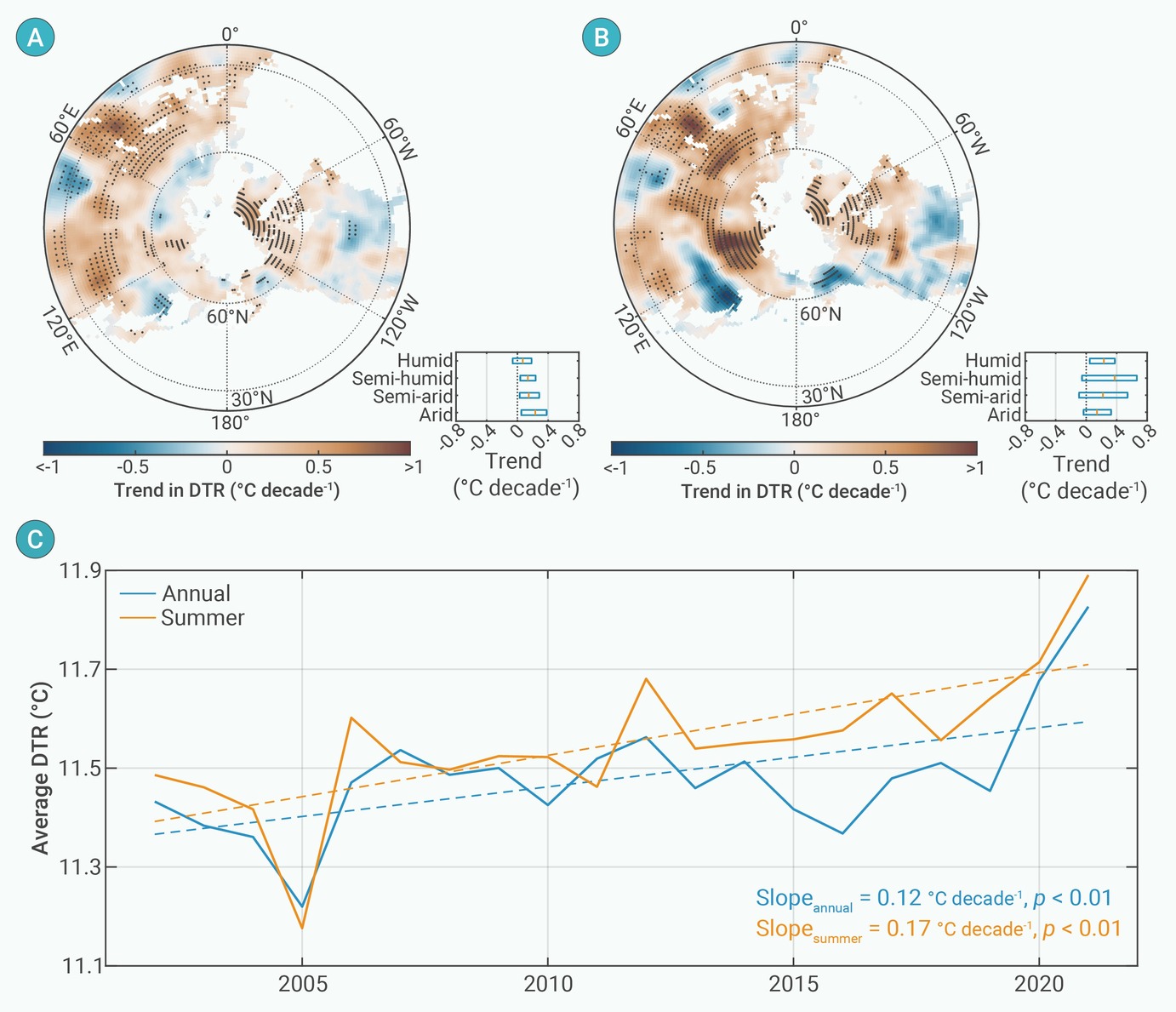
Figure 1.
Trend in diurnal temperature range (DTR) in extratropical Northern Hemisphere
-
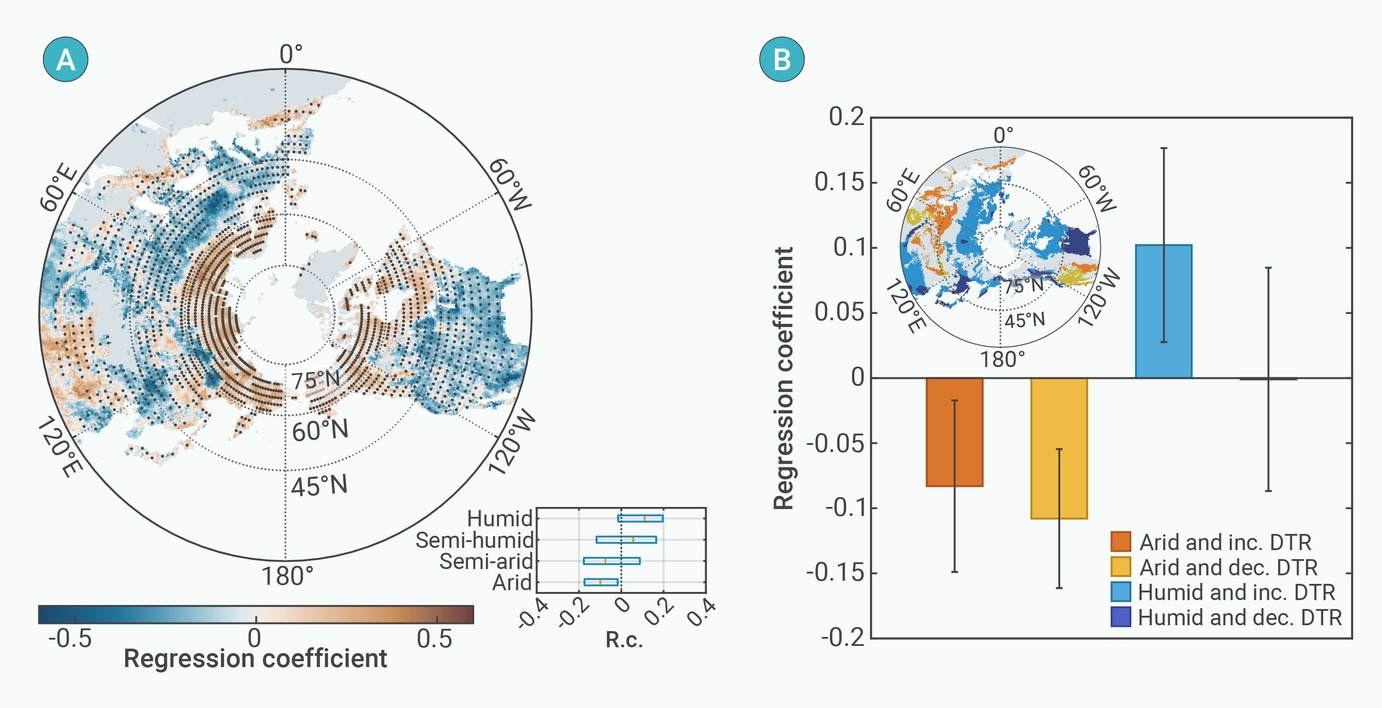
Figure 2.
Impact of summer diurnal temperature range (DTR) on vegetation productivity
-
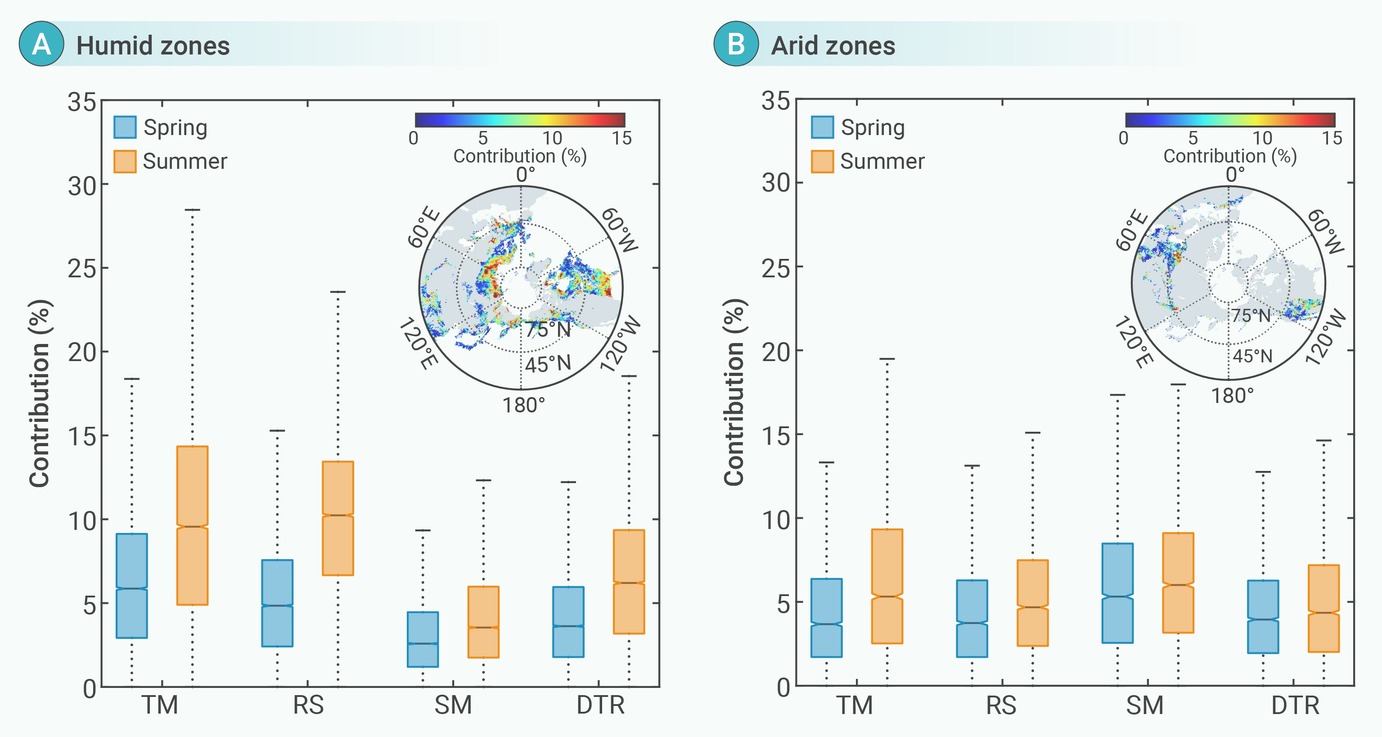
Figure 3.
Assessment of the contributions of mean air temperature (TM), solar radiation (RS), soil moisture (SM), and diurnal temperature range (DTR) variations during spring and summer to the variations in annual NPP in humid (A) and arid (B) zones
-
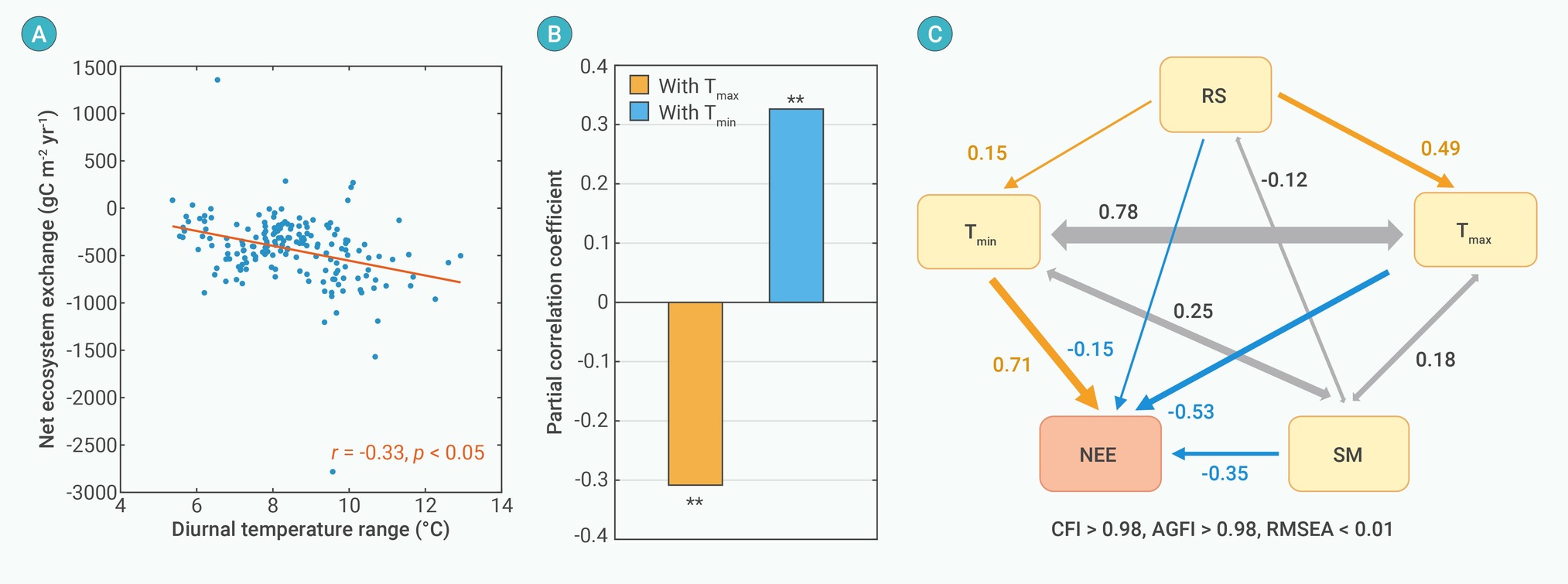
Figure 4.
Impact of summer diurnal temperature range (DTR) on annual net ecosystem exchange (NEE) in deciduous broadleaf forest (DBF) ecosystems in humid zones during 2002–2021
-
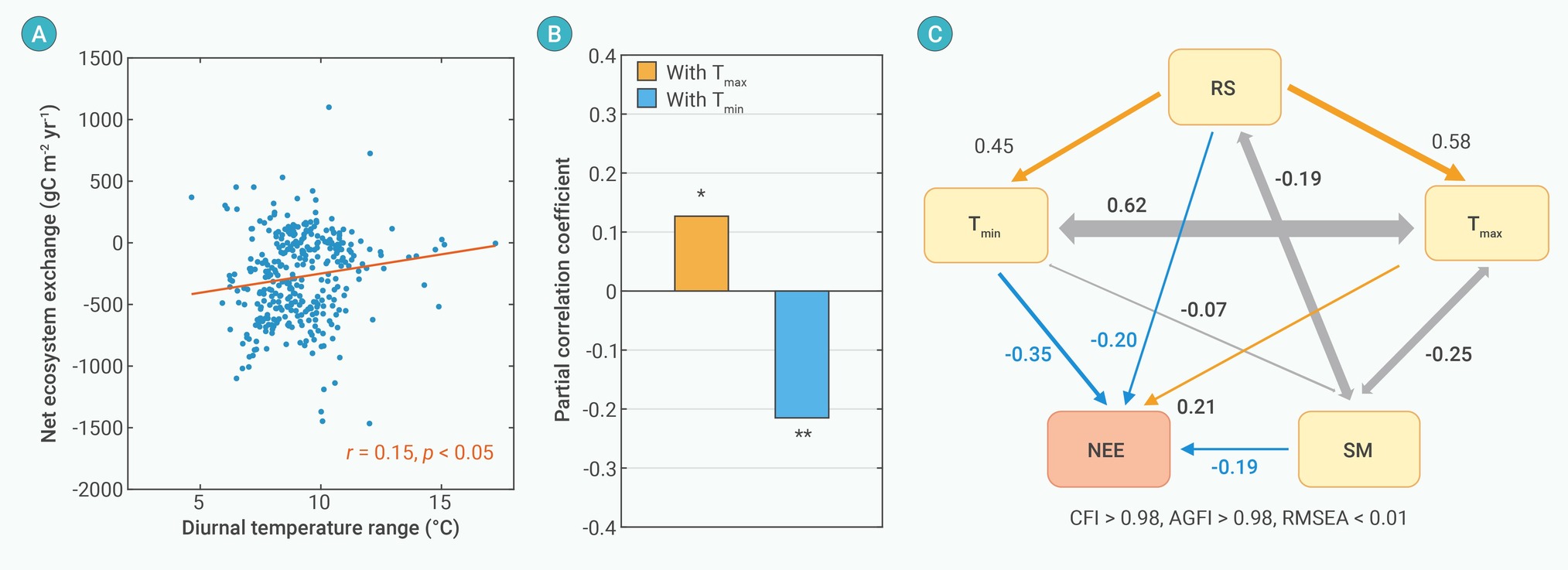
Figure 5.
Impact of summer diurnal temperature range (DTR) on annual net ecosystem exchange (NEE) in evergreen needleleaf forest (ENF) ecosystems in humid zones during 2002–2021
-
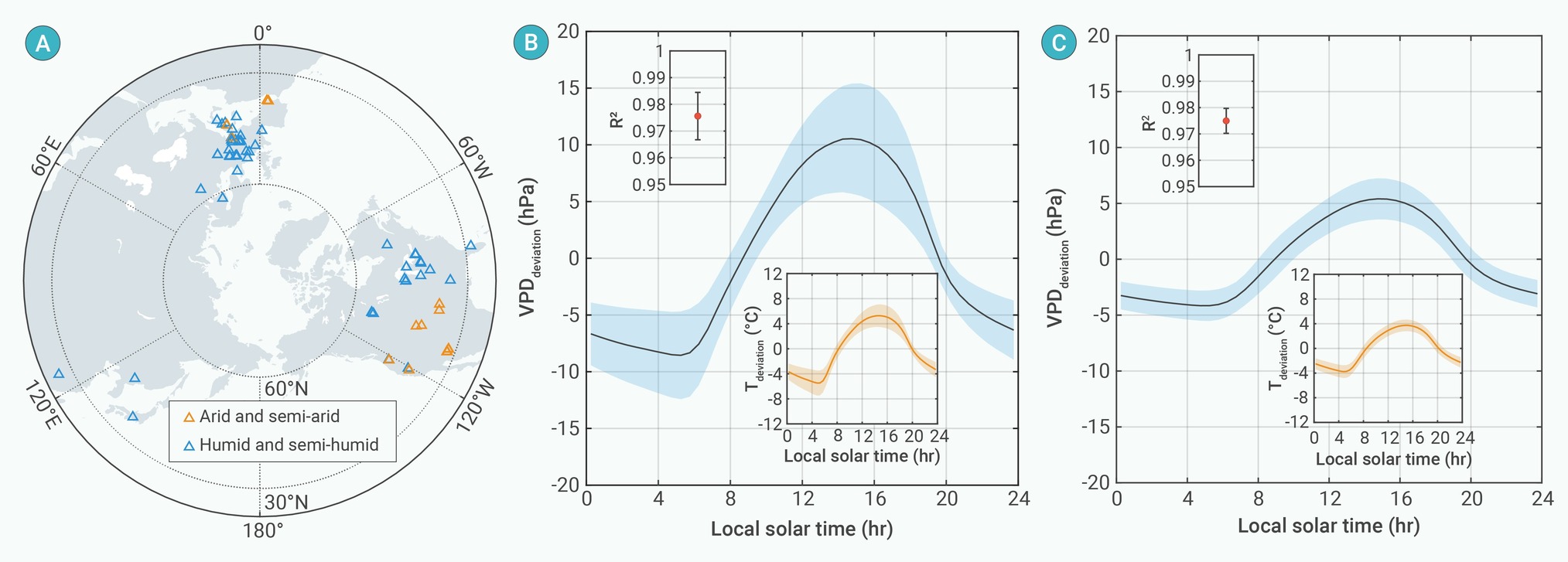
Figure 6.
Averaged summer diurnal variations in vapor pressure deficit (VPD) and temperature during 2002–2021
-
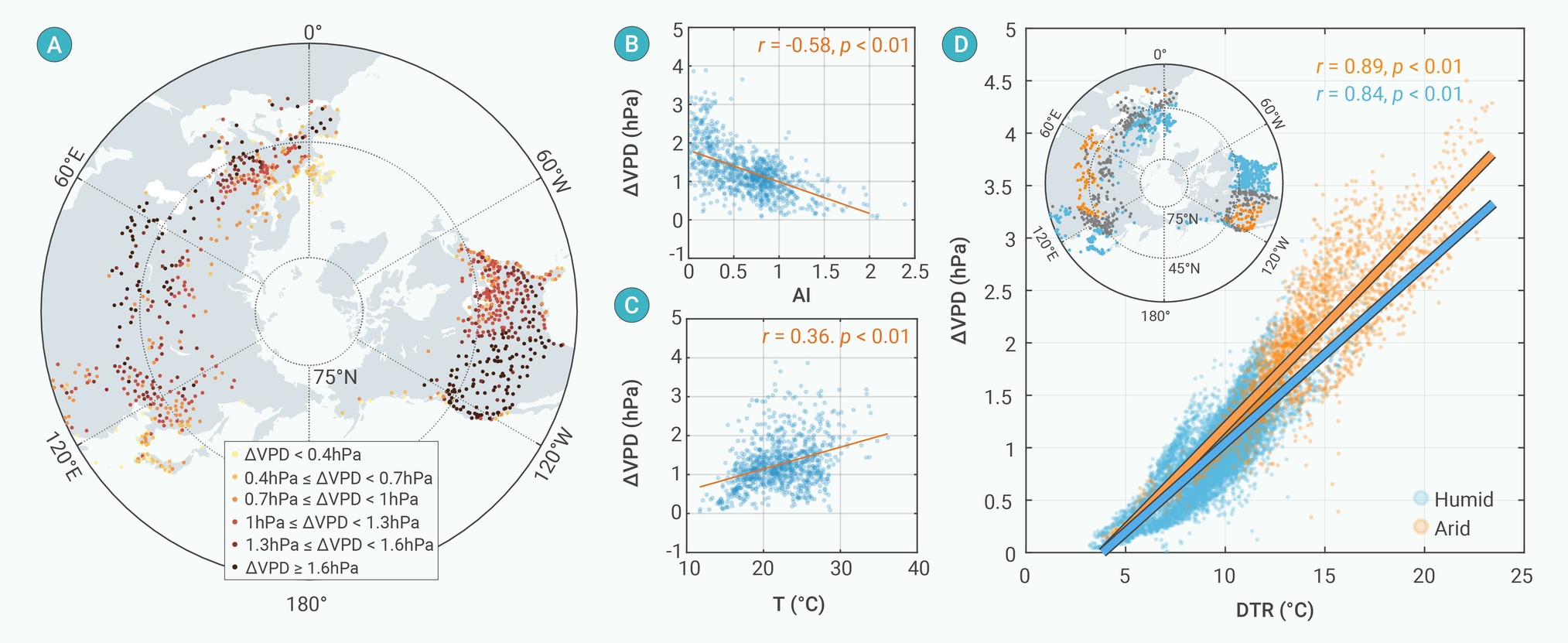
Figure 7.
Vapor pressure deficit (VPD) variation and its relationship with changes in diurnal temperature range (DTR) during 2002–2021
