
Accelerated warming and soil erosion drive topsoil carbon decline across the Tibetan Plateau: A 40-year resampling analysis
-
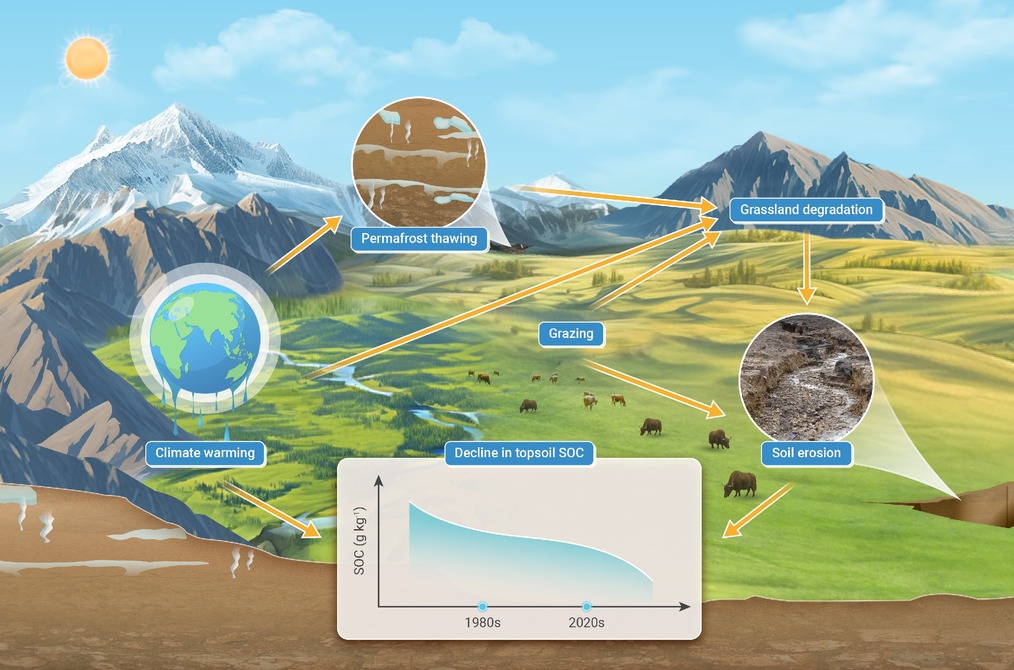
GRAPHICAL ABSTRACT
 DownLoad:
Full size image
DownLoad:
Full size image
-
PUBLIC SUMMARY
-
Topsoil carbon declined by 8.9 g kg−1 in 40 years on the Tibetan Plateau, while subsoil remained stable.
Erosion surpassed warming in driving SOC loss, revealing overlooked risks in Earth system models.
Erosion-focused land management is vital to protect high-altitude carbon under climate change.
-
-
ABSTRACT
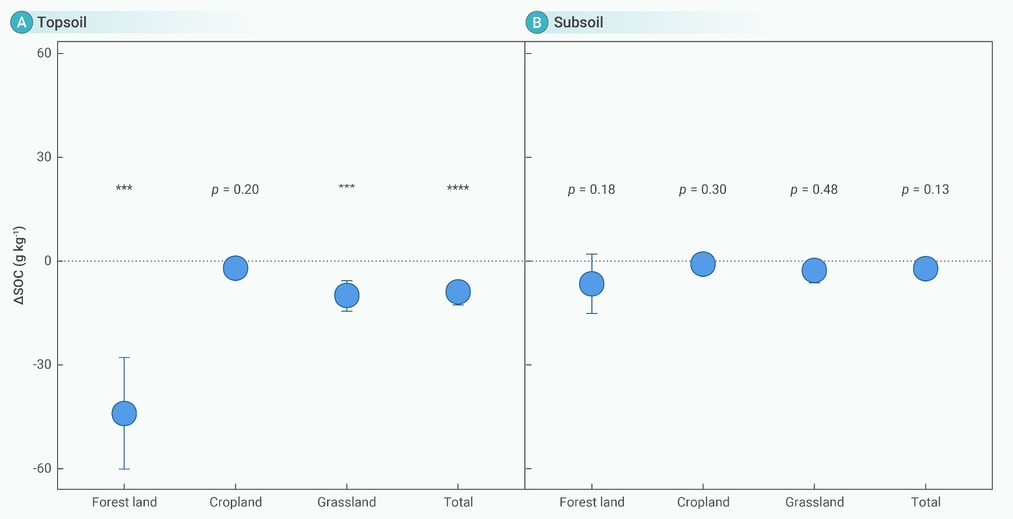
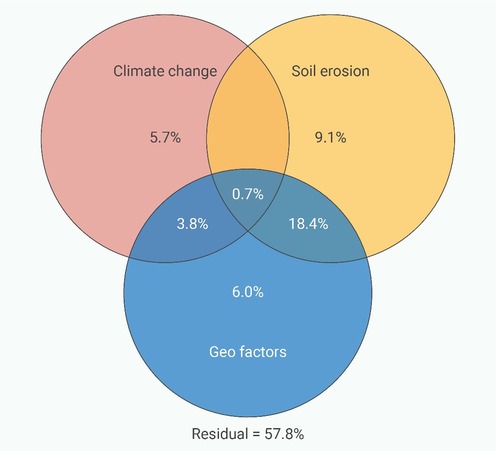
Soil organic carbon (SOC) is a critical component of global carbon cycling, especially in climate-sensitive high-altitude ecosystems like the Tibetan Plateau. Despite its ecological significance, the decadal-scale response of alpine SOC to interactive warming-erosion pressures remains poorly quantified in Earth system models. Through systematic resampling of 261 sites spanning four decades (1980s–2020s), we quantified the combined impacts of climate warming, soil erosion, and geographic controls on SOC dynamics across the Tibetan Plateau. Our results reveal a significant decline in topsoil SOC (p <0.0001 ), with an average reduction of 8.9 g kg-1, while subsoil SOC remained relatively stable (p = 0.13), underscoring the heightened sensitivity of topsoil to environmental shifts. Spatiotemporal patterns show geographic divergence: severe SOC depletion occurred in southeastern valleys through erosion-geography synergies, while western plateau regions exhibited modest gains. Variance partitioning attributes 9.1% of SOC variation to erosion (exceeding climate's 5.7% and environmental variables' 6.0%), with 22.9% explained by their three-way interactions. Warming enhances carbon mineralization, but erosion is the dominant mechanism of carbon loss in steep valleys, leading to greater carbon depletion than warming alone and challenging prevailing assumptions about SOC dynamics in alpine systems. These findings provide critical insights for global climate models and underscore the urgency for targeted land management interventions to mitigate SOC loss and protect these vulnerable high-altitude ecosystems amidst ongoing environmental changes. -

-
REFERENCES
[1] Hansen P.M., Even R., King A.E., et al. (2024). Distinct, direct and climate-mediated environmental controls on global particulate and mineral-associated organic carbon storage. Glob. Chang. Biol. 30:e17080. DOI:10.1111/gcb.17080 [2] Hicks Pries C.E., Castanha C., Porras R.C., et al. (2017). The whole-soil carbon flux in response to warming. Science 355:1420−1423. DOI:10.1126/science.aal1319 [3] Wieder W.R., Sulman B.N., Hartman M.D., et al. (2019). Arctic soil governs whether climate change drives global losses or gains in soil carbon. Geophys. Res. Lett. 46:14486−14495. DOI:10.1029/2019GL085543 [4] Wang M., Guo X., Zhang S., et al. (2022). Global soil profiles indicate depth-dependent soil carbon losses under a warmer climate. Nat. Commun. 13:5514. DOI:10.1038/s41467-022-33278-w [5] Loisel J. and Walenta J. (2022). Carbon parks could secure essential ecosystems for climate stabilization. Nat. Ecol. Evol. 6:486−488. DOI:10.1038/s41559-022-01695-1 [6] Bradford M.A., Wieder W.R., Bonan G.B., et al. (2016). Managing uncertainty in soil carbon feedbacks to climate change. Nat. Clim. Chang. 6:751−758. DOI:10.1038/nclimate3071 [7] Heimann M. and Reichstein M. (2008). Terrestrial ecosystem carbon dynamics and climate feedbacks. Nature 451:289−292. DOI:10.1038/nature06591 [8] Don A., Seidel F., Leifeld J., et al. (2024). Carbon sequestration in soils and climate change mitigation—Definitions and pitfalls. Glob. Chang. Biol. 30:e16983. DOI:10.1111/gcb.16983 [9] Barraclough D., Smith P., Worrall F., et al. (2015). Is there an impact of climate change on soil carbon contents in England and Wales. Eur. J. Soil Sci. 66:451−462. DOI:10.1111/ejss.12253 [10] Lu M., Zhou X., Yang Q., et al. (2013). Responses of ecosystem carbon cycle to experimental warming: A meta-analysis. Ecology 94:726−738. DOI:10.1890/12-0279.1 [11] Sistla S.A., Moore J.C., Simpson R.T., et al. (2013). Long-term warming restructures Arctic tundra without changing net soil carbon storage. Nature 497:615−618. DOI:10.1038/nature12129 [12] Xu H., Huang L. and Wang S. (2025). Effects of warming on change rate of soil organic carbon content in forest soils. Forests 16:59. DOI:10.3390/f16010059 [13] Lal R. (2022). Fate of soil carbon transported by erosional processes. Appl. Sci. 12:48. DOI:10.3390/app12010048 [14] Lin H., Duan X., Li Y., et al. (2022). Simulating the effects of erosion on organic carbon dynamics in agricultural soils. Catena 208:105753. DOI:10.1016/j.catena.2021.105753 [15] Doetterl S., Berhe A.A., Nadeu E., et al. (2016). Erosion, deposition and soil carbon: A review of process-level controls, experimental tools and models to address C cycling in dynamic landscapes. Earth-Sci. Rev. 154:102−122. DOI:10.1016/j.earscirev.2015.12.005 [16] Berhe A.A., Barnes R.T., Six J., et al. (2018). Role of soil erosion in biogeochemical cycling of essential elements: Carbon, nitrogen, and phosphorus. Annu. Rev. Earth Planet. Sci. 46:521−548. DOI:10.1146/annurev-earth-082517-010018 [17] Tan Z., Leung L.R., Li H.Y., et al. (2020). A substantial role of soil erosion in the land carbon sink and its future changes. Glob. Chang. Biol. 26:2642−2655. DOI:10.1111/gcb.14982 [18] Yao T., Thompson L.G., Mosbrugger V., et al. (2012). Third Pole Environment (TPE). Environ. Dev. 3:52−64. DOI:10.1016/j.envdev.2012.04.002 [19] Mu C., Zhang T., Wu Q., et al. (2015). Editorial: Organic carbon pools in permafrost regions on the Qinghai–Xizang (Tibetan) Plateau. Cryosphere 9:479−486. DOI:10.5194/tc-9-479-2015 [20] Dutta K., Schuur E.A.G., Neff J.C., et al. (2006). Potential carbon release from permafrost soils of Northeastern Siberia. Glob. Chang. Biol. 12:2336−2351. DOI:10.1111/j.1365-2486.2006.01259.x [21] Li D., Lu X., Overeem I., et al. (2021). Exceptional increases in fluvial sediment fluxes in a warmer and wetter High Mountain Asia. Science 374:599−603. DOI:10.1126/science.abi9649 [22] Xu Z.X., Gong T.L. and Li J.Y. (2008). Decadal trend of climate in the Tibetan Plateau—Regional temperature and precipitation. Hydrol. Process. 22:3056−3065. DOI:10.1002/hyp.6892 [23] Dong S., Zhang J., Li Y., et al. (2020). Effect of grassland degradation on aggregate-associated soil organic carbon of alpine grassland ecosystems in the Qinghai–Tibetan Plateau. Eur. J. Soil Sci. 71:69−79. DOI:10.1111/ejss.12835 [24] Fayiah M., Dong S., Khomera S.W., et al. (2020). Status and challenges of Qinghai–Tibet Plateau’s grasslands: An analysis of causes, mitigation measures, and way forward. Sustainability 12:1099. DOI:10.3390/su12031099 [25] National Soil Survey Office (1993). State soil survey service of China. China Soil Service. [26] Reeuwijk L. (2002). Procedures for soil analysis. Int. Soil Ref. Inf. Cent. DOI: 10.1016/0196-0709(89)90091-4. [27] Nelson D.W. and Sommers L.E. (2018). Total carbon, organic carbon, and organic matter. Methods of Soil Analysis. 9: 539-579. DOI: 10.2136/sssabookser5.3.c34. [28] Yang K. and He J. (2019). China meteorological forcing dataset (1979–2018). Natl. Tibetan Plateau Data Center. DOI: 10.11888/AtmosphericPhysics.tpe.249369.file. [29] Wischmeier W.H., Johnson C.B. and Cross B.V. (1971). A soil erodibility nomograph for farmland and construction sites. J. Soil Water Conserv. 26:189−193. [30] Williams J.R., Jones C.A. and Dyke P.T. (1984). A modelling approach to determining the relationship between erosion and soil productivity. Trans. ASAE 27:129−144. DOI:10.13031/2013.32748 [31] Walling D. E., He Q. and Quine T. A. (1995). Use of caesium-137 and lead-210 as tracers in soil erosion investigations. Tracer technologies for hydrological systems. Proc. International Symposium, Colorado. pp:163–172. [32] Walling D.E., Porto P., Zhang Y., et al. (2014). Upscaling the use of fallout radionuclides in soil erosion and sediment budget investigations: Addressing the challenge. Int. Soil Water Conserv. Res. 2:1−21. DOI:10.1016/S2095-6339(15)30019-8 [33] Zhang X.J. (2023). Evaluating and improving 137Cs technology for estimating soil erosion using soil loss data measured during 1954–2015. Earth-Sci. Rev. 247:104619. DOI:10.1016/j.earscirev.2023.104619 [34] Samsonova V.P., Blagoveshchenskii Yu.N. and Meshalkina Yu.L. (2017). Use of empirical Bayesian kriging for revealing heterogeneities in the distribution of organic carbon on agricultural lands. Eur. Soil Sci. 50:305−311. DOI:10.1134/S1064229317030103 [35] Krivoruchko K. and Gribov A. (2019). Evaluation of empirical Bayesian kriging. Spat. Stat. 32:100368. DOI:10.1016/j.spasta.2019.100368 [36] Dorrepaal E., Toet S., van Logtestijn R.S.P., et al. (2009). Carbon respiration from subsurface peat accelerated by climate warming in the subarctic. Nature 460:616−619. DOI:10.1038/nature08216 [37] Ofiti N.O.E., Schmidt M.W.I., Abiven S., et al. (2023). Climate warming and elevated CO2 alter peatland soil carbon sources and stability. Nat. Commun. 14:7533. DOI:10.1038/s41467-023-43410-z [38] Song Y., Huang S., Zhang H., et al. (2024). The impact of permafrost change on soil organic carbon stocks in Northeast China. Forests 15:14. DOI:10.3390/f15010014 [39] Chen L., Jing X., Flynn D.F.B., et al. (2017). Changes of carbon stocks in alpine grassland soils from 2002 to 2011 on the Tibetan Plateau and their climatic causes. Geoderma 288:166−174. DOI:10.1016/j.geoderma.2016.11.016 [40] Ding J., Chen L., Ji C., et al. (2017). Decadal soil carbon accumulation across Tibetan permafrost regions. Nat. Geosci. 10:420−424. DOI:10.1038/ngeo2945 [41] Wang M., Zhang S., Guo X., et al. (2025). Whole-profile soil carbon responses to concurrent warming and precipitation changes across global biomes. Glob. Chang. Biol. 31:e70105. DOI:10.1111/gcb.70105 [42] Beillouin D., Corbeels M., Demenois J., et al. (2023). A global meta-analysis of soil organic carbon in the Anthropocene. Nat. Commun. 14:3700. DOI:10.1038/s41467-023-39338-z [43] Gu J., Li D., Yang F., et al. (2025). Mineral, molecular composition and ecosystem type jointly determine the stability of soil organic carbon on the Qinghai-Tibetan Plateau. Catena 249:108638. DOI:10.1016/j.catena.2024.108638 [44] Liu M., Zheng S., Pendall E., et al. (2025). Unprotected carbon dominates decadal soil carbon increase. Nat. Commun. 16:2008. DOI:10.1038/s41467-025-57354-z [45] Lal R. (2019). Accelerated soil erosion as a source of atmospheric CO2. Soil Tillage Res. 188:35−40. DOI:10.1016/j.still.2018.02.001 [46] Schiedung M., Barré P. and Poeplau C. (2025). Separating fast from slow cycling soil organic carbon – A multi-method comparison on land use change sites. Geoderma 453:117154. DOI:10.1016/j.geoderma.2024.117154 [47] Lu N., Tian H., Fu B., et al. (2022). Biophysical and economic constraints on China’s natural climate solutions. Nat. Clim. Chang. 12:847−853. DOI:10.1038/s41558-022-01432-3 [48] Li Y., Li J., Are K.S., et al. (2019). Livestock grazing significantly accelerates soil erosion more than climate change in Qinghai-Tibet Plateau: Evidenced from 137Cs and 210Pbex measurements. Agric. Ecosyst. Environ. 285:106643. DOI:10.1016/j.agee.2019.106643 [49] Miehe G., Schleuss P.-M., Seeber E., et al. (2019). The Kobresia pygmaea ecosystem of the Tibetan highlands – Origin, functioning and degradation of the world’s largest pastoral alpine ecosystem. Sci. Total Environ. 648:754−771. DOI:10.1016/j.scitotenv.2018.08.164 [50] Dong S., Shang Z., Gao J., et al. (2020). Enhancing sustainability of grassland ecosystems through ecological restoration and grazing management in an era of climate change on Qinghai-Tibetan Plateau. Agric. Ecosyst. Environ. 287:106684. DOI:10.1016/j.agee.2019.106684 [51] Zhang F., Shi X., Zeng C., et al. (2020). Recent stepwise sediment flux increase with climate change in the Tuotuo River in the central Tibetan Plateau. Sci. Bull. 65:410−418. DOI:10.1016/j.scib.2019.12.017 [52] Xu C., McDowell N.G., Fisher R.A., et al. (2019). Increasing impacts of extreme droughts on vegetation productivity under climate change. Nat. Clim. Chang. 9:948−953. DOI:10.1038/s41558-019-0630-6 -
ABOUT THIS ARTICLE
Cite this article:
Lin H., Zhao H., Duan X., et al. (2026). Accelerated warming and soil erosion drive topsoil carbon decline across the Tibetan Plateau: A 40-year resampling analysis. The Innovation Geoscience 4:100165. https://doi.org/10.59717/j.xinn-geo.2025.100165
Welcome!
To request copyright permission to republish or share portions of our works, please visit Copyright Clearance Center's (CCC) Marketplace website at marketplace.copyright.com.
Article Metrics
Relative Articles
Cited by
Export File
Citation
Lin H., Zhao H., Duan X., et al. (2026). Accelerated warming and soil erosion drive topsoil carbon decline across the Tibetan Plateau: A 40-year resampling analysis. The Innovation Geoscience 4:100165. https://doi.org/10.59717/j.xinn-geo.2025.100165

Format
Content
-
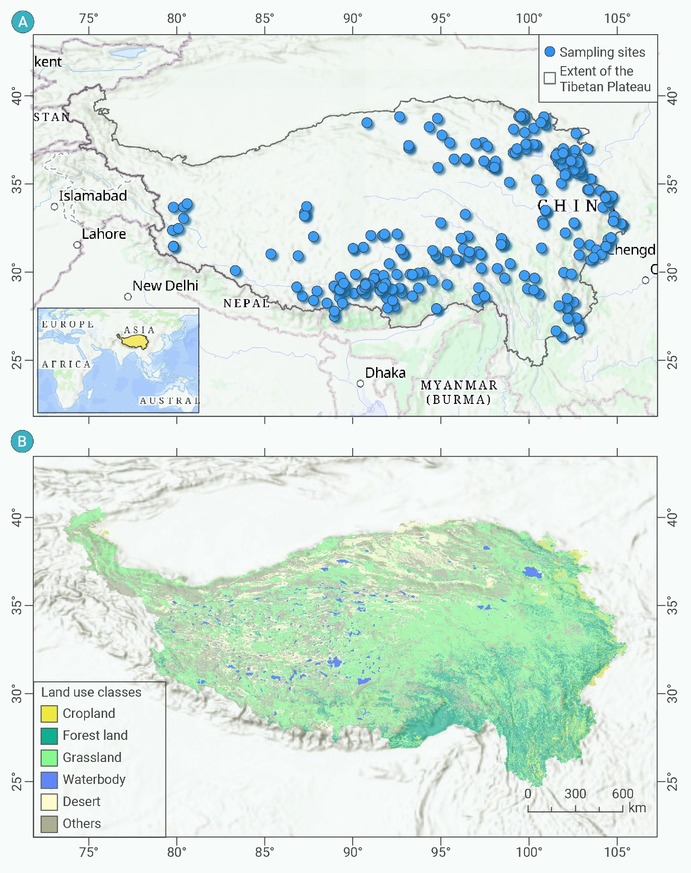
Figure 1.
Sampling site distribution and land use in the Tibetan Plateau
-
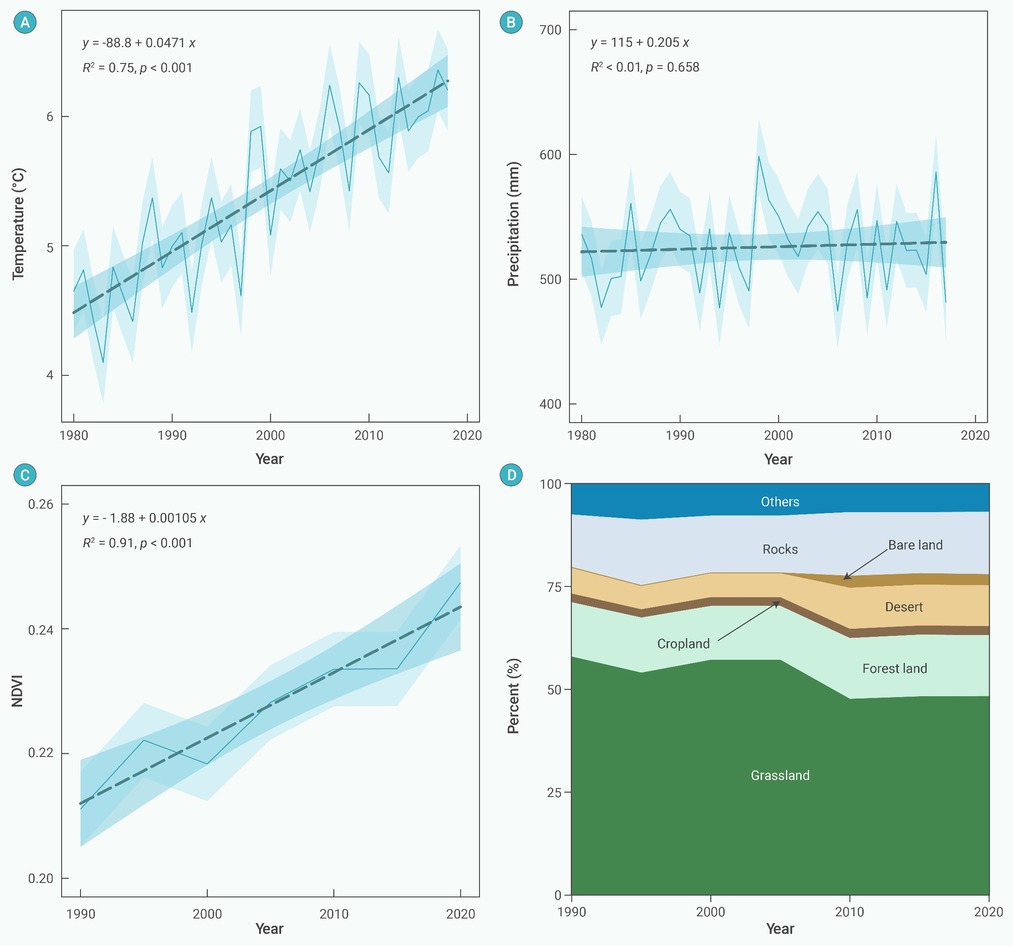
Figure 2.
Temporal trends in environmental factors and land cover composition on the Tibetan Plateau from the 1980s to the 2020s
-
Figure 3.
Changes in soil organic carbon (∆SOC) between the 1980s and 2020s across different land-use types on the Tibetan Plateau
-
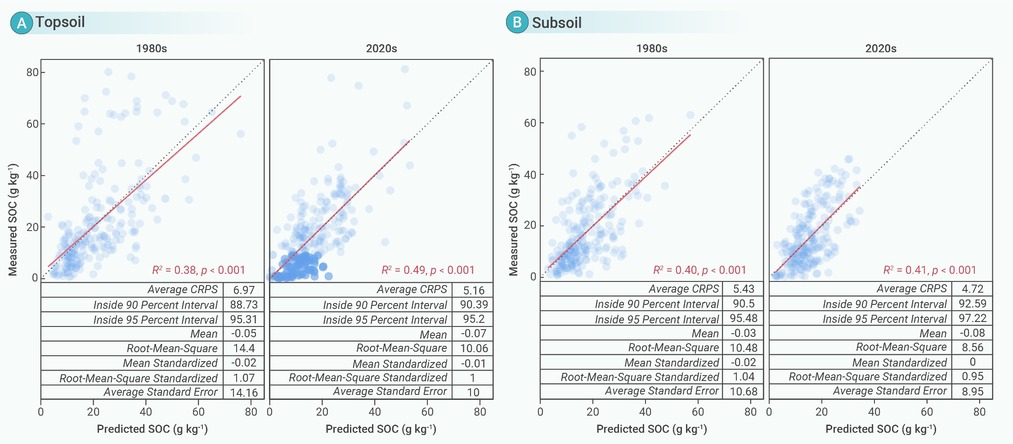
Figure 4.
Prediction accuracy of Empirical Bayesian Kriging (EBK) interpolation for topsoil and subsoil SOC across the Tibetan Plateau in the 1980s and 2020s
-
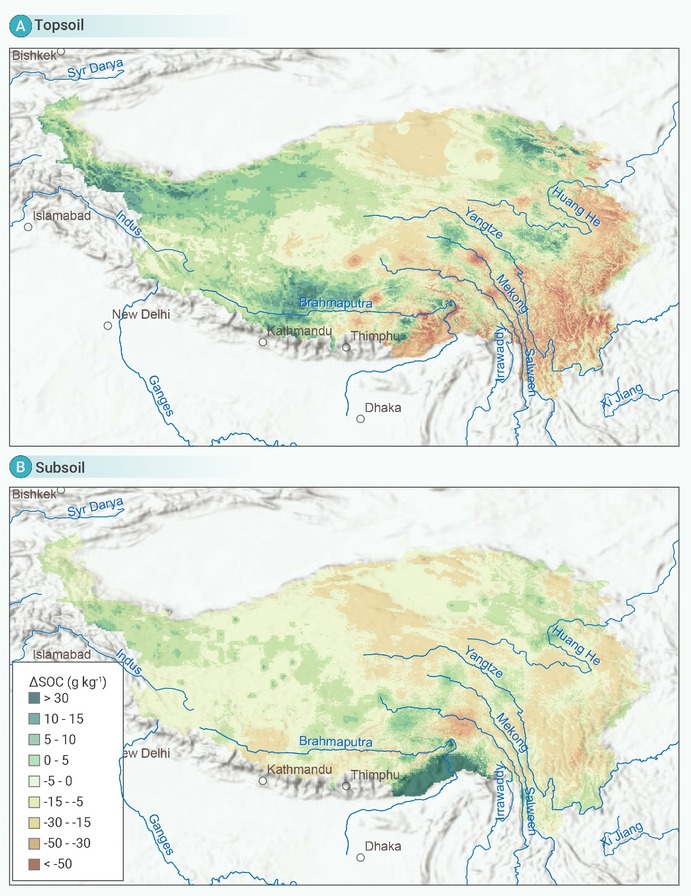
Figure 5.
Spatial distribution of changes in soil organic carbon (∆SOC) across the Tibetan Plateau from the 1980s to the 2020s, estimated using Empirical Bayesian Kriging interpolation based on field sampling data
-
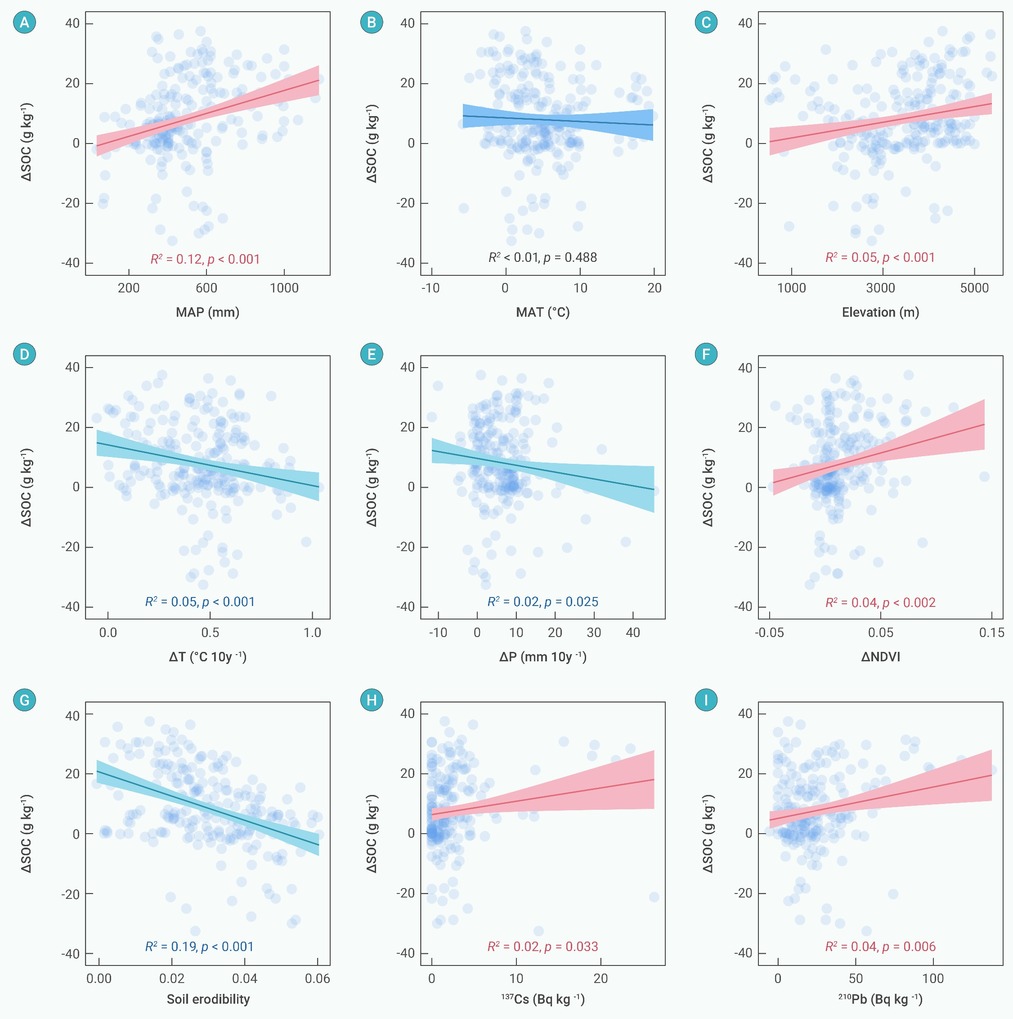
Figure 6.
Relationships between changes in soil organic carbon (∆SOC) and various environmental factors across the Tibetan Plateau
-
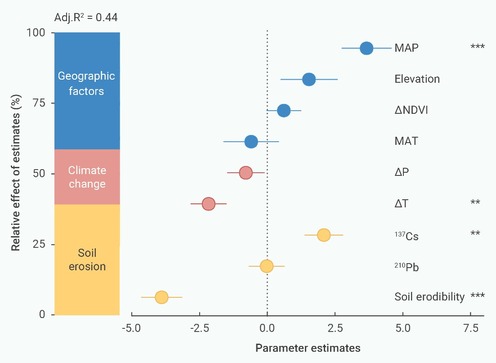
Figure 7.
Relative contributions of geographic factors, climate change, and soil erosion to soil organic carbon (SOC) changes across the Tibetan Plateau
-
Figure 8.
Variance partitioning of soil organic carbon (SOC) changes across the Tibetan Plateau (1980s–2020s)
