
Wetland protection gaps in China: Insights from small and/or isolated wetlands (SIWs)
-
GRAPHICAL ABSTRACT
 DownLoad:
Full size image
DownLoad:
Full size image
-
PUBLIC SUMMARY
-
Small and/or isolated wetlands (SIWs) are critical for biodiversity and ecological stability.
We mapped SIWs across China and identified major conservation gaps at the national scale.
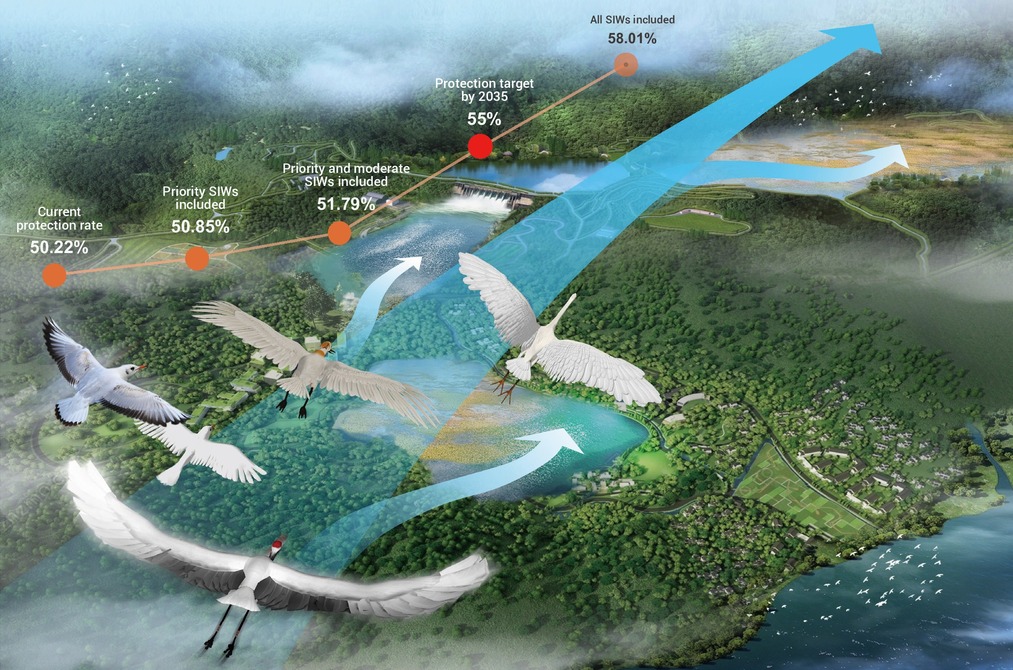
Adding SIWs into reserves could raise wetland protection coverage by up to 8 percentage points.
This study supports evidence-based strategies to achieve China’s 2030 biodiversity targets.
-
-
ABSTRACT
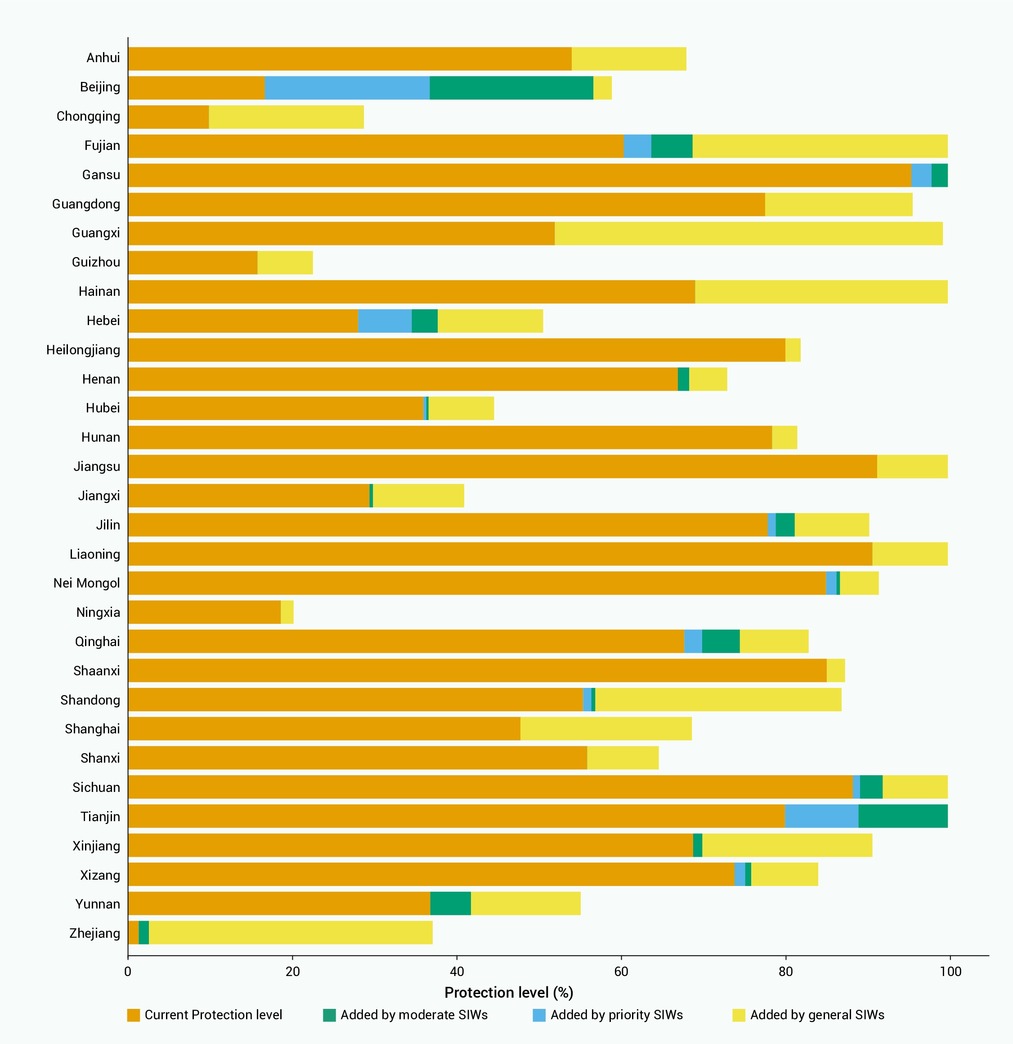
The establishment of protected areas remains a cornerstone strategy for conserving wetland ecosystems. However, many SIWs in China remain excluded from national conservation frameworks, despite their ecological importance. To address this gap, we developed a rapid assessment model integrating four key indicators — wetland area, waterfowl species richness, waterfowl abundance, and dominant wetland plant richness—to identify and evaluate unprotected SIWs at a national scale. The assessment was supplemented by expert-sourced online questionnaires to enhance data coverage, particularly for regions lacking systematic monitoring. A total of 1,473 unprotected SIWs were identified, encompassing approximately 3.39 million hectares. These wetlands represent critical conservation gaps in the current protected area network. Incorporating them into the national wetland protection system would raise China’s protection level from 50.22% to 58.01%, surpassing the governmental target of 55% by 2035. Many of these SIWs are located along major migratory bird routes and in biodiversity-rich zones, underscoring their strategic ecological value. This study provides the first systematic evaluation of SIWs at the national level in China and proposes a scalable, data-driven framework for prioritizing wetland protection. The results offer actionable guidance for enhancing wetland conservation and contribute to the broader goals of the Global Biodiversity Framework and the Ramsar Convention. -

-
REFERENCES
[1] Mitsch W.J. and Gosselink J.G. (2000). The value of wetlands: Importance of scale and landscape setting. Ecol. Econ. 35:25−33. DOI:10.1016/S0921-8009(00)00165-8 [2] Davidson N.C. (2014). How much wetland has the world lost. Long-term and recent trends in global wetland area. Mar. Freshw. Res. 65:934−941. DOI:10.1071/MF14173 [3] Zedler J.B. and Kercher S. (2005). Wetland resources: Status, trends, ecosystem services, and restorability. Annu. Rev. Environ. Resour. 30:39−74. DOI:10.1146/annurev.energy.30.050504.144248 [4] Fan B. and Li Y. (2024). China's conservation and restoration of coastal wetlands offset much of the reclamation‐induced blue carbon losses. Glob. Change Biol. 30:e17039. DOI:10.1111/gcb.17039 [5] Fluet-Chouinard E., Stocker B. D., Zhang Z., et al. (2023). Extensive global wetland loss over the past three centuries. Nature 614:281−286. DOI:10.1038/s41586-022-05572-6 [6] Semlitsch R.D. and Bodie J.R. (1998). Are small, isolated wetlands expendable. Conserv. Biol. 12:1129−1133. DOI:10.1046/j.1523-1739.1998.98166.x [7] Leibowitz S.G. (2003). Isolated wetlands and their functions: An ecological perspective. Wetlands 23:517−531. DOI:10.1672/0277-5212(2003)023[0517:IWATFA]2.0.CO;2 [8] Cohen M.J., Creed I.F., Alexander L., et al. (2016). Do geographically isolated wetlands influence landscape functions. Proc. Natl. Acad. Sci. USA 113:1978−1986. DOI:10.1073/pnas.1512650113 [9] Mushet D.M., Calhoun A.J., Alexander L.C., et al. (2015). Geographically isolated wetlands: Rethinking a misnomer. Wetlands 35:423−431. DOI:10.1007/s13157-015-0631-9 [10] Yang B., Yuan X., Tang F., et al. (2024). Small wetlands: Critical to flood management. Science 386:859−859. DOI:10.1126/science.ads2055 [11] Xiong Y., Mo S., Wu H., et al. (2023). Influence of human activities and climate change on wetland landscape pattern—A review. Sci. Total Environ. 879:163112. DOI:10.1016/j.scitotenv.2023.163112 [12] Zhang J., An S. and Leng X. (2020). Status of wetland research in China. Mar. Freshw. Res. 71:1572−1591. DOI:10.1071/MF20103 [13] Wang Y., Sun J., Wu Y., et al. (2024). Spatiotemporal variation of small and micro wetlands and their multiple responses to driving factors in the high-latitude region. Wetlands 44:1−15. DOI:10.1007/s13157-024-01882-9 [14] Xu W., Fan X., Ma J., et al. (2019). Hidden loss of wetlands in China. Curr. Biol. 29:3065-3071. e3062. DOI:10.1016/j.cub.2019.07.053 [15] Secretariat C B D. (2022). Briefing note on scientific and technical issues related to the global monitoring of biodiversity. https://www.cbd.int/doc/c/0aef/09cb/0f9654d627222534df6c7a98/id-om-2022-01-inf-02-en.pdf [16] Secretariat C B D. (2022). Decision adopted by the conference of the parties to the convention on biological diversity: 15/4 Kunming–Montreal global biodiversity framework. https://www.cbd.int/doc/decisions/cop-15/cop-15-dec-04-en.pdf [17] Secretariat C B D. (2022). Proposed monitoring framework for the post-2020 global biodiversity framework. Secretariat of the Convention on Biological Diversity. https://www.cbd.int/doc/c/f191/8db7/17c0a45b42a5a4fcd0bbbb8c/sbstta-24-l-10-en.pdf [18] Ekardt F., Günther P., Hagemann K., et al. (2023). Legally binding and ambitious biodiversity protection under the CBD, the global biodiversity framework, and human rights law. Environ. Sci. Eur. 35:80. DOI:10.1186/s12302-023-00786-5 [19] Díaz S., Zafra-Calvo N., Purvis A., et al. (2020). Set ambitious goals for biodiversity and sustainability. Science 370:411−413. DOI:10.1126/science.abe1530 [20] Flitcroft R.L., Abell R., Harrison I., et al. (2023). Making global targets local for freshwater protection. Nat. Sustain. 6:1499−1502. DOI:10.1038/s41893-023-01193-7 [21] Koma Z., Seijmonsbergen A.C., Grootes M.W., et al. (2022). Better together? Assessing different remote sensing products for predicting habitat suitability of wetland birds. Divers. Distrib. 28:685−699. DOI:10.1111/ddi.13468 [22] Masoud A.M., Belotti M., Alfarra A., et al. (2022). Multi-criteria analysis for evaluating constructed wetland as a sustainable sanitation technology, Jordan case study. Sustainability 14:14867. DOI:10.3390/su142214867 [23] Yang W., Zhong J., Xia Y., et al. (2023). A comprehensive multi-metric index for health assessment of the Poyang Lake wetland. Remote Sens. 15:4061. DOI:10.3390/rs15164061 [24] Xu Z., Dong B., Wei Z., et al. (2023). Study on habitat suitability change and habitat network of rare wintering cranes in important international wetlands. Ecol. Indic. 154:110692. DOI:10.1016/j.ecolind.2023.110692 [25] Odgaard M.V., Turner K.G., Bøcher P.K., et al. (2017). A multi-criteria, ecosystem-service value method used to assess catchment suitability for potential wetland reconstruction in Denmark. Ecol. Indic. 77:151−165. DOI:10.1016/j.ecolind.2016.12.001 [26] Zhou L., Guan D., Huang X., et al. (2020). Evaluation of the cultural ecosystem services of wetland park. Ecol. Indic. 114:106286. DOI:10.1016/j.ecolind.2020.106286 [27] Saenz‐Agudelo P., Delrieu‐Trottin E., DiBattista J.D., et al. (2022). Monitoring vertebrate biodiversity of a protected coastal wetland using eDNA metabarcoding. Environ. DNA 4:77−92. DOI:10.1002/edn3.200 [28] Sahour H., Kemink K.M. and O’Connell J. (2021). Integrating SAR and optical remote sensing for conservation-targeted wetlands mapping. Remote Sens. 14:159. DOI:10.3390/rs14010159 [29] Gxokwe S., Dube T. and Mazvimavi D. (2022). Leveraging google earth engine platform to characterize and map small seasonal wetlands in the semi-arid environments of South Africa. Sci. Total Environ. 803:150139. DOI:10.1016/j.scitotenv.2021.150139 [30] Jetz W., McGowan J., Rinnan D.S., et al. (2022). Include biodiversity representation indicators in area-based conservation targets. Nat. Ecol. Evol. 6:123−126. DOI:10.1038/s41559-021-01620-y [31] Howe R.W., Niemi G.J., Bracey A.M., et al. (2023). An index of biotic condition (IBC) using birds as indicators of coastal wetland quality in North America’s Laurentian Great Lakes. Ecol. Indic. 156:111174. DOI:10.1016/j.ecolind.2023.111174 [32] Blackwell M.S.A. and Pilgrim E.S. (2011). Ecosystem services delivered by small-scale wetlands. Hydrol. Sci. J. 56:1467−1484. DOI:10.1080/02626667.2011.630317 [33] Stapanian M.A., Waite T.A., Krzys G., et al. (2004). Rapid assessment indicator of wetland integrity as an unintended predictor of avian diversity. Hydrobiologia 520:119−126. DOI:10.1023/B:HYDR.0000027731.16535.53 [34] Walters D., Kotze D., Rebelo A., et al. (2021). Validation of a rapid wetland ecosystem services assessment technique using the Delphi method. Ecol. Indic. 125:107511. DOI:10.1016/j.ecolind.2021.107511 [35] Cahyaningsih R., Brehm J.M. and Maxted N. (2021). Gap analysis of Indonesian priority medicinal plant species as part of their conservation planning. Glob. Ecol. Conserv. 26:e01459. DOI:10.1016/j.gecco.2021.e01459 [36] De Alban J.D.T., Leong B.P.I., Venegas-Li R., et al. (2021). Conservation beyond the existing protected area network is required to improve species and habitat representation in a global biodiversity hotspot. Biol. Conserv. 257:109105. DOI:10.1016/j.biocon.2021.109105 [37] Sullivan B.L., Wood C.L., Iliff M.J., et al. (2009). eBird: A citizen-based bird observation network in the biological sciences. Biol. Conserv. 142:2282−2292. DOI:10.1016/j.biocon.2009.05.006 [38] Li P., Lou Y., Tang H., et al. (2022). Current status and protection and utilization countermeasures of plant resources in wetlands of China. Wetl. Sci. 20:517−528. DOI:10.13248/j.cnki.wetlandsci.2022.04.008 [39] Zhang Y., Xu H., Chen H., et al. (2014). Diversity of wetland plants used traditionally in China: A literature review. J. Ethnobiol. Ethnomed. 10:1−19. DOI:10.1186/1746-4269-10-72 [40] Xue Z.S., Zou Y.C., Zhang Z.S., et al. (2018). Reconstruction and future prediction of the distribution of wetlands in China. Earths Future 6:1508−1517. DOI:10.1029/2017ef000807 [41] Thuiller W., Gueguen M., Renaud J., et al. (2019). Uncertainty in ensembles of global biodiversity scenarios. Nat. Commun. 10:1446. DOI:10.1038/s41467-019-09519-w [42] Titeux N., Maes D., Van Daele T., et al. (2017). The need for large-scale distribution data to estimate regional changes in species richness under future climate change. Divers. Distrib. 23:1393−1407. DOI:10.1111/ddi.12634 [43] Ming J. and Kuiyi Z. (2023). Records of Mires in China (2nd Edition) (Science Press). https://www.hceis.com/home/book_view.aspx?id=6711 [44] Studds C.E., Kendall B.E., Murray N.J., et al. (2017). Rapid population decline in migratory shorebirds relying on Yellow Sea tidal mudflats as stopover sites. Nat. Commun. 8:14895. DOI:10.1038/ncomms14895 [45] Allan J.R., Possingham H.P., Atkinson S.C., et al. (2022). The minimum land area requiring conservation attention to safeguard biodiversity. Science 376:1094−1101. DOI:10.1126/science.abl9127 [46] Pimm S.L., Jenkins C.N. and Li B.V. (2018). How to protect half of Earth to ensure it protects sufficient biodiversity. Sci. Adv. 4:eaat2616. DOI:10.1126/sciadv.aat261 [47] Xia S.X., Yu X.B., Millington S., et al. (2017). Identifying priority sites and gaps for the conservation of migratory waterbirds in China's coastal wetlands. Biol. Conserv. 210:72−82. DOI:10.1016/j.biocon.2016.07.025 [48] Durán A.P., Rauch J. and Gaston K.J. (2013). Global spatial coincidence between protected areas and metal mining activities. Biol. Conserv. 160:272−278. DOI:10.1016/j.biocon.2013.02.003 [49] Watson J.E., Dudley N., Segan D.B., et al. (2014). The performance and potential of protected areas. Nature 515:67−73. DOI:10.1038/nature13947 [50] Yi Q., Huixin G., Yaomin Z., et al. (2024). Global conservation priorities for wetlands and setting post-2025 targets. Commun. Earth Environ. 5:4. DOI:10.1038/s43247-023-01195-5 [51] Qiu J., Zhang Y. and Ma J. (2024). Wetland habitats supporting waterbird diversity: Conservation perspective on biodiversity-ecosystem functioning relationship. J. Environ. Manage. 357:120663. DOI:10.1016/j.jenvman.2024.120663 [52] Kasahara S., Morimoto G., Kitamura W., et al. (2020). Rice fields along the East Asian-Australasian flyway are important habitats for an inland wader’s migration. Sci. Rep. 10:4118. DOI:10.1038/s41598-020-60141-z [53] Sripanomyom S., Round P.D., Savini T., et al. (2011). Traditional salt-pans hold major concentrations of overwintering shorebirds in Southeast Asia. Biol. Conserv. 144:526−537. DOI:10.1016/j.biocon.2010.10.008 [54] Birch W.S., Drescher M., Pittman J., et al. (2022). Trends and predictors of wetland conversion in urbanizing environments. J. Environ. Manage. 310:114723. DOI:10.1016/j.jenvman.2022.114723 [55] Zhang J., Ma K. and Fu B. (2010). Wetland loss under the impact of agricultural development in the Sanjiang Plain, NE China. Environ. Monit. Assess. 166:139−148. DOI:10.1007/s10661-009-0990-x [56] Hansen M.C., Potapov P.V., Moore R., et al. (2013). High-resolution global maps of 21st-century forest cover change. Science 342:850−853. DOI:10.1126/science.1244693 [57] Merchant D., Lathrop R.G., Santos C.D., et al. (2023). Distribution modeling and gap analysis of shorebird conservation in northern Brazil. Remote Sens. 15:452. DOI:10.3390/rs15020452 [58] Penjor U., Kaszta Ż., Macdonald D.W., et al. (2021). Prioritizing areas for conservation outside the existing protected area network in Bhutan: The use of multi-species, multi-scale habitat suitability models. Landsc. Ecol. 36:1281−1309. DOI:10.1007/s10980-021-01225-7 [59] Pocock M.J., Tweddle J.C., Savage J., et al. (2017). The diversity and evolution of ecological and environmental citizen science. PLoS One 12:e0172579. DOI:10.1371/journal.pone.0172579 [60] Terer T., Muasya A.M., Dahdouh-Guebas F., et al. (2012). Integrating local ecological knowledge and management practices of an isolated semi-arid papyrus swamp (Loboi, Kenya) into a wider conservation framework. J. Environ. Manage. 93:71−84. DOI:10.1016/j.jenvman.2011.08.005 [61] Rooney R.C., Royall O., Robinson D.T., et al. (2022). Evaluating the development and use of a rapid wetland assessment tool (ABWRET-A) in policy implementation in Alberta, Canada. Environ. Sci. Policy 136:575−587. DOI:10.1016/j.envsci.2022.07.020 [62] Backhaus P.J., Wardrop D.H., McCarty G.W., et al. (2024). Developmental framework for a desktop hydrogeomorphic wetland functional assessment derived from field-based data. Environ. Monit. Assess. 196:217. DOI:10.1007/s10661-024-12373-z [63] Bland L.M., Keith D.D.A., Miller R.M., et al. (2017). Guidelines for the application of IUCN Red List of Ecosystems Categories and Criteria. International Union for the Conservation of Nature (IUCN), Gland, Switzerland. DOI:10.2305/IUCN.CH.2016.RLE.3.en [64] IUCN (2024). Guidelines for the application of IUCN Red List of Ecosystems Categories and Criteria, Version 2.0. IUCN Red List of Ecosystems Programme. https://portals.iucn.org/library/node/51533 -
ABOUT THIS ARTICLE
Cite this article:
Xue Z., Xia S., Dong S., et al. (2026). Wetland protection gaps in China: Insights from small and/or isolated wetlands (SIWs). The Innovation Geoscience 4:100179. https://doi.org/10.59717/j.xinn-geo.2026.100179
Welcome!
To request copyright permission to republish or share portions of our works, please visit Copyright Clearance Center's (CCC) Marketplace website at marketplace.copyright.com.
Article Metrics
Relative Articles
Cited by
Export File
Citation
Xue Z., Xia S., Dong S., et al. (2026). Wetland protection gaps in China: Insights from small and/or isolated wetlands (SIWs). The Innovation Geoscience 4:100179. https://doi.org/10.59717/j.xinn-geo.2026.100179

Format
Content
-
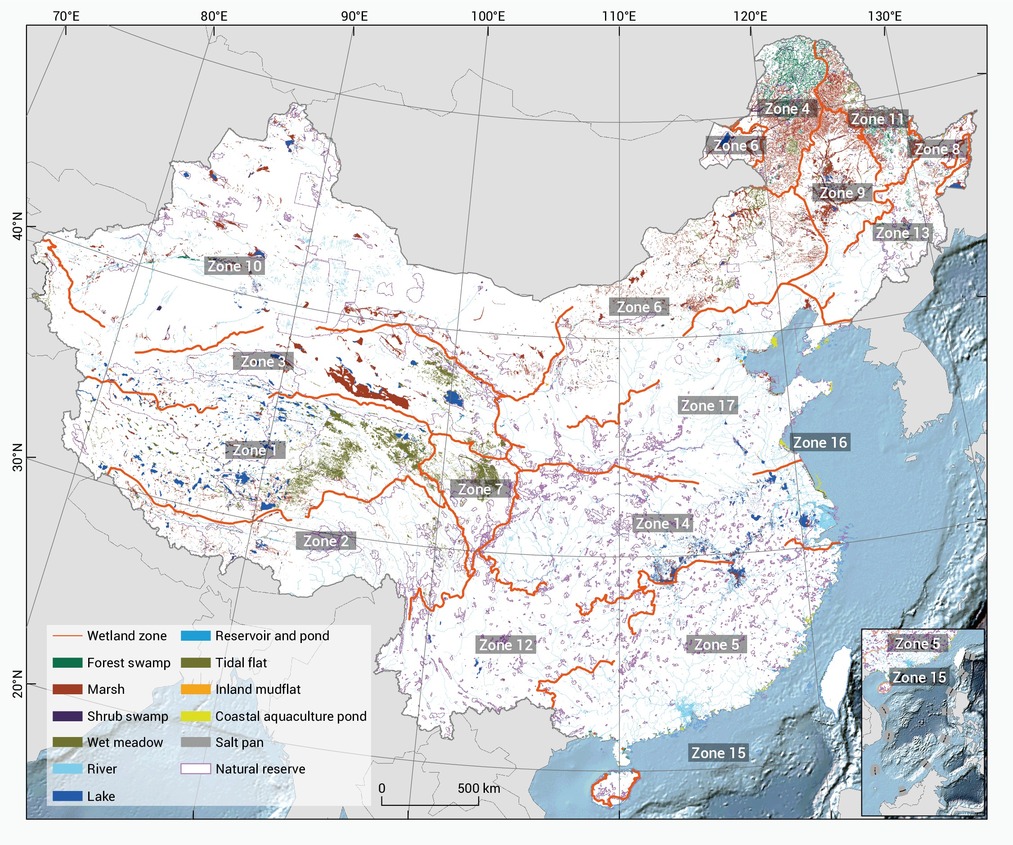
Figure 1.
Geographic distribution of study wetlands, wetland zones, and existing nature reserves across mainland China
-
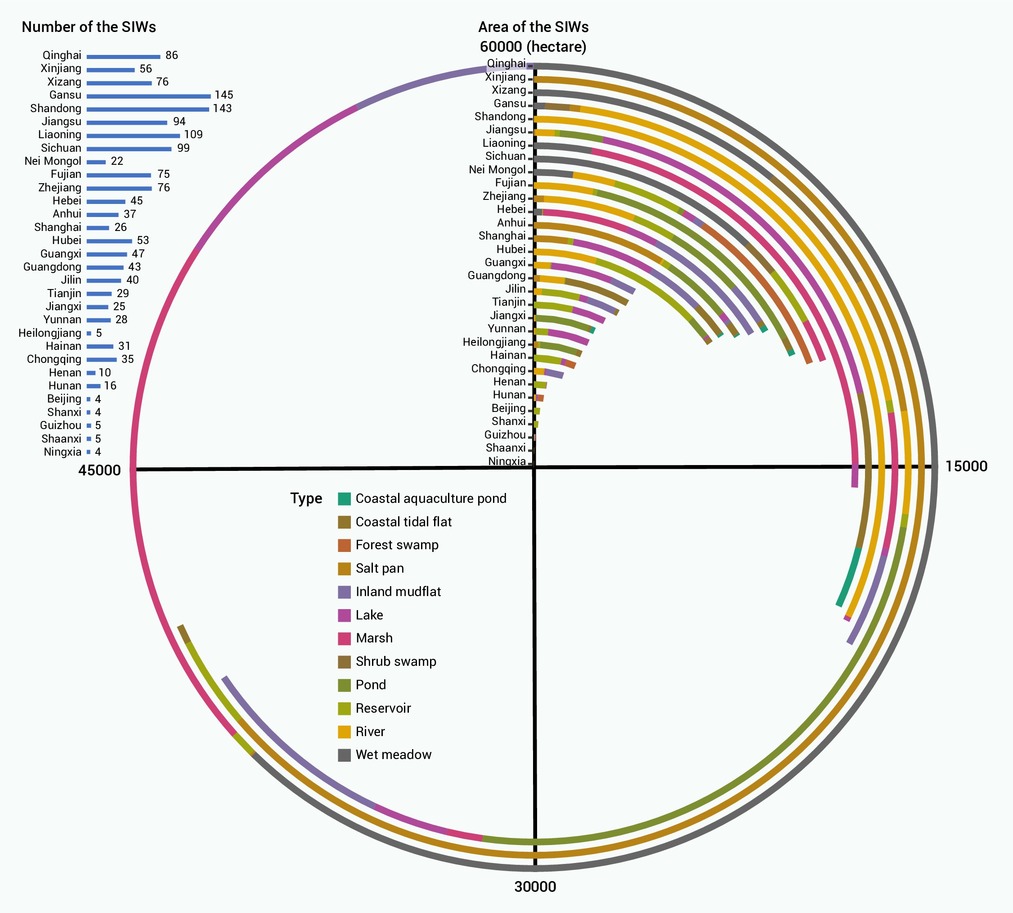
Figure 2.
Wetland types and distribution of SIWs across provinces and regions
-
Figure 3.
Spatial distribution of SIWs overlaid on the dominant wetland plant species richness map.
-
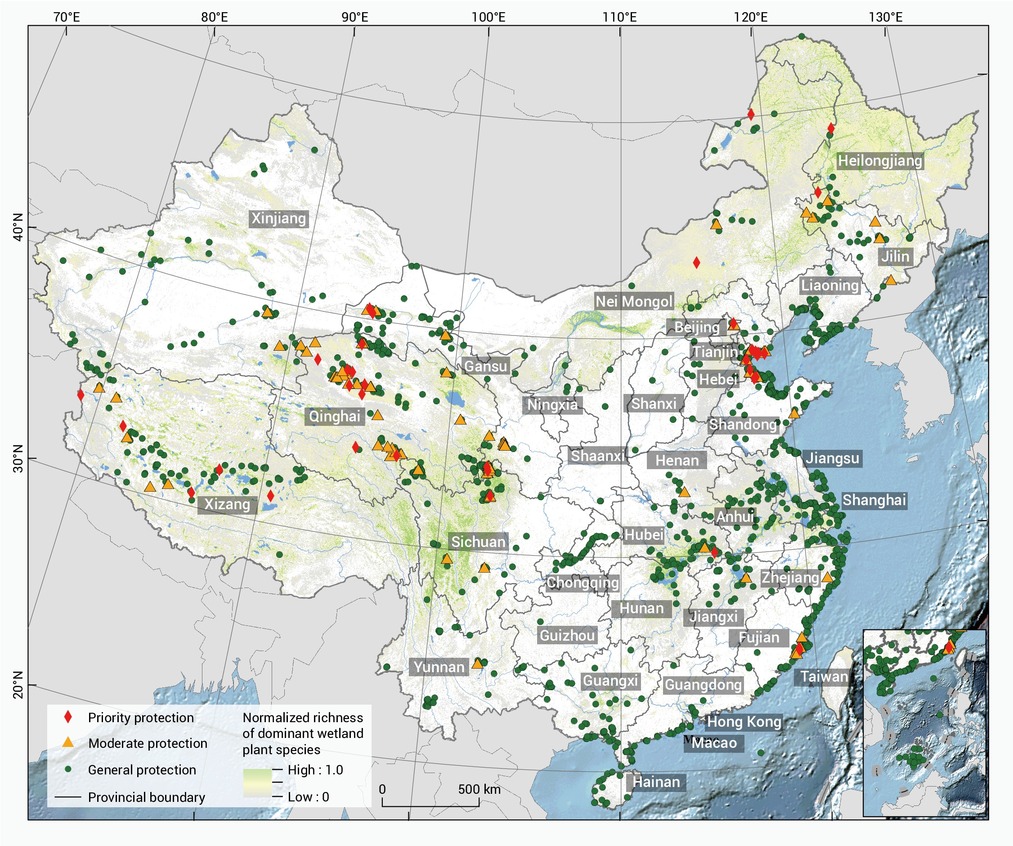
Figure 4.
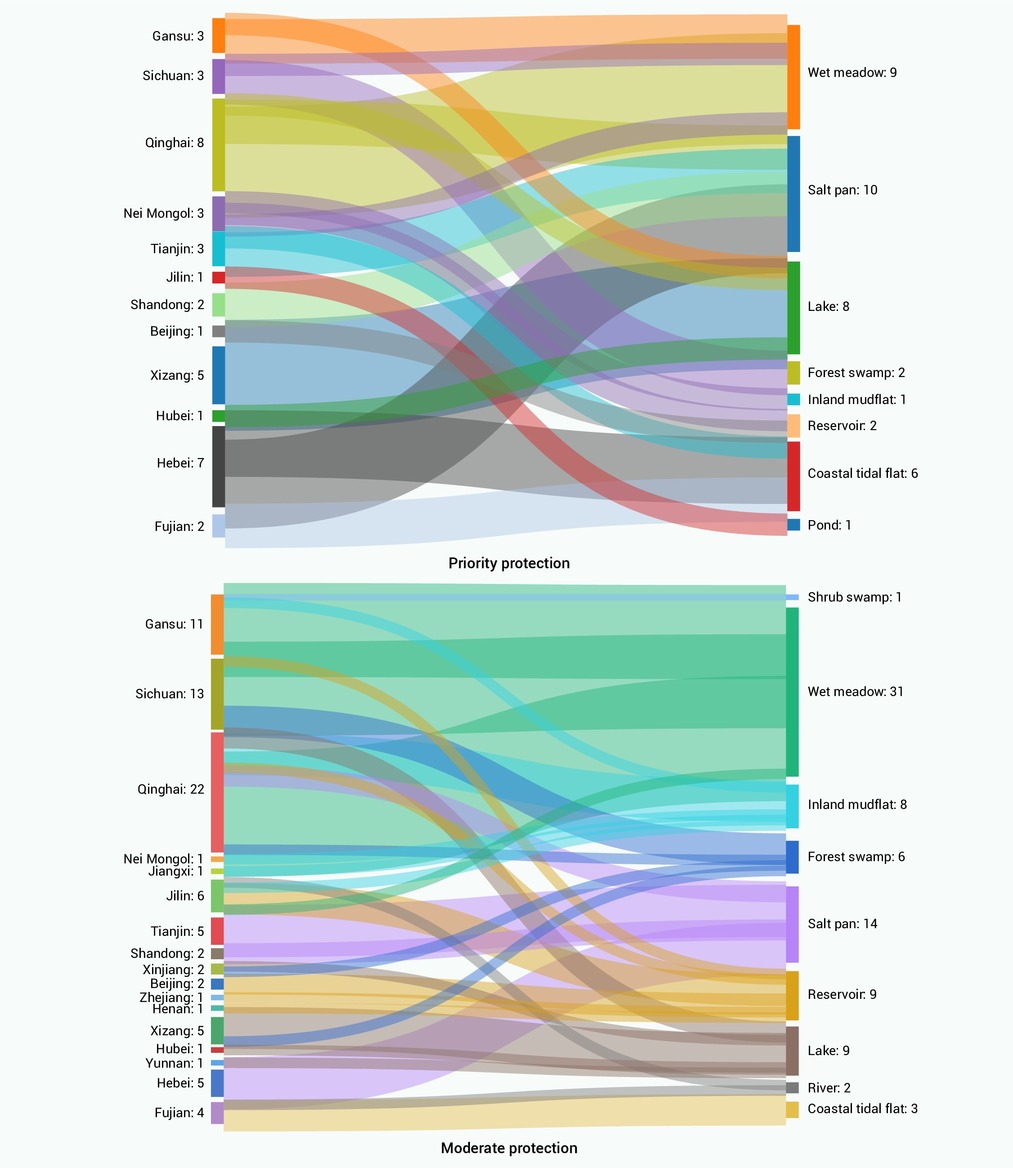
Locations and wetland types of priority and moderate protection SIWs
-
Figure 5.
Provincial wetland protection levels before and after inclusion of SIWs, with stacked bars showing incremental gains from priority, moderate, and general categories.
-
Figure 6.
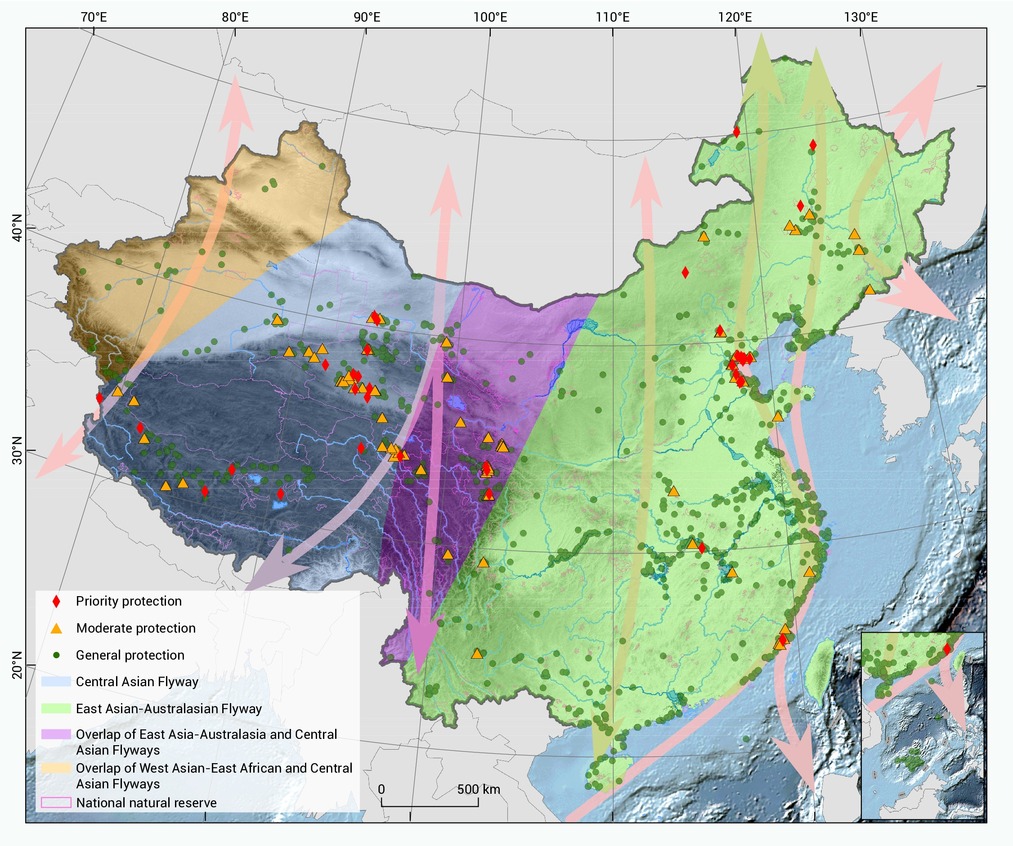
Migratory bird flyways and identified SIWs.
